Economy and Policy
Saudi economic growth will slow to 4.4 percent in 2013 from 6.8 percent last year due to an expected fall in oil production, the International Monetary Fund has said.


Economy and Policy
Saudi economic growth will slow to 4.4 percent in 2013 from 6.8 percent last year due to an expected fall in oil production, the International Monetary Fund has said.

Economics and Policy
Bank Audi has sounded the alarm over a substantial rise in Lebanon’s public debt and budget deficit at the beginning of the year, warning against policies that could further weaken the country's financial stability.
Elsewhere in Lebanon, the state energy company has promised that increased power rationing will end "very soon."
Syria’s pharmaceutical industry once catered to 90 percent of the population’s needs, but a shortage of foreign currency has brought production to a near halt, a pro-regime daily reported Monday.
Kuwait's bourse extended sharp year-to-date gains in heavy trading Monday, while profit-taking weighed on bourses in the UAE and other markets were mixed.

One of Beirut’s most ambitious residential tower developments, Damac Tower, has now reached ground level. United Arab Emirates-based luxury developer Damac Properties is behind the venture, and Executive sat down with Managing Director Ziad el-Chaar to discuss the project and the company.
Can you tell us how many units in the Damac Tower have been sold?
In total we have sold approximately 45 percent of the units in the development. In the current business environment of Lebanon, which is challenging to all, we are selling more of the smaller units than the big units.
What makes your project appeal to buyers?
The starting point of a premium luxurious project is the location. The second point is that the uniqueness of this tower’s design complements the premium location. [The third factor] is that we brought in one of the top Italian designers in fashion and homes to design the interiors of this project, starting from the lobby and going into each and every apartment. The people that are buying and investing in this project will have a very exclusive property in a project that cannot be repeated in Beirut.
Are your prices competitive?
Our prices today are at an approximately 20 percent premium [over other projects in the central district]. But what I have told you in terms of advantages of our product, these are much higher than 20 percent, so you are actually getting a good bargain.
What do buyers of high-end luxury projects look for more than anything else?
When you talk about premium luxury, two things go hand in hand, which are uniqueness and exclusivity. [These] are very important for this type of customer.
One encounters different customer groups also in the luxury segment, for example those who understate their wealth and emphasize privacy versus those who emphasize prestige or those who buy a luxury property to leave something behind. Knowing these categories, what do you see as the main factors motivating the buyers of super-luxury apartments in our part of the world?
As we are talking about real estate, you can never separate real estate from return on investments because real estate is one of the best tools to complement your portfolio. This is definitely one of the factors, and when you look at our company, this is where people trust us because we are a developer that delivers.
The other element, which is important in towers but would not apply similarly if you were buying a mansion or villa, is property management. In strata management, which is management of shared ownership, you see many times a set of owners where perhaps one or two care about the investment and the building and several others do not understand the value of property management. The only protection for your investment is property management. One of the very important items that we put it in our sales contracts asks the owners’ association to appoint us as property managers for 15 years. We don’t just deliver the building and walk away.
Setting up property management for the one project in Beirut will obviously not involve economies of scale. Is it correct to assume that you do not have the objective to operate a large property management firm in Lebanon but only have a dedicated service for Damac Tower?
Correct. Our purpose is to be a developer and provide all the services around that development exclusively to our investors. I have to say one thing about the cost of property management. It is always related to the desire of the owners as to the services that they want. Our role comes [into play] when we gather the owners in an annual meeting where we show them a menu of services and the cost of those services.
And the decisions are then made by majority vote and are binding for all owners in the association?
Yes, and our role as property managers is to make sure that the decisions are implemented and to also assist the owners in the collection. Those high net worth individuals do not want to have to interfere in the upkeep of a building and we provide that service to them [at cost].
Does that mean that the value of the property management operation for you is in retaining the building’s incremental value gains?
We don’t have any interests in those buildings from a financial perspective, but a satisfied investor will spread the good word for the company and will possibly reinvest with us again in new projects.
What will be the additional cost of ownership per square meter (sqm) per year over the 15-year duration of the property management contract that buyers have to sign?
This is really hard to forecast for 15 years but we have created forecasts of service charges for the next two to three years. They are today approximately $30 per sqm per year.
Have your prices in Damac Tower Beirut gone up since we talked last?
Our prices in Beirut are premium prices and they have kept their value.
When discussing Damac in terms of competition, we have to talk on the regional level. In regard to Dubai as your main market, are you envious of Emaar Properties and their announcements of strong luxury demand where units in several projects were sold within hours?
You need to ask this question to Emaar because [on March 26] we had one of the biggest project launches in Dubai since 2008. We now have a property in Dubai which is called Damac Towers by Paramount. It is a mixture of the first luxury hotel by Paramount in the Middle East and three luxury hotel apartment towers branded by Paramount. We invited investors for the launch of phase one and phase one was sold in full on the night [of the launch].
How many units are in phase one?
200 units.
You said in a statement that you have Lebanese investors?
We have some Lebanese investors, yes.
You have partnered with the Versace fashion brand and now with the Paramount entertainment brand. How important is branding for you in marketing a project?
[Property consultancy] Knight Frank released a study in December 2012 on the value of branding and they found that for a market like Dubai, the branded product is demanding 60 percent higher value than the non-branded product.
Weren’t there some celebrity-branded towers in Dubai that flopped gloriously?
Branding has to add value. When you bring Versace to a Damac tower or, as we have done in Dubai, [fashion brand] Fendi, to a real estate project, both Versace and Fendi are very strong in interiors and you will get those interiors infused into your towers. Paramount is an entertainment company and they are bringing all their entertainment elements into the hospitality [aspect].
But isn’t the Paramount Resorts and Hotels actually a UAE-based company licensed to use the Paramount brand but owned by a Lebanese businessman, Ghassan Aridi? It is not a unit of Paramount Pictures?
The Paramount licensing division licensed Paramount Hotels and Resorts to a group of investors who have the exclusive use of the brand and resources for, I think, 50 years. This group of investors is going to seven cities, Dubai being one of them, to collaborate with developers like ourselves. The final brand and support you get from Paramount Pictures in Los Angeles.
What brought Ziad el-Chaar into the property market and what is your passion about properties?
I have worked with two companies in my life and was always in business development. The real passion is in making sure that the business is growing, to enjoy that growth and making sure that the people who invest with you also see that growth.
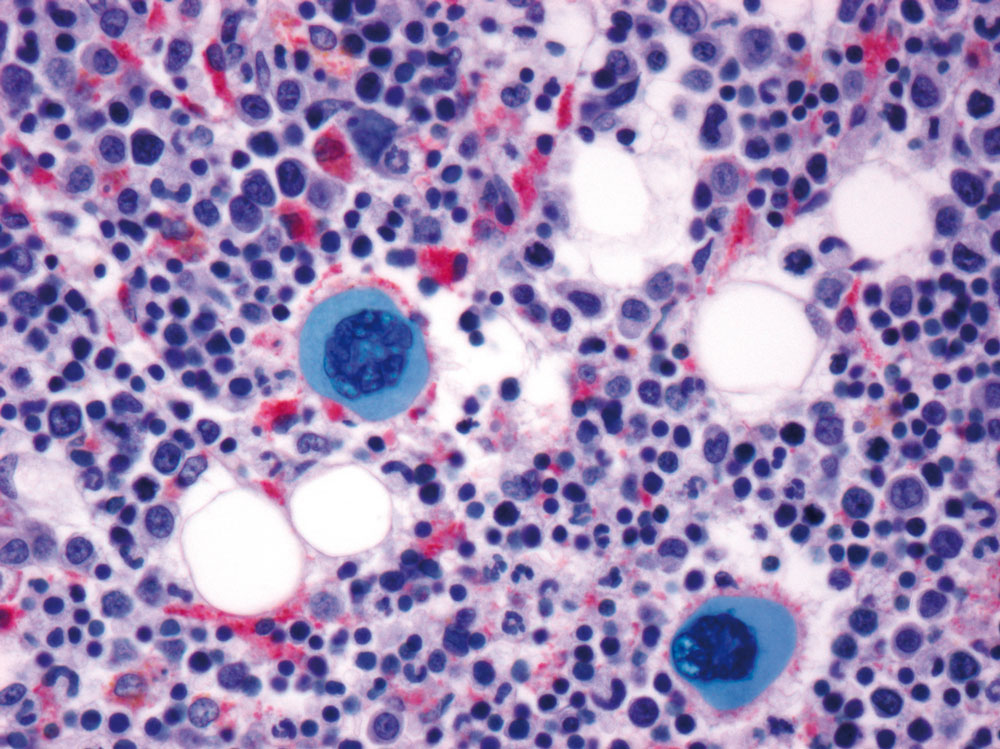
Twenty-one-year-old Peter Dagher has a rare type of leukemia, a form of blood cancer, and he needs a donor of hematopoietic stem cells (often referred to as bone marrow) for the treatment of his life-threatening disease.
Members of his family don’t match and nor do his friends, and Lebanon does not have a national registry where he could look for a potential donor.
Peter is not alone. The American University of Beirut’s Medical Center (AUBMC) comes across five to six patients a year in need of a such a procedure. Beirut’s Makassed Hospital currently has three patients anxiously awaiting a life-saving donor.
With the absence of a registry where Peter and others like him can search for registered donors, they are left with two options: continue to ask people around them to undertake tests to see if they are a match — with each test costing between $300 to $470 — or reach out to international registries where chances of finding a match are even slimmer.
“We turned to registries in Europe, the United States and around the world, but finding a compatible donor from outside of Lebanon is difficult. Doctors told us that if the matches found abroad [which were not 100 percent compatible] were from the same country or region, they would have done the transplant. We need a national registry,” says Randa Dagher, Peter’s mother. By not having a national registry, the opportunity to connect potential donors and future patients is lost.
Stem cell donation
Hematopoietic stem cell therapy is commonly known as a bone marrow transplant. These stem cells, the parents of all our cells, are found in their greatest abundance within bone marrow — the soft and fatty tissue that fills bone cavities. In the past, hematopoietic stem cells could only be collected from bone marrow via painful hip punctures. Now, medical advances mean the cells can be taken from the blood in a procedure called peripheral blood stem cell donation. (The centers that conduct the procedures are still named after the original procedure: “bone marrow transplant centers.”)
Whether harvested from bone marrow, umbilical cord blood (another rich source of stem cells) or peripheral blood, the transplant does not involve surgery, a persistent misconception. The procedure is similar to a
blood transfusion.
Although it is more complicated than going down to the Red Cross to give a pint of blood — it involves more testing, a few days of preparatory injections and a more intrusive machine — the simplified procedure has increased the popularity of stem cell donations in the past couple of years, increasing with it the likelihood of saving lives.
The two basic forms of transplants are autologous and allogeneic: the former makes use of a patient’s own stem cells and the latter uses cells from a donor of a matching type. The first hematopoietic stem cell transplant in Lebanon was autologous. It was performed at Makassed Hospital in 1997, 29 years after the world’s first truly successful attempt.
In Lebanon, three hospitals — AUBMC, Makassed Hospital and Mount Lebanon Hospital (MLH) — conduct hematopoietic stem cell transplants. AUBMC and Makassed both have their own dedicated units where they conduct both autologous and allogeneic transplants. MLH only performs autologous transplants.
The majority of Lebanon’s transplants take place at AUBMC, where a total of 84 were performed in 2012, up from 45 in 2011.
Dr. Ahmad Ibrahim, head of the bone marrow transplant unit at Makassed Hospital, estimates that around 120 transplants were undertaken in the country last year.
Prohibitive costs
When a patient and their family are not losing sleep over the life-threatening disease, they are fretting about the hefty cost of the transplant. For an autologous transplant, prices vary from around $35,000 at MLH and Makassed to between $40,000 and $45,000 at AUBMC. When a donor is needed, the cost increases to $55,000 at Makassed and $75,000 at AUBMC. Currently Lebanon’s Ministry of Health only covers a small percentage of the costs of hematopoietic stem cell transfers.
When the donor is unrelated to the patient, additional medical needs push the cost even higher, to some $120,000 at AUBMC, the only hospital conducting such a procedure.
AUBMC performed Lebanon’s first transfer from a donor who was not related to the recipient in September 2011. The donor was found on the registry of the United States’ National Marrow Donor Program (NMDP), the world’s largest registry, and the stem cells were sent to Lebanon.
A match made in Lebanon
A donor’s compatibility is determined by testing for the human leukocyte antigen (HLA), a test of genetic markers on white blood cells. The chances of finding a perfect match is highest among siblings.
“The [head] of the laboratory sits with the family, draws the family tree and starts proceeding with tests within the family,” says Samar Okaily, nurse manager of the bone marrow transplant unit at AUBMC. When siblings and members of the family don’t match, then the probability of finding a match is higher among fellow Lebanese and Arabs. Still, finding one in Lebanon or even the Middle East is a Herculean task.
Besides Israel, there are only three countries in the region that have a bone marrow registry: Iran, the United Arab Emirates and Saudi Arabia. According to the Bone Marrow Donors Worldwide (BMDW), an aggregator of data from worldwide registries, Iran has around 5,000 registered donors, the UAE has just 45 and Saudi Arabia’s registry, established in 2011, is not even listed on the BMDW.
Donors from the Middle East account for a negligible 0.02 percent of the total 21 million registered potential donors on the BMDW, an alarmingly low figure. The US, with a population size close to the Middle East’s, accounts for over 35 percent of the registered donors.
More procedures, but still no registry
Dr. Ibrahim of Makassed Hospital, which has conducted over 400 transplants since 1997, says there are several reasons for the lack of a registry. First, the transplants have been around for just 15 years in Lebanon as opposed to half a century in some developed countries. Second, “in our population, families were big so you had a higher chance of finding a compatible donor among your siblings than in developed countries. As families have become smaller, there is a bigger need for a registry.”
Finally, and most importantly, Ibrahim believes economic and legal challenges have hindered the development of a national registry. “It needs money so the [stem cell] tests can be done for free, and it needs the [adequate] legal system to protect the donors’ [anonymity],” says Ibrahim, who estimates that it would cost a minimum of $3 million to establish such a registry in order to conduct the tests for free and raise awareness about stem cell donations.
Dr. Fadi Nasr, who heads bone marrow transplants at MLH, blames the lack of a national registry on egos. “We disagree on [which doctor] will put his name on it; it’s politics,” he says, explaining that different hospitals are reluctant to share data with one another in order to establish a national registry. And with no law imposing such collaboration, he does not foresee the establishment of a registry in the near future.
Globally, more than 1 million blood stem cell transplants were performed as of the end of 2012, a medical procedure used in the treatment of over 70 diseases
Lebanon’s medical system is gearing up for an increasing number of transplants, with two of its leading hospitals planning to start performing more complex procedures in the near future.
When the European Group for Blood and Marrow Transplantation, a non-profit scientific forum, held its 2013 annual meeting last month, Dr. Ali Bazerbachi, who heads the bone marrow transplants unit at AUBMC, and Makassed’s Dr. Ibrahim were both speakers on high impact panels.
As Lebanon commits to saving lives with more complex hematopoietic stem cell procedures, it is critical that it provides a registry for patients in need of an unrelated donor, such as Peter. Without one, his life is at risk. “I want a donor now,” his mother told Executive. “I don’t know what to do”.
Economics and Policy
Power cuts in Lebanon's capital Beirut have risen to nine hours a day due to a crisis at the country's new energy barge.
Elsewhere in Lebanon, the World Bank has approved a $30 million soft loan aimed at supporting a government initiative to improve access to basic services in impoverished parts of the country.
Economic growth in the United Arab Emirates accelerated to 4.4 percent in inflation-adjusted terms in 2012 from a downwardly revised 3.9 percent the previous year as activity picked up across all sectors, its statistics office said.
Saudi crude exports fell to 7.42 million barrels per day (bpd) in March, 34,000 bpd less than in February, as Saudi power sector oil use rose and output edged lower, official figures released via the Joint Oil Data Initiative (JODI) show.
About 11,000 police officers and soldiers blocked an annual conference yesterday at Tunisia's main religious centre by a radical Islamist movement that has been implicated in attacks across the country.
Companies and Business
Thousands of workers employed by Dubai's largest construction firm, Arabtec, stayed away from work on Sunday to back wage demands, a rare labour protest in the Gulf emirate, where trade unions are banned, staff said.
Abu Dhabi developers Aldar Properties and Sorouh Real Estate surged in heavy trading on Sunday, in what analysts say is overall positive market momentum.
Kuwait Petroleum Corporation (KPC) has replaced its chief executive and reshuffled its board after a unit was last month ordered to pay Dow Chemical US$2.5bn for a cancelled project.
The phrase “medical tourism in Lebanon” conjures for many the idea of visitors from the Gulf sitting in cafés and waiting for nose jobs. In reality, plastic surgery makes up only a small percentage of the country’s international patients’ needs.
Eighty-five percent of foreigners who seek treatment in Lebanon do so for other medical reasons, according to Mounes Kalaawi, partner and chief executive of Clemenceau Medical Center (CMC).
Despite the declining number of tourists visiting Lebanon, the country remains a regional healthcare destination because when it comes to one’s life, travel warnings and political turmoil become surmountable obstacles.
Driven by necessity
International patients account for roughly 20 percent of the total number of patients in the hospitals interviewed. Those patients are mainly from the region — 80 percent of Clemenceau Medical Center’s international patients are Arab — and feel that their countries cannot provide a competitive level of healthcare. “I was a consultant for some hospitals in the Gulf, and I can tell you that their level of treatment is not as advanced as ours,” says Dia Hassan, president and CEO of Bellevue Medical Center (BMC).
Mohamad Sayegh, dean of the Faculty of Medicine and vice president of Medical Affairs at the American University of Beirut Medical Center (AUBMC), says that international patients are drawn to the highly specialized healthcare services at AUBMC. He says that the majority of cases that the center sees are serious and complicated and have been referred to them.
Lebanon’s hospitals are especially reputable in the fields of oncology and digestive, cardiac and brain surgeries.
“The Iraqis don’t have a lot of good resources for radiation therapy…, so they tend to come here for those purposes,” says Sayegh. The number of Iraqis who come to AUBMC for treatment, mainly for cancer cases, has risen from 39 percent of the 2,297 international patients in 2010 to 58 percent of the 2,497 international patients in 2012. Both AUBMC and CMC plan to establish cancer centers in the coming years to keep up with the growing demand for such treatment.
CMC also introduced robotic surgery to the region, which is in high demand by international patients due to its noninvasive nature.
Affordable & accessible
Medical procedures in Lebanon cost less than they do in Europe or the United States, says Kalaawi of CMC.
BMC’s Hassan explains that most Gulf governments subsidize treatment abroad for their nationals. They choose Lebanon because the country is close to them — not only in distance but also in language and culture.
The unstable political climate of summer 2012 did impact medical tourism: demand for elective surgery from international patients decreased, and hospitals that depended on that saw their business decrease. “The Gulf countries simply stopped sending their nationals to Lebanon for healthcare and we… felt their absence,” says Hassan. The most performed operations in BMC are plastic surgeries.
But those who could not afford to go elsewhere for pathological services still came to Lebanon. AUBMC reported a 5 percent growth in the number of its international patients in 2012.
“We have a steady flow of international patients but this flow goes up and down according to the regional stability. The events of 2012 saw a reduction of international patients by 50 percent from certain nationalities but they were replaced by patients from other countries who were not affected by [travel] bans,” says Kalaawi, adding that if it were not for these regional disturbances, medical tourism would be a very important factor in the Lebanese economy.
The number of patients from Syria is increasing as well. “The war in Syria obviously had an impact on the medical centers there and people who have complicated illnesses are forced to seek healthcare elsewhere and some come to Lebanon,” says AUBMC’s Sayegh, who adds that the massive influx of Syrian refugees augments this number.
Travel outside one’s country for healthcare is not a new or unique situation, and while Lebanon remains a key destination for medical tourism in the region for the moment, instabilities in the country may drive some potential business away and allow other countries to catch up with us in this field.

Moody’s rating agency this week issued two warnings to the Lebanese economy and banking sector. On Tuesday they changed the outlook for government bonds from stable to negative and the following day they did the same for the deposits ratings of the country’s three biggest banks — Bank Audi, Blom Bank and Byblos Bank.
The official reason the banks were dragged into this is their overexposure to government credit risk — investments in government securities and central bank certificates of deposits. But these ratios have been incredibly high for years and Moody’s has had little concern. What has changed, then, is the ratings agency’s confidence in the government to fulfill its obligations.
Related article: A beginner’s guide to Lebanon’s debt
While it must be stressed that this was a change in outlook rather than a downgrade, it should be taken as a warning that the latter will follow will in the coming months if there is no improvement in the country’s economic fortunes. Any such downgrade would make it more difficult and expensive for Lebanon to borrow money and also would further reduce the chance of luring investors to the country.
In order to avoid this fate, Moody’s said, the government would have to stop the country’s increasing debt to GDP ratio, currently above 140 percent,
Powerless to resist
Realistically Lebanon’s chances of doing this and thus alleviating Moody’s concerns are almost none. Ignoring the fact that the country is between governments — with both a caretaker prime minister and prime minister elect — even a fully functioning, efficient government would be unable to significantly improve the country’s economic situation.
This is partly because there are few options left to pursue. Additional austerity measures, which have been the weapon of choice for German Chancellor Angela Merkel and her European counterparts since the Eurozone crisis began, are unrealistic. Lebanon has been cutting back on public sector pay since the 1990s and, as the strikes in recent months have shown, there is little left to squeeze out.
The other option — to stimulate the economy by pumping money in — was tried in January, but the effects so far have been marginal at best. While the housing sector has seen a partial resurgence, there are few signs that the $1.46 billion stimulus will significantly improve the country’s fortunes.
More fundamentally, even if there were policy tools available they would be unlikely to succeed as the real reason for Lebanon’s woes has nothing to do with what is going on inside the country but with the crisis across the border.
Moody’s cited two reasons for the government bond downgrade, both related to the Syrian crisis. The first stated that the impact of the Syrian civil war on Lebanon “will suppress economic growth and increase fiscal deficits, and in turn lead to an increase in the sovereign’s already high debt burden in 2013 and 2014,” while the second stipulated that the deepening of the Syrian crisis could “lead to political instability in Lebanon.”
While Lebanese politicians could help assuage the political crisis (perhaps starting by stopping sending fighters across the border to die) there is little they can do about the economic effect of the war.
One silver lining, perhaps, is that while Moody’s and other leading ratings agencies are incredibly influential in Western markets, they are less so in Lebanon. Investors in the country are used to taking high risks and so any downgrade would have less of an impact than in more developed economies.
But either way, Lebanon should expect more bad news in the coming months and understand there is little any government can do. Traditional trade routes have been blocked, tourism has nosedived and confidence in the Lebanese economy has been shattered. No economic policy, no matter how brilliant, could avoid that.

Economics and Policy
Bahrain, which last year boosted state spending to quell political unrest, urgently needs to reform its economy to stop its debt burden becoming unsustainable, the International Monetary Fund (IMF) said.
Global demand for gold jewellery recorded a 12 per cent year-on-year increase in Q1 2013, owing to high demand in Asian and Middle Eastern markets.
Demand for trade-related credit insurance in the GCC is expected to rise by nearly 40 per cent this year as companies seek to improve their ability to secure finance and cover risks in Europe, Africa and other markets.
Companies and Business
Kuwait Airways Co. signed a deal with Airbus to buy 15 A320neo and 10 A350-900 planes with options for 10 more, five from each category, chairman Sami al-Nasef has said.
Abu Dhabi's clean energy company Masdar and the International Finance Corporation have penned an agreement that could see the World Bank subsidiary provide as much as $1.5 billion in financing to the company.
Between an executive order from United States President Barack Obama in 2009 and a papal endorsement in 2011, stem cell science has reached the forefront of medical research and is revolutionizing healthcare. Not surprisingly, the stem cell wave has reverberated in Lebanon, and the Bsalim-based Middle East Institute of Health (MEIH) is looking to take an early lead in using stem cells for regenerative medicine.
MEIH’s new project, the Regenerative Medical Center, or Reviva, takes the unique approach of coupling both stem cell storage and therapy units under one roof. Dr. Henri Azar, chairman of MEIH, first toyed with the idea when the institute was installing its genetics lab five years ago. According to him, a French specialist that came specifically for the genetics lab told him at the time, “you are the only one who is talking about this.”
Two and a half years later, Azar and several other doctors performed a feasibility study on implementing Reviva, which began the process of laying the foundations for the project. The wing of MEIH that the $4 million project will be incorporated into is 600 square meters, and it is expected to be completed and operational this summer.
Simplifying regenerative medicine
Stem cell banking is the preservation of stem cells — which can be found concentrated in embryos, fat, peripheral blood bone marrow and especially umbilical cord blood and tissue — to be used for future operations. Patients who have stored their stem cells in the past have eliminated the often difficult task of finding a donor match, making regenerative medicine a simpler option.
Stem cell banking first came to Lebanon via international stem cell banks that offer logistical services overseeing the transportation of the cord blood to the storage facilities abroad. However, there are disadvantages to sending your sample abroad, particularly the issue of expediency. The cord blood has to be sent by plane and must be processed and frozen within 36 hours, otherwise the cells will die off. Even if there are no delays in transportation, up to 40 percent of the stem cells could become nonviable. Moreover, retrieval of the sample for use presents the same logistical problems.
Reviva’s operations are divided into three key areas: the storage of the stem cells, reconstructive cosmetic surgery and acute therapy, such as treating blood cancer.
Although Reviva is not the first stem cell bank in Lebanon, it will be the first bank to be all-inclusive, storing any type of sample that carries stem cells, including fat, bone marrow, and peripheral blood. But the main target is umbilical cord blood, the richest and most versatile sample of stem cells. Under the MEIH umbrella are some one hundred specialty private clinics, and Reviva aims to tap this expertise to provide future uses for stem cell transplantation, not to mention those treatments that are already available.
The market for stem cells
Reviva expects to be profitable in four years, according to Azar, but admitted the target market is not in Lebanon. “For the cell therapy, there is a huge demand, but not in Lebanon,” he says, adding that Reviva will market to doctors abroad, particularly in the region. Given Reviva’s “technical knowhow” and Lebanon’s reputation for cosmetic surgery, Azar expects Reviva to be received well. Indeed, he told Executive that the private clinic already has 100 files of potential patients, 80 of whom are from the Middle East and North Africa region.
As for the Lebanese market, Azar estimates that there are a potential 5,000 clients — 7 percent of the 65,000 births that occur annually in Lebanon — looking to have the cord blood of their children stored. Each client can expect to pay $2,700 to $3,500, depending on whether they want to store the cord blood only or also cord blood tissue.
Another stem cell facility that preserves cord blood, called Transmedical for Life (TFL), began operating in 2010 and houses both public and private banking. The idea behind public banking, according to Dr. Marwan Masri, TFL chief executive and the president-elect of the Middle East Society of Organ Transplant, is rooted in the French model, which states that umbilical cord blood should be universally available and makes it illegal to store it privately.
Anyone in Lebanon can donate to TFL their baby’s cord blood free of charge for others to use, and the Ministry of Public Health will reimburse the recipient of the stem cells for the transplant operation. However, only 6 percent of TFL’s 280 clients have opted for public banking, while the rest went for private banking, meaning the stems cells are reserved for personal and family use. Each paid a fee of $1,900.
The Sin El Fil office processes the blood samples and then delivers them to TFL’s storage facility in Salima. However, the storage facility only operates for the Lebanese.
Both TFL and Reviva aim to run their programs on international standards. When asked if other companies could compete, Azar exclaims, “They will not be able to compete with us because you need the technical specification, you need human resources, and you need a lot of money.”
Masri disagrees, however, citing the fact that there are stem cell facilities, albeit on a smaller and non-multidiscplinary scale, in some of the bigger hospitals such as AUBMC, Makassad and Hotel Dieu. According to him, it would not be difficult for these established players to dive deeper into the field of regenerative medicine. In addition to the Lebanese market, Masri also cited the fact that there are stem cell facilities in Dubai, Jordan, Turkey and Egypt.
The need for regulation
With the expansion of Lebanon’s capacity to store stem cells and practice therapy comes the need for a governing body or watchdog to oversee the appropriate use of stem cells. A representative of one of the seven logistics companies that constitute the international stem cell bank presence in Lebanon told Executive that without laws and regulation, the idea of storage in Lebanon is “scary”. “Where are the boundaries that give you the rights and freedom of ‘you can do that, you can’t do that’… What happens if something goes wrong? Did you know… that those stem cells and umbilical cord blood can be used for [human] cloning?” he asks.
While the stem cells from cord blood can theoretically be used to clone, the idea that a few years down the road we will be able to manufacture replicas of ourselves is highly unlikely. Nonetheless, there is an onus on government and the medical community to settle on laws and regulations regarding stem cell use.
Until a regulatory authority can be established, however, the responsibilities of applying standards and educating the public on stem cells rest with the doctors in the field of regenerative medicine. Both Masri and Azar advocate the adoption of regulatory laws and public education on the uses of stem cell. These measures would undoubtedly increase patient confidence and subsequently the market size for stem cell banking.

The Global Competitiveness Report (GCR), in combination with the Global Competitiveness Index as its ranking component, is the hallmark product of the World Economic Forum. Executive talked about the position of Arab economies in the GCR perspective with Margareta Drzeniek Hanouz, a director of the WEF and the Forum’s lead economist of competitiveness research.
We have heard that you can give Executive a sneak preview on findings related to the 2013 GCR.
Yes, on the Arab World Competitiveness Report [AWCR], which we will release on May 23 in Amman as it looks right now.
What can you tell us in terms of highlights?
The report is based on the GCR but we go into a deeper analysis for the Arab world’s economy. In this one we actually collaborate with the European Bank for Reconstruction and Development; it is a joint report.
Is there any one single issue that you identified in the upcoming AWCR as most important in terms of the competitiveness of Arab economies?
The main thread is to solve the job creation issue in the region. [For that] we need an improvement in competitiveness and thus we need to look at the very basic reforms that are needed to strengthen competitiveness. For much of the region this means actually going back to the institutional frameworks and education. This is in particular the case in North Africa. In Lebanon and Jordan, the issue is related to institutions and infrastructure. In the Gulf region it is really more on education, skills and fostering innovation and business education.
Job creation was already an urgent topic at the WEF for the Middle East in Amman in November 2011. Has anything improved since that meeting?
We haven’t seen any major improvement in the situation. Part of the challenge is that in order to keep up with the growth of the population and the entry into the labor force you need to create growth that is really very high. Growth has actually been rather low in the region in the past few years. It is difficult to create jobs in a medium-growth context — the context we are currently facing.
Related article: Lebanon stops collecting inflation data
The Syria crisis must have made it difficult to assess the country’s competitiveness. Have you looked at the impact of the crisis on other countries in the region?
We had to take out Syria as some of the data is based on a survey we ran of businesses and doing that obviously is not possible in the current context. We have not directly analyzed the impact of the Syria crisis as the Global Competitiveness Index does not really lend itself to this — it takes into account some of the factors that may be important such as physical security but we don’t really look at geopolitical difficulties because we like to focus on the measures that are in the realm that the government can directly influence. We do take [crises] into account in the context of security. We have seen actually in much of the region a deterioration of the security situation that [has affected] competitiveness.
Does that mean that most of the region would score lower in competitiveness?
No, we can’t really see a trend in the region like this. It is definitely true that the North African countries have slipped but we would have to look at individual countries. Egypt has slipped a few places but on the other hand Morocco has improved. Lebanon and Jordan [have] remained rather stable for the past two years.
How are you looking at Bahrain today? Has there been any downgrading of Bahraini competitiveness based on the anti-government protests that seem to be persisting?
Bahrain has improved by two rankings between 2011 and 2012 but we see that it is significantly deteriorating in institutions and in security, especially in the business cost of crime and violence. But it has counterbalanced this by improvements in the macroeconomic environment.
Does this mean that the multiplicity of pillars and index components in the GCR can sometimes camouflage negative impacts that might translate into a much worse deterioration of competitiveness than reflected in the composite index number?
The pillars are extremely interrelated and we do not claim that we give a perfect picture of the reality in this case. We just claim that we represent it according to a model that seems to be accepted by economists.
Have you had to take any country other than Syria out of coverage?
We did not cover Tunisia in the last report, because we had a huge structural break in the data.
In terms of data security and the partners that you are working with in Arab countries, are they all of the exact same quality and of the same quality as your partners in Switzerland?
In general, we don’t see a lower quality of the partner institutes. We try to have very respected institutions in each of these countries and often have more than one institution. In Lebanon for example we work with the Bader Young Entrepreneurship Program.
During a discussion of these issues with one of your colleagues at the 2011 WEF in Amman, he made reference to a “halo effect” of positive bias. Do you have a formula for compensating for positive bias in the survey components, and what is that formula?
From a statistical point of view and from a survey expert point of view, there is no solution to compensate for this type of effect, especially for a survey of this size.
Is it correct that you have about 60 plus participants in the survey for each country?
No, on average we have about 90 to 100.
Is that for Arab countries or globally?
Globally. I haven’t calculated it but it could be that it is lower for Arab countries because there are a few countries that have been difficult to get to and there are a number of smaller countries as well, which lowers the number.
Given that the Global Competitiveness Report is not the only such report and that other institutions have issued similar reports, how competitive must a competitiveness report be?
We don’t really think about it in terms of competing with others. The focus from our perspective is rather not that we compete for the attention of policy makers but how are we able to be top-notch in terms of methodology [and] in terms of the detail we use. We see the main value of the report in being able to take out the details and use it for dialogue at our regional events.
Would you describe the competitiveness reports as easy reads?
We do our best to make it an easy read. It is always a trade-off. We want to appeal to the research audience as well as to the policy makers, the media and to a certain extent to the broader public, although to a more restricted degree, so it is a balancing act. We don’t want to be too colloquial. After all, it is easy to lose content when you go for too easy a read.
You are based in Switzerland, which happens to score at the top of the rankings very consistently. What distinguishes top countries?
What is interesting in the top five countries is that they all have a consistent long-term strategy for economic and social development. In a way, they have a vision of a country. I think it is very important to be persistent over a longer period of time and in a sense be free from political cycles. The ability to learn and be constantly on your toes is really important.