• Donate
  • Our Purpose
  • Contact Us
Executive Magazine
  • ISSUES
    • Current Issue
    • Past issues
  • BUSINESS
  • ECONOMICS & POLICY
  • OPINION
  • SPECIAL REPORTS
  • EXECUTIVE TALKS
  • MOVEMENTS
    • Change the image
    • Cannes lions
    • Transparency & accountability
    • ECONOMIC ROADMAP
    • Say No to Corruption
    • The Lebanon media development initiative
    • LPSN Policy Asks
    • Advocating the preservation of deposits
  • JOIN US
    • Join our movement
    • Attend our events
    • Receive updates
    • Connect with us
  • DONATE
The Buzz

Morning briefing: 25 Mar 2013

by Executive Staff March 25, 2013
written by Executive Staff

Economics and policy

Arab leaders are expected to take a final decision on the plan of establishing the Greater Arab Free Trade Zone (FTZ) in the coming months.

More from Arabian Business


Lebanon will proceed with the prequalifying bid for offshore oil and gas exploration as scheduled despite the resignation of the Cabinet, caretaker Energy and Water Minister Gebran Bassil has said.

More from The Daily Star
 

Saudi Arabia’s real estate share index rose to a 10-month high on bets the sector will benefit from a new mortgage law being introduced, and Egypt’s Orascom Construction Industries helped lift Cairo’s bourse.

More from Reuters


Companies and Business

DP World, the world’s third-largest port operator, is looking to expand in Latin America and Africa, according to the Dubai-based company’s chairman.

More from Arabian Business


Total passenger traffic through Muscat International Airport increased by 10 percent in the first two months of 2013, latest figures reveal.

More from Arabian Business


Dubai-based Al-Braik Investments on Sunday said it planned to set up a $200 million silicon smelter in Abu Dhabi, the first facility of its kind among Gulf Arab countries.

More from Reuters


Online communications platforms Skype and WhatsApp may face being banned in Saudi Arabia if the Gulf kingdom’s government is not provided with services to monitor the technologies.

More from Arabian Business


Electronics retailers in the UAE have reported mixed sales for the highly anticipated BlackBerry Z10 smartphone, but said sales are expected to rise when the Q10 model is released.

More from Arabian Business


Standard Chartered would consider acquiring a bank in Egypt to ride an expected boom in one of the Middle East's largest economies, the firm's regional head said.

More from Reuters

March 25, 2013 0 comments
0 FacebookTwitterPinterestEmail
Economics & Policy

Developing human capital

by Thomas Schellen March 25, 2013
written by Thomas Schellen

Talent management, leadership development and strategic workforce planning are the three paramount challenges that corporations across global markets have yet to master, said a recent study by The Boston Consulting Group (BCG) in collaboration with the World Federation of People Management Associations. In a survey of executives underlying the study, a small part of responses — some 115 out of 4,228 worldwide — came from corporate leaders and human resources (HR) managers in the wider Middle East and North Africa. Executive wanted to know how well the study reflects the people management situation in the MENA and how relevant its insights are for the region. Sven-Olaf Vathje, partner and managing director at BCG Middle East talked to Executive while racing across a rural highway in Saudi Arabia to his next        consultancy meeting.  

You have identified top needs in human capital development for companies globally in your report. How relevant are these topics as priorities for companies in the Arabian Gulf?

As you know from the report, we covered corporations and HR departments throughout the world for this study. The finding was that these topics are relevant in developed and developing economies, including the Middle East. However, the flavors are a bit different. What we see in the United Arab Emirates and the Middle East in general is a strong increase in efforts and focus that executives put on their HR departments. Historically, at many corporations, HR was mainly about supporting the growth of the corporation and making sure that the right quantity of labor was bought, all the way up to management positions. What we have seen happening, at least structurally, is a shift in HR departments from being focused more on the transactional side of HR to the quality part of HR, like identifying talent that can qualify for higher roles and starting to take individuals within the corporation to make full-fledged managers out of them, which is something that rarely happened in the past.

Your data collection on MENA included 37 survey responses from the UAE, five from other Gulf Cooperation Council countries and 39 from Turkey. On a statistical level, how much do these responses tell us about the Middle East?

If you applied the pure rules of statistics, you would have to have a couple of hundred more interviews, but we combine the formal statistical input that we receive with the qualitative experience in the marketplace where we have been working on numerous HR assignments with regional firms. The evidence we got from the formal survey was very much in line with the discussions we have on a regular basis with managements of corporations within the region. We feel very comfortable that the findings of the survey reflect the reality of                the marketplace.

In the global study you speak of a two-speed economy of slowing developed markets and accelerating emerging markets. In the region, we see a two-speed economy of another sort, between oil and non-oil. Is there a regional two-speed world for HR priorities in non-oil versus oil?

That is a very good question. There is also another way for seeing a two-speed economy in the Middle East besides oil and non-oil. If I had to choose which the two speeds are, I would go for state-owned and non-state-owned or family-owned enterprises. What we have perceived in [state-owned] oil companies was that they face many of the HR challenges that are similar to those of other state-owned companies in the region.

One of the topics that the state-owned companies are working on is the whole element of strategic workforce planning and understanding where the real value creators are positioned within the organization. A second challenge that is specific to the state-owned companies, much more so than to the privately held ones, is the whole topic of nationalization of the work force. The key challenge here is how to strike the balance between promoting the local workforce and bringing in the right international expertise that allows these companies to play in the international arena, which many have an ambition for. The region’s oil companies have this kind of reach, but also telecoms companies are in fact international players [as well].

On overall development of talent and people management, is the UAE ahead of the regional curve on HR?

If you look at the GCC economies, the scarcity of natural HR resources within the countries is strongest in the UAE, and the share of foreigners in the economy relative to the indigenous population is also the highest. The UAE also has the longest experience in bringing expatriates into the country and working with expatriates and has also needed to retain them in a more and more competitive environment. So I would say that the UAE is generally ahead of the curve regarding HR.

Is the gap between the UAE and other countries in this respect decreasing or is it still widening?

That is a good question. In my view, the gap is decreasing at this point in time and not because the UAE is losing speed but because other geographies are picking up. Qatar is doing a lot to make the country a more attractive place for key talent. We see the same thing happening in Saudi Arabia but there the flavor is more about ensuring that the much larger pool of local talent is trained in the right way.

BCG states a case for integrating sourcing management and holistic people sourcing. What do you mean by that?

What we mean by that is the stronger linkage between the HR department and the business department. What we have seen in the past was that HR and business departments each moved in their own spheres, and very often HR departments recruited or identified talents which were not in line with the needs on the business side.

In the new world we have HR heads that are deeply embedded within the management team, dealing with internal and external business units in defining the right recruitment profiles and working hand in hand with the business managers on bringing the right talents on board.

How large or advanced is the awareness of HR importance in the GCC? Is it adequate to the needs or still behind the curve?

The awareness is awakening right now. It is not yet at the point where it should be, but the awareness is rising that the people side is the key differentiator between success and failure.

What value, if any, do you see in exercises of ranking companies for being great workplaces in the UAE or GCC?

I think these rankings are going to gain in importance and there are many reasons for this. Increasingly, young management talents are looking for more than financial remuneration when it comes to choosing a workplace. There are a lot of questions about work-life balance and personal development. A second element is that these rankings are also going to be a driver of workforce retention.

The ratio of women in top HR positions worldwide seems high when compared with other female executive and board roles. Is HR in this region a domain where women can become leaders more than in other areas?

That is another good question. We have noticed that, as in many other parts of the world, women in the Middle East have a stronger interest in pursuing a career in HR departments than in other divisions. There is a natural inclination for females to work in HR. On the other hand there is also the notion among the male part of the management teams that females may have an overall better capabilities spectrum for HR jobs than males. It is quite interesting for the Middle East that the female share in the overall workforce is still below the level that it should be and the more we have HR departments which understand the capabilities of female applicants for upper managerial positions, the more I think they will have a chance in being successful in corporations as well.

March 25, 2013 0 comments
0 FacebookTwitterPinterestEmail
AdvertisingSpecial Report

Network Communication Group

by Maya Sioufi March 24, 2013
written by Maya Sioufi

The big guns are fighting hard to survive and people are wondering what are we doing [competing] with these big guns,” says Saad el-Zein, chief executive of the Network Communication Group, a Dubai-based holding company made up of four distinct communication companies.

With seven offices in the Middle East and more than 150 employees, the group’s total revenues amounted to $24 million last year, the majority coming from AGA ADK, the group’s marketing arm established in 1997 by Roger Sahyoun, chairman of the holding group. Starting off in Beirut in 1997 then moving the head offices to Dubai, Sahyoun established Arabian Gulf Advertising (AGA) to cover the advertising industry in the Middle East. After securing the regional accounts of Siemens mobile phones and Movenpick Hotels and Resorts in 1999, he rushed to open two additional offices, one in Jeddah and one in Jordan. “From then on, we started growing the network,” says Sahyoun.

Three years later, Sahyoun turned the public relations department of AGA into a separate company called Pencell, the second company in the holding. By 2007, on AGA’s 10th anniversary, a strategic partnership was established with Japan’s third largest advertising company Asatsu-DK (ADK). Twenty percent owned by British multinational agency WPP, ADK bought a minority stake in AGA, with Sahyoun unwilling to disclose the exact percentage.

This year, the group has bigger plans with the launching of the third and fourth companies of the holding. Wet Paint, a web design and online brand activation company, had a soft launch last year and is a key focus for revenue growth for the group going forward. Equation Media, the media planning and buying unit of the network, was launched in February this year in Beirut, Dubai and Riyadh. With these new companies on board, Sahyoun projects revenues to reach $37 million in 2013, solidly up on 2012. It has not been all rosy for the holding though. When the 2008 financial crisis arrived in Dubai, it hit Network Communication Group hard too. Between 2008 and 2011, the holding saw revenues dive from $28 million to $12 million, a staggering 60 percent drop. While revenues have started picking up in 2012, they are still below the pre-crisis peak.

Going forward, the network plans to increase hiring whether through recruitment or by acquiring home-grown agencies — a cheaper way to grow than pitching for new accounts according to Sahyoun. To continue expanding the key area that the network is focusing on is digital, and it aims to acquire different digital companies offering diverse services and to place them under the umbrella of Wet Paint. Zenith Optimedia, a research firm specialized in the advertising and media industry, expects advertising spending on the Internet to grow by 15 percent this year versus 2 percent growth for traditional media. It also expects Internet ad spending to amount to 20 percent of total ad spend this year and outgrow ad spending on newspapers, forecast to account for 18 percent of the total. “We cannot neglect the power and growth of digital,” says Zein.

In the coming three to five years, the holding company is set to add disciplines to its network and expand geographically. An office in Egypt is scheduled for April this year to cover the North African region and Sahyoun is in advanced talks with a local advertising agency in South Africa for a partnership to cover the east and west coast of Africa. [In Africa], “Even if you know the advertising business, you need the know-how and the client relationships,” says Sahyoun, as he explains why he decided to go for a partnership as opposed to venturing alone. “Most of our clients, especially in Dubai are not [covering just] MENA [Middle East and North Africa] anymore, they are becoming MEA [Middle East and Africa] and you have to capture those budgets and grow accordingly,” adds Zein. In the long term, the holding plans to expand to the Commonwealth of Independent States (CIS) markets — the former Soviet countries — as that is where most of their clients are turning to for growth of their businesses.

As the advertising industry sets itself for another testing year with clients’ budgets affected by the ongoing global economic conditions and accentuated by instability in the Arab world, competition is set to be fierce between the ad agencies operating in the region. The Network Communication Group, according to Zein, is unfazed by the challenge: “We want to stand out, grow and prove to the world that there is still room for local networks to rise again.”

March 24, 2013 0 comments
0 FacebookTwitterPinterestEmail
AdvertisingSpecial Report

H&C Leo Burnett

by Maya Sioufi March 24, 2013
written by Maya Sioufi

With Bank Audi, Exotica and Johnnie Walker among their clients in Lebanon, Leo Burnett Beirut recently received international recognition by being ranked the sixth most creative agency in the world, according to the Big Won 2012 Rankings, published by London-based Directory magazine. The report also ranked Bechara Mouzannar, chief creative officer (CCO) of the agency’s Middle East and North Africa (MENA) region, as fourth-best CCO in the world. To discuss what it takes for Lebanese advertisers and agencies to be internationally recognized, Executive sat with Mouzannar as well as Kamil Kuran, managing director of Leo Burnett Levant, and Nada Abi Saleh, deputy managing director of Leo Burnett Beirut.

  • Congratulations on Leo Burnett’s recent ranking. What does this recent recognition represent and what is the key to Lebanese success in the advertising industry?

Kamil Kuran (KK): It shows that anything is possible for any Lebanese. It can be done. It became reality through Lebanese people living and working here, and not abroad. Look at any [advertisement] that won; it tells something about the local culture, the Lebanese society, how we behave and communicate. This is what a lot of international judges and award shows find interesting.

Nada Abi Saleh (NAS): The beauty of the win is that it is based on Lebanese talent, that it is a local campaign with local insight and yet, it incorporated the window that Leo Burnett as a global network offers us. We are very receptive to integrate all global marketing and communication trends, yet what sets us apart is the local insight. We were true to what we stand for, to ourselves, to our culture, our people, our talent and our origins.

Bechara Mouzannar (BM): Today we are thinking local and acting global. From your office in Lebanon, you are doing a campaign in Lebanon but it has a resonance abroad. Today advertising and communication are not about the star product, the magic and the miracles. It is about an idea that is relevant to human beings. If you come with a new idea, an observation, something they feel, makes them talk, makes them part of your campaign, then you achieved something.

  • What campaign are you proudest of?

KK: What really transformed this agency in essence and time was the [2009 campaign] Khede Kassra [developed for the Hariri Foundation with an aim to empower women]. It was so simple and insightful.

NAS: We used to do [these sorts of campaigns] long before [Khede Kassra] with many brands. It has always been in our DNA but now we manage to package it and sell it more on an international map.

  • Tell me about a campaign in which you faced significant challenges…

BM: During the war in 2006, some left and some stayed. Bridges were being blown up; people couldn’t move around. We wanted the world to know about it. How can we do that? CNN and other media [avenues] don’t relay this information. There were people in the office here that got the idea of a broken bridge with the man of Johnnie Walker on the other side of the bridge. The client loved it right away. He wanted to go to print straight away. The ad was featured on CNN, the Wall Street Journal, the International Herald Tribune, etc. Abroad they were very happy that Johnnie Walker was helping the Lebanese express an opinion but then [the client] forbade it. A whole argument  arose that this is a conflict. Why is a brand taking a stand for Lebanon instead of Israel? A brand that is international should not take those stands. The president of Cannes Lions [International Festival of Creativity] wanted us to send [the campaign to be nominated for an award] and we could have won [a Cannes Lion] award three years earlier than when we won, but the client refused.

  • What are the biggest trends in the advertising industry? Is it still the growth of digital advertising?

KK: For Lebanon, the MENA region and globally, the biggest trend is that people don’t have time for you anymore. You are intrusive, so unless you can grab attention in an interesting way, you cannot achieve anything. It is not digital per se, it is everything. The mindset is totally different. The trend is engagement. It’s the name of the game.

March 24, 2013 0 comments
0 FacebookTwitterPinterestEmail
AdvertisingSpecial Report

Shadi Kandil

by Thomas Schellen March 24, 2013
written by Thomas Schellen

The Omnicom Group’s media and communications strategy business in the Middle East is carried by two main pillars: the OMD and PHD agencies. Executive visited Shadi Kandil, OMD chief executive for the Middle East and North Africa, in his corner office in Dubai Media City. 

  • How do you see the media buying environment in 2013?

Media buying is a term that I don’t assimilate with. Our industry has evolved dramatically over, maybe, the past 10 years since the formation of these specialist entities. But to answer your question, the whole advertising landscape, and I would say the whole business landscape, has been challenged since the revolutions started at the closure of 2010. We, talking about the whole industry, haven’t gone back to normalcy and the key buzzword for 2013 is uncertainty.

  • You have mentioned the changes in the media industry. If I ask you to rank the business practices of media planning agencies on a scale from minus 10 for very dirty to plus 10 for absolutely clean, where is the region today? 

I think we are in an organized chaos as our state of existence. If you look at the spectrum of players today, there are still agencies which are tapped in the transactional side of our business. They go out and buy media for the client at the cheapest rate, whether in a straightforward or in a dodgy manner. One can employ different tools to get to the lowest rate. The client is not concerned [with the tools]. All they want is the cheapest rate. These agencies still exist in the market.

Then, you have the agencies which have transitioned to a pseudo-strategic thinking type role. They still bank on the media buying platform but have added a layer of thinking that allows them to offer planning services. Then, there are your scientists which look at media as an investment that should be accountable toward a return. The more you move into the region of those agencies, the lower are the numbers of players that are operating in this space.

  • Do you expect media ethicists to be employed by the region’s top media agencies?

It is not an expectation as much as a plan. If you don’t plan for it and put the right mechanisms into place, it won’t happen. In our talent retention and talent acquisition programs we have shifted the thinking toward individuals of a scientific background who are able to engage in those discussions comfortably.

  • So you are not only out to hire individuals with marketing degrees?

Not really. We are trying for that balance, hiring people from more engineering and computer science backgrounds, mathematicians, statisticians, musicians, people who can balance the two worlds of art and science and then be exposed to the latest technology that the industry is offering.

  • What do you see as the driver of your generation of Lebanese decision makers under 40 in regional advertising?

The biggest change in our generation, in my opinion, is the awakening into governance and good practice. Today we live with companies that are owned by big conglomerates which are publicly listed on stock exchanges around the globe and driven by governance protocols, and we are supposed to be aligned along compliance rules and there are certain cultures that drive us.

  • Does it mean this work has become more of a job and conventional career, as opposed to an adventure?

I don’t want to give the perception that the environment is too rigid and too mathematical because that is not the reality. We still are about ideation and creativity. But at least we are more disciplined and more structured. If you want to draw a comparison, 20 years ago we were closer to a creative shop and today we are closer to management consultants, where 80 percent is structured and 20 percent is freely roaming in terms of individual innovation.

  • Given the Lebanese state of affairs, do you see something that you, as an expatriate Lebanese media and communications specialist, can contribute to improve the country between now and 2030?

Whoa. As far as Lebanon as a country is concerned, my personal view is very pessimistic. I love my country, but I don’t think there is any amount of energy or brain power that we can contribute to make Lebanon better. First and foremost, it has to be the Lebanese who are living in Lebanon who need to stop putting corrupt politicians in Parliament, and from there onwards, we will be happy to contribute.

March 24, 2013 0 comments
0 FacebookTwitterPinterestEmail
AdvertisingSpecial Report

Elie Haber

by Thomas Schellen March 24, 2013
written by Thomas Schellen

The now grown-up child of a merger of media units within the United Kingdom-based WPP communications group, Mindshare manages its media and marketing services offering for the Middle East and Africa from the United Arab Emirates. The UAE office of Mindshare, which just bagged the “Media Agency of the Year” award at the MENA Cristal Festival, is led by Managing Director Elie Haber. Executive caught up with him immediately after his return from Lebanon’s mountain resort Kfardebian to his work sphere in Dubai.

  • What does it mean to be recognized as “Media Agency of the Year” in 2012?

We have been debating for ages now whether awards win you new business and elevate your position in the market. Basically, we came to the conclusion that the main benefit of winning awards and being the agency of the year is to lift up the mood of the team. It puts you on the radar of new clients, but it is not a major contributor to new business. It boosts the team spirit in the office and gives a good vibe in the office; that’s it.

  • What are the main factors that motivate your generation of decision makers to strive for excellence in the advertising and media communications space?

At this level, I don’t think money can be a major motivator for you. I don’t think there is a big difference in money whether you are a managing director or a chief executive of a regional office because the lifestyle is already upgraded. The main driver to keep you motivated is the growth that you achieve for the company: what you achieve in digital growth, your contribution to the market and your reputation in the market, plus retention [of talent] because with what is happening now in the market, everybody wants ‘digital’ people and social media people. That makes it very difficult to retain our teams. If you can create the right environment in the office, which is key for staff retention, this is what keeps you motivated.

  • What are the major contributions that your generation of decision makers should make to the development of the regional advertising industry?     

A major contribution today could be building the knowledge of the new generation. I sit on the board of the [International Advertising Association]. One of the mandates that we have put for 2013 is to reach out to young professionals. How can we reach the young professionals, educate them, put them on the right track, help them with their career growth and identify gaps in the market? For example, if you go into the market now, you don’t find local talents in media and advertising — Saudis, Emiratis; you don’t. We have failed to reach young professionals. It can be a good contribution to educate on this level. Another contribution could be in reaching young women.

  • Are the Lebanese still a major pool in sourcing talent for the media industry?

Yes, if you look at the media industry in the way it is structured in the UAE, more than 60 or 70 percent of the people are Lebanese and then you have Europeans, mainly from the UK, and Indians. The Arab talents in the industry are either Lebanese        or Egyptian.

  • And this situation is continuing?

It is still the same. We are now hiring more people from Europe to come here to educate us about digital and social media and search because, locally, you don’t find people for senior positions when it comes to digital. Eventually the Lebanese are here to stay, and I think the industry will always remain dominated by Lebanese.

  • Do you have a specific expectation about the regional market developments in 2013?

An article was published where we predicted between 8 and 10 percent increase in ad spend in the Middle East and North Africa region. I have to agree with that in order to have consistency in the media. This is all subject to political instability. Unless we have political instability, we are estimating an increase of 8 to 10 percent across the whole MENA region. The UAE could be higher, Egypt could be higher; it depends.   

March 24, 2013 0 comments
0 FacebookTwitterPinterestEmail
AdvertisingSpecial Report

Tarek Daouk

by Thomas Schellen March 24, 2013
written by Thomas Schellen

Starcom MediaVest Group (SMG) Middle East and North Africa is a regional bastion of media planning and research and part of the Paris-based Publicis Group. In 2012, it was regional market share leader in provision of media services according to Ipsos Stat.  Executive tracked down MENA Managing Director Tarek Daouk at SMG’s regional head office in Dubai Media City.   

  • One of the business hopes in 2012 was the digital sphere. Did growth of digital fulfill the aspirations of last year?

Yes, in terms of spend and revenue it was growing very fast. The biggest challenge that we have is either finding talent or readjusting our existing talents to handle the digital part.

How about the market’s receptiveness for digital offerings?

We are now at a stage where we don’t have to sell. Demand is coming; the issue is adapting to it and servicing it properly. 

  • You are part of a generation of more institutional managers in the regional media industry. What is your generation’s main contribution to developing the advertising and communications media ecosphere in the Middle East and North Africa?

Our key contribution is modernization. We are the middle generation that saw life before and after the [arrival of the] Internet. We are the bridge between the founders’ generation that established the industry and brought it to scale, and the generation that lives only since the Internet existed. This, although it differs from company to company, is also the generation that will hopefully see the 100 percent mergers of the family businesses into the multinationals.

  • So you are expecting scenarios to cease of multinational majorities and local minority shareholdings in MENA advertising groups?

Yes, at a moment in time when it fits the shareholders. For us [as SMG] we always had 100 percent corporate ownership. I am talking about my generation, where there are people like me in every single company, and some of them are probably the children of the founders, who are playing the same game of how to modernize and how to prepare for the day when they are 100 percent owned.

  • As the alignment between SMG and the global corporation has been progressing, has there also been an influx of Lebanese into the global organization?

Yes, we have several cases where some of us went to global roles. Our previous CEO, Filip Jabbour, is now the global head for business development for SMG worldwide. Filip moved from Dubai to take a global role and he is now based in Chicago. One of the reasons for this is that the emerging markets are the hope for the global companies. Emerging markets, and MENA playing a significant role among them, get attention. And if there is attention to the business, there will be attention to the people, and people who succeed will get global cases.

  • Do you expect that regional companies, when talking about clients, might become more active in communicating their brands and products from the region into global markets? Is it conceivable that a regional company could, for example, buy a spot in the Super Bowl in any of the coming years?

They don’t have to buy in the Super Bowl but some companies are expanding. Emirates [Airline] is a perfect example. It reflects the United Arab Emirates culture but it is a global company and it invests in markets that are important for it across the world.

  • Do you see a possibility for this outreach of institutions and state-affiliate companies to broaden into more industries?

The retail sector, specifically the entertainment sector in Dubai. The malls might start looking into this because you are seeing a significant influx                           of tourists.

  • What main difference do you see between the young Lebanese who enter into the regional ad industry today and your generation?

Among the millennial Lebanese who come into the regional ad industry today, I see more of them choosing not to enroll in big corporations and overall, a greater desire to do their own business. The ecosystem today is more favorable to entrepreneurship. It doesn’t mean all people are going that way, but the desire for entrepreneurship is much bigger than in my generation. I also think it is a natural trend in recessions that people are more determined to create their own opportunities.

March 24, 2013 0 comments
0 FacebookTwitterPinterestEmail
AdvertisingSpecial Report

Raja Trad

by Maya Sioufi March 24, 2013
written by Maya Sioufi

Raja Trad is one of the most distinguished executives in the region’s advertising industry, with more than 30 years of experience at American advertising agency Leo Burnett in the Middle East, the head of the Middle East for Publicis since 1991 and chief executive of Leo Burnett MENA since 2000. In Lebanon to attend the MENA Cristal Festival, Trad sat with Executive to discuss the state of the ad industry, the competition, the challenges and the trends going forward.

  • What is the advertising industry about today?

For me today, communication is about a surround system. It is creativity that will transform human behavior. It will connect with the heart, soul and mind of people. In my opinion, it has to be insightful [with respect to the] local culture, but even if it is not local, it doesn’t mean international awards won’t recognize it.

Advertising today is not what it used to be before. Clients expect you to do campaigns that will meet their objectives and the briefs they gave you. Also, we cannot ignore the power of social media. We realized things are changing and the whole media scene is evolving and we are preparing ourselves. We have to do what is right for our client.

  • What are the biggest challenges when it comes to the ad industry in the region?

One of the biggest challenges in the region is the lack of reliable research and data. In my opinion, it is getting better but we are not there yet. [Another challenge is] to be able to survive in these difficult times as clients want more and more, and want to pay less. It’s a challenge for ad agencies as quality comes at a price. We try to inform our clients that unless you recognize and put a price behind quality we are going to suffer as an industry. It is part of a global trend. What makes it more acute over here is the situation we are living in, it has created a sense of nervousness and some clients are in the mindset of wait and see what will happen in the region [before investing       in advertising]. 

  • How do you expect the advertising industry to perform this year?

For 2013, if anyone tells you it is visible, you have to challenge him or her. We are looking at 2013 in pieces and reviewing our forecast on a monthly basis. We hope 2013 will be a better year but I am not sure.

  • What will be the major trend in the advertising industry this year?

Mobile is going to be king, in my opinion. At the end of the day, we talk about screens and this screen is with us wherever we are, wherever we go. All the clients in the region are demanding it as well. If someone is not [offering campaigns on mobile] today, they are falling behind.

  • How are the smaller advertising agencies affecting competition?

Quality will prevail. There is room for everyone. The client has to recognize that he has to pay for the service he is getting and the creative product he is getting. At the end of the day, it is the clients’ call. In my opinion, there is room for everyone.

  • Why are Lebanese so prominent in this industry?

In this region, the ad industry started in Lebanon and traveled from Lebanon to the Gulf. Lebanese went to the Gulf, started their own agencies and prevailed because they took the industry there. Then came the multinational agencies which went into partnerships [with the local agencies], kept leaderships in place and that’s why you see Lebanese in key positions in the advertising industry. Now it is not only Lebanese though. You have recognized credible leaders of different nationalities. In Leo Burnett Dubai, there are 38 nationalities in one building. Things are changing.

  • What campaign are you proudest of so far?

I can’t choose one. We did the campaign for [Lebanese winemaker] Ksara now in Lebanon, and McDonalds in Dubai that was outstanding and recognized in many award shows. There is also [the campaign for] Fox Movies. It would be difficult to choose.

  • Where do you see yourself in five years?

Still challenging myself to keep walking, as there are no finish lines in life.

March 24, 2013 0 comments
0 FacebookTwitterPinterestEmail
Comment

Weaving the silk pipeline

by Riad Al-Khouri March 24, 2013
written by Riad Al-Khouri

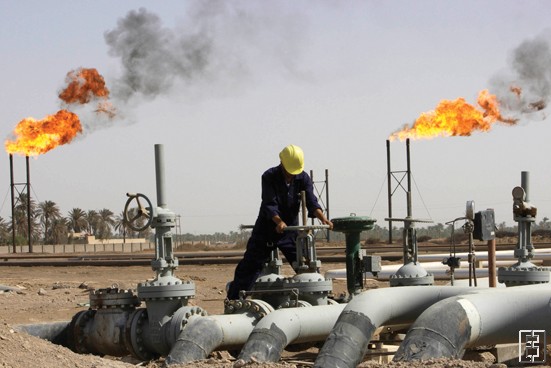
Since the American engagement in Iraq was downsized, other countries have continued to gain higher profiles there, and Iraq’s economic allegiances — and its resources — are being wooed by powers whose interests are in competition with those of the United States. Nothing demonstrates this change more dramatically than the state-owned China National Petroleum Corp (CNPC) acquisition of US oil giant ExxonMobil’s position in the West Qurna Phase 1 oilfield for $50 billion, one of the largest such energy deals ever made.

Beijing had become a big player in Iraq’s oil sector even before this transaction was announced in early February. CNPC, at the beginning of 2013, was jointly operating three fields producing 1.4 million barrels per day (b/d), more than half the country’s output. However, acquiring the new stake means that CNPC alone will soon account for 50 percent of Iraq’s crude production.

Beijing’s takeover of the Exxon concession came after a dispute between the Iraqi central government in Baghdad and the US oil company over its attempt to operate in both Kurdistan and the rest of Iraq. Already involved in the south of the country, Exxon was the first big oil company to sign an agreement with the autonomous Kurdistan Regional Government in Erbil, even after Baghdad had told the US giant that it couldn’t work with the Kurds and with the rest of Iraq at the      same time.

Beijing’s success in Iraq is partly based on its lower costs, with Chinese managers and engineers typically earning only 25 percent of the salaries paid by Western companies. Since Baghdad is giving foreign operators as little as a couple of dollars per barrel of crude produced, some Western firms like Chevron and Exxon are turning to the Kurds, who offer more lucrative production-sharing agreements.

Iraq’s output of crude is set to rise to more than 8 million b/d by 2030, 80 percent of which may go to China. To facilitate exporting Iraqi oil, the Chinese are engaged in various forms of infrastructure development, including pipelines. Regarding the latter, the China Petroleum Pipeline Company is reported to be favored to win a $650 million contract to build a pipeline linking Iraq’s southern oil fields to coastal storage depots. This new line with a wider diameter pipe will replace the existing outdated one, easing transport constriction and expanding oil export capacity. The new pipeline should be operational in early 2014, facilitating a planned increase in output in the targeted area from the current 230,000 b/d to around 400,000 b/d.

Nor are the Chinese the only Far Eastern players coming up in Iraq: the South Koreans are also busy with infrastructure and other work in the country. Among many other projects, South Korea is constructing a housing mega-complex of 100,000 units. And LS Industrial Systems, a leading South Korean manufacturer of electric components, won a $67 million contract to build a power distribution control center for the Iraqi government. Under the deal with Iraq’s Ministry of Electricity, the company will also later construct seven distribution control centers across the country. With this contract, LS Industrial has logged more than $106 million of new business in Iraq during the first few weeks of 2013.

Look for more such Far Eastern dynamism in Iraq this year and beyond, as the Chinese and others continue stepping into the Iraqi market with even greater force. On one level, this will be a purely economic phenomenon, simply meaning that more business is being done between Iraq and East Asia. The implications in geostrategic terms, however, could be even bigger, going beyond Iraq’s borders to impact other parts of the region. With Washington continuing to lose its appetite for involvement in the Middle East, a stronger Chinese position in the region could, for example, affect Syria and Iran, helping both to face Western pressure. Whatever the outcome of such a complex mix of business and politics in Iraq and regionally might be, the coming year is likely to be one of even greater flux than the one just past.

March 24, 2013 0 comments
0 FacebookTwitterPinterestEmail
Economics & PolicyLebanon's oil and gas

Mapping the petroleum administration

by Jeremy Arbid March 23, 2013
written by Jeremy Arbid

Lebanon’s progress to cultivate wealth from its offshore oil and gas resources has left us with more questions than answers. While the country will not extract any resources for at least five years, the agreements being negotiated in the next 12 months will determine whether Lebanon gets a good deal or not.

Over the course of six days, seven leading thinkers will discuss different aspects of the resources — from avoiding environmental destruction to how to spend the new wealth — each with the aim of helping provoke awareness about what is going on in this crucial period.

For our final segment, Jeremy Arbid discusses how the all-important Petroleum Administration was formed and the policy actors involved.

See also: Lebanon's Petroleum Administration makes a positive start

Avoiding a regional war over hydrocarbons

Transparency is not enough

Plan ahead to protect the environment

Will Lebanon's oil be Christian or Muslim?


Note: This article was written before the resignation of Lebanon's Prime Minister Najib Mikati on Friday. Though Mikati’s resignation will introduce new dynamics to the deal making coalition, it does not change how the interactions of key individuals have acted upon the petroleum file. Until a new Prime Minister is appointed this cabinet will stay on in a caretaker function. Once the Parliamentary elections are held a new cabinet will be formed with the next Minister of Energy and Water, to whom the Petroleum Administration reports. The makeup of the Petroleum Administration will not change because the members have been appointed to six-year terms, but the political influence exerted upon their work will be modified.


A key aspect of policymaking is identifying and defining a problem. In this case Lebanon's problem is how to exploit potential offshore resources and structure the administration of the petroleum sector in a way that reassures investors but, more importantly, satisfies the primary actors’ interests.

When a problem is defined, coalitions form to vie for the attention of public officials in decision-making positions. However in Lebanon, since the end of the civil war in 1990, the government has lacked the capacity for developing public policy. Rather, policies are made more on the basis of political deals than on planning and policy development.

A long decline

The collapse of the state during the civil war replaced the formal power centers within government institutions and put them with the de facto militias. Militia leaders, in an effort to command resources and deprive their rivals, began importing petroleum products at various points of entry. As examples, the Lebanese Forces controlled the port at Debaye, Amal held the oil refinery at Zahrani, and the Progressive Socialist Party improvised ports at Jieh and Khaldeh.

As such the number of companies importing petroleum products rose from five before the civil war to several dozen by its end. The government of Lebanon essentially legalized the importation of petroleum from a state monopoly to an oligarchy controlled by former warlords. In this way, the militias’ efforts of consolidating control over petroleum imports (but also other sectors of the economy) gained a sense of legitimacy and integrity, and returned predictability back to the economic system.  

The 1989 Taif agreements offered an opportunity to reinstate state sovereignty, but instead the redistribution of power was entrenched. Nowadays there are formal government entities but the actual power is not therein. There is some overlap, but where the real policy action is taking place, where the real policy actors are, is in some sort of a coalition. The interactions in creating policies or influencing policy direction is really an expression of the interests of the group rather than a political, factional, sectarian, confessional, or even ideological function.

By taking the vital Petroleum Administration (PA) as a unit of analysis, one can visualize how these actors are operating within the burgeoning petroleum sector. With a firm understanding of the Lebanese political environment, one can conclude a certain politicization of all government agencies, not limited to the PA. This politicization is, on one hand, attributed to fulfilling religious sect requirements when forming the entity, as well as placing the appropriately skilled individual for each position.

On the other hand, there is coercion amongst political actors in divvying control over appointed officials, i.e. which political entity an official is ultimately serving. The six positions on the Petroleum Administration are designated by sect – Shi’a, Sunni, Druze, Maronite, Greek Orthodox, Greek Catholic. The leading political parties and actors will certainly have had a role in determining their sects representatives. As such, the map below shows a rough understanding of how the PA is influenced.

As this map shows, there are a number of actors seeking to influence the PA's decisions, both through informal and formal channels.

Who else played a role?

Donor institutions have also had significant impact on the development of the petroleum sector. Primarily, these organizations work towards building capacity through financial and technical support within ministries or other government entities in Lebanon. The most notable institutions supporting progress on the petroleum issue come from of the United Nations Development Program (UNDP) and Norway’s Oil for Development program.

UNDP assisted the Ministry for Administrative Reform in the design of a human resources system, which was later used in the selection process for appointing the Petroleum Administration positions. UNDP generally has a significant impact on government institutions in providing institutional capacity and policy support. It has an indirect presence on the Petroleum Administration with two former associates filling involved: Wissam Zahabi was a UNDP appointee in the Office of the Prime Minister providing technical advice on energy-related issues; Walid Nasser held a long career within the UN system in strategic policymaking roles.

Norway’s Oil for Development program offered an eight-week training course held in Norway on petroleum policy and the management of petroleum resources in 2007. Other capacity-building training includes courses on legislation, data management, independent resource assessment, promotion and licensing round activities.

Both Wissam Zahabi and Gaby Daaboul benefited from this 2-month program. From a very early point, these two individuals were contributing to the development of the petroleum file. Zahabi, a carryover from the Prime Minister’s office since 2003, and Daaboul, a legal advisor and closely linked to Finance Minister Mohammad Safadi, were both instrumental in drafting the Offshore Petroleum Resources Law (OPRL) n. 132, and the Petroleum Activities Regulations (PAR) as well as many of the correlating decrees.

Other institutions, such as the World Bank, International Monetary Fund, and the Delegation of the European Union have instituted programs in the past related to energy by providing capacity building grants or loans and financing for energy-related infrastructure. These donor institutions will continue to work to take oil and gas into account in order to determine where to position themselves in the donor picture.

By taking the PA as a case study, we can start to assess the influences being placed upon the body and this can help us analysize what decisions they are likely to make.

March 23, 2013 0 comments
0 FacebookTwitterPinterestEmail
  • 1
  • …
  • 271
  • 272
  • 273
  • 274
  • 275
  • …
  • 695

Latest Cover

About us

Since its first edition emerged on the newsstands in 1999, Executive Magazine has been dedicated to providing its readers with the most up-to-date local and regional business news. Executive is a monthly business magazine that offers readers in-depth analyses on the Lebanese world of commerce, covering all the major sectors – from banking, finance, and insurance to technology, tourism, hospitality, media, and retail.

  • Donate
  • Our Purpose
  • Contact Us

Sign up for our newsletter

    • Facebook
    • Twitter
    • Instagram
    • Linkedin
    • Youtube
    Executive Magazine
    • ISSUES
      • Current Issue
      • Past issues
    • BUSINESS
    • ECONOMICS & POLICY
    • OPINION
    • SPECIAL REPORTS
    • EXECUTIVE TALKS
    • MOVEMENTS
      • Change the image
      • Cannes lions
      • Transparency & accountability
      • ECONOMIC ROADMAP
      • Say No to Corruption
      • The Lebanon media development initiative
      • LPSN Policy Asks
      • Advocating the preservation of deposits
    • JOIN US
      • Join our movement
      • Attend our events
      • Receive updates
      • Connect with us
    • DONATE