• Donate
  • Our Purpose
  • Contact Us
Executive Magazine
  • ISSUES
    • Current Issue
    • Past issues
  • BUSINESS
  • ECONOMICS & POLICY
  • OPINION
  • SPECIAL REPORTS
  • EXECUTIVE TALKS
  • MOVEMENTS
    • Change the image
    • Cannes lions
    • Transparency & accountability
    • ECONOMIC ROADMAP
    • Say No to Corruption
    • The Lebanon media development initiative
    • LPSN Policy Asks
    • Advocating the preservation of deposits
  • JOIN US
    • Join our movement
    • Attend our events
    • Receive updates
    • Connect with us
  • DONATE
AnalysisEconomics & PolicySpecial Report

Reaping windfalls of inclusion

by Thomas Schellen February 28, 2022
written by Thomas Schellen

Once upon a time in the North – before conflicts in the hills of this country were fought to the point of slaughter among cousins – a young women of high social standing announced to her father and her peers that she was going to be a serious journalist. Shock. Her social circles were aghast. The erstwhile journalist, who today is an octogenarian lady of renown, wistfully explains to this unbelieving writer over a cup of coffee how her aspiration to undertake such a “mud raking” work was anathema her social class in the early 1960s, scandalous to her student peers, and worrying to her father. 

As news of her career dream was racing along the grapevine in a proud Lebanese mountain town, it took a visit by the newspaper’s editor-in-chief from Beirut to reassure her father and placate his fears before he allowed his daughter to pursue this unladylike endeavor. To his credit, he did. It also took quite a few blunt displays of her confidence and determination in the faces of her, perhaps somewhat jealous, peers before the young lady’s life choices would be accepted by her female age mates. 

She embarked on writing and later on pursued even more daring public ambitions where she competed against the views of many men of power. She launched an NGO despite being resisted by women caught in the old status quo of social behaviors, the lady (whose name does not matter in this context and shall not be revealed) explains. Then she goes on to reflect on the great strides that today’s female professionals have made in Lebanon, and the many more strides that are still needed before true equality will be a thing in the country’s civil society, in the workplaces, and, most difficult of all, in the political arena. 

One morale of the story: [inlinetweet prefix=”” tweeter=”” suffix=””]gender gaps are glaring facts of economic life for women in every existing society today but also indisputably a matter of perspective, in as much that their present severity and extent tend to become infinitesimal when compared to the historical experiences of earlier generations of women.[/inlinetweet] This factoid, however, does not change the need to reduce the gender gap that exists in the average Lebanese workplace and that is far too large and daunting from the vantage point of many a digital native or millennial who is thinking about her dream career or starting her enterprise. 

Questions beyond advocacy

It is not that there is a blatant lack of advocacy for gender equality, diversity, and the rights of women in Lebanese society. If one were to speak of society’s great and shameful deficiency, it wouldn’t be absence of advocacy but the failing transmission of female rage and skills into the political arena and the blockage of female opportunities in elections. Women’s participation in the economy, however, is another and perhaps more urgent issue. 

On this front of workplace inclusion, diversity, assurance of freedom from harassment, defense of dignity of female labor, and the need to reduce the gender gap in pay and career opportunities, it is firstly notable that there are purely local as well as globally rooted action groups that are at time of this writing stepping up their efforts of building a more gender-equitable economy. 

Of course, the complexity of Lebanon’s economy (one of this country’s intangible and important assets) means that there is not one single path to greater gender equity. Female-led enterprises are found in all categories of enterprises, from single proprietor and operator nano ventures over family businesses and private partnerships to listed corporations of any size. 

However, [inlinetweet prefix=”” tweeter=”” suffix=””]women-led entrepreneurial and small companies face specific hurdles such as especially difficult access to finance and distrust from established “male” counterparts in their supply chains, family owned businesses have to conquer cultural hurdles of traditional patriarchic orientation[/inlinetweet] (this report entails stories on the challenges of female-led entrepreneurial and family companies). Large state-affiliate or privately held corporations are by all evidence not exactly part of the business and shareholder participation experience and scrutiny of their behaviors under environmental, social, and governance (ESG) principles that defines the goals and behaviors of stock-exchange listed companies. 

Complicating the task of promoting female businesses and gender equality in workplaces further is the fact that some industries are still farther away from achieving inclusion than others. In the MENA region, the female labor participation rate varies in different industries, says Lama Moussawi, the director of the Center for Inclusive Business Leadership (CIBL) at the American University of Beirut. Among six sectors or industries researched previously by CIBL – healthcare, education, financial services, STEM (science, technology, engineering, and mathematics), professional services, and other services – women’s participation is highest in healthcare and lowest in STEM, she explains.

CIBL has embarked in the past year on a project that is known by the abbreviation SAWI, short for Support and Accelerate Women’s Inclusion. In its first phase, the project targeted a broad selection of companies in eight MENA countries for developing and eventually practicing policies that govern and will improve inclusion of women in the sectors of recruitment, promotion, and retention. Working with country partners, between eight and ten companies joined the project in each included country. “We were so far able to implement 80 policies by working with employers in the region,” Moussawi says. 

In addition, the SAWI project entails a genderlens investment component that measures listed companies in the eight countries (Algeria, Bahrain, Iraq, Jordan, Lebanon, Libya, Morocco, and Tunisia) where SAWI has been allowed to operate. According to Moussawi the component’s approach is somewhat digressing from conventional narrow gender lens focus in that it seeks to direct investments to “companies that are inclusive or are investing efforts towards becoming inclusive.” Nonetheless, the effort which looked at 515 listed companies (notably not including the regionally important stock exchanges of Saudi Arabia, the United Arab Emirates, or Egypt) only found 12 companies that fulfilled three or four categories of inclusive organizational behavior. 

Asked if the SAWI project and the existence of CIBL is in itself secure in the torrents of the Lebanese crisis, Moussawi explains that the team of CIBL is highly committed and has withstood the outward migration pressures that Lebanese professionals and high achievers have been exposed to. She adds that CIBL also benefits from strong support by the leadership of AUB and the Olayan School of Business. Although the initially expected endowment type funding has been redirected to the benefit of AUB students that are in greater need of aid, Moussawi says that several unsolicited international funding offers have been made to CIBL. “The outlook for funding is good because what we are doing is very important for the region,” she enthuses.

In a separate conversation, Olfat Khattar, regional project manager of the SAWI project, confirms that the CIBL team is highly committed to its task. Describing her work as something that is “more than a job”, she says, “We feel that there is harmony between us and the work that we do. We belong to this CIBL and feel very happy with the work and I feel that this was the main reason for continuing the work. We are very excited about the target of the SAWI project, working on making policies making it more inclusive to help women to contribute and be part of formal business.” 

With CIBL declaring to have mastered challenges of access to financing and preservation of human capital that ring familiar in the context of the Lebanese crisis, two other inclusion-minded organizations – the female-majority Lebanese League of Women in Business (LLWB) and the Sustainable Development Goals (SDG) oriented Global Compact Network Lebanon (GCNL) – concede to Executive in conversations for this report that they have stumbled in their membership growth, had to interrupt programming, or have suffered some depletion of human capital.

But against the ill winds of the economic crisis and the pandemic, these organizations have proved their mettle; instead of curbing, they are continuing and expanding, all three having recently ignited new growth and new programs. 

[inlinetweet prefix=”” tweeter=”” suffix=””]In another notable distinction of the three values inspired and female managed organizations, they are collaborative and actively reaching out across boundaries of industries, language, sectopolitics, religion, or gender.[/inlinetweet] In this they are juxtaposing their conciliatory approaches and factual collaborations to the fateful heritage that more traditional business organizations have exhibited in communal fragmentation of allegiances. 

To cite one person demonstrating this behavior, Cynthia Haddad Abi Khater is an industrialist and part-owner of engineering solutions and automation company Technica International, an enterprise with about 200 employees and three international locations that are currently operating or being set up. She is invested into the company’s participation in the SAWI program and also board member of the LLWB organization. “As organization, we have always reached out to other NGOs and other platforms. We have always called for closing ranks and said together we will be able to achieve more impact. All LLWB projects tried to rope in other NGOs and organizations,” she says and tells Executive about the collaboration philosophy practiced by LLWB that there are two models, one of collaboration and one where an organization will many times be talking about the same issues as another organization but both are talking in isolation from each other. 

“At other times we feel, no, there is a true consortium of efforts working towards a common goal. It is this option when we are working as a consortium that we are more effective. We and other organizations working in this field are doing our best to share the knowledge and change the mentality of employers, show the positive side and the better future for employers if they improve their policies and make them more inclusive.” 

The GCNL organization is one of 70 national networks worldwide that are associated with the United Nations Global Compact, the set of business principles first pronounced in the year 2000 by then UN Secretary General Kofi Annan, and with the promulgation of the UN’s 17 sustainable Development Goals, the famous SDRs. 

Deenah Fakhoury, the executive director of GCNL admits that the network had to re-dynamize in 2021 after being impacted by the Lebanese crisis and has adopted two main targets of awareness generation and membership expansion for 2022. ““The ten Principles [of the Global Compact] are part of the way we work and the SDGs are the targets that we want to reach. Our mandate is to work with businesses on the sustainability term. We are there to be able to guide them to meet the 2030 agenda each one at their own scale and within the scope of work that they do. We do this through training, programs, accelerators, webinars, meetings and roundtables,” she says. 

However, while the entire SDR spectrum is driving the GCNL agenda, Fakhoury holds one SDG as especially dear. “There are one or two SDGs, which relate to economic empowerment, that are in my humble opinion extremely important today. Once you have economic empowerment, all the rest will fall in. If you have education and economic empowerment, these two elements will affect life on land, life under water, poverty, hunger, [and] gender equality, because at the end of the day, because at the end of the day these are the two main [SDG targets] where in my opinion the focus should be.” 

Female empowerment and gender equality is the SDG 5, and it is the SDG that Lebanese companies according to Fakhoury have in recent years shown the greatest interest in learning about, ticking it as their top choice for workshops and program participation, despite the many challenges that they face in their daily operations. 

The interviewees of the three organizations are in strong agreement that Lebanon today has something good going for itself, namely its female human capital, and that the quality of both young university students and graduates but also the commitments of large business organizations and individual corporate leaders are things that make it worth being in the country. 

“We have reached a point where one cannot ignore the percentage of women in your company and organization. We and definitely other organizations working in this field are doing our best to share the knowledge and change the mentality of employers, to show the positive side and the better future for employers if they improve their policies and make it more inclusive,” says CIBL’s Khattar. 

”Even If you live in unstable environment, you can have stable growth of awareness. We consistently and constantly [encounter] companies that are eager to sign up to our programs,” GCNL’s Fakhoury and senior GCNL programs manager Susu Smaili concur in one voice. 

DRIVING PROFITS WITH INCLUSIVE AND DIVERSE CORPORATE CULTURES

Avenues of building valuable and inclusive companies of purpose can be many but where can companies in the Middle East start this journey? Answers for the regional road to gender equity and inclusiveness are offered by Lama Moussawi, director at the Center for Inclusive Business Leadership (CIBL) at the American University of Beirut (AUB). CIBL is a regionally leading facilitator of gender equity through the Knowledge is Power (KIP), KIP Index, and Support and Accelerate Women’s Inclusion (SAWI) projects.

Will we see an increase in the number of CIBL project on regional and Lebanese scale in 2022?

To me it is not about the number of projects that we take but about the impact. We recently were invited to submit two proposals to get funding, but it is about the impact. We cannot take on a lot of projects, we need to prioritize. At the core of what we do is change the structures.

You said we cannot measure the impacts of the regional economic turmoil of the past two years but do you expect women in the workplace to be winners or losers of the changing economic situation in Middle Eastern economies?

We worked with 80 companies across the region to implement inclusive policies and this means that 175,000 female employees were directly affected by the policies that were implemented. We trained 500 plus executives [in virtual workshops attached to AUB executive education program] and we have more training modules that we are going to launch. We collected data from 1,700 employers, 550 [of them] women. These are impacting numbers. With respect to Lebanon, we are working on creating more inclusive workplaces and have been able to implement inclusive policies in Lebanese companies. This for sure will have an impact. But things need time to happen and for the impact to show. We want to promote women’s participation in the economic workforce in Lebanon and across the MENA region. That is the objective of everything we do.

Lebanon today looks to the least predictable economy out of almost all countries around the world. Under those highly uncertain conditions, do you see the role of women in the economy as increasing, decreasing, or unchanged?

This is an important question. I don’t know and will be able to get back to you once we have the data that we are collecting from the Lebanese workplace [as part of the regional SAWI project and KIP follow-up].

So I am asking for some prophecy, but what is your vision for the role of women in the Lebanese workplace?

I want women to be involved in all aspects of the Lebanese economy, in the workplace, in the political area. In everything, women need to be given the opportunity to prove themselves and take us to a better [place], working hand in hand with their male counterparts.

Do you see a better chance to achieve this role of women in the economic sphere, in the political sphere, or is it all the same?

I think in Lebanon we can start with the economic sphere. I try not to watch the news because we lost hope [in the political sphere].

Businesses everywhere want even playing fields and don’t want uncertainty but Lebanese politics seems to be based on factors one cannot be certain of. Do you see the role of the economy for bringing overall change in Lebanon today as more important than it was ten years ago?

I think if we build inclusive and equitable workplaces, this can have a good impact on the entire country. My only other message would be that we welcome at CIBL any employers and investors and are happy to partner with them to drive [the development of] more inclusive workplaces.

When teaming up with investors in the development of more inclusive workplaces, would you favor impact investors or would that be all types of investors?

We like to work with all investors, including impact investors. It could be financial institutions like banks, because banks are investors. Investors could be anybody, international or local, who invest in the Middle East.
February 28, 2022 0 comments
2 FacebookTwitterPinterestEmail
Brand Voice

Philip Morris International introduces lil SOLID 2.0 by IQOS, in Lebanon

by Philip Morris International February 28, 2022
written by Philip Morris International
  • Collaboration broadens the company’s portfolio of smoke-free products intended for adult smokers who would otherwise continue to smoke. 
  • Philip Morris will commercialize lil SOLID 2.0 device and its accompanying Fiit consumables in the Lebanese market. 
  • With this launch Philip Morris accelerates the achievement of a Smoke Free Future in Lebanon. 

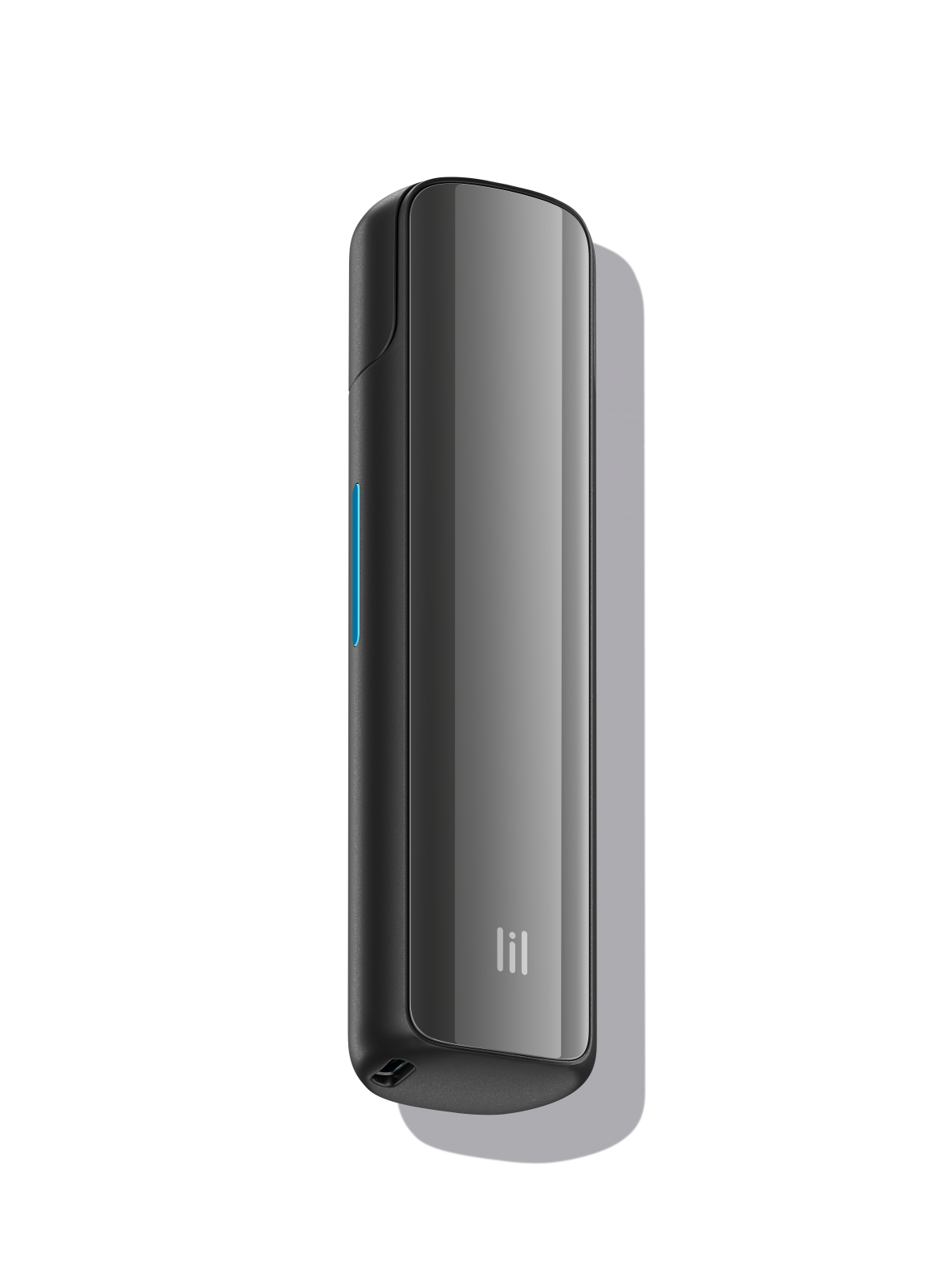
Beirut, Lebanon – February 28, 2022—Philip Morris International (PMI) announced today it will begin commercialization of KT&G’s smoke-free alternative, lil SOLID 2.0 introduced by IQOS, in Lebanon. The announcement follows an agreement signed in January 2020 between PMI and KT&G, the leading South Korean tobacco and nicotine Company. PMI will launch KT&G’s lil SOLID 2.0 device and its accompanying Fiit consumables in Lebanon. 

Lil SOLID 2.0 heats real tobacco with a stainless-steel pin to generate an aerosol without smoke, ash, or fire. The device allows three consecutive uses and up to 25 uses with a single charge1. The lil SOLID device will be introduced by IQOS and enriches PMI’s existing portfolio of smoke-free alternatives in Lebanon, which includes the IQOS tobacco heating system that has been available in the market since February 2020.

“Our ambition is that all those adults who would otherwise continue to smoke switch as soon as possible to better alternatives and abandon cigarettes to the benefit of their health, public health and society at large,” said Taylan Suer, General Manager for Philip Morris Lebanon. “The ongoing expansion of KT&G’s products outside of South Korea will complement our already strong smoke-free portfolio, providing adult smokers with an even broader range of taste, price and technology options.” 

KT&G products to be distributed by PMI outside of South Korea, such as lil SOLID 2.0 and Fiit, are subject to a careful assessment prior to commercialization to ensure they meet the applicable regulatory requirements in the markets where they are launched, as well as PMI’s high standards of scientific substantiation to confirm the absence of combustion and significant reductions in emissions of harmful chemicals compared to cigarettes.

This in an important milestone toward delivering a smoke-free future where cigarettes are replaced by smoke-free alternatives that are a better choice than cigarettes for those adult smokers who would otherwise continue to smoke. While IQOS continues to be the leading brand in PMI’s smoke-free category, this collaboration can further benefit adult smokers by providing greater choice and driving accelerated adoption of smoke-free products for those adults who would otherwise continue smoking.

 Number of uses can vary according to the use environment and the battery status.

Philip Morris International: Delivering a Smoke-Free Future

Philip Morris International: Delivering a Smoke-Free Future Philip Morris International (PMI) is leading a transformation in the tobacco industry to create a smokefree future and ultimately replace cigarettes with smoke-free products to the benefit of adults who would otherwise continue to smoke, society, the company, its shareholders and other stakeholders. PMI is a leading international tobacco company engaged in the manufacture and sale of cigarettes, as well as smoke-free products, associated electronic devices and accessories, and other nicotine-containing products in markets outside the U.S. In addition, versions of PMI’s IQOS Platform 1 device and consumables have received marketing authorizations from the U.S. Food and Drug Administration (FDA) under the premarket tobacco product application (PMTA) pathway; the FDA has also authorized the marketing of a version of IQOS and its consumables as a Modified Risk Tobacco Product (MRTP), finding that an exposure modification order for these products is appropriate to promote the public health. PMI is building a future on a new category of smoke-free products that, while not risk-free, are a much better choice than continuing to smoke. Through multidisciplinary capabilities in product development, state-of-the-art facilities and scientific substantiation, PMI aims to ensure that its smoke-free products meet adult consumer preferences and rigorous regulatory requirements. PMI’s smoke-free product portfolio includes heat-not-burn products, nicotine-containing vapor products and oral nicotine products. As of September 30, 2021, PMI’s smoke-free products are available for sale in 70 markets in key cities or nationwide, and PMI estimates that approximately 14.9 million adults around the world have already switched to IQOS and stopped smoking. For more information, please visit www.pmi.com and www.pmiscience.com.

February 28, 2022 0 comments
0 FacebookTwitterPinterestEmail
Economics & PolicyOverviewSpecial Report

Valuing Pandora

by Thomas Schellen February 23, 2022
written by Thomas Schellen

When looking through history, the most equitable balance of male and female powers is found in pantheons, antiquity’s cultural projections of superpowers onto goddesses and gods. Take Concordia and Justitia, Hera and Aphrodite. Romans and Greeks had powerful women in their pantheons, deities personifying justice, agreement, motherly care, and beauty. Even better, some important versions of the flexible Roman and Greek divinity circles were almost perfectly gender-balanced, entailing top six gods and top six goddesses. My own favorite always was Pallas Athena, whom I like to liberally describe as the Greek city-goddess of brains, brawn, and domestic industry. 

And then comes the shocking turn: enter Pandora. It seems that the first created woman always gets a disastrous reputation. Pandora and the box. Eve and the apple. But honestly, can one deny that these archetypes of women were set up in those narratives (by all means, guess by whom) to look like the root of every trouble and pain, while they really were personifications of adorable traits? Consider the name: Pandora combines the ancient Greek words “all” and “gift.” It can be read as all-giving or all-gifted – either way a highly positive connotation. 

Anyway, the problem of restoring gender equity in the real, financialized, or impending virtual world economy is not about solving the question of how mythologies at the base of Western civilization could have lost their way and turned from lauding female deities to denouncing fallen women, or even how women have been exploited and objectified as male property throughout decidedly non-mythological millennia. 

The problem of the economy, and specifically that of the Lebanese one today, is that this society will likely deteriorate even further into a state of failure in every respect, unless there are gigantic turnabouts, most, if not all of which, will require women to assume much greater roles in politics and economy.

But before this increased role of women will become workplace reality, many things have yet to happen. One such thing, according to international research, is the needed reversal in the deterioration of women’s incomes and economic benefits. This deIn collaboration with destructive deterioration has been linked to the pandemic of the past two years. Since the declaration of the pandemic, commercial studies and humanitarian evaluations have called global attention to disproportionate downturns in women’s employment, career options, and mental health, including increased burnout rates among women in senior management positions.

Women in emerging economies were affected, especially hard, during the coronavirus recession and were forced to cope with a combination of lower incomes, increased work pressures along with increasing childcare and domestic pressures, among which an upsurge in domestic violence has been most revolting. In terms of global economic outcomes, [inlinetweet prefix=”” tweeter=”” suffix=””]a study by consultancy McKinsey in mid-2020, even modeled worst and best-case scenarios that theorized a $14 trillion global GDP gap by the year 2030 between doing nothing and doing everything for the improvement of gender parity in a post-Covid global economy.[/inlinetweet]

 While it is known only too well that Lebanon suffered one of the worst rates of GDP deterioration in the world during the pandemic recession’s first year, and another severe deterioration – estimated by the World Bank as a 10.5 GDP percent contraction – in 2021 due to multiple reasons, it is not quite a simple undertaking to assess the compounded impact of the Lebanese crisis on women. 

Lama Moussawi, the director of the Center of Inclusive Business Leadership (CIBL), emphasizes that the participation of women in the Middle East and North Africa region’s economy is below 20 percent, falling far short of the global average of 40 percent. However, she also says that local research efforts on the situation of Lebanese women in the past two years – such as inquiries on the numbers and ratios of female and male job losses and company policies for the safeguarding of jobs by gender – have yet to yield results. According to Moussawi, such research has been initiated, but publication of findings is not to be expected for a few more months. 

Anecdotal evidence from everyday encounters and from the opinions of people with whom Executive spoke with during research for this gender equity report indicated that women were not suffering greater job losses than men in an economy where everyone was fighting for survival. Simple observations at places such as banks as well as survey findings and impressions of persons in the financial industry and the tech sector suggested that men, especially mid-career individuals holding degrees and work experience, have been more likely than female professionals to seek employment opportunities outside of Lebanon due to the crisis in living conditions, and the destruction of domestic career options. 

According to this journalist’s conversations, the relative female and male majority view – which is in line with descriptions of common challenges for career-seeking women in other developed or developing workplace cultures – is that employed Lebanese women are more likely than their male counterparts to feel the need to prove themselves, more likely to stay with their jobs, and more willing to shoulder combined work and home pressures; but instead of vigorously negotiating better remunerations for themselves, they get short shrift on compensation. 

Women keep going

Notably, women that Executive asked about the roles of women in the national economy and female approaches to their economic lives expressed a wide spectrum of views that included what the interlocutors called natural traits and strengths of women. Saying that they have not noticed large differences in employers’ behavior vis-a-vis female employees as far as terminations during the crisis, the female researchers and advocates of gender equality pointed out, however, that many Lebanese employers appeared to take advantage of female employees by burdening them with extra work but failed in offering compensations that would be commensurate with the workloads that they shouldered after coworkers had departed or been laid off. 

Whereas perceptions and self-perceptions of women in the context of the country’s prevalent culture might constitute a mix between gender-transcending assurances of their economic rights and competencies and biological views that could have been held by their forebears. The consensus view of female experts and advocates was that women work harder than ever, adapt to the new challenges of the crisis, and are keeping the country afloat. 

Industrialist Cynthia Haddad Abi Khater, and her colleague Iman Kharrat, at engineering and robotics specialist manufacturer Technica tell it this way: “As women, Iman and I can tell you that women worked perhaps three times [harder] during the Covid situation, whether on a personal or performance levels.” Olfat Khattar, regional manager of the Support and Accelerate Women’s Inclusion (SAWI) project at CIBL, asked if women will help save Lebanon’s economy, she says with conviction, and worthy of several exclamation marks: “Will Lebanese women save the economy of this country? Lebanese women will save this country.”

A truth that needs attention

[inlinetweet prefix=”” tweeter=”” suffix=””]The obvious, but too rarely acknowledged truth, role of women in Lebanon’s economy, a truth that deserves immense attention in the current situation, is that the paradigm of economic growth is, and always has been, unachievable without women’s contributions.[/inlinetweet] In the industrial age, around the start of the 20th century, many of today’s world leading corporations could without female work contributions never have grown as they did. From the formation of the first secretarial pools and the labor of women in wartime economies of the world war era to the rise of the consumer economy, the information and knowledge economy, the parallels between economic growth and women’s economic liberation cannot but convince of this interdependence between female work and economic growth. 

Thus, the issues of female participation and need for inclusion and greater economic justice for women, the problem of the crisis’ inordinate pressures on resources and productivity in general and the entrenched disadvantaging of women in the workplace, in particular, converge into questions, not of if, but when and how much improving inclusion and diversity and solving problems of gender equality will help in creating a better and sustainable Lebanese economy. 

The all-important goal of sustainable economic growth in what aspires to be a Lebanese variant of a transitional economy – a bit of an oxymoron because economies are always in transition from something to something other and hopefully better – necessitates moving from the previous economy’s part fiefdom, part anarchic paradigms to sustainability and inclusiveness. It cannot be achieved without addressing gender gaps in pay and opportunity. 

One big deception in past economic growth and attempts of building the wealth of societies was not recognizing or concealing that economic growth and liberty of economies is fundamentally tied to the participation and liberation of women. In terms of the philosophy of money, the link between women’s independence and emergence from feudal and familial barriers has first been traced over a century ago by German economic sociologist Georg Simmel. It was not until growing industrialization that money incrementally entered the hands of most women, with liberating effects. 

The rise of money as a tool but also a problem of industrial and post-industrial identity is thus intertwined with the economic activities of women – consequently, one can surmise that the economic contribution of women to a nation’s wealth and GDP should be captured in much larger equity building under both, concepts of economic justice, and market logic. 

Equity in economics stands for the value that is left when a venture is resolved. Adding equity or building equity in the context of the listed corporation is the process of issuing shares that increase a company’s residual value for shareholders after settlement of all liabilities. This very successful process of profit maximization and financialization of the economy has, however, not adequately included the contributions of key stakeholders, namely the male and female employees in the companies. 

[inlinetweet prefix=”” tweeter=”” suffix=””]Gender equity has, in a general way, been understood as a target in improving imbalanced social systems. In an economic sense, one could seek to improve gender equity by understanding and accounting for human capital investments that increase the value of the enterprise and constitute moral and legal assets. [/inlinetweet]These assets are attributable to the women and men who invest their talents and skills in diverse and inclusive ways into an enterprise, thus enhancing its societal and economic value beyond that of a company that is only driven by a financial profit motive. 

This approach, one can presume, will work well in the rising tradition of economic thought that highlights the extraordinary capacity of purposeful companies to create value. For this valorization (in a new human capital sense) to manifest, employees need “to align their performance with the broader goals of the corporation” (economist, impact investment guru and former central banker Mark Carney), which is easiest in companies that offer fair compensation, job advancement opportunities, adequate resources, and a fair working environment. The latter, Carney points out, “will look different for every company and position, but the basics will not; all employees should be treated with dignity and respect and be free from intimidation and harassment.”

 In summary, fair treatment and work connected to meaningful purpose, create equity, regardless of gender, age, or any other self-chosen or seen as fated identity factor. Freedom from harassment, equality of opportunity, and chances of advancement are further building blocks of equity in a purposeful company, and in a 21st century workplace inseparable from diversity, inclusiveness, and gender equality. 

In the midst of all the shifts and rethinking of economic and human capital basics built over recent years, where gig and circular economy patterns have started moving the workplace away from the firm as monolithic concept towards a collaborative platform, more fluidity has been introduced into the concept of the office and workplace through the corona pandemic experience, together with technological innovations in computing, automation, and communication. The Lebanese work sphere by virtue of the crisis comes to terms with the equality and diversity paradigms that play a crucial role for maximizing economic productivity.

February 23, 2022 0 comments
2 FacebookTwitterPinterestEmail
EconomyFinanceLeaders

Economic democracy

by Thomas Schellen February 16, 2022
written by Thomas Schellen

Seen in isolation, the situation of Lebanon at the onset of 2022 is that of a country which is still in the depths of a mindboggling crisis. The national crisis of everything is singularly encompassing and to be grasped by the human mind needs no historic denominator, geographic comparison, or even numerical quantification of GDP contraction, annual inflation rates, currency depreciation, or increases in inequality, unemployment, and poverty. A walk through Beirut and a journey into other urban centers and outlying villages is enough to nurture a sense of unspeakable economic shock, common suffering, and utter dismay at this national tragedy being born and raised in the presence of corrupt and self-absorbed leaders. A religious founder walking the hills of the region was once purported to ask his listeners “is there anyone among you who, if his son asks for bread, will give him a stone?” Observing Lebanon, one might ask why some will treat their people, like no sentient moral person would a stray cat.

But this small slice of attractive real estate on the edge of a calamitous region, cannot be seen in isolation. Neither in time nor in its contemporary geopolitical space. This says first that without international push, the individuals and political factions entrusted by the people or by fate with the care for country and society, will not budge. Left to their own devices, they will not cease being self-absorbed, paying lipservice to their duties while incessantly violating them, and acting either corrupt or not at all. That much has been demonstrated beyond question by the past two years’ failed, aborted, or stillborn governing bodies. 

Still, there is no human situation without a way forward. The financial economy is a human idea and a practice of people (public and private). This is why our turn-of-the-year issue focuses on the financial economy of Lebanon, and the need to resolve misunderstandings and deliberately mal-programmed perceptions of the financial economy components, most importantly national dealings with the International Monetary Fund (IMF) and the options that always exist when two sides negotiate in good faith. There is no reason at all to think the IMF wants Lebanon to suffer. 

IMPERFECT BY DEFAULT BUT…

At this point, a program for a virtuous financial economy will by default be imperfect. The mess is so deep that any attempted solution, for example whether to still go for a currency board or how to restructure our banking sector so we do not do our competitor nations the favor of destroying our strongest economic asset ourselves, will not be free of conceptual and implementation errors. We asked the best experts that we found to give their perspectives on the financial economy, the engineering of which will have to constitute several crucial wheels in our national economic machine that has to be made to work in the coming year, lest Lebanon lose more of its qualified people and those who stay slink along life as beggars. 

Thinking and tinkering with the financial economy will not be enough to begin saving Lebanon this year, however, regardless of how much international input the country might get. Two more considerations need to be undertaken. One is the continued effort, against all previous conceptual flops, communication imperfection, and current lack of power, to debate our economic future from as many angles as there are strong and justified interests. Let it be stated clearly if reiteratively: Lebanon has great business and economic minds. An abundance of talents, more than it needs. Now more than ever, the talents must not be buried. 

If we want to effectively benefit from outside help, we have to help ourselves and do our part to construct the better operating system and economic machine. That is why we are publishing our Roadmap 5.0 at this time, inviting your participation in the effort to push for economic democracy where the public and private and third sector wheels finally move productively in synch, empowered by free and fair elections and by your constructive ideas. We are not only publishing an update but we are adding a new pillar, focused on enabling private sector industries and economic agency (for more details on the new pillar and our Roadmap journey, see Leader on page 8). 

USING THE WIDE ANGLE LENS

 The third viewing angle of our crisis of everything necessitates a look at the global picture. Gauged against any conventional wisdom and experience for country development, the paradox of the Lebanese situation at the start of 2022 is that the country has in the past year done worse, far worse, than rational thinkers would have expected. At the same time, the country has, in its social fabric and will to perform with civil decency, not deteriorated nearly as badly as some evangelists of self-abandonment and despair had promised in pessimistic scenarios of a failed society. The people’s generosity and welcoming inclusiveness has not been destroyed. There are still those who want to make this country shine as bright as it can.

However, if the optimists succeed, Lebanon might in a few years shine on a global stage considerably dimmer that it was in the first twenty years of the century. Two recent benchmark publications show the state of the world is causing growing fears at least for the next two or three years. The 2022 Global Risks Report (GRR) by the World Economic Forum (WEF), published in January, starts out with three headlines: burning societal and environmental concerns, collaborations on challenges rendered more difficult by rising inequalities under divergent economic trajectories, and the danger of a disorderly climate transition that will further exacerbate said inequalities. The GRR sees a horizon marked by increasing tensions.

About a quarter of the people polled for the 2022 GRR are worried, over 60 percent are concerned, and not even 4 percent are unrestrainedly “optimistic.” Without claiming to be scientific, this magazine’s memories of hearing Lebanese business leaders say that they are optimistic for this country, optimistic despite everything they have experienced, is a multiple of 4 percent. Note: Lebanon-based economic leaders included in a sample of some 12,000 individual leaders asked by the WEF to assess the top risks in their countries, most often cited state collapse, followed by man-made environmental damage ,and absence/collapse of social security. Global risks by comparison concentrated around climate and weather, flowed by societal risks, with economic and debt risks distant runners up. 

Another report, more extensive and more authoritative than the GRR, published in January is the World Bank’s study on the Global Economic Prospects (GEP). The press announcement for this report condenses its key message by saying darkly that the global economy is entering a “pronounced slowdown.” Stating some fascinating numbers, the GEP informs, for example, that total global debt reached 263 percent of global GDP in 2020 and government debt in Emerging Markets / Developing Economies (EMDE countries) leapt up nine percentage points to 63 percent of GDP (one could only dream of Lebanon to be in the median range of EMDE public debt). 

The headlines in the report’s first pages describe the global economic horizon as clouded by unprecedented macroeconomic imbalances and growing inequality within and between countries. It further sees the horizon enmeshed in exceptional uncertainty, which is further compounding in equalities. “Half or more of economies in East Asia and Pacific, Latin America and the Caribbean, and the Middle East and North Africa, and two-fifths of economies in Sub-Saharan Africa, will still be below their 2019 per capita GDP levels by 2023,” (emphasis added) it augurs broadly. To tackle those exacerbating inequities in the developing world, the GEP report proposes an agenda of “concerted effort to mobilize external resources and accelerate debt relief efforts,” plus invigorated steps for “domestic growth and innovation.” 

MICRO LOOK LEBANON 

Lebanon is the single MENA economy estimated in the GEP to have ended 2021 with a GDP contraction (minus 10.5 percent versus regional growth forecast to increase from around 3 percent in 2021 to 4.4 percent in 2022), and has a 99.999 percent outlook to have GDP far below 2019 numbers at the end of 2023. The World Bank did not see it fit to include Lebanon’s (nor Libya’s, Yemen’s and Syria’s) GDP estimates for 2022 and 2023 in regional numbers. The Lebanese who are told in the GER that their “new government formed in September 2021 is beginning the process of economic stabilization,” indubitably will be enamored by World Bank leaders’ promises for acceleration of debt relief efforts, and good advices on growth and innovation. 

But even if there were projected numbers for Lebanon’s economic fortunes in 2022 and 2023, it has to be remembered that all the world’s models and experts have not proven any more trustworthy for predicting the mid-term or even the impending global performances, neither ahead of the 2007 Great Recession nor during the unfolding of the 2020 pandemic recession. Nonetheless, when considering the mood of impudently exuberant expectations at the start of 2007 in comparison to today’s confessed skepticism, the pained anticipation of troubles in the next three years looks more credible than past irrational exuberances. 

This brings home two messages. Lebanon’s efforts for building the national economic machine in 2022 should be both holistic, i.e., encompassing all political and social and economic fronts, and self-reliant as much as any how possible. They will have to include foreign assistance and agreements but need to assume that the world community, and with it the ability to respond to the mounting needs of developing and countries and failed states, will be heavily burdened this year. Lebanon needs to use its own devices, expatriate and local, and all its purported friends, but most of all, it will have to be self-motivated to engineer a new economic democracy with the tools of state buildings and construct trustworthy contracts. 

The global message is not to ignore that the past seven fat decades of global growth will have to be replaced by a paradigm of prudent resource preservation that entails much more than climate risk mitigation, appeasement of societal upheavals, and improvement of virtual spheres or cyber defenses. If the coming global shift will be disruptive for as long a period as the need for climate risk and population risk and information society risk has been ignored or improperly treated, we are in for decades of disruption, shock and denials, stagnation, fitful restoration, and recreation of our economic democracies amid ongoing uncertainty. The lessons of the crisis of everything in the Lebanese laboratory deserve to be preserved and solutions that might be tested successfully in Lebanon in the coming few years might become this country’s most productive and valuable exports. This moment in time is one to prepare for most interesting challenges, whether in Lebanon or in the world. 

February 16, 2022 0 comments
0 FacebookTwitterPinterestEmail
Economic roadmapLeaders

Let number 5 be alive

by Thomas Schellen February 16, 2022
written by Thomas Schellen

Published in its fifth draft iteration, this year’s Economic Roadmap is coupled with an important addition of a fifth pillar, enable. It adds seven industry-specific agenda priorities to our menu of measures that we propose to aspiring change leaders and decision makers. These new agenda priorities and related proposals specifically target the enablement and self-enablement of leading productive industries in Lebanon, namely manufacturing, agro-industry, media and content creation, hospitality, knowledge enterprises, organic beauty, and renewable energy. 

Other changes in Roadmap draft 5.0 can be found in revised introductions to the 19 agenda priorities and their detailed policy priorities and proposals. Sadly, only updates, in the rarest cases, mean that proposed measures under a policy priority have been achieved – updates of proposed measures mostly reflecting unfortunate changes in context of the economic crisis rendering actions unachievable or theoretical for the foreseeable future. 

Last but not least, innovations of the Roadmap involve the addition of almost 90 content links within this online edition. These links connect you to Executive’s stories of the past six years analyzing and elaborating agenda priorities listed under pillars one to four, as they retain their titles of build & reform, strategize, combat, and develop.

ROADMAP FLASHBACK AND THE ELECTIONS AHEAD 

At the time when the magazine was systematizing its internal Executive Roadmap project discussions – with first informal inputs to the roadmap dating back to the idyllic 2000s – reformist Lebanese minds, including Executive as publication in advocacy of a better economy, were committing themselves to the run-up period to the 2018 parliamentary elections.

As Lebanon’s change advocates were energized by the 2016 municipal elections, many of them looked to the long delayed parliamentary elections for fresh representation that would lead a tidal of wave of change. One that would challenge the status quo, witness the rise of women within the political spectrum, and see many more overdue to changes. 

In just one example for the desires tied to the 2018 elections, we titled our November 2017 issue “Reformist Mutation,” with the message that the country was experiencing the gestation of a future governed by this new DNA. In parallel, we noted in that issue’s leader and overview story that the anti-establishment political groupings and individuals must get their act together, while asking whether the new will be “fundamentally different and better, or just as vain as the old.” 

Alas, the 2018 elections did not result in even as much as 10 or 20 percent infusion of reformist DNA into the political aisle. The question hovering over the constructive impact of new reformist voices on the Lebanese Parliament remains levitating, and begs for another answer in this year’s electoral showdown. But notwithstanding the unlikely occurrence that a reform-minded Parliament would be empowered this spring, the Executive Economic Roadmap has from its inception been and continues to be based on consultative principles and processes. Among our aspirations – then and now – is that elected servants of the people would consider Executive’s Roadmap a useful tool for economic policy making and consult it as a platform for dialog with their well-informed constituents 

UNIVERSAL VOICES

 As elections are, yet again, on the political horizon, it is necessary to not only acknowledge how desperate the economic reality has become, but also how political processes have shifted to the worse. From a partisan and self-serving sectarian model of horse trading driven by joint, albeit minimal, mutual interests to seek partisan benefits at the lowest cost to themselves and their fiefdoms, the political sphere seems to have “advanced” to a basket case setting of mutually assured destruction of public interests and clinical paralysis where absolutely nothing strategic and long-term gets done. 

In this dark reality, one cannot but note that reform demands have been thrown at the Lebanese Republic in a growing barrage. Universal opposition to the government’s economic behaviors – with its two defining components of inactivity and corruption – has been stated on the Lebanese street in the 2019 protests as well as the garbage protests before it. Lebanese economists have frequently voiced scathing criticism of monetary policies over the course of the past 25 years. A few voices from the Lebanese business realm, enlightened academics, and responsible media have even tried to provide constructive criticism. 

Embarrassingly, even global institutions, supranational alliances, and donor governments have, for over a year, showered the government of Lebanon with increasingly harsh rebukes and reform demands. At time of writing, the World Bank’s labeling of Lebanon’s economic crisis as “deliberate depression” evoked the image of a new superlative for recession. Being designated ground zero for an entire new category of sponsored disaster economics – is this the unique Lebanese contribution to the history of economics? 

REALITY VS STATUS QUO 

Lebanon has witnessed all that protest, all those admonitions, but to what avail? One small answer to this question can be derived, depressingly, from a glance over the 2021 Corruption Perception Index (CPI). Within the global criticism and local outcries of distrust of the status quo in Lebanon, the fight against corruption has been an important and vigorously pursued part. (For evidence, see pillar 3, Agenda Priority 13 of the Executive Economic Roadmap.) 

But the 2021 CPI edition, released by Transparency International on January 25th, shows Lebanon having taken another small notch of deterioration in trust last year, from 25 to 24 points, further entrenching the country’s perception as being among not the worst but the almost-as-bad cultures of corruption in the 180 countries listed. What matters here, from this magazine’s perspective, is not so much the drop by one point – out of a theoretical maximum of 100 – or the rank on the CPI list but the fact that all efforts of combating corruption, including our own, have failed to instigate an improving picture of corruption resistance.

In the most recent iteration of a seemingly political process, the draft for the 2022 Budget law has shown how the latest cabinet’s top ambition appears to combine increasing the output of hot air with deflection of reforms. The budget process signals an unhappy continuation to cabinet draft laws of the past few years that yielded nothing but ad-hoc inadequacies, focusing on escaping from structural changes in public finance and the public sector overall. 

The political discourse of the young year fits in unfortunate perfection to what the World Bank’s Saroj Kumar Jha called the “deliberate denial during deliberate depression” when presenting the Fall 2021 Lebanon Economic Monitor on January 25. 

THIS MAGAZINE COULD NOT AGREE MORE. 

But against all economic reason and evidence, Executive has internalized its informal motto to embrace the absurd. This magazine insists to prod on – bloodied but unbowed, as we titled our summer 2021 issue – in advocating for Lebanon’s better potentials. The Executive Roadmap is one of our tools by which we seek to rally you behind the peaceful flag of win-win-win for the Lebanese economy, society, and public interests. 

For this reason, after having had to witness the continued absence of macroeconomic and political will to reform among public sector stakeholders, Executive was more than ready to embrace the idea of zooming our analytical focus, conferencing, and communication skills onto potentials of industries to realize a better economy. 

Last year, we thus eagerly partnered with the United States Agency for International Development (USAID) to discuss an economic framework for job creation and growth in five productive industries. The outcome of this project – with addition of two more industries – is what we present to you as pillar 5 in Roadmap Draft 5.0, with the humble and eager request to invest your minds into discussing and improving it together with us. 

Because, in deliberately and determinedly denying deliberate depression, we can, together, build a new economic democracy for this country.

February 16, 2022 0 comments
0 FacebookTwitterPinterestEmail
Last Year

LAST YEAR

by Executive Editors February 16, 2022
written by Executive Editors

January February 

Lockdown and labor protests

Following the government decision to extend a total COVID-19 lockdown and curfew to the first week of February, exasperated citizens left without the possibility of securing income from daily labor or sales activities took to the streets and blocked roads in protest across the country. At the start of the year a lockdown was implemented for the January 14-25 period, in response to a skyrocketing rise in COVID-19 cases during the holiday season. The extension of the lockdown was decided in a desperate attempt to flatten the curve of infection but was perceived as economically detrimental by laborers and business owners already struggling to remain afloat and deprived of any compensation or social safety net. The resigned Lebanese government did resolutely nothing. 

COVID-19 vaccination starts 

After a long wait, the first doses of the COVID-19 vaccine arrived in Lebanon and the Ministry of Public Health initiated a nationwide and widely promoted vaccination campaign prioritizing medical personnel and senior citizens. The good news was marred by reports of expected nepotism and abuse by public figures, ineligible for priority vaccination, rushing ahead of others to get jabbed. When called out, some of these politicians responded publicly as expected with dismissive remarks and, in some cases, insulting language. Further complications arose from the insufficiency of imported doses amid high demand and need, while different political figures worked through alternative channels to secure additional doses for their electoral base. This prompted the private sector once again to step in and secure vaccines at their own expense for their employees free of charge or at competitive prices.

Journalist murdered 

Lokman Slim, a prominent journalist, activist and vocalcritic of Hezbollah politics was found shot in his car in southern Lebanon on February 4. Slim had previously received explicit death threats from Hezbollah supporters and had issued a statement holding the group’s leadership, along with the Lebanese army, responsible for his personal safety His murder adds another heinous crime to the list of assassinations of people able to testify on nefarious activities in recent months, amid nationwide certainty that it too will also go unsolved. The inability to single out any suspects, much less secure a conviction, or even launch prosecution, meant “the elephant remained in the room,” and the guilty would continue to kill with impunity and pursue their unbridled efforts to advance their own agendas. Slim’s assassination was only the most recent case of attacks against journalists and freedom of expression since the beginning of the October 17 protest movement. His funeral and requiem were attended by a slew of artists, activists, foreign ambassadors, and multi-confessional religious delegations. 

The Lebanese pound in free fall 

In March, the dollar exchange rate reached 10,000 Lebanese pounds on the parallel market for the first time. This figure, regarded by some as the symbolic point of no return for the national currency’s depreciation sounded the alarm for both businesses and citizens who once again took to the streets and blocked roads in protest. This depreciation below 10,000 pounds had been anticipated by a number of economists and analysts but had managed to be delayed in the wake of the August 4 Beirut Port explosion, following an influx of US dollar notes to the country from international donors and expatriates. In the months that followed, this accelerated inflation has been steadily contributing to the depreciation of the Lebanese pound. The subsequent lifting of all lockdown measures and reopening of most businesses did nothing to slow down further depreciation or the dwindling of purchasing power.

April May

No more gasoline? 

The spiralling depreciation of the Lebanese pound and shortage of hard US dollar currency began threatening fuel importers’ ability to afford additional supplies at the subsidy rates effective then. Unscrupulous distributors and gas station owners radically reduced and rationed supply across, pretexting acute shortages even as reports increased of fuel hoarding, black market sales and smuggling of fuel to Syria (along with US dollar banknotes, flour, and a slew of subsidized goods). Panicking commuters queued for up to six or eight hours – sometimes parking their vehicles in line overnight – at gas stations to fill their tanks at steadily increasing rates, provided daily rations lasted. Main roads and highways saw heavy congestion from queues at gas stations, sometimes spread over three lines and extending kilometers. Scenes of vehicles, including ambulances, having run dry and been abandoned mid-road or towed by hand were repeated in different parts of the country, and so were scenes of violence at gas stations, a few of which with tragic endings. Once more, the resigned Lebanese government expended minimal efforts to address the situation.

No more electricty? 

The fuel crisis spilled over to the electricity sector, increasing outages and blackouts, with private generator owners struggling to fill the gaps and beginning to raise subscription fees while reducing supply. The continuing depreciation of the Lebanese pound began to make it more difficult for many citizens to afford price hikes. Some socially minded businesses started welcoming even non-paying customers, specifically students, freelancers and remotely-based employees, to allow them to recharge their laptops and mobile devices or simply escape the relentless summer heat. Again, the resigned Lebanese government remained predictably idle and hoped to stall until a new government would be formed under Prime Minister-designate Saad Hariri. 

Judicial mishaps 

Two Lebanese judges made headlines in this period. Like his predecessor Judge Fadi Sawwan, Judge Tarek Bitar who replaced him in leading the Beirut Port explosion investigation, started facing political pressure from officials and former ministers called on to testify or be investigated. Recurring monthly demonstrations by the families of the victims began to take on a clear character of support for Bitar in challenging systemic impunity and the judge managed to overcome many of the early legal hurdles thrown at him. On the other hand, the controversial Judge Ghada Aoun, Mount Lebanon’s state prosecutor, engaged in a highly mediatized campaign to hold bankers accountable for transferring funds outside Lebanon. Judge Aoun’s perceived bias and untimely agenda divided citizens and eventually led nowhere. Both cases put the issue of an independent judiciary in the spotlight.

Tourism hopes hang on returning expatriates 

Despite the escalating fuel and electricity crisis, the hospitality and tourism sector was betting on a good summer season to recoup some of their losses and stay in business. Import restrictions and the depreciation of the Lebanese pound exacerbated shortages of medical supplies (worsened from the hoarding of supplies by households and, in speculation, by some distributors and pharmacists) as well as other essential goods. Expatriates returning to the country after a year of lockdowns flocked to Rafic Hariri International Airport laden with suitcases of over-the-counter and prescription medication, hygiene products, baby formula, and “fresh dollars” to succor their families. Restaurants and nightlife venues filled up, buoyed by the multiplied purchasing power of these expatriates’ US dollars.

June July August 

Hariri out, Mikati in 

Nine months after his designation as new Prime Minister in the wake of the resignation of the previous Hassan Diab government, and following endless disagreements with President Michel Aoun on his cabinet’s constitution, Saad Hariri finally conceded and withdrew his candidacy on July 15, and was replaced two weeks later by Najib Mikati as prime minister desingnate. By then, with talks of elections in 2022 already thriving, these developments had virtually no bearing on energy, fiscal, or social policies of any kind, barely causing a bump in the upward curve of the Lebanese pound’s unrestrained depreciation, while fuel, electricity, and medication shortages held strong. Queues at the passport office of the General Directorate of General Security started swelling as demand for passports increased dramatically, fuelled by rumors of passport papers running out with hopes of escaping the increasingly untenable situation resting on hypothetical immigration. Hassan Diab’s care takeover government idly watched on.

Deadly gasoline

At least 30 people were a clear stand on demands to replace Bitar. Mikati, however, maintained his refusal to get implicated in the judiciary process. Meanwhile, human rights groups expressed their fears that Bitar would eventually be removed, further stalling the investigation, especially after some of the relatives of the victims of the explosion suddenly wavered in their support of Bitar, a turn-around they justified as efforts to avoid further conflicts and violence while others condemned as betrayal and acting under political pressure or threats. Despite these tensions, demonstrators still gathered peacefully in Nejmeh Square on October 17 to renew their demands for reforms, justice and accountability against the backdrop of an economic and social crisis worsening by the day.

August 4, one year later

One year after the deadly August 4 blast, justice for the victims of the disasters remained elusive, amid a flurry of attempts to remove Judge Tarek Bitar presiding over the investigation. On July 2, Bitar had announced legal procedures against a number of high-ranking politicians and security officials, among them General Security Chief MajorGeneral Abbas Ibrahim. Following caretaker Minister of Interior Mohammed Fahmi’s refusal to lift the immunity of Ibrahim, families of the victims of the explosion protested outside Fahmi’s residence in Beirut and clashed with anti-riot police, even managing to break through the perimeter after Fahmi’s evacuation. Protest movements continued through July until August 4, 2021 where demonstrators gathered en masse in Beirut to commemorate the tragedy. The day was marked by the unveiling of a monument to the victims on the site of the explosion, a massive 25 meter-tall sculpture made from debris of the explosion, that was nine months in the making funded by private companies, with support from state institutions. The monument sparked mixed reviews and the unveiling ceremony was boycotted by some of the families of the victims who held another ceremony simultaneously on the highway overlooking the port. Later in the day, security forces in Nejmeh Square, once again, clashed with demonstrators demanding truth, justice, and an impartial investigation. Later in the month of August, the Lebanese and visitors suffered terse moments as central bank Governor Riad Salameh announced an upcoming complete withdrawal of fuel importations subsidies. However, fears peaked, and the summer holiday season resumed with tourists and expats experiencing their visits without feared increases in violent protests.

September October 

The battle for justice spills over to the streets

The tug-of-war between supporters and opponents of Judge Tarek Bitar in the August 4 Beirut Port explosion investigation intensified over the months of September and October, culminating in roadblocks and a violent demonstration denouncing the politization of the investigation on October 14, that ended in armed clashes between the Tayyouneh and Ain El Remmaneh areas of Beirut near Adlieh. Residential neighborhoods in the district suffered business and property damages, while rooftop shooters apparently targeted demonstrators causing at least six deaths. The violence ignited political and confessional tensions, and somehow dampened motivation for a strong second commemoration of the October 17 protests. Since his appointment as lead investigator, Bitar was forced to suspend his probe repeatedly in the face of lawsuits filed by former ministers suspected of negligence over the August 4 explosion. Following the latest violent confrontations, Hezbollah representatives announced they would boycott meetings of Prime Minister Najib Mikati’s newly formed cabinet until his government took a clear stand on demands to replace Bitar. Mikati, however, maintained his refusal to get implicated in the judiciary process. Meanwhile, human rights groups expressed their fears that Bitar would eventually be removed, further stalling the investigation, especially after some of the relatives of the victims of the explosion suddenly wavered in their support of Bitar, a turn-around they justified as efforts to avoid further conflicts and violence while others condemned as betrayal and acting under political pressure or threats. Despite these tensions, demonstrators still gathered peacefully in Nejmeh Square on October 17 to renew their demands for reforms, justice and accountability against the backdrop of an economic and social crisis worsening by the day.

Blackouts and breakdowns 

Electricity: The electricity crisis reached its peak in October with the first total blackouts across all regions. Private generators instigated serious rationing due to high fuel prices following the full elimination of fuel subsidies and rising fuel prices. Inefficiencies and high costs of imported fuel across the energy sector took their toll on households and businesses alike, with increased closures anticipated. The situation fuelled (forgive the pun) a nationwide dialog about alternative solutions from renewable energy sources, specifically solar energy. Energy was the subject of a high-impact Special Report by Executive in partnership with Konrad-AdenauerStiftung (KAS-REMENA) that engaged technical, legal and financial experts. Fuel: With subsidies removed, gasoline seemed to magically rematerialize in gas stations after a summer of shortage, albeit in a sketchy manner at first, but fewer citizens could still afford it without the lifeline of remittances by their expatriate relatives. This was reflected in the increased demand for bus transportation by parents for their children as schools started reopening. Waste: The cost of fuel disrupted waste pickup and management operations, resulting in garbage piling up on sidewalks and burned or dumped erratically. On a positive note, diminishing purchasing power caused the overall volume of household waste to diminish, as reported by different recyclers. Arts: Rising costs strained the arts sector that was already struggling with production difficulties linked to COVID-19 restrictions and a dwindling turnover at artistic events. During the October 14 violent clashes in Beirut, the entrance area of the Sunflower Theater in Tayyouneh, one of the city’s cultural mainstays, was seriously damaged and eventually closed off, marking another blow to the sector.

February 16, 2022 0 comments
0 FacebookTwitterPinterestEmail
Editorial

Vengeance Economics

by Yasser Akkaoui February 15, 2022
written by Yasser Akkaoui

The year 2021 left a bitter aftertaste. And believe it or not, this horrible flavor of systemic failure keeps getting worse. The government’s inaction increasingly exasperates people’s frustrations, as they maneuver around daily threats, uncertainty, and desperation. This reality promises the worst behavior from both the establishment and the citizen; arrogant incompetence from the first and misinformed confusion from the latter.


The proposed budget’s lack of alignment to a clear and detailed strategy that draws an elaborate plan to revive the economy and returns people’s rights defies all expectations and economic principles. We are worried about the damage that might be caused by passing, before elections, another amateurish plan similar to that of 2020. A non-reformist budget full of haphazard spending and unjust revenues will only serve the political class. It will reinforce a failed extractive economic model that will deplete remaining resources and capital.


As we bleed, we recognize that we need to immediately adopt a plan that distributes the losses fairly before more funds are drained, yet, the fear is that what is being concocted behind closed doors is nothing but another treachery that will allow the government to escape punishment and responsibility for their mismanagement and corruption, and worse, throw most of the burden on the citizen. The asymmetry of information is alarming; the people deserve to be involved in formulating a plan that promotes an inclusive economic model which advances equitable opportunities for financial participants in economic growth, while benefitting every section of society.


On the other hand, we are still awaiting a promising, constructive, and ambitious counterargument from reformist groups or individuals. So far, we only come across reactive, vindictive, and aggressive statements in the form of letters and responses that do not add up to even an introductory discourse on a political reform doctrine that would mirror people’s urgencies and support realistic expectations.

Unfortunately, the international community has also caught on to this lack of vision. None among local or international advocates is amused by our society’s failure to even propose a solid alternative to the corrupt reality, which more and more is resembling sectarian fascism practiced by those few who loudly declare themselves to represent the best interests of the Lebanese but are constantly violating the people’s rights and are willing to use lies and any means at their disposal to achieve their violent goals.


No democracy has ever been entirely immune against violence from the outside, or radical and brutal takeover attempts from within. Thus, while we are busy pegging our hopes to the much-anticipated elections and make our bets that the fragility of democracy does not fail our illusions, it is high time for reformists and opposition to put forward a comprehensive and viable vision that can invalidate the establishment’s attempts to undermine our rights.


Yes, we want to take vengeance for the corrupt past but by building a viable, diverse, and just economy. We cannot invest our hopes into voting for another political fantasy, as we need more than just a good plan or agreement.

February 15, 2022 0 comments
0 FacebookTwitterPinterestEmail
CommentEconomyFinanceSpecial Report

No way out?

by Salim Taha February 4, 2022
written by Salim Taha

The Lebanese national debt, seen in relation to the country’s GDP, has been one of the highest in the world for many years. When the cost of servicing that debt became extreme and international investors lost faith in the country’s ability to manage its finances, it was inevitable for the whole financial system to crash. [inlinetweet prefix=”” tweeter=”” suffix=””]Generations of savings by Lebanese residents and non-residents evaporated through high exposure of banks and the BDL to the sovereign risk. [/inlinetweet]Getting out of the debt trap requires drastic measures.

Sovereign debt defaults have been part of the modern world’s economy for centuries; some defaults are even traced back to the fourth century in Greece. Countries choose certain economic, fiscal and monetary policies that put them at risk, and when adverse events occur over a relatively short period of time, the system endures a distress that mostly ends in a financial and economic crisis. The risky policies usually involve overspending by a government, leading it to borrow more. The consequence of this is higher interest rates to compensate for the increased risk, which, if not reversed with economic growth in time, leads to a spiral of risk that threatens the government’s finances and the national currency.

Like a hell-broth boil and bubble

Lebanon treasury finances were always in deficit and mostly in Lebanese pounds. A large and constant inflow of dollars from remittances, personal capital flows, and – in some years – tourism, helped contain the risk of expansion in Lebanese pound debt.

However, Lebanon’s dollar borrowing to fund the deliberately failed electricity company, Electricité du LIban (EDL) and the interest on dollar debt, meant that every new dollar borrowed locally translated into a Lebanese depositor’s dollar wasted. By the end of 2019, the interest expense of the Lebanese government had reached 65 percent of its total revenues.

Lebanon’s last Eurobond market issuance was in 2017, which means [inlinetweet prefix=”” tweeter=”” suffix=””]no one wanted to hold Lebanese Eurobonds because it was clear to investors worldwide that the Lebanese debt had crossed its point of sustainability. [/inlinetweet]Instead, only BDL had the appetite to buy those bonds, with depositors’ money, as one of the tools of its “financial engineering.” By the time the crisis reached its peak, out of the $120 billion in depositors’ money, $20 billion had been borrowed by the government and $80 billion had been borrowed by BDL under the appellation of “reserves.” The government policy of peg of the Lebanese pound to the dollar artificially overvalued the currency and depleted deposits.

The Lebanese national debt reached 174 percent of GDP towards the end of 2019 and two years later, at time of this writing, stands at 210 percent at market rates. The envisioned restructuring of the debt would now involve a haircut of 60 percent to make it sustainable, which would have been equivalent to a haircut of around 50 percent on depositors in 2020. This was considered the best case scenario by some in 2020 when the government issued its ill-fated recovery plan. However, the plan was never adopted, and the BDL monetary policy intervention continued, opting to inflate the system by printing trillions of Lebanese pounds, thereby rendering people’s deposits worthless, and inflicting an indirect haircut of 80 percent on them.

Any restructuring that would be imposed would still need to haircut depositors, but these depositors would be much poorer now, given the spiral of inflation and devaluation of the Lebanese pound.

Lifting the curse?

[inlinetweet prefix=”” tweeter=”” suffix=””]For the debt to be sustainable in the coming decade, its cost has to be contained.[/inlinetweet] For the Treasury to afford the interest on the newly restructured debt, it needs to be able to collect taxes again from a functioning economy. For the central bank to be able to pay back its debt to the banks and hence to depositors, it needs to replenish the dollar reserves. Therefore, the solution to the debt is an economic, fiscal, and monetary one.

Unless there is a holistic approach to the Lebanese crisis, the country would risk being subject to multiple defaults over the next two to three decades, with increased poverty and no cumulative wealth, rendering the country one of the poorest in the world.

The restructuring of the dollar debt requires an international bailout. The restructuring of the Lebanese pound debt is important to keep the cost of debt low. It is nonsense that the large portion of the debt which is denominated in Lebanese lira is not a threat anymore because its value, it terms of dollars, has shrunken and is continuing to shrink. But lira-denominated debt is payable in lira, from lira revenues. Indeed, the only fiscal revenues that could be used to pay this debt, as all fiscal revenues of the finance ministry in Beirut, are lira revenues; hence the 3 trillion Lebanese Pounds in payable interest on this debt still hold.

In such a severe recession as currently experienced by the Lebanese economy, one cannot expect to collect more money from existing taxes or hike tax rates; the focus should be on increasing the productivity of the Lebanese economy and supporting export-oriented sectors. One time-honored idea for boosting productivity is to invest in needed infrastructures, and once the international community was standing by to inject those billions of dollars in infrastructure projects that would boost the economy and support the fiscal and monetary policies. But alas, we missed that opportunity and we now seem to be on our own – and we all know what that means.

February 4, 2022 0 comments
1 FacebookTwitterPinterestEmail
CommentEconomyFinanceSpecial Report

The road that was never taken

by Salim Taha February 4, 2022
written by Salim Taha

The definition of reform in the dictionary is “making changes to something in order to improve it.” [inlinetweet prefix=”” tweeter=”” suffix=””]It seems the fiscal situation in Lebanon has reached a point where no amount of changes can improve it.[/inlinetweet] The challenge has become insurmountable and the country’s finances might fall into a permanent failure trap that might persist for many years.

Let’s look into the major categories of revenues and expenditures historically in Lebanon.

State treasury revenues are generated, in order, by income taxes, value-added tax (VAT), state owned enterprises (SOEs), customs and excises, and real estate registration.

Down, down, down
All treasury revenues in Lebanon were collected at levels far below their optimal level due to endemic corruption; corporates and individuals rarely declared the right level of their income or real estate transactions. Customs and excises generated approximately half of the expected revenues, the VAT tax gap reached around 80 percent, and SOEs such as Middle East Airlines (MEA), Beirut’s port and airport, Casino du Liban, the Régie, Electricite du Liban (EDL), and telecom operators are overstaffed and mismanaged to say the least.

[inlinetweet prefix=”” tweeter=”” suffix=””]The Lebanese economy is estimated to have shrunk by around 40 percent in the past two years and is going through one of the most complex and dire crises in history.[/inlinetweet] For the same reasons that treasury revenues were under collected, reasons newly exacerbated by the shrinking of the economy, the erosion of purchasing power and increase in poverty, the finances of the Lebanese government in the coming years will be a fraction of what they used to be. In dollars, at the now-deceased official exchange rate, revenues were around $10 billion during the beginning of the collapse which really started in 2016 and was artificially postponed by the “financial engineering” undertaken by the Lebanese central bank, Banque du Liban (BDL), at a very high cost. In the first five months of 2021, according the latest published figures by the Ministry of Finance, the treasury collected 6,658 billion lira, the equivalent of $246 million at the closing black market rate of 2021 (27,000 Lebanese pounds/$1). Extrapolated to a full year, this means the revenues would reach around $590 million, or 6 percent of what they used to be in dollars.

In a sorry state

On the expenditures side, the highest categories are occupied by personnel costs at the top, with debt interest payments coming in at a very close second, followed by subsidies to Electricité Du Liban (EDL), then capital expenditures (capex), then municipalities. An overly bloated government with some 300,000 employees on the payroll between active duty and retired staff (no one really knows the exact figure), where clientelism has always been the name of the game, is not expected to fire anyone anytime soon. End-of-service and pension payments were already unsustainable before the crisis, and printing more Lebanese pound notes to keep them up will only make things worse. Transfers to EDL shrunk by half between 2018 and 2020-due to lack of funds, not to mention the absence of reforms. This has translated as reduced deficit but more blackouts, higher costs on households to substitute increasing blackouts with generators, increased pollution, and less economic productivity. Capex was zero in 2019 and 2020, which means even the small amount of spending on maintaining the minimum infrastructure – post obscene profits margins that had been granted to politically affiliated contractors – is not available, which will only make the country more unlivable, and require much more investment in the future to rebuild it.

As for the interest on debt, following the default decision on Lebanon’s external debt (Eurobonds), billions of dollars in depositors’ funds, in principal and interest, must be factored in with a proper debt restructuring agreement with investors. The restructuring will not be feasible without an International Monetary Fund (IMF) program, which will not materialize without fiscal reforms. But given the clear unwillingness of the political godfathers of the system to reform anything, the country and its government are expected to remain in a zombie state. This means the treasury, with its miniscule revenues and expenditures in real value, will artificially be kept alive with additional printing of Lebanese pound notes, creating a spiral effect of devaluation/inflation/poverty/negative growth, which can go on for a long time.

Succession planning?

You are probably wondering by now what the solution might be. Well, the official answer to that is: reform public service, restructure debt, restructure the banks, restructure the state-owned enterprises, take money from the IMF and rebuild the economy hoping to get back to pre-2019 GDP levels in 15 years. Here you go, la vie est belle.

Is that a realistic scenario? When companies fail, the first thing that bankruptcy administrators do is change the management. [inlinetweet prefix=”” tweeter=”” suffix=””]A whole country failed and is witnessing the largest exodus of human capital since its civil war 40 years ago, but the managers are still the same. [/inlinetweet]Until the managers are changed, one way or another, we should expect Lebanon to become a small, poor and failed economy, surviving indefinitely on a few billion dollars in net remittances.

February 4, 2022 0 comments
1 FacebookTwitterPinterestEmail
CommentEconomyFinanceSpecial Report

Waiting for Godot

by Ali Hamieh February 4, 2022
written by Ali Hamieh

More than 120 countries in the world have some form of a pegged exchanged rate system, in either soft or hard pegs mainly to the US dollar or the euro. Small economies benefit from pegging their currencies to reduce macroeconomic volatility and improve predictability for investors and visitors of the country.

Leaning tower of Lira

The Lebanese Pound before the civil war benefited from a period of floating exchange rate system driven by strong influx of dollars from tourism and banking. During the civil war, political money took over remittances and tourism and capital flows, and these murky funds of conflict finance were the only source of foreign currency. In 1987, the Lebanese Pound witnessed its biggest crash ever with a devaluation in excess of 400 percent in less than two years, crossing 800 Lebanese Pounds to the dollar. When the Lebanese Pound was pegged to the dollar at the end of 1992 and settled at 1,507.5 Lebanese pounds/$1 in 1997, Lebanon had a lot to benefit from exchange rate stability and predictability.

[inlinetweet prefix=”” tweeter=”” suffix=””]Pegged exchange rate systems require adjustments over time when macroeconomic features of a country witness a change. [/inlinetweet]Countries with free capital flows and fixed exchange rate lose monetary policy autonomy, a concept known as the impossible triemma. For Lebanon, this means that to maintain stability in Lebanese pounds and free movement of capital, the Lebanese central bank, Banque du Liban (BDL), has to follow interest rate movements in the base currency (USD in this case) plus a certain risk premium, otherwise capital would exit the country.

At the onset of the Syrian civil war, the Lebanese pound was already suffering from an overvaluation due to dollar inflows to the economy from Lebanese expatriates, which were not channeled to the productive sectors in the economy but rather to bank accounts chasing high interest rates. This rendered price levels in the services industry very high, a concept knows as an increase in the value of non-tradable goods and services in a Dutch disease scenario. Simply compare the cost of a hotel room in Lebanon in US dollars in 2010 vs. 2021. A gradual adjustment of the soft peg’s 1,507.5 rate was long overdue.

Repercussions of Financial Engineering

In the past decade, remittances, personal capital flows and tourism income declined gradually due to regional instabilities and a host of adverse factors, leading to an erosion in the balance of payment surpluses of the previous decade. This in turn led to a dwindling of BDL reserves. In the three years preceding the crash in 2019, BDL raised interest rates to high levels without controlling capital flows or imposing exchange rate rules.[inlinetweet prefix=”” tweeter=”” suffix=””] The Lebanese government failed to induce reforms that were requisite to receiving CEDRE funds.[/inlinetweet] For instance, if interest on deposits in Lebanese Pounds had to be raised to 20 percent to attract inflows, depositors collecting that interest should not have been allowed to exchange it for Dollars and then transfer this profit abroad because they would practically have been taking someone else’s Dollar deposits. These repercussions, which enriched large depositors and banks, eroded tens of billions of much needed dollar reserves. The government failed to deliver promised reforms expected by Riad Salameh, some of which include infrastructure investments, consequently losing a chance at receiving CEDRE money.

Following the crisis, further depletion of BDL reserves was caused by subsidies of essential and some non-essential imports and further capital flight by those powerful enough to manage it. Now the economy has multiple exchange rates operating at the same time, three official rates for the Lebanese pound to the dollar (1,507.5; 8,000; 12,000) and one market rate. The real market rate, standing at around 27,000 Lebanese Pounds/$1 at the time of writing this article, will always be ahead of any official rate as long as there are no proper macroeconomic measures being taken. BDL claims to have only around $14 billion of depositors’ money left in its reserves. Where will the Lebanese Pound go from here?

Million-pound chicken dinner

[inlinetweet prefix=”” tweeter=”” suffix=””]The devaluation of the Lebanese Pound technically has no limit[/inlinetweet]; with the vicious cycle of inflation and devaluation, the Venezuelan Bolivar reached such a devaluation in 2018 that it would have been cheaper to use the currency as toilet paper rather than buy toilet paper with it. Will the Lebanese pound get there? Maybe not to that extent, because a few billion dollars of remittances are still coming in every year from expatriates who support their families. However, Lebanon is highly dependent on imports, especially for its energy needs, which means that reserves will continue to be exhausted for the operation of the economy. The first step to halt degradation is confidence. When a government was formed in September 2021, the Lebanese Pound appreciated to 14,000 Lebanese Pounds/$1. It has halved since then because literally no action was taken yet to save the country from one of the worse crises in history.

Prime Minister Najib Mikati is still debating with BDL Governor Riad Salameh about the losses of the financial system two years after the crash while depositors’ purchasing power is evaporating by the minute. Let us hope they conclude their argument before the cost of a chicken reaches 1,000,000 Lebanese Pounds. It is to be hoped that before then, they would have restructured the central bank, the financial system, and the public sector, then designed the right macroeconomic policies that provide confidence so the very long recovery can begin. Should we wait for that, or would waiting for Godot be less painful?


February 4, 2022 0 comments
1 FacebookTwitterPinterestEmail
  • 1
  • …
  • 25
  • 26
  • 27
  • 28
  • 29
  • …
  • 689

Latest Cover

About us

Since its first edition emerged on the newsstands in 1999, Executive Magazine has been dedicated to providing its readers with the most up-to-date local and regional business news. Executive is a monthly business magazine that offers readers in-depth analyses on the Lebanese world of commerce, covering all the major sectors – from banking, finance, and insurance to technology, tourism, hospitality, media, and retail.

  • Donate
  • Our Purpose
  • Contact Us

Sign up for our newsletter

    • Facebook
    • Twitter
    • Instagram
    • Linkedin
    • Youtube
    Executive Magazine
    • ISSUES
      • Current Issue
      • Past issues
    • BUSINESS
    • ECONOMICS & POLICY
    • OPINION
    • SPECIAL REPORTS
    • EXECUTIVE TALKS
    • MOVEMENTS
      • Change the image
      • Cannes lions
      • Transparency & accountability
      • ECONOMIC ROADMAP
      • Say No to Corruption
      • The Lebanon media development initiative
      • LPSN Policy Asks
      • Advocating the preservation of deposits
    • JOIN US
      • Join our movement
      • Attend our events
      • Receive updates
      • Connect with us
    • DONATE