• Donate
  • Our Purpose
  • Contact Us
Executive Magazine
  • ISSUES
    • Current Issue
    • Past issues
  • BUSINESS
  • ECONOMICS & POLICY
  • OPINION
  • SPECIAL REPORTS
  • EXECUTIVE TALKS
  • MOVEMENTS
    • Change the image
    • Cannes lions
    • Transparency & accountability
    • ECONOMIC ROADMAP
    • Say No to Corruption
    • The Lebanon media development initiative
    • LPSN Policy Asks
    • Advocating the preservation of deposits
  • JOIN US
    • Join our movement
    • Attend our events
    • Receive updates
    • Connect with us
  • DONATE
Economics & Policy

Deliverance in the Gulf

by Thomas Schellen & Nicole Walter January 17, 2013
written by Thomas Schellen & Nicole Walter

While the high-rises, gargantuan malls, five-, six- and seven-star hotels, and abundant glitz and glamour are all telling of Dubai’s place as the center of global aviation, much less known are the caravans of cargo that crisscross the globe from Dubai and other hubs in the Gulf Cooperation Council.  

But at a time when the global economy and the big economic blocs are set to enter a tough year — according to the latest host of predictions by the International Monetary Fund, the Organization for Economic Cooperation and Development and the European Central Bank — Gulf countries are investing with fervor in their transportation and logistics networks. 

They are intent on using their advantageous spot on the world map to consolidate their economies. Although the recognition for being the Arabian Gulf’s first “transportation hub” would go to the Sultanate of Oman, which as an explorer nation extended its rule to the Swahili Coast in Africa and pioneered this sector hundreds of years ago, today the United Arab Emirates is the region’s logistics leader. 

“As with passenger demand, Dubai will likely be at the forefront of freight demand as well,” says Saj Ahmad, a regional analyst specialized in aviation and airlines. “Qatar and its new Doha International Airport that opens next summer will have a great advantage in being able to tap into cargo traffic,” he said. “These two airports will compete for business, but in the longer term, it’s evident that the massive investment earmarked for Abu Dhabi means the UAE capital too will be in the mix. In the same way that London, Paris and Frankfurt compete for the spoils of passenger and cargo traffic, so too are Dubai, Doha and Abu Dhabi.”

Logistics is an extremely competitive business and so, true to the spirit of ranking everything, the World Bank has measured the “logistics friendliness” of 155 countries since 2007. In the third edition of this Logistics Performance Index (LPI), published 2012, the UAE is the top performing country of all emerging markets, in 17th place globally, and has overtaken countries such as Australia, Norway, and Ireland when compared with the first LPI. Singapore and Hong Kong rank as the top duo in the 2012 LPI, followed by Finland, Germany and the Netherlands.

According to a private-sector logistics index, The Agility Emerging Markets Logistics Index focused on emerging markets and co-branded by regional company Agility and a UK-based transport consultancy, China and India are the leading markets in the sector.

The G.C.C. Logistics competition

GCC countries that have improved in the LPI from the second edition in 2010 are Qatar, up from 55 to 33, and Saudi Arabia, which advanced to 37 from 40. Bahrain and Oman follow on ranks 48 and 62, respectively, with Kuwait scoring the lowest among its Gulf peers at 70. 

The LPI’s performance indicators include customs, infrastructure, international shipments, logistics competence, tracking and tracing, and timeliness. Oman took a little bit too much of its sweet time, probably with customs delays, and hasn’t quite kept up its infrastructure development. Bahrain and Kuwait took a nosedive on all fronts between 2010 and 2012 but they are eager to regain lost ground.

Kuwait is planning to catch up with port, airport and free-zone expansion plans estimated to total $6 billion, increasing handling capacity by several million tons. Similarly, Bahrain is in the process of spending around $3 billion on its logistics and transport infrastructure. Saudi Arabia, which has a natural competitive edge vis-a-vis its neighbors due to its market size, is no less busy developing its air and seaport capabilities, including building new economic cities and expanding existing metropolises. 

Oman is planning to invest around half a billion dollars into its various free zones to restore its trade position’s ancient glory. 

Qatar already benefits from the recent Logistics Village Qatar but with hosting the 2022 FIFA World Cup, it is also justified to expand its infrastructure further. What this all spells, of course, is increased competition among GCC states and it smells of overcapacity. 

However, according to The Agility Emerging Markets Logistics Index, the UAE and Saudi Arabia feature among what is perceived to be the major logistics market of the future, and the UAE also made it into the list of markets for potential investment for the next five years. Adding Qatar, Kuwait and Oman, all five also rank among the world’s fastest-growing trade lanes. 


Center of the world

According to analyst Ahmad, Dubai is currently harnessing new freight traffic into airports such as Dubai World Central (DWC). “Freighter operators love the capacity and space at DWC and they’re there for the long run,” he says. 

DWC, which opened the first runway to cargo flights just over two years ago, recently reported 120 percent growth in cargo volumes since the third quarter of 2011, totaling 58,400 tons in 2012. Air traffic movement, comprising scheduled freight and some charter flights increased by 42 percent. Some 36 carriers operate at the airport.

With capacity also growing in the emirate of Abu Dhabi and Dubai International Airport (DIA), Ahmad reckons that DWC’s triple-digit freight growth will start to come down. Dubai Airports, which has been operating its Dubai Cargo Village at DIA since the 1990s, is further expanding terminal space by 30,000 square meters to be able to handle 4.1 million tons of cargo by 2020. However, it is DWC that will eventually take over all freight operations in the emirate and is expected to cater for 12 million tons of cargo annually once fully operational by around 2020. A highlight of DWC infrastructure is a dedicated feeder road to the important Jebel Ali Free Zone (JAFZA) and Jebel Ali Port. Developed in phases, the strategy of DWC is to converge transport and logistics facilities to maximum catering to a potential market base of more than 1.5 billion consumers across the MENA and South Asia region. 

“DWC is a first-of-its-kind ‘aerotropolis’ in the Middle East, combining a super-airport, planned city and business hub,” says Khalid Ibrahim, vice president Strategy and Corporate Communication at DWC. The concept behind DWC is to create a self-contained economic and social ecosystem built around the world’s largest airport, whose advantages will also add up to deliver significant cost savings in the long term. 

Activity at the airport is going to increase in 2013 as construction of one non-automated and two automated cargo terminals will increase the total cargo capacity to 1.4 million tons per annum. 

While hyped-up initial expectations for aviation at DWC had to be taken down a few notches in the financial crisis and post-crisis years, it now plans to launch commercial passenger airline services. “Final preparations are underway for the passenger terminal and technically we are ready to accommodate commercial passenger aircraft within a short period of time,” Ibrahim says. 

DWC’s Logistics District has seen the first corporate tenants move in but the focus is on flexibility that would allow the Logistics District to accommodate long-term projects. “This is a crucial aspect of our strategy for the Logistics District and the entire DWC project, especially as the logistics industry plays a very important role in the long-term strategic plans of Dubai and the UAE,” he adds.   Dubai Airports Strategic Plan 2020 calls for an investment of around $7.8 billion, which includes the expansion of DIA terminals. The new Concourse 3, purpose-built for the A380 fleet of Emirates Airlines, is increasing the number of airplane stands by 60 percent by 2015. Based on past performances at DIA, Dubai Airports forecasts a cumulative annual passenger growth of 7.2 percent and expects to serve 98 million passengers by 2018.

The expansions of aviation in Dubai and Abu Dhabi, where the Abu Dhabi Airports Company (ADAC) is on a multi-billion dollar expansion plan, are reflected in the cargo volumes handled by the UAE-based airlines. ADAC reports cargo was up by nearly 25 percent to 48,000 tons last September compared to September 2011. 

Emirates Airlines, reporting its financial year at the end of September 2012, said its cargo volume had increased by 16 percent since April. “The cargo volumes have increased significantly, and for the three months ending September 30, 2012, the freight load factor for Air Arabia cargo exceeded full capacity offered. This represents an increase of 36 percent as compared to the same period in 2011,” Sharjah-based Air Arabia wrote in a statement.

Looking ahead

It appears that the GCC has not only made it onto the map of global logistics but the Gulf has captured a pivotal spot. 

“If you want to compete on the global stage you must have a good base in the Middle East to support rapid growth,” says a spokesperson of Emirates Sky Cargo, arguing that the investments and professionalization of the logistics industry in the region over the past few years have placed Dubai as a great hub to channel flows of cargo for supply chains. 

When the UAE celebrated their 41st National Day early in December, the obligatory reviews of last year’s achievements and outlooks for 2013 highlighted the growth of aviation and logistics among core economic achievements. The new Khalifa Industrial Zone Abu Dhabi (KIZAD) industrial and logistics zone and Khalifa Port in Abu Dhabi, just a short trucking hop across the internal border from Dubai’s DWC and JAFZA, had its official opening in September 2012 and KIZAD’s anchor tenant, Emirates Aluminum Smelter (EMAL) is already operating a berth at Khalifa Port.

The port in December took over all container traffic from Abu Dhabi’s older Mina Zayed Port, three months ahead of schedule. KIZAD’s phased development will see an additional 220,000 square meters of warehousing (of which 120,000 will be a free zone) coming to life by the second quarter of next year.  

For the next 12 months, the list of new investments and project implementations promises that the capacities will certainly increase, irrespective of what surprises the global economy holds in store.

January 17, 2013 0 comments
0 FacebookTwitterPinterestEmail
The Buzz

Morning briefing: 17 Jan 2013

by Executive Staff January 17, 2013
written by Executive Staff

The World Bank revised Lebanon’s real GDP growth for last year downward from 2.8 percent to 1.7 percent.

More from The Daily Star


The United Arab Emirates sees no need to cut oil production, the UAE’s oil minister has said, after Gulf OPEC ally Saudi Arabia slashed output in late 2012.

More from Reuters


The share of renewables in the global energy mix has increased over the past decade to more than 15 percent but doubts remain over whether a 2030 target of 30 percent is achievable, delegates to an international conference said Wednesday.

More from AFP


President Mahmoud Ahmadinejad said Wednesday that Iran must move away from dependence on oil revenue to overcome Western sanctions that have slowed the economy and disrupted foreign trade.

More from Associated Press


Companies

Intercontinental Hotels Group has said Saudi Arabia and the UAE are two markets representing the largest opportunity for growth in the Middle East in 2013.

More from AME Info


Lebanon’s craft beer brand, 961, has begun exporting to the US market.

More from The Daily Star


The number of passengers using Rafik Hariri International Airport increased 5 percent in 2012, said the Directorate of Civil Aviation on Wednesday, adding that growth came despite a sharp decline in transit flights.

More from The Daily Star

January 17, 2013 0 comments
0 FacebookTwitterPinterestEmail
The Buzz

Morning briefing: 16 Jan 2013

by Executive Staff January 16, 2013
written by Executive Staff

Syria has started to allow private firms to import fuel and plans to eliminate all tariffs on many basic commodities as it seeks to cope with shortages, soaring prices and public discontent in the midst of a civil war.

More from Reuters


The number of real estate sales in Lebanon plunged in 2012 but the total value of transactions grew by 3.8 percent, statistics published by the Directorate of Land Registry showed.

More from The Daily Star


Hundreds of Palestinian government workers protested outside their prime minister's office on Tuesday saying they had not received a full salary in almost three months amid a deepening financial crisis.

More from The Daily Star


The central bank of Egypt says the government has accepted the resignation of its deputy governor, less than a week after her boss said that he was quitting.

More from Reuters


Oman's government has asked its departments to review policies on hiring of foreign workers, in a sign that the sultanate, like some other Gulf states, may try to shift more jobs from expatriates to its own citizens.

More from Arabian Business


French President Francois Hollande discussed the possibility of the UAE buying Rafale fighter jets during his visit to the Gulf country and said a deal hinged on price.

More from Reuters


Companies

Shares in Dubai's Emaar Properties may rise on a report the developer is planning to spin off its malls unit and Turkish business, but the company said it does not have immediate plans for this.

More from Reuters


Dubai-based property lender Amlak Finance is in talks with creditors to restructure debts of around AED7bn (US$1.9bn), in the latest attempt to resurrect a victim of Dubai's property crash.

More from Reuters


Saudi Arabia's telecoms regulator has a set a May 4 deadline for companies to submit applications for three mobile virtual network operator (MVNO) licences in the kingdom.

More from Arabian Business


January 16, 2013 0 comments
0 FacebookTwitterPinterestEmail
Economics & Policy

The digitization boom

by David Tusa, Bahjat el-Darwiche & Hilal Halaoui January 15, 2013
written by David Tusa, Bahjat el-Darwiche & Hilal Halaoui

The telecommunications sector in the Middle East continues to experience change and the challenges of growth on levels not seen in most other industries. During 2012, consumers, businesses and governments embraced fixed data and mobile broadband in what appeared to be the unstoppable rise of digital technologies.

Our term for this mass adoption, and the transformation of lives, companies and administrations, is “digitization” and this year more than ever, we have seen this term coming to the fore. It is not so much a wave of new technology as a revolutionary momentum permeating the economy; for society, digitization is changing how we connect and how we work. Providing digital and digitized services is the growth business of tomorrow. 

The Middle East’s telecommunications operators have two fundamental assets that put them in ideal positions to benefit from the digital boom: they have the networks and the customers. Yet, we have seen that they have found it difficult to monetize the growth in network traffic and capitalize on consumers’ increased willingness to spend via mobile applications. Operators continue to suffer from the ever-accelerating shift in value toward “over-the-top” players, such as Internet groups and device makers that use others’ networks to sell their products and services. 

To handle these challenges, and be able to take advantage of digitization, we believe telecom operators need to continue to restructure, seeking to build new and powerful capabilities. We recommend that operators pick one — or several — new operating models and then systematically acquire the capabilities required to succeed, with innovation a “top of the list” priority for all. Innovation must unearth and bring to life the technologies needed to create the truly ubiquitous mobile broadband network/ecosystem combinations that will drive the industry forward. 

Restructuring for growth 

To position themselves for future growth, we advocate that telecom players in the region should reconsider their focus and operating models from a fundamental strategy perspective, paying attention to change in three categories: defending the core; expanding into adjacencies; and pursuing coherence and scale.

As the first rule under this approach, a telecom operator needs to nurture its operational “core” to the point that it can thrive as an organic growth machine, driving revenues and profits. The key words here are efficient and lean. A highly focused core business can help an operator tailor offerings to chosen segments using sophisticated customer analytics and profitable pricing schemes, while giving target customers a user experience that uncompromisingly fulfills their expectations.

Building on this, telecom operators must continue to seek opportunities in adjacent sectors. This requires an ability to develop suitable innovative products and services, which many operators continue to find challenging. 

One approach gaining currency is to outsource innovation, using incubators to focus investment in startups and new technologies. To cite a regional example, Vodafone Egypt’s “Vodafone Ventures” fund concentrates on small firms that work on Internet and mobile projects, alongside an incubator called “Xone” that will help startups with cutting edge telecom technology, financial, legal and personnel-related support.

Activities along these lines should aim for coherence and scale: Coherence — in that operators should end up with an optimal portfolio of products and services. Scale — in that these new products and services make a definable and noticeable difference to the top and bottom lines.  

Choosing the model

Beyond sharpening of focuses, the need for restructuring at telecom operators also extends to their business models. We see four different approaches that operators can select to get themselves in shape for the digital future, with the option to combine models as needed: network guarantor, business enabler, experience creator and the global multimarketer.

The network guarantor provides its network infrastructure and related services to retail and business customers. While operating as cost-effectively as possible, the network guarantor delivers high quality, reliable and smoothly integrated platforms and applications to its customers. In the past the network provision approach appeared staid and reminiscent of the “dumb pipes” model. We see this revised version of the network guarantor, however, thrive by looking after businesses, who are very demanding customers and need this essential service but are tired of overloaded networks.


The business enabler sells telecom network services to clients so that they can capture the benefits of digitization. The offerings of the business enabler include reliable virtual networking, cloud computing and other integrated services and applications.

We see operators wishing to become experience creators, providing their customers with an attractive combination of targeted applications and content, with the goal of giving them the best possible user experience. Services might include e-wallets (allowing customers to use smartphones to pay for goods and services), personalized information apps and access to music, video clips and games. 

The global multimarketer model focuses on the opportunity to expand beyond home markets and into multiple segments and markets, creating value for operators by combining the other three models. For large operators in multiple geographies this means providing their many customers with unique digital identities and the broadest possible range of digital services.

Building the right capabilities

Once Middle Eastern telecom operators have started restructuring and decide on the best model, or combination of models, the next broad agenda step is to build the capabilities that fit the model. 

The growing intricacy of the telecom sector and the increasing pace of digitization are reflected in the five, sometimes overlapping, key capabilities: enhanced customer analytics, customer experience management, digital enablement, strategic partner management and yield management.

Operators will need most, if not all of these capabilities. Certainly the success of all four business models shown above depends on enhanced customer analytics. Firms have to be able to gather and analyze data about customers and then use it to create just the right mix of price and services for each customer segment. They also have to determine profitability over the entire customer lifecycle.

Customer experience management is a vital capability for most operators, particularly those using the experience creator and global multimarketer models. This capability allows them to create innovative products and services that attract and retain customers, and to manage a complete portfolio. However, operators that become network guarantors do not have to build this capability.

Digital enablement is the third of the capabilities that operators can choose. Companies with this capability can turn their internal services and processes, such as billing, authentication and identification, and location-based services, into products they can then offer to business customers — customers who can resell these services to others. This capability is especially important for operators using the business enabler model.  

The importance of adjacent sectors is forcing companies to partner with others in the broader digital space, which demands a strategic partner management capability. Partnerships provide market footprint, experience or services portfolios, and they are particularly important for fostering innovation. 

Managing partnerships might sound like a capability operators already have. In practice, however, handling of deals that involve collaborative relationships can be challenging, because they differ substantially from existing partnership models and contractual relationships.

Finally, the yield management capability allows operators to understand the nature of their assets and to manage them optimally. This is vital if firms are to create appropriate cost structures and liberate resources for investment in their chosen operating models.

Each set of capabilities, just like each operating model, comes with its own challenges. Telecom operators are in for a demanding few years, but they have little choice but to restructure and transform if they are to prosper in the unrelenting digital revolution.


David Tusa, Bahjat el-Darwiche and Hilal Halaoui are partners at Booz & Company

January 15, 2013 0 comments
0 FacebookTwitterPinterestEmail
The Buzz

Morning briefing: 15 Jan 2013

by Executive Staff January 15, 2013
written by Executive Staff

Economics

U.S. President Barack Obama met Saudi Arabia’s new interior minister, Prince Mohammed bin Nayef, on Monday to discuss security and regional issues, the White House said.

More from Reuters


The Heritage Foundation 2013 Index of Economic Freedom rated the Lebanon at 91st in terms of economic freedoms, out of 177 countries included in this year’s report.

More from The Daily Star
 

The Iraqi government released more than 300 prisoners held under anti-terrorism laws on Monday as a goodwill gesture to Sunni Muslim demonstrators staging protests against Shi'ite Prime Minister Nouri al-Maliki.

More from Reuters


Companies

Bank of America Merrill Lynch (BofA) plans to increase lending to businesses in the Middle East as oil-rich Gulf investors show more appetite for acquisitions, a senior banker at the U.S. financial services firm said.

More from Reuters


Savola Group is set to close an Islamic Bond issue valued at 1.5 billion Saudi riyals ($400 million) on Monday, two sources said, the company's debut sukuk and the first local currency debt offering in Saudi Arabia this year.

More from The National


Shares in Qatar National Bank made their largest one-day drop in 12 months on Monday as investors reacted to flat profit growth in the fourth quarter and no share option in its dividend, while other regional markets closed mixed.

More from Arabian Business


The Lebanese Shipping Agents Syndicate (LSAS) and the Port of Beirut authority have approved a 12 percent increase in the fees paid by maritime agencies to the port after mediation from the public works and transportation ministry.

More from AME Info

January 15, 2013 0 comments
0 FacebookTwitterPinterestEmail
Economics & Policy

Why does Lebanon flood so badly?

by Benjamin Redd January 15, 2013
written by Benjamin Redd

At least five people, including a seven-month old baby, were killed in Lebanon last week — the tragic legacy of the monster storm that struck the country. It was the worst of its kind in ten years, ripping into communities and destroying homes.

Yet while the storm was unusually ferocious, flooding happens nearly every year in the country. Heavy rains cause chaos in low-lying areas and landslides in the mountains — damaging property and injuring people, sometimes fatally. In both 2012 and 2010, at least one person was killed as a result of extreme weather in Lebanon.

The storms that cause these tragedies cannot be averted but is Lebanon’s failing infrastructure partly to blame for the extent of the destruction? That is certainly the view of Nadim Farajalla, Associate Professor of Hydrology and Water Resources at the American University of Beirut.

Deathly shallows

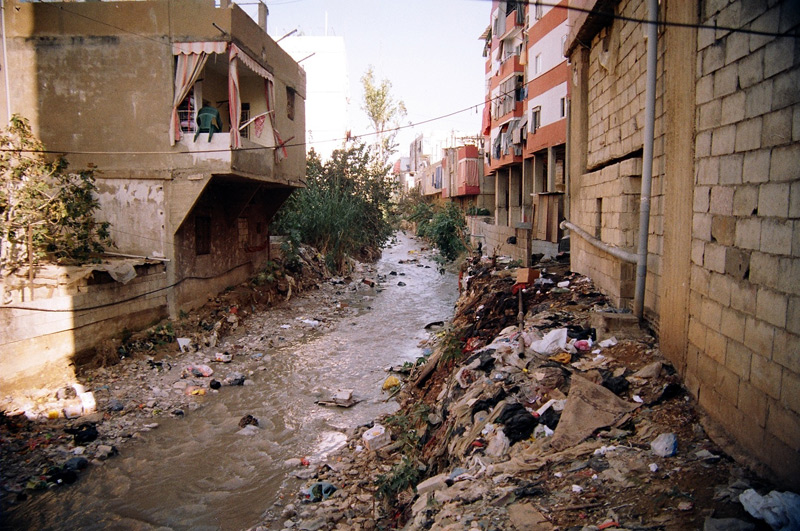
Farajalla identifies three major factors contributing to flooding: people living in low-lying areas, barriers to the natural flow of rivers, and refuse clogging the drainage system.

“The biggest problem during this storm was that people have been [living] in the river or along the river floodplain,” he said. In some areas, including Beirut’s southern suburb of Hay al-Solm, poorer residents in recent years have constructed homes on river banks, limiting the space for water to flow. Farajalla said that such constriction creates an effective dam, raising water levels further upstream. Furthermore once the water passes through the constriction, it flows more rapidly — and destructively — towards those downstream.

But encroaching buildings aren’t the only cause of flooding. A government official, who spoke to Executive on the condition of anonymity as he was not permitted to speak to the media, said some of the blame lies with poor bridge design. “Some bridges aren’t capable of handling such runoff and high waters,” he said. In poorer areas where government services are lacking, these bridges can be small and make-shift, built without review from officials or engineers, and lacking enough height to accommodate flood waters. Farajalla echoed this concern, saying “there are so many crossings on the rivers themselves that they have created constrictions that make backwaters” when the rivers rise.

In Beirut, this problem is only compounded by the city’s trash problem. “People dump their refuse in the river, which ends up in the [underground] drainage system,” Farajalla said, adding that it accumulates to form barriers at low bridges and clog the subsurface network of drainage pipes. Such was the case last week in Beirut’s eastern Karantina neighborhood, where drainage systems backed up so much that the main road became a river.

In the capital, this underground drainage system has been considerably upgraded since the end of the Lebanese civil war in 1990, but there are still significant issues. Maintenance of subsurface pipes involves both clearing barriers caused by trash and sediment, and inspecting and repairing cracks and natural wear of the tunnels themselves. “A network is only as good as its maintenance,” says Farajalla, adding that the work “has not been done on a regular basis.” The government official was more blunt: “no one is cleaning the drainage system before the winter rainy season,” he claimed, adding “this is the number one problem in Beirut.”

A more general complaint revolves around contractors and inspectors. Noting that contractors will sometimes cut corners, Farajalla says, “[inspecting authorities] often do not have the personnel available, either in numbers or in training… What we need is people to follow through and check the execution.”

Punishing the poorest

These problems tend to affect the most vulnerable – poor families, including many refugees – the hardest. This is a problem found in many nations where infrastructure is sub-standard: low-lying land in a floodplain is cheap and close to jobs, so during periods of light flooding, poorer people will move in, often forced to find alternative housing by a lack of government planning and oversight. However, light-flood periods do not last forever, and eventually nature takes its course — sometimes to disastrous effect.

According to a paper by Carlos Tucci of Brazil’s Federal University of Rio Grande do Sul, when this happens, governments have two options for long-term solutions: building expensive drainage networks or relocating people to higher ground. But, as Tucci points out, such solutions can be politically problematic.

In Lebanon’s case relocation would still require a large investment from the government. “These people have left their villages and come here to find a job, and it’s a horrible existence, so what do we do? Who pays for this?” asks Farajalla. “These people have paid enough by having their homes damaged.”

Building the ark together

Any solution to Lebanon’s flooding problems will have to be multifaceted, and include zoning for development, roadways and bridges, subsurface drainage, inspection regimes and maintenance. Any such remedy would have to involve several parties including individual municipalities, the Ministry of Energy and Water, the Ministry of Public Works, refuse collection companies and the general public.

Speaking about road drainage, Farajalla argued that that “there should be a ministerial team assigned to each municipality or grouping of municipalities along a highway to ensure that local roads do not generate runoff onto the highway, and then that the highway is well-maintained,” adding that “they have to generate some coordination mechanism” between the municipalities and the Ministry of Public Works. Underground, he says, “maintenance should be continuous.”

Of course, the government and waste collectors cannot shoulder all of the responsibility for keeping sewerage lines clean. “It takes one plastic bag to block a [drainage] grate,” notes Farajalla. “People have a responsibility not to throw things into the drainage network, not to litter the roads, and to help the municipality by reporting problem areas.”

Given the diverse array of parties responsible for quality stormwater management, it comes as little surprise that the government official who spoke to Executive was pessimistic about the possibility of fast implementation: “There are many plans in the government [to address this problem] but I don’t think it will be solved soon.” Given Lebanon’s weather, that may mean more pain ahead for the most vulnerable.

January 15, 2013 0 comments
0 FacebookTwitterPinterestEmail
Comment

Reaching beyond Iraq

by Riad Al-Khouri January 14, 2013
written by Riad Al-Khouri

In a region marred by old conflicts and new social unrest, semi-autonomous Iraqi Kurdistan seems to be sitting rather pretty. The Kurdistan Regional Government (KRG) is clocking strong growth in gross domestic product per capita (now well over $5,000) in an atmosphere of relative stability. Kurdish opposition protests against the KRG, which were attracting global attention between 2009 and 2011, seem to have been declining just as much as the economy has been rising. Today, watching the massive new construction projects under way and the global airlines plotting new routes to town, it does not require a PhD in macroeconomics to see that the provincial capital of Erbil is in a boom cycle.

The prosperity, of course, is oil-led: Kurdistan now produces 140,000 barrels per day (bpd) of crude, set to rise to 200,000 bpd in 2013 and 1 million bpd by 2015. This serious growth of wealth is set to last, as the KRG controls 45 billion barrels of oil reserves, out of an Iraqi total of 143 billion.

Turkey is a main partner of the KRG, and Iraqi Kurdistan imported around $5.5 billion worth of goods from Turkey last year, making the province the Turks’ eighth-biggest export destination. This Turkish-Kurdish trade relationship is also set for growth. KRG trucks presently carry crude to Turkey, but the first phase of a one million bpd pipeline bringing oil from Iraqi Kurdistan to Turkey is set to finish by end-2012, with a second stage due next year.

Yet, the story has potential downsides as well. Accusations were made at a cabinet meeting of Iraq’s central government this summer that the KRG is “smuggling” crude to Turkey. Though such charges had been leveled before, this was the first time the KRG was accused by Baghdad’s council of ministers, heightening the tension. The Kurds counter-argue that they have to export oil without recourse to Baghdad because of the federal parliament’s inability to legislate, manage and market the flow of crude.

Meanwhile, another row continues between Baghdad and Erbil over deals between the KRG and oil companies that are not, according to the central government, supposed to simultaneously operate in Kurdistan and the rest of Iraq. But it is exactly the increasing presence of major energy firms in the Kurdish north that provides the KRG with economic leverage, which allowed the Kurds in October to start exporting oil independently of Baghdad. Thus, Erbil is challenging Iraq’s central government by attracting oil companies to the Kurdish zone, while Turkey builds pipelines for the Kurds to carry crude to the Mediterranean, bypassing Iraq’s state-owned network and giving the KRG a basis for an independent economy.

Led by ExxonMobil, which signed with Erbil in late 2011, the KRG succeeded in attracting big energy companies such as Chevron, Gazprom and Total (along with dozens of smaller ones) during 2012. Baghdad had long-term production contracts with these firms, giving them fixed-rate returns on fields in southern Iraq, but the KRG offered production-sharing deals that are more lucrative, and the central government became unable to halt the drift of companies into the Kurdish zone.

In retaliation Baghdad recently froze operations in the rest of the country for ExxonMobil, which is selling its stake in southeastern Iraq, and has told Russian energy giant Gazprom to either cancel contracts in Kurdistan or abandon work in the south. But as an economic strategy, Baghdad’s attempt at strong-arm practices seems self-defeating, chasing away major oil companies just when it needs massive infrastructural investments to beef up its own oil production and revenues.

Some Iraqis like to see themselves as the world’s up-and-coming swing oil producer, replacing the Saudis in this role by mid-century. The International Energy Agency recently said that Iraq could make up “45 percent of global oil production growth by 2035”, and that if that happens, Iraq “would surpass Russia as the second-largest global oil exporter.” Yet, these figures include the Kurdish fields.

If they found a way to work together, Baghdad and Erbil could indeed turn Iraq into the preeminent global oil player, to the benefit of both. Reconciliation between the two does not seem to be a near-term prospect however — indeed, Baghdad revoking approval for Turkey’s energy minister to visit Erbil in early December can only spur Kurdish thoughts that they’d be better off going it alone.
 

Riad el-Khouri is an economist and a principal at Development Equtiy Associates Inc, Washington DC

January 14, 2013 0 comments
0 FacebookTwitterPinterestEmail
Finance

Hidden giants

by Nicole Purin January 14, 2013
written by Nicole Purin

The rise and dominance of sovereign wealth funds (SWFs) is representative of the transformation of the global financial landscape after the 2008 crisis. Two significant factors combine in powering up SWFs as the global economic shift from West to East is reinforced by the new economic status of emerging countries: the ownership of natural resources and the desire to manage financial wealth for future generations.

With 58 percent of their current assets related to revenue streams from oil and gas, SWFs have crystallized this emerging world order as their growth in markets such as the Gulf Cooperation Council (GCC) eclipsed the strength of SWFs in developed economies. It is estimated that SWF assets had grown beyond $5 trillion by mid 2012.

This proliferation of financial power in emerging market SWFs, a key part of which took place from 2005 onward, has given rise to questions regarding their transparency, governance and regulatory frameworks. Especially in the months just before the 2008 global recession, some commentators treated the fastest-growing SWFs as the “Darth Vaders” of international finance — alleging them to be opaque, mysterious and unstable.

The big players in the Gulf

In the last decade, SWF growth has been so incremental that critics have argued that an “unknown” group of investors are de facto controlling trillions of dollars. This criticism has been fueled by the fact that 11 of today’s 12 largest SWFs, each with known assets of over $100 billion, are owned by governments of emerging economies. According to watchdog organization SWF Institute, only Norway’s SWF is owned by an established ‘Old World’ player and only the Norwegian and the Singaporean SWFs are considered highly transparent among the 12 largest SWFs.

One cannot disregard that the mammoth size and limited transparency and accountability of younger SWFs from emerging economies have attracted controversy. It has been argued that SWFs have the potential to disrupt financial markets or could be used as political tools; accordingly they should be more transparent and rendered accountable to the public as a whole.

China’s SWFs have been one target of scrutiny, but the greater attention has been focused on the Gulf arena, as 35 percent of SWF wealth is based in the Middle East. In the GCC, SWFs owned by Qatar, Saudi Arabia, Kuwait, the United Arab Emirates and Oman have been estimated at a collective worth of $1.8 trillion in September 2012 by the SWF Institute. This number is not wholly conclusive and may be higher because the institute’s ranking list has no information on the assets of three SWFs in the GCC.

As developed economies have been hit quite badly by the global financial crisis, Arab SWFs have begun to be viewed less suspiciously by Western policy makers and in some developed countries, attitudes to Gulf-based SWFs have become inviting. Today, the international community regards GCC-owned SWFs collectively as a global powerhouse. Regionally, they are considered as essential tools to invest oil revenues and create wealth for the future.

Among GCC sovereigns, Abu Dhabi has gained the crown for investing substantially through its SWF. The Abu Dhabi Investment Authority (ADIA) is the second richest in the world with $627 billion (Norway’s Government Pension Fund ranks first with $656 billion). Saudi Arabia’s Sama Foreign Holdings is classified second regionally with assets of $533 billion. Kuwait and Qatar are also highly active and classified in the top 10 worldwide by asset size.
The case and legal framework

As the role of SWFs has been highlighted by global needs for cash in the economic downturn, it is today more pertinent than ever to address three crucial questions: Are SWFs beneficial forces in finance? How are they regulated? And, are more regulations required?

The global financial crisis and the Arab turmoil of the past two years have each demonstrated the stabilizing effects of SWFs. Internationally, the importance of having access to financing capacity of high-powered funds in economic downturns was highlighted by the International Monetary Fund, which was reaffirmed as a conduit of stabilization in 2008 and again since 2010 because of the IMF’s ability to mobilize funds in support of struggling European countries.
The value of long-term SWFs as an alternative or auxiliary route to stabilization has been acknowledged by Western governments, which have approached the GCC SWFs for assistance in economic recovery. The stabilizing role of GCC SWFs is even more unmistakable in a regional context, with examples such as the Qatari SWF recently assisting the Egyptian economy by investing billions of dollars in Egyptian financial institutions. 

As illustrated above, it is hard to question that SWFs can play a constructive role in global finance. All-powerful financial entities have detractors who allege they combine political motives with insufficient accountability; the IMF is the biggest example, attracting the ire of academic and political critics, all the way to violent street protests.

However, while protectionist calls against the meddling of foreign funders in the behavior of a distressed economy will generally be counterproductive, it is a fact that the roles and interests of SWFs are not governed by an extensive system of global regulation, transparency and accountability. It has been argued that the absence of regulation allows SWFs too much room to base investment decisions on political motives and makes it opaque how they determine the variety of their investment objectives. The SWF owners sought to address such concerns in 2008 when formulating 24 generally accepted principles and practices, or GAPP, known collectively as the Santiago Principles. GAPP 19, for example, emphasizes that investment decisions by an SWF should be based “on economic and financial grounds” and aim “to maximize risk-adjusted financial returns in a manner consistent with its investment policy.”

In addition to the Santiago Principles and investment rules by the World Trade Organization that are relevant for SWFs, the Organization for Economic Cooperation and Development has recommended standards to countries that receive SWF investments, and the European Union has promoted a common approach to SWFs for member countries. The EU has emphasized transparency regulation for institutional investors while pointing to the importance of the free movement of capital in a globalized system.

It is the author’s view that stringent regulation of SWFs may not be needed, as their managed assets are already constrained by the SWFs’ inherent objectives and governance protocols. These voluntary guidelines on best practices in SWFs provide a subtle and indirect regulatory framework to discipline these mammoth funds. Draconian regulations could be highly problematic as they would limit global investments and activities of funds and restrict global markets and opportunities. At a time when the world’s economy is trying to recover, protectionism via excessive regulations would have the opposite effect.
The constitutional features of SWFs and their wealth-building mission set frameworks for what they are permitted and not permitted to do. For example, the ADIA is known for placing great importance on funds’ transparency and fee structures when making allocation decisions.

Although stringent regulation may not be required, more transparency would certainly not harm the SWFs and provide numerous benefits. GCC SWFs have much room to improve disclosure of information and shareholding notification with respect to voting rights attached to shares. Secondly, accountability of individuals controlling the funds could be rendered more structured and public. Thirdly, dealing with the sovereign in all modern states entails reporting to the people. It stands to reason that today’s core requirements for successful funds management apply fully to SWFs, and these requirements are a sound performance record, proven risk-management tools and impeccable client communication.

Looking ahead

Governance and transparency have become paramount in the post-2008 financial arena. Due to their own size and the size of investment targets they require, SWFs have to avoid damages to reputation if they want to access the best opportunities and realize their financial objectives in preservation of national wealth.

As sovereign funds become more and more influential and well known to the public, their stabilizing effect on the global economy will become more widely accepted and they will be regarded as essential tools for the effective functioning of the global financial system.

January 14, 2013 0 comments
0 FacebookTwitterPinterestEmail
The Buzz

Morning briefing: 14 Jan 2013

by Executive Staff January 14, 2013
written by Executive Staff

A senior EU official has urged Egypt to conclude its talks with the International Monetary Fund on a $4.8 billion loan agreement, saying the deal would help restore international confidence in its wrecked economy.

More from Arabian Business


Abu Dhabi will inject a total of Dhs330 billion to help fund capital projects and other initiatives in the emirate up to 2017, the Abu Dhabi Executive Council has announced.

More from Gulf Business


Kuwait’s government budget surplus stood at 14.7 billion dinars ($52 billion) in the first eight months of its fiscal year thanks to strong oil revenues, data from the Gulf country’s finance ministry showed.

More from Gulf Business


Loan guarantees to small and medium sized enterprises by Lebanon’s Kafalat declined 16.4 percent in 2012 to $138 million, down from $165 million a year earlier.

More from The Daily Star


Bad weather cut oil exports from Iraq's Basra ports to 960,000 barrels per day (bpd) on Sunday from 2.35 million bpd a day earlier.

More from Reuters


Companies

Several of the UAE’s largest retail banks are still offering mortgages to with a down payment of just 20 percent, despite a move by the central bank to cap home loan lending.

More from Arabian Business


Middle East Airlines, Lebanon's national carrier, is considering launching a low cost airline, as the two year crisis in Syria, an unsettling domestic political climate in Lebanon and a dip in tourism, puts a dent into its profits, carrier's chairman Mohamad El Hout said.

More from Arabian Business


Qatar Airways is reportedly interested in buying a stake in an Indian airline following a similar move by Gulf rival Etihad.

More from Arabian Business

January 14, 2013 0 comments
0 FacebookTwitterPinterestEmail
Consumer Society

The Starch 2012-2013 Designers

by Executive Editors January 13, 2013
written by Executive Editors

New Lebanese designers recently got a hand up in entering the fashion world. At a mid-December event at their Saifi Village boutique, the Starch Foundation announced the designers it will be featuring in its store for 2013.  Starch was founded by Lebanese fashion designer Rabih Kayrouz and Tala Hajjar, Starch’s director, in collaboration with Solidere, Lebanon’s largest property developer. This non-profit organization’s aim is to help launch emerging Lebanese designers through an annual program, where four to six young designers are selected to work with the Starch Foundation to develop their concepts in preparation for debuting their collection in the Starch Boutique.  For the duration of the year, Starch offers guidance and support, in further marketing their collection and on collaborating with other designers and projects through Starch. According to Hajjar, “Designers are chosen for their discipline, alongside their creativity and passion for design, as they need discipline to commit to their ideas and to collaborate with others.” This year’s five selected designers are: fashion designers Bashar Assaf, Hussein Bazaza and Celine Der Torossian, jewelry designer Sevag Dilsizian and Stephanie Mousallem, the architect who designed the boutique’s interior this year, and who has some items on display as well.

Les Caves De Taillevent in Lebanon

Despite the rough year it has been for hospitality venues, Les Caves De Taillevent, the French wine cellar, opened the doors of its Lebanese foray in mid- December. The cellar is known for its 1,300 varieties of wines, and the events the cellar hosts during which the specificities of the different types are carefully explained to customers.  According to Laurent Gardinier, co-owner of Taillevent Group, this project has been in the works with Khalil Fattal and Sons for the past 18 months, and will also include a wine bar, as well as a wine academy for both beginners and connoisseur wine lovers, which is set to start lessons in 2013.  Gardinier says there are three reasons why they chose Lebanon for this venture: “To begin with, we have a good and humane relationship with the Fattal family which started two years ago and developed into a business relationship. Second of all, Lebanon has very good links with France and shares a similar culture and language and you have a very nice Lebanese wine culture. Finally, Lebanon is key for the hub of the Middle East, to develop our brand.”

Raghunter goes live

The endless search for the right top to go with the right skirt may just have been shortened. Raghunter, a Lebanese startup online fashion platform that went live in December, seeks to solve shopper dilemmas by directing them to the exact stores that carry the item they are looking for.  Raghunter is a search engine for fashion items currently found in Lebanese stores. While you cannot buy found items online, the website directs the user to stores where the search word they have typed is currently found, and then the user can purchase it. Users can search for specific items by filters such as ‘Type’, ‘Brand’, ‘Store’, ‘Price’, ‘Color’, ‘Gender’ and ‘Material’ (i.e. black, dress, $300, Ashrafieh). This method of shopping is more efficient and cuts down on time wasted searching — though admittedly to some the thrill of shopping lies in personally scouring stores for that unique find.

Magnolia Bakery opens in Lebanon

Yet another cupcakes and cookies venue has been introduced to the Lebanese market, and this time it’s imported from New York. Magnolia Bakery, the famous upscale bakery, launched its Lebanon expansion in ABC Dbayeh last month. The bakery already seems to be well received, judging by the lines of people waiting for their cupcakes in December. The bakery’s first expansion outside of the United States was to Dubai, with the Lebanon store marking its second outlet in the region. According to Steve Abrams, chief executive and owner of Magnolia, the company chose the Middle East as their first area of international expansion because Magnolia is a luxury brand, and Middle Easterners love luxury, as evidenced by the bakery’s success in Dubai. “We are excited to bring Magnolia Bakery to Lebanon and look forward to opening many stores throughout the country,” says Abrams, adding that Magnolia plans to open stores in Doha and Kuwait next.

January 13, 2013 0 comments
0 FacebookTwitterPinterestEmail
  • 1
  • …
  • 286
  • 287
  • 288
  • 289
  • 290
  • …
  • 683

Latest Cover

About us

Since its first edition emerged on the newsstands in 1999, Executive Magazine has been dedicated to providing its readers with the most up-to-date local and regional business news. Executive is a monthly business magazine that offers readers in-depth analyses on the Lebanese world of commerce, covering all the major sectors – from banking, finance, and insurance to technology, tourism, hospitality, media, and retail.

  • Donate
  • Our Purpose
  • Contact Us

Sign up for our newsletter

    • Facebook
    • Twitter
    • Instagram
    • Linkedin
    • Youtube
    Executive Magazine
    • ISSUES
      • Current Issue
      • Past issues
    • BUSINESS
    • ECONOMICS & POLICY
    • OPINION
    • SPECIAL REPORTS
    • EXECUTIVE TALKS
    • MOVEMENTS
      • Change the image
      • Cannes lions
      • Transparency & accountability
      • ECONOMIC ROADMAP
      • Say No to Corruption
      • The Lebanon media development initiative
      • LPSN Policy Asks
      • Advocating the preservation of deposits
    • JOIN US
      • Join our movement
      • Attend our events
      • Receive updates
      • Connect with us
    • DONATE