• Donate
  • Our Purpose
  • Contact Us
Executive Magazine
  • ISSUES
    • Current Issue
    • Past issues
  • BUSINESS
  • ECONOMICS & POLICY
  • OPINION
  • SPECIAL REPORTS
  • EXECUTIVE TALKS
  • MOVEMENTS
    • Change the image
    • Cannes lions
    • Transparency & accountability
    • ECONOMIC ROADMAP
    • Say No to Corruption
    • The Lebanon media development initiative
    • LPSN Policy Asks
    • Advocating the preservation of deposits
  • JOIN US
    • Join our movement
    • Attend our events
    • Receive updates
    • Connect with us
  • DONATE
The Buzz

Morning briefing: 16 Oct 2012

by Executive Staff October 16, 2012
written by Executive Staff

Politics

US Secretary of State Hillary Clinton says she takes responsibility for the failure in security at the US consulate in Benghazi, where the US ambassador to Libya was killed last month.

Mrs Clinton said ensuring the safety of US diplomatic staff overseas was her job, not that of the White House.

It comes ahead of the second campaign debate between President Barack Obama and Republican candidate Mitt Romney.

More from the BBC


More than 100 inmates have escaped from the al-Judaida prison in the Libyan capital, Tripoli.

The prisoners are said to be of various nationalities and officials say about 60 have so far been recaptured. It is not clear how the breakout happened.

Al-Judaida is one of Tripoli's largest jails. Human rights groups accuse officials of abusing inmates.

More from the BBC


Economy

Saudi Aramco plans to invest $35 billion over the next five years in projects to protect an oil production capacity cushion the world still relies on despite a shale oil boom and weak demand, the head of the world’s biggest oil producer said.

“Preserving our spare oil production capacity is crucial to maintaining oil market stability because it plays a pivotal role in protecting the world’s economic health,” Khalid al-Falih told an Oxford University seminar on Sept. 20 in a speech posted on Aramco’s website on Monday.

“So we are continuing to strengthen our oil business to meet the rising call on our oil production; in fact, we plan to invest $35 billion over the next five years in crude oil exploration and development alone to keep our oil production portfolio robust.”

More from Gulf Business


Lebanon’s taxi drivers union have announced a strike on Wednesday following an unsuccessful meeting with Finance Minister Mohammad Safadi to set a ceiling for the prices of gasoline.

“We call on all drivers to strike next Wednesday to protest the increasing prices of fuel after we exhausted all efforts and reached a deadlock with officials,” the statement said.

The statement reiterated the association’s demand for a LL25,000 ceiling on 20 liters for gasoline and LL20,000 on diesel.

More from The Daily Star


EU member states have announced a new package of sanctions against Iran over its controversial nuclear program.

Foreign ministers meeting in Luxembourg "significantly broadened EU restrictive measures", focusing on Iranian banks, trade and gas exports, officials said.

The ministers reiterated their "serious and deepening concerns" over Iran's nuclear activities and their commitment to "work for a diplomatic solution".

More from the BBC


The UAE booked a consolidated state budget surplus of AED36.2bn (US$9.9bn) in 2011, the country's finance ministry said on Monday, publicly releasing such data for the first time.

The ministry said the figure included the federal budget as well as the fiscal balances of all seven desert emirates which form the UAE.

Saeed al-Yateem, executive director of revenue and budget at the ministry, told a news conference that the data would now be released every quarter starting next year.

More from Arabian Business


Global oil prices should stay stable or fall just under their current levels over the next five years as Asian consumption makes up for a potential drop in European and US demand, Kuwait's oil minister said on Monday.

Asia is the Gulf state's biggest oil customer, receiving 65 percent of its exports, Hani Hussein told state news agency KUNA on the sidelines of an Asian summit in Kuwait.

He said oil prices will remain "stable or just under the current level," over the next five years thanks to "active and increasing" consumption in Asia, KUNA reported.

More from Arabian Business


And finally…

Internet users in Saudi Arabia receive more email spam than any other country in the GCC, according to the findings of a new report.

Online security firm Kaspersky Lab found that in the third quarter of 2012, Saudi Arabian inboxes were home to 0.96 percent of all spam globally. The UAE came second in the GCC with 0.19 percent of spam, followed by Kuwait. As a whole the region accounted for 1.29 percent of all worldwide spam.

On a global basis, Kaspersky Lab found that the US was the most spammed country with 26.71 percent of all spam traffic, followed by China with 25.52 percent.


More from Arabian Business

October 16, 2012 0 comments
0 FacebookTwitterPinterestEmail
Economics & Policy

Between Islam and the free market

by Hassan Aly October 15, 2012
written by Hassan Aly

The current Egyptian government led by Prime Minister Hesham Kandil — as well as the other transitional governments in Cairo following the 25th of January revolution — have been heavily criticized for not having a different economic philosophy to the one that prevailed before President Hosni Mubarak’s ousting.

The old regime's economic philosophy that was based on the ‘free, non-restricted market’ has led to economic and social deterioration, and was among the main causes of the revolution. For the average Egyptian, it is unacceptable and undesirable that old policies remain the same.

The current government was expected to reveal its philosophy in simple and clear terms. But as these economic policies (monetary and fiscal) have not diverged from existing economic models, the average man in the street hasn’t seen any significant change. Thus people are quickly making comparisons between the old business elite — such as steel magnate Ahmed Ezz and former minister Rachid Mohamed Rachid — and emerging businessmen such as the Muslim Brotherhood’s Hassan Malek and Khairat al-Shater.

However, and to be fair, the current government is in a dilemma which is shared by many developing countries. When trying to develop an economic strategy there are currently almost no viable alternative philosophies to the free market. Communism would once have been a realistic rival but, after the fall of the Berlin Wall and the transformation of the Russian economy and all the Eastern bloc economies, including China, to various forms of market economies, it is impossible to make the case for it.

And given that the unrestricted free market system has failed advanced economies as much as developing ones — especially after the global financial crisis of 2008-2009 — the choices the Egyptian government faces are tough.

Clearly, the government is attempting to consider the religious dimensions and is tempted to offer ‘Islamic economics’ as an alternative. However, the global and local sensitivity towards emerging Islamic forces are preventing this. More importantly, ‘Islamic economics’ has yet to be fully developed beyond a couple of key policies. While both Islamic banking, as an alternative to commercial banking, and Islamic Sukuk, as an alternative or a complement to conventional bonds, are realistic, there is still a lot of ambiguity concerning the nature of Islamic economics and whether it follows free market or socialist principles.

Therefore to avoid these issues the current government should not pay much attention to the name of its economic philosophy, and should instead work on developing a policy that stems from the reality of the Egyptian economy. In this regard, I propose the following as examples:

1 – The economic policies of export promotion similar to the ones used in the growth models of East Asia have, in Egypt, resulted in the concentration of wealth with a small class of beneficiaries. A good example of the failure of the country’s export policies is the marble industry, where China imports raw materials from Egypt and re-exports it back as a finished product for a much greater price.

We must, therefore, work on import substitution, encouraging the local manufacturing of products that are imported from abroad, especially when the raw materials and basic inputs are available. This may require importing advanced technology and workforce training in economically cooperating countries such as China and Turkey. Entering into a joint-venture or a cooperative partnership with these countries to bring such industries home is vitally important.

2 – Investment policies should adopt the principle of ‘inclusive growth’ or equitable geographical distribution. The establishment of new industries and new facilities should favor areas of higher unemployment and higher poverty rates.

3 – The state should adopt the principle of ‘balanced growth.’ This means giving the same attention and importance to productive economic sectors, such as agriculture, as to the mining and industrial sectors. It is important to note here that the support given to encourage agricultural and rural investment may need to be more extensive than that given to other sectors in order to compensate for the periods of utter neglect.

4 – Economic policies of the country should aim to reduce dependence on the ‘rentier economy’ compared to the ‘productive economy.’ The term 'rentier economy' in this context refers to revenues collected from exporting oil, gas, and other minerals as well as revenues from foreign aid, worker remittances, international tourism, and fees for the use of water, land and air space. Collectively they constitute more than 60 percent of the revenue collected by the government but leave the people dependent on the government rather than vice versa.

These are only examples of some of the policies that, if followed, could help avoid the problems of pure unrestricted capitalism. Thus, we should not worry about how big or small the state’s role in economic activities is or the name of the economic philosophy. What is important now is the rapid and effective treatment before the spread of the country’s economic woes.

HASSAN ALY is a Professor of Economics at Ohio State University and an economic advisor to the Ministry of Planning in Egypt. A version of this article was published in Arabic in the Al Ahram newspaper on October 13, 2012

October 15, 2012 0 comments
0 FacebookTwitterPinterestEmail
The Buzz

Morning briefing: 15 Oct 2012

by Executive Staff October 15, 2012
written by Executive Staff

Economics

Turkey has banned all Syrian aircraft from its air space as it takes an increasingly firm stance against President Bashar al-Assad, while Syrian rebels said on Sunday they had made more gains in a key province near the Turkish border.

Human Rights Watch said Syrian government forces had dropped Russian-made cluster bombs over civilian areas in the past week as they battled to reverse rebel advances, an act which rights groups say can constitute a war crime.

NATO-member Turkey has increasingly taken on a leadership role in the international coalition ranked against Assad.

More from Reuters


Saudi Arabia says it is “insulted” by a parliamentary inquiry into how the UK deals with the country and Bahrain.

Saudi officials have told the BBC they are now “re-evaluating their country’s historic relations with Britain” and that “all options will be looked at”.

While they stopped short of cancelling ongoing trade deals, the move reflects growing Saudi resentment at the West’s reaction to the Arab Spring.

More from the BBC


Economics

Uncertainty over the euro zone debt crisis is now showing signs of restraining business and household spending in the Middle East, a top IMF official said on Sunday after weekend meetings of the International Monetary Fund and World Bank.

The IMF’s director for the Middle East and North Africa, Masood Ahmed, told Reuters the uncertainty was adding to already existing concerns over political transitions in Arab Spring nations, and a heavy election and legislative calendar in 2013 in the region.

He said the message from the region’s finance leaders during the IMF meetings in Tokyo was that Europe’s debt crisis was seeping into businesses and household spending plans.

More from Arabian Business


Abu Dhabi’s economy grew 6.8 percent in inflation-adjusted terms in 2011, the fastest rate since 2004 and more than double the pace of the previous year, thanks to stronger activity in both oil and non-oil sectors, government data showed on Sunday.

“Growth in GDP at constant prices during 2011 surpassed all the forecasts and estimates made by local and international parties,” the Statistics Centre Abu Dhabi said. The real gross domestic product of Abu Dhabi, one of seven United Arab Emirates, rose 3.0 percent in 2010.

Abu Dhabi, which accounts for most of the UAE’s crude oil output and about 65 percent of the GDP of the second largest Arab economy, released detailed inflation-adjusted GDP data for the first time on Sunday. In the past, the statistics centre only published nominal GDP data.

More from Reuters


Saudi Arabia’s biggest listed bank by stock market capitalisation, Al-Rajhi Group, missed analysts’ forecasts with a 3.5 percent fall in third-quarter net profit on Sunday, citing higher operating expenses.

Al-Rajhi reported net earnings of SR1.87bn ($498m) in the three months ended September 30, compared with SR1.94bn in the same period last year. It did not give details on the higher costs.

Ten analysts polled by Reuters had forecast a profit of SR2.11bn on average.

More from Arabian Business


Egypt’s government plans to cut energy subsidies by setting a universal limit on how much cheap fuel and cooking gas every household can buy, Petroleum Minister Osama Kamal told a newspaper Sunday.

The Islamist-led administration that took office in July has vowed to push through reform of the subsidies, which consume as much as a quarter of the state budget, to lower an unmanageable deficit and shift funds to health and education.

Economists say the IMF will not release a $4.8 billion loan until Egypt shows how it will cut a deficit that ballooned after a popular uprising tipped the economy into crisis last year.

More from The Daily Star


The head of Dubai developer Limitless said that the indebted firm’s creditors were “squeezing us for everything” following the restructuring of a US$1.2bn loan announced last week.

Chairman Ali Rashid Lootah said Limitless, which was battered by the emirate’s 2009 property crash, expected to have fully paid up everything it owes by 2016.

“We’re generating [revenue], we’re paying all of our interest on time – you can check with the lenders – they’re squeezing us for everything,” said Lootah, who is also boss of Nakheel, another indebted property developer in Dubai.

More from Arabian Business


The gas flow in a pipeline carrying Iranian natural gas to Turkey resumed on Sunday, almost a week after it was halted by an explosion in eastern Turkey, Turkey’s energy minister said.

“The Turkey to Iran natural gas pipeline just started to pump this morning,” Energy Minister Taner Yildiz told Reuters.

“Turkey is currently getting natural gas from Russia, Iran and Azerbaijan and we did not have any supply problems,” he said.

More from The Daily Star


Sudan expects to double its oil production in the next two years, to 300,000 barrels per day, as it steps up oil exploration, the country’s petroleum minister said on Monday.

The country has awarded nine exploration blocks to consortiums formed by companies from Canada, Brazil and the Middle East, Awad Ahmed El-Jazz told Reuters on the sidelines of the Petrotech energy conference in the Indian capital.

“We offered last month 9 blocks and had around 72 companies competing for them,” he said.

More from The Daily Star

October 15, 2012 0 comments
0 FacebookTwitterPinterestEmail
Feature

Tragedy returns to Beirut

by Executive Staff October 13, 2012
written by Executive Staff

Just before 3 p.m. On Friday, October 19, a bomb exploded near Sassine Square in the heart of Beirut’s Ashrafieh district, tearing apart a residential neighborhood and the lives, homes and businesses of hundreds of people who had simply been going about their normal day. Later it emerged that among the dead was Brigadier General Wissam al-Hassan, and the pall of political assassination fell over this horrific event. On Sunday, after incendiary, partisan speeches at Hassan’s funeral ceremony in Downtown Beirut, security forces fended off a group of angry protesters who attempted to storm the Grand Serail government building.   

October 13, 2012 0 comments
0 FacebookTwitterPinterestEmail
Last Word

Little cause for optimism

by Thomas Schellen October 13, 2012
written by Thomas Schellen

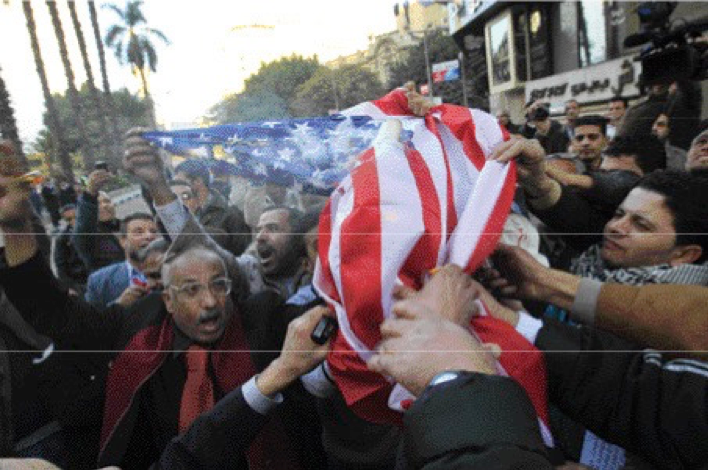
American politicians have long been unpopular in the Middle East. Even before the release of a trailer for what became a hugely offensive anti-Islamic film and Republican presidential candidate Mitt Romney’s unfortunate promise to kick the Palestinian issue “down the field”, people in North Africa and the Levant were disenchanted with the world’s only superpower.

A new poll released by Gallup – using data taken in the first half of 2012 – shows support for American leadership this year lower than at any point under United States President Barack Obama. Only one in five people in the Middle East approve of US leadership but almost three times that number disapprove, the poll finds.

The drop in average approval ratings was both continuous and quite steep, with the positive image of the first two Obama years (reflected in approval rates of 25 percent in 2009 and 2010) falling to just 20 percent in 2012.

The only country among 12 Middle Eastern nations where a majority voiced a positive view of the US leadership in the spring of 2012 was Libya. There is, therefore, more than a hint of irony that it was in the country’s second city Benghazi where the anti-film protests were most vociferous – with US Ambassador Christopher Stevens being atrociously killed as the embassy was stormed.

The Iranians were least appreciative of America in their stated opinions, with just an 8 percent approval rate. Palestinians were the most outspoken in their opposition – while 18 percent said they approved of the US leadership, roughly three in four Palestinians disapproved. In Egypt, where President Obama tried to open a new chapter on Arab-American relations with his June 2009 “New Beginning” speech, two out of three respondents disapproved of his leadership.

Approval ratings of American leaders in the Middle East are lower than those in Asia, Europe and Africa and in 2011 came out 24 percentage points below global medians in Gallup research. The low intensity of trade between the US and the region (no Gulf countries were shown in the poll) and the friend-of-my-enemy problem in the Palestinian issue go some way toward explaining why the US struggles for support in the region.

But, as we approach the end of Obama’s first term, it is worth comparing Arab views on the US today with previous administrations. The George W. Bush presidency, its fiasco in Iraq and its parallel inability to deal with the Palestinian plight meant Obama had an easy act to follow. It is little surprise that the year 2008 was a low point in Arab approval rates of US leadership, with just 15 percent support.

So Obama’s relative rise in popularity is hardly to be celebrated, and may simply be because opinions could hardly have become worse. They spiked in 2008 because Obama had spelled change and promise to people worldwide.

How much the fluctuations in Arab perceptions of the US between 2010-12 were correlated to the developments that erupted into the ‘Arab Spring’ from January 2011 is a question that is hard to answer, given that the uprisings surprised its many fathers and partisans as much it did the world. No reliable polling research into the exact opinions and attitudes expressed in the ‘Arab Spring’ could have been conducted freely prior to the uprisings.

The current negative outlook for Arab-US relations and a possible worsening of communication is reinforced by the slide in approval rates since that expectation-driven high in 2008. But it appears from the significant fluctuations in views of Arab populations that the disapproval of Arab populations toward American leadership is more related to divergent interests than an expression of a conflict of identities and clash of civilizations.

Unlike in 2008, when Obama came to power amid a storm of international good will, this year’s expectations for a post-election improvement in Arab-American relationships will probably be best kept very modest for the incumbent and even more so for the challenger.

THOMAS SCHELLEN is Executive’s MENA business editor

October 13, 2012 0 comments
0 FacebookTwitterPinterestEmail
Economics & Policy

For your information

by Executive Editors October 13, 2012
written by Executive Editors

Help for first-time job seekers

The government launched a $2.2 million program to improve the employment prospects of first-time job seekers in the country. The New Entrants to Work (NEW) program will be managed by the National Employment Office under the supervision of the Ministry of Labor, with technical and financial assistance from the World Bank. The NEW program offers first-time job seekers 12 months of on-the-job training in a private firm, along with life skills training, counselling and placement services. Also, employers who hire first-time job seekers will be fully reimbursed for the 12 months of social security contributions that they would have paid to the National Social Security Fund. The program’s stated objectives include breaking initial barriers in the transition from school to work, improving the skills of 1,600 first-time job seekers in a 75-hour comprehensive training program geared to develop job searching and soft skills, and linking the training content with the requirements of the private sector.

Cypriot-Israeli gas deal

Cyprus is looking to alleviate its electricity-pricing problem by securing an agreement to import natural gas from Israel. The Cypriots hope to use the gas to power their electrical generators until their own gas reserves are developed.  In talks in early September the two nations also discussed the potential to develop a joint terminal for exporting natural gas. The talks came less than a week after a government committee chaired by Shaul Zemach, director general of Israel’s Energy and Water Ministry, recommended that Israel designate most of its estimated 950 billion cubic meters in anticipated natural gas reserves for export. Cyprus is looking for the delivery of 0.6 to 0.7 billion cubic meters annually, beginning in 2015 and running until 2018 or 2020, depending on when Cyprus can begin to exploit its own recent natural gas discovery. Cyprus currently has the highest electricity charges among European Union member states as it relies entirely upon heavy fuel oil and diesel for power generation. The controversial decision has yet to receive final approval. Talk of a joint terminal builds upon an approach in January 2011 by the Israeli Delek Group to the Cypriot government with a proposal to build a Liquefied Natural Gas plant on the island’s southern coast for the purpose of exporting Israeli and Cypriot natural gas to international markets.

Smoking ban in effect

The law prohibiting smoking in indoor and outdoor public areas such as restaurants, pubs, cafés, offices, schools and hospitals was enacted last month. The Tobacco Control Law 174 also bans all forms of tobacco advertisements such as TV, billboard and magazine advertisements; as well as tobacco firms’ sponsorship of concerts and other events. It also requires larger graphic warnings on cigarette packs. The law was passed in Parliament in August 2011 and came into effect on September 3 this year. Owners of establishments such as restaurants, pubs and hotels had a period of one year to comply before enforcement began. The ban had already gone into effect at indoor public areas such as hospitals, schools and public transportation. Lebanon is the third Arab country, along with the United Arab Emirates and Syria, to ban smoking in public places. The law also bans smoking in the workplace at both public and private institutions, as well as at airports and places of worship. Further, the law imposes penalties ranging between LL1 million ($666) and LL3 million ($2,000) on owners and managers of public establishments if their clients are caught smoking inside, and a fine of LL135,000 ($90)on individuals caught smoking in public spaces. Lebanon has one of the highest adult cigarette consumption rates in the world at 12.4 packs per person per month, compared to 3.7 packs per month in France, 3.5 packs in Jordan and 1.7 packs in Singapore. A study conducted by academics at the American University of Beirut conservatively estimated the direct and indirect cost of smoking on the Lebanese     economy at $326.7 million annually.

Tourism spending dips

Total tourist spending in Lebanon dropped by 20 percent during the second quarter of 2012 compared to the first quarter of the year, according to Global Blue, the VAT refund operator for international shoppers [see story page 114]. By a more positive comparison the same statistics show tourist spending increased by 5 percent from the same quarter last year. Deep-pocketed visitors from Saudi Arabia accounted for 17 percent of total tourist spending in the second quarter, followed by visitors from the United Arab Emirates with 12 percent, Kuwait with 9 percent, Syria with 8 percent and Egypt with 7 percent. When broken down by region, Beirut attracted 86 percent of total spending in the second quarter of 2012, followed by the Metn area with 11 percent and the Keserwan region and Baabda with a mere 1 percent each. Fashion and clothing accounted for 75 percent of total spending, followed by watches and jewelry with 10 percent, home and garden products with 4 percent, department stores and souvenirs and gifts with 3 percent each and consumer electronics and household appliances with 1 percent.

Investment law shake-up

The Cabinet has received a set of amendments to the investment law, which target certain sub sectors and are intended to increase foreign direct investment. A ministerial committee submitted the amendments to the 10-year-old investment law No. 360, which stipulates a set of criteria that projects must meet in order to benefit from investment incentives and exemptions provided by the Investment Development Authority of Lebanon. The criteria include the size of the investment, the sector and sub-sector of the project, the project’s location, the impact of the project on the environment and on natural resources and the project’s economic and social impact in terms of number of jobs created. The targeted sectors in the law include agriculture, agro-industry, tourism, manufacturing, general technology, information technology, telecommunications and the media. Projects that intend to benefit from the incentives and exemptions must have a minimum investment size, which depends on the location.

Cabinet passes salary raise

The Cabinet approved a draft law for public sector salary increases bringing an end to the months-long dispute that led to strikes by civil servants. Also approved were a series of taxes that would be used to finance the public sector’s pay increase, which is estimated to cost the government more than $1.6 billion annually. Three ministers loyal to President Michel Sleiman opted out of the vote, raising reservations over the methods proposed to finance the raise. The measures adopted include imposing fines on coastal properties that have been illegally developed, a tax on interest rates for bank deposits, a tax on real estate renovation and fees in exchange for construction permits, according to Acting Information Minister Wael Abu Faour. Nearly 200,000 civil servants, Army and security personnel as well as retired government employees are entitled to the salary increases. Ministers are yet to reveal the mechanisms of how to levy the taxes, fines and fees. The draft law received broadsides from both the private sector and civil servants with the former warning of the repercussions on Lebanon’s struggling economy and the latter criticizing the decision to implement the raise in installments over five years.

October 13, 2012 0 comments
0 FacebookTwitterPinterestEmail
Real estate

For your information

by Executive Editors October 13, 2012
written by Executive Editors

Hariri Mansion in Knightsbridge for sale

A 60,000 square-foot (5,574 square meter) ultra-luxurious home in London’s Knightsbridge is on sale with an asking price of GBP 300 million ($488 million). Owned by former Prime Minister Rafiq Hariri from 1982 until his assassination in 2005, after Hariri’s death the mansion was bestowed as a gift to Saudi Crown Prince Sultan Bin Abdulaziz, as reported The Financial Times. Prince Sultan passed away in October 2011 and the property was put up for sale without any public announcement of the offer, said the FT citing industry insiders. Comprising seven floors and 45 bedrooms, many with a view of Hyde Park, plus luxury amenities, the home is expected to satisfy the requirements of even the most discerning family. If the asking price is met, the transaction will set a new record for the most expensive home sale in the United Kingdom, some 115 percent above the previous record for the priciest private home and about 775 times the value of the average London property transaction, which the FT cited at GBP 388,000 ($630,000).  

REAL transformation in the works

The Real Estate Association of Lebanon (REAL) has been granted the first ministerial signature required for transformation into a syndicate last month and is in an advanced stage of being recognized as a professional syndicate, according to the secretary of its board, Walid Moussa. REAL, which held its inaugural assembly as a voluntary association for real estate brokers in October 2010, has made it its aim to increase the professionalism of intermediaries in the Lebanese real estate sector, where the broking of sales and rental agreements between landlords and buyers or tenants is historically a largely informal business. The process of becoming a syndicate put the organization on course to being a legal partner with Lebanese government entities in proposing laws and regulations for real estate broking as well as in training and certifying brokers and setting best practices for the industry. “We are entering a new era of real estate business in Lebanon where the real estate community will be represented by professionals who have been well educated and who have experience. From now on, we can be referred to,” Moussa told Executive. He added that the organization has also started collaboration on a brokerage training program with a Lebanese university and aims to increase its membership from around 80 to 200 brokers over the next two years. As Executive went to print, the process of accreditation as syndicate was expected to be complete within weeks.

New Emaar ‘Address’

United Arab Emirates-based developer Emaar Properties is building another hospitality-themed tower in the Downtown Dubai area dominated by Emaar’s Burj Khalifa, the world’s tallest building. The new 63-floor project will be the second highest in the area and stand 340 meters tall. It will be marketed under the Emaar hotel brand, The Address, and represent a mixed-use concept of 15 five-star hotel floors with 200 rooms, combined with serviced apartments on the other floors. The developer did not disclose the value or the financing of the project. When Emaar started offering what it called “a significant volume” of the 542 serviced apartments to buyers on September 22, the developer said the units got a sell-out response within the first day. According to a report in Abu Dhabi’s The National, property agents had contracted day laborers to stand in line from as early as September 20 to secure spots in the queue for filing purchase applications. The project thus not only marks Emaar’s first new project of this scale in the area and a precursor of new development activity there that will include the Dubai Modern Art Museum and Opera House District; the project also underscores the return of trust in off-plan investment opportunities in the Dubai real estate sector. Emaar in July reported 45 percent higher net profit at $332 million for the first half in 2012 in year-on-year comparison, driven in a significant part by increased apartment sales. The company said it recorded sales valued at $486 million in Dubai in first half 2012, approximately five times the amount recorded in first half 2011. 

High housing hopes in the kingdom

Speculation that the new Saudi mortgage law could come into force this month has fueled expectations that the kingdom’s home construction and housing finance sectors are about to enter a boom period. The Saudi Council of Ministers, the country’s cabinet, adopted the mortgage law in early July and officials and members of the business community said they expected the law to come into force three months after. A minimum 90-day period is mandated for the Saudi Arabian Monetary Agency, the kingdom’s central bank, to fine tune the new law’s details and application rules. However, the law’s details were not disclosed at the time when its adoption by cabinet was announced and the Saudi authorities are known for applying new laws with careful consideration rather than rushed implementation. Mainly because of concerns over the need for foreclosure mechanisms, the mortgage law was debated back and forth for years and cabinet votes on it were deferred in 2010 and 2011. While the phasing in of the law will require time and initiatives to educate the population, Saudi finance experts and real estate market players are in consensus that mortgages will invigorate the country’s real estate sector. Reuters cited the chief financial officer of Saudi British Bank (SABB), Rehan Khan, as saying right after the law’s adoption that he expects the bank’s low mortgage lending activity “to change quite a lot over the next five years.” The mortgage system and expected drops in land prices will create a boom in Saudi construction activities, with low and middle income earners poised to use long-awaited chances to acquire homes, said a report by Al Shorfa, a website associated with the United States Defense Department’s Central Command.

Abu Dhabi rents move in tenants’ favor

The market for apartment rentals in the emirate of Abu Dhabi moved in favor of tenants in the third quarter of 2012, according to a report by United Arab Emirates-based real estate services firm Asteco. Data compiled by the company showed rental rates for prime buildings across the market softening by up to 3 percent quarter-on-quarter. Villa rental rates in some areas were stable but drops of up to 4 percent were reported from other areas. Older apartments in areas such as central Abu Dhabi and low quality buildings throughout the emirate saw prices fall more profoundly, with quarter-on-quarter drops of 4 to 8 percent. The result was a widening gap between prime developments and the rest of the market, the company’s chief executive, Elaine Jones, said in a statement. According to Asteco, more than 9,000 units have been added as supply in Abu Dhabi’s residential market since beginning 2012 and 7,400 of the new units were apartments. Sales prices for quality apartments dropped 2 percent on average from the previous quarter and in villa sales, where little transaction activity was observed, prices did not move. Per square meter, prices for apartments in Abu Dhabi cited by Asteco ranged between AED 5,916 and AED 11,724 ($1,610 to $3,192). Leasing activity for office spaces continued to improve at generally stable prices but tenants were price-sensitive and had a strong preference for fitted space, Asteco said. 

Dubai residential tower tops the top

Princess Tower, the tallest residential structure on Earth at 414 meters height, was delivered last month by United Arab Emirates-based developers Tameer Holding. Located in the Dubai Marina district of the Dubai emirate, the AED1.5 billion ($408 million) structure with 100 floors above ground comprises 763 units. Princess Tower and another Tameer residential high rise, the 381-meter Elite Residence that was delivered a month earlier, were conceived in 2004 and 2006 and construction began before the emirate’s real estate bubble burst in 2008. Floor prices in Princess Tower ranged from approximately AED 1,200 to AED 2,500 per square foot ($3,528 – $7,350 per square meter), The National newspaper quoted Tameer President Frederico Tauber as saying. While both structures were completed with crisis-induced delays, they did not falter like many other residential projects in Dubai. However, another project by the developer, the Tameer Towers in Abu Dhabi, is still paralyzed and awaiting resumption of construction. The company last said in February 2012 that the Tameer Towers project is 21 percent complete and added that it remained committed to the project. Meanwhile, according to Tauber, the first units in the nearly sold-out Princess Tower have been handed over to buyers who can now tell their friends that their building is in the Guinness Book of World Records.

October 13, 2012 0 comments
0 FacebookTwitterPinterestEmail
Banking & Finance

Financial quotes of the month

by Maya Sioufi October 13, 2012
written by Maya Sioufi

Lebanon’s Transportation and Public Works Minister Ghazi Aridi after the Cabinet extended Middle East Airlines’ exclusivity deal for another 12 years:“We did not extend exclusivity to a normal company, but we extended it for a company of endless successes”

“We’re the definition of an idiot by Einstein – repeating the same experiment [and expecting different results]. That’s what central banks have reduced themselves to. We’ll never know what will happen if they stop because they continue to print, print and print.”

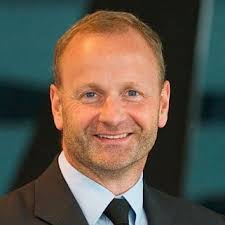
Steen Jakobsen, chief economist at Saxo Bank

“In the mobile telecom sector you need to anticipate growth and expand before the demand picks up. In Lebanon it has been quite the opposite.”

Claude Bassil, chief executive of Lebanon’s mobile operator Touch

“An award of $104 million is obviously a great deal of money, but billions of dollars in taxes owed will be collected that otherwise would not have been paid as a result of the whistleblower information.”

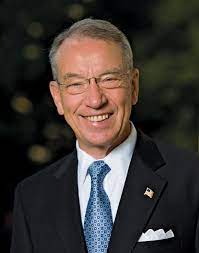
Following the largest-ever whistleblower payout by the American Internal Revenue Service to a former UBS banker now serving time, Senator Charles Grassley, who co-wrote the 2006 law allowing for such payments

“And not even a call from the queen herself would have stopped me.”

Alfonso Signorini, publisher of Italy’s Chi magazine, owned by former Italian Prime Minister Silvio Berlusconi’s media conglomerate, Mondadori, following the controversial publication of topless pictures of Kate Middleton, the duchess of Cambridge

“Sales of iPhone 5 could boost [the US’s] annualized GDP growth by $3.2 billion, or $12.8 billion at an annual rate.”

Michael Feroli, JP Morgan’s chief economist

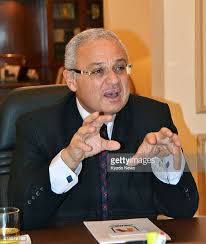
“Everybody is aware that beach tourism constitutes 70 percent of the traffic coming to Egypt. It will continue to do so.”

Egypt’s Tourism Minister Hisham Zaazou as concerns arise on the future of the industry following the victory of the Muslim Brotherhood

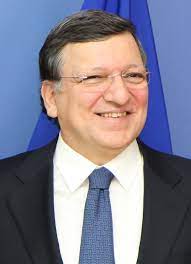
“I call for a federation of nation states. Not a super-state. A democratic federation of nation states that can tackle our common problems, through the sharing of sovereignty in a way that each country and its citizens are better equipped to control their own destiny.”

Jose Manuel Barroso, European Commission president

“The new virus is definitely not stupid but nevertheless Lebanese banks have the means to counter such a virus.”

Ali Nahleh, head of the IT department at Lebanon’s central bank, talking about the recently discovered computer virus, Gauss, targeting customers using online banking in Lebanon

A London-based property consultant on the 45-bedroom residence of Rafik Hariri, the late Prime Minister of Lebanon, being put on the market for £300 million ($486 million):“You are going to have to wait a long, long time for something like this to come on the market again.”

October 13, 2012 0 comments
0 FacebookTwitterPinterestEmail
Banking & Finance

For your information

by Executive Editors October 13, 2012
written by Executive Editors

Deposit outflow for the banking sector

The banking sector in Lebanon registered an outflow in deposits of $110 million in July after growing by an average of $700 million each month from January to June. The last three times Lebanon registered an outflow in deposits were in January 2011 after the collapse of the Lebanese government, the summer of 2006 due to the war with Israel and in February 2005 following the assassination of former Prime Minister Rafiq Hariri. Total deposits of the banking sector grew by 3.5 percent in the first seven months of the year to stand at $122 billion, accounting for 84 percent of the sector’s $145 billion in assets. Private sector loans grew by 5.4 percent in the first seven months of the year to stand at $42 billion; those to the public sector grew by just 1.5 percent over the same period to stand at $30 billion.

Anti-money laundering to anti-virus systems

Central Bank Governor Riad Salameh announced last month the implementation of amendments to tighten existing anti-money laundering and terrorism-funding laws. “These [amendments] are designed to buttress the monitoring of terrorism funding in accordance with the Lebanese laws and to organize the cross-border currency movement,” he said. The amendments follow the visit to Beirut of United States Treasury Deputy Secretary Neal Wolin as part of his Middle East tour. He warned the Lebanese banking sector against dealing with Iran and Syria and allowing the US-sanctioned countries from using Lebanon’s banking system to evade the sanctions. Lebanese banks also upgraded their software systems last month, according to the central bank. The upgrade follows the discovery by Moscow-based Kaspersky Lab, a leading computer security firm, of the cyber virus dubbed “Gauss”, capable of stealing browser passwords and online bank account details. The virus was detected on more than 2,500 computers in the Middle East, of which approximately 1,600 were in Lebanon and nearly 500 in Israel.

Lebanon’s first 10-year local currency debt

With a gross public debt standing at $54 billion —  128 percent of gross domestic product — Lebanon issued its first 10-year debt in local currency, at an attractive interest rate of 8.24 percent versus the current 10-year Eurobond coupon rate of 6.1 percent; the previous maximum maturity was seven years for local currency debt. As the finance ministry battles with how to fund the increase in public sector wages, it plans to sell another 10-year dollar denominated debt issue by the end of the year, according to Central Bank Governor Riad Salameh. It also plans on swapping another $1 billion in local currency debt held by the central bank into dollar denominated Eurobonds after $2 billion were swapped earlier in May. In April, Lebanon issued $950 million worth of Eurobonds, of which $600 million have a five-year maturity and offer a 5 percent yield and $350 million with a 14-year maturity and 6.4 percent yield.

Dubai’s Al Habtoor to go public

Dubai-based Al Habtoor Group, a family-owned conglomerate, said it plans to raise $1.6 billion by issuing 25 percent additional shares, which it would list on the Nasdaq Dubai bourse next year. It is also considering listing on exchanges in London and Saudi Arabia and plans to use the proceeds to expand its businesses and add to its property portfolio. Al Habtoor is currently looking into five-star hotels in London and Paris as well as agricultural land in Central and Eastern Europe and private hospitals in the United Arab Emirates and abroad. Al Habtoor’s activities span several sectors including hospitality, construction, education and automobiles. It also owns a 27.5 percent stake in a joint-venture (JV) construction firm with Australia’s Leighton Group, but the JV will not take part in the initial public offering. Grant Thornton has been appointed as the financial adviser. The listing might help volumes on Dubai securities markets, which have still not recovered to their 2008 levels, despite the Dubai Financial Market index increasing by 16 percent year to date.

Egyptian stock market second best performer worldwide

The main Egyptian stock index is up 60 percent year-to-date and is the second best stock market performer this year after Venezuela’s index, up 160 percent year-to-date. This performance comes on the back of a sharp drop in stock prices in 2011 when the Egyptian index ended the year in the red, down 50 percent, following the toppling of former President Hosni Mubarak and its aftermath of upheaval and instability. Egyptian stocks still remain 20 percent below their pre-revolution levels. Volumes on the Egyptian market are also on the rise, crossing $161 million last month, the highest level since mid-2011. Investors seem encouraged by the recent talks between Egypt and the International Monetary Fund. Egypt has requested a loan of $4.8 billion from the IMF to assist the country in dealing with its faltering economy. Not all investors are keen on Egypt though. Société Générale plans on selling its 77 percent stake in Egypt’s National Société Générale Bank with a $2.3 billion market value and is in talks with Qatar National Bank. According to research by Egypt-based investment bank EFG Hermes, an agreement would lead to a full takeover worth $2.5 billion to $2.9 billion.  

M.I.T. Enterprise Forum selects five Arab entrepreneurs

Five innovators from the Middle East were awarded the TR35, a Massachusetts Institute of Technology award that recognizes the most outstanding innovators who are under 35 years old across a wide array of sectors. Three of the five innovators selected were from Lebanon: Habib Haddad, chief executive of Wamda, a platform for entrepreneurs in the MENA region, and founder of the Arabic search engine Yamli for which Yahoo acquired a license; Elie Khoury, founder of the web analytics service Woopra; and Hind Hobeika, creator of ButterflEye, goggles that change color to monitor heart rates under water. The other two innovators are Palestinian Sami Khoreibi, founder of Enviromena, a developer of solar projects in the MENA region and Saudi Arabian Abdulrahman Tarabzouni, co-founder of Syphir, behind the development MailRank, which is a system that addresses email productivity problems. The winners will participate in the EmTech MIT Conference from October 24 to 26, 2012, held on MIT’s campuses in Cambridge and focused on emerging technologies, allowing the winners to promote their innovations to a wider audience.

Qatar investing in more Lebanese nuts

Qatar First Investment Bank (QFIB), an independent Qatari Islamic bank, has upped its stake in Al Rifai International Holding, a leading Lebanese nuts and kernels manufacturer, to 35 percent from the 15 percent it had acquired back in December for an undisclosed amount. According to Emad Mansour, chief executive officer of QFIB, “since acquiring a 15 percent stake in Al Rifai late December of last year, the company has shown positive growth prospects. We strongly believe that Al Rifai has the right setup to venture into new markets and diversify its product range.” Since the beginning of the year, Al Rifai has opened five new outlets in Lebanon and now has a total of 50 points of sales. In the first half of the year, the nuts manufacturer’s wholesale performance grew by 63 percent year-on-year and its export-sales by 66 percent year-on-year. Al Rifai plans on opening a new factory in Lebanon in the second quarter of 2013 in order to raise its production capacity in the country to 10,000 tons, in line with its manufacturing facility in Sweden established in 2008. In 2010, Al Rifai Holding raised its capital by $15 million through a private placement led by MedSecurities Investment, a wholly owned subsidiary of BankMed.

October 13, 2012 0 comments
0 FacebookTwitterPinterestEmail
The Buzz

Morning briefing: 12 Oct 2012

by Executive Staff October 12, 2012
written by Executive Staff

The world could see a gradual easing of oil prices over the next five years due to sluggish economic growth and increasing energy efficiency as production rises steeply in Iraq and north America, the West's energy watchdog said on Friday.

The International Energy Agency, which advises industrialised nations on energy policy, cut its global oil demand growth projection for 2011-2016 by 500,000 barrels per day (bpd) compared to its previous report in December 2011.

As a result, the pressure on OPEC to produce more oil will ease dramatically and the cartel will have to produce no more than 31 million bpd until 2017 to balance global demand – less than it produces at the moment.

More from Arabian Business


The volatile situation in the region will ironically help Lebanon’s maritime transport sector to grow even further, the public works and transportation minister said on Thursday at the fourth annual conference of the Shipping Brokers Association.

“The regrettable situation in the region continues to present an opportunity that Lebanon can benefit from,” Ghazi Aridi said in opening remarks.

“We are keeping all communications channels open on all levels and are taking precautionary measures to protect [the maritime transportation sector],” he added.

More from The Daily Star


Iraq is considering replacing ExxonMobil with Russian companies at the supergiant West Qurna-1 oilfield, after the U.S. major angered Baghdad by venturing into Kurdistan, according to a media report citing industry sources.

The northern Kurdish region has riled Baghdad by signing deals with foreign oil majors, such as Exxon, Total and Chevron, contracts the central government rejects as illegal.

Nefte Compass, a weekly energy newsletter about the FSU and Eastern Europe, said on Thursday that Iraq is weighing whether to replace Exxon with Russia's LUKOIL and Gazprom Neft – both already involved in the country.

More from The Daily Star


Record sales for BMW and Mini have been achieved across the Middle East for the first nine months of the year with a total of 15,805 vehicles sold in 14 markets, up 15 percent.

The German car maker said it also saw its best quarter ever (July-September) and achieved its highest sales volume in a single month, with 1,981 vehicles delivered across the Middle East in August.

It said it witnessed gains in almost all GCC markets with most importers recording double digit growth.

More from Arabian Business

October 12, 2012 0 comments
0 FacebookTwitterPinterestEmail
  • 1
  • …
  • 308
  • 309
  • 310
  • 311
  • 312
  • …
  • 707

Latest Cover

About us

Since its first edition emerged on the newsstands in 1999, Executive Magazine has been dedicated to providing its readers with the most up-to-date local and regional business news. Executive is a monthly business magazine that offers readers in-depth analyses on the Lebanese world of commerce, covering all the major sectors – from banking, finance, and insurance to technology, tourism, hospitality, media, and retail.

  • Donate
  • Our Purpose
  • Contact Us

Sign up for our newsletter

    • Facebook
    • Twitter
    • Instagram
    • Linkedin
    • Youtube
    Executive Magazine
    • ISSUES
      • Current Issue
      • Past issues
    • BUSINESS
    • ECONOMICS & POLICY
    • OPINION
    • SPECIAL REPORTS
    • EXECUTIVE TALKS
    • MOVEMENTS
      • Change the image
      • Cannes lions
      • Transparency & accountability
      • ECONOMIC ROADMAP
      • Say No to Corruption
      • The Lebanon media development initiative
      • LPSN Policy Asks
      • Advocating the preservation of deposits
    • JOIN US
      • Join our movement
      • Attend our events
      • Receive updates
      • Connect with us
    • DONATE