• Donate
  • Our Purpose
  • Contact Us
Executive Magazine
  • ISSUES
    • Current Issue
    • Past issues
  • BUSINESS
  • ECONOMICS & POLICY
  • OPINION
  • SPECIAL REPORTS
  • EXECUTIVE TALKS
  • MOVEMENTS
    • Change the image
    • Cannes lions
    • Transparency & accountability
    • ECONOMIC ROADMAP
    • Say No to Corruption
    • The Lebanon media development initiative
    • LPSN Policy Asks
    • Advocating the preservation of deposits
  • JOIN US
    • Join our movement
    • Attend our events
    • Receive updates
    • Connect with us
  • DONATE
Finance

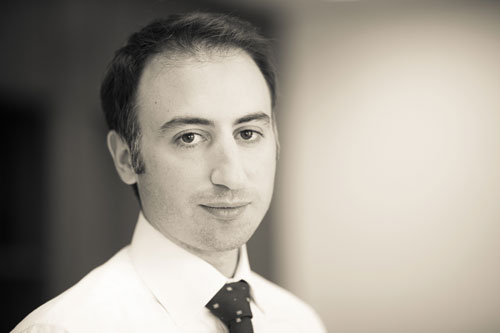
A chat with ABL’s Torbey

by Maya Sioufi June 3, 2012
written by Maya Sioufi

The growth in profitability of Lebanon’s banks continues to be stunted by slower economic progress not only in Lebanon but also globally, as well as turmoil in neighboring Syria and increased international regulation. Executive sat down with Dr Joseph Torbey, the president of the Association of Banks in Lebanon (ABL) to discuss these issues in the banking sector. 


With growth in the profitability of the Lebanese banking sector slowing, what are your expectations for profits in the sector going forward?

I expect profits to be at the same level as last year. There is drop in the growth of profits because the economy is moving slowly and the environment is politically challenging but the banking sector is still in good shape. I expect 8 percent growth in the deposit base this year and, so far, we are in line with this expectation.

With a slowing domestic economy, is competition among local banks increasing? Should smaller banks consolidate to survive?

For the top 11 banks in Lebanon, the central bank has a policy which does not allow them to merge among each other, as banks should not be “too big to fail” because if they fail, they can threaten the stability of the [economic] system. There is always the possibility for larger banks to acquire smaller and medium sized banks. I don’t expect any [merger or acquisition] operation this year but it is always a possibility.

When it comes to Syria, different banks are adopting different measures. As president of the ABL, what is your recommendation for the banking sector in terms of dealing with Syria?

We are following all international rules [and regulations] and we are not taking risks to evade these rules.

How about the Foreign Account Tax Compliance Act (FATCA)? What impact will this new law have on the banking sector?

The number of Lebanese with a double citizenship is not big and so not many customers will be impacted, but it will be a big burden on banks because they need systems and software. Many banks will avoid American customers because it is really a big cost to banks to operate a system dedicated to giving specific treatment to US citizens different from treatment of all the customers of the bank. We will be asking our American customers to cooperate with the US government and disclose what is being asked of them. Our decision as a sector is to cooperate with FATCA.

Several bankers have also voiced their concern on the exposure of the sector to the government debt. Should banks reduce their funding to the sovereign?

The sovereign risk is under control and there is an improvement in the ratio of public debt-to-gross domestic product. We don’t have a big worry over it. We are putting pressure on the government to implement reforms but reform is not an action taken in one day. It is a behavior and some reforms need the participation of the Parliament and a proper political environment. The government is under geo-strategic pressure now, more than the pressure to perform economic and financial reform, but in the end, the government will be obliged to implement reforms.

Regarding the wage increases imposed by the government, how significant has been the impact on the banking sector?

The banking sector has more than 21,000 employees so our costs are really high. I don’t have actual figures. The banking sector was successful in absorbing the shock of the increase but other economic sectors have difficulty in complying with the wage increase as it comes at a difficult time when the economy is slowing, the regional situation is bad and the international situation is not in good shape either.

With the cost of doing business increasing, where will the opportunities for growth of the banking sector come from going forward?

A big number of banks are operating worldwide and they are following their customers, financing them in Europe, Africa and Latin America. Our expansion is not based only on opening branches and subsidiaries abroad but also in following customers.

This article was published as part of a special report in Executive's June 2012 issue

June 3, 2012 0 comments
0 FacebookTwitterPinterestEmail
Economics & Policy

The monster beneath us

by Thomas Schellen June 3, 2012
written by Thomas Schellen

A monster stirred under Lebanon last month. Not everyone felt it, but across the country came various reports on May 11 of buildings wobbling briefly like twigs in a breeze. The earthquake, measuring 5.5 on the Richter Scale, was only a reminder, however, for the people in Saida, Beirut and Tripoli, that the greatest potential threat they face is not civil strife, war or revolution, but rather it is a monster sleeping beneath the sea not 20 kilometers from Lebanon’s population centers. Unknown until 2004, the monster’s existence has been proven with sonar by an Italian expedition and its potential wrath was mapped one year ago by scientists of the American University of Beirut (AUB).

The geological surveyors dryly called the monster “Mount Lebanon Thrust”. The term describes a reverse fault system, a type of crack in the earth’s crust that has the reputation to cause particularly destructive earthquakes. This discovery raises the seismic hazard level for Lebanon’s coastal region from moderate to high according to recognized international standards, with a substantial tsunami hazard thrown in for good measure. The Mount Lebanon Thrust “runs from near Saida in the south to slightly below Tripoli in the north and it is only about 15 to 20 kilometers away from the coastline. We also found out that this fault system is not vertical. It is oblique and it connects with the Yammouneh fault line, like a V,” explained Mohammed Harajli, professor of civil engineering at AUB, who was part of the team that  published the study on Lebanon’s increased seismic hazard risk in 2011. [See map]

Scientists had been studying fault lines in Lebanon for a long time and considered the Yammouneh fault, named after a village nestled between the Lebanon and Anti-Lebanon mountain ranges, to be the country’s most active among several seismic faults, all located inland. None of these faults is anywhere near as extensive as the Mount Lebanon Thrust. According to Harajli, the newly discovered system’s length and location means that the entire area from the coast to the Bekaa plains is situated above a major fault and “very vulnerable to earthquakes.”

“We therefore reassessed the earthquake hazards and came up with new parameters especially for the coastal areas where the capital investments are the heaviest,” he said. While the magnitude, or overall energy, of earthquakes is measured on the well-known Richter scale, the devastation that a tremor can cause depends on many factors, including depth of the epicenter, soil structure and population density in the most directly affected areas.

These factors influence the earthquake’s intensity, or locally experienced impact. One method to gauge earthquake intensity is peak ground acceleration (PGA), or the speed with which the ground moves vertically and/or horizontally. This movement (often measured in g-forces or meters per second) is a crucial consideration in designing buildings so as to withstand an earthquake. The 2011 reassessment of earthquake hazards in Lebanon was significant, enough to raise the hackles of the international reinsurance companies that have a vested interest in assessing the economic risks associated with an earthquake.


Lebanon earthquake map

“What worries me is that according to the study by AUB, you have more or less an increase [in PGA] from 1.5 meters per second to three. This means a lot,” said Italian earthquake risk consultant Marco Stupazzini, who works for global reinsurance firm, Munich Re. “Lebanon needs to review the design standards that we are using. That is a matter of the building code but this may not be enough. We may have to assess certain buildings, for example hotels, which host larger numbers of people, and you have to make these buildings perform better.” Although the region is not nearly as vulnerable as the Pacific Ring of Fire that includes Japan, New Zealand, Chile, and the US state of California, earthquakes are anything but a new or rare threat in the Mediterranean. In fact, Italy has suffered from two earthquakes that struck the Emilia-Romagna region this past month.  More than 20 have been killed and priceless historic buildings have been destroyed.

Shared shakedown, varying responses

Italy, Turkey, and Lebanon are three Mediterranean countries whose histories abound with earthquakes. Each has its own seismic story as the fault systems in the three countries represent collision zones between different pieces of the global tectonic puzzle underlying our so-called “terra firma”. But there is also a distinctly non-geological difference between earthquake risks that people are exposed to in each of the three countries.

Italy has a long-established natural catastrophe response system. Turkey pushed through a national catastrophe response framework, including an insurance pool, with emergency legislation within weeks after the 1999 Marmara earthquake killed 13,000. Lebanon has a draft law on disaster response, a building code that needs updating to meet the new hazard levels, and no catastrophe insurance pool, not to mention monitoring shortfalls and widespread corruption in real estate licensing.

“We are preparing the establishment of a disaster management unit. A law to that respect is now being discussed in Parliament.” said the chairman of the Parliament’s committee on Public Works, Water, and Energy, Mohammed Kabbani. As to the concept of a national catastrophe insurance pool, Kabbani said no initiative in that direction exists of yet.

Emergency response legislation and disaster recovery planning are essential in creating a system of preparedness that can reduce the loss of lives in a major earthquake. The absence of a law as a starting point of a coordinated national effort is worrying, and it is no help that the Nejmeh Square area of Beirut has a Bermuda Triangle reputation when it comes to draft laws — they tend to vanish.

Getting concerned? Consider this: Building quality in Lebanon is in itself tending toward a game of hazard. After the famous collapse of a single decrepit apartment building in the Beirut neighborhood of Fassouh in January of this year, the media quoted Kabbani as saying that 20,000 buildings in Beirut are not safe and could crumble like the one in Fassouh that crushed 27 persons to death.

“I did not say 20,000,” Kabbani clarified his assessment to Executive. “I said 20 percent and this is not only in the capital. It is in all of Lebanon.” Based on an estimated population of four million and assumed average household size of five persons, the prospect of one in five buildings being unsafe, means simply that hundreds of thousands of dwellings are prone to become death traps for their inhabitants if the Mount Lebanon Thrust ever gives us another earthquake of magnitude 7.5 on the Richter scale.

Tremors releasing this amount of energy have been observed in 551 and 1202 AD. The frequency of such highly destructive quakes is not high and the likelihood has not increased through the discovery of the Mount Lebanon Thrust, but experts Stupazzini and Harajli equally emphasized that such an event can occur at any time.


Depends on where you live

Starting to wonder if your home is safe? There is some good news. Since 2004, building codes in Lebanon have been upgraded and engineering standards of new, high-end residential structures are more likely than not to include a reasonable measure of earthquake-proofing.

According to AUB’s Harajli, the reconstruction and development of parts of Beirut, notably the downtown and the pricier areas of West and East Beirut, have been carried out in compliance with engineering standards for earthquakes, at least up to the standards that were incorporated in the 2004 building code and which were calculated for the moderate hazard level known at the time.

Solidere, moreover, responded to the recent higher risk assessment by raising the seismic building standard requirements for buildings in the downtown by 50 percent, more than the 25 percent increase recommended by the AUB study, Harajli said.

So if you paid more than $2,000 or $3,000 for every square meter of your newly-built abode in the past five years, your potential earthquake experience may be limited to seeing the chandelier swing and cleaning up the shards of a Ming-dynasty vase or two. However, if your children go to school in Lebanon, or if you attend the prayers on Friday or church on Sunday, consider this: “We have been given the recommendation that public buildings and buildings with a lot of traffic should be strengthened.” Kabbani said. “This includes of course schools and hospitals and buildings where lots of people congregate, such as malls and mosques and churches. We are recommending for something to be done in that respect.”  The MP’s comment fits seamlessly with what Harajli told Executive. “There is a committee on public safety and it has recommended strengthening schools against earthquakes. We are recommending that certain buildings which are critical should be strengthened and prepared, [beginning with] public buildings which will accommodate people in the aftermath of an earthquake. But this costs money and the politicians are more concerned about their own interests,” he said.

“Incorporating earthquake resistant design into a new building is much cheaper than making an existing building earthquake proof,” added Harajli. In his estimate, earthquake engineering in a new construction adds about 5 percent to total building cost or, when calculated from the cost of the skeleton, increases cost by 10 or 15 percent.

Literally unstable

Making an existing building more resistant to earthquakes is possible if tenants of a building commission an engineer to strengthen the structure, Harajli said, but the costs can easily run into the hundreds of thousands of dollar for an apartment building with 20 or 30 units.

What is perhaps more worrying is that even if buildings are up to scratch they may not be spared from the effects liquefaction, the process by which solid ground that is not made of bedrock is transformed during an earthquake into a substance that acts like falling water. According to Stupazzini there is a major risk of this in Lebanon. Harajli adds that several parts of Beirut have clay and sand foundations that could cause liquefaction, including parts of Ashrafieh, and at present no detailed studies on this exist.  But with awareness lacking and in the absence of legal pressures or financial incentives, landlords and residents of old substandard buildings are extremely unlikely to pursue such steps — in other words, ignoring the potential for disaster until it is possibly too late.  “We hope that over the next 20, 50, or 100 years we will not be struck by an earthquake so that these buildings will become very old and be replaced,” Harajli mused, with a note of strain in his voice but added, “We are now forming the Lebanese Association for Earthquake Hazard Mitigation and we hope that we can get a minor earthquake that will bring the politicians to their senses,” as people are more prone to take action if they feel they are in danger.

Aiming to conduct research and raise awareness for making Lebanon safer for earthquakes, the new civil society organization will have a full plate to work with. In the meantime, there are plenty of issues waiting. Geological surveys of soil conditions in densely populated areas where the new seismic map shows increased hazard levels would be in order, and so would be measures to better protect economically vital infrastructure, like the Beirut Port, against the risk of a tsunami. Policy makers would be prudent to concern themselves with urgently updating the building codes, initiating tighter quality supervision of materials actually used in building construction, and institute disaster recovery preparations and, perhaps, a national catastrophe insurance pool.

MP Kabbani recognized these needs with a truly political statement in his discussion with Executive: “We are working slowly and we should work harder and quicker in finding solutions for these problems and I hope that our discussion will be an incentive for me to push harder,“ said Kabbani. “But I am sorry to say that in Lebanon, nobody cares and therefore almost nothing is being done.”


Turkish Catastrophe Insurance Pool

A model that Lebanon could emulate in mitigating earthquake impacts and enhancing preparedness is the Turkish Catastrophe Insurance Pool (TCIP), recommended by European reinsurance experts in April at a seminar for Lebanese insurance companies in Beirut. TCIP provides a national safeguard to help home owners and tenants of buildings restore their basic living environment if they become earthquake victims.

TCIP was created under a national disaster response law passed within one year after Turkey suffered a horrific earthquake in the city of Izmit in August 1999 that cost 13,000 lives and damaged 120,000 homes beyond repair. The pool is designed to cover all private residences located within the jurisdiction of municipalities.

Publicly owned and managed by an insurance company on rotational basis, TCIP is a mandatory insurance scheme with low premiums and indemnities that currently have a ceiling of 150,000 Turkish Lira ($83,000) per insured home. Premiums are determined by construction type and location of a house on a national earthquake risk map. The average annual cost of premiums per insured home was the equivalent of $52 and the average coverage was just under $30,000, the TCIP 2010 annual report said.

The reach of the TCIP climbed to 3.3 million homes in 2010, representing 27 percent of all homes that fall under the mandate. The key purpose of TCIP is to support the continued functioning and resilience of society in case of catastrophe. A core benefit of the program is that it entails awareness building and training for public officials and the general public.

June 3, 2012 0 comments
0 FacebookTwitterPinterestEmail
Finance

Chained to the debt

by Maya Sioufi June 3, 2012
written by Maya Sioufi

The story of how Lebanese commercial banks effectively finance the country through buying government debt has been told so many times that it is  cliché — but even after all these years, it rings no less true.

As of the end of March 2012, the Association of Banks in Lebanon reported that the sovereign had rung up a tab of some $29 billion at the country’s banks, having issued them some $13 billion in Eurobonds (70 percent of the government’s Eurobonds portfolio) and $16 billion in Treasury bills (49 percent of the government’s Treasury bills portfolio). While this figure represents only 20 percent of the banking sector’s total assets, it fails to take into account deposits placed with the central bank, which stood at $50 billion as of the end of March, taking commercial banks’ overall exposure closer to 55 percent of assets.

All this is relative to total Lebanese government debt, which at the end of 2011 stood at some $54 billion; that’s an awful lot for an economy worth just $39 billion, working out to a whooping debt-to-gross-domestic-product ratio in the range of 140 percent. Those new to Lebanese economics should note, however, that this is actually an improvement relative to six years ago, when debt-to-GDP peeked around 180 percent. 

“The debt itself is not a major problem,” says Fadi Osseiran, general manager of BlomInvest Bank. “The point is how much we will increase it every year relative to GDP, that’s the real story.”

The ‘drop’ in the debt-to-GDP ratio is actually due to the increase in GDP. With a weaker economy — the IMF recorded 1.5 percent economic growth in 2011 and forecasts 3 to 4 percent this year on condition of internal reform and external stability, neither of which seems likely — the debt component of the ratio would need to lose some fat for the ratio to continue dropping and alleviate concerns
regarding the bank’s weighty sovereign exposure.

One thing banks are voicing dissatisfaction with are the current rates on Eurobonds and Treasury Bills. “It does not make sense that Lebanon has a ratio of debt to GDP at 137 percent, a credit rating below investment grade and the interest rate on bonds is much better than on investment-grade bonds,” says Osseiran. The average yield on Eurobonds stands at 4.3 percent, and 5.82 percent on a two-year Treasury bill. In what was perhaps a slight correction, yields on Treasury bills were raised by 50 basis points across the board in March of this year, a move cheered by bankers.

In the national interest

“The government should understand that a higher rate will give comfort to banks to buy more government debt,” says Najib Semaan, general manager of First National Bank.

Concerned with their exposure to the sovereign risk, banks are trimming their holdings in government securities, with the gap being filled by the central bank. “All Lebanese banks are reducing their exposure to the government,” says Alain Wanna, deputy general manager and head of Group Financial Markets at Byblos Bank, but he highlights that “banks, rather than investing directly in government securities, are placing deposits with the central bank and the central bank is buying the securities so in the end it is the same.”

Debt score card


His observation concurs with that of central bank Governor Riad Salameh’s statement at the Arab Economic Forum in May this year, during which he said “the reduction in the banks’ exposure to the government created a gap that we filled as a central bank”. The irony is that the central bank is also the issuer of government debt, meaning that effectively it is buying from itself. The more it does so, the more the debt is monetized and the lines between who owns it and who issues it become blurry.

No place like home

But with low rates in international markets, keeping the dough at home seems like the most suitable option for now. “In this environment in which interest rates abroad are so low, banks will subscribe in the forthcoming issues because they need to grow their interest margins,” says Marwan Barakat, chief economist at Bank Audi.

More debt issuance is on the government’s agenda. Minister of Finance Mohamad Safadi announced in May the government’s intention to raise $2 billion in new foreign-currency-denominated bonds this year for infrastructure projects, which the banks will be expected to line up for yet again.

Being the prominent financiers of the republic’s coffers, however, it would seem that the banking sector ought to be able to twist the government’s arm into implementing structural reforms essential to reduce the borrowing needs of the country.

According to Nassib Ghobril, chief economist at Byblos Bank, “the political class is taking the banking sector for granted,” given that if they sought funding from abroad they would not get the same rates. “Unfortunately the banking sector has not used its leverage to put significant pressure on the authorities. If representatives of the banking sector say we will stop funding altogether until you start implementing reforms and not just talking about them, then things will be different.”

This article was published as part of a special report in Executive's June 2012 issue


June 3, 2012 0 comments
0 FacebookTwitterPinterestEmail
Economics & Policy

Executive Insight – Making the most of Lebanon’s resources

by Malek Takieddine June 3, 2012
written by Malek Takieddine

In its drive to become an oil and/or gas producing country, Lebanon currently faces the challenges of establishing and implementing a sound regulatory framework and an effective Petroleum Administration, the sector’s (supposedly) independent regulatory body.

Some of the most crucial aspects of the required system include creating farsighted mechanisms that will first prevent the occurrence of a number of problems that are commonly encountered in hydrocarbon producing provinces, and second, equip the Lebanese government with sufficient powers to address such problems swiftly and efficiently as they arise throughout the development of the upstream oil and/or gas industry in the country.

National vs. IOC interests

Arguably one of the worst oversights that can be committed by the early drafters of oil and gas legislation is the assumption that International Oil Companies (IOCs) would be always seeking to diligently explore their acreages in search of hydrocarbons, and that once they have found oil and/or gas, they would be eager to exploit it effectively and quickly.
Experience around the world shows that not long after licenses are granted or discoveries are made, some areas are often left to lay fallow and national governments discover that they do not have adequate powers to impose work obligations on the IOCs. As a prominent observer of the United Kingdom offshore licensing regime once noted, “the idea that licensees might make significant discoveries but then not develop them does not appear to have occurred to those who first drafted the offshore licensing arrangements in 1964/1965”.

In the UK, for example, rigorous state action was needed to address this problem and the government had to undergo the complexities of enforcing a “voluntary” scheme in order to rectify the situation of fallow areas and discoveries. The result was a shy governmental process that raised some concerns about the legality of such measures.

The efforts undertaken so far by the Lebanese government in drafting the offshore hydrocarbon legal framework suggests that the country is slowly making steady progress in the right direction. It is imperative to continue along this positive trajectory by appointing a Petroleum Administration that can play an effective role in monitoring, at a close distance, the petroleum operations to be undertaken by the IOCs.

Foresight needed

It can be also predicted that, in light of the current position of the Lebanese economy, the mere discovery of commercial oil and/or gas reserves would  understandably be interpreted as a promising sign of future wealth, regardless of the quantities that would actually be produced.

Yet, once the initial joy of the first few barrels fades away, the Lebanese government must be well prepared to monitor the efficiency of its production and to make sure that its licensees are conducting their operations using the best practicable standards and methods to ensure acceptable recovery levels out of each reservoir.

The technical expertise and skills of the licensees (the operators) usually play a crucial role in determining the levels of recovery (i.e. how much oil and/or gas could be practicably produced).

For instance, a 70 percent oil recovery from an oil reservoir is considered to be a high percentage as it is almost impossible to extract entire reserves of any particular reservoir due to the constant reduction of pressure and the interference of other factors, such as oil density and depth of the reservoir, amongst others.

Countries such as Saudi Arabia are constantly aiming to increase their investments in enhanced recovery technologies, as they recognize how vital this is in order to boost recovery rates at their reservoirs from around 50 percent to 70 percent.

Once again, the Lebanese regulator must ensure that the government’s powers under any exploration and production agreement offer useful mechanisms for pushing the licensees towards more efficient recoveries, that is to say better stewardship.

In due course the government must put in place adequate mechanisms whereby field activities would be surveyed (preferably on a yearly basis) to determine the performance of each licensee (operator).

A process to deal with underperforming fields must also be decided. Such a process could, for example, include an initial consultation exercise between the government and the licensee (operator) to study possible ways to enhance stewardship. A set of targets could thereafter be agreed in conjunction with a clear and firm set of sanctions.

Failure to address certain crucial issues in the initial text of petroleum regulations and agreements could have disastrous consequences on the national interest and result in huge resources being lost or at least deferred.

Effective revenue management

In addition to operational efficiency, an important matter that Lebanon must consider is the efficient management of its hydrocarbon revenues. Hydrocarbon resources are known to inject considerable financial revenues into state accounts. These revenues would usually have two main characteristics: one, they are likely to constitute a large percentage of the total yearly revenues of the state; and two, they are temporary.

As a result, several unfavorable consequences could be noticed in the national economy:
(i) Inflation due to the sudden increase in money supply.
(ii) An occurrence of the Dutch Disease, meaning the depreciation of the productive sectors as they becomes less competitive due to the oil-related increases in exchange rates.
(iii) An unstable budget balance due to the volatility of oil prices.
(iv) A decrease in income when the resources of the province begin to decline.
As part of the economic strategies that governments undertake to surmount the above challenges, national oil funds are often created by governments to accumulate and manage part of, or the entirety of, the state’s oil and gas revenues. In total, close to 20 petroleum-producing countries are known to have established national oil funds.

The specific purposes of such funds varies between countries; for instance, Norway’s aim is to use its fund to stabilize of the economy and to secure a steady income for future generations, even after the resources dry-up. Russia, however, does not give priority to saving for future generations and the purpose of its oil fund is, according to Vasily Astrov, an economist at the Vienna Institute for International Economic Studies: “reduce the vulnerability of the state budget to the volatility of world oil prices,” and to sterilize “the impact of oil-related foreign exchange inflows on the money supply and inflation.”

To Lebanon’s credit, the Lebanese Offshore Hydrocarbon Resources Law provides a clear provision that state hydrocarbon proceeds shall be injected into a sovereign fund.

The strategy shall be to keep the capital and part of the proceeds in an “investment fund for future generations”, while using the remaining funds to “guarantee the rights of the state and avoid serious, short or long-term negative economic consequences”.

In theory this is an excellent provision, however, the practical benefits thereof shall be largely affected by the seriousness of the special law that needs to be enacted by the Lebanese parliament to define the management structure of the sovereign wealth fund, and its investment principles, not to mention the effective implementation of such law. A close eye should be kept at how the Lebanese authorities will perform in the coming years in this respect.

Worthless oil and gas?

Indeed, some critics may argue that Lebanon’s oil and gas resources would be worthless to the country if they are badly managed and exploited. As the coming decades will show, the true worth of these ‘valuable’ resources will come down to the ability of the Lebanese authorities to manage this industry with high technical capabilities, foresight and transparency.

June 3, 2012 0 comments
0 FacebookTwitterPinterestEmail
Finance

Forcasts: Lebanon’s new normal

by Nadim Kabbara June 3, 2012
written by Nadim Kabbara

Robust economic growth in Lebanon came to a halt last year as domestic political uncertainty and regional turmoil took their toll on key sectors such as trade, tourism and real estate.

This year is not shaping up to look much different as challenges translate into weaker bank profitability: slower capital inflows will moderate asset funding, softer trade and loan activity will impact fee generation, and regional unrest will drive loan loss provisions in subsidiaries that were meant to be the engine for growth.

This subdued level of profitability for Lebanese banks could represent a ‘new normal’ in the near term. Management teams are prudently placing their expansion plans on hold in order to preserve balance-sheet quality in the face of slower economic activity, heightened political uncertainty and an increase in regulatory capital.

This new normal contrasts with previous years during which the banking sector nearly doubled its profits, from $850 million in 2006 to $1.6 billion in 2010. This was possible by sidestepping the global financial crisis, attracting significant financial inflows and stockpiling record reserves at Banque du Liban (BDL), Lebanon’s central bank, all of which boosted Lebanon’s reputation back to the forefront of regional financial centers.

However, slower profit growth could influence the lending behavior of commercial banks, as well as their participation in government debt auctions and their redeployment of capital aimed at maximizing shareholder returns. It is unlikely, though, that there will be a material shift away from the existing business model, which has worked well for years.

The public sector will continue to finance its fiscal deficits with more debt, outside of enacting much needed reforms. BDL will continue to influence deposit rates to ensure that Lebanon attracts financial inflows, and will seek to reduce its intervention at treasury auctions. And banks will continue to participate at government auctions, at the very least maintaining their concentrated sovereign exposure.

Ultimately, the banking sector needs an avenue in which to continuously invest its excess liquidity; with a near-zero international benchmark rate in the interbank market, moderate private-sector demand and regional turmoil seen impacting asset quality in related subsidiaries, they don’t have many options left on the table.

With several headwinds on the horizon, the case between the banking sector, the Ministry of Finance and BDL is likely to be strengthened further as each major party shares a responsibility to maintain a healthy economy and a resilient banking sector. We have seen a concerted effort earlier this year on shorter-term local currency treasuries, which were auctioned at higher rates to ensure bank subscription, following the International Monetary Fund’s recommendations, but these higher rates were not enough to make up for the reduction in profit growth.

With tighter bank regulations, slower banking deposits, higher provisions caused by regional unrest, and cautious management focused on preserving asset quality, profitability for the banking sector could remain lackluster for now.

Although investors may have over-penalized the banks, judging by their very weak stock market performance on account of turmoil in Syria and Egypt, they will need to contend with a lower growth profile and less appetizing dividend payouts once visibility improves and their growth plans are back on track.

This article was published as part of a special report in Executive's June 2012 issue
June 3, 2012 0 comments
0 FacebookTwitterPinterestEmail
Society

A Passion for Adventure

by Executive Staff June 3, 2012
written by Executive Staff

The story of Kuwait-based telecommunications operator Zain is a corporate lesson worthy of attention. The company grew by leaps and bounds for seven years, until in  2009 it became an Arab model in profit building, branding and positioning in the top tier of telecoms operators worldwide. “A Passion for Adventure” narrates this story from the perspective of Saad al-Barrak, who led the Zain team during that time.

A fluid read, the book will be most rewarding for anyone fascinated with telecommunications in this region and for students — in a wide sense of the word — of the Arab management experience.

Parts of the book that convey details on the acquisition of African network Celtel and on the creation of the Zain identity out of boringly named predecessor Mobile Telecommunications Company (MTC) were page turners. It is information of record that MTC paid $3.36 billion for Celtel and that South African rival network MTN, feeling duped at being bested by MTC, tried to have the agreement revoked in the courts. But the narration on how MTC reevaluated their too-low bid and turned the table in their favor by making an unsolicited higher offer in the last minute, is fresh and certainly worth reading.

Some parts of Barrak’s rendition of the Zain story — such as recollections of how this or that capable individual joined the team — might appeal more to the people who were part of the journey. Where the narration covers Iraq’s invasion of Kuwait and in a few other places in his book, the author cites sources for context that feel like alien additions sourced from a newspaper archive, rather than organic parts that belong.

More interesting to read was an earlier part of the tale in which Barrak recalls how he felt and responded when he was offered a position far beyond his experience and imagination by his first employer, International Turnkey Systems (ITS), a Kuwaiti ICT vendor and systems integrator for banks and other corporate clients. His recollection of how he was supported by the owners of ITS, whose company was bleeding money for needless expenses, offers worthwhile insights into Arab corporate culture.   

From his testimony about the rise of Zain, it is evident that Saad al Barrak is a fortunate man. He started his career in leadership at a moment of opportunity and his decisions of expansion, branding and community building came at the right moments, benefiting from an age when all circumstances favored an operator combining a rich war chest with a daring growth ambition.

Barrak’s perception of Zain’s acheivements was poignantly illustrated when he told Executive, “It was Zain that got all these people inspired to move and become international companies and as Zain has stopped, everybody else has stopped, right? That shows the leadership and pioneering and inspirational role that Zain played in the region.”

“These people” refers to Arab telecommunications operators like Saudi Arabia’s STC and the United Arab Emirates’ Etisalat, which indeed embarked on international expansions after the Kuwaiti operator. 

There is no payback chapter tearing into the details of Zain’s partial dismantlement, only a very positive interpretation of the process that saw the company’s top international assets sold to Indian operator Bharti in mid 2010. People looking for angry testimonials or hard forensic analysis of that part of the Zain story will not be satisfied. 

The inner core of Barrak’s tale, however, is not the growth and wane of Zain but his view on management, epitomized in his sentence: “The best of plans and strategies are the ones extracted from the hearts and minds of your people, or inculcated in the hearts and minds of your people.”

In narrating these views, he states his case for “preaching a new business and economic ideology… which is part and parcel of our universal, open philosophy — an all-encompassing philosophy considering the universe as our homeland and humanity as our tribe.”

Readers may regard this new business ideology to represent an incremental enhancement of management concepts rather than a total reinvention of the art of management. But it is in any case a notable Arab contribution and perspective on leadership. There cannot be arguing that such contributions deserve to be heard. As Barrak said, “We need inspiring examples from our region and this is what we tried to do in Zain.”

June 3, 2012 0 comments
0 FacebookTwitterPinterestEmail
Society

The Formula One family car

by Yasser Akkaoui June 3, 2012
written by Yasser Akkaoui

Ferrari has been on something of a new trajectory in recent years, and to get the word out on how things have been shaping up for the automaker, Executive was invited on an all-expenses-paid, one-day trip to the Modena province of Italy to sit with company officials, tour the Ferrari factory and test drive the new 2012 California model.

The company’s course of late could be seen as an assault on the turf of rival Porsche. In the 1990s, the German luxury carmaker made strategic decision to position itself as the manufacturer of the racecar one can also drive to the grocery store and pick up the kids with — magnificent engineering and performance potential paired with practical, everyday sensibilities.

First launched at the 2008 Paris Motor Show, Ferrari’s California was an offering of a similar genre, aiming to attract customers who might otherwise have been looking at a Porsche 911 Turbo, a Mercedes SL or even the Bentley GT. The four-seat, eight cylinder California was intended not only for those dazzled by the Ferrari brand, the curving lines of beauty and Formula One racing capabilities, but also those who want to throw their gym bag in the front and look good with the soft-top down on their commute to the office; the sort of versatility Porsche has made its hallmark.

If you’d fallen for the California in 2009, however, you might hardly think a square inch of her has aged in the 2012 model. Indeed, Ferrari has kept the appearance of the California almost exactly the same, instead focusing the evolutionary process on the DNA of the automobile, honing the mechanism inside the machine. The new model is 30 percent more fuel efficient, which helps to rebalance the environmentalist’s guilt-pleasure ratio when flying down the highway with 40 more horsepower and 30 less kilograms. That improved weight-to-power ratio has also trimmed 0.2 seconds off of the zero-to-100-kilometers-per-hour acceleration time — in the 2012 California, one can go from a dead stop at the lights to the highway speed in 3.8 seconds, bringing it equal to the Porsche 911 Turbo in the race to accumulate speeding tickets most rapidly.

Among the many other less apparent improvements are the software upgrades, new pistons and manifolds. A new body structure redistributes impact and shock absorption, improving one’s chances of walking away if, by chance, one were to blink or sneeze while rocketing towards the sound barrier and miss that hairpin turn. And while one’s insurance broker would likely have to cover the cost of removing your California from the crater in someone’s living room wall, for almost everything else, call Ferrari, as the company’s complimentary seven-year maintenance program will have you covered.

Why Executive was of particular interest to Ferrari is that the company sees Lebanon as a mature market and a trend setter for the region — cultivating a cool and sophisticated market positioned in fashion-conscious and notoriously fickle Beirut pays off in big money sales in Abu Dhabi, Dubai and Doha. And Ferrari’s strategy seems to be working. Not only did 70 percent of their new customers last year migrate from Porsche, Mercedes and Bentley, according to company officials, but of the 3,000 California’s manufactured last year, some 450 were sold in the Middle East and South Africa, with the United Arab Emirates being the top customer. Interestingly, the company has no part in the operations of Abu Dhabi’s Ferrari World theme park on Yas Island, but rather offers up its name and branding for the Emirate to use for the modest compensation of $40 million annually.     

Perhaps the most endearing aspect of the California is that Ferrari has made the design so enduring. When you pull up to the stoplight, no one watching could guess whether you bought it yesterday or four years ago; you’ve opted out of the race to catch up with the latest model. Rather, with Ferrari’s California there is a sense of elegant timelessness, and in that lies the making of an icon.

June 3, 2012 0 comments
0 FacebookTwitterPinterestEmail
Economics & Policy

Executive Insight – Doubts for Arab democracy

by Executive Contributor June 3, 2012
written by Executive Contributor

Several countries at the heart of the 2011 Arab uprisings have held parliamentary or presidential elections. While it seems more than fair that it should now be the Arab world’s turn at democratization, the question has to be raised if citizens of the region’s changeover countries are united in the belief that equitable social development under newly won political and economic freedoms is a realistic promise.

A dynamic and equitable market is a requirement for a democracy that works and the unified belief in a better economic future can make or break a successful transition from an uprising to a resilient democracy and a healthy, just and efficient, economy. It is a crucial need for Arab societies to achieve this democratic consolidation in order to avert dangers of new dictatorships or civil wars, and there are some legitimate doubts whether the Arab world is itself sufficiently prepared and equipped with enough international support to meet this condition.

For one, many Arab citizens today question their states’ legitimacy. They can point to good reasons for this, because at the formation of many of today’s countries stood colonial rulers who lumped different tribes into new countries in the space of a few years. However, when democratization swept over Latin America or over Central and Eastern Europe after the fall of the Berlin Wall, states with strong national identities mastered the transition more easily than states with weak national identities; for example, the former Soviet States or the Balkan countries. As Arabs now question their heritages of nationalities construed by foreign powers, there are signs of suppressed identity-conflicts. As these have been breaking out in the past year, they could carry on with the same ferociousness as they have in the Balkans. And the Arab world has many Balkans: Syria, Iraq, Libya, and Yemen.

Inequity’s undermining of democracy
The next barrier is engrained inequality. Equitable social development is the ultimate insurance for successful democratic consolidation. The thought that the middle class is the stabilizing element in a society goes back to ancient Greek philosopher Aristotle, in whose mind a democracy was built upon a society with a strong middle class. The Arab world, on the other hand, has to transform unequal societies into equal ones. Relying on democracy as the means to achieve this transformation might be asking too much from democratization.

To have a chance for non-violent transition from ownership concentrated in the hands of a few to a society prospering peacefully under freedom, equal opportunities must be present, or as renowned Arab medieval philosopher Ibn Khaldun wrote: “Justice is a balance set up among mankind.”

Again there are many examples, such as the opportunities of American settlers to stake land claims out West and land reforms in East Asian economies after World War II, showing that developmental success of democratizing countries can be attributed to the creation of equal opportunities. Inversely, social conflict and entrenched economic inequality in Latin America and Sub-Saharan Africa can today still be traced to the lack of opportunities during and after colonialism. In many Arab countries fertile land is scarce and ownership of land and natural resources are presently concentrated in the hands of political elites. Democratization therefore is bound to generate many redistributive demands. It remains to be seen whether majority demands for reform of ownership will be democratically accepted by the privileged minority.

Societies without trust
One source of doubt in the mutual will of the voting majority and privileged minority is the high level of social mistrust in the Arab world. In 2007, the PEW Research Center’s Global Attitudes Project included six Arab countries in a survey of 46 countries: Lebanon, Egypt, Jordan, Kuwait, Morocco, as well as the West Bank and Gaza. Asked about the statement “Most people in this society are trustworthy,” 57 percent of the surveyed people in the Arab countries responded with “disagree” or “strongly disagree.” This mistrust does not bode well for economic growth by democratization. Democratic effectiveness originates in trust; it does not build it, and thus requires a cooperative platform for decision making.

Lebanon, which is the country with the greatest democratic legacy in the Arab world, can serve as a reference case for other countries. Like many other Arab countries, Lebanon has a long history of political and economic elitism and redistributive conflict that led to internal divides. These divides ultimately invited outside intervention and third-party meddling.

Internal conflict and third party meddling can also be observed now in Libya, Bahrain, Iraq, and Syria. The political and economic grievances that have built up over decades may pose greater challenges than today’s fledgling democratic practices can resolve.

Challenges to development
The Arab region’s economic development prospects are also unlikely to help promote and safeguard the advance of democratic consolidation. Where my home country, Germany, could make strong fiscal commitments to developing the eastern German states after national unification in 1989, and where the prospect of joining the European Union provided a strong tailwind for fast democratic consolidation to economies in Central and Eastern Europe, the outlook for economic development as a driver of successful democratic consolidation is by comparison dismal in the Arab world on at least three counts.

Firstly, Central and Eastern Europe’s reform movement was sustained by a collective memory of private farming and free entrepreneurship. In the absence of such a collective memory, it seems not yet convincing to me that entrepreneurship will emerge strongly and fast enough to accelerate economic growth to the needed levels. It is simply not yet clear what kind of economic development paradigm will eventually emerge after the Arab uprisings.

Secondly, economies in Central and Eastern Europe benefited from starting with a clean slate in parallel political and economic reforms. New political leaders in Prague or Warsaw also had strength in the knowledge that the West had come out in support of democracy-demanding protesters on the streets. By contrast, the Arab world has already experimented with top-down economic reforms since the 1990s and the results were mixed at best. Although the World Bank and International Organizations praised the efforts of the “Maghreb tigers”, these reforms failed to create jobs.

Nepotism and unequal socioeconomic development prevented economic reforms from reaching the youth, and instead economic liberalization bred new economic elites whose fortunes were not based on hard work and entrepreneurship, but on favoritism and tribalism. Additionally, the international community and so-called Western economic reforms have greatly lost credibility among Arab citizens, as the West has for a long time supported autocrats ruling from palaces in Tunis, Cairo, and even Tripoli.

Third, there is much reason to doubt that the West has a sincere interest in true economic reforms in the Arab world. When comparing the West’s economic gain potentials in Central and Eastern Europe with what it could stand to reap from the changes in the Arab world, the reform dividend from the fall of the Berlin Wall was much greater than any reform dividend in the Arab world.

Consequently, the West surely will not commit to the Arab world as it did to Central and Eastern Europe. All rhetoric aside, oil remains what primarily makes Arab economies attractive to the West. The international community is not so much interested in developing new economic opportunities in the Arab world, but in preserving the existing ones. 

What awaits
The Arab uprisings will hopefully be remembered as marking the end of dark chapters of the past, but until a bright new chapter is clearly written and the twin pillars of efficient democracy and healthy economy have been tested, smoke will likely continue to rise up and shroud the future of the Arab world.

June 3, 2012 0 comments
0 FacebookTwitterPinterestEmail
Society

Worthy prince to the king

by Michael Karam June 3, 2012
written by Michael Karam

Last month saw the launch of the Tudor “Ducati” Fastrider chronograph in Lebanon. Tudor has a standard Fastrider, but as the brand is Ducati’s global timing partner, a special edition watch was created. The event was a building block in the positioning of Tudor in the Lebanese market and an opportunity to acquaint consumers with some of the most exciting sports watches to emerge in recent years.

That said, Tudor is not yet a permanent dot on Lebanon’s consumer radar. The nation’s watch aficionados are, by and large, swayed by the more obvious brands — Rolex, Audemars Piguet, Panerai and Cartier to name a few — and many models, no matter how prestigious, are bought more for what they stand for rather than discernment. Indeed, as far as I am concerned, Tudor’s build quality and mechanism would leave at least two of the previously mentioned brands in the dust.

Ziad Annan, exclusive Lebanese agent for Tudor, and its more exalted parent company Rolex, would like to see a shift in how we choose our watches. “We have to reach a point where people are buying watches for quality rather than on reputation,” he sighs. He is passionate about craftsmanship and wants to convince consumers that it’s okay to say, “I like it. It’s a brilliant watch. I like it for what it is and I don’t care what people think.” Tudor is arguably the brand to start this switch in mindset. It used to be, rather unfairly, perceived as the poor man’s Rolex by those who did not know what they were talking about. But if we bought watches like we bought our cars, the Lebanese would already covet Tudor. Take the Volkswagen Touareg and the Porsche Cayenne. Both built on the same platform, but the Touareg is the more affordable. Few are the people who will avoid buying one because it is perceived as a more affordable Porsche. Yet there are many who will buy it precisely for that reason.

Rolex founder Hans Wilsdorf, who created the Tudor brand in 1946, had the same idea. He wanted to make an affordable and functional watch that was underpinned with the same standards of reliability set by Rolex. It was a savvy move in a post-war Europe that was defined in part by austerity — just the right market for a no-nonsense, dependable watch. 

The positioning was subtle but it spoke volumes. Rolex may have made iconic sports watches, but the brand was undeniably associated with luxury at a time when Europe was rebuilding. Tudor owners saw themselves as practical, understated people who nonetheless appreciated     quality. Tudor fitted their profile perfectly.

From Basel to Beirut

The current excitement surrounding Tudor stems from the brand’s decision to mine its vast sports legacy and alloy it with modern styling. The result is that Tudor has broken away from being a Rolex sub-brand. “The people at Rolex asked what the Tudor brand was all about,” explains Annan. “They opened the archives and they realized there was this enormous heritage.”

Indeed, the release of the Tudor Heritage Chrono at the annual Basel watch fair in 2010 was arguably the most significant milestone in the Tudor renaissance. Based on the 1970 Oysterdate Chronograph, and sold with a second strap made of tough seatbelt fabric, it sent a ripple of excitement through the watch world. Almost overnight, Oysterdates doubled in value, and the word on the street was that Tudor was taking chances that Rolex could not. The result was a brand that added a new and exhilarating dimension to the Rolex portfolio. Everyone was a winner.

So will the Lebanese consumer embrace Tudor? Well, it’s going up against the likes of Omega and Breitling, and some models will set the heart racing more than others. While the Pelagos still looks too much like a Rolex Submariner and the Advisor is a bit lost in terms of styling, I predict two models will lead the charge for Tudor this summer (Say you read it here first). The Heritage Chrono with its early 70s styling and the Black Bay Diver with a glorious garnet red bezel are surely contenders for retro design classics. Even the Fastrider, which is not my favorite, might become something of a must have for bikers.

Whatever happens, Tudor has moved out of the shadows and is a thrilling addition to the luxury watch constellation.


June 3, 2012 0 comments
0 FacebookTwitterPinterestEmail
The Buzz

A town stands tall

by Sam Tarling June 3, 2012
written by Sam Tarling

There's no call to prayer in Al Qusayr these days. It is not that the townsfolk have forgotten their faith, but rather the mosques have been blown full of holes, rubble and dust. The daily dawn call is a smatter of machine gun fire from the government checkpoints and the occasional percussive bass of an artillery round landing.
    
Here, as in other restive Syrian towns such as Homs, Rastan and Idlib, residents say their peaceful protest movement turned to armed resistance after facing a lethal crackdown from government forces. Now, some 15 months after the first demonstrators took to the streets, Al Qusayr is a town cut in two. The heads of the town’s family groups have elected a local council that is backed by numerous brigades of soldiers claiming membership in the ‘Free Syrian Army’, control roughly half of Al Qusayr and most of the surrounding countryside.
    
‘Normal’ life has come to a halt: the schools are all closed and only a handful of stores are open. It is almost as if the town were on an extended public holiday, except one marred by frequent, sporadic moments of extreme terror and violence.
    
“We spend all our time with our children in our houses,” says Abbas Muhebeddin, head of the town’s recently elected local coordination committee. “Everything has changed. We spend a long time with a our families but we cannot think, we cannot do anything, we cannot even teach them because we are thinking always [about] what will happen. You are always worried.”
    
Of a town once home to 50,000 residents, just some 10,000 remain, and more are leaving everyday. Some half of those that are left are effectively trapped, however, according to Muhebeddin, with their names on a government blacklist. Leaving the protection of Al Qusayr would put them at risk of being picked up by the Syrian regime’s security forces.
    
Inside the town, fear, death and hardship are never far away.
    
In the ground floor of what was until recently a residential property, a busy team of medics poke around inside the 30-centimeter gash they have cut into the chest of a man, shot by snipers positioned atop of the town’s actual hospital. One holds a table lamp to accompany the jerry-rigged operating light that hangs above, as an aging pump sucks fluids from the patient, through tubes, to splash into a bucket.
    
This is one of the lucky ones; doctor Kasem al-Zeim and his team are able to save him, unlike the some 200 other residents who now occupy a small martyrs’ cemetery on the edge of town.
    
“They haven’t killed everybody but every two, three days they kill one person,” says Muhebeddin. “It is a difficult time, we are living like we are living in jail.”

The cost of living
    
Prices of everyday goods have soared, such as petrol, which has increased by 300 percent. Cigarettes, food and drinks have all taken similar hikes. “All the food gets more expensive, only [human life] gets cheaper in Syria,” says Hussein, previously a clerk in the family construction firm who now puts his language skills to use helping visiting foreign journalists.
    
The local council controls the only diesel in town. Deliveries come with a hefty add-on of a 50,000 Syrian pound ($870) bribe to the mukhabarat (government intelligence agents), and are used sparingly for baking bread and powering street cleaning and electricity maintenance vehicles.
    
The local council also coordinates donations of money and goods, be it from wealthier residents, those who have left, expats or aid organizations, and distributes them to the most needy. “We purchase sugar, rice, bulgur wheat,” explains Muhebeddin. “We have more than 1,500 families we are spending for, arranging food, medicine, milk… We arrange everything for these people, even bread.”
    
According to Muhebeddin, on the other side of the fence it’s a bonanza.
    
“[The government soldiers] steal everything from the houses. At any checkpoint it is like a supermarket: you want a fridge, you want a washer… you want a tractor, you want a car, you want a motorcycle, you want a cylinder of gas, fridge, chairs, blankets, everything, carpet, everything is for sale.”
    
Muhebeddin claims that the stolen goods are taken to pro-regime neighborhoods and villages where they are sold-off cheap to the party faithful. “There, in the streets you can find a fridge that would cost 30,000 SYP for 2,000 SYP,” he says.

Yet despite the constant fear of death or arrest, scarcity of food and rocketing prices, residents of ‘free’ Al Qusayr say they wouldn’t turn back the clock for a second.

“Now, in this bad condition we are glad and we are happier than before because now we respect ourselves. Before we hadn’t any respect for ourselves because one person from the mukhabarat could take all this city out, like animals,” says Muhebeddin.

But the fate of Qusayr lies in larger hands than the residents who fought for their freedom.
    
While Dr Zeim says that the recent uprising in Syria’s industrial heartland of Aleppo is buying the town time, school teacher Fatima spells out the fragile nature of their situation: “[The regime] will not stop. The army is still here, we are surrounded. We can’t go out. All the men in our town are [wanted]. If they catch them they’ll be arrested and killed,” she says. “Now we’re coming to a more dangerous stage. Now we want to get rid of [Syrian President Bashar al-Assad]. We don’t want him, he is not our president.”
    
“We think that the time that is coming will be very dangerous,” says Fatima. “There is no safety in our town.”

June 3, 2012 0 comments
0 FacebookTwitterPinterestEmail
  • 1
  • …
  • 328
  • 329
  • 330
  • 331
  • 332
  • …
  • 685

Latest Cover

About us

Since its first edition emerged on the newsstands in 1999, Executive Magazine has been dedicated to providing its readers with the most up-to-date local and regional business news. Executive is a monthly business magazine that offers readers in-depth analyses on the Lebanese world of commerce, covering all the major sectors – from banking, finance, and insurance to technology, tourism, hospitality, media, and retail.

  • Donate
  • Our Purpose
  • Contact Us

Sign up for our newsletter

[contact-form-7 id=”27812″ title=”FooterSubscription”]

  • Facebook
  • Twitter
  • Instagram
  • Linkedin
  • Youtube
Executive Magazine
  • ISSUES
    • Current Issue
    • Past issues
  • BUSINESS
  • ECONOMICS & POLICY
  • OPINION
  • SPECIAL REPORTS
  • EXECUTIVE TALKS
  • MOVEMENTS
    • Change the image
    • Cannes lions
    • Transparency & accountability
    • ECONOMIC ROADMAP
    • Say No to Corruption
    • The Lebanon media development initiative
    • LPSN Policy Asks
    • Advocating the preservation of deposits
  • JOIN US
    • Join our movement
    • Attend our events
    • Receive updates
    • Connect with us
  • DONATE