
Riad Salameh, governor of Bank du Liban, Lebanon’s central bank, discusses the banking sector’s exposure to the crises in Syria
Political tensions, market volatility hit Solidere
It has been a roller coaster ride for Solidere so far this year, mostly due to a shaky security situation in Lebanon, but also because of a sector-wide drop in sales. The property developer’s A and B shares dropped of 3.1 percent and 4.19 percent, respectively, in the third week of May on the Beirut Stock Exchange after violent clashes across the country. However, share prices climbed back up to $12.5 and $12.34 by the end of trading on May 25. As Executive went to press at the end of May, the developer’s global depository receipts listed on the London Stock Exchange were down 29.6 percent since anti-government protests began in Syria last spring. Many local analysts predict that if Solidere shares remain in free fall, major shareholders Bank Audi and BankMed would initiate a buyback scheme to boost prices, as they have done in the past.
Construction down, again
According to figures released by the Order of Engineers in Beirut and Tripoli, construction in the first four months of this year is down 10.5 percent from the same time last year. The most significant drop was in April, which saw a 26.5 percent dip in the number of new building permits over the same period in 2011. The Order of Engineers attributed much of the decline to the worsening situation in Syria and its effect on Lebanon. These figures follow a general downward trend over the last year for the entire sector. A Citi Research report, MENA Construction Project Tracker, showed in April a regional drop of 30 percent in the number of new projects awarded across the Middle East and North Africa.
Cityscape award goes to Abu Dhabi’s Sorouh
Sorouh Real Estate Company won the 2012 Cityscape Abu Dhabi award for the best mixed-use project in the region for its Sun & Sky Towers development in Abu Dhabi. Sorouh Chief Operating Officer Gurjit Singh said the development had attracted “over 900 families” after the award announcement. The Sky Tower stands at 74 floors, and the Sun Tower is 65 floors, making them the tallest buildings in Abu Dhabi. The company broke ground on the towers in 2007 and the first tenants were able to move in last year.
Beirut Property Fair
The annual three-day Beirut International Property Fair took place at the Conference Center of Hilton Beirut Habtoor Grand Hotel at the end of May. The event featured talks on attracting foreign investors to Lebanon, social media marketing strategies, investment in green technologies, and construction site safety. A general theme of smaller, more affordable apartments highlighted this year’s conference as Lebanese property developers slowly adjust to the realities of a general downturn in the local real estate market. Beirut-based investment firm MENA Capital used the event to launch its new 10,000-square-meter Bella Casa gated community in Beirut (see page 88).
UAE property agency welcomes criticism
Emirates-based property agency Better Homes is attempting to take the lead in a transparency drive for the sector, by creating an online rating system where customers can rank the performance of individual real estate agents directly on its website. The idea is to enable prospective buyers, and those who have already purchased property, a chance to rate and discuss their experiences in a public forum. “Honest and open customer reviews will enable new customers to find the best agents,” Ryan Mahoney, chief executive of Better Homes, told the Abu Dhabi-based newspaper The National shortly after the rating system was launched last month.
Palm Jumeirah courts young buyers
Emirates property developer Nakheel will soon expand its residential offerings on the Palm Jumeirah after it said financing had been secured for 192 studio apartments. The new development, Palm Views, “will appeal to young, vibrant individuals and couples who want a prestigious address at a price they can afford,” Nakheel chairman Ali Rashid Lootah said at a press conference. Studio apartments are 150 square meters, and start at AED1 million ($272,000). Palm Views will be split into two towers, each with 96 residential units. Construction is slated to begin by the end of this year, with first delivery expected in the first quarter of 2014. Palm Views will follow a regional trend that has new developments moving away from the higher end of the market to focus on first-time buyers.
Awards handed out at Cityscape Qatar 2012
Cityscape Qatar 2012 awards were announced on the last weekend of May. Notables included Best Sustainable Development Award, which went to Msheireb Properties for its Msheireb Downtown Doha project, and the Residential Project Award, given to Qatar-based United Development Company for its offering, The Pearl Qatar, which won for Mixed-Use Project. Other winners included Hamad Medical Corporation, Barwa Real Estate, and Qatar National Hotels Company. A number of large deals were also announced at Cityscape Qatar, and Barwa Real Estate Group used the conference to officially launch its Lusail Golf Residential Development. “The number of agreements signed at the event are themselves a testament to the leading role Barwa continues to play in Qatar’s development,” Barwa’s chief executive officer Abdulla Abdulaziz Al Subaie told reporters after the launch.
Bahrain property sold ‘at a loss’
According to a report by international real estate consultancy CBRE, Bahrain’s residential property market has taken a serious beating since anti-government protests began there last year. The report noted that: “Several middle-income housing projects have been launched in Bahrain in the last three months, and sales have reportedly been brisk to date.” But things are so bad that “that some of these projects are effectively being sold at a loss, or at best, cost price, in order to stimulate the market and raise the profile of the ongoing master-planned projects of which they are merely [at] a very early phase,” the report said. CBRE offered little hope for the immediate future as Bahrain’s public image remains tarnished by a brutal government crackdown on dissidents in the Gulf country.
In its drive to become an oil and/or gas producing country, Lebanon currently faces the challenges of establishing and implementing a sound regulatory framework and an effective Petroleum Administration, the sector’s (supposedly) independent regulatory body.
Some of the most crucial aspects of the required system include creating farsighted mechanisms that will first prevent the occurrence of a number of problems that are commonly encountered in hydrocarbon producing provinces, and second, equip the Lebanese government with sufficient powers to address such problems swiftly and efficiently as they arise throughout the development of the upstream oil and/or gas industry in the country.
National vs. IOC interests
Arguably one of the worst oversights that can be committed by the early drafters of oil and gas legislation is the assumption that International Oil Companies (IOCs) would be always seeking to diligently explore their acreages in search of hydrocarbons, and that once they have found oil and/or gas, they would be eager to exploit it effectively and quickly.
Experience around the world shows that not long after licenses are granted or discoveries are made, some areas are often left to lay fallow and national governments discover that they do not have adequate powers to impose work obligations on the IOCs. As a prominent observer of the United Kingdom offshore licensing regime once noted, “the idea that licensees might make significant discoveries but then not develop them does not appear to have occurred to those who first drafted the offshore licensing arrangements in 1964/1965”.
In the UK, for example, rigorous state action was needed to address this problem and the government had to undergo the complexities of enforcing a “voluntary” scheme in order to rectify the situation of fallow areas and discoveries. The result was a shy governmental process that raised some concerns about the legality of such measures.
The efforts undertaken so far by the Lebanese government in drafting the offshore hydrocarbon legal framework suggests that the country is slowly making steady progress in the right direction. It is imperative to continue along this positive trajectory by appointing a Petroleum Administration that can play an effective role in monitoring, at a close distance, the petroleum operations to be undertaken by the IOCs.
Foresight needed
It can be also predicted that, in light of the current position of the Lebanese economy, the mere discovery of commercial oil and/or gas reserves would understandably be interpreted as a promising sign of future wealth, regardless of the quantities that would actually be produced.
Yet, once the initial joy of the first few barrels fades away, the Lebanese government must be well prepared to monitor the efficiency of its production and to make sure that its licensees are conducting their operations using the best practicable standards and methods to ensure acceptable recovery levels out of each reservoir.
The technical expertise and skills of the licensees (the operators) usually play a crucial role in determining the levels of recovery (i.e. how much oil and/or gas could be practicably produced).
For instance, a 70 percent oil recovery from an oil reservoir is considered to be a high percentage as it is almost impossible to extract entire reserves of any particular reservoir due to the constant reduction of pressure and the interference of other factors, such as oil density and depth of the reservoir, amongst others.
Countries such as Saudi Arabia are constantly aiming to increase their investments in enhanced recovery technologies, as they recognize how vital this is in order to boost recovery rates at their reservoirs from around 50 percent to 70 percent.
Once again, the Lebanese regulator must ensure that the government’s powers under any exploration and production agreement offer useful mechanisms for pushing the licensees towards more efficient recoveries, that is to say better stewardship.
In due course the government must put in place adequate mechanisms whereby field activities would be surveyed (preferably on a yearly basis) to determine the performance of each licensee (operator).
A process to deal with underperforming fields must also be decided. Such a process could, for example, include an initial consultation exercise between the government and the licensee (operator) to study possible ways to enhance stewardship. A set of targets could thereafter be agreed in conjunction with a clear and firm set of sanctions.
Failure to address certain crucial issues in the initial text of petroleum regulations and agreements could have disastrous consequences on the national interest and result in huge resources being lost or at least deferred.
Effective revenue management
In addition to operational efficiency, an important matter that Lebanon must consider is the efficient management of its hydrocarbon revenues. Hydrocarbon resources are known to inject considerable financial revenues into state accounts. These revenues would usually have two main characteristics: one, they are likely to constitute a large percentage of the total yearly revenues of the state; and two, they are temporary. As a result, several unfavorable consequences could be noticed in the national economy:
(i) Inflation due to the sudden increase in money supply.
(ii) An occurrence of the Dutch Disease, meaning the depreciation of the productive sectors as they becomes less competitive due to the oil-related increases in exchange rates.
(iii) An unstable budget balance due to the volatility of oil prices.
(iv) A decrease in income when the resources of the province begin to decline.
As part of the economic strategies that governments undertake to surmount the above challenges, national oil funds are often created by governments to accumulate and manage part of, or the entirety of, the state’s oil and gas revenues. In total, close to 20 petroleum-producing countries are known to have established national oil funds.
The specific purposes of such funds varies between countries; for instance, Norway’s aim is to use its fund to stabilize of the economy and to secure a steady income for future generations, even after the resources dry-up. Russia, however, does not give priority to saving for future generations and the purpose of its oil fund is, according to Vasily Astrov, an economist at the Vienna Institute for International Economic Studies: “reduce the vulnerability of the state budget to the volatility of world oil prices,” and to sterilize “the impact of oil-related foreign exchange inflows on the money supply and inflation.”
To Lebanon’s credit, the Lebanese Offshore Hydrocarbon Resources Law provides a clear provision that state hydrocarbon proceeds shall be injected into a sovereign fund.
The strategy shall be to keep the capital and part of the proceeds in an “investment fund for future generations”, while using the remaining funds to “guarantee the rights of the state and avoid serious, short or long-term negative economic consequences”.
In theory this is an excellent provision, however, the practical benefits thereof shall be largely affected by the seriousness of the special law that needs to be enacted by the Lebanese parliament to define the management structure of the sovereign wealth fund, and its investment principles, not to mention the effective implementation of such law. A close eye should be kept at how the Lebanese authorities will perform in the coming years in this respect.
Worthless oil and gas?
Indeed, some critics may argue that Lebanon’s oil and gas resources would be worthless to the country if they are badly managed and exploited. As the coming decades will show, the true worth of these ‘valuable’ resources will come down to the ability of the Lebanese authorities to manage this industry with high technical capabilities, foresight and transparency.
MALEK TAKIEDDINE is a legal consultant in the oil and gas sector and managing director at Al Jad legal firm
NSSF raises coverage costs
The National Social Security Fund (NSSF) has increased its rate to cover an overnight stay in private hospitals from LL30,000 to LL90,000. The move came after private hospitals threatened to stop taking NSSF patients because the rate was too low in the face of increasing costs of care. This increase in coverage will be met with a rise in the ceiling of employees’ monthly contributions to the sickness and maternity category from LL30,000 ($20) to LL50,000 ($33). In this category, employers pay 2 percent from an employees’ salary, but this was previously capped at LL30,000 for salaries over LL1.5 million ($1,000). Under the new agreement the maximum contribution has been increased to LL50,000 by raising the salary cap to LL2.5 million ($1,666). The NSSF suffers from serious problems relating to underfunding and understaffing, with 45 percent of its positions vacant and the average age of employees exceeding 51 years old. According to the fund, the government’s accumulated obligations at the end of 2011 amounted to LL829 billion ($550 million), while they only received some LL120 billion ($80 million) from the state’s coffers that same year.
Spending in uncertainty
The Lebanese are continuing to spend, with private consumption for the first quarter of 2012 up on the same period in 2011. Investment spending is also up but at a markedly lower pace. Total spending, measured by the aggregation of cleared checks, point of sale and ATM transactions, edged up by 3.1 percent year-on-year in the first quarter of 2012, reaching $19.2 billion. This compares to the 1.5 percent increase in spending registered in the same period in 2011. The total cash withdrawals from ATMs by Lebanese residents increased by 7.9 percent annually, while point of sale purchases increased by 24.6 percent on a yearly basis. The figures show the Lebanese are continuing to increase expenditures despite the fragile economic and political environment that has prevailed, locally and regionally, since early 2011. The investment component was up at a comparatively lower pace due to uncertainty over the Lebanese and Syrian security situation. Imports of investment products went up a mere 2.3 percent year-on-year in the first quarter of 2012.
Logistical failure
Lebanon has crossed the finish line in 96th place in a global survey on logistics, slipping from its place at number 33 in the same survey in 2010. The World Bank’s Logistics Performance Index (LPI) assesses the logistics gap among 155 countries and reflects perceptions of the logistics environment of trading partner countries. Lebanon also fell from 4th place to 26th from 2010 to 2012 among the upper-middle income countries category. The results are based on a survey of operators across the world who give feedback on the logistics of “friendliness” of the countries in which they work. It assesses customs procedures, logistics costs, infrastructure quality, the ability to track and trace shipments and timeliness in reaching destinations.
Upping industry, outing taxes
The Ministry of Industry has signed a deal with the American University of Beirut (AUB), the National Council for Scientific Research and the Lebanese Industrial Research Achievements program (ILRA) to improve the quality of industrial research in Lebanon. It is hoped the agreement will contribute to helping Lebanon generate industrial high value-added products for the economy while enabling AUB students to conduct academic research relevant to industry. Elsewhere, the Ministry of Industry said that a long sought-after law to reduce taxes on industrial exports by 50 percent was approved by the cabinet but was awaiting ratification from Parliament. Industrial exports amounted to $527.1 million in the first two months of 2012, up 10.6 percent from the same period in 2011. The sector as a whole constitutes 7 percent of gross domestic product according to the most recent figures. In 2002 the sector constituted around 11.5 percent of GDP.
MEA profits crash
The nation’s flag carrier Middle East Airlines (MEA) announced a 55.9 percent drop in operating profits between 2010 and 2011. It is not possible to verify the actual financial statement of MEA as it does not publish a detailed balance sheet or income statement, but the company’s chairman Mohammad Hout said the operating profits had dropped from $90.6 million in 2010 to $40 million in 2011. He blamed rising fuel prices, increases in wages and turmoil in the Arab region. Lebanon entered into the top bracket of the open skies policy in 2002, which liberalized aviation and increased competition in and out of the country, but Hout has complained that not all countries in the region are abiding by the agreement’s rules. The ex-head of Lebanon’s civil aviation authority, Hamdi Shawk, claims the Minister of Transport and Public Works, Ghazi Aridi, and MEA are retreating from the policy of liberalization. Neither the minister nor MEA responded to Executive’s repeated requests for comment. The company is more than 99 percent owned by Lebanon’s central bank and previously mooted plans to partly privatize the carrier by listing on the Beirut Stock Exchange appear to have been shelved.
Electrified employees
The government-owned electricity provider Electricite du Liban (EDL) was wracked by open-ended strikes, protests and sit-ins by part-time and contract workers last month. As workers protested against the cabinet’s failure to endorse their full-time employment draft law. The workers have been pushing for permanent employment with full benefits, voicing fears that they will lose their work to service providers. The EDL employees association claims that there are only 1,700 full-time employees at the company while it needs more than 5,000. The Minister of Energy and Water, Gebran Bassil, told reporters that “the company cannot contain more [permanent employees] than it can bear.”
Gray days ahead
Lebanese youth have a more downbeat view of their economic prospects than their Arab counterparts, according to a new report. The ASDA’A Burston-Marsteller 2012 Arab youth survey indicated that 63 percent of Lebanese youth are very concerned about the rising cost of living, 63 percent are worried about the economy and 60 percent are worried about unemployment. While the same proportion of Arab youth are concerned about the rising cost of living, only 48 percent are worried about the economy, and 44 percent are worried about unemployment. More than half of the respondents said that they had fewer opportunities than they did 12 months earlier. The survey covered the United Arab Emirates, Oman, Qatar, Bahrain, Saudi Arabia, Kuwait, Egypt, Jordan, Lebanon, Iraq, Tunisia and Libya.
Typically below potential
Lebanon’s projected real gross domestic product growth (GDP) of 3 percent in 2012 is well below the economy’s potential, according to the International Monetary Fund (IMF). It identified the implementation of strong domestic policies as essential to stimulating confidence, which requires good fiscal discipline to reduce the debt-to-GDP ratio downwards from its current standing somewhere around 140 percent. The IMF identified the need for reforms in infrastructure, as well as improvements in the business climate to help create a dynamic economy and boost job creation. This comes on the heels of a UN study that highlights that the labor-intensive productive sectors have been marginalized in Lebanon, contributing to lower productivity, higher unemployment and the exodus of much of the nation’s young talent.
“Our real GDP for the year 2011, according to national estimates, exceeded 5 percent in light of the significant improvement of activity following a freeze in the first months of the year.”
“Supply from the Middle East has been reliable despite perceived disturbances in the region… there is no shortage of oil.”
“We want a price around $100, that’s what we want.”
“We made a revolution only to go now from one dictatorship to another.”
“Europe is watching us, austerity can no longer be the only option.”
“German chancellor Angela Merkel has to know that the politics of austerity have suffered a humiliating defeat.”

“Grexit [the possibility of Greece leaving the Eurozone] path: election, default, exit, capital controls, deposit freeze, drachmatization of euro claims, depreciation, return to growth/jobs.”
“This puts egg on our face and we deserve any criticism we get.”
“Jamie Dimon, the head of [JP Morgan], is one of the smartest bankers we have got, and they still lost $2 billion and counting.”
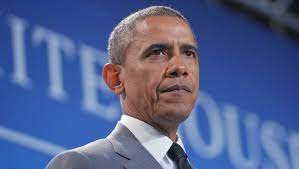
“There are issues that we need to look at specifically with respect to Facebook.”
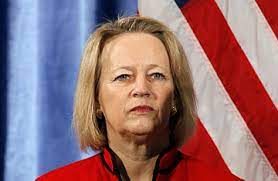
“I wouldn’t appoint somebody to do my job because nobody would run the business the way I do. You might as well have asked Frank Sinatra who he would appoint to replace him. Somebody can sing but can they sing like Sinatra? No.”

European elections and Facebook’s IPO rattled the markets last month leaving investors skeptical and perturbed. Continuing with our initiative to seek investment advice from financial experts, Executive sat with Joe Nader, head of private banking at Byblos Bank and Hatem Rafii, head of asset management at Royal Forex Trading (RFXT).
Joe Nader
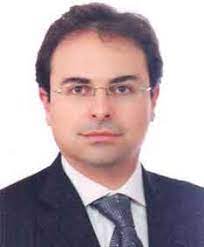
Thoughts on the global markets?
Nader takes a conservative stance, as he does not see an improvement from a macroeconomic perspective. Even though the markets have corrected, he believes this is due to an “absence of bad news and optimism over a third round of quantitative easing [introduction of new money by the US Federal Reserve Bank] which has not occurred”. He does not believe that markets will go up in the immediate future.
Main concerns?
Worried about Greece and Spain, Nader believes that we have not yet seen the worst of the crisis engulfing Europe. “I am wondering why the euro is at these levels, it has to go down further”, he says.
Markets to invest in?
His preferred market to invest in is the United States and he would go for defensive sectors such as consumer goods, utilities and healthcare. Europe would be his second choice. He does not see potential in the Middle East and North Africa except for Saudi Arabia, where he favors the banking sector.
How about Lebanese securities?
Nader recommends buying stocks at the Beirut Stock Exchange at these levels but warns that the lack of liquidity and paltry diversification of stocks is an issue in the Lebanese market. “When you invest in equities your main objective is capital gain but in Lebanon, your objective is the dividend yield because investors look at equities as a fixed income instrument.”
How about Lebanese government bonds?
Nader believes they are overvalued mainly because Lebanese individuals and banks are investing in the government bonds and “we are seeing some interest from international institutions”. He would avoid investing in them.
Your top investment recommendations?
Cash and short-term corporate bonds in the US market.
Would you invest in Facebook?
“For a small amount why not,” he says, while highlighting that the IPO was managed badly as Morgan Stanley, the underwriter, and Facebook executives decided to boost the offering size by 25 percent and push up the price to the higher end of the range.
Hatem Rafii
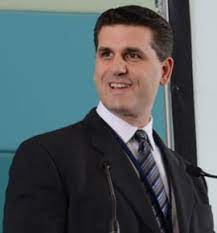
Thoughts on the global markets?
Rafii is bearish on commodity markets but very bullish on equity markets as he believes the recent accommodative actions by central banks worldwide should spur economic activity in next two to five years, leading to an appreciation of equity prices. He does not expect a repeat of the 2008 financial crisis in the near future, as the major banks in the US and in Europe are more stable and holding lots of cash.
Favorite markets?
Japan is one of his favorite markets as it is cheap and one of the top economies. “Today the top four economies are the US, Japan, China and Europe. If any of these top four markets gets cheap, at some point money will move around,” says Rafii. He expects these markets to start rallying first, followed by emerging markets. “If you have confidence, you will go to the top tier first.”
Would you buy Facebook?
“Never” he says, as it is “hard to price, it has no history and it is based on projection and hope for the future.” Rafii believes the future of the stock and of the company is uncertain. He would rather wait for a year or two before looking at the stock.
Thoughts on MENA markets?
Rafii would only invest in these markets once the top economies have gained momentum. He recommends accumulating on weakness for investors with patience and a long-term horizon.
Best ideas in the MENA markets?
Rafii would invest in the Dubai Financial Market stock as it is a “great stock to accumulate once volumes come back to the exchange.” He also likes the banking sector in Saudi Arabia.
Top investment ideas?
He would buy two indices: Japan’s Nikkei 225 and the S&P 500.
“Compliance officers have a lot of powers now. The joke between bankers is that they are running the banks.”

“After a streak of eight years of positive double-digit growth in net profits, the environment is now more difficult for bank profitability. It is true that banks are still growing and standing very good in terms of liquidity, asset quality, capital adequacy and risk coverage but the level of profitability has been adversely affected by the operating environment.”

“You can not take these deposits and say I want to reduce exposure to the Lebanese sovereign to zero percent and place all my money in international markets, you will lose. You cannot convince a depositor by saying, ‘I’m an international bank, I don’t invest with the government, all my money is outside of Lebanon’. Will he accept to be paid a 1 percent deposit rate? Would you put your money with us?”

“In the past, banks internationally made money by taking in lots of risks, which is now forbidden. So banks have to become utilities. The decision has been taken by regulators worldwide. The real business for banks is to take deposits, lend the money, support the economy and provide services. It is going to be very challenging. Competition will be much tougher.”

“Banks are the police today. Our job is to know more about our clients than we did 20 or 30 years ago and to make sure they are not conducting transactions on behalf of other undisclosed persons. We have to do as much as we can. It is a challenging and difficult job.”

“We have sought and are currently seeking new sources of revenue to maximize our profitability levels. Some of these sources are traditional and within industry norms, such as fees and commissions, and others are more creative and, frankly speaking, out of the box.”

“A higher interest rate would give comfort to the banks to take on more government debt; but if [the government] wants to try to decrease the rate further, it will be against the benefit of the government. Banks will stop buying risk on the republic. Government should understand that they should increase the rate to a bit of a higher level.”

“There have been talks about a new world order… a shift in the balance of economic and financial power, from West to East. This could also be translated into companies that have businesses linked to the East. Such firms will need safe and secure access to international markets, especially through trade finance to support their expansion.”

While it is still too early to assess the wider repercussions of the government- mandated wage increase this year, it is already irking Lebanese banks, coming at a time when banks are also compelled to increase spending to comply with mounting regulations both locally and internationally.
As one of the largest private sector employers, with roughly 21,000 employees as of the end of 2011, the salary increases, applied to all bank employees across all brackets, are “significant money,” says Nassib Ghobril, chief economist at Byblos Bank. As of February 1, the government has raised the minimum wage by 35 percent to LL 675,000 ($450) while increasing salaries by an average of LL 299,000 ($200) for income brackets above LL 675,000.
“As competition for talent in the region was increasing in previous years, we had to raise salaries and so we had already experienced a significant cost increase in the whole sector, ” says Walid Raphael, chairman of Banque Libano-Française. “Now, along with a reduction in growth of the economy, we are imposed with an increase in the cost of human capital. This has a major impact on the sector.”
In the first three months of this year, staff expenses at Alpha banks — the 12 banks with deposits in excess of $2 billion that account for 85 percent of the banking sector’s deposits — were up by 12 percent year-on-year to total $293 million, according to research firm Bankdata Financial Services. By comparison profits totaled $370 million during the period.
While the banking sector has strong fundamentals — it is still witnessing growth in assets and deposits albeit at a slower rate — its declining growth in profitability is making it more difficult to swallow the additional costs, a pain felt more vigorously by the smaller banks than the larger ones. “For the big banks which have large enough profits, they can manage, for the smaller ones, it is more difficult,” says Fadi Osseiran, general manager of BlomInvest Bank.
The regulation burden
The increase in salaries has been accompanied with an increase in costs for complying with additional international and domestic regulations — more software and staff needed. Those new regulations include Basel III and the United State’s Foreign Accounts Tax Compliance Act, while domestically Lebanon’s central bank has introduced new regulation aimed at curbing money laundering.
While the actual cost of compliance has yet to be calculated, the smaller banks are in a less favorable position to absorb the shock — as reflected by the drop in profits of the total banking sector relative to the Alpha banks. The sector’s growth in profits dropped by three percent in 2011 but the Alpha banks’ profits were up one percent, highlighting the struggle of the smaller banks. “Given that competition is increasing and that the larger banks are better prepared to face competition, I think the smaller ones will be impacted the most,” says Ghobril.
To pull through in more difficult times, consolidation may have to be considered. “We have been hoping that consolidation would eventually happen and it did not,” says Raphael, who added that he expects this to change. “We need the right people with the right skills, we need to train them so it is becoming a big burden for smaller banks.”
Jean Riachi, chairman of FFA Private Bank, believes that as competition gets tougher, smaller banks will have to merge with larger ones and he expects this to take place “in the future.”
As Byblos’ Ghobril says: “When you have a growing pie, there is enough for everyone but when the pie stops growing, then definitely the better prepared players are ready to adjust to this environment.”
You are in the car and your mobile rings. It is another annoying text message from a bank offering you a loan at X.X percent. You look up at a billboard and another bank is offering a loan at an equally preferential interest rate so you can fund that dream boat, vacation, nose job or any other burning desire. With Lebanese banks’ assets having reached $144 billion, equivalent to around 370 percent of gross domestic product, the banks are highly liquid and looking to lend, hence the marketing barrage touting consumer loans.
While the banks’ greater willingness to lend is no doubt a boon for the economy, borrowers could well be stung if they have not looked closely at the “conditions apply” section and read the small print; a loan at a rate of say 7 percent could well end up being in the double digits. What’s more, you will certainly not get that kind of information from a text message or billboard advertisement.
But it is not just on loans where the banks can hit you with unexpected costs. The same can apply to hidden costs on credit cards and on certain accounts, such as in foreign currencies, where the banks should tell you about incurred fees but more often than not don’t until you query a charge you’ve already paid and it is too late. High interest rate accounts are another potential trap, such as in Lebanese lira — where the rate is much higher than say the US dollar — but the bank charges you an amount for holding the account in the first place, which can put a dent in returns, even if only marginally.
The problem is that while Lebanon has a consumer protection law, which includes an article on misleading advertising, it has not been applied with much vigor since it was enacted in 2005. Furthermore, Banque du Liban (BDL), Lebanon’s central bank, has not issued circulars to require greater transparency when it comes to loans, even though the BDL governor, Riad Salameh, is reportedly keen on consumer protection.
There is a pressing need for the consumer protection law to be applied and for the establishment of small courts to deal with such issues cheaply, swiftly and impartially. This is an issue which concerns not only Lebanon. Throughout the world, with few exceptions, consumers are not adequately protected or fully aware of their rights. Just last year, non-profit organization Consumers International launched a set of recommendations to the G20 countries on consumer protection in financial services. And lest it not be forgot, it was cheap and easy credit, as well as highly complex financial products, that triggered the 2008 financial crisis that the world is still reeling from.
Lebanon may be in danger of following the same route if consumers are not adequately protected and have legal recourse, while for banks a slew of bad loans could seriously disrupt the balance sheets. Admittedly, Lebanese banks are by nature conservative and do not make taking loans easy — it has not reached the stage it did in the West where the unemployed, students and low-wage earners were offered ridiculously high loans that were nigh on impossible to pay back. But with so much liquidity sloshing around the banks, diligence is required and easy credit should not be the solution to economic woes and low consumer confidence. It would be supremely ironic if the Lebanese banking sector was hit further down the road by a credit crunch or the like after having successfully weathered the fallout from the global financial crisis due to conservative banking policies.
As for false advertising, such enforcement is sorely needed beyond banking fees. Supermarkets tout value you can trust, yet the same products are available in corner stores at cheaper prices. And when it comes to food, there have been more than enough food poisoning scandals going around to make you not want to eat outside your home.
Ultimately, rigorously enforcing the law would not only be beneficial to the consumer but would also be a good revenue earner for the government, with perpetrators of false advertising able to be fined, under article 11 of the consumer protection law, “from LL 10 to 50 million ($6,666 to $33,333).”
PAUL COCHRANE is the Middle East correspondent for International News Services
In the not so distant past, Lebanon’s southern border with Israel was a byword for instability and periodic violence. It was the frontier upon which the diplomatic community in Beirut would continually focus their attention for signs of another outbreak of fighting with Israel. These days, however, it is Lebanon’s northern border that is under observation and a source of unease. Small wonder, given the recent spate of cross-border shootings, kidnappings, arms smuggling attempts and brief incursions by Syrian troops.
But anyone following the news in early May would have thought it was still the southern border that was the more volatile, given headlines that spoke of Israeli “incursions” and “violations and incidents”, of “tensions” building along the Blue Line, and UNIFIL calling on all parties to “avoid misunderstandings”.
The source of this troubling news was an Israeli incursion into Lebanese territory to a depth of 65 centimeters. Yes, 65 centimeters!
Memories are still fresh of the time when Israel occupied a large chunk of south Lebanon; residents of the area suffered daily artillery shelling, air strikes, explosions, detentions and all the other joys of occupation by the army of an enemy power. It was not so long ago, in the greater scheme of things, that Israeli troops were patrolling up and down Hamra Street in Beirut in the late summer of 1982.
The violation, of course, was Israel’s new concrete barrier being erected along the Blue Line, the UN delineated boundary to verify Israel’s compliance with UN Security Council resolutions, in Kfar Kila. The Lebanese border road runs beside the Blue Line and Israel’s security fence at this point. It seems that the Israeli troops who patrol the frontier here daily have tired of insults being hurled at them by passing Lebanese motorists. It is hard to understand why the Israelis would otherwise build this wall. It won’t be high enough to stop someone of an athletic build tossing a hand grenade over it. But then, the whole exercise was about posturing — on both sides of the border.
The Israelis were determined to build their concrete wall and the Lebanese authorities were just as determined that the construction activity not stray one centimeter (literally as it turned out) across the Blue Line.
Why is it posturing? Because the GPS systems used by the Lebanese army, UNIFIL and the Israeli military are simply not accurate enough to determine violations of less than a meter. All three sides could take individual GPS measurements multiple times during a single day and would likely record different readings every time on all three handsets.
This little drama in Kfar Kila in early May echoed the large and more contentious effort to delineate the Blue Line on the ground in the summer of 2000 following Israel’s troop withdrawal. It was an exercise that, with a modicum of goodwill and common sense, should have lasted no more than a week. Instead, it took two months due to Israel’s repeated — and petty — violations (an Israeli army concrete block two meters north of the line was an example) and Lebanese nit-picking to ensure that the Israelis got away with nothing.
The irony regarding the Lebanese border road between Addaisseh and Kfar Kila, along part of which the new Israeli wall runs, is that a stretch of the route actually lies on the Israeli side of the Blue Line anyway. This anomaly resulted from a mistake made by UN cartographers in drawing up the Blue Line in early 2000, who were using maps of too small a scale. When the mistake was realized, it was too late to change the path of the Blue Line and instead everyone just decided to quietly forget about it.
Nonetheless, the unfortunate deaths last month of Sheikh Ahmad Abdel-Wahid and his companion at an army checkpoint in Akkar and rising hostility felt by aggrieved Sunnis against the military, as well as continuing violence along Lebanon’s northern border appears to have belatedly refocused attention away from the south. There are more pressing concerns facing Lebanese security than a slab of Israeli-manufactured concrete straying a few centimeters onto Lebanese soil. And if the most serious concern along Lebanon’s southern border today is an Israeli violation of Lebanese territory that is only 65 centimeters deep, then that should be an occasion for rejoicing.
NICHOLAS BLANFORD is the Beirut-based correspondent for The Christian Science Monitor and The Times of London