• Donate
  • Our Purpose
  • Contact Us
Executive Magazine
  • ISSUES
    • Current Issue
    • Past issues
  • BUSINESS
  • ECONOMICS & POLICY
  • OPINION
  • SPECIAL REPORTS
  • EXECUTIVE TALKS
  • MOVEMENTS
    • Change the image
    • Cannes lions
    • Transparency & accountability
    • ECONOMIC ROADMAP
    • Say No to Corruption
    • The Lebanon media development initiative
    • LPSN Policy Asks
    • Advocating the preservation of deposits
  • JOIN US
    • Join our movement
    • Attend our events
    • Receive updates
    • Connect with us
  • DONATE
Economics & Policy

Tomorrow’s ‘good society’

by Ghassan Hasbani May 3, 2012
written by Ghassan Hasbani

The ‘good society’, in a connected world, is one that provides a framework for people to realize their potential in a meaningful and dignified manner. Steps toward this society, and economic growth, are being realized today by developments in information and communication technology (ICT), and by people who have grown up connected to the Internet. 

Those who are getting their first job today, those born around 1990, are the spearhead of the future economy: the first generation to know the World Wide Web for the entire course of their lives. They are at the vanguard, leading future generations into an increasingly borderless society and an economy that is global and highly connected. For them to build the good society of tomorrow, they must be allowed to operate within a framework that provides connectivity and basic business infrastructure, one with regulations that fit the realities they face, and one that provides access to investments to fund the realization of their visions. 

However, looking at the prospective opportunities, we must acknowledge the challenges and risks that are likely to dominate the global socio-economic and political scenes over the next 10 years. At the 2012 World Economic Forum in Davos, world leaders agreed on three risk dimensions, as published by the WEF’s Global Risks Report. 

The first category of risks entails growing income disparities and widening social gaps among young and old between East and West and within the West. The combination of these factors could create a dystopia, a global society full of hardship and void of hope. The second risk relates to the readiness and speed with which governments and governance systems respond to change and the third risk stems from the rise of hyper-connectivity that creates the specter of cyber attacks. 

Responsibility for addressing these risks falls to national governments and stakeholders in international governance systems on the one hand, and on the other to companies such as the leading telecommunications and ICT firms that provide the infrastructure for the connected global economy. 

So how can these global risks be addressed and a good society created over the next decade? The answers lie somewhere within the risks themselves; hyper-connectivity and the cyber world, while creating the majority of risks, also provide many of the solutions if handled well. 

Where we are threatened by income gaps and polarization of societies with chronically unemployed youth and state-dependent impoverished retirees, connectivity can help economies to reach sustainable prosperity. In three examples where ICT can be a major factor in building a good society, I want to highlight education, healthcare, and e-government.     

Education: The use of technology and provision of a connected infrastructure for universal learning in the classroom of the future can simultaneously increase the quality of education and improve its affordability in all corners of the world. Students in rural areas or urban ghettos, which have been historically deprived of quality education, will have better chances to realize their economic potentials through connected education.

Healthcare: Connectivity in healthcare will reduce the burden of skyrocketing medical costs on older population groups and help in creating a healthier society with huge positive implications for increased and extended productivity of citizens. Realistic examples are remote diagnosis and also remote operations, where a surgeon in the United States can perform surgery in Lebanon using cyber-controlled robotics. Similarly, connectivity in healthcare could allow remote heart monitoring or tests for blood sugar levels. Faster, more efficient and more affordable care for the most wide-spread medical problems of our time will result not only in greater well-being of people and create healthier workforces, but also keep in check the healthcare cost for the state and families. 

Government services: Connectivity in provision of governmental services, e-government, represents a third immense potential to use ICT for building a good society through reduction of public sector costs and through decentralization. In adapting all administrative government processes to electronic infrastructure, we can apply for a passport, legal documents and register property transactions without the need to go a government office. This decentralizes access to services while it maintains control centrally to reduce the possibility of human error or fraud and thereafter creates efficiency.

There is a need for proper regulation, however. Too much government intervention and protectionism would stifle progress; too little, and it will open the room for greed, and abuse of power. The balance will be struck by creating an efficient yet largely liberal economy in which governments create the necessary policies and regulatory safeguards for the emerging world, while allowing the private sector to compete in a fair and transparent environment. This approach will require policy makers to set clear rules and enact governance systems that are suited for managing a connected world. 

As the breakneck speed of technological change and the rise of new trends in hyper-connectivity create new opportunities and risks, the governance systems need to be able to respond to changes faster than ever before. The liberal management of economic sectors will also need to create sufficient reasons and incentives to attract investments in sectors best suited for private initiative while maintaining sovereign authority in other areas. 

These examples are based on solutions available today, but will require some time to achieve mass-market adoption. Implementing these effectively will require things such as everyone having access to a mobile phone and an internet connection, and for the fixed internet to work with high reliability. ICT readiness and quality are key to tomorrow’s good society.

May 3, 2012 0 comments
0 FacebookTwitterPinterestEmail
Economics & Policy

Failing the Arab people

by Zak Brophy May 3, 2012
written by Zak Brophy

Arab states have failed to successfully translate their material wealth into human welfare, according to a new study by the United Nations (UN). Were it a school report card it may well have read: “Has great potential, but must try harder.”

Taking 1970 as the base year, the Arab Development Challenges Report 2011 found that the Arab region made some considerable gains in human development throughout the 1970s and 1980s. This was due both to the very low starting point and the large investment in social services undertaken by most Arab governments. However, the rate of progress on human development has slowed considerably since 1990.

While the usual culprits of poor governance and ineffective accountability frameworks receive their share of the blame, the report also lays bare structural defects and policy blunders that have contributed to the reality that “the region has patently failed to transform its wealth into a commensurate improvement in human welfare.”

Poverty is an important indicator in assessing human development and, at least on the surface, the Arab region has managed respectably. On the human poverty index — the UN's measure of living standards in a country — the Arab region as a whole improved 24 percent in the decade between 1997 and 2007, while, perhaps unsurprisingly, Gulf Cooperation Council countries registered a 45 percent improvement over the same period.

However, measuring poverty is notoriously complex and initial impressions can be deceptive. In 2009, 36 percent of the population across all Arab states were living on between the $1.25 per day and $2.75 per day. The implication of this is that any small shock to disposable income levels or income distribution could have a massive impact on more than a third of the region. This precarious existence for such a large proportion of the Arab world means, while the Middle East and North Africa has so far remained relatively unscathed by the global financial crisis it, “may suffer more than any other region if growth falters,” the report stated.

Afloat on oil, if nothing else

A structural weakness within the economies of the Arab region is that their vitality is dependent on the vagaries of the oil markets. Following peak oil prices in 1980, average real gross domestic product per capita in the MENA hobbled along at 0.1 percent. Conversely, the uptrend in oil prices since the early 1990s has resulted in relatively high and stable average GDP growth per capita of 2.4 percent. 

The report outlined, however, how oil dependent growth has retarded the structural transformation processes that normally occurs during sustained increases in per capita real GDP. It may be a cliché to say oil is both a blessing and a curse, but it still rings true, for while black gold may have bought exorbitant wealth to some Arab states and driven growth numbers across the whole region, it has also propagated a service led path of economic development at the expense of the productive sectors, such as agriculture and manufacturing.

Today, the Arab world is now the least industrialized among the developing regions, including sub-Saharan Africa, increasingly becoming import orientated and service based. What is more, the UN says the nature of most services found in Arab countries are at the lower end of the value chain, such as travel and transport, whereas services that use and advance the knowledge base of the societies, such as communications and financial services have, for the most part, made little progress.

Structurally retarded

Trade is pivotal to the economies of the Arab region and the meager developments realized in industry, along with the relatively low quality but high quantity of services emerging from its economies, has resulted in a somewhat primitive export structure compared to a relatively diversified import structure. The UN report concludes that the very slow rate of increase in high value-added exports is, “a reflection of the structural retardation of the region.”

Considering that, according to data from the World Bank and United Nations Statistics Divison, trade accounted for 84 percent of the Arab world’s GDP in the 2000s, this is a cause for concern. The study goes further in stating that for much of the region, “the transition to indiscriminate premature liberalization at a time of low productivity levels has rendered manufacturing uncompetitive and exports concentrated in primitive products and natural resources.” 

Lining up for work

The tumultuous upheavals across the Arab world this past year and a half have cast an unforgiving light on the lack of opportunity for huge swathes of the region’s youth. This is in a large measure due to an unhappy confluence of economics and demographics: the Arab world is at a relatively early stage of its demographic transition, meaning it can expect a sustained increase in its working age population.

Although Arab countries managed impressive average annual growth in employment between 1991 and 2009 of 3.3 percent, the region still maintains one of the highest unemployment rates in the world. The burden is highest among the youth, with data from the International Labor Organization and the UN indicating rough a quarter of all Arab youth were out of work between 2005 to 2011, more than double the world average of 11.9 percent.

The distortion of the Arab economies away from the productive sectors results in a failure to stimulate “job creating” growth, the report states. Moreover, the education system and vocational training available are creating a divergence between educational outcomes and market demand.

The UN report put the price tag on the investment needed for the MENA (excluding the GCC) to reach “full and productive employment” by 2030 at an ominous $4.4 trillion (in 2005 constant prices). This entails an average annual investment bill of $220 billion for the region outside the GCC, or roughly half these countries' collective GDP in 2009. This is in contrast to their actual average investment-to-GDP ratio of 27.8 percent for 2004 to 2009. 

Finding new revenue

According to the report Arab states have “fiscal space” to contribute to the necessary “employment centered transformation” and certain policy choices can increase the margin for stimulus. However, Jordan, Egypt and Lebanon are singled out as having to “urgently address the budgetary burden of their subsidies and interest payments in order to free up meaningful fiscal space for needed capital investments.”

 The UN also suggested that the Arab world could benefit from considerable tax revenue expansion. Comparing the Arab world with Latin America, the Caribbean and South East Asia, the UN concluded that the taxes to per capital income were still much lower on average. The argument follows that the Arab states could undertake fiscal reform to increase tax revenues to facilitate “positive structural transformation and at the same time reduce distortions inherent to excessive dependence on non-tax revenues.” Of course, with higher taxes would come greater implicit obligations to the public, something policy makers may be weary of in a region that has shown itself ripe for unrest.

The massive task at hand

While a failing of the study is that it does not factor in the huge upheavals that have shaken the economic, social and political strata of the Arab world over the past year and a half, its findings help give insight into the economic dysfunctions and societal malaise that precipitated the uprisings. What it does most, however, is illustrate the magnitude of the task ahead that cannot be met without serious, and long overdue, structural reforms.

May 3, 2012 0 comments
0 FacebookTwitterPinterestEmail
Real Estate

Landlord versus tenant

by Paul Cochrane May 3, 2012
written by Paul Cochrane

Say you’re one of those unlucky landlords whose tenants have an “old rent” contract, meaning they inked their deal before existing laws were passed in 1992. Annual rent can be as low as $100, or if you were slightly luckier, around $250 — the cost of a decent bottle of champagne. So while such low rents can keep your tenants sipping bubbly, paying for nice trips abroad or having the disposable income to buy their kids a BMW, you are left scraping the bottom of the barrel. So, as a landlord, what do you do if one day you see your tenant’s 18-year old son drive by you in a convertible with a bottle of Moet on the way to the airport, and you've had enough? 

You can: 

1. Prove (or frame) the tenant has reneged on the contract by removing windows, doors or making major renovations without your expressed approval. 

2. Get your video camera out and fix it to their door to prove that no one has been in the house for a whole year. You may need to buy some extra film.

3. When your tenant comes around to pay his measly fee, don't give them a receipt and claim they have not paid rent for 6 consecutive months. 

4. Keep coming around to the house and telling the tenant there are cracks in the outside walls and you hear the building groaning, hoping they will up and leave.

5. If you have the financial wherewithal or a real estate developer that will ‘loan you the money’ to buy your property, you may find yourself buying your apartment again by forking out 25 to 50 percent of the total value of the property (not the land), generally settled out of court. Of course, a little sweetener to the ‘registered experts’ can make that financial medicine go down a little easier. 

6. If your tenant is in the business of anything other than ‘residential activity’ you can claim the red lighting is proof of business activity and claim the residential contract has been breached. 

Now, if you are that tenant indulging in the bubbly and luxury cars, and want to stay put, consider the following:

1. Remember “the tenant is the owner” and you are in the right. So whatever that whiney landowner says is of no consequence as long as you follow your original contract to the ‘T’ for tenant. 

2. If he takes out a legal case against you, stall. Tell the judge you have no money for a lawyer so the courts can take another half-year to appoint one. 

3. If your landlord is trying to buy you out and appoints an ‘expert’ to appraise your apartment all of a sudden, somehow, no one is ever home during his working hours. Beware however, if you are caught unaware opening the door adorned in a towel (or a more risqué form of dress) it is a crime not to let the expert in, even if he does look like a peeping Tom. 

4. After you have succeeded in stalling for three to five years you can then go to the First Court of Appeals whereby you will pull at the judge’s heartstrings (and perhaps his ‘public’ purse) with stories of your kids first footsteps in the corner of your lounge and where your dying mother expressed her final wishes that you stay in the neighborhood to water her favorite plant that has grown up the side of the walls. 

5. Never park your new Hummer in front of the house, even if it’s late at night and you’ve hit the bubbly particularly hard. Compensation for getting you out will vary according to your financial standing. If you are ‘poor’ you can get the higher amount of 50 percent of the value of your rental. The old Renault 12 will do well at the courthouse, especially pushed the final 100 meters by your wheezing grandfather. 

6. If all fails don't panic, the snails pace of the Lebanese judiciary kept one case going for 47 years.

Landlords get the keys back

The 1992 Rent Act put the landlord back in the driver’s seat of many of those luxury SUVs seen around town. For starters, any rental contract that expired between January 1, 1987 and December 31, 1991 is subject to a series of multiples, while anything after that date, the tenant is no longer the “owner”. Contracts usually last for three years, after which the landlord has free reign to up your rent or turf you out. So what do you do if your part of this class of renters and like your five-meter ceilings? 

1. You are basically out of luck. But if you know a notary, the judge and a few bad boys you may be able to stay for a year or two. 

2. If your three-year contract is up, you will have to go to court. See above stalling methods for reference but keep in mind that you will need to butter up the right people and if you lose the case, you might end up paying for that slimy landlord’s lawyer. In the meantime, do not pay rent and save up for that penthouse on the Corniche, the eventuality of a basement abode, or maybe a tent in the park.

3. Make sure that you agree on things that cannot be delivered by your landlord: cue contractual obligation for helipad written in small letters your landlord couldn't see with his bifocals. If you can prove that the landlord did not deliver on the contract, you can stay, rent free.

Underhanded tenant turfing

If your tenant is proving difficult, the legal route is not always the quickest road to liberate your property of that noisy ragtag occupant. 

You might consider:

1. That there are many plugs, many wires and many pipes that no one really keeps tabs on. They can come undone, burst or just disappear at anytime. Just saying. 

2. If your unruly inhabitant has any acute fears, say arachnophobia, then a trip to the pet store for a few rather hairy tarantulas will do well crawling over the balcony. Rabid canines have also been known to raise a few hairs and eyelids, especially if they can bark into the night or enjoy romantic moments with the tenant’s ankles. 

3. By this time you will have noticed the affinity the resident of your own property has with his auto. Small notes written with newspaper clippings attached to destroyed windshields have been known to prove useful, as does spray-painting the car a lurid color. Just be sure to stock up on the turpentine to clean away the evidence from your fingernails. 

No need for contracts

More often than not a gentlemen’s agreement is the best way to do a deal. Such is the case with rents too. If no contract between the tenant and the owner exists, it is the person living in the house who has the upper hand. So if you are looking to sell off that old part of your family heritage and think you pulled a fast one by not inking a contract or paying municipality fees: think again. 

1. In order to tear down any building, permits from the municipality are required. But if someone is living in your house and paying the bills, the receipts are proof of tenancy and the fact that you don't have a contractual right to boot out anyone since, simply there is no contract. Tenants without contracts should note that buddying up to the electricity guy with the green slips can mean the difference between a bed and the street. 

2. If your tenant has not been paying rent and knows they are on the better side of the law, the best course of action for a landlord, when there is no ink on paper, is simply to come around during working hours when no one is around and change the locks on the door. When the renter comes out of the building confused and looking for a crowbar you can remind them that you hold the key to their furniture, not to mention to the flat screen TV as well.

Things of course are rarely this vindictive or unruly. Most contracts are clear and the tenant/landlord relationship can be managed with a little cunning and a lot of reason when it comes to upping the rent every few years. Even if a new rental law comes into play, the basic legal procedures will hardly change. Thus, it may be preferable to leave the antics to these pages and proceed to the next page to find out what is being cooked up for the country’s rental market.

May 3, 2012 0 comments
0 FacebookTwitterPinterestEmail
Real Estate

Turning tragedy into transformation

by Paul Cochrane May 3, 2012
written by Paul Cochrane

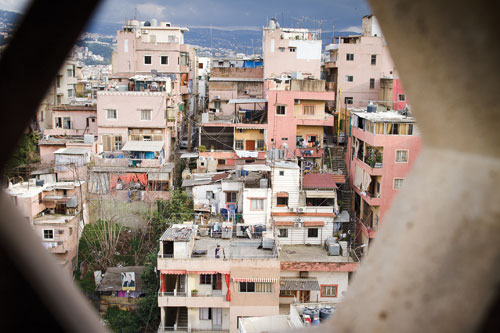
The notorious ‘old rent’ law that has pitted landlords against tenants for more than half a century may, after two decades of legislative delays, be seeing its last days. If the draft of the new rent law passes in Parliament this month, landlords and real estate developers will be lighting up the sky with fireworks. The prospect of reclaiming properties in the coming years — meaning land to be bought and sold — entails billions of dollars in potential earnings amid a renewed construction frenzy in land-scarce Beirut. But for tenants, a less certain future awaits, hinging on a planned government fund to financially assist economically disadvantaged tenants pay gradually higher and higher rents, and the actualization of public housing projects to re-house the dispossessed.

The lingering law

The ‘old rent’ law is one of the more bizarre laws still in existence. Enacted after World War II to prevent socio-economic deprivation and protect tenants from greedy landlords, the law resulted in the saying, “the tenant is an owner”, as it gave many rights to the renter. Under the law, all rental contracts would be extended — against the will of the landlord — until a new one was enacted, meaning rents were fixed at the originally agreed upon rate despite inflation and changes in market dynamics. 

If that was not bad enough for the landlord, getting the tenant out is nearly impossible without significant financial compensation, which ranges from 25 to 50 percent of the value of the property (not the land) and decided upon by a judge based on the financial situation of the tenant in relation to the landlord. 

Furthermore, there are only two ways to ask a tenant to leave if no contractual mistakes have been made: if the purpose is to destroy the building, or if the landlord (or his family) wants to live in the apartment for which they have to prove a need to do so. “You can’t lay a trap to kick out the tenant. The law provides a very powerful status and protection for tenants. The only way is by default [on contractual obligations] or to pay them to move out,” said Nader Obeid, a partner at law firm Alem and Associates.

Rent law number 160 materialized after the Civil War in 1992. Crucially it liberalized the rent market allowing for new contracts, with the landlord able to raise rent after three years, yet it made minimal difference to landlords with tenants paying old rents. These rents were adjusted in line with the depreciation of the Lebanese lira in the early 1990s and a government-mandated minimum wage increase, although not to market rates. For instance, according to research by The Monthly, a residential rent agreement from 1970 estimated at LL1,000 per year would come out to LL390,000 ($260) at today’s prices.

Since 1996, Rent Act 160 has been extended 12 times, with the last extension, law number 171 dated August 29, 2011, having expired at the end of March this year. If the new draft law does not pass, a 13th extension will have to be enacted.

Problematic numbers

While the old rent issue could have been a marginal one if the number of tenants was relatively low, according to the advocacy group named the Committee for the Rights of Tenants (CRT), some 170,000 of Beirut’s 210,000 tenants pay old rent rates. But just as no one is exactly sure how many people there are in Lebanon (the last national census was in 1932), the number of properties on old rents — and the number of people living in them — is not exact either. 

“The differences in the estimates of how many people are on old rents is a weapon in the fight between the pro and against camps for restructuring the law,” said Obeid.

According to Ministry of Finance statistics published by Executive in 2010, there are 139,719 properties rented before 1992 throughout Lebanon, with 58,341 in Beirut. In February, online publication NOW Lebanon challenged these statistics, stating that the Finance Ministry did not have a breakdown between old and new rents, while the Central Administration of Statistics (CAS) also said they had never carried out any research, and information released in 2004 only distinguished between residential renters and owners. [However, CAS’s statistics in general are out-of-date and unreliable, notably claiming there are only 3.5 million people in Lebanon when other estimates put the figure at well over 4 million, if not closer to 5 million.

According to Joseph Zoghaib, head of the Association of Landlords in Lebanon, based on taxation records and copies of rent laws submitted by municipalities to the Finance Ministry, there are 81,000 tenants on old contracts and an estimated 40,000 to 50,000 on new contracts. As to the number of landlords affected, Zoghaib estimates it at anywhere between 15,000 to 20,000. Whatever the statistics are as to the number of tenants on old rent, clearly tens of thousands of Lebanese will be affected if the new law passes; at the same time thousands of landlords have been financially out of pocket due to receiving such low rents. [The Committee for the Rights of Tenants could not be reached for comment.] 

No money for maintenance

Zoghaib likens the old rent law to a cancer as it has deprived landlords of return on initial investment in constructing buildings and meant there have been insufficient funds for proper maintenance of properties. 

“Rent control is a cancer on Lebanon’s economy, the standard of living, and should be aggressively treated,” he said. “Most landlords have lost hope that the issue will ever be resolved.”

Zoghaib has plenty of accounts about the trials and tribulations of being a landlord with tenants on old rent, with some forced to become doormen in the buildings they own to get access to the National Social Security Fund. According to Zoghaib; one landlord is so fed up he is considering a class action suit against the Lebanese government in the United States to pressure Beirut to overturn the law or face having the state’s assets frozen in the US.

Anger runs deep among the association’s members over what Zoghaib calls an “unjust law”, while in TV talk-shows addressing the issue over the past year heated words have been spoken between those ‘pro-landlord’ and those ‘pro-tenant’. 

“Landlords have been suffering for 70 years. Before, when we talked of our plight, we were laughed at, but the second generation are freedom fighters,” said Zoghaib. “The silent majority think they are not affected by the old rent issue, but they are. For every $1 the renter saves, the Lebanese public is paying thousands of times more when it comes to higher rent and higher real estate prices, and it has caused huge revenue losses to municipalities and the government.”

Indeed, it would make for an excellent research paper to estimate the financial losses incurred by old rents on the Lebanese economy and how this factored into current real estate prices. The existence of old and new rent contracts has certainly wreaked havoc on trying to effectively analyze the real estate market, while it has contributed to Lebanon having an average price-to-rent ratio (how  long monthly rent would have to be paid to cover the selling price of the property) of 22 years, compared to 11 to 16 years in peer countries. Lebanon also has much lower gross rental yields than elsewhere, at 4.65 percent, whereas it is more than 6 percent in Egypt, Morocco and the United Arab Emirates, according to the global residential property investor portal Global Property Guide in 2011.

“There is a gap between rent and real estate prices. It is between 3.4 percent to 4.5 percent gross rental yield versus the price, while it should be 6 percent, 8 percent or even 10 percent,” said Ayman Sanyoura, general manager of ProServices, a property services and management company in Beirut.

The shortage of properties available for rent on post-1992 contracts has also driven up prices, while the existence of the old and new rent contracts has often caused confusion between tenants and landlords as to their rights. “People are still unconsciously living under the old law,” said Obeid.

Furthermore, the lack of funds for maintenance has led to the loss of heritage buildings throughout the country, with buildings in such a dilapidated state that it is cheaper to tear them down — once the tenants have been compensated to move — than renovate.

“We are fighting for the law to be changed to be more fair as far as owners are concerned. It is not possible that a 200 meter square apartment is rented for $200 a year,” said Mona Halak, an architect and member of the Association for Protecting Natural Sites and Old Buildings in Lebanon (APSAD). “For heritage buildings, the owner should have the right to charge more. When we ask an owner of a heritage building ‘why are you tearing it down?’, he says ‘I get $300 a year, so why keep it?’”

The draft law

What galvanized the government into action to address the old rent issue was the collapse of a building in the Fassouh district of Beirut in January that left 27 dead and 12 injured. While there were tenants paying new rents, the majority of the occupants had been on old rent contracts, which opponents of the old law cite as a reason for the building’s tragic collapse due to lack of funds for maintenance. “It is sad to say it took 27 dead people to shock the government to draft this new law,” said Zoghaib.

The new law was drafted by the Parliament’s Administration and Justice Committee, chaired by West Bekaa Member of Parliament Robert Ghanem. A copy of the draft law in the form submitted to the committee was obtained by Executive, despite Ghanem’s office attempting to withhold it from the media. In its current form, the draft law seeks to find a solution by having tenants on old rent pay gradually higher rents over a six year period. Through government-appointed experts that report to a judicial committee, properties will be evaluated and an amount agreed upon by both the landlord and tenant. Then each year for the first four years the tenant will pay a 15 percent increase in rent, then 20 percent per year for the fifth and sixth years. After this time, the property can be rented at free market prices, but the tenant has the right, if they notify the landlord three months before the period ends, to stay on for a further three years, although at market rates agreed upon between both parties.

If a landlord wants to reclaim the property for family usage during the six-year extension period, then he has to pay compensation to the tenant equivalent to four years rent after four years of rental increases. To tear down a building, the same principle will be applied but on the value of the total six years of increased rent. In either of the above situations, if a property is considered ‘luxurious’, compensation will be reduced by half. 

This proposed solution means that the compensation landlords pay out to tenants would be significantly less than the 25 to 50 percent of the value of a property under the old law, which is clearly to the advantage of landlords keen to reclaim their properties. The big question if this law passes is whether tenants will be able to pay the higher rent.

According to Zoghaib, out of the 81,000 tenants he claims pay old rent, 13,000 are economically disadvantaged (again the Committee for the Rights of Tenants were not available for comment). To alleviate the pressure, a government fund is to be established for tenants with a household income that does not exceed three times the minimum wage of LL675,000 ($450) to cover the difference in rent for nine years. By that time, the plan would be for the Public Corporation of Housing to have built apartment blocks that evicted tenants could live in under a ‘lease-to-own’ agreement (which cabinet approved last month) with no age stipulation, meaning elderly tenants could be part of the scheme. However, while the draft law is still being hammered out at committee sessions, there have been no announcements as to how the housing scheme will be financed, what land will be available for construction or where, and how willing private banks are to be a part of the scheme. What is more, Lebanon has been without an official budget since 2005.

While government sources suggest the bill will pass in May, the socio-economic repercussions could force politicians to oppose it. “Nobody wants to lose the next elections [in 2013] for passing this law,” said Sanyoura. Indeed, it is such a contentious issue that Ghanem said at a committee meeting in early April that he had received an anonymous letter threatening to kill him, his wife and his children if the bill passes. 

Billions to be made?

If the bill remains relatively intact after numerous rounds of amendments and reformulations, and then passes into law, it will have a profound impact on the real estate market. 

“Definitely there are both positive and negative repercussions from the eventual introduction of a large [amount] of stock to the market,” said Karim Makarem, director of Ramco, a real estate advisory firm. “If landlords are looking to sell or to rent, a substantial amount comes online, not to mention that the former tenants who vacate will need to be housed. So there are many new possibilities as well for developers.” One  possible knock-on effect would be more supply than demand, which would lower real estate prices. For that reason, Sanyoura suggested it is “a good time to consider implementing this law as we’re not in a boom market.”

With buildings being vacated and renovated, and others being torn down for new projects, Zoghaib opines that $50 billion could be pumped into the economy in the coming years. A back of the envelope calculation of 30,000 buildings being re-developed at an average of $500,000, would generate $15 billion and potentially billions more in associated services. 

A further boom could occur if another stuck-in-a-time warp law is overturned: the pre-1992 law concerning commercial rents, which is similar to the residential law in fixing rents, but to remove a tenant requires the landlord to compensate for the “loss of footfall” to the premises. “We’ll have a party when the [new rent] law passes and the next day move onto proposing a commercial rents bill,” said Zoghaib.

May 3, 2012 1 comment
0 FacebookTwitterPinterestEmail
Economics & Policy

Tunisia: Moderating Islam and government

by Daniel Harris May 3, 2012
written by Daniel Harris

On a brisk spring day last month in the Tunis, one could have been forgiven for thinking the revolution was still in full swing. Stepping out of a hotel onto Habib Bourguiba Avenue — normally a bustling artery through the Tunisian capital lined with cafes and restaurants — Executive was enveloped in teargas and forced to flee down side streets with other bewildered bystanders, lest be trampled by the waves of whistle-blowing, baton-waving police in riot gear.

There was a sense of déjà vu to witnessing interior ministry forces in full pursuit of perhaps the very same shabaab (or ‘youth’) whose sustained protests helped oust former President Zine el-Abidine Ben Ali from power in January 2011. Now, however, instead chanting against dictatorship, they were denouncing the party that had won the plurality of seats in the first post-Ben Ali elections last fall, Ennahdha — or in English, the “Renaissance” Party.

Several days later at this once-banned Islamic movement’s headquarters — an apartment building draped with blue banners in the Montplaisir neighborhood of Tunis — phones rang incessantly and were answered by a young, multi-lingual staff, who hurried between offices clutching folders and papers. Men wore business suits, minus the tie, with clean-shaven faces or closely cropped beards; women mostly, though not uniformly, wore a hijab to compliment their western fashion sensibilities. The atmosphere was all at once casual, stressed and excited. There was energy in the air.

As it turned out, the casual factor was purposeful and came straight from the top. The movement’s septuagenarian founder, Rachid al-Ghannouchi, is “easy-going” and not the stuffy kind of Islamic theologian one might expect, according to an elderly man named Ahmad who sat in the waiting room. He would know — the two men shared persecution for their activist pursuits under the Habib Bourguiba regime that preceded Ben Ali, spent some two decades in exile together in London and returned to Tunisia only after revolution.   

Born in 1941, Ghannouchi, who studied philosophy in Damascus and at the Sorbonne in Paris, came back to Tunisia and joined the Quranic Preservation Society in 1970, helping to organize the Islamic Tendency Movement, Ennahdha’s predecessor, in 1981. As a political activist and Islamic philosopher, from early on his energies and publications had focused on real-life issues facing Tunisians — such as the economy, political reform and human rights — rather than doctrinal Islamic matters. 

“What concerns the young people of today?” Ghannouchi was quoted as saying in the early 1970s. “The position of the Mu’tazilites on the attributes of God?… Whether the Quran is pre-existent or created? Was Islam revealed for this kind of useless, sterile argument? I wonder how our students feel studying ‘Islamic philosophy’ when it offers them only a bunch of dead issues having nothing to do with the problems today.” For an Islamic leader in the Middle East, such opinions are decidedly liberal.

To protect and clarify

Back in the waiting room, after a seemingly endless stream of well-wishers, friends, advisers, petitioners and politicians and had passed through, Ghannouchi’s secretary — a pleasant young woman with a degree in English literature — ushered Executive into a large conference room.

In attire, Ghannouchi was an older version of his staff — dressed in a gray suit, blue shirt with an open collar and close-cropped beard — but he seemed worn for this late afternoon interview. There was a definite, if subdued, gravitas around the man who had been imprisoned, tortured, and exiled from his home, and now led the political party with the most power and influence in Tunisia at this crux in history.

After handshakes, the interview moved to a corner crook of black couches. Throughout the conversation Ghannouchi’s right eyebrow was cocked upward and he spoke slowly and purposefully in a soft, brittle English that stressed the burden his words carried. Ahmad, who sat close to his side, leaned in and as the interview went on his eyes took on a concerned look. Ahmad’s affection for the older man was obvious, and he interjected on occasion when Ghannouchi’s statement tripped on broken English. There was a sense that Ahmad was present both to clarify for, and protect, Ghannouchi.

Perhaps there was good reason to feel defensive. Since Ennahdha electoral victory and subsequent formation of a governing coalition to write a constitution, intermittent strikes and protests have gripped the country. The party has come under significant criticism of late, mostly from the Tunisian left. Secular organizations, trade unions and young activists who took part in the revolution claim that Ennahdha is stealing the revolution away from those who carried it out in order to Islamize the country.

“They fear sharia [Islamic law] because they don’t know the sense of sharia,” said Ghannouchi, adding that this fear is isolated to the Tunisian elites. After a teargas bath courtesy of Tunisian police, Executive questioned whether the situation was so easily explained.

“It is normal for the Ministry of the Interior to forbid demonstrations in some streets, in some places in the capital,” said Ghannouchi. He explained that there had been a temporary ban enacted on Habib Bourguiba Avenue at the request of businesses on the street. Previous demonstrations had disrupted the flow of foot traffic, driving away customers and tourists from the cafes and the Old City at a time when the economy is already suffering. He pointed out that protests on major thoroughfares in European capitals were also not allowed. While critics had compared Ennahdha’s use of police suppression to that of former President Ben Ali’s, Ghannouchi dismissed this as exaggeration and propaganda designed to damage Ennahdha’s reputation.

At a press conference following the protests, Ghannouchi had appealed to Tunisians to be patient. But how patient are Tunisians at this point? Are they not fed up with waiting for positive change?

“People now are fed up with demonstrations, with [streets being cut off], and strikes,” said Ghannouchi. “People would like to work. They are fed up with the freezing of the economy.”

The demonstrators, claimed Ghannouchi, want to stop Tunisia’s economic progress — they want Tunisia to fail because that would mean Ennahdha would fail too. It was those elites, not the main body of the Tunisian people, who were afraid, and were acting in this way.

“We respect this fear,” he said. “And we would like to build our constitution on common ground… Fifty-one percent is not enough to build a constitution.”

To its credit, Ennahdha has gone allayed many secular fears. Its officials have stated that it will not try to ban alcohol or force the hijab on women, and Ghannouchi recently announced that it will not include sharia law in the constitution. And yet the fear persists, amongst both Tunisians and outside observers, that Ennahdha will eventually go too far.

Ennahda’s fellow Islamists, the Salafists, compound that fear among the more secular segments of Tunisian society. When a Salafist Skeikh called for Jews to be murdered, there was a popular outrage in Tunis and Ennahda was critizied for not condemning the statement quick enough. “We oppose what some Salafists have done,” Ghannouchi countered when asked about this an other incidents such as attacks on media by Salafists. “When they made some slogans against the [Jewish minority] in the country, I phoned the Chief Rabbi and I [expressed my support]. The Chief Rabbi, after we won the elections, he visited me to congratulate our movement and explained that he had no fear from Ennahdha, that it was moderate, but he said he feared the Salafists..”And while he may not approve of media outlets publishing caricatures of God or the Prophet Muhammad, Ghannouchi said that he disavows the use of any violence to oppose it.

Same but different?

For many Tunisians, the ills of Ben Ali’s rule have not faded, not least the economic ones like the 18 percent offical unemployment rate. Ennahdha’s platform would initially seem to differ little from that of former President Ben Ali, in its support of free market mechanisms and privatization buffered by a social welfare net, and its emphasis on tourism. Acknowledging this, Ghannouchi underlined two main differences: “Ben Ali [was] corrupt,” he said plainly, eliciting frank nods and laughter from others in the room. “We want to have a sacred war against corruption.” Secondly, Ghannouchi stressed that the focus of public spending would switch from the more developed coastal regions to developing the neglected interior. The government is planning to pour public resources and infrastructure programs in cities such as Kasserine, Gafsa, and Sidi Bouzid — hometown of Mohammad Bouazizi, whose self-immolation sparked the Tunisian revolution, and indeed the entire so called Arab Spring.

Ghannouchi admitted this increase in public spending would strain government coffers, but said it was necessary in the short-term to spur the private sector recovery, growth and employment in the long term, while also creating an environment attractive to foreign investment. “The real enemy of Tunisia now is unemployment,” he noted. Pointing to the positives, Ghannouchi said the investment, tourism and exports had all seen recent increases.

A ‘rational’ West

When it came to foreign relations, one could imagine an American official at State Department listening in to Ghannouchi while going down a checklist of things that they want to hear an Islamist leader in the Middle East say. While the United States supported the previous regimes in Tunisia, Egypt and Yemen, Ghannouchi pointed out that the US did not intervene to try to save them when the revolutions erupted.

“The US behaved, vis-à-vis the ‘Arab Spring’, rationally, supporting democratic change, supporting its development,” said Ghannouchi. “What we want is for the US to not give any priority to any side because of ideology, to treat all parties the same, equally, regardless of religious background.”

There will be changes in foreign policy, however: “Ben Ali and Bourguiba opened only one door. This door is towards Europe and the West. We will preserve this door, and we will widen this door,” he said, “but we will open other doors, to the [Arab Maghreb], the Middle East, the [Persian] Gulf, Africa, Asia, [Latin America]… We keep this door to the west open, but we will open other doors.”

Throughout the interview it was clear that Ghannouchi wanted to impress upon people that Ennahdha was different — different than Ben Ali and different than other Islamist movements. And yet the paranoia persists that Ennahdha has a secret agenda to impose strict Islamic adherence upon the country.

One must concede that in such an environment it is entirely possible that Ennahdha’s opponents are demonizing it in order to weaken it, that Ghannouchi may have a case in claiming that the demonstrators would rather see Ennahdha fail then see Tunisia succeed. However, the youth on the streets of Tunis today would surely beg to differ.

“Freedom and justice is the main sense of Islam,” he said at one point in the discussion. If it really is just about freedom and justice, than it remains to be seen what makes Ennahdha different from secular Tunisian political parties that emphasize the same things. And perhaps it may be Rachid Ghannouchi himself, with his story of struggle, persecution and return from exile to a homeland that becomes Tunisia’s Nelson Mandela, or just another Islamist.      

May 3, 2012 0 comments
0 FacebookTwitterPinterestEmail
Business

The shifting wings of Abu Dhabi

by Thomas Schellen May 3, 2012
written by Thomas Schellen

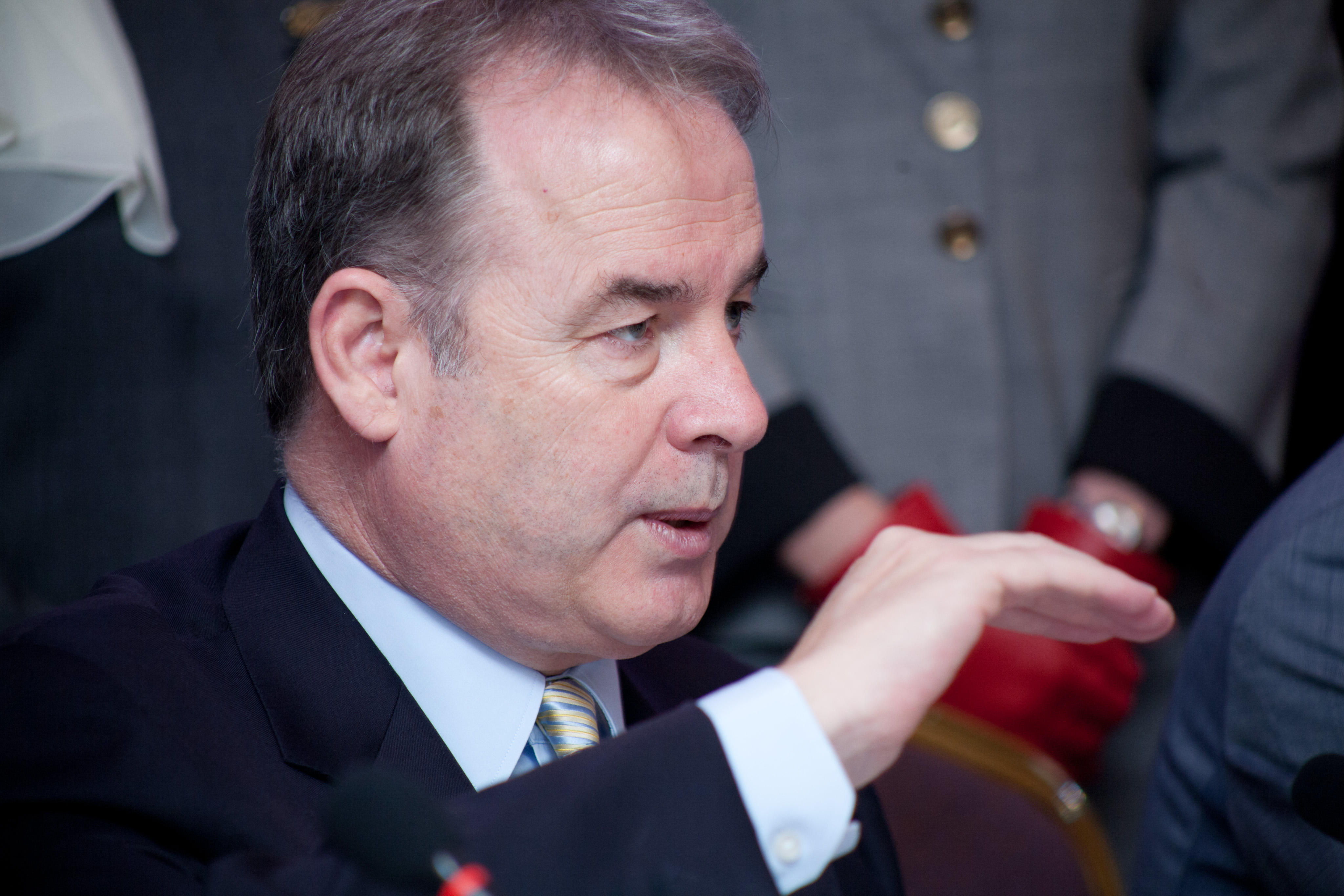
Eithad Airways, the Abu Dhabi-based carrier that recently canceled an order of seven Airbus A350 passenger jets, will reduce its original order with the plane-maker and substitute canceled planes to meet expansion targets, Etihad Chief Executive James Hogan told journalists in Beirut.“We are still committed to 10 options and 15 purchase rights. At the right time, we will take those aircraft,” Hogan said. Options and purchase rights are commitments that airplane manufacturers and their customers commonly enter into when agreeing on firm orders. Options and purchase rights can give jet buyers access to production slots and prices based on the agreements they negotiate with manufacturers. Hogan did not comment on the 12 remaining firm orders for A350 jets.

“I substituted to meet the growth strategy,” Hogan said, explaining that the carrier had ordered the 25 A350s plus placed additional 25 options and purchase rights back in 2008 “to meet our network expansion and expected them to come at a certain time.” 

As the schedule for delivery of the A350s started sliding and the manufacturer was still working on the specifications of the A350-1000, “we took a view to reduce the firm commitments to 12 and canceled six in 2011 and seven in 2012. We still believe in the aircraft but we have bridged that with [Boeing] 787 [version]9 where we increased our order to 41. That’s business,” he said.

Etihad’s initial order for B787s, signed at the 2008 Farnborough International Airshow, was for 35 planes. The company said at the time that the total value of its order with Boeing, which also included 10 B777-300 planes, was more than $9 billion.   

The original Etihad order for the 25 A350s, also signed at Farnborough in 2008, was part of a deal for 55 jets also including 10 A380s and 20 A320s with a value of approximately $12 billion, according to Etihad. Media reports put the value of the recently canceled seven A350s at $2.2 billion. 

The cancellation of seven A350s was first reported earlier this month by Reuters, based on data from Airbus. Media in the United Arab Emirates this week quoted analyst speculations that Etihad would fully step away from the wide-bodied Airbus in favor of the competing 787 but Hogan said this is incorrect.

Airbus and Boeing have been intensely competing with their long-range, wide-bodied A350 and 787 model lines, both designed to become workhorses in the next generation of fuel efficient passenger aircraft. Each highly-touted model, however, also had shares of technical challenges to contend with.

Fleet purchases by Etihad in the carrier’s first years of operation have favoredAirbus jets . When asked if the shift to 787s signified an end of his love affair with Airbus, Hogan said, “I love both Boeing and Airbus, equally. In this business, you have to work with Boeing and Airbus.”  He emphasized that Etihad has a considerable fleet of Airbus planes and in addition to the A350s, more A321s and 10 A380s will be added to its fleet in the next few years.

According to Hogan, Etihad will report a financial revenue performance of $5 billion, implying growth above 22 percent when compared with 2011 results of $4.1 billion. Last year was the first time the airline reported a profit as its revenue improved 36 percent on 2010.  

On the sidelines of the press conference Hogan told Executive that Etihad will achieve the targeted ten-million passenger mark this year. In 2011, the airline reported passenger growth figures of 17 percentwhile registering a first quarter year-on-year increase in passengers by 27.4 percent to 2.36 million from 1.85 million, according to an April 4 announcement. 

The Lebanese connection

Hogan came to Beirut to celebrate the success of Etihad’s eight-year service to the Lebanese capital, which commenced in November 2003. Beirut was Etihad’s first commercial destination.

According to Hogan the carrier’s strongest demand from Beirut-originating travelers  is for flights to Sydney, followed by Abu Dhabi. In 2012, Etihad’s Beirut office has a revenue projection of $31 million, he added. 

Joseph Chamoun, Etihad’s country manager for Lebanon, also told Executive that the operation is the airline’s top performing market in the Levant and Africa. In important long-haul services from Beirut to Australia and some Southeast Asian destinations Etihad’s share of the outbound Lebanese travel is above 40 percent, he claimed. 

During the first quarter of this year Beirut airport saw 204,670 outbound passengers, according to Lebanon’s Civil Aviation Authority At the time of posting, statistics on the number of travelers to Oceania within that total were not available. 

Etihad also anticipates that its network’s expansion intoLagos, Nigeria this summer and next year’s expansion to Brazil as the first Latin-American destination will be drawing in many travelers from the large expatriate Lebanese communities in those two nations, Hogan said. In previous press statements, Etihad had announced the start of its service to Latin America for 2013 but did not specifically say that it would serve Brazil as its first destination in the continent. 

May 3, 2012 0 comments
0 FacebookTwitterPinterestEmail
Society

A brand by any other name

by Zeina George May 3, 2012
written by Zeina George

The recent news of Kraft naming its global foods company “Mondel?z International” has sparked controversy in the business world, with Forbes describing the move as one that raises a “huge red flag”. 

The new name, meant to call to mind the image of a “delicious world”, is actually supposed to be pronounced “Mohn-dah-LEEZ”, hence the accent on the second ‘e’. This has incited mockery in the media, with CNN jokingly titling its article on the news of Kraft’s recent decision “Monde-what?”.

On top of it being difficult to pronounce, Mondel?z sounds very similar to what was described as a “very dirty” word in Russian slang. As a result of all this, many have called for yet another rebrand, emphasizing the detrimental impact that the wrong name can have on brand equity and positioning. 

What we find particularly perplexing about the decision to opt for the name Mondel?z, though, is the fact that Kraft, a corporation based in the United States, had the option of choosing a name from the English language, universally spoken in today’s globalized business world. Yet it chose a name inspired by the Romance languages and complicated matters even further with the addition of an accent that many do not recognize.  This naturally brings to mind the very different reality faced by many Arab companies, whose names often contain letters that do not exist in other languages (and could not be pronounced by non-Arabs if they tried). These companies go to great lengths to make their names easily pronounceable to a Western audience, as has been the case with Almarai, Saudi Arabia’s leading food producer, and Emaar, the Dubai-based property developer.

This is not the first instance of a less than ideal brand name. There are many such examples that mark the annals of branding history. One instance was the embarrassment Mitsubishi caused itself in Spain when it named one of its new models “Pajero”, a local slang term that is, to put it mildly, sexually explicit (a quick Google search will suffice to reveal the meaning of the word to more curious readers).  Another equally comical yet serious misnomer that caused an entire advertising campaign to fail in Italy occurred when Schweppes Tonic Water translated its name as “Schweppes Toilet Water”.  These examples are extreme cases featuring linguistic missteps, when in reality brand naming mistakes can occur for reasons much less blatantly obvious. The point, however, is this: brand naming is not a matter to be taken lightly.  Brand names are the first step in establishing a successful business and creating a story around your brand. A strong name can set the brand apart in an overly saturated market, communicate a company’s culture, describe what it does in a word or two, or even automatically bring to mind desired associations. 

Conversely, the wrong brand name can limit opportunities for expansion and diversification or take away from the equity created by a company’s actual work. In light of all this, if brand names are not carefully selected, businesses run the risk of being “branded” by the marketplace, forfeiting the right they have to shaping how the public perceives them.

A key regional concern

The issue of brand naming is of key relevance to the Middle East. Historically, many major Arab companies have not had to struggle with the issue as they were government-owned utility corporations (e.g. Saudi Telecom, The Emirates Telecommunication Corporation) or family businesses (e.g. Majid Al Futtaim Holding, Al Khorafi Group). Nowadays, the brand naming process is less straightforward, with most businesses operating in a highly competitive globalized economy. Add to this the fact that it is estimated that the youth bubble in the Middle East will require 8 million jobs to be created every year until 2020. 

Private and public sector actors alike realize that sufficient job opportunities do not currently exist in the region; they will have to be created. Practically speaking, this means that entrepreneurial youth will be establishing startups that will naturally need to be named. Brand naming thus becomes highly relevant, and getting it right can seriously increase an up-and-coming business’s chances of gaining visibility and establishing desired strategic positioning.

The right way to name a brand

The brand naming process can follow several routes, some of which are self-explanatory and include Latin and Greek-inspired names, initials and family names. Other less self-evident routes include:

Onomatopoeic and Invented: Onomatopoeic names use a word that sounds like the entity or idea it signifies. It creates names that are both catchy and musical. Examples include Zippo and Bing. Invented names are either based on an already existing word to create a new sound or a completely unheard of name that is phonetically appealing. Such brand names are memorable and distinctive due to their uniqueness. Examples include Oreo, Kleenex, and Du. Both invented and onomatopoeic names have become increasingly popular recently, as they allow for the creation of fresh, new names that simultaneously avert the problem of the widespread trade marking of most existing words.

Cultural and Linguistic: This involves using a term or phrase specific to the particular culture or dialect of the target market, appealing directly to local consumers. One such example would be Zaatar W Zeit. 

Functional: Such names depict the company’s line of business. This approach holds the possibility of creating strong brand equity for the company or product, centered on the name. Examples include Ford Motor Company and Saudi Telecom.

Lifestyle: This approach evokes a particular lifestyle and calls on consumers to partake in the experience of the brand. Examples include Free People and Marlboro.

Each of these proposed routes offers a brand name something unique. Once companies have decided what route they would like to follow, basing their choice on the nature, positioning, and market of their brand, they must also ensure that final selection abides by certain important criteria.

The name must be in line with the brand promise and positioning and should serve to bolster brand strategy and equity. For instance, Abbott Laboratories recently decided to brand its pharmaceutical spinoff as Abbvie, a name derived from that of its parent company combined with the Latin word for “life”. Upon closer examination, it becomes apparent that the name is contradictory with the desired positioning for the brand, as the pharmaceutical company was seeking to position itself as being cutting edge, yet selected a name whose Latin root evokes the antiquated past.

A brand name needs to constitute a good cultural and linguistic fit. In the Middle East, this means taking into account the different realities defining the market, from the youth majority demanding “edgier” communication to the nonetheless prevailing culture of traditionalism. 

A brand name ought to have cultural relevance yet remain capable of transcending cultural boundaries. Though this may seem like an impossibly tricky feat, it has been achieved with such brands as “Zain” and “Yamli” – Arabic names possessing universal appeal thanks to ease of pronunciation and the fact that they simply “roll off the tongue”. 

The nature of today’s globalized economy dictates that a name also be in line with worldwide consumer trends. A look at today’s international trends reveals a certain move away from what many perceive as “stuffy” Latin and Greek-inspired names, accompanied by increasing demand for distinctive brand names that are functional and relatable. One example is JCrew’s “Madewell” women’s clothing line. 

The final and essential point is a simple one: due diligence. Once a company has decided upon a given brand name, it can never be too sure of its effectiveness or marketability. The brand name ought thus to be validated with several different stakeholders and experts before it is officially rolled out. 

Though it may pain some to learn this, readers should be cautioned that the real work starts after a brand name has been selected. 

Building the verbal identity of a brand permeates every activity carried out by a business and ought to manifest itself in the construction of overall brand personality and identity. Indeed, a name is the first chapter in the telling of a compelling brand story that captivates the public through the strategic use of communication — but those are matters for another article.


May 3, 2012 0 comments
0 FacebookTwitterPinterestEmail
Comment

Devastated by laissez-faire

by Peter Speetjens May 3, 2012
written by Peter Speetjens

If Michel Ecochard were alive today to see his beloved Beirut, he would arguably want to drop dead on the spot. Beginning in the 1930s, the French architect and urban planner worked for some 30 years in Lebanon and the region. He had especially high hopes for Beirut, as it was blessed with what he called, “One of the most beautiful sites in the world.”

In 1943, he was asked to produce an urban blueprint that could accommodate Beirut’s future growth. Taking into account the city’s existing character and natural setting, he proposed strict zoning, a modern infrastructure to cope with the growing popularity of the car, and a string of gardens and parks as the city’s green lungs. 

Today, the AUB campus and Sanayeh Garden offer a rare glimpse of what Beirut could have been, while the city’s ever increasing traffic jams echo the fact that Ecochard’s plan was never approved in Parliament. Not surprisingly, the most vocal opposition stemmed from Beirut’s property owners and landed elite.

The situation did not improve following World War II. The newly independent “merchant republic” under the presidencies of Camille Chamoun and Bechara Khoury were neoliberal avant la lettre, in the sense that the state was to stay out of social and economic affairs in order not to hamper the private sector’s potential to generate profit. Urban planning was among the least of its concerns.

Having worked in such cities as Casablanca, Damascus and Aleppo, Ecochard returned in 1961 when President Fouad Chehab asked him to again produce a master plan for Greater Beirut. Despite his earlier disappointment, Ecochard accepted. “Beirut can still be saved, but action must be taken immediately,” he said.

Again, Ecochard called for zoning, the creation and protection of green spaces and an improved infrastructure. He also proposed building government cities to decongest the capital, and social housing schemes for east and south Beirut to raise the living standards among the many new arrivals in search of a better future. Finally, he advocated strict building regulations to discourage speculation. Again, his plan came to nothing. Parliament, in 1964, adopted a watered down version of his proposal, in which some industrial zoning remained and construction along beaches was (temporarily) frozen. 

Ecochard disassociated himself from the plan and soon after left the country. Contrary to what many Lebanese think, the urban chaos that characterizes Beirut today has not been the result of 15 years of Civil War. Ecochard was hardly the only planner that tried to tame Beirut. Before him, there was 1930s French urbanist Rene Danger. After him there were Greek, Swiss and homegrown plans. The problem was that, time and time again, plans were compromised or shelved entirely. In other words, the lack of urban planning dates straight back to Lebanon’s independence in 1948, and is directly linked with the impotence of the Lebanese state. “[Ultimately,] Beirut’s urban landscape symbolizes the difficulty of the state to affirm its authority,” concludes modern urban historian Eric Verdeill in his book ‘Beyrouth et Ses Urbanistes’. 

The consequences of this inability are plenty. The lack of proper public transport and the ever increasing fleet of wheels, for example, is strangling the city. There are hardly any parks and there is little or no sense of social, aesthetic or historic value, as everything is measured by the mighty $-sign. As a result, Beirut’s cultural heritage is rapidly making way for ever higher high-rise that makes you wonder: what ever happened to the art of architecture? 

A recent low point on a long list of urban disasters was the adoption of the 2004 building law. While in the 1960s a building was allowed to be only as high as 1.5 times the width of a street it faced, since 2004 it can be 2.5 times the street’s width. This change prompted a forest of towers to be erected everywhere, even along the Corniche. While most are a slap in the face of beauty, they also have disastrous consequences for the city’s air and traffic circulation. 

“It was the private domain… that invaded the public domain and hacked away at its flailing carcass,” wrote the late Samir Kassir in summing up the sad history of urban planning in his book ‘Beirut’. “The metropolitan area was little more than a mass of infringements and trespasses against the ability to breathe that is no less essential to a city than a person.” 

Sweet dreams, Monsieur Ecochard.

May 3, 2012 0 comments
0 FacebookTwitterPinterestEmail
Society

A watch for life

by Michael Karam May 3, 2012
written by Michael Karam

A watch has become a necessity but not necessarily for telling the time,” explains Mhir Atamian, whose family business is one of Lebanon’s leading watch importers. “For men, it is one of the few pieces that they can wear, but for both male and female consumers, it has become as important as what clothes they wear or the car they drive. Among their peers, it is important to be seen to have the ‘right’ watch.”

So which is the right watch? It’s not just a case of what you like in terms of design or functionality or price; what Atamian might have been alluding to was that, in modern Lebanon, or anywhere else for that matter, is that you may often be judged — in terms of status, taste and even credibility — by the watch on your wrist.

To many people, a watch is a watch. It tells the time. You could be wearing a $250,000 Patek Phillipe chronograph and many people would not be the wiser; but to the trained eye your watch can say a lot about you. Are you an arch-vulgarian, an aficionado, or simply someone who wants to wear a decent piece of engineering success on the wrist?

It is fun to match watches to certain jobs. The photographer, designer or creative director might demand a watch that is both functional and a design classic. He or she will want us to know that form is appreciated just as well as function. Where others see cliché, they see an icon.

So what are we talking about? Omega’s Speedmaster Professional that was designed for astronauts, together with Breitling’s Navitimer, a pilot’s watch, and the Rolex Explorer (the white face “polar” edition in particular) all fit the bill. They are proven designs that have hardly changed over the years. While fads come and go, the classics still remain.

But remember, while these watches are not cheap — the Speedmaster is the most affordable at around $3,000 — they do not belong to the true elite of the watch world. This brings us to the banker or the businessman: which is the right watch for the man or woman who lives in life’s first class lounge? For the person who takes life at a calculated, more measured pace and who, whenever they shoot a cuff, want the world to see understated elegance? 

For those who have plowed their professional furrow and are looking to reap a rich harvest, there are four of five watch houses from which to draw horological inspiration. Patek Philippe – naturally – A. Lange Sohne, Vacheron Constantin, Girard Perregaux and perhaps a Jaeger LeCoultre constitute   grown-up watches and, in many cases, potential family heirlooms. 

Which leaves us with the man who simply wants to reward himself and send a signal to the world that he has ditched that Swatch; a man that has between $5,000 and $10,000 to blow on a watch that will be a friend for life but which won’t let him down at the beach, the club or the boardroom. IWC, Jaeger LeCoultre, Omega and of course Rolex are my top picks. Women can have all these too and they can mine Cartier’s rich deposits of classic designs.

In fact, women consumers can often have more fun. With the fad for oversized watches, they can really make a statement. Cartier’s oversized Ballon Bleu in particular is a current favorite as is the 42mm IWC Portuguese, steel on a black strap.

You will have noticed some brands (perhaps unfairly) have not made the cut. Tag Heuer, Longines and Baume and Mercier are all fantastic watches and, in the case of Longines and Tag in particular, have an enviable heritage, but, and this is just my opinion, they just fall outside the “watch for life” segment. They are perfect “step-up” or “second” watches.

Also absent are Panerai — too big and brash (even if many of us secretly want one) — and Tudor, which needs more time to win over a new generation of fans, although the new Black Bay Diver and the Chrono Heritage are both destined for cult status.

Finally, if you are reading this and are thinking that this is all a load of elitist tosh and you are very happy with your trusty Seiko, take comfort from knowing you wear one of the best made and most reliable watches on the planet. Fact.

May 3, 2012 0 comments
0 FacebookTwitterPinterestEmail
Comment

Healthy profits or people?

by Zak Brophy May 3, 2012
written by Zak Brophy

Nicotine is an insidious drug that ensnares people with remarkable effectiveness, and yet despite increased awareness of the perils of tobacco addiction, Lebanon is still hooked. The tobacco industry is sustained through a combination of dogged lobbying from the industry big guns, a pliant government that listens to them and a citizenry that puffs its way through, on average, more than twelve packets of cigarettes per month.

Lebanon may have ratified the United Nations’ Framework Convention on Tobacco Control (FCTC) in 2005, but the all too familiar tradition of putting pen to paper but not policy into practice was adopted. The major tobacco corporations continued to enjoy significant influence within the government and the nation remained virtually devoid of any tobacco control policy. 

In September last year, the prevailing winds started to shift course with the passing of a tobacco control law. Advertising, promotion and sponsorship of tobacco products have been banned and it is now illegal to smoke in public places (although this does not apply to hospitality venues until September 2012).  The jury is still out regarding to what degree the law will be enforced, but its adoption is certainly a positive development. Despite being the most effective tool in the policy maker’s box of tricks to tackle tobacco use, taxes were left on the bylines when lobbying for this most recent law. This was tactful and not neglectful.  

There was strong resistance to the law from the international tobacco corporations and their Lebanese business partners, many of who are snuggly ensconced among the political decision makers.  Introducing a tax hike into the debate would have increased inertia among the nation’s lawmakers and perhaps derailed the campaign. With the tobacco control law now enacted, taxes are back on the table. 

A recent study by a team of economists at the American University of Beirut shows that increasing taxes on tobacco products would lead to a win-win scenario of increased tax revenues and lower smoking rates. Such a fiscal challenge to the tobacco industry will face tougher opposition than the recent law because money matters. The government could keep on enjoying its healthy profits from the tobacco trade in the short term, but over time the goal of these legislative and fiscal measures is to wean Lebanon off its tobacco dependence. It is this that the profiteers within the industry fear. 

The tobacco trade in Lebanon is managed through a government controlled monopoly, the Regie Libanaise du Tabac et Tombacs (Regie), under the auspices of the Ministry of Finance. For the Regie the nation’s penchant for a puff amounts to a healthy little earner and it enjoyed profits of $408 million last year.

The perpetuation of a thriving tobacco trade provides handsome business for a few, with a 2010 economic analysis calculating a net annual benefit of $271 million for the direct stakeholders. However, when the same study incorporated factors such as lost productivity and associated health costs it found that the loss for Lebanese society amounted to an excess of $50 million.

For the folks at the Regie, talk of a tax hike is foolhardy. In 1999 the government increased tobacco taxes from 51 percent to 113 percent and, contrary to the anticipated rise in revenues, they fell sharply. This was not because people stopped smoking but because smuggling from neighboring markets shot up. While smuggling will undoubtedly rise in the face of a tax hike, this need not necessarily stave off the policy: The AUB study factored in a 200 percent increase in smuggling. However, the illegal cross border trade in tobacco products is in many cases only enabled by political complicity and the support of the international tobacco companies. By using funds from the inflated tax revenues to enact the right safeguards and policies the rise in smuggling could be reduced to a manageable level.

When discussing the AUB study on increasing tobacco taxes, Minister of Finance Mohamad Safadi, said, “The health of the Lebanese citizen is the number one priority”, before trailing off along the industry line about the threat of smuggling. However, as long his ministry is in charge of the monopoly that profits so handsomely from this societal addiction, action must follow words if we are to believe the minister is doing anything more than blowing smoke.

May 3, 2012 0 comments
0 FacebookTwitterPinterestEmail
  • 1
  • …
  • 332
  • 333
  • 334
  • 335
  • 336
  • …
  • 686

Latest Cover

About us

Since its first edition emerged on the newsstands in 1999, Executive Magazine has been dedicated to providing its readers with the most up-to-date local and regional business news. Executive is a monthly business magazine that offers readers in-depth analyses on the Lebanese world of commerce, covering all the major sectors – from banking, finance, and insurance to technology, tourism, hospitality, media, and retail.

  • Donate
  • Our Purpose
  • Contact Us

Sign up for our newsletter

    • Facebook
    • Twitter
    • Instagram
    • Linkedin
    • Youtube
    Executive Magazine
    • ISSUES
      • Current Issue
      • Past issues
    • BUSINESS
    • ECONOMICS & POLICY
    • OPINION
    • SPECIAL REPORTS
    • EXECUTIVE TALKS
    • MOVEMENTS
      • Change the image
      • Cannes lions
      • Transparency & accountability
      • ECONOMIC ROADMAP
      • Say No to Corruption
      • The Lebanon media development initiative
      • LPSN Policy Asks
      • Advocating the preservation of deposits
    • JOIN US
      • Join our movement
      • Attend our events
      • Receive updates
      • Connect with us
    • DONATE