• Donate
  • Our Purpose
  • Contact Us
Executive Magazine
  • ISSUES
    • Current Issue
    • Past issues
  • BUSINESS
  • ECONOMICS & POLICY
  • OPINION
  • SPECIAL REPORTS
  • EXECUTIVE TALKS
  • MOVEMENTS
    • Change the image
    • Cannes lions
    • Transparency & accountability
    • ECONOMIC ROADMAP
    • Say No to Corruption
    • The Lebanon media development initiative
    • LPSN Policy Asks
    • Advocating the preservation of deposits
  • JOIN US
    • Join our movement
    • Attend our events
    • Receive updates
    • Connect with us
  • DONATE
Comment

Devastated by laissez-faire

by Peter Speetjens May 3, 2012
written by Peter Speetjens

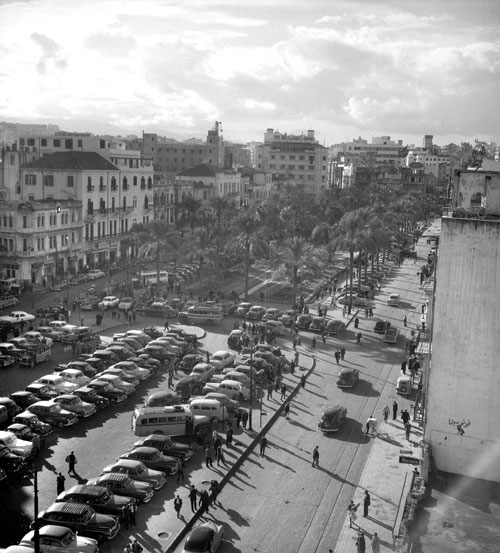
If Michel Ecochard were alive today to see his beloved Beirut, he would arguably want to drop dead on the spot. Beginning in the 1930s, the French architect and urban planner worked for some 30 years in Lebanon and the region. He had especially high hopes for Beirut, as it was blessed with what he called, “One of the most beautiful sites in the world.”

In 1943, he was asked to produce an urban blueprint that could accommodate Beirut’s future growth. Taking into account the city’s existing character and natural setting, he proposed strict zoning, a modern infrastructure to cope with the growing popularity of the car, and a string of gardens and parks as the city’s green lungs. 

Today, the AUB campus and Sanayeh Garden offer a rare glimpse of what Beirut could have been, while the city’s ever increasing traffic jams echo the fact that Ecochard’s plan was never approved in Parliament. Not surprisingly, the most vocal opposition stemmed from Beirut’s property owners and landed elite.

The situation did not improve following World War II. The newly independent “merchant republic” under the presidencies of Camille Chamoun and Bechara Khoury were neoliberal avant la lettre, in the sense that the state was to stay out of social and economic affairs in order not to hamper the private sector’s potential to generate profit. Urban planning was among the least of its concerns.

Having worked in such cities as Casablanca, Damascus and Aleppo, Ecochard returned in 1961 when President Fouad Chehab asked him to again produce a master plan for Greater Beirut. Despite his earlier disappointment, Ecochard accepted. “Beirut can still be saved, but action must be taken immediately,” he said.

Again, Ecochard called for zoning, the creation and protection of green spaces and an improved infrastructure. He also proposed building government cities to decongest the capital, and social housing schemes for east and south Beirut to raise the living standards among the many new arrivals in search of a better future. Finally, he advocated strict building regulations to discourage speculation. Again, his plan came to nothing. Parliament, in 1964, adopted a watered down version of his proposal, in which some industrial zoning remained and construction along beaches was (temporarily) frozen. 

Ecochard disassociated himself from the plan and soon after left the country. Contrary to what many Lebanese think, the urban chaos that characterizes Beirut today has not been the result of 15 years of Civil War. Ecochard was hardly the only planner that tried to tame Beirut. Before him, there was 1930s French urbanist Rene Danger. After him there were Greek, Swiss and homegrown plans. The problem was that, time and time again, plans were compromised or shelved entirely. In other words, the lack of urban planning dates straight back to Lebanon’s independence in 1948, and is directly linked with the impotence of the Lebanese state. “[Ultimately,] Beirut’s urban landscape symbolizes the difficulty of the state to affirm its authority,” concludes modern urban historian Eric Verdeill in his book ‘Beyrouth et Ses Urbanistes’. 

The consequences of this inability are plenty. The lack of proper public transport and the ever increasing fleet of wheels, for example, is strangling the city. There are hardly any parks and there is little or no sense of social, aesthetic or historic value, as everything is measured by the mighty $-sign. As a result, Beirut’s cultural heritage is rapidly making way for ever higher high-rise that makes you wonder: what ever happened to the art of architecture? 

A recent low point on a long list of urban disasters was the adoption of the 2004 building law. While in the 1960s a building was allowed to be only as high as 1.5 times the width of a street it faced, since 2004 it can be 2.5 times the street’s width. This change prompted a forest of towers to be erected everywhere, even along the Corniche. While most are a slap in the face of beauty, they also have disastrous consequences for the city’s air and traffic circulation. 

“It was the private domain… that invaded the public domain and hacked away at its flailing carcass,” wrote the late Samir Kassir in summing up the sad history of urban planning in his book ‘Beirut’. “The metropolitan area was little more than a mass of infringements and trespasses against the ability to breathe that is no less essential to a city than a person.” 

Sweet dreams, Monsieur Ecochard.

May 3, 2012 0 comments
0 FacebookTwitterPinterestEmail
Society

A watch for life

by Michael Karam May 3, 2012
written by Michael Karam

A watch has become a necessity but not necessarily for telling the time,” explains Mhir Atamian, whose family business is one of Lebanon’s leading watch importers. “For men, it is one of the few pieces that they can wear, but for both male and female consumers, it has become as important as what clothes they wear or the car they drive. Among their peers, it is important to be seen to have the ‘right’ watch.”

So which is the right watch? It’s not just a case of what you like in terms of design or functionality or price; what Atamian might have been alluding to was that, in modern Lebanon, or anywhere else for that matter, is that you may often be judged — in terms of status, taste and even credibility — by the watch on your wrist.

To many people, a watch is a watch. It tells the time. You could be wearing a $250,000 Patek Phillipe chronograph and many people would not be the wiser; but to the trained eye your watch can say a lot about you. Are you an arch-vulgarian, an aficionado, or simply someone who wants to wear a decent piece of engineering success on the wrist?

It is fun to match watches to certain jobs. The photographer, designer or creative director might demand a watch that is both functional and a design classic. He or she will want us to know that form is appreciated just as well as function. Where others see cliché, they see an icon.

So what are we talking about? Omega’s Speedmaster Professional that was designed for astronauts, together with Breitling’s Navitimer, a pilot’s watch, and the Rolex Explorer (the white face “polar” edition in particular) all fit the bill. They are proven designs that have hardly changed over the years. While fads come and go, the classics still remain.

But remember, while these watches are not cheap — the Speedmaster is the most affordable at around $3,000 — they do not belong to the true elite of the watch world. This brings us to the banker or the businessman: which is the right watch for the man or woman who lives in life’s first class lounge? For the person who takes life at a calculated, more measured pace and who, whenever they shoot a cuff, want the world to see understated elegance? 

For those who have plowed their professional furrow and are looking to reap a rich harvest, there are four of five watch houses from which to draw horological inspiration. Patek Philippe – naturally – A. Lange Sohne, Vacheron Constantin, Girard Perregaux and perhaps a Jaeger LeCoultre constitute   grown-up watches and, in many cases, potential family heirlooms. 

Which leaves us with the man who simply wants to reward himself and send a signal to the world that he has ditched that Swatch; a man that has between $5,000 and $10,000 to blow on a watch that will be a friend for life but which won’t let him down at the beach, the club or the boardroom. IWC, Jaeger LeCoultre, Omega and of course Rolex are my top picks. Women can have all these too and they can mine Cartier’s rich deposits of classic designs.

In fact, women consumers can often have more fun. With the fad for oversized watches, they can really make a statement. Cartier’s oversized Ballon Bleu in particular is a current favorite as is the 42mm IWC Portuguese, steel on a black strap.

You will have noticed some brands (perhaps unfairly) have not made the cut. Tag Heuer, Longines and Baume and Mercier are all fantastic watches and, in the case of Longines and Tag in particular, have an enviable heritage, but, and this is just my opinion, they just fall outside the “watch for life” segment. They are perfect “step-up” or “second” watches.

Also absent are Panerai — too big and brash (even if many of us secretly want one) — and Tudor, which needs more time to win over a new generation of fans, although the new Black Bay Diver and the Chrono Heritage are both destined for cult status.

Finally, if you are reading this and are thinking that this is all a load of elitist tosh and you are very happy with your trusty Seiko, take comfort from knowing you wear one of the best made and most reliable watches on the planet. Fact.

May 3, 2012 0 comments
0 FacebookTwitterPinterestEmail
Comment

Healthy profits or people?

by Zak Brophy May 3, 2012
written by Zak Brophy

Nicotine is an insidious drug that ensnares people with remarkable effectiveness, and yet despite increased awareness of the perils of tobacco addiction, Lebanon is still hooked. The tobacco industry is sustained through a combination of dogged lobbying from the industry big guns, a pliant government that listens to them and a citizenry that puffs its way through, on average, more than twelve packets of cigarettes per month.

Lebanon may have ratified the United Nations’ Framework Convention on Tobacco Control (FCTC) in 2005, but the all too familiar tradition of putting pen to paper but not policy into practice was adopted. The major tobacco corporations continued to enjoy significant influence within the government and the nation remained virtually devoid of any tobacco control policy. 

In September last year, the prevailing winds started to shift course with the passing of a tobacco control law. Advertising, promotion and sponsorship of tobacco products have been banned and it is now illegal to smoke in public places (although this does not apply to hospitality venues until September 2012).  The jury is still out regarding to what degree the law will be enforced, but its adoption is certainly a positive development. Despite being the most effective tool in the policy maker’s box of tricks to tackle tobacco use, taxes were left on the bylines when lobbying for this most recent law. This was tactful and not neglectful.  

There was strong resistance to the law from the international tobacco corporations and their Lebanese business partners, many of who are snuggly ensconced among the political decision makers.  Introducing a tax hike into the debate would have increased inertia among the nation’s lawmakers and perhaps derailed the campaign. With the tobacco control law now enacted, taxes are back on the table. 

A recent study by a team of economists at the American University of Beirut shows that increasing taxes on tobacco products would lead to a win-win scenario of increased tax revenues and lower smoking rates. Such a fiscal challenge to the tobacco industry will face tougher opposition than the recent law because money matters. The government could keep on enjoying its healthy profits from the tobacco trade in the short term, but over time the goal of these legislative and fiscal measures is to wean Lebanon off its tobacco dependence. It is this that the profiteers within the industry fear. 

The tobacco trade in Lebanon is managed through a government controlled monopoly, the Regie Libanaise du Tabac et Tombacs (Regie), under the auspices of the Ministry of Finance. For the Regie the nation’s penchant for a puff amounts to a healthy little earner and it enjoyed profits of $408 million last year.

The perpetuation of a thriving tobacco trade provides handsome business for a few, with a 2010 economic analysis calculating a net annual benefit of $271 million for the direct stakeholders. However, when the same study incorporated factors such as lost productivity and associated health costs it found that the loss for Lebanese society amounted to an excess of $50 million.

For the folks at the Regie, talk of a tax hike is foolhardy. In 1999 the government increased tobacco taxes from 51 percent to 113 percent and, contrary to the anticipated rise in revenues, they fell sharply. This was not because people stopped smoking but because smuggling from neighboring markets shot up. While smuggling will undoubtedly rise in the face of a tax hike, this need not necessarily stave off the policy: The AUB study factored in a 200 percent increase in smuggling. However, the illegal cross border trade in tobacco products is in many cases only enabled by political complicity and the support of the international tobacco companies. By using funds from the inflated tax revenues to enact the right safeguards and policies the rise in smuggling could be reduced to a manageable level.

When discussing the AUB study on increasing tobacco taxes, Minister of Finance Mohamad Safadi, said, “The health of the Lebanese citizen is the number one priority”, before trailing off along the industry line about the threat of smuggling. However, as long his ministry is in charge of the monopoly that profits so handsomely from this societal addiction, action must follow words if we are to believe the minister is doing anything more than blowing smoke.

May 3, 2012 0 comments
0 FacebookTwitterPinterestEmail
Comment

No right to laugh

by Sami Halabi May 3, 2012
written by Sami Halabi

It is the proper application of law that separates anarchy from order, suppression from representation, people from slaves and fosters a society with a respect for the structures of governance. The opposite is just as true, where it is the selective application of law — for example when charges are conjured up to suppress freedom of expression in the name of preserving ‘public morality’ — that leads to the destruction of faith in the institution of law itself. As citizens’ distrust of their government mounts, the social contract between the two becomes less tenable and society breaks down. This is where Lebanon is today.

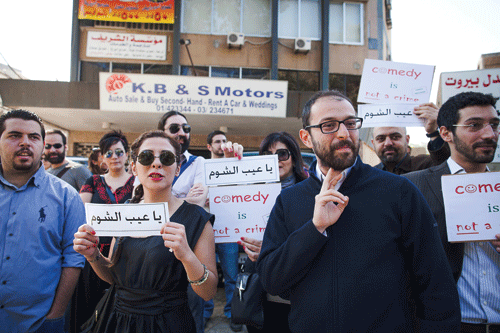
Following a recent string of arrests related to freedom of expression, last month actress Rawya el-Chab and comedian Edmund Hedded were in court to appeal a one-month sentence of imprisonment and a fine for committing “acts of offense against public morality”. Their crime: hosting a mock-auction of men at a pub in 2009 in order to raise money for the Brave Heart Foundation, which helps children with heart diseases. 

The General Prosecutor’s office dug deep through the Penal Code to find a way to invoke paragraphs two and three of Article 532 which cover, respectively, “words or screams that have been manifested by a person and heard by a party that has nothing to do with the act,” and “visuals presented in a public context or for a public or in exhibition or broadcasted or sold or distributed to one or more persons.” 

While Parliament’s library (yes, it does exist) is stacked with unapplied laws relating to the most basic functions of the state and serving the public — such as passing a budget, providing public services (electricity, water, telecoms) and ensuring human rights (among them the law against child abuse) — our justice system found the time to apply its energies and resources to exercise obscure laws to subdue free speech. 

But to think that the judiciary all of a sudden has the intent to weed out villainous threats to virtue and goodness would be a laughable assertion. Aside from the absurdity of a subjective concept such as ‘morality’ existing in a piece of law, an hour of local television will provide one with more than a dose of ‘immoral’ words and screams and the visuals to go with it, especially if one watched Parliament last month. Fortunately for them, our MPs can hide behind their legal immunity; we cannot.  And, as if there were not more pressing issues in the country, those who claim to defend freedom of expression — journalists from El Nashra and Annahar —provoked the judiciary by writing articles critical of the mock-auction. Indeed, the judge who sentenced the comic duo did so largely on the basis of these media articles. At the Appeals Court last month it was clear that the judge had no clue what the case was about and, worse still, after expelling the public from the courtroom, cross-examined the accused and the prosecutor, without allowing the defending lawyer to be heard; that will only happen on May 30. 

This is no laughing matter. If the General Prosecutor can convict someone for violating some backwards piece of legislation on the basis of an article, and without an investigation, then a harrowing precedent has already been set.  

Furthermore, what faith should the public have that the judiciary has any sense of ‘justice’ about it? Or that the laws passed by our government have as their intent any sort of proper governance?

What are meant to be the sacred words of our social covenant, also known as the constitution, have been defiled by the very people who are supposed to uphold them. We, the people, are not “sovereign, free, and independent,” the people are not “the source of authority and sovereignty,” the political system is not “established on the principle of separation, balance, and cooperation amongst the various branches of government.” Instead, imbeciles and their whims are given authority over our freedom of speech. 

If they wish to begin winning back the faith of the people they have so often betrayed rather than served, it is incumbent on our judiciary to see to it that these sentences are repealed, the charges dropped, and spare us their selective morality.         

May 3, 2012 0 comments
0 FacebookTwitterPinterestEmail
Comment

Hope of compromise in Iran

by Gareth Smith May 3, 2012
written by Gareth Smith

Talks between Iran and the leading world powers, including the United States, in mid-April have revived hopes of compromise on Tehran’s nuclear program. Essentially the two sides agreed that the basis for agreement would be the Nuclear Non-Proliferation treaty (NPT) and so respect Iran’s right to peaceful use of nuclear energy, with specialists preparing in advance for a second round of talks in Baghdad on May 23.

As I have written here before, the outlines of a potential agreement with Iran have knocked around for some years.  But an article by Dennis Ross, the pro-Israeli former Obama adviser, in the New York Times in February was telling in suggesting Washington would accept Iran enriching uranium, a “concession” that could enable Iran to claim victory with its “rights” acknowledged.

In a second article, Hossein Mousavian, the former Iranian security official at Princeton University, argued Tehran’s bottom line was “the ability to produce reliable civilian nuclear energy” as “entitled” under the NPT, while the US and European bottom line was “never having Iran develop nuclear weapons or a short-notice breakout capability.” 

Discussion in Washington over how to achieve its bottom line reflects the nature of nuclear technology. In broad terms, enriching uranium to low-level for civil use — to 3.5 to 20 percent — implies the ability to enrich to the higher level — 90 percent — required for a bomb. Broadly, you just keep the centrifuges spinning.

This is “break out”. A country can enrich uranium for civil purposes while developing missile delivery systems and so maneuver itself into a position where it can move relatively quickly towards making an atomic bomb.

Hence Mohammed ElBaradei, then head of the International Atomic Agency (IAEA), the UN body that monitors the NPT, said in 2004 that 35 to 40 states had the technology to make a bomb.

So why have the NPT? The first five states to possess nuclear weapons — the US, Russia, France, Great Britain and France — are among the 189 NPT signatories, but the only other states who subsequently developed weapons either left the NPT — North Korea — or were not signatories — Israel, Pakistan and India.

This suggests developing nuclear weapons within the NPT is far from easy, which is because signatories face IAEA monitoring, under article 3 of the NPT, to prevent “diversion of nuclear energy from peaceful uses.” 

The limits of basic monitoring under the NPT led to additional protocols (APs) with over 100 countries giving the IAEA more intrusive powers of inspection of declared and “possible undeclared” nuclear facilities. Iran agreed an AP in 2003, when it also suspended uranium enrichment as a goodwill gesture during talks with the European Union, but in 2006 announced it would resume enrichment and no longer apply the AP.

The US and allies are now demanding that Iran re-apply the AP, so building confidence it could not undetected divert enriched uranium into a weapons program. This could happen in one of three ways: by operating clandestine plants, by diverting nuclear material from declared facilities, or by leaving the NPT.

An enhanced AP — known as a ‘Model AP’ — could widen monitoring from enrichment facilities to mines and waste disposal, and so reduce both the danger of diversion from declared sites and the feeding of undeclared sites. It could even involve 24-hour access to sites not under inspection.

Clandestine activity is considered the most likely and most dangerous option by the Americans, given IAEA inspections are currently limited to declared facilities. Hence Washington’s interest in an extensive Model AP.

One option is WAES (wide-area environmental sampling) under which monitoring stations would be built through Iran to check air, water and sediments for unusual readings. This would amount to what one US report calls “expansion from monitoring individual facilities to monitoring the state as a whole”. 

The US considers the third danger — of Iran leaving the NPT, which any state may do under the treaty’s Article X on grounds of “supreme national interest” — the least likely. But even so, negotiators may want an Iranian commitment it would never do so.

There are certainly devils in the technical details. And there are also questions of political acceptability. Crucially, even if sanctions are lifted ‘step by step’ and Iran can unlock the real potential of its energy reserves, it remains to be seen how far the leadership in Tehran may go in accepting an inspection regime far beyond that agreed by any other country in the past.

May 3, 2012 0 comments
0 FacebookTwitterPinterestEmail
Society

Interview: Saad al-Barrak

by Thomas Schellen May 3, 2012
written by Thomas Schellen

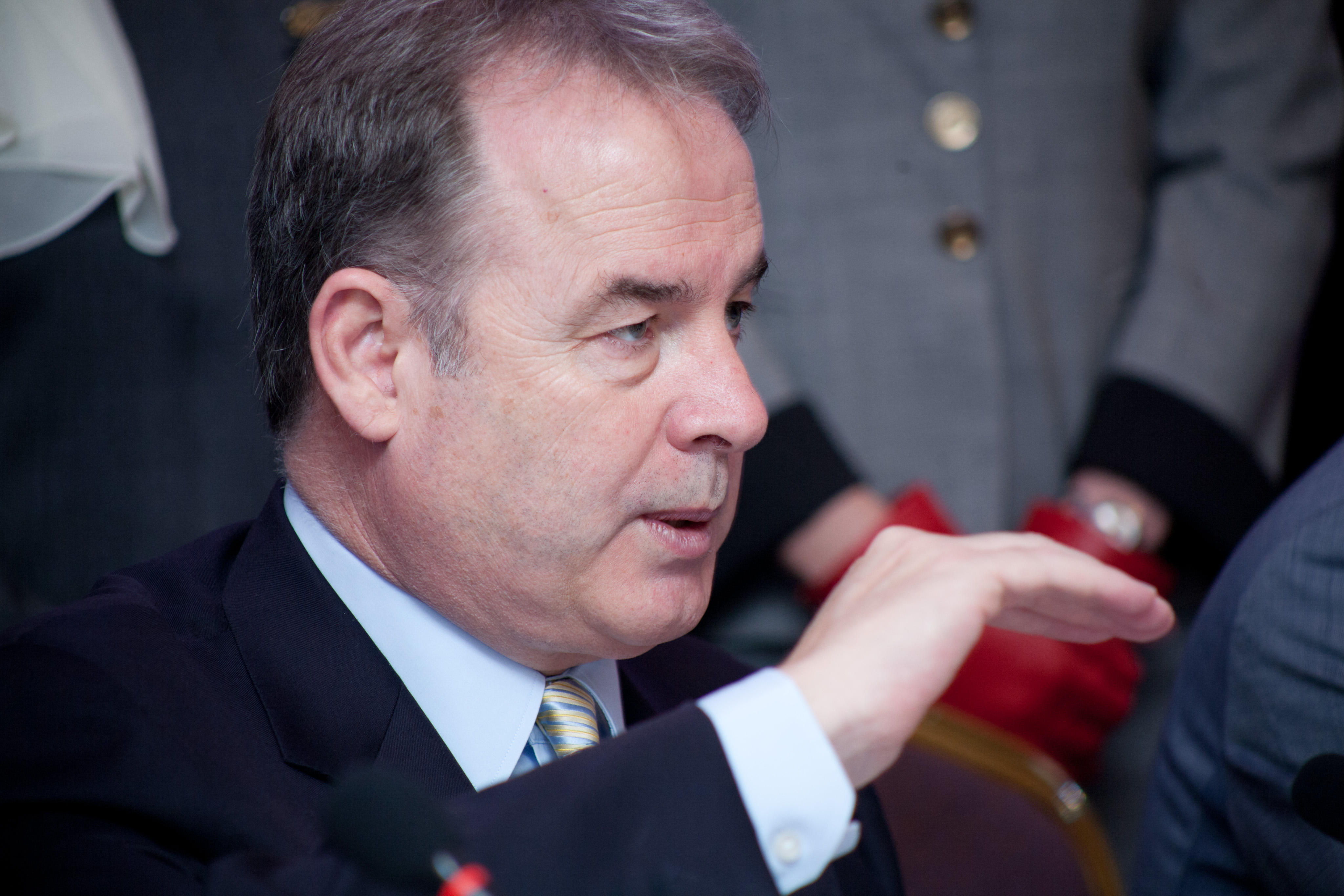
The story of Arab telecommunications is rife with great achievements, rapid changes, sudden setbacks, and yet-to-be-realized potential. New technology, infrastructure and mass uptake have allowed the region’s information communications technology (ICT) sector to provide more exciting corporate tales than most other industries between Casablanca and Kuwait City could offer. The Arab ICT sector has also attracted some of the most enterprising and daring minds in corporate Arabia — among them is Saad al-Barrak. As the head of Kuwait’s MTC/Zain, Barrak led the telecom company from a purview over one small nation to a customer base of some 70 million customers and an intercontinental footprint. His narrative of how Zain became a marker in the history of Arab enterprise success is the subject of his first book, “A Passion for Adventure”. Barrak sat down with Executive for an exclusive interview to discuss his newly published work.   

The PR announcement of your book trumpets that Saad al-Barrak “transformed a moribund ex-state-owned Kuwaiti operator into the telecom giant Zain”. Do you see the story this way, as one person’s singlehanded triumph – yours?  

Nothing could be further [from the truth]. There is no one-man show. No, I think the issue was building a coalition and extending it to a whole organization composed of people who are believers and achievers at the same time, because believing is achieving. And that is how it happened; it was the Zain cult that achieved this transformation.

You wrote about your mother as being the ruler of the bayt (house), the interior life in the family and that she was very important for your evolution. How does this reverence for your mother as a person who manages the home correlate with the ability to manage a global company?

It correlates very well. It [describes] dedication, belief, and determination. For example my mother’s dedication to her family and to her children was insurmountable. Family is a unit and managing it is managing a group of people trying to achieve objectives. This is very much in line with managing [a company] where you are responsible for managing a certain group of people and achieve objectives. The sense of dedication and commitment and sacrifice and tenacity in pursuing your objectives are extremely interrelated.

You highlight the importance of achieving objectives, but in your book you took a jab at Peter Drucker’s management by objectives and said your way is management by love. Why?

That’s right. I think objectives are stationary or static and limited in that regard. We therefore should look at objectives as the floor and not as the ceiling. We also should look at them in an evolutionary way because objectives evolve. For example when we started our 3x3x3 [Zain growth strategy] we were talking about 30 million customers, which soon moved to 100 million as our objective. The issue is the direction and the way forward, thriving, growth, and so on. To thrive you need objectives as stepping-stones and not as the architecture itself.

You said that 90 percent of managers are stuck in a structural approach to management of the type introduced by 19th century economist Frederick Taylor. Do you see this high prevalence of focusing on management by task as opposed to relationship as something specific to the Middle East region?

No, I think it was an outcome of the industrial age. Mechanization was a historical stage. People were too loose and you needed quantification to measure and streamline advancement. That is needed and Taylor was definitely one of the greatest contributors to management who tried to take a step forward by bringing quantification and mechanization in a way that is conducive to better managing and progressing in your objectives. It is great as long as we look at it as a stage, but we must not forget the essence of management, which is the human side and the humanization of business. I say the emotional, spiritual side is the essence of management and leadership, not quantification.

The story of Zain as you were involved has a beginning and an end. In your book, did you conceal any regrets about how it ended?

Not at all. I am a warrior, not a worrier. If I finish one battle, I go to another battle. If I finish one war — and by that I mean peaceful war — I go to another one. I have no regrets in that regard. Of course, I look at regrets as learning episodes and not mourning episodes. I will have to employ this in the next episode of my life, but it is a journey and the achievements have already happened. We have achieved a great dream of taking a very small company from a very small country to be nearly a global company, highly international with massive achievements and 16,000 people working on it. The moments of happiness were 99 percent. I hope we will all enter our new stage in life, wherever we are and whatever direction we are taking, in a very positive and enticed way that should make us happier and make us better achievers and better global citizens.

In the sense that Zain’s role did not continue on the world stage and that the project regressed to a smaller level, is this not a point of regret?

It is not a matter of regret. It is a matter of being objective and pragmatic. We always strive to change it but we are not surprised or shocked to see that this limitation is there. It is sad if you go back to a smaller level, definitely. We wanted to be an example to the whole world and set an example for our region at the same time.

Seeing yourself as you say as cultural revolutionary, can you change the mindset of the Arab corporations?

That is the reason why I wrote this book. We wanted to document the great experience of the Zain story and reflect in it the new business and economic ideology that we are preaching and which is compliant and part and parcel of our universal, open philosophy — an all-encompassing philosophy considering the universe as our homeland and humanity as our tribe.

In your opinion, why are there not more globally known Kuwaiti entrepreneurs?

Kuwait is a very rich country and many Kuwaitis can make a lot by staying in Kuwait and around it. This did not really push them to be on the bigger platform. No incentive.

Do you want to play a role in Kuwaiti politics?

That is a very dangerous question. I also have a passion for politics as I have a passion for leadership. So far I am really enjoying the private sector and the space that the private sector gives you. Politics is very limiting to the space. I still can give and be very active and so [being in politics] could be extremely inhibiting to my soul. But later on, at the right moment and with the right combination of the leading change coalition, if the circumstances are conducive and if the country is ready to accept such a coalition to change it to a better country, I will not hesitate to be part of this.

Looking forward, you are talking about a company and other ventures. Where do we stand?

I have started a company called Ila, meaning forward or toward in Arabic. In this company we focus on two things. One is that we provide management expertise and strategic advisory for ventures in telecom and telecom-related IT. The other side of the business is investing in very small startups that are extremely promising.

So you take a financial stake in those companies?

We invest in each startup between $1 million and $5 million. Later on, we want to set up a fund of $300 million to invest in telecom-related IT, according to our philosophy of creating small startups that are very promising in value creation.

One of your statements is do not set out to make money, set out to make history and the money will follow. What is your net worth as result of practicing this maxim?

We made money for our company, for Zain. But it was on our expense, because it took all our efforts and the remuneration was not as commensurate as it should have been. We have no regrets in that regard. We are trying now to make good wealth out of this new venture, Ila. 

May 3, 2012 0 comments
0 FacebookTwitterPinterestEmail
Comment

Simmering discontent in Nahr el-Bared

by Josh Wood May 3, 2012
written by Josh Wood

It is five years to the month that the siege of Nahr El Bared began near Tripoli, and while the guns have gone silent, the potential for renewed conflict involving Lebanon’s Palestinian refugee camps looms ever as large. 

In conversations and interviews since with representatives from the different Palestinian factions in the camps — often in places where Kalashnikovs are stacked indiscreetly in the corner — the topic of Nahr El Bared has inevitably come up. The 2007 battle destroyed the camp, displaced tens of thousands and killed hundreds of Lebanese soldiers and mostly foreign Fatah Al Islam militants; it also represents for many Palestinians both their precarious position in Lebanon and the country’s careless disregard for their suffering.

To the south, in Lebanon’s largest refugee camp, Ain Al Helweh, the precarious security conditions that resulted in the Nahr El Bared fighting are mirrored in many ways. In Ain Al Helweh, the absence of proper governance, or even a single dominant armed faction or alliance, has allowed space for militant Jihadist organizations such as Usbat Al Ansar, Jund Al Sham and the Abdullah Azzam Brigades to establish themselves. Like Fatah Al Islam, such organizations operate with little regard for camp residents, the stability of the country or the few observed “rules of the game” that exist in relations between the Lebanese and mainstream Palestinian factions. 

The potential security threat these groups pose came up again in March when an Abdullah Azzam Brigades cell was discovered within the Lebanese army.  For the Lebanese government, trying to move security forces into the camp and arrest wanted extremists like Abdullah Azzam Brigades leader Tawfik Taha could risk another Nahr El Bared-type conflict. And yet, if nothing is done, the government facilitates the perpetuation of such groups and risks the increased likelihood of future confrontation. For mainstream Palestinian factions, who may not see eye-to-eye with the Lebanese government in general but also reject these fringe groups, moving against an organization such as the Abdullah Azzam Brigades risks sparking intra-Palestinian fighting within the camp. There are no easy solutions.

The Lebanese government has not, however, made any effective attempt to repair relations with mainstream Palestinians groups since the Nahr El Bared conflict. With the reconstruction still incomplete, mired in the contentions of politics and security and assailed by accusations of corruption, many Palestinians, already skeptical of the Lebanese state, have become even more suspicious of its intentions towards them. Relying primarily on donor funding for the rebuilding of the camp, the United Nations Relief and Works Agency, tasked with managing the reconstruction, seems hobbled by mismanagement, ineffectiveness and underfunding: it is still more than $180 million short of the funds it says it needs for the project, but with little headway made on the reconstruction, donors have been hesitant to pump more money in.

Declared a closed military zone, there is also a fear that Lebanese security forces will also attempt to maintain a presence in Nahr El Bared if the camp is ever rebuilt — a move that would be an unwelcomed precedent in Lebanon’s other camps. 

If the intent of the heavy-handed destruction at Nahr El Bared was meant to teach a lesson to the more mainstream Palestinian factions that hold sway in most of the camps and encourage them to disarm, it largely failed. Having lost another of their camps, many Palestinians see arms as the only way to guarantee their safety from the government or militant groups, and today the camps remain one of the few places in the country where weapons are openly flaunted and military positions are occupied during times of peace.

With the eyes of Lebanon following potential crises that seem to present a more immediate danger — such as the specter of a return to political assassinations and the possibility of the Syrian conflict spilling across the border — the problems brewing in the camps are allowed to fester unseen on the other side of Army checkpoints. To ignore and leave unaddressed the plight of Palestinians in Lebanon’s refugee camps, however, is to leave burning a fire which could easily flare out of control, yet again.

May 3, 2012 0 comments
0 FacebookTwitterPinterestEmail
Society

Firing up the frozen desert

by Nadim Mehanna May 3, 2012
written by Nadim Mehanna

As the last snow melts on Lebanon's mountain tops and with the ski season firmly over, ice racing is probably not the kind of driving experience you are gearing up for. But Lebanon's coldest winter in more than a decade certainly proved advantageous when our team went to the Arctic Circle for some extreme driving on ice, with Lebanon's mountain roads and abundant snowfall having provided a degree of preparation for extreme driving in minus twenty degrees Celsius. 

The ice circuit in Sweden's Lapland came about by chance some fifteen years ago, when a research team from Bosch accidentally arrived at a dot on the map called Arjeplog and found the perfect environment for testing equipment in sub-zero conditions. Bosch was soon joined by German car manufacturers for the same reason, creating replica racing tracks like Formula 1's Hockenheim, Indianapolis, the Euro Speedway and the Spa Francorchamps.

No brakes, all engine

So when Mercedes’ AMG asked us to stay at their Arjeplog lodge we leapt at the chance. After the plane touched down on the ice, the first stop was the garage: three lines of 15 E63 AMGs, C63 AMGs and the new SLK AMGs. Our group jumped into the E63 monsters with 525 horsepower and 700 Newton meters (Nm) of torque, to take us to an iced-over lake that, once out of the car, was so slippery we nearly ended up on our backsides.

The first firm order from instructor Bernd Schneider, five-time winner of the DTM (German touring car championship) and an ex-Formula 1 driver, was to “DSC OFF” — all electronic aids deactivated, so no guardian angels and just spiked tires to help stay on the “track.”

The first push on the accelerator delivered such a rush of torque that the spikes were unable to cope with it and the car went on a 80 degree drift. Running through bends at a 100 kilometers per hour there is some serious G-force at work that can only be countered by steering, throttling and never breaking. But despite the E63 AMG weighing in at two tons, the chassis was incredibly stable while the surgically precise throttle, the torque and the power made the AMG a cinch to drive in that icy wasteland. 

The next morning was spent roaring around the simulation race tracks, and in the afternoon the AMGs were fitted with on-board cameras with telemetry equipment for the competition to really begin. With a benchmark set by Schneider of 1.22.30, the AMGs set off one by one, with the teams keeping a watch out for cars that slid off into the snow banks on either side of the tracks. Any car requiring a tow from the G Class Mercedes cost the team a point, so there was a lot of snow spraying around as drivers tried to get back on the ice and team members puffed and panted to push the car out as best they could.

Drifting to win

After the race was over, telemetry analysis started with most recorded times 5 to 10 seconds slower than Schneider’s time. Then it was announced that the Lebanese team had collectively scored the fastest times, even slightly faster than Schneider's, although it must be said that he did not set his best time ever. Given the competition out on the ice, Schneider was surprised by the Lebanese effort, quipping: “You guys are really quick, where did you learn how to drive on snow in the desert?” Obviously, the remark was met with more than a few raised eyebrows. 

The last day was spent on faster tracks where drivers could really let the cars go full out, drifting at speeds of up 130 km per hour. It soon reached a point where drifting became almost second nature. While the AMGs were incredible out on the “rink,” we also drove the SLK 55 and C-Class 63 Coupe. The C63 Coupe was over powered for such conditions, and the SLK was the by far best on ice, being smaller and feeling like your were almost go-carting as the car drifted around the track.

Overall, a highly recommended trip, a total disconnection from everything and the ability to drive in a way you would never normally experience, even if you managed to get your car to the top of one of Faraya’s ski slopes.


May 3, 2012 0 comments
0 FacebookTwitterPinterestEmail
Comment

The celebration of suffering

by Jihad Yazigi May 3, 2012
written by Jihad Yazigi

The announcement by French Foreign Minister Alain Juppé on April 17 that Syria’s foreign currency reserves had halved since the beginning of the popular uprising in the country is hardly something to celebrate. Valued at $17 billion at the end of 2010, they would now be standing at some $8.5 billion according to Juppé’s estimate. 

Providing a correct measure of Syria’s foreign reserves has always been problematic. While in most parts of the world foreign reserves are handled by the central bank, in Syria they are managed by two separate institutions: the Central Bank of Syria and the Commercial Bank of Syria (CBS). This is a consequence of the fact that CBS has been acting for decades as the bank of all public sector enterprises, including the Syrian Petroleum Company whose exports of crude oil were the main source of the Syrian government’s foreign reserve accumulation in the last 20 years.

The foreign assets previously known to be held by these two banks, however, adds up to only about $10.7 billion — somewhat short of $17 billion. One explanation for this, according to some insiders, is that not all reserves are calculated at the same conversion rate, with some pegged at 47 Syrian pounds to the United States dollar (the going rate at the end of 2010), and others at 11.5 pounds to the dollar (a rate the government used in some transactions until the late 1990s). The conclusion of all this is straightforward: you cannot rely much on Syrian central bank data.

But let’s go back to Mr. Juppé. The French FM made his announcement a few days before foreign ministers of western countries were set to meet in Paris to discuss additional sanctions on Syria. The collapse of Syria’s reserves was presented as a success for the international community in using sanctions to inflict damage on the Syrian economy — and, as a consequence, on the regime, as many analysts would have us to believe.

However, one needs to be clear: rejoicing in a country losing in less than a year assets it took decades to accumulate is simply insane, if not cruel. The implosion of Syria’s middle class and a gradual decline in the average purchasing power began in the mid-1980s, when a severe foreign currency crisis reduced the country’s reserves to the equivalent of less than one month of imports. Things began to improve only from the latter part of the decade when the first oil fields discovered by Royal Dutch Shell and Total S.A. began production.

Syria’s production of crude oil then increased gradually until it peaked at around 600,000 barrels per day in 1996. The period witnessed strong economic growth but also the implementation of a strict austerity program by the government, similar in many ways to the stabilization measures applied by the IMF in various countries across the world.

This program was strongly criticized by economists, and has been blamed for the state’s disinvestment from vast segments of the economy and for the stagnation in real incomes, but it had one benefit, namely saving foreign reserves for future generations.

This is what Syria is now set to lose. Not only are years of efforts being spoiled, but it is the reconstruction of the country that is rendered more difficult; future investment requirements that are made more difficult to fund. One good argument for this state of affairs, from the point of view of Western governments at least, is that a weakening of the state — because that is what the fall in reserves is about — would lead to a weakening of the regime and as a consequence to its fall.

There is historical precedent. This is exactly what many decision makers were saying in 1990 when sanctions were imposed on Iraq. We all remember the consequences of that, not least that Sadam Hussein stayed in power for 12 more years. In the meantime, the Iraqi population suffered, its social fabric was destroyed, and millions were displaced and driven into poverty. Failed sanctions were then followed by an American-led invasion.

May 3, 2012 0 comments
0 FacebookTwitterPinterestEmail
Society

Lacking the LUXury

by Yasser Akkaoui May 3, 2012
written by Yasser Akkaoui

The problem with opening a restaurant that pleases everyone’s palate and becomes one of the city’s institutions is that if you try to do it again, you have set the bar so high that you might not make it over. Such is the case of Beirut’s latest upper-crust addition to the cities cuisiniere: LUX. Brought to us by none other than the same Johnny Farah and co. behind the famed and flavorful Casablanca, LUX has the feel of an upstate New York-style dinner with the clientele of Brooklyn’s Peter Luger Steakhouse.  

What its creators understand well is the economics of proximity: the Marfaa district of Beirut is fast becoming our version of the Empire City’s Meat Packing District with names like Farah’s own IF, Karen Chekarjian’s Atelier and Robert Keyrouz’s boutique, all choosing it for its ‘edgy on the water’ feel. But its not there yet. 

All the districts that have become our capital’s bohemian bread and butter — from Monot to Mar Mikhael — started with a select few flagship locales before bursting out into multi-million dollar industries in and of themselves. To reach this critical economic mass, those first few concepts have to be airtight, not places that lose steam once people figure them out.  

For those of us who expect the quality and feel that Casablanca gives us (and we do), the Asian fusion at LUX leaves much to be desired, apart from the meat Carpaccio, but do not try the fish as it is, well, fishy. What is perhaps even more perplexing is how an organic salad made by the same folks at Casa can taste so different — now that takes talent. And even for those of us who don’t mind spending a little extra to get a little more, a nice bottle of wine and a par-for-the-course dinner shouldn’t cost $250, even if the bottle docked me around $100.

This can all be overlooked if the ambiance can cover for it. But apart from the character the rusty sign at the entrance brings — which I recall seeing at the Carawan Gallery just a stone’s throw from the place — there is not much else to keep me enthralled except for the politeness of the staff. 

One thing that works at the moment is the clientele. Already, given the name and the area, the people you want to see and be seen by are there. But even if you strike up a conversation with the jolly bartender and then look around for less-busy company, you will find it hard to make the usual eyes around the room. Unlike Casa, the layout of LUX means you will be poking your head around the corner and glaring across the room, instead of flicking a glance at the lady in red. 

If LUX were just another addition to an already thriving district of bars and restaurants perhaps its shortcomings could be overlooked. But as a flagship restaurant of the Marfaa district it lacks the lure to drive people away from their comfort zones in other parts of the city. So, like many things in life, the original turned out considerably more captivating than the sequel.

May 3, 2012 0 comments
0 FacebookTwitterPinterestEmail
  • 1
  • …
  • 332
  • 333
  • 334
  • 335
  • 336
  • …
  • 685

Latest Cover

About us

Since its first edition emerged on the newsstands in 1999, Executive Magazine has been dedicated to providing its readers with the most up-to-date local and regional business news. Executive is a monthly business magazine that offers readers in-depth analyses on the Lebanese world of commerce, covering all the major sectors – from banking, finance, and insurance to technology, tourism, hospitality, media, and retail.

  • Donate
  • Our Purpose
  • Contact Us

Sign up for our newsletter

[contact-form-7 id=”27812″ title=”FooterSubscription”]

  • Facebook
  • Twitter
  • Instagram
  • Linkedin
  • Youtube
Executive Magazine
  • ISSUES
    • Current Issue
    • Past issues
  • BUSINESS
  • ECONOMICS & POLICY
  • OPINION
  • SPECIAL REPORTS
  • EXECUTIVE TALKS
  • MOVEMENTS
    • Change the image
    • Cannes lions
    • Transparency & accountability
    • ECONOMIC ROADMAP
    • Say No to Corruption
    • The Lebanon media development initiative
    • LPSN Policy Asks
    • Advocating the preservation of deposits
  • JOIN US
    • Join our movement
    • Attend our events
    • Receive updates
    • Connect with us
  • DONATE