• Donate
  • Our Purpose
  • Contact Us
Executive Magazine
  • ISSUES
    • Current Issue
    • Past issues
  • BUSINESS
  • ECONOMICS & POLICY
  • OPINION
  • SPECIAL REPORTS
  • EXECUTIVE TALKS
  • MOVEMENTS
    • Change the image
    • Cannes lions
    • Transparency & accountability
    • ECONOMIC ROADMAP
    • Say No to Corruption
    • The Lebanon media development initiative
    • LPSN Policy Asks
    • Advocating the preservation of deposits
  • JOIN US
    • Join our movement
    • Attend our events
    • Receive updates
    • Connect with us
  • DONATE
Society

Discerning desires seek perfection

by Lauren Williams July 3, 2011
written by Lauren Williams

To say that money can’t buy taste is a truism with particular relevance in today’s luxury markets as they rebound from the global recession. Ostentatious spending is out, replaced with wise and cautious consumption that has translated into the development of sophisticated and refined tastes. That’s not to say that people aren’t spending.

Globally and in Lebanon, luxury is now more than ever about passion markets. Demand for cars, wines, watches, jewelry and art are being driven by a feel for offbeat designs, one-off collectables and vintage items requiring a discerning eye and valuation literacy. Aesthetics and the emotional appeal of luxury goods with no expiry date are the important indicators of investment value.

Nowhere is this more evident than in the growing market for art in Lebanon. Cash-laden and educated new collectors are venturing into the market. After initial market overzealousness for Iranian art, these cautious investors are propelling the market for Middle Eastern arts at a healthy rate.

In Lebanon, wine sales are up as a traditional consumer culture makes way for a growing class of connoisseurs and cellar-owners. In homes and restaurants, the focus is on creating the unique memory and one-off experience. Jewelry and watch aficionados, meanwhile, have not been put off by the high prices of gold and gems, but are increasingly demanding individualized, custom-made pieces. Designers and watchmakers are responding with limited edition collections, one-off collaborations and narrative-oriented design. Class is manifest in understated and retro design. It is this penchant for rarities that is putting ‘exquisite’ back in to the meaning of luxury.

In this special luxury report, Executive shows how people are spending, and on what. We show you what are the trends, what is around the corner, and we take an analytical look at the cultural market drivers for luxury goods. Importantly, we take a sober look at the markets in this volatile recovery period.

From cars, boating, jewelry, watches, fashion, homes and interiors, wine, spirits and even food, we welcome Lebanon to a new era of refinement. 


July 3, 2011 0 comments
0 FacebookTwitterPinterestEmail
Society

Yachts: Leap of faith

by Zak Brophy July 3, 2011
written by Zak Brophy

Few displays of the luxurious lifestyle turn heads quite like a top-of-the range boat, and it is the colossal mega yachts that tend to elicit the most attention. These floating mansions can come custom furnished with swimming pools, helipads, indoor gyms and even mini submarines. But is size everything?

For Alain Maaraoui, founder and chief executive officer of Sea Pros Yachts, it is quality and not size that defines luxury. “We have boats that are 8 meters and cost over 280,000 Euros [$396,000]. It’s not a matter of size; it’s a matter of real luxury,” he said.

The Lebanese market is an important hub in the luxury boat trade, but as the 2011 season gets underway it is having to navigate some choppy waters. Political upheavals at home and across the region, slowing growth in the economy and a sluggish start to the tourist season don’t augur well for the coming year.

Showboating

At the end of May, IFP Expo and Messe Dusseldorf hosted the Lebanese maritime trade show, Beirut Boat 2011. Representatives from the top 20 international brands were among the 130 exhibitors who came to show off their wares. Many of the 28,000 visitors to the event at Joseph Khoury Marina in Dbayeh would have come purely to marvel at the opulent grandeur of the mega yachts or to appreciate the finesse of the classic brands. But it was the deals sealed with the serious shoppers that set the tone for the coming year’s business.

Overall, the event proved to be a success despite the prevailing climate, according to Joelle Ghannam, IFP Expo project manager. “More than $100 million in sales were made during the event. There are still big spenders. A $12 million boat was sold on the first day,” she said.

The interest shown in the large boats meant good business for Sea Pros’ Maaraoui. “We were surprised to receive high demand during the show for our mega yachts,” he said.

While the majority of the clientele were Lebanese, 12 percent of the guests came from the Gulf. Ghannam believes it is more than just the liberal lifestyle in Lebanon that attracts buyers from the Gulf. “Many of them prefer to moor in Lebanon. They have more months in which they can sail. It is too hot in the Gulf,” she said. Despite the relative success of the boat fair there is still some trepidation in the market.

“Business is not like last year. We are selling less. But you have to consider what is happening around us,” said Firas Khalife from BluePoint Yachting Lebanon.

Alain Maaraoui explained that the financial crisis had negatively affected trade with Europe. “Nowadays, even in Europe it’s much harder to finance a boat because of the global financial crisis,” he said. “The banks are placing many more restrictions.”

Blue Point Yachting sells solely to a Lebanese clientele and Khalife doesn’t see access to finance as a real impediment to business. “There is no problem with finance in Lebanon. There is plenty of money in the banks. If you fit the banks’ criteria it’s no problem,” he said.

For those seafaring folk who don’t want, or can’t afford, to spend millions on their own floating palace there is always the option of chartering. However, some charter companies have complained of a leaden start to the season.

“There are some problems because of the political situation. So far we have not had a single charter for one of our big boats,” said Randal-Haj of Dolphin Team Yachting. “We are in June and the charters normally start in May, or even earlier.” The vitality of the charter market is closely linked to the influx of tourists. According to the Ministry of Tourism, arrivals in the first quarter of 2011 were down 13 percent compared to the first quarter of 2010.

Hrair Tasslakian, part owner of Dbayeh fishing club, said this year’s business has been coming from locals and Lebanese returning from abroad. “As for the big spenders who come from the Gulf or Europe we haven’t seen them yet. We haven’t seen people that come and spend $10,000 dollars in a day,” he said.

Missing marinas

Many of the players in the industry are concerned that there is a lack of marina development in Lebanon. “The mooring space is almost non-existent now. This is a problem for boat sales, definitely. By next year there will probably be no space at all,” fretted Firas Khalife.

This is particularly a problem for large boats, a market that several agents are hoping to develop in Lebanon. “Now Lebanon is only a market for smaller boats, 50 to 80- footers [15 meters to 24 meters]. Anything more than 90 [27 meters] and it’s much tighter, but it’s growing. In two years Lebanon will have more 100 footers [30 meters] and plus,” said Jimmy Frangi, chief executive officer of Sovereign Sea Hermes.

There was a similar problem of inadequate marina space in the 1990s before the construction of the Joseph Khoury Marina in Dbayeh and Solidere Marina in Beirut.

A new complex in Jiyeh with a capacity for 90 yachts is also slated for completion this month.

Where yachters do find a mooring, they seek comfort, class and style onshore once the boarding ramps are lowered on to terra firma. In a bid to boost the appeal of Lebanon as a luxury yachting destination of choice, Beirut Waterfront Development — a joint venture between Solidere and international real estate development firm Stow Capital Partners — is investing somewhere in the region of $150 million to build Zaitunay Bay.

Located on 20,000 square meters of waterfront land by the Beirut Marina it will incorporate a plethora of restaurants and shops, 14,000 square meters of high-end residences and an exclusive yacht club.

The mood remains defiantly buoyant in the Lebanese luxury yacht market but how long it can stave off the encroaching malaise in Lebanon and the wider region remains unclear. BluePoint Yachting’s Khalife warned that “nobody really knows what’s going to happen.”

“You cannot do any long-term planning in the current climate in and around Lebanon,” he said. “We are playing it by ear.”


July 3, 2011 0 comments
0 FacebookTwitterPinterestEmail
Comment

Yemen’s fleeting chance for change

by Farea al-Muslimi July 3, 2011
written by Farea al-Muslimi

The attack on Yemeni President Ali Abdullah Saleh while he and his cabinet were at Friday prayers last month turned Yemen on its head. The days before the attack saw heavy clashes between rival tribes in the capital of Sanaa and civil war seemed inevitable. It became clear that the potential price of overthrowing the regime would be much greater than it had been in Egypt or Tunisia. 

Then came the June 3 ambush, leaving Saleh with burns to 40 percent of his body and injuries to his neck and chest requiring surgery; a dozen members of his cabinet were also heavily injured, some losing limbs. Several days later Saleh and most of his cabinet evacuated to Saudi Arabia, setting the stage for controversy. The youth in the “squares of change” around Yemen took to the streets at midnight to celebrate what was to them the final exit of Saleh’s regime, analogous to that of former Tunisian President Zine el-Abidine Ben Ali.

In many quarters, however, the celebrations were criticized as a glorification of violence and comparable to Saleh’s own savagery. Some were dismayed that the peaceful nature of the youth uprisings had descended into violence. And more importantly, the sanctity of where he was attacked garnered sympathy for the wounded despot; religion is a fundamental building block of the Yemeni DNA, and the timing and location of the attack blighted its outcome. 

The youth in the squares were naturally defensive in response. Saleh’s departure, they said, had been the goal for months and the means should not be questioned, even if it was not they who performed the operation. There were accusations of hypocrisy against those who condemned the attack on Saleh but not the violence Saleh had wrought on peaceful protesters leaving hundreds dead. One Yemeni youth justified the mosque attack by saying he “was going to leave prayer to kill more of us.”

Under the headline, “God’s hand that devastated Al Nahdeen Mosque”, Yemeni journalist Khaled Abdulhadi wrote in Al-Masdar: “The holiness of the mosque is meaningless if murderers were inside it; in fact it was meant by God that they were all inside to be attacked.”

Another casualty of the assault, however, may be Yemeni national reconciliation. In mid-June an unknown group called the “Revenge brigades of Yemen and President Saleh” attacked an opposition newspaper and pledged to assassinate opposition political leaders and Saleh opponents. These incidents raise concerns about the post-Saleh era. Unless a real national dialogue begins, and some sort of consensus emerges, blood will continue to stain Yemen’s headlines for years to come.

Five months of uprisings have made it clear that neither supporters of the regime nor the protest movement can easily impose their will on the other. Saleh’s departure presents an opportunity for the transfer of power, but this requires Yemen’s political actors to reach some form of national accord and opt for development over retribution, the former being crucial in a country where 40 percent of the population lives below the poverty line and the economy has lost some $5 billion since the beginning of the crisis, according to the Yemeni minister of trade and industry. 

Such consensus needs to account for the country’s diversity and include groups from South Yemen (who pose the most serious political issue facing the country), the Houthis (who have lived through six wars in five years), tribal actors, the youth movement and the current ruling party. The Joint Meeting Parties (JMP), the main opposition group in the country, has called for the transition of power to the vice president, followed by the formation of a national unity government assembled by the current ruling party and the JMP. This interim government would then convene a national consensus conference to establish the framework for a cohesive and inclusive ruling body. 

For this to be realized, foreign actors at the fore of the negotiations — such as the Gulf Cooperation Council, European Union and the United States — will also need to pressure the various local actors to partake. Paramount in all this, however, is that the protesters’ principal demand of the last five months is met; that Saleh and the rest of his family be removed from power. 

FAREA AL-MUSLIMI is a Yemeni activist and writer for Al Masdar


July 3, 2011 0 comments
0 FacebookTwitterPinterestEmail
Society

Watches: a return to classicism

by Lauren Williams July 3, 2011
written by Lauren Williams

Nicolas Baretzki checks his wristwatch. “It was a full moon exactly two-and-a-half days ago,” he says.

Like any avid luxury watch enthusiast, the International director of Jaeger Le Coultre Swiss-made watches — famed as the founders of “La Grande Maison des Complications” — Baretzki will tell you sophisticated and innovative complications are hard to pass by.

Last year witnessed a “bigger is better” trend for show-off complications but now consumers are opting for retro designs and elegant simplicity, at least in design and aesthetics. Classicism is back in a big way.

Tudor this year launched an updated version of the Heritage Advisor Model — a retrospective icon for the brand — and the response has been ecstatic, according to Zeina Annan, brand manager for the model’s local agent, AS Chronora.

“When Tudor came out with the ‘Advisor’, it combined the brand’s vintage spirit with retro chic elegance. It was perfect,” gushes Annan.

 Likewise, the reintroduction of the classic Jaegre Le-Coultre reversible master-line, with its signature swivel case, originally built to withstand the hard knocks of polo matches, was a resounding success; the watches sold before the new line was even launched, according to Baretzki.  While trends have become increasingly internationalized, “people are now more interested in precision complications, especially in Lebanon,” he says.

According to General Manager of AS Chronora, Ziad Annan, smaller, more traditional sizes are once again trendy.  “While medium-to-larger sizes are still selling well,” he says, “for the more dressy models the lady-sized watch is regaining some popularity.” The re-release of the classic Girard-Perregaux 1966 range, with its original high frequency movement operating at 36,000 vibrations an hour, in a simple, white 38 to 40 millimeter diameter case, has cemented the trend.

“We’re very glad with the results, as the 1966 range balances tradition with more contemporary values,” says Annan.

Barkev Atamian, local brand director for IWC, Jaeger Le-Coultre, Breguet, Blancpain, Ulysse Nardin, Harry Winston, Baume &Mercier, TAG Heuer and Longines at the Atamian Hagop Est., says the move towards classic, retro and minimalist designs actually hit an on-trend Lebanese market in 2010, a little earlier than elsewhere in the Middle East. “Today, apart from some iconic watches, the brands are introducing light and pure models. This is a challenge for the brands, to be simple and yet to have a different identity from their competitors,” he says.

Intricate sophistication

According to Atamian, 40 percent of sales in the high-end market are for collectors. “We can’t say these people are loyal for one brand, since they are passionate for beautiful complications.”

“Men who appreciate complications do so, not because these watches are often very expensive but because these watches are more sophisticated, complex and ‘mature’ than the regular movements which were created as simple products, with little care for their intrinsic value,” he says. “These collectors appreciate that because they overcame many real complications to be where they are today.”

At the same time, he says, they do follow trends closely and may prefer one brand over another over the years. Women collectors, however, are regrettably still rare in the region.

“The woman who knows her watches is simply ravishing,” he says.

No turning back

It’s no secret that the watch industry took a hit during the global financial crisis, but the big houses say the rebound has been encouraging, especially in the MENA market.

Ziad Annan’s AS Chronora is the local agent for several big names, including Rolex, Girard Perragaux, Jean Richard and Tudor. Anaan is typically tight-lipped about sales figures but says; “they are doing quite well this year, considering.”

“In the luxury category, most brands in the Lebanese market are probably doing a little less than what they achieved in 2010, but there certainly aren’t any dramatic differences.

The Lebanese are adaptable,” he says. Indeed that seems to be the case, as Baretzki affirms. Jaeger Le-Coultre’s Middle East and North African sales have seen “tremendous” growth of more than 30 percent per year, keeping manufacturers in Switzerland busy, with each hand-crafted masterpiece taking an average of 18 months to produce.  He attributes their resilience to a strong brand history and identity. A solid distribution network and concentration on boutique sales also helped avoid the risks, not to mention the economic boom in Asia softening the global downturn. Concentration of sales in the Gulf has also meant that the recent unrest has had little impact.

Rising prices for raw materials have also put upwards pressure on the price of goods in general, affecting budgets accordingly.  “We don’t have any reliable nation-wide statistics at our disposal,” says Annan, “but spending in the luxury category has probably decreased slightly over the last two quarters.” 

 Atamian says that, while sales in April and May were slow, he hopes to bounce back in the summer. “Yes, sales in Lebanon have been linked to political stability, but since this instability has been going for a very long time, it somehow created a ‘stable’ situation within the instability,” he says.  For the moment, he says, sales are affected from the political turmoil in the region, “mainly because the number of people entering and parting on a daily basis has diminished.”

“The Chinese consumers today represent more than 50 percent of the luxury sales in the world, not for watches but for everything which is in the luxury segment,” he says. “I hope the ministry of tourism concentrates more on advertising Lebanon in that region for the coming years.”

Nonetheless, in a sign of confidence in the high-end segment, the group is bolstering its retail presence, opening two new boutiques in Downtown Beirut this year for Longines and CK watches and accessories. Annan agrees: “The Lebanese market is a vibrant and attractive market with a great deal of potential. Our sales have reflected that, especially in view of the fact that regional sales have decreased during the same period.”

“If the customer is bracing himself, it certainly hasn’t been reflected in the quantities sold, but rather in the category of watch he or she might choose.”


July 3, 2011 0 comments
0 FacebookTwitterPinterestEmail
Society

Cars: Superior Steeds

by Paul Cochrane July 3, 2011
written by Paul Cochrane

There are around 200 super cars in Lebanon tucked away in garages, strategically parked by valets outside high-end night spots and, on occasion, swerving around suspension-wrecking potholes on Lebanon’s mountain roads. In the summer months, a further 100 Lamborghinis, Ferraris and Maseratis with Gulf license plates are to be seen zipping around town, the cars having been sent ahead by container ship for their holidaying owners.

Luxury cars are a tiny niche market and are likely to remain so due to the high level of cumulative taxation levied on imports, value-added tax (VAT) and registration, starting at 60 percent of the car’s value, and at its highest exceeding 70 percent. Given such costs, it is little surprise that owners of such vehicles are part of a very exclusive club. But that does not mean there is no demand.

“We would double or triple sales of luxury cars if taxes were reduced,” said Michel Trad, director of Saad and Trad, dealership for Lamborghini, Bentley, Jaguar and, as of this year, McLaren. Sales would also be made not just to Lebanese buyers, who are “99.9 percent of clients” in the luxury segment, added Trad.
Expatriate Lebanese and frequent visitors with cash to burn would undoubtedly boost sales, allowing dealerships such as Saad and Trad to shift more than the one Lamborghini sold over the past year, or the 17 Bentleys, nine Aston Martins and 27 Maseratis purchased by wealthy Lebanese. Indeed, at the height of the economic boom in the United Arab Emirates, Lamborghini alone sold 60 models in 2008.

As Nabil Bazerji, dealer for Maserati, noted, “sales are always to the Lebanese, as luxury cars are highly taxed, so foreigners are not happy to pay that and they bring over their cars, especially the Gulfies as taxes are much lower there on high-end cars.”

The joys of mountain roads

The fact that British super car manufacturer McLaren selected Beirut as one of its regional hubs as part of its global expansion gives some indication of its potential as a luxury car market. “There are very few McLaren dealers as the network is not finished yet,” said Trad. Indeed, while Saad and Trad joined other dealerships in Jeddah, Riyadh and Doha in having joint Lamborghini-McLaren showrooms, the McLaren MP4-12C super car has yet to be launched in Beirut, with New York, London and Dubai up first before the car will grace the roads of Lebanon.

While there is a lot of competition in the luxury car segment to get the country’s few affluent car aficionados to splash out on a new set of wheels, it is Lebanon’s position as a window display of the latest trendy products that gives the nation a special significance for luxury car brands.

“A lot of people summer here so Beirut is important for visibility, and [since] people come from the GCC. We have double the business at our repair center in the summer as our after sales department is well equipped and we have the only aluminum body repair shop in Lebanon,” said Trad.

Further reflecting Lebanon’s marketing importance, in May the country was chosen by Bentley to host a Beirut Drive day for VIP guests to test drive the Flying Spur, Supersports and Mulsanne models on the roads to Beit Misk and Broumana in the hills above the capital.

“Why pay millions to hire a circuit when you can just do it on the roads?” said Trad of the event. “Circuits are boring, and the conditions of the roads here add to the driving experience. In Dubai you go straight and then stop. The configuration of mountain roads is much better. My customer is Lebanese, not a foreigner coming here that doesn’t know about the road conditions or how to drive in Lebanon.”

The Trofeo Cup
While Bentley opted for the everyday extreme driving of Lebanon’s roads to showcase its latest models, Italy’s Maserati has gone for extreme speed to show off the new GranTurismo. For the first time outside of Europe, the brand has organized the Maserati GranTurismo MC Trofeo race in the Middle East for what Bazerji calls “gentlemen drivers and rookies.”

Running from October until April 2012, the cup allows drivers that stump up to $135,000 to rent the racing version of the GranTurismo for the season to compete with up to 16 identical versions of the car in more than seven races, from the Formula One tracks in Abu Dhabi and Bahrain, to Qatar’s Lusail Circuit and the Dubai Autodome.

“The purpose is to initiate people into safer driving, the pleasure of a luxury car and the driving experience,” said Bazerji.

The new GranTurismo MC Stradalé was launched in May, “despite what’s happening in the neighboring countries and the economic and political crisis in Lebanon,” added Bazerji. “We hope to exceed a sales mix of 20 to 24 Maseratis this year. But if the government reconsiders taxation and reduces it, the luxury segment should grow considerably.”

July 3, 2011 0 comments
0 FacebookTwitterPinterestEmail
Comment

Hollow hat trick for Erdogan

by Peter Grimsditch July 3, 2011
written by Peter Grimsditch

With three consecutive victories at the ballot box — a first in Turkish political history — Prime Minister Recep Tayyip Erdogan ought to be laughing all the way to his mega-mentions in future history books. In reality, he is beset with problems on all sides, both political and economic. 

On the domestic front, he had hoped to win a big enough majority to push a new constitution through parliament without the need to consult the opposition. Though his Justice and Development Party (AKP) won five million more votes than it did three years ago, its number of deputies shrank slightly to 326 out of 550.

Due to this quirk of the proportional system, Erdogan finds himself bereft of the two-thirds majority in parliament and therefore needs to consult the opposition parties to reach a consensus on rewriting the constitution last ratified in 1982. Many reforms have been introduced as a result of Turkey’s application to join the European Union but key and divisive issues, such as ethnic discrimination and completing the process of subjecting the military to total political control, will probably delay the vaunted but unconfirmed AKP plan to introduce a presidential-style political system. Removing Kurdish grievances such as making Turkish the official, not the only, recognized language and further empowering local government are more pressing issues.

Fears that he intends to install a radical Islamist form of governance are absurd. Critics tend to exaggerate the significance of his opposition to tobacco, alcohol and the ban on wearing a veil in certain places. The occasional Churchillian-sized cigar and a post-prandial glass of cognac would instantly dissolve such notions (as well as much of his electoral support).

On the international stage, he needs to repair Turkey’s longstanding close relations with Israel without losing credibility in the Arab world. Despite the loud condemnation of Israel’s tyrannical behavior toward the Palestinians and its slaughter of nine Turkish members of the Gaza aid flotilla in May 2010, commercial relations between the two countries continue to flourish.

The Turkish flotilla organizers have decided to pull out of this year’s aid effort. All that is needed now is an agreement between the two countries on a form of words that Turkey can prove to be an apology from Israel, but one that Benjamin Netanyahu’s government can claim admits no legal responsibility. That should test the versatility of their advisers and lawyers, but it can reasonably be expected to happen this year

The other big issue in the region lies just across the border.  It’s not easy living next door to Syria. Ankara’s “no problems with the neighbors” foreign policy becomes untenable when the people next door are too preoccupied with killing their own citizens to listen. Erdogan’s accusation of “savagery” is sincere but Turkey, like Israel, feels stability is better served if President Bashar al-Assad survives. Despite Erdogan’s best efforts to convince Assad of the need to reform, success seems unlikely. Hence a meeting of what passes for the Syrian “opposition” was allowed on Turkish soil.

Relations with Cyprus, Armenia and Greece will also occupy Erdogan’s time, but even more important will be preventing dents in the economic “miracle” the AKP has wrought over the past nine years.

Lending is out of control in Turkey. Loan growth has risen 40 percent in recent months and consumers have enthusiastically spent much of the newfound money on imported goods. This pushed up the trade deficit to 17 percent of gross domestic product. In short, Turkey is headed for a “correction” at best and a temporary recession at worst.

The remedies are simple if not particularly pleasant — raise taxes to curb spending, raise interest rates to make borrowing less attractive and raise bank reserve ratios to bring down the amount of money they have to lend.

These measures would not have been vote winners if enacted before the elections on June 12. Now there is little doubt some or all of them will be enacted. Erdogan has another four years for any grumbling to subside before he wipes the floor with the opposition for a fourth time.

Peter Grimsditch is EXECUTIVE’s Istanbul correspondent


July 3, 2011 0 comments
0 FacebookTwitterPinterestEmail
Society

Jewelry – More than meets the eye

by Lauren Williams July 3, 2011
written by Lauren Williams

It may have just been a convergence of circumstances, but Tiffany’s opening of both their Beirut boutique and their regional headquarters in Dubai within the same week was a pretty forthright statement of optimism in response to anyone doubting the regional market for luxury goods.

“It had been planned for several years and all of a sudden the circumstances aligned,” said a pleased Laurent Cathala, Tiffany’s vice president of emerging markets, at the boutique’s opening in downtown Beirut last month. Although present in the region for 15 years, the first boutique brings Tiffany’s signature diamond setting — the celebrated six-prong “Tiffany Setting” — to Beirut for the first time. Cathala said the appetite and spending power exists, and added that the company is enjoying double-digit growth across the region.

Tiffany’s new collection of vintage-inspired locks are a highly successful complement to the brand’s signature key collection and have already proved a hit in Lebanon, as have the iconic “atlas designs”, based on the Atlas clock that graces the entrance of Tiffany’s flagship Fifth Avenue store in New York. Their success has been aided, said Cathala, by the company’s penchant for history, a strong narrative and personality in jewelry.

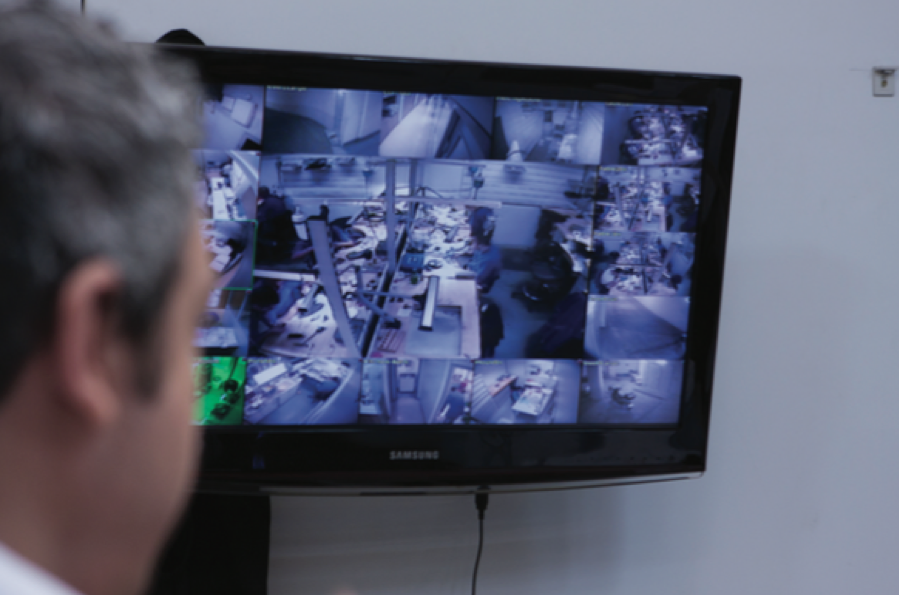
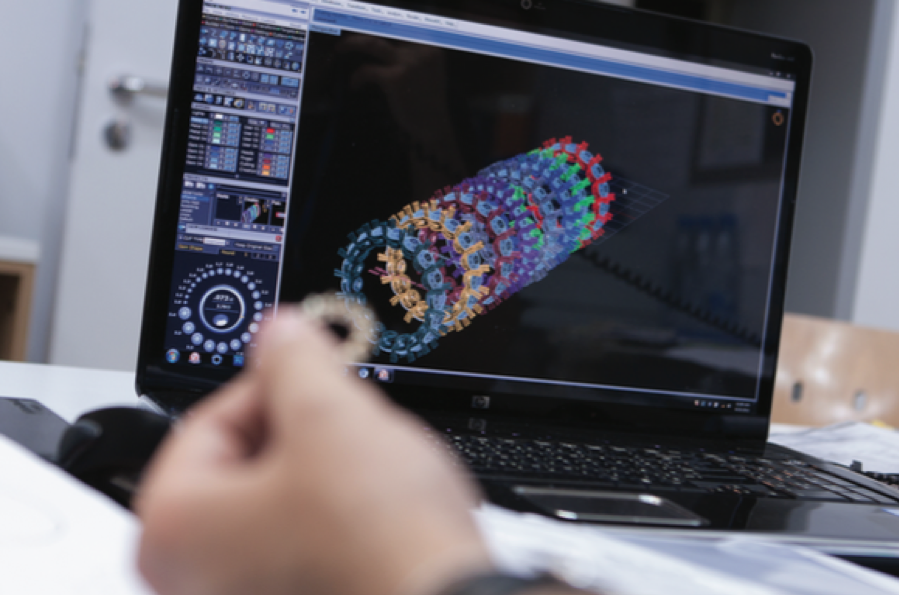
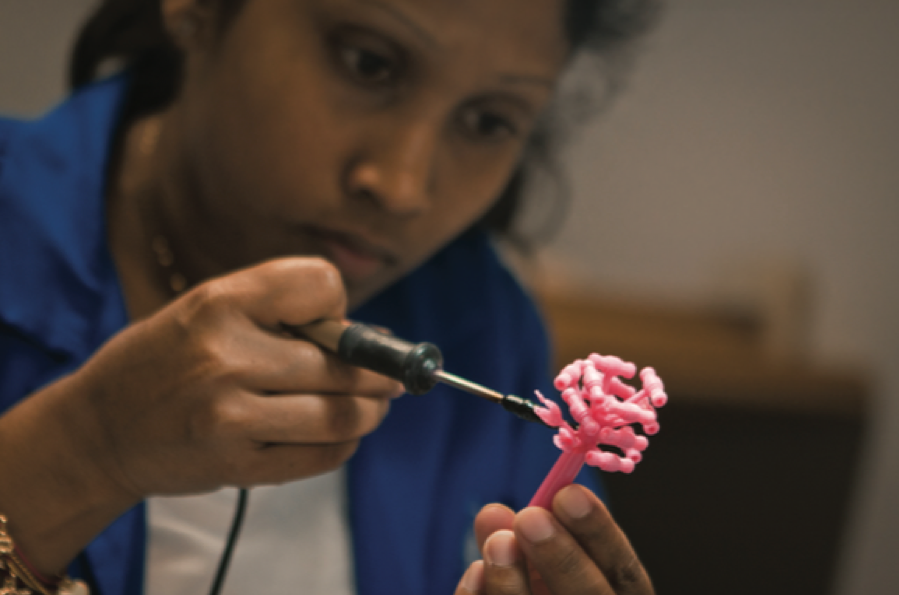
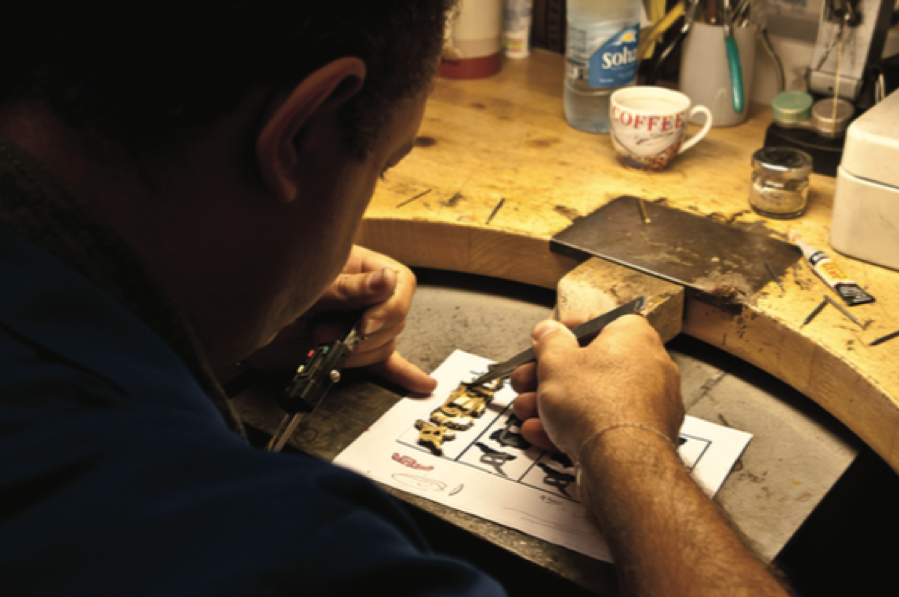
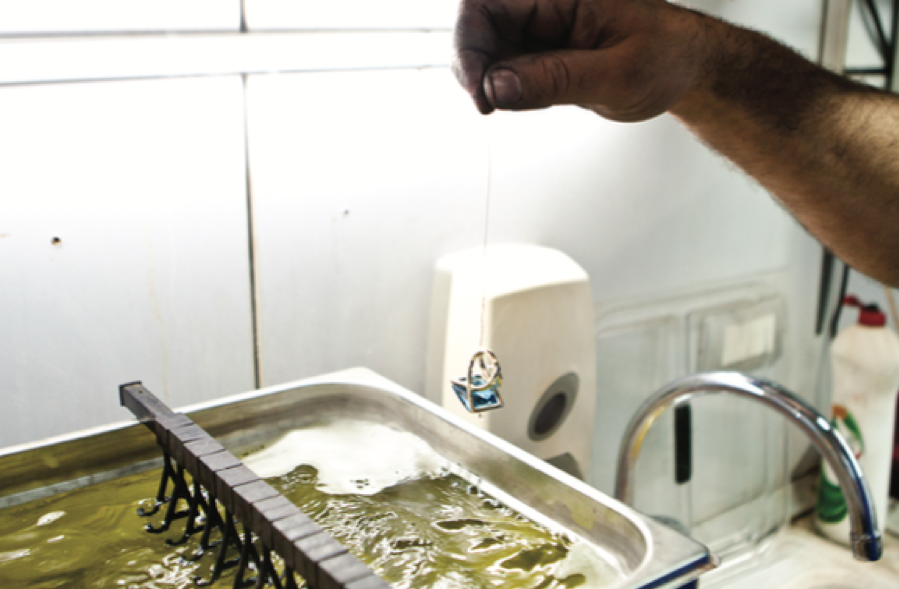
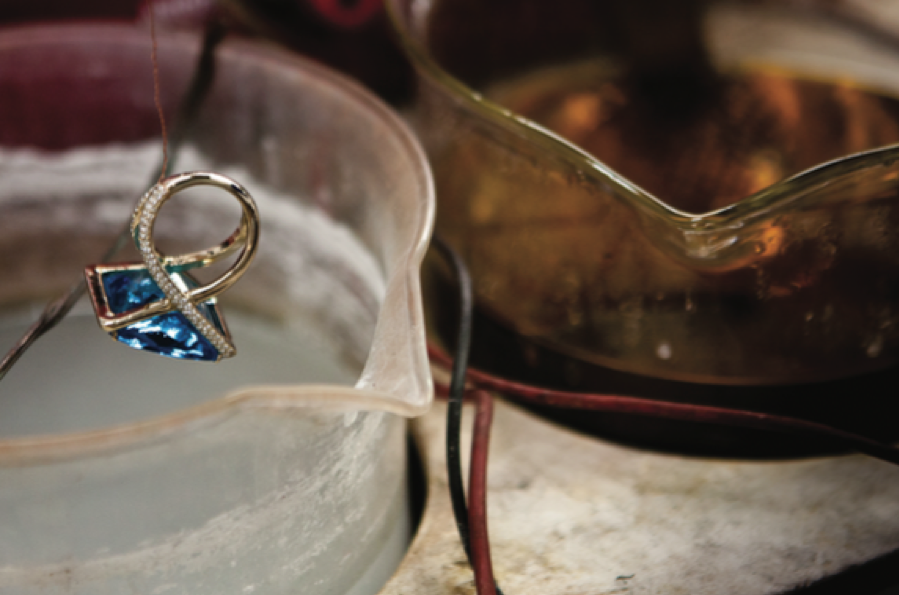
Indeed, talk to any jeweller in Lebanon and they will say the same. Set against a backdrop of recovery from a financial crisis that dealt the global luxury sector a harsh blow, and high gold and gem prices that are almost double those of last year, savvy jewellers are looking to promote the value of jewelry by nurturing its deeper meaning.

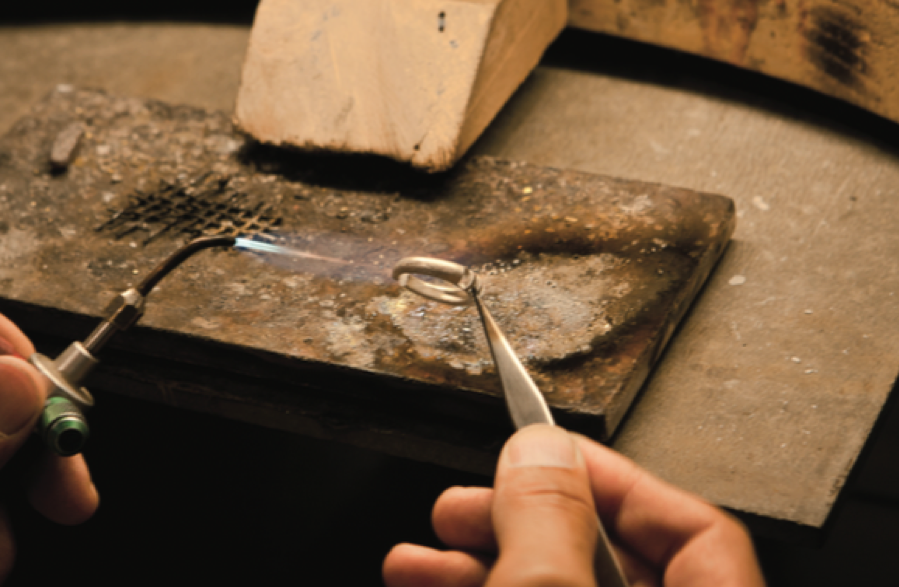
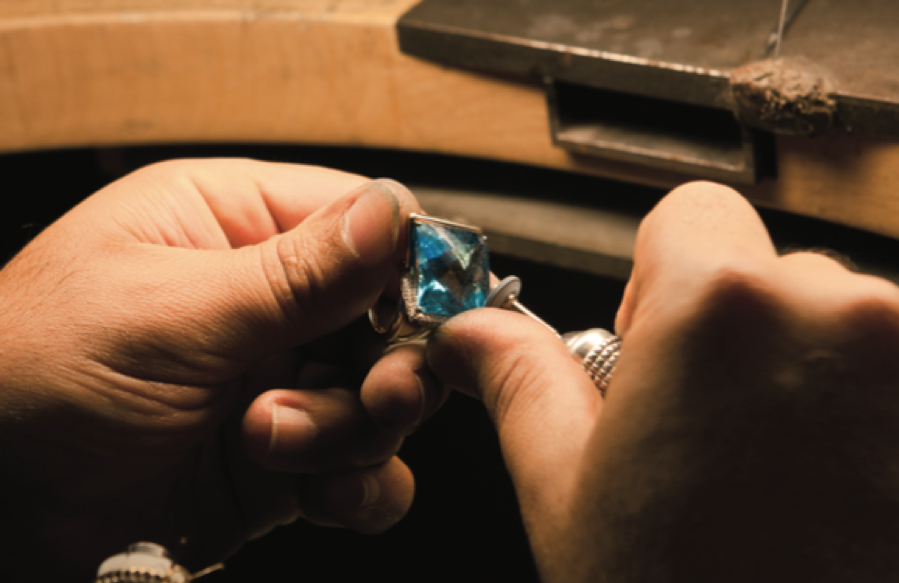
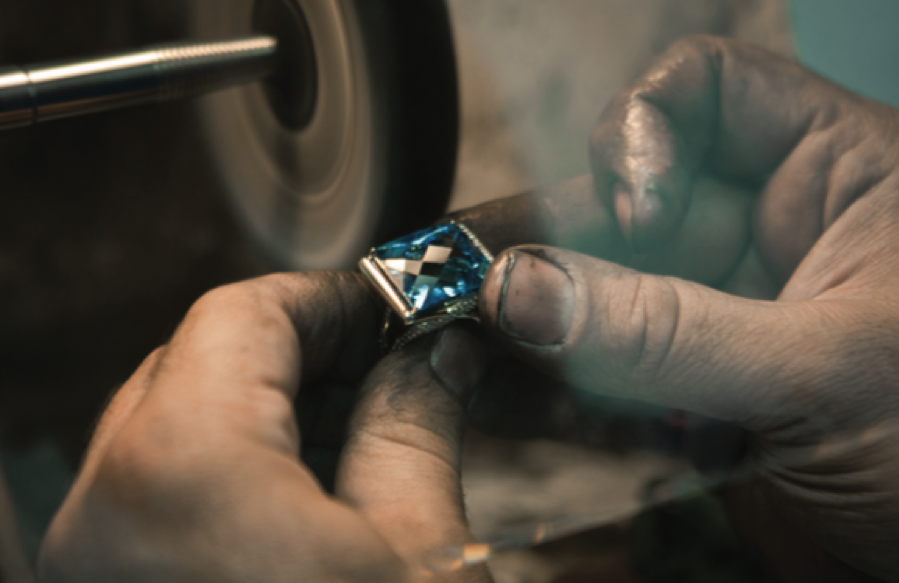
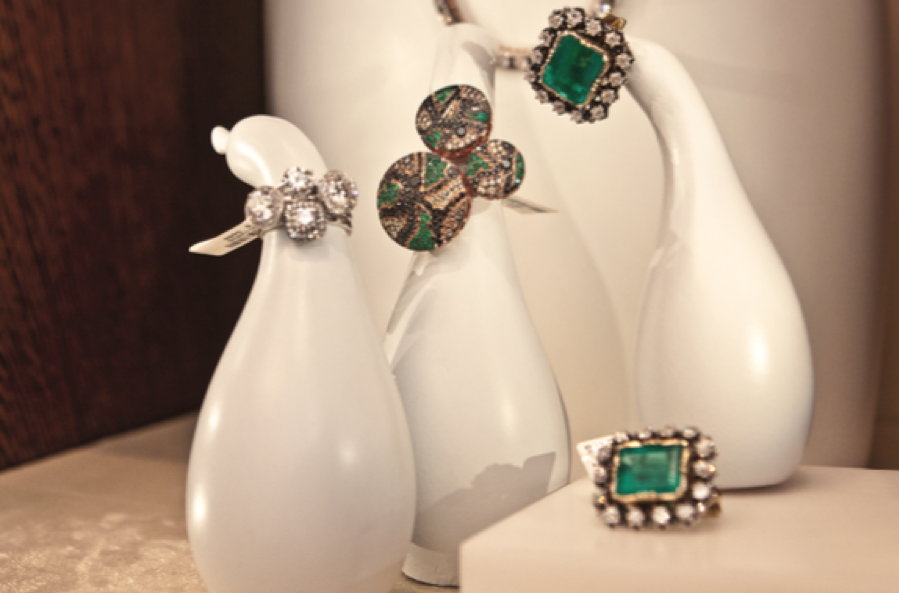
Collaborations and one-off designs, alternative materials —stones, woods or old gems with a history — heritage references or pieces conveying a story create the preciousness associated with real luxury. The value is in the art.

A stalwart in Lebanon’s jewelry trade, designer Selim Mouzannar’s ‘Beirut’ collection has been one of his most successful lines to date, both in Lebanon and with international clients in London, Paris and Dubai.

Incorporating the distinct architectural elements of the city, with a hint of both melancholy and playfulness, the collection is a personal favorite for the 46-year-old designer.

“When I chose the name Beirut it was just out of personal affection, but in retrospect I realize part of the reason it worked was because the name attracted as much attention as the jewelry. Especially internationally, Beirut has a complex history and mystery that is attractive to people,” he explained. “People like to have a story behind a piece. [They] want jewelry that is not just a symbol of wealth or power — they want something they can fuse with, that they feel comfortable in, that helps inform their identity.”

Likewise, his recent collaboration with Lebanese interior designer and architect Nada Debs, which saw the designer’s organic, minimalist philosophy applied to finely crafted “leaf” bracelets and rings, gave fans of both designers reason for excitement.

“Collaborations put many energies together,” says Mouzannar. “It makes sense when you are in a bubble to expand your horizons.”

Architect Christian Nasr recently turned his attention to jewelry, applying his carefully honed architectural principles to new materials. His first line is geometric and minimalist, in yellow gold and onyx. Using his architectural approach, he says scale is examined with a sensibility that leads to “spatial volumetric forms.” His use of onyx, he said, was built on the recognition that people are looking for “stones with a story.”

Diamond dreaming

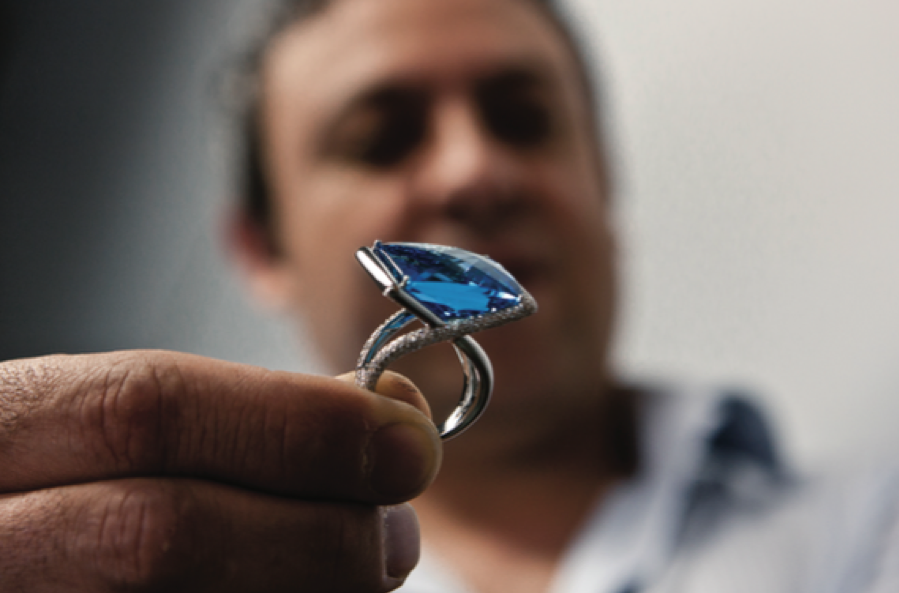
For Pascal Mouawad, owner and artistic director of the eponymous iconic Lebanese brand (whose creations have been the choice adornment for the likes of Angelina Jolie, Heidi Klum and Jennifer Lopez), success has partly been in creating personalized, custom-made pieces that have helped shape his clients’ identities.

“We’re known for our ability to cater to specialized requests, and to oversee every aspect of the design and manufacture,” said Mouawad. “We’re fortunate to be a house that caters to a very niche clientele and many of our clients ask us to design pieces on a custom-made basis.”

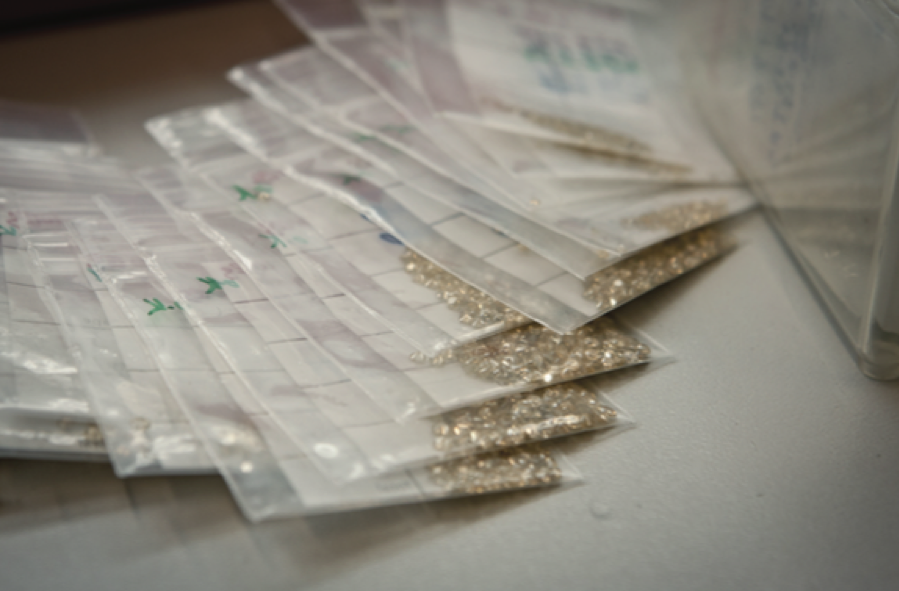
The Middle East, and particularly the Gulf market, makes up the majority of Mouawad’s sales, with Lebanon representing a small but important market. The demand for gems in the region is increasing. “When the global financial crisis emerged, the luxury sector got hit hard and [the] jewelry market [was] affected the most,” said Mouawad. “In the last two years, demand has increased and now we are seeing a recovery… There is more consumer confidence, and demand for gems and jewelry is on the rise.”

While American and Asian markets are driven by a demand for classic tastes, he says local customers are looking for more ornate pieces that are bold or have an edgy, ‘fashion forward’ feel. And as if to illustrate the demand for luxury, the jeweler, who took the reigns of the family business last year, launched in February the world’s most expensive handbag. The “ridiculously extravagant” 1001 Nights Diamond Purse, handcrafted from 18 carat gold and encrusted with 4,517 diamonds, earned a place in the Guinness World Records with a price tag of  $3.8million. 

Co-owner of Tufenkjian jewelry, Gerard Tufenkjian, says his biggest markets are in the Gulf, where sales are still driven by jewelry investments and diamond sales haven’t slowed. At the high-end especially, high diamond prices have little effect on sales. “If you are going to spend $10,000 on an item, then you are probably also happy to spend $15,000,” Tufenkjiansaid. For these clients, that “something special” lies squarely in the price tag, but others say luxury is a personal experience.

Tiffany’s Cathala says his brand success lies in the fact that Tiffany’s is a “democratic luxury jeweller…We have something for any budget, for any occasion.”


July 3, 2011 0 comments
0 FacebookTwitterPinterestEmail
Comment

Syrians’ flight from harm

by Nadim Houry July 3, 2011
written by Nadim Houry


We are on a mountain path, crossing from Turkey into northeastern Syria to meet some of the displaced camping near the border fence. The hike over the mountain is beautiful, with pine trees and a shimmering lake in the valley below, but the destination is far from serene. Around 10,000women, men and children have gathered on the Syrian side of the border within a stone’s throw of the fence, while more than 10,000 have already crossed into Turkey and are residing in well-cared-for but off-limits camps.

Syria has made it near impossible to reach people affected by the fierce crackdown, so refugees who flee to neighboring countries or areas not under the control of the Syrian security forces are the only witnesses to human rights violations we can meet with face-to-face. The residents of the makeshift camp are mostly from Jisr Al Shughur and other towns in the northern governorate of Idlib, the majority of whom have escaped since the Syrian army began military operations against their towns on June 10. Syrian officials have justified the attacks as a response to “armed gangs” and “terrorists” who have killed security forces. I am hoping the refugees can shed some light on the events.

We reach the camp shortly after President Bashar al-Assad has concluded his third public speech since protests erupted in mid-March. “Come back, the army will protect you,” he tells those who left for the border area and Turkey. But to the refugees huddled around the television, these words ring hollow. “He wants me to go back so they can kill me like they killed my brother,” a soft-spoken man in his mid-20s tells me. “I will only go back when Syria is free.”

Most of the camp residents have suffered at the hands of Syria’s security forces. Many have a brother or a cousin who was killed or detained in the past few weeks. In one tragic example, Bilal al-Masri tells me that security forces killed his father during the early 1980s and his brother three weeks ago. “Killed by the father [Hafez] and the son [Bashar],” he says. “I hope it stops here.” Others were injured and escaped for fear that the security forces would harm them if they remained in Syrian hospitals.

Syrians who were active in organizing protests or in filming them are afraid that the security forces will reserve for them the same fate two of their friends met. Anas Katrun and Bashir Abdo were detained on June 10 as they went to film the army’s entrance into the towns. They disappeared, only to appear on Syrian state television on June 19 looking haggard and confessing to being “terrorists.” Abdo’s brother, who is in the camp, can still barely talk about his brother without his voice quivering.

The testimonies we collected from those at the border confirm some of the worrying patterns we documented in other parts of Syria, particularly Daraa, near the southern border with Jordan. Here, as there, security forces have shot at and killed unarmed protesters, arbitrarily detained and tortured people — dozens are still missing — and restricted medical care to many of the wounded. One particularly bloody Friday occurred on May 20 when security forces shot at large protests in the Idlib cities of Maaret Al Numan and Mastoumi, killing at least 40 people and injuring hundreds more — a dozen of whom are in Turkey now.

But the testimonies also show that the Syrian regime’s repression is at the same time self-defeating and has the potential to lead Syria into a bloody conflict. On May 13, protesters in Jisr Al Shughur torched the town’s Baath party building and someone wrote graffiti, saying, “We burned the building because we are tired of all the lies.” The person was referring to the government claim that “armed gangs” and not security forces were responsible for many of the killings. On June 4, after security forces shot at protesters during a peaceful funeral procession in Jisr Al Shughur, young men from the town, as well as some defected soldiers, attacked the security forces, killing security personnel and sustaining heavy losses themselves.

More than 100 days into Syria’s protests, it is increasingly clear that the savage and senseless violence of Syria’s security forces is fueling the protest movement. While a vast majority of protesters remain committed to peaceful means, some of those interviewed say they are getting tired of being shot at like ducks in a pond and may start adopting more violent means of opposition. Unfortunately, the Syrian government is still not hearing the message. Two days after I left the makeshift border camp, Syrian tanks closed in on it, driving the majority of its temporary inhabitants into Turkey.

NADIM HOURY is director of the

Beirut office of Human Rights Watch


July 3, 2011 0 comments
0 FacebookTwitterPinterestEmail
Comment

Egypt: not yet a civic state

by Jonathan Wright July 3, 2011
written by Jonathan Wright

The Ottomans in Egypt let power slip more than 200 years ago, when Albanian adventurer Muhammad Ali became the de facto independent ‘viceroy’. But their legacy lives on in a version of the Ottoman millet system, which divides the population into religious communities, each with control over personal status matters such as marriage, divorce, child custody and inheritance. For administrative convenience and in deference to the Muslim concept that ‘revealed’ religions are the only ones that count, every Egyptian is registered as either Muslim, Christian or Jewish. ‘Freedom of religion’ in the Egyptian context basically means the freedom to worship in the manner of one’s ancestors.

The system has been creaking at the seams for decades, and globalization, migration and the communications revolution have added to the strain. Some Muslims have tried to turn Christian, Christian women have dismayed their birth community by converting to Islam and previously unfamiliar beliefs and practices have appeared — Baha’ism, atheism and yoga derived from Hinduism, for example. Thousands of people, still a tiny minority of Egypt’s 80 million people, live in legal limbo between the sectarian structures imposed by the state and the messy reality of the 21st century. The iniquities of the system have also contributed to sometimes violent disputes — churches attacked and set ablaze or street brawls between young Muslims and Christians.

A revolution, especially a revolution in which equal citizenship and a ‘civic state’ were prominent themes, might seem a good moment to jettison the Ottoman legacy and launch Egypt into a new era of individual freedoms. Revolutions often go hand-in-hand with changes in the status of the established religious institutions; witness the drastic reduction of church power after the French and Russian revolutions. The old regime of former President Hosni Mubarak never even tried to bite the bullet. At the most, it sometimes made concessions to foreign criticism and activism by Egyptians, allowing Baha’is, for example, to receive identity cards that do not specify the holder’s religion. 

Now change is in the air in Egypt, with a lively debate over what a ‘civic state’ might mean in practice and how it should be enshrined in legislation. Even the Muslim Brotherhood has endorsed the concept, though its version seems to be heavily qualified by vague references to Islam as the state religion and a ‘reference point’ for lawmakers. Among the wider population a ‘civic state’ has broad appeal in theory and Muslim-Christian harmony is cherished as an ideal. 

In a significant first step, the government of Prime Minister Essam Sharaf has dusted off old proposals for a standard law regulating the construction and maintenance of mosques and churches, to replace the system whereby Muslims could build mosques almost at will while Christians who wanted to build, repair or expand churches had to plead for permits from provincial governors of unpredictable inclinations. But the proposals are hardly revolutionary, and in the end the power to grant permits will remain in the hands of government officials.

On the broader question of conversions and separation of state and religion, liberal opinion is far from achieving the critical mass likely to lead to a breakthrough. Still, a recent opinion poll did show some encouraging signs for inter-faith relations in general; 67 percent of Egyptians (more than in any Arab country other than Lebanon) said they would not object if someone of a different faith moved in next door, and 78 percent said religious leaders should not have authority to dictate legislation. 

But the liberals are treading warily, conscious that accusations of hostility to Islam might undermine their political chances, and the military council running Egypt since February has no track record of innovative or progressive thinking. Without bold leadership, the future of state-religion relations in Egypt will emerge through a process of negotiation in which some of the parties cling to inherited privileges — not just Muslims on behalf of Islam but also Christian churches on behalf of their role as arbiters between Christians and Christians. The outcome will undoubtedly be a compromise that retains some elements of the old system, not a fresh start based on universal principles of human rights. As in many other spheres of life, the Egyptian revolution may turn out to be something rather less than ‘revolutionary’.

Jonathan Wright is managing editor of Arab Media and Society 

July 3, 2011 0 comments
0 FacebookTwitterPinterestEmail
Society

Fashion – Beirut’s singular style

by Saria Francis July 3, 2011
written by Saria Francis

After the exhausting rush of 2010, which saw new luxury boutiques cropping up in downtown Beirut like saplings in springtime, Lebanon’s luxury retail market has settled into a more stable summer of 2011, reaping the rewards of last year’s investments.

 “The international luxury portfolio stands almost complete here in Beirut. And today we can say proudly that we offer the market the utmost in the fashion luxury industry,” says Nora Yagmur, general manager at Snowball, mother company of PLUM, PLUM Kidstore, Sugar PLUM, Lanvin Balmain and Isabel Marant.

“Beirut’s market is daring; [it opens] to new names in the industry faster than other countries in the region. Beirut has always been defined as the fashion window of the Middle East,” Yagmur adds.

Distinguished fashion marques such as Louis Vuitton, Hermes, Burberry and Dior have all set up shop in Beirut Souks, Solidere’s temple to ritzy retail.

Spending spree

The increasing prevalence of luxury shops in Beirut is no coincidence. “Lebanese men and women are famed for their sense of style and the attention they pay to every single detail that forms their personal image,” says Izzat Traboulsi, managing director of Hugo Boss for the Middle East. Whether it’s in their price range or not, it appears that stepping out in the right threads is a top priority for many; “If you have 100,000 people who can afford luxury in Lebanon, you have 200,000 people buying it,” Traboulsi says.

“When it comes to growth, we had minus 1 [percent] in 2009, plus 16 [percent] in 2010 and we budgeted plus 11 this year,” says Patrick Chalhoub, joint chief executive officer of regional luxury heavyweight, Chalhoub group. The political upheavals of the so-called ‘Arab Spring’ seem to have had little affect on the luxury market.

“We were running at plus 21 or 22 [percent] until the end of May in the region, which is quite remarkable and shows there is a market dynamic in luxury,” adds Chalhoub. 

Events closer to home had a more pronounced affect. After the collapse of Saad Hariri’s government in February, many managers and owners of the luxury brands’ downtown shops witnessed a notable crash in sales.

Hugo Boss reported a drop in 2009 in the Middle East, while globally the company remained stable. The brand recorded a turnover of $2.13 billion globally in 2009, with an increase to $2.42 billion in 2010. Traboulsi notes, “profits dropped 16 percent in 2009” because of the global financial crisis, but “globally, we had a good balance because of emerging markets like Japan and India.”

Lebanon’s position as a favorite holiday spot for wealthy Gulf Arabs has traditionally played into the hands of the luxury retail market, but according to Traboulsi this trend has been declining of late. The shoppers spending hundreds of thousands of dollars are deterred from visiting due to the country’s unstable situation.

Traboulsi added that compared to the global net income of $2.69 billion in 2010, Hugo Boss’s turnover in Lebanon was small — resulting in only $20 million in 2009 and 2010.

“It is too bad to lose all the potential we have,” says Traboulsi, “I expected more of Lebanon because we have many assets and good businesspeople that are ‘fashion-forward’.”

The competition today in Beirut is fierce, says Traboulsi, who points to Solidere’s extended luxury retail area where the Middle East Luxury Group’s Gianfranco Ferre has already placed a huge 80 percent sale tag on its window for summer 2011.

Overestimated potential?

Lebanon’s economic fate is intricately linked to the internal political situation, which is notoriously hard to forecast. Nonetheless, Beirut has become one of the foremost fashion destinations of the Middle East. According to Yagmur, the market is currently home to at least 98percent of the international luxury portfolio and is constantly introducing the latest international designers.

However, Beirut’s luxury markets bustle in the shadow of their Middle Eastern competitor, Dubai. Traboulsi says that the higher wages in Dubai reinforce the clients’ ability to buy luxury items, while the average salary in Lebanon is much lower, not to mention the stifling effect of Lebanon’s ongoing political crisis. “It is a pity to see the private sector doing so well, while politicians battle over futilities,” Traboulsi concludes.

“This does not mean that Beirut is not on the top of the list [as a fashion destination],” insists Yagmur.


July 3, 2011 0 comments
0 FacebookTwitterPinterestEmail
  • 1
  • …
  • 370
  • 371
  • 372
  • 373
  • 374
  • …
  • 685

Latest Cover

About us

Since its first edition emerged on the newsstands in 1999, Executive Magazine has been dedicated to providing its readers with the most up-to-date local and regional business news. Executive is a monthly business magazine that offers readers in-depth analyses on the Lebanese world of commerce, covering all the major sectors – from banking, finance, and insurance to technology, tourism, hospitality, media, and retail.

  • Donate
  • Our Purpose
  • Contact Us

Sign up for our newsletter

[contact-form-7 id=”27812″ title=”FooterSubscription”]

  • Facebook
  • Twitter
  • Instagram
  • Linkedin
  • Youtube
Executive Magazine
  • ISSUES
    • Current Issue
    • Past issues
  • BUSINESS
  • ECONOMICS & POLICY
  • OPINION
  • SPECIAL REPORTS
  • EXECUTIVE TALKS
  • MOVEMENTS
    • Change the image
    • Cannes lions
    • Transparency & accountability
    • ECONOMIC ROADMAP
    • Say No to Corruption
    • The Lebanon media development initiative
    • LPSN Policy Asks
    • Advocating the preservation of deposits
  • JOIN US
    • Join our movement
    • Attend our events
    • Receive updates
    • Connect with us
  • DONATE