• Donate
  • Our Purpose
  • Contact Us
Executive Magazine
  • ISSUES
    • Current Issue
    • Past issues
  • BUSINESS
  • ECONOMICS & POLICY
  • OPINION
  • SPECIAL REPORTS
  • EXECUTIVE TALKS
  • MOVEMENTS
    • Change the image
    • Cannes lions
    • Transparency & accountability
    • ECONOMIC ROADMAP
    • Say No to Corruption
    • The Lebanon media development initiative
    • LPSN Policy Asks
    • Advocating the preservation of deposits
  • JOIN US
    • Join our movement
    • Attend our events
    • Receive updates
    • Connect with us
  • DONATE
Feature

Spinning out of control

by Executive Editors February 21, 2011
written by Executive Editors

Hot on the heels of an international wheat shortage, the world cotton market is facing a similar supply crisis due to adverse weather conditions. The resulting record prices are a boon for Egypt’s dwindling cotton farmers, but have thrown the domestic textile industry, which relies nearly exclusively on cotton imports, into turmoil. 

India, the world’s second largest cotton exporter, instituted export controls in May, triggering a price rise which was further exacerbated by flooding in China, the world’s leading producer; Pakistan, the fourth largest supplier, was also affected. By December, cotton prices had reached an all-time high of more than $1.68 per pound, a near 80 percent hike on prices earlier in the year.

Normally accounting for around 40 percent of the world’s cotton production, China’s production is expected to fall 17 million bales below scheduled output in the 2010-2011 season. Also the world’s leading user of cotton, the Asian nation is now looking to purchase up to 20 million bales on the international market to meet demand from its large textile industry. 

This supply shake-up has naturally spread to the rest of the world — in Egypt, cotton farmers are counting their blessings while local textile manufacturers are relying on the state for assistance. To head off a crisis, the Egyptian government has exempted imported yarn from customs duties, while increasing subsidies for manufacturers using local raw materials by 50 percent. In addition, 280 million Egyptian pounds ($48.2 million) in aid money has been dispersed to spinning and weaving factories. 

Egyptian cotton has been a household name since the 19th century, when it was first exported around the world for use in bedding and haute couture. Its high quality long-staple cotton is still a niche market for Egypt, but it is the domestic textile industry, which requires cheaper cotton, that the government has opted to support.

Bringing in around $2.13 billion in 2009, textile exports are a major revenue earner for Egypt and account for around a quarter of total exports. Cotton was subsidized until the 1990s, with production peaking at 529,000 tons in the 1980-1981 season. The state scaled back its support of the industry, liberalizing sales in 1994 and removing protectionist tariffs in 2004, and production reached a low of 109,000 tons in 2008-2009. 

But with the global shortages, cotton is suddenly enjoying another day in the sun. After witnessing an uptick in prices, farmers increased the share of land dedicated to the crop at the beginning of 2010. An April report on cotton production in Egypt by the United States Department of Agriculture’s Foreign Agriculture Service predicted: “In 2010-2011, cotton area is expected to total about 160,000 hectares, or about a 34 percent increase [over] the area planted in 2009-2010.”

The gambit looks to be paying off: the Alexandria Cotton Exporters’ Association reported in January that its cotton contracts were $344.39 million for 2010-2011, compared to $117.3 million at the same time the previous year. Moreover, ongoing floods in Australia, another major cotton exporter, are a strong sign that prices will remain high for the remainder of the season. 

For Egyptian textile exporters, however, the cotton crisis could not have come at a worse time, having recently started to make inroads to the US and European Union textile markets where they face stiff competition from Chinese products. With China prepared to shoulder the high costs of cotton in a time of international shortage, Egypt’s government may need to take extra measures to protect its breadwinning industry.

February 21, 2011 0 comments
0 FacebookTwitterPinterestEmail
Finance

Something wrong under the hood

by Emma Cosgrove February 3, 2011
written by Emma Cosgrove


Car accidents in Lebanon increase, on average, 12 to 15 percent every year according to KunHadi, an organization dedicated to road safety education. The group says that on New Year’s Eve 2010 alone, there were 24 car crashes in Lebanon resulting in 28injuries and two fatalities.  The numbers scream for a robust and active insurance sector but instead Lebanon’s automotive insurance system is far behind global standards.

Its insurance industry is still the leader in the region, even after Swiss Re’s “World Insurance Report2009” said that insurance penetration as a percentage of gross domestic product had dropped from 3.4 percent in 2008 to 3.1 percent in 2009. Estimates suggest that the industry has probably reached $1 billion in premiums.

But Fateh Beckdache, general manager of BLOM Bank’s Arope Insurance, warns that any premiums growth in 2010is due to inflation and not growth. Without a financial crisis on which to blame the slowdown, less than stellar estimates for this year’s insurance financials suggest that there is something wrong under the hood. In fact, there are many idiosyncrasies within the Lebanese insurance industry that have caused a chain reaction of corner cutting and frustration on top of tumbling profitability.

The contract

Six month to one-year policies are the bread and butter of most Western auto-insurers, wherein the onus of continuation is mostly on the driver. Centralization of accidentin formation means that your crashes follow you wherever you go, making it less likely that a driver will find a more favorable rate by switching companies after a claim. In Lebanon, however, the lack of a centralized database for driving records of the insured reverses this dynamic, causing a shift in power within the driver-insurer relationship. Policies reaching up to five years are not uncommon and premiums do not rise when claims come in.

“This is very bad for the market. I don’t know why we can’t have a Centrale de Risk,” says Joseph Nasnas, chairman and chief executive officer of AXA Middle East. Insurers know that when a client submits a claim, if their premiums go up, they can easily move to another company and obtain the former rate, if not a discounted one as a reward for switching companies. Because of this, there is no disincentive to makes mall claims.

The accident

Massive claims for every little dent and scratch have caused the industry to search for disincentives. And since an overhaul of premium structure is impossible without a centralized information system, last year the industry attempted to improve the situation using a simpler tool: a deductible.


The members of the Association of Insurance Companies in Lebanon (ACAL) resolved to instate a $100deductible on claims as a group, in order to dissuade small claims and keep the playing field level among the companies. Association decisions, however, have no enforcement mechanism, leaving it up to respective companies to decide whether or not to follow its recommendations. Beckdache, who has put the deductible into effect, says that it has been very effective, estimating that it has improved Arope’s profitability by 20 percent.

“Some people used to come every month to repair their car. Now they don’t do it any more,” he says.“These are small things that make a lot of differences.”

Other companies have chosen to apply the change on a graduating scale. At AXA, Nasnas has no deductible for the first accident, but a deductible is in effect for the second, which then grows with each successive accident.

Abraham Matossian,  ACAL president and chairman and CEO of Al Mashrek Insurance and Reinsurance, however, says that he has not put the deductible into action at his company, claiming that it is not necessary as his business is going smoothly.

The numbers

This all adds up to an industry struggling to improve its profitability. The deductible, though a positive step, cannot completely heal what is ailing the sector as a whole given other glaring deficiencies, like the reserve requirement structure developed by the Insurance Control Commission (ICC), the regulator for the industry.

With GDP on a steady upward course in 2010, there are systemic, and not environmental, factors that have squeezed Lebanon’s auto insurers into a profitability jam and caused them to seek outside help to persuade the ICC to change a recent ruling that they say is stifling their operations.

In 2009, the ICC raised the reserve requirement for Lebanese companies. The ICC uses a premium deficiency reserve model to determine how much cash a company must have at any given time. It uses a company’s history to determine how many claims can be expected in the following year relative to the number of policies it has on January 1, not taking into account the fact that many policies straddle the end of the fiscal year or as is often the case in Lebanon, far exceed it. For example, if a policy begins in September it will be in effect well beyond the end of the economic year.

But Jeffrey Courchene, a principal at Milliman actuary who was commissioned by the association to evaluate Lebanon’s reserve system, told Executive that this is not always the most sensitive model. “The observed profitability in recent accident years is only a proxy for the expected probability in the unearned premium. Recent improvements in price level or portfolio management will be at best only partially reflected in the results of recent accident years, although they can have a significant impact on the assessment of profitability,” he says. “The new regulatory PDR (premium deficiency reserve) formula does not allow companies to fully reflect improvements they may have made in order to improve their premium adequacy. Contracts with longer effective periods, such as five year motor policies written by banks are especially impacted by this.”

Courchene recommends a more reactive and individualized alternative; a “principles-based” approach, which takes a more nuanced, holistic approach toward quantifying risk and is growing in popularity. “There is a worldwide trend towards principles-based regulation and accounting.” But this strategy requires more elbow grease from the regulator, something seemingly in short supply at the ICC, which still hasn’t published any figures from 2008; with this in mind, implementation of a new strategy looks unlikely.

Rumblings

In the face of waning profitability, some industry players suggest that there is some precarious accounting going on as well, giving the sector a more successful outlook than it deserves. Some suggest, for example, that long-term policies, which have been “written” but not “earned,” are recorded as revenue all at once on balance sheets. This kind of fraud would certainly create a cash flow problem in the very short term but Matossian claims that if you are smart you can make a lot of money this way.

Beckdache, however, says that this kind of behavior would be impossible to sustain and thus doubts that it is in practice. “If this happens, the first year I would make a lot of money. The second year I would start bleeding. In three or four years I would go bankrupt,” he explains.

Nasnas says that without proper industry statistics there is no way to know one way or the other. “We don’t have any official figures letting us analyze the market trends. So I wouldn’t be able to know.”

But Matossian confirmed to Executive that it does occur in the local market. Further bad practices, which are not uncommon, involve “dumping,”  cheap policies at the Lebanese border — insurance is mandatory for vehicles coming into the country  —or at the Mechanique car inspections to customers who suddenly find themselves in need of the required quick-fix coverage,  which the ‘companies’ are unlikely to honor. These practices are what caused the Ministry of Economy and Trade to shut down the American Underwriters Group in 2010.

So what?           

Why should Lebanese drivers care if Lebanon’s insurance industry is a disorganized impersonation of a mature insurance market? The current system keeps premiums low and compulsory coverage even lower, making the reasons difficult to see from the perspective of one’s bank statement. But the reasons are out there on the road.

Mandatory insurance beyond third-party bodily harm and an insurance system that incentivizes good driving are the private sector’s means to improve the safety of Lebanon’s roads, a task made more urgent by last year’s accident statistics.


February 3, 2011 0 comments
0 FacebookTwitterPinterestEmail
Comment

Hide-and-seek in Helmand

by Adam Pletts February 3, 2011
written by Adam Pletts


The conversation between Captain Allen McBroom of the Marines’ 3rd Light Armored Reconnaissance and a villager from San Banadar in Afghanistan’s Southern Helmand Province was floundering. McBroom was fishing for information about improvised explosive devises (IEDs) planted in the area, but to every question the villager replied with the same flat denial of knowing anything. Just as the conversation was drawing to a close an explosion tore through the morning air: an IED blowing up some 200 meters down the road.

Over the coming days this scene, of Marines’ questions being met with villagers declining to comment, was repeated time and again in what resembled a rather dangerous game of ‘hide and seek’ between the United States military and the Taliban, with both attempting to leverage the locals. Roughly a dozen IEDs were being found daily; pressure plate devices buried in the road designed to detonate as the victim passes over, and therefore utterly indiscriminate.

Some villagers must have known the location of the IEDs and warned the others, given that no locals had been harmed by the explosive devices that were scattered around the outskirts of the village and along the main thoroughfares leading to it. In one location different sets of motorbike tracks had all veered far to the fringes of the road, around the exact point where the Marines found a 70 pound IED and detonated it in a controlled explosion, leaving a crater eight feet deep and 20feet wide.

On the surface, at least, there was plenty of support for the demining. One farmer told the Marines, “We’re scared to go out with our animals, [the IEDs] are meant for us, not for you.” Despite this, nobody in this village, unlike others the Marines had visited, was willing to offer information on the IEDs, even though this often included are ward equivalent to more than what the average local made in a month.

One reason was because of the Taliban operatives in their midst. The Marines monitor Taliban communications on wide band receivers that have a maximum range of only 800 meters. After an IED was discovered by Marines, their Afghan translator heard “chatter” of disappointment on the lines. He then volunteered that the worst thing he had personally heard was in the next village to the north, when someone said over the line: “If you get a chance, shoot the translator in the mouth.”

The Marines estimated there were only some 20 Taliban in the immediate vicinity of these villages, which is why Lieutenant Colonel Kenneth Kassner, in charge of the coalition’s most southerly conflict area in Afghanistan, warned his men: “Don’t go looking for the 10-footTaliban.” That said, the Taliban’s IEDs have taken their toll; the most recent Marine casualty in Southern Helmand Province was Corporal Eric Tolbert, killed by an IED in late December some 10 kilo meters south of San Banadar.

The villagers’ reluctance to support the Marines in their attempts to locate the IEDs is not necessarily an indication of their sympathies but of their fears. While some may support the insurgency, many had bitter experiences under Taliban rule and would be happy to see proper government control established in this area, where currently next to none exists. Despite this, they are terrified of being seen taking sides with the US forces, to the point that they wouldn’t accept the smallest of gifts for fear that “if they [the Taliban] find out we’ve accepted a radio we will be in big trouble.”

Of course, the Taliban would have found out, since they were there. It is a murky game, each side watching the other; the Marines from their patrols and from a balloon above their main base which can see out some 40 kilo meters, and the Taliban from their positions on the ground, often blended among the villagers who are caught in the middle and whose every move stirs the suspicions of one, or both, of the warring parties.

ADAM PLETTS is a freelance journalist embedded with coalition forces in Afghanistan 


February 3, 2011 0 comments
0 FacebookTwitterPinterestEmail
Finance

Q&A – Saad Mered

by Emma Cosgrove February 3, 2011
written by Emma Cosgrove


Saad Mered is the Middle East chief executive officer of Zurich Insurance Company and now holds the reigns at Compagnie Libanaise D’Assurances (CLA), after Zurich Insurance completed the acquisition in the fourth quarter of 2010. He recently gave EXECUTIVE his thoughts on the local market and why Zurich Insurance is breaking into the Middle East.

Why did you feel that Lebanon was the next country to add to your Middle East presence?

Compagnie LibanaiseD’Assurances is headquartered in Lebanon and has branch operations in the United Arab Emirates, Oman and Kuwait. So, for us, the acquisition is much more than adding another country to our Middle East presence. Our strategic aim is to be the leading multinational insurer in the Middle East; the acquisition of CLA is a key stepping-stone towards realizing this goal.

What is your assessment of the maturity of the Lebanese insurance sector and market?

Lebanon has one of the highest insurance density and penetration rates in the region. In Middle Eastern terms, its insurance industry is well established and Lebanon has long been recognized as a pool for insurance talent — this is reflected in the fact that there are a disproportionate number of insurance executives in the region that are of Lebanese origin. We hope to leverage and add to this talent pool.

What are the biggest challenges facing the Lebanese insurance sector?

With the heightened regulatory scrutiny that the Lebanese regulator has recently shown, the local market will need to adapt to a new environment, which we believe would benefit the sector overall. As in many markets the main challenge is also one of awareness: getting people and businesses to understand why insurance is, or rather should be, so important to them. For example, if a family was to suffer a fire or flood, the financial consequences could be devastating. People think about the big things like houses and cars and overlook the costs of replacing the small things such as clothes, children’s toys and other household contents.

The Lebanese insurance sector is known to be one of the least transparent sectors of the local economy. Do you feel that this is a hindrance to its success?

Whilst we can’t comment on behalf of the Lebanese regulator or the local insurance association, the Middle East insurance market in general is developing rapidly, and we fully support the need for a transparent and accountable sector as it continues to grow and mature.

What was your impression of the relevant regulatory bodies during your acquisition? Which regulators did you work with in this transaction?

We worked with the Lebanese regulator and also the regulatory bodies in Oman, the UAE and Kuwait.  We maintain a good and positive relationship with them. 


February 3, 2011 0 comments
0 FacebookTwitterPinterestEmail
Comment

Untying Istanbul’s Gordian gridlock

by Peter Grimsditch February 3, 2011
written by Peter Grimsditch


About the only phrase guaranteed to cross Istanbul’s linguistic barriers is “trafik problem,” the despondent opening line of many taxi drivers. For some, it provides the excuse to take a circuitous and more expensive route. Yet the city’s congestion problems place it in a premier league that includes such places as Manhattan, Mumbai, Moscow… and the coastal highway heading north from Beirut on a Friday after work.

Solutions are not easy, not least because the Turkish metropolis is in an earthquake prone area. They are also, of course, expensive. However, a rash of projects to get the city on the move has been announced in the past few months. Simplest among them would be a greater use of the Bosphorus to transport commuters who want to travel up or down one side rather than cross it, as around one million people do every day on either ferries or motor transport over one of the two bridges.

Reminiscent of similar ideas to connect Jounieh and Byblos with Beirut, its success will doubtless depend on feeder road transport to distribute the commuters to the exact places they want to go. When he introduced the service last December, the Mayor of Istanbul, Kadir Topba?, said: “People will prefer these two routes to avoid traffic jams on both sides of the strait and have a more comfortable trip.” Indeed they will, much more so than when he took the controls of a tram on New Year’s Eve to launch an enhanced service there as well.

The first dozen new trams began running on that day, increasing the frequency of services between Kabata?, close to the city center, and Zeytinburnu, in the direction of Ataturk Airport. The route passes through the packed and now mainly pedestrianized Sultanahmet district, which contains Topkapi Palace and the Blue Mosque.

“Due to the lack of trams, commuters were experiencing hardships. By providing 37 new low-lying cars furnished with advanced technology and air-conditioning, we will smooth the commute,” said Topba?, before piloting one of the shiny new units. His driving skills proved to be less accomplished than his administrative abilities in trying to solve congestion. Topba? applied the brakes too sharply, causing his passengers from the local press corps to fall on the floor. Although the grumbling reporters complained of a few bruises, the greater injury was possibly to the mayor’s pride.

The $96.1 million cost of the trams is but petty cash compared with the mega-projects to build a third bridge across the Bosphorus, as well as a remarkable tunnel to carry both vehicles and high-speed trains. Tenders for the bridge project, estimated to cost around $6 billion, are scheduled to go out this month.

Even with the prospect of “losing” 20,000 vehicles transiting Istanbul every day, not everyone is happy.  The site for the new bridge will mean devastating areas of forest on the banks of the Bosphorus, especially on the Anatolian side, and has already led to an increase in property speculation on the grounds that neighboring green areas will be opened up for development.

An assurance from Mehmet Cahit Turhan, who oversees the General Directorate of Highways, that an environmental impact assessment would be carried out before construction got under way, failed to convince the critics. “This will be carried out by the company that wins the tender,” Turhan said. As one columnist wryly observed, this is tantamount to asking a wolf to guard sheep.

In engineering terms, the most remarkable project has to be the Marmaray, a tunnel under the Bosphorus. It will be five kilo meters long and run up to 60 meters below ground. Since the location is in a high-risk earthquake zone, it will be constructed to withstand shocks of up to nine on the Richter scale. Stations and infrastructure are being built underneath newly unearthed historical sites that show Istanbul to have been inhabited 8,500 years ago, more than three times as long as previously thought. Scheduled for completion in less than five years, the tunnel will be designed for both vehicles and a high-speed rail link to bring commuters into the city.

“The Marmaray is a huge, extremely complex and exciting project — I can’t think of any challenge this project lacks,” says Jens Peter Henrichsen, project manager from Avrasyaconsult, the joint venture preparing the project and overseeing construction. It’s not yet clear if those challenges are thought to include the Mayor of Istanbul operating the first train through it.

PETER GRIMSDITCH is EXECUTIVE’S Istanbul correspondent


February 3, 2011 0 comments
0 FacebookTwitterPinterestEmail
Finance

Euro vs. dollar in 2011

by Natacha Tannous February 3, 2011
written by Natacha Tannous


Finding the answer to the euro/dollar exchange rate equation is like evaluating two sides of the same coin. The question is, which one will land face up, and when? The answer, however, is dividing the brightest and most influential financial minds around the world into two camps with radically different forecasts for the year ahead.

A depreciating greenback?

Aside from being a medium of exchange, the dollar is a safe haven through United States Treasuries, a unit of account for commodities and trades, an anchor for pegging currencies and a carry trade currency. With such numerous functions, the future of the reserve currency is not only important for the US economy; it is also an essential element for both developed and emerging markets.

Today, the US needs to address the low prospects for economic growth, a weak labor market and a depressed housing sector. However, to tackle these three issues, Uncle Sam decided to engage in unprecedented monetary expansion (namely low rates and quantitative easing) as well as fiscal leniency through a tax deal that will widen its current account deficit, thus indirectly depreciating the US dollar.

Additionally, the amount of liquidity injected into markets is partly flowing out of the country into other markets or into dollar-denominated assets such as hard commodities, which is catching the US in a “liquidity trap.” Indeed, such outflow of liquidity undermines what the measure is actually trying to do, to the extent that the beneficiary of the long-awaited growth may even become the Canadian and Mexican economies and their respective currencies, to the detriment of the US dollar.

Lastly, there is an increase in commodity prices and US equity markets predicted for this year, which are, in effect, inversely correlated to the US dollar.

A European domino effect

Europe’s outstanding debt and debt servicing uncertainties are major issues for the monetary union. In 2011, instead of bailing out Greece’s pensions or Ireland’s banking system, the Eurozone might need to rescue Portugal, Spain, Italy or even Belgium. Furthermore, given the large upcoming Spanish and Portuguese maturities in the second quarter, debt rollover risks will not be contained, especially as refinancing gets more expensive.

Moreover, as if debt-related issues were not enough trouble, the Eurozone also faces a two-speed economic recuperation internally, which is challenging from a monetary standpoint because the European Central Bank (ECB) rate, at 1 percent, is too low for countries experiencing solid growth like Germany and too high for Europe’s ‘peripherals’ — Portugal, Ireland, Italy, Greece and Spain — who have acquired the unflattering acronym “PIIGS.”

Today, the Eurozone is stuck in a difficult situation, with limited tools, because the European Central Bank can only tackle its problems using monetary policy since the Eurozone is not fiscally integrated.

“Unknown” unknowns

Adding to the “known” unknowns described above, additional unpredictable events and tail risks have yet to be priced into the currency equation. Among possible ‘black swans,’ three potential scenarios would undoubtedly weigh negatively on the US dollar.

“For many decades, the US benefited from having the reserve currency and a robust Treasury market, but we need to get our fiscal house in order,” explained Neel Kashkari, Managing Director and Head of New Investment Initiatives at PIMCO, in an interview with Bloomberg. “If we wait until we have an acute fiscal crisis the way it is happening in Europe, it could take years or decades to restore confidence.”

Secondly, as the US struggles to balance short-term priorities with long-term realities, there is also potential for a double-dip recession by 2012, especially given the historical median of expansionary periods, lasting 30 months on average, in the last three decades.

Lastly, given worries about the outlook for the US, and with China holding some $2.85 trillion in reserves, Chinese President Hu Jintao is actively seeking to promote a global yuan and change the current international currency system.

Across the pond, tail risks that would depress the euro include Eurozone sovereign restructuring — a more sophisticated synonym for “default” — which could entail haircuts for bondholders, as well as an unlikely but not impossible euro breakup.

Erratic and choppy fluctuations

“A lot of downside risks were already priced in the euro,” explains Daniel Brehon, foreign exchange (FX) strategist at Deutsche Bank, “whereas none of the upside risks such as the Eurozone finance ministers meeting, a potential issuance of Eurobonds, or mechanisms whereby Germany would step in, were priced in.”

Thus, these internal euro-supportive forces as well as other external forces such as Asian demand for Eurozone debt and investors’ positioning (since the market was widely shorting the euro via ‘stop-losses’) have helped the euro appreciate in January and might contribute to a euro rally until the news is digested.

Some fear the economies of Portugal, Spain, Italy or even Belgium could suffer similar fates as Greece, upsetting the value of the euro this year

“However, the situation is not resolved. The meeting of the Eurozone finance ministers lacked progress on expanding the size and scope of the European Financial Stability Facility (EFSF), and thus the elements of pressure in the peripheral debt markets will again intensify,” explains Robert Lynch, head of G10 FX strategy at HSBC. “Hence, we are more comfortable with a euro/dollar at 1.25 for the first quarter than at 1.35.”

As for year-end, there are two distinct schools of thought. The first one argues that effective solutions to the Eurozone crisis along with structural imbalances in the US will strengthen the euro and weaken the US dollar in the long-term. This school forecasts the rate to trade up to 1.50 on the back of growing fears of the American current-account deficit, unresolved unemployment issues and a mortgage funding gap. Moreover, structural outflows to other markets, diversification from the US dollar due to overweight exposure and the questioning of the US dollar’s status as a safe haven currency, would also weigh down on the buck.

Euro/dollar exchange rate forecasts

The second school of thought emphasizes the potential for greater disappointment on the Eurozone side. “Not only does Europe need to tackle the debt issue, but it also needs to restructure the banks given how undercapitalized they are; they ideally need something such as a European TARP [Troubled Asset Relief Program],” says Gabriel de Kock, head of US FX strategy at Morgan Stanley.

As the debt will then look artificially inflated, a higher risk premium will be attached to it;  rates would increase, which will cause the euro to sell off. Moreover, the second school believes that the US dollar will perform well on the back of good figures in the second half of 2011, predicting in some cases that US inflation might peak, which would cause policy tightening and ultimately be US dollar positive. “Although there currently is optimism in the Eurozone market, the euro/dollar will be choppy throughout the year, but a choppy downward trend,” insists Brian Kim, FX strategist at UBS.

So what now?

A popular strategy would be to short euros in the first quarter when the upswing seen at the end of January decelerates, but initiate a long euro/dollar position when it hits the mid-to-low 1.20s, since consensus remains generally higher than 1.25 in the long-term.

However, given the erratic FX outlook, with brokers forecasting the rate trading anywhere between 1.20 and 1.50 at year-end, it might make sense to look at hedging, using options or forwards, in order to manage risk or to bet on volatility trades (volatility arbitrage).

If directional investors think that the current implied volatility of options is lower than their forecast for the future realized volatility, then they should “long” the volatility; in other words, buy an option and delta-hedge it.

Finally, with a choppy rate and expensive standard options strategies, euro-bearish investors might also prefer to look at cheaper options by either selling euro/dollar spot and buying a cheap digital out-of-the-money call option or even venture into more exotic strategies, such as window knock-ins. But directional investors beware: this is just one side of the coin.

NATACHA TANNOUS is EXECUTIVE’S financial correspondent


February 3, 2011 0 comments
0 FacebookTwitterPinterestEmail
Comment

Democracy going to the dogs

by Peter Speetjens February 3, 2011
written by Peter Speetjens


Israel is often heralded as the only democracy in the Middle East, which unfortunately says more about the deplorable state of people power in the region than about the liberal character of the Jewish state. According to the Economist Intelligence Unit (EIU) 2010Democracy Index, there are worldwide only 26 “full democracies.”

Defined as a “flawed democracy” at rank 37, Israel is the region’s leading representative — it should be noted however, that the index does not take into consideration Israel’s military rule of the West Bank or its stranglehold of Gaza.  When a house is demolished in East Jerusalem or the security wall cuts off an orchard or garden, a Palestinian owner can only file a complaint at a hardly-impartial Israeli military court; if the index took this sort of thing into account, Israel would rank considerably lower.

The 2009 Press Freedom Index by Reporters Without Borders (RWB) does distinguish between Israeli practices internally and externally. Internally, it is ranked 93rd, behind countries like Kuwait (60), Lebanon (61) and the UAE (86). Externally, it is ranked 150th,mainly due to its military offensive against the Gaza Strip during which both foreign and Israeli media were denied access.

“Israel has begun to use the same methods internally as it does outside its own territory,” RWB warned. Journalists have been arrested and imprisoned within Israel and military censorship continues to pose a threat. There is an agreement between the military censor and the editors of newspapers that, when it comes to sensitive issues, all stories must go through the former.

Meanwhile, recent initiatives by Israel’s coalition government of religionists, “Russians” and right-wing nationalists will do little to improve the country’s democratic standing. On January 5, the Israeli Knesset voted for a plan, initiated by the Yisrael Beitenu Party (YBP) of Foreign Minister Avigdor Lieberman, to investigate the work and funding of domestic and foreign human rights groups. The bill accuses local rights groups of damaging the Israeli military by “branding IDF soldiers and commanders as war criminals.” Among the targeted groups are the Israeli Peace Now movement, the Public Committee Against Torture in Israel and Breaking the Silence, an organization that publishes anonymous accounts by Israeli soldiers stationed in the occupied territories.

“Movements on the extreme left have proven they are some of the people who would like to see the State of Israel destroyed,” said Israeli Member of Parliament Michael Ben Ari. “They are betraying the state and therefore there is no escape from taking steps against them. We will reveal they are funded by enemy states and we will put them on the same line with Hezbollah.”

Yet despite such unnerving statements, there are still indications that Israel is miles ahead of most countries in the region. “Persecution and attempts at silencing will not stop us,” stated the Israeli human rights watchdog B’Tselem defiantly. “In a democracy, criticism of the government is not only legitimate — it is essential.”

Under the slogan “Demonstration(since it’s still possible) for democracy,” thousands of people on January 15marched the streets of Tel Aviv in protest against the Knesset decision. Try doing that anywhere else in the region (apart from Beirut) and arrest, imprisonment and possibly torture will be coming your way. After all, the EIU index ranks Lebanon (86), Palestine (93) and Iraq (111) as “hybrid democracies.” A synonym for hybrid is “mongrel”: the offspring of two different breeds of dogs.

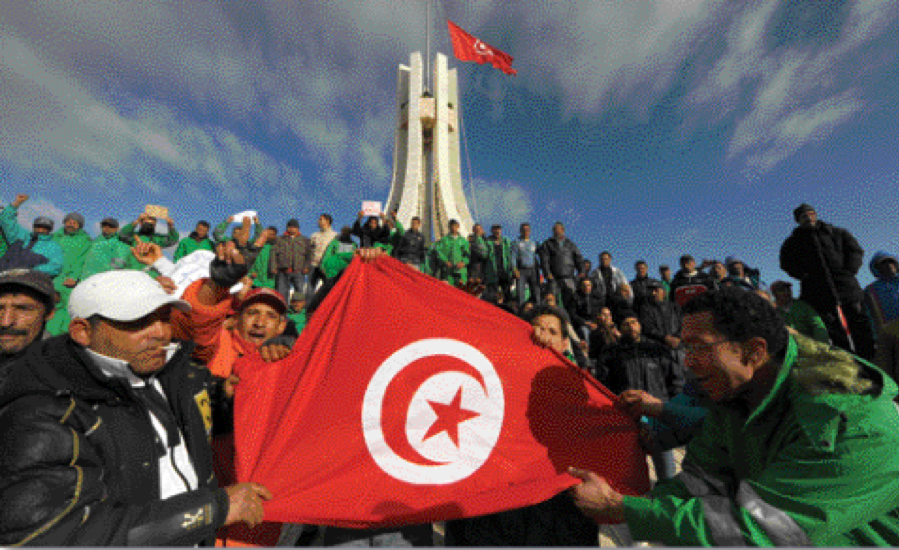
All other countries in the region, including Tunisia (144), are simply categorized as “authoritarian regimes.”  The index warns that democracy worldwide is in decline, as “autocrats have… learned how better to protect themselves.” Another key factor is “the delegitimization of much of the democracy-promotion agenda, which has been associated with military intervention and unpopular wars in Afghanistan and Iraq. A combination of double standards in foreign policy and growing infringements of civil liberties has led to charges of hypocrisy against Western states.” 

Let us not forget that both western and Arab leaders, until recently, praised Tunisia for being such a beacon of stability and loyal partner in the fight against extremism. In such a climate, it is a sad conclusion that Israel, while hardly a model, is the region’s democratic torchbearer — at least if you’re lucky enough to hold citizenship.

PETER SPEETJENS is a Beirut-based journalist


February 3, 2011 0 comments
0 FacebookTwitterPinterestEmail
Comment

Protests in Yemen? Business as usual

by Noah Browning February 3, 2011
written by Noah Browning


A basalt statue in Sana’a’s military museum stands as a testament to a bygone era. Two figures stand locked arm-in-arm, a traditional sword-wielding Yemeni tribesman and a Kalashnikov-toting soldier. They represent the hard-fought war in defense of Yemen’s republican revolution, in which thousands of Egyptian soldiers came to the aid of embattled tribal allies in the South Arabian nation. Nasser’s Egypt once inspired the whole Arab world to shake off ancient monarchies and colonial occupiers but the Egyptian regime today, ideologically bankrupt and under unrelenting assault from its own people, is unrecognizable in that picture of ascendant strength.

Many now wonder whether the uprising in Cairo’s streets foreshadows a new regional upheaval, especially in Egypt’s old ward, Yemen, after as many as 16,000 citizens and activists gathered in Sana’a on January 27 to express their indignation with the country’s ruling party and President Ali Abdullah Saleh.

But for those hoping for a Tunis-style ‘Jasmine Revolution’ or Egyptian uprising, the signs are not good.

Egypt’s 1952 officer revolt ushered in an era of relative prosperity and national purpose, out of which grew a strong middle class and a professional army with a monopoly on the legitimate use of force.

Its 1962 analogue in Yemen produced more mixed results. Decades of civil war, presidential assassinations and national division have defined its troubled modern history. Recurrent crisis only served to exacerbate divisions of class, ethnicity, religion and tribe, engrained deeply in Yemeni society, and in all of these political upheavals the omnipresent weapons of Yemen, which outnumber people by a ratio of four to one, always intervened.

To the extent that political expression exists at all, it traditionally proceeds along these tired lines. This is just as true for Yemen’s 32-year reigning President Saleh as it is for his rivals, great and small, in the opposition.

Sheikh Hamid al-Ahmar, scion of the country’s most powerful tribal confederation, is also heir to a hopelessly corrupt empire of telecommunications outlets, banks, insurance companies and business conglomerates. He is also, not coincidentally, a major figure in the Islamist Islah opposition party and coordinates much of his political clout through a network of clients.

Despite his own checkered background, Ahmar still managed to accuse the president recently of “appropriating the natural resources of a generation and using the government facilities and monopolies to stay in power indefinitely.” He continued: “I callon massive protests to oust this government, which is the most corrupt in the history of Yemen.” The statement, notably, was distributed through Ahmar’s own private TV channel.

A less known political rival is Tawakul Kerman, head of “Women Journalists Without Chains” and a noted human rights defender and Islah party member. Her defiant rhetoric and out spoken speeches in recent protests tapped into heartfelt popular sentiment in the country, which suffers widely from unemployment, high food prices and illiteracy.

“The country is a failing state. We protestors are trying to rescue it. The current situation is so bleak, but Tunisia reassures people of their own power,” she declared, only days before her dramatic arrest by plain-clothes police officers.

Whereas in Egypt and Tunisia popular anger has spearheaded the uprisings, political manifestations in Yemen have depended heavily on party membership, significant funding and even perhaps a degree of foreign backing. One example of this is Tawakul herself. She is the scion of a wealthy family and the daughter of a former minister. The operations of her NGO, and her own substantial compensation, are heavily funded by the State Department’s “Middle East Partnership Initiative,” according to colleagues in international and feminist NGOs. Tawakul was also pictured next to a beaming Hillary Clinton during the latter’s brief visit to Sana’a last month; few of the demonstrators in Egypt or Tunisia had such friends in high places.

After a morning of massive competing demonstrations between the ruling party and opposition groups on the27th, Sana’a quickly returned to normal as the two sides tentatively agreed to renew their dialogue. As calls for democratic freedom echo throughout the region, the outcome of mass protests remains bound to the demographic and political makeup of each country. In Yemen, these indicators don’t leave much room for hope. 

 NOAH BROWNING is deputy editor of National Yemen


February 3, 2011 0 comments
0 FacebookTwitterPinterestEmail
Comment

A farewell to subsidies

by Gareth Smith February 3, 2011
written by Gareth Smith


It was probably just fallings now that eased air pollution in Tehran last month, but the improvement might also be a sign of early success in the government’s efforts to reduce gasoline consumption by removing costly subsidies of fuel, along with electricity and even bread. President Mahmoud Ahmadinejad has skill fully used widening United States-led sanctions — which have impeded Iran’s gasoline imports — to win popular acceptance of the need to phase out subsidies of energy and other everyday items, estimated to cost $100 billion annually. Previous governments have tended to shy away from economic reform, fearing that Iranians regard cheap fuel as a birthright.

Figures from Shana, the oil ministry news agency, put average daily consumption of gasoline at 55.4 million liters in the week ending January 7, a 12 percent drop from the week before a new pricing system was introduced on December 19.

President Ahmadinejad called December’s move the “biggest surgery” in Iran’s economy for 50 years and said he plans to phase out all subsidies by 2013, the end of his presidential term. The subsidies, in place since the Iranian Revolution, have encouraged over-consumption and contributed to budget deficits, and their removal has been encouraged by the International Monetary Fund as a move towards liberalization.

The government is maintaining a range of price controls and has threatened to arrest merchants going beyond prescribed levels, while also stockpiling rice, cooking oil and detergents. With 80 percent of goods moved by road, higher prices for fuel could easily boost inflation. The hikes are steep. Before December 19, motorists paid the equivalent of 10 cents a liter for a monthly quota of 60liters of gasoline and 40 cents per liter for any more. As of December 19, the60-liter quota is 40 cents per liter and any petrol above the quota is 70cents. The price of diesel jumped from 6 cents to $1.32 per gallon, although truck-drivers are temporarily allowed to buy a monthly tank of fuel at the old rate. The price of flour for bread has increased 40-fold, although the cost of a loaf has been pegged at 30 cents, up from 10 cents. Consumers have not as yet received utility bills, but many Iranians are already wearing a sweater rather than turning up their gas fire. While some boost to inflation is inevitable, the government has leeway as the current level of 10.1 percent for the Iranian month ending on December 21 is well down from nearly 30 percent in late 2008and 25 percent in late 2009.

The likely fiscal benefits are further good news for Ahmadinejad; calculations in the Iranian media suggest the president is aiming to save $15 billion to $20 billion before the end of the Iranian year in March. Parliament has mandated the distribution of these savings, with 50 percent in targeted payments to individuals, 30 percent in grants to industry and 20 percent to be retained by the government. These direct payments to individuals and industry are intended to ease the burden of the higher prices. Despite the scheme being delayed until the final three months of the year, the president has already allocated $84 per eligible individual and promised another $84 before March. With 60 million people eligible for payments, according to the government, this would amount to $10billion for the current year.

It will take time for new patterns of consumption to emerge, but already there are indications that the higher costs are impacting overall usage. Initial figures for four petroleum products — diesel, petrol, fuel oil, and kerosene — from December 19 to 27suggested an overall drop of 38 percent, but there were marked variations among different kinds of goods, with fuel oil and kerosene consumption increasing with the cold weather in January. Gasoline imports are down to around 100,000tons per month, just 20 percent of last year’s levels. They were falling even before December’s price hikes, following a shift in production at petrochemicals facilities to gasoline. 

President Ahmadinejad, then, has many reasons to be cheerful. “I sincerely thank the entire nation and kiss everyone’s hands,” he told a rally in Alborz province. “I proudly declare to the whole world that Iranians have achieved the most beautiful sympathy, trust and understanding in their cooperation with this law.”

 GARETH SMYTH is the former Tehran correspondent for the Financial Times


February 3, 2011 0 comments
0 FacebookTwitterPinterestEmail
Comment

Fairweather friends

by Paul Cochrane February 3, 2011
written by Paul Cochrane

As the wheels slowly felloff yet another ‘national unity’ government last month, Lebanon’s politicalclass apparently had enough time to re-hash some old ideas and present them aslegislation. But of all the bad ideas that Lebanese politicians have come upwith to preserve the “diversity” of the country, the most recent draft lawproposed by Labor Minister Butros Harb is likely the most regressive anddivisive.

Harb’s proposal to ban thesale of land between individuals from different religions for a period of 15years is nothing new and stems back as far as the 1860s, when Lebanon’s first“civil war” erupted. But supposing that the minister has read the constitution,he would know all too well that his proposal contravenes the principles ofequality among the Lebanese, the right to private property, a free economy, andthe fact that “there is no segregation of the people on the basis of any typeof belonging, and no fragmentation, partition, or colonization.”

Then again, governmentregularly makes a habit of ignoring the constitution, from its obligation tohold timely sessions of parliament to that of passing a national budget, soperhaps we should regard Harb’s proposal as par for the course. At a time whenthe issue of Christians in the Middle East is particularly loaded, Harb mayhave used the opportunity to promote himself as the torchbearer of age-oldChristian paranoia over being engulfed by the wider Muslim, and in this caseShia, population.

February 3, 2011 0 comments
0 FacebookTwitterPinterestEmail
  • 1
  • …
  • 391
  • 392
  • 393
  • 394
  • 395
  • …
  • 686

Latest Cover

About us

Since its first edition emerged on the newsstands in 1999, Executive Magazine has been dedicated to providing its readers with the most up-to-date local and regional business news. Executive is a monthly business magazine that offers readers in-depth analyses on the Lebanese world of commerce, covering all the major sectors – from banking, finance, and insurance to technology, tourism, hospitality, media, and retail.

  • Donate
  • Our Purpose
  • Contact Us

Sign up for our newsletter

[contact-form-7 id=”27812″ title=”FooterSubscription”]

  • Facebook
  • Twitter
  • Instagram
  • Linkedin
  • Youtube
Executive Magazine
  • ISSUES
    • Current Issue
    • Past issues
  • BUSINESS
  • ECONOMICS & POLICY
  • OPINION
  • SPECIAL REPORTS
  • EXECUTIVE TALKS
  • MOVEMENTS
    • Change the image
    • Cannes lions
    • Transparency & accountability
    • ECONOMIC ROADMAP
    • Say No to Corruption
    • The Lebanon media development initiative
    • LPSN Policy Asks
    • Advocating the preservation of deposits
  • JOIN US
    • Join our movement
    • Attend our events
    • Receive updates
    • Connect with us
  • DONATE