• Donate
  • Our Purpose
  • Contact Us
Executive Magazine
  • ISSUES
    • Current Issue
    • Past issues
  • BUSINESS
  • ECONOMICS & POLICY
  • OPINION
  • SPECIAL REPORTS
  • EXECUTIVE TALKS
  • MOVEMENTS
    • Change the image
    • Cannes lions
    • Transparency & accountability
    • ECONOMIC ROADMAP
    • Say No to Corruption
    • The Lebanon media development initiative
    • LPSN Policy Asks
    • Advocating the preservation of deposits
  • JOIN US
    • Join our movement
    • Attend our events
    • Receive updates
    • Connect with us
  • DONATE
Economics & Policy

Executive insight Byblos Bank

by Nassib Ghobril December 3, 2010
written by Nassib Ghobril


Official figures put the average real growth rate of Lebanon’s economy at about 8.8 percent during the years 2008 to 2010, constituting one the highest average growth rates in the world over that period.

Indeed, only Qatar, Afghanistan, Timor-Leste, China and Ethiopia posted better growth rates than Lebanon during these three years. Further, Lebanon’s real gross domestic product growth rate averaged 9.2 percent in 2008 and 2009, almost identical to China’s 9.4 percent output for the same years. These figures put the performance of the Lebanese economy among the best globally, a remarkable achievement if one were to believe the official numbers. But high and sustained rates of economic growth require a number of factors, including a very competitive economy in most of its pillars. This year, and for the first time, the competitiveness of the Lebanese economy has been measured and benchmarked against the rest of the world.

The World Economic Forum ranked Lebanon in 92nd place among 139 countries on its Global Competitiveness Index for 2010-11. It also ranked Lebanon in 26th place among 32 upper-middle income countries and in 12th place among 15 Arab economies included in the survey. The index measures national competitiveness and highlights its micro and macroeconomic foundation. It measures a country’s and its enterprises’ ability to compete in global markets, based on the supporting institutions, infrastructure, economic policies and education and healthcare systems, the country’s capacity for innovation as well as the sophistication of domestic markets and local business practices.

Hamstrung by poor infrastructure

A closer look at the index ‘s detailed results shows that Lebanon does well on efficiency-enhancing indicators such as health and primary education, higher education and training, efficient markets, financial sector development and business sophistication, among others. But it is clear that the poor state of infrastructure is a major impediment to the competitiveness of the Lebanese economy.

Lebanon ranks in 123rd place among 139 countries for the quality of its infrastructure. In other words, Lebanon has a better infrastructure than just 22 percent of the countries surveyed. Lebanon falls immediately behind Mauritania, Mali and Lesotho, while ranking ahead of Paraguay, Cameroon and Cambodia. Mauritania and Mali are low-income economies and Lesotho is classified as a lower-middle-income economy.

Lebanon also has the worst infrastructure among the 15 Arab countries included in the index, as well as among countries of the same income level. The results indicate that Lebanon has the infrastructure of low-income countries, while its per-capita income is one of the highest among upper middle income economies.

However, the details show that it is not the entire infrastructure that is neglected, as Lebanon has the 36th best air transport infrastructure, the 55th best port infrastructure and the 71st best fixed telephones network in the world. So what is dragging the quality of infrastructure to the level of poor economies is primarily the low quality of electricity supply and mobile telecommunications, followed by the poor state of roads and railroads.

The quality of electricity supply is the single biggest infrastructural obstacle to the competitiveness of the Lebanese economy, as Lebanon ranks in 136th place on this category, classifying it as having the fourth worst electricity supply of the 139 countries surveyed.

The quality of mobile telecommunications does not fare much better, as Lebanon has the 16th lowest level of mobile phone subscription, reflecting the network’s limitations.

In parallel, a survey showed that a plurality of executives at Lebanese companies consider that the inadequate supply of infrastructure is the single biggest problem for doing business in Lebanon, as 18.5 percent of respondents put infrastructure bottlenecks as the most important obstacle for their work, ahead of government bureaucracy, political instability and corruption.

Making it all add up

So how can the Lebanese economy grow by an average of 9 percent annually and, at the same time, have vital components of its infrastructure in such a dismal situation? The more pertinent question would be: does Lebanon growing by an average of 9 percent annually mean the country does not have infrastructural impediments, or are infrastructural bottlenecks so significant as to raise questions about the reliability of the growth figures?

Benchmarking the scope of improvement for Lebanon shows that if the country achieves a maximum value on each of the categories in the infrastructure sub-indicator within the Upper Middle Income group to which it belongs, its rank would jump by 91 spots to 32nd place globally in the quality of its infrastructure. As such, Lebanon’s infrastructure would become comparable to that of Estonia, Israel, Thailand and Oman.

In turn, this would push the country’s overall competitiveness ranking to a level allowing the economy to effectively compete on a regional level and achieve its growth potential.

Studies by the International Monetary Fund and the World Bank indicate that improving the electricity supply would raise Lebanon’s real per capita GDP by 1 percent annually, while upgrading the broadband infrastructure would add as much as 1.4 percent annually in real per capita growth.

The electricity issue is being addressed through a comprehensive five-year restructuring plan, which has been approved by the cabinet with vast sums allocated in the 2010 budget for this purpose.

Also, the Cabinet’s Ministerial Statement called for upgrading the telecom infrastructure. These initiatives, even with political consensus, will require time to be completed but they would help alleviate key obstacles to economic growth.

If competitiveness is to truly be raised, along with upgrading Lebanon’s hard infrastructure, the country’s statistical infrastructure must also be upgraded in order to provide a more realistic and transparent picture of the actual growth and performance of the economy.

December 3, 2010 0 comments
0 FacebookTwitterPinterestEmail
Economics & Policy

Time of mixed fortunes

by Sami Halabi December 3, 2010
written by Sami Halabi


During the civil war, Beirut’s Commodore Hotel acted as a shelter for the various journalists and dignitaries who would brave the chaos to try and understand why this small but promising Mediterranean nation had fallen prey to the ravages of conflict.

Twenty years since the guns fell (relatively) silent, and with many a former warlord now a politician or member of cabinet, it was fitting last month that the Lebanese Economics Association (LEA) chose the same hotel to launch its own assault on how the powers that be are again squandering opportunity and endangering the country.

“It’s always about how they split the kaaki [traditional Arab bread],” said Elias Saba, two-time former Lebanese minister of finance, at the press conference. “When they [politicians] agree on that, all the bickering ends and it’s over.”

By the end of 2010, that kaaki had yet to be divvied up, and the cabinet had come to a complete standstill over the United Nations’ Special Tribunal for Lebanon. Not to be outdone, Parliament had yet to convene to pass a budget for the year, despite being constitutionally mandated to do so in October.

“When the Council of Ministers [Lebanon’s cabinet] gets postponed it turns out to be an achievement, instead of them fighting,” sighed Nassib Ghobril, head of economic research and analysis at Byblos Bank.

While Lebanon’s policy makers tussled over wider political issues, the economy was witnessing — on the surface at least — what many observers deem to be the end of Lebanon’s economic honeymoon. The current economic recovery cycle began its upward curve in 2006 when real growth hit a low of 0.6 percent. Since then, the economy has bounced back to register 7.5 percent real growth in 2007 and peak at 9.3 percent in 2008, a figure that only became apparent in April, 2010, when the 2008 National Accounts were released to the public.

Coincident indicator (An average of eight weighted economic indicators)

A lack of reliable data means that everything from that point onwards is more or less a blur. However, economists from the International Monetary Fund (IMF), the finance ministry and the Economist Intelligence Unit (EIU) all agree that growth has begun to slow and move into a trough, which will result in anywhere from 5 to 8 percent growth in 2010, and even less in 2011.

That means that even though growth is still high by global standards, the chance to take advantage of this opportunity has been missed, “as always, as usual,” said Jad Chaaban, acting president of the LEA, “because the politicians are bickering.”

The dearth of economic data notwithstanding, it has become apparent that the political tensions that have materialized in the second half of 2010 are hitting the country’s economic standing hard.

The coincident indicator, an average of eight weighted economic indicators published on a monthly basis by Banque du Liban (BDL), Lebanon’s central bank, shows that economic activity mushroomed during the first three months of the year, climbing 8.3 percent to reach 264.5 points in March and fell back to a still respectable 251.9 points in July.

Fears of instability, brought on by incidents such as clashes in Bourj Abi Haider (above), and the exchange of fire between Lebanese and Israeli forces on the border, threaten economic growth

In August it saw a sharp decline to 228.3 points, ostensibly a result of political tension rising after a cross-border firefight between the Lebanese and Israeli armies and clashes between the Shia Hezbollah and the Sunni Al Ahbash groups. Tacked on to this was the fact that Ramadan fell in August, resulting in hotel occupancy rates of just 43 percent at a time when they are usually full to the brim with Gulf tourists escaping the summer sizzle.

As Executive went to print, the indicator was resting at 229 points for the month of September, the same month Prime Minister Saad Hariri admitted that it was a mistake to have accused Syria of his father’s assassination and that “false witnesses” misled the investigation. The latter sparked an explosive row which put the cabinet’s policy agenda on the backburner.    

“Since July everything has shifted to politics and the tribunal and the president’s role has been limited to trying to assemble the Council of Ministers. So who is talking about other things at this stage?” said Ghobril.

Uneven growth

Whatever growth has been achieved has been unevenly distributed to limited segments of the economy, according to Eric Mottu, the IMF’s resident representative in Lebanon. He estimates that 4 to 5 percent of real economic growth came from retail trade and 2 percent stemmed from construction, leaving agriculture and industry with marginal to negative growth. This corresponds with his organization’s estimate of 8 percent growth in 2010.

As Lebanon’s economy has been dominated in recent years by services industries, productive sectors have more or less taken a backseat. According to Toufic Gaspard, economic consultant and former director of research at BDL, this historical phenomenon is lamentable, because even though in many developed countries industry now constitutes a small share of total gross domestic product, they developed high productivity within their manufacturing sectors in the past, before transitioning into services and other sectors.  

“No country in the world has developed without manufacturing, and it’s not because we like the smoke stacks, it’s because manufacturing creates jobs and is a driver of productivity,” said Gaspard. He added that the growth experienced from 2007 to 2010 was mostly the result of pent-up demand following the withdrawal of Syrian forces and was constrained to the real estate, construction and tourism sectors in the center of the country. “If we have the same [de-industrialized] structure we [will] produce the same performance. No matter how you look at it we are not doing well at all.”

Looking at the numbers, it’s no surprise that many are pointing to real estate as the main source of uneven growth across sectors. According to the General Directorate of Land Registry and Cadastre (GDLRC), the sector saw the value of property sales skyrocket by 60.6 percent during the first three quarters of 2010 to hit a record-breaking total value of $6.96 billion, some 20 percent of the EIU’s 2010 GDP estimate. 

Record real estate profits and banks with more cash than they know what to do with mean little to Lebanon
</p>
									            </div>
        </div>

		            <div class=

December 3, 2010 0 comments
0 FacebookTwitterPinterestEmail
Society

Looking to the future

by Ahmed Moor December 3, 2010
written by Ahmed Moor


Lebanon has a long history of leveraging its strong capital base and geographical position to compete both regionally and globally for economic success.

The great civilizations of Egypt and Mesopotamia flourished around ancient Lebanon. The Phoenicians who inhabited this coastal Mediterranean strip thousands of years ago understood the value of their geography and natural resources. They cultivated their cedar wood and exported it to Egypt; when archeologists unearthed the Pharaoh Khufu’s Giza tomb, they recovered a fully intact cedar-wood funerary barge — a testament to the enduring impact of Lebanese entrepreneurship across the ages and across the region. 

Even today, wherever the Lebanese go — whether it’s Brazil, Sierra Leone, Canada or the United States — they set up shop and thrive. Different people attribute their drive to different factors. Some say that entrepreneurialism is in the Lebanese blood, while others attribute it to a unique social and geographical environment.  Others suggest that in a society where wealth accumulation is virtually impossible for the salaried employee, starting one’s own business is the best way to attain a middle class standard of living. Whatever the cause, there can’t be any doubt that entrepreneurialism is a hallmark of Lebanese society.

Loai Naamani — a successful Boston-based Lebanese entrepreneur — explained it this way: “When we come to the essence of entrepreneurship, there are three fundamentals for any business you create. One is the idea; either you have leverage in your technology, intellectual property, a way of cutting costs and so on. The second is access to capital and third is the human capital. These are the people who will be developing the idea and managing it.” 

The idea

This year witnessed Lebanon’s participation in Global Entrepreneurship Week (GEW), which is celebrated across 103 countries. A series of events were organized to promote the emergence of viable Lebanese businesses and to marshal support for those that may need it.

YallaStartup, a non-profit created by a successful Lebanese entrepreneur, “aims to foster early-stage entrepreneurship in the Middle East and North Africa (MENA) region.” As part of GEW, YallaStartup organized a weekend getaway in November for approximately 300 entrepreneurs and other interested parties as part of its focus on “address[ing] the gaps in the early- stage entrepreneurial ecosystem.”

The organization was created by Habib Haddad — an American University of Beirut (AUB) graduate and a founder of the popular Yamli.com search engine — and two fellow successful Arab entrepreneurs. The idea to create YallaStartup sprung from a conversation that Haddad had with an angel investor. The investor expressed frustration that he was finding it difficult to locate promising startups. Haddad had been hearing something similar from entrepreneurs — that they were having trouble accessing angel capital. 

Berytech is just one of the country
</p>
									            </div>
        </div>

		            <div class=

December 3, 2010 0 comments
0 FacebookTwitterPinterestEmail
Society

Drivers race to downsize

by Paul Cochrane December 3, 2010
written by Paul Cochrane


Lebanon’s car sector kept the pedal to the metal in 2010, estimated to be worth around $600 million. The 6.5 percent growth clocked in October maintained the momentum set two years ago when car sales surpassed all records to reach a new benchmark.

“The sector peaked in 2008 and sales have stayed there. It has been a good year all round,” said Fayez Rasamny, vice chairman of Rasamny Younis (Rymco), dealer for Nissan, GMC and Infiniti. “What is happening is the same pace in the number of cars sold, but the bottom line — our margins — have been less.”

As of October, 28,404 registered new vehicles had been sold in Lebanon, an increase of 6.5 percent on the 26,664 units sold over the same period in 2009, while 27,341 units were sold in 2008, according to the Association of Car Importers in Lebanon. These figures come after the sector’s turnaround, with sales this year representing a more than 40 percent increase on 2007’s total year-end figure of 20,082 registered vehicles sold.

Fuelling demand has been the country’s relatively stable political environment, economic growth, easier access to bank loans, the Beirut motor show and the increased availability of affordable compact cars. However, sales slid in September and October, with Lebanese consumers jittery as political instability once again threatened to rear its ugly head.

“The last two months have seen a slowdown due to concerns over the [Hariri] Tribunal. And the last two months of the year are always tough, so all dealers had to come up with offers to keep the momentum going,” said Farid Homsi, general manager of IMPEX, distributor for GM, Chevrolet, Cadillac, Hummer and Isuzu. “This eats up profits so you end up with thin margins but we had to do it as we have a certain level of inventory and have to make concessions. It is good for the consumer of course.”

Korea’s year

While the sector grew overall in the number of units sold, 2010 was distinctly different from the past boon years when there was strong growth across the board for nearly all manufacturers. This year saw some brands soar while others limped along.

Two thousand and ten was undoubtedly South Korea’s year, with the country’s brands out-riding all competitors, up 84.21 percent on 2009 (when comparing the first 10 months of both years). Kia was the most popular brand in 2010, rising 88.41 percent with 5,432 units sold compared to 2,883 as of October 2009. Hyundai also powered forward in Lebanon in line with its global rise — sales are up 21 percent worldwide as of September, with sales in Lebanon surging 78.34 percent to 3,360 vehicles in the first 10 months of 2010.

Top 10 in volume sales of new cars - Beirut, Lebanon

Korean carmakers’ stratospheric rise was felt keenly by the competition: Chinese brands dropped 18.75 percent, Japanese brands fell by 12.91 percent, American brands by 13.22 percent and European brands by 4.72. It was a particularly bad year for Chrysler, which plummeted 83 percent, GMC (down 61.9 percent), Saab (down 71.88 percent), Peugeot (down 39 percent), and Jeep and Lexus (which both fell by 52 percent). Nissan, which was knocked off the top-selling spot by Kia this year, was down 16.58 percent with 4,703 vehicles sold.

“We’re down but by the end of the year we will pick up,” said Rasamny. “Two years ago the battle was between Nissan and Toyota, of the Tiida versus the Yaris, which was $2,000 cheaper than our model. We fought the battle and won.”

Now, the battle for sales is not between Japanese brands but with the Koreans. “It is Kia versus Nissan. But it is unfair competition as our cheapest car is $6,000 more,” added Rasamny.

Rymco plans to level the playing field next year when it introduces the Micra. “We are lucky that this successful model is coming now. We have never had a B segment model, so we’re really excited,” said Rasamny. “And we want to focus on small cars. We have to promote all models equally, but to market bigger cars is a harder task. As I don’t know the future, or what the country’s stability will be like, it is better to focus on smaller cars as they are also easier to liquidate [if something negative happens].”

Kia keeps on keepin’ on

Kia
</p>
									            </div>
        </div>

		            <div class=

December 3, 2010 0 comments
0 FacebookTwitterPinterestEmail
Society

A state of denial

by Peter Speetjens December 3, 2010
written by Peter Speetjens


Since the late 1990s, the state of Lebanon’s environment has been stagnant at best,” said president of environmental charity Greenline Ali Darwish, who has been on the frontline of Lebanon’s eco-battle for some 17 years. “In terms of waste, water resources, energy use and green space, we are actually going backward. Perhaps the only ‘good’ news is that Lebanon isn’t different from most countries. Especially since the 2008 crisis, the environment is a non-issue.”

His is a bleak picture, but May Jurdi, professor of environmental health at the American University of Beirut (AUB), could not agree more. “In Lebanon, we face a total lack of vision and strategy,” she said. “That’s why it is so important to introduce a proper monitoring system. Without monitoring there is no data. Without data it is impossible to take measures. However, in developing countries such as Lebanon politicians shy away from monitoring. It is a mentality problem. They don’t like to be held accountable.”

It is difficult to estimate the cost of environmental degradation, as cause and effect often lie so far apart that a direct correlation is tough to prove. Still, after decades of simply ignoring the negative effects of production methods and consumerist behavior, economists in recent years have come up with more conclusive models, in which issues such as the loss of fish stocks and the rise of certain illnesses have been given a price tag.

The only such study regarding Lebanon contains data from the year 2000. A team of economists and ecologists estimated in a World Bank report that the cost of environmental degradation in Lebanon that year amounted to some $500 million, or 3.4 percent of gross domestic product. Most damage, 62 percent, was related to health issues, while 38 percent to degradation of natural resources.

Despite such warning signs, the environment is not a priority in Lebanon, which is arguably the only country in the world where politicians can refer to “the political situation” as a reason for not taking action. But don’t tell that to Professor Jurdi.

“Believe me, people from March 8 and March 14 all breathe the same air and, anyway, the problems are much older than that,” she said. “Since the early 1990s, for example, we have been trying to install a proper waste and wastewater treatment system, and we still have a system that is far from optimal. The Food Safety Bill, which is a very good piece of legislation, has been pending in parliament since 2004, mainly because four ministries are fighting over who is to be in charge.”

Methane bubbles up through sewage created by decomposing waste at the Zahle municipality landfill site

Still, if the environment suddenly and unexpectedly were to become a political priority in 2011, the issues that should be dealt with most urgently, according to Jurdi, are waste and wastewater treatment, as well as air pollution. “If you properly deal with waste and wastewater, you directly protect the population from physical harm, and you protect your natural resources, such as groundwater, rivers and coastal waters,” she said. “Scientifically, it is very hard to link environmental hazards with certain diseases. However, ask any mother and she will tell you that diarrhea is more and more common. Ask any medical professional in a hospital and he or she will tell you that the number of cancer cases is increasing.”

A world to waste

According to the Ministry of Environment, Lebanon generates some 335 kilos of waste per inhabitant per year, which is set to increase annually by 7 to 8 percent. (To put that in perspective, the world’s top polluter, the United States, averages more than 700 kilos of waste per American per year.) Nearly half of Lebanon’s total waste of some 1.5 million tons annually stems from the Greater Beirut and Mount Lebanon region. The World Bank estimates that some 46 percent of the country’s waste ends up in sanitary landfills, while 38 percent is dumped in an illegal, uncontrolled manner. Only 14 percent is recycled.

By law, the municipalities are responsible for collecting and treating waste. However, mainly due to a lack of funds, that often implies dumping it on the nearest hillside or in the sea. There are more than 750 illegal dumps in the country, the most prominent of which are the mountains of waste on the coast of Sidon. 

Beirut had its own manmade mountains. One, at Normandy Bay, has been excavated and is being gradually transformed into an extension of the city center. The other, at Bourj Hammoud, is closed, but remains as a silent reminder of past practices. Although the area of Ouzai still serves as an illegal dump, most waste in Beirut and the wider Mount Lebanon region is transferred to Naame and Baslim, two of the country’s three sanitary landfills. A third is situated near Zahle.

Industrial waste piles up at an unofficial dumping site in the Bekaa valley

A controlled or ‘sanitary’ landfill is lined with a membrane to protect the earth and groundwater basin from potentially hazardous and toxic effluents that are created within a waste site. It is for that reason that the Sidon coastal dump is such a threat to marine life. Smaller sites situated further inland are less likely to develop such an effluent. Still, upstream waterways are easily polluted by waste and wastewater, a dangerous prospect when they are used downstream for agricultural purposes.

“I suggest people wash their fruits and vegetables with natural soap before eating, as the use of untreated water for irrigation is common practice,” advised Jurdi.

The sanitary landfills near Beirut were created in the late 1990s as a temporary solution. The idea was to store waste in a controlled manner, while the authorities would formulate a more integrated approach. The latter has hardly happened. In 1998, the Council for Development and Reconstruction (CDR) awarded Sukleen’s sister company Sukomi a 10-year contract to treat and recycle waste (see box). But due to a lack in capacity the company is not able to recycle more than 20 percent, while the remainder is transferred to the landfills of Naame and Baslim, which are both rapidly filling up. In fact, the Naame landfill has already been expanded several times.

Burn it? 

To deal with the growing mountain of waste, the Ministry of Environment advocates the construction of four incinerators. This technology has several advantages. First of all, Lebanon offers limited space for the construction of new waste sites and most Lebanese, like many citizens of the world, do not want a site in their backyard. Incinerators occupy relatively little space and rapidly reduce waste to a fraction of its initial volume. What’s more, burning (non-toxic) waste can serve as fuel for Lebanon’s power plants: 4,500 tons of waste can produce some 170 megawatts of electricity.

Still, Greenline’s Darwish is not in favor. “This technology is extremely controversial, even in Europe,” he said. “It is still not known what effects incinerating has on the air we breathe. Regarding electricity, I suggest we start to look seriously into solar energy.”

“Incineration itself is not a bad technology, it is only bad if used incorrectly,” said Lama Abdul Samad, an environmental consultant who worked for an Italian non-governmental organization implementing waste and wastewater solutions in Lebanon and is currently doing her PhD at the University of Bern.

Freshly dumped trash is pre-sorted for items of value at the Zahle municipality landfill

“However, I don’t think Lebanon should incinerate its waste, since this technology is only good when state-of-the-art and hence extremely expensive,” she said. “In addition, you are still left with the ashes, while Lebanon to this date does not have a landfill to deal with hazardous or potentially toxic waste. Finally, I would never recommend incineration in a country where emission standards are likely not to be enforced.”

In an ideal world…

In an ideal scenario, according to Abdul Samad, waste treatment should start at a household level, where the first separation should take place to help facilitate recycling. For obvious reasons, chemical residue should not be mixed with organics, while the latter negatively affect the quality of refuse such as paper and carton board. This is beginning to happen in parts of Beirut where Sukleen has introduced some separation in collecting its garbage, but so far the effort has been patchy at best.

The waste should then be collected by vehicle and transported to a solid waste treatment facility, which brings us to the core of the matter. “Solid waste treatment should be available to all municipalities, irrelevant of their remoteness,” said Abdul Samad. “This will stop the haphazard disposal of domestic waste in open dumps, where burning is common practice.”

Abdul Samad calls for a reduction in small waste treatment units with a capacity of 10 to 50 tons a day, as they are inefficient and barely economically viable. A larger regional facility more easily allows for hiring skilled labor and generating income through selling recyclables and compost. In Lebanon, some 40 percent of waste is organic, which could be turned into compost and used to reduce the overwhelming use of pesticides and fertilizers in the country. Another 40 percent of Lebanon’s waste comprises recyclables such as paper, plastic, glass and metal.

Staff at the Zahle landfill sort through some 200 tons of garbage every day, removing items which can be recycled

“In a perfect system, you are left with only 20 percent of waste that needs to be landfilled or incinerated,” she said. “Don’t believe people who speak of so called “zero-waste technology,” because it simply does not exist.”

Like any malady, prevention is better than cure and a perfect waste treatment system should start with promoting waste reduction and even banning or taxing products that are overly polluting. In the end, the responsibility lies with the consumer in which products they choose to buy.

A common offender would be Beirut’s restaurants, which seem hell-bent on out-packaging their rivals when it comes to deliveries; most meals are served in a plastic container, as are their accompaniments such as salad and bread, with an extra bag solely for drinks (in a plastic bottle) along with a separate plastic bag for the plastic cutlery, all wrapped in another box or bag. That’s a lot of waste for just one meal.

Wastewater

According to Gaby Khalas, Director of the Marine Sciences department at the National Council for Scientific Research (CNSR), research shows that the bacteriological pollution at places such as Ramlet El Baida, Ras Beirut and Antelias on average amount to 100 to 150 times the internationally accepted norm of less than 100 units per milliliter.

“The good news is that there is no chemical pollution and 100 meters off the coast you will find hardly anything,” said Khalas. Despite this, the Ministry of Environment in its one and only “State of the Environment Report,” (published in 2001) said: “Domestic wastewater management is one of the greatest headaches of Lebanese municipalities and ministries.”

Although some improvements have been made, the headache remains. Most of the country’s approximately 250 million annual cubic meters of household wastewater (sewage) still reach the sea untreated, with only 4 percent of total wastewater in the country undergoing minimal treatment. The country’s only major wastewater treatment facility is located at Ghadir, which is equipped with a 2.6-kilometer-long pipeline that releases wastewater at a depth of 60 meters. Three more facilities being built in Tripoli, Batroun and Damour are almost operational. Consequently, most of Lebanon’s waste still reaches the sea through 53 outfalls, 16 of which are located between Dbayeh and Ghadir, north and south of Beirut respectively.

Regional wastewater coverage and treatment capacity

Apart from a lack of planning and initiative from successive governments to rectify the sector, it still lacks an adequate and sustainable business model. As of 2010, there was no independent wastewater tariff to cover the costs of upgrading infrastructure and the only cost recovery vehicle the government had was in the form of a municipal fee. The Ministry of Energy and Water (MoEW) is currently compiling a plan to introduce new tariff structures for all water utilities and seems to have adopted a fixed charge, plus a progressive volumetric tariff as the optimal solution. The ministry is still studying the details of pricing.

Further inland, dozens of smaller wastewater treatment facilities have been built, often in cooperation with international aid organizations. In total, international organizations have committed $898 million to wastewater management in the country and $200 million has already been spent. The schemes that have been partially funded are expected to become operational by 2015 with the remainder of allocated funds being dispersed and implemented between 2013 and 2020. The ministry estimates that areas not covered by existing donor schemes will require around $500 million in funding for schemes that could be implemented by 2020. 

Even if that funding arrives, many such facilities that have been built as yet remain non-operational, said Abdul Samad. “Most international aid organizations did construct a facility, but not a network, while the majority of Lebanese are not connected to a sewer network.”

A main reason behind this is the lack of proper coordination and cooperation between Lebanese public institutions under the control of opposing political parties. Through 2010 and for years previous, the opposition has controlled the MoEW while the Prime Minister’s party has controlled the CDR.

Polluted water flows into a river in Kfarshima, a suburb south of Beirut 

“Under the current institutional framework, there is no integration between policy-making and investment planning and execution in the WSS [Water Supply and Sanitation] sector,” reads the World Bank’s latest report on the water sector in Lebanon from June 2009. “The MoEW is responsible for setting the strategic direction of the sector, while the CDR is de facto leading the investment planning and execution, given that the bulk of the sector investment is financed by donors,” the report states. 

This lack of coordination is further complicated by the fact that the prerogatives of the Council of the South, the Central Fund for the Displaced and the four regional water authorities all have some say, or role, in implementing projects in the sector.

“In addition, some of the technologies introduced are not suitable for the Lebanese context,” said Abdul Samad. “The mandate of most international aid organizations dictates that they use certain technologies that need to be imported from the donor country. One facility was built at an altitude of 1,700 meters near Chekka, while the technology used is meant for the tropics. In addition, maintenance becomes expensive, as spare parts too have to be imported from the donor country.”

Air Pollution

The Air Quality Research Unit (AQRU) has monitored air pollution over Beirut since 2008. The results are alarming, as the concentration of gasses and particles in the air is at least twice the norm set by the World Health Organization (WHO). As Beirut has hardly any industry, the city’s ever-growing fleet of cars is regarded as the main culprit.  AQRU is a joint research effort by scientists from the American University of Beirut (AUB) and Université Saint Joseph (USJ). While the first institution focused on the presence of particulate matter (PM) in the air, the latter researched the prevalence of gasses such as carbon monoxide and nitrogen dioxide. PM are tiny particles floating in the air, defined according to their size in micrometers —  PM10 are particles with a maximum diameter of 10 micrometers, PM2.5 have a maximum of 2.5 micrometers, and so on. “PM10 reach until the throat area and can cause asthmatic reactions, while PM2.5 can reach the lungs,” said Najat Saliba, AQRU coordinator and associate professor of chemistry at the AUB. “PM1 particles are so small they can directly enter on a [cellular] level. We will start our PM1 research only next year.”

The AUB team installed its measuring equipment at three locations across Beirut, near AUB, Basta and the National Museum, and found that the PM10 concentration increased as they went inland. An average of 44 PM10 units per cubic meter (u/m3) was recorded near AUB, which increased to 61u/m3 near the museum. The concentration of PM2.5 varied less, from 19.4u/m3 near the AUB to 21.5u/m3 near the museum.

The bad news is that both averages are significantly higher than the WHO standard, which is set at 20u/m3 and 10u/m3 for PM10 and PM 2.5 respectively. Still, Beirut can take some comfort in that it is a far cry from Cairo, which in 2007 had an overall PM concentration of 169, making it the world’s most air-polluted city.

“We measured pollution at an elevated level, usually at the 3rd or 4th floor,” said Saliba. “Next year we will start research on a street level, where concentrations are likely to be higher.”

Meanwhile, the USJ counterpart measured gas levels at 23 sites across the capital and concluded the presence of nitrogen dioxide exceeded WHO standards by 5 percent in April and by 25 percent from September to December. “Beirut is in a fortunate situation,” said Saliba. “The sea wind normally cleans the air. However, in autumn and winter the opposite is true. When it is cold in the morning and warm in the afternoon, a situation of thermal inversion occurs and the pollution is somehow trapped. That’s when you see most smog on the horizon.”

Untreated water drains onto the public beach at Ramlet El Baida

There is today a growing body of evidence that both indoor and outdoor urban pollution have a significant negative impact on public health and may result in chronic bronchitis, respiratory disorders, cancer and even premature death.

Impacting our lives

With the country generating some 1.5 million tons of waste every year— nearly 40 percent of which is dumped illegally — widespread upstream contamination of drinking water, untreated sewage reaching the sea and high concentrations of harmful particulates in air in urban areas, the impact on our health, though hard to quantify, is invariably negative and affecting a large and growing number of Lebanon’s citizens.

So, despite all the economic growth the country may be experiencing and the constant spree of political crises that consume so much of our collective energies and attentions, if nothing is done to stem the damage being inflicted upon the environment in which we live, it will become a much more salient truism that if you don’t have your health, you don’t have anything.

December 3, 2010 0 comments
0 FacebookTwitterPinterestEmail
Finance

Praying for peace

by Paul Cochrane December 3, 2010
written by Paul Cochrane


Bankers and politicians alike delight in calling the banking sector immune — immune to the financial crisis, immune to political rumblings and knee jerks in public opinion. But the health of the banking sector and the health of Lebanon’s economy are incontrovertibly tied.

“The banking sector has a kind of immunity which keeps the industry aside from the political tensions. Nevertheless, any tensions in Lebanon have a direct effect on the economy and accordingly on the banks in general,” said George Abou Jaoude, chairman and general manager of Lebanese Canadian Bank.

It was business as usual for the first half of 2010 with prevailing trends of slowly falling dollarization in both deposits and lending for the first three quarters of the year. But increased political wrangling regarding the United Nations’ Special Tribunal for Lebanon, and inflammatory speeches by prominent leaders in Lebanon since the summer, have led some in the banking sector to predict that upset caused by political unrest will manifest itself in the final quarter of 2010 and the first quarter of 2011.

“I’m seeing it in terms of consumer confidence and I’m seeing people start to question holding their money in [Lebanese lira]… You can’t get away from the fact that domestic and regional politics do play a big part in the economic conditions of the country,” said Pik Yee Foong, chief executive officer of Standard Chartered Lebanon.

Other industry leaders acknowledged the possibility of a spike in deposit dollarization but were not concerned with the formation of a long-term trend.

“It’s not material. When people have more concern they feel more comfortable to keep their savings in [dollars]. The confidence in the local currency has improved so much because of the very important macro achievements of the last few years,” said Freddie Baz, chief financial officer at Bank Audi.

George Abou Jaoude, chairman and general manager of Lebanese Canadian Bank

Whether such an occurrence would change the funding dynamics of Lebanese banks is yet to be seen, but if such a shift becomes apparent, it will be a clear statement that some Lebanese depositors are willing to take the weak side of a 292 basis-point interest spread in favor of security. At the end of September the average weighted interest rate on deposits in Lebanese lira was 5.7 percent, while the corresponding dollar rate was 2.78 percent.

Saad Azhari, chairman and general manager of BLOM Bank, predicts that interest rates in the major Western economies will remain stagnant, hovering around zero, because “in all the major economies growth is expected to be lower in 2011 than in 2010.”

He also predicts that, if risk factors including local political dynamics remain at current conditions, Lira interest rates will exhibit similar behavior, still acknowledging the unpredictability of the local market. “I expect, or hope, to see no major escalation in events that could make it increase,” he said.

What comes in must go out

In addition to possible changes on the funding side, the distribution of bank lending is also a hot topic for 2011. For, in the banking sector there is a classic chicken and egg conundrum. Are the banks lending to the so-called “productive” sectors of the economy because they are growing? Or are these sectors growing because they receive financial support from banks?

Fran
</p>
									            </div>
        </div>

		            <div class=

December 3, 2010 0 comments
0 FacebookTwitterPinterestEmail
Finance

An issue of trust

by Thomas Schellen December 3, 2010
written by Thomas Schellen


The Arab World’s 16 active stock markets’ combined market capitalization in the fourth quarter of 2010 amounted to substantially more than $900 billion, confirming that Middle East and North African (MENA) equity markets are an increasingly important force in regional economic development.

The performance was not all sunny, however. Market indices for member institutions of the Union of Arab Stock Exchanges (UASE) at the end of 2010 were visibly below their more optimistic days almost three years ago. Eagerness for listing companies has also dropped. New initial public offerings and trading debuts have been rare.

Although, or perhaps because, performance of Arab equities has been marred by the global financial crisis of 2008, the macroeconomic relevance of financial markets has become a topic demanding increasing attention.

Arab stock exchange operators have been feeling the need to do more than their bread-and-butter business of running trading rooms and electronic platforms and assuring smooth operations that comply with national regulations in each market.

Markets are to enter a “new era of collaboration and cooperation,” the chairman of the UASE, Suliman Alshahomy, said in October 2010 at the opening of the second UASE Annual Conference in Beirut.

The tenor of Arab stock market operators is a combination of needed improvements and regaining investor trust.

“Implementing principles of transparency of Arab markets is our main goal. We want to provide Arab investors with linking of all financial markets,” said Alshahomy.

The exchanges face a major challenge in restoring trust. According to UASE Secretary General Fadi Khalaf, “greed led us to a place where confidence in the market weakened.” Confidence may have been built over years, only to be lost in days, he added in a keynote speech to stock market operators and financial experts.

Still young at heart

The Arab stock exchanges are a young industry by the standards of the region’s financial sector, and even more so when compared with the 400-or-so-year history attributed to the business model of trading centers dedicated to the buying and selling of shares in something that is not physically present at the exchange.

Union of Arab Stock Exchanges member exchanges by year of establishment

Nominally, three Arab stock exchanges — in Egypt, Morocco and Lebanon — trace their incorporation back to the first half of the last century, with late 19th century commodities trading in Alexandria at the root of the region’s first bourse. The Kuwaiti and Tunisian exchanges date from the 1960s. The 11 others were decreed and went into operations between 1984 and 2009.

In the late 19th century, large-scale trading of Egyptian cotton export exploded, making for a furious start of bourse operations in the Middle East. The exchanges in Cairo and Alexandria boomed so much that the region’s first stock market crash in 1907 even played a role — by way of depleting British hard currency resources — in a financial confidence crisis in distant New York: the famous Knickerbocker Trust panic which ultimately led to the establishment of the Fed. 

However, the growth of Middle Eastern securities trading was stymied in the conflicts over the global political and social order that hit Arab economies in the 1950s. Until deep into the 1990s, the region’s bourses were impaired by inexperience, oil money that came too easy, ideological follies, anti-economical politics, wars and all the other Middle Eastern challenges of the 20th century.

Recent rough ride

Therefore, for all intents and purposes, it is fair to say that the industry of Arab bourse operators was only really formed in the last 20 years. It may be a surprise then that this young-but-important segment of financial market already needs a facelift. 

The need for instilling new confidence in the regional investor community is, naturally, related to the local impact of the 2008 crisis in global financial markets. Between summer 2008 and spring 2009, Arab investors saw the market value of their shares plummet at rates of more than 90 percent for some stocks and benchmark market indices in the region commonly lost 60 to 70 percent during the crisis. Of course, so did pretty much every investor community in most global markets.

With very few exceptions — one of them ironically an Arab bourse, the Tunis Stock Exchange — securities markets the world over dropped precipitously in the peak crisis period between September 2008 and March 2009, as institutional and individual investors alike were caught in the recession like the proverbial deer in the headlights.

But that was the past. By the third and fourth quarters in 2010, recovery ruled in virtually all stock markets. Herein lies the problem that has been confronting Arab bourse operators in 2010: the rate of recovery of the Arab markets’ averages was much slower than in peer emerging markets.

UASE Secretary General Fadi Khalaf, and UASE Chairman Suliman Alshahomy,  at the UASE Annual Conference in Beirut

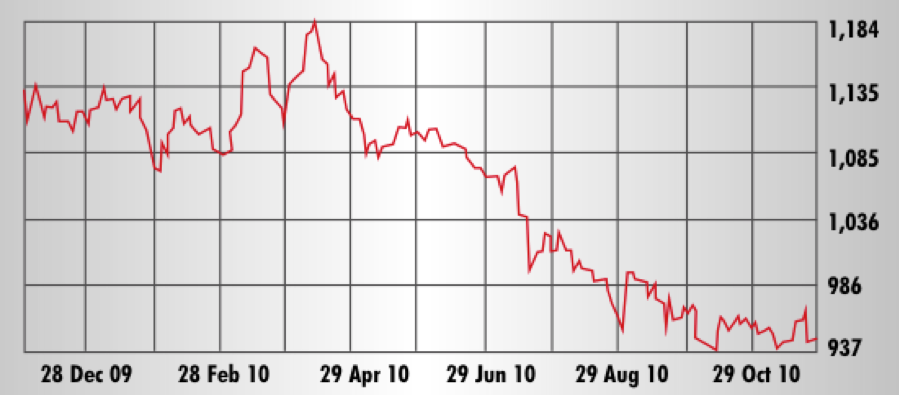
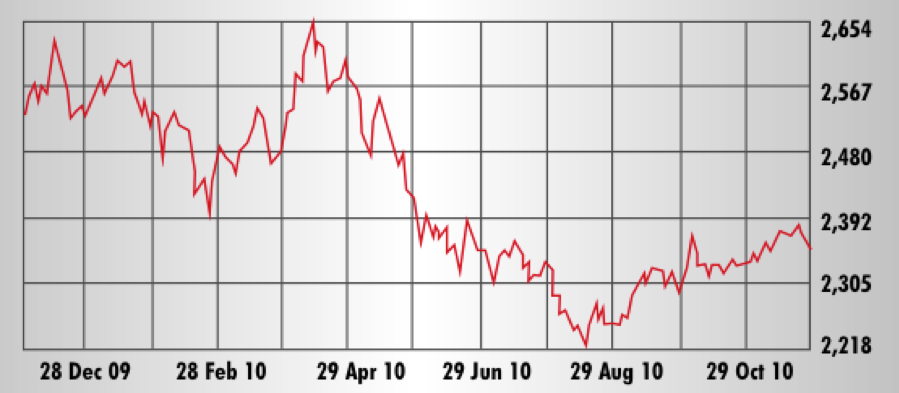
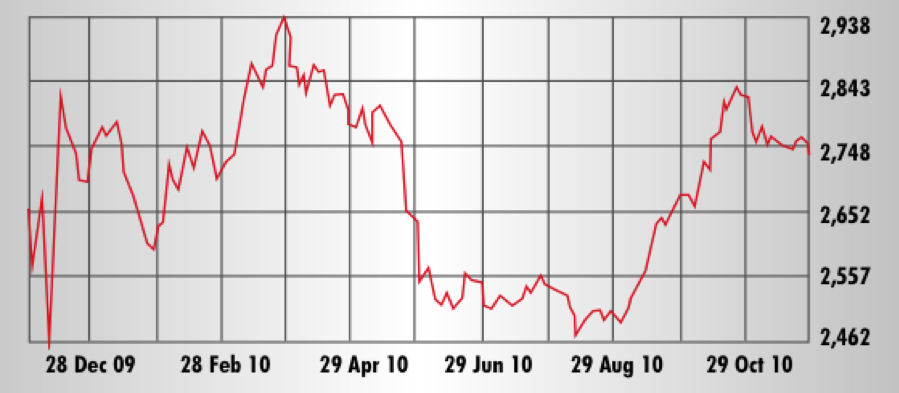
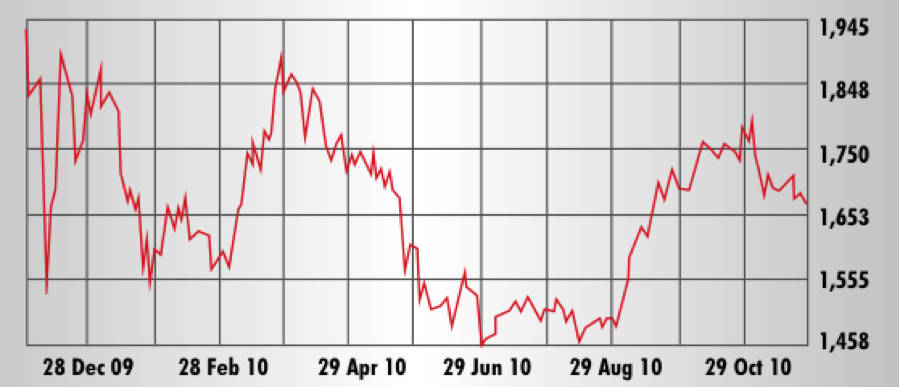
When compared with some developed and emerging markets in November 2010 —  26 months after the Lehman Brothers collapse heralded the financial crisis in world markets — a few numbers illustrate Arab investors’ lingering loss of confidence in their markets.

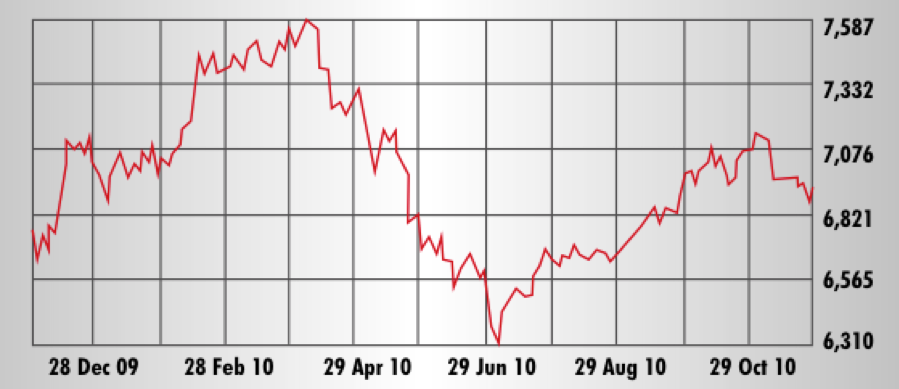
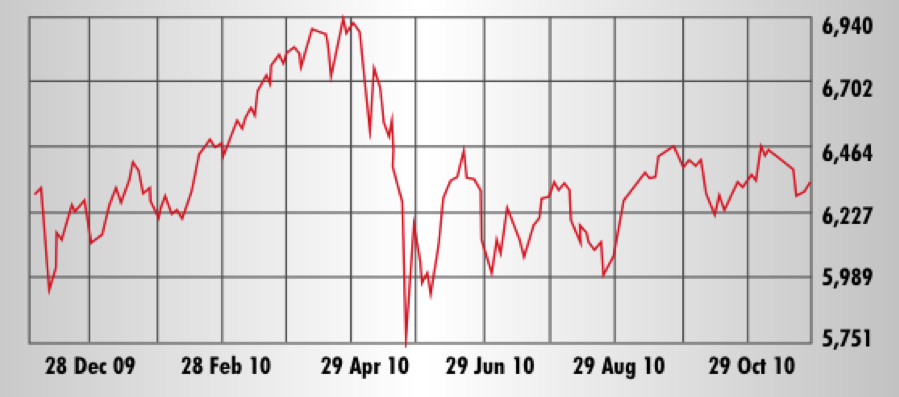
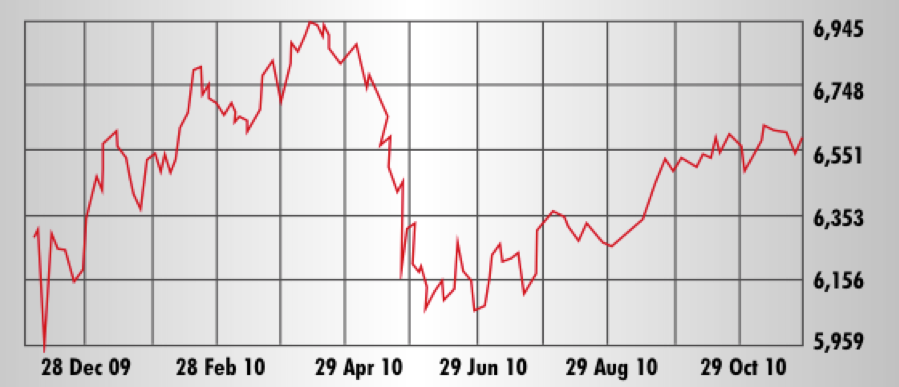
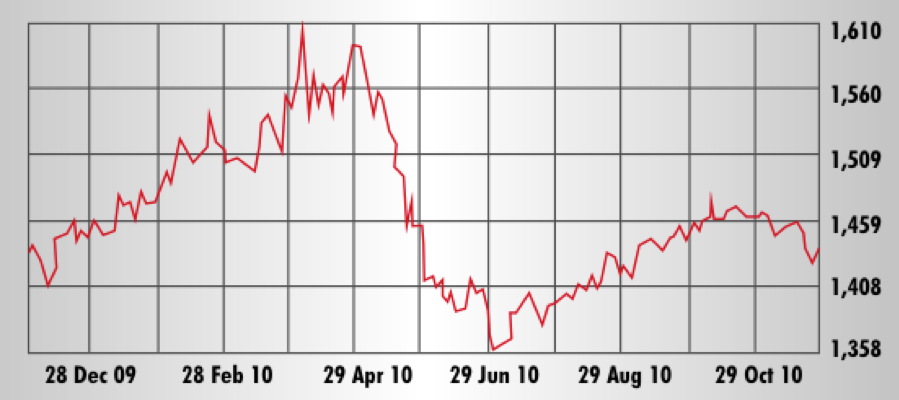
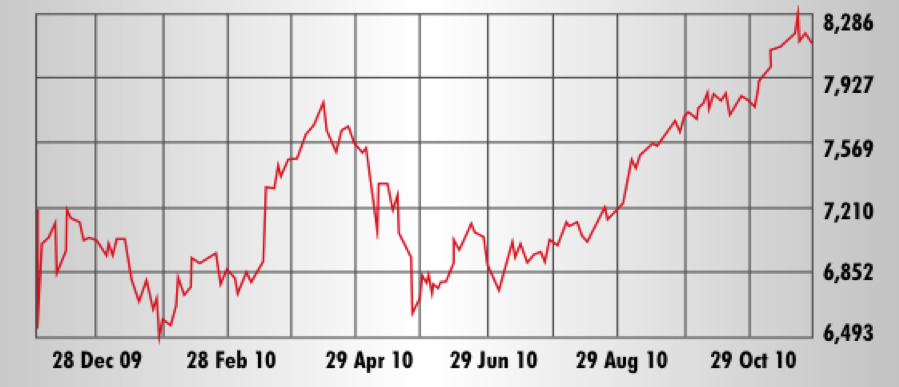
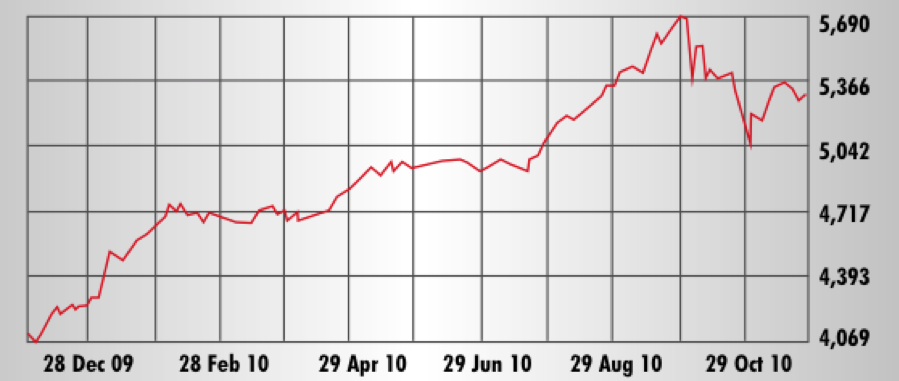
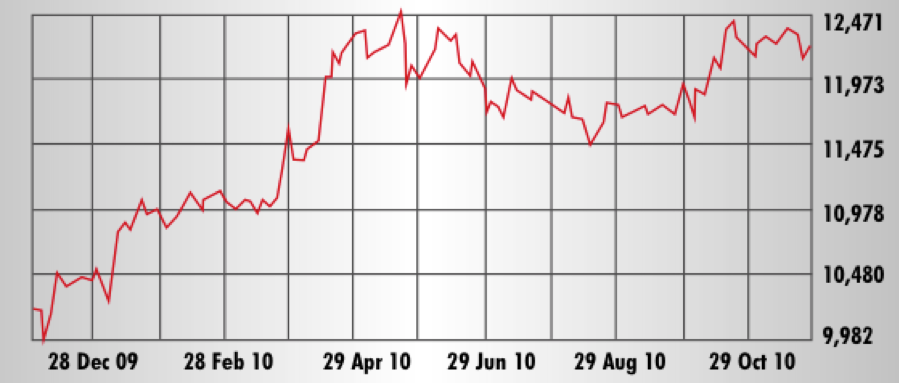
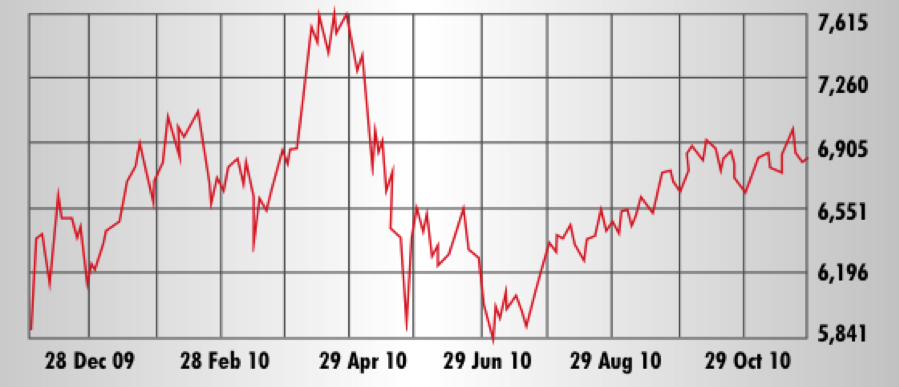
The Dow Jones Industrial Index, which crashed from nearly 12,000 points in mid-2008 to decade-lows in the 6,400 range by March 2009, had regained all ground by the fourth quarter of 2010, closing at mere 2 percent downward variation on November 15, 2010 when compared with July 1, 2008.

The United Kingdom’s FTSE 100 and Germany’s DAX, which each had dipped below 4,000 points in spring 2009, both quoted higher in mid-November 2010 than their respective levels in the summer of 2008. In Asia, where the Nikkei 225 was a laggard at about 25 percent down in the same comparison, the Hang Sang showed full recovery from 2008/2009 index losses in the third quarter of 2010.

In emerging markets, Standard & Poor’s BRIC 40 and Morgan Stanley’s MSCI Emerging Markets Index ascended in October 2010 for the first time above their values last recorded in July 2008. Looking at 2010’s top growth markets in stocks, the best gainers were all in emerging quarters. Exchanges in Indonesia, Chile, Argentina and Turkey not only added more than 40 percent to their indices in the 12 months ending October 2010, they each also scaled a new historic record in November 2010.

Of the four leading Arab exchanges by market capitalization, which accounted for approximately 70 percent of total market cap in MENA in autumn 2010, three benchmark indices — Saudi Arabia, Egypt and Qatar — were lower by 31 to 32 percent in November 2010 versus July 2008. The Kuwaiti bourse was even further behind, down 55 percent in its index over the same timeline.

The Middle East’s only exchange with a long track record that bucked the downtrend was the Tunis Stock Exchange; its Tunindex climbed 75 percent from July 1 2008 through November 15 2010.

Concentrated and diverse?

Besides the rebuilding of investor trust, the Arab exchanges face another challenge in taking their collaboration to the new levels envisioned by UASE for the coming decade. Experts and operators recognize that there are no strong merger prospects in the short term — save the possible exception of the two United Arab Emirates exchanges in Abu Dhabi and Dubai — and also know that regional securities markets will not be easy to align, given disparities between trading systems and regulatory standards.

According to a UASE survey of 14 member bourses, the sector has both a large diversity and a lot of concentration. The contradiction arises from the fact that market concentration is massive in terms of capitalization and even more so in terms of trade activity.

Tadawul, as the Saudi Stock Exchange (SSE) is best known, is the engine of all Arab shares trading. With 143 listed companies, the SSE hosts about 11 percent of the publicly traded firms in MENA — but these are larger companies and the market is more liquid than average in the region, accounting for up to 40 percent of market cap and even higher proportions of daily share movements by volume and value.

 Traders crowd the floor at the Kuwait Stock Exchange

Responses by Arab market operators to the UASE survey put the total number of investors in Arab stock markets at more than nine million, with the totals ranging from nearly 3.6 million in Saudi Arabia to 5,500 on the young Damascene bourse.

According to the UASE survey, Tadawul in mid 2010 accounted for 40.5 percent of market capitalization and captured more than 60 percent of trading activity, a statistic which, due to a technical issue precluding the Kuwait Stock Exchange’s timely response to the survey, did not include data for the Kuwait bourse. By contrast, five of the small exchanges represented only 1.5 percent of the region’s market cap combined.

A different set of disparities exists in the operational realities of Arab bourses. The UASE study found that half of the exchanges enjoy independence in regard to market trading, clearing and regulatory processes.

However, while 38 percent of the bourses today are nominally operating as private sector entities — mostly joint stock companies along with two listed companies — government control is still the daily reality for at least 80 percent of Arab bourses.

The resultant picture is one where Arab exchanges are fragmented in operational and structural terms, with a variety of international partnerships, technological platforms and methodologies in place. Regulatory frameworks are most advanced in the Gulf Cooperation Council but operators there are last in terms of independence. The state-centric organization of exchanges limits the options for development. “If we want to be a hub, we should start by being a listed company on the exchange. If the exchange is a private sector company, it becomes an option to merge or create a new entity. It is not possible today to dream of merging,” UASE’s chairman, Alshahomy, told Executive.

The upside is that Arab stock exchanges are maturing in the challenges they face and have become increasingly aware of their role in nurturing and diversifying economic development. Tadawul Chairman Abdullah Alsuweilmy told the recent UASE Annual Conference: “We are entrusted with enhancing the economies we belong to. That is very important.”

Proposals and objectives of UASE

Transparency is the word of the year for Arab stock market executives. When asked by Executive what defines a healthy stock exchange, four out of five exchange chairmen included “transparency” in their answer. Likewise, transparency, together with good regulation, has ranked in 2010 in the top tier of desirable qualities in discussions of the World Federation of Exchanges, the global alliance of bourse operators.

Market executives from around the MENA region shared a wide range of proposals at the 2010 Annual UASE Conference, as did the team from the Libyan Stock Market, which carried out the UASE member survey and evaluation as part of the country’s one-year term in chairing the federation in 2010. (The Union’s chairmanship is due to rotate to Qatar in 2011).

UASE has two immediate projects on its agenda before embarking on further development initiatives, said Secretary General Khalaf: to commence publication of reports on the Arab markets and to work on a benchmark index for the region. Further steps could include the creation of exchange-traded funds (ETF) that track the new regional index. An Arab index could generally be expected to enhance professional investor attention to the region’s stocks. But index creation is more than an exercise in calculation skills. 

Exchange inventory

“We have to start somewhere, which is the benchmark index. There are thousands of indices but the indices that survive are those done with international institutions,” Khalaf said, giving clear indication that the UASE doesn’t want to go it alone in deploying a regional index but rather has engaged in discussions to implement a partnership with one of the big global names in index formulation.  While a home-brewed index could be launched fairly quickly, working with a major partner could drag out the launch time for up to two years, though Khalaf admitted “I hope it will be faster.” 

The UASE upgraded its stature in 2009 with the establishment of a full-time elected secretary general and the positioning of annual conferences as high-caliber events to offer a forum for contributions to and from all members. For organizational development, UASE targets some expansion of the primary membership base, from 16 full members in 2009 to 23 at end of 2010, comprising 16 exchanges and seven clearinghouses.  New members expected to join shortly include Sudan’s Khartoum Stock Exchange and the Algerian exchange, hitherto a stock market in name only as it seemed to be one of the world’s least active trading places in the past decade. Membership on an associate level includes 23 brokerages.

But with the regional count of active brokerages standing at 650 firms, according to the UASE survey, and the brokerage sectors from a dozen countries severely underrepresented or not represented at all in the UASE membership, the organization appears to have a large opportunity to expand its ranks among market intermediaries.     

Khalaf emphasized that the federation will not change the fundamentals of how its members operate. “We play the same role that all stock exchanges play in their economies. We are a federation that groups all those exchanges and will not create something that the local exchanges didn’t create already,” he said.


December 3, 2010 0 comments
0 FacebookTwitterPinterestEmail
Finance

Beware the blind spot

by Thomas Schellen December 3, 2010
written by Thomas Schellen


Lebanon has long represented to Middle Eastern insurance operators what Eton stands for in relation to Anglo-Saxon education – it is one of the oldest insurance sectors in the region, has produced a substantial portion of the leading individuals in the industry and prides itself on containing some of the highest skill concentrations. And yet it has not seen the growth of which some of the Middle East’s other markets are boasting.  

Nominally — that is, based on assumptions that premiums growth for 2010 was similar to that estimated for 2009 — the total value of insurance premiums in Lebanon likely hit the $1 billion mark at some point in 2010.

Data from international reinsurance firm Swiss Re has pinned a “best in region” button on the lapel of Lebanon’s insurance penetration, calculated as the percentage of gross domestic product invested in insurance. Lebanon was judged to have the highest share of insurance-to-GDP in the Middle East and North Africa (MENA) in 2009, at 3.1 percent.

Lebanon has been a consistent regional leader in the MENA in terms of insurance penetration. Another area where the country’s insurance sector has been very consistent has, unfortunately, been its agonizing slowness in delivering numbers. Approaching the end of 2010, leaders in the national insurance industry were unable to give numbers for any of the current year’s three completed quarters; the industry is still waiting for concrete, audited numbers from the previous year.

The weaknesses in reporting sector figures has been around for decades and involves company failings as well as astounding tardiness by the insurance oversight entity, the Insurance Control Commission. 

The dearth of official numbers notwithstanding, the available informal indicators from the insurance companies say the growth of the sector in 2010, similar to the first 10 years of the century, has not been as strong as industry leaders had hoped. 

The positive element in the outlook for the Lebanese insurance sector lies in the good prospects for overall economic growth in the national economy. As the year 2010 has been setting a pace of better-than-predicted expansion — the latest forecasts by the International Monetary Fund say real GDP growth could exceed 8 percent in 2010 — insurance growth will likely follow.

But outside the perennial favorite investment target of real estate, investment and corporate growth strategies in Lebanon are highly sensitive to political tremors, and 2010 has been particularly volatile due to controversies surrounding the United Nations’ Special Tribunal for Lebanon’s investigation into the 2005 assassination of former Prime Minister Rafiq Hariri.

The politically-caused wait-and-see behavior of the corporate community has presumably impacted insurance spending in 2010, in addition to the long-standing fact that companies in Lebanon treat insurance as an inescapable protection tool to spend only the absolute minimum on. The practice of using insurance for corporate risk management has simply not taken root yet, leaving motor and health as the strongest lines in Lebanon’s non-life insurance premiums.

In the consumer sector, spending on car purchases has been quite good; retail lending has also increased in 2010. Both factors have positive implications for insurance premiums growth, but it also must be assumed that new motor policies have in some cases been underpriced under a variety of competitive offers by insurance sellers. 

To help the sector improve its bottom line, Lebanese insurance association ACAL has focused its efforts recently on curbing damaging practices in auto insurance and on enhancing the collective bargaining power of insurers in negotiations with hospitals and medical doctors, as a means to curb cost increases in the medical sector.

In other 2010 insurance news, one unsound operator, American Underwriters Group, was shut down by the ministry of economy and trade; but the removal of one firm is does little to consolidate a market where over 50 insurance companies serve a population of about four million. Perhaps the most notable takeover in the insurance game this year was the acquisition of Compagnie Libanaise D’Assurances by Zurich Middle East, a member of the Swiss Zurich Financial Group.

December 3, 2010 0 comments
0 FacebookTwitterPinterestEmail
Society

Q&A with Salam Rayes

by Josh Wood December 3, 2010
written by Josh Wood


Salam Rayes is the chief executive officer of the Ashrafieh-based St. George Hospital, one of Beirut’s oldest healthcare institutions. Executive sat down with Rayes for a frank discussion on the ailing state of healthcare in Lebanon.

E in last year’s Facts & Forecasts issue, Executive looked into how the National Social Security Fund and insurance were the biggest obstacles to the healthcare industry in Lebanon. 

Has anything changed?

Basically, there is no change — the problems are the same. The main problem is that the healthcare sector is fragmental and there is no policy or guidance to the sector. The private sector works on its own and the public sector works on its own. And the public sector is [really] public sectors — social security, the Ministry of Public Health, the armed forces. Each one has its own healthcare program and health coverage. And then again you have the insurance companies. Reimbursement is the main problem; it’s still a serious problem that is… jeopardizing the delivery of healthcare.

E In Lebanon, private hospitals are said to be much preferred over public hospitals — is this the case?

You’d be surprised. There are good government hospitals on the periphery, depending on the management. If you have good managers you have good hospitals. I can name two or three that are excellent hospitals on the periphery and people go to them. But in general what you are saying is correct [the majority of people go to private hospitals], but I hope that the government hospitals that are providing [good] healthcare to people are increasing.

E  What other problems are facing the healthcare sector in Lebanon?

Most universities graduate medical students who go abroad and never come back because of the way of life here. They have better opportunities [abroad] in whatever they specialize.

The human resources are not being attended to very well. There is a shortage of nurses, which has increased this past year because the nursing schools did not take the number that they usually enroll — most of them went below 50 percent [of normal enrollment]. And there are no schools for paramedics.

If you look at the financing as a problem, the human resources as another problem, updating your equipment is a third problem. And nobody gives a damn: if you don’t have the ‘X’ piece of equipment you’re not a good hospital and people stop at that.


E  Do you see any solutions to these problems?

I don’t think so. These problems have been accumulating over the past 100 years. Same problems, same mentality, same attitude. Solutions are all individually taken care of, not collectively: not as hospitals, not as [the] healthcare [sector], not as anything. Everybody solves his own problems and the one who solves them better is surviving better. It’s as simple as that.

I’ve been in the healthcare sector since 1965 and the same problems repeat themselves: reimbursement problems with the government, equipment, staffing, human resources, financing. Nothing has changed. Of course, the magnitude is different. I mean, we were worrying about $5 million and now we are worrying about $20 million or $25 million. 

Yet, the situation is not pessimistic because of individual efforts. You have doctors who go abroad and specialize and come back and keep on going back and forth to gain more experience and knowledge. They come and treat patients better simply because they want to do that. And communication is easier now so they can browse and find more information about modalities of treatments and so on.

So if you look at it and take it at face value, everything is fine.

E  Is it difficult staying competitive with so many hospitals and clinics popping up in Lebanon today?

We have good healthcare delivery — not in all hospitals but in quite a number of them. The practice of medicine has changed over the years. First of all, hospitals are divided into two main categories —either university-owned or church-owned as one main category and owned by individual doctors as another category. The majority of hospitals are small hospitals owned by individual doctors.

My competitor is no longer Hotel Dieu or AUH — it is the small hospital that has specialized in ‘X’ specialty. They have specialized in ophthalmology and they have good doctors there. So ‘X’ hospital is my competitor in ophthalmology, ‘Y’ hospital is my competitor in orthopedics. It’s not one place —it’s different hospitals now because there are good doctors practicing in small hospitals all over the place. So you cannot rank hospitals anymore —you can rank specialties if you want. Do we have a good specialist in neurosurgery in brain surgery, in spine surgery? They’re all over the country — in small hospitals not necessarily in big hospitals.

The disadvantage that they have in small hospitals is that they don’t treat the patient in totality — they treat him only for that specialty. If someone comes in for a spine problem and is diabetic and has a heart problem, they cannot treat him in that center, they have to get the specialist from other places. It’s only the big hospitals — the university hospitals — that have a general treatment of the patient in its totality.

E  In this setup, is it difficult for your hospital to attract specialists?

This is of course a major challenge. You see we have 200 doctors — they have seven. They have to worry about finding seven — I have to worry about finding 200 and about replacing the 200, so the magnitude is different.

E  Is the Ministry of Public Health responsive at all to the needs of the public or private healthcare sectors?

Yes and no. They are doing their best with the resources they have. I think that this minister is doing a lot better than previous ministers — after all he is a physician. The ones who were before him were just politicians. He’s definitely much better than what we had.

E  What do you believe the healthcare sector will start looking like in the near future?

More of the same — no major changes unless you get a Minister of Health who is willing to impose changes that will shape up the whole system.


December 3, 2010 0 comments
0 FacebookTwitterPinterestEmail
Finance

Exporting the excess

by Emma Cosgrove December 3, 2010
written by Emma Cosgrove


In a year where deadlines for global economic recovery were repeatedly pushed back like a teenager’s weekend curfew, Lebanon’s banks managed to sail through 2010 with relative ease. Commercial banks’ total assets climbed 10 percent year-on-year to $126.7 billion at the end of September, despite a slight falling off of capital inflows.

Deposits constituted 82 percent of the banks’ balance sheets, growing by 8.4 percent to reach $103.9 billion at the end of the third quarter. Ninety percent of that deposit growth was contributed by residents while, in line with capital inflows trends, new non-resident deposits shrank to 10 percent of the total, after constituting 28 percent over the same period in 2009.

Net profits increased by 37 percent in the first nine months of the year, but the real battle cry of the banking sector in 2010 was lending. Celebrated by Executives and analysts alike, lending at Lebanese banks saw a 19.2 percent rise in the first nine months of 2010 — growing from $28.4 billion at the end of 2009 to $33.8 billion at end-September 2010, representing year-on-year growth of 63 percent. Of this expansion, 84.5 percent of loans went to the domestic private sector.

Dollarization of lending has continued its downward trend spurred by incentives from Banque du Liban (BDL), Lebanon’s Central bank, which lifted reserve requirements on local currency lending to 60 percent of economic sectors. These circulars began in June of 2009 and have been extended until June of 2011. Dollarization of lending stood at 81.2 percent at the end of the third quarter.

However, despite obvious growth and apparent demand, Lebanese banks must still look outside the country to deploy their massive funds.

“It is indeed difficult to find use for all the funds we are receiving, so the only way to continue this expansion and to continue to grow our balance sheet is to continue to fund clients outside of the country,” said Walid Raphael, general manger of Banque Libano-Francaise to Executive in May.

As of the end of September, delinquent loans represented 4.3 percent of all lending: down from 5.7 percent in 2009.

Onward and outward

Excessive levels of liquidity and looming domestic stability risks caused banks to continue the suggested central bank strategy of opening branches and offices outside of Lebanon.

BDL Governor Riad Salameh

“The local Lebanese market is saturated with banking services, which made [BDL] eager to encourage banks, such as ourselves and others, to expand outside the local market,” said Chawki Badr, head of international expansion at Bank of Beirut and Arab Countries, to Executive in May. This trend is the continuing adherence to an intention expressed some years ago by BDL Governor Riad Salameh, which he said, in May, should be continued.

“Our objective here is to decrease the sensitivity of Lebanese banks to the Lebanese sovereign rating and also to have a sector that would enrich our balance of payments and provide opportunities for employment, because the Lebanese have skills in financial services and banking, and you can see them working everywhere in the world,” said Salameh.

Banks are limited to investing 50 percent of their funds abroad and Salameh has expressed that the goal is for 50 percent of bank revenues to soon come from abroad as well — an effort that will hopefully raise the credit ratings of Lebanese banks, which currently stand below investment grade as they are tied to the sovereign rating.

Lebanon
</p>
									            </div>
        </div>

		            <div class=

December 3, 2010 0 comments
0 FacebookTwitterPinterestEmail
  • 1
  • …
  • 397
  • 398
  • 399
  • 400
  • 401
  • …
  • 686

Latest Cover

About us

Since its first edition emerged on the newsstands in 1999, Executive Magazine has been dedicated to providing its readers with the most up-to-date local and regional business news. Executive is a monthly business magazine that offers readers in-depth analyses on the Lebanese world of commerce, covering all the major sectors – from banking, finance, and insurance to technology, tourism, hospitality, media, and retail.

  • Donate
  • Our Purpose
  • Contact Us

Sign up for our newsletter

    • Facebook
    • Twitter
    • Instagram
    • Linkedin
    • Youtube
    Executive Magazine
    • ISSUES
      • Current Issue
      • Past issues
    • BUSINESS
    • ECONOMICS & POLICY
    • OPINION
    • SPECIAL REPORTS
    • EXECUTIVE TALKS
    • MOVEMENTS
      • Change the image
      • Cannes lions
      • Transparency & accountability
      • ECONOMIC ROADMAP
      • Say No to Corruption
      • The Lebanon media development initiative
      • LPSN Policy Asks
      • Advocating the preservation of deposits
    • JOIN US
      • Join our movement
      • Attend our events
      • Receive updates
      • Connect with us
    • DONATE