• Donate
  • Our Purpose
  • Contact Us
Executive Magazine
  • ISSUES
    • Current Issue
    • Past issues
  • BUSINESS
  • ECONOMICS & POLICY
  • OPINION
  • SPECIAL REPORTS
  • EXECUTIVE TALKS
  • MOVEMENTS
    • Change the image
    • Cannes lions
    • Transparency & accountability
    • ECONOMIC ROADMAP
    • Say No to Corruption
    • The Lebanon media development initiative
    • LPSN Policy Asks
    • Advocating the preservation of deposits
  • JOIN US
    • Join our movement
    • Attend our events
    • Receive updates
    • Connect with us
  • DONATE
Finance

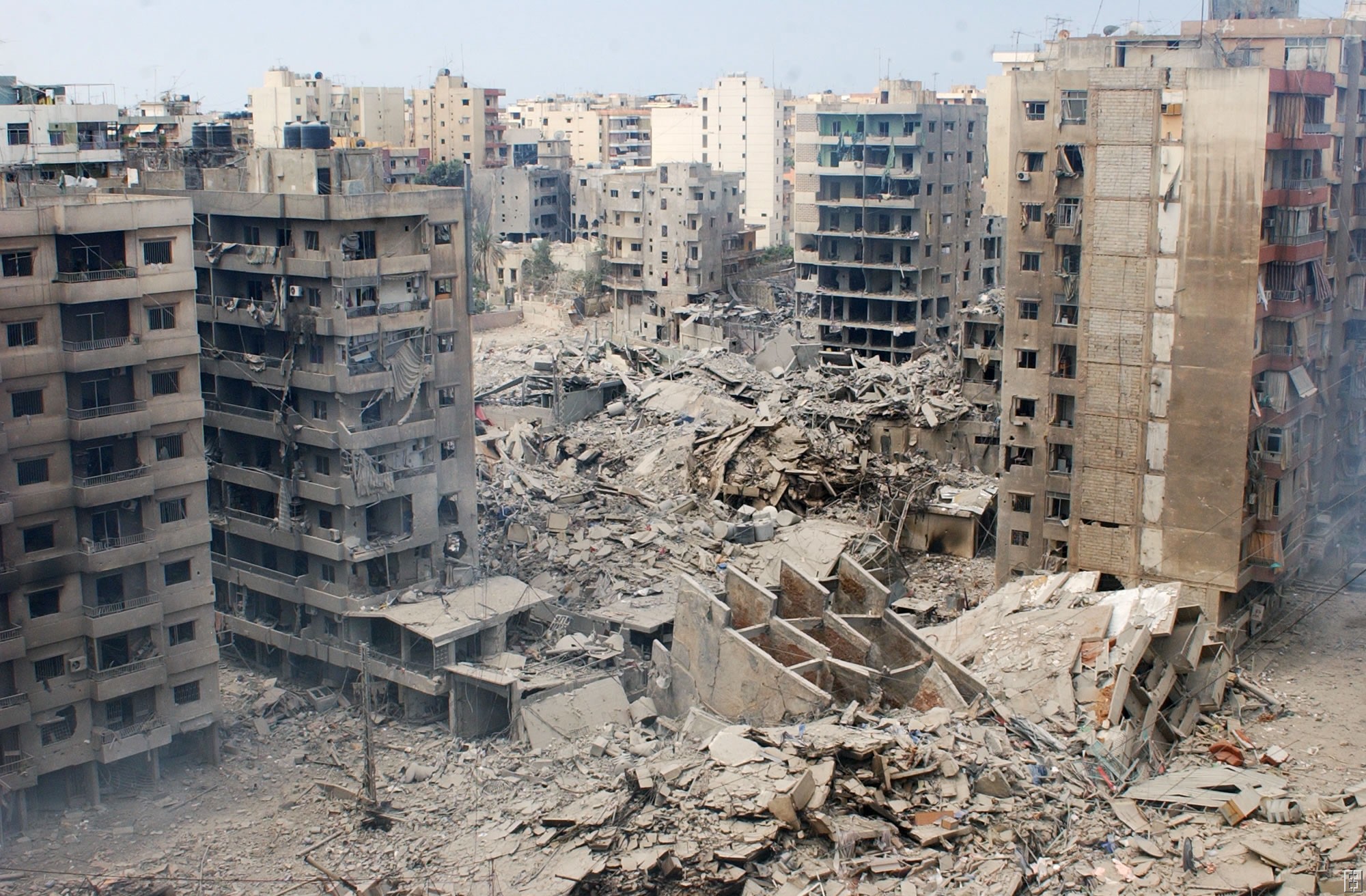
Counting the cost of war

by Ahmed Moor April 1, 2010
written by Ahmed Moor

For as long as insurance has existed, companies, states and individuals have purchased policies to protect against war. Britain and France have long provided war insurance to companies, and America passed the War Risk Insurance Act in 1914 to provide marine insurance during World War I.

Unfortunately, war risk has not disappeared and new types of man-made risk have yielded the development of related insurance products, such as terrorism insurance. 

The Middle East has long been prone to war and terrorism risk. As a consequence, the Arab War Risks Insurance Syndicate (AWRIS) was created in 1980 by a group of Middle Eastern insurance and reinsurance companies. The syndicate boasts a broad membership of 170 companies from 19 Arab countries; 21 board members hail from Lebanon alone. AWRIS collected a net premium of $21.7 million in 2008 and held $41.2 million in reserves in 2008. Total assets under management are approximately $1.22 billion. Providing war and terrorism risk coverage is difficult as the occurrence probabilities are difficult to predict, while the associated liabilities are generally enormous, which is why a syndicate or government-backed agency is usually required. 


The carnage calculation
 
 
The below rationale and equation is taken from one insurance underwriter’s presentation to an industry group. It serves as a stark demonstration of the difficulties associated with developing a formula to price terrorism risk.
For each state “Q” of the Al-Qaeda terrorist network, there is a “Markov Feedback Policy“ involving “C,”a series of counter-terrorism actions. In a democracy with checks and balances on police and security services, these actions must be commensurate with the threat, i.e. dependent on Q, so C = C[Q].
Defining Qk to be the state at time k: the controlled Markov Chain model is
defined by the transition probability matrix T[i,j]: P {Qk+1 = i | Qk=j; C[Qk]}.


There are two primary types of insurance: property insurance and life insurance. At present, there is insurance available to protect both property and lives in the event of war or terrorism. In the Middle East, the AWRIS provides specialized war policies covering marine and aviation operations and property, sabotage and terrorism, personal accident (war-related), political risks and special risks. 


Weighing up the risk

Property war insurance is primarily purchased by shipping companies and airlines. One type of insurance available is war liability, which covers people and goods in the craft. Another predominant type is hull insurance, which provides compensation for the craft based on its appraised value. Life war insurance is provided on an individual basis by a number of life insurance companies around the globe. The risk contracts can vary anywhere from one day to years depending on the period of an individual’s engagement in a war or terrorism prone area. 

Pricing war risk insurance and reinsurance is dependent upon the ability of the insurer or reinsurer to accurately gauge the probability of an event. Historical experience can help insurance and reinsurance companies build realistic financial models for these risks. In the case of AWRIS, member companies cede risks and premiums to the syndicate whose rates are determined by a governing technical committee.

Importantly, the syndicate includes a provision for individual governments to subsidize the cost of coverage by paying a portion of insurance company premiums to the syndicate. The goal would be to reduce the cost of war risk and terrorism risk insurance to the end consumer.

Human conflict and conflict-generated losses are a fact of life. Because of the unpredictable nature of conflict, whether it be war or terrorism, this type of insurance will always be difficult to price. Furthermore, because of the high liability associated, many successful war and terrorism risk insurance and reinsurance schemes require government backing. It appears that the private market is still working to provide a solution independently of the public sector. 

April 1, 2010 0 comments
0 FacebookTwitterPinterestEmail
Economics & Policy

A momentous task

by Sami Halabi April 1, 2010
written by Sami Halabi

Raya Hassan has been Lebanon’s Minister of Finance since the government was sworn in, in November 2009. Before becoming a minister, she worked in the office of the prime minister on both Paris II and Paris III donor conferences, and served as an advisor to the minister of economics and trade with the United Nations Development Program. As part of her ministerial duties she has been tasked with drafting a budget for a country that has been without one since 2005. On condition that figures relating to the budget would not be discussed, Hassan agreed to an exclusive interview with Executive to discuss issues related to the budget, the public debt and the finance ministry’s strategy going forward.

E The government’s debt strategy so far has been to trade short-term debt for long-term debt; this increases the debt service and moves the burden onto future generations, as well as exposing ourselves to currency fluctuations. Can you address these concerns?

When we are formulating our debt strategy we think of several factors. One is extending the maturity curve in order to smoothen [it]. Because we have maturities that go up and down, we try to smoothen it as much as possible so that we don’t have one big maturity of spending at a particular year and time; and we try to extend it as much as possible.

We extended for several reasons. While it’s true you pay more, you are getting a comfort zone. Plus, when we go abroad for Eurobond [subscription] we are able to get longer maturities for better prices than we can do here…there we issue at 10 and 15 [years]. We used to issue Eurobonds at 8, 9, 10 percent; now we have the luxury to refinance this debt at much lower coupons than we were able to five years ago. We want to make sure [the debt] is not only [held] purely by Lebanese banks, because this is too much exposure for them. It’s not a good thing for either of us.

E  The decision to stop issuing treasury bills [TBs] was met by “anger and confusion,” to quote one banking executive, and has seemingly been overturned, since you will begin issuing again in April. This has sparked accusations that the finance ministry has caved under pressure from creditors. Can you respond to this claim and explain the strategy of halting and re-issuance of T-bills? 

Frankly, I didn’t speak to any bank. It coincided with me on [a] Monday deciding on how much to take from the auction for the TBs. I told [my staff], ‘please get me how much is now in the treasury account.’ It turned out to be 6,500 [billion LL or $4.3 billion] on a net basis. I [then] said ‘I think we are going overboard with the surplus reserve that we want to have in terms of the treasury account. Therefore let’s maybe think about stopping the auction at least for a short period.’

I picked up the phone and called the [central bank] governor and decided, with him — meaning he did not say, ‘No don’t do it,’ he said, ‘Fine, if you exit from the market maybe I will try to go in myself with very short CDs [certificates of deposit] issuance and let’s do it.’ Before I sent the letter specifying exactly how long I was going to be out of the market, it just happened, probably from a procedural point of view, that he issued a statement which went out to Reuters that said: ‘The Ministry of Finance is going out of the market indefinitely.’ That was not the case. I said that we will make sure that we go out for a short period and I sent, subsequently, a letter that said we were going to go out for one month.

I could have stayed [in the market]. That was another option; but then I could not take anything at all. I had to weigh my options: either let the auction happen and not take anything, which would have signaled a bad thing, or say that we were not going to do an auction for one month, knowing that, if there was going to be any need by the market, the central bank could come in and [supply] it.

It’s good to have a reserve, obviously, and the approach I am adopting is to have in my treasury account, three months worth of future maturities, whether Eurobonds or T-bills. The 6,500 billion [Lebanese lira] was beyond that, so I said, ‘let’s not go overboard with this because this costs money as well.’

Having this buffer has its price but we would rather have the buffer, rather than not having it at all and finding ourselves in any kind of situation [where] we are not able to honor our debt obligations. But once it went over the threshold we had [set] for ourselves, we said let’s not increase it.

E  You said previously you were going to decrease it to a figure of 4800 billion LL.

Something to that measure.

E  Many economists say that, considering this surplus comes from debt, which keeps the level of total stock of public debt higher, this is not congruent with Ministry of Finance’s and the Prime Minister’s stated principle that “we don’t want to increase the debt.” How does it make economic sense to horde borrowed money to pay back interest on debt?

Look, it’s not additional debt. This is pre-funding; I am not borrowing. At the end of the year, I will not be borrowing more as a result of this approach. I’m just borrowing sooner. I’m rolling over sooner. I am borrowing so I can meet my dues. I was going to do it anyway. I am not increasing my debt, I am just rolling over an existing debt to refinance the existing debt, but I am doing it sooner than the maturity. So it’s not increasing debt.

I have to increase debt because I have a deficit. At the end of the year [I] will have to borrow more. As long as there is a deficit, the stock of debt will increase, but this particular measure is pre-funding. You need to use it anyway. You need to go out of the market and refinance but you do it three months in advance rather than doing it at the date of maturity, because you want to make sure that in this volatile environment, you don’t run out of cash to pay whatever maturity might  come.

E  Do you have a projection plan under the current public debt strategy to begin paying off the principal on the public debt any time soon?

Maybe [we can] if we switch some of the project financing support that we got under Paris III. We have around $800 million [pledged] from the French, from the Americans, from the World Bank; [but] these are all linked to conditions. Plus, if we go ahead with privatization, the proceeds will go toward reducing our debt stock.

We are also betting on growth, which should be the anchor of any debt reduction strategy. Growth raises additional revenues and hopefully goes toward reducing the primary surplus and eating out of our debt stock. It has to be a multi-faceted approach.

E  One of the biggest costs we have is Électricité du Liban (EDL) fuel costs. Currently this is financed through letters of credit, but do you have a fuel cost hedging strategy to predict fuel costs?

No, frankly we have not done it. It could be something that needs to be explored but today you have structural problems that you need to address irrespective of hedging against an increase in fuel prices. We don’t even have cost recovery; we are not at this stage. Therefore, EDL itself needs to be corporatized according to the law. There should be, eventually, the unbundling of the sector.

 You need to tackle the generation [which] is a problem by itself. And, you need to tackle the distribution end, plus you need to reduce all your technical and non-technical losses. There is a whole restructuring [process] that needs to be done on EDL. One of [the elements] is to at least achieve a full cost recovery of the electricity and therefore we need to review the tariff structure. The tariff structure now is low by any international standards. It does not cover primary costs, let alone losses.

When I see my budget, in terms of the primary expenditures, its one-third salaries, one-third servicing, and one-third EDL. So there is not much you can do if you don’t solve the debt problem and you don’t solve your electricity problem — you cannot release the additional funds that you need for the government to really spend on the areas that you need to spend on like health, security and education. The structure of our budget is so rigid that there is very little room for improvement at this point.

E  Do you think that all the other ministers understand this rigidity when you have conversations in the cabinet sessions?     

We are trying to explain to them if possible. Some people don’t have this macro [economic] view of the inter-linkages between the different elements of the budget. We are trying to make the case that we are not happy with any VAT [value added tax] increases. God willing, we will not reach VAT increases.

But the situation that we are in right now necessitates that any increase in expenditures will have to be matched by an increase in revenue. Otherwise, if that does not happen we will accumulate a primary deficit. If we accumulate a primary deficit, our debt will start increasing at an increasing rate and we are back to square zero; pre-Paris II.

It’s a no brainer. We are not fans of any additional taxes, but if we are going to have to really address the structural problems and we don’t want to go to concessional funding [soft loans] or the private sector, then the only way is to try to raise additional revenues.

E  Many entities have been off-budget line items in the past, such as the capital spending for the Council for the South and the Displaced fund, and capital spending is still not included for other entities such as the Council for Development and Reconstruction (CDR). As such, some economists have stated that up to 20 percent of spending goes to these non-budget line items, which are outside of the budget and only annexed later. Are these items and those like them going to be included in the next budget since it is, after all, public spending?

Yes, you are going to see them, definitely. You are going to see the actual expenditures and at the same time you are going to see them within the budget. You cannot incorporate all of these extra budgetary [items] that we call “treasury expenses” within the budget structure because, for example, for the treasury advances you don’t know it in advance. You cannot predict it, so you put it as an allocation within the budget. But in the budget book we are going to list them. We are going to say, ‘these are the budget allocations and these are the treasury expenditures’ and its going to be very transparent. The intention is at no point in time to say we have expenses that we don’t want to show. On the contrary, I want to show the bigger picture of how much our expenditures are.

E  Do you agree that these entities constitute around 20 percent of spending?

It might be even more.

E  Why are items like The Regie [Libanaise de Tabacs et Tombacs] and Ogero’s lump sum payments not broken down to in the budget proposals of years past? 

These are the annexed budgets and these are also within the budget. The Minister of Telecom for instance, says he wants a certain amount of investment, gives us his budget and says, ‘I will transfer whatever surplus I have. After I let out my expenditure and I collect whatever revenues, I will send you the surplus that I have in my budget.’ All the annexed budgets are like this [including] the national lottery. They are given a budget and any surplus is transferred.

E  So there is no key performance indicator (KPI) based criteria you use with these entities to ascertain their budgets then?

No. But this is what we are trying to do through the performance-based budget, which has already started in the Ministry of Education. This should pave the way for eventually using KPIs and performance indicators to start assessing the efficiency and effectiveness of all of these expenditures. This is part of the reform processes.

E  A lot of the money due to the government, in the form of our direct taxes from the National Social Security Fund, municipality tax and income tax, is being evaded and double book-keeping is rampant, causing much waste of government revenue. Since taxes make up the bulk of government revenue, what has been done to curb this problem and are there any tangible results? 

We are not involved with the municipality tax or the NSSF. Income tax is another story as is the VAT. You also have property taxes and things of the sort. I have to admit that there is evasion, everybody knows that. The banks pay 40 percent of total income taxes, so it’s concentrated.

E  And they only constitute around 20,000 workers?

No, here I am talking about corporate [income tax]. Small grocery shops, the self-employed, doctors’ offices and things of the sort [evade taxes]. But there has been a lot of improvement. If you study the trend of the revenues you can see — other than the growth factor — that collection has been improving every year.

Obviously, there is still a lot to be done. How to do it? We are now trying to implement a twinning arrangement called a risk compliance audit. Rather than the inspector wanting to study every file and every company — which throughout his entire life he will never be able to do — we are saying that we can set up certain risk criteria and based upon this, we will study this group of people every year. It will not be done to all [companies]. As a result, based on that criteria, [we will study] the most important portfolios that poses a risk of evasion.

E  The Central Bank is, by definition, the “lender of last resort” and it now holds around 15 percent of the public debt. Usually this is explained by saying that the Banque du Liban (BDL) is practicing its monetary policy. Can you explain why this amount has become so substantial if this is the case, and why aren’t they taking measures to decrease the burden on the government?

They should. Eventually, the BDL holdings of TBs should go down. It’s true that it is part of the monetary tools that they use. But I think eventually they should reduce the exposure and the TB holdings of the government.

April 1, 2010 0 comments
0 FacebookTwitterPinterestEmail
Finance

Waking up to the web

by Emma Cosgrove April 1, 2010
written by Emma Cosgrove

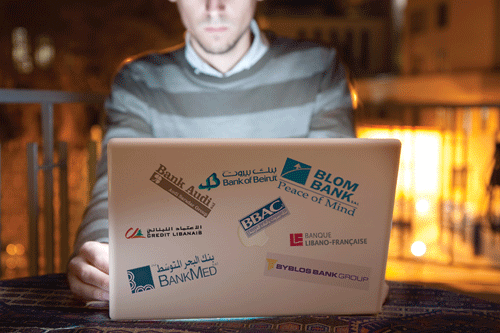
For many clients of international banks, a trip to a branch has become a thing of the past, as an increasing variety of services have become available online. Some institutions, such as Dutch lender ING Direct, have gone so far as to do away with branches completely. ING’s United States director, Arkadi Kulhmann, has said that the inspiration for the branch-less banking system came from enterprises in other industries such as Swiss furniture giant IKEA and the US’s Southwest airlines, both of whom choose product selection and low cost over aesthetics and frills.

Lebanon, however, has no discount airline, no IKEA, and face-to-face interaction with a bank teller is seen as a non-negotiable necessity, especially to the older generation. The result has been that, until recently, the country’s banks have kept their online service offerings to a minimum; most banks first offered online services five years ago, but these were limited to simply displaying accounts and balances, with some opportunities to transfer within the same bank.

But according to directors of online banking services, this tide is changing. Younger Lebanese, fully equipped with net books and wireless internet at every café and mall, demand more online banking access. Some banks have been eager to oblige, as a palpable move to online services would notably decrease operational costs.  “Other than the infrastructure implementation, the only cost is how many bits they are taking from our system…this is peanuts,” said Ronald Zirka, head of marketing at Banque Libano-Francaise.

Antoine Lawandos, assistant general manager and chief information officer at BLOM Bank, agreed, and alluded to the day when banking services would be completely online. 

“Within our strategy we consider internet banking as being a delivery channel, not a service,” said Lawandos. “We would like to compare it to [our branches].”

No safety net

Due to the antiquated laws governing banking transactions — which have not been updated and adapted to the internet age — developers of online banking services are treading in legally nebulous waters. A draft bill to officialize online signatures has been waiting for parliamentary approval for the last five years, like many other bills not deemed a priority for the backlogged parliament. Without this, banks that choose to expand their online services take a financial risk, since transactions that do not carry a physical signature are not legally binding in Lebanon.

Online services currently offered by Lebanon
</p>
									            </div>
        </div>

		            <div class=

April 1, 2010 0 comments
0 FacebookTwitterPinterestEmail
Economics & Policy

Pandora’s Budget

by Sami Halabi April 1, 2010
written by Sami Halabi

Among the more developed countries of the world it is customary to hold the nation’s constitution as sacrosanct, with governments that violate it swiftly shown the door by way of the ballot. The Lebanese constitution, on the other hand, is more a set of rough guidelines that successive governments have invoked when it suited their purposes, ignoring the tedious elements, such as those that deal with drafting the national budget. 

Articles 81 to 86 of the constitution specifically lay out the process for Lebanon’s government to pass a budget. Accordingly, the budget for any year should be proposed by the Council of Ministers, Lebanon’s cabinet, during the second regular session of parliament in October of the preceding year. Negotiations can then be extended until January, at which point, if no agreement is reached, “the Council of Ministers may take a decision, on the basis of which a decree is issued by the president.” This enacts the budget as it was submitted to the Parliament. 

“When the constitution states such an article, that means that neither the cabinet nor the parliament can violate it,” said Wassim Mansouri, lawyer and constitutional expert. “What has been happening for years now is that they have been violating this.” According to Mansouri, no legal body can actually punish these constitutional violations because none has jurisdiction to do so; that includes Lebanon’s Constitutional Court, which only deals with issues relating to the elections, not the actual constitution. What successive governments have been doing instead of adhering to the constitution is to follow the rule of the “provisional twelfth,” whereby the government spends the same amount each month as they did in the most recently approved budget — meaning the one passed in 2005.

“Now you tell me that it is mentioned in the constitution, but at that time they did not know that there would be [this amount] of political wrangling,” said Raya Hassan, Lebanon’s finance minister allied with the parliamentary majority. “If there is no budget the only way a country can spend is by the principle of the provisional twelfth, otherwise how would you be able to spend?”

Now that Lebanon has a cabinet, without the excuse of pending elections or a lack of quorum to put off the issue, Hassan has been handed the prickly task of drafting the budget and managing some $51 billion in public debt.

But new projects require new money and that does not grow on olive trees.

Perhaps the most controversial proposal on the table is increasing Lebanon’s value added tax (VAT) from 10 percent to 12 or 15 percent, part of the reforms proposed at the Paris III donor conference, in which Hassan was heavily involved before becoming the finance minister. The proposal is highly unpopular with many segments of society and across the political spectrum.

According to a study by the Lebanese Economics Association (LEA), an increase in VAT by 2 percent would more than double the percentage of the population living below the extreme poverty line from 3 percent to 6.6 percent. People who live in “extreme poverty” are defined as earning less than $2.40 per day and being unable to meet basic food and non-food needs.

A 5 percent rise in VAT would send 8.9 percent of Lebanese into extreme poverty. The number of people living at or under the “upper poverty line” (defined as earning between $2.40 and $4 per day) would also be expected to increase, from the current rate of some 28 percent of Lebanese, to between 30.9 percent (with a 2 percent VAT increase) and 34.7 percent (with a 5 percent increase). What makes matters worse is that most of the revenues from any VAT increase would not come from the poor — it will just create more of them.

Estimated impact of a rise in VAT on household consumption in Lebanon

“VAT is imposed on consumption, so the more they consume the more they pay; but the poor people don’t consume that much, they don’t really pay a lot of it,” said Jad Chaaban, acting president of the LEA  and co-author of the report. “The problem is whenever they spend a bit more they are immediately subject to the tax.”

While Hassan has not officially announced that she is planning to include a VAT increase in the next budget, she does concede that there is little more she can do to increase government revenues in Lebanon. 

“You have very limited room today to think of any revenue measure except VAT,” said Hassan, who spoke to Executive on condition that figures from the budget would not be released.

In case she does decide to propose an increase, Hassan said she intends to “exempt” those living in extreme poverty and offer upper poverty Lebanese “mitigating” measures. One is exempting certain products from the VAT, and Hassan insisted Lebanon has the largest exemption base on earth.

According to the LEA, the exemptions on food items, which constitute almost twice the percentage of household spending for the poorest families (18 percent) than for the wealthiest (9.2 percent) “appear to be progressive.” However, other exemptions, such as those related to education and books, are “highly regressive.”

List of VAT-exempted products and services in Lebanon
 
Goods:

  • Livestock, poultries, live fish and agricultural alimentary products sold in their raw state.
  • Bread, flour, meat and fish, milk and yogurt and their derivatives, rice, borghol, sugar, cooking salt, vegetable oil, macaroni and all different kinds of pasta and baby’s food.
  • Books, magazines, newspapers, paper and paperboard of a kind used for writing and printing, newsprints in rolls or sheets, printing ink.
  • Postal and fiscal stamps and paper money.
  • Gas for household consumption (butane).
  • Seeds, fertilizers, feeds and agricultural pesticides.
  • Agricultural machinery.
  • Medicines, drugs and pharmaceutical products including those used for health and pharmaceutical purposes.
  • Medical tools, installations and equipment.
  • Precious and semi-precious stones, precious and semi-precious stones destined for mounting or renewed, pearls, diamonds, gold, silver and other precious metals.
  • Negotiable money in paper or coins.
  • Yachts and other excursion or sports sailboats with a length exceeding 15 meters that are only owned by non-Lebanese.
  • Means of air transportation used for persons and goods.

Services:

  • Services offered by physicians or persons performing a medical activity, and hospital fees.
  • Education.
  • Insurance and reinsurance, and medical coverage provided by mutual assistance fund and employers and related services.
  • Banking and financial services.
  • Non-profit organizations and the activities performed for non-profit purposes.
  • Collective transport of persons, including transport by taxicabs.
  • Supply of gold to the Central Bank.
  • Betting, lotteries and other forms of gambling.
  • Sale of built properties.
  • Residential letting of built properties.
  • Farmers’ activities concerning the supply of their agricultural production.

Source: Ministry of Finance & Lebanese Economics Association

Then there are the more striking items which aren’t exactly the target investments of a pauper’s portfolio. Yachts and other excursion boats longer than 15 meters and owned by non-Lebanese are exempt from VAT, as is gambling, air transport, precious stones, sale and rent of built property, as well as banking and financial services. Hassan’s explanation for these exemptions was that they are also exempt in other countries for reasons that are both economic and technical.

The other way

Marwan Iskandar, an economist and managing director of MI Associates, said delaying a VAT increase “can be justified” in part, if the government’s treasury account surplus ($4.3 billion at the end of February) is used to cover half of this year’s projected deficit of some $4.2 billion, according to Byblos Bank. He suggested that the rest of the money could be generated from increasing revenues resulting from general economic growth, as tax revenues have grown 48.7 percent in the last two years. At the end of 2009, government revenue stood at some $8 billion, $5.98 billion of which came from tax revenue. Moreover, Iskandar pointed to another source of funds as being the $480 million currently tied up in the Beirut municipality’s account, due to political wrangling between the mayor and the mouhafiz, or provincial governor. He also reckons that some of the pledges from Paris III can still be secured, but doubts the seriousness of many of the donors since the pledges were made before the onset of the global financial crisis.

“[The government] have no right to tax us when they have assets which are underutilized,” said Iskandar. “They need to think about how they can activate the economy. The solution is not in taxation. The solution is attracting major investments in essential, important projects.”

He stressed the need to develop Lebanon’s water, oil refining and exploration potential — a prospect that is harrowing to others.

“Today we are not taking care of our agriculture, environment or industry,” said the LEA’s Chaaban. “If we find oil we will never take care of it; we’ll become more of a banana republic.”

Talk of increasing taxation seems even less warranted when many of the staples of good financial management are still not in place.  According to the finance ministry, last year the government transferred 4.3 percent of GDP ($1.5 billion dollars) to Électricité du Liban (EDL), the state-owned electricity company, with 94.4 percent of that figure going to reimburse the Kuwait Petroleum Company and Algeria’s Sonatrach, Lebanon’s fuel and oil suppliers, for gas and fuel oil purchases.

Hassan said the country’s primary expenditures were split equally between salaries, debt servicing and the cost of EDL. That being the case, one would think that the government would hedge against any future increase in fuel costs as major airlines do to predict their future financing options. However, the Lebanese government still does not have a program to hedge its fuel purchases, which totaled $1.55 billion in 2009.

“It could be something that needs to be explored but today you have structural problems that you need to address irrespective of hedging against an increase in fuel prices. We don’t even have cost recovery; we are not [even] at this stage,” said Hassan in reference to EDL. 

Tax evasion is also rampant in Lebanon, with many businesses and individuals keeping two sets of books, one for themselves and one for government auditors. The government has made some headway in terms of tax collection, with the ratio tax collectors to the general population being within internationally accepted bounds, according to the LEA’s Chaaban. But public auditing methodology is outdated, still following Lebanon’s decades-old public accounting law. The finance ministry is now beginning to implement a risk compliance audit system, whereby auditors are not required to assess each and every business — a task that caused public audits to lag behind their respective tax years — but study only segments of the economy that are prone to tax evasion.

An indebted surplus

Ultimately, the issue of Lebanon’s public debt is what weighs heaviest on the budget, with interest payments constituting the largest expenditure item in 2009 at some $3.8 billion. In late-February a media frenzy ensued in Lebanon over the financial management of the governments treasury account, the national equivalent of a personal current account. It was then that the account was found to contain a $4.3 billion surplus [6,500 billion Lebanese lira], while at the same time the VAT increase was being floated as an idea to increase government revenue.

“I didn’t understand the logic behind this and neither did many people in the banking sector,” said Nasib Ghobril, chief economist and head of research at Byblos Bank.

The LEA’s Chaaban added that: “If you hold this [borrowed] money and you don’t invest it you are paying [interest] on it anyway, you have to invest it in the right way. They want to keep it as a buffer which doesn’t make sense.”

Responding to such criticism last month, Hassan called a press conference where she stated that the surplus was “pre-funding” that would not increase the amount of payments at the end of the year and would be used as a buffer to pay off future debt for a period of three months.

Back to basics

While media reports have quoted the level of expenditures in the upcoming budget at anywhere from $10 billion to $13.6 billion, the finance ministry has remained tight-lipped on a final figure. Aside from enacting procedural reforms, many other options are also on the table, including raising taxes on interest profits in the banking sector and levying higher taxes on Lebanon’s booming real estate sector.

Lebanon owes itself billions
 
By definition, a central bank is meant to be the “lender of last resort.” But in Lebanon, the issue of the who owns and who owes the debt is complicated by the central bank’s holdings of Treasury bills and Eurobonds, which it is also in charge of issuing and managing for the government. Considering that the Banque du Liban (BDL), Lebanon’s central bank, now holds some 15 percent of the public debt, it could do a lot more to decrease the government’s mounting burden.
What’s more, part of the money that the BDL uses to purchase this debt comes from its reserves, which include “financial sector deposits,” amounting to $39.1 billion in liabilities on the BDL’s balance sheet by mid-March. But this figure also includes Lebanese commercial banks’ required reserves, which stand at 15 percent of total deposits in the country. This has created a potential systemic risk in the country’s banking sector. “The problem with that is if they do [use the reserves] and the bank needs the money, it is not liquid,” said Nassib Ghobril, chief economist and head of research at Byblos Bank. Youssef el-Khalil, director of the financial operations at the BDL, declined Executive’s request for comment.
Makram Sader, secretary general of the Association of Banks in Lebanon, confirmed that the BDL was indeed using required reserves and defended the BDL’s right to do so, as he believes the bank needs to play the role of a market maker in the public debt market, as well as exercise its right to practice its monetary policy as it sees fit. “Nobody can hold them accountable, not even the Ministry of Finance,” he said of BDL’s policies.
Sader said he saw no systemic risk in this arrangement because, in case a crisis occurs, he calculates that there is enough liquidity to cover up any run on the banks. “If Israel attacks and $10 billion leave the country, we have the money to cover it and we don’t have a problem,” he said. “[But] the central bank should be wise enough to ensure that this usage [of required reserves] is wise and in the interest of monetary stability and not for any other reason.” Jad Chaaban, acting president of the Lebanese Economics Association, however, reckons that the issue boils down to the seemingly complicit arrangement between the banks and the government, to continue their symbiotic debt relationship instead of dealing with the conflation of accounts at the central bank.
“The central bank, with its reserves, buys debt from the government, so you don’t know where the borders of the debt actually are,” he added.

“Taxation serves as a correction facility for sectors that have gone out of control,” said Chaaban. “You cannot keep taxes low on real estate investment. It’s a crime. It’s wrong.”

Quite predictably, real estate executives have balked at the proposal of raising taxes on their operations. Currently taxes in Lebanon specific to real estate fall on consumers, not developers.

As Executive went to print, Hassan confirmed that individual ministerial budgets had been set. In the end however, any budget that does emerge will not be one based on performance because, with the exception of the education ministry, the finance ministry has yet to implement a performance-based budget using key performance indicators (KPIs) to evaluate expenditures.

Not having such a system in place to appraise a ministry’s performance is tantamount to floating money down a river and hoping it arrives where it is intended. The lack of standards also neuters the public’s ability to judge their ministers’ performance come election time. Making matters worse, state-owned entities like the Regie Libanaise de Tabacs et Tombacs, the body which controls the tobacco trade, and Ogero, the incumbent fixed-line telecom operator, are granted unmonitored lump sum payments by the finance ministry, with any surpluses later annexed to the treasury after these entities close their books.

Lastly, entities such as the Central Fund for the Displaced, the Council for the South, and the Council for Development and Reconstruction are funded outside the budget and approved by special laws and ministerial decrees. While there is some financial rationale behind this, given that some foreign financing must adhere to donor guidelines and not government ones, Hassan believes that the amount of government spending outside the budget could exceed 20 percent of total spending. 

With so much at stake, so much being wasted and structural reforms only beginning to emerge, the prospects for Lebanon’s public finances are far from rosy. If no new budget is passed — as has been the case for the last five years — no new major government projects can take place in the country; meaning Lebanon’s people and businesses will have to remain content with the country’s decrepit infrastructure, among a multitude of other failings.

Without a budget, “We will not [be] able to do much,” said Hassan. Indeed if the status quo does persist, Hassan may find herself submitting next year’s budget before this year’s — at least then, it might be constitutional.

April 1, 2010 0 comments
0 FacebookTwitterPinterestEmail
Finance

Lurching forward

by Emma Cosgrove April 1, 2010
written by Emma Cosgrove

With the financial crisis winding down, hiring is set to cautiously resume in the region’s banks. Executive spoke with Panos Manolopoulos, vice president for the Middle East at Stanton Chase, an executive search and compensation consultancy, to find out what financial jobseekers can expect to see in 2010.

 E  Did the banking sector see the trimming down of personnel as much as other sectors?

There were a lot of losses in most parts of the banking sector. The mortgage losses were the centerpiece of the crisis and of course that led to many layoffs and, in turn, restructuring. So all the players took a hit and no one can claim to have been unscratched. JP Morgan, HSBC, Goldman Sachs, Bank of America; everyone has felt it.

There has been a trimming down of personnel as much as other sectors and in some cases even more. But things are getting back to normal a little bit right now, because we are seeing some light at the end of the tunnel. Some financial institutions are again searching for talented people, but they are very cautious right now. They don’t want to revisit the nasty experience that they had in 2009.

E  How has compensation in the banking industry changed since the financial crisis?

In terms of base salaries for top performing senior managers it has not changed much. Of course, finding the right [chief executive officer], [chief financial officer] or head of capital markets is not an easy task. And the list of competent people who can deliver is short. So the top jobs continue to post top salaries. Where do we see changes? It is in bonuses and payouts, which are not being paid by many organizations this year. Some housing allowances dropped approximately 40 percent, or in some extreme cases they have been completely cut from the budget. There are some clients that are much more reluctant to [hire internationally], as they feel that the talent in the local pool is far more accessible to them.

This is a trend that we see growing over the coming years. Generally speaking, this ‘Emiratization,’ or general nationalization of human resources is the trend. And of course at the forefront is the banking sector.

E  Which countries in the region have the highest paid bankers and is there any explanation as to why?

Generally Saudi is booming and everyone is trying to get a piece of the pie. I think that the bankers with key relationships in the region will simply be doing better than their peers and make the most money.

In a very simplistic approach I would say that Saudi, being the least regulated market in terms of salary levels, and at the same time having big opportunities is the reason for some bankers there making good money.

E  How much does compensation differ from bank to bank in the region? What is the reason behind these differences?

Unfortunately, compensation differs tremendously from bank to bank and the main reason is that it isn’t a mature market. During the boom, banks could not find enough staff to manage their gold, so they hired people who could grow into the roles to which they were assigned. This created internal inequity, because all of a sudden you had someone with eight years of experience earning the same as someone with three years of experience. The banking market is fragmented and I think it will take some time for there to be some regulation.

E  Does compensation at the state-owned banks hold up to private institutions?

[State-owned banks] are sometimes forced to be competitive when it comes to top executive jobs. Other times, with middle management jobs, they use the argument of being state-owned with some sort of rules about salary levels in order to negotiate, and because of that sometimes they are losing some good candidates. [Compensation at state-owned institutions] is lower.

E  Are there any other trends that you expect to play major roles in 2010?

There will always be a fight to attract talented people, because it’s a hosting region. That will always continue to happen. But at the same time gradually over the years we will be seeing more and more locals occupying top jobs and climbing up the ladder.

E  Are Lebanese bankers still in demand around the region or is this trend shifting as well?

[Yes, but] not because of their technical skills — we have found very strong bankers from multiple nationalities — but I think it is because of their overall package. And it is not a phenomenon particular to the banking sector, it is in all sectors. Why are Lebanese at the top of the list of the most wanted executives in general? It is because they have this combination of the Middle East experience with European, Western experience.

They speak three languages and have Arab culture    but at the same time have Western culture. And the last, which I think is the most important, is that they have some entrepreneurial spirit, unlike the overall perception of the rest of the countries including the Levant neighbors.

The Lebanese can start a business and they are a lot better in business development. I wouldn’t say that they are better bankers in the sense that they are more technically equipped, but I think the whole package that they are carrying  makes them look more attractive.

E  What is the role of nepotism in hiring in the banking sector? Does this hurt the actual human talent of the bank?

Absolutely. We are beginning to see a trend of family conglomerates getting rid of nepotism, but it’s something that will not happen overnight. In most of the cases what we see is that there is good willingness, but when it comes to crises or decision-making processes, it is always an implication; meaning that the involvement of nepotism is higher than expected.

Sometimes the processes are not very transparent, because at the end of the day, the last word is the major shareholder or the family member that is the leader of the group. I think that the social structure of this region is influencing this and it will remain so for many years to come. It will be very difficult to get rid of it.

We are working outside the financial sector with a number of family conglomerates and we see that there is a willingness to get rid of [nepotism], but at the end of the day, it is part of the culture. It will not happen overnight or even over a generation.

It also varies across the region. It is a lot less in Lebanon. It’s a lot more in Saudi, in Oman and in Qatar.

April 1, 2010 0 comments
0 FacebookTwitterPinterestEmail
Real Estate

Out with the old

by Nada Nohra April 1, 2010
written by Nada Nohra

In the late 1940’s after World War II, to avoid tenants from being thrown out of their homes and exacerbating the economic and social distress of the time, the Lebanese government issued an exceptional law stating that all rental contracts would be extended until a new law is issued in that regard; and, until 1992, all those new laws only extended the old one.

This meant owners could only repossess their properties under two circumstances: for family needs or demolition, while paying a compensation fee of 25 to 50 percent of the value of the property, the exact amount determined either between the two parties or by the courts.  In 1992, two laws were issued distinguishing between contracts made before 1992 and the ones made after: Law 160/62 extended the former rental law and applies to contracts made before 1992. The second law (159/62) applies to contracts made after 1992, and stipulates that rental agreements should be signed for at least three years, unless otherwise agreed upon. The 160/62 law was also extended many times, most recently this past February.

The problem

When the Lebanese lira began to devaluate in late 1980’s, old rental rates was not allowed to rise in line with inflation and thus the money collected by owners was negligible. Even though the 160/62 law in 1992 included an increase in rents, they were still well below market value and owners were not allowed to implement any further increases.

Georges Rabahiye, president of the Owners’ Association, which has been active since 1988, said some rents total only $120 a year. Consequently, owners are demanding to cancel the old contracts so rents can align with the true market value, while also giving tenants a three-year window to vacate. Although owners have been promised a new law for a number of years, it has not yet been issued.

“Every one or two years they draft a law and fool the owners,” said Rabahiye. “We can no longer accept tenants with this low rent.”

On the other hand, Marie Nassif Debs, the president of the Tenant’s Association, said that most of the old-rate tenants belong to the lower-income bracket and older age groups, and thus they are concerned about the impact canceling the contracts may have. The increasing rents, especially in Beirut and its suburbs, and the absence of a housing plan to accommodate low-income tenants will create a housing problem for many families, said Debs.

“There is a substantial number of tenants who, if they are [forced to vacate], will not be able to rent new apartments,” she said. “We are not against freeing the contracts but it should be done, taking into consideration the social and economic situation of the tenants.”

Under the old law, it is not easy for an owner to repossess his property. Nader Obeid, partner at the law firm Alem and Associates, explains that if the two parties don’t agree and they go to court, these cases could take years to resolve.

“We have a judicial system which is not known for its high speed,” he said, adding that, “These cases are not considered as priority and they could take a year, two or three, or could end quickly depending on the speed of the courts…it is unpredictable.”

The new law

The Parliamentary Administration and Justice Commission has come a long way in drafting the new law, but sources from the commission said that there are still two major points being discussed. The first is the time frame within which the old contracts should be canceled — arguments thus far generally place this between four and seven years. The second point is compensation for tenants upon vacating. The commission is still deciding whether to implement a fixed percentage on the value of the property or if the compensation should vary depending on the time in which the tenant vacates.

The commission is also planning to increase rents gradually, so that at the end of the seven years, they will reflect market rates.  

Rabahiye said that owners should completely refuse to pay any compensation. He argued that owners should be the ones compensated since they suffered huge losses due to decades of low rents.

“Compensation usually goes to the damaged. Therefore it should be given to the owner and not the tenant and it should be retroactive,” he said.

None of the parties know what the new law will actually include; they simply lobby the commission hoping their demands will be heard.

“The commission has met with both parties, taken their demands into consideration and now is trying to reach a common ground,” said a source from the Admissions and Justice Commission, which is responsible for drafting the new law. “The municipality law might delay the rental law for a while…but I still think it should be done by the end of 2010.” If the law is not issued, the old law will again be extended.

The lease to own ‘solution’

In 2006, a ‘lease to own’ law was introduced, to be implemented by the Public Corporation for Housing (PCH). It included giving incentives to developers to build low-income housing, which tenants can either buy, or rent with the possibility of later purchasing. The PCH found that, under the law, buyers would pay some $80 to $120 per month for 40 years without a down payment. The implementation decree of this law has yet to be issued, however, and therefore it cannot be applied.

Debs from the Tenants’ Association expressed hope that this scheme would be part of the solution for old tenants, allowing them to buy affordable houses. She said that the compensation given by the owners would serve as a first payment to the PCH, which would thereafter be paid in small installments. Debs doubted, however, whether the implementation decree would ever be delivered.

Abdallah Haidar, president of the PCH, explained that the corporation first introduced the project for new university graduates and was not meant for long-standing tenants. He added that the older tenants would not meet the loan’s age requirements.  “Even if we change the law and gave loans to this age bracket, what assurance could be given to us to ensure that the loans will be paid?” asked Haidar. The loans cannot be given without life insurance, which will be costly for the elderly.

One solution often heard is for the loan to be signed in the name of the tenant’s children, but, “The law says that a citizen can only benefit from the loan once in their lifetime, so if children take the loan they won’t be able to buy a house for themselves later on,” said Haidar.

He added that although the PCH is already accepting some 6,600 loan applications each year, it is not organizationally or financially ready to manage the new scheme.

Number of properties in Lebanon rented before 1992, by region

Waiting for a solution

While tenants worry about canceling the old contracts in the absence of a housing plan, owners are eager to reclaim their properties; between the two stands the Adminstration and Justice Commission, trying to find a solution. All parties Executive spoke to said the government must ensure the tenants ability to find adequate housing.

However, with the PCH unable to handle the burden, the property market witnessing skyrocketing prices and no housing plan in the pipeline, the some 140,000 tenants who would be affected by the new rental law will surely not be relishing the day their contracts are finally canceled.   

April 1, 2010 0 comments
0 FacebookTwitterPinterestEmail
Economics & Policy

Regional equity markets

by Executive Editors March 27, 2010
written by Executive Editors

Beirut SE  (One month)

Current year high: 1,200.49    Current year low: 705.56

>  Review period: Closed: Feb19 – 1,099.12  Period change: 2.7%

BLOM Bank and developer Solidere’s two share classes drove the index gains, with improvements of 5.9%, 4% and 5%, respectively. On the downside of index movement, banks BEMO and BLC gave up 12.2% and 9.6%. Banks BLOM and Byblos reported full-year 2009 results to have improved 16.5% and 20% from 2008. Bank of Beirut posted a 15% profit improvement. Egyptian analyst house HC tipped BLOM and Byblos as buy opportunities and saw Bank Audi as a solid hold.

Amman SE  (One month)

Current year high: 2,968.77    Current year low: 2,396.28

> Review period: Closed: Feb 21 – 2,446.71 Period change: -3.1% 

ASE traders might be hoping to strike solid desert rock and gain footing for a rebound. On Feb 18, the index fell to 2423.80; its lowest reading in over five years, according to local media. This was compounded by an even steeper fall toward the end of the month. No sector ended the review period with growth; insurance was best, at .025% percent down. Industry and services dropped 3.7% and 3.4%, respectively. Gainers came from the smaller stocks. Of the five firms with market cap of more than $1 billion, the strongest were Jordan Telecom and lender HBTF with gains of 0.9% and 0.3%.

Abu Dhabi SM  (One month)

Current year high: 3,239.74    Current year low: 2,311.11

> Review period: Closed: Feb 21 – 2,754.68 Period change: 4.6%

With the media birds of prey circling over Dubai, the ADX weathered more winds of challenge, but recorded a black zero in performance when compared with the last session in 2009. Adding 8.4% and 7.7%, the consumer goods and telecoms indices led the advancers, while the real estate index, down 2.5%, was the single losing sector. Etisalat, the only ADX firm with more than $10 billion in market cap, climbed 7.7%, and Abu Dhabi Commercial Bank, up 24.3%, was the big cap stock with the best performance. It was a bad month for driving instructors: Emirates Driving Co plunged 18.7%.

Dubai FM  (One month)

Current year high: 2,373.37    Current year low: 1,490.02

> Review period: Closed: Feb 21 – 1,623.93 Period change: 2.1%

Another dismal month for the region’s most troubled performer for the year to date, down by 10% in 2010. Volatility topped 23% and the P/E ratio was a mere 9.15x. Real estate and utilities sub-indices ended the period lower. With the exception of a high-flying materials index, transport and banking were the cheeriest sectors. Negative news got the most press and a new oil find, trumpeted out as good news for the emirate, was met with skepticism. It seems the vultures with trust issues outnumber the noble falcons circling the Burj Khalifa. 

Kuwait SE  (One month)

Current year high: 8,371.10    Current year low: 6,391.50

> Review period: Closed: Feb 21 – 7,418.90 Period change: 5.6%

February’s trading supplied almost all of the KSE’s gains since the start of 2010. Real estate was flat. Insurance was the only sector to dip into the red during the review period. Up by over 9% each, food and banking indices represented the sectors that flavored the month positively. KSE heavy Zain Group said farewell to its visionary CEO, Saad al-Barrak, then announced a very profitable sales plan for its African assets. The latter move fueled a 44.4% share price gain for the stock in the review period.

Saudi Arabia SE  (One month)

Current year high: 6,568.47    Current year low: 4,130.01

> Review period: Closed: Feb 21 – 6,479.15 Period change: 3.6%

The Tadawul index of the SSE closed the review period up 5.8% on 12 months ago. The upside outlier was agriculture, at plus 5.3%. The investment sector fared worst at -1.2%. Weqaya Takaful, a firm that started trading last June, dropped 22%. Kingdom Holding was the top advancer, appreciating 55.6%. Insurance debutants, Buruj Cooperative and Gulf General, put in shooting star performances gaining 258% and 150%, respectively, when compared with their February trading starts.

Muscat SM  (One month)

Current year high: 6,798.17    Current year low: 4,575.99

> Review period: Closed: Feb 21 – 6,798.17 Period change: 4.1%

While not in the least likely to be a psychologically significant barrier, the Feb 21 close marked a new 12-month high for the MSM and the benchmark index’s strongest reading since November 2008. The MSM is the best performing GCC stock exchange for the year to date; its gain of 6.74% put it almost one percentage point ahead of the Saudi Stock Exchange The industrial index was the MSM’s lead performer in February, whereas the banking index trailed the general index for most of the period, closing about half a percentage point below the benchmark.

Bahrain SE  (One month)

Current year high: 1,681.28    Current year low: 1,413.28

> Review period: Close: Feb 21 – 1,513.45   Period change: 2.4%

Not a traditional contender in the Winter Olympics, the BSE seemed to try for some downhill-uphill action around the first week of the Vancouver Games before regaining a solid percent of index values. Of sector indices, insurance, banking, and services outperformed the general index last month; investments stalled and industry tanked. Top gainer of the period was Bahrain Kuwait Insurance, up 20%. Arab Banking Co. dived 23.2% in the review period. Gulf Finance House, the Sharia-compliant financial firm, reported a 2009 net loss of $728 million, mostly from non-cash provisions.

Doha SM  (One month)

Current year high: 7,624.45    Current year low: 4,230.19

> Review period: Closed: Feb 21 – 6,950.58  Period change: 5.98%

February saw redemption from the fall of January for the QSE index but still a drop of -0.1%, year to date. All sector indices were positive in February, with banking and industry gaining 7% and 6%, respectively. Services and insurance trailed slightly with gains of 3.3% and 3%, respectively. Market cap leader Ezdan Real Estate edged up just under 1% and Industries Qatar climbed 4.9%. Market watchers expect Qatar will be a good bet going forward, in anticipation of solid economic growth. 

Tunis SE  (One month)

Current year high: 4,743.05    Current year low: 3,059.18

> Review period: Closed: Feb 19 – 4,681.53 Period change: 0.8% 

Compared with December and January’s relentless ascent, the Tunindex checked its pace in February but remained the region’s best climber. The exchange’s three top gaining companies this month made for an eclectic manufacturing mix — Electrostar, an assembler and distributor of household electric and electronic goods, rose 24.7%; tire maker STIP advanced 21.7%. Third in the group with 21.1% was cement maker Ciments de Bizerte, which, until Feb 3, had been on a prolonged slide from its trading debut last October.

Casablanca SE  (One month)

Current year high: 11,729.86  Current year low: 9,99.756

> Review period: Closed: Feb 19 – 11,053.55           Period change: 1.1% 

Market cap leader Maroc Telecom traded sideways during the review period, ending on a slight downward bias. Leading bank Attijariwafa maintained an overall positive trajectory, climbing 5.2%. The exchange’s price to earnings reached 18.6x, making it the most expensive equities market among the Middle East and North African markets tracked on these pages. The Damascus Stock Exchange, which celebrates its first birthday in March and is not currently part of this markets roundup, reported a still higher P/E ratio of 21.2x.

Egypt CASE  (One month)

Current year high: 7,249.55    Current year low: 3,517.33

> Review period: Closed: Feb 21 – 6,708.45 Period change: -0.7% 

Egypt sees itself soaring with 2010 economic growth well above 5%, but the EGX 30 fell into a glide in the second part of February. EGX volatility of 22.2% was higher than other bourses in the region. The top double-digit gains were mainly seen by manufacturers, including chemicals and steel producers. Telecom Egypt and Orascom Telecom Holding, the bourse’s number two and three by market cap ended the period 6.8% and 8.1% higher, respectively. Top dog Orascom Construction Industries lost 6.2%.   

March 27, 2010 0 comments
0 FacebookTwitterPinterestEmail
Economics & Policy

Telecoms Trapped in inertia

by Executive Editors March 27, 2010
written by Executive Editors

Shame is a word used to describe the painful feeling arising from the consciousness of something dishonorable, improper or ridiculous. All of which seem to apply to Lebanon’s telecommunications sector — once the beacon of Middle Eastern telecommunications.

To get an idea of how far Lebanese telecommunications has fallen, a small case study can be considered. In January 1995, Lebanon was at the forefront of the regional telecom industry, with some 512,000 mobile subscribers and 612,000 land-line subscribers. At this time the United Arab Emirates had just introduced mobile telephony and had 737,000 fixed service subscribers, according to the International Telecommunications Union (ITU), the United Nations agency for telecommunications which works with governments and the private sector to promote best market practices. Last month, Etisalat, the UAE state-owned mobile telecom company announced that it had reached 100 million subscribers across the 18 countries in which it operates. Lebanon has just reached around 2.4 million subscribers, around half of the population. Fixed line penetration totaled only 750,000 in March 2009 according to the World Bank.

Riad Bahsoun, telecom expert at the ITU, said Lebanon might reach 100 percent market penetration in second-generation mobile telephony in 2014. That is just four years before the end of Global System for Mobile’s (GSM) generation lifecycle, the measure by which a technology can exist as relevant in a market. In other words, it will take Lebanon another four years to fully adopt what is, even now, relatively obsolete technology, and even that limited progress is nowhere near certain.

Bahsoun, previously identified by the media  as a contender for telecom minister, estimates that because best practices have not been followed in Lebanon since 1994, some 12,000 potential jobs have been lost and between $10 billion to $12 billion in revenue squandered. Last year Etisalat made $8.4 billion in revenues and reached a mobile penetration rate of over 200 percent in the UAE alone.

“We lost money, we lost chances, we lost jobs and we lost our dignity,” said Bahsoun.

According to the finance ministry, $1.36 billion was transferred to the treasury from the telecom sector’s surplus last year

What now?

Whatever the opportunities lost, one thing is for sure: the wholly government-owned and controlled sector has been making a pretty penny off its current pricing structure, which by far exceeds prices offered in neighboring countries.

According to Lebanon’s finance ministry, $1.36 billion was transferred to the national treasury from the telecom sector’s surplus last year, which exceeds the figure of $1.27 in revenues announced to the press by the telecom minister Charbel Nahas in February. The prices of bandwidth in Lebanon are also amongst the highest in the world, with one megabit per second (Mbps) of dedicated bandwidth costing consumers and businesses $1,350 per Mbps per month.

“If an Internet Service Provider (ISP) is located in Kuwait, Qatar, Bahrain, the UAE or Saudi Arabia, the cost [of dedicated bandwidth] is $100 per Mbps per month,” said George Jaber, director of business development and partnerships in the Middle East North Africa at TATA communications.

But it is not just government ownership that impedes the telecommunications sector from achieving rates of growth similar to neighboring countries. All decisions related to pricing and revenue sharing are decided upon by the 30 member Cabinet, comprising Lebanon’s fractious political elements, while the sector’s governance structure has facilitated political interference, allowed the public sector to maintain its grapple-hold, and made decision making a long and tiresome affair.

Thus, it’s little surprise that Abdulmenaim Youssef, the head of Lebanon’s incumbent public operator, Ogero, also heads the Directorate of Operations and Maintenance at the Ministry of Telecommunications (MOT), whose job it is to oversee Ogero’s operations. Youssef has held both positions for half a decade and cannot be removed from either without a cabinet decision.

The current Telecom Minister, Charbel Nahas, was handpicked by the opposition leader Michel Aoun in a long, drawn-out battle that held up the cabinet’s formation for five months. No one from the ministry, including both director generals and the minister, responded to

Executive’s repeated requests to comment.

“Ogero has the capacity today to offer more than two megabits per second. [They could offer] up to 4 Mbps, but they cannot do it because they do not have the tariff structure,” said Gaby Deek, president of the Professional Computer Association of Lebanon (PCA), a non-profit ICT association. The tariff structure cannot be put in place until agreed by the cabinet.

The issue becomes even more egregious when one considers that “half of government revenue from telecom last year was taxes,” according to Deek, who is also a member of the Lebanese Broadband Stakeholders Group, a local lobby group that pushes for broadband in Lebanon. Nahas has repeatedly stated that he seeks to separate commercial activities from taxes in the sector, but ultimately it is not his decision alone.

Change price, change structure

The only recent respite for the sector came in February 2009 when the cabinet decreased longstanding tariffs on mobile communications to levels that are still well outside of regional norms.

A recent World Bank report found that “these price reductions combined with MOT investments into mobile networks, together with the new management fee structure (which creates incentives to expand the subscriber base) have resulted in renewed marketing efforts by the managers of the two mobile service providers, a shift from pre-paid to post-paid subscribers, and recent increases in mobile penetration, yet there was no improvement in the quality of service to the consumers who are still suffering poor quality of service.”

The report also stated that a 10 percent increase in broadband penetration would result in gross domestic product growth between 1.2 percent and 1.5 percent “on a recurring basis.” 

The “new management fee structure” the World Bank refers to was an agreement between the Lebanese government and the country’s two mobile operators, Alfa and mtc touch, who currently manage the mobile networks. The yearly one-time renewable contracts had accorded Alfa $6.75 per subscriber and mtc $6.66 per subscriber, in tandem with an aggressive expansion plan implemented by the operators and the ministry. As Executive went to print, the expansion was still underway and a second phase “is being discussed with the MOT to increase capacity up to 1.7 million customers,” for each operator, said Claude Bassil, general manager of mtc touch. 

The MOT implemented a revenue sharing agreement with the operators for a period of six months, starting February 1, whereby each firm receives a monthly fee of $2.5 million plus 8.5 percent of revenues generated by the networks. The contracts can be renewed twice for a period of three months at a time.

“Since it is a revenue sharing model, the more revenues the MOT gets, the more revenues mtc touch gets,” said Bassil. “It is, however, more challenging than the previous model because then there was latent demand which we were capturing. But now we have to maximize revenues and increase ARPU [average revenue per user], which has never been easy anywhere in the world.”

Bassil’s company has repeatedly stated that it seeks to acquire a mobile license to own and operate their network, but this has not come to pass and Lebanon’s finance minister has stated to the media that privatization would not occur this year and was only a possibility in 2011.

“Until the privatization process is activated, we will do our best to continue managing MIC2 [the official name of mtc’s network],” said Bassil, who claims his company constitutes 57 percent of the mobile market. “Like any reasonable contract, the current management agreement allows for any party to request an adjustment or a review of certain conditions in case of major changes.”

Even though both mobile operators have expressed their continuing “commitment” to the Lebanese market, one can only wonder how long the operators will have the appetite to stay in a market while not being able to own their operations and set their own prices.

A new plan, sort of…

On the surface, not all the news coming out of the sector is disheartening. In late January, Minister Nahas presented a plan to raise the legal bandwidth in Lebanon from 2 Gigabits per second (Gbps) to 120 Gbps, a dramatic increase of Internet capacity in Lebanon. Lebanon’s total bandwidth is unknown due to the presence of grey and black market participants that make up “40 to 60 percent of the market,” according to Habib Torbey, head of the Lebanese Telecommunications Association (LTA). 

All of this will come at a cost. Nahas has stated that he and the finance ministry have agreed to spend $166 million on the expansion plan and include the figure in the next budget, which has yet to be approved by the Cabinet or by Parliament. Lebanon is also expecting to finally connect itself to the International Middle East Western Europe 3 (IMEWE3) network by May, according to the minster. A submarine cable extending from Tripoli to Alexandria, Egypt, would link Lebanon to the network and effectively allow the country to stop relying on Cyprus for an international Internet connection via the CADMOS cable.

Despite media reports stating that Lebanon’s bandwidth will increase to 30 Gbps upon connection, documents obtained by Executive show that the actual capacity of the cable is 300 Gbps upon connection and can increase to 3,840 Gbps. An official from one of the companies investing in the cable, who spoke on condition of anonymity, said that Ogero had invested some $45 million in the cable. The official also said that because Lebanon will only be connected via one of the three fiber pairs — a subdivision of a fiber optic cable — the initial capacity Lebanon will have access to is 120 Gbps, which can be upgraded later to 1.2 terabits per second.

Many in the country are welcoming the addition to Lebanon’s infrastructure, yet it is still “not enough to meet current demand, especially if we intend to have real broadband,” said Mahassen Ajam, commissioner of Lebanon’s Telecommunications Regulatory Authority (TRA).

The finance ministry could not confirm, however, either the cost of the expansion plan or that it did indeed include the IMEWE3 connection, as a spokesperson at the ministry said Ogero is given a lump sum each year to spend at its discretion. Moreover, several experts have contested the proposed timeframe for connecting Lebanon to the cable on technical grounds. 

Despite repeated requests to the press office at the telecom ministry for details on the expansion plan, none were forthcoming.

“They haven’t given us a single detail [either] which shows you that something is not right,” said Torbey who is also president of GlobalCom Data Services, which owns Inconet Data Management (IDM), one of Lebanon’s largest ISPs. “If we are not up to speed with the details, then that means that there is not much in terms of details.”

According to the PCA’s Deek, the expansion plan is comprised of 23 projects. Contacted directly by Executive, Imad Maatouk, a department head at the general directorate of construction and equipment at the telecom ministry, would not confirm how many projects comprised the expansion plan, but stated that the ministry was still “studying” the plan. Maatouk also explained that the ministry was still in the process of issuing the tender book and added that “the minister is an economist, so surely his budgeting will be based on things that are very clear.”

Nonetheless, the lack of information has led some to cry foul.

“Because of the inaccuracy of the design it plans to use, the telecom ministry will spend a minimum of $166 million on this project, while it can build a more advanced network for a maximum of $40 million,” said Bahsoun, who is also a member of the International Telecom Council of Lebanon (ITCL), a group of Lebanese nationals in the diaspora who are high-level telecom executives and lobby for best practices.

The cost of the project is also much higher than the $64 million scheme proposed by the last Telecom Minister, Gebran Bassil, in March 2009.

Youssef — the head of Ogero and the MOT’s directorate of operations and maintenance — and Minister Bassil (Michel Aoun’s Son-in-law) were at loggerheads over implementation of the $64 million project.

An intelligence briefing document from the office of the former telecom minister, dated August 27, 2009, obtained by Executive, states: “The project is opposed…by Dr. Youssef, but this everyone knows [sic].” The document also states that, “The managers who are in charge of implementation, Naji Andraos and Aurore Feghali are apparently deliberately delaying the implementation for political reasons.”

Notably, the $64 million plan did not include details regarding the technology, or cost, of the “access layer,” the final crucial link between the telecom infrastructure and the user. Similarly, the structure of the access layer in the current $166 million plan had yet to be finalized, according to Maatouk.

Regardless of what form the access layer will take, the gap in proposed spending is still significant and unexplained. “It makes a big different because up to three-fourths of the cost of the initial $64 million of what was being proposed was related to digging; now it is $166 million and no one knows why,” said Bahsoun.

He explained that in 2002 the ITU presented the Telecom Ministry with an national backbone plan that did not apply the traditional method of creating several “rings” on the national and metropolitan levels, but instead went from the customer to existing infrastructure while allowing a redundancy buffer to ensure continuous service.

“This is what specialists call the cost of ignorance and this explains the large gap between the two budgets for the same project,” said Bahsoun. “As we all know, ignorance indeed is very costly.”

Without proper information, no one knows for sure when Lebanon’s telecom troubles will start to clear. The only thing that is certain is that the longer the current situation persists, the more opportunities the country misses.

“You cannot imagine after the crash of Dubai, how many companies contacted us to evaluate the possibility of switching their headquarters to Beirut,” said Torbey. “The single obstacle that prevented them from doing so was the poor performance and high prices of telecom connections.”

Total bandwidth is unknown due to the presence of grey & black market participants that make up “40 to 60 percent of the market”

March 27, 2010 0 comments
0 FacebookTwitterPinterestEmail
Economics & Policy

For your information

by Executive Editors March 27, 2010
written by Executive Editors

The cost of Lebanon’s short ciruits

Electricity shortages in Lebanon cause the economy to lose a total of $5.75 billion every year, according to energy minister Gebran Bassil. The minister also announced that lower fuel oil prices meant the total losses of Lebanon’s state-owned electricity provider, Electricité du Liban (EDL), fell to $1 billion last year, from $1.86 billion in 2008. The minister said that EDL currently employs only 1,930 of the 3,097 full time staff it needs to operate effectively, and is losing 120 to 150 people yearly because of the legal retirement age. Government officials have stated that the average age of an EDL employee stands at around 58 years. Bassil also bemoaned the amount of investment made in the sector by the current and previous governments.“We have only invested $1.5 billion in the electricity sector over the past 18 years while many Arab countries spend this amount every year to upgrade their power stations,” he said, according to press reports. A recent International Monetary Fund working paper has stated that if electricity constraints were reduced to the world average, Lebanon’s economy would grow by 1 percent.

Central bank sitting on a mountain of gold

The World Gold Council (WGC), the global private information association for gold, has stated that Lebanon has the highest reserves of gold in all the Middle East and North Africa. At the end of 2009, Lebanon was registered as having $9.2 billion of gold reserves, making it the world’s 15th largest holder of gold. Lebanon’s reserves also made up 1.1 percent of the world’s total gold reserves at the end of last year, according to the WGC. Banque du Liban, Lebanon’s central bank, uses the gold reserves as a security against unexpected financial fluctuations and as an instrument to stave off any depreciation of the Lebanese lira. The Lebanese government has the official right to liquidate the gold, but most observers agree that the current policy of not selling the gold will continue. The gold reserves at the end of 2009 were equal to around 18 percent of the public debt, according to the finance ministry’s debt estimate, and some 28 percent of gross domestic product at the end of September 2009, as per the WGC.

Poland-Israel arms deal

Israel’s Rafael Advanced Defense Systems has inked a deal with Poland’s Bumar Group to provide manpower and resources for Israeli weapons manufacturing. The deal, said to be worth some $400 million, will result in the joint production of Spike missiles for drones and helicopter gunships. According to Poland’s defense minister Bogdan Klich, the Polish military will also acquire eight Aerostar Unmanned Aerial Vehicles (UAVs) from Israel’s Aeronautics for around $32 million. The UAV, or drone, has long been a key tool in the military arsenals of both the United States and Israel and is used extensively in Afghanistan, Pakistan and during the 2008/2009 Israeli attack on the Gaza strip. During the period between 1995 and 2009 more than 200 military activities, including joint training and information exchanges, were conducted between the Polish and Israeli armed forces, according to the Polish defense ministry cited in the French language monthly Le Monde Diplomatique.

Syria’s stable economic outlook

The impact of the global economic downturn on the Syrian economy has been “relatively limited,” according to a report released last month by the International Monetary Fund. “Overall real gross domestic product growth is estimated to have decelerated in 2009 by 1 percentage point to about 4 percent. This reflected a slight increase in oil production and a decline in non-oil real growth by 1.5 percentage points to about 4.5 percent over the course of the year. Lower growth in manufacturing, construction and services was partially offset by a moderate recovery in agriculture,” the report stated. Unemployment was seen to have risen to 11 percent in 2009, according to the IMF, after hovering around 8 to 10 percent over the past four years. Conversely, inflation registered at just 2.5 percent in 2009, on the back of falling commodity prices, after reaching levels of around 14 percent in 2008, according to the IMF’s analysis. The fund also estimated that the fiscal deficit widened by 2.5 percent of gross domestic product to 5.5 percent, but that this “was appropriate to mitigate the impact of the global crisis,” cautioning that “fiscal consolidation is necessary going forward.”

Lebanon B.O.P. $7.9 billion in 2009

According to figures released last month by the Banque du Liban, Lebanon’s central bank, the country achieved its highest ever balance of payments (BOP) surplus in 2009, boosted by several economic factors.

Lebanon registered a total BOP surplus of $7.9 billion last year. This was more than double the amount registered in 2008 as capital inflows reached $20.66 billion over the course of 2009 — an increase of 26.6 percent relative to 2008 — according to Bank Audi. Non-resident deposits in Lebanese banks hit $5.1 billion according to Audi, while remittances dropped marginally from $7.18 billion in 2008 to $7 billion in 2009, as per World Bank estimates. The relatively high BOP surplus is also a result of an increase in the net foreign assets of the central bank, reaching $8.69 billion in 2009, offsetting a decline of $794 million in net foreign assets held by banks and financial institutions over the covered period. The balance of trade deficit had reached $11.8 billion in the first 11 months of 2009, according to the Association of Banks in Lebanon.

Lebanon hungry for US goods

A report from the United States Department of Commerce released in February said that Lebanon has a favorable climate for investment, but that bureaucracy and political instability still present barriers. In its Country Commercial Guide for Lebanon, the commerce department noted that Lebanon was the 64th largest market for US exports in 2009, up four spots from 2008, and that in the first nine months of 2009 Lebanon imported $1.1 billion in US goods. The most imported US goods in Lebanon last year were vehicles ($521 million), mineral fuel and oil ($99 million) and machinery ($79 million), as well as electrical appliances and cereals ($26 million each). The report also predicted that the US share of the Lebanese auto market reached 16 percent in 2009. It noted that Lebanon has one of the best educational systems in the region, citing the number of students enrolled in universities inside and outside of the country. Information and communication technology pharmaceuticals, and insurance were identified as having the best business prospects by the US department.

News Corp buys into Rotana

A high-profile deal between Rupert Murdoc’s media conglomerate News Corp and Saudi billionaire Prince Alwaleed bin Talal was signed in late February. The deal will see News Corp, which already includes media giants such as The Wall Street Journal and the right-wing American news channel Fox News, acquire a 9.1 percent stake in Rotana Media Group for $70 million. The deal carries an option for News Corp to increase its share to 18.2 percent in the 18 months after the deal. Rotana already distributes Fox’s channels to the Arab world and has some of the most popular Arab pop stars on its books. Alwaleed’s investments, in particular his stake in Citigroup, took a battering during the financial crisis. Nonetheless, through Kingdom Holding (KH), Alwaleed already owns a 5.7 percent stake in News Corp, according to a statement KH made last year.

March 27, 2010 0 comments
0 FacebookTwitterPinterestEmail
Real estate

A time-line of towering prices

by Karim Makarem March 27, 2010
written by Karim Makarem

Recent real estate reports issued by both Lebanese and foreign publications have given, what we at Ramco consider, inaccurate data concerning residential property prices in Beirut. We therefore feel it is our responsibility to correct this misinformation with accurate data of our own on the evolution of prices of new apartments since 2005. In summary, our research department has found that over the last five years, prices have increased some 120 percent on the lower end and, on average, 150 percent at the higher end of price ranges.

Other major developments can be measured along the following timeline:

2005 & 2006

Despite the degradation of the political and security situation in the country, which saw numerous assassinations and a major war in the summer of 2006, the real estate market in Lebanon showed remarkable resilience. While demand may have seesawed during this time as a result of these events, the number of development projects increased, as did prices, which rose by about 20 percent each year.

2007

This period witnessed the most dynamic time for the market, partly spurred by a burgeoning demand from expatriate Lebanese. The price of construction during the period also increased. In conclusion, prices shot up some 30 to 40 percent. The value of a square meter surpassed, for the first time, the symbolic ceiling of $2,000 on the first floor in Clemenceau, Furn el-Hayek and Koreytem. Downtown stock was being sold at no less than $3,500 per square meter.

2008 & 2009

Within the context of a global economic crisis, the market in Beirut seemed mostly unaffected. The market witnessed a relative stability in prices after continued increases since 2005, compared to other regional capitals that at this time witnessed drops of as much as 50 percent in value. In Beirut, developers stood fast and did not succumb to panic, which saw prices rise by 10 percent to 20 percent in the first half of 2008 and remained stable throughout the rest of the year. At the start of 2009 prices rose again by 10 percent.

2010 (year to mid-February)

Since the end of 2009, the market has seen renewed activity. New stock prices have risen by 5 to 10 percent. The primary reason for this is the increase in the price of the buildable area. The result is that the up-market areas of Beirut no longer list anything at less than $3,000 to $3,500 per square meter.

The gap between these prices and that of the prices of stock in downtown has never been so small. Developers seem to have no qualms about asking for $5,000 per square meter in Verdun, Sursock and Georges Haimary Street. Although the luxury stock made up of large areas is proving difficult to shift, product that is tailored more to actual demand, such as apartments of 150 to 250 square meters, are witnessing a continued increase in prices.

Beirut property prices,February 2010

Karim Makarem is director at Ramco real estate advisors.

March 27, 2010 0 comments
0 FacebookTwitterPinterestEmail
  • 1
  • …
  • 424
  • 425
  • 426
  • 427
  • 428
  • …
  • 682

Latest Cover

About us

Since its first edition emerged on the newsstands in 1999, Executive Magazine has been dedicated to providing its readers with the most up-to-date local and regional business news. Executive is a monthly business magazine that offers readers in-depth analyses on the Lebanese world of commerce, covering all the major sectors – from banking, finance, and insurance to technology, tourism, hospitality, media, and retail.

  • Donate
  • Our Purpose
  • Contact Us

Sign up for our newsletter

    • Facebook
    • Twitter
    • Instagram
    • Linkedin
    • Youtube
    Executive Magazine
    • ISSUES
      • Current Issue
      • Past issues
    • BUSINESS
    • ECONOMICS & POLICY
    • OPINION
    • SPECIAL REPORTS
    • EXECUTIVE TALKS
    • MOVEMENTS
      • Change the image
      • Cannes lions
      • Transparency & accountability
      • ECONOMIC ROADMAP
      • Say No to Corruption
      • The Lebanon media development initiative
      • LPSN Policy Asks
      • Advocating the preservation of deposits
    • JOIN US
      • Join our movement
      • Attend our events
      • Receive updates
      • Connect with us
    • DONATE