• Donate
  • Our Purpose
  • Contact Us
Executive Magazine
  • ISSUES
    • Current Issue
    • Past issues
  • BUSINESS
  • ECONOMICS & POLICY
  • OPINION
  • SPECIAL REPORTS
  • EXECUTIVE TALKS
  • MOVEMENTS
    • Change the image
    • Cannes lions
    • Transparency & accountability
    • ECONOMIC ROADMAP
    • Say No to Corruption
    • The Lebanon media development initiative
    • LPSN Policy Asks
    • Advocating the preservation of deposits
  • JOIN US
    • Join our movement
    • Attend our events
    • Receive updates
    • Connect with us
  • DONATE
Economics & Policy

Steps for a sustainable future

by Jurgen Ringbeck, Amira El-Adawi & Amit Gautam March 3, 2010
written by Jurgen Ringbeck, Amira El-Adawi & Amit Gautam

The dizzying growth of the Middle East and North Africa region’s economy has created enormous opportunities for its tourism sector, with mega-resorts such as Dubai’s Palm Jumeirah capturing global attention and positioning the region as a “must-visit” destination. However, if the region is to reach its full potential, it must fuel its growth sustainably and lead global efforts to implement environmentally conscious tourism.


With concerns over climate change continuing to mount, the number of environmentally conscious tourists is on the rise. They are calling for “green” destinations, with major global travel distributors and communities like Thomas Cook and National Geographic Traveler increasingly using sustainability as a key measure in ranking and recommending destinations. A number of destinations across the globe, from the Maldives to Costa Rica, have responded by branding themselves as “green.”

In response, destinations must invest in the preservation of their natural assets. Those that squander their most precious resources by allowing tourists free rein are chiselling away at their ecological and economic foundation, trading long-term health for short-term gains.

By seriously committing to a long-term, holistic approach to environmental sustainability — one that goes beyond empty marketing promises and a series of piecemeal quick fixes — destinations can keep pace with the growing demand for sustainable tourism and stake a competitive claim in the green playing field.

In doing so, they can bolster their “double bottom lines,” preserving their natural assets while profiting economically. By implementing a transformational greening strategy, they can reap significant financial rewards. With that in mind, destinations must rigorously assess four key components of their environment to understand the true implications of environmental degradation on a destination’s economic sustainability.

Carbon emissions:  Carbon mitigation efforts are a critical aspect of green policy. The tourism industry is currently responsible for around 5 percent of global carbon emissions, largely as a result of air travel and accommodation. A recent global study from the World Economic Forum and Booz & Company estimates that these emissions will double by 2035 if left unchecked.

Since emissions result from both technological and human activity, any mitigation strategy must include comprehensive behavioral and technological change throughout the tourism sector. Destinations can dramatically reduce their carbon footprints by investing in green technologies and implementing best practices. These include renewable fuels, solar panels, geothermal heating and cooling, compact fluorescent lighting, energy-efficient appliances, building insulation, sustainably sourced materials and carbon sequestration from trees. Guests should be encouraged to choose energy-efficient transport and activities, such as hybrid vehicles, bicycles, sailboats, horses and camels.

Biodiversity conservation: In the past two decades, tourism to biodiversity hot spots has increased more than 100 percent. Although profitable in the short term, human activity can ultimately cause irreparable harm to fragile natural assets such as coral reefs, mountain trails and beaches. The preservation of these assets is therefore a critical component of sustainable tourism and a high-yielding investment in the future. Destinations should regulate access to fragile areas, protect indigenous species, develop national parks and control pests.

Water supply: A healthy water supply is crucial to a destination’s long-term environmental sustainability. What’s more, water provision and desalination typically guzzle energy and create emissions. Tourism places an even greater demand on the MENA region’s already scarce water supply, making conservative water policies more critical than ever.

Destinations should implement innovative conservation practices and technologies to optimize water use. They should also introduce technology to conserve water, such as sensor-operated taps, low-pressure showers and timed sprinklers. Finally, by cleaning and reusing wastewater, a destination can increase its potable water capacity and reduce sewage, pollution and clean-up fees.

Waste management: As a major pollutant, waste affects both water quality, land health and negatively influences a destination’s image. Effective liquid and solid waste management is therefore a “green imperative.” Destinations should follow global best practices for waste management by reducing potential waste streams, minimizing the amount of waste that ends up in landfills and incinerators, and recycling whenever possible. Cutting-edge methods such as waste-to-energy conversion can enhance a destination’s ‘green’ credentials and attract potential investors, in addition to bolstering environmental sustainability.

Finding the path to sustainability

Of course, none of these components exists in a vacuum. On the contrary, they are all interconnected and interdependent, much like the ecosystems they aim to protect. For this reason, a holistic approach to sustainability is key. To successfully address environmental sustainability, and generate significant improvement to the components discussed above, destinations must take a comprehensive and multi-faceted approach to transformation. This green transformation roadmap should include:

Regulations and governance: Successful implementation of a green strategy is largely dependent on having the right laws and regulations in place and the governance to oversee their implementation. Legislation should protect the environment, limit potentially harmful activity and encourage healthy behavior, while encouraging sustainable tourism as an opportunity to refuel demand and capture new tourism segments. A successful sustainability program should be sponsored by the highest levels of government and spearheaded by an independent local entity that facilitates its implementation.

Stakeholder participation: Any truly holistic sustainability program requires the active engagement of many different stakeholders. At the government level, national tourism ministries and local authorities should collaborate with the entities responsible for the environment, energy, transport, health and finance to steer policy and spearhead environmentally friendly efforts. For example, policymakers can establish an accreditation program that recognizes sustainable accommodation and services and provides incentives to green businesses in the tourism sector.

As the stakeholders with the most direct access to tourists, the private sector plays a key role in protecting the environment. For example, hotel owners can reduce their carbon footprints and implement policies regarding sustainable waste, energy conservation, and water usage. Tour guides can act as ambassadors for environmental awareness, influencing tourists to choose energy-efficient transportation and activities as well as rotating exposure to fragile ecological sites. In addition, non governmental organizations and universities can provide critical research and advocacy.

Funding and financing:  Investing in green programs such as energy-efficient technology often yields positive financial returns. Many initiatives that require private funds pay off quickly through savings in operating costs, which can then be recycled into other green projects. In addition, destinations can often generate green funding by better leveraging their own resources, through introducing variable demand-based fee schemes to visit protected sites.

However, although many greening strategies indeed bolster the double bottom line, not all are financially profitable. In addition, destinations are not always able to generate revenue through their own resources. In these instances, external funding can provide seed capital for long-term sustainability efforts. Such funding includes global financing schemes such as clean development mechanisms, public-private partnership financing models, biodiversity conservation funds and international tourism development funds. Other key elements to consider include educational and capacity-building campaigns, which must be introduced to train local stakeholders about best practices and encourage them to implement and promote green policy. Simultaneously, strong public relations and marketing campaigns should raise awareness about upcoming changes, encourage stakeholder participation, and attract ecologically minded tourists and potential investors.

Many popular tourist spots in the region have a lot of catching up to do in order to become successful green destinations. Given the global trend toward green tourism, MENA destinations need to start their environmental transformation process sooner rather than later. The implementation of green strategy is no easy task, and it cannot be accomplished overnight through a series of quick fixes. Green initiatives should not be approached as a marketing campaign but rather a serious, holistic, long-term effort to become environmentally sustainable.

With its dizzying rate of growth and appeal to a growing number of travelers, the MENA region has a powerful opportunity to nurture its tourism sector’s sustainable practices. 

March 3, 2010 0 comments
0 FacebookTwitterPinterestEmail
Economics & Policy

Spring surge

by Executive Staff March 3, 2010
written by Executive Staff

Growing investor confidence is being credited for February’s rise in the number of initial public offerings (IPOs) throughout the Middle East and North Africa, relative to both the previous month and the same period in 2009.

According to analysts, the rising tide in regional markets in early 2010 is gradually reviving market confidence.

Market experts say they expect the markets to move from “recovery to stability” and are encouraging companies which have already shown solid financial performance to try their luck in the capital markets.

“Overall, I see that the market is in relatively good shape, everything is fairly under control, such as inflation rates, and the financial results of publicly listed companies have been better than expected. I am optimistic about the market,” said Adnan Abu Ghazaleh, a senior financial analyst at Zawya.

Experts also say that private equity sponsors will be committed to forging ahead with a steady flow of portfolio companies, particularly with debt maturities closing in and results looking better as recessionary periods end.

In addition, investors should expect several large IPOs in the form of carve-outs or spinoffs of government assets.

The pipeline

Recent IPO announcements include Saudi perfumer Arabian Oud Company, which plans to offer a substantial portion of its shares to the public.

The company said it is now awaiting the final approval from the market authority to launch its IPO in the second quarter of 2010.

The perfumer, which operates a franchise across the Middle East and Africa, expects to open a new factory in Riyadh in March. Abdullah bin Mohammed al-Duwaish, the company’s vice chairman, said his firm had weathered the financial crisis well and was able to acquire “entire forests in Indonesia” during the downturn. Arabian Oud Company will be listed on the Saudi Stock Exchange.

Also in Saudi Arabia, City Cement Company, which was established in 2005 with initial capital of 550 million Saudi riyals ($147 million), will float 275 million shares — half of the company — in an attempt to raise around $74 million to fund its expansion strategy. The company has appointed Riyadh Capital as the financial advisor and plans to launch the IPO in the second quarter.

Tunisia will witness two IPOs in the first half of 2010, as the stabilizing capital market is encouraging companies to brave the local bourse and raise funds.

Government owned Compagnie Tunisienne de Navigation, a chartering and freight forwarding firm, will go public in early June as part of the government’s plan to privatize state assets. The company will be listed on the Tunis Stock Exchange.

Tunis-based Assurances SALIM, a provider of life and non-life insurance services, said it will float 25 percent of the company — 660,000 shares — and is seeking to raise around $7.1 million. The IPO will be launched March 1 and close March 12.

The region’s youngest bourse, the Damascus Securities Exchange, also launched its all-share index ‘DWX’ in February. The DWX will be displayed in the bourse’s daily bulletins. It is a market-value-weighted index and one of a multitude of measures the Syrian government is undertaking to develop the exchange.

Meanwhile, Aman Syria for Takaful Insurance plans to sell 51 percent of its shares in an IPO in the early part of the second quarter.

Aman Syria, which was licensed in 2008, has capital of $28.5 million, is 44 percent owned by Dubai Islamic Insurance and Reinsurance Co. and 5 percent owned by Al Salam Bank-Sudan.

Return to growth for IPOs

Analysts agree that 2009 was largely a “transition year.” Looking forward, several market developments are in place to allow a return to growth for IPOs in 2010.

The pace of IPO filings and announcements has picked up, with more than 150 IPOs planned for 2010, including a number of profitable, fast-growing regional airlines, high-profile real estate companies, and interestingly, a number of financial services firms.

The common theme experts see with the stronger deals is that investors are looking for opportunities to invest in growing companies. A quick analysis of the regional IPO pipeline as well as the broader backlog suggests that there is a significant supply of growth companies waiting to tap the markets, and the “decent” returns of 2009’s quality growth IPOs demonstrates that there is adequate demand to support it.

Even if broader equity market returns are mediocre, 2010 could nevertheless mark the beginning of a strong IPO cycle.

March 3, 2010 0 comments
0 FacebookTwitterPinterestEmail
Economics & Policy

Executive Insight – Cedarcom

by Imad Tarabay March 2, 2010
written by Imad Tarabay

Imad Tarabay

Take a 10 hour flight east from Lebanon and you will findyourself in the most Internet-enabled country in the world: South Korea. Thecountry has been labeled as the most connected in the world for years now, withan average connection speed of 39 Megabits per second (with that speed, you candownload a 10 Megabyte YouTube video in less than 2 seconds). Lebanon lies atthe other end of the spectrum, ranked last among 186 countries, with an averageconnection speed of 450 kilobits per second.

In comparing the Korean success story to that of Lebanon’sown failed telecommunications network, it is easy to get an idea of why theLebanese hardly progress economically and instead reminisce over pastachievements. We have heard them all before: Arabs invented the “0” andalgebra, and the Lebanese were the first to introduce GSM — the world’s mostwidely used mobile phone network —  in the Middle East. Yet today they suffer from the lousiest, slowest andmost expensive Internet services in the world. The question is: what happenedin between?

The Koreans succeeded on three fronts: policy, demand andsupply. Pre-2007, Korea had conflicts in policy and regulation because theMinistry of Information and Communications, the Korea CommunicationsCommission, the Korea Broadcasting Commission and the Fair Trading Commissionregulated the industry. They realized that four separate regulating entitiescould not agree on common goals, so they consolidated into two entities: theKorea Broadcasting and Communications Commission, which independently regulatesthe communications industry, and oversees television, radio, telecommunicationsand Internet services, and the Fair Trading Commission, which regulatesindustry-wide competition. This created a “regulator” for telecoms and a“protector of fair competition” throughout the industry.

The results were palpable: a telecommunications policyliberalizing entry and competition was initiated, 10,400 schools were connectedto the Internet and there was a convergence of services between voice and data,enabling video phones, video conferencing, ‘Video on Demand’, voice over IP(VoIP), Mobile VoIP, fixed-to-mobile convergence and so on and so forth.

This only happened because the quality of service policieswas enforced, which introduced various broadband access technologies andubiquitous service coverage. They permitted competition at all levels, gavesecurity for investment in their infrastructure through fair competition andgave access to students to fast Internet in their schools and universities.

How not to do it

When we take the flight back to Lebanon we understand why wehave the slowest Internet in the world. To make a long story short: In 2002there was a vision to reform telecommunications in Lebanon. Parliament passedTelecom Law 431, which transferred the regulatory role from the Ministry ofTelecom (MoT) to the “independent” Telecom Regulatory Authority (TRA). In 2007the TRA was established with the mission of licensing, regulating and ensuringfair competition in the market. The TRA granted licenses for frequencyallocations to Alfa, MTC, Ogero, the Lebanese Army, Electricité du Liban andprivate data operators. But four years later they haven’t managed to issue asingle long-term license to any operator and as a consequence have failed tobring any investments to the sector. They also remain financially dependent onthe Ministry of Telecom (MoT).

 Comparative monthly costs to provide a subscriber connection in Lebanon


Comparative cost of Internet provision

The power struggle is naturally tilted in the favor of thefinancier, the MoT, which slapped the TRA around last year and kept itsemployees unpaid for four consecutive months.

The MoT keeps its hands on permits of equipment imports,sells Internet capacity in partnership with the state-owned and operated Ogeroand taxes private operators 10,000 percent: the ministry, through Ogero, buys a2 Mbps line for less than $30 and sells it to Internet service providers (ISP)for $3,000. Through this and other unfair practices Ogero has gained control of80 percent of the digital subscriber line (DSL) market, and kept privateoperators paying direct and indirect taxes of up to 60 percent while they aresubject to yearly short-term licenses.

Private sector data operators and Internet providers facethe threat of closure due to unfair competition from “unlicensed” 3G servicesprovided by Alfa and MTC. Let’s not look at the legality of their operation andtheir dubious adherence to the Telecom Law, but instead focus on unfaircompetition and its drastic effects on the industry and the consumer.

Alfa and MTC already have GSM networks, and the overlay ofnew 3G networks will have limited incremental operational cost, because thecosts associated with antenna site rentals and human resources are alreadycovered for by the GSM services. In Law 431, and following international bestpractice, operators are prohibited from cross-subsidizing the cost of a servicewith the earnings from another one.

Alfa and MTC are privileged to subsidize the human resourcecost, antenna rental space and electricity cost (already they pay rental costfor the GSM sites) and to pay for bandwidth at the same cost that the Ministrybuys these lines for. In comparison with private operators, Alfa and MTC aresaved from paying the equivalent of $12 per subscription of license fees orlicense taxes, while ISPs pay 100 times the bandwidth cost and have to pay fortheir staff.

Each private Data Operator and ISP subscriber pays around$12, or 27 percent, in taxes on a $45 Internet connection every month. All dataoperators combined pay around $5.2 million in taxes annually.

It would be better for everyone were the government to levelthe taxation in line with Alfa and MTC. That tax reduction would be passedthrough to the consumer, and they would be able to get an account for $33 permonth.

The popular yet dangerous sentiment that private operatorsface the threat of closure due to unfair competition is not exactly correct;the taxation imbalance, which amounts to roughly $16 per account per month, andwhat it brings as a cost advantage to Alfa and MTC, not competition per se, iswhat is impeding the free telecom market. In other words, Alfa and MTC can sellthe same Internet account speed and quality at around $16 dollars less. Theresult of such an environment could be the closure of private operators.

If the telecom sector is “nationalized” due to unfair competition,it is the consumer who loses most, as there is nothing to prevent monopolyoperators from raising prices or offering low quality services.

A problem of policy

In 2008, the Minister of Telecoms had a clear vision ofupdating Lebanon’s  telecommunications.After consulting with more than 150 telecommunications executives for over fourmonths, in May 2009 Minister Gebran Bassil published a clear policy paper thatadvocated for fair competition and called for investments in the sector. Alloperators applauded this policy and called for its immediate implementation.Strangely, caretaker Minister of Telecommunications Charbel Nahas scrapped it,leaving the country with highly-taxed Internet services, unfair competition andmonopolistic tendencies.

Going back to the Korean example, a simple comparison showswhat a liberal telecommunications policy and solid infrastructure leads to;Koreans can buy a 100 megabit home connection for as little as $30 per month.The same connection in Lebanon, were it available, would cost at current ratesroughly $150,000.

The Lebanese have the will and the knowledge for greatprogress in the telecommunications sector. The government must provide theincentives for investment and innovation and protection from unfair competition.In South Korea, the change started with policy and in Lebanon it will have toas well.

IMAD TARABAY is the chairman and CEO of Cedarcom

March 2, 2010 0 comments
0 FacebookTwitterPinterestEmail
Economics & Policy

Star-crossed lovers

by Sami Halabi March 1, 2010
written by Sami Halabi

When you have been in a relationship with someone for centuries, breaking up is hard to do. Sure, you may bicker over seemingly trivial problems in your marriage, but more often than not, your history with that special someone has you running back into their arms.

Take Dubai and Iran. The two were engaged in a trading love affair long before either nation even existed.

That relationship has been blossoming of late, with trade between the two increasing threefold between 2005 and 2009 to reach $12 billion, according to the Dubai Chamber of Commerce. But with the threat of new sanctions being imposed on Iran and the financial crisis stemming Dubai’s previously inflated financial ego, that could all be about to change.

No more smooth sailing

On the surface at least, recent international developments have only brought the old couple closer together, especially for Iran which, faced with economic sanctions imposed by the United Nations and the United States, has been able to use the ports of Dubai as a forwarding station to get around such impediments.

The UN has passed three sets of sanctions against Iran which encompass a wide range of materials it deems can be potentially employed in the enrichment of uranium, in addition to freezing the assets of persons it has identified as aiding Iran in its nuclear ambitions. The US has imposed its own set of more stringent sanctions and has forbidden its companies from engaging in financial and commercial transactions with the Islamic Republic.

Notwithstanding these restrictions on trade and financial activities, Iran seems to have come out relatively unscathed — so far. In April, The Wall Street Journal reported that only around $43 million in Iranian assets had been frozen in the US, which amounts to roughly a quarter of what the country makes in oil revenues in one day.

In recent years however, the US and their allies have taken a sharper aim at Iranian businesses or those that have dealings with Iran. In October 2007, Washington imposed sanctions on three large Iranian banks: Bank Melli, Bank Mellat and Bank Saderat. Since then, Iranian businesses in Dubai have been taking flak.

“The Iranian businessmen in Dubai are the ones being hammered badly by the sanctions,” says Morteza Masoumzadeh, a Dubai based-shipping agent and a vice president at the Iranian Business Council in Dubai. “The sanctions have had no effect at all on the Iranian government’s nuclear activities, as we can see, they are progressing every day.”

According to Masoumzadeh, some 400 Iranian businesses have closed since the downturn in Dubai. While he admits that some of these closures were caused by the emirate’s real estate bust, he says that “the majority of them have closed their businesses due to the restrictions on Iranian banks and the subsequent restrictions applied by the local banks.”

To make matters worse for Dubai, the past few months have seen a series of calls from Western nations — particularly America — for new and stronger UN sanctions. In March, US President Barack Obama called for sanctions to be imposed “in weeks.”

Since then, a wave of international companies have announced plans to scale back or cut ties with Iran, including international oil companies Eni, LUKOIL and Royal Dutch Shell, Indian refiner Reliance Industries, US construction and mining equipment maker Caterpillar and German carmaker Daimler, as well as KPMG, PricewaterhouseCoopers and Ernst & Young. But while these international pullouts may perhaps be a significant harbinger of things to come, it is businesses closer to home that stand to lose most.

“The [United Arab Emirates] is Iran’s most important trade partner, before Germany and China, so any sanctions would hurt both sides, especially Dubai,” says Eckart Woertz, the economics program manager at the Gulf Research Center.

The US State Department has also placed the UAE in the crosshairs, threatening in 2007 to classify the country as a “destination of diversion concern,” according to Bloomberg. The pressure seems to have worked to some degree, as last August the Emirates commandeered a boat from North Korea allegedly carrying weapons to Iran.

Arms smuggling, however, is not the concern of most traders, whose legitimate business between Dubai and Iran is threatened.

“We have tried to go through local banks here to get facilities, but we have reached the point where they prefer not to get involved with Iranian businesses,” says Masoumzadeh. His main complaint is that banks in the UAE have stopped issuing letters of credit (LC) to facilitate trade between the Emirates and their Persian neighbors.

“The UAE banks…won’t issue an LC to our overseas suppliers with the name of an Iranian port in it,” said Masoumzadeh.

The worst to come

Last month, some apparent progress was made on the international front concerning Iran’s controversial nuclear program, when the Islamic Republic inked a deal brokered by Brazil and Turkey to swap outside its borders low-grade nuclear material for enriched uranium to use in its power plants, something it had previously refused to do.

Nonetheless, the move seems to have been brushed off by the West; the next day US Secretary of State Hillary Clinton announced that she had agreed on “a strong draft” for UN sanctions “with the cooperation of both Russia and China.”

For the Emirates though, much will depend on what course of action Abu Dhabi decides to take when it comes to implementing a further round of sanctions, or imposing stricter controls on existing activities between Iran and Dubai.

“Abu Dhabi is less reliant on the Iranian trade and has traditionally played a leading role in the foreign policy formulation of the UAE since its unification in the 1970s. Dubai, on the other hand, has concentrated more on its economic role,” says Woertz.

Abu Dhabi has also been vocally hostile towards Iran lately over a long-standing dispute about oil-rich islands in the Persian Gulf that are currently controlled by Iran.

“Occupation of any Arab land is occupation… Israeli occupation of the Golan Heights, southern Lebanon, West Bank or Gaza is called occupation and no Arab land is dearer than another,” said Sheikh Abdullah bin Zayed al-Nahayan to the official UAE news agency, Wakalat Anba’a al-Emarat, in reference to the islands in late April.

The burgeoning capital has already put forward some $20 billion to save its little brother Dubai from defaulting on debt repayments, with estimates of Dubai’s total debt varying from a low of $80 billion to as high as $170 billion.

“The equation for Abu Dhabi and the UAE in particular is probably the toughest equation for any country in the world,” says Hady Amr, director of the Brookings Doha Center, referring to the decision to go along with tougher sanctions against Iran. “You can’t just lend your cousin money and then tell them to quit their job.”

According to the Iranian Business Council’s Masoumzadeh, 70 percent of his business has vanished due to existing restrictions on credit facilities. “If [the United Nations Security Council] comes up with a ban restricting shipping goods to Iran, for sure the other 30 percent of our business will also go.”

But, as the old adage goes, times of crisis always breed times of opportunity. The US trade ban on Iran currently does not apply to subsidiaries of US firms dealing with Iran if they do not have an operational relationship to the parent company. Even decisions by companies like Caterpillar, which ordered its subsidiaries not to sell goods to Iran, will not have a great effect on the supply of American goods to the country, given that the secondary market can hardly be controlled.

“As far as the Dubai customs are concerned, when a printer lands at the Dubai port, whether it is an HP, Samsung or Brother; its a printer, customs officials don’t care about the brand of the product as long it is not listed with the prohibited materials,” says Masoumzadeh, who added that the same applies at ports in Kuwait, Turkey, Indonesia and Malaysia. “The American administration can send out a circular to their producers saying ‘do not ship or sell American products to Iran’… but instead of buying HP products, end users in Iran buy Samsung. The Americans have, in reality, [just] eliminated their own producers from selling more goods.”

It is easy see that short-term profits are up for the taking: given that trade between Dubai and Iran has been increasing despite the sanctions, it seems increasingly likely that as international companies pack up and move out, regional companies can take advantage of the void left behind.

“You go in, you make a lot of money and then as the political pressure mounts you make a big fuss about why you are being asked to pull out,” says Brookings’ Amr. “If you are going to be asked to pay the price, you ought to be compensated. From the world that we are in, it seems that is a pretty successful way to do business.”

So, while the West may scold Dubai for its economic infidelity in its centuries old embrace of Iran, it is likely that the Persian allure will keep the emirate close — at least until a more attractive beau comes along. 

March 1, 2010 0 comments
0 FacebookTwitterPinterestEmail
Consumer Society

The ABC of corporate crisis management

by Dima Itani, Zeina Loutfi & Ramsay G. Najjar February 22, 2010
written by Dima Itani, Zeina Loutfi & Ramsay G. Najjar

 “May you live in interesting times.” More than ever before, this Chinese curse painfully rings true for companies treading today’s dangerous world, prone to corporate crises and scandals on a daily basis.

With the recent global economic downturn, companies worldwide have been undertaking significant cost-cutting to stay on their feet. But cutting costs means cutting corners and slacking off on quality. Last year’s melamine scandal that surfaced in China and shook the world showed us exactly what can happen when some companies are financially squeezed, when in an attempt to cut costs, dairy farmers and distributors ended up poisoning and even killing people, including infants.

The financial crisis has also contributed to a more hostile and cynical environment, with rampant mistrust that has the public ready to pounce and punish companies in the event of the slightest mishap. This is compounded by an increasingly connected public, making it much easier for scandals to break and spread, and where one frustrated customer on Twitter can cost a company millions of dollars.

In such merciless times a company mishandling its response to a crisis can mean its demise, the fittest are the ones that successfully deploy the right crisis management and communication strategy. This means following the ABCs of crisis communication, which can get a company through any ordeal with its reputation intact.

Act swiftly

Whenever there is a hint of a corporate scandal, the general inclination is to follow a “wait and see” approach, allowing the issue to unravel before deciding on the measures to be taken. Although this might seem like the reasonable thing to do, when many facts have yet to unfold and reactions have yet to emerge, a company that decides to test the waters to see how the public will react and then make a move will unmistakably be throwing itself into a blaze and is unlikely to emerge unharmed. Moving quickly is essential to mitigating the crisis, as stakeholders need to be reassured that the organization is committed to immediately investigating the issue at hand and ultimately taking the proper actions.

Johnson & Johnson’s handling of the poisonous Tylenol crisis is always used as a best practice example when it comes to acting swiftly; the company not only launched its investigations but immediately, and in parallel, sent out an instant alert about the dangers of the Tylenol product on the market at the time and recalled around 31 million bottles with a retail value of more than $100 million. Johnson & Johnson sent out a clear message that it puts customer safety first, before worrying about profit or reputation, by promptly responding to the crisis and assuming responsibility of the tampering of Tylenol although it was not directly responsible for the poisoning, and then proceeding with the complete investigation.

However, moving swiftly should certainly not imply acting brashly or responding before having reached a clear understanding of the issue, as Perrier learned the hard way. When traces of benzene were found in Source Perrier’s bottled water, the company issued a rushed explanation, which later turned out to be incorrect. This only served to undermine the company’s credibility and reputation.

Be transparent

There is no denying that transparency has become an essential value in the corporate world, with stakeholders considering it a fundamental right that companies provide them with all the information that might be of interest to them. Today, more than ever, the public holds companies accountable for their level of transparency and crises are no exception to the rule.

It is therefore imperative that, whenever a crisis emerges, the company openly acknowledges the problem, if in fact there is one, and accordingly assumes responsibility, regardless of the costs it may incur.

There have been many examples across history of companies withholding the real facts, trying to cover up the truth or spinning it in the hopes of escaping unscathed, and in almost every single case, this strategy backfired and ended up in severe and irreparable damage to their brand image, stock value and sales.

A recent example was when Coca-Cola launched Dasani water in Europe as a “pure, still” water. Soon after, the media broke the story that it was not natural spring or mineral water but purified water being sold for 3,000 times its price. Samples of the water were also found to contain a cancer-causing chemical, causing Coca-Cola to recall the product. Throughout the crisis, Coca-Cola responded to the accusations by using half-truths, issuing defensive statements denying the public concerns, and repeating its marketing messages. By spinning the truth, Coca-Cola only dragged out the crisis, made stakeholders even more wary of the company and left everyone wondering what the truth was about Dasani.

Choose the right spokesperson, message and channel

The time of a “one size fits all” approach has come and gone. This cannot be truer when it comes to crisis management. The nature of the issue, its extent and scale, who it has affected and its future repercussions, are only some elements that should imperatively determine the person who should be assigned to handle the crisis publicly. Whereas the company’s head of public relations can successfully ward off damage in a certain crisis, only the chief executive officer should address the issue in another, as the choice of spokesperson can speak volumes as to the seriousness and importance that the company is giving to the concerns of its stakeholders. In some cases, only the more knowledgeable person in the specifics of the issue should provide a direct and detailed response to the crisis.

A clear example was when the CEO of JetBlue Airways took it upon himself to address disappointed and upset customers and apologize to them, after a severe ice storm brought operations to a standstill and subjected passengers to major inconveniences. He also created a blog on the airline’s website where he personally addressed customers’ questions and interacted with them.

When it comes to communicating the right message, none can be more effective than a message of stalwart commitment to stakeholders and of placing their well-being and interests ahead of all other considerations. This implies adopting the right tone of sincere regret, apology and dismay in the case of harm that is caused by the company in one way or another. It also entails explaining the corrective measures to be put in place and, when warranted, the punitive actions that will be taken to hold those responsible to account.

Continuing with the JetBlue example, when their terminals buzzed with hundreds of disgruntled passengers and the airline was facing a maelstrom of criticism, the CEO adopted a suitable apologetic tone whereby he expressed the company’s true remorse for disrupting passengers’ schedules. He also explained how JetBlue was going to rectify the situation and emphasized that

corrective measures were going to be taken in order to avoid such problems in the future, among which was the “JetBlue Airways Customer Bill of Rights,” the company’s commitment to its customers as to how it will handle uncontrolled operational interruptions in the future, including details of compensation.

What sets a company apart today is not whether it monitors the web and social media platforms for burgeoning crises, but whether it also successfully leverages these channels to reach, inform and reassure its stakeholders. In January 2009, the Peanut Corporation of America announced a recall of peanut butter products due to salmonella contamination.

During this crisis, a comprehensive social media campaign was rolled out, using new media channels like blogs, eCards, text messaging, podcasts, online videos, social networking sites, widgets, micro-blogs and virtual worlds such as Second Life. The crisis communication fittingly leveraged these new channels, which reached and informed consumers, successfully mitigating the crisis and eventually saving many lives.

A savvy company in today’s world is the one that not only wards off damage to its brand and reputation in the wake of a crisis but also turns it into an opportunity to strengthen bonds with stakeholders by showing deep concern and unfailing commitment to their well-being. Successfully handling a crisis takes a disciplined implementation of the basic ABC principles of crisis communication, a formula that can break the curse of our tumultuous times and turn them into fruitful ones.

Dima Itani, Zeina Loutfi& Ramsay G. NajjarS2C

February 22, 2010 0 comments
0 FacebookTwitterPinterestEmail
Society

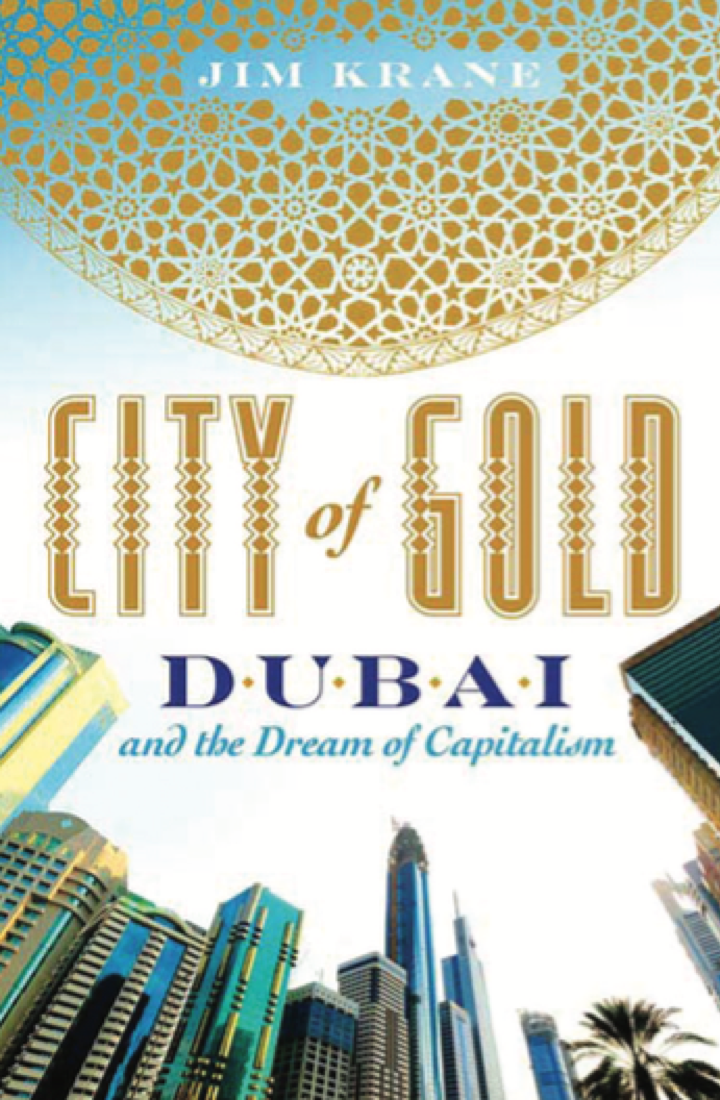
City of Gold: Dubai and the Dream of Capitalism

by Executive Editors February 22, 2010
written by Executive Editors

The first power plant was established in the Emirate of Dubai in 1961 when citizens of the small city-state still lived a life dominated by their desert environ. Half a century later, residents of Dubai consume more electricity per capita than any other person on the planet. But now, with local and global financial crises tapping the breaks on unrestrained development, it may be time to reflect: what exactly has happened to Dubai in the last 50 years?

Jim Krane, the Associated Press’ former Gulf correspondent, attempts to make sense of the phenomena that is Dubai in his new book, “City of Gold: Dubai and the Dream of Capitalism.”

“Dubai is a city of incongruities. The roads are modern but the network is incoherent. The cars are advanced but driving is anarchic. Malls are rife but there is no art museum. The airport is world class, but education is substandard,” he writes. “An optimist would say that’s the essence of an emerging market, the reason Dubai crackles with opportunity. A realist would point to a government that preferred impulsive decisions to level-headed planning.”

Krane gives fascinating accounts of how the ideas for the Burj Al Arab, the Palm and the tallest building in the world, the Burj Khalifa, came to life. The style of the book is journalistic, giving space to both sides of the story and ensuring the people he interviews do most of the talking.

The first half of City of Gold details the rapid rise of Dubai from its early history to the present day and its conception of the capitalist system; the second half of the book attempts to look at Dubai’s darker side of labor abuse, environmental degradation, prostitution and slavery. However, one can gather this book was written with the understanding that certain sections, such as Sheikh Mohammed’s profile, are due great import, while negative airings ought to be minimized. Krane is reluctant to stick his neck out in areas that may get it chopped off. Subsequently, the book does not venture much beyond what is already widely understood about Dubai.

A liberal autocracy

Dubai, as a capitalist bastion run by an autocratic regime, “enjoys broad social freedoms which substitute for its lack of political ones,” writes Krane, but he fails to make the case. Instead, Krane does the unthinkable and quotes British diplomat Anthony Harris: “People don’t want to replace tribal rule. It is my absolute conviction that they are happy with it.” Krane adds that the British government has done more than anyone to keep the Maktoum family in power.

Yet virtually every topic Krane approaches needs more fleshing out, and he seems to take the official line as Bible truth. Hard questions are not asked.

Do, or rather can, social freedoms substitute for political ones? Are they interchangeable? What do those living in Dubai think? Krane leaves unexamined the thoughts of Emiratis and long-term residents regarding their transformation from small-scale traders to the capitalist elite. We know Dubai has been an economic success but has it been a social one?  

Dodging tricky questions is what City of Gold does unfortunately well. It is packed with superficial generalizations, dubious conclusions and giant leaps of faith. When it comes to “Arabs,” Krane seems to patricianly revel in stereotypes: “Sheikh Rashid maintained a punishing work ethic in a region known for languor.”

The racist typecasting aside, the  book is redeemed by its strong individual stories and characters, while Krane’s writing style is nicely readable. Where he falls short of deciphering the hugely complex phenomena that is Dubai, he excels at conveying singular stories within it.

The knowledge deficit 

Ironically, City of Gold and Dubai are susceptible to a similar criticism: exhibiting a profound lack of originality.

“They [Dubai] haven’t produced anything useful for the human condition,” states Rami Khoury, director of the Issam Fares Institute for Public Policy at the American University of Beirut, as quoted by Krane.

This is Dubai’s crux — can the emirate create institutions that contribute something new? Can Dubai be worth more than simply money?

Krane asks Khoury if Dubai could achieve the heights of Cordoba: “It’s noble to aim that high. But does he have the courage to go all the way? Cordoba needed creative and scientific talent. People were allowed to discuss ideas, do research, and engage in debates. It’s not yet clear whether the leadership in Dubai is prepared to open the system to full use of intellectual and cultural talent.

February 22, 2010 0 comments
0 FacebookTwitterPinterestEmail
Finance

Regional equity markets

by Executive Editors February 22, 2010
written by Executive Editors

 Beirut SE  (One month)

Current year high: 1,200.49    Current year low: 705.56

The Beirut Stock Exchange recorded marginal index movements and abnormally high turnover in the first trading weeks of 2010, the latter due to a spike in big-scale bank selling and buying. The MSCI Barra Lebanon index closed at 1110.97 points on January 22, a drop of less than half a percent from the start of the year. The big turnover came from the sale of 7.5 million common shares in Bank Audi Group, which were sold by Egyptian investment bank EFG-Hermes in a $913 million divestment on the Lebanese and international bourses. Big bank deals also included one between Byblos Bank and the World Bank’s International Finance Corporation. The IFC bought 8% of Byblos Bank for $100 million on January 22. Turnover on the Beirut Stock Exchange soared to a daily average of $51 million, compared to 2009’s $3.5 million daily trading average. 

Amman SE  (One month)

Current year high: 2,968.77    Current year low: 2,454.48

The Amman Stock Exchange started 2010 with no clear direction. The ASE

index climbed between Jan 6 and 14 but gave up those gains in downward momentum that commenced on Jan 19. The close of 2,525.75 points on Jan 24 put the market 1.4% lower than the start of the year. Average daily trade value in the review period was $33.56 million, marking a slow market below the 2009 average daily turnover of $51.53 million. According to statistics published by the ASE, total trade value in 2009 had been $13.7 billion, less than half of what it was in 2008. Sector indices moved disparately in the January review period; the insurance index showed the strongest fluctuations and on Jan 24 closed 2.63% lower than the start of the year. Banking and services also underperformed the general index, by 1 and by 0.56 percent, respectively. The industrial sector ended the period 0.2% up.

Abu Dhabi SM  (One month)

Current year high: 3,239.74    Current year low: 2,137.15

The emirate’s newly acquired bragging rights to the name of Dubai’s super-burj notwithstanding, Abu Dhabi investors could cheer only very quietly in the first 16 trading sessions of 2010. Losing days outnumbered winning days three to one in the review period and the ADX index ended 5.2% down on January 24, when compared with the start of the year. Average daily turnover was $45 million in the review period, low when compared with the $76 million average daily trade value in 2009. By sub-indices in January 2010, the telecoms index did better than the pack but was still down 2.7%. Banking, construction, consumer and energy indices were all range-bound with the general index; the industrial index underperformed somewhat but the real estate sector tanked. It closed 17.76% lower on January 24 when compared with the start of the year.

Dubai FM  (One month)

Current year high: 2,373.37    Current year low: 1,433.14

Despite the emirate’s newly opened super-tower, Dubai equity markets stepped right into a hole with the arrival of 2010. Down 12.95% versus the December 31 close, the DFM benchmark index closed Jan 24 at 1,570.09 points. Newly cross-listed Kuwaiti telecoms firm Hits Telecom was the exception in January performance as it gained 30.4% since its market debut at the end of December. Sector indices were universally down; real estate was tugged in on Jan 24 with a 25.8% loss since the start of the year. Aramex and Commercial Bank of Dubai were the only home players that achieved small gains in the review period. For all other stocks, the elevator traveled to the lower floors and the Dubai Financial Market scrip ended up in the basement — with a share price loss of 23.4%. Emaar Properties, not far behind, closed 23.1% down and Arabtec Holding dropped 19%.

Kuwait SE  (One month)

Current year high: 8,371.10    Current year low: 6,391.50

Stocks on the Kuwait Stock Exchange moved at divergent strides in January; the presence of gainers in the 30% range was opposed with stocks that dropped up to 26%. The KSE general index closed at 7024.50 points on January 24, a quarter of a percent up when compared with the last close in 2009. Food, real estate and services were on the upside of the monthly charts in the January 2010 review period, whereas banking and investment indices pushed to the downside. Volume was muted in January with average daily trading value at $202 million, meager when compared with $305 million average daily turnover in 2009 and $545 million in 2008.  Al Safat Energy Holding was the strongest gainer in the review period with a 34.9% share price gain. The National Company for Consumer Industries was at the other extreme of the scale with a drop of 25.8%.

Saudi Arabia SE  (One month)

Current year high: 6,568.47    Current year low: 4,130.01

Saudi market sentiment was friendly in January, with more upside than downside sessions; the TASI benchmark index closed at 6,301.94 points on January 24, 2.6% higher when compared with the last close in 2009. Average daily trade value in the review period was $812.4 million. As in the other Middle East and North Africa markets, average daily trade values on the Saudi Stock Exchange in January were considerably reduced when compared with average daily turnover in 2009, which on the SSE was $1.33 billion. The investment sector excelled in the review period, with a gain of 12.1%. Banking and agriculture/food added more than 4% each. The media and publishing sector was an outlier on the downside, showing a 5% drop in its sub-index. Market cap leader Sabic gained 7.6%. Climbing 50%, Kingdom Holding Company was by far the strongest gainer in January.

Muscat SM  (One month)

Current year high: 6,762.94    Current year low: 4,575.99

Tracing the path of the simple hill, a modest rise in the Muscat Stock Exchange index in the first days of January and an equivalent drop in the second half of the review period evened out to a zero-sum game where the MSM index closed at 6,367.78 points on January 24, down 2%, or one point and two tenths down from the last close in 2009. The average daily turnover was  around $16.5 million, down from an average daily turnover of $23.7 million in 2009. The industrial, services and banking sub-indices ended the review period down by 2.1%, 2.3%, and 2.4%, respectively. Unlike with some of their Gulf Cooperation Council peers, the Omani financial markets suffered no disturbing headline scandals or very untoward investment risk stories in the first weeks of 2010. 

Bahrain SE  (One month)

Current year high: 1,696.46    Current year low: 1,413.81

A step dance sideways with a positive bias was how the Bahrain Stock Exchange welcomed 2010. The BSE index closed at 1,471.44 points on January 24, representing a gain of 0.9% when compared with the last close in 2009. However, average daily trading value slumped in January at slightly over $1 million, just over half of the average daily turnover of $1.9 million in 2009, which in turn was down sharply on the $8.4 million recorded in 2008. Sector indices on the BSE during the review period showed banking coming out on top with a gain of 8.43%. Hotels and tourism, industry, services and insurance indices all underperformed the general index slightly, which left the investment sector as the main loser with a drop of 2.94% in the period. Ahli United Bank and Gulf Finance House were the best individual gainers, closing 19.5% and 17.9% higher, respectively.

Doha SM  (One month)

Current year high: 7,624.45    Current year low: 4,230.19

Qatar’s stock market slipped into 2010 and the Qatar Exchange’s benchmark index closed at four sixes — 6,666.00 points — on January 24, marking a loss of 4.21% from the start of the year. All sectors moved lower, banking suffering the least (3.1% down) and services the most (8.8% down). The real estate sector was the real culprit in driving the market lower. The announced merger of Qatar Real Estate Investment Co. into Barwa Real Estate drove QREIC shares up in the first part of January, but the overall sector trend was down. Ezdan Real Estate nosedived 43.4%, Barwa dropped 18.5%, and United Development Company (UDC) fell 5.6%. As the review period closed, UDC announced a 62% higher net profit for 2009, compared to 2008. January turnover on the QE averaged $58.4 million for each of the 17 trading sessions, compared with a $99.7 million daily average in 2009 and $189.8 million per session in 2008.

Tunis SE  (One month)

Current year high: 4,594.76    Current year low: 2,943.71

The Tunindex entered 2010 by continuing its journey on the same course as in 2009: northward. Index values leapt more than 200 points in a few sessions in early January and the market closed at 4,586.18 on January 22, a new record. The uptrend was not all-encompassing, though, and the dozen of losing stocks in the period included Tunisair, with a drop of 5.2%. Companies in telecommunications, banking and manufacturing led the Tunisian exchange higher in January. With a gain of 20.1%, BIAT Bank ended the period as the exchange’s market cap leader. On the next rungs of the market cap ladder, Poulina Group and Banque de Tunisie recorded smaller gains of 0.5% and 1%. Infusion of fresh blood into the Bourse de Tunis is expected this year through IPOs of ferry operator CTN and of insurance company Tunis Re.

Casablanca SE  (One month)

Current year high: 11,729.86  Current year low: 9,997.56

Completing the good readings of the North African trio, the Casablanca Stock Exchange index ascended more than 700 points between Jan 5 and Jan 20 when it closed above 11,000 points for the first time since October 20, 2009. Weakening slightly at the end of the review period, the Casa All Shares Index closed at 10,920.14 on January 22. Of market heavyweights, market cap leader Maroc Telecom advanced 8.5% while number two, Attijariwafa Bank, shed 0.9%. In the real estate sector, Group Addoha climbed 12.7% while CGN gained 2.4%. Average daily turnover in 2009 was recorded at $18.7 million, versus $43 million per average trading day in 2008.

Egypt CASE (One month)

Current year high: 7,249.55    Current year low: 3,389.31

Reaching a close of 6,657.42 points on Jan 24, the Egyptian Stock Exchange index EGX 30 achieved a 7.23% gain from the start of the month, with notable profit taking occurring at the end of the review period. The market’s $236 million average turnover in January was a step up from its average daily trade value of $200 million in 2009. The Egyptian bourse was not only a good performer in terms of index gains in 2009 versus other regional exchanges; its average daily trading value last year was less than a third lower than in 2008. Among large cap stocks, EFG-Hermes showed a period gain of over 20%. Share prices of the investment banking group rallied in the first two weeks of 2010. EFG-Hermes’ announced sale of its stake in Lebanon’s Bank Audi Group on Jan 18, realized a substantial capital gain.

February 22, 2010 0 comments
0 FacebookTwitterPinterestEmail
Economics & Policy

Middle East firms must secure their strategies for global grasp

by Mohamad Mourad, Rafiu Abina & Amr Goussous February 22, 2010
written by Mohamad Mourad, Rafiu Abina & Amr Goussous

Fueled by their financial strength and increasing competition in their home markets, many Middle Eastern companies have launched unprecedented cross-border expansions since 2004. The disclosed value of Middle Eastern companies’ cross-border merger and acquisition (M&A) deals between 2004 and the third quarter of 2009 exceeded $127 billion, accounting for 63 percent of total regional M&As. These companies now operate in multiple markets and industries globally, with revenues from international subsidiaries becoming a key contributor to their growth.

Going global, however, comes with a new and challenging set of organizational demands, which most Middle Eastern companies are facing for the first time. The companies that successfully address these challenges will be best positioned to earn a place among the world’s largest and most successful businesses. Now is the time for the senior executives in the region to create a sound foundation for successful global growth by reviewing their operating models and ensuring that their companies are properly positioned to capture the maximum value from their international investments. 

Governance models must create alignment across the business globally. Frequently, the international subsidiaries of Middle Eastern companies are structured as separate legal entities, each with its own board, working independently and lacking adequate coordination with headquarters. This creates a portfolio of investments, rather than a truly globally integrated organization, and erects barriers to achieving the international scale required to create value, capture synergies, share knowledge and disseminate best practices.

To globalize successfully, companies should begin addressing governance challenges at the onset of international expansion. Leaders of international subsidiaries should actively participate in strategic decision making at the corporate level; the decision making process should be standardized across subsidiaries. Companies should examine and, as necessary, redefine decision rights in order to create the proper balance between control at corporate headquarters (to ensure corporate imperatives are met) and sufficient autonomy at the international subsidiary level (to accommodate local market requirements). One regional telecom operator has taken steps to overcome these challenges, appointing independent outside directors to sit on the boards of its international subsidiaries. It also created a specialized team at headquarters to review its subsidiaries’ board agendas, ensuring a common perspective and unified decisions by directors representing the group.

Organizational models should enable global business

There is no single organizational model that is best for Middle Eastern companies seeking global growth, as models based on geography, product lines or functional areas have all proven effective. As companies go global, however, inefficiencies that currently exist in their organizational structures will be magnified. These may include misaligned spans of authority, excess layers of management and paternalistic management models. To overcome these obstacles, companies should restructure their organizational models to integrate, support and manage global operations. Although some initial redundancies and inefficiencies are unavoidable in aggressive international growth initiatives, centralized core functions that are capable of supporting and enhancing all of the subsidiaries should be developed as quickly as possible.

Companies that seek global expansion should also clarify the role of the corporate center, balancing the efficiency of central standardization and control with the effectiveness of local autonomy. For example, a large Middle Eastern telecom operator sought this balance by restructuring itself as a group organization, and appointed two chief

executive officers, one focusing on domestic business and the other on international subsidiaries. This enabled due focus on the respective operations and facilitated the realization of synergies across geographies by creating a corporate center and shared services entities at the group level.

Ad-hoc management processes must be standardized

As companies go global, they should improve operational efficiencies and provide access to the information required for effective decision making. To do this, they need to standardize, extend, integrate and institutionalize strategic management processes in a careful and measured way. As companies acquire international businesses, they also acquire the legacy systems and processes of the acquired company. As a result, the systems and processes that support effective decision making become fragmented and the information needed to monitor and manage performance across the organization is unavailable. To resolve these problems, companies should seek to balance global standardization (and its potential competitive advantages) with local customization (and the ability to leverage local differentiating capabilities).

As they integrate their processes and IT platforms with those of the acquired operations, companies should also standardize systems and processes in a coherent, continuous way that allows some degree of local flexibility, while avoiding overreliance on ad-hoc initiatives.

One Middle Eastern chemicals company has improved its processes by viewing its globalization journey as a two-way street that includes learning from its newly acquired businesses. To that end, the company has brought together employees from all of its global operations to design new work processes, such as planning, budgeting and performance management. The company’s aim is to ensure its processes enhance organizational integration, operational efficiencies, consistent operational and financial reporting and streamlined decision making.

Companies should develop an inclusive culture and shared values

Like any company that seeks to expand globally, Middle Eastern companies will have to adapt their values and culture to each country in which they operate and incorporate the best local values and cultural elements into their own ethos. At the same time, they must preserve the core values of their companies and institutionalize high performance standards.

To achieve these objectives and establish a corporate culture that can successfully cross borders, companies should identify their own differentiating, non-negotiable values and traits, as well as the national and corporate values, attitudes and behaviors present in their international subsidiaries. They should recognize the diversity that exists within their global footprint, determine how to leverage it, and build relationships with the key stakeholders in each geographic area.

A Middle Eastern logistics company, which gave itself a new name and brand after making multiple international acquisitions, exemplifies one approach to establishing a global culture. In addition to creating a more dynamic and unified brand in the marketplace, the new name was designed to provide employees in more than 100 different countries, who work in vastly different markets with varying business challenges, with a common name and set of values. The new brand created a company-wide platform for emotional attachment, without an undue focus on the company’s home market or the many differences that exist across the geographies in which it does business.

Talent management must include proactive people strategies

As Middle Eastern companies go global, their talent needs become more complex. They face an increased demand for skills — often in geographies where qualified employees are in short supply, as is the case in many emerging markets. They also tend to be confronted with a shortage of senior executives with sufficient global experience.

To build successful global organizations, companies will have to identify, measure and capture the maximum value from their talent base. They should segment employees according to their impact on the performance of the organization and develop tailored value propositions for each segment that balance business requirements with specific segment needs. With this strategic foundation for talent in place, companies can begin to create a talent pool to fill international positions.

They should determine a standard profile for international hiring, and coordinate their recruitment efforts across geographies to ensure consistency. They should also invest in hiring executives who are capable of filling international positions in advance of a specific need and allow them time to establish themselves within the company.

To build its people strategy, one leading Middle Eastern retailer has developed a team of individuals who have optimal backgrounds for international assignments. This team is deployed to launch all new operations, recruiting and training local managers to take over once the new location is established. This approach reduces the challenges of sharp learning curves for new teams, quickly builds talent in local markets, and develops these individuals for leadership roles in future international ventures.

Many Middle Eastern companies are seeking international expansion and growth. Some of them hope to claim a spot among the world’s leading global corporations. The companies that have the best chance of achieving this will be the ones that are able to successfully transform their structures, systems and processes, enabling their people to effectively and efficiently execute and compete anywhere in the world.

Mohamad Mourad is a principal, and Rafiu Abina and Amr Goussous are senior associates at Booz & Company

February 22, 2010 0 comments
0 FacebookTwitterPinterestEmail
Economics & Policy

For your information

by Executive Editors February 22, 2010
written by Executive Editors

Fiscal deficit at $2.6 billion

Lebanon’s Ministry of Finance has stated that the fiscal deficit widened to $2.6 billion in the first 11 months of 2009 — 25.1 percent of the 2009 budget. Standard Chartered Bank forecasts that the total budget deficit for this year will reach 9.5 percent of the economy, the highest in the Middle East and North Africa and the second highest in emerging markets. The Economist Intelligence Unit forecasts the deficit to constitute 10.3 percent of gross domestic product in 2010. Government expenditure came in at $10.3 billion, a 15.5 percent year-on-year increase in the first 11 months of 2009. Debt servicing — the payment of interest on the public debt — also increased to $3.4 billion, making up a third of total expenditures. Revenues over the first 11 months of 2009 also rose to $7.7 billion (21.9 percent), mostly from taxes, which accounted for a total of $5.5 billion. A further $1.68 billion came from customs revenues over the same period, constituting a year-on-year rise of 72.9 percent. Some 87 percent of total customs receipts were processed through the Port of Beirut.

Noble signs LOI to supply Israel with contentious gas

The American oil company Noble Energy closed last year by signing a letter of intent (LOI) to provide Israel with natural gas from a field off the country’s northern coast. The Tamar field, located some 90 kilometers offshore of Haifa, was discovered by Noble Energy in January 2009. Experts have stated that the field could potentially reach into Lebanese territorial waters, meaning that any extraction without Beirut’s consent would constitute an effective filch of Lebanese gas. The field can potentially produce up to $750 million worth of natural gas annually, and be extracted over a 15-year period, according to Noble, although some analysts have disputed this figure.

The agreement signed between Noble and Israel will provide gas to state-owned Israel Electric. “The progress on both the development and marketing of Tamar continues to move us along towards first production in 2012, consistent with our original projections,” said Charles D. Davidson, Noble Energy’s chairman and chief executive officer. According to Noble, the company has signed LOIs totaling $10.5 billion to provide gas from the Tamar field.

Istithmar chief resigns

dubai World, the ailing Dubai government-owned holding company at the center of Dubai’s debt debacle, has replaced the head of its flagship private equity investment company Istithmar World. David Jackson submitted his resignation on January 20 and was replaced by Istithmar’s former Chief Investment Officer Andy Watson, a former director at Barclays Capital.

The resignation comes as Dubai World struggles to restructure some $22 billion in debt. The company has also signaled an end to its previously aggressive buying spree, which had targeted acquisitions such as a $942.3 million purchase of luxury retailer Barneys New York, Manhattan’s W Hotel and a stake in Las Vegas’ $11 billion CityCenter development.

“Today, Istithmar World is focused on the steady-state management of existing assets to maximize value, rather than on private equity investment,” said a statement issued to Bloomberg by Dubai World’s Chief Restructuring Officer Aidan Birkett. EFG-Hermes investment bank, in its “2010 United Arab Emirates Yearbook” (released last month), has estimated that the Dubai government has racked up debts “in the range of $130 billion to $170 billion.”

Lebanon set for steady seven

A recent report issued by the World Bank entitled “Global Economic Prospects in 2010” stated that Lebanon’s economy would grow by 7 percent, the same rate as the organization predicted it would in 2009. The World Bank attributed this steady growth forecast to several factors, including the effects of economic links to other nations being lower than expected during the global downturn, a steady flow of remittances at around $7 billion, and double-digit growth in foreign direct investment.

The World Bank also based its forecast on the assumption that, since Lebanon was able to register growth during periods of instability — such as those experienced in 2009 in the run-up and aftermath of the Parliamentary elections — then these economic vectors would continue into 2010 as the effects of the global downturn diminish.

Evidence supporting this theory includes recent figures released by Lebanon’s Ministry of Tourism, which stated that the number of tourists visiting the country officially reached an all-time high. Throughout the course of last year, some 1.85 million tourists visited Lebanon, constituting a 39 percent year-on-year increase, shattering the previous record of 1.4 million tourists set in 1974. The Ministry of Tourism also estimated that income from tourism in 2009 was around $7 billion, with the largest proportion of visitors coming from Arab countries (42.5 percent) followed by Europe (24.5 percent), Asia (14.3 percent), the Americas (12.3 percent), Oceania (3.5 percent) and Africa (2.3 percent). The largest number of visitors from a single country (223,793) came from Jordan.

Shell boosts Egypt investment

Shell Egypt has received approval from the Egyptian authorities to buy a 40 percent stake in the Alam El Shawish oil and gas concession. The stake will come from the current co-owners, the government-owned GDF Suez and privately-owned Vegas Oil and Gas, with each offering up 20 percent of their shares in the concession. According to Reuters, Vegas will hold onto a 35 percent stake and GDF Suez will maintain ownership of the remaining 25 percent.

According to CI Capital, a New York-based investment firm, Shell Egypt already produces 100,000 barrels of oil from the 15 discoveries they have made in Egypt’s Western Desert. The Western Desert holds 35 percent of Egypt’s crude oil, according to CI Capital.

Calm oil prices expected in 2010

Crude oil prices are expected to remain stable in 2010 after two years of market fluctuations brought on by the global economic downturn. Barrel prices are expected to remain around the $80 mark, according to the global consultancy firm Control Risks, which accurately predicted oil prices in 2009. “We called the price at $70 for 2009, which people said was crazy at the time, but which turned out to be pretty much on tap,” said Jonathan Wood, global issues analyst at Control Risks. According to Wood, the upper and lower limits for crude prices over the course of the year will  be $100 and $60, respectively, but predicted that this would be improbable. Echoing this sentiment, last month the International Energy Agency (IEA) also announced that it sees demand for oil increasing by 1.4 million barrels per day in 2010, spurred by demand in China and other parts of Asia. The IEA also expects production of natural gas liquids in the Organization of Petroleum Exporting Countries (OPEC) member states to increase by 885,000 barrels per day (bpd) to 5.7 million bpd, with non-OPEC production rising only by 200,000 bpd to reach 51.5 million bpd.

February 22, 2010 0 comments
0 FacebookTwitterPinterestEmail
Real estate

For your information

by Executive Editors February 22, 2010
written by Executive Editors

Lebanon’s resistant real estate

In 2009, the real estate sector in Lebanon fared much better than its neighboring counterparts with transactions increasing 2.3 percent and reaching their highest values since the beginning of the decade, according to Bank Audi and the General Directorate of Land Registry and Cadastre. Sales transactions to foreigners also increased 17.6 percent during the year, despite the effects of the financial crisis on the regional economy. The value of property transactions rose 8.3 percent compared to 2008, reaching $7 billion, which also led to the increase in average value per property sale by 5.8 percent to reach $84,000.

Real estate M&A down globally 

Dealogic, the New-York based deal tracking firm, announced in early January that the 2009 global merger and acquisition (M&A) activity in real estate amounted to $151.9 billion (via 2,282 deals), 34 percent lower than in 2008 and the lowest level in six years. Deal volume fell 44 percent in the Europe, Middle East and Asia (EMEA) region, by 59 percent in the Americas and only 1.6 percent in Asia Pacific. China faired better with a significant increase of 41 percent in M&A levels and was the most targeted nation, attracting some 19 percent of the total volume at $29.3 billion. The EMEA attracted 45 percent of the global total, while the Americas and Asia Pacific attracted 11 percent and 44 percent, respectively. 

Realty sinks in Jordan

In 2009, the value of real estate transactions in Jordan dropped 21 percent year-on-year, totaling some $6.7 billion, according to the Jordanian Directorate of Land Registry and Cadastre. The Kingdom’s revenues from real estate sales also retreated 29 percent, amounting to $381 million. Iraqis headed the list of foreign real estate investors, with 1,400 Iraqis investing some $194 million in the market.

Kuwaitis came second in numbers with 1,219 investors and fourth in terms of value, with $21 million worth of investments. The third most numerous were Saudi investors, at 402, with some $26 million invested — third in terms of value. The overall number of sales transactions to non-Jordanian buyers and investors in 2009 amounted to 4,810 transactions, counting 1,889 residential units and 2,921 land parcels.

East Jerusalem even more occupied

It the end of December, the Israeli Ministry of Housing invited tenders to build 692 homes in the Jewish settlements of Neve Yaacov, Psgat Zeev and Har Homa, among others in Israeli-occupied East Jerusalem. The United States and the European Union criticized the expansion, as new construction in the occupied territories is considered one of the biggest obstacles to the resumption of peace negotiations. Sweden, which holds the EU presidency also said in a statement that it was “dismayed at the announcement of the government of Israel to build 700 apartments in occupied East Jerusalem,” adding that “settlements on occupied land are illegal under international law.” Israel also announced the approval of the construction of four residential buildings, including 24 apartments, on the Mount of Olives in East Jerusalem.

Kuwait Finance House in Chicago    

uwait Finance House, the country’s biggest Islamic lender, announced at the end of December that it had signed a $242 million residential real estate deal in the American city of Chicago, according to Maktoob Business. The project is currently under construction and is located on Chicago’s Michigan Avenue, also known as Miracle Mile. It will be 95 percent owned by the KFH and 5 percent by the United States-based Prism Company for real estate development. The residential compound will include 40 floors and more than 80 flats. Steps to widen its investment portfolio in the US began last August when KFH entered a joint venture with the US-based United Dominion Rent Inc. (UDR) to buy high-income residential property, with a budget of $450 million.  “Such a huge partnership shows the objectives KFH is trying to achieve by returning as a major player in the American real estate market, after it had liquidated a large portion of its investments before the economic crisis began,” KFH International Real Estate Department Manager Ali al-Ghannam told Maktoob Business back in August.

Green city delayed

In the first week of January, The National reported that the $22 billion Masdar City in Abu Dhabi will be delayed at least four years from its original completion date in 2016. The first phase of the carbon neutral, zero-waste, zero-emissions city will be completed on schedule in 2013, a spokesperson from Masdar told the newspaper, but the remaining six phases will be handed over gradually during the decade. In 2020, the city is expected to host a significant number of business and residencies. According to the newspaper, officials from Masdar say the financial crisis is not the reason for the delay, but rather it is caused by the technological challenges the company is facing to build the city. “Masdar is not a typical real estate development and is not bound by similar pressures of fixed completion dates,” the spokesperson told The National. “For Masdar, success will not be measured on the speed with which the city is constructed, but the standards it sets in addressing today’s energy and sustainability challenges.”

February 22, 2010 0 comments
0 FacebookTwitterPinterestEmail
  • 1
  • …
  • 429
  • 430
  • 431
  • 432
  • 433
  • …
  • 696

Latest Cover

About us

Since its first edition emerged on the newsstands in 1999, Executive Magazine has been dedicated to providing its readers with the most up-to-date local and regional business news. Executive is a monthly business magazine that offers readers in-depth analyses on the Lebanese world of commerce, covering all the major sectors – from banking, finance, and insurance to technology, tourism, hospitality, media, and retail.

  • Donate
  • Our Purpose
  • Contact Us

Sign up for our newsletter

    • Facebook
    • Twitter
    • Instagram
    • Linkedin
    • Youtube
    Executive Magazine
    • ISSUES
      • Current Issue
      • Past issues
    • BUSINESS
    • ECONOMICS & POLICY
    • OPINION
    • SPECIAL REPORTS
    • EXECUTIVE TALKS
    • MOVEMENTS
      • Change the image
      • Cannes lions
      • Transparency & accountability
      • ECONOMIC ROADMAP
      • Say No to Corruption
      • The Lebanon media development initiative
      • LPSN Policy Asks
      • Advocating the preservation of deposits
    • JOIN US
      • Join our movement
      • Attend our events
      • Receive updates
      • Connect with us
    • DONATE