• Donate
  • Our Purpose
  • Contact Us
Executive Magazine
  • ISSUES
    • Current Issue
    • Past issues
  • BUSINESS
  • ECONOMICS & POLICY
  • OPINION
  • SPECIAL REPORTS
  • EXECUTIVE TALKS
  • MOVEMENTS
    • Change the image
    • Cannes lions
    • Transparency & accountability
    • ECONOMIC ROADMAP
    • Say No to Corruption
    • The Lebanon media development initiative
    • LPSN Policy Asks
    • Advocating the preservation of deposits
  • JOIN US
    • Join our movement
    • Attend our events
    • Receive updates
    • Connect with us
  • DONATE
Banking & Finance

For your information

by Executive Editors February 22, 2010
written by Executive Editors

EFG-Hermes sells stake in Bank Audi after “No” to acquisition

After acquisition rumors circled through the regional media in October 2009, EFG-Hermes announced on January 18 that it had sold its 21.95 percent stake in the Lebanese bank for $913 million.

“After lengthy discussions with Bank Audi regarding a combination of the two businesses, it became evident after the events of 2008, that an amalgamation in the near future might be difficult,” said an EFG press release. The investment bank’s 7,554,148 ordinary shares and 2,483,034 global depository receipts sold for $91 per share, noted Bank Audi in a January 18 press release. The transaction resulted in $260 million in unconsolidated capital gains for EFG. Though Audi has not specified the buyer officially, Reuters, citing an anonymous source, confirmed that members of the Mikati family had bought some part of EFG’s shares. Arab Finance reported on January 17, citing sources close to the family that Naguib Mikati intended to acquire 14 percent of EFG’s shares. Zawya Dow Jones information shows that Deutsche Bank Trust Company Americas remains the largest shareholder in the bank holding 29.3 percent. Following the sale, Bank Audi announced that it had reached an agreement with Commerzbank to acquire Dresdner Bank Monaco in order to expand its private banking services in Europe.

Central bank to offer 7-year CD

According to Byblos, the Central Bank of Lebanon’s First Vice-Governor Raed Charaffedine, said the central bank will soon begin offering 7-year certificates of deposit (CD) to help ease the immediate burden of servicing the country’s staggering public debt, which reached $50.5 billion at the end of November 2009, according to Byblos Bank. The Lebanese-lira denominated papers will carry a fixed rate of 8.5 percent, and a variable rate based on the yield of the 6-month paper plus 1.21 percent. The central bank stopped issuing CDs in June of 2009 in order to encourage banks to lend in local currency after central bank circulars lifted reserve requirements on 60 percent of loan categories. These lending incentives are set to stay in effect until June, 2010 and possibly into 2011, central bank Governor Riad Salameh told Executive in December.

IFC buys 8 percent of Byblos Bank

The International Finance Corporation (IFC) acquired 8 percent of Byblos Bank as part of the bank’s effort to raise its capital by $250 million, said Byblos in a January 21 statement. The IFC, the World Bank’s private arm, bought 47,619,047 ordinary shares at $2.10 per share, bringing the aggregate purchase price of the sale to $100 million. Byblos Invest, whose Chairman Sami Haddad was formerly the director of the IFC’s Middle East and North Africa Department and minister of economy, will vote in favor of granting a seat on the bank’s board of directors to an IFC nominee. The Central Bank of Lebanon approved the sale on January 21 and the deal is set to close on June 30, 2010. Byblos has been granted large loans by the IFC on three separate occasions, totaling more than $94 million, according to the Byblos Bank’s website. These loans, offered in 1993, 1996 and 1999, were given to facilitate commercial lending and housing loans.

Majority foreign ownership allowed at Syrian banks

Foreign institutions may now own majority stakes in Syrian banks after the government issued a decree in early January. The decree made it possible for foreign shareholders to own 60 percent of the country’s local banks, up from the 49 percent previously permitted. The decree also raised minimum capital requirements for Syrian banks from between $32.6 million and $108.7 million — depending on the type of bank — to between $219.8 million and $330 million. The Syrian government gave up its monopoly on the country’s banks seven years ago. There are now 13 private banks operating in Syria in addition to the six banks still owned by the government. Although Western institutions are still absent from the sector, Lebanese, Jordanian and Gulf Banks, including several Islamic institutions, have expanded their presence since the market was opened.

Central bank foreign assets $28.3 billion

Lebanon’s central bank’s foreign assets grew 43.4 percent in 2009 compared to the previous year, reaching $28.3 billion from $19.7 billion in 2008. December 2009 saw the largest increase, with foreign assets growing $1.08 billion for the month, resulting in $8.6 billion in aggregate growth for the year.

Gold reserves at the Central Bank  of Lebanon grew to $10.1 billion, a 25.3 percent year-on-year increase. The value of the reserves has been bolstered by a global rise in gold prices but is still below the all-time high of $10.8 billion in November 2009.

CBK board resigns en masse

All five remaining members of the board of directors of the Commercial Bank of Kuwait (CBK) resigned at the board’s January 12 meeting. The resignations came after board members Fouad Dashti and Ahmad al-Mishari both resigned without explanation in December, 2009. Elections for the seven seats will take place at the next ordinary general assembly; nominations closed January 31. A bank official told Zawya Dow Jones that the ordinary general assembly would take place sometime in the first quarter. In November, CBK posted losses of $8.69 million for the third quarter, citing bad loans as the main culprit. At the same time, the bank’s Chairman, Abdulmajeed al-Shatti, said in a statement “By the end of the year, the bank will be protected by adequate provisions against any meltdowns the financial crisis may leave.” The bank’s full 2009 figures have yet to be released.

“Not guilty” plea in UAE central bank scheme

All seven men accused of perpetrating the “largest monetary scheme” in the United Arab Emirates’ history have pleaded “not guilty” on charges that they attempted to steal $10.35 billion dollars from the UAE central bank in Abu Dhabi. The accused — two Germans, one Belgian and four Iranians — allegedly attempted to withdraw the money using forged documents. The European defendants claim their Iranian co-defendants told them that the funds were coming from another Iranian’s account and were to be used to begin work on a luxury hospital in the UAE. All seven defendants are facing charges of forging documents, swindling and fraud. If convicted, they will face up to 10 years in prison. The trial will resume on February 7.

February 22, 2010 0 comments
0 FacebookTwitterPinterestEmail
Special Feature

Cairo’s capitulation

by Jonathan Wright February 22, 2010
written by Jonathan Wright

Egyptian minister Moufid Shehab called it “the engineering installation on our eastern borders” — a euphemism that at least suggests a certain discomfort in official circles. Its many opponents more succinctly call it “the wall of shame,” and say it illustrates the Egyptian government’s willingness to go along with Israel and the United States in their longstanding project to squeeze the people of the Gaza Strip until they turn against Hamas, the Islamist movement that has run the territory since 2007.

Muslim clerics have split over the legitimacy of the steel wall under construction along the Gaza-Egypt border, designed to intercept the dozens, possibly hundreds, of illicit tunnels that keep the Gazans supplied with everything beyond the barest necessities.

 Those indebted to the Egyptian government say it is a matter of national security and a justified response to smuggling; independent clerics on satellite television channels, who carry rather more weight with the devout, say it is a crime. All the main opposition forces in Egypt, from the Muslim Brotherhood to leftists and liberals, say the project is a national disgrace.

The government’s international reputation hit new lows over the New Year period when police in the Sinai town of El Arish clubbed foreign activists trying to break the blockade and take supplies to Gaza.

So what does the Egyptian government have to gain from building the massive underground wall between Egyptian territory and the Gaza Strip? Why is it so willing to flout domestic, Arab and large swathes of international public opinion on such a sensitive matter? 

Through all the twists and turns of the past two years, when Egypt stood at the center of attempts to restore Fatah control over Gaza, one overriding anxiety dictated Egyptian policy toward the impoverished and densely populated coastal strip: the possibility that Israel might dump responsibility for Gaza on Egypt, washing its hands of its international obligations to supply the Gazans with food, water, fuel and medical supplies.

In the worst case scenario, from Cairo’s point of view, Israel could then seal its own borders with Gaza completely and hold Egypt accountable for any military activity that originates in the territory. The Egyptian government has not forgotten the precedents of 1956 and 1967, when Palestinian guerrilla activity from Gaza helped drag Egypt into war with Israel, with especially devastating consequences in 1967.

The Egyptian government, which has grown increasingly conservative and unimaginative as President Hosni Mubarak grows older, also shares Israel’s and Washington’s fear of Hamas, which it sees as an illegitimate troublemaker threatening the regional status quo and serving the interests of Shiite Muslim, and potentially nuclear, Iran.

Egypt and its Arab allies — mainly Jordan and Saudi Arabia — long ago renounced the use of force in their dealings with Israel. Hamas, Lebanon’s Hezbollah and others keep the banner of armed struggle aloft, striking a chord with ordinary Arabs and serving as a constant reminder that alternative strategies are possible. In the case of Egypt, Hamas is especially threatening because of its historical and institutional links with the Egyptian-based Muslim Brotherhood, the government’s most formidable opponent. What’s good for Hamas is good for the Brotherhood.

Against this historical background, more immediate considerations seem to have pushed the Egyptian government into a form of cooperation that goes far beyond the commitments it made to Israel in the peace treaty they signed in 1979.

Although the Egyptian domestic political scene looks calm on the surface (even the Muslim Brotherhood is in serious internal disarray), the governing clique faces parliamentary elections later this year and presidential elections in 2011. The last thing they want is a repetition of 2005, when street protests were weekly events and the US openly supported democratic change in the Arab world. That enabled the Muslim Brotherhood to win one fifth of the seats in parliament, more than any opposition force had held since the overthrow of the monarchy in 1952.

So much for sovereignty

This round of elections is even more delicate, mainly because of the succession question that hangs over the country as Mubarak ages and his 46-year-old son, Gamal Mubarak, shows every sign of maneuvering to take his place. Prominent party loyalist Mustafa el-Fiqi, chairman of the Parliament’s Foreign Affairs Committee, dropped a bombshell this month when he said that the choice of the next Egyptian president would need US approval and Israeli clearance.

“Is Egypt becoming another Iraq?” asked the independent Cairo newspaper Al Masry Al Youm. “What sovereignty are we talking about when one must garner the consent of foreign countries to become president?

“We want to ask the regime what benefit it gleans from adopting policies — some of which are declared, others covert, and all invariably disgusting — that dovetail so nicely with Israeli and US interests?” it added.

Best-selling novelist and liberal activist Alaa el-Aswany says he has no doubt about the rationale behind the scenes.

“The Egyptian regime has proved that it will no longer hesitate to commit any crime in order to please Israel, so that Israel puts pressure on the US…to accept President Mubarak’s son Gamal as his successor,” he said.

Jonathan Wright is the managing editor of Arab Media & Society

February 22, 2010 0 comments
0 FacebookTwitterPinterestEmail
Special Feature

Economics of the underground

by Jonathan Wright February 22, 2010
written by Jonathan Wright

The siege has destroyed the economy in the Gaza Strip,” said Moeen Rajab, an economist at Al-Azhar University in Gaza City, noting the Strip’s land and sea borders have been effectively sealed for some two and a half years. “But preventing the tunnel trade will deny the livelihoods of tens of thousands of people who depend on it.”

Up to 80 percent of the 1.5 million people in the Gaza Strip rely on some kind of basic subsistence relief aid. In an economy with virtually no official corridors to the outside world, tunnels dug under the Strip’s southern border with Egypt are economic lifelines.

“Despite the fact that goods brought through the tunnels are expensive and difficult to bring into the Strip, there is no alternative,” said Rajab.

Karen Abu Zeid, the commissioner-general of the UN Relief and Work Agency (UNRWA), said that the tunnel trade, which is used to import consumer staples, mechanical parts, medical equipment, weapons, livestock and any number of other commodities into the Gaza Strip, accounts for some 60 percent of the Gazan economy.

“Preventing the tunnel trade will deny the livelihoods of tens of thousands of people who depend on it”

High profits

Much of the available cash is invested in the tunnel sector, with 800 or so tunnels operating in the territory last year. An average tunnel costs about $90,000 to construct and operate, according to Jordan’s Ma’an News Agency. Tunnels can reach depths of 15 meters and extend 800 meters in length, with the usual cost formula being about $100 per meter of tunnel built. Fully operational tunnels sell for approximately $100,000 to $120,000.

The tunnels, which can take less than a month to construct, are sometimes built on rented land. The land owner is often compensated with a share of the tunnel profits, with goods typically transferred underground by mechanized winches and distributed to traders for sale in Gaza markets.

“The people who work the tunnels use [United States] dollars to trade with Egypt, but the average person uses [Israeli] shekels for everything,” said Abu Ahmed, an economist in Gaza City who declined to provide his real name. (The US dollar is currently trading at about 3.7 shekels on the foreign exchange markets.)

The Hamas government charges a one-time tunneling fee to permit tunnel operators to break ground, though reports vary as to the amount — from $3,000 to $10,000. After that, taxes are collected on goods brought through the tunnels, with some estimates pegging Hamas’ tunnel revenue as high as $11 million a month.

According to Israel’s Haaretz newspaper, to transport a single delivery of assorted goods by tunnel in 2008 cost on average $300, while the total monthly value of all goods brought through the tunnels can reach as much as $50 million.

The revenue collected by owners and operators is estimated at $200 million to $300 million annually. 

Since the beginning of the siege, the tunnels have substituted official modes of moving goods into the territory. For instance, only 41 truckloads of construction materials have entered the Gaza Strip since January, 2009. Reliable figures for the volume of the tunnel trade in 2009 are unavailable, but YnetNews put the figure at $650 million worth of goods for 2008.

Sixteen human rights organizations — including Oxfam International, Amnesty International and Mercy Corps — issued a report in December 2009, entitled ‘Failing Gaza,’ summarizing the economic condition of the Strip two and a half years after the start of the blockade and one year after Israel’s Operation Cast Lead — a 22-day military assault in which nearly 1,400 Gazans — mostly civilians —  and 13 Israelis were killed, 10 of whom were soldiers. As much as $890 million in damage was caused, including the destruction of schools and farms.

Before the blockade began “an average of 70 truckloads of exports left Gaza per day, while 583 truckloads of goods and humanitarian supplies came in,” noted the report. The first two years of the blockade saw 112 truckloads enter the Strip per day, on average, with 74 percent of this cargo made up of basic foodstuffs. Exports have been entirely banned, save small shipments of carnations to the Dutch market.

Inflation concern

Before the blockade, Israel deemed 4,000 categories of items as admissible for import into Gaza; currently that number stands at 35. 

Describing the economy in the Gaza Strip, Abu Ahmed said, “People are struggling. Many things are not available in stores right now, despite the existence of the tunnels.”

“During the war the price of a bag of bread went from 5 shekels [$1.35] to 10 shekels [$2.70]. Bread has dropped to about 7 shekels [$1.88] since then, but the prices of other things have stayed very high.” A 2-liter bottle of soda has jumped 100 percent, from $0.80 to $1.69, since mid-2007.

Abu al-Abed, who works at the Islamic University in Gaza City and declined to be identified by his real name, told Executive: “Prices of goods in the stores haven’t increased very much since we learned about the Egyptian wall, but we do expect them to.”

Rajab agreed and predicted that the “the wall will result in an even more severe inflation.”

Conservative estimates place the depth of the Egyptian wall at 18 meters underground, while numerous media reports suggest it is being installed with water pipes to soak the soil and make tunneling beneath it impossible. The completion of the wall will, most likely, entirely discontinue commerce through the tunnels.

An average tunnel costs about $90,000 to construct and operate, with fully operational tunnels selling for approximately $100,000 to $120,000

February 22, 2010 0 comments
0 FacebookTwitterPinterestEmail
Special Feature

Crushing Gaza’s subterranean salvation

by Jonathan Wright February 22, 2010
written by Jonathan Wright

The first rumors that a building project had commenced on the Egyptian side of the Egypt-Gaza border in the northern Sinai circulated in December 2009.  

Although the Egyptian government initially claimed routine maintenance along the existing border wall, by December 19, Egyptian Foreign Minister Ahmed Aboul Gheit implicitly confirmed the construction of an underground wall intended to prevent the passage of goods and arms into the Gaza Strip.

“Whether a wall or detection hardware, the main thing is that the Egyptian territory is protected,” Aboul Gheit told the state-owned weekly newspaper Al-Ahram Al-Arabi.

Impassable

According to Palestinian security officials, the initial phase of construction at Rafah was completed by late December and builders have moved west. Conservative estimates have put the depth of the wall at a minimum of 18 meters, and extending for 10 kilometers along the border.

Although smugglers first reacted smugly, saying they would dig under it, reports have surfaced that the wall design incorporates water pipes, likely intended to flood tunnels and drench the soil to make tunneling below the wall impossible.

Egyptian security near Rafah has been tightened since construction began, and approaching the border from the Egyptian side requires government permission to pass checkpoints, or the aid of Bedouins willing to provide off-road transport.

Egyptian President Hosni Mubarak addressed the media in mid-January, declaring the tunnels a flagrant abuse of Egyptian sovereignty and a threat to the country’s security, citing the 2004 bomb attacks on tourist resorts in the Sinai Peninsula as evidence of terrorism by Hamas, which took control of the Gaza Strip in June 2007.

Rumors that the United States and Israel pressured the Egyptian government into taking action were echoed by Karen Abu Zeid, outgoing commissioner-general of the United Nations Relief and Works Agency (UNRWA) at a forum at the American University of Cairo in mid-December. According to Abu Zeid, the steel used to build the wall is “bomb resistant” and made in the US.

The Al Jazeera satellite news network reported that US and French engineers designed the panels for the wall, which were built in America and then shipped to Egypt for assembly on-site by the firm contracted to build the wall — The Arab Contractors Co., also know as Osman Ahmed Osman and Company.

The steel used to build the wall is “bomb resistant” and made in the U.S.

The Arab Contractors

The entirely government-owned Arab Contractors Co. is a subsidiary of the Egyptian Ministry of Housing. Established in 1954 by Osman Ahmed Osman, it was nationalized in 1961 and through the 1980s was the largest Arab construction company.

Osman, later the minister of housing and a member of parliament, was a close personal friend of President Anwar Sadat and accompanied him on his 1977 visit to the Israeli Knesset.

Having been contracted to build the Aswan High Dam, as well as boats to ferry Egyptian soldiers across the Suez Canal in the 1973 war with Israel, the Arab Contractors’ role in building the wall at Gaza represents its ongoing involvement in the major developments of modern Egyptian history.

Today the company boasts a workforce of some 60,000, is active in more than 25 countries in the Middle East and Africa and has development projects spanning the spectrum, from bridges and tunnels, to water treatment plants, power stations and hospitals.

Neither the Osman family nor the ministry of housing responded to Executive’s requests to comment for this story. 

The hand of Uncle Sam

America has an extensive history of providing Egypt with military and border security assistance.

In January 2008, the US Congress voted to withhold $100 million in aid intended for Egypt in an effort to pressure Cairo to tighten security at its border with Gaza. Although then-President George W. Bush allowed the money through, Egypt allocated nearly a quarter of the funds to advanced tunnel-detection equipment. A dozen civilian members of the US Army Corps of Engineers then traveled to Egypt in 2008 to train security personnel in the use of that equipment.

In May 2009, the House Appropriations Committee voted to tack an additional $50 million for border security onto a $260 million package for security assistance to Egypt. 

“The US believes that weapons smuggling into Gaza should be stopped,” said Margaret White, spokesperson at the US Embassy in Cairo, to the Daily News Egypt in December 2009. Weapons smuggling is “highly destabilizing” and could provoke “another round of violence in the region,” she continued.

“Incentives for smuggling legitimate goods into Gaza should be reduced by increasing the volume of commercial and humanitarian goods allowed through Israeli-Gaza crossings,” said White, adding that, “The US has no involvement in the project to install a barrier on the border with Gaza.”

Beyond the wall

In addition to the steel barrier itself and the security stations bristling with detection equipment to monitor and halt breaches, Egypt is also constructing a coastal marina, placing boulders in the sea and heightening its ability to prevent maritime passage from Egypt to Gaza.

Israel announced the construction of a similar wall along the entirety of its 250-kilometer border with Egypt, at an estimated cost of up to $1.5 billion, with Prime Minister Benjamin Netanyahu citing “illegal immigration and security concerns.”

Beyond sparking international ridicule of Egypt as a puppet of the US and Israel — with protests erupting in front of Egyptian embassies around the world — on the domestic front the construction of the wall will also curtail a lucrative income source for northern Sinai.

Many smugglers on both sides of the wall have made fortunes from the tunnels, and in impoverished Sinai, long neglected by the Egyptian government, the tunnels have represented one of the few sources of steady income for the Bedouin population.

Others in the area have expressed concern that the wall — which will pump seawater through its pipes — will contaminate the aquifer situated beneath Gaza, northern Sinai and Israel. This aquifer acts as a primary water source for most of the area.

Reports from Palestinian sources indicate that the aquifer is already experiencing rapid degradation from overuse and salt water intrusion.

February 22, 2010 0 comments
0 FacebookTwitterPinterestEmail
Feature

Unsavory one-upmanship

by Executive Editors February 22, 2010
written by Executive Editors

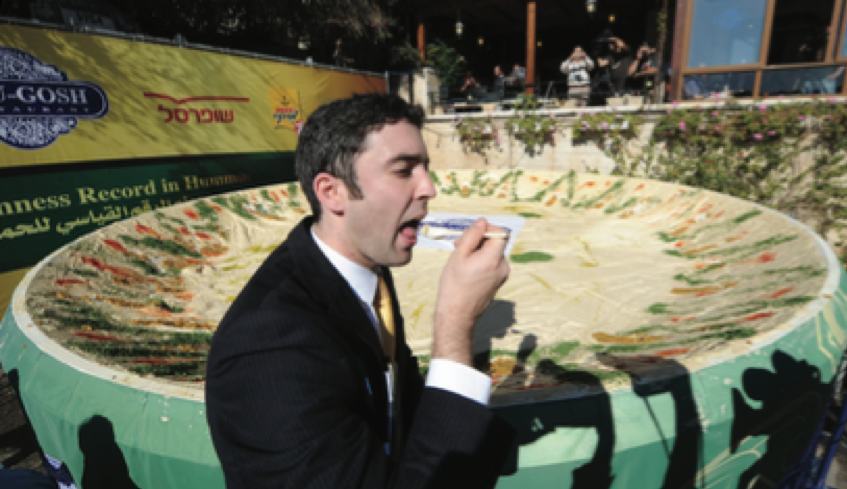
The hummus war is escalating. In October, 2009, Lebanon set a Guinness World Record for the most hummus bi tahini compiled in one place, amassing more than two tons in an extravagant ceremony that drew international media coverage and beat the previous record held by Israel. Lebanon has been fighting for years to confirm that hummus is of Lebanese origin, and its organizers hailed the move as a bold offensive in the battle to repatriate the dish.

It took Israel less than three months to wrench that record back.

On January 8, Arab-Israeli restaurant owner and multi-millionaire Jawdat Ibrahim doubled Lebanon’s figure, borrowing a satellite dish from a local broadcasting station and filling it with more than four tons of hummus. Ibrahim told reporters his actions were not hostile.

“Competition is a healthy thing,” he said at the time. “Today we have hummus. Hopefully, soon we will have talks for peace in our region.”

How escalating an already bitter conflict might promote peace is a subject upon which Ibrahim failed to explain. He’ll get his competition though — Lebanese Minister of Tourism Fadi Abboud was quick to respond to the news of the Israeli record by saying that Lebanon plans to up the ante this spring, and will top Ibrahim’s record by another two tons.

The economic collapse of the Soviet Union ended the escalation of nuclear weapons stockpiling during the Cold War. Hummus — far cheaper  than nuclear armaments — probably won’t undercut the economies of either Israel or Lebanon. However, it is no less appropriate, now as then, to pose the question: at what point does escalation leave rationality behind?

February 22, 2010 0 comments
0 FacebookTwitterPinterestEmail
Feature

Little country, big heart

by Executive Editors February 22, 2010
written by Executive Editors

We are like a country whose capital has been hit by two atomic bombs,” Patrick Elie, a Haitian presidential adviser and former defense minister told The New York Times. The death toll from the January 12 earthquake could surpass 200,000 people, according to the United States military.

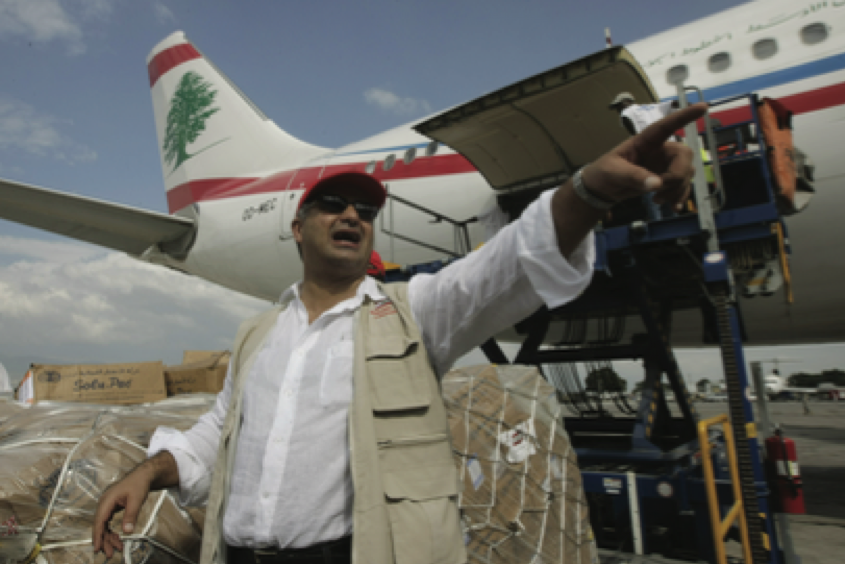
There are thought to be as many as 20,000 Lebanese living in Haiti, according to Fadi Fawaz, advisor to Prime Minister Saad Hariri. Fawaz spoke to Executive the night before he left with an official Lebanese delegation carrying aid to Haiti. The state-owned Middle East Airlines (MEA) coordinated with the government to charter an Airbus 330 to carry the delegation and aid to Port au Prince, the Haitian capital.

“The aid taken on the plane includes 30 tons of health equipment, 25 tons of shelter and three tons of milk,” said Fawaz. He was accompanied on the flight by Yahya Raad, the secretary general of the Higher Relief Commission, representatives from the Foreign Affairs and Health ministries, as well as five doctors and members of the media. Fawaz said that having survived 15 years of civil war meant that the Lebanese have both practical experience coping with disaster and expressing emotional sympathy.

“We have previous experience in disasters and we should use thisexpertise to help those in need,” Fawaz said. “We are a small country but we can make a difference in this difficult area at this difficult time.” 

February 22, 2010 0 comments
0 FacebookTwitterPinterestEmail
Feature

Dogan down for the count

by Executive Editors February 22, 2010
written by Executive Editors

The clash of the Turkish titans is over. Only months after his media empire, Dogan Holding, was slammed with a record $3.2 billion fine for tax evasion, media mogul Aydin Dogan is stepping down as chairman of the company — effectively throwing in the towel to end the very public, very acrimonious battle he has been waging with Turkey’s Prime Minister Tayyip Erdogan.

The Dogan-Erdogan feud had been escalating with the drama of a soap opera over the past year, as ever-more defamatory accusations of corruption, blackmail and dodgy dealings were flung between the two. As reported in Executive last month, Dogan-owned newspapers and television stations stoked the flames with staunchly critical news coverage of the premier and his administration.

Dogan’s decision to step down is widely viewed as an attempt to bow out of the row, with his daughter, Arzuhan Dogan Yalcindag, replacing him at his post. The move is apparently part of a larger internal restructuring at the media organization, aimed at “achieving sustainable high growth and building strong foreign partnerships,” according to a press release posted on Dogan Holding’s website.

Cutting family ties

Dogan family members will still hold chairman positions in the company but are to transfer their executive duties to professional managers over the next six months. The development also comes after German publisher Axel Springer recently froze its plans to buy a 29 percent stake in the Dogan group.

Dogan’s decision to call it quits at age 73 does seem to have eased tensions in the spat. Shortly after the announcement of his resigning, shares in three Dogan companies surged on the Istanbul Stock Exchange, some by as much as 10 percent on an otherwise calm trading day.

But the merriment over the stock surge was dampened by news from the Istanbul public prosecutor’s office. It recently announced that the media boss, along with three other board members of the Dogan group, would be indicted on criminal charges that they intentionally let the media group suffer financial losses.

The charges stem from a complaint by Turkey’s exchanges watchdog, claiming that two Dogan companies suffered great financial losses by purchasing printing materials from foreign suppliers instead of Turkish companies. If convicted, they face up to eight years in prison.

The hefty fine imposed on Dogan’s company has fueled fears of a politically motivated clampdown on free speech among international media advocacy groups and, most notably, the European Union, which Turkey aspires to join. In October, the European Commission’s annual report on Turkey’s progress toward EU membership called on the authorities to treat Dogan in a fair manner and said Ankara needed to do more to protect free speech and press freedom.

EU bid breaker?

Aside from the Dogan case, European watchdogs are worried about the aspiring EU member’s controversial Internet censorship practices. Europe’s main security and human rights watchdog — the 56-nation Organization for Security and Cooperation in Europe — recently criticized Turkey’s Internet law, saying the country was blocking some 3,700 websites for “arbitrary and political reasons.” Among other sites, Turkey blocks seemingly harmless websites like YouTube, GeoCities and some Google pages.

Some think the Dogan case might seriously impair Turkey’s EU-bid.

“The tax levy imposed on the Dogan Media Group is a clear and severe assault on freedom of the press in Turkey and [will be] remembered in Turkey’s EU-bid,” said Cagil Kasapoglu, a Turkish journalist based in Beirut.

Kasapoglu said that the Dogan case would not only affect Turkey-EU relations, but it would also impact Turkey’s role in the Middle East.

“As for the foreign policy implications…the decision does not only strain Turkey’s relation with the EU but also as a representative of democratic values in the Middle East; it sets an unfortunate example,” she added.

But there are also those who believe that the potential dismemberment of Dogan’s media empire will pave the way for a healthy restructuring of the Turkish media landscape.

Sahin Alpay, a columnist and senior lecturer at the department of political science at Istanbul’s Bahcesehir University, previously said that “media aristocracies” such as Dogan’s threaten media pluralism in Turkey and polarize the country’s journalists, and the stories they report.

February 22, 2010 0 comments
0 FacebookTwitterPinterestEmail
Feature

Secrets of the stones

by Executive Editors February 22, 2010
written by Executive Editors

It is easier to walk into the Lebanese Parliament than gain access to the higher echelons of Lebanon’s jewelers, given the amount of security, how frequently top jewelers travel and their secretive nature.

To visit the offices of a jeweler is akin to entering Fort Knox: beyond the usual security to an office block there are multiple bulletproof doors to be buzzed through — including a holding room — until you’re sat in a padded leather arm chair of the ‘old world’ style.

When you keep merchandise worth up to $80 million on the premises, as some of the top jewelers do, such security measures are understandable. Yet while carrying out a heist on these jewelry fortresses would be difficult, just as challenging is getting interviews with members of what is arguably the country’s most secretive industry.

The sector, which by dollar value accounts for an estimated 30 percent of Lebanon’s total trade and exports, is so devoid of transparency that accurate figures are hard to come by and no companies are willing to open their books to external scrutiny.

“Around 90 percent of sales are not declared,” said one jeweler in a rare off-the-record disclosure.

Getting jewelers to talk is like getting blood out of a stone; they tend to clam up when it comes to figures, market variables and projections. Indeed, some jewelers are so tight lipped that half-hour interviews yielded just a few lines of useful information and usable quotes.

While Lebanon is well known for its banking secrecy, the jewelry sector should be equally — if not as infamously — renowned, particularly given its economic significance and export clout. According to the Syndicate of Expert Goldsmiths and Jewelers in Lebanon (SEGJL), Lebanon is the leader in jewelry and gold production in the Middle East (excluding Turkey), employing 8,000 people with 2,000 qualified jewelers and experts at some 60

major workshops.

According to the country’s other jewelry-related body, the Syndicate of Lebanese Jewelers, the sector employs 5,000 people. By comparison, the banking sector employs some 20,000 people.

Judging by the Lebanese Customs’ records, jewelry exports were valued at $707 million from January to September 2009, equivalent to 28.8 percent of the country’s total exports. Imports on the other hand were 4.2 percent of total imports, valued at $505 million in the same period.

However, domestic sales are not reported or listed by the Ministry of Economy and, as stated, much of what is sold and exported is not declared. According to SEGJL, approximately 80 to 90 percent of Lebanese jewelry is exported to the Gulf, Europe and North America. But the syndicate did not make clear whether that amount includes undeclared exports or not, and presumably much of what is actually exported is not disclosed, either by customers or by jewelers themselves travelling on sales trips.

When a single four-part set of jewels can sell for $4 million, “clients don’t want the value [of their jewelry] to be mentioned because of thieves and ransom threats,” said Gerard Tufenkjian, managing director of Beirut-based jeweler Tufenkjian.

One jeweler recounted that when he goes abroad for exhibitions he may take $3 million to $4 million worth of merchandise, but may only sell $2 million, so he will not declare the amount on arrival or departure. As Tufenkjian related, “Our business is in a bag, we come and go with one or two Samsonites [suitcases] to do our business.”

Patrick el-Khoury, head of publishing and events at Arabian Watches and Jewellery magazine, said he had heard rumors circulating within the industry that the sector was worth some $4.5 billion, which would be equivalent to a staggering 16 percent of Lebanon’s gross domestic product. “But this figure is not confirmed,” he stressed. Neither the syndicates nor jewelry companies would offer another figure.

The annual exhibition Joaillerie Liban 2009, however, stated on its website that “Lebanon has become one of the top five jewelry producers in the world,” with “60 percent of [the country’s] $1 billion production in jewelry and designer jewelry sold in Lebanon to visitors or importers from the region, Europe, the Far East and the Americas.”

Given the discrepancies of up to 90 percent between the SEGJL’s export figures, Khoury’s and Joaillerie Liban’s figures, the true value of the sector and the size of exports is essentially anyone’s guess. It is certainly one of Lebanon’s more successful sectors, but given its lack of transparency, a sizeable amount of money is not being disclosed and consequently, minimal revenues are going into government coffers.

Taxation is one reason the sector is opaque. Under Lebanese law, jewelers pay the standard income tax on employees’ salaries, but not on the value of precious metals or stones. For sales, taxation is 0.8 percent — a policy introduced in 2004 by the late Prime Minister Rafiq Hariri.

“We don’t impose this tax on the customer,” said Hovig Yessayan, marketing manager of Yessayan, adding that 95 percent of his firm’s sales go abroad to the Gulf and Lebanese expatriates.

The sector is dominated by family run firms, and families tend to not like their laundry, clean or dirty, aired in public

Diamonds are deception’s best friend

Another reason for the sector’s secretive nature is the diamond trade (see page 31). Lebanon exported 2.45 million carats in 2008, estimated at $48.47 million,  according to the latest figures from the global regulator, known as the Kimberly Process Certification Scheme (KPCS) (see chart below).

But according to Partnership Africa Canada’s “Diamonds and Human Security Annual Review 2009,” more than 97 percent of all diamonds leave Lebanon soon after they arrive, with 85 percent arriving in the country certified as industrial diamonds — used in drill-bits, saw blades and abrasives. Curiously, however, “some 250,000 more carats leave as gem quality diamonds than arrive — worth 36 times their import value,” the report stated.

With the average diamond imported into Lebanon at $19.67 per carat (among the lowest rates in the world), if exported at 36 times this value they would be worth some $708 per carat; carry this over 250,000 carats and there would be a $177 million differential between the value of diamonds entering and exiting Lebanon.

This math is only a guesstimate, however, as the value of diamonds per carat can vary widely depending on the specific stone; the global

average price per carat stands at around $95, while the highest quality diamonds can reach up to $4,000 per carat.

According to KPCS figures, there is a difference of just $1.6 million between Lebanese diamond imports and exports.

“The most common explanation of where diamonds are misclassified is tax avoidance, or some kind of [money] laundering scheme within a trading company,” said Annie Dunnebacke, a campaigner at the natural resource focused rights group Global Witness, based in London.

Quite clearly there are a lot of diamonds knocking around that are not being declared — at least in true worth — and so far, the KPCS has not investigated such discrepancies in Lebanon (see facing page).

When asked about why the sector is not better regulated, Hovig Yessayan said: “When [you are] making money for the country, no one cares.”

Keep it in the family

Among the factors allowing the sector to remain so hidden from scrutiny is that it is dominated by family run firms.

Leading companies such as Tufenkjian, Nsouli, Antoine Hakim, George Hakim, Azar and Gemayel have been in the business for more than 100 years. And families tend to not like their laundry — clean or dirty — aired in public.

“It is a closed sector, much like banking,” said Yessayan.

The cutthroat competition between the high-end jewelers over designs also emphasizes secrecy.

“Secrecy is very important in this business, there are lots of designers and outsourcing cannot be recorded,” said Khoury.

As Lebanese jewelers’ reputations continue to grow around the world, the opaque nature of the sector is only likely to increase. Lebanese jewelers can export to the United States tax free, and are expanding their presence in Europe, the Gulf and Asia, whether through showrooms or attending exhibitions and fairs.

“Some 250,000 more carats leave as gem quality diamonds than arrive — worth 36 times their import value”

Setting standards

Competition comes from the Far East, but Lebanon has the upper hand on design and quality for regional sales.

“The quality of the jewelry that is [made] in Hong Kong or China is not as good as Lebanon’s, it is thinner; Arabs are used to bulky jewelry,” said Yessayan. He added that jewelry is 15 to 20 percent cheaper in Lebanon than in the Gulf. “So if you are buying a set of jewels for $500,000, it is worth flying over; even Sheikhas take a private jet here and we close the whole building down as we want total privacy for royal clients.”

Lebanon’s designs and highly skilled craftsmen have also placed the sector on equal footing with Europe.

“The standards we have here are comparable to Swiss or French jewelry, and we’re very picky about our staff,” said Karim Hakim, one of the four brothers who run George Hakim, based in downtown Beirut.

“The designs, the model making, the execution of the casting process in all its five stages, the setting, electroplating, polishing and so on, all are taught here in our country and [produced] uniquely by Lebanese craftsmen,” said Berge Arabian, a senior member of the SEGJL.

Lebanese jewelers have weathered well the financial storm of the past year and a half, particularly the high-end stores, on the back of wealthy customers moving some of their money into hard assets due to concerns about banking stability, inflation and the depreciation of the US dollar.

The regularity with which regional clientele buy jewelry, compared to Europe or the Americas is keeping sales buoyant. “In the West, people will buy [new jewelry] once every 10 years, but Arabs will buy…something new every two to three years,” Yessayan said.

There has been a slight downturn, evident in a drop in regional advertising expenditure, but this has not prevented jewelers from expanding in the region. Yessayan, which saw 20 percent growth in 2009, plans to open a showroom in Saudi Arabia, while companies are working on developing their own brands and identity by increasingly moving into retail.

Rumors circulating within the industry suggest the sector is worth some $4.5 billion, equivalent to a staggering 16 percent of Lebanon’s GDP

Branching out

“There has been a big shift away from wholesale. You sell more and you get cash, you don’t wait for payments and it is better for the brand too,” said Yessayan. “We are heading into branding and creating an identity for ourselves, including a watch brand, Scala.”

Bejeweled watches are a growing segment for the sector, similar to how fashion and car brands started to bring out their own line of watches over the past decade. The jewelers team up with Swiss horologists to manufacture timepieces that are then imported to Lebanon to be turned into a watch.

“The Lebanese are starting to compete with international designers, and Lebanese jewelers have excellent design, execution and prices. The combination of the three is quite unique,” said Khoury.

Yessayan said the demand for such bejeweled watches predominantly comes from the Gulf, with prices reaching $100,000 for a diamond-encrusted offering. The Gulf will remain the sector’s primary export market for the foreseeable future, given the Gulf’s status as the fourth largest diamond market in the world.

February 22, 2010 0 comments
0 FacebookTwitterPinterestEmail
Comment

Ungracious guests

by Nicholas Blanford February 22, 2010
written by Nicholas Blanford

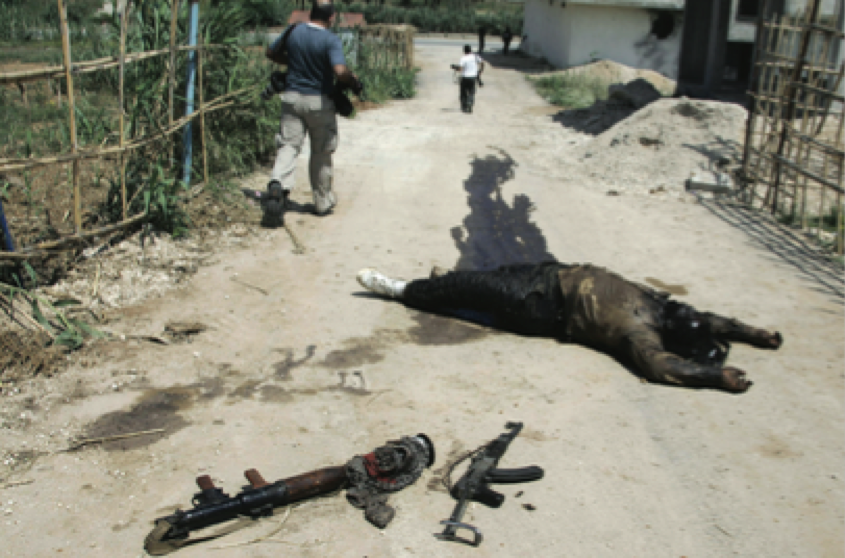
The Palestinian gunman, his face screwed up with rage, ran towards us, raising his AK-47 and yelled, “Get your hands up! Get your hands up!”

It was June 2007 and in the north of Lebanon, the Lebanese army and Fatah Al-Islam were in the early stages of a bloody battle at the Nahr Al-Bared Palestinian refugee camp — a confrontation that would last 106 days and leave 168 soldiers, over 200 militants and dozens of civilians dead.

The fighting in the north clearly had unnerved the Palestinian gunman. He was a guard at the entrance of a small military base at Ain Al-Bayda, near Kfar Zabad village in the Bekaa Valley, manned by the Popular Front for the Liberation of Palestine-General Command (PFLP-GC), a Damascus-backed radical faction. The PFLP-GC runs five small bases in Lebanon: Ain Al-Bayda, Wadi Heshmesh just north of the Bekaa village of Qussaya, Jabal Al-Maaysara on a lofty mountain plateau east of Qussaya, Sultan Yaacoub in the western Bekaa, and another at Naameh, 15 kilometers south of Beirut.

The PFLP-GC and Fatah Intifada, another Syrian-supported Palestinian group that also operates small camps north of Rashaya in the western Bekaa, were on high alert during the fighting in Nahr Al-Bared.

My two colleagues and I were forced to sit on the ground, our hands on our heads, for five minutes until the arrival of the guard’s boss, incongruously dressed in a purple shell suit. Calm and polite, he told us: “We are guests in this country and we are here in these bases only to help liberate Palestine.”

That incident occurred more than a year after the National Dialogue, the round-table forum grouping Lebanon’s top leaders, had agreed to shut down the Palestinian bases and ban arms carried by Palestinian militants outside the 12 established refugee camps. Nearly four years after that decision was reached, it has yet to be implemented. The Palestinian bases still exist, surrounded by Lebanese troops who prevent civilians and journalists from accessing them.

The issue of the Palestinian bases may well become salient again in the coming months, given the easing of tensions between Lebanon and Syria since the formation of the new government in Beirut in November, and the visit to Damascus by Prime Minister Saad Hariri in December, 2009.

Although both countries have undertaken the historic step of exchanging formal diplomatic relations with the opening of embassies in Beirut and Damascus, the pace of rapprochement will depend greatly on how Syria reacts to Lebanese requests for assistance in some key — but solvable — areas. The first is the fate of the PFLP-GC and Fatah Intifada bases, the second is a decision to begin the long-neglected delineation and demarcation of the border between the two countries.

It is evident that following the Nahr Al-Bared experience, the army has no taste for forcibly dismantling the Palestinian bases, even though in military terms it would be a much simpler task to shut the isolated rural outposts than weeding out Fatah Al-Islam’s die-hards from the cramped interior of a Palestinian refugee camp.

Furthermore, the PFLP-GC, in particular, is an ally of Hezbollah — these days serving almost as the Lebanese party’s private militia force, which adds an awkward political component to closing the bases.

In January, Abu Musa, the leader of Fatah Intifada, declared that he rejected the disarming of Palestinians outside the refugee camps and that the fate of their weapons was a matter to be decided among Palestinians.

Abu Musa’s rare press conference appears to have been an effort to hinder attempts to close the bases before they had even begun. Importantly, however, Abu Musa would not have made such a bold declaration without the knowledge of his hosts in Damascus. Syria has said that because the bases lie on Lebanese soil, it has no jurisdiction to have them closed. In reality, if Syria instructed the PFLP-GC and Fatah Intifada to dismantle their outposts and return to the refugee camps in Damascus or Beirut, they would do so quickly and with a minimum of fuss.

Damascus bridles against international pressure and tends to dig in its heels when lectured by the West. Whether Syria will show goodwill over the Palestinian bases, remains to be seen. But if it does it would win international praise at almost no tactical cost to itself.

There are indications that the United States will soon develop a more nuanced approach toward Lebanon, beyond the repeated calls for the implementation of Resolution 1701. The new track will focus on the border between Lebanon and Israel, probably in terms of seeking to extend the current calm along the Blue Line. But there will be other indirectly related issues the Americans will likely pursue, such as encouraging Lebanon and Syria to begin mapping and formalizing their joint border and closing down the Palestinian military bases.

How Syria responds to such calls will provide early indicators as to how the Lebanon-Syria relationship will unfold in the months ahead.

Nicholas Blanford is the Beirut-based correspondent for The Christian Science Monitor and The Times of London

February 22, 2010 0 comments
0 FacebookTwitterPinterestEmail
Editorial

The time for waiting is over

by Yasser Akkaoui February 22, 2010
written by Yasser Akkaoui

Like the sands of Arabia, the movement of money has shifted, and those economies considered too slow (Saudi Arabia), too conservative (Abu Dhabi), too risky (Lebanon) or too small to be a player (Qatar) are now destinations for the region’s capital. Dubai, once the flagship of the Gulf Cooperation Council’s prosperity, is nursing a bruised ego and considering its options.

What’s the moral of the tale? That steady-Eddies are the best bet? That the tortoise eventually beats the hare? That Saudi Arabia was the perfect example of a state exercising leadership and intervention when crisis hit?

Well, it’s not quite as simple as that, and maybe the answers can still be found among the skyscrapers of Dubai, where businesses, or should we say the business community, is still struggling to adapt its strategies to the new reality. Essentially, human nature is risk averse and there is a reluctance in Dubai to seek out new markets, because businesses in Dubai are playing a risky waiting game, hoping to turn a corner that may not loom into view for a while.

It is a syndrome that the Lebanese know only too well. They sat around in the late 1970s convinced that the civil war would soon be over — in just a few months things would pick up again. Fifteen years later, they realized they were wrong and that for many of them, the best years of their lives had been wasted. The Dubai mindset must change. The private sector must seek its corporate sustenance in the fertile plains of Saudi Arabia, Abu Dhabi and Qatar, all markets that rode out the financial storm.

But it is not all gloom and doom for the glamorous emirate. Its time will come again. The hard work has been done. Not only is Dubai ‘built’, it was built at a time when the price of construction commodities was lower than it is today and a time when the dollar was in ruder health. Today, anyone wanting to emulate Dubai’s undoubted magnificence, and they will for this is the nature of the beast, will have to pay triple the price.

The hard work has been done; the table is set; the private sector just needs to get hungry enough to go find some food. 

February 22, 2010 0 comments
0 FacebookTwitterPinterestEmail
  • 1
  • …
  • 430
  • 431
  • 432
  • 433
  • 434
  • …
  • 696

Latest Cover

About us

Since its first edition emerged on the newsstands in 1999, Executive Magazine has been dedicated to providing its readers with the most up-to-date local and regional business news. Executive is a monthly business magazine that offers readers in-depth analyses on the Lebanese world of commerce, covering all the major sectors – from banking, finance, and insurance to technology, tourism, hospitality, media, and retail.

  • Donate
  • Our Purpose
  • Contact Us

Sign up for our newsletter

    • Facebook
    • Twitter
    • Instagram
    • Linkedin
    • Youtube
    Executive Magazine
    • ISSUES
      • Current Issue
      • Past issues
    • BUSINESS
    • ECONOMICS & POLICY
    • OPINION
    • SPECIAL REPORTS
    • EXECUTIVE TALKS
    • MOVEMENTS
      • Change the image
      • Cannes lions
      • Transparency & accountability
      • ECONOMIC ROADMAP
      • Say No to Corruption
      • The Lebanon media development initiative
      • LPSN Policy Asks
      • Advocating the preservation of deposits
    • JOIN US
      • Join our movement
      • Attend our events
      • Receive updates
      • Connect with us
    • DONATE