• Donate
  • Our Purpose
  • Contact Us
Executive Magazine
  • ISSUES
    • Current Issue
    • Past issues
  • BUSINESS
  • ECONOMICS & POLICY
  • OPINION
  • SPECIAL REPORTS
  • EXECUTIVE TALKS
  • MOVEMENTS
    • Change the image
    • Cannes lions
    • Transparency & accountability
    • ECONOMIC ROADMAP
    • Say No to Corruption
    • The Lebanon media development initiative
    • LPSN Policy Asks
    • Advocating the preservation of deposits
  • JOIN US
    • Join our movement
    • Attend our events
    • Receive updates
    • Connect with us
  • DONATE
Finance

Regional equity markets

by Executive Editors February 22, 2010
written by Executive Editors

 Beirut SE  (One month)

Current year high: 1,200.49    Current year low: 705.56

The Beirut Stock Exchange recorded marginal index movements and abnormally high turnover in the first trading weeks of 2010, the latter due to a spike in big-scale bank selling and buying. The MSCI Barra Lebanon index closed at 1110.97 points on January 22, a drop of less than half a percent from the start of the year. The big turnover came from the sale of 7.5 million common shares in Bank Audi Group, which were sold by Egyptian investment bank EFG-Hermes in a $913 million divestment on the Lebanese and international bourses. Big bank deals also included one between Byblos Bank and the World Bank’s International Finance Corporation. The IFC bought 8% of Byblos Bank for $100 million on January 22. Turnover on the Beirut Stock Exchange soared to a daily average of $51 million, compared to 2009’s $3.5 million daily trading average. 

Amman SE  (One month)

Current year high: 2,968.77    Current year low: 2,454.48

The Amman Stock Exchange started 2010 with no clear direction. The ASE

index climbed between Jan 6 and 14 but gave up those gains in downward momentum that commenced on Jan 19. The close of 2,525.75 points on Jan 24 put the market 1.4% lower than the start of the year. Average daily trade value in the review period was $33.56 million, marking a slow market below the 2009 average daily turnover of $51.53 million. According to statistics published by the ASE, total trade value in 2009 had been $13.7 billion, less than half of what it was in 2008. Sector indices moved disparately in the January review period; the insurance index showed the strongest fluctuations and on Jan 24 closed 2.63% lower than the start of the year. Banking and services also underperformed the general index, by 1 and by 0.56 percent, respectively. The industrial sector ended the period 0.2% up.

Abu Dhabi SM  (One month)

Current year high: 3,239.74    Current year low: 2,137.15

The emirate’s newly acquired bragging rights to the name of Dubai’s super-burj notwithstanding, Abu Dhabi investors could cheer only very quietly in the first 16 trading sessions of 2010. Losing days outnumbered winning days three to one in the review period and the ADX index ended 5.2% down on January 24, when compared with the start of the year. Average daily turnover was $45 million in the review period, low when compared with the $76 million average daily trade value in 2009. By sub-indices in January 2010, the telecoms index did better than the pack but was still down 2.7%. Banking, construction, consumer and energy indices were all range-bound with the general index; the industrial index underperformed somewhat but the real estate sector tanked. It closed 17.76% lower on January 24 when compared with the start of the year.

Dubai FM  (One month)

Current year high: 2,373.37    Current year low: 1,433.14

Despite the emirate’s newly opened super-tower, Dubai equity markets stepped right into a hole with the arrival of 2010. Down 12.95% versus the December 31 close, the DFM benchmark index closed Jan 24 at 1,570.09 points. Newly cross-listed Kuwaiti telecoms firm Hits Telecom was the exception in January performance as it gained 30.4% since its market debut at the end of December. Sector indices were universally down; real estate was tugged in on Jan 24 with a 25.8% loss since the start of the year. Aramex and Commercial Bank of Dubai were the only home players that achieved small gains in the review period. For all other stocks, the elevator traveled to the lower floors and the Dubai Financial Market scrip ended up in the basement — with a share price loss of 23.4%. Emaar Properties, not far behind, closed 23.1% down and Arabtec Holding dropped 19%.

Kuwait SE  (One month)

Current year high: 8,371.10    Current year low: 6,391.50

Stocks on the Kuwait Stock Exchange moved at divergent strides in January; the presence of gainers in the 30% range was opposed with stocks that dropped up to 26%. The KSE general index closed at 7024.50 points on January 24, a quarter of a percent up when compared with the last close in 2009. Food, real estate and services were on the upside of the monthly charts in the January 2010 review period, whereas banking and investment indices pushed to the downside. Volume was muted in January with average daily trading value at $202 million, meager when compared with $305 million average daily turnover in 2009 and $545 million in 2008.  Al Safat Energy Holding was the strongest gainer in the review period with a 34.9% share price gain. The National Company for Consumer Industries was at the other extreme of the scale with a drop of 25.8%.

Saudi Arabia SE  (One month)

Current year high: 6,568.47    Current year low: 4,130.01

Saudi market sentiment was friendly in January, with more upside than downside sessions; the TASI benchmark index closed at 6,301.94 points on January 24, 2.6% higher when compared with the last close in 2009. Average daily trade value in the review period was $812.4 million. As in the other Middle East and North Africa markets, average daily trade values on the Saudi Stock Exchange in January were considerably reduced when compared with average daily turnover in 2009, which on the SSE was $1.33 billion. The investment sector excelled in the review period, with a gain of 12.1%. Banking and agriculture/food added more than 4% each. The media and publishing sector was an outlier on the downside, showing a 5% drop in its sub-index. Market cap leader Sabic gained 7.6%. Climbing 50%, Kingdom Holding Company was by far the strongest gainer in January.

Muscat SM  (One month)

Current year high: 6,762.94    Current year low: 4,575.99

Tracing the path of the simple hill, a modest rise in the Muscat Stock Exchange index in the first days of January and an equivalent drop in the second half of the review period evened out to a zero-sum game where the MSM index closed at 6,367.78 points on January 24, down 2%, or one point and two tenths down from the last close in 2009. The average daily turnover was  around $16.5 million, down from an average daily turnover of $23.7 million in 2009. The industrial, services and banking sub-indices ended the review period down by 2.1%, 2.3%, and 2.4%, respectively. Unlike with some of their Gulf Cooperation Council peers, the Omani financial markets suffered no disturbing headline scandals or very untoward investment risk stories in the first weeks of 2010. 

Bahrain SE  (One month)

Current year high: 1,696.46    Current year low: 1,413.81

A step dance sideways with a positive bias was how the Bahrain Stock Exchange welcomed 2010. The BSE index closed at 1,471.44 points on January 24, representing a gain of 0.9% when compared with the last close in 2009. However, average daily trading value slumped in January at slightly over $1 million, just over half of the average daily turnover of $1.9 million in 2009, which in turn was down sharply on the $8.4 million recorded in 2008. Sector indices on the BSE during the review period showed banking coming out on top with a gain of 8.43%. Hotels and tourism, industry, services and insurance indices all underperformed the general index slightly, which left the investment sector as the main loser with a drop of 2.94% in the period. Ahli United Bank and Gulf Finance House were the best individual gainers, closing 19.5% and 17.9% higher, respectively.

Doha SM  (One month)

Current year high: 7,624.45    Current year low: 4,230.19

Qatar’s stock market slipped into 2010 and the Qatar Exchange’s benchmark index closed at four sixes — 6,666.00 points — on January 24, marking a loss of 4.21% from the start of the year. All sectors moved lower, banking suffering the least (3.1% down) and services the most (8.8% down). The real estate sector was the real culprit in driving the market lower. The announced merger of Qatar Real Estate Investment Co. into Barwa Real Estate drove QREIC shares up in the first part of January, but the overall sector trend was down. Ezdan Real Estate nosedived 43.4%, Barwa dropped 18.5%, and United Development Company (UDC) fell 5.6%. As the review period closed, UDC announced a 62% higher net profit for 2009, compared to 2008. January turnover on the QE averaged $58.4 million for each of the 17 trading sessions, compared with a $99.7 million daily average in 2009 and $189.8 million per session in 2008.

Tunis SE  (One month)

Current year high: 4,594.76    Current year low: 2,943.71

The Tunindex entered 2010 by continuing its journey on the same course as in 2009: northward. Index values leapt more than 200 points in a few sessions in early January and the market closed at 4,586.18 on January 22, a new record. The uptrend was not all-encompassing, though, and the dozen of losing stocks in the period included Tunisair, with a drop of 5.2%. Companies in telecommunications, banking and manufacturing led the Tunisian exchange higher in January. With a gain of 20.1%, BIAT Bank ended the period as the exchange’s market cap leader. On the next rungs of the market cap ladder, Poulina Group and Banque de Tunisie recorded smaller gains of 0.5% and 1%. Infusion of fresh blood into the Bourse de Tunis is expected this year through IPOs of ferry operator CTN and of insurance company Tunis Re.

Casablanca SE  (One month)

Current year high: 11,729.86  Current year low: 9,997.56

Completing the good readings of the North African trio, the Casablanca Stock Exchange index ascended more than 700 points between Jan 5 and Jan 20 when it closed above 11,000 points for the first time since October 20, 2009. Weakening slightly at the end of the review period, the Casa All Shares Index closed at 10,920.14 on January 22. Of market heavyweights, market cap leader Maroc Telecom advanced 8.5% while number two, Attijariwafa Bank, shed 0.9%. In the real estate sector, Group Addoha climbed 12.7% while CGN gained 2.4%. Average daily turnover in 2009 was recorded at $18.7 million, versus $43 million per average trading day in 2008.

Egypt CASE (One month)

Current year high: 7,249.55    Current year low: 3,389.31

Reaching a close of 6,657.42 points on Jan 24, the Egyptian Stock Exchange index EGX 30 achieved a 7.23% gain from the start of the month, with notable profit taking occurring at the end of the review period. The market’s $236 million average turnover in January was a step up from its average daily trade value of $200 million in 2009. The Egyptian bourse was not only a good performer in terms of index gains in 2009 versus other regional exchanges; its average daily trading value last year was less than a third lower than in 2008. Among large cap stocks, EFG-Hermes showed a period gain of over 20%. Share prices of the investment banking group rallied in the first two weeks of 2010. EFG-Hermes’ announced sale of its stake in Lebanon’s Bank Audi Group on Jan 18, realized a substantial capital gain.

February 22, 2010 0 comments
0 FacebookTwitterPinterestEmail
Economics & Policy

Middle East firms must secure their strategies for global grasp

by Mohamad Mourad, Rafiu Abina & Amr Goussous February 22, 2010
written by Mohamad Mourad, Rafiu Abina & Amr Goussous

Fueled by their financial strength and increasing competition in their home markets, many Middle Eastern companies have launched unprecedented cross-border expansions since 2004. The disclosed value of Middle Eastern companies’ cross-border merger and acquisition (M&A) deals between 2004 and the third quarter of 2009 exceeded $127 billion, accounting for 63 percent of total regional M&As. These companies now operate in multiple markets and industries globally, with revenues from international subsidiaries becoming a key contributor to their growth.

Going global, however, comes with a new and challenging set of organizational demands, which most Middle Eastern companies are facing for the first time. The companies that successfully address these challenges will be best positioned to earn a place among the world’s largest and most successful businesses. Now is the time for the senior executives in the region to create a sound foundation for successful global growth by reviewing their operating models and ensuring that their companies are properly positioned to capture the maximum value from their international investments. 

Governance models must create alignment across the business globally. Frequently, the international subsidiaries of Middle Eastern companies are structured as separate legal entities, each with its own board, working independently and lacking adequate coordination with headquarters. This creates a portfolio of investments, rather than a truly globally integrated organization, and erects barriers to achieving the international scale required to create value, capture synergies, share knowledge and disseminate best practices.

To globalize successfully, companies should begin addressing governance challenges at the onset of international expansion. Leaders of international subsidiaries should actively participate in strategic decision making at the corporate level; the decision making process should be standardized across subsidiaries. Companies should examine and, as necessary, redefine decision rights in order to create the proper balance between control at corporate headquarters (to ensure corporate imperatives are met) and sufficient autonomy at the international subsidiary level (to accommodate local market requirements). One regional telecom operator has taken steps to overcome these challenges, appointing independent outside directors to sit on the boards of its international subsidiaries. It also created a specialized team at headquarters to review its subsidiaries’ board agendas, ensuring a common perspective and unified decisions by directors representing the group.

Organizational models should enable global business

There is no single organizational model that is best for Middle Eastern companies seeking global growth, as models based on geography, product lines or functional areas have all proven effective. As companies go global, however, inefficiencies that currently exist in their organizational structures will be magnified. These may include misaligned spans of authority, excess layers of management and paternalistic management models. To overcome these obstacles, companies should restructure their organizational models to integrate, support and manage global operations. Although some initial redundancies and inefficiencies are unavoidable in aggressive international growth initiatives, centralized core functions that are capable of supporting and enhancing all of the subsidiaries should be developed as quickly as possible.

Companies that seek global expansion should also clarify the role of the corporate center, balancing the efficiency of central standardization and control with the effectiveness of local autonomy. For example, a large Middle Eastern telecom operator sought this balance by restructuring itself as a group organization, and appointed two chief

executive officers, one focusing on domestic business and the other on international subsidiaries. This enabled due focus on the respective operations and facilitated the realization of synergies across geographies by creating a corporate center and shared services entities at the group level.

Ad-hoc management processes must be standardized

As companies go global, they should improve operational efficiencies and provide access to the information required for effective decision making. To do this, they need to standardize, extend, integrate and institutionalize strategic management processes in a careful and measured way. As companies acquire international businesses, they also acquire the legacy systems and processes of the acquired company. As a result, the systems and processes that support effective decision making become fragmented and the information needed to monitor and manage performance across the organization is unavailable. To resolve these problems, companies should seek to balance global standardization (and its potential competitive advantages) with local customization (and the ability to leverage local differentiating capabilities).

As they integrate their processes and IT platforms with those of the acquired operations, companies should also standardize systems and processes in a coherent, continuous way that allows some degree of local flexibility, while avoiding overreliance on ad-hoc initiatives.

One Middle Eastern chemicals company has improved its processes by viewing its globalization journey as a two-way street that includes learning from its newly acquired businesses. To that end, the company has brought together employees from all of its global operations to design new work processes, such as planning, budgeting and performance management. The company’s aim is to ensure its processes enhance organizational integration, operational efficiencies, consistent operational and financial reporting and streamlined decision making.

Companies should develop an inclusive culture and shared values

Like any company that seeks to expand globally, Middle Eastern companies will have to adapt their values and culture to each country in which they operate and incorporate the best local values and cultural elements into their own ethos. At the same time, they must preserve the core values of their companies and institutionalize high performance standards.

To achieve these objectives and establish a corporate culture that can successfully cross borders, companies should identify their own differentiating, non-negotiable values and traits, as well as the national and corporate values, attitudes and behaviors present in their international subsidiaries. They should recognize the diversity that exists within their global footprint, determine how to leverage it, and build relationships with the key stakeholders in each geographic area.

A Middle Eastern logistics company, which gave itself a new name and brand after making multiple international acquisitions, exemplifies one approach to establishing a global culture. In addition to creating a more dynamic and unified brand in the marketplace, the new name was designed to provide employees in more than 100 different countries, who work in vastly different markets with varying business challenges, with a common name and set of values. The new brand created a company-wide platform for emotional attachment, without an undue focus on the company’s home market or the many differences that exist across the geographies in which it does business.

Talent management must include proactive people strategies

As Middle Eastern companies go global, their talent needs become more complex. They face an increased demand for skills — often in geographies where qualified employees are in short supply, as is the case in many emerging markets. They also tend to be confronted with a shortage of senior executives with sufficient global experience.

To build successful global organizations, companies will have to identify, measure and capture the maximum value from their talent base. They should segment employees according to their impact on the performance of the organization and develop tailored value propositions for each segment that balance business requirements with specific segment needs. With this strategic foundation for talent in place, companies can begin to create a talent pool to fill international positions.

They should determine a standard profile for international hiring, and coordinate their recruitment efforts across geographies to ensure consistency. They should also invest in hiring executives who are capable of filling international positions in advance of a specific need and allow them time to establish themselves within the company.

To build its people strategy, one leading Middle Eastern retailer has developed a team of individuals who have optimal backgrounds for international assignments. This team is deployed to launch all new operations, recruiting and training local managers to take over once the new location is established. This approach reduces the challenges of sharp learning curves for new teams, quickly builds talent in local markets, and develops these individuals for leadership roles in future international ventures.

Many Middle Eastern companies are seeking international expansion and growth. Some of them hope to claim a spot among the world’s leading global corporations. The companies that have the best chance of achieving this will be the ones that are able to successfully transform their structures, systems and processes, enabling their people to effectively and efficiently execute and compete anywhere in the world.

Mohamad Mourad is a principal, and Rafiu Abina and Amr Goussous are senior associates at Booz & Company

February 22, 2010 0 comments
0 FacebookTwitterPinterestEmail
Economics & Policy

For your information

by Executive Editors February 22, 2010
written by Executive Editors

Fiscal deficit at $2.6 billion

Lebanon’s Ministry of Finance has stated that the fiscal deficit widened to $2.6 billion in the first 11 months of 2009 — 25.1 percent of the 2009 budget. Standard Chartered Bank forecasts that the total budget deficit for this year will reach 9.5 percent of the economy, the highest in the Middle East and North Africa and the second highest in emerging markets. The Economist Intelligence Unit forecasts the deficit to constitute 10.3 percent of gross domestic product in 2010. Government expenditure came in at $10.3 billion, a 15.5 percent year-on-year increase in the first 11 months of 2009. Debt servicing — the payment of interest on the public debt — also increased to $3.4 billion, making up a third of total expenditures. Revenues over the first 11 months of 2009 also rose to $7.7 billion (21.9 percent), mostly from taxes, which accounted for a total of $5.5 billion. A further $1.68 billion came from customs revenues over the same period, constituting a year-on-year rise of 72.9 percent. Some 87 percent of total customs receipts were processed through the Port of Beirut.

Noble signs LOI to supply Israel with contentious gas

The American oil company Noble Energy closed last year by signing a letter of intent (LOI) to provide Israel with natural gas from a field off the country’s northern coast. The Tamar field, located some 90 kilometers offshore of Haifa, was discovered by Noble Energy in January 2009. Experts have stated that the field could potentially reach into Lebanese territorial waters, meaning that any extraction without Beirut’s consent would constitute an effective filch of Lebanese gas. The field can potentially produce up to $750 million worth of natural gas annually, and be extracted over a 15-year period, according to Noble, although some analysts have disputed this figure.

The agreement signed between Noble and Israel will provide gas to state-owned Israel Electric. “The progress on both the development and marketing of Tamar continues to move us along towards first production in 2012, consistent with our original projections,” said Charles D. Davidson, Noble Energy’s chairman and chief executive officer. According to Noble, the company has signed LOIs totaling $10.5 billion to provide gas from the Tamar field.

Istithmar chief resigns

dubai World, the ailing Dubai government-owned holding company at the center of Dubai’s debt debacle, has replaced the head of its flagship private equity investment company Istithmar World. David Jackson submitted his resignation on January 20 and was replaced by Istithmar’s former Chief Investment Officer Andy Watson, a former director at Barclays Capital.

The resignation comes as Dubai World struggles to restructure some $22 billion in debt. The company has also signaled an end to its previously aggressive buying spree, which had targeted acquisitions such as a $942.3 million purchase of luxury retailer Barneys New York, Manhattan’s W Hotel and a stake in Las Vegas’ $11 billion CityCenter development.

“Today, Istithmar World is focused on the steady-state management of existing assets to maximize value, rather than on private equity investment,” said a statement issued to Bloomberg by Dubai World’s Chief Restructuring Officer Aidan Birkett. EFG-Hermes investment bank, in its “2010 United Arab Emirates Yearbook” (released last month), has estimated that the Dubai government has racked up debts “in the range of $130 billion to $170 billion.”

Lebanon set for steady seven

A recent report issued by the World Bank entitled “Global Economic Prospects in 2010” stated that Lebanon’s economy would grow by 7 percent, the same rate as the organization predicted it would in 2009. The World Bank attributed this steady growth forecast to several factors, including the effects of economic links to other nations being lower than expected during the global downturn, a steady flow of remittances at around $7 billion, and double-digit growth in foreign direct investment.

The World Bank also based its forecast on the assumption that, since Lebanon was able to register growth during periods of instability — such as those experienced in 2009 in the run-up and aftermath of the Parliamentary elections — then these economic vectors would continue into 2010 as the effects of the global downturn diminish.

Evidence supporting this theory includes recent figures released by Lebanon’s Ministry of Tourism, which stated that the number of tourists visiting the country officially reached an all-time high. Throughout the course of last year, some 1.85 million tourists visited Lebanon, constituting a 39 percent year-on-year increase, shattering the previous record of 1.4 million tourists set in 1974. The Ministry of Tourism also estimated that income from tourism in 2009 was around $7 billion, with the largest proportion of visitors coming from Arab countries (42.5 percent) followed by Europe (24.5 percent), Asia (14.3 percent), the Americas (12.3 percent), Oceania (3.5 percent) and Africa (2.3 percent). The largest number of visitors from a single country (223,793) came from Jordan.

Shell boosts Egypt investment

Shell Egypt has received approval from the Egyptian authorities to buy a 40 percent stake in the Alam El Shawish oil and gas concession. The stake will come from the current co-owners, the government-owned GDF Suez and privately-owned Vegas Oil and Gas, with each offering up 20 percent of their shares in the concession. According to Reuters, Vegas will hold onto a 35 percent stake and GDF Suez will maintain ownership of the remaining 25 percent.

According to CI Capital, a New York-based investment firm, Shell Egypt already produces 100,000 barrels of oil from the 15 discoveries they have made in Egypt’s Western Desert. The Western Desert holds 35 percent of Egypt’s crude oil, according to CI Capital.

Calm oil prices expected in 2010

Crude oil prices are expected to remain stable in 2010 after two years of market fluctuations brought on by the global economic downturn. Barrel prices are expected to remain around the $80 mark, according to the global consultancy firm Control Risks, which accurately predicted oil prices in 2009. “We called the price at $70 for 2009, which people said was crazy at the time, but which turned out to be pretty much on tap,” said Jonathan Wood, global issues analyst at Control Risks. According to Wood, the upper and lower limits for crude prices over the course of the year will  be $100 and $60, respectively, but predicted that this would be improbable. Echoing this sentiment, last month the International Energy Agency (IEA) also announced that it sees demand for oil increasing by 1.4 million barrels per day in 2010, spurred by demand in China and other parts of Asia. The IEA also expects production of natural gas liquids in the Organization of Petroleum Exporting Countries (OPEC) member states to increase by 885,000 barrels per day (bpd) to 5.7 million bpd, with non-OPEC production rising only by 200,000 bpd to reach 51.5 million bpd.

February 22, 2010 0 comments
0 FacebookTwitterPinterestEmail
Real estate

For your information

by Executive Editors February 22, 2010
written by Executive Editors

Lebanon’s resistant real estate

In 2009, the real estate sector in Lebanon fared much better than its neighboring counterparts with transactions increasing 2.3 percent and reaching their highest values since the beginning of the decade, according to Bank Audi and the General Directorate of Land Registry and Cadastre. Sales transactions to foreigners also increased 17.6 percent during the year, despite the effects of the financial crisis on the regional economy. The value of property transactions rose 8.3 percent compared to 2008, reaching $7 billion, which also led to the increase in average value per property sale by 5.8 percent to reach $84,000.

Real estate M&A down globally 

Dealogic, the New-York based deal tracking firm, announced in early January that the 2009 global merger and acquisition (M&A) activity in real estate amounted to $151.9 billion (via 2,282 deals), 34 percent lower than in 2008 and the lowest level in six years. Deal volume fell 44 percent in the Europe, Middle East and Asia (EMEA) region, by 59 percent in the Americas and only 1.6 percent in Asia Pacific. China faired better with a significant increase of 41 percent in M&A levels and was the most targeted nation, attracting some 19 percent of the total volume at $29.3 billion. The EMEA attracted 45 percent of the global total, while the Americas and Asia Pacific attracted 11 percent and 44 percent, respectively. 

Realty sinks in Jordan

In 2009, the value of real estate transactions in Jordan dropped 21 percent year-on-year, totaling some $6.7 billion, according to the Jordanian Directorate of Land Registry and Cadastre. The Kingdom’s revenues from real estate sales also retreated 29 percent, amounting to $381 million. Iraqis headed the list of foreign real estate investors, with 1,400 Iraqis investing some $194 million in the market.

Kuwaitis came second in numbers with 1,219 investors and fourth in terms of value, with $21 million worth of investments. The third most numerous were Saudi investors, at 402, with some $26 million invested — third in terms of value. The overall number of sales transactions to non-Jordanian buyers and investors in 2009 amounted to 4,810 transactions, counting 1,889 residential units and 2,921 land parcels.

East Jerusalem even more occupied

It the end of December, the Israeli Ministry of Housing invited tenders to build 692 homes in the Jewish settlements of Neve Yaacov, Psgat Zeev and Har Homa, among others in Israeli-occupied East Jerusalem. The United States and the European Union criticized the expansion, as new construction in the occupied territories is considered one of the biggest obstacles to the resumption of peace negotiations. Sweden, which holds the EU presidency also said in a statement that it was “dismayed at the announcement of the government of Israel to build 700 apartments in occupied East Jerusalem,” adding that “settlements on occupied land are illegal under international law.” Israel also announced the approval of the construction of four residential buildings, including 24 apartments, on the Mount of Olives in East Jerusalem.

Kuwait Finance House in Chicago    

uwait Finance House, the country’s biggest Islamic lender, announced at the end of December that it had signed a $242 million residential real estate deal in the American city of Chicago, according to Maktoob Business. The project is currently under construction and is located on Chicago’s Michigan Avenue, also known as Miracle Mile. It will be 95 percent owned by the KFH and 5 percent by the United States-based Prism Company for real estate development. The residential compound will include 40 floors and more than 80 flats. Steps to widen its investment portfolio in the US began last August when KFH entered a joint venture with the US-based United Dominion Rent Inc. (UDR) to buy high-income residential property, with a budget of $450 million.  “Such a huge partnership shows the objectives KFH is trying to achieve by returning as a major player in the American real estate market, after it had liquidated a large portion of its investments before the economic crisis began,” KFH International Real Estate Department Manager Ali al-Ghannam told Maktoob Business back in August.

Green city delayed

In the first week of January, The National reported that the $22 billion Masdar City in Abu Dhabi will be delayed at least four years from its original completion date in 2016. The first phase of the carbon neutral, zero-waste, zero-emissions city will be completed on schedule in 2013, a spokesperson from Masdar told the newspaper, but the remaining six phases will be handed over gradually during the decade. In 2020, the city is expected to host a significant number of business and residencies. According to the newspaper, officials from Masdar say the financial crisis is not the reason for the delay, but rather it is caused by the technological challenges the company is facing to build the city. “Masdar is not a typical real estate development and is not bound by similar pressures of fixed completion dates,” the spokesperson told The National. “For Masdar, success will not be measured on the speed with which the city is constructed, but the standards it sets in addressing today’s energy and sustainability challenges.”

February 22, 2010 0 comments
0 FacebookTwitterPinterestEmail
Banking & Finance

For your information

by Executive Editors February 22, 2010
written by Executive Editors

EFG-Hermes sells stake in Bank Audi after “No” to acquisition

After acquisition rumors circled through the regional media in October 2009, EFG-Hermes announced on January 18 that it had sold its 21.95 percent stake in the Lebanese bank for $913 million.

“After lengthy discussions with Bank Audi regarding a combination of the two businesses, it became evident after the events of 2008, that an amalgamation in the near future might be difficult,” said an EFG press release. The investment bank’s 7,554,148 ordinary shares and 2,483,034 global depository receipts sold for $91 per share, noted Bank Audi in a January 18 press release. The transaction resulted in $260 million in unconsolidated capital gains for EFG. Though Audi has not specified the buyer officially, Reuters, citing an anonymous source, confirmed that members of the Mikati family had bought some part of EFG’s shares. Arab Finance reported on January 17, citing sources close to the family that Naguib Mikati intended to acquire 14 percent of EFG’s shares. Zawya Dow Jones information shows that Deutsche Bank Trust Company Americas remains the largest shareholder in the bank holding 29.3 percent. Following the sale, Bank Audi announced that it had reached an agreement with Commerzbank to acquire Dresdner Bank Monaco in order to expand its private banking services in Europe.

Central bank to offer 7-year CD

According to Byblos, the Central Bank of Lebanon’s First Vice-Governor Raed Charaffedine, said the central bank will soon begin offering 7-year certificates of deposit (CD) to help ease the immediate burden of servicing the country’s staggering public debt, which reached $50.5 billion at the end of November 2009, according to Byblos Bank. The Lebanese-lira denominated papers will carry a fixed rate of 8.5 percent, and a variable rate based on the yield of the 6-month paper plus 1.21 percent. The central bank stopped issuing CDs in June of 2009 in order to encourage banks to lend in local currency after central bank circulars lifted reserve requirements on 60 percent of loan categories. These lending incentives are set to stay in effect until June, 2010 and possibly into 2011, central bank Governor Riad Salameh told Executive in December.

IFC buys 8 percent of Byblos Bank

The International Finance Corporation (IFC) acquired 8 percent of Byblos Bank as part of the bank’s effort to raise its capital by $250 million, said Byblos in a January 21 statement. The IFC, the World Bank’s private arm, bought 47,619,047 ordinary shares at $2.10 per share, bringing the aggregate purchase price of the sale to $100 million. Byblos Invest, whose Chairman Sami Haddad was formerly the director of the IFC’s Middle East and North Africa Department and minister of economy, will vote in favor of granting a seat on the bank’s board of directors to an IFC nominee. The Central Bank of Lebanon approved the sale on January 21 and the deal is set to close on June 30, 2010. Byblos has been granted large loans by the IFC on three separate occasions, totaling more than $94 million, according to the Byblos Bank’s website. These loans, offered in 1993, 1996 and 1999, were given to facilitate commercial lending and housing loans.

Majority foreign ownership allowed at Syrian banks

Foreign institutions may now own majority stakes in Syrian banks after the government issued a decree in early January. The decree made it possible for foreign shareholders to own 60 percent of the country’s local banks, up from the 49 percent previously permitted. The decree also raised minimum capital requirements for Syrian banks from between $32.6 million and $108.7 million — depending on the type of bank — to between $219.8 million and $330 million. The Syrian government gave up its monopoly on the country’s banks seven years ago. There are now 13 private banks operating in Syria in addition to the six banks still owned by the government. Although Western institutions are still absent from the sector, Lebanese, Jordanian and Gulf Banks, including several Islamic institutions, have expanded their presence since the market was opened.

Central bank foreign assets $28.3 billion

Lebanon’s central bank’s foreign assets grew 43.4 percent in 2009 compared to the previous year, reaching $28.3 billion from $19.7 billion in 2008. December 2009 saw the largest increase, with foreign assets growing $1.08 billion for the month, resulting in $8.6 billion in aggregate growth for the year.

Gold reserves at the Central Bank  of Lebanon grew to $10.1 billion, a 25.3 percent year-on-year increase. The value of the reserves has been bolstered by a global rise in gold prices but is still below the all-time high of $10.8 billion in November 2009.

CBK board resigns en masse

All five remaining members of the board of directors of the Commercial Bank of Kuwait (CBK) resigned at the board’s January 12 meeting. The resignations came after board members Fouad Dashti and Ahmad al-Mishari both resigned without explanation in December, 2009. Elections for the seven seats will take place at the next ordinary general assembly; nominations closed January 31. A bank official told Zawya Dow Jones that the ordinary general assembly would take place sometime in the first quarter. In November, CBK posted losses of $8.69 million for the third quarter, citing bad loans as the main culprit. At the same time, the bank’s Chairman, Abdulmajeed al-Shatti, said in a statement “By the end of the year, the bank will be protected by adequate provisions against any meltdowns the financial crisis may leave.” The bank’s full 2009 figures have yet to be released.

“Not guilty” plea in UAE central bank scheme

All seven men accused of perpetrating the “largest monetary scheme” in the United Arab Emirates’ history have pleaded “not guilty” on charges that they attempted to steal $10.35 billion dollars from the UAE central bank in Abu Dhabi. The accused — two Germans, one Belgian and four Iranians — allegedly attempted to withdraw the money using forged documents. The European defendants claim their Iranian co-defendants told them that the funds were coming from another Iranian’s account and were to be used to begin work on a luxury hospital in the UAE. All seven defendants are facing charges of forging documents, swindling and fraud. If convicted, they will face up to 10 years in prison. The trial will resume on February 7.

February 22, 2010 0 comments
0 FacebookTwitterPinterestEmail
Special Feature

Cairo’s capitulation

by Jonathan Wright February 22, 2010
written by Jonathan Wright

Egyptian minister Moufid Shehab called it “the engineering installation on our eastern borders” — a euphemism that at least suggests a certain discomfort in official circles. Its many opponents more succinctly call it “the wall of shame,” and say it illustrates the Egyptian government’s willingness to go along with Israel and the United States in their longstanding project to squeeze the people of the Gaza Strip until they turn against Hamas, the Islamist movement that has run the territory since 2007.

Muslim clerics have split over the legitimacy of the steel wall under construction along the Gaza-Egypt border, designed to intercept the dozens, possibly hundreds, of illicit tunnels that keep the Gazans supplied with everything beyond the barest necessities.

 Those indebted to the Egyptian government say it is a matter of national security and a justified response to smuggling; independent clerics on satellite television channels, who carry rather more weight with the devout, say it is a crime. All the main opposition forces in Egypt, from the Muslim Brotherhood to leftists and liberals, say the project is a national disgrace.

The government’s international reputation hit new lows over the New Year period when police in the Sinai town of El Arish clubbed foreign activists trying to break the blockade and take supplies to Gaza.

So what does the Egyptian government have to gain from building the massive underground wall between Egyptian territory and the Gaza Strip? Why is it so willing to flout domestic, Arab and large swathes of international public opinion on such a sensitive matter? 

Through all the twists and turns of the past two years, when Egypt stood at the center of attempts to restore Fatah control over Gaza, one overriding anxiety dictated Egyptian policy toward the impoverished and densely populated coastal strip: the possibility that Israel might dump responsibility for Gaza on Egypt, washing its hands of its international obligations to supply the Gazans with food, water, fuel and medical supplies.

In the worst case scenario, from Cairo’s point of view, Israel could then seal its own borders with Gaza completely and hold Egypt accountable for any military activity that originates in the territory. The Egyptian government has not forgotten the precedents of 1956 and 1967, when Palestinian guerrilla activity from Gaza helped drag Egypt into war with Israel, with especially devastating consequences in 1967.

The Egyptian government, which has grown increasingly conservative and unimaginative as President Hosni Mubarak grows older, also shares Israel’s and Washington’s fear of Hamas, which it sees as an illegitimate troublemaker threatening the regional status quo and serving the interests of Shiite Muslim, and potentially nuclear, Iran.

Egypt and its Arab allies — mainly Jordan and Saudi Arabia — long ago renounced the use of force in their dealings with Israel. Hamas, Lebanon’s Hezbollah and others keep the banner of armed struggle aloft, striking a chord with ordinary Arabs and serving as a constant reminder that alternative strategies are possible. In the case of Egypt, Hamas is especially threatening because of its historical and institutional links with the Egyptian-based Muslim Brotherhood, the government’s most formidable opponent. What’s good for Hamas is good for the Brotherhood.

Against this historical background, more immediate considerations seem to have pushed the Egyptian government into a form of cooperation that goes far beyond the commitments it made to Israel in the peace treaty they signed in 1979.

Although the Egyptian domestic political scene looks calm on the surface (even the Muslim Brotherhood is in serious internal disarray), the governing clique faces parliamentary elections later this year and presidential elections in 2011. The last thing they want is a repetition of 2005, when street protests were weekly events and the US openly supported democratic change in the Arab world. That enabled the Muslim Brotherhood to win one fifth of the seats in parliament, more than any opposition force had held since the overthrow of the monarchy in 1952.

So much for sovereignty

This round of elections is even more delicate, mainly because of the succession question that hangs over the country as Mubarak ages and his 46-year-old son, Gamal Mubarak, shows every sign of maneuvering to take his place. Prominent party loyalist Mustafa el-Fiqi, chairman of the Parliament’s Foreign Affairs Committee, dropped a bombshell this month when he said that the choice of the next Egyptian president would need US approval and Israeli clearance.

“Is Egypt becoming another Iraq?” asked the independent Cairo newspaper Al Masry Al Youm. “What sovereignty are we talking about when one must garner the consent of foreign countries to become president?

“We want to ask the regime what benefit it gleans from adopting policies — some of which are declared, others covert, and all invariably disgusting — that dovetail so nicely with Israeli and US interests?” it added.

Best-selling novelist and liberal activist Alaa el-Aswany says he has no doubt about the rationale behind the scenes.

“The Egyptian regime has proved that it will no longer hesitate to commit any crime in order to please Israel, so that Israel puts pressure on the US…to accept President Mubarak’s son Gamal as his successor,” he said.

Jonathan Wright is the managing editor of Arab Media & Society

February 22, 2010 0 comments
0 FacebookTwitterPinterestEmail
Special Feature

Economics of the underground

by Jonathan Wright February 22, 2010
written by Jonathan Wright

The siege has destroyed the economy in the Gaza Strip,” said Moeen Rajab, an economist at Al-Azhar University in Gaza City, noting the Strip’s land and sea borders have been effectively sealed for some two and a half years. “But preventing the tunnel trade will deny the livelihoods of tens of thousands of people who depend on it.”

Up to 80 percent of the 1.5 million people in the Gaza Strip rely on some kind of basic subsistence relief aid. In an economy with virtually no official corridors to the outside world, tunnels dug under the Strip’s southern border with Egypt are economic lifelines.

“Despite the fact that goods brought through the tunnels are expensive and difficult to bring into the Strip, there is no alternative,” said Rajab.

Karen Abu Zeid, the commissioner-general of the UN Relief and Work Agency (UNRWA), said that the tunnel trade, which is used to import consumer staples, mechanical parts, medical equipment, weapons, livestock and any number of other commodities into the Gaza Strip, accounts for some 60 percent of the Gazan economy.

“Preventing the tunnel trade will deny the livelihoods of tens of thousands of people who depend on it”

High profits

Much of the available cash is invested in the tunnel sector, with 800 or so tunnels operating in the territory last year. An average tunnel costs about $90,000 to construct and operate, according to Jordan’s Ma’an News Agency. Tunnels can reach depths of 15 meters and extend 800 meters in length, with the usual cost formula being about $100 per meter of tunnel built. Fully operational tunnels sell for approximately $100,000 to $120,000.

The tunnels, which can take less than a month to construct, are sometimes built on rented land. The land owner is often compensated with a share of the tunnel profits, with goods typically transferred underground by mechanized winches and distributed to traders for sale in Gaza markets.

“The people who work the tunnels use [United States] dollars to trade with Egypt, but the average person uses [Israeli] shekels for everything,” said Abu Ahmed, an economist in Gaza City who declined to provide his real name. (The US dollar is currently trading at about 3.7 shekels on the foreign exchange markets.)

The Hamas government charges a one-time tunneling fee to permit tunnel operators to break ground, though reports vary as to the amount — from $3,000 to $10,000. After that, taxes are collected on goods brought through the tunnels, with some estimates pegging Hamas’ tunnel revenue as high as $11 million a month.

According to Israel’s Haaretz newspaper, to transport a single delivery of assorted goods by tunnel in 2008 cost on average $300, while the total monthly value of all goods brought through the tunnels can reach as much as $50 million.

The revenue collected by owners and operators is estimated at $200 million to $300 million annually. 

Since the beginning of the siege, the tunnels have substituted official modes of moving goods into the territory. For instance, only 41 truckloads of construction materials have entered the Gaza Strip since January, 2009. Reliable figures for the volume of the tunnel trade in 2009 are unavailable, but YnetNews put the figure at $650 million worth of goods for 2008.

Sixteen human rights organizations — including Oxfam International, Amnesty International and Mercy Corps — issued a report in December 2009, entitled ‘Failing Gaza,’ summarizing the economic condition of the Strip two and a half years after the start of the blockade and one year after Israel’s Operation Cast Lead — a 22-day military assault in which nearly 1,400 Gazans — mostly civilians —  and 13 Israelis were killed, 10 of whom were soldiers. As much as $890 million in damage was caused, including the destruction of schools and farms.

Before the blockade began “an average of 70 truckloads of exports left Gaza per day, while 583 truckloads of goods and humanitarian supplies came in,” noted the report. The first two years of the blockade saw 112 truckloads enter the Strip per day, on average, with 74 percent of this cargo made up of basic foodstuffs. Exports have been entirely banned, save small shipments of carnations to the Dutch market.

Inflation concern

Before the blockade, Israel deemed 4,000 categories of items as admissible for import into Gaza; currently that number stands at 35. 

Describing the economy in the Gaza Strip, Abu Ahmed said, “People are struggling. Many things are not available in stores right now, despite the existence of the tunnels.”

“During the war the price of a bag of bread went from 5 shekels [$1.35] to 10 shekels [$2.70]. Bread has dropped to about 7 shekels [$1.88] since then, but the prices of other things have stayed very high.” A 2-liter bottle of soda has jumped 100 percent, from $0.80 to $1.69, since mid-2007.

Abu al-Abed, who works at the Islamic University in Gaza City and declined to be identified by his real name, told Executive: “Prices of goods in the stores haven’t increased very much since we learned about the Egyptian wall, but we do expect them to.”

Rajab agreed and predicted that the “the wall will result in an even more severe inflation.”

Conservative estimates place the depth of the Egyptian wall at 18 meters underground, while numerous media reports suggest it is being installed with water pipes to soak the soil and make tunneling beneath it impossible. The completion of the wall will, most likely, entirely discontinue commerce through the tunnels.

An average tunnel costs about $90,000 to construct and operate, with fully operational tunnels selling for approximately $100,000 to $120,000

February 22, 2010 0 comments
0 FacebookTwitterPinterestEmail
Special Feature

Crushing Gaza’s subterranean salvation

by Jonathan Wright February 22, 2010
written by Jonathan Wright

The first rumors that a building project had commenced on the Egyptian side of the Egypt-Gaza border in the northern Sinai circulated in December 2009.  

Although the Egyptian government initially claimed routine maintenance along the existing border wall, by December 19, Egyptian Foreign Minister Ahmed Aboul Gheit implicitly confirmed the construction of an underground wall intended to prevent the passage of goods and arms into the Gaza Strip.

“Whether a wall or detection hardware, the main thing is that the Egyptian territory is protected,” Aboul Gheit told the state-owned weekly newspaper Al-Ahram Al-Arabi.

Impassable

According to Palestinian security officials, the initial phase of construction at Rafah was completed by late December and builders have moved west. Conservative estimates have put the depth of the wall at a minimum of 18 meters, and extending for 10 kilometers along the border.

Although smugglers first reacted smugly, saying they would dig under it, reports have surfaced that the wall design incorporates water pipes, likely intended to flood tunnels and drench the soil to make tunneling below the wall impossible.

Egyptian security near Rafah has been tightened since construction began, and approaching the border from the Egyptian side requires government permission to pass checkpoints, or the aid of Bedouins willing to provide off-road transport.

Egyptian President Hosni Mubarak addressed the media in mid-January, declaring the tunnels a flagrant abuse of Egyptian sovereignty and a threat to the country’s security, citing the 2004 bomb attacks on tourist resorts in the Sinai Peninsula as evidence of terrorism by Hamas, which took control of the Gaza Strip in June 2007.

Rumors that the United States and Israel pressured the Egyptian government into taking action were echoed by Karen Abu Zeid, outgoing commissioner-general of the United Nations Relief and Works Agency (UNRWA) at a forum at the American University of Cairo in mid-December. According to Abu Zeid, the steel used to build the wall is “bomb resistant” and made in the US.

The Al Jazeera satellite news network reported that US and French engineers designed the panels for the wall, which were built in America and then shipped to Egypt for assembly on-site by the firm contracted to build the wall — The Arab Contractors Co., also know as Osman Ahmed Osman and Company.

The steel used to build the wall is “bomb resistant” and made in the U.S.

The Arab Contractors

The entirely government-owned Arab Contractors Co. is a subsidiary of the Egyptian Ministry of Housing. Established in 1954 by Osman Ahmed Osman, it was nationalized in 1961 and through the 1980s was the largest Arab construction company.

Osman, later the minister of housing and a member of parliament, was a close personal friend of President Anwar Sadat and accompanied him on his 1977 visit to the Israeli Knesset.

Having been contracted to build the Aswan High Dam, as well as boats to ferry Egyptian soldiers across the Suez Canal in the 1973 war with Israel, the Arab Contractors’ role in building the wall at Gaza represents its ongoing involvement in the major developments of modern Egyptian history.

Today the company boasts a workforce of some 60,000, is active in more than 25 countries in the Middle East and Africa and has development projects spanning the spectrum, from bridges and tunnels, to water treatment plants, power stations and hospitals.

Neither the Osman family nor the ministry of housing responded to Executive’s requests to comment for this story. 

The hand of Uncle Sam

America has an extensive history of providing Egypt with military and border security assistance.

In January 2008, the US Congress voted to withhold $100 million in aid intended for Egypt in an effort to pressure Cairo to tighten security at its border with Gaza. Although then-President George W. Bush allowed the money through, Egypt allocated nearly a quarter of the funds to advanced tunnel-detection equipment. A dozen civilian members of the US Army Corps of Engineers then traveled to Egypt in 2008 to train security personnel in the use of that equipment.

In May 2009, the House Appropriations Committee voted to tack an additional $50 million for border security onto a $260 million package for security assistance to Egypt. 

“The US believes that weapons smuggling into Gaza should be stopped,” said Margaret White, spokesperson at the US Embassy in Cairo, to the Daily News Egypt in December 2009. Weapons smuggling is “highly destabilizing” and could provoke “another round of violence in the region,” she continued.

“Incentives for smuggling legitimate goods into Gaza should be reduced by increasing the volume of commercial and humanitarian goods allowed through Israeli-Gaza crossings,” said White, adding that, “The US has no involvement in the project to install a barrier on the border with Gaza.”

Beyond the wall

In addition to the steel barrier itself and the security stations bristling with detection equipment to monitor and halt breaches, Egypt is also constructing a coastal marina, placing boulders in the sea and heightening its ability to prevent maritime passage from Egypt to Gaza.

Israel announced the construction of a similar wall along the entirety of its 250-kilometer border with Egypt, at an estimated cost of up to $1.5 billion, with Prime Minister Benjamin Netanyahu citing “illegal immigration and security concerns.”

Beyond sparking international ridicule of Egypt as a puppet of the US and Israel — with protests erupting in front of Egyptian embassies around the world — on the domestic front the construction of the wall will also curtail a lucrative income source for northern Sinai.

Many smugglers on both sides of the wall have made fortunes from the tunnels, and in impoverished Sinai, long neglected by the Egyptian government, the tunnels have represented one of the few sources of steady income for the Bedouin population.

Others in the area have expressed concern that the wall — which will pump seawater through its pipes — will contaminate the aquifer situated beneath Gaza, northern Sinai and Israel. This aquifer acts as a primary water source for most of the area.

Reports from Palestinian sources indicate that the aquifer is already experiencing rapid degradation from overuse and salt water intrusion.

February 22, 2010 0 comments
0 FacebookTwitterPinterestEmail
Feature

Unsavory one-upmanship

by Executive Editors February 22, 2010
written by Executive Editors

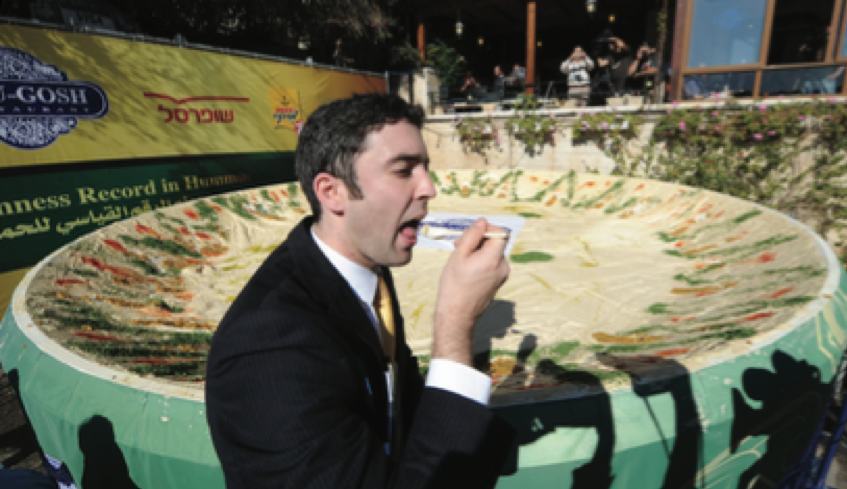
The hummus war is escalating. In October, 2009, Lebanon set a Guinness World Record for the most hummus bi tahini compiled in one place, amassing more than two tons in an extravagant ceremony that drew international media coverage and beat the previous record held by Israel. Lebanon has been fighting for years to confirm that hummus is of Lebanese origin, and its organizers hailed the move as a bold offensive in the battle to repatriate the dish.

It took Israel less than three months to wrench that record back.

On January 8, Arab-Israeli restaurant owner and multi-millionaire Jawdat Ibrahim doubled Lebanon’s figure, borrowing a satellite dish from a local broadcasting station and filling it with more than four tons of hummus. Ibrahim told reporters his actions were not hostile.

“Competition is a healthy thing,” he said at the time. “Today we have hummus. Hopefully, soon we will have talks for peace in our region.”

How escalating an already bitter conflict might promote peace is a subject upon which Ibrahim failed to explain. He’ll get his competition though — Lebanese Minister of Tourism Fadi Abboud was quick to respond to the news of the Israeli record by saying that Lebanon plans to up the ante this spring, and will top Ibrahim’s record by another two tons.

The economic collapse of the Soviet Union ended the escalation of nuclear weapons stockpiling during the Cold War. Hummus — far cheaper  than nuclear armaments — probably won’t undercut the economies of either Israel or Lebanon. However, it is no less appropriate, now as then, to pose the question: at what point does escalation leave rationality behind?

February 22, 2010 0 comments
0 FacebookTwitterPinterestEmail
Feature

Little country, big heart

by Executive Editors February 22, 2010
written by Executive Editors

We are like a country whose capital has been hit by two atomic bombs,” Patrick Elie, a Haitian presidential adviser and former defense minister told The New York Times. The death toll from the January 12 earthquake could surpass 200,000 people, according to the United States military.

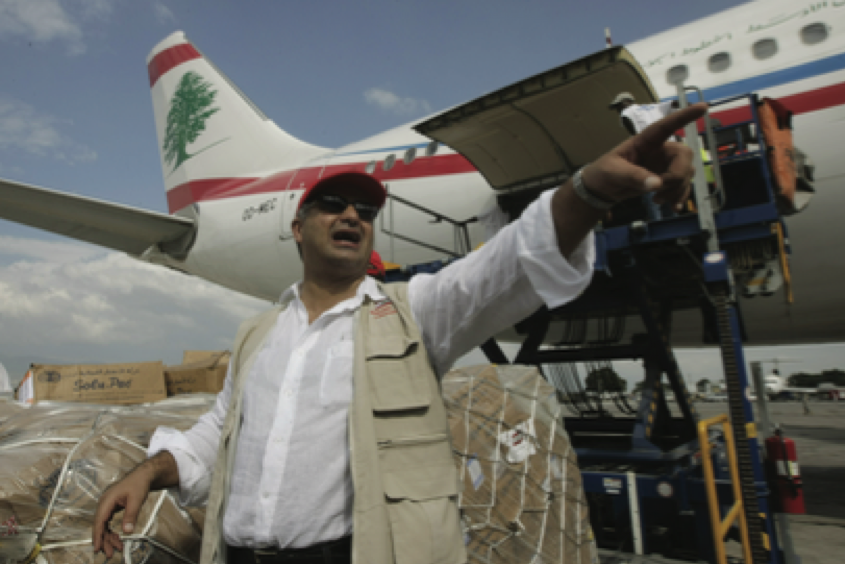
There are thought to be as many as 20,000 Lebanese living in Haiti, according to Fadi Fawaz, advisor to Prime Minister Saad Hariri. Fawaz spoke to Executive the night before he left with an official Lebanese delegation carrying aid to Haiti. The state-owned Middle East Airlines (MEA) coordinated with the government to charter an Airbus 330 to carry the delegation and aid to Port au Prince, the Haitian capital.

“The aid taken on the plane includes 30 tons of health equipment, 25 tons of shelter and three tons of milk,” said Fawaz. He was accompanied on the flight by Yahya Raad, the secretary general of the Higher Relief Commission, representatives from the Foreign Affairs and Health ministries, as well as five doctors and members of the media. Fawaz said that having survived 15 years of civil war meant that the Lebanese have both practical experience coping with disaster and expressing emotional sympathy.

“We have previous experience in disasters and we should use thisexpertise to help those in need,” Fawaz said. “We are a small country but we can make a difference in this difficult area at this difficult time.” 

February 22, 2010 0 comments
0 FacebookTwitterPinterestEmail
  • 1
  • …
  • 430
  • 431
  • 432
  • 433
  • 434
  • …
  • 707

Latest Cover

About us

Since its first edition emerged on the newsstands in 1999, Executive Magazine has been dedicated to providing its readers with the most up-to-date local and regional business news. Executive is a monthly business magazine that offers readers in-depth analyses on the Lebanese world of commerce, covering all the major sectors – from banking, finance, and insurance to technology, tourism, hospitality, media, and retail.

  • Donate
  • Our Purpose
  • Contact Us

Sign up for our newsletter

    • Facebook
    • Twitter
    • Instagram
    • Linkedin
    • Youtube
    Executive Magazine
    • ISSUES
      • Current Issue
      • Past issues
    • BUSINESS
    • ECONOMICS & POLICY
    • OPINION
    • SPECIAL REPORTS
    • EXECUTIVE TALKS
    • MOVEMENTS
      • Change the image
      • Cannes lions
      • Transparency & accountability
      • ECONOMIC ROADMAP
      • Say No to Corruption
      • The Lebanon media development initiative
      • LPSN Policy Asks
      • Advocating the preservation of deposits
    • JOIN US
      • Join our movement
      • Attend our events
      • Receive updates
      • Connect with us
    • DONATE