• Donate
  • Our Purpose
  • Contact Us
Executive Magazine
  • ISSUES
    • Current Issue
    • Past issues
  • BUSINESS
  • ECONOMICS & POLICY
  • OPINION
  • SPECIAL REPORTS
  • EXECUTIVE TALKS
  • MOVEMENTS
    • Change the image
    • Cannes lions
    • Transparency & accountability
    • ECONOMIC ROADMAP
    • Say No to Corruption
    • The Lebanon media development initiative
    • LPSN Policy Asks
    • Advocating the preservation of deposits
  • JOIN US
    • Join our movement
    • Attend our events
    • Receive updates
    • Connect with us
  • DONATE
Levant

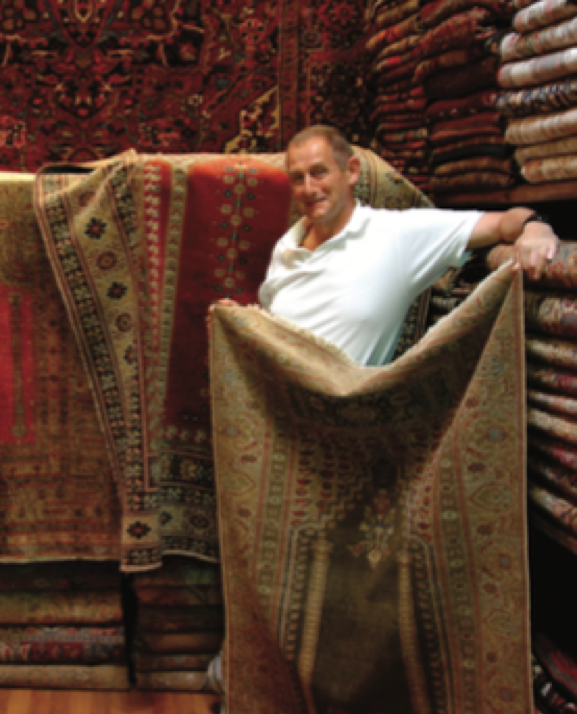
Stitching the economy

by Peter Grimsditch July 31, 2009
written by Peter Grimsditch

Last month Turkish Prime Minister Recep Tayyip Erdogan announced economic stimulus measures designed to put the nation back to work and the economy on the path to recovery. Tax cuts, exemption from social security payments, relocation expenses and subsidies for intern on-the-job training were part of what Erdogan described as turning a “crisis into an opportunity.” On paper, the plan looks sound.

For investment purposes the country has been carved into four zones, from the least developed east to the most developed north-west. As an incentive for new investors to  set up shop in eastern Turkey, start-up businesses will see corporate tax rates cut from 20 percent to 2 percent, social security contributions exempted for seven years, and a subsidy of 5 percentage points on the interest rate for Turkish lira loans for business start-ups, to a maximum of TL500,000 ($325,000). Smaller versions of the same formula will apply to the other three regions.

Sweetening the pie

The textile industry, a chunk of which has been exported to Egypt, is among several areas singled out for special treatment. Any company owner willing to transfer their operations, lock, stock and barrel from either of the two richer zones to either of the two poorer zones will have the corporate tax rate slashed from 20 percent to 5 percent, all relocation expenses paid and be exempted from social security payments for five years.

There are, inevitably, some conditions. The move has to be made before the end of next year and the company has to employ at least 50 people. The name of Erdogan’s game here is to spread the productive economy more evenly around the country. With the state subsidies and lower salaries paid in eastern Turkey, overhead operating costs would be cheaper for those who take the plunge. What they also face in parts of the region is a transport infrastructure in need of a vast overhaul and a local labor pool drawn from the least educated slice of the Turkish population. In any case, no one has explained how creating jobs in one area by making people redundant in another can be counted as a net gain.

Indeed, the unemployment rate has reached a worrisome 15 percent. For that reason, the prime minister included in his announcement an employment package that will pay 200,000 people $9.70 a day to join on-the-job training program, while providing jobs for another 120,000 others in school and health center maintenance, tree planting, erosion control and caring for parks.

“The government is determined to turn around the economy whatever the costs,” Erdogan said.

Perhaps mindful of continuing talks with the International Monetary Fund on a new standby agreement and differences between the two sides on tax and spending policies, he added that none of the measures would involve the “slightest concession to fiscal discipline.”

The IMF appears unconvinced. Later in June, director of the IMF’s European Department, Marek Belka, said Turkey may need to cut its spending levels to achieve financial sustainability. Speaking in Washington, Belka was quoted by the Reuters news agency, saying, “No matter if there is an IMF program or no program, the Turks themselves have to make the necessary adjustments, fiscal cuts if necessary or longer-term reforms both on the expenditure and tax side, so that we can both agree that the fiscal situation is under control in the longer term.” The last agreement expired in May 2008.

Hope makes for happy markets

Belka’s remarks came the day after IMF First Deputy Managing Director John Lipsky held talks with Turkish authorities in Ankara. The agenda was ostensibly preparations for the annual meetings of the World Bank and IMF governors to be held in Turkey in October. Although there were no substantive talks on a new loan agreement, both the Istanbul Stock Exchange and the currency improved simply on the possibility of a deal.

The current talk in Ankara — that an agreement could be signed by August — is reminiscent of the political gossip put out every month since last October. This alternates with suggestions that the Turkish economy is sound enough to survive without an IMF loan anyway. Certainly, the Turkish government appears in no mood to don an IMF straitjacket and abandon its current policies.

Peter Grimsditch is Executive’s correspondent in Istanbul

July 31, 2009 0 comments
0 FacebookTwitterPinterestEmail
Levant

Water from a desert well

by Executive Staff July 31, 2009
written by Executive Staff

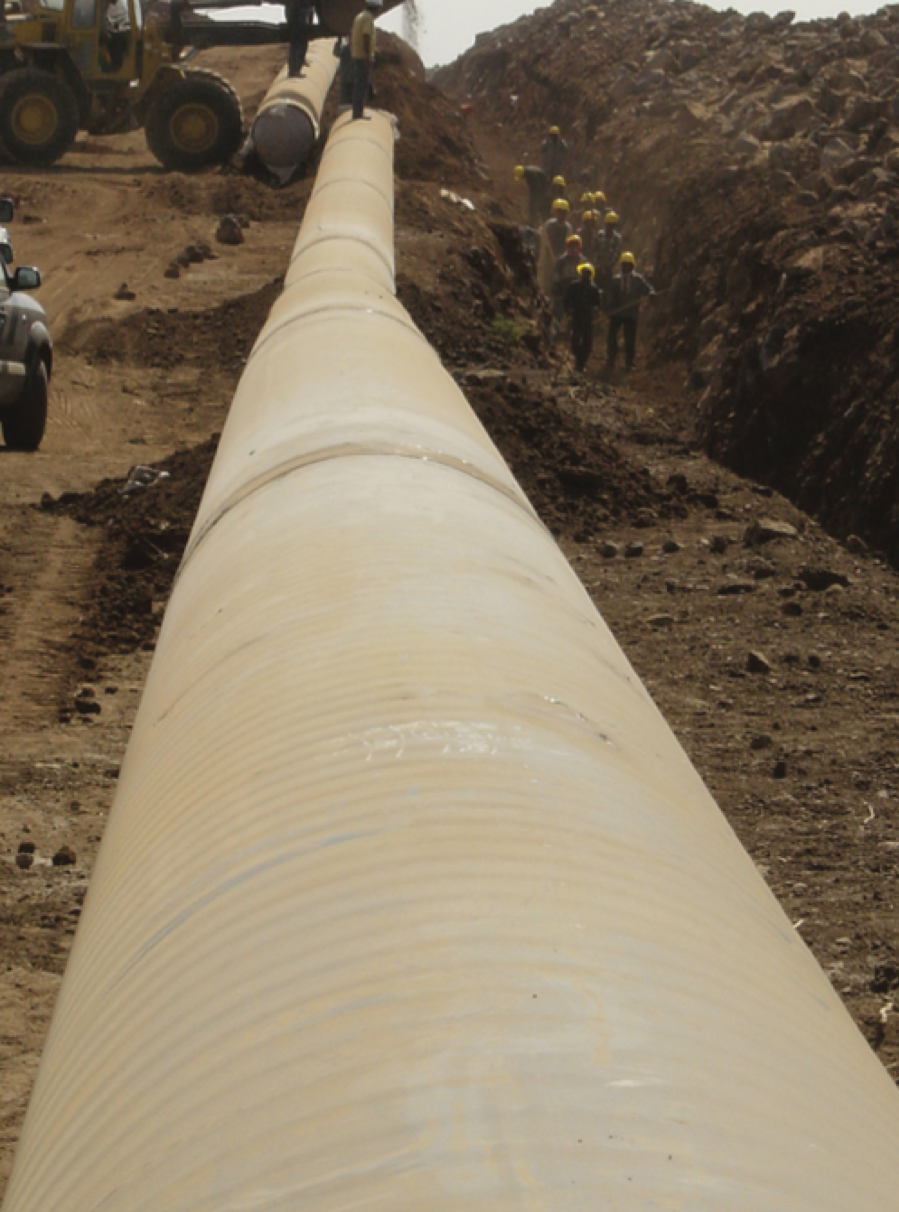
Jordan is to construct a $1 billion pipeline to transport drinking water from the Disi valley in southern Jordan to thirsty Amman in the north. Most experts welcome the project, yet wonder what will happen to agriculture in Disi, which has depleted its aquifer by almost one third. And, even if agriculture is halted, will there be enough water to make the costly pipeline worthwhile?

First initiated in the late 1990s, the Disi Water Conveyance Project (DWCP) aims to supply Amman with 110 million cubic meters (MCM) of water annually. The project was long regarded as too costly, yet the Jordanian government in 2007 contracted Turkish construction firm GAMA to implement it. Construction will commence in early July 2009 and is due to be completed by 2013.

“The project costs close to $1 billion,” said DWCP manager Othman al-Kurdi at the Ministry of Water and Irrigation in Amman. “It includes drilling some 55 additional wells in the Disi area and the construction of a 325 kilometer long pipeline to Amman, as well as two pumping stations and water reservoirs near Amman.”

The project is funded by low interest loans from Europe and the United States, and some $300 million from the Jordan treasury. Upon completion of the DWCP infrastructure, GAMA is entitled to exploit the system by collecting water tax revenues for some 21 years, after which the government will take over.

“I can say with a high level of confidence that Disi will supply us with 110 MCM of water annually for some 50 years,” said Al-Kurdi. “If all circumstances work in our favor, it may even supply us with water for an additional 10 to 15 years.”

Asked what will happen to the use of Disi water for agriculture, he replied sharply: “No politics. I told you before: no politics. All I can say is that our priority is drinking water.”

Disi’s aquifer

On the main road through Disi, the significance of water in the desert valley becomes clear.  While land on one side of the road is blessed with melons, grapes, olive trees and cypresses, the other side is a barren sandy plain that seems to have fallen straight off the moon.

The striking difference between the two sides of the road is due to irrigation. In the 1960s, a fresh water aquifer with a depth of up to 1,000 meters was found in Disi. The  mixed layer of sand and water measures some 360 square kilometers and stretches well into Saudi Arabia. Since the 1980s, both Jordan and its bigger neighbor have increasingly used the water for agriculture.

“I’ve been growing olives, grapes and potatoes for about 30 years,” said Abu Mohamed, a wrinkled 50-something-year-old with hands the size of spades. “Our products are first sent to Amman and then to markets in Jordan and abroad, mainly Europe and Iraq.”

Not all agriculture is in the hands of local Bedouins. All along the road, signs indicate the presence of the “Rum Agricultural Company.” According to Abu Mohamed, Rum and other firms are owned by people from Amman and Aqaba. “They mainly grow fruits like apples and apricots further inside the valley,” he said.

Deeper inside the valley one also finds the hilltop palace owned by the ruler of Dubai, Sheikh Mohamed bin Rashid al Maktoum, and his wife Princess Haya of Jordan. To liven up the view from the palace, Maktoum created an artificial lake in the valley below, which every winter attracts flocks of migratory birds. The Dubai billionaire has left his mark on Disi in more than one way, as he revived the ancient tradition of camel racing. Every Friday, animals, jockeys and spectators gather on a dirt track outside Disi village.

Next to the race track, surrounded by a layer of red mud, one of the valley’s 55 wells is under repair.

“There is a lot of sand in the water, which harms the pumping installation,” one worker explained, adding that he had heard about the upcoming pipeline to Amman. “We’ve seen the pipes along the road, but so far we have not been told anything.”

One of some 55 water pumping stations scattered around the Disi valley

In 1946, every Jordanian had access to some 3,600 cubic meters of drinking water per year. Today that amount has dropped to 160

More people with less to drink

Water is a scarce commodity in Jordan and, consequently, a highly political one. Not only is Jordan one of the world’s poorest countries in terms of water resources, it also has one of the world’s highest population growth rates. What’s more, throughout its history, the kingdom has had to absorb wave after wave of refugees. While in 1946 every Jordanian had access to some 3,600 cubic meters of water per year, today the water per capita ratio has decreased to a meager 160 cubic meters per year.

Due to the presence of illegal wells, exact figures are hard to come by. It is estimated however, that current demand is some 1,350 MCM per year, while annual water supply amounts to but 1,000 MCM per year. An estimated half of Jordan’s supply stems from groundwater extraction, which takes place at twice the rate of what is regarded as ecologically sustainable. At least 65 percent of Jordan’s water goes to agriculture, while the remainder is used for drinking water, industry and tourism.

“Disi water is good quality water from a non-renewable source and therefore should be used as wisely as possible,” said Elias Salameh, professor of hydrogeology and hydrochemistry at the University of Jordan, who has long been a vocal critic of agricultural practices in Disi and welcomes the pipeline to Amman.

“The wisest way is to first use it as drinking water and then collect and treat the wastewater to reuse it for agriculture and industry. Of every 100 MCM some 80 MCM can be used again.”

A quarter century drained away

According to Salameh, the past 25 years have been extremely wasteful. The Disi aquifer contains an estimated 7 billion cubic meters (BCM), up to a third of which has so far been used for agriculture. The problem with growing crops in Disi, where summer temperatures may soar well above 40 degrees, is that the evaporation rate in southern Jordan is twice as high as in north Jordan. In addition, most agricultural products are exported, which means Jordan is virtually exporting water. 

Currently, some 80 MCM of Disi water a year is used for agriculture, while some 16 MCM is used as drinking water in the rapidly growing city of Aqaba. The government has pledged to get rid of agriculture in Disi, yet that may be easier said than done. Certainly the local Bedouins will not want to give up their new-found agricultural wealth, for Disi does not exactly offer a wide range of alternative sources of income.

According to Salameh however, most agricultural production in Disi is in the hands of four agricultural firms owned by a group of very influential Jordanians, among them one of the richest businessmen in the kingdom and a former prime minister.

“Their agricultural licenses have a validity of 25 years and are set to expire in 2010 or 2011,” Salameh said. “Let’s see if the government will keep its promise.”

If it can keep its promise, Salameh said, the Disi project will help to temporarily fill the gap between water demand and supply, and relieve the immense pressure on Jordan’s northern aquifers, which all suffer from over-extraction. However, seeing that Jordan’s current population of some 6 million is set to double by 2025, the Disi pipeline is no long-term solution.

According to Salameh, there is only one long-term solution for Jordan: the Red Dead Canal. “A desalination plant combined with a canal from the Red to the Dead Sea is the only way to save the Dead Sea, and provide Jordan with drinking water.”

Mainly due to the overexploitation of the Jordan River by both Israel and Jordan, the Dead Sea evaporates quicker than it is replenished. As a consequence, the Dead Sea’s water line is receding by an average of one meter per year.

Although Salameh welcomes the construction of the pipeline, given that agriculture in the desert is halted, he still wonders if Jordan’s water and money could not have been spent in an even wiser way.

“I am no urban planner, but sometimes I ask myself: instead of bringing water to the people, why not bring the people to the water?” he said. “With the money spent on the pipeline, we could build a city and industrial zone near Disi and Aqaba, which would relieve the immense urban pressure on Amman.”

With Jordan’s population of 6 million set to double by 2025, the Disi pipeline is no long term solution

July 31, 2009 0 comments
0 FacebookTwitterPinterestEmail
Levant

Resurrecting the rail

by Executive Staff July 31, 2009
written by Executive Staff

It is a quirk of history that the Middle East was better interconnected 50 years ago than it is now. Train tracks laid down during the Ottoman era made that possible, with direct lines running from Istanbul to Medina in the South, and to Baghdad in the East.

Syria is now re-starting these train lines as part of a bid to become the transport hub of the region, connecting the Mediterranean with the Arabian Gulf and the Red Sea.

On May 30, following decades of inaction, a cargo train carrying 800 tons of steel left the Syrian port of Tartous on a 36-hour trip to Baghdad, running 894 kilometers through Syria and a further 429 km in Iraq. This route has now been supplemented by passenger train services to Mosul, and cargo transited from the Syrian ports of Lattakia and Tartous to the Iraqi Gulf port of Umm Qasr, via Iraq’s rail network.

“Syria has been talking more with the Turks, the Iranians and the Iraqis to develop this network,” said Nabil Sukkar, managing director of the Syrian Consulting Bureau for Development and Investment. “Syria is trying to see itself as a hub for the region, so it is working now towards developing a road and railway network, plus there is gas passing through Syria and up to Europe,” he added.

With bilateral trade surging between Syria and Iraq — estimated at $800 million annually — and more than 1 million Iraqi refugees living in Syria, the link is expected to bolster ties between the two neighbors.

Syrian Minister of Economy and Trade, Amer Hosni Lutfi, recently said on a trip to Baghdad that he hopes that bilateral trade will triple in coming years to make Iraq as important a trading partner as China or Turkey. Each countries’ trade with Syria amounts to $2 billion annually.

The railway has a competitive cost advantage over road transportation for the same route. According to the Syrian Railway Organization (SRO), transport costs for one ton of freight from Tartous to Baghdad are $37, compared to $69-$83 by road.

The SRO has been gradually upgrading Syria’s aging fleet of Eastern European-made trains, while signing cross-border agreements with neighboring countries for passenger trains and cargo. Cargo links to Turkey, and on to Eastern Europe, have increased, with the SRO saying some five million tons of goods are to be transported annually on the route from Aleppo to the Turkish city of Gaziantep.

In 2002, the Tehran-Damascus line was restarted, and twice weekly service primarily transports Iranian and Syrian tourists (the trip takes about 50 hours). Trade between Iran and Syria was estimated at $340 million and joint economic activities at $1.5 billion in 2008, according to the Iranian Chamber of Commerce.

Regional railways

“There is more and more talk among Arab countries that trains are the best way to link countries together,” said the Syrian Consulting Bureau’s Sukkar. “This came up at the Kuwait Economic Summit in January, with one recommendation to develop the road and railroad network among Arab countries; the lack of this has been a main deterrent to an effective, unified Arab economic scheme.”

Iraq is planning billions of dollars in upgrades and to expand its domestic rail network from 1,995 km to as much as 4,988 km.

Iran is also planning to double the size of its 8,300 km rail network, making the country a transit route for cargo heading to Pakistan and Central Asian countries.

Jordan plans to launch a $6.4 billion rail network, with a 564 km line from the Red Sea port of Aqaba to the Syrian border, where it would then connect to the Syrian network and transit on to Turkey and Europe. An East-West railway is also planned, slated to run 482 kilometers from the northwestern Jordanian city of Irbid to the Iraqi border, with a potential additional line to the Saudi Arabian border.

Saudi Arabia meanwhile is investing billions of dollars to expand its network, including the $6 billion high-speed line between Mecca and Medina via Jeddah.

July 31, 2009 0 comments
0 FacebookTwitterPinterestEmail
Levant

Realpolitik in the pipeline

by Executive Staff July 31, 2009
written by Executive Staff

Egypt and Syria need gas to meet burgeoning domestic consumption and to increase their hard currency reserves. Jordan and Lebanon need it to fuel their electricity plants.

Europe also needs more gas, and from new sources. Reliance on Russia for 40 percent of Europe’s natural gas left thousands in the cold early this year when Moscow stopped the flow of gas westwards, after a spat with Ukraine over gas prices.

Both regions are now hedging on two pipeline projects that center around the Eastern Mediterranean, what is being dubbed the “Southern Corridor,” to meet demand.

The lynch pin of this “new Silk Road” is Turkey, the conduit for gas to flow through pipelines from Central Asia and the Middle East to Europe. The $10.6 billion Nabucco pipeline is the centerpiece, drawing gas from the Caspian region — Azerbaijan, Turkmenistan and Kazakhstan — as well as Georgia and Iraq. From the point where it plugs into Turkey’s pipeline network, the Nabucco pipeline will run 3,300 kilometers to a distribution hub in Baumgarten, Austria, potentially delivering up to 31 billion cubic meters (BCM) of natural gas a year to Europe.

Tying into the Nabucco project is the Euro-Arab Mashreq gas pipeline (EAM). Once completed, the 1,200 km pipeline will transport Egyptian gas through Jordan and Syria to Turkey. Lebanon will also tap into the network, having signed an agreement with Egypt for 600 million cubic meters (MCM) per year, while Iraq will be pivotal in keeping supplies of gas flowing into the network whenever a pipeline comes online.

That, at least, is the plan. Currently, the EAM pipeline is just beyond Homs in western Syria, awaiting a new tender to complete the final leg to Turkey, while Nabucco’s future remains uncertain. As always with such grandiose plans that span borders, jurisdictions and the interests of multiple energy players, the pipelines’ futures are hinged on political relations, finances and, crucially, gas supplies.

“Neither the Mashreq pipeline or the Nabucco pipeline are in a position to be realized, and neither has received enough financial backing,” said Graham Coop, general counsel at the Energy Charter Secretariat in Brussels.

The path of the Euro-Arab Mashreq gas pipeline

Source: Euro-Arab Mashreq Gas Co-operation Centre

Pipe dreams

Plans to develop the Southern Corridor began in 2002, after talks between Austrian energy company OMV, Turkey’s BOTAS, Hungary’s MOL and Romania’s TRANSGAZ. After the initial meeting, board members spent a night at the opera listening to Verdi’s Nabucco.

While the opera provided the name for the project, the signatories must be hoping that the pipeline won’t reflect the opera’s tragic plot, which recounts the plight and subsequent expulsion of the Jews under King Nebuchadnezzar. Yet the Nabucco project has faced numerous obstacles from the onset, with costs doubling and countries using the proposed pipeline for political leverage.

Last year, Georgia’s ill-advised move into Ossetia brought on the wrath of Russia. But with Georgia to be linked into Nabucco, the conflict provoked concerns over regional security risks and further shook the already fragile financial confidence in the project. The United States also threw a wrench in the works when it pressured the European Union to focus on Central Asia as a gas supplier for Nabucco rather than Iran due to the US-Iran standoff over Tehran’s nuclear aspirations.

Then this January, the country where half the pipeline is located, Turkey, said it may withdraw from the project if the country’s EU accession remains blocked. Coming at the same time as the Kiev-Moscow spat and the EU desperate to wean itself off Russian gas, Prime Minister Recep Erdogan’s comments did not go down well in Brussels.

Such incidents did, however, spark renewed interest in the project after a year of deadlock, and by the end of January the European Investment Bank and the European Bank for Reconstruction and Development said they were prepared to bankroll the pipeline. By May, Turkey caved in, dropping its demands for a “transit tax” and 15 percent of the gas at discount prices at a summit in Prague. The final agreement between the EU, six gas companies and Turkey is expected to be signed in early July.

But while the agreement is expected to finally see pipes being laid, question marks still hang over the project. Gas rich Turkmenistan — which exports 68 BCM of gas per year — attended the Prague summit but declined to comment, seemingly to play the Russians against the Europeans. Meanwhile, Azerbaijan has stated that it does not have enough gas to be the sole provider for Nabucco, while Russia has offered to buy all Azeri gas at market prices — an offer apparently still on the table.

Iran wants to build a ‘Persian pipeline’ to connect to Nabucco, but the EU has not figured Iran into its plans. Even if Tehran did get the green light from the EU, Iran lacks the infrastructure to export gas, last year importing 6.1 BCM from Turkmenistan.

Further adding to Nabucco being a literal ‘pipe dream’ is Moscow’s attempts to dominate all supply routes to the west by pressuring Central Asian states to side with the Kremlin. Additionally, there is a joint project between Russia’s Gazprom and Italy’s Eni, inked in 2007, to develop a rival pipeline to Nabucco. Called South Stream, gas would be piped from Russia via Bulgaria to Italy and Austria.

Adding insult to injury, Gazprom in May urged the EU to embrace South Stream and warned that if Europe does not want Russian gas, Gazprom will turn to the energy hungry Asian markets instead. Bulgaria however has backed both pipelines, saying the projects are necessary to meet European demand. And while the Europeans  seem wary of Russia, some analysts think such concerns are unjustified, with imports of Russian gas having halved from the 80 percent they were in 1980s.

Syria’s estimated gas supply and demand

Source: EAMGCC

The success of the E.A.M pipeline hinges on Egypt being able to ramp up gas output to meet demand

Is there enough gas?

It is not just Europe that is keen to see Nabucco get underway. The finalization of the Nabucco pipeline would have added value for the Levant. With Nabucco in place, gas from the Euro Arab Mashreq pipeline could feed into the Nabucco network, and vice versa. “The link up would have added value for both projects,” said Coop.

The EAM is not dependent on Nabucco to start pumping into Turkey, as once the final stage is complete, the pipeline will connect to the current Turkish grid. But down the line as demand spikes and the supply gap widens, the Levant will need more gas.

“Nabucco is not a must have, at least initially,” said Richard Kupisz, team leader of the Euro-Arab Mashreq Gas Co-operation Centre (EAMGCC) in Damascus.

For Syria and Jordan, being linked to Nabucco would have added value sooner rather than later.

The importance of the extra gas flowing into Turkey, and from there south, is that Egypt may be unable to provide adequate supplies of gas to the Levant through the EAM pipeline.

“There is enough gas [for Egypt] to meet current commitments, but for the major projects, these need to be underpinned by further discoveries,” said Craig McMahon, a North Africa analyst at energy consultants Wood Mackenzie.

Nabucco could also be a lifeline for Syria if there are potential spats with Amman or Cairo, either of which could easily stop the flow of gas. After all, Jordan and Syria have had their falling outs, at one point leaving the completion of a tiny 200 meters section of the pipeline in limbo until an unrelated political issue was resolved.

Furthermore, Jordan’s demand is spiking, and there is the very real possibility that by the time the EAM pipeline reaches Syria there will be insufficient supplies to meet the country’s needs. At present, Egypt exports 2.5 million cubic meters per day (MCM/D) through the EAM, with 2 million MCM/D to Jordan and 0.5 MCM/D to Syria.

“Officially this should be increased to 6 MCM/D and afterwards to 9 MCM/D, but nobody knows [if this will happen],” said Kupisz.

While Syria produces 21 to 22 MCM/D of gas, some 4 to 5 MCM/D is used for gas injection into fields or as burn off, leaving around 16 MCM/D for electricity generation and industrial use. At present this is sufficient, but with power plants to come online in the next few years and electricity demand growing by 10 percent per year, Syria will need to offset the supply gap (see chart). Syria could therefore easily consume more than it receives from Egypt.

“Syria can consume 3 MCM/D, but Egypt is not exporting more,” said Ziad Ayoub Arbahe, an energy consultant in Damascus.

For Turkey and Europe to access gas from EAM, the Egyptian gas Syria uses would have to be topped up with Syrian gas.

“For the pipeline to be viable, Syria would need to export 3 MCM/D to Turkey,” added Arbahe.

The success of the EAM hinges on Egypt being able to ramp up gas output to meet rising domestic demand, other export commitments, and provide to the EAM. It is currently a matter of what Cairo considers more of a priority: using energy as a political tool within the Levant, or exporting liquefied natural gas (LNG) to Europe according to seasonal demand and for higher prices.

“For Egypt the pipeline is one option, but could equally expand LNG infrastructure, so there are a number of competing actors,” said McMahon.

Cost preferential agreements have been signed between Egypt and Jordan, Syria and Israel. But with Cairo keen to access hard currency, such markets might not be always economically preferential. Adding to this is the geological complexity and depth of Egypt’s gas fields, which seriously raise extraction costs.

“If Egypt has the potential to sell gas through LNG and at international gas prices, why not do it?” said McMahon.

Jordan’s gas network structure

Source: IPA Energy Economics

Untapped supplies

While the success of the EAM is in doubt, certain developments could secure gas volumes, namely ramped up production from Egypt’s gas fields, and if the countries involved become full members of the Energy Charter Secretariat. The Energy Charter administers the treaty ratified by all 27 EU states, Russia, Central Asian states and Turkey. The charter treaty promotes four main areas: trade on World Trade Organization principles, freedom of transit, energy efficiency and investment protection. If countries violate the treaty, sanctions can be imposed. Asked what it would mean if current observers Jordan and Egypt signed up as full members of the Euro-Arab Mashreq pipline, Coop said: “it would certainly add security to the project and for the EU.”

While some analysts question Egypt’s ability to extract enough gas, McMahon is upbeat.

“There is every reason to be optimistic, although we need further exploration success and to see those wells drilled,” he said. “But it is hard to imagine increases from Egypt in the shorter term.”

All may not be lost, however, if Egypt is neither legally required to pump gas via the pipeline nor able to meet demand. Syria could come to the rescue, with an estimated 40 percent of the country not drilled or prospected for gas.

“Potentially we could find huge reserves,” said Arbahe.

The only other options are to transport gas from Qatar and Iraq, or Iran via the Nabucco network.

“If a pipeline comes from Iraq or Qatar, there would be a principle pipeline, and a viable network,” said Arbahe. “But for Iran to join the network, [they] would need to solve political problems and technical issues first.”

Iraq is considered the most viable option, with the Akss field in the west of the country only 50 kilometers from the Syrian network.

“They have spare capacity, and the Akss region is not a big market, so it is logical to go to Syria,” said Kupisz. “A contract has been done for 1.5 MCM/D to be processed in Syria and exported or used here, but it is under a new licensing round in Iraq.”

Longer term, the pipeline could also connect central Iraq to the Euro-Arab Mashreq pipeline, potentially able to provide 30 MCM/D over time.

“International oil companies are looking at it, and attracting great interest, although Iraq’s infrastructure is not developed,” said Naeem Danhash, project director of the EAMG CC. “But the medium to long term prospects for Syria to become a gas hub are excellent.”

Whether Syria and Turkey will attain the coveted positions of regional gas hubs is still up in the air, given the questionable viability of either the Euro-Arab Mashreq pipeline or Nabucco.

McMahon, however, has his own thoughts: “The Iraqi supply could ultimately be the answer.”

“The medium to long term prospects for Syria to become a gas hub are excellent”

July 31, 2009 0 comments
0 FacebookTwitterPinterestEmail
Lebanon

News in Brief

by Executive Staff July 31, 2009
written by Executive Staff

Telecoms: Broadband please

Lebanon has long been plagued by archaic Internet speeds. But that may change by the end of the year. At a recent regional telecom conference held in Beirut, Samer Salameh, chairman and chief executive officer of Alfa, managed by Orascom Telecom, announced that his company would introduce mobile broadband services to the Lebanese market by the end of this year.

If implemented, Lebanon’s mobile users will have the ability to download various types of media onto their mobile devices at speeds dozens of times faster than the current fixed service maximum. Since Lebanon’s telecommunications industry still falls under government control, the state will foot the implementation bill. The new service will compliment the recent expansion undertaken by Lebanon’s two mobile operators subsequent to renewing their management contracts with the Lebanese government. The move by the government will also allow the mobile industry to leapfrog the country’s fixed telecommunications services.

“It’s great,” says Salam Yamout, member of the board at the Lebanese Broadband Stakeholders Group. “I hope it is not a public relations stunt.”

Alfa declined to comment on the issue.

It wouldn’t be the first time mobile networks have bypassed the fixed service, said Riad Bahsoun, telecom expert at the International Telecommunications Union.

“In Lebanon, the priority and the focus has always been on mobile services rather than the fixed services,” he said.

To use the new technology, however, customers will have to beef up their mobile devices.

“Service availability depends… on the availability of handsets and data cards on a mass scale,” says Patrick Eid, board member and head of the market and competition unit at Lebanon’s Telecommunications Regulatory Authority. “Unless end users’ handsets and terminals are abundantly available at affordable prices, there will be no true mass market and true choice for consumers.”

Bahsoun, however, is confident that proposed pricing models for the new service will penetrate the market.

“Prices will be high in the beginning but… will start to drop quite immediately,” he said. The news is encouraging but nothing is assured as the formation of a new cabinet and selection of a telecommunications minister may further slow the process.

Electricity: Shorting out

With the summer months approaching, Lebanon will need more power. According to figures issued by the country’s Ministry of Energy and Water earlier this year, the demand for constant power generation peaks at around 2,200 megawatts of electricity. At present however, the country only produces around 1,500 megawatts, resulting in widespread power cuts.

But there has been some respite lately. The Ksara relay station in the west of the country, which can handle up to 400 megawatts, has recently come online. The station is connected to the ‘ring of eight’ power grid, which connects a total of eight countries in the region to the same power grid and can potentially supply Lebanon all the electricity it needs.

But the reality is not that simple.

“Now that the station has been completed, they have to agree on the price and the source [of the energy],” says Chafic Abisaid, president of the Lebanese Solar Energy Society.

The electricity provided to Lebanon will come from Egypt and royalties will have to be paid to both Jordan and Syria, according to Abisaid. On May 29, the Syrian Arab News Agency reported that power started to flow to Lebanon through Syria via the ring of eight, but there have been reports that the stream of power has been intermittent.

The Lebanese government currently spends up to $1 billion per year on subsidies to its electricity sector and experts estimate that the country will need a further $2 billion of investment to meet the country’s energy demand by 2015.

Even though the power station at Ksara can handle up to 400 megawatts, it is expected to supply only around 300 megawatts, according to Abisaid.

To import more power, Lebanon would need to build another power station, which is currently unlikely for Lebanon’s cash-strapped government. The increased demand for power in the summer months makes it likely the Lebanese will be left without air conditioning for several hours per day, despite the increased capacity.

July 31, 2009 0 comments
0 FacebookTwitterPinterestEmail
Financial Indicators

Regional equity markets

by Executive Staff July 27, 2009
written by Executive Staff

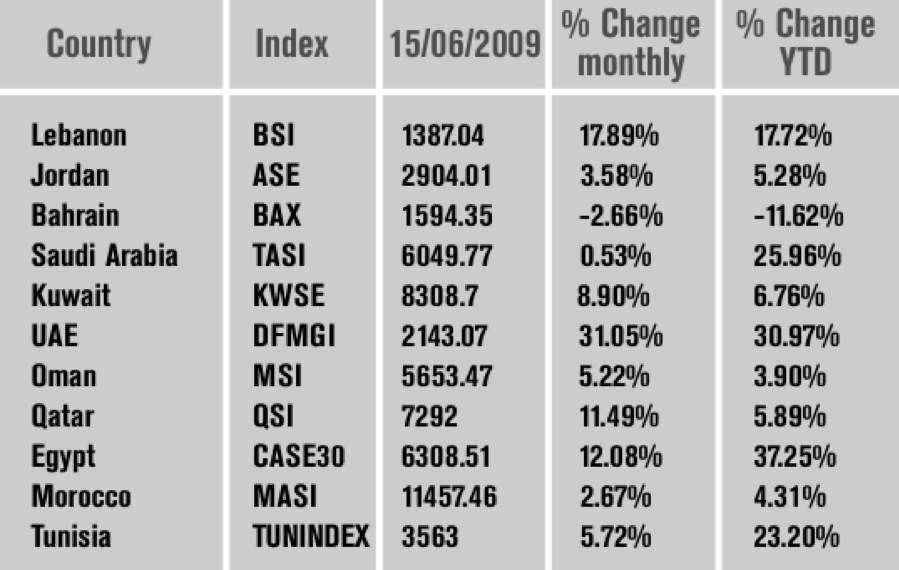
Beirut SE  (one month)

Current Year High: 1,629.74  Current Year Low: 705.56

The Beirut Stock Exchange (BSE) index started the month of June with both eyes on the parliamentary elections. Following the success of the March 14 coalition, the market was let loose, rising 21.66% through June 21 to reach 1,007.34 points. Trading was dominated by Solidere A shares which rose 29.92% and Solidere B shares at 27.79%, while Bank Audi and BLOM Bank also recorded strong gains of 15.49% and 14.96%, respectively. However, market activity slowed during the third week as markets awaited cues from political factions about the formation of a new cabinet. Holcim Liban and Byblos Bank were the only two listed companies to decline in value, falling 4.81% and 4.12%, respectively. In corporate news, Solidere announced an 18% increase in its 2008 net profits and provided a bright view of the upcoming few months. Still, as foreign investors continue to diversify, the steady decline in the company’s shares on foreign exchanges appears to have contributed to the muted domestic investor response to the company’s strong earnings.

Amman SE  (one month)

Current Year High: 4,820.24  Current Year Low: 2,550.70

The Amman Stock Exchange (ASE) lost 1.38% to reach 2,825.18 points, suffering from the decline in all market sectors, especially industry and banking, which were down 4.35% and 3.66% for the month through June 21. The banking sector took a hit from profit-takers, while mining companies suffered from pessimistic news by a major European potash producer concerning the outlook for the fertilizer industry. The highest return stocks were Al Kafaa Financial Investment and Trading (60%), Awtad for Financial and Real Estate Investments (55.66%), and Winter Valley Tourism Investment (39.47%). The worst performing stocks were led by Bin Dar for Trade and Investment (-35.78%), General Investment Company (-29.83%), and International Brokerage and Financial Markets (-23.85%). On a macroeconomic level, the government reported growth of 3.2% year-over-year in the first quarter of 2009 and expects the full-year number to reach 3.5% to 4%. Net foreign investments dropped 45% during the first five months of 2009 compared to the same period in 2008, and the general industrial production index fell 4.5% year-over-year in the first four months of 2009.

Abu Dhabi SM  (one month)

Current Year High: 5,096.50  Current Year Low: 2,136.64

Profit-taking took its toll on the Abu Dhabi Securities Exchange (ADX), but to a lesser extent than other GCC markets, as the general index returned 2.68% through June 21 to reach 2751.28 points. The banking and finance sector was behind part of the sell-off in the middle of June as investors grew wary of possible undisclosed losses. However, banking stocks quickly recovered as sentiment shifted towards increased confidence in the government’s ability to support the economy. The consumer sector drove the market, leaping 10.98%, followed by banking stocks which rose 6.56%. Energy (-8.49%), industrial (-4.4%), and real estate (-2.1%) were the worst performing sectors after leading the market surge in May. Oman and Emirates Investment Holding led the market with a 46.55% gain, ahead of Abu Dhabi Aviation (27.84%) and Abu Dhabi National Hotels (25%). Several banking stocks also occupied the top spots, including The National Bank of Ras Al Khaimah (20%), United National Bank (19.76%) and Bank of Sharjah (16.67%).

Dubai FM  (one month)

Current Year High: 5,540.17  Current Year Low: 1,433.14

Despite significant profit-taking, the Dubai Financial Market (DFM) index managed to record a 3.48% gain and closed at 1,943.36 points on June 21. Emaar Properties first dominated the news at the DFM after Saudi Kingdom Holding announced that the Dubai-based real estate giant was in charge of the $27 billion development and supervision contract to build Jeddah Kingdom City. Emaar later clarified that its role in the project remains conditional and would not include any capital investments, pushing the market down as its shares lost 5%, after rising more than 7% during the previous day. Shuaa Capital’s dispute with Dubai Banking Group over the conversion of mandatory convertible bonds also added to volatile market performance, with Shuaa ranking last in stock return and losing 23.33% during the review period. Utilities, up over 40% by June 14 before profit-taking, were the best performing sector on the DFM, adding 16.46% in less than one month, while the materials (-5%) and telecom (-2.88%) shed the most value. Dar Al Takaful led the market in gains, rising 46.88%.

Kuwait SE  (one month)

Current Year High: 15,654.80            Current Year Low: 6,391.50

The rally in Kuwait continued into the first week of June, but the Kuwait Stock Exchange (KSE) index flattened out to end the review period up 0.97%. Growing confidence over the implementation of the Financial Stability Enhancement Plan following the parliamentary elections added steam to the market rally, especially during the first week. The broad-based rally in Kuwait was driven by non-Kuwaitis and industrial sectors which rose 3.16% and 3.13%, respectively. The only sectors to decline during the month were the parallel market (-1.59%), followed by real estate (-1.42%), and food (-0.63%). However, several real estate stocks were among the top performing companies, including Grand Real Estate Projects Company (+25.37%). The top performing stocks were Hayat Communications (47.06) and Advanced Technology (45.88%), while the worst performers were Arab Insurance Group (-44.26%) and Al Mosawat Holding (-28%). Global Investment House rose 10.7% after announcing bondholders had agreed to extend the maturity of $69.44 million worth of bonds.

Saudi Arabia SE  (one month)

Current Year High: 9,581.34  Current Year Low: 4,130.01

The Saudi Stock Exchange (TASI) index was down 2.57% to 5,741.83 points through June 21, following three weeks of volatile trading. June started with a tough-to-beat three month rally which saw the TASI leap 19.6% in April followed by a 4.42% gain in May. Still, the month started strong on the back of positive economic news from China and the United States, indicating the global recession may be nearing its end. In a move to boost bank lending, the Saudi Arabian Monetary Agency cut its key reverse repurchase rate by 25 basis points to 0.25%. However, profit-taking and a decline in oil prices put pressure on stocks in the latest week, with selling concentrated around market heavy-weight banks and petrochemicals. The insurance sector was the biggest loser, shedding 6.75% of its value, while the hotels and tourism (+5%) and the construction (4.3%) sectors had the highest return during the review period. The best performing stock was newly-listed Weqaya Takaful Insurance and Reinsurance Company (+250%), followed by Abdullah Al Otheim Markets Company (41.98%).

Muscat SM  (one month)

Current Year High: 11.865.35            Current Year Low: 4,223.63

The Muscat Securities Market (MSM) index increased 4.02% to 5,721.61 points through June 21, driven mostly by the industry sector which recorded a leap of 13.8%. The services and insurance sector followed with 6.15%, ahead of banking and investments which lagged with only 1.95%, on continued concern over the banking system’s exposure to Saad Group and Al Gosaibi Group. The market received a boost from the government’s decision to revamp its tax system, ending discriminatory practices of applying higher tax rates to foreign companies. The top performers were Oman Chemical Industries Company which rose 69.36% and Al Jazeera Steel Products Company, up 41.78%. At the bottom of the list was The Financial Corporation Company which lost 30.69% of its value and Al Ahlia Converting Industries, which shed 18.22%. Oman’s economy is expected to slow significantly from 7% to 3% in 2009, as a result of lower hydrocarbon export revenues, but higher corporate tax revenues are seen filling part of the gap created by the lower oil prices.

Bahrain SE  (one month)

Current Year High: 2,868.62  Current Year Low: 1,572.19

The Bahrain Stock Exchange (BSE) index continued its lackluster performance for the third consecutive month. The index started the month with several days of selling, to reach 1,582.12 points, its lowest level since April 28, before recovering to 1628.64 points, up 0.4% for the month through June 21. The hotels and tourism sector led the market, returning +3.19%, followed by services (+1.17%) and banking (+0.91%), while the insurance sector suffered a massive 13.1% drop. Only seven stocks were in the green for the month through June 21, with United Gulf Bank and Nass Corporation maintaining their top two positions from May with gains of 20.84% and 16.82% respectively. During the review period, Investcorp Bank announced the purchase of commercial real estate debt in the US worth $900 million, and the Central Bank of Bahrain placed $750 million in the first sovereign long-term Sukuk offering in 2009.

Doha SM  (one month)

Current Year High: 12,169.16            Current Year Low: 4,230.19

After leading GCC markets in May, the Doha Securities Market (DSM) index, recently named Qatar Exchange, fell 7.2% through June 21 to reach 6,473.07 points, thus reversing the positive direction of the previous three months and falling to the bottom of GCC market performance. Lower oil prices and retreating global equities weighed in on the exchange. Only five stocks were in the green for the month, including Qatar Cinema and Film Distribution Company (7.14%), Qatar Telecom (6.44%), and Gulf Holding Company – Qatar (1.6%). Banks and real estate companies nosedived, and the two best performing stocks in May were the worst performers in June as Barwa Real Estate fell 18.18% and The Commercial Bank of Qatar shed 17.24%. All sectors were down for the month, with banking (-8.1%) leading the decline, followed by services (-7.96%). The government’s decision in May to purchase $4.1 billion in real estate investments to free up capital for lending still provided a minimum level of support for banks.

Tunis SE  (one month)

Current Year High: 3,614.57  Current Year Low: 2,836.64

After hitting some bumps in May, the Tunisia Stock Exchange Index (Tunindex) advanced 5.52% to 3,600.52 points on June 21, posting a modest loss on only one trading day during the month. Tunisia benefited from the abundance of positive news including a recent report by the World Economic Forum that showed Tunisia was the most competitive African country, praising its institutions, transparent policies, and efficient government. Only 9 of 53 stocks declined during the review period, with the worst performers being L’Accumulateur Tunisien ASSAD (-12.85%), Tuninvest – Sicar (-7.22%), Astree Assurances (-7.14%), and Tunisair (-3.1%). On the other hand, the best performing stocks added considerable value, with Société Tunisienne de Verreries gaining 50.13%, followed by Société Immobilière Tuniso-Séoudienne at 43.41%.

Casablanca SE  (one month)

Current Year High: 14,504.58            Current Year Low: 9,405.86

The Casablanca Stock Exchange (CSE) index had a good showing during the month through June 21, rising 3.53% to reach 11,637.39 points. The CSE posted strong gains during the days following the global sell off in the second week of June, recovering by 4.8% to a 2009 peak of 11,730 points before submitting to profit-taking. Transportation, mining and electrical and electronic equipment remain the best performing sectors in 2009, up 59.77% and 57.81% respectively, while construction and building materials occupy the bottom of the list after losing 8.54%. The best performing stocks were dominated by electronic companies led by Hightech Payment Systems (26.8%), while the lowest returns were recorded by Société Nationale de Sidérurgie (-9.68%) and Delattre Levivier Maroc (-7.24%). Major news during June included the announcement by Renault that it will begin construction on a new manufacturing plant in Morocco in September, generating over 6,000 direct jobs.

Egypt CASE (one month)

Current Year High: 10,147.83            Current Year Low: 3,389.31

The majority of stocks on the Cairo and Alexandria Stock Exchange (CASE) saw a healthy increase in value during the month up to June 21, driving the CASE index up 2.42% to reach 6069.62 points. The travel and leisure sector index rose the most, adding 28.9% to its value, followed by real estate (17.1%). The telecom sector fared the worst, losing 6.8% during the review period, on continued pressure from the dispute between France Telecom and Orascom over the French operator’s interest in buying additional shares in Egypt’s Mobinil. As a result, Orascom Telecom lost 9.47% to rank as the fourth worst performer during our review period, ahead of National Bank for Development (-9.54%), Helwan Cement Company (-11.44%), and Al Watany Bank of Egypt (-12.12%). The best performing stocks, however, posted massive gains, led by National Company for Housing for Professional Syndicates (72.01%), United Arab Shipping Company (62.56%), and El Nasr Clothing and Textile Company (56.98%).

July 27, 2009 0 comments
0 FacebookTwitterPinterestEmail
Money Matters

Money Matters by BLOMINVEST Bank

by Executive Staff July 27, 2009
written by Executive Staff

Regional stock market indices

Regional currency rates

Qatar Airways orders 24 Airbus jets at a cost of $1.9 billion

Qatar Airways captured the spotlight during the Paris Air Show by placing a $1.9 billion order to buy 24 single-aisle Airbus jets. The aircraft are to be delivered in 2010 and will be equipped with advanced technological aviation systems. It is worth noting that Qatar Airways already operates 19 Airbus single-aisle A320 family aircraft and is one of Airbus’s major customers in the Gulf. Moreover, the fast growing Doha-based carrier will launch a low-cost airline in the region as a strategy to compete with regional budget carriers that are gaining on Qatar Airways’ market share.

Al Futtaim’s $2 billion Moroccan property project

Al Futtaim Capital, the investment arm of Al Futtaim Group, is planning to develop a mega real estate project in Morocco. The project will be Al Futtaim’s third large-scale project, after Dubai Festival City and Cairo Festival City, and will cost in excess of $2 billion. Al Futtaim Capital will acquire 7 million square meters of land in Bouznika on the Moroccan Atlantic coast located half way between the capital city Rabat and Casablanca, the country’s business hub. In addition, the project will have a timeline of 20 years and is the second investment of the $500 million Al Futtaim MENA Real Estate Development Fund launched more than two years ago. Moreover, officials at Al Futtaim capital have high expectations for the Moroccan market as they forecast high demand for middle to low income residential units.

Bahrain’s growth expectedat 3.1% through 2009

According to the latest country report published by the Economic Intelligence Unit, Bahrain’s economy is expected to grow by 3.1 percent in 2009 and to remain at 3 percent in 2010. Affected by the regional economic woes of countries such as United Arab Emirates and Kuwait that have been adversely impacted by the global financial turmoil, Bahrain’s growth has decreased from 8.1 percent in 2007. Oil, which constitutes nearly 80 percent of the country’s export revenue, has fallen in price and thus contributed largely to this decrease, in addition to a slide in private and public consumption. Despite a series of interest rate cuts, consumer price inflation is expected to moderate in 2009-10 because of slower local demand and a drop in the price of commodities. Consequently, inflation is forecast to average 1.8 percent in the coming two years.

July 27, 2009 0 comments
0 FacebookTwitterPinterestEmail
Special SectionYoung Arab Leaders

Dr. Abdul Malik al-Jaber

by Executive Staff July 27, 2009
written by Executive Staff

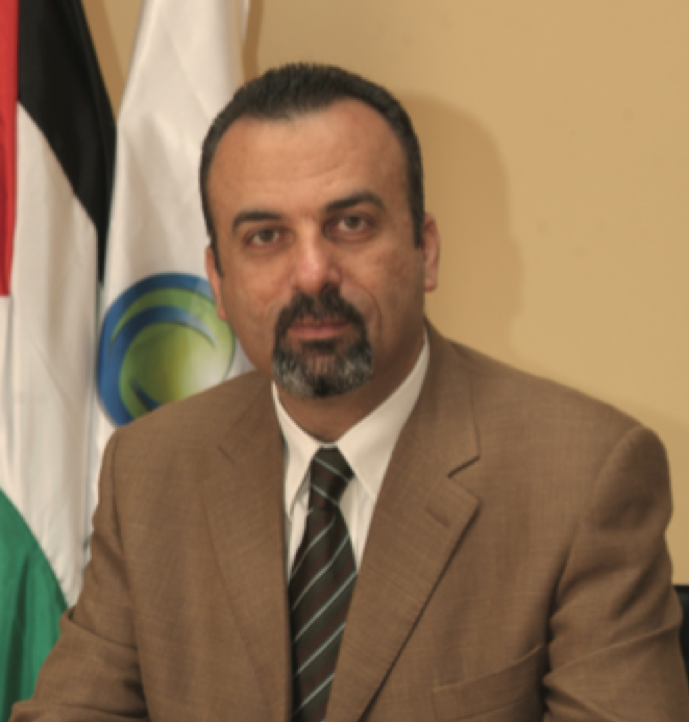
Abdul Malik al-Jaber was the first chairman of the YAL Palestine Country Office when it was founded in 2006, a position he held until 2008. Today he is on YAL’s board of directors. Al-Jaber, who is also the chairman of the board of the Paltel Group, spoke to Executive about the challenges of running an entrepreneurial agency for young people in the Occupied Palestinian Territories.

E How did the YAL – Palestine Chapter start, and when?

Young Arab Leaders – Palestine Chapter was established in July 2006. The members decided to form this branch so that Palestine can become one of the major pillars of this initiative and play the role expected from it by Palestinian and Arab young leaders of the future.

Further, I felt that Palestine needed to be more connected with the Arab world and YAL was the ideal platform. We worked with the YAL leadership in Dubai to place the Palestine Chapter on the map in a fast track approach to ensure that the evolution YAL was witnessing would also touch upon the members in Palestine.

We put forward an ambitious plan and created a well-rounded chapter with different membership disciplines and forged ahead with a lot of commitments and activities toward the grander YAL objectives. Our quick pace and innovative ideas from our members helped remove some of the perception issues some people had about Palestine. I am pleased to say that we managed to integrate fully and often lead with some initiatives for the benefit of the whole YAL community.

I was elected by the Chapter members from 2006 to 2009 as the chairman and I very much enjoyed those pioneering days.

E You mention “perception issues” that some people have about Palestine. What do you mean?

The image of Palestine that all of you are familiar with is one of war, destruction, emergency relief and a people in distress. This reality has been brought upon us due to a long and relentless occupation. Our people have endured under this stress, winning Arab and global sympathy, but the image and reality of Palestine is rich with more substance and even more achievements than one expects.

Palestinians have been able to record many successes in education, telecommunications, capital markets and social entrepreneurship. Unfortunately such milestones are not frequently reported in the media, so the “other side of Palestine” is unfairly unknown.

We at the YAL – Palestine Chapter have pledged to create unity among our members and harness their individual successes and track records into the collective image of a different and true “reality” of Palestine; the reality of hope, of building, of investments and of creativity towards nation building.         

E What are some of the particular challenges that ambitious youth in Palestine face?

According to a study conducted on behalf of the United Nations Development Program (UNDP) at the start of this year, more than 80 percent of youth in the West Bank and Gaza Strip have stated that they felt depressed and about 60 percent have stated that they felt insecure. These figures are alarming, but they are not unsurprising. Unemployment rates for youth range from 35 percent in the West Bank to 51 percent in the Gaza Strip, which represents not only a huge amount of lost talent, but also reemphasizes our need to work even harder in harnessing our youth by reaching out to them, and offering them job opportunities and the right training for such positions.

In addition to unemployment and loss of direction, youth in Palestine are finding it increasingly difficult to have access to higher education, mostly due to financial hardship. The college drop-out rate is high and as a chapter we have dedicated our resources to help resolve this issue by creating the Palestine Education Fund, which is a loan and scholarship structure for young people, financed and managed by the private sector.

As leaders in the YAL community, we have to assist Palestinian youth by directing their positive energies into productive results where our programs offer not only opportunity to those who apply, but also a chance to learn and enhance their experiences, background and knowledge in their fields of interest.

E In addition to the education fund, can you describe one or two other initiatives that YAL Palestine is undertaking as part of its operations?

In January 2009, YAL launched the “Bring Gaza Back” campaign. This was undertaken in close cooperation with our chapter and the United Nations Relief and Works Agency (UNRWA), in order to raise money for local youth in the aftermath of the war in Gaza. Since its launch, the campaign has gained speed and YAL has secured encouraging support from a number of individuals and partners. Media companies have been instrumental in helping us create, air and publish our media campaign at no cost, thus making their contributions extremely valuable.   

The YAL head office team will soon start the allocation of the funds with UNRWA, to begin the psycho-social rehabilitation of the children and the youth of Gaza.

Another important program is the Palestine International Award for Excellence and Creativity, launched in 2007. This annual event and award is intended to encourage Palestinians to adopt excellence and creativity in their professional and private lives, in order to face the challenges of our modern days and the perils affecting our region and our homeland. The award is aimed at transforming despair into hope, in order to restore the belief in “good deeds,” and show that accomplishment and ambition in Palestinian society do not remain unnoticed, but instead are rewarded and, above all, appreciated by their peers and society.

The award is pioneered by Sabih al-Masri, a leading businessman and philanthropist whose vision and fortitude has reinstated hope among many Palestinians both in his homeland and in the distant diaspora. We are hopeful that through this initiative, the philosophy of the award will become a fact of life in our part of the world and will become a source of inspiration for both institutions and individuals to commit to excellence, good governance, and role modeling in their daily work, life and undertakings.

We believe that this award is a celebration of life, hope and good will, contravening the perception of a Palestine of despair, death and destruction.            

E Are there any specific successes that you can point to?

We have sponsored roughly 20 Palestinian students in the various YAL fellowships and programs. Through the Palestine International Award for Excellence and Creativity, we have created a link between Palestine and the greater Arab world, by recognizing Arab leaders in their home countries. The Palestine Chapter was also able to pioneer the relationship between Latin America and the YAL community, through creating a bridge between YAL Dubai and Latin Americans of Palestinian origin.

We have also proactively participated in laying the process for good governance in the chapter and regional elections which took place last year.

July 27, 2009 0 comments
0 FacebookTwitterPinterestEmail
LuxurySpecial Report

The finest of smokes

by Executive Staff July 27, 2009
written by Executive Staff

“A woman is an occasional pleasure but a cigar is always a smoke,” Groucho Marx once famously said. Many are the comparisons between women and cigars, whereby real cigar aficionados, when forced to choose, never doubt what comes first. If a cigar is indeed like a woman, than she must be Cuban, as the world’s most famous cigars all come hand-rolled from the Caribbean isle.

As is the case with grapes and wine, the taste of first-class cigars largely depends on the soil and climate in which the tobacco has been grown. And it just so happened that God created the perfect growing conditions for tobacco in the hot and humid Cuban province of Pinar Del Rio, which almost single-handedly turned the Cuban cigar into simply the best cigar in the world.

Some 25 percent of the 400 million cigars sold worldwide in 2008 were from Cuba. With the exception of the US market, as Washington has upheld a trade ban on all things Cuban since 1962, Cuba has 80 percent of the global cigar trade in terms of value. Spaniards, French, Germans and Cubans themselves are the world’s most fervent smokers.

Cuba’s cigar industry is a monopoly controlled by Havanna S.A. Its president, Manual Garcia, last February announced that the company saw worldwide sales in 2008 slip by 3 percent to amount to $390 million.

Garcia blamed the world financial crisis, which had reduced the demand for luxury goods, including cigars. An 11 percent drop in global travel had slowed cigar sales at duty free shops, which account for a quarter of the company’s business. Stricter smoking laws in Germany, France, Britain and United Arab Emirates, he said, had also decreased demand.

Where there’s smoke, there’s sales

Western Europe is Havanna’s top sales market, with 57 percent of total sales, followed by Latin America, at 14 percent. The Middle East and Asia together make up about 9 percent of the market or some 36 million cigars. Comparatively, in 2008, some 60 billion cigarettes were sold in the GCC.

Havanna S.A. was founded in 1994 as a joint venture between the Cuban government and the Spanish-French tobacco firm Altadis, with the latter subsequently being bought by Britain’s Imperial Tobacco Group in 2007. The company produces 27 premium cigar brands in some 80 formats, among which Montecristo, Romeo y Julieta and Cohiba are arguably the most famous.

The company distributes its cigars through its 144 Casas del Habano outlets around the world. According to one representative of Casa del Habano in Beirut, Lebanese cigar sales have not been affected by the crisis and are expected to continue to grow at an annual average growth rate of 15 percent. He did, however, expect Lebanese expatriates from the Gulf to spend less on cigars when they return for the summer holiday.

Lebanon and the Middle East are no exception from the rest of the world in the sense that Montecristo, Cohiba and Romeo y Julieta are the best selling brands. Montecristo is in fact the world’s bestselling brand with a 25 percent market share in terms of value, followed by Cohiba (23 percent) and Romeo y Julieta with 13 percent. According to Havanna President Garcia however, Cohiba rakes in the greatest profit.

Made with two types of tobacco leaf and put through extra fermentation to add flavor, the Cohiba is the company’s flagship cigar. It was especially created in 1966 for Fidel Castro and other Cuban leaders. It was made available on the open market in 1982.

An expanded selection

Cigar lovers will be happy to hear that Havanna this year announced the launch of a handful of new Cuban Delights, including the Montecristo Open and the Gran Reserva Cohiba Siglo VI, which were “designed” with the help of “master blenders, expert rollers, and tasters.”

Montecristo Open offers four new types and sizes: the Eagle (54 gauge x 150 mm long), Regata (46 x 135 mm), Master (50 x 124mm) and Junior (38 gauge x 110 mm long). The Siglo VI measures 52 by 150mm. Another major launch for Havanna in 2009 is the Robustos T (50 x 124mm), which is part of the Trinidad brand.

Then there are the limited editions: the San Cristóbal de la Habana O’Reilly (56 x 160mm), of which only 1,000 units will be sold, a special box with 50 Montecristo Doble Coronas cigars (49 x 194 mm), of which only 350 units will be sold.

If anyone thinks 194 mm is a long cigar, then think again: Cuban cigar roller Jose Castelar Cairo this year entered the world record books with a cigar no less than 45.38 meters long. Smoke that!

July 27, 2009 0 comments
0 FacebookTwitterPinterestEmail
LuxurySpecial Report

Time winds down

by Executive Staff July 27, 2009
written by Executive Staff

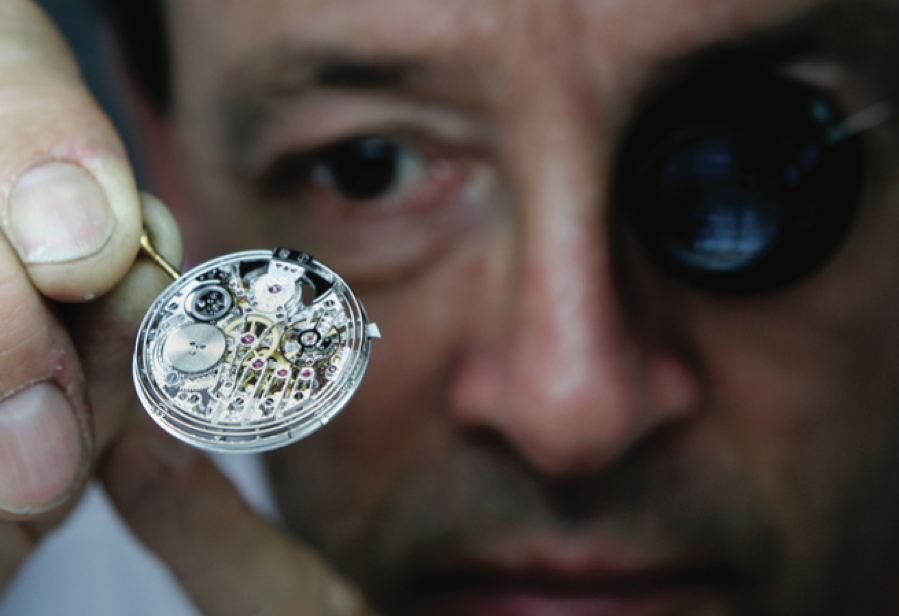
To define luxury from a buyer’s point of view is a complicated thing. For some, a $10,000 timepiece would satisfy their senses, while wealthier shoppers would have to pass the $100,000 mark to obtain the same satisfaction. From the viewpoint of watchmakers and retailers, luxury is certainly a lot easier to define. For them, a timepiece is characterized by the number of complications it has — the features beyond the normal display of time. These complications constitute the movement of the watch, which is its internal mechanism. So the more complications a watch has, the more complex is its movement, and thus the more luxurious it is.

Luxury watch brands are many. They include Breguet, Patek Philippe, A. Lange & Sohne, Vacheron Constantin, Cartier, Zenith, IWC, Jaeger LeCoultre, Harry Winston, and others. All these brands, and many more, are continuously coming up with innovative and unique complications designed to charm customers with the most captivating timepieces.

“Watch creations today are becoming more and more sophisticated with the latest innovative technology and movements,” says Patrick Normand, managing director of Cartier Middle East and South Asia.

Luxury watches with numerous complications are referred to as ‘Grandes Complications.’ These are hard to obtain as they are very complicated, man-made and take a few years to be manufactured. Thus they are the most expensive.

Among the world’s most complicated watches is the Patek Philippe Caliber 89 pocket watch. It was launched in 1989, on the company’s 150th birthday. The watch includes 33 complications, and is made of more than 1,728 components. The $6 million pocket watch took five years of research and development and four years of manufacturing. The most important features it includes are a thermometer, the date of Easter, a star chart and sidereal time. The most expensive pocket watch also lies in Patek Philippe’s portfolio. It is the Henry Grave Supercomplication, which was sold at Sotheby’s in New York City for $11 million.

As for wristwatches, the most expensive and at the same time the most complicated wristwatch is considered to be the Vacheron Constantin Tour de l’Ile. The $1.5 million piece includes 16 features and is made of 834 parts. These features include sunset time, perpetual calendar, second time zone and others. Only seven editions of the wristwatch were produced.

There remains a more expensive watch that is worth mentioning. The watch’s price does not lie in the complications, but in the precious stones included with it. The 201-carat Chopard is a watch bracelet that includes around 870 diamonds of every color, and costs $25 million.

Complicated watches are a big challenge for watch makers, and their complexity is reflected in their high price.

“That was a big challenge for us,” says Georges Bechara, the regional director of Zenith Middle East & North Africa, when talking about Zenith’s Defy Xtreme Tourbillon Zero-G which defies gravity — meaning it negates gravity’s effect on timekeeping — and took five years of research. Bechara further explains that the zero gravity complication was thought to be undeliverable, and too hard to manufacture.

“We are talking about a watch that has 744 components in the movement, all made and assembled by hand.”

Some watchmakers might be slowing down on their novelties since the financial crisis began, but others are still active in introducing new unique movements to the market. Cartier, for example, launched its fine watch-making collection, which features in-house movements created by the Cartier manufacturer in Switzerland.

“This reflects the house’s intense and ambitious research into mechanism, displaying the art of fine craftsmanship and savoir-faire,” says Normand.

In dubai, the sale of luxury products has dropped by around 45 percent

Demand dropping off

Amid this global downturn, luxury shoppers, including watch enthusiasts, are less keen on spending and indulging themselves with palatial timepieces. Overall, the luxury sector faced a decline of 15 to 20 percent in the first half of the year, according to the ‘Luxury Goods Worldwide Market’ report published by Bain & Company, a global business consulting firm. According to their research,overall the watch and jewelry market declined 12 percent.

Worldwide, the drop in luxury sales is expected to be 10 percent for 2009, given that the market is expected to stabilize in the second half of the year. The report estimates the drop in the Americas to be around 15 percent, and 10 percent in Europe and Japan. These three markets account for 80 percent of the global sales. The Middle East and China are faring better, and might even witness a projected growth of 2 percent and 7 percent respectively, said the report.

More precisely in Dubai, Tony Jashanmal, a director of the Jashanmal Group of companies, told Reuters that sales of luxury products have dropped around 45 percent.

For luxury watches, Bechara from Zenith says “sales have dropped between 30 percent and 35 percent versus the first half of 2008 [in Dubai].”

At the other end of the region, Lebanon’s luxury market seems to be affected as well. Barkev Atamian, business manager at Ets. Hagop Atamian in Lebanon, said sales of high-end luxury watches in the country have come down by around 50 percent.

“People affected are the high society, and even if they have the money to buy, they are not in the mood,” says Atamian, explaining that 85 percent of his demand comes from Lebanese, and most of these are expatriates who are cutting their spending.

Zeina Kahwaji, general manager at Cadrans in Lebanon, retailers of luxury brands like IWC, A. Lange & Sohne and Patek Philippe, says that the drop is about a 20 to 30 percent decrease in year-to-date sales.

“But we have not entered the high season yet,” she says.

Kahwaji also says people are shifting to less expensive and less complicated watches.

“Instead of buying the most complicated watches that have 16 complications, they buy timepieces with one or two complications.”

The Bain & Company report echoes Kahwaji, stating that customers are reaching the lower category of luxury products. The report says they are more focused on the “intrinsic quality of materials and the durability of luxury items instead of on fashion content.”

Atamian disagrees however, saying: “Some of these people have more than 100 watches in their cases. They buy each time a limited edition or a watch that is very rare [comes out]. They want to have something special, so I think they will wait until the market changes.”

Pink slips between the gears

With sales orders decreasing and uncertainty reigning over the market, industry players say layoffs look likely among many of the large watch companies.

“There will be a wave of firing,” says Bechara. “All the watch companies overstaffed because the orders were abnormal.”

Bechara also explains that with orders down by 40 percent, a company cannot continue at the same pace as before. 

“In the big groups, no one waits,” says Bechara, when talking about the possibility of companies retaining their employees until markets recover.

Eric Vergnes, Middle East’s general manager at Tag Heuer, agrees.

“There are many companies that have to lay-off employees,” he says, while indicating his was not one of them. “We cannot hire anyone, but we will not fire anyone.”

Takes a lickin’, keeps on tickin’

The coming months will be tough for the luxury market, since these products will remain out of the purchasing basket of most customers until the crisis eases. But what has helped the watch market is that 2008 was a year of record growth, which has enabled these companies to invest heavily in the region, thus securing a better position in the market.

“We are not suffering that much because we have invested heavily in 2008 in a new boutique which has opened in Dubai Mall in November,” says Vergnes. “It is somehow compensating for less traffic in other parts of the city.”

Normand from Cartier has the same experience.

“Since our recent boutique openings in Dubai and Qatar, we have experienced good sales with a substantial amount of footfall in our stores.”

Market players seem to be optimistic for the summer, since the effects of the financial crisis might soften on the luxury market, especially in the Middle East where luxury still remains in demand.

“The second half of the year will be better. [Then] there is Ramadan. We will get out of it soon but in small steps,” says Bechara.

July 27, 2009 0 comments
0 FacebookTwitterPinterestEmail
  • 1
  • …
  • 458
  • 459
  • 460
  • 461
  • 462
  • …
  • 688

Latest Cover

About us

Since its first edition emerged on the newsstands in 1999, Executive Magazine has been dedicated to providing its readers with the most up-to-date local and regional business news. Executive is a monthly business magazine that offers readers in-depth analyses on the Lebanese world of commerce, covering all the major sectors – from banking, finance, and insurance to technology, tourism, hospitality, media, and retail.

  • Donate
  • Our Purpose
  • Contact Us

Sign up for our newsletter

    • Facebook
    • Twitter
    • Instagram
    • Linkedin
    • Youtube
    Executive Magazine
    • ISSUES
      • Current Issue
      • Past issues
    • BUSINESS
    • ECONOMICS & POLICY
    • OPINION
    • SPECIAL REPORTS
    • EXECUTIVE TALKS
    • MOVEMENTS
      • Change the image
      • Cannes lions
      • Transparency & accountability
      • ECONOMIC ROADMAP
      • Say No to Corruption
      • The Lebanon media development initiative
      • LPSN Policy Asks
      • Advocating the preservation of deposits
    • JOIN US
      • Join our movement
      • Attend our events
      • Receive updates
      • Connect with us
    • DONATE