• Donate
  • Our Purpose
  • Contact Us
Executive Magazine
  • ISSUES
    • Current Issue
    • Past issues
  • BUSINESS
  • ECONOMICS & POLICY
  • OPINION
  • SPECIAL REPORTS
  • EXECUTIVE TALKS
  • MOVEMENTS
    • Change the image
    • Cannes lions
    • Transparency & accountability
    • ECONOMIC ROADMAP
    • Say No to Corruption
    • The Lebanon media development initiative
    • LPSN Policy Asks
    • Advocating the preservation of deposits
  • JOIN US
    • Join our movement
    • Attend our events
    • Receive updates
    • Connect with us
  • DONATE
Financial Indicators

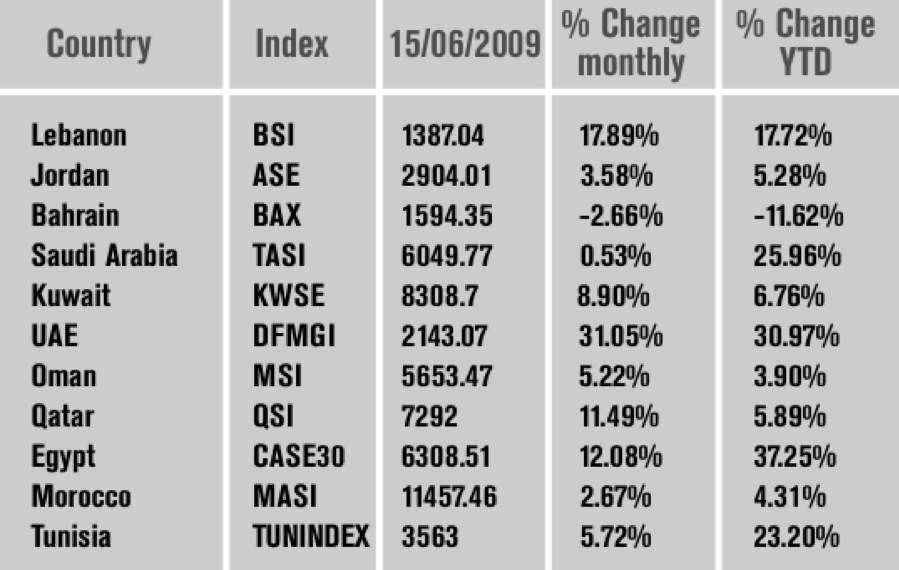
Regional equity markets

by Executive Staff July 27, 2009
written by Executive Staff

Beirut SE  (one month)

Current Year High: 1,629.74  Current Year Low: 705.56

The Beirut Stock Exchange (BSE) index started the month of June with both eyes on the parliamentary elections. Following the success of the March 14 coalition, the market was let loose, rising 21.66% through June 21 to reach 1,007.34 points. Trading was dominated by Solidere A shares which rose 29.92% and Solidere B shares at 27.79%, while Bank Audi and BLOM Bank also recorded strong gains of 15.49% and 14.96%, respectively. However, market activity slowed during the third week as markets awaited cues from political factions about the formation of a new cabinet. Holcim Liban and Byblos Bank were the only two listed companies to decline in value, falling 4.81% and 4.12%, respectively. In corporate news, Solidere announced an 18% increase in its 2008 net profits and provided a bright view of the upcoming few months. Still, as foreign investors continue to diversify, the steady decline in the company’s shares on foreign exchanges appears to have contributed to the muted domestic investor response to the company’s strong earnings.

Amman SE  (one month)

Current Year High: 4,820.24  Current Year Low: 2,550.70

The Amman Stock Exchange (ASE) lost 1.38% to reach 2,825.18 points, suffering from the decline in all market sectors, especially industry and banking, which were down 4.35% and 3.66% for the month through June 21. The banking sector took a hit from profit-takers, while mining companies suffered from pessimistic news by a major European potash producer concerning the outlook for the fertilizer industry. The highest return stocks were Al Kafaa Financial Investment and Trading (60%), Awtad for Financial and Real Estate Investments (55.66%), and Winter Valley Tourism Investment (39.47%). The worst performing stocks were led by Bin Dar for Trade and Investment (-35.78%), General Investment Company (-29.83%), and International Brokerage and Financial Markets (-23.85%). On a macroeconomic level, the government reported growth of 3.2% year-over-year in the first quarter of 2009 and expects the full-year number to reach 3.5% to 4%. Net foreign investments dropped 45% during the first five months of 2009 compared to the same period in 2008, and the general industrial production index fell 4.5% year-over-year in the first four months of 2009.

Abu Dhabi SM  (one month)

Current Year High: 5,096.50  Current Year Low: 2,136.64

Profit-taking took its toll on the Abu Dhabi Securities Exchange (ADX), but to a lesser extent than other GCC markets, as the general index returned 2.68% through June 21 to reach 2751.28 points. The banking and finance sector was behind part of the sell-off in the middle of June as investors grew wary of possible undisclosed losses. However, banking stocks quickly recovered as sentiment shifted towards increased confidence in the government’s ability to support the economy. The consumer sector drove the market, leaping 10.98%, followed by banking stocks which rose 6.56%. Energy (-8.49%), industrial (-4.4%), and real estate (-2.1%) were the worst performing sectors after leading the market surge in May. Oman and Emirates Investment Holding led the market with a 46.55% gain, ahead of Abu Dhabi Aviation (27.84%) and Abu Dhabi National Hotels (25%). Several banking stocks also occupied the top spots, including The National Bank of Ras Al Khaimah (20%), United National Bank (19.76%) and Bank of Sharjah (16.67%).

Dubai FM  (one month)

Current Year High: 5,540.17  Current Year Low: 1,433.14

Despite significant profit-taking, the Dubai Financial Market (DFM) index managed to record a 3.48% gain and closed at 1,943.36 points on June 21. Emaar Properties first dominated the news at the DFM after Saudi Kingdom Holding announced that the Dubai-based real estate giant was in charge of the $27 billion development and supervision contract to build Jeddah Kingdom City. Emaar later clarified that its role in the project remains conditional and would not include any capital investments, pushing the market down as its shares lost 5%, after rising more than 7% during the previous day. Shuaa Capital’s dispute with Dubai Banking Group over the conversion of mandatory convertible bonds also added to volatile market performance, with Shuaa ranking last in stock return and losing 23.33% during the review period. Utilities, up over 40% by June 14 before profit-taking, were the best performing sector on the DFM, adding 16.46% in less than one month, while the materials (-5%) and telecom (-2.88%) shed the most value. Dar Al Takaful led the market in gains, rising 46.88%.

Kuwait SE  (one month)

Current Year High: 15,654.80            Current Year Low: 6,391.50

The rally in Kuwait continued into the first week of June, but the Kuwait Stock Exchange (KSE) index flattened out to end the review period up 0.97%. Growing confidence over the implementation of the Financial Stability Enhancement Plan following the parliamentary elections added steam to the market rally, especially during the first week. The broad-based rally in Kuwait was driven by non-Kuwaitis and industrial sectors which rose 3.16% and 3.13%, respectively. The only sectors to decline during the month were the parallel market (-1.59%), followed by real estate (-1.42%), and food (-0.63%). However, several real estate stocks were among the top performing companies, including Grand Real Estate Projects Company (+25.37%). The top performing stocks were Hayat Communications (47.06) and Advanced Technology (45.88%), while the worst performers were Arab Insurance Group (-44.26%) and Al Mosawat Holding (-28%). Global Investment House rose 10.7% after announcing bondholders had agreed to extend the maturity of $69.44 million worth of bonds.

Saudi Arabia SE  (one month)

Current Year High: 9,581.34  Current Year Low: 4,130.01

The Saudi Stock Exchange (TASI) index was down 2.57% to 5,741.83 points through June 21, following three weeks of volatile trading. June started with a tough-to-beat three month rally which saw the TASI leap 19.6% in April followed by a 4.42% gain in May. Still, the month started strong on the back of positive economic news from China and the United States, indicating the global recession may be nearing its end. In a move to boost bank lending, the Saudi Arabian Monetary Agency cut its key reverse repurchase rate by 25 basis points to 0.25%. However, profit-taking and a decline in oil prices put pressure on stocks in the latest week, with selling concentrated around market heavy-weight banks and petrochemicals. The insurance sector was the biggest loser, shedding 6.75% of its value, while the hotels and tourism (+5%) and the construction (4.3%) sectors had the highest return during the review period. The best performing stock was newly-listed Weqaya Takaful Insurance and Reinsurance Company (+250%), followed by Abdullah Al Otheim Markets Company (41.98%).

Muscat SM  (one month)

Current Year High: 11.865.35            Current Year Low: 4,223.63

The Muscat Securities Market (MSM) index increased 4.02% to 5,721.61 points through June 21, driven mostly by the industry sector which recorded a leap of 13.8%. The services and insurance sector followed with 6.15%, ahead of banking and investments which lagged with only 1.95%, on continued concern over the banking system’s exposure to Saad Group and Al Gosaibi Group. The market received a boost from the government’s decision to revamp its tax system, ending discriminatory practices of applying higher tax rates to foreign companies. The top performers were Oman Chemical Industries Company which rose 69.36% and Al Jazeera Steel Products Company, up 41.78%. At the bottom of the list was The Financial Corporation Company which lost 30.69% of its value and Al Ahlia Converting Industries, which shed 18.22%. Oman’s economy is expected to slow significantly from 7% to 3% in 2009, as a result of lower hydrocarbon export revenues, but higher corporate tax revenues are seen filling part of the gap created by the lower oil prices.

Bahrain SE  (one month)

Current Year High: 2,868.62  Current Year Low: 1,572.19

The Bahrain Stock Exchange (BSE) index continued its lackluster performance for the third consecutive month. The index started the month with several days of selling, to reach 1,582.12 points, its lowest level since April 28, before recovering to 1628.64 points, up 0.4% for the month through June 21. The hotels and tourism sector led the market, returning +3.19%, followed by services (+1.17%) and banking (+0.91%), while the insurance sector suffered a massive 13.1% drop. Only seven stocks were in the green for the month through June 21, with United Gulf Bank and Nass Corporation maintaining their top two positions from May with gains of 20.84% and 16.82% respectively. During the review period, Investcorp Bank announced the purchase of commercial real estate debt in the US worth $900 million, and the Central Bank of Bahrain placed $750 million in the first sovereign long-term Sukuk offering in 2009.

Doha SM  (one month)

Current Year High: 12,169.16            Current Year Low: 4,230.19

After leading GCC markets in May, the Doha Securities Market (DSM) index, recently named Qatar Exchange, fell 7.2% through June 21 to reach 6,473.07 points, thus reversing the positive direction of the previous three months and falling to the bottom of GCC market performance. Lower oil prices and retreating global equities weighed in on the exchange. Only five stocks were in the green for the month, including Qatar Cinema and Film Distribution Company (7.14%), Qatar Telecom (6.44%), and Gulf Holding Company – Qatar (1.6%). Banks and real estate companies nosedived, and the two best performing stocks in May were the worst performers in June as Barwa Real Estate fell 18.18% and The Commercial Bank of Qatar shed 17.24%. All sectors were down for the month, with banking (-8.1%) leading the decline, followed by services (-7.96%). The government’s decision in May to purchase $4.1 billion in real estate investments to free up capital for lending still provided a minimum level of support for banks.

Tunis SE  (one month)

Current Year High: 3,614.57  Current Year Low: 2,836.64

After hitting some bumps in May, the Tunisia Stock Exchange Index (Tunindex) advanced 5.52% to 3,600.52 points on June 21, posting a modest loss on only one trading day during the month. Tunisia benefited from the abundance of positive news including a recent report by the World Economic Forum that showed Tunisia was the most competitive African country, praising its institutions, transparent policies, and efficient government. Only 9 of 53 stocks declined during the review period, with the worst performers being L’Accumulateur Tunisien ASSAD (-12.85%), Tuninvest – Sicar (-7.22%), Astree Assurances (-7.14%), and Tunisair (-3.1%). On the other hand, the best performing stocks added considerable value, with Société Tunisienne de Verreries gaining 50.13%, followed by Société Immobilière Tuniso-Séoudienne at 43.41%.

Casablanca SE  (one month)

Current Year High: 14,504.58            Current Year Low: 9,405.86

The Casablanca Stock Exchange (CSE) index had a good showing during the month through June 21, rising 3.53% to reach 11,637.39 points. The CSE posted strong gains during the days following the global sell off in the second week of June, recovering by 4.8% to a 2009 peak of 11,730 points before submitting to profit-taking. Transportation, mining and electrical and electronic equipment remain the best performing sectors in 2009, up 59.77% and 57.81% respectively, while construction and building materials occupy the bottom of the list after losing 8.54%. The best performing stocks were dominated by electronic companies led by Hightech Payment Systems (26.8%), while the lowest returns were recorded by Société Nationale de Sidérurgie (-9.68%) and Delattre Levivier Maroc (-7.24%). Major news during June included the announcement by Renault that it will begin construction on a new manufacturing plant in Morocco in September, generating over 6,000 direct jobs.

Egypt CASE (one month)

Current Year High: 10,147.83            Current Year Low: 3,389.31

The majority of stocks on the Cairo and Alexandria Stock Exchange (CASE) saw a healthy increase in value during the month up to June 21, driving the CASE index up 2.42% to reach 6069.62 points. The travel and leisure sector index rose the most, adding 28.9% to its value, followed by real estate (17.1%). The telecom sector fared the worst, losing 6.8% during the review period, on continued pressure from the dispute between France Telecom and Orascom over the French operator’s interest in buying additional shares in Egypt’s Mobinil. As a result, Orascom Telecom lost 9.47% to rank as the fourth worst performer during our review period, ahead of National Bank for Development (-9.54%), Helwan Cement Company (-11.44%), and Al Watany Bank of Egypt (-12.12%). The best performing stocks, however, posted massive gains, led by National Company for Housing for Professional Syndicates (72.01%), United Arab Shipping Company (62.56%), and El Nasr Clothing and Textile Company (56.98%).
July 27, 2009 0 comments
0 FacebookTwitterPinterestEmail
Money Matters

Money Matters by BLOMINVEST Bank

by Executive Staff July 27, 2009
written by Executive Staff

Regional stock market indices

Regional currency rates

Qatar Airways orders 24 Airbus jets at a cost of $1.9 billion

Qatar Airways captured the spotlight during the Paris Air Show by placing a $1.9 billion order to buy 24 single-aisle Airbus jets. The aircraft are to be delivered in 2010 and will be equipped with advanced technological aviation systems. It is worth noting that Qatar Airways already operates 19 Airbus single-aisle A320 family aircraft and is one of Airbus’s major customers in the Gulf. Moreover, the fast growing Doha-based carrier will launch a low-cost airline in the region as a strategy to compete with regional budget carriers that are gaining on Qatar Airways’ market share.

Al Futtaim’s $2 billion Moroccan property project

Al Futtaim Capital, the investment arm of Al Futtaim Group, is planning to develop a mega real estate project in Morocco. The project will be Al Futtaim’s third large-scale project, after Dubai Festival City and Cairo Festival City, and will cost in excess of $2 billion. Al Futtaim Capital will acquire 7 million square meters of land in Bouznika on the Moroccan Atlantic coast located half way between the capital city Rabat and Casablanca, the country’s business hub. In addition, the project will have a timeline of 20 years and is the second investment of the $500 million Al Futtaim MENA Real Estate Development Fund launched more than two years ago. Moreover, officials at Al Futtaim capital have high expectations for the Moroccan market as they forecast high demand for middle to low income residential units.

Bahrain’s growth expectedat 3.1% through 2009

According to the latest country report published by the Economic Intelligence Unit, Bahrain’s economy is expected to grow by 3.1 percent in 2009 and to remain at 3 percent in 2010. Affected by the regional economic woes of countries such as United Arab Emirates and Kuwait that have been adversely impacted by the global financial turmoil, Bahrain’s growth has decreased from 8.1 percent in 2007. Oil, which constitutes nearly 80 percent of the country’s export revenue, has fallen in price and thus contributed largely to this decrease, in addition to a slide in private and public consumption. Despite a series of interest rate cuts, consumer price inflation is expected to moderate in 2009-10 because of slower local demand and a drop in the price of commodities. Consequently, inflation is forecast to average 1.8 percent in the coming two years.

July 27, 2009 0 comments
0 FacebookTwitterPinterestEmail
Special SectionYoung Arab Leaders

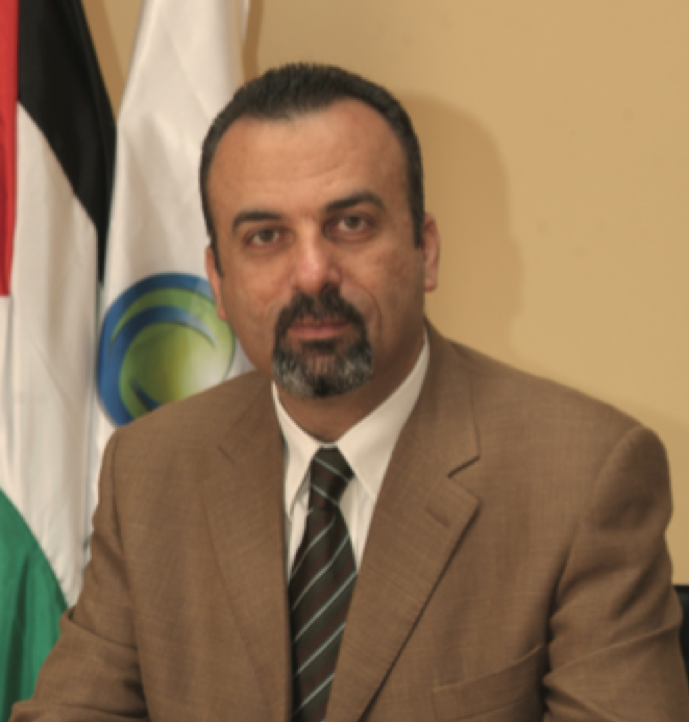
Dr. Abdul Malik al-Jaber

by Executive Staff July 27, 2009
written by Executive Staff

Abdul Malik al-Jaber was the first chairman of the YAL Palestine Country Office when it was founded in 2006, a position he held until 2008. Today he is on YAL’s board of directors. Al-Jaber, who is also the chairman of the board of the Paltel Group, spoke to Executive about the challenges of running an entrepreneurial agency for young people in the Occupied Palestinian Territories.

E How did the YAL – Palestine Chapter start, and when?

Young Arab Leaders – Palestine Chapter was established in July 2006. The members decided to form this branch so that Palestine can become one of the major pillars of this initiative and play the role expected from it by Palestinian and Arab young leaders of the future.

Further, I felt that Palestine needed to be more connected with the Arab world and YAL was the ideal platform. We worked with the YAL leadership in Dubai to place the Palestine Chapter on the map in a fast track approach to ensure that the evolution YAL was witnessing would also touch upon the members in Palestine.

We put forward an ambitious plan and created a well-rounded chapter with different membership disciplines and forged ahead with a lot of commitments and activities toward the grander YAL objectives. Our quick pace and innovative ideas from our members helped remove some of the perception issues some people had about Palestine. I am pleased to say that we managed to integrate fully and often lead with some initiatives for the benefit of the whole YAL community.

I was elected by the Chapter members from 2006 to 2009 as the chairman and I very much enjoyed those pioneering days.

E You mention “perception issues” that some people have about Palestine. What do you mean?

The image of Palestine that all of you are familiar with is one of war, destruction, emergency relief and a people in distress. This reality has been brought upon us due to a long and relentless occupation. Our people have endured under this stress, winning Arab and global sympathy, but the image and reality of Palestine is rich with more substance and even more achievements than one expects.

Palestinians have been able to record many successes in education, telecommunications, capital markets and social entrepreneurship. Unfortunately such milestones are not frequently reported in the media, so the “other side of Palestine” is unfairly unknown.

We at the YAL – Palestine Chapter have pledged to create unity among our members and harness their individual successes and track records into the collective image of a different and true “reality” of Palestine; the reality of hope, of building, of investments and of creativity towards nation building.         

E What are some of the particular challenges that ambitious youth in Palestine face?

According to a study conducted on behalf of the United Nations Development Program (UNDP) at the start of this year, more than 80 percent of youth in the West Bank and Gaza Strip have stated that they felt depressed and about 60 percent have stated that they felt insecure. These figures are alarming, but they are not unsurprising. Unemployment rates for youth range from 35 percent in the West Bank to 51 percent in the Gaza Strip, which represents not only a huge amount of lost talent, but also reemphasizes our need to work even harder in harnessing our youth by reaching out to them, and offering them job opportunities and the right training for such positions.

In addition to unemployment and loss of direction, youth in Palestine are finding it increasingly difficult to have access to higher education, mostly due to financial hardship. The college drop-out rate is high and as a chapter we have dedicated our resources to help resolve this issue by creating the Palestine Education Fund, which is a loan and scholarship structure for young people, financed and managed by the private sector.

As leaders in the YAL community, we have to assist Palestinian youth by directing their positive energies into productive results where our programs offer not only opportunity to those who apply, but also a chance to learn and enhance their experiences, background and knowledge in their fields of interest.

E In addition to the education fund, can you describe one or two other initiatives that YAL Palestine is undertaking as part of its operations?

In January 2009, YAL launched the “Bring Gaza Back” campaign. This was undertaken in close cooperation with our chapter and the United Nations Relief and Works Agency (UNRWA), in order to raise money for local youth in the aftermath of the war in Gaza. Since its launch, the campaign has gained speed and YAL has secured encouraging support from a number of individuals and partners. Media companies have been instrumental in helping us create, air and publish our media campaign at no cost, thus making their contributions extremely valuable.   

The YAL head office team will soon start the allocation of the funds with UNRWA, to begin the psycho-social rehabilitation of the children and the youth of Gaza.

Another important program is the Palestine International Award for Excellence and Creativity, launched in 2007. This annual event and award is intended to encourage Palestinians to adopt excellence and creativity in their professional and private lives, in order to face the challenges of our modern days and the perils affecting our region and our homeland. The award is aimed at transforming despair into hope, in order to restore the belief in “good deeds,” and show that accomplishment and ambition in Palestinian society do not remain unnoticed, but instead are rewarded and, above all, appreciated by their peers and society.

The award is pioneered by Sabih al-Masri, a leading businessman and philanthropist whose vision and fortitude has reinstated hope among many Palestinians both in his homeland and in the distant diaspora. We are hopeful that through this initiative, the philosophy of the award will become a fact of life in our part of the world and will become a source of inspiration for both institutions and individuals to commit to excellence, good governance, and role modeling in their daily work, life and undertakings.

We believe that this award is a celebration of life, hope and good will, contravening the perception of a Palestine of despair, death and destruction.            

E Are there any specific successes that you can point to?

We have sponsored roughly 20 Palestinian students in the various YAL fellowships and programs. Through the Palestine International Award for Excellence and Creativity, we have created a link between Palestine and the greater Arab world, by recognizing Arab leaders in their home countries. The Palestine Chapter was also able to pioneer the relationship between Latin America and the YAL community, through creating a bridge between YAL Dubai and Latin Americans of Palestinian origin.

We have also proactively participated in laying the process for good governance in the chapter and regional elections which took place last year.

July 27, 2009 0 comments
0 FacebookTwitterPinterestEmail
LuxurySpecial Report

The finest of smokes

by Executive Staff July 27, 2009
written by Executive Staff

“A woman is an occasional pleasure but a cigar is always a smoke,” Groucho Marx once famously said. Many are the comparisons between women and cigars, whereby real cigar aficionados, when forced to choose, never doubt what comes first. If a cigar is indeed like a woman, than she must be Cuban, as the world’s most famous cigars all come hand-rolled from the Caribbean isle.

As is the case with grapes and wine, the taste of first-class cigars largely depends on the soil and climate in which the tobacco has been grown. And it just so happened that God created the perfect growing conditions for tobacco in the hot and humid Cuban province of Pinar Del Rio, which almost single-handedly turned the Cuban cigar into simply the best cigar in the world.

Some 25 percent of the 400 million cigars sold worldwide in 2008 were from Cuba. With the exception of the US market, as Washington has upheld a trade ban on all things Cuban since 1962, Cuba has 80 percent of the global cigar trade in terms of value. Spaniards, French, Germans and Cubans themselves are the world’s most fervent smokers.

Cuba’s cigar industry is a monopoly controlled by Havanna S.A. Its president, Manual Garcia, last February announced that the company saw worldwide sales in 2008 slip by 3 percent to amount to $390 million.

Garcia blamed the world financial crisis, which had reduced the demand for luxury goods, including cigars. An 11 percent drop in global travel had slowed cigar sales at duty free shops, which account for a quarter of the company’s business. Stricter smoking laws in Germany, France, Britain and United Arab Emirates, he said, had also decreased demand.

Where there’s smoke, there’s sales

Western Europe is Havanna’s top sales market, with 57 percent of total sales, followed by Latin America, at 14 percent. The Middle East and Asia together make up about 9 percent of the market or some 36 million cigars. Comparatively, in 2008, some 60 billion cigarettes were sold in the GCC.

Havanna S.A. was founded in 1994 as a joint venture between the Cuban government and the Spanish-French tobacco firm Altadis, with the latter subsequently being bought by Britain’s Imperial Tobacco Group in 2007. The company produces 27 premium cigar brands in some 80 formats, among which Montecristo, Romeo y Julieta and Cohiba are arguably the most famous.

The company distributes its cigars through its 144 Casas del Habano outlets around the world. According to one representative of Casa del Habano in Beirut, Lebanese cigar sales have not been affected by the crisis and are expected to continue to grow at an annual average growth rate of 15 percent. He did, however, expect Lebanese expatriates from the Gulf to spend less on cigars when they return for the summer holiday.

Lebanon and the Middle East are no exception from the rest of the world in the sense that Montecristo, Cohiba and Romeo y Julieta are the best selling brands. Montecristo is in fact the world’s bestselling brand with a 25 percent market share in terms of value, followed by Cohiba (23 percent) and Romeo y Julieta with 13 percent. According to Havanna President Garcia however, Cohiba rakes in the greatest profit.

Made with two types of tobacco leaf and put through extra fermentation to add flavor, the Cohiba is the company’s flagship cigar. It was especially created in 1966 for Fidel Castro and other Cuban leaders. It was made available on the open market in 1982.

An expanded selection

Cigar lovers will be happy to hear that Havanna this year announced the launch of a handful of new Cuban Delights, including the Montecristo Open and the Gran Reserva Cohiba Siglo VI, which were “designed” with the help of “master blenders, expert rollers, and tasters.”

Montecristo Open offers four new types and sizes: the Eagle (54 gauge x 150 mm long), Regata (46 x 135 mm), Master (50 x 124mm) and Junior (38 gauge x 110 mm long). The Siglo VI measures 52 by 150mm. Another major launch for Havanna in 2009 is the Robustos T (50 x 124mm), which is part of the Trinidad brand.

Then there are the limited editions: the San Cristóbal de la Habana O’Reilly (56 x 160mm), of which only 1,000 units will be sold, a special box with 50 Montecristo Doble Coronas cigars (49 x 194 mm), of which only 350 units will be sold.

If anyone thinks 194 mm is a long cigar, then think again: Cuban cigar roller Jose Castelar Cairo this year entered the world record books with a cigar no less than 45.38 meters long. Smoke that!

July 27, 2009 0 comments
0 FacebookTwitterPinterestEmail
LuxurySpecial Report

Time winds down

by Executive Staff July 27, 2009
written by Executive Staff

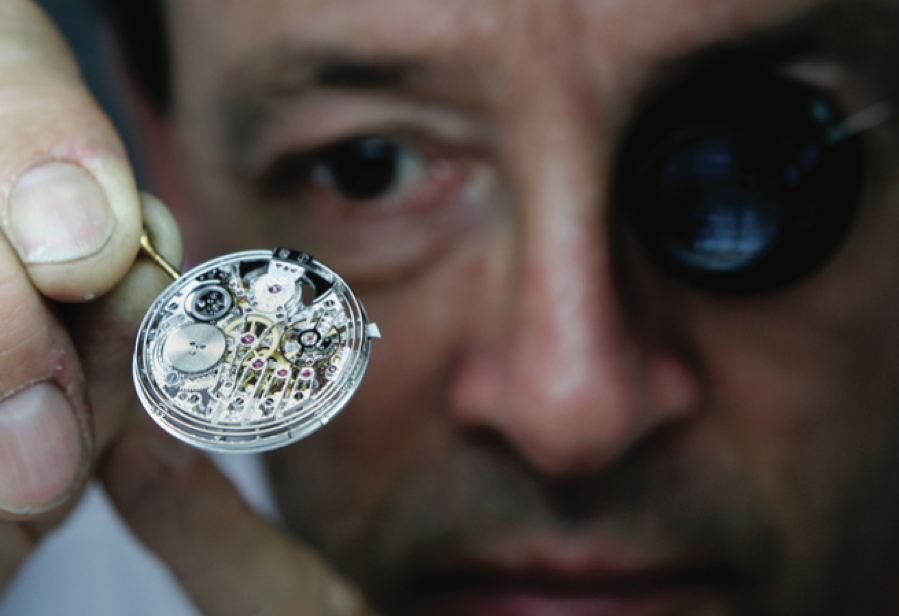
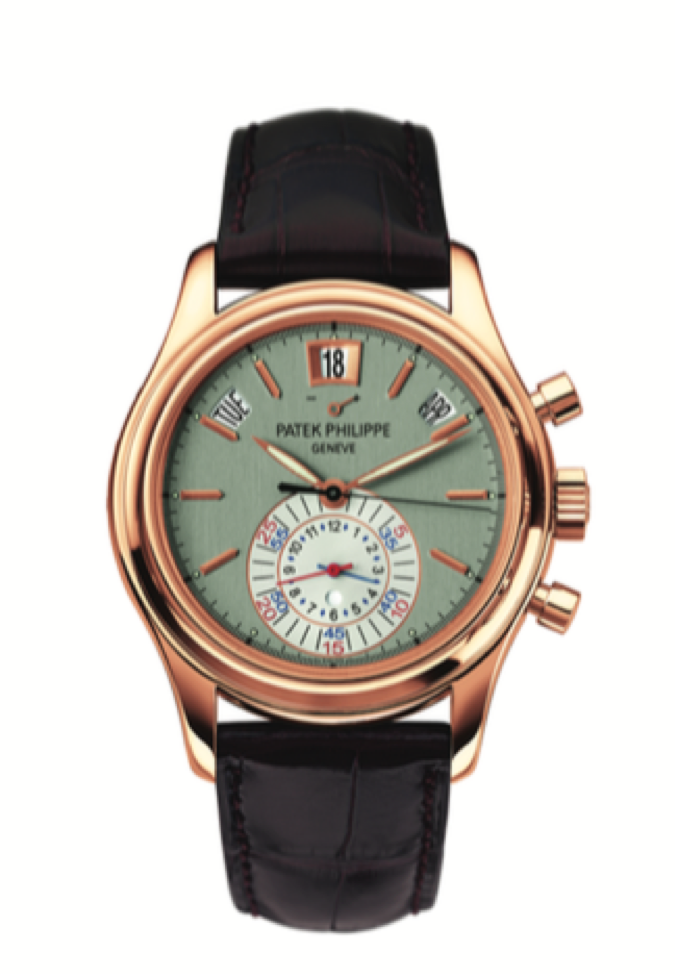
To define luxury from a buyer’s point of view is a complicated thing. For some, a $10,000 timepiece would satisfy their senses, while wealthier shoppers would have to pass the $100,000 mark to obtain the same satisfaction. From the viewpoint of watchmakers and retailers, luxury is certainly a lot easier to define. For them, a timepiece is characterized by the number of complications it has — the features beyond the normal display of time. These complications constitute the movement of the watch, which is its internal mechanism. So the more complications a watch has, the more complex is its movement, and thus the more luxurious it is.

Luxury watch brands are many. They include Breguet, Patek Philippe, A. Lange & Sohne, Vacheron Constantin, Cartier, Zenith, IWC, Jaeger LeCoultre, Harry Winston, and others. All these brands, and many more, are continuously coming up with innovative and unique complications designed to charm customers with the most captivating timepieces.

“Watch creations today are becoming more and more sophisticated with the latest innovative technology and movements,” says Patrick Normand, managing director of Cartier Middle East and South Asia.

Luxury watches with numerous complications are referred to as ‘Grandes Complications.’ These are hard to obtain as they are very complicated, man-made and take a few years to be manufactured. Thus they are the most expensive.

Among the world’s most complicated watches is the Patek Philippe Caliber 89 pocket watch. It was launched in 1989, on the company’s 150th birthday. The watch includes 33 complications, and is made of more than 1,728 components. The $6 million pocket watch took five years of research and development and four years of manufacturing. The most important features it includes are a thermometer, the date of Easter, a star chart and sidereal time. The most expensive pocket watch also lies in Patek Philippe’s portfolio. It is the Henry Grave Supercomplication, which was sold at Sotheby’s in New York City for $11 million.

As for wristwatches, the most expensive and at the same time the most complicated wristwatch is considered to be the Vacheron Constantin Tour de l’Ile. The $1.5 million piece includes 16 features and is made of 834 parts. These features include sunset time, perpetual calendar, second time zone and others. Only seven editions of the wristwatch were produced.

There remains a more expensive watch that is worth mentioning. The watch’s price does not lie in the complications, but in the precious stones included with it. The 201-carat Chopard is a watch bracelet that includes around 870 diamonds of every color, and costs $25 million.

Complicated watches are a big challenge for watch makers, and their complexity is reflected in their high price.

“That was a big challenge for us,” says Georges Bechara, the regional director of Zenith Middle East & North Africa, when talking about Zenith’s Defy Xtreme Tourbillon Zero-G which defies gravity — meaning it negates gravity’s effect on timekeeping — and took five years of research. Bechara further explains that the zero gravity complication was thought to be undeliverable, and too hard to manufacture.

“We are talking about a watch that has 744 components in the movement, all made and assembled by hand.”

Some watchmakers might be slowing down on their novelties since the financial crisis began, but others are still active in introducing new unique movements to the market. Cartier, for example, launched its fine watch-making collection, which features in-house movements created by the Cartier manufacturer in Switzerland.

“This reflects the house’s intense and ambitious research into mechanism, displaying the art of fine craftsmanship and savoir-faire,” says Normand.

In dubai, the sale of luxury products has dropped by around 45 percent

Demand dropping off

Amid this global downturn, luxury shoppers, including watch enthusiasts, are less keen on spending and indulging themselves with palatial timepieces. Overall, the luxury sector faced a decline of 15 to 20 percent in the first half of the year, according to the ‘Luxury Goods Worldwide Market’ report published by Bain & Company, a global business consulting firm. According to their research,overall the watch and jewelry market declined 12 percent.

Worldwide, the drop in luxury sales is expected to be 10 percent for 2009, given that the market is expected to stabilize in the second half of the year. The report estimates the drop in the Americas to be around 15 percent, and 10 percent in Europe and Japan. These three markets account for 80 percent of the global sales. The Middle East and China are faring better, and might even witness a projected growth of 2 percent and 7 percent respectively, said the report.

More precisely in Dubai, Tony Jashanmal, a director of the Jashanmal Group of companies, told Reuters that sales of luxury products have dropped around 45 percent.

For luxury watches, Bechara from Zenith says “sales have dropped between 30 percent and 35 percent versus the first half of 2008 [in Dubai].”

At the other end of the region, Lebanon’s luxury market seems to be affected as well. Barkev Atamian, business manager at Ets. Hagop Atamian in Lebanon, said sales of high-end luxury watches in the country have come down by around 50 percent.

“People affected are the high society, and even if they have the money to buy, they are not in the mood,” says Atamian, explaining that 85 percent of his demand comes from Lebanese, and most of these are expatriates who are cutting their spending.

Zeina Kahwaji, general manager at Cadrans in Lebanon, retailers of luxury brands like IWC, A. Lange & Sohne and Patek Philippe, says that the drop is about a 20 to 30 percent decrease in year-to-date sales.

“But we have not entered the high season yet,” she says.

Kahwaji also says people are shifting to less expensive and less complicated watches.

“Instead of buying the most complicated watches that have 16 complications, they buy timepieces with one or two complications.”

The Bain & Company report echoes Kahwaji, stating that customers are reaching the lower category of luxury products. The report says they are more focused on the “intrinsic quality of materials and the durability of luxury items instead of on fashion content.”

Atamian disagrees however, saying: “Some of these people have more than 100 watches in their cases. They buy each time a limited edition or a watch that is very rare [comes out]. They want to have something special, so I think they will wait until the market changes.”

Pink slips between the gears

With sales orders decreasing and uncertainty reigning over the market, industry players say layoffs look likely among many of the large watch companies.

“There will be a wave of firing,” says Bechara. “All the watch companies overstaffed because the orders were abnormal.”

Bechara also explains that with orders down by 40 percent, a company cannot continue at the same pace as before. 

“In the big groups, no one waits,” says Bechara, when talking about the possibility of companies retaining their employees until markets recover.

Eric Vergnes, Middle East’s general manager at Tag Heuer, agrees.

“There are many companies that have to lay-off employees,” he says, while indicating his was not one of them. “We cannot hire anyone, but we will not fire anyone.”

Takes a lickin’, keeps on tickin’

The coming months will be tough for the luxury market, since these products will remain out of the purchasing basket of most customers until the crisis eases. But what has helped the watch market is that 2008 was a year of record growth, which has enabled these companies to invest heavily in the region, thus securing a better position in the market.

“We are not suffering that much because we have invested heavily in 2008 in a new boutique which has opened in Dubai Mall in November,” says Vergnes. “It is somehow compensating for less traffic in other parts of the city.”

Normand from Cartier has the same experience.

“Since our recent boutique openings in Dubai and Qatar, we have experienced good sales with a substantial amount of footfall in our stores.”

Market players seem to be optimistic for the summer, since the effects of the financial crisis might soften on the luxury market, especially in the Middle East where luxury still remains in demand.

“The second half of the year will be better. [Then] there is Ramadan. We will get out of it soon but in small steps,” says Bechara.

July 27, 2009 0 comments
0 FacebookTwitterPinterestEmail
LuxurySpecial Report

The price of being well-heeled

by Executive Staff July 27, 2009
written by Executive Staff

In mid-June, a Saudi princess made headlines for failing to pay tabs worth hundreds of thousands of dollars at luxury clothing shops in Paris. What does it say about the Middle East luxury clothing market when even a Saudi royal can’t pay the bills?

On the one hand, the region has obviously been affected by the economic crisis, with some, such as leading Dubai retailer Tony Jashanmal of the Jashanmal Group of Companies, reporting a 45 percent drop in luxury retail sales. By the same token, the Saudi princess’ story makes it seem like the days when the regions fashionistas  could shop till they droped may be comming to an end.

Over the past decade, the region’s luxury retailing has generally been concentrated in Beirut and the Gulf, particularly Dubai and Saudi Arabia, with Kuwait playing a fledgling role. Beirut has long been home to many of the region’s top couturiers, hosting a number of European flagship stores. In the past five years, the greater levels of wealth in Gulf Cooperation Council states has led to the availability of these same luxury brands across Dubai, Saudi Arabia and Kuwait, either through franchises or homegrown luxury department stores and boutiques, such as Boutique 1 and Villa Moda. In 2006, ACNielsen called the UAE the “most promising market” for luxury clothes and accessories.

But that was then…

This year, sales of luxury items are predicted to drop by 10 percent worldwide, according to a report by the consulting firm Bain & Company. For the MENA region, however, some forecasts remain relatively strong, with the Bahrain-based investment bank Investcorp predicting a 10 percent rise in the luxury sector, an optimistic outlook compared with Bain & Company’s projection of a 2 percent rise for the region this year. Investcorp further estimated that the MENA’s share of the $300 billion worldwide luxury market would rise by 5 percent, thanks to continuing oil and gas wealth and a young, affluent demographic in the GCC.

The industry’s big names, however, have suffered greatly in developed markets where their revenue bases have existed for decades. Now, emerging markets like the MENA are taking center stage and drawing the attention of the industry’s biggest names.

“We have a crisis in the US, especially in the department store [sector]. But with the UAE it’s not a crisis. It’s our highest growth in the world,” Philippe Fortunato, managing director of the Fendi Group, told Gulf News in June upon his arrival in the UAE to open Fendi’s third store.

Fortunato now has 11 Fendi stories in the GCC, and is planning to open three new Fendi stores in Morocco by the end of next year.

Optimists can also point to the region’s continuing fashion exhibitions to prove that the affinity for high-end fashion is still present. Seamus Flanagan, commercial director at Mecom Exhibitions, the company that organizes Fashion Arabia and the Shoe and Leather Fair Middle East exhibitions, said that because European high-end retailers have been “hit hard” by the global downturn, and they are increasingly looking towards the “UAE and the GCC because of the regions insatiable appetite for bling and high-end fashion.”

That said, the overall picture remains spotty. While newspapers have relayed lurid details of Dubai’s deserted shopping malls and parking lots full of abandoned cars, retailers in Beirut insist they’re doing as well as ever, thanks in large part to the relative political stability the country is experiencing. Flanagan explained that even though high-end retailers are focusing more on the region because they are looking “for more opportunities than their own markets,” they are still being “realistic and treating the situation with caution.”

Joseph Moussa, the marketing manager for Italian luxury goods brand Salvatore Ferragamo in downtown Beirut, claims that this year has been even better than last year. Then again, that’s hardly a gauge, because Beirut’s downtown was ground zero for the economic woes of the last three years of political turmoil in Lebanon.

“It’s difficult to have an idea of how the crisis is affecting us because before this year, the shop was pretty much closed because of the sit-in. The army was closing the street every day. So now it is doing better than before,” he told Executive.

Moussa estimated that sales have increased by 30 percent year-on-year, with the holiday season proving particularly lucrative.

“The holiday season always does very well in Lebanon. I’d say 40 percent of our customers came during the third and fourth quarter,” he said, adding that these clients were mostly Lebanese, rather than foreign tourists.

Accessories, rather than clothing, were the top sellers, he said. The fashion house is noted for its high-quality leather goods such as shoes and wallets.

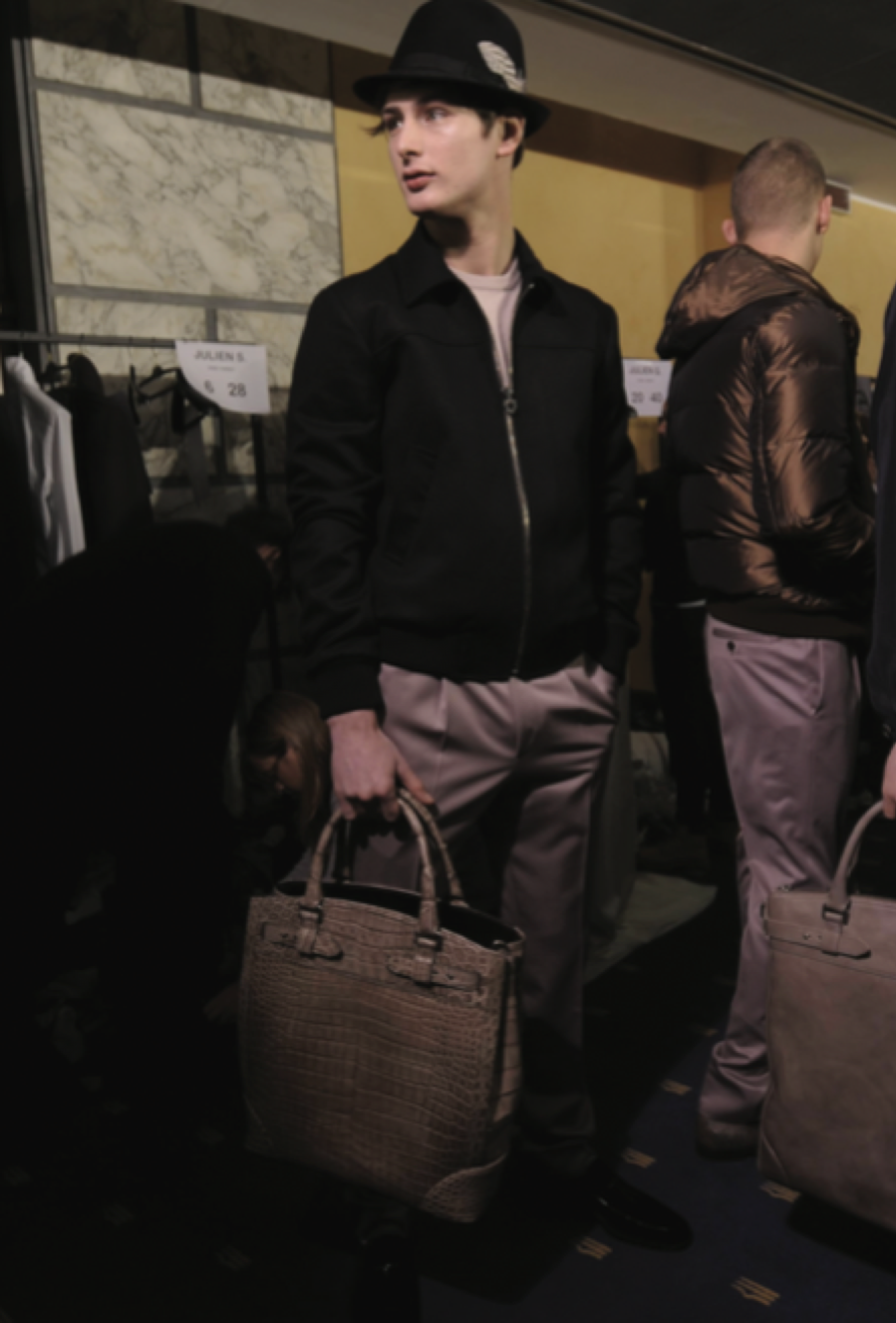
“Accessories work better than fashion, because fashion is too expensive for now. We’ll see if that changes when foreign customer come,” he said, referring to the large number of tourists mostly from the Gulf. “Handbags and leather goods are products that everyone can buy and offer as gift items,” he noted.

Retail rents have soared in recent years, but developers do not feel inclined to lower them

Still, he acknowledges that the crisis might eventually start to jab Lebanon, and if the summer is slow, he has planned in advance how to cope, by receiving his stock at the earliest date possible, and choosing to buy less stock.

“With prestige brands, you have to get the goods very early, so you can start the discounts very early. I also negotiate with the supplier to buy less,” he said.

Nora Yagmur, the general manager at Plum concept store in Beirut’s central business district, cites a “natural growth” trend in sales that she attributes to the political stability.

She contrasts Beirut’s market with Dubai’s, noting that while “Dubai has been affected by the economic crisis, growth in Beirut was not as fast as growth in Dubai, which depended on the property business.”

Therefore, says Yagmur, her local customers are still going strong.

“We haven’t seen any negative effects due to the crisis,” she concludes.

In order to compete with other markets like Dubai and in Europe, they are offering special services to their VIP customers.

“We offer something special” for these clients, says Yagmur. “Because today they are traveling around as well, and are part of lists elsewhere that are offering discounts, like in Europe where they offer 40 to 50 percent discounts.”

“Dubai has been desperate,” she continues. “We did not take that direction. Dubai is flooded with brands — some brands are in almost all the luxury malls,” she said, referring to its saturated market, another factor that analysts have pointed to as a factor in its dismal retail performance.

By contrast, she said, “We are a concept store, and we keep changing our brand portfolio.”

The small size of their operation and close contact with their client base has enabled them to be responsive in a way that brands that rely on other distribution channels, such as third-party resellers or wholesalers, cannot.

In this respect, those at the highest end of the high-end clothing industry have a distinct advantage. Couturiers like the Lebanese Walid Atallah can make only what they know they will sell, and are rarely left with excess stock.

According to Atallah, he has not had to lower his prices either, which range from $19,000 to $1.25 million for his dresses.

“They don’t want me to make lower prices… [the client] doesn’t want another woman who has less money to wear it,” he told an audience at the Reuters Global Luxury Summit held in early June in Dubai.

He and other couturiers, who generally work out of private ateliers, are also spared the problem of competing for space in Dubai’s crowded malls. Retail rents have soared in the past few years, but developers have been less inclined to reduce rents than their colleagues in the residential property market. Instead, they must respond to the individual whims of their clientele, which Atallah said in his case means less jewelry, or smaller jewelry sets.

“In the beginning my clients used to complain to me about how much money their husbands have lost during the crisis… but now if ladies don’t wear beautiful dresses they aren’t ladies,” he said at the summit.

Sounds like a justification the Saudi princess could have mumbled to herself, as she bought nearly $100,000 worth of lingerie.

July 27, 2009 0 comments
0 FacebookTwitterPinterestEmail
LuxurySpecial Report

Cheaper suites and empty beds

by Executive Staff July 27, 2009
written by Executive Staff

Luxury knows no limits at the Burj al Arab, the world’s only self-proclaimed “seven-star” hotel. The sail-shaped, suites-only hotel recently added four Rolls Royce Phantoms to its existing fleet of six, in order to pick up its high-end customers in style. With a price tag of $27,000 per night for its Royal Suite, the Burj al Arab is the flagship of the prestigious Jumeirah Group, which currently manages 11 hotels in Dubai, London and New York, while a further 14 outlets are under construction. By 2013 the group aims to have a portfolio of 30 luxury hotels.

Speaking at the Reuters Global Luxury Summit in Dubai, Jumeirah Chief Executive Officer Gerald Lawless played down the ripple effect of the global financial crisis, stating that visitors to the top-end hotel market “did not trade down.” Still, he admitted that the company was forced to cut jobs during the past nine months. It also froze recruiting — a measure the company said will only be reconsidered at the end of the year.

Dubai suffered a major economic downturn that has not left the hospitality sector unharmed. During the first quarter of 2009, the number of hotel nights spent in Dubai decreased by 16 percent to 3.87 million, according to the Department of Tourism and Commerce Marketing (DTCM), even though the total number of guests grew by 3.7 percent to 1.62 million. As visitors shortened their stays and hotels reduced room rates to stay competitive, revenues recorded a 15 percent fall to $854.9 million.

Tourists are traveling and spending less, while companies and multinationals have been forced to tighten their belts, sending their employees for shorter periods abroad and putting them up at less luxurious hotels.

Less cash doesn’t travel

According to the DTCM, three of Dubai’s key tourist markets (the United Kingdom, European Union and Russia) are in recession, which has led to reduced consumer and leisure spending. On a positive note, American tourists coming to the United Arab Emirates contributed $733 million to the local economy in 2008, up 85 percent when compared to the previous year. Still, average occupancy rates in Dubai hotels fell to 73 percent in the first quarter from almost 90 percent last year.

According to TRI Hospitality Consulting, January 2009 saw a 33 percent reduction in revenue per available room, and February a reduction of almost 40 percent. Occupancy rates in March improved, especially in Dubai’s beach hotels, yet seem to have come at the expense of room rates, as attractive offers were made to lure tour groups.

Lawless confirmed that key beach hotels saw occupancy rates of above 90 percent, yet conceded that room rates in Dubai had fallen by an average of up to 25 percent in the first quarter of 2009. He also said the Jumeirah chain had introduced a series of promotions.

Some positive signs were recorded in May, however, as passenger at the Dubai International Airport increased by 7 percent compared to the same period last year. Some 3.2 million people arrived, bringing the 2009 total to 15.9 million as of June 1. Dubai airport has attracted five new airlines in 2009, bringing the total to 130, which fly to more than 200 destinations.

Although the picture differs greatly by country, the global economic downturn has been less severe in the rest of the region. The same is true for the hospitality sector. The Syrian capital’s premier destination, the Four Seasons Hotel, hasn’t seen the extreme swing in rates or occupancy that has taken place in the Gulf. In fact, the hotel’s Director of Marketing and Sales, Julian Crane, expects a relatively strong summer ahead.

“The market in 2009 has experienced some decline in occupancy rates compared to 2008,” Crane said. “But it needs to be said that 2008 was an exceptional year for the hospitality industry here.”

In 2008, tourist arrivals in Syria increased by 15 percent to reach 5.9 million, some 56 percent of whom were Arabs, according to the Syrian Ministry of Tourism. Relatively, the number of Arab visitors actually fell by 13 percent. The uptick was the result of some 1.1 million non-Arabs, mainly Europeans and Iranians, visiting Syria in 2008.

With a daily rate of $366 for a double room and almost $9,000 for the Royal Suite, the Four Seasons is currently the business address of choice in Damascus. Yet competition is on the way with the announced arrival of the Kempinski hotel chain in the Syrian capital.

But the big luxury hotel chains are facing competition from a batch of recent boutique hotels opening in Damascus. Hotels like the Talisman and Beit Mamlouka in the capital’s old city are small but exquisitely rehabilitated old Damascene homes. Although the boutique suites may be more affordable, the rooms are booked for months in advance. Both hotels double room rates start at around $180, and suites are available in the $330 range.

Lebanon’s tourist arrivals in the first quarter of 2009 reached a record of around 434,000 which represents an increase of 57 percent compared to the same period last year. Summer traditionally is high-season, with lots of Lebanese expats returning, as well as Emirati, Saudi and Kuwaiti tourists. 

“Summer is peak season for tourism in Lebanon,” said Michelle Mallat Rishani, public relations and communication director at the landmark InterContinental Phoenicia hotel in Beirut. “Our main source market remains the GCC, and so far reservations have been very positive.” 

When Executive called in late June, the cheapest room available at the InterContinental was the $430 per night Phoenician class room.  The $15,000 per night Grand Royal suite was occupied, though. Prospective guests with deep pockets also have the option of the $9,000 per night Royal suite or the $5,000 Presidential suite.  

Mallat is confident business will continue to boom this summer, and that arrivals will be boosted by the fact that Lebanon has become a more accessible and convenient destination with more major carriers offering routes to the country, as well as the recent addition of low cost airlines such as flydubai and Jazeera Airways.

With the Lebanese elections passing without major incident, Lebanon’s Ministry of Tourism believes the country is to receive two million visitors in 2009, which would set a new record and could contribute some $2.5 billion to the country’s economy.

July 27, 2009 0 comments
0 FacebookTwitterPinterestEmail
LuxurySpecial Report

Paving the way for lavish rides

by Executive Staff July 27, 2009
written by Executive Staff

Luxury vehicles are an industry of pure prestige, and the Middle East is far from lacking in demand for opulent car brands. While numerous reports say that luxury sales in Dubai are down around 45 percent in the first two quarters of 2009 compared to the same time last year, most car manufacturers are surprisingly optimistic.

Since the financial crisis began, prices for luxury automobiles have not fallen. Instead, leading extravagant car brands have tailor-made their strategies, altering the supply to demand equation by offering fewer cars than they did before, while not lowering the asking price for each model.

The Gulf is highly dependent on expatriate spending, but the financial crisis has lowered their spending power, especially in the United Arab Emirates. But there is still much growth potential that stems from demand among the Gulf population. This situation leaves the luxury car market room to roam in the region.

Levant vs. Gulf

In Lebanon, a major speedbump for the deluxe car industry is high taxes. Nabil Bazerji, managing director of G.A. Bazerji & Sons Co., the country’s Maserati dealership, says the accumulation of taxes on luxury vehicles is outlandish.

First, consumers in Lebanon must pay a customs duties, which is 5 percent of the cost of the car. Next, customers spend another 45 percent of the car’s price tag on the ‘consumer tax.’ Then, buyers pay a value added tax of 10 percent of the car’s selling price, as well as registration taxes amounting to 7 percent of the product’s worth.

“When you pay 10 percent VAT, you’re paying it on the built-up costs, which includes taxes already,” says Bazerji. “When you pay the registration tax, you pay it on top of the selling price, including VAT. So we pay tax, on top of tax, on top of tax, on top of tax!”

Wissam Trad, director at Saad & Trad, Lebanon’s distributor for international luxury leaders Lamborghini, Jaguar, Bentley and Rolls Royce, agrees that the luxury vehicle taxes in Lebanon are absurd.

“This is too high and discouraging to potential buyers. Should these taxes be revised, I am sure sales would be even higher,” he says.

Consumers in Dubai get a much better tax deal. Assaad Raphael, chairman and general manager at Porsche Center Lebanon illustrates the drastic taxation contrasts between Lebanon and the GCC.

“[In the Gulf], there is a big tax incentive because the cars are taxed only 5 percent, which makes it the cheapest place in the world to buy a car,” Raphael says.

This benefit makes buying a luxury vehicle more reasonable in the GCC than in a country like Lebanon, where the taxes add up to more than 60 percent of the car’s total value.

Still, sales in Dubai have gone down rather noticeably. 

“They’re dumping prices and it’s another issue of flooding the Lebanese market and other markets with the overstock and excess products they have from their market,” Bazerji says. “This is a serious problem. We are losing opportunities and sales, especially since a lot of potential customers are taking advantage of registering their cars in the Gulf to avoid paying [the high taxes they would face in Lebanon].”

A question of sales

In times such as these, who would buy a brand new, luxurious, exclusive car? It seems the current economic circumstances have mostly affected the middle class.

“High net worth people are still today’s spenders,” says Raphael.

Frank Bernthaler, director of sales and marketing at Mercedes-Benz Middle East and Levant, believes consumers looking to purchase luxury vehicles may put a bit more thought into what they’re buying now than before the financial crisis.

In Lebanon, luxury vehicles have fared well amidst the global chaos.

“We are enjoying our best year ever in terms of Bentley and Lamborghini sales, and second best with Jaguar,” notes Trad. For Bentley, the Middle East represents 12 percent of the brand’s sales worldwide.

Maserati in Lebanon has also performed remarkably well in 2009.

“Sales in the first quarter of 2009 have been better than that of 2008,” Bazerji says. The brand’s opulent Quattroporte, which was launched in 2005, is the company’s bestseller.

Sales of lavish vehicles have, without a doubt, softened in the Gulf. Despite scarce liquidity and credit, GCC sales are expected to pick up as the crisis bottoms out.

Compared to the first quarter of 2008, Audi reported a 16 percent drop in sales in the first quarter of this year. A spokesman for the company says they remain optimistic.

“It is a tough time for the whole industry, but our outlook is very positive,” he says.

BMW sales have also dipped this year. Sales fell by 9 percent overall for the company. But the brand’s sales in Lebanon and Syria grew by more than 100 percent, while in Saudi Arabia they accelerated by 15 percent.

According to Stathis I. Stathis, general manager at AGMC in Dubai — the sole importer of BMW in Dubai — this year will present the industry with many obstacles, but hopes remain high.

“We anticipate 2009 to be challenging, but consumer demand in the luxury segment still remains healthy,” he says. “We have several new products planned for the year, so we are optimistic that 2009 will be another good year.”

Bernthaler of Mercedes notes that it hasn’t been all bad for the Middle East luxury car industry.

“Looking at the market in the Middle East and the Levant, we’ve seen year-on-year sales increase. Our most iconic vehicle, the evergreen G-Class SUV, grew by 139 percent in May 2009 compared to the same time last year.”

Candidly, Raphael admits that the global financial crisis has taken a toll on Porsche’s transactions.

“Of course, the economic crisis has had a negative effect on our sales, that’s for sure,” he admits.

Thankfully, Porsche’s production strategy has allowed them to avoid major fallouts.

Premium manufacturers are confident their brand images will sustain sales and customer loyalty

The engine of strategy

“We forecast our deliveries from the factory one year in advance,” Raphael says. “So by the time the crisis happened in September 2008, the factory had time to react. The strategy of Porsche factory was to produce less cars, and the reason is that we’d rather sell one car less than discount our cars.”

Thus, by producing less the company itself modified the supply-to-demand equation in order to not feel the burn of the crisis.

Trad’s company also uses a similar approach to working around the financial crisis.

“In terms of adjustment, we are more careful with the way we order and stock cars compared to last year,” he says.

Regardless, most luxurious car brands only produce a small amount of each model in order to keep the exclusivity of each design. The crème de la crème of premium manufacturers remain confident that their grandiose brand images will help sustain their sales and consumer loyalty.

Sanguine about his dealership’s brands, Trad sees opportunities.

“We are confident that our portfolio of brands[Lamborghini, Jaguar, Bentley and Rolls Royce] are very strong and have a bright future,” he says. “For this reason, we are investing in new showrooms.”

Speeding past crisis

The epitome of luxury is the $1.4 million Maybach Landaulet. The 2009 limited edition model allows passengers in the rear to relax with the top down while the driver remains separated and covered. Maybach has produced only 20 units of the Landaulet for the entire global market, and the Middle East was the first to receive one of these vehicles.

Mercedes and Maybach are some of the top-selling brands in the Middle East. According to Bernthaler, one in every 10 Mercedes S-Class vehicles sold around the world is delivered to the Middle East. Porsche is also amongst the region’s favorite list.

“Porsche has had strong growth in the Middle East in the past six years,” says Raphael. “We have grown from 2,500 cars seven years ago to 8,000 cars this year.”

Compared to last year, 2009 sales have been rather exceptional and are even higher than 2007, according to Raphael. In the Middle East, the average age of the Porsche buyer is around 35 years old, whereas in Europe the profile is around 45.

The new Porsche 2009 Panamera is the brand’s luxurious new four-door sedan. This model is expected to alter the performance of the posh sedan market, as critics say it will create high competition with Maserati’s Quattroporte, a more expensive four-door sports car.

Although car sales in many places have dropped this year, most upscale players in the luxury market segment remain optimistic. With manufacturers such as Maybach rolling out new models like the Landaulet in 2009, who is buying? The richest of the rich, of course. For the rest of us, we’ll keep on dreaming.

July 27, 2009 0 comments
0 FacebookTwitterPinterestEmail
For your information

For your information

by Executive Staff July 24, 2009
written by Executive Staff

ADIA launches new funds

The Abu Dhabi Investment Company (ADIC), an investment arm of the world’s largest sovereign wealth fund, the Abu Dhabi Investment Authority (ADIA), recently announced it is opening up four new funds that will operate in the Middle East and North Africa region. The move comes on the heels of a recent lull in investment activity that was spurred by the ongoing global economic downturn. The company is also rebranding itself through the adoption of a new name, Invest AD. Apart from having the world’s largest wealth fund behind it, Invest AD’s investments will focus on the region as opposed to investing in western financial institutions where the fund’s mother ship suffered huge losses after buying up large chunks of Citigroup, Blackstone and Merrill Lynch. The announcement also comes at a time when most private equity firms are still in a ‘wait-and-see’ mode, despite the market offering interesting valuations across the board.

Mideast airlines expand

The global airline industry looks set to continue its downward spiral for the remainder of the year. Last month the International Air Transport Association (IATA) announced that the global airline industry is likely to lose $9 billion this year, a sizable chunk of which is made up by Middle Eastern airlines. According to IATA, the Middle East’s carriers are set to lose $1.5 billion over the course of the year, up from a previous estimate of $900 million in loses made in March. Despite the bad news, the region’s carriers seem unfazed in their expansion plans, ostensibly betting that the industry will pick up sooner in the region than in other global markets. The Dubai-based Emirates Airlines plans to add 18 new aircraft to its fleet in 2009 and increase its number of flights by 14 percent. The airline has said that it is committed to standing by its order of 160 Boeing and Airbus planes, valued at $62 billion, to be delivered right through to 2018.

“We got sufficient cash and we made profits for the last 24 years,” said Emirates Airlines president Tim Clark to the Associated Press last month. “We can afford to take a hit because we haven’t squandered that money and we have a cash mountain that allows us to tough it through.”

Not to be outdone by its local competitor, Etihad Airways, the other large Emirates-based airline, announced it would spend up to $14 billion on engines and maintenance contracts to complement the 100 aircraft it ordered in 2008. The region’s other big sluggers also got in on the game with Qatar Airways announcing that it would acquire 24 Airbus A320s worth $1.9 billion, while the Bahrain-based Gulf Air signed a $1.5 billion deal with Rolls-Royce PLC to supply engines to the airline’s new Airbus A330 long-haul aircraft.

Abu Dhabi, Riyadh property development

The Abu Dhabi-based private equity firm Gulf Capital will work with New York-based Related Companies, the largest mixed-use developer in the US, to build mixed-use development projects in both Abu Dhabi and Riyadh, valued between $817 million and $1.36 billion each. The venture will be called Gulf Related and headquartered in Abu Dhabi. The deal is set to capitalize on the lack of housing in both cities and low land prices prevalent in the two capitals.

“Our entry into the regional real estate market is a timely one given the considerable drop in both land prices and construction costs, as well as the surging demand in select areas of the GCC,” Karim el-Solh, chief executive officer of Gulf Capital, told Zawya Dow Jones.

Half of the venture’s capital is expected to be capitalized through investors, while the other half will be leveraged by bank loans. The initial capitalization of Gulf Related is expected to reach almost $50 million and increase to $273 million by 2012. Solh hopes that the first project will be announced in mid-2010, according to Zawya Dow Jones. The mixed-use development project will offer both luxury villas as well as high-rise buildings.

GCC bank consolidation

A wave of consolidations in the Gulf Cooperation Council banking industry is expected soon, according to a June report by consulting firm AT Kearney. The firm believes that the fragmented nature of the GCC banking sector provides the perfect platform for mergers and acquisitions among the region’s banks.

“We see great potential for regional banks to consolidate and grow regionally,” said Alexander von Pock, a senior manager at AT Kearney Middle East, in a statement. “While the region has witnessed very few banking mergers and acquisitions over the past years, there will be more activity in the future. GCC banks are still small compared to the big international banks and eventually will need to grow externally to compete. Banks need to proceed carefully, though, as most mergers fail to meet their objectives due to poor planning or execution.”

The United Arab Emirates, in particular, is over-banked and consolidation could prove healthy for the economy. Market capitalization of banks in the UAE has reportedly declined by almost 60 percent recently.

Raj Madha, director of equity research at EFG-Hermes in Dubai, is not a fan of consolidation in the banking sector. “I am not a believer that current issues can be resolved by mergers, although a limited number of cross-border mergers may be appropriate,” he said.

“This is not the kind of market to be combining banks. The suspicion would be that any bank willing to be bought would have a loan portfolio not worth buying.”

UAE banking sector health

The United Arab Emirates government is continuing to try and dampen both the economic and psychological impacts of the financial crisis. In mid-June, the UAE Ministerial Committee released a statement on the current status of the Emirates’ banking sector.

“The UAE banking sector is stable and firmly on the growth path. The liquidity status of the UAE’s national banks is excellent,” it stated.

UAE banks were hit hard when the crisis first arrived in the Gulf. UAE banks were highly overleveraged and as the economy faltered, tightened lending conditions, causing the government to try to boost liquidity and credit facilities in the country. Now, data from the UAE Central Bank (UAECB) suggests that the gap between national banks’ loan-to-deposit ratios has improved. The loan to deposit ratio has declined by almost one third since the beginning of 2009, a huge improvement from the end of last year. In 2008, UAE banks lent $30 billion more than their deposit base, well exceeding the lending ceiling set by the UAECB, according to Standard Chartered bank research.

“We are following a clear path that encourages and supports national banks to move forward with confidence,” said Obaid Humaid al-Tayer, minister of state for financial affairs. “We have also observed that the liquidity status of the UAE’s national banks is excellent.”

Other measures are being taken by the Emirates as well. Younis Al Khoori, the UAE Ministry of Finance’s director general, said in mid-June the UAE will sell federal bonds to help fund budgetary spending on infrastructure and seek, for the first time, a sovereign rating.

“The government is moving to a long term budgeting process and whatever we need will be done through a bond issuance,” Khoori told Zawya Dow Jones in an interview. “The federal government mandated the Ministry of Finance to start issuing a bond for a few purposes.”

Qatar banking status

In June, ratings agency Fitch Ratings issued a special report attributing the health of Qatar’s banking sector to continuous government support. At the end of March, the government purchased $1.8 billion worth of local banks’ investment portfolios, in order to revive lending, boost liquidity and support the economy. In early June, the government announced plans to spend an additional $4.1 billion to buy domestic real estate portfolios of banks, due to the swelling risks associated with the property sector.

Even with the government assistance, the near future looks challenging for Qatar’s banks. Fitch notes that profitability amongst local banks will be challenged by sluggish loan growth. Also, profitability will be tested by “funding constraints and increasing impairment charges.”

Robert Thursfield, a director in the financial institutions group at Fitch Ratings, said that “asset quality remains the biggest issue facing Qatari banks in 2009. Fitch expects loan defaults to rise given the rapid growth in lending during the boom.”

Fortunately, quashing most of these risks is the support the government is willing, and capable, of giving. The bailouts were welcomed with arms wide open by all banks in the country, of which the government has part ownership. In such uncertain times, these vigorous measures have boosted confidence while also improving Qatari banks’ risk profiles.

Real miscommunication

On June 13, Kingdom Holding Company announced that Emaar properties, the Gulf’s largest real estate company, would handle the development of its $26 billion Kingdom City project, including construction of the world’s tallest tower. The next day Emaar’s stock jumped more than 7 percent. But the increase was short lived — Emaar denied the deal two days later, saying it will only provide management services for the project for a fee. Consequently, the stock price of Emaar fell 5 percent a day later, and Kingdom Holdings’ stock also fell 2.7 percent. Since the rumor had a significant effect on the stock market, United Arab Emirates bourse regulator asked Emaar to give a detailed clarification about the deal, including its nature, value and possible impact on the company’s earnings.

“As the project is currently at the feasibility and master plan review stage, the level of income currently cannot be envisaged,” was the company’s written response to the regulator. Emaar added that it was too soon for Kingdom Holding to announce such a deal since many agreements were not finalized yet.

“In view of all the required agreements not having been finalised as yet, no announcement was made by Emaar in respect of this agreement. However, Kingdom Holding Company announced the transaction on [June 13] without informing Emaar,” the company’s response read.

Kingdom Holding, owned by Saudi billionaire Prince Alwaleed bin Talal, replied by saying that Emaar is not investing in the Jeddah project, and that the agreement between the two included only management services.

Property predictions

Several recent reports in Dubai have offered estimates on how low property prices in the Emirate might sink. Dubai property prices have fallen as much as 50 percent since their peak in August 2008, and 30 percent in Abu Dhabi. Some predict that prices will continue falling for the next one to two years; others say that the market will bottom out by the end of 2009, and a few have optimistic expectations that the market will actually be in the first stages of recovery by year’s end.

For example, the global financial firm UBS predicts real estate prices will fall another 40 percent by the end of 2010. EFG-Hermes said that the second half of 2009 will see 70,000 fewer new units coming online than last year, and the cumulative decrease in prices would reach 15 to 20 percent by 2011. Aldar’s CEO, one of the biggest real estate companies in Abu Dhabi, did not predict how much prices will decrease, but said that the market will stay depressed for at least the next 12 months.

Other analysts see the market nearing the bottom. Deutsche Bank expects prices to decrease 10 to 20 percent in 2009 and the market to bottom out by the end of the year, as expatriates are still exiting the Emirate and new supply is still entering the market. Georges Makhoul, head of Morgan Stanley’s Middle Eastern and North African operations has the same opinion on prices, but a different analysis. He says market prices will hit bottom and start too rebound by the end of 2009 as international investors start buying distressed assets in the market.

“Once you see distressed funds coming to the market and picking up whole portfolios from developers and banks, then you know we are on the mend,” he told The National. “That is the way bubbles clear themselves. I am waiting to see that.”

Ali Khan, managing director of Arqaam Capital, was perhaps the most optimistic of all. He predicted real estate prices will show some recovery in the fourth quarter of this year, and that prices will be higher than they are today.

UAE lending

Dubai Islamic Bank , the largest Islamic bank in the UAE, announced that it is offering 90 percent financing for properties across the Emirates, both for UAE nationals and expatriates. In another sign of lending returning to the UAE market, HSBC Middle East also announced in April that it is offering 75 percent financing on completed villas, 70 percent financing on completed apartments, and 50 percent on off-plan properties. Moreover, Fahd Reaz, senior product manager in personal and home finance at Noor Islamic Bank, said that mortgage activity in Dubai has improved compared to the beginning of the year.

“[Mortgage lending] is almost 40 to 50 percent higher” he told Arabian Business.

July 24, 2009 0 comments
0 FacebookTwitterPinterestEmail
Editorial

Staked in stability

by Yasser Akkaoui July 24, 2009
written by Yasser Akkaoui

Summer is upon us, and in this post-election period, in the midst of the global recession, an air of optimism has washed over Lebanon. The pundits are predicting that we will end the year having welcomed 2 million tourists. There was a time when 1 million visitors were seen as a benchmark of good health for the national economy, but today — even with the spectacular political blips that Lebanon has experienced over the last few years — our pull remains irresistible.

The boom, if it happens, will surely boost the tourism sector’s share of the economy to $2.5 billion, create jobs and contribute to Lebanon’s image building (or should we say image re-building). No one has apparently asked where the surplus visitors will stay, and even a quick back-of-the-envelope calculation will show that guest houses from Bint Jbeil to Hermel will be overflowing.

This does not mean that Lebanon has achieved utopian perfection. Those who will not be among this summer’s visitors are Lebanese Jews. Jews are listed in the Lebanese Constitution as one of the country’s 18 officially recognized sects, but the Jewish community has all but disappeared in the last half century, its members having sought sanctuary abroad to take their place among the diaspora. Today the community numbers in the hundreds, and those who spend their weekends partying in Gemmayze should remember that before the area became a hub for Beirut nightlife, many of its stone ceilinged bars were shops inhabited by Jewish tradesmen and merchants. What makes Lebanon such a unique country and gives it color and flair in the region is the variety of religions living in relative harmony. Rebuilding the Magen Avraham synagogue would be the first step toward what we hope will be greater recognition, and reintegration, of Lebanon’s Jewish community.

Around the region the feel good factor is beginning to return, with yields from 2008’s last quarter restructuring slowly coming to harvest. Saudi Arabia is leading the way — in particular, the kingdom’s newly-regulated real estate market should go some way toward invigorating that economy — and this augers well for the rest of the region.

The political outlook also appears brighter. The rumbling on the streets of Tehran aside, the appointment of a new US ambassador to Damascus is a positive move as the rest of the region kisses and makes up. As ever, there is just one word of caution: if ever the Middle East party threatens to get out of control again, hands off Lebanon, please.

Even in Hermel, hotel owners now have a stake in stability.

July 24, 2009 0 comments
0 FacebookTwitterPinterestEmail
  • 1
  • …
  • 459
  • 460
  • 461
  • 462
  • 463
  • …
  • 696

Latest Cover

About us

Since its first edition emerged on the newsstands in 1999, Executive Magazine has been dedicated to providing its readers with the most up-to-date local and regional business news. Executive is a monthly business magazine that offers readers in-depth analyses on the Lebanese world of commerce, covering all the major sectors – from banking, finance, and insurance to technology, tourism, hospitality, media, and retail.

  • Donate
  • Our Purpose
  • Contact Us

Sign up for our newsletter

    • Facebook
    • Twitter
    • Instagram
    • Linkedin
    • Youtube
    Executive Magazine
    • ISSUES
      • Current Issue
      • Past issues
    • BUSINESS
    • ECONOMICS & POLICY
    • OPINION
    • SPECIAL REPORTS
    • EXECUTIVE TALKS
    • MOVEMENTS
      • Change the image
      • Cannes lions
      • Transparency & accountability
      • ECONOMIC ROADMAP
      • Say No to Corruption
      • The Lebanon media development initiative
      • LPSN Policy Asks
      • Advocating the preservation of deposits
    • JOIN US
      • Join our movement
      • Attend our events
      • Receive updates
      • Connect with us
    • DONATE