• Donate
  • Our Purpose
  • Contact Us
Executive Magazine
  • ISSUES
    • Current Issue
    • Past issues
  • BUSINESS
  • ECONOMICS & POLICY
  • OPINION
  • SPECIAL REPORTS
  • EXECUTIVE TALKS
  • MOVEMENTS
    • Change the image
    • Cannes lions
    • Transparency & accountability
    • ECONOMIC ROADMAP
    • Say No to Corruption
    • The Lebanon media development initiative
    • LPSN Policy Asks
    • Advocating the preservation of deposits
  • JOIN US
    • Join our movement
    • Attend our events
    • Receive updates
    • Connect with us
  • DONATE
LuxurySpecial Report

High time to set to sea

by Executive Staff July 10, 2009
written by Executive Staff

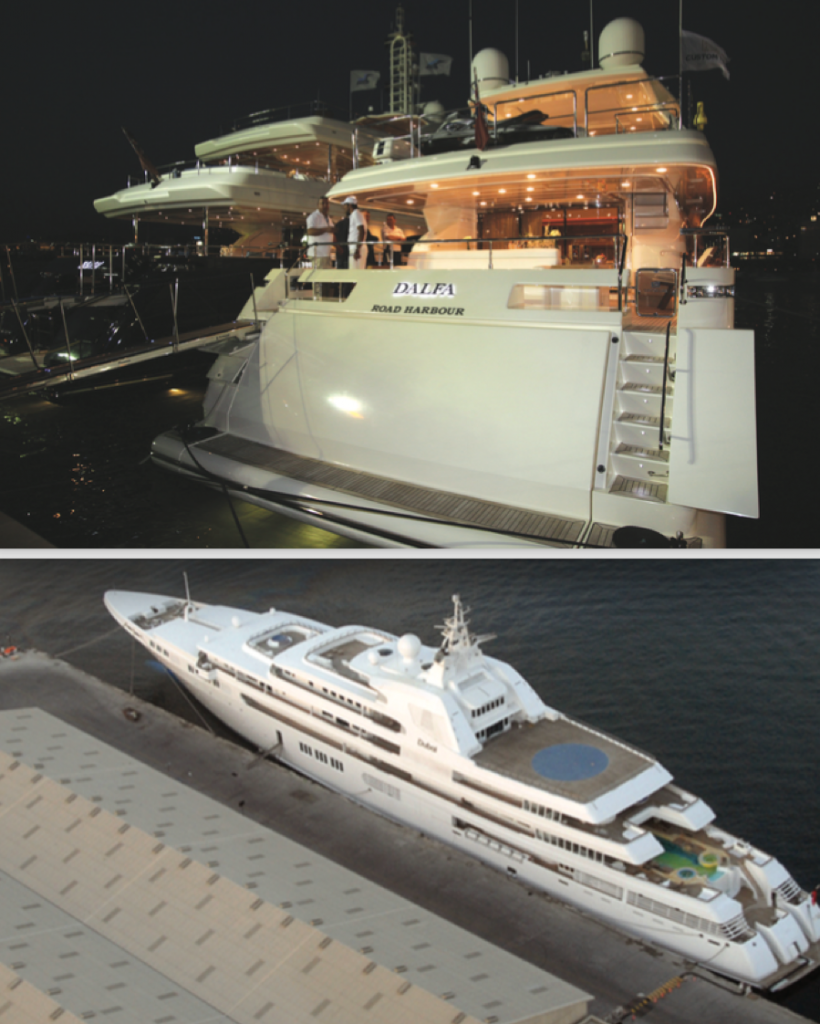
It hasn’t been smooth sailing for the region’s luxury yachting industry for some time now. Even before the global financial fiasco in the Middle East, shipyards had to contend with the exorbitant cost of oil that makes up most of the resin-based raw material costs of the industry.

“A lot of companies had to adjust their prices according to how much sellers were selling raw materials, and the price of a lot of boats soared,” said Camille Chamoun, chairman and chief executive officer at Lenco Marine, a Lebanon-based boat manufacturer. “You just had to adjust, you couldn’t do anything else.”

Nonetheless, the consumer appetite that was driving oil prices higher and filling up the coffers of regional governments kept the industry afloat. In turn, manufacturers continued to maintain high levels of supply to the market that ultimately proved to be unrealistic.

“The brands that built many boats and accumulated excess stock have really been hit hard,” said Alain Maaraoui, chairman and chief executive officer of Sea Pros Yachts, a yacht service and sales company with outlets in Lebanon, Kuwait, Egypt and the Emirates.

“Boats that were being produced for clients who had financial problems and had to cancel their order. The companies [producing the boats] are now contacting us to try to sell some of their boats.”

The cloud’s silver lining

That push, coupled with the plummeting price of oil and, by extension, raw materials for yacht makers, translated into a window of opportunity for anyone who loves the smell of the sea, and had a few million dollars to spare. But initially, it did not seem like the fish were biting. Even Saddam Hussein’s former luxury yacht, which includes a submarine, a helicopter landing pad and golden bathroom faucets, failed to entice yacht buyers when it was put on sale back in January, according to an Iraqi government spokesperson.

There are signs, however, that demand may be returning. The downturn resulted in boat valuations hitting all time lows as the rules of oversupply have pushed prices down, all but quashing the margins of boat-makers. Manufacturers are now looking to get rid of their excess stock and reposition themselves for better times.

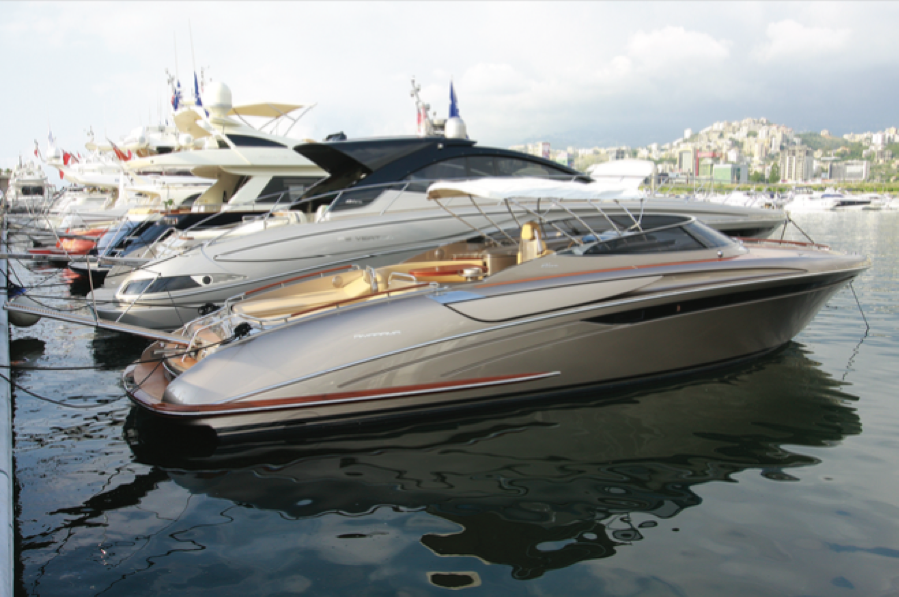
“After the downturn you found a lot of beautiful yachts that were selling at half price,” said Chamoun. “A lot of boats were being sold at cost price.”

Many in the yacht industry agree that the time to make a buy is now, but it won’t last forever. The coming summer season means high-season for yachting and vacationing in the region. That will inevitably have a positive effect on sales in a region where boat shows still feature the latest, newest and glitziest products, albeit with a few less exhibitors. For instance, this year’s Dubai International Boat Show, the biggest annual boat show in the Middle East and one of the top five in the world, attracted 721 exhibitors from 50 countries at the Dubai International Marine Club. The event suffered only an 11 percent decrease in the number of exhibitors from the year before.
“After the downturn you found a lot of beautiful yachts that were selling at half price”

Fewer and fatter

The industry itself also looks to be consolidating as companies attempt to make themselves less vulnerable to the ongoing downturn.

“All the companies are restructuring, and there have been several mergers abroad, which means they have lowered production costs because of economies of scale,” Chamoun said.

The regional industry focus also seems to be shifting away from traditional markets, such as the Emirates, toward more liquid areas in the region.

“Abu Dhabi, Dubai and Kuwait have been hit hard but Lebanon has not been affected at all and there is a lot of demand, especially after the elections,” Maaraoui said.

The region’s largest economy, Saudi Arabia, also looks well positioned to harbor much of the excess supply being placed on markets, because the effects of the crisis there have been “marginal,” Chamoun said. “They are booming and building lots of marinas because there is a lot of cash flow out there.” 

Today the chance to get a good deal still persists as excess stocks have not yet been depleted.

“The production that was available will be done in a month or two after the summer is over,” Maaraoui said. “There is a gap until the end of the summer at the most, so today there is an opportunity to buy.”

July 10, 2009 0 comments
0 FacebookTwitterPinterestEmail
LuxurySpecial Report

Wings clipped but still flying

by Executive Staff July 10, 2009
written by Executive Staff

The Middle East has been one of the world’s fastest growing regions for luxury goods. From yachts to private planes, cars to clothes, the last decade saw the region’s luxury sales skyrocket as much as 20 percent per year. But now that consumers have tightened their purse strings, demand has fallen, and luxury market sales in such high-profile shopping destinations as Dubai have dropped as much as 45 percent. Some retailers estimate the region will rebound more quickly than others, due to the rising price of oil. But how are those tasked with making and selling luxury goods dealing with the downturn in the meantime?   Some are focusing on long term customers, others on consumers looking for quality instead of flash. In this special summer section, Executive profiles the purveyors of premium goods and services in the Arab world to find out how they’re faring and strategizing in these challenging times.

There is little doubt that the region’s jet-setting executives have been humbled by the global economic downturn. As a consequence, the slump has left the high-flying Middle Eastern private jet industry feeling the turbulence of the downturn’s headwinds.

“Today, the rates we are offering are 20 to 25 percent below what they were before the crisis,” said Abed el-Jaouni, chairman of Imperial Jet, a multi-national aviation services group based in Lebanon, Saudi Arabia and the United Arab Emirates.

The global airline industry is set to lose $9 billion in 2009, according to the International Air Transport Association, and the business jet industry is by no means bucking the trend. Bombardier, the Montreal-based transport behemoth and the largest manufacturer of business jets globally, recently announced that it expects new orders to slow to 375 aircraft this year and not to return to last year’s level of 1,400 aircraft until 2013. The company also announced that it will lay off more than 4,000 employees and lower production due to the slump in demand. 

Western woes

Most of the damage that has been done occurred in western markets where jets are produced. But if one compares the region to other more developed markets, the Middle East seems to have been spared the brunt of the downturn.

“The market in Europe is dead and it will continue to be a medium to bad year [for them],” said Jaouni. “But here in the Middle East it is picking up.”

Nicholas Meszaros, general manager of the Beirut-based Executive Aircraft Services, agrees.

“Manufacturers are looking more to the Middle East because there are still some deals to be done here, as opposed to the States or Europe,” he said.

It would be fallacious, however, to say that the entire region has flown right through the storm. Those who splurged during the upturn now seem to be in a tailspin.

“Most of the operators in Dubai had to take some dramatic decisions,” Meszaros said. “They have reduced their pilots, cutting down on routes and stops, and have cancelled a lot of aircraft they were waiting to get on management certificates.”

But those companies in the region that did not over-extend have done moderately well considering the economic turmoil afflicting the world today.

“The two biggest markets we have in the region are Saudi and Egypt,” Imperial Jet’s Jaouni said.

Other markets such as Qatar and Kuwait are expected to continue to do relatively well in the months to come, according to most observers.

The good news for the region’s executive jet industry is that the negative effects of the downturn on western manufacturers has led to bargains for the Middle East’s aviation service operators and jet enthusiasts.

“Manufacturers have stopped production on certain things and what has happened is that people have forfeited their down payment so the manufacturers are saying ‘take it for cheaper,’” Jaouni said. “I see the bottom and the right time to buy planes. [An] aircraft that was valued only eight months ago at $38 million is being offered to us today at $22 million.”

Landing in reality

With less disposable income and a risk-averse approach, manufacturers are less keen to build large, expensive aircraft. Operators are shying away from large aircraft as well, having less money for purchases, operations and maintenance.

“More people are looking at the smaller airplane, because when you are looking at 10 or more seats, you are looking at long-range expensive aircraft, and the demand has been less in this area,” said Meszaros.

While the skies over the Middle Eastern jet market may still be cloudy, aircraft services executives say the region’s market is already looking brighter. 

“It is better today, it will get better come the beginning of next year and it will be much better towards the end of next year,” Jaouni said.

July 10, 2009 0 comments
0 FacebookTwitterPinterestEmail
North Africa

Tops in technology

by Executive Staff July 10, 2009
written by Executive Staff

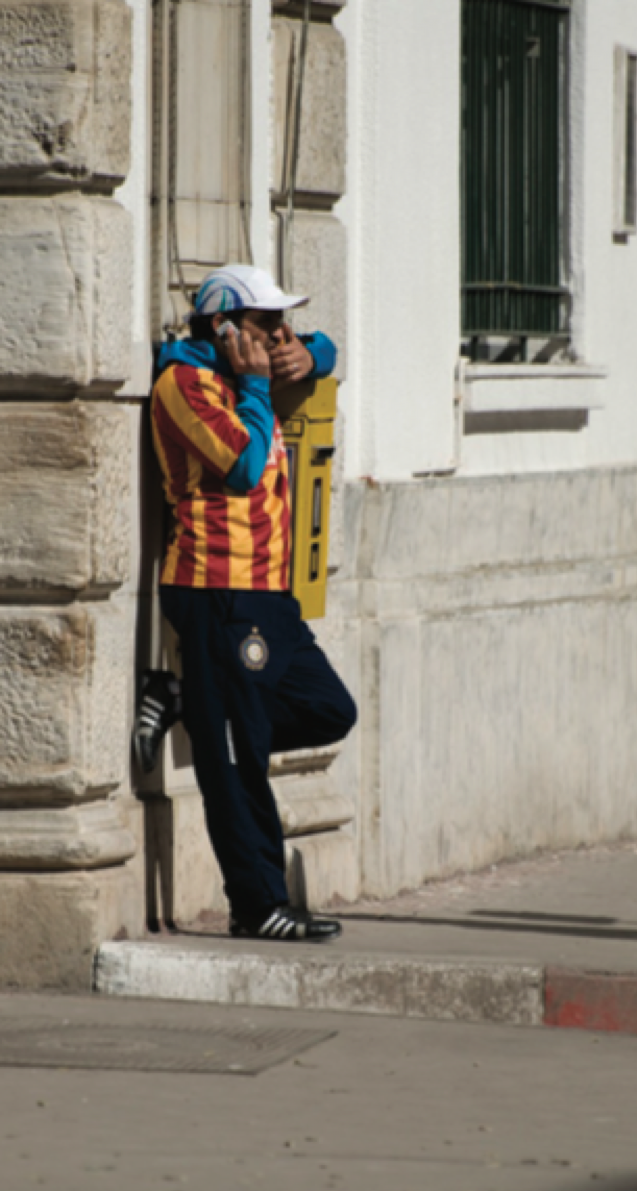
Tunisia’s investment in information and communication technology (ICT) has begun to pay off. A flurry of recent reports has ranked the sector among the top in the region, highlighting its potential as a destination for the offshore operations of European companies. While such reports can only provide a rough comparison and rely on subjective factors, rankings from such diverse sources as the World Economic Forum, the World Bank, AT Kearney and the Commonwealth Business Council nonetheless underscore Tunisia’s advantages, including a proximity to key markets, a multilingual population, low costs and a competitive ICT and business environment. As European companies look to reduce expenses, the North African country could become a popular site for new developments.

Tunisia has benefitted from European corporations’ increasing tendency to locate ICT operations offshore. While Southeast Asia has emerged as a popular offshore destination, European firms have looked closer to home, relocating operations to Eastern Europe, the Middle East and North Africa. With English less of a priority, Tunisia’s location, which offers travel times of less than two hours to many European capitals and sits in the same time zone, has attracted many firms. Although North American firms still account for nearly 70 percent of offshore spending, according to a recent report by US-based consulting firm AT Kearney, European companies are catching up quickly. As European demand increases, so too will the flow of business to North Africa.

The entire region will likely benefit from this shift, but Tunisia stands out among its neighbors. For the third year in a row, the World Economic Forum’s report on ICT ranked Tunisia first in North Africa. Rated 38th of the 134 countries ranked in the report, Tunisia came in well ahead of its closest competitors (Jordan, 44 and Egypt, 76), and scored well on individual criteria, including political and economic environment and degree of ICT utilization.

Tunis hardwires ICT

This acknowledgement can largely be attributed to the government’s strong support of the ICT sector. In a bid to improve Tunisia’s knowledge economy, the government has funnelled money to training and education programs, as well as into ICT infrastructure, while new legislative incentives have also been unveiled to encourage offshoring. Tunisia’s 11th development plan (2007-11) calls for an investment of $1.91 billion into the local ICT sector, with a major focus on training and increasing employment. Although Tunisia’s population is relatively small, it is well-educated and multilingual — something the government hopes to take advantage of in the coming years, with a target of an additional 10,000 ICT jobs per year. Currently, 10 percent of university students are pursuing ICT studies, which bodes well for the future of the industry.

Given the pressures of the global economic downturn, Tunisia’s competitive labor costs and developed infrastructure are also attractive. These market advantages are bolstered by an encouraging legislative framework which has, amongst other things, paved the way for a series of IT industry zones. El Gazala, the nation’s flagship technology and communications center located just outside Tunis, is an example of the policy’s success. Open since 1999 and home to about 80 companies, including Ericsson, Alcatel-Lucent and Microsoft, demand at El Gazala has been so high that it is adding 36 hectares to its existing 65 hectares. Two other parks, at Sousse and Sfax, are also expanding, adding a total of 100,000 square meters.

The government has also worked to streamline bureaucracy in the ICT sector’s regulatory agencies in an effort to attract new companies. A one-stop shop to simplify administrative and legal procedures and to facilitate import and customs procedures for ICT was established in 2008. The process consolidates the activities of a number of oversight bodies and allows companies to complete most procedures online.

“Previously, customs procedures could take a week or longer. This speeds up the process,” said Jawher Ferjaoui, the general director of the digital economy section at the Ministry of Communications and Technology.

Tunisia’s “government readiness” rank, according to the World Economic Forum, is even higher than its overall rank (27th compared to 38th), and it ranks 8th for government prioritization of ICT. The state aims to increase ICT’s contribution to the economy to 13.5 percent by 2012, up 3.5 percent from the current level, which will bolster the sector’s position in the increasingly competitive market for  offshore ICT services.

July 10, 2009 0 comments
0 FacebookTwitterPinterestEmail
North Africa

Development’s new digs

by Executive Staff July 10, 2009
written by Executive Staff

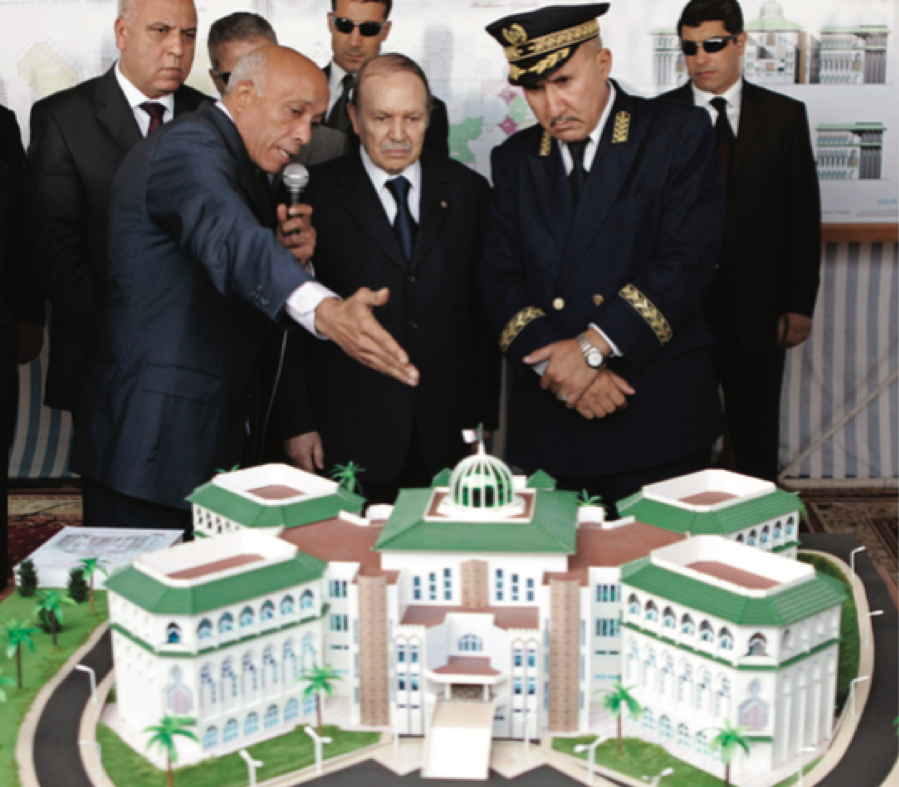
Private developers are moving to establish a permanent foothold in Algeria’s largely untapped real estate market, with a number of sizeable projects due to break ground in the coming year. 

Following nearly a decade of strict financial restrictions and political instability, the recent glut of petro-dollars has helped fuel a massive increase in the construction and real estate sectors, drawing in foreign investors and nurturing domestic developers. 

Gulf investors have flocked to Algeria to develop its 1,200 kilometer coastline. Some of the Gulf’s more prominent property investors — including Emaar, Gulf Finance House and Al Qudra — have unveiled billion-dollar plans for commercial, residential, tourist and mixed-use projects in and around Algiers.

Among the more prominent developments is the new megaproject by Emirates International Investment Company (EIIC), the $4.8 billion Dounya Parc, a nearly 7 million square meter greenbelt around Algiers. The company also has unveiled plans for the $322 million beachfront Ain Chorb tourism village, which the group is developing with the Kuwaiti Investment Group. Projects of this size represent a massive step forward for the Algerian market, although the lack of precedent means that such developments often face a lengthy land acquisition process requiring coordination with both ministries and local authorities. However Camille Nassar, CEO of EIIC Algeria, said the country’s enormous commercial potential was a crucial incentive. 

Europe and China look to the Maghreb

Gulf investors are not alone in looking to enter the Algerian market. Swiss-based Société des Centres Commerciaux d’Algérie (SCCA) is overseeing the construction of Algeria’s largest commercial center, the $73 million Bab Ezzouar complex, which will include some 31,000 square meters of retail space. The China State Construction Engineering Corporation (CSCEC) has also expressed interest in expanding its Algerian operations by developing real estate. 

Domestic investors have also joined in the headline grabbing events. Dahli Group’s $3.4 billion Alger Medina development in downtown Algiers  issued a bond that was marketed directly to the public — an audacious move and the first of its kind for the country’s fledgling capital markets. The bond raised 30 percent of the cost of the project, which will provide some 1 million square meters of office space. 

Following the completion of its ambitious low-cost housing program, the Ministry of Housing and Urban Planning will dedicate an additional $19.4 billion to building one million more homes. As one of the primary pillars of President Abdelaziz Bouteflika’s election campaign, the new residential space will be marketed through a network of more than 450 private and state-owned real estate agencies offering subsidized schemes.

With one of the highest per-unit occupancy rates in the world, according to the United Nations Development Program, Algeria has also tried to mitigate urban migration by launching a program to improve existing housing structures around the country. Nacer Djama, president of the Caisse National du Logement, said there is enormous opportunity for companies specializing in the construction of social housing in the coming years. With only 15,000 to 20,000 mortgages given out last year, Djama said the banking sector needs to catch up with demand for housing finance.

While Algeria’s real estate market offers a tantalizing target for companies that are increasingly squeezed by the global economic downturn, developers — and foreign companies in particular — still face a number of obstacles. The prime minister recently issued a decree on foreign investment, mandating that any project that benefits from government incentives must have a local majority shareholder.  

Still, Algeria is a promising place for the committed long-term investor. The trials and tribulations of the market as it adjusts to these multibillion dollar projects will also help prepare the authorities to deal with the needs of the country’s increasingly dynamic real estate sector.

Sam Inglis is Executive’s  Mediterranean correspondent, based in Istanbul 

July 10, 2009 0 comments
0 FacebookTwitterPinterestEmail
North Africa

Invested in tourism

by Executive Staff July 10, 2009
written by Executive Staff

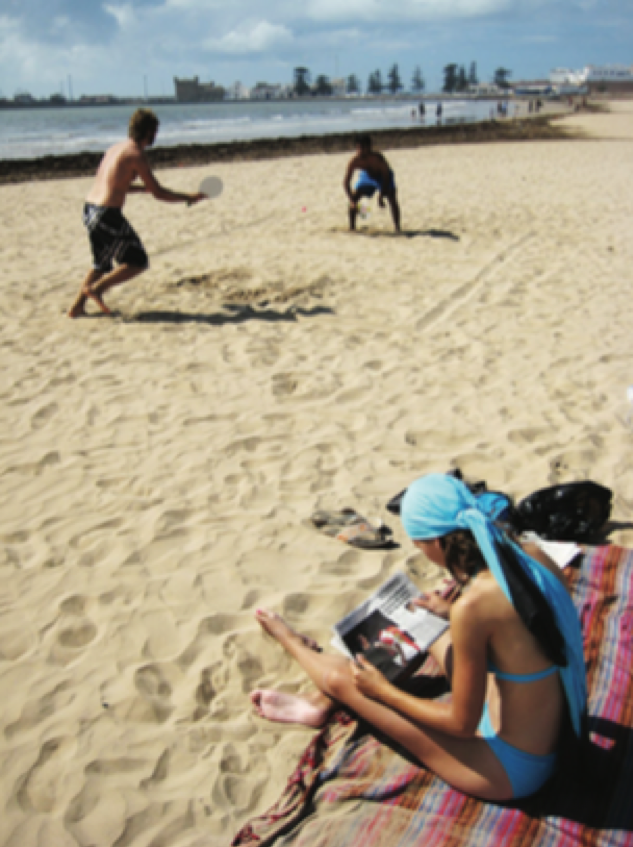
Like many of its neighbors, Morocco has a long-term tourism development strategy and has recently highlighted its flexibility by introducing a new program to follow its current tourism plan, called “Vision 2010.” That plan, kicked off in 2001 to chart development over 10 years, has been largely successful, but is nearing its conclusion. Now, the government has launched “Cap 2009” to retool the sector’s objectives and pump cash into the market in preparation for the upcoming launch of the “Vision 2020” development program.

Taken together, the two plans aim to boost arrival numbers, upgrade infrastructure and increase the quality of human resources. While Vision 2010 may fall short of its initial target of 10 million tourists by 2010, particularly given current economic conditions, the number of tourists rose 69 percent between 2001 and 2007, and another 7 percent from 2007 to 2008, bringing the total arrivals to almost 8 million. Hotel construction has been keeping pace with the increase and total bed capacity has risen more than 47 percent since the start of the plan.

Given that tourism attracts more investment than any other sector in Morocco and contributes around 6 percent to the economy annually, the government is taking proactive measures to ensure the momentum continues, even during the downturn. With tourist receipts decreasing 3.5 percent, from $7.4 billion in 2007 to $7.1 billion in 2008, Cap 2009 will seek to use Internet marketing to expand the arrivals base beyond the traditional European markets. The program will receive a budget increase of 10 percent ($6.2 million) in 2009 to facilitate expansion into Eastern Europe, Russia, the Gulf and China, among other markets.

Building from the top down

Domestically, Cap 2009 identifies Marrakech, Fez, Casablanca and Agadir as priority regions, which is consistent with the Kingdom’s promotion of high-end cultural and beach tourism. Efforts to target these areas are already included in Vision 2010. The components — Plan Azur, Plan Biladi and Plan Madain — aim to develop resorts, bolster domestic tourism and showcase cultural destinations.

Plan Azur is expected to be the linchpin of the three, as Morocco looks to capture some of the lucrative regional resort market. The plan outlines six new integrated resorts that will require investment of $5.7 billion and will result in the creation of 110,000 beds and 400,000 direct and indirect jobs. While the sun-and-sea model is relatively low-earning and faces serious competition, the government hopes that increased numbers of visitors will compensate for smaller margins of revenue.

Adding infrastructure is the primary goal of Vision 2010, with Vision 2020 expected to focus on human resources and build upon the expanded offerings. When the government launches the program next year, it will be geared towards bringing service quality up to the standard that many international consumers expect. Vision 2020 will also take into consideration requirements for sustainable and responsible tourism, as well as the protection of natural and cultural resources.

To accommodate the continued rise in arrivals, Morocco is working to upgrade its airports. Abdelhanine Benallou, the CEO of the Moroccan National Airports Authority (ONDA) said the objective is to reach a capacity of 32 million passengers by 2012, with current capacity at 23 million. In mid-April, the African Development Bank granted the Kingdom a loan of $334 million to enhance facilities at the Casablanca, Fez, Agadir, Marrakech and Rabat airports, which handle the bulk of the country’s air traffic. The loan will cover about 75 percent of the $445 million project, with the ONDA covering the remainder of the cost. ONDA is also working with the Moroccan National Tourism Office to reduce bureaucracy and has announced adjustments to airport taxes on chartered flights.

The government’s willingness to make adjustments across the tourism sector underlines the country’s adaptability, particularly during these difficult times. Cap 2009 will expand Morocco’s presence in emerging markets, which should help make up for a decline in arrivals from Western Europe. Meanwhile, targeted Internet marketing and increased bed capacity will develop a solid foundation that will help temper the effects of the recession in the short term, and provide the necessary framework for future growth under Vision 2020.

Morocco seeks to upgrade its airport capacity to 32 million passengers per year

July 10, 2009 0 comments
0 FacebookTwitterPinterestEmail
GCC

Going once, going twice

by Executive Staff July 10, 2009
written by Executive Staff

If you can’t sell it, auction it. That seems to be the mantra many in the United Arab Emirates’ troubled real estate market have adopted as they try to offload properties.

On May 19, Madania real estate company took the lead by auctioning four properties. Sherwoods, a real estate consulting firm, followed suit and auctioned 21 lots on June 4. Coldwell Banker also received a permit from the Dubai Land Department (DLD) and is planning to conduct an auction this summer.

But the auctions have run into some problems. Despite more than 100 people showing up at the Sherwoods auction, not one property was sold out of 24 on offer.

“There’s so much bad news, everyone’s scared and is holding on to their money… If I had access to the sort of money being asked for, I would buy,” Anwer Moola, a Dubai property owner, told The National newspaper. “A five-bedroom villa, for example, can still be rented for [$50,000 or $55,000] a year.”

But experts believe that the auctions are the best way to get an accurate price for properties in a market where buyers and sellers have vastly different ideas of a “fair price.”

“The auction removes the price and puts the product out in the market, and it allows people to look at it and make their opinion on what the property is worth,” says Raymond Kuceli, chief executive officer of Madania Real Estate. “The price that is generated gives an indicator to the seller on where exactly their property sits in the marketplace.”

Executives at Sherwoods say the properties auctioned so far have not been distressed assets, but units that have been put on the market with no interested buyers.

“None of the properties were taken from lending institutions, but we certainly have people who agreed to sell below the original price that they paid,” says Jeremy Mayhew-Sanders, head of investment & developments at Sherwoods Independent Property Consultants.

Still, both Kuceli and Mayhew-Sanders agree that there is a possibility for distressed properties to also be included in future auctions.

On the auction block

Property auctions are still new in Dubai and come at a time when the market is in its worst downturn, so the results were not surprising — both auctions bids failed to attain the lowest price set by sellers.

“We knew we would struggle to sell anything on the night of the auction, and if we did it would have been a great bonus,” says Mayhew-Sanders.

Kuceli says the outcome of the auction was satisfying, since some properties achieved competitive bidding and bidders showed interest after the auction was over.

“For us we had a good turnout, we had some bids. And we had negotiations afterwards, too,” says Kuceli of Madania’s auction, where two of the four properties on offer received bids.

At the Sherwoods auction, 17 bidders were present in the room and at least seven lots received bids. Bidders also showed interest after the auction, where a deal for a $1.6 million penthouse in the Emirates Crown closed.

“We are working on land deals which may or may not close, but I hope they will,” says Mayhew-Sanders.

Land department

Any company that wants to hold a public auction has to get an auction license from Dubai’s Department of Economic Development and an auction permit from the Land Department.

Companies can auction as many properties as they want, but should submit details for every property in order to receive approval. If all the information is submitted at once, the process might only take a couple of days, says Kuceli. The fee for obtaining an auction permit from the Land department is $545.

The Dubai Land Department also charges 2 percent of the sales price of the property. The system is for completed properties, and dealings with foreclosures and inherited properties have yet to be specified.

Planning ahead

The first two auctions might not have been very successful, but that will not keep companies like Sherwoods and Madania from planning future auctions in the hopes that they can build on the level of interest and success.

Sherwoods is planning another auction in November. Mayhew-Sanders says he is not sure how many plots the auction will include, but it will be easier than the first one.

“Our next auction will be very focused on dealing with stock that we feel confident we can sell,” he says.

As for Madania Real Estate, Kuceli says “we were looking… at the second week of July because we want to get more properties online.”

With eight properties confirmed and aiming for 15, Madania’s Kuceli believes more investors will show up, having familiarized themselves with the auction process.

July 10, 2009 0 comments
0 FacebookTwitterPinterestEmail
Comment

The Dubai delusion

by Norbert Schiller July 1, 2009
written by Norbert Schiller

Sheikh Mohammed bin Rashid al Maktoum, ruler of Dubai and vice president of the United Arab Emirates, likes nothing better than foreign media reports depicting his emirate as the “economic miracle of the desert.” However, since this economic crisis hit, the foreign media has had a field day reporting everything that has gone wrong with Dubai. Headlines such as, ‘Dubai Property Scandal Claim Emerges Amid Media Blackout’ or ‘The Dark Side of Dubai,’ are just some of the stories that have made the headlines lately. In comparison, reporting within Dubai has been relatively tame and, if you didn’t know any better, the local press would have you believe that the economic situation was under control and life was as idyllic as ever. And that’s what the people at the helm want us all to think.

A few days ago, I received an email from a retired friend who until recently was an executive for a multinational based in Dubai:
“I guess Sheikh Mohammed and his marketing and PR [public relations] machine were more than happy to use the press and the [foreign] media to spread the message of the ‘economic miracle in the desert,’ but they should have realized that trying to use the media is a double-edged sword. Journalists love nothing better than a good story and what better story than the broken dream and the broken lives in the desert.”


Regardless of what the government wants you to believe, it’s no secret what is happening. There is no expatriate living in the Emirates who does not know at least one person whose “dream” has been shattered. In fact, most people could probably name a dozen friends and co-workers who were forced to pack up and leave.


For years before the financial crisis, Dubai was awash with money and the mere thought of it suddenly evaporating one day hardly crossed anyone’s mind. Dubai became a phenomenon all by itself, a place where everyone aspired to go to make more money. From the migrant laborer in India to the marketing wiz in the United Kingdom, everyone had their eyes on Dubai. For many laborers, their first brush with reality was having to repay their debt to the agency that brought them here, almost immediately upon arrival. For the well-to-do urban professionals, the first trap was spending money way beyond their means on everything from fancy cars to property. It seemed like everyone was over their heads in debt, punch drunk on the illusion that this was one of the last frontiers left in the world.


My friend was always skeptical about this line of thought and, like many others, viewed Dubai’s rapid growth as a bubble waiting to burst. I can’t recall how many times he endlessly argued at dinner parties, or while out sailing with friends. Often those who boasted about the “Dubai success story” acted as if they themselves were at the top of the food chain. In the same email he goes on: “All along, most of us knew that the Dubai miracle was nothing but an empty mirage. I really pity the suckers who got caught up in the massive real estate scam, which is what this whole mirage in the desert was really all about.”


It’s also no secret that Sheikh Mohammed surrounded himself with people who believed in his dream of transforming the desert into an oasis at any cost. The initial money was there, so too were the investors and the hand-picked team to carry out mission impossible. The list of “miracles” the ruler preformed is abundant and well documented: doubling Dubai’s coastline, building the world’s tallest tower and one of the largest shopping malls and making a ski slope in the desert. But then again, there was no one in the sheikh’s inner circle that was in a position to contradict him if they felt he had gone too far. A few years ago, the CBS program “60 Minutes” profiled Sheikh Mohammed, using interviews with him and his close advisors. Sultan Ahmed bin Sulayem, the chairman of Dubai World, had this to say about his boss: “He’s always asking the impossible, not what you are able to do, but what you cannot do!”


The sad fact is that nobody can really afford to see Dubai disintegrate; too many livelihoods are at stake. Dubai, like the rest of the Gulf states, is a necessity for millions of laborers and workers who come here carrying hopes and dreams of improving their lot. I can only hope that when this crisis passes the leadership of Dubai will come to their senses and create a place that does not only sing its own praises, but looks after those whose sweat and toil have made this emirate what it is today.

Norbert Schiller is a Dubai-based photo-journalist and writer

July 1, 2009 0 comments
0 FacebookTwitterPinterestEmail
Society

Al Hurra – Joaquin F. Blaya (Q&A)

by Executive Staff July 1, 2009
written by Executive Staff

Joaquin F. Blaya is a member of the United State’s Broadcasting Board of Governors, which oversees US government run broadcasting networks like Voice of America and Middle East Broadcasting Networks, which includes Al Hurra Television. Al Hurra (meaning “the free one”) broadcasts to 22 countries in the Middle East, Iraq and Europes. Governor Blaya had a principal role in developing Al Hurra’s “Al Youm” (meaning “today”), a daily three-hour news and “infotainment” program broadcasting live from five cities simultaneously: Dubai, Jerusalem, Beirut, Cairo and Washington D.C.

The US government has funded the Middle East Broadcasting Network with around half a billion dollars since its launch in 2004, and requested $113 million from the US congress in the 2010 fiscal year budget. Governor Blaya previously served as chairman of Radio Unica, a Spanish-language radio network, and as CEO of the Telemundo Group, Inc., the US’ second-largest Spanish-language television network. He spoke with EXECUTIVE from the US by phone to discuss Al Hurra’s controversial past and its future in the Middle East

E Can you tell us what the mission of Al Hurra is?
I think Al Hurra’s mission is the same mission as all the US international broadcasting networks: to provide news and information in an accurate manner to the world, which people don’t have access to, or in places like the Middle East, Arab countries, where there is access to information but there are some subjects are not discussed on a regular basis, like women’s rights and gynecology and other elements.

E Why is Al Hurra prohibited from being broadcast in the US?
It goes back to the origins of America. The concern among members of congress was that the administration would use it as a vehicle to propagandize the population.

E No matter how the US spins its policies, it has always been viewed with suspicion in the Arab world. Why has Al Hurra continued to exist when evidence suggests that is has failed to penetrate the Middle East’s media landscape?
That is the language that is used by people who oppose the Al Hurra idea. I would offer you the numbers, and I live by the numbers. Al Hurra has up to 27 million weekly viewers, according to AC Nielsen [a US media research company], so someone is watching. And this, mind you, is a region where this was talked about as an American channel. 
In my [experience], people watch what they want to watch, and they particularly seem, in this part of the world, to watch news and information that can be credible. So when people say Al Hurra has been a failure, I say we’ve gone from 1 million [viewers] to 27 million. I don’t think that is a failure. Is there more to be done? Obviously, there is always more to be done. Therefore the importance of [Al Youm]… Al Hurra is not a one trick pony.

E With all due respect, those audience numbers have been called into question by the US Government Accountability Office (GAO) and research done by Zogby and the University of Maryland. Even if the Nielsen numbers are accurate, Al Hurra is getting less than 10 percent of the market. 
The Zogby survey is not audience research. That is where confusion lies, because we are comparing apples and oranges.

E And the GAO report?
No, no, no. This was about three years ago, the year the GAO had some questions based on some of the methodology that Nielsen was employing at the time. That was corrected. Every number you see coming from Nielsen [meets] GAO standards. What I’m saying is that that is old news.

E But President Barack Obama chose to appear on Al Arabiya in his first interview with an Arabic language news channel. Isn’t that a signal that the White House doesn’t have much faith in Al Hurra?
Actually it’s not. The White House is very supportive of Al Hurra, as indicated by the budget, which is what really matters in Washington. I should not express a political point of view, but I think as a citizen. I would understand why Obama would select an Arab channel for this first approach to the Arab world. But… [Al Hurra] had Secretary of State [Hillary] Clinton, Vice President [Joe] Biden, Senator [John] Kerry, this is what we do. One of the strengths of Al Hurra, for obvious reasons, is that they are the experts in Washington, and have access to all these people. So I would not think more of that issue.

E If Obama is appearing on Al Arabiya because it is an Arab network then what is the role of Al Hurra? Isn’t it supposed to be the mouthpiece through which the US government speaks to the Arab world? 
Sure it does, but not exclusively. I’m not a political figure, I’m a broadcaster, but I would think that [Obama] was extending himself to use an Arab-owned based media instead of an American media for his first approach.
 
E How do you make sure that US’s foreign and domestic policy stances don’t enter into the editorial line of the network?
Back to old history of Al Hurra; there were mistakes made, but they were mistakes not in content, but of the programming standards. It is not a good idea to put a speech from [Hassan] Nasrallah or anybody else for one hour on the air. It doesn’t make ‘audience sense,’ it doesn’t make for good programming. The questions was not whether we would put on-air opinions of people who disagree with us, we do that, but we do it in a balanced way.

E Al Hurra’s President, Brian Conniff, doesn’t speak Arabic. The Executive Producer of Al Hurra’s new program, “Al Youm,” Fran Mires, doesn’t speak Arabic and has only visited the region a few times on brief trips. If Al Hurra’s goal is to reach out to 300 million Arabic speakers, then why wasn’t someone who speaks the language and understands the nuances of the culture chosen to run “Al Youm?” 
We have brought in tens of producers and executive producers, but what we needed was someone who had experience putting together these kinds of programs, someone who spent 20 years doing shows like this, an Emmy winning producer. Having said that, we have brought in around 150 Arabic speakers to produce Al Youm who are contributing sensitivity to the issues in the region. Hiring 150 people from the Arab world [who are] professionals is quite an accomplishment.

E We all know about the problems Al Hurra has had in terms of credibility, what are you doing to change this image? 
When I was being [grilled] in [the] US congress… I said that we needed to put a structure in place that was not there, things as simple as an assignment desk.

E That seems pretty obvious…
Yeah, doesn’t it? For people like us who have worked in the [news] business, you don’t need any description of what that means. And Al Hurra didn’t have one. So [as] the first step… we implemented an assignment desk with standards where you know what it is your reporting. So, I cannot overstate the importance of that in Al Hurra, and what it has done to the operation. That’s why in the last two years these issues you were referring to have not occurred. Someone is minding the store, basically. That in itself was the first major step. 
Second, it took over a year and a half to put together “Al Youm,” first, because of complexity of the program, but as important, because of criticism [of Al Hurra] that occurred for those two years; Al Hurra had to reestablish credibility in Washington. So while we were being criticized, I was proposing these changes, and proposing this new window, but it took some time to build that credibility. So this has been a major effort on our part to walk the walk, to put the editorial controls in place, to run professionally, and then build the show in the region. So it goes beyond just a window to America, or world, platform, because I feel as important [as it is] to provide news and information, it’s important to serve as a vehicle so that people in the region can talk to each other, and argue with each other, and bring new ideas.

July 1, 2009 0 comments
0 FacebookTwitterPinterestEmail
Executive Insights

Lebanon‘s election campaigns brash but empty of content

by Mark Helou & Ramsay G. Najjar July 1, 2009
written by Mark Helou & Ramsay G. Najjar

The authors of Executive Insights have been invited by this magazine to offer their professional opinions and analysis to you, the reader. Executive magazine does not endorse the analysis of Insight authors, nor should the Insights be interpreted as reflecting the views or opinions of Executive or its editorial staff.

Never in Lebanon’s election history have the eyes and ears of citizens been saturated — some would even say jammed — with such an overwhelming quantity of colors, pictures, slogans and counter-slogans. Billboards, TV ads, YouTube clips and Facebook pages were ruthlessly employed to target the highest possible number of potential voters which, more often than not, ended up completely confused by the communication blitz. Now that the party’s over, many questions inevitably come to mind. What exactly led to this frenzy in political messaging, and to this particular type and style of communication? Was this an expression of a healthy democratic political scene or the symptom of an underlying fundamental dysfunction? What positive or negative impact did it ultimately have on Lebanese citizens in the context of the electoral process? And, most importantly, to what extent was electoral political communication reflective of the principle of accountability, which is a pillar of sound democratic practice?

It is no secret that the Lebanese political scene has been characterized lately by intensely polarized opinions, with a high proportion of citizens having already “made up their minds” concerning their vote. However, the existence of neutral or undecided voters coupled with reports that the election outcome would be fateful for Lebanon’s future and ultimately decided by a very narrow margin, kick-started an aggressive all-out campaign. Campaigns aimed to glean the crucial undecided swing votes and galvanize partisan voters, with each camp asking the citizen to “buy its products,” i.e., to vote for its candidates.

Though this analogy between a politician and a product might seem alluring at first, it is ultimately misleading. For although electoral campaigns were characterized by loud and incisive calls for action similar to the ones used to sell consumer goods, the campaigns (voluntarily or involuntarily) overlooked an essential difference between voting and shopping; shopping for a product could be a one-time purchase if you are unhappy with what you have chosen, while the act of voting could shape your life and that of your country for years. The hard-sell style that characterized pre-electoral communication resulted in the drastic downplaying of vital political content and substance which should normally translate into consistent electoral programs, clear political visions and concrete roadmaps. A glimpse at the pre-elections communication landscape indeed reveals the distressing scarcity of such elements.

Loud yet lacking

This void in ideas had a direct negative impact on all pre-electoral communication. An ancient physicist’s idiom tells us that “nature abhors a vacuum.” Unfortunately, nature does not always fill this vacuum in a good way, as the campaign has left us with the unpleasant aftertaste of a void filled by creative yet unsubstantiated slogans and counterproductive polemics. In other words, communication during the elections became an end in itself.

This does not mean, of course, that campaigns were lacking creativity, wit or humor. On the contrary, the ad professionals behind these initiatives demonstrated all these traits in sometimes amazing ways. Unfortunately, the excitement and buzz created by the creative campaigns resulted in the audience losing track of what is truly important, which is the need for consistent political content that has a strong message behind it. The slogans being plastered across Lebanon have thus become the trees that prevent us from seeing the forest.

Ad busting, which was often conducted with virtuosity by all political camps, gives another striking example of this lack of content. The “slogan wars” on billboards and on the Internet became a self fulfilling purpose, and had more similarities with a Byzantine quarrel than with a rational confrontation between ideas and programs which could fuel a healthy debate. Ironically, while the opponents were busy passing the hot potato to one another, they ultimately forgot about the “beef” of their communication and instead tried to compensate for this missing element by over-packaging their messages.

The reasons behind this anemic political substance are many. Without judging whether the political entities involved did or didn’t have any real content to deliver, one can try to explain this deficiency from a pure communication perspective. The first reason can be found in the absence of a communication vision emanating from consistent content which extends in time beyond particular events such as elections. Communicating such content and substance entails the deployment of constant and proactive communication initiatives (interactive websites, university conferences and publications) through which various stakeholders are targeted by consistent and regular messages. The strategy should also account for the existence of two-way communication channels (blogs, YouTube channels, Q&A sessions and town hall meetings) that will ensure that audiences’ concerns and ideas are heard and addressed through continuous dialogue and feedback.

Regular communication efforts would ultimately result in clearly conveying the position of the politician or party, the system of values they espouse and what their future candidates stand for. In the long term, this strategy would gradually build the party or candidate’s image and equity, and result in constant two-way liaising with stakeholders and audiences, ultimately entrenching positive perceptions while clarifying any possible misperceptions that stakeholders might have of the political group or politicians in question.

Masking the empty message

The absence of actual “beef” in their communication strategies has led political parties to entirely rely on advertising agencies in a bid to fill this strategic gap under the pressure of elections. Advertising agencies, in turn, have unleashed their creativity to successfully grab audiences’ attention. However, it is clear that this has generated scattered and ad hoc efforts that ultimately appealed to the voter’s primary reflexes — their ‘instinct’ — as opposed to their ‘mind.’ The lack of proactive and sustained communication has also forced parties to condense their ideas into the forms and channels that best met their tight time constraints, thus overly relying on catchy slogans and noisy billboards that did not express any political depth and, most importantly, did not showcase any realistic promise. Even the now famous “Sois belle et vote” campaign, which represented a much needed attempt to touch on the issue of women’s rights, was limited to a call for action that raised a prejudice and fell short of empowering Lebanese women.

This emotional and instinct-based approach to communication has obviously worked quite well, judging from the high voter turnout. Nevertheless, it remains short-sighted, as its impact is bound to be ephemeral and last only as long as the campaign itself. Moreover, this approach did not uphold a basic democratic principle underlying the concept of elections, which is the voter’s right to hold their politicians accountable for a specific program or vision. As a pillar of the democratic practice, the accountability principle should ideally be reflected in electoral political communication; it should inform citizens and empower them to hold a politician accountable based on his or her implementation of their program rather than on personal considerations, pure instincts and impulses or the politician’s ability to play on people’s insecurities and fears. By instituting a culture whereby politics is driven by programs and visions rather than tactical self-promoting considerations, short-lived alliances and even fear mongering, we would edge closer to a state-of-affairs in which representatives are held liable for their agenda and are voted-in on their ability to fulfill their set promises.

While political communication can become a precious tool in consolidating genuine democracy by promoting accountability, crude calls-for-action can have the exact opposite effect by transforming the democratic voting process into an empty shell and reducing the citizen to a mere ballot with no aspirations or rights. After all that is said and done, only when we elevate the democratic practice above the fray of political infighting and move toward a new social contract based on rights and responsibilities can we prove Oscar Wilde wrong when he said: “Democracy is the oppression of the people, by the people, for the people.”

With the June 7 election behind us, and despite its many imperfections, Lebanon should be proud of the feat it accomplished as it proved to be a role model for free elections when compared to neighboring countries. Lebanon has the potential to mature more and, as such, will remain an example to follow and an authentic and aspiring Arab democracy.

July 1, 2009 0 comments
0 FacebookTwitterPinterestEmail
Banking & Finance

GCC – A currency shortchanged

by Executive Staff July 1, 2009
written by Executive Staff

Political infighting has dogged attempts by Gulf Cooperation Council states to integrate their economies. Most recently the factious nature of GCC relations has been agitated by the planned monetary union.

With the United Arab Emirates decision in May to pull out, only four GCC members were left to sign the pact on a common currency — pegged to the dollar or a basket of currencies — when they met in Riyadh on June 7. The four members who signed-on were Saudi Arabia, Kuwait, Bahrain and Qatar; notably absent from the signing ceremony was the second largest economy in the GCC — the UAE.

Analysts say the UAE declined to participate due to the May 5 decision by the four other states to locate the headquarters for the prospective monetary union’s Gulf Central Bank in Riyadh. As the second largest economy in the Gulf region, the UAE’s move has created significant controversy and tension between itself and the rest of the GCC states, especially Saudi Arabia.

Pure politics

Eckart Woertz, program manager of economics at the Gulf Research Center in Dubai, believes this quarrel has nothing to do with monetary policies. “It’s a pure political issue,” he said. “Obviously, there is a hurt ego on part of the UAE, [as it] was expecting [to host] the GCC Central Bank and they didn’t get it.”
After the UAE confirmed its plans to stay out of the proposed regional monetary bloc, Saudi Finance Minister Ibrahim al-Assaf said that the location of the GCC Central Bank was non-negotiable.
Meanwhile, UAE Central Bank Governor Sultan Nasser bin al-Suwaidi said, “We are out [of the GCC monetary union] for the moment.”

A week later, UAE foreign minister Sheikh Abdullah bin Zayed al- Nahyan further hinted at the possibility of the UAE rejoining the monetary bloc at a later stage, saying the Emirates would ‘consider’ returning to the union if the terms are altered and other GCC members authorize a joint central bank to be based in the UAE. Such suggestions came as Saudi Arabia made clear that no terms will be amended regarding the central bank’s location.
“There are certainly behind closed door negotiations going on,” said Woertz. “It’s difficult for both sides to compromise without losing face.”

No matter what, Woertz said the UAE cannot declare their return to the union and then expect Saudi Arabia to welcome them with open arms.
“Maybe they’ll find a compromise; perhaps an Emirati heading the GCC Central Bank, but the bank being in Riyadh, for example.”
For now, it seems Bahrain, Kuwait, Saudi and Qatar are not worried about having to cut any sort of deals with the UAE.

Moving forward

But would a monetary union without the Gulf’s second biggest economy — the UAE — or Oman, make any sense? Woertz says the GCC monetary union without the UAE may never materialize.
“Oman’s withdrawal was manageable. But now, with the UAE withdrawing, there is considerable damage,” he said.
Tristan Cooper, a sovereign analyst at Moody’s Investors Service in Dubai, has doubts about the fate of the monetary bloc.

“I am not sure whether it is going to survive [the] setback [of the UAE withdrawing] and I am rather skeptical about when and whether the project will be achieved.”
But the union could go ahead, and set up a situation similar to that of the United Kingdom and the Eurozone in the late 1990s. When the UK decided not to partake in the EU’s single currency, the UK did not become politically isolated from the rest of Europe, as many had feared.
Giyas Gökkent, chief economist at the National Bank of Abu Dhabi, said that like the UK and the Eurozone, economic and political ties will move forward eventually.
The UAE’s decision to stay out of the monetary union is “really not a show-stopper,” he said. 

At the end of the day, the Gulf states still have the common market, which was launched on January 1, 2008. This common market grants national treatment to all GCC companies and citizens in every Gulf state. By doing so, all possible technical hurdles are removed between cross-country investments and service trades between Gulf countries.

Pros and cons

There are benefits and drawbacks for all countries, whether they sign onto the monetary union or not. A single currency allows members to bask in improved efficiency levels of resource allocation and increased access to markets — all of which facilitate investment. Also, being part of a monetary bloc lets members benefit from lower cross border transaction costs; but in the GCC, this gain is limited, as intra-GCC trade is quite minimal. But, without the UAE, the prospects won’t be as rewarding as they could be.
“The UAE’s absence means that the gains to be realized from the currency union will be lower for the bloc as a whole, because the UAE is the second largest economy in the GCC and has the largest banking system,” said Gökkent.

On the other hand, Woertz said by basing the GCC Central Bank in the region’s largest economy, the rest of the union members will be gaining. SAMA — Saudi Arabia’s central bank — is “the most experienced central bank in the GCC,” said Woertz.
In the particular scenario of the Gulf, any disadvantages of a possible monetary bloc seem to be balanced out by the benefits. Moody’s recently reported the union would be adversely affected by the UAE’s absence, but few other factors.

“[M]any of the common advantages of a currency union… are muted in the case of the GCC,” the report said. “At the same time, the disadvantages of a currency union — such as members’ loss of independent monetary and exchange rate policies — are also less applicable, given that the GCC already have fixed exchange rate pegs.”  
However Gökkent is a harsher critic of the monetary union.

“When you undertake a currency union you forgo independence on monetary policy,” Gökkent said. “If the UAE were to go into the GCC monetary union, then they would abandon that policy flexibility and they would give it to this GCC wide body. Policy-making would [thus] be subject to GCC input rather than being made from a UAE-focus.”
Dr. Abdul Rahman al-Sultan, an economics professor at the Islamic Imam Mohammed bin Saud University in Riyadh, kicked up a controversy when he said the GCC monetary bloc is more detrimental than beneficial.  

“The plan to issue a common currency in this scheme is quite different from previous economic integration moves, as its costs largely surpass its gains considering the fact that the GCC countries do not represent an ideal currency zone, nor do they meet any of its criteria,” Sultan said at a conference held by the Saudi Economists Association in the kingdom’s capital in late May. “Instead of wasting their efforts on issuing a common currency in a zone that lacks the minimum currency criteria, the GCC countries should concentrate on completing previous integration stages.”

In the end, the UK has retained its monetary independence while also maintaining political ties with its neighbors, and analysts predict the same of Oman and the UAE if the monetary union becomes reality. The underlying issue seems to be how these events will affect the long-term political relationship between the UAE and Saudi Arabia.

“The move is a blow to GCC unity more generally and could be interpreted as a sign of how the balance of power between Saudi Arabia and the smaller GCC states have shifted over time,” Moody’s Cooper said. “It remains to be seen what the ramifications of the UAE’s action will be for the UAE’s bilateral relations with Saudi Arabia, but clearly it is not positive.”

July 1, 2009 0 comments
0 FacebookTwitterPinterestEmail
  • 1
  • …
  • 460
  • 461
  • 462
  • 463
  • 464
  • …
  • 696

Latest Cover

About us

Since its first edition emerged on the newsstands in 1999, Executive Magazine has been dedicated to providing its readers with the most up-to-date local and regional business news. Executive is a monthly business magazine that offers readers in-depth analyses on the Lebanese world of commerce, covering all the major sectors – from banking, finance, and insurance to technology, tourism, hospitality, media, and retail.

  • Donate
  • Our Purpose
  • Contact Us

Sign up for our newsletter

    • Facebook
    • Twitter
    • Instagram
    • Linkedin
    • Youtube
    Executive Magazine
    • ISSUES
      • Current Issue
      • Past issues
    • BUSINESS
    • ECONOMICS & POLICY
    • OPINION
    • SPECIAL REPORTS
    • EXECUTIVE TALKS
    • MOVEMENTS
      • Change the image
      • Cannes lions
      • Transparency & accountability
      • ECONOMIC ROADMAP
      • Say No to Corruption
      • The Lebanon media development initiative
      • LPSN Policy Asks
      • Advocating the preservation of deposits
    • JOIN US
      • Join our movement
      • Attend our events
      • Receive updates
      • Connect with us
    • DONATE