• Donate
  • Our Purpose
  • Contact Us
Executive Magazine
  • ISSUES
    • Current Issue
    • Past issues
  • BUSINESS
  • ECONOMICS & POLICY
  • OPINION
  • SPECIAL REPORTS
  • EXECUTIVE TALKS
  • MOVEMENTS
    • Change the image
    • Cannes lions
    • Transparency & accountability
    • ECONOMIC ROADMAP
    • Say No to Corruption
    • The Lebanon media development initiative
    • LPSN Policy Asks
    • Advocating the preservation of deposits
  • JOIN US
    • Join our movement
    • Attend our events
    • Receive updates
    • Connect with us
  • DONATE
Lebanon

Airlines – Delta landing

by Executive Staff June 3, 2009
written by Executive Staff

American owned airlines have been prohibited from flying to Lebanon since 1985, when kidnappings and hijackings were more common than tourists at Beirut International Airport.

But now Delta will become the latest American owned airline to open an office in Beirut, joining United Airlines and American Airlines. Jimmy Eichelgruen, Delta’s director of sales for the Middle East and Africa, explained the new Beirut office is part of Delta’s global expansion. 
“Delta was predominately a domestic airline and it has only been in the past four years that it has grown to [have a 50-50 split between] domestic and international flights,” he said. “The expansion of Delta has been phenomenal. Only two years ago the airline did not fly to the Middle East at all.”
Delta currently flies direct to Dubai, Kuwait, Cairo, Amman, Istanbul and Tel Aviv. Delta has 37 weekly flights to the Middle East, which is more than the other American airlines combined. This has meant that Delta has been in a prime position to profit in one of the fastest growing regions for aviation.
As to whether the new Delta office might suggest that the ban on US carriers flying to Lebanon will be lifted, Eichelgruen would not say.
“At the present time, US carriers are prohibited by the US government from flying to Lebanon,” he said. 
During the Nahr al-Bared conflict, the US government did relax  flight restriction, allowing military and humanitarian flights to arrive. But the ban remains for commercial airlines, and there is no sign that the restriction on US carriers will be lifted or even eased any time soon.
The new Delta office is set to open in the Starco building, with an initial staff of three that will deal with flight reservations and sales. Eichelgruen said the demand for American airlines to set up offices in Lebanon exists.
“Lebanon has a massive number of people living in the US, as many as 750,000, and the open skies policy is a good incentive to set up an office here,” he said.
Eichelgruen said it is especially important to have a presence in the country during Lebanon’s all important summer high season.
Delta has an air-sharing agreement with Air France and KLM enabling them to expand their operations. These agreements help in places such as Lebanon where Delta is unable to fly directly.
The company’s 2007 Chapter 11 bankruptcy represented a challenging period for the airline. But far from ruining the business it allowed Delta to restructure and be better prepared to face the financial turmoil that has hurt airlines more than any other sector.
One year after Delta Airways filed for Chapter 11 it became the largest airline in the world following its purchase of Northwest Airlines for $3.6 billion. Yet up until now Delta had no presence in Beirut, despite the fact many of its American competitors have had a presence in the Lebanese capital for years.  

June 3, 2009 0 comments
0 FacebookTwitterPinterestEmail
Executive Insights

Keeping one’s cool riding investment‘s reflexive roller coaster

by Rehan Syed June 3, 2009
written by Rehan Syed

Most studies of historical risk and return tell us to sell when prices rise and buy when they fall. “Bull markets are born on pessimism, grown on skepticism, mature on optimism and die on euphoria,” goes the old adage. Sell greed and buy fear, as they say. Yet, we often end up doing the opposite. Sometimes that works for a short period, but it often ends in tears. The only way to avoid this emotional roller coaster is to stick to a disciplined investment plan.

“To invest successfully over a lifetime does not require a stratospheric IQ, unusual business insights or inside information,” said veteran investor Warren Buffett. “What is needed is a sound intellectual framework for making decisions and the ability to keep emotions from corroding that framework.”
The figure which follows traces our emotional range on the investment roller coaster. Financial risk peaks when we are euphoric and troughs when we are disgusted. The only antidote to emotion is a disciplined investment strategy which balances portfolio management rigor with adjustments for behavioral biases.

To reflect or reflex?
Could we be our own worst enemy by enacting such a disciplined investment plan? Data confirms that most investors fail at timing markets. “The investor’s chief problem —  and even his worst enemy — is likely to be himself,” said Benjamin Graham, Warren Buffett’s mentor. Does success depend as much on managing emotions as it does on sound financial analysis?
Behavioral science suggests the answer is yes. With due apology to my creationist friends, the science of evolution asserts we have two brains. The first is a modern “executive” brain which is reflective, analytical, rational, logical and predictable. The second is the first brain’s alter ago: a reflexive or “lizard” brain, which is the residue of our primordial ancestors. The reptilian latter is impulsive, hyperactive and prone to hasty and often erroneous decisions. In fact, studies show two different computational ‘systems’ are at work inside us: the reflexive system is made of emotional circuits, and the reflective one of analytic circuits. When there is a strong stimulus, especially a negative one, like a sudden fall in the price of one’s stock or bond, fear kicks in and the reflexive system overwhelms the reflective system.
This is not kooky pop psychology; it is the result of decades of research by scholars like Daniel Kahneman and Amos Tversky The former being awarded the Nobel Prize in 2002 for having “integrated insights from psychological research into economic science, especially concerning human judgment and decision-making under uncertainty,” according to the Nobel committee. The science was further popularized by Harvard researcher Terry Burnham, who describes our lizard brain as a “pattern-seeking, backward-looking system which allowed us to forage successfully for food, and repeat successful behaviors.”
Emotions push an investor toward pro-cyclical reflexive behavior: buying when rising prices stoke excitement and selling when falling prices prompt fear. A disciplined, value-conscious investor would reflect and do the opposite: sell risky asset classes as they rise in value and buy the undervalued ones. In the long run, I believe this counter-cyclical process results in more portfolio stability, less volatility and greater compound return on investments.

The denominator effect
The investment world is emotionally exciting because it is overloaded with kinetic energy, just as action movies, even bad ones, often outsell good but slow moving dramas. Stoked by rapidly moving price signals, our sensible reflective system is sometimes overtaken by our impulsive reflexive system. The result is smart people who make unwise investment decisions.
The prices of most instruments change almost daily, creating a push and pull of emotions and expectations. This emotional angst is best understood by distinguishing between the emotional impact of a single asset’s return versus the portfolio’s overall return. Lets say 2 percent of one’s portfolio is invested in a single stock. Even if it doubles in value, which is very emotionally rewarding, you have an uninspiring gain of ‘only’ 2 percent on your portfolio, known as the denominator effect. In other words, the largeness of the denominator subdues the rapid movements of the numerator, yet your ‘emotional equity’ is centered on the numerator. What matters in the long run is the unexciting denominator, which is the overall portfolio’s final value, better known as your early ticket to a cozy retirement. Often an investor is inappropriately focused on the numerator not just because he owns it but, also because he has perhaps bragged about this hot stock tip with his cocktail party cohorts. Given such social conditioning, if the stock is in trouble he is unwilling to sell; even if that is the correct thing to do, because his ego or emotions are too wrapped up in it.

Desperately seeking patterns
The reflexive part of our brain is pattern seeking, groping for logical patterns to often illogical stock price movements. Too many investors rely too much on historical prices for predictions about the future. Buffett has a little advice to avoid this reflexive trap.
“I always like to look at investments without looking at the price, because if you see the price it automatically has some influence on you,” he said.
In other words, focus on enduring business value, not the more emotional issue of price. Also, by the time a price pattern or trend is visible, the easy money has already been made by investors who overcame their fear to buy before the positive news emerged. As George Soros said, “the big money is made when things go from God-awful to just plain awful.”
A disciplined rebalancing plan ensures that, at the bottom of the emotional roller coaster, you are methodically buying some asset classes which look awful in the rear-view mirror, and thus ignoring both illogical patterns and fears.
Current emotional state
Currently, with the MSCI World Index (a benchmark for global stock prices) at 922 and delicately poised 45 percent below the October 2007 high (about 33 percent above the March 2009 low) what should the reflective investor do? I believe we are still in the fear phase, but have passed through the desperation phase since the worst of the deflationary risk appears to be behind us. But equity investors may have become too optimistic about a V-shaped recovery, which I believe is unlikely. Only when bouts of optimism, such as the one we are currently experiencing, are repeatedly extinguished will we reach the disgust and capitulation stages which will signal the true market bottom.
For example, US and European stocks were mostly range bound, rising and falling within a specific range, during the “lost decade” between 1968 and 1979. The bottom and capitulation came in 1974, but the long lingering disgust eventually led to the infamous 1979 Business Week headline, ‘Death of Equities.’ With emotions washed out, an equity bull market began barely three years later.
With many leading banks forecasting global equities’ fair value at about 10 percent higher than current levels, is this the time to keep climbing the wall of worry? On the local front, with MSCI Arabia trading at 435, a strong 35 percent above its March lows and with oil having already recovered 70 percent from its recent low of $34 per barrel, is it wise to continue adding Middle East exposure to our global investment portfolios?
Both globally and locally, I believe a middling macro recovery will materialize late this year or early 2010, and that equity markets will bottom out about six months prior to that. Since it is extremely difficult to catch the bottom, I believe it is better to average into the market over the next six to nine months. Using this strategy, an investor will likely buy into the bottom of the market. From examinations of historical recovery pattern data, it looks like at least one additional price correction is likely to occur. Whether there will be a future round of capitulation and disgust depends on how successful the Group of 20 is with its ambitious reflationary and stimulus policies and how well those policies can keep populist protectionism at bay.

Two ways to roll unemotionally
There are two approaches to investing without emotion. First, commit to a disciplined investment process which is diversified and is based on the tried and true concepts of averaging and rebalancing. Second, one can invest in funds that use sophisticated computer models to trade many markets at once, rapidly trading price trends before emotional humans can, and arbitraging price discrepancies across markets.
In all cases, putting a wall between emotions and investment decisions is more difficult than it might seem, and is best achieved by first carefully formulating risk and return goals. Hiring a trained, unemotional and discretionary asset allocator to diversify a large portion of your portfolio, while allocating a small portion to funds run by unemotional, quantitative systems, can also help to keep one’s hot head from making unwise decisions.

Rehan syed is the head of portfolio management at the ABN AMRO Private Bank in Dubai. The opinions expressed here are personal and not necessarily those of his employer

June 3, 2009 0 comments
0 FacebookTwitterPinterestEmail
Lebanon

Real estate – Beirut in an eggshell

by Executive Staff June 3, 2009
written by Executive Staff

In the heart of Beirut is the distinctive shell of what was once a complex called the “City Center,” also affectionately known as the “Egg.”

The Egg, with its nose chopped off and deep scars on its once smooth concrete exterior skin, has passed through dramatic changes in its 50 years of existence. Ever since Solidere in 2005 sold the land to Abu Dhabi Investment House (ADIH) as part of the Beirut Gate project, the Egg has been constantly threatened with demolition.
Solidere sold the land without any legal protection or financial incentive to save the Egg, meaning its destruction is almost inevitable. For now, the July 2006 war stopped its imminent demolition and the financial crisis delayed the bulldozers further. However, the end appears to be near for one of the last iconic, modernist architectural structures in the center of Beirut that also carries with it the physical manifestations of the civil war years.
The Egg was built between 1965 and 1968 as a multi-use shopping center, movie theater and office building. The developers, Samadi and Salha, had ambitious plans for this development and wanted to make it the biggest multi-use center in the Middle East. The egg-shaped cinema was designed to hold 1,000 seats and is 24 meters wide and 11 meters high. It was to be accompanied by two towers, of which only one was built and has since been destroyed. George Arbid, professor of architecture at the American University of Beirut (AUB), explained that the distinctive shape of the Egg came about through unintended consequences.
“The building code at this time was very strict about building movie theaters for structural safety,” Arbid said. “So the architect, Joseph-Philippe Karam, convinced the authorities that the law did not forbid the use of the space below the movie theater, so he created a retail space underneath. Once the movie theater was raised and visible, he was forced to give it a distinguished shape, hence the concrete egg shell.”

The architect and the egg
Joseph-Philippe Karam was one of Lebanon’s most distinguished modernist architects who trained in Lebanon and designed buildings throughout the region.
“The Beirut City Center was one of several examples of his innovative contributions to architecture,” said Joseph-Philippe Karam’s son, Sami Karam. “The surviving cinema [or Egg] has become an icon of avant-garde Lebanese modernism.”
Many of Karam’s buildings were destroyed in the civil war and the few that remain are being demolished to make way for high-rise developments, most notably the Building Gondole, in Rouche, that was demolished in 2004.
The architectural importance of the Egg is contested despite many top-notch international architects admiring the structure.
“Architecturally speaking the Egg does not have architectural value,” said architect Bernard Khoury. “There are many more important buildings in Beirut that are, architecturally speaking, more important. The attraction [to the Egg] is the curiosity of the building in terms of its role with the war and the fascination that it creates.”
Residents of Lebanon confirm this enchantment with the Egg and the history it represents in its current appearance.
Marie-Louise Ramy, who grew up during Lebanon’s civil war, explained the fascination.
“When we came down from the mountains to Beirut, the whole of Beirut used to look like the Egg does now,” she said. “So the structure acts as a reminder.”
Arbid disagreed with the idea put forth by Khoury that the Egg does not have any architectural value.
“It is one of the rare free-form structures in the city [and] it was a difficult task to execute such a form. It is also important because it is one of the rare cinema halls raised above a freed ground floor,” he said.
While the architectural importance of the building is contested, the debate over whether to demolish the structure or not has certainly stirred public interest. Dania Bdier, a student at AUB, started a Facebook group to ‘Save the Egg’ at the beginning of 2009.
“Within four days 3,000 people had joined up to the group,” she said.
The group now has more than 5,000 members and had to move to ‘Save the Egg Cause’ due to having so many members in the group. Much of the debate of the group does not center on the architectural intricacies of the building, but instead on the role the Egg plays in Lebanese identity.

The battle for identity
For many the Egg is becoming a centerpiece in the battle for the identity, not just of the downtown area, but the whole of Lebanon. Bdier was very clear about her reason for starting up the Facebook group.
“We are starting to look so much like Dubai and we are not, we are like the Egg. The Egg is very important in Lebanese history,” she said.
Many of those on the Facebook group who support preserving the Egg do so because they want to stop what they call the ‘Dubai-ification’ of Lebanon. This allegation is particularly sensitive given that the land where the Egg is located is now owned by the ADIH and the decision as to whether the Egg stays or goes rests not in Lebanon but in Abu Dhabi. This point has not been lost on those who argue for preserving the Egg. As Jack Samaha, on the Facebook group proclaimed, “Our identity and culture as Lebanese is not for sale [to] Gulf millionaires.”
Not all agree with this notion that the destruction of the Egg will make Lebanon more like the Gulf, and many posts support the demolition of the Egg.
“I saw the Beirut Gate project and I have to say it’s very nice,” wrote Patrick Saab on the Facebook group. “The Egg is a mess, and it can be replaced or rebuilt anywhere else. Put culture aside, think modern look for Lebanon… How do we expect to get more exposure if we keep our old, almost destroyed buildings standing?”
The ADIH would not speak to Executive but in an interview with Bdier, in January, an unnamed representative stated: “Solidere wishes us to keep the soul of this dome by either reshaping it or doing something similar. We took it into consideration and we are considering it, because it also has to financially make sense for us to do it. For this plot, we bought and paid [for] 39,000 meters squared of built up area, and the dome is only taking up 6,000 or 7,000 meters squared. The developer who is going to buy it is looking at it.”
French architect Christian de Portzamparc was commissioned to produce a study for the site, and according to the local architectural consultant ERGA Group, produced two designs for the site.
“One of the proposals keeps the shell of the Egg and the other demolishes it and no decision by the developers has been made as to which one will be built,” said Eli Abu Ghazaly, chief operating officer of ERGA.
With no legal obligation to keep the Egg it is highly unlikely that the developer will wish to keep the structure, as it reduces the built up area of the site and thus significantly reduces its profitability. Abu Ghazaly said that because no decision has been made as to which proposal would be accepted, no images of the proposals could be released.

The project that never was
One project proposal for the renovation of the Egg was Khoury’s 2004 commission by Solidere. In previous statements, Solidere Chairman and CEO Nasser Chamma, in The Wall Street Journal in 2004, admitted that Solidere wanted to demolish the structure straight away. But many of the star architects brought to Lebanon by Solidere, such as Philippe Stark and Jean Nouvelle, were struck by the Egg and Solidere decided to think again. It was then that they approached Khoury to propose a scheme to redevelop the Egg.
“There was deadlock over this site for a while and Solidere did not know what to do with it,” Khoury said. “Then in 2004, they called me to develop a temporary structure that would last five or six years while they figured out what to do with the land. But then with the assassination of [former Prime Minister] Rafiq Hariri everything changed. There was a huge change in Solidere with big interest in the real estate and many big transactions were made,” he said.
“It all occurred much faster than Solidere ever thought it would happen… The land where the Egg is was sold in one of the biggest deals and so my project was stopped,” Khoury added.
The role of Solidere in the Egg’s sale has also been highly controversial, primarily because of the way the company parceled up the land and sold it. When Solidere sold the land they expressed a “wish” for the dome to be kept, but they made no legal stipulations enforcing it. Abu Ghazaly defended Solidere by stating that “to make it illegal, there needs to be a government decree.”
But as Arbid explained, “the way Solidere sold the land makes it impossible to save the Egg.”
The manner in which the land was sold, with a total amount of built up area, including the area where the Egg is situated, did not leave any real possibility for saving the structure. Despite having already sold the right to make any assertion as to the future of the Egg, Solidere still maintains the structure is going to be preserved.
As another of Lebanon’s historical sites is destroyed many will be frustrated by the lack of transparency and debate over these architecturally significant sites. There is a clear lack of will to engage by Solidere or the ADIH in any sort of debate over whether these buildings are worth saving or not. Those who want to preserve Lebanon’s built environment face an uphill struggle.

June 3, 2009 1 comment
0 FacebookTwitterPinterestEmail
Comment

A blue line dance

by Nicholas Blanford June 3, 2009
written by Nicholas Blanford

Despite recent speculation to the contrary, it appears that the Israelis intend to indefinitely remain on Lebanese soil in the northern section of Ghajar, the village bisected by the United Nations-delineated Blue Line.
The continued Israeli troop presence in northern Ghajar is a lingering legacy of the July 2006 war and has become a source of frustration for Lebanese, Israelis, the United Nations Interim Force in Lebanon(UNIFIL) and Alawite residents of the village.
Still, the monthly UNIFIL-hosted tripartite meetings, attended by Lebanese and Israeli military delegations, have raised hopes of reviving the long defunct military commission that monitored the 1949 Armistice Agreement. A renewed monitoring group, under UN auspices, may even generate sufficient confidence for Israel to withdraw from the Shebaa Farms, the last significant territorial dispute between Lebanon and Israel.
The curious fate of Ghajar is a consequence of the historically murky sovereignty of the tri-border area — the junction of the Lebanese, Syrian and Israeli frontiers.
Ghajar, populated by Syrian Alawites, was occupied by Israel during the 1967 Arab-Israeli war. The invading Israelis actually stopped just short of the village, as, according to their maps, Ghajar lay in Lebanon. A delegation from Ghajar traveled to Marjayoun and asked the local authorities to formally incorporate the village into Lebanon. The Lebanese rejected the request and after some hesitation the Israelis moved into Ghajar.
In 2000, the UN delineated the Blue Line which corresponded to the international border — behind which Israel was required to withdraw its forces from south Lebanon. UN cartographers discovered that over the years Ghajar had spread northward, actually crossing the then unmarked border onto Lebanese soil. The Blue Line split the village so that the northern two-thirds fell inside Lebanon while the southern third remained in Israeli-occupied Syria.
For a short period in the summer of 2000, it was possible to have some unusually close encounters with Israelis in Ghajar, as journalists from both sides stumbled around the village not realizing exactly where the path of the Blue Line lay. On one occasion, an Israeli television crew encountered a team from Lebanon’s LBC win the northern — Lebanese — two-thirds of the village. The Israelis asked the LBC team what they were doing inside Israel. We informed the Israelis that they were in fact standing on Lebanese soil. The two camera crews filmed each other filming each other as a convoy of shaven-headed Israeli security men drove past, glaring at us from behind their sunglasses.
After Hezbollah launched its campaign to liberate the Shebaa Farms in October 2000, the northern part of Ghajar was placed off-limits. But the village continued to be a conduit for Hezbollah’s intelligence penetration of northern Israel. Drugs were smuggled into Israel via Ghajar in exchange for cash for the Lebanese dealers and intelligence information for Hezbollah. The Israeli army described Ghajar as “Israel’s soft underbelly,” and struggled to find a way to secure the loophole along the border.
During the 2006 war, Israeli troops moved into the Lebanese part of the village, and there they have remained.
After the August 14 ceasefire, UNIFIL helped arrange a now monthly tripartite meeting of Lebanese and Israeli army officers at a UNIFIL position at Ras Naqoura on the border to discuss issues related to the implementation of UN Resolution 1701.
The tripartite group has been unable to resolve the Ghajar issue, despite indications in early May that the Israelis were preparing to vacate the northern end of the village. Israeli officials have hinted that they will review their stance on Ghajar after the Lebanese parliamentary elections, suggesting that there will be no withdrawal if the Hezbollah-led opposition wins.
Still, the tripartite meetings have achieved some minor successes, such as an agreement to mark the Blue Line with blue painted barrels in several locations to prevent accidental boundary violations. Alain Le Roy, the UN under-secretary general for peacekeeping who attended the May meeting, described the forum as an “indispensable instrument” to address security and military issues related to Resolution 1701.
The tripartite sessions have spurred some in Washington to mull the possibility of formalizing the meetings by reestablishing the Israel-Lebanon Mixed Armistice Commission (ILMAC), which monitored the 1949 Armistice Agreement. ILMAC, grouping Lebanese and Israeli army officers, met regularly from 1949 until Israel abrogated the armistice agreements with its Arab neighbors in 1967.
A renewal of the Lebanon-Israel armistice agreement itself is probably unachievable for the time being — in Lebanon, Hezbollah would oppose a revived armistice, and in Israel it would required a change of law. But a resuscitated ILMAC could help further stabilize the Blue Line, serving as a forum for airing grievances and resolving disputes. In time, if ILMAC was shown to be a capable instrument, it could encourage the Israelis to withdraw from the Shebaa Farms and be replaced by, perhaps, a combined Lebanese army and UNIFIL force.
Whether the ILMAC idea bears fruit or not largely depends on June’s election results. UN sources said they expect greater restrictions to be imposed upon UNIFIL’s freedom of operations if the opposition wins. In that event, the continuation of the tripartite meetings may be threatened and ILMAC’s resurrection will be place on the backburner.

Nicholas Blanford is a Beirut-based correspondent for The Christian Science Monitor and The Times of London.

June 3, 2009 0 comments
0 FacebookTwitterPinterestEmail
Banking

The bishops of banking

by Executive Staff June 2, 2009
written by Executive Staff

Unlike the alpha banks, Lebanon’s smaller banks in the beta (ranked 11th to 20th) and gamma categories (ranked 21st to 30th) are not wholly concerned about growth. Of course, it is an aspiration for them, but not central to their operational strategy. Instead, the more modest banks of Lebanon focus on customizing their bouquet of financial products to target certain client niches.

Jihad Bassil, general manager of Middle East and Africa Bank (MEAB) — ranked 23rd in total assets — is revamping the bank’s strategy to focus on a particular niche market.

“This niche is what we call small and medium clients,” he said, with deposits between $50,000 to $500,000. “We wouldn’t mind having high level or prime clients, but this will not be our main target. We believe [the small and medium] niche is more stable [and] more reliable… than the big names, because the [latter] are subject to competition.”

However, Tarek Khalife, chairman of CreditBank — 19th in total assets — said smaller banks in the country should adopt a more comprehensive strategy. He said not many of the beta banks have succeeded in adopting a “universal approach” to banking, which is necessary since the size of the Lebanese market cannot cater to a niche market strategy.

“You cannot only do private banking or only retail banking; it’s not large enough. You have to have all services [so you can] cater to the needs of your client, because your client requires cross-selling,” said Khalife. “He’s a corporate [client] but needs a car loan or he’s a small to middle market [individual], but he needs a housing loan… You need retail services, commercial lending capabilities and a wide network; you cannot have half of a solution.”

Confidently, the smaller players in this financial game don’t see much of a difference between themselves and the alpha group. In fact, the only difference, they say, is size.

Size doesn’t matter

“The differences between the various groups of banks — alpha, beta and gamma — is only size. We offer practically the same services and products as the alpha banks and they offer the same services and products that we do,” explained Yasser Mortada, general manager and board member at the Federal Bank of Lebanon (FBL).

It seems that none of the smaller banks have a burning desire to be in the top 10. As a member of the gamma group, MEAB’s Bassil said his main target is to join the beta club. He says that being an alpha bank necessitates a consistent strategy to remain focused on staying on top and nothing else. “One day [you] lose control of what you’re doing, just because you want to be an alpha bank and stay at the top.”

He has no desire to be in the alpha group, as the “criteria for alpha banks is not interesting; total assets, total deposits, etc… To make a return on your investment, this is what adds up for me.”

Khalife added that reaching alpha bank status should be the consequence of a clever action plan and nothing else. “Becoming an alpha bank is a result and not an objective in itself. Being big should be the natural result of being successful, and not the other way around.”

He added that naturally, size was a concern for CreditBank. But, after a certain critical mass, one’s attention should shift towards the customer. “After a certain point, size no longer becomes the main parameter that you focus on. You try to focus on customer service, added value to the client, personalized services, etc.”

Lebanese beta and gamma banks take pride in their personalized approach to banking. Mortada outlined FBL’s strategy of being a “private universal bank.”

“This is a contradiction of terms in a sense… The way we look at it at [FBL] is that a regular customer will receive the same kind of services as a high net worth individual,” he said. “You can serve a coke in a can or a nice glass. But obviously, the person receiving the Coke in a nice glass will feel much more appreciated than someone who just receives the can of Coke. The bottom line is they’re both drinking Coke.”

Too much of a good thing

Right now, the Lebanese banking sector is among only a handful in the world with an excess amount of liquidity. At a time when financial markets around the world are pulling all their resources together to create liquid funds, Lebanon has too much and little idea what to do with it.

With no diversity for potential investments, Lebanese banks — of all sizes — struggle to place their liquidity in worthwhile ventures.

“There is too much liquidity, and this is the danger!” warned Bassil.

Similarly, Mortada saw the liquidity surplus as a hurdle.

“To find a place to invest the liquidity, you need medium and long-term projects,” he said. “To have [these] projects you must have political stability. It’s a circle.”

The general manager of Banque BEMO, Samih Saadeh, agreed with his colleagues.

“We are very liquid, it’s a blessing but it’s a very large liability. Placing that liquidity is difficult.” Pondering what banks should do with this overabundance of cash, Saadeh said, “the government does not need it [and] the economy of Lebanon is not capable of absorbing such a huge amount of liquidity. We need to find venues to invest the liquidity in and assets that give us enough return to at least cover costs.”

Mortada added that “liquidity is buying us time to fix our problems [and] time is endless as long as the liquidity keeps coming in.”

Some bankers were worried that as the ripple effects of the global financial crisis begin to make their way to Lebanon, capital inflows to Lebanese banks would slow this year.

Thankfully, this did not happen. “[Remittances] were expected to decrease, and people were saying that 50,000 unemployed Lebanese would come back,” said Bassil. “But incoming money from outside grew this year.”

By the end of 2008, foreign remittances by expatriates totaled $7.7 billion and proved to be a confirmation of the fact that Lebanese expatriates view the country’s banks as safe havens. And as the sector enters into the fourth quarter of 2009, there is little sense that this has changed.

GDP — not debt — is the problem?

Currently, Lebanon’s outstanding debt is expected to stand at nearly $50 billion by the end of the year, according to official estimates. This has always been a major problem for the banking sector as banks forgo the opportunity to invest liquidity in profitable ventures because their balance sheets are weighed down by treasury bills, Eurobonds and certificates of deposit (CDs).

As of March 2009, commercial banks accounted for 56.4 percent of the total debt, while BDL reportedly held 21 percent of the deficit. With interest rates ranging between 8 and 11 percent (depending on the maturity date of the bonds), it is quite favorable for the government to continue borrowing from the domestic banking sector rather than foreign entities.

The smaller banks seem to agree that the alpha banks are the major providers and beneficiaries of government paper.

“Typically, the alpha banks have been benefitting from supporting the public debt. It’s the first five or six banks that are taking part [in lending to the government], not even the whole group of alpha banks,” said Khalife. “When you find banks that have 60 to 80 percent of their balance sheets in treasury bills and CDs — these are banks that have supported the public debt and the currency. They have grown the most and they have benefitted the most.”

Mortada said the reason the size of the national debt is so astounding is because Lebanon’s GDP is stunted.

“The debt level is not high; it’s the GDP that is low,” said Mortada. “The GDP could easily be doubled or tripled in Lebanon and then the level of debt to be serviced would become reasonable.”

Either way, he said the debt in Lebanon is not a problem. “Debt is only bad for you if you cannot service it. If you can service your debt level, then why should you pay it off? You don’t want to be debt free.”

MEAB’s Bassil wholly disagrees. “You don’t give someone money because they need it, you give someone money if they can pay it back; the Lebanese government cannot pay it back,” he argued. “This is not an explanation. The banks are making money out of the debt! It’s a nuclear bomb that will one day explode and it’s a very big problem,” Bassil added.

Khalife explained that if it weren’t for the alpha banks’ capability to support the Lebanese pound and finance the public debt, no one else could have.

“When the central bank and the alpha banks started this long-term relationship, there was no alternative. You had to support the currency; you had to support public spending. Now, if you have other cornerstones of stability — like political stability — then you can focus on [reducing the public debt].”

The arrangement seems to have benefitted both the alpha and the beta banks to some extent.

“You have to say that it’s a whole equation; the alpha banks played a role in supporting the currency and the public debt, [while] we played a better role in catering to the private sector and this has been the driving force behind our growth, our raison d’être,” added Khalife.

However, Saadeh stressed that the national debt should be the last thing on banks’ agendas.

“If we spent the same time we do talking about the debt on increasing productivity, the GDP of the country would soar. Recently, Lebanon’s GDP increased to $33 billion. It could be $50 billion! Debt is not a problem as long as you generate productivity.”

The real problem

Lebanon’s endless political infighting discernably limits investment opportunities for individuals and banks alike. Mortada said that while the central bank has done a great job, the government needs to play its part.

“Now it’s up to the politicians to provide the second half of stability. If they gave us the stability we needed, then I’m sure that our GDP would grow very quickly and the level of debt would not be as heavy as we think it is,” he said.

But as long as political squabbling creates an atmosphere of uncertainty, the liquid state of Lebanese banks is put at risk.

“[People] will always have their assets in liquid form so in the event of a crisis they can transfer all of their assets outside of Lebanon,” said Mortada. “This isn’t bringing any added value to our GDP.”

Khalife concurred, reiterating the need for political calm.

“If you have political security, plus economic stability, you’re going to get more competition and more FDI [Foreign Direct Investment] and this is something we should be hoping for.”

June 2, 2009 0 comments
0 FacebookTwitterPinterestEmail
Society

Natural, not neutral

by Nathanael Massey June 1, 2009
written by Nathanael Massey

Nabil Habayeb

President and CEO,  General Electric Middle East

Nabil Habayeb - President and CEO, General Electric Middle East

The environmental problems in the Middle East are huge, and as of yet we still don’t have a common approach to resolve them. As a technology provider, we at GE are doing everything we can to address these issues, but the key thing is implementation of policies and solutions.

This will require a good understanding of the problem by the leadership, a commitment to resolve the problems, and a partnership with all stakeholders — public, private, non-governmental organizations, governmental and financiers — to act accordingly. The main thing is to make sure that we bring awareness and solutions, and have a debate, and come up with reports that focus on the region’s specific issues, in which the different sectors can take an interest.

Five years ago our chairman started the “Ecomagination” initiative, which takes the products that we have and invests in solutions that are environmentally friendly. These products have to go through several kinds of certification to ensure that we reduce gasses, purify water, have more efficient power generation equipment and produce sustainable energy…so, from a company point of view, we’re doing what we think is our responsibility, not just from a corporate social responsibility perspective — of course we have shareholders who will be looking for their return since we are not an NGO. A company like ours can now develop products that are environmentally safe and at the same time profitable. That is why we dub the initiative “Green is Green.”

Ziad Abichaker

President, Cedar Environmental

Since 1992 our country has been under an emergency plan for solid waste collection and disposal — an emergency plan that lasts 17 years?  Something is amiss here. First, the plan has 50 percent of Lebanon’s waste centralized in one landfill site; it was Bourj Hammoud until 1997 and since then it has been Naameh. Soon, space will no longer be available to keep on this environmentally destructive path in Naameh and an alternative would be in order.

There are two alternatives.  Either we keep extending the current “emergency” plan and keep centralizing waste disposal in a mega landfill or we decide to reverse the road and start doing what most other countries are doing, which is sorting, recycling and composting.  Some would argue that we are doing this now under the current plan, but what they don’t know is that we are barely doing this for 6 percent of our total daily waste load.

Soon, it will be a nearly impossible task to convince another region to accommodate the waste of Beirut and Mount Lebanon in their valleys and open spaces, which makes the alternative of continuing with the current plan practically impossible to pursue.

Every region will have to select a technology that will have the least destructive footprint geographically and environmentally. The problem is it might already be too late. Such an endeavor would require at least a two year planning and execution period.  Are the people in charge of the solid waste file doing any thinking about this eventuality?

Garabed Kazanjian

Oceans campaigner, Greenpeace, Lebanon Branch

Garabed Kazanjian - Oceans campaigner, Greenpeace, Lebanon Branch

It is astounding to see a country like Lebanon, which relies greatly on tourism to rebuild its economy, gradually and consistently obliterating its ecotourism assets. Two-thirds of the Lebanese population reside on the coast, a fact that naturally exerts great pressure on coastal resources. Twenty years on after the end of the civil war, solid waste dumps still exist in the form of coastal mountains, constituting a health hazard to the public and a source of toxic discharge to the marine life in their vicinity. Some sites, such as the Saida dump, continue to grow to this date like a cancerous tumor in the absence of waste treatment plans. Moreover, more than 50 pipes continue to discharge untreated sewage on a daily basis into the sea. Chaotic urban development contributes to the destruction of vital marine habitat, primarily the nursery areas of numerous commercially important fish species.

Fragile as our marine ecosystem is, due in great part to the pollution and destruction it is subjected to daily, not to mention the intensely destructive and unsustainable fishing practices throughout the whole Lebanese coast, it will not have the resilience to combat the effects of global catastrophes, primarily climate change and ocean acidification.

That is precisely why Greenpeace is campaigning for the establishment of fully protected marine reserves covering 40 percent of the Mediterranean. These no take/no dump areas (areas protected from both fishing and pollution) aim at protecting vital habitats, such as spawning grounds and nursery areas of threatened marine species, and aid in the recovery of depleted stocks.

Furthermore, the new Lebanese government should impose stricter regulations on coastal industries in regards to their waste disposal, update and implement fishing regulations, and put into practice the zero waste program.

Rima Habib

Associate professor, Faculty of Health Sciences, American University of Beirut

We know that pollutants are responsible for a number of public health problems in Lebanon and beyond… In Akkar in North Lebanon, for example, we performed studies that found evidence of heavy microbiological contamination in water sources, usually as a result of infrastructural problems. In these areas, outbreaks of diarrhea and other symptoms are common… In some communities as much as 80 percent of household water sources can be contaminated, and close to 30 percent of households report sicknesses as a result of contaminated water. Children, of course, are particularly susceptible. This problem is more endemic to rural areas where there is a lack of proper infrastructure to treat and transport water. Another health risk is air pollution. Lebanon is not a highly industrialized country, so the largest contributors to air pollution are traffic emissions, which are usually concentrated in and around urban centers where there is a lot of traffic – Beirut, Tripoli, etc. Air pollution leads to respiratory ailments and to a lesser extent cardiovascular disease as well. Another problem with air pollution is CO2 emissions, of course. To deal with these dangers, it is necessary to apply environmental and public health standards and involve major branches of government…it would be truly excellent if Lebanon could establish a multi-disciplinary agency that involved all the ministries, something like the Environmental Protection Agency in the United States, that has “teeth” to enforce standards and make real changes to address human health from the preventive angle first, meeting possible threats before they result in illness.

June 1, 2009 0 comments
0 FacebookTwitterPinterestEmail
Financial Indicators

Regional equity markets

by Executive Staff May 15, 2009
written by Executive Staff

Beirut SE  (one month)

Current Year High: 1,629.74  Current Year Low: 705.56

The Beirut Stock Exchange (BSE), like the country, is being marinated in election oil and masses of political spices. Global markets add their bits to support the notion of wait and see, which has been valid for such a long time and reported on so often that it almost appears to be part of the BSE’s DNA by now. In monthly figures, the Blom Stock Index (BSI) read 1084.9 points at market close on April 24, representing a gain of 29 points versus the last close in March. Market cap leader Solidere traded sideways in the $15 range throughout April. Banks Audi and BoB announced that they will disburse cash dividends for 2008, reflecting the solid earnings positions of the Lebanese banking sector. 

Amman SE  (one month)

Current Year High: 5,043.72  Current Year Low: 2,550.70

The Amman Stock Exchange (ASE) Index closed at 2,803.33 points on April 26, up 3.51 percent on the month and continuing a steady upward trend that began at the end of February. Aided by gains in the banking sector (6.5 percent up on the month), the ASE index traversed into positive territory for 2009 — first on April 5 and then again on April 19, keeping its nose above water in the subsequent sessions through April 26. Despite the good showing of banking stocks this month, the services and insurance sub-indices are still the outperformers for the year to date. Market cap leader Arab Bank, trading ex-dividend, zig-zagged in the $16.20–$17.65 range throughout the review period. Arab Potash Company, number two by market cap, traded down towards the end of April after announcing 70 percent cash dividend effective Apr 19. The company announced a 22 percent year-on-year increase in its Q1 2009 profits, to $50 million.

Abu Dhabi SM  (one month)

Current Year High: 5,148.49  Current Year Low: 2,136.64

Closing at 2543.41 points on April 26, the Abu Dhabi Securities Exchange had to take second place to its peer in Dubai for monthly increases — but the 2.2 percent gains in April by the ADX and relatively small lag behind the DFM is less something to report on than the fact that the ADX came in sixth out of seven GCC exchanges in our review period. Telecoms and insurance sector indices ended the period in the red. Banking, construction, consumer, and industry all recorded gains but all were outdone by the real estate sector, whose sector index ended the review period 30.3 percent higher. Aldar, RAK Properties, and Sorouh appreciated by 37.2, 28.6, and 22.1 percent, respectively. Whereas energy firm Taqa weakened 3.5 percent, the Dana Gas stock emerged as the period’s strongest performer, increasing 44.9 percent over the period. However, on the year to date, for which the ADX Index barely was positive by April 26, Taqa is still Abu Dhabi’s strongest gainer whereas Aldar and Sorouh still need to regain a lot of ground in order to turn green.  

Dubai FM  (one month)

Current Year High: 5,859.57  Current Year Low: 1,433.14

The Dubai Financial Market (DFM) closed at 1,638.15 points on April 26, a friendly 4.44 percent higher than it stood at the end of March. Stocks in the utilities, real estate, and telecom sectors led the market up. The index was as much as 11.2 percent up intra-month but investors harvested cash gains in the latter part of the month. For an attention grabber, shareholders in Shuaa Capital had to confirm that they wanted to keep the company open after loss figures triggered a clause in the DSM rules. They unsurprisingly did so. Equity augurs are meanwhile haranguing about the likelihood of further equity downturns, adding as latest fodder for worries the swine flu panic which could be a viral contagion negatively affecting global markets in general and trade and vacation hubs in particular. The fact that consumption of pork is not the cause of the disease cannot be a comfort, because a problem related to pork consumption would be the easiest to remedy in the GCC. So concerns loom about what impact the human-spread virus will have on the stocks of airlines, hotels and tourism-related developers.

Kuwait SE  (one month)

Current Year High: 15,654.80            Current Year Low: 6,391.50

The Kuwait Stock Exchange (KSE) reported an index reading of 7,479.30 on April 26, representing a gain of 10.9 percent on the month. The best sectors were real estate and industrial, which outperformed the general index by 6 and 3.5 percentage points, respectively. IFA Kuwait, an investment company, and developer, Munshaat Real Estate Project Co, were the top gainers on the KSE in the review period. The former saw its share price more than double and the latter achieved a price gain of 83.3 percent. The KSE has been able to lift the downtrend that had it under its thumb in the first two months in 2009 but the market is still faced with a lot of uncertainty, partly home-spun. The country is waiting for elections on May 16, but one party has already announced a boycott and it is not at all sure that the elections will restore political decision making powers to what is needed for improving the economy in a sustainable way. Market discipline is also still to be improved, as the KSE underscored by suspending three dozen companies for failure to meet disclosure deadlines.  

Saudi Arabia SE  (one month)

Current Year High: 10,089.52            Current Year Low: 4,130.01

Including a three-day dip of profit booking, the Saudi Stock Exchange’s TASI experienced a 15.7 percent gain over the review period to close at 5,440.30 points on April 26. Energy and utilities were the sole sub-index that stayed in the red; most sectors didn’t stray far from the seasonal formula of optimism. However, insurance did stray into exuberance with a sector index gain of over 39 percent in merely 19 trading days. No wonder that insurance stocks occupied all the top spots in the gainers’ list: Sanad, Arabia, Saudi ACIG, Salama, and SABB Takaful were the leaders with gains ranging from 51 percent (SABB Takaful and Salama) to a phenomenal 142.7 percent for Sanad. Biggest underperformer was Al Ahsa Development Company which reported a $1.68 million loss for the first quarter and whose share price slumped 14.7 percent. The ratio of gainers to losers was very positive as only 11 stocks moved lower in April. SABIC, avidly watched by analysts in this period, reported a 50 percent drop in gross revenues and its first quarterly net loss since 2001 for Q1, 2009, but the stock gained 14.6 percent during the review period.

Muscat SM  (one month)

Current Year High: 12,109.10            Current Year Low: 4,223.63

The Muscat Securities Market (MSM) may have the prettiest acronym of all GCC stock exchanges, but its performance in April was nonetheless a marvel in its own right. Closing at 5,252.47 points on April 26, the MSM advanced 13.5 percent when compared with the last close in March and leapt a big step towards recouping its losses from early in 2009. Industry led the market up as services and banking came along nicely. Al Hassan Engineering and Oman Flour Mills were the top performers in the review period, each gaining more than 80 percent. Gulf Stone Compay and Salalah Mills Co — a food sector co like Oman Flour Mills — inversely were situated at the other extreme of the market and saw their share prices melt down by 92.3 and 88.9 percent, respectively. Market cap heavyweight Omantel was notably weaker, ending the period 18.2 percent down.

Bahrain SE  (one month)

Current Year High: 2,902.68  Current Year Low: 1,572.19

The Bahraini bourse (BSE) went through a bulge of gains in the middle of April but the risk appetite of investors quickly proved subservient to their desire to book profits, and the BSE general index closed at 1,580.22 points on April 26, a shade under one percent down when compared with the start of the month. Banking stocks were the drivers of the upward movement in the middle of the month and outperformed the general index with a six percent gain in the review period. The industrial and insurance sectors were rather inactive in April while the investment sub-index underperformed the market. Esterad Investment was the best gainer on the BSE in the review period – the company, which affirmed 15 percent cash dividend at the end of March, moved up 34.6 percent in a phase of trading ex-dividend. Gulf Finance House, which had slumped to historic lows in January and February, was the BSE’s second-best gainer, adding 32.3 percent. In a merger and acquisition deal, Salam Bank-Bahrain formally submitted an offer for Bahrain Saudi Bank. The merged entity would have eight retail branches in Bahrain.

Doha SM  (one month)

Current Year High: 12,627.32            Current Year Low: 4,230.19

A close at 5,424.23 points on April 26 gave the Doha Securities Market (DSM) a promising gain of 10.9 percent for the period since the start of the month but the DSM is still down 21 percent from the last trading session in 2008. This means the DSM is still the year’s biggest underperformer in regional terms, trailing the Saudi bourse at the top by 35 percentage points and lagging behind the second-worst loser, the Bahrain Stock Exchange, by more than eight percentage points. Services were the DSM’s best gaining sector in April, advancing 16.8 percent and followed by banking, up 10.21 percent. All four sector indices on the DSM were higher in April and all but three stocks ended the month unchanged or higher. The strongest loser was Ahli Bank whose 26.5 percent drop wiped out sudden gains made by the stock during a short period in March. The insurance sector visibly underperformed the general index but insurance companies released surprisingly positive results for the first quarter of 2009. Intermittent profit taking influenced the market during the review period.

Tunis SE  (one month)

Current Year High: 3,418.13  Current Year Low: 2,836.64

The Tunindex closed at 3,321.58 points on Apr 24. This represents a gain of 7.42 percent since the start of April, which constitutes a significant upturn in the market’s ascending trajectory that has persisted for four months and certifies the Tunisian Stock Exchange as a veritable maverick, or young bull, in international comparison for the year-to-date. Share price developments since the beginning of 2009 are in the green for all sectors on the TSE, with the sole exception of the building and construction materials sector which is down a fraction of one percent ytd. Insurer STAR was the best performer in April with a 31.7 percent gain. Adding 21.4 percent, Banque de Tunisie had a notably strong price performance and ended the review period in top position for market capital, passing the Poulina Group whose shares also rose but at a lower rate (6.8 percent). 

Casablanca SE  (one month)

Current Year High: 14,631.53            Current Year Low: 9,405.86

The Casablanca Stock Exchange (CSE) again changed direction, this time back north. After losses in March, the Casa All Shares Index close at 10,967.65 on April 24 represented a gain of 5.44 percent since the start of April. The CSE is still marginally down on the year to date but is the region’s most expensive exchange in terms of price to earnings, ending the review period at a P/E of 17.37x according to Zawya. Silver miner SMI topped the list of gainers with 26.8 percent and is now quite an outlier in terms of P/E with 41.13x. Runner up in the gainers was real estate firm, Groupe Addoha, with 20.5 percent. The weakest performers on the CSE in April were car distributor, Auto Nejma, and agro-industry firm, LGMC, losing 11.3 and 11 percent, respectively. Market cap heavyweight, Maroc Telecom, had a positive month, gaining 5.3 percent.

Egypt CASE (one month)

Current Year High: 11,935.67            Current Year Low: 3,389.31

The Egyptian Exchange (EGX) was an example for the elusive green shoots that the tillers of the global economy have so emphatically been discussing in recent weeks. Gaining 21 percent since the start of April, the EGX benchmark index is now up 10.4 percent on the year to date and seems to have distanced itself from the sentiment of total gloom that permeated the opinions of EGX market watchers in the first two months of 2009. Best price performers were two mid-sized stocks, conglomerate Lakah Group (96.8 percent) and real estate developers EHDR (87.7 percent). Numerous large cap companies could add handsomely to market valuations of their shares, including financial, telecoms and real estate sector companies. The Orascom cousins, OTH and OCI, in the middle field of ascenders this month, gained 16 and 11.1 percent, respectively. A new index tool, the EGX 70, is now in its second month of operation. The index, which tracks the bourse’s second tier of 70 most active stocks (after the volume leaders in the EGX 30) increased slightly over 9 percent in April.

May 15, 2009 0 comments
0 FacebookTwitterPinterestEmail
Consumer Society

A slower tick

by Executive Staff May 15, 2009
written by Executive Staff

Watch Industry

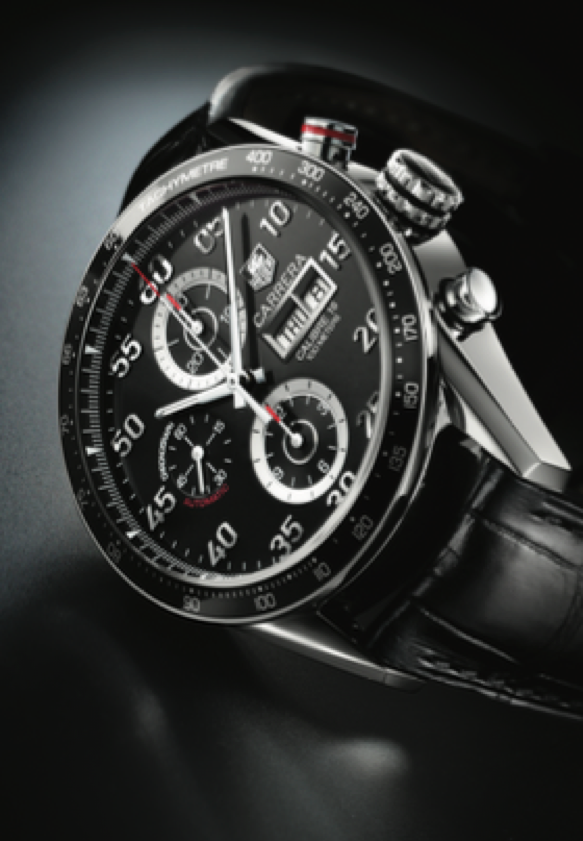
Time is money? Yes, but what if money’s gone? As the economic slump affecting the world today has caused consumers to worry about wealth, spending and even their future, spoiling oneself with luxurious timepieces is no longer a priority. And the watch industry has been especially hard hit by the worldwide decrease in demand.

“This crisis is not specific to a region, a client, a brand or an industry. It is everywhere; it is killing everybody,” says Georges Bechara, brand manager of Zenith in the MENA region.

Some regions are more affected than others. America — including North and Latin — is heading the list; then comes Europe, and then Asia. Still, the slump in overall demand has been significant in the first two months of the year, leaving watchmakers and retailers on the lookout for any and all business that might come their ways.

According to the Federation of the Swiss Watch Industry, the export of Swiss watches and movements has dropped 35 percent in units and 22 percent in value in the first two months of the year compared to the same period in 2008. In the Middle East during the same period, the drop in units and value was 36 and 22 percent, respectively. In the USA alone, the drop was 47 and 39 percent.

Slower Growth

“The only thing we can say is yes, there is a global crisis. Our sales are down worldwide definitely…  but the thing is that we view it more as a correction,” says Eric Vergnes, Middle East’s general manager of Tag Heuer.

The double-digit growth that was sweeping the watch industry in the last couple years was mainly fueled by ever-increasing demand and very short supply. Retailers and customers had to sometimes wait for months on long waiting lists for their purchase to be delivered.

“A double-digit growth is not normal economically speaking,” says Jean Tamer, president of Tamer Frères, the official distributor of some luxurious watch brands in Lebanon. Watchmakers are rather secretive about their growth and sales numbers, but currently it seems that some might worry about negative growth if sales continue to fall and the overall economic situation deteriorates   further. All the market players agree that the market has not yet hit bottom, making near-term planning difficult.

“Definitely one of the main issues will be for us to continue to grow the way that we have been growing regardless of the crisis,” says Raynald Aeschlimann, vice-president of Omega.

Aeschlimann adds that buying a watch is not like acquiring any ordinary product, as it “appeals to your sense of lifestyle and aesthetics.” He says there’s still demand for palatial and captivating timepieces. However, the fact that consumers are more cautious about their spending is affecting sales, and thereafter growth of the overall industry.

Smaller portfolio and investment

The watch market does not operate under the basic economic law of supply and demand which states that when demand is less than supply, a price decrease will result — and vice-versa. When demand falls in the watch market, watchmakers deal with it differently. They decrease their production, and thus their portfolios, in order not to overstock. This practice leaves the market at a certain level of equilibrium.

“They (the watchmakers) are all concerned; they want to make sure not to over-produce. Instead of producing 10 complications and 10,000 watches for example, they will make maybe 50 complications and 5,000 watches,” says Zeina Khawaji, general manager of Cadrans in Lebanon, distributors of watch brands like Dior, Piaget, Vacheron Constantin and others.

Watchmakers are currently picking the most successful models, producing fewer quantities, and being cautious with new launches since the product might not answer today’s consumer demand.

“Now we are studying what worked for the last two to three years in terms of sell-out, and we are focusing on these products. We are adding some novelties which complement each collection apart, but mainly trimming the collection to [include] the most important collections and models,” says Bechara from Zenith.

Still, as prestigious watchmakers have their own identities, positions and ranks in the market, none have found it necessary to alter their models, production tactic or any other related strategies. The watchmakers say they are only playing with quantity, and not quality, staying loyal to their unique characteristics and historical image.

Moreover, watchmakers are now being more cautious with new investments. They have not entirely stopped their expansion plans, but they are certainly studying the feasibility of these developments and only investing in what is necessary. For example, although Zenith will soon open two boutiques in Dubai, it seems that some other investment have been halted, Bechara says.

“When you look at 2008, of course [brands] prepared for 2009 with big offers, but they stopped because it is not the right moment, and we did the same,” he says. “We will launch it in due time.”

In addition to the smaller portfolio, watchmakers have to find ways to cut down their costs. But they say they try to avoid laying employees off, because they’ll need the talent when the market starts to pick up again.

“[We are] checking all our costs and trying to reduce [them] by postponing certain investments… unless it is necessary, we are keeping the money for the right moment,” says Paulo Marai, managing director of Versace Watches. “But of course we are very conscious of reducing the number of employees and not really touching positions which are key to the future of the company.”

Who will suffer the most?

As regions are not equally affected, the same applies for brands. Market players say that during good times, some brands increased prices without adding value to their products. “A lot of our competitors were tempted to become luxury brands and they moved upscale,” says Matthias Berschan, president of Hamilton International. “There is now a big gap between the price they are asking for versus the substance of the products, and I think those brands will have huge difficulties.”

Now, consumers are pickier, harder to please, and very selective, and therefore pay more attention to details and to getting value for what they are paying.

“With this crisis, [the customer] is taking into consideration the equity of the brand, the history, the DNA. So he is not going to newly established brands,” says Barkev Ataminan, business manager at Ets. Hagop Atamian.

Tamer echoes Atamian by saying customers want “more for the same.”

Experts say the brands that do not offer value for money, and new brands, are considered weak and might not survive the downturn.

“I think we will also hear of some small brands which will disappear because there is no room,” says Bechara.

In boom times, the high returns in the watch industry enabled many to become watchmakers, but without solid communication or a structural base.

“The mistake of the watch industry is that anybody could really have it very easy to start up. So many have decided to enter the market [and] I think today these companies that do not have solid bases will suffer the most,” says Marai from Versace.

The Middle East

“The Middle East is at the forefront of the evolution of luxury goods,” says Aeschlimann from Omega. As a new and growing market, the region has been an attractive destination for many brands looking for new investments and aiming to position themselves as leading market players.

Luckily, Middle Eastern economies are still better positioned to cope with the current downturn, and the watch market in these countries will follow suit. The demand has decreased, but certainly not as sharply as in other parts of the world.

“The Arabs have very substantial fortunes, and if they lose some money it will be a small percentage of it; it is still a small drop in their fortune,” says Tamer from Tamer Frères.

Even in the region, some countries are more affected than others. Dubai has been the worst hit, since a large amount of demand depends on tourists and the many expatriate workers, who are now fleeing the Emirate after they lost their jobs.

“One way we will [face] this is by focusing on forging relationships with the people from this region and not just tourists,” says Aeschlimann.

Other GCC countries are more stable, since their market mostly depends on local demand. The Levant is still considered by watchmakers to be a good opportunity for growth.

“We are actually growing in Lebanon and Syria, and suffering more in markets which are more dependent on international tourists,” says Vergnes from TAG Heuer.

TAG Heuer is even planning to open a new boutique at the Beirut Central District this fall.

“Lebanon is for us a key market. A big part of growth is coming from the Levant area,” says Vergnes.

Although the Lebanese economy has been less affected by the global downturn, Khawaji says the decreased demand is felt in the country.

“We are affected because most of our clients are people who are investors outside Lebanon. They haven’t stopped spending, but they have decreased their spending,” she says. “There is a kind of panic.”

Barkev Atamian says the decreased demand for luxury watches is expected to be temporary, and will not severely impact the market.

“Countries like Lebanon and Syria have room to grow. These will come back to the 2008 situation much quicker than other countries.” Barkev Atamian says. “We are investing much in Lebanon and Syria by opening boutiques in downtown and boutiques in several cities in Syria.”

The gray market

Manufacturers are concerned about the increasing activity in the gray market. As demand dries up, some authorized dealers might sell off their supply at a huge discount, just to get rid of the stock and ensure they survive.

“I know somebody yesterday who dropped a big bulk of some other brand at 40 percent less than the cost just to get rid of them,” says Bechara from Zenith.

Retailers may have many reasons to do so.

“With the huge currency fluctuations in some countries… in the short term [they] can make such big deals,” says Berschan from Hamilton.

This might severally hurt the reputation of the watchmaker, which will be very hard to reverse.

 “It brings in a big mess. It can jeopardize the whole work in establishing the brands in terms of brand image and distribution image; it can blow a whole long-term strategy because of a very short-term opportunity,” says Berschan.

If such things happen, manufacturers immediately halt their relationships with retailers, who will have a hard time regaining their credibility — if ever.

“If they do something like this with only one of the Swatch group brands, the Swatch group closes them down,” says Berschan.

New incentives

Watchmakers are not only working on their development strategies and portfolio, but they are also trying to pamper their customers, to give them more incentive to buy their products.

“If customers want to spend, they need to be reassured. And the best way to reassure a potential buyer is to assure them a top-notch experience, and it means the best possible environment for a boutique or products that are properly displayed, and the team has fantastic knowledge of the product,” says Vergnes from Tag Heuer.

Brands are also emphasizing the need to keep on improving their products, and adding novelties, in order to keep-up with their customers’ expectations.

“It is about sticking to the roots by continuing to surprise people,” says Aeshclimann from Omega. “If you have the right product, clients will come.”

Marai from Versace agrees.

“We have decided, despite the downturn, not to stop our process of developing new products,” Marai says. “We can come up with some novelties that are interesting if we just stay in our existing lines.”

Future expectations

The watch industry, as with every industry these days, is facing difficulties. And like other sectors, watch companies have to rethink their business strategies, expansion plans and other long-term goals. In the end, when demand returns to its excessive levels and people start adorning themselves with plush watches and bravado pieces again, those who showed their solid base and ability to adapt will be the ones benefiting.

“A crisis like this will clearly show who had a long-term strategy and speaks to the substance of the product, versus the price and who did not, and I think there will be a huge difference between those who will suffer a lot, and those who will still perform well in this difficult environment,” says Berschan from Hamilton.

Tamer seems downbeat regarding the length of the current downturn.

“Surely we entered a crisis that will take over three if not five years to recover,” he says. “We still have not reached half the way, and it has still not reached the bottom.”

As some try to predict the future, others find it impossible to expect what the turnout of the current situation will be. “It is totally impossible to tell. I just hope that we keep on doing well,” says Vergnes.

May 15, 2009 0 comments
0 FacebookTwitterPinterestEmail
North Africa

Private power

by Executive Staff May 15, 2009
written by Executive Staff

Tunisia is one of the few countries in North Africa that is not a major energy producer, but a series of new projects is set to recharge the electricity sector.

The plans include a variety of strategies, such as natural gas production facilities, the traditional suppliers of electricity, being supplemented by renewable ones. Although the state’s electricity company maintains strong control over distribution, private companies are increasingly able to participate in the development and production phases.

The Abu Dhabi National Energy Company (TAQA) recently joined the ranks of the Tunisian Electricity and Gas Company’s(STEG) as new private competitors. National production of electricity in 2008 was just under 14 billion kilowatts per hour, of which STEG produced 10.25 billion kilowatts per hour and the local private power generator, Carthage Power Company (CPC), was responsible for most of the rest. With demand for electricity rising at around six percent annually, there is potential for other private sector contributors.

“If foreign investors are allowed to invest, they have a guaranteed sale for the electricity,” said Constantin Haddad, general manager of Carthage Power Company. “Demand is rising impressively in Tunisia, thanks to rapid population growth and the increase in industrial activities.”

In early April, TAQA announced it will allocate part of a $2.5 billion investment in Maghreb energy infrastructure to a combined gas power plant in Bizeerte. The plant will generate between 350 and 500 megawatts. Construction is expected to begin this year under the build-own-operate-transfer model, whereby TAQA will design, finance, construct and maintain the property. Commercial operations will begin in 2012 or 2013, with production sold exclusively to STEG.

The TAQA project is only the most recent of a number of new plants. Work is set to begin on a 400 megawatt combined-cycle plant at Ghannouch, near Gabes, at an estimated cost of around $600 million. The development is due to start operations in 2011. France’s Alstom group will build, operate and maintain the installation for 12 years. Ghannouch will be the third power plant constructed by Alstom for STEG in Tunisia, after the combined-cycle power plants of Sousse and Rades, which went online in 1994 and 2001, respectively.

STEG also has a list of projects it is developing independently, such as an extension to the Fernana plant due to be ready by end-2009, and an extension to the Thyna plant at Sfax, scheduled to be in production by 2010.

Even more ambitious programs are already in the works for the country’s 12th development plan, which will last from 2012 to 2016. According to the head of administrative affairs at STEG, Mohamed Ben Ftima, two combined-cycle plants are to be built at Sousse and Bizeerte, in addition to a plant at El Haouaria, which will deliver power to the Tunisian grid.

A joint company set up between STEG and the Italian grid operator, Terna, will carry out this project. Interconnection with Italy will be via a cable between Cap Bon and Sicily.

Many of these projects are natural gas-based plants but the government is also leading the charge on renewable energy production, especially wind power. Efforts so far have allowed Tunisia to cut its energy bill by 10 per cent annually for the past three years and launch an international tender to sell unused carbon credits — and there is potential for more growth.

Renewable energy

Studies indicate that Tunisia could eventually generate 1,000 megawatts from wind. By end-2010, 120 megawatts of wind energy will come online from the Sidi Daoud site, at a cost of around $80 million. Together with the three new wind plants at Metline and Kchabta in the Bizeerte region, this source will eventually supply up to five percent of the nation’s energy requirements.

Renewable energy projects have become an important target of foreign direct investment, particularly from Spanish firms. Gamesa, the wind turbine manufacturer, is supplying STEG with 91 turbines for Bizeerte. The Spanish Development Aid Fund will finance the project, which is set to become Tunisia’s largest wind-power facility. Spain, it should be noted, is one of the global leaders in wind technology.

Tunisian legislators are also encouraging the use of alternative energy at the most basic level, with legal provisions for companies and individuals to produce electricity from renewable sources for their own consumption. Any excess electricity can be sold to STEG and used in the national grid. With this entrepreneurial approach, it seems likely that the government will be able to meet its goal of a 20 percent reduction in consumption, while also sustaining Tunisia’s steady growth.

May 15, 2009 0 comments
0 FacebookTwitterPinterestEmail
North Africa

Building momentum

by Executive Staff May 15, 2009
written by Executive Staff

Morocco’s industrial ambitions received a boost in January 2009 when King Mohammed VI launched the construction of Tanger-Med industrial park. Already the site of a significant port project, the new venture will boost output and increase exports to Europe. With strong trade ties to a diverse group of nations, including free trade agreements (FTAs) with the United States (US) and Europe, Morocco hopes to ride out the current recession by building infrastructure to support renewed trade levels in the future and by relying on consistent revenue streams, such as phosphates and derivatives.

When complete in 2012, Tanger-Med will be among Africa’s largest ports, with a container handling capacity of 8.5 million, twenty-foot equivalent units (TEUs). The port, just 14 kilometers from the Spanish coast, will greatly increase Morocco’s profile as an industrial destination and serve as a logistics center for the whole Mediterranean.

The purchase of 30 square kilometers of public land by the Tangiers Mediterranean Special Agency (TMSA) will bolster the free trade zones that have sprung up near the port facility. A second agreement schedules the development of a 50 square kilometer offshore zone near Tetuan. The zones that were established in 2002 have proved successful. The Tangier Free Zone is home to some 400 businesses and 40,000 jobs, while the Melloussa Free Zone, where the Renault-Nissan alliance plans to develop an automobile industrial complex by 2010, is attracting private investment worth $1.9 billion and generating 36,000 jobs.

France has been a strong supporter of Moroccan industry and is its largest trading partner, accounting for 17.8 percent of trade. In addition to successfully advocating for Morocco to be awarded “advanced status” for European Union trading, France signed several bilateral accords that will provide infrastructure financing.

A new tram system will be constructed in Rabat, financed by a $260 million loan from France. The task of developing and implementing the new light rail network has been assigned to France-based engineering firm Alstom and the French infrastructure group Colas. France has also approved $125 million in grants to study the feasibility of a high-speed rail link between the port of Tangiers and Casablanca.

Foreign investment

While a large portion of Morocco’s foreign direct investment comes from France — much of it invested in infrastructure — North African and Asian countries are playing an increasingly important role in the industrial sector. Industry contributes 25 to 35 percent of gross domestic product (GDP), depending on agricultural performance, and investors have found a number of opportunities, particularly in fertilizer and phosphates production.

Sales of phosphates and derivates reached $6.4 billion in 2008, an increase of more than 50 percent from $2.7 billion in 2007. The segment accounts for 33.4 percent of all exports.

As prices have increased for phosphates and derivatives on the international market, foreign companies have expressed interest in Morocco’s holdings. In May 2008, Moroccan state-owned phosphate company Office Cherifien des Phosphates (OCP) signed a billion dollar deal with Libya Africa Investment Portfolio (LAIP) for the construction of three phosphate derivative plants. One is to be built in Libya, another in the phosphate-rich Jorf Lafsar region of Morocco. The third — a fertilizer plant — will be located in one of the two countries after negotiations are complete.

Just days before the LAIP deal, OCP signed a half billion dollar agreement with Hanoi-based PetroVietnam Fertiliser and Chemical Joint Stock Company to build a diammonium phosphate (DAP) fertilizer plant, expected to open in 2011, with an output of between 660,000 and one million tons. Despite volatile prices, global demand is high and chemicals will continue to be a major revenue earner.

Morocco’s expanding list of investors and trade partners should help foster broader market access for its industrial exports. In addition to the agreement with the EU, Morocco has forged other partnerships, such as the 2004 Agadir Agreement and the 2006 US FTA. The agreements have only recently gone into effect and their benefits will remain elusive until the financial situation stabilizes. While Morocco will feel the effects of the global financial crisis, with GDP expected to grow 5.7 percent in 2009, down from 6.5 percent the previous year, the rate is impressive given that Morocco’s major export markets in Western Europe have been hit hard by the downturn.

May 15, 2009 0 comments
0 FacebookTwitterPinterestEmail
  • 1
  • …
  • 468
  • 469
  • 470
  • 471
  • 472
  • …
  • 707

Latest Cover

About us

Since its first edition emerged on the newsstands in 1999, Executive Magazine has been dedicated to providing its readers with the most up-to-date local and regional business news. Executive is a monthly business magazine that offers readers in-depth analyses on the Lebanese world of commerce, covering all the major sectors – from banking, finance, and insurance to technology, tourism, hospitality, media, and retail.

  • Donate
  • Our Purpose
  • Contact Us

Sign up for our newsletter

    • Facebook
    • Twitter
    • Instagram
    • Linkedin
    • Youtube
    Executive Magazine
    • ISSUES
      • Current Issue
      • Past issues
    • BUSINESS
    • ECONOMICS & POLICY
    • OPINION
    • SPECIAL REPORTS
    • EXECUTIVE TALKS
    • MOVEMENTS
      • Change the image
      • Cannes lions
      • Transparency & accountability
      • ECONOMIC ROADMAP
      • Say No to Corruption
      • The Lebanon media development initiative
      • LPSN Policy Asks
      • Advocating the preservation of deposits
    • JOIN US
      • Join our movement
      • Attend our events
      • Receive updates
      • Connect with us
    • DONATE