• Donate
  • Our Purpose
  • Contact Us
Executive Magazine
  • ISSUES
    • Current Issue
    • Past issues
  • BUSINESS
  • ECONOMICS & POLICY
  • OPINION
  • SPECIAL REPORTS
  • EXECUTIVE TALKS
  • MOVEMENTS
    • Change the image
    • Cannes lions
    • Transparency & accountability
    • ECONOMIC ROADMAP
    • Say No to Corruption
    • The Lebanon media development initiative
    • LPSN Policy Asks
    • Advocating the preservation of deposits
  • JOIN US
    • Join our movement
    • Attend our events
    • Receive updates
    • Connect with us
  • DONATE
Society

Watches – BaselWorld 2009

by Executive Staff May 3, 2009
written by Executive Staff

BaselWorld — the world’s most important watch and jewelry show — opened its doors again this year to exhibit the most luxurious and prestigious brands to the pleasure of watch and jewelry enthusiasts.

While 2008’s show broke all record figures with 106,000 visitors, the current financial crisis has decreased attendance numbers. This year’s show had “at least 20 to 30 percent less people,” says Barkev Atamian, business manager at Ets. Hagop Atamian, one of the leading watch distributors in Lebanon.

Fewer Visitors
Actually, only 12 percent less people visited this year’s BaselWorld. In precise numbers, there were 93,000 visitors and 1,952 exhibitors present. Exactly 2,973 accredited journalists were also present at the show to find out what the other 95,000 people were talking about, according to the Swiss Exhibitors Committee.
Certainly, exhibitors would have preferred to see the number of visitors exceed the 100,000 mark. But in current conditions, an even bigger drop was expected.
“I don’t know about other brands, but actually we had quite a big crowd everyday and sales were really very good,” says Eric Vergnes, Middles East’s general manager at TAG Heuer.
“Particularly for the market of the Middle East where we sold products a bit less compared to last year, but better than expected.”
The same statement came from many brand managers who expected much worse, and were pleasantly surprised. Georges Bechara, brand manager of Zenith in the MENA region says, “I am happy personally with the orders that we took in Basel despite the crisis.”
Bechara further explains that the mood in general was positive, and echoes Vergnes by adding that good orders came from the Middle East market, which is still better positioned compared to other regions.
But the effects of the economic downturn are still rippling across the Middle East, and it showed. Buyers and collectors have less money to buy, or to travel, or they are less keen on spending their money on ritzy accessories. Jean Tamer, president of Tamer Frères, the official distributor of many luxurious watch brands like Audemars Piguet and Breitling in Lebanon, attributes the decrease to the SIHH (Salon International de la Haute Horlogerie) which took place in January in Geneva.
“The SIHH used to be in Geneva a couple of days after Basel. This year SIHH [left] Basel, so many customers avoided two trips to Switzerland,” says Tamer.

Pre-Basel
Many watchmakers usually release pre-Basel teasers one or two months before BaselWorld to draw their big clients’ attention. As BaselWorld is for everyone, pre-Basel is private for the manufacturers themselves, which enables them to have the full attention of their invitees and pace the viewing of the merchandise. This year, Rolex, Zenith, Versace and other brands have canceled their traditional pre-Basel shows for different reasons.
“This time we didn’t [do a pre-Basel]. I think we made the right choice because we won’t have the return on investment that we want. So we prefer to concentrate on Basel,” says Bechara from Zenith. He further explains that last year’s pre-Basel in Dubai was the ‘dream pre-Basel’ which cannot be repeated this year in such an economic climate.
Versace has not entirely canceled pre-Basel, but as Paulo Marai, managing director of Versace Watches explains, “Normally we had these people fly from all over the world. Now we decided this year to hold the meetings within the regions.” In other words, Versace wants to decrease the money its clients and partners spend and go to them, while also personalizing its products to meet the needs of each region.
“We took advantage of the difficult moments to have a more tailor-made strategy,” Marai says.

BaselWorld 2010
As BaselWorld 2009 closed its doors, it won’t be long before watchmakers find themselves preparing for BaselWorld 2010, held from March 18 to 25 in Basel, Switzerland. Hopefully, better market conditions will allow manufacturers to present their novelties and not have to worry about fewer sales or visitors. As Swiss Watch Federation President Jean-Daniele Pasche wrote in the BaselWorld Daily News on March 30, “The Swiss watch industry remains confident in its ability to live through these turbulent times thanks to its great resources. Its ability to innovate in technology and styling, its training, brands and global presence.”

May 3, 2009 0 comments
0 FacebookTwitterPinterestEmail
Executive Insights

Crisis strategies for financial officers

by Hadi Raad May 3, 2009
written by Hadi Raad

The authors of Executive Insights have been invited by this magazine to offer their professional opinions and analysis to you, the reader. Executive magazine does not endorse the analysis of Insight authors, nor should the Insights be interpreted as reflecting the views or opinions of Executive or its editorial staff.

For the last seven years, successful chief financial officers (CFO) have positioned themselves at the forefront of corporate strategy, driving financial performance across all business entities. During this economic crisis the CFO must — now more than ever — be more than an accountant or a referee: he must actively manage the balance sheet and seek out opportunities to create value for the company.
In the Middle East and North Africa region, as elsewhere, the crisis is generating conditions that present unique challenges for the CFO. Lower business-to-business spending, and in some industries lower consumer spending, means declines in revenue. Restricted lending from banks results in potential cash-flow challenges. A drop in enterprises’ debt capacity leads to higher weighted average costs of capital. All of these factors drive lower capitalization multiples and lower terminal values, significantly reducing shareholder value.
During this turbulent time, cash is king and the CFO is the power behind the throne. The CFO’s challenges, however, will vary according to the financial strength of his company. In organizations with liquidity constraints, CFOs will have to cope with difficulties in raising capital: debt will become more costly, if it is available at all.
Floating more shares could prove ineffective in the current turmoil and would further send negative signals to stock markets. For companies that have more cash on the balance sheet, CFOs will still have to contend with threats to revenue. The crisis, however, is also likely to elevate cost consciousness and financial awareness among management. CFOs will need to leverage this exceptional trend in MENA management behavior to seek out opportunities to optimize costs, increase synergies across operations and rationalize capital expenditure spending.
Regardless of the organization’s financial status, almost every CFO has heard one or more of the following questions from the chief executive officer:

  • How will the current economic crisis impact our financials in local, regional and international operations?
  • How can we optimize our operations to create value despite the downturn?
  • What level of investment and spending is appropriate to maintain profitability and sustainable growth?
  • How can we ensure adequate cash to fund operations and growth aspirations, despite the credit crunch?
  • How can we protect our share price from both decline and volatility despite the stock markets’ turmoil?

Few of the CFOs in the MENA region who are struggling with this economic crisis have ever experienced anything like it. Not many of them were in their jobs during the collapse of the dotcom bubble at the start of this decade. Despite some similarities to the last economic downturn, this crisis is significantly different in terms of its global nature, scope and scale. More CFOs than CEOs were laid off during the 2001 recession, and CFOs are once again under the spotlight.

The way through the crisis
In order for CFOs to weather the economic crisis, leverage any potential opportunities for their companies, and solidify their own positions, they should structure their agendas according to four key pillars:

CFOs should swiftly assume a strategic role in their organizations if they haven’t done so already. They need to quickly build capabilities, free themselves from daily operational tasks, and focus their efforts on the strategic dimension of their agendas with an outward perspective on contemporary business issues.

  • Extract value from current operations — Look across the organization for ways to improve operational margins and generate cash flow. This may include optimizing operating expenditure, rationalizing capital expendiuture against value-based business cases, reevaluating fixed-asset utilization against opportunity cost to maximize return on investments (ROI), integrating or consolidating across global operations to capture synergies, and ensuring effective management of company resources to maximize value generation. In short, MENA CFOs should entrench a culture of value-based management across the organization. Companies should institute key performance indicators (KPIs) that measure economic profit rather than just revenue in order to align management behavior and actions with the creation of shareholder value.
  • Regularly assess and assure enterprise financial health — Conduct dynamic financial planning and risk management activities to detect finance time-bombs before they explode. Timely management reporting and scenario planning are essential in this regard. The CFO perspective should be based on awareness of the relationship between actions and the enterprise’s financial results. Moreover, MENA CFOs could consider hedging international investments across various financial risks, such as currency fluctuations. Finally, CFOs should revise dividend policy and capital structure as necessary to maintain debt-to-equity ratio at controllable levels. An early risks alarm on the enterprise’s financial health to the CEO and board of directors is essential.
  • Manage the corporate portfolio — Reassess the business’ portfolio, based on what assets create value and how they fit together strategically; consider selling assets with opportunity costs that are higher than the asset’s current market value. CFOs of financially strong corporations should continue to actively seek regional or international investments that are a good fit with the organization’s capabilities and strategies and that might currently be undervalued. The right moment to invest doesn’t depend on the market cycle, but rather on whether the investment will drive the operational strategy and whether there is access to necessary financing.
  • Secure funding sources — Manage liquidity and ensure optimal funding sources for CapEx and M&A activities. The region has previously witnessed significant M&A activity that has consumed excess cash resources; nevertheless, cash might still be on the balance sheet in the form of working capital. While some enterprises fund their operations with a negative working capital (e.g. Amazon.com), many MENA enterprises suffer a highly positive value. Smarter management of receivables, payables and inventory could release the cash needed to recover liquidity. This could involve revising customer credit and vendor financing policies. Furthermore, CFOs should leverage any potentially slower deal-making period to negotiate and secure financing alternatives and revise the pecking order. This will speed the company’s ability to act when a target emerges. Finally, CFOs should also manage investor relations in capital markets to enable equity funding, and contain the turmoil around share prices. In fact, CFOs are best positioned to rebuild confidence among the community of investors in the MENA region via proper communication of their enterprise growth story based on business fundamentals.

Hadi Raad is senior associate at Booz & Company

May 3, 2009 0 comments
0 FacebookTwitterPinterestEmail
Executive Insights

Information security a key component of corporate strategy

by Waddah Salah May 3, 2009
written by Waddah Salah

The authors of Executive Insights have been invited by this magazine to offer their professional opinions and analysis to you, the reader. Executive magazine does not endorse the analysis of Insight authors, nor should the Insights be interpreted as reflecting the views or opinions of Executive or its editorial staff.

The current global economic downturn has not deterred some organizations from increasing budget allocations for information security. The issue is still a top priority with business leaders, although there are some key areas which still demand greater attention in terms of protecting the overall security and reputation of an organization.
Ernst & Young’s Global Information Security Survey 2008 canvassed nearly 1,400 senior executives from more than 50 countries around the world. The survey shed some light on the corporate strategy of organizations and specific areas that demand immediate attention. From the Middle East region, more than 100 executives participated in the survey.

The role of information technology in information security
Information security is closely linked to the information technology functions of an organization. Historically, IT is the first to feel the pressure of an economic downturn. Despite tightening economies, the survey indicates that organizations are increasing investments in information security and more organizations are adopting international security standards.
Even with an economic downturn facing some of the world’s largest economies, 50 percent of respondents said their budgets are set to increase. Only five percent plan to decrease their budgets. These are positive signs indicating that organizations recognize cutting back security would have an adverse effect on stakeholder perceptions, especially because security threats and attacks normally increase during an economic downturn.
Organizations are starting to think of technology along with the traditional themes of finance and human capital to de-risk their operations, which is encouraging.

Security breaches damage brand
In September 2008, the media wrote that some of the major banks in the UAE had warned hundreds of thousands of customers that their accounts may have been compromised and urged them to change their personal identification numbers immediately. The warning came after a large-scale card fraud by international gangs was unearthed, in which huge sums were wiped from customers’ accounts.
Another story referred to a card network warning banks that the security of some debit and credit cards was compromised. This led to the cancellation of many cards and an inconvenience to customers. Banks also blocked international transactions for a few days causing payment delays.
These are classic examples of a breach of information security where customer data was stolen with the purpose of making fraudulent transactions. Well-known brands all over the world have fallen victim to such misuse of identity by fraudsters and have had to spend millions of dollars to resolve resulting issues. These incidents draw attention to the crucial role played by information security in protecting an organization’s business, its customer confidence and its brand.
The results of Ernst & Young’s survey show that a growing number of organizations now recognize the vital link between information security and strong brand reputation. Most respondents believe that a security incident would have a greater impact on reputation and brand than on revenues. Some 85 percent cited damage to brand reputation as significant, compared with 72 percent for loss of revenues. A single security incident can damage or even destroy consumer conidence in a brand, which takes years to build. The media attention surrounding security breaches emphasizes how much damage can be done to a firm’s reputation.

Third party threats on rise
Investments in technology are of little value unless employees are trained on what to do and how to do it. Organizational awareness was cited by 50 percent of respondents as the most significant challenge to information security. The survey shows awareness is more significant than the availability of resources (48 percent), adequate budget (33 percent) and addressing new threats and vulnerabilities (33 percent). Mere increase of the expenditure on technical solutions will not help organizations achieve the desired results, as people are often the weakest link.
However, the use of third parties and outsourcers is on the rise, increasing the risk of information security breaches. Organizations are taking significant steps to safeguard information, but this practice still runs many risks. Only 45 percent of respondents said specific information security requirements are included in third party contracts — this requires immediate redress.
Although most respondents cited various measures organizations adopt to ensure their external partners, vendors and contractors protect their sensitive information. Almost one third said that they do not review or assess how contractors are protecting their information, which is quite alarming.

Directions for information security function
A clear understanding of information security is essential for its efficient implementation. As technology evolves, so does risk. Effective information security will help businesses improve the competitive advantage of their operations, make these operations more cost-efficient and reduce risks.
Ernst & Young’s survey shows that many organizations are still struggling to achieve a strategic view of information security. Only 18 percent indicated that it is integrated into the business strategy, and 29 percent have no information security strategy at all.
Reliance on technology continues to grow around the world and our region is no exception. Even as organizations adopt innovative methods to process and exchange information, threats to information security from various quarters, both regional as well as international, are on the rise.
Although regional awareness is increasingly transcending mere compliance and regulatory norms, there are still crucial areas that businesses need to pay greater attention to and invest in, such as insider threats, privacy and third party relationships. Organizations need to constantly evolve their security strategy according to changing times. As the saying goes, prevention is better than cure.

Waddah Salah is partner in Ernst & Young Middle East and the head of technology enabling solutions and enterprise solutions in the Business Consulting Group


May 3, 2009 0 comments
0 FacebookTwitterPinterestEmail
Executive Insights

The case for healthcare

by Imad Ghandour May 3, 2009
written by Imad Ghandour

Private equity funds in the Middle East and North Africa are focusing on defensive sectors like healthcare, education and fast moving consumer goods. As the second in a series of three articles discussing the rationale and strategies behind such defensive strategies, this article focuses on the case for investing in the regional healthcare sector.

On a growth trajectory
There is no question that healthcare is booming despite the financial crisis — not only in the Middle East and other emerging markets, but also in many parts of the developed world. Healthcare is now a consumer priority, and it is setting the political agenda. Despite the individual and governmental focus, the current system for delivering healthcare is believed, by most experts, to be archaic. In the United States (US), the cost of maintaining the current system is consuming around 15 percent of gross domestic product (GDP), and many believe it is heading towards 20 percent of GDP. In the Gulf Cooperation Council (GCC), quality healthcare is simply not delivered by the current system to most of the population despite the fact that GCC governments have elevated healthcare to a policy priority.
The rate of growth in the sector exceeds that of GDP, and such a rate is proving to be sustainable despite the economic slowdown. In Saudi Arabia, the healthcare sector is expected to grow at 10 percent annually over the period 2005 to 2010. There is a strong emphasis among GCC governments to improve healthcare services and related infrastructure, which is translating into large government spending. With large budget commitments, young and growing populations, and the rise of a number of lifestyle illnesses like diabetes, the region’s healthcare and the underlying sub-sectors are bound to grow in the years to come.

Where to invest
Yet the healthcare sector is tricky to invest in. Market forces do not necessarily translate into revenue or profits — look at how hospital profits have been squeezed in many markets by insurance companies. Regulatory intervention for example, in setting the price of pharmaceuticals, is the norm rather than the exception, and significantly skews the sector’s economics. The misalignment of interest between the patient, the payer (usually government or insurance), and the service provider creates mistrust and sub-par service delivery to the ultimate consumer of the service. In the GCC, the public sector controls 75 percent of the sector, and public operators are resisting change and protecting their turf. The physician-centric model for delivering healthcare is under pressure due to escalating costs and physician shortages, yet physicians, through their professional associations, are resisting initiatives to improve the system.
Many healthcare investment opportunities are also capital intensive. Hospital’s costs reach tens of millions of dollars, and pharmaceutical companies invest billions in research and development. For investors, such capital intensive business models do not yield good returns because a significant part of the operating cash flow has to be reinvested in the business to sustain its growth.
The lucrative investment opportunities in the Middle East are in specialized healthcare delivery and supporting services. Services like dialysis centers, ophthalmology clinics and labs have coherent business models. They have controlled and well understood cost structure, need limited real estate investment, can be quickly replicated across geographies and sustain better margin pressures. Consequently, the bottom line can grow at much healthier and faster rates than a general hospital chain.
The macro fundamentals for healthcare may be very attractive, but the healthcare system churns out many losers. This is a sector where you may be best rewarded by staying on the sidelines or behind the scenes.

Imad Ghandour is executive director at Gulf Capital

May 3, 2009 0 comments
0 FacebookTwitterPinterestEmail
Executive Insights

Breathing magic into a brand

by Rany Kassab & Ramsay G. Najjar May 3, 2009
written by Rany Kassab & Ramsay G. Najjar

The authors of Executive Insights have been invited by this magazine to offer their professional opinions and analysis to you, the reader. Executive magazine does not endorse the analysis of Insight authors, nor should the Insights be interpreted as reflecting the views or opinions of Executive or its editorial staff.

“Any damn fool can put on a deal, but it takes genius, faith and perseverance to create a brand.”
While he might have said it somewhat bluntly, the words of former ad executive David Ogilvy certainly ring true.
In its purest form and narrowest dictionary-like definition, the goal of branding is to make a product or a business look distinct from its competition, and provide it with a competitive edge that can translate into a whole lot of dollars and cents. This is why for decades, and some might argue centuries, people have been on a quest to find a single magic formula, the branding ‘Holy Grail’ that encapsulates the ingredients of an ultimate and successful branding equation.
While branding has historically been linked to consumer goods and corporations — just think Pepsi, Sony, IBM, Crest, or any of the brands you see plastered on thousands of chaotically placed billboards across Lebanon — in today’s media-crazed society, branding has extended to the realm of people. David Beckham, Madonna, Martha Stewart, and our very own Haifa Wehbe are a few examples of individuals turned brands.
If you ask a man on the street what first comes to mind when hearing the name Che Guevara, chances are his answer will be “revolutionary.” If you ask a lady what word best describes a Louis Vuitton bag, you will most probably hear her say “luxury.” This, in essence, is what branding is all about: creating a unique identity that people associate with a company, product or person.
The challenge is to create a brand that stands out from the crowd and conveys positive attributes that people can recognize and instinctively identify as the brand’s own. This is a trademark of successful brands and a building block for establishing brand value.
Companies that invest in building their brand stand to reap the benefits, which in the case of Coca-Cola for example, exceed $66 billion in brand value (according to Interbrand’s 2008 ranking) or in the cases of Kleenex and Vaseline, enjoy the luxury of becoming a generic noun for certain categories of products.
That said, establishing strong brand value requires deploying a holistic brand strategy characterized by a number of key success factors. While inventing a new type of product can go a long way toward establishing a successful brand (e.g. Hoover or Nescafé), most brands are less fortunate and need to heavily invest resources and effort to reach the desired brand value.
Many companies realize that the key to establishing a successful brand is creating awareness and wide-reaching recognition of their brand name. This, however, leaves some way to go on the journey to creating brand equity and value.
The company needs to define a clear vision of what it hopes to represent for customers. It must aspire to a position that is unique and distinctive, a position that reflects the company’s DNA and is specific to its culture. It must then work to ensure the target customers share its view of the brand. For example, if a person wants to feel prestigious, he will most likely buy a Mercedes; if he wants to feel rebellious he will hop on a Harley-Davidson, and if he feels like partying every night until six in the morning, he will probably spend his next vacation in Ibiza.
All such successful brands also have in common one universal element: not only have they cultivated an image or experience that is associated with their brand, but they were able to deliver a product or service that holds true to their brand promise. It is not enough for a company to say it is environmentally-conscious or to spend large sums of money on environment-related corporate social responsibility activities. In order to be perceived as eco-friendly, a brand has to live and breathe its ethos.
A prerequisite for a brand’s success is that it first be lived and experienced internally. A company’s employees should become ambassadors of the brand, mirroring its characteristics and positioning it accordingly.
This is why companies with successful brands emphasize internal communication and institute brand induction programs. All employees are introduced to the brand and its values and asked to live the brand experience. Walt Disney is a prime example. The company’s programs aim to ensure all Disney employees buy into and embody Walt Disney’s brand attributes in their everyday lives.
Another pivotal success factor in building brand value is to reflect its positioning and experience through its communication. All the messages a company conveys to its stakeholders should focus on cementing its brand attributes and values. A company can cement its message in mainstream advertising, public relations activities, product placement, brand endorsement, and even through the visual manifestation of the brand, including name, logo, colors and graphics — all of which incorporate its corporate identity.
Creating a brand experience therefore requires the meticulous effort of ensuring consistency in corporate identity, in all of its applications and across all areas. Air France, for example, decided in the 1990s to position itself as a luxurious and refined airline. The company then translated this idea into a brand that embodied the ‘French way of life’. The airline succeeded by creating a unique language and set of symbols, including a lofty design for its lounges, a distinctive style for its attendants’ uniforms, and even landing and takeoff music that expressed that same sense of refinement and luxury. Consistency was also demonstrated throughout its advertising campaigns, which invariably highlighted its positioning though elegant themes, graphics and colors.
Only when a company adopts a branding strategy that combines all of these elements, can it effectively build brand value.
In this part of the world, companies are realizing the need to invest in their brands. A number of them have secured an entry level ticket to the privileged club of brand success stories, knowing that they still have some way to go before asserting their full membership status.
But for other companies, the results have been far from perfect. This is often due to a strategic failure by companies that focus extensively on creating name awareness and recognition. For those who went the extra step and established their aspired image and positioning of the brand, many missed out on living or delivering on their brand promise. While such a short-sighted approach transcends sectors and industries, it is especially characteristic of the real estate and property development market. Huge investments ensured every person across the region could recognize the names of the big industry players. Yet few people have a clear, positive image of what each company represents, nor can they distinguish between one and the other.
In other cases, the failure to successfully create brand equity lies in overlooking the importance of cultural adaptation. A company’s brand identity, from its positioning and value system to its name and logo, should be relevant to its own markets and in line with the expectations of its customers. You can learn from the successes and mistakes of global companies’ branding strategies, but these lessons are only valuable if adapted to the company’s own culture and environment.
Another strategy that inherently stands in the way of any success is the reliance on so-called ‘copycat’ strategies in trying to build brands. This seems to even extend to the branding of artists. Simply flip through TV channels on any given day, and you are bound to come across a singer that has undergone all possible cosmetic surgeries to look like another more famous one. Imitation is the name of the game there, and in branding, that’s a losing game.
There is no magic, uniform formula for branding. Regional companies should first and foremost change their skeptical view of investing in their brands and start addressing branding as a top priority. It is only through harnessing communication that their brands can truly reflect soul and substance, and move away from the prevalent skin-deep approach to branding.
Brands should have a clear message and stand for distinctive attributes that should be communicated to stakeholders, reflected across all corporate identity applications and embodied by everyone within the organization, from the chairman to the newest intern.
“In a fast-paced world, today’s popular brand could be tomorrow’s trivia question,” former PepsiCo Chairman Wayne Calloway once said. If a company is keen to avoid such a doom scenario, it is better start thinking of properly building and sustaining its brand.

Rany Kassab & Ramsay G. Najjar S2C

May 3, 2009 0 comments
0 FacebookTwitterPinterestEmail
Executive Insights

Capitalizing in these times of crisis

by Mazen Skaf May 3, 2009
written by Mazen Skaf

The authors of Executive Insights have been invited by this magazine to offer their professional opinions and analysis to you, the reader. Executive magazine does not endorse the analysis of Insight authors, nor should the Insights be interpreted as reflecting the views or opinions of Executive or its editorial staff.

Former Federal Reserve Chairman Alan Greenspan, testifying before the House Committee on Oversight and Government Reform, called the current economic crisis a “once-in-a-century credit tsunami.” For companies across industries, access to credit has certainly been an acute near-term concern. But as governments and central banks act to ease credit markets, corporate leaders must now make larger strategic decisions, under conditions of extreme uncertainty, that will determine how well their companies fare against the strongest economic headwinds in decades.
Astute business leaders realize the current environment will open significant opportunities for their companies to benefit from the dislocations across industries. To identify and capitalize on these opportunities in the face of significant uncertainty about the length and depth of the current crisis, decision-makers should take an integrated approach to strategy and risk management. Specifically they should:
• Reassess the risk-return profile of their corporate portfolio as well as new investments under consideration.
• Develop strategies and contingency plans shifting payoff profiles toward a greater upside and limited downside.
• Build and maintain strategic maneuverability.

Reassessing the risk-return profile
The current financial crisis has triggered a re-pricing of assets and has brought about significant volatility in commodity prices and financial securities. The result is that many asset prices across several classes of assets may decline in a very long process and may overshoot on the way down just as they overshot on the way up.
In addition, several industries are witnessing fundamental shifts in underlying value drivers, ranging from freight rates to energy prices to availability of credit. Companies in these industries should therefore rigorously reassess the risk-return profile of their current corporate portfolio of business units and investments. This should be based on both a sound analysis of the underlying value drivers and the ranges of uncertainty associated with these value drivers, as well as the exposure of the corporation to those uncertainties resulting from the corporate strategy and investments.
In this context, it is critical to distinguish between uncertainty and risk exposure. One may be uncertain about the direction of prices of a certain commodity like natural gas, for example. However, risk exposure is determined as a result of the strategy, asset investments, and contractual obligations of an entity or corporation and how they are driven by an uncertain parameter. As part of evaluating any new investment opportunity, decision-makers should demand rigor at three levels:
(1) Thorough assessment and understanding of the relevant uncertainties; (2) analysis of the risk exposure to specific uncertainties resulting from the contemplated investment, taking into account the corporate portfolio of assets and contractual obligations, and (3) evaluation of the risk-return profile of the contemplated new investment and comparison with the risk-return profiles of other available alternatives.
In the making, timing, and resourcing of strategic decisions, leaders face a deeper and broader set of uncertainties than they have likely ever faced. Consider just a few of those uncertainties:
• The depth and length of the crisis — Predictions of the magnitude of the current economic crisis range from several quarters of recession to doom-and-gloom scenarios of prolonged worldwide depression. While forecasters may differ on the length and depth of the current crisis, the real challenge lies in developing a robust strategy with contingency plans.
• The effect of government intervention — Just as the Great Depression ushered in the New Deal, the current crisis is likely to see a fresh wave of government actions, including regulation, stimulus packages, global trade restrictions, or at least skepticism about free trade. Certainly, few people would have predicted even a few months ago that the US would not only be bailing out financial institutions but also taking an equity stake in them. Increased regulation may slow recovery, and various forms of economic stimulus may favor some industries over others, but the consequences of these interventions — intended and unintended — remain unknown.
• The impact of deleveraging — With some $600 trillion in derivatives contracts outstanding worldwide, perhaps $10 trillion in mortgages in the US, and $60 trillion in credit default swaps in the US, the unprecedented level of leverage in the economy will take a long time to unwind. This deleveraging is leading to the re-pricing of different asset classes and recalculations of risk. Further, as asset prices across several asset classes decline during a very long process, it’s possible that they will overshoot on the way down just as they overshot on the way up.

Developing strategies and contingency plans
Taking an integrated approach to strategy development and risk management enables decision-makers to shift the payoff profile of an investment or the overall distribution of shareholder value towards greater upside, while limiting the downside (see graph on this page).
In a military context, it is often said that “the mission comes before safety;” otherwise, no one would leave the barracks or base. The parallel in a business context is that strategy comes before risk management. Usually, that is the case and strategy sets the structure and provides the context for the best approach to risk management. However, in times of great uncertainty and significant volatility, organizations should take an integrated approach to strategy and risk management to limit the downside exposure and increase the potential upside in the case of favorable market conditions.
The types of bets that organizations should consider or pursue are ones with limited downside yet with significant or unlimited upside. This is similar to buying a call option on a stock, or negotiating an option with a contractor for expanding a factory that would be exercised in the case of a market turnaround.
Unfortunately, many of the financial services companies that ran into trouble were doing just the opposite: aggressively selling instruments that exposed them to unlimited downside risk for a small fee upfront. In addition to the fundamental flaws in the models used by such financial services firms, and their mispricing of risk, the root cause may lie in incentive structures that rewarded short-term performance without weighing the impact on long-term shareholder value.

Seeing opportunity where others see risk
Just as stock volatility presents savvy investors with rich opportunities for gain, the current economic uncertainty offers similar opportunities for enterprises that know how to make strategic decisions. Distressed assets are likely to be available at a bargain as some companies are forced to raise cash to reduce debt. Opportunities for mergers and acquisitions will also be plentiful. In specific industries, uncertainties will create “white space” where companies that comprehensively understand value and risk can prosper. In petrochemicals, with slowdowns in the US and China and decline in feedstock prices globally, attractive opportunities to acquire capacity or companies may appear in late 2009 and 2010.
Opportunities are likely to be even greater for companies in industries that do not require a great deal of leverage or debt finance. There may be opportunities in some industries for smart companies to leapfrog the competition and take the industry lead. Again, the key will lie in knowing how to comprehensively understand risk and value in reaching strategic decisions.

Building and maintaining strategic maneuverability
During periods of steady growth and expansion, it is easier to foresee how conditions will evolve, although it is no less important to comprehensively understand uncertainty, value and risk. In times of great uncertainty, conditions can evolve much more unpredictably, with wide swings, sudden impact and lingering effects. Such times offer great opportunity, but safely seizing those opportunities requires strategic flexibility and maneuverability, not bet-the-company gambles. The current downcycle may take several quarters or several years to play out, but strategic maneuverability can enable a company to outlive the downcycle.
One key source of strategic maneuverability lies in building a cash reserve (see table) and securing access to credit for when it is needed in order to judiciously capitalize on attractive acquisition opportunities. We are seeing deals with attractive fundamentals selling at a fraction of book value or with very attractive earning yields. However, acquirers need to keep three things in mind:
• More attractive deals may materialize. Keep some buying power in reserve to take advantage of those deals.
• The fundamentals themselves may change given the strength of the underlying trends. Several industries are going through seismic shifts and earnings projections may prove too optimistic to attain. Valuation benchmarks and multiples may be further revised.
• Even for very attractive deals that pass due diligence, inching into the full investment position in a specific sector may be advantageous. Use a rigorous analysis of the sequential decisions and the uncertainties related to asset valuation to understand the overall risk-return profiles of various investment alternatives.
Over the course of the current downcycle, entire industries, markets and geographies may be transformed. Banking has already been profoundly changed. In the face of such tectonic shifts, strategy development should encompass a full understanding of the risk-return profile of any strategic alternative. It should also include how best to split the investment into a sequence of smaller investments. Those smaller investments enable learning and contingent responses as conditions evolve — the essence of strategic maneuverability.

The way forward
Given the scope, magnitude and unpredictability of today’s uncertainties, leaders can be forgiven if they find the challenge of making sound strategic decisions extremely daunting. The spread between best-case and worst-case scenarios can be vast and so can the consequences of strategic miscalculation. Further, traditional approaches to strategic decision-making confuse risk with uncertainty, resulting in sub-optimal decisions. But by understanding uncertainty and risk, identifying opportunities and maintaining strategic maneuverability, leaders can do far more than simply steer clear of danger. They make strategic decisions that harness today’s economic headwinds to take their companies forward.

Dr. Mazen Skaf  is partner and managing director of the Europe and Middle East Practice of Strategic Decisions Group

May 3, 2009 0 comments
0 FacebookTwitterPinterestEmail
Finance

IPO Watch – A pent-up market

by Executive Staff May 3, 2009
written by Executive Staff

Capital market desks from Riyadh to Damascus continue to experience a great deal of backlogs for IPOs that are ready and waiting for the ice to break. Experts say that risk capital will eventually open up to new issuers and the IPO market is expected to pick up further momentum in the third and fourth quarter of 2009.

The experts might be right. In late April, and despite the severe downturn in local markets, Gulf investors announced the establishment of a $10 billion Islamic ‘godfather-of-all-banks’ bank to tap interest in sharia-compliant institutions. The new bank will be based in Bahrain and will be called Istikhlaf Bank. Adnan Ahmed Yousif, chairman of the Union of Arab Banks, said plans include a private placement of $6.5 billion and a $3.5 billion IPO in the fourth quarter of 2009. He added that the bank will be listed on the Bahrain Stock Exchange and Nasdaq Dubai. Some of the seed investors include the Islamic Development Bank, Saudi Investment Bank and the Kuwait Real Estate Bank. “The bank has raised $3.5 billion including $1 billion from the management. We are hopeful it will be ready by the fourth quarter,” said Al Baraka chairman Shaikh Saleh Abdulla Kamel, who is promoting the bank.

April showers bring May flowers
So April did not only bring with it spring, it also brought with it the earning season, two other IPO announcements and solid numbers for the four insurance firms who floated their shares during the third week of the month. The concurrent IPOs of the four insurance companies on the Saudi Stock Exchange were all well received in the market, according to announcements.
Al Rajhi Company for Cooperative Insurance or ARCCI saw its $16 million offering subscribed some 151 percent in only the first two days of its IPO. According to a statement by the issue’s lead manager, Al Rajhi Financial Services Co, over 146,000 subscribers signed up on April 18 and 19 for shares worth $24 million.
The combined value of the shares offered for subscription by the four insurers approaches $70 million. Besides ARCCI, the issuers are Weqaya Takaful Insurance and Reinsurance Company ($21.33 million), AXA Cooperative Insurance Company ($21.33 million), and ACE Arabia Cooperative Insurance ($10.6 million).
AXA and ACE also encountered handsome demand; according to statements, offerings were covered about three and six times, respectively, several days ahead of the close of the subscription on April 27.
Vodafone Qatar, which closed subscription to its $952 million IPO on April 26, did not immediately disclose if there was over-subscription. However, the company praised the “overwhelming public support” it received for this IPO.
Qatar National Bank (QNB), the country’s largest bank, said that it plans to float 32.5 percent of Qatar National Bank – Syria in May in an attempt to raise over $35 million. QNB will retain a 49 percent stake in the new bank, the Syrian government 15.5 percent and three percent will be offered to private investors. QNB – Syria has a paid-up capital of $100 million and will offer 3,250,000 shares priced at SYP500 each ($11).
The Abu Dhabi-based Emirates Steel Industries plans to launch an IPO in 2011 provided local markets stabilize, said Chairman Hussein Jassim al-Nuwais. Although no additional details were provided about the IPO, if confirmed the IPO is expected to generate a lot of buzz as observers expect it to be one of the largest IPOs in 2009.

An IPO tower
The Dubai-based Alpha Tours, which had announced its intentions for an IPO in early 2007, said the travel services company will float 50 percent of its shares to the public in the second quarter of 2009. Alpha, who has appointed Ernst & Young as the lead manager for the issue, seeks to raise $150 million, according to statements made by Ghassan Aridi, Alpha Tours chief executive.
The Jeddah-based Knowledge Economic City Co., or KEC, which announced its IPO plans last month, released additional details about the float, saying that it will sell a 30 percent stake in an attempt to raise $301.6 million in May. The Saudi authorities approved KEC’s license with capital of $906 million.
So the IPO pipeline in the region continues to do better than its peers in the United States (US) and European markets. Obviously, it will take much more interest for the IPO market to return to its pre-2008 conditions, but larger private and government companies cannot continue to put off their IPOs indefinitely. As these companies scale up, so does their capital requirements.
Given the substantial opportunities for regional companies in the US and European market, the cost of expanding internationally through buying a major competitor in those markets is beyond what even large venture-capital firms can provide. Unless the larger private and government companies can tap the IPO market, they cannot continue to grow.

May 3, 2009 0 comments
0 FacebookTwitterPinterestEmail
Executive Insights

EM Leadership Center

by Tommy Weir May 3, 2009
written by Tommy Weir

The authors of Executive Insights have been invited by this magazine to offer their professional opinions and analysis to you, the reader. Executive magazine does not endorse the analysis of Insight authors, nor should the Insights be interpreted as reflecting the views or opinions of Executive or its editorial staff.

Almost every day CEOs and business leaders ask me, “What is going to happen now with the global financial crisis?” or “When will it be over?”
Well, it is over! We can confidently rest on the fact that the world of business as we know it is finished. Sure, many will give their all to bring it back; but no matter how much effort is exerted it is not coming back. This is not a doomsday comment, but rather a statement of reality and a challenge to look ahead to the future.
There simply is too much happening simultaneously on the global scene for there not to be a history-making revolution in the private sector.
For example:
• The Gordon Gecko days (from the film “Wall Street”) of prevailing greed are going to have to give way to business leaders acting responsibly. Your investors and consumers will demand it.
• The days of short-term high-risk driven solely by the quarterly results will be replaced by a focus on long-term sustainability. As CEO you will be held culpable for the long-term prosperity of your company and possibly even its impact on others.
While many businesses are longing to get back to the way things were prior to the crisis, CEOs are asking, “when will it be over?” and “how can we return to the way that it was?” The intelligent leaders are asking what the new business environment will be.
As we look to the future, we should all be wondering, “why do organizations overlook the statistic that is going to have the greatest impact on business ever?”
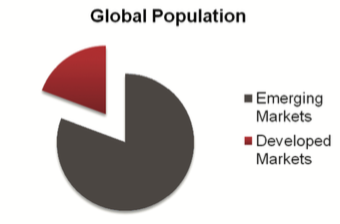
We all know the global financial crisis has had a crippling impact on business as it cut the supply to the hot air balloon of business and let the air out. Of course, this means that you will have to recreate how you do business and lead differently. But the statistic that matters more than any other is that the emerging markets comprise 80 percent of the global population, and the developed world (North America, Western Europe, Japan) are just 19 percent.
Over the past decade we have divided the world according the developed world and the emerging markets, which is a classification based on a nation’s social or business activity in the process of rapid growth and industrialization. But in the future we will segment the world according to where the people are. 
We can say that the era of emerging markets is ending and thanks to the global crisis this is being accelerated. Now, we are moving into a new era, what I call, “peopleization.” This era can be defined as the rise and coming together of populations.
Peopleization is about more than the location of the markets. It is about who the people are. Let’s look at another defining statistic.
The percentages between the markets are almost exact opposites. In the emerging markets 29 percent of the population is under 15 whereas in the developed markets 25 percent is over 55. And the population in 12 percent of the emerging markets is over 55 and 14 percent of the developed markets is under 15.
While the West is suffering from an aging population, the Emerging Markets are wrestling with a “youth bulge.”
Now, let’s figure out what this means for us as business leaders. To do so, you need to answer these questions in your boardroom.
Where is your future market?
Who is your future market?
What defines them?
What are you going to do about it?
As we think about the future, perhaps we should compare Gordon Gecko and Slumdog Millionaire. Both are millionaires. Is that where the comparison stops? The days of Gordon are gone. What is your future?
Whether you agree or accept it, your future is caught up in peopleization!

Tommy Weir, Ph.D., serves as managing director of the EM Leadership Center

May 3, 2009 0 comments
0 FacebookTwitterPinterestEmail
Finance

The financial crisis – Banked with optimism

by Executive Staff May 3, 2009
written by Executive Staff

One year ago, with the global economy fully immersed in its ongoing downslide, Philippe Dauba-Pantanacce, a senior economist for the Middle East region at Standard Chartered Bank, went on a speaking tour. As he listened to economists and audiences from around the region, Dauba-Pantanacce couldn’t help noticing a disconcerting trend — many people thought the economic crisis was ending, and the world was headed for a recovery.

“Of course,” Dauba-Pantanacce said recently, “we can see now, in fact, that’s not what happened.”
Dauba-Pantanacce, who encourages people to call him Philippe (he knows his name is hard to pronounce for non-francophones), prides himself on bringing a dissenting view to economic discussions. In the fall of 2007, for instance, Standard Chartered had been one of the only major banks to predict that interest rates in the United States would drop to one percent. They were right.
Late last month, Philippe brought his contrarian’s instinct to a roundtable discussion on the global economy and its impact on Lebanon, held at the Intercontinental Phoenicia Hotel in Beirut and organized by Executive. At the moment, the outlook for Lebanon, which had thus far weathered the economic crisis with surprising resiliency, did not look good.
Nassib Ghobril, the head of Economic Research at Byblos Bank, had recently been reading a handful of country reports from the International Monetary Fund (IMF) and others — “they were all very gloomy,” he said. Just that week, for instance, the Economist Intelligence Unit had downgraded Lebanon’s expected economic growth in 2009 from 2.7 percent to 2.4 percent. It was the third such downgrade this year.
The focus of this pessimism, as everyone at the table knew, was the expected decline in earnings around the world — especially the Gulf, where some 30 percent of Lebanon’s expatriate workers are based. That fact continues to threaten a dramatic decline in Lebanon’s remittances, which constitute at least 25 percent of gross domestic product.
Philippe was not dissuaded. He believed that things could be worse and, in fact, thought they might be getting better. Philippe is willow-thin and he has an easy-going affability. He was wearing a tailored, dark suit with a bright pink tie. Sitting next to him on one side was Pik Yee Foong, the chief executive officer of Standard Chartered in Lebanon, who had earlier introduced him as “Mr. Philippe.” On the other was Abdel Rahman Mogharbel, a manager at the Banking Control Commission at the Central Bank of Lebanon, which has been credited by many, including Philippe, for insulating Lebanon from the crisis with its conservative policies.
“We are calling this crisis the Great Recession, versus the Great Depression,” Philippe said. “The fourth quarter of 2008 was appalling, but the first quarter of 2009 was better.” Where Lebanon is concerned, Philippe sees remittances declining less precipitously than most due to the stability of the Gulf, adding that low oil prices will drastically reduce the cost of energy, a major burden on the country’s expenditures.

Gulf of hysteria
The focus of Philippe’s analysis was an outlook for the Gulf countries, particularly the United Arab Emirates, that was stronger than that of most other economists. For months, the business press had been filled with articles predicting the demise of Dubai — the downward spiral, they called it — and Philippe thought the whole thing was overblown, a lot of “hysteria.” As he saw it, the downturn in Dubai had been driven by an over-inflated real estate market, but that the market “correction” was, “for the medium to long term, a good thing.”
“Where will the engine of growth come from in Dubai?” Mazen Hanna, an economic advisor to Saad Hariri, asked Philippe. Like several of the Lebanese economists at the roundtable, Hanna found Philippe’s take on the Gulf a little hard to believe. Dubai’s economy, he pointed out, was “one of the most affected today because it was the most exposed internationally.”
Philippe’s answer was, to some extent, non-academic — we don’t know all the details, but the money keeps coming from somewhere. He mentioned some maturing bonds that had recently been paid out by an unknown investor.
He went on, “This crisis has put Dubai to the test, but more than Dubai it has put the UAE as one country to the test.”
Dubai had been bailed out by Abu Dhabi (another thing Philippe says he had predicted with certainty before most other analysts), which may have cost Dubai its independence, but in exchange had actually fortified the UAE’s economy in the long run.
Now instead of two separate economies — one, Dubai’s that was heavily based on real estate speculation (and thus highly unstable), the other, Abu Dhabi’s, that was solely based on oil and gas reserves (and thus ephemeral) — there is now a shared, diversified economy.
Going forward, the UAE — with a distinct geographical advantage, and a “logistical structure” (including major ports and airlines) that Philippe considered 10 years ahead of anyone else — could position itself as a major transportation hub and the “warehouse of the region,” he said.
With regard to Lebanon, Philippe pointed to something more intangible: the strength of domestic confidence.
“Domestic consumption can drive every force of the economy,” he says, pointing to the US, where 70 percent of the GDP comes from it.
Meanwhile, he says the Lebanese people’s great faith in their national banking system has meant that deposits nationwide have, and will continue, to rise. More bank deposits means more money to offer as loans.
Once again, the Lebanese were less bullish than Philippe.
This was something one private banker — who preferred to remain anonymous — knew a thing or two about, and she pointed out that one  of the reason the banks in Lebanon were so well capitalized was because the Lebanese had so little faith in other markets. “Even if you have a political crisis in Lebanon the outflows have nowhere else to go,” she said. “It’s very superficial.”

A bad moon a-rising
Standard Chartered’s Pik Yee Foong said that although the deposit to loan rate in Lebanon was fairly well endowed, there were “mixed signals” on demand for loans.
And Imad Jamil Zbib, an assistant vice president at American University Beirut and a former professor of business, saw a more pressing indicator: graduating seniors were having a hard time finding jobs, especially now that they had to compete with more experienced young professionals returning from layoffs in the Gulf.
Yasser Akkaoui, the editor-in-chief of Executive Magazine, who was moderating the panel, asked the collected experts what they thought were the biggest risks for the Lebanese economy.
The obvious answer was the unstable political situation. “I think the political deadlock in the country had derailed the privatization process,” Mazen Hanna said, referring to efforts to privatize Électricité du Liban, as well as the telecommunications networks.
He went on to address the dangers associated with Lebanon’s dependence on remittances and expatriate investments, which account for a large percentage of the banking sectors’ deposits.
“My greatest fear is a point in time where you would find that this financing is no longer available to the government, and the government in such a world would have no recourse to the rest of the world because of the current situation… That would be the gloom scenario.”
On this, at least, Philippe agreed. Much of the domestic spending he had pointed to was dependent on what he called the domestic dynamic: “a feeling, real or imagined, of security and political stability.” A major security or political crisis in Lebanon could upset the whole balance. He agreed privatizing EDL was also essential.
But if his dissenting predictions were right — as they had been so often in the past — then the stability of the Gulf countries ought to be a sufficient bulwark, at least, against Mazen Hanna’s “gloom scenario.”
For most of the conversation Abdel Rahman Mogharbel had been tight-lipped, not willing to say too much, perhaps worried that, as a representative of the Central Bank, his thoughts could be misconstrued as foresight. Finally, he turned to Philippe, smiled, and said dryly, “You seem optimistic.”

May 3, 2009 0 comments
0 FacebookTwitterPinterestEmail
Levant

Campaign priorities – The Grand Serail’s to-do list

by Executive Staff May 3, 2009
written by Executive Staff

Lebanon has an exasperating array of economic issues which will need to be tackled by the new government that will be formed after the June 7th general elections. Many leaders speak about economic plans and reform, but can their walk match the talk?

“Not one of the current candidates for the upcoming elections has a clear understandable economic vision for Lebanon,” says Oussama Safa, the general director for the Lebanese Center for Policy Studies. “This shows that accountability and checks and balances have no part in the elections. The elections are a battle of slogans not programs.”

As part of this magazine’s election coverage, Executive has asked Lebanese business figures, academics, economists and civil society leaders to provide what they think the economic priorities for the next government should be.
Stability seems to be top priority.

“If there is political stability and security then there will be confidence. Confidence is the key aspect to economic growth,” says Nassib Ghobril, head of economic research for Byblos Bank.

Safa says that to achieve stability, Lebanese politicians must place their first priority on “forming a national unity government and staying away from controversial issues.”

However, March 8 and March 14 have already begun to disagree over the meaning of a national unity government. The March 8 coalition has made clear that, for them, a unity government means that the minority has veto power in the next government. March 8 has already offered March 14 a blocking minority if the opposition wins. But March 14 has made clear that they want direct competition in this election where the winner takes all. Prime Minister Fouad Saniora told Reuters that “a national unity government is not only favorable but it is important… But for us to depend on ‘veto power’ governments means that we will reach… a point where we cannot advance.”

Stability is one priority that does appear to be achievable, despite the current disagreement over the makeup of a unity government. Rapprochement between Syria and Saudi Arabia helps, and increases the prospect of a government with a minority wielding veto power. Antoine el-Khoury, general manager of BREI Real Estate, says “we should be smart enough to find common ground.”
Besides stability, Khoury and other interviewees say the new government should focus on reducing the role of the state, fighting corruption, increasing transparency and containing the economic crisis.

Reducing the role of the state

The cost of doing business in Lebanon is prohibitive for Lebanese businesses and foreign investors. Reducing the role of the state is seen as a key step toward creating a better environment for these business interests. This is seen as particularly urgent given the increased competitiveness of the region and the global financial crisis.

In their report ‘A New Path for Economic and Social Development in Lebanon’, Marc Daou and Jad Chaaban — president of the Lebanese Economic Association and an economics professor at the American University of Beirut (AUB) — articulate how Lebanon is in danger of being overrun by the rest of the region: “Human capital, Lebanon’s main competitive advantage, has deteriorated. Despite spending lots on education, the quality of learning is low compared to other countries, and outcomes are not up to expectations.” One of their recommendations is to “reduce the role of the state to the regulation and provision of public goods.”

Nassib Ghobril of Bank Byblos argues that the new government should go even further than this. Ghobril claims that 2007 was one of the worst years in Lebanon’s recent modern history but the economy still grew by four percent.
“What does this tell us? We only need a minimal government in Lebanon,” he says.

The level of bureaucracy that the state imposes on businesses in Lebanon can be incredibly taxing, says Safa. “It takes 42 days to set up a business in Lebanon which is probably the longest in the world.”

Another reason the private sector wants the state out of its business is because of the negative relationship between the two. Khoury says that when his company goes to the civil service they make him and his company “feel like thieves,” just because they are businessmen. He says that at the same time the government is not doing enough to promote responsible businesses. “We feel alone fighting against irresponsible businessmen draining the resources of the country,” remarks Khoury.

The bloated Lebanese bureaucracy is viewed as needing a complete overhaul, which would include shrinking and reorganizing the government. One interviewee who requested to remain anonymous says that certain parts of the administration are very corrupt. The procedures laid out by the various administrative departments are deliberately unclear and inconsistent; a citizen always needs to hire mediators. He also added that his company must pay bribes to various part of the government administration to get the public documentation.

Corruption and transparency
Lebanon is currently ranked 102nd of 180 countries on the Corruption Perceptions Index (CPI). Other indicators such as the Global Integrity Index, the World Bank Governance Indicators, as well as the Open Budget Index confirm Lebanon’s desperate situation when it comes to corruption and transparency.
The Lebanese Transparency Association (LTA), the Lebanese chapter of Transparency International, has been working hard to bring the government to account. Gaëlle Kibranian, program manager for the Democratization and Public Accountability program at LTA, says Lebanon’s situation is dismal.
“Lebanon remains [a] confessional [system], which shapes the relationship between citizens and state, as well as the lack of separation of powers,” Kibranian says. “This leads to nepotism, clientalism, and patronage.”
Kibranian argues that one of the first measures the government should be taking is to “implement the United Nations Convention against Corruption (UNCAC), which was ratified by Lebanon.”

Khoury confirms the need for more ethics, particularly in regards to the real estate sector, “which is not only important for us but also in attracting investors.”
But it’s not all bad news and there is some hope that politicians will take corruption seriously. The elections and the new election law are a case in point. Kibranian notes that the monitoring and controlling of this year’s campaign spending has made a difference.

“It has meant that politicians are taking the question of corruption very seriously, trying to abide by the law, in order to avoid future challenges,” claims Kibranian.
Apart from outright corruption through bribes, Safa gives another view of the problem in relation to overlapping interests. He says close relationship between the government and the Lebanese banking sector is too close for comfort.
“The bankers and financers are in bed with the government — the prime minister is a former banker and the Lebanese government owes billions to the Lebanese banking system,” Safa says. “The result of this is that different economic sectors are ignored.”

The power of the banks was recently illustrated in their rejection of a proposed interest rate increase and a social security proposal that was stopped by the Bank Association. According to Nassib Ghobril, 54 percent of the public debt is owed to Lebanese banks, illustrating what a stranglehold the banks have on the Lebanese government.

But the banks have recently been held up as Lebanon’s savior, and rightly so, in the face of the global economic crisis. The firm foundations of the Lebanese banking system, demanded by the Lebanese Central Bank, have saved the economy, thus far, from significant harm amidst the turmoil of the global economic crisis. The economic crisis continues however, and the experts say the new government should focus on protecting Lebanon.

The global economic crisis    

The president of the World Union of Arab Banks, Joseph Torbey, recently called for the Lebanese government to create a ‘national strategy’ to strengthen the financial and monetary system against the financial crisis. Torbey says a strategy is urgently needed, given Lebanon’s large public debt.

This was backed by Freddie Baz, general manager of Bank Audi sal-Audi Saradar Group, who wrote in the Daily Star that the financial crisis was worse than anyone could ever imagine. A similarly gloomy view was reflected in a comment by an anonymous J.P. Morgan adviser quoted in the Star. The advisor didn’t see an end to this crisis before 2015.

So, despite the fact Lebanon has so far escaped the consequences of the global economic crisis, and even benefited from the crisis through increased deposits, there may still be a long, rough road ahead.

Although Lebanon may have benefited from increased deposits, Bank Byblos’ Ghobril says many of the resources for financing the public debt are now gone due to the financial crisis and the lack of liquidity.

The chance to privatize the telecommunications sector and Middle East Airlines has now been missed. Ghobril says even if the privatizations continue, it will be a long time before investors are willing to pay the prices they were eyeing just a year ago, in 2007.

“A Credit Suisse report stated that the government could have received $5 billion for the telecom network but in the current financial crisis the valuation has collapsed,” Ghobril stated.

Most significant for Lebanon is the predicted fall in remittances, which account for 27 percent of Lebanon’s current account receipts — the highest such share in the region. Ghobril warned that the future is precarious for Lebanon economically because of the likelyhood of a huge drop in remittances.

“Standard and Poor’s carried out a stress test that showed that if remittances drop by 20-30 percent, as expected, this would lead to a current account deficit of 17 percent of GDP,” Ghobril says.

Not only does Lebanon have to cope with its citizens abroad not sending money back, but Safa says the new government will also have to cope with “waves of Lebanese [who] may return.”

“A main challenge for the government will be finding jobs for all of these returnees,” says Safa.

The wrap-up

The challenges for the Lebanese economy and next government are enormous. It is clear that the main priority for the next Lebanese government should be stability, and once this is achieved then the many challenges to the Lebanese economy can be addressed.

These challenges are intertwined and can be solved through the creation of good governance policies. Good governance in the current sectarian system is yet to be achieved and many doubt the upcoming election results, regardless of who wins, will change this feature of Lebanese government.

However, if the above priorities are addressed in an economic strategy that is then implemented, the economic woes of the budget deficit, the balance of payments, social inequalities and the trade deficit could all start to be ameliorated. Being content with stability, however, may be more realistic.

May 3, 2009 0 comments
0 FacebookTwitterPinterestEmail
  • 1
  • …
  • 470
  • 471
  • 472
  • 473
  • 474
  • …
  • 685

Latest Cover

About us

Since its first edition emerged on the newsstands in 1999, Executive Magazine has been dedicated to providing its readers with the most up-to-date local and regional business news. Executive is a monthly business magazine that offers readers in-depth analyses on the Lebanese world of commerce, covering all the major sectors – from banking, finance, and insurance to technology, tourism, hospitality, media, and retail.

  • Donate
  • Our Purpose
  • Contact Us

Sign up for our newsletter

[contact-form-7 id=”27812″ title=”FooterSubscription”]

  • Facebook
  • Twitter
  • Instagram
  • Linkedin
  • Youtube
Executive Magazine
  • ISSUES
    • Current Issue
    • Past issues
  • BUSINESS
  • ECONOMICS & POLICY
  • OPINION
  • SPECIAL REPORTS
  • EXECUTIVE TALKS
  • MOVEMENTS
    • Change the image
    • Cannes lions
    • Transparency & accountability
    • ECONOMIC ROADMAP
    • Say No to Corruption
    • The Lebanon media development initiative
    • LPSN Policy Asks
    • Advocating the preservation of deposits
  • JOIN US
    • Join our movement
    • Attend our events
    • Receive updates
    • Connect with us
  • DONATE