• Donate
  • Our Purpose
  • Contact Us
Executive Magazine
  • ISSUES
    • Current Issue
    • Past issues
  • BUSINESS
  • ECONOMICS & POLICY
  • OPINION
  • SPECIAL REPORTS
  • EXECUTIVE TALKS
  • MOVEMENTS
    • Change the image
    • Cannes lions
    • Transparency & accountability
    • ECONOMIC ROADMAP
    • Say No to Corruption
    • The Lebanon media development initiative
    • LPSN Policy Asks
    • Advocating the preservation of deposits
  • JOIN US
    • Join our movement
    • Attend our events
    • Receive updates
    • Connect with us
  • DONATE
GCC

Cityscape 2009

by Executive Staff April 9, 2009
written by Executive Staff

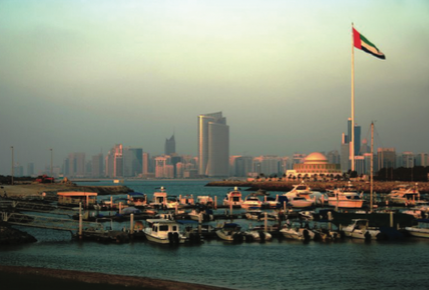
As April begins, so does the countdown for Abu Dhabi Cityscape 2009. Just a few weeks separate Abu Dhabi’s real estate developers, investors and market players from the capital’s most prestigious property show. Usually, Cityscape is where developers launch their multi-billion dollar projects such as high-rise towers, mixed-use developments and even entire new cities. This year, however, the definition has changed. Instead of bragging about their new projects, developers have to prove their resilience in the face of current market conditions. Experts will also have to demonstrate their understanding of the current situation and prove Abu Dhabi’s strong position. On the other hand, investors and end-users will be watching to see whether Abu Dhabi still represents a good opportunity for investment.

Cityscape Abu Dhabi will take place in the Abu Dhabi National Exhibition Center April 19 to 23 and will include a series of conferences and summits, during which 101 key speakers will be discussing the most important challenges and issues facing the property market. Moreover, three post-conference workshops will take place on the last day of Cityscape. In the first workshop, Louise Sunshine, chairwoman and CEO of Domineum will be tackling the global property solution in the current challenging economy. In the second, Oscar Marquez, a real estate master trainer at the Leader’s Edge Training will be discussing new marketing strategies. The third conference will be lead by Matthia Gelber, who will confer about how companies can become green and make money out of it. Additionally, Middle East Real Estate Awards will be held on April 19 at the Emirates Palace in the presence of 500 industry leaders, where distinctive projects that combine architectural excellence with eco-friendly solutions will be awarded.

The optimistic view

Marquez, who remains very optimistic about the real estate market in the Middle East, says that Cityscape will give people a lot of hope.

“People think that this is the end of the world, while it is not. Many investors will become aware [during Cityscape] of the big opportunities that are right now in real estate,” he explains. Moreover, Marquez also thinks that at Cityscape, developers will make up their mind on how much prices have to be reduced in order to keep the economy moving forward. “It is just a matter of time before [developers] realize that they can’t make 100 percent profit,” he adds. 

Other experts agree with Marquez, while saying that this year, the number of transactions that are going to take place will be minimal. Indeed, now more than ever investors are cautious about their investment decisions. They will likely consider Cityscape as a means to see how developers are progressing on their previously launched projects as well as the prices and payment plans that they are going to present.

Hussain Ali Al Shamkhani, chief investment officer at Escan Real Estate PJSC, says that Cityscape 2009 represents an opportunity for developers to show that they are still in the market and still going ahead. He explains that “developers should show the benefit of the demand-supply gap [in Abu Dhabi] and show people that instead of speculating, they can buy units and rent them out and make seven to eight percent return. [Developers] should sell that as the main benefit of buying a unit.”

Shamkhani also adds, “they need to emphasize and explain the potential of Abu Dhabi, how it is very different from Dubai and why it is much safer and more profitable. I think this should be the theme for the show and this is the best message to get across.”

IIR Middle East, the organizers of the event, introduced the first Cityscape Connect breakfast recently, where 150 real estate and property stakeholders met to increase confidence in Cityscape and the market in general. At the breakfast, Sami Eid, Aldar’s senior marketing manager, said “it’s one of the biggest events and we’ll be showcasing ourselves and showcasing Abu Dhabi… We won’t be unveiling anything new but it’s important to be out there and we’ll be showing all our projects.”

This statement is likely to apply to all developers who are considering Cityscape a chance to prove themselves as well positioned to face the current turmoil. Since early February, 95 percent of the exhibition stands were booked, Cityscape organizers asserted. They added that 40 percent more floor space has been sold than last year. Moreover, attendance is expected to increase up to 27 percent from 35,000 during Cityscape 2008.

Real estate stakeholders are looking forward to this year’s show, waiting to see what Abu Dhabi has to offer. Consequently, Cityscape 2009 has a hard task to meet, since it will have to prove that Abu Dhabi is still, despite the current market turbulence, one of the most attractive destinations for investment in the Middle East.

April 9, 2009 0 comments
0 FacebookTwitterPinterestEmail
GCC

Private equity – Stacks of dry powder

by Executive Staff April 9, 2009
written by Executive Staff

Big or small, PE firms in the Middle East are faring much better than most other financial institutions in the region, despite the amount of “dry powder” — i.e. capital called or committed that is yet to be deployed — in the area. Nevertheless, sitting on a mountain of cash and not spending it because you don’t like what you see is more enviable then struggling to pay off your creditors.

The phenomenon of dry powder is not just an effect of the financial crisis and the ensuing downturn, which started to take effect in the last quarter of 2008. Investments by PE firms began to make an about-face around the beginning of 2008. PE investments over the whole of 2008 saw a significant decrease in both number and size year-on-year by 22 and 31 percent respectively, the principle reason for this being that private valuations still seem to be out of touch with public market perceptions.

“At the moment, valuations are generally too high so PE firms are saying ‘give us another six to nine months for them to fall,’” says Robert Hall, head of transaction services Middle East & South Asia at KPMG.

Hisham El Khazindar, managing director and co-founder of Citadel Capital, adds that “in the grand scheme of things valuations across the board are 70 percent of what they were two years ago.”

When the region’s PE firms will start to sprinkle their powder around will, for the most part, depend on how long it will take owners’ willingness to break away from their egos and admit that they are in trouble.

“A contraction is taking place, but certainly we are not seeing the valuations that are in the public sector. We are not in a situation where we see distressed shareholders who are willing to sell at any price,” Christophe de Mahieu, co-head at Gulf Growth Capital at Investcorp, said to The National.

Yahya Jalil, senior executive officer and head of private equity at The National Investor in Dubai, remarks that, “it’s a little bit of an ego thing to admit that things have gone bad; this region is not known for being forthcoming as people like to contain their problems.”

Overcoming egos aside, many shareholders and owners don’t see the point of going into the market.

“People who have been in the market for 20 to 25 years see the blip in the market as very temporary, so they are thinking: why should they off a portion of their equity at these valuations,” says Jalil.

Ammar Al-Khudairy, managing director and CEO of Amwal Al Khaleej Investment Co., says “one private consumer goods company said to me, ‘I brought in one of the big four, they did a valuation for me and said my company was worth $100 million back in August [2008] and nothing has changed since. I sell no less if not more and, in fact, my cost of raw material has come down. So why should I sell for less than 100?’”

The stalemate that is brewing between firms and investors doesn’t seem to be going away anytime soon and it remains to be seen if the same understanding with regards to delaying capital calls will be extended to the firms for much longer.

Stressed out

The possibility of distressed or mezzanine funds is something that many in the industry are starting to look at as a result of the trauma being suffered by many regional organizations. Significantly, the Dubai Financial Services Authority (DFSA) wants the Dubai International Financial Center (DIFC) to consider establishing the Gulf’s first private equity secondary market. This could provide a respite for many PE firms looking to rid themselves of their dry powder.

“The whole issue of distressed assets in this region hasn’t been fully experienced in previous recessions. If you look at what the ‘ultimate’ distress is, which is a company becoming insolvent and unable to pay debts as they become due, then you really haven’t seen much of that yet,” says Hall. “In the recession this time around, the economy is much bigger and there are undoubtedly going to be some companies that will have significant problems. For PE firms this will provide some great opportunities.”

However, for the time being things don’t look that bad and the omnipresent attitude in the region today is not one of going after high risk and high return opportunities.

“Mezzanine capital is definitely more expensive than traditional forms of capital and it works well when valuations are improving and in upward cycle,” says Tamer Bazzari, deputy CEO of Rasmala.

Jalil says, “in the long term mezzanine is a huge unmet need in the region, but for the next year or two I think that, relatively speaking, it is not going to be interesting for investors — the risk profile between mezzanine and secured is night and day.”

April 9, 2009 0 comments
0 FacebookTwitterPinterestEmail
GCC

Quick & lean

by Executive Staff April 9, 2009
written by Executive Staff

With the financial crisis at hand the question is: what are businesses going to do about it? The response many businesses in the region have is to look inwards and improve internal business processes in order to hold down the fort until the onslaught subsides. The next and perhaps more important question is: how will regional businesses restructure their organizations?

Despite the dismal undertone of the business news coming out of the region, there are a few encouraging signs. One sector that is doing surprisingly well as a result of the need for businesses to restructure and improve efficiency is the Enterprise Resource Planning (ERP) industry. According to the International Data Corporation (IDC), ERP growth within the GCC will range between nine and 12 percent, an enormous figure considering many regional states will not grow at all this year.

“We will probably have the best month we have ever had this month,” says Bill Tomlinson, general manager of Dynamic Vertical Solutions, a multinational Microsoft partner that specializes in vertical add-on solutions to Microsoft Dynamics ERP platforms.

Much of this anomalous growth results from owners and managers  realizing that ERPs can increase efficiency for them.

“Before the crisis there was more time and more money,” says Sergio Maccotta, managing director of SAP Middle East and North Africa. “Now companies are taking the opportunity to change, through IT adoption, in order to improve their internal processes.”

The industry itself is also experiencing a paradigm shift in relation to its operating environment. Before the crisis, many regional businesses were hesitant to adopt standard ERP processes, opting instead to fit the system to their businesses or not to adopt one at all. Today, however, the tables have turned.

“What we are seeing that we didn’t see before is that many of the upper to mid-market organizations are coming to us, while we used to go to them and try to prove our solutions,” says Tamer Elhamy, regional business solutions manager at Microsoft Gulf.

What’s on offer?

The ERP companies in the region are increasingly being queried about how their systems can help companies save on the more costly elements of doing business and keep in touch with their customer base.

“People want to manage their [human] resources a lot better now so they are looking for payroll and HR solutions more than ever,” explains Tomlinson. Maccotta adds that, “the money in the market is lower, so in order to secure your portion you have to execute better and stay closer to your customer.”

It should be noted that internally, ERP solution providers are also benefiting from some of the more sinister effects of the global downturn, such as rising unemployment, decreasing real estate valuations and weakening currencies. Although there has been “no drastic change,” according to Maccotta, in the resource pool for providers, there has been a decrease in the acquisition and retention costs of consultants for providers. “The [Indian] rupee rate is at 51 to the dollar, whereas it used to be 39 to the dollar and that cuts 25 percent of cost because I am on dollar fixed,” says Tomlinson. “Another benefit of the crash is that all the rents are down by about half, so if you want to bring in some big people for a project then you can do it cheaper and it’s making our job easier.”

The argument within the industry, however, is centered around the size of the solutions on offer.

“Many of the customers are deciding to adopt an ERP to increase their efficiency but they are trying to start with the minimum number of users and functionalities and taking a step-by-step approach,” says Elhamy. That approach is prompting many people in the industry to predict that smaller and less expensive ERP solutions will be the trendsetters in the future.

“In the global scheme of things, SAP and Oracle’s figures are down because they are too expensive. People are more cash conscience now and are actually exposing the product for what it is,” claims Tomlinson. Perhaps unsurprisingly, that assertion is being bitterly contested by the larger and more complex solution providers.

“I don’t agree when you say we are more expensive because our solution is extremely flexible, as well as scalable, and can fit any kind of business,” counters Maccotta. “We still see a lot of demand and having the vertical competence is putting SAP at a competitive advantage.”

“In order to secure your portion you have to execute better and stay closer to your customer”

April 9, 2009 0 comments
0 FacebookTwitterPinterestEmail
GCC

Much tilling without harvest

by Executive Staff April 9, 2009
written by Executive Staff

Last year food was big news as prices soared globally by 54.9 percent and associated riots erupted in 60 countries. In the Arab world alone the shortage in food sufficiency was estimated at $18 billion by the Arab Authority for Agricultural Investment and Development (AAAID). In the Gulf countries, dependent to the tune of $12 billion a year on imports and with agricultural water consumption at unsustainable levels, the issue took on grave importance. State and private investors promptly started eyeing up arable land in Africa and Asia to secure food for a region that is expected to increase import dependency to 60 percent by 2010, according to the UN’s Food and Agriculture Organization (FAO).

But while food prices and commodities have reduced in the wake of lower oil prices and the global financial crisis, the issue of food security has not gone away. However, it has yet to be seen whether all the touted agribusiness projects will take off as Sovereign Wealth Funds (SWFs) and private investors tighten their belts in the face of the global economic slowdown.

The big issues

The Arab world’s population ballooned 121.9 percent between 1975-2005, while over a similar period, 1980-2004, the region’s food grain and meat production increased by 93 percent.

The shortfall was not overly concerning given access to the free market and that staples such as wheat and rice were fair cheap, at least affordable enough for governments to subsidize. Additionally, countries such as Saudi Arabia, Syria and Iraq were involved in large-scale agricultural projects to boost domestic production.

Saudi Arabia, for instance, spent a staggering $85 billion on agricultural development between 1984-2000, according to estimates by Elie Elhadj in The Middle East Review of International Affairs.

But the cost of such investment has gone beyond budgetary concerns. It is worth noting that while Saudi Arabia was paying up to $500 per ton for domestically produced wheat — when international market rates were around $120 —  to maintain local agriculture some 300 billion cubic meters of water was used between 1980-1999, two-thirds of it non-renewable, says the Ministry of Agriculture and Water. Such a gigantic amount of water was needed to grow produce in the kingdom’s arid climate, which is two to three times more water than required in a temperate climate.

After investing an estimated $16 billion to $18.7 billion over the last 30 years on its wheat program, according to BMI, last year Riyadh decided to phase out production due to water shortages. The costs versus the benefits were no longer sustainable, having been self-sufficient in wheat since the 1980s when production hit 4 million tons per year, Saudi Arabia is now a net importer and as of 2016 it will be totally dependent on imports. Furthermore, with Saudi Arabia joining the WTO, the kingdom has to abide by the organization’s requirement to reduce state support for agriculture to 13.3 percent over the next decade. This will have other knock on effects, such as on the 12 percent of the workforce involved in a sector that accounts for just 3.3 percent of GDP.

The region is losing an estimated one million hectares of arable land each year to salinity

Saudi Arabia is not the only country re-thinking its agriculture policies, with the region losing an estimated one million hectares of arable land each year to salinity, according to Dr. Shoaib Ismail, a halophyte agronomist at the International Center for Biosaline Research (ICBR) in Dubai.

“Twenty years ago there was good quality water everywhere. Now there is one-third seawater concentration in the groundwater and salinity is even higher in other places. Mismanagement has led to more salinity,” said Ismail. “Some 85 percent of water usage in the GCC is for agriculture, the highest in the world. In that sense, the question arises, how feasible is agriculture over here?”

The short answer is that it isn’t. Even producing processed foodstuffs for domestic consumption and export requires water, what has been called the “export of virtual water” and it may have to be re-thought given looming water constraints.

One solution is to use halophytes, plants that grow under high saline conditions, as opposed to glycophytes, non-salt loving plants, an alternative with which the ICBR is involved. But while halophytes could be used to replace more water intensive plants and trees, those plants would not produce adequate amounts of food. It is in landscaping, which accounts for 18 percent of water use in the UAE, that plants and non-conventional grasses can be advantageous, according to Ismail.

Oman is developing a salinity plan and it has invested in a project to clean water from the oil industry, because for every barrel of oil pumped out of the ground seven barrels of water are used. The UAE has also developed a ‘Master Development Plan’ to assess water usage and improve efficiency, such as changing irrigation systems, phasing out subsidies and expanding water pricing to include agriculture and industry.

Desalinization is another touted panacea for the region’s water concerns, but costing between $0.81-$1 per cubic meter, desalinized water is too expensive for agricultural use.

“Building new desalination plants is not the solution, as this warms up the sea and affects marine life,” said Ismail. It also increases the sea’s salinity.

Rich countries trying to secure land overseas risk creating a ‘Neo-Colonial’ System

Eyeing pastures new

With wheat prices rising 83 percent last year and other staples doubling in price, governments started eating into their reserves to placate populations which were spending ever-larger proportions of their income on food.

In Pakistan, the NGO Oxfam reported that, due to food inflation, the number of poor has risen from 60 million to 77 million since 2007, while in the Arab world the AAAID predicted some 35 million people were falling into poverty due to high food costs. As the region has an overwhelmingly young population and high population growth, food security is paramount.

For the GCC, the surge in food prices didn’t push people under the poverty line, but it was a contributor to inflationary pressures. And with the population expected to double by 2038 to 60 million people, demand for food will continue to grow at a rapid pace. Saudi Arabia, the Gulf’s most populated country, already imports some $5 billion per year of food and beverage items, according to BMI, and that will figure will spike in years to come.

“Food security is officially defined not just as a shortage, but also looking at availability and affordability,” said George Attala, a principal at Booz Allen Hamilton. “There are a number of ways to ensure supply is always available. One is try and diversify sources, not all wheat from say, Ukraine. Another is look at internal networks, such as imports through more than one port. A third way is storage capacity, of four to six months, while the fourth is to get into contract farming, but that is not always the best solution.”

Essentially, the Middle East is left with two choices. “The region has to import. The question is, invest abroad or rely on the free market?” said Dr Eckart Woertz, program manager in economics at the Gulf Research Center in Dubai.

Last year, Arab states appeared to be opting for the first choice in the face of high food prices, with government missions from Saudi Arabia, the UAE, Qatar, Kuwait, Egypt and Libya visiting Pakistan, Ethiopia, Cambodia, Uganda, Angola, Kazakhstan, Ukraine, Thailand and the Philippines to discuss the possibilities of buying up arable land to cultivate. The private sector also got in on the act, with the likes of the Emirates Investment Group, Abraaj Capital, Al Qudra Holding and the Bin Laden Group reportedly acquiring land in Sudan and Pakistan.

But such policies are not always popular and they are also not necessarily dependable in the long run.

“For the GCC it is a ‘pros and cons’ situation. In the short term it is profitable to buy or lease land, but it also depends on the geopolitical situation. A country may be a friend today, but might not be tomorrow, so it is a dependency issue,” said Ismail.

Last year, the FAO warned that rich countries trying to secure land overseas risked creating a “neo-colonial” system. The concerns were related to Gulf investments in Sudan where only indigenous water and land were used, whereas fertilizer, seeds, equipment and labor came from abroad. It was a similar story in Pakistan.

As Woertz remarked, “the negative case is bribe an African official, then expel locals and pastoralists, so no benefit for the local population at all. There is political baggage.” Furthermore, he added, “the GCC doesn’t have a good track record of labor rights or the environment and these need to be taken into consideration.”

And while the countries being courted may be interested in foreign investment, they also have to feed their own populations. Sudan, for instance, has an estimated 200 million acres of fertile land, yet only 20 percent is being utilized. However, despite 160 million acres of available arable land, the country is importing two millions tons of wheat per year and five million people are dependent on food aid. Similarly, Pakistan is facing problems in feeding its population, as well as losing groundwater to salinity.

But although there are many reports on plans to buy land, there has been minimal information coming forth about these projects, with “transparency limited to media accounts,” said Woertz. “They announce it — billion dollar deals — but it is unclear whether it has taken off and how the private sector has been brought in.”

An additional factor is that discussions to acquire land overseas were began when oil and food prices were higher. “The urgency is not there now and there is less money to throw around,” said Woertz. “The SWFs lost money in the markets and have less revenues, so [acquiring land abroad] may not be such a widespread phenomenon as made out.”

April 9, 2009 0 comments
0 FacebookTwitterPinterestEmail
GCC

Park sales to pump service

by Executive Staff April 3, 2009
written by Executive Staff

The UAE automobile sector saw sales plunge by up to 45 percent in the first two months of the year compared to 2008, a remarkable downturn from the years of double-digit growth when the $3.6 billion sector was one of the fastest growing in the world.

“The end of the third quarter 2008 was vastly different from the fourth for manufacturers,” said Mike Devereux, president of GM Middle East. “This year we are looking at a decrease overall, with the same daily sales rates since December to now.”

But while the economic slowdown has started to bite, the sector is not sitting on the sidelines until a recovery starts. It has resorted to a change in financing strategy and a greater focus on services to shift units as access to credit tightens and consumer preferences change.

“The financial crisis has certainly affected automotive sales in the UAE, with banks applying more restrictions on financing. And since nearly 80 percent of the UAE’s automotive sales are dependent on financing, this is more evident locally,” said Waldo Galan, managing director of Ford Middle East. Ford, Lincoln and Mercury sales grew 35 percent last year.

As a result of tighter lending, manufacturers and dealers are teaming up with banks to offer zero percent interest on car purchases and making credit more readily available to customers. The most notable change in sales strategy has been the widespread introduction of leasing, a technique dealers had formerly eschewed as car prices were low and customers preferred to buy.

“Financing is a problem so schemes have to be more tactically focused. Screaming the price from the rooftops is not what it’s about, but customer issues. The change is more tactical and less general as there is too much on people’s minds,” Devereux pointed out, adding that: “Lots of people want vehicles but need financing, so we’re focusing on a partnership with the National Commercial Bank (NCB) in Saudi Arabia and in the UAE a car leasing scheme.”

In with the new but not out with old

While enticing customers into showrooms is one concern for the manufacturers, so is keeping dealerships afloat, having ordered vehicles months in advance that can now not be sold or re-exported elsewhere. This has been further compounded by 2009’s models now being on sale, yet there is excess stock of last year’s lines.

“Credit, wholesale finance and bank loans are difficult for dealers. Stock levels for dealers mean reduced working capital so less money in the inventory,” said Devereux. “We will winnow down our inventory and import much less cars.”

And while there is an excess of unsold cars, manufacturers are hesitant to offload vehicles in fleet deals and government tenders.

“We’re trying not to chase unprofitable fleet tenders that we would have done before, as there is little to no margin,” said Devereux. “We are now focusing on the retail business, with 65 percent retail and 35 percent fleet.”

Consumer preferences are also expected to shift towards more competitive fuel efficiency, fewer SUVs and more crossovers.

“While demand for luxury vehicles would possibly see a reduction, quality and value would still remain on top of the consumer’s list,” said Galan. “We believe that consumers will act more out of a rational mindset and look for quality and value for money rather than the emotional drive.”

After sales is a another area manufacturers and dealers are focusing on as sales stagnate — a sector valued in the Middle East at some $11 billion, while the UAE tire trade is valued at $1.1 billion and slated to grow this year.

“There is a big focus now on services, which will be a stable haven in a downturn. Most dealers here are under invested in service capacity and the number of vehicles has increased so quickly,” said Devereux. “There is a need to invest in new services as vehicles are coming into prime servicing years after 2-3 years since purchase.”

While manufacturers continue to monitor the local environment, they are optimistic that revenues will go up next year as supply and demand align, even though it might not be the double-digit figures of the boom years.

“There is a big focus now on services, which will be a stable haven in a downturn”

April 3, 2009 0 comments
0 FacebookTwitterPinterestEmail
Comment

Short of a sure bite to eat

by Riad Al-Khouri April 3, 2009
written by Riad Al-Khouri

For some countries in the region drought, high population growth and social tension will be an explosive combination over the long term. Add to that serious short-term concerns about nutrition and other crises that arise regarding problems of unsustainable development. An example of this was the food price jump of 2007 to 2008, which sent an urgent message to states in the Arabian Peninsula: when nutrition once again becomes expensive — maybe in the next two to five years — economies must be better prepared.

Viewed in this context, water is a major issue that now seems to be taken more seriously. For example, Saudi Arabia, the region’s largest economy and also the biggest geographically, will phase out water-intensive cereal production by 2016 since non-renewable fossil water reserves are being depleted. Instead, Saudi agriculture will re-orient to crops such as fruits and vegetables using water-saving technologies, including greenhouses and drip irrigation. Such a shift will help to ease the tough demography-hydrology combination, as the combined population of Saudi Arabia and her five neighbors of the Gulf Co-operation Council (GCC) will soar to nearly 60 million by 2030.

All this poses a threat to food security, as major food import dependence — currently 60 percent of total demand — grows in the GCC states. Fortunately, they can afford to throw money at the crisis in the short term. The poor man of the Arabian Peninsula, Yemen, does not have that luxury. The country suffers from severe levels of food insecurity, including lack of income to access and buy food and inadequate national safety nets. Last year it even looked as though Yemen was losing further ground as the share of poor people in the total population may have increased by six percent due to the rise in food prices that began in late 2007 and peaked in mid-2008. Steps taken by the government to ameliorate the effects of high food prices last year included one-off distribution of wheat, flour and seeds.

In the end, these measures succeeded in staving off disaster until the eventual fall in prices eased the situation. At the same time, the crisis was an eye-opener that is prompting Yemen to look at sustainable long-run solutions to its nutritional balance. During 2009, targeting and overall efficiency and effectiveness of the food safety net is expected to improve, based on a similar model being applied in Jordan.

Yet, unlike the latter, Yemen is classified by the United Nations as a Least Developed Country, one of the few dozen poorest in the world. The UNDP ranks Yemen very low on the Human Development Index, which leaves the country vulnerable to fluctuations in oil prices.

The economy relies heavily on oil, which in recent years accounted for around 70 percent of government revenue and up to 90 percent of the value of exports. However, oil creates few jobs directly. Generating non-oil growth and addressing unemployment is therefore a key to reducing poverty. Meanwhile, oil continues to drive the economy as growth in agriculture and manufacturing remains modest. At the same time, fuel is subsidized by the state and is being sold domestically below international prices. An additional challenge may arise as projections indicate that the oil production will decline and barring discovery of major new reserves, Yemen could become a net oil importer by 2012.

Yemen’s gross national income per capita is less than a quarter of the average in the Middle East and North Africa (MENA) region and its GDP growth has steadily been falling. Inflation has been averaging 12 percent since 2002, rapidly increasing the cost of living. Poverty in rural areas, where about 72 percent of the population resides, remains high at 40 percent. The Global Hunger Index ranks Yemen 80 out of 88 countries analyzed, indicating an alarming stage of food insecurity. While other MENA countries have seen significant improvement according to this ranking, Yemen’s score has not changed between 1990 and 2008. Almost half of the population is below 15 years of age, implying increased pressure on economic development to provide jobs and basic services, so the drive for food security should also be supported by policies to lower demographic growth. Yemen has the highest population growth rates in the MENA region, with a current annual increase of 3.1 percent (about a third higher than the average for Least Developed Countries) and a projected increase of 2.3 percent annual average until 2050.

In conclusion, an insecure food situation in Yemen will increase discontent and could even aggravate political security. Sitting at the doorstep of the GCC countries, the latter cannot afford to see Yemen degenerate into another Afghanistan, sapped by poverty and insecurity, in nutrition or otherwise.

Riad al Khouri is senior fellow of the William Davidson Institute at the University of Michigan in Ann Arbor

April 3, 2009 0 comments
0 FacebookTwitterPinterestEmail
Levant

Syria – Freeing the market’s bonds

by Executive Staff April 3, 2009
written by Executive Staff

On March 10, Syrian Finance Minister Mohamed Hussein rang the bell to launch trading at the long-awaited opening of the Damascus Securities Exchange (DSE). Despite its humble size, the DSE is yet another sign that Syria means business about the privatization and gradual liberalization of its state-controlled economy. Ever since President Bashar al-Assad came to power in 2000, the country has made significant progress in its aim to become a “social market economy,” reminiscent of China.

Initiated by presidential decree in 2006, the DSE is a public institution that, once it stands on its feet, is scheduled to be transformed into a private shareholding company. Six companies are currently registered on the bourse: Banque Bemo Saudi Franci, Bank of Syria and Overseas, United Group for Publishing, Advertising and Marketing, Arab Bank-Syria, Alahlia Company for Transport and Bank Audi Syria.

Four other companies have applied to be registered. The DSE expects some 15 companies with an estimated value of 28 billion Syrian pounds (SP) (or $600 million) to be listed by the end of the year, about half of which are active in the banking and insurance sector.

Run and regulated by the Syrian Commission on Financial Markets and Securities (SCFMS), the DSE consists of a “main” and a “development” market. For a company to be registered at the main stock exchange, it has to be more than one year old, have at least 100 shareholders and a minimum capital of $2 million. New or smaller firms are registered at the development market. Currently, two of the six listed companies are listed at the latter.

Slow start

Trading on the first day in the life of the DSE was largely symbolic, as only three transactions took place, in which 15 shares in Banque Bemo Saudi Franci worth some $350 changed hands. By March 19, trading had picked up some pace, as over 1,400 shares were traded with a value of nearly $11,000. Mainly due to the limited number of listings, the DSE is currently open just two days a week.
According to Bassel Hamwi, general manager of Bank Audi Syria and deputy chairman of the DSE, the Syrian bourse offers several advantages to the Syrian economy.

“First of all, it creates a much-needed platform for the some 8,000 shareholders of the six currently registered companies to sell their shares,” he explains. “Before, shareholders who wanted to sell their stocks had to find a buyer and come to the bank accompanied by a lawyer to make the deal, while today they can simply open an account at a brokerage firm.”

“In addition to the classic advantages stock markets offer registered firms, such as increased access to liquidity, the DSE will help transform Syria from a frontier market into an emerging market,” says Hamwi. “In the more distant future, we hope the DSE can provide the channel for the privatization of public companies.”

Five broker firms have been licensed and their number is expected to climb to 12 by the end of the year. Trading at the DSE is subject to strict restrictions. “The Damascus stock exchange will not be open to gambling or risk- taking,” SCFMS chairman Ratib Shalah told the SANA news agency. “Shares can only be traded by those who want to invest money, not for speculation.”

Shares are not allowed to rise or fall by more than two percent during a day of trading, and cannot be bought and resold on the same day. Shorting and leverage are not allowed. Foreign investors are required to maintain their holdings with a licensed custodian and are not allowed to re-sell shares within a period of six months. The latter mainly serves to avoid instability due to the influx of ‘hot money’.

“These are temporary measures,” Hamwi says. “We hope that they will evolve, as the market evolves. The margin of two percent, for example, may prove too tight in the future and may need to be broadened.”

The long delay

The DSE has only just begun to function, nearly three years since Presidential Decree No. 55 was issued in 2006. The reason for the delay lays at the heart of the Syria Accountability and Lebanese Sovereignty Restoration Act (SALSRA). Passed by the US Congress in 2003 with the aim to fight global terrorism, the SALSRA bans the export or re-export of American products to Syria, with the exception of food and medicine.

As a consequence, specialized products such as electronic trading systems have been difficult to obtain. The same has been true for items such as Boeing aircraft spare parts. With an eye on air passenger safety, however, Washington recently allowed a shipment of aircraft parts to enter Syria. As the DSE was not able to obtain American- made products, it started negotiations with Paris-based Euronext and OMX, a Swedish-Finnish financial services firm. Yet these efforts were not fruitful, as Euronext and OMX were bought by the New York Stock Exchange Group and Nasdaq in 2006 and 2008 respectively. “Especially the latter was a major setback as negotiations with OMX had been ongoing for almost a year,” says Hamwi. “Eventually, the DSE managed to acquire a state-of-the-art system used in eight markets worldwide in late 2008.”

Despite these setbacks, most experts agree that SALSRA has failed to directly damage the Syrian economy. Indirectly, however, the trade embargo caused many European firms to be rather reluctant to invest in Syria, as American officials would remind them of the possible negative consequences of doing so. The DSE is widely perceived as the next step on Syria’s path to develop and enhance the role of its private sector. Syria’s state reserves have witnessed a downturn in recent years, mainly as a consequence of the decline in oil production. A decade ago the country’s wells produced some 600,000 barrels per day (bpd), today they are good for less than 380,000 bpd. Consequently, the state has sought new means to boost the economy, especially in terms of boosting the role of the private sector.

Following the collapse of the Soviet Union, Syria’s road to a new economy started as early as 1991, when Investment Law Number 10 was adopted, which introduced tax holidays for foreign investors and provided for the repatriation of overseas profits. The process picked up pace with a series of measures introduced since the inauguration of current President Bashar al-Assad in 2000. A crucial step in transforming the Syrian economy from a centralized socialist system to a Chinese-inspired social market model was the modernization of the country’s financial sector with the legalization of private banking in 2001, a move that has been overwhelmingly successful. Although it took until 2004 for the first private bank to open its doors, today there are roughly one dozen operating, while a handful of others have obtained licenses and are set to start operations later this year.

Banking on success

Deposits in Syrian private banks increased from some $9.4 billion in 2005 to $14.3 billion in 2007, which represents some 35 percent of total deposits. Five years ago, most foreign tourists changed their foreign currencies on the black market to avoid the official exchange rate set by the state. Today the Syrian pound fluctuates, while ATM machines and credit cards have become common.
The Governor of Syria’s Central Bank Adib Mayaleh, announced at a March economic summit in Kuwait that the government is considering allowing foreign investors a controlling stake in financial companies. So far, foreign shareholders have been permitted to own more than 49 percent of certain Syrian industrial ventures, but the same does not hold true for financial services firms. The authorities hope that investments in private banks will help to expand the industrial, tourism and real estate sectors.

In addition, the Syrian government adopted a series of measures to attract foreign investments, as a means to stimulate social and economic development. According to the World Bank, foreign direct investment in Syria amounted to $885 million in 2007, an increase of nearly 50 percent compared to 2006. Most foreign investors hail from the Arab world, Turkey, Iran and China.

Syria’s success in attracting foreign capital and the increased role of the private sector is illustrated by the rapid growth of the country’s industrial cities. Following the completion of several feasibility studies in the late 1990s, construction started in 2001 of three industrial cities at Sheikh Najjar (4,412 hectares) near Aleppo, Hassia (2,500 hectares) near Homs, and Adra (7,000 hectares) near Damascus. The government acquired the land, installed the necessary infrastructure in terms of roads, water and electricity, before selling the land to both Syrian and foreign investors, who are exempted from a range of taxes and custom’s duties.

By the end of 2007, a total of 1,162 hectares had been sold for industrial use in Sheikh Najjar, 838 hectares in Hassia and 1,680 hectares in Adra. Some 162 companies had also started production in Sheikh Najjar. In fact, according to Khalil Mouases, director of industrial cities and zones at the Ministry of Local Administration and Environment, Sheikh Najjar met with such success that it is likely be completed by 2012, instead of 2020. The warm welcome has prompted the authorities to announce the establishment of eight more such industrial estates.

The right ingredients

The recipe for the cities’ success has not just been cheap land and facilities, but also Syria’s relatively cheap and well-educated workforce, low energy prices and the country’s strategic location between the EU, Turkey, Iran and the Arab world. Syria has also signed the Greater Arab Free Trade Agreement and free trade agreements with Turkey and Iran.

Although state-owned companies continue to play an important role in Syria’s economy, over the past decade the private sector has become the main contributor to the country’s GDP, which is perhaps best illustrated by the pharmaceutical industry. While in the early 1980s, there were two state-owned pharmaceutical plants that produced enough medicine to meet 15 percent of domestic demand; in 2008 there were 52 pharmaceutical firms that met 90 percent of domestic demand. With these developments in mind, it should come as no surprise that the Syrian authorities have earned praise from the International Monetary Fund, which concluded that the Syrian government has taken crucial, albeit slow, steps towards liberalization, which will enable Syria to deal with the consistent decline in oil reserves.

“We are quite bullish about the Syrian economy, which is diversified and has a lot of potential,” saysd Hamwi. “If properly regulated, we think the DSE will increasingly be able to mirror the state of the Syrian economy.”

April 3, 2009 0 comments
0 FacebookTwitterPinterestEmail
Comment

Madoff’s unanswered billions

by Peter Speetjens April 3, 2009
written by Peter Speetjens

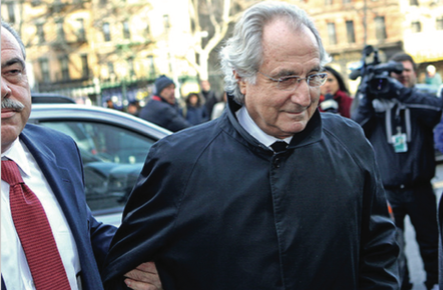
On March 12, former Wall Street icon Bernard Madoff pled guilty to all criminal charges brought against him, including fraud, theft, money laundering and perjury. Most people will be more than happy that the 70-year-old confessed and that he will get no less than 150 years behind bars.

The latter is of course a symbolic figure, essentially meaning a life sentence. The length of sentence mainly gives weight to the notion, at least among the general public, that justice will be done. At the same time, however, it obscures the fact that as a consequence of Madoff pleading guilty, no in-depth trial will take place and many questions will likely remain unanswered. For example, it is still unclear if his wife and sons will be charged or if the family fortune will be drawn on to pay back his victims.

Also, as no jury-trial will take place, we will probably never know how Madoff operated. How was a well-respected member of Wall Street’s inner circle, and former Nasdaq chairman, able to fool not only his clients, but the entire finance and banking community for almost 30 years? Where were the institutions that are supposed to apply checks and balances to Wall Street?
These questions are all the more pressing as Madoff’s fall from grace follows hot on the heels of the sub-prime crisis and the collapse of the financial markets, which has given investment bankers worldwide a bit of a bad odor. Notably, almost no financial institution or publication saw them coming either. Madoff stands accused of running a Ponzi scheme described by the US authorities as “extraordinary” and “unprecedented” in scale, as losses could amount to $65 billion. Named after an Italian swindler who immigrated to the US in 1903, a Ponzi scheme pays returns to investors from their own money or money paid by later investors, rather than from actual profit. In other parts of the world it is more commonly known as a pyramid scheme.

Madoff is said to have run the scheme since the 1980s. He apparently told clients he had found a magic formula, one that could not go wrong, as he spread investment risk over volatile stock markets and more secure government bonds. Now, anyone who is familiar with investing and stock markets should know there is no such formula, yet Madoff’s clients were keen to believe him.
While many people were angry to hear that Madoff lived on bail in his $7 million New York apartment after his arrest, they will be even more furious if Madoff’s wife and two sons are not prosecuted. So far, no charges have been brought against them and there is a widespread fear that Madoff may have pleaded guilty in exchange for his family to be let off the hook.

Madoff’s defense team argues that he was the only one in charge and the only who knew what was really going on in the company. This is very hard to believe. His wife and former high school sweetheart, Ruth Madoff, who was at his side when he set up the firm in 1960 knew nothing? His sons, both senior executives, knew nothing? None of them thought it odd that most of Madoff’s possessions were in Ruth’s name?

Court papers filed in March revealed that the net value of Madoff’s ownership in his firm was $700 million, while the estimated net worth of Bernard and Ruth Madoff amounted to some $826 million, most of which is in Ruth’s name. The papers, for example, listed real estate in Manhattan, Florida and France worth $22 million, a $17 million bank account at Wachovia bank, $45 million in municipal bonds and a $12 million interest in an aircraft company, all in Ruth’s name. What’s more, a few weeks before Madoff’s arrest, Ruth withdrew $15.5 million from her account.

The claim that a banker or investor acted on his own — a rogue trader — has become quite familiar in recent years. Just think of the cases of Nick Leeson and Jerome Kerviel who lost billions for Barings Bank and Société Générale respectively. Now suppose they did indeed act on their own, the question remains: should not someone within the bank, or some financial watchdog outside the bank, have noticed? Or were they just happy to go along for the ride and to give them the benefit of the doubt, as long as profits were made?
The same appears to be true for Madoff. As he pled guilty, we may never know how the web around him worked or if any institutions related to his firm could be held responsible for negligence.

Peter Speetjens is a Beirut-based journalist

April 3, 2009 0 comments
0 FacebookTwitterPinterestEmail
Comment

The linchpin of peace

by Claude Salhani April 3, 2009
written by Claude Salhani

Lebanon has been to taking on a more prominent role in the overall Middle East peace process as the conflict gets more complex with every passing year. And the delay in finding an amenable solution to the crisis — now 61 years in the making — is serving no cause except that of extremism on both sides.

Ironically, during the earlier years of the Arab-Israeli crisis when Lebanon still had no direct quarrels with Israel, it used to be said that Lebanon would be the second Arab country to sign a peace treaty with the Jewish state. But since then, more blood than water has run under Lebanon’s bridges. Today, given the twists and turns that fate and geo-politics have thrown at Lebanon, the Lebanese will very likely be the last people in the region to sign a peace treaty with Israel.

The fact that Lebanon is increasingly playing a more prominent role in the regional conflict is not terribly good news for the Lebanese. And neither is the news that Islamist fighters have taken refuge in many of the country’s Palestinian refugee camps. The US said it would equip the Lebanese army with M-60 Main Battle tanks, as did the Germans who promised to deliver Leopard tanks and the Russians have pledged ten MiG-29 fighters (NATO designation: Fulcrum). Obviously, none of that hardware is intended to outfit the Lebanese armed forces to fight any external threats. Logic would dictate, therefore, that those weapons are intended for internal housekeeping and meant to be used if and when the day comes that Lebanon is forced to get its house in order so as to close a peace deal with Israel.

In fact, many analysts are saying that there could not be a regional solution to the Arab-Israeli dispute if the Palestinians and the Syrians each sign a peace treaty with Israel and Lebanon remains at war with the Jewish state.
Until just a few years ago, despite it being the stage of much of the Middle East’s turmoil, Lebanon was a reluctant pawn in the greater Middle East games of war and peace. Lebanon’s role in the Middle East dispute came about as a result of the presence of the Palestine Liberation Organization (PLO) and its affiliated groups who set up shop in Lebanon.

Until recently it was not considered essential to include Lebanon in regional peace talks, but now Beirut finds itself at the forefront of a final settlement of the Arab-Israeli dispute.

As difficult as it may be, the Obama administration must realize that Lebanon cannot remain the only country bordering Israel to remain in a state of war with the Jewish state.

At the same time it is of paramount importance to the future stability of the Middle East that Lebanon not be sacrificed at the altar of a Syrian-Israeli or a Syrian- American rapprochement.

One cannot stress enough the importance of ensuring that when such a peace treaty is signed between Israel and Syria, Lebanon is not left out in the cold.
The fact that Lebanon is a small country does not mean it is irrelevant. While Lebanon does not constitute a threat to Israel, the country’s geographic location — on the border of Syria and Israel — gives it an advantage, or as the case may be, a disadvantage. Certain elements within Lebanon have the power to create serious problems for Israel along its northern border, and in so doing, keeping the Arab-Israeli dispute going, even if Syria were to sign a separate deal with Israel.

Among them are Hizbullah and a number of pro-Syrian paramilitary organizations, as well as the vast network of intelligence agents Syria left behind in Lebanon when it withdrew shortly after the assassination of former Prime Minister Rafiq Hariri.

It is without doubt to the advantage of the United States and Israel to ensure that Lebanon remains an independent and stable nation.

History has shown us what happens when the state is weak, as was (and remains) the case in Lebanon. History is also repeating itself in Lebanon, where the Palestinians first took advantage of the weak central government and the PLO became a state within a state. After the departure of the PLO from Beirut, the central government continued to be weak, allowing other groups, some acting at the behest of foreign powers, to emulate the Palestinians and establish themselves as a parallel authority to the Lebanese government.

Let there be no doubt: Lebanon’s continued instability only serves the enemies of democracy in the region. All the more reason why Lebanon must not be omitted from the next round of Middle East peace talks, if and when they take place.

Claude Salhani is editor of the Middle East Times and a political editor in Washington, DC

April 3, 2009 0 comments
0 FacebookTwitterPinterestEmail
GCC

Oman – Docking infrastructure

by Executive Staff April 3, 2009
written by Executive Staff

While construction workers are putting down their tools throughout the Gulf and the future of many massive infrastructure projects is in jeopardy, the Sultanate of Oman is bucking the regional trend by investing billions of dollars to bolster its nascent tourism sector, aviation sector and industrial base.Compared to its GCC neighbors that have spent lavishly over the past decade on infrastructure and real estate projects, the sultanate, the relative poor man of the Cooperation Council, has lagged behind in infrastructure roll out.

That Oman is doing so now is not down to Muscat possessing a financial crystal ball that foresaw the cost of raw materials plunging from record highs and contract bidding becoming more competitive. For Oman, the projects are out of necessity, to catch up with regional developments and to be viewed as more of a GCC player than merely the better half of the lower Arabian Peninsula.

The sultanate has always had to be prudent with its revenues, and never so much as at present with tumbling oil prices accounting for some 75 percent of national revenues. The last two immediate budgets, which ran a $1.04 billion deficit in 2008 with revenues of $14.06 billion, were both based on $45 a barrel. That was conservative thinking 16 months ago when oil hovered around the $100 mark, but roughly on par for this year.

If prices drop, some projects could be frozen, but Oman also has new oil and gas fields coming online and is aiming to average out production at 550,000 barrels of oil per day. Furthermore, Oman has not been hit to the same degree by the financial crisis as the more service-based economies of the rest of the Gulf, in addition to only relaxing property laws as late as 2006, which had previously prevented foreigners from owning property and restricted GCC citizens to just three plots of land. As a result, the real estate sector has only started to flourish over the last few years, further compounded by the entrance of international realtors that have changed the face of the sector in addition to driving up rents.

But the path the sultanate wants to tread doesn’t differ much from that of other GCC countries: investing heavily in airports, roads, ports, industrial zones and high-end tourism projects. Oman is just the last member of the GCC to board the ‘speed-development’ train.

Infrastructure roll out

Talking of trains, Oman is mulling the idea of its first railway, a goods carrier that would run 200 kilometers between the industrial city of Sohar and Barka. Reportedly in its consultancy phase, the line would eventually cater to passengers.

But where Oman is really placing its infrastructural transport emphasis is on roads and airports. In such a large country with populated areas confined to Muscat and the cities of the northeast, and a vast, relatively empty expanse of 1,000 kilometers to the second major city, Salalah in the south, a developed road network has been vital. Some $1.9 billion was earmarked in the 2008 budget for highway and road development, in addition to improving traffic flow in Muscat, according to Gulf Construction.

The impacts are already being felt, with the newly opened Muscat-Sur highway — so new the tollbooths are still not operational — slashing two hours off drive time.

But with tens of billions to be spent on industrial projects, ports and tourism projects, roads alone are not enough to connect areas like Duqm, Salalah and Sohar.

“To speed up access to Duqm, as four to five hours by road from Muscat, an airport is ‘essential’ infrastructure,” says George Bellew, chief executive officer of Oman Airports Management Company.

Airports are where the big money is being invested, to the tune of $3 billion for the expansion of Muscat International Airport (MIA) and billions on six other airports.

“Like everywhere else, there has been an increase in travelers, tourism and commercial trade in Oman. Six airports are to be built, maybe more,” says H.E. Sheikh Mohamed Bin Sakhar Al-Amry, Under Secretary for Civil Aviation Affairs. “We will build airports as needs dictate,” he adds. Some $43.86 million has been earmarked for consultancy studies, design and supervision of the airports.

All airports are to be located in areas of industrial activity or tourist destinations, a potential major currency earner given Oman’s nature, history, 2,700 kilometers (km) of coastline and two months in the summer — known as Al Khareef — when the area surrounding Salalah is uniquely endowed with monsoon rains that transform the landscape into a lush green oasis.

“There is a determination by the Omani government to diversify non-oil revenues and an aspect of that is clearly tourism and air travel,” said Bellew.
Numerous multi-billion dollar tourism projects are underway in Oman, including the $7 billion Blue City, the $2.5 billion Wave Muscat, the $2 billion Salam Yiti, the $1.6 billion Omagine and the $400 million Muscat Gulf Course.

In Salalah, the Dhofar Tourism Company is developing the $2.85 billion Mirbat project, consisting of residencies and hotel resorts, while the Muriya Tourism Development Company, a joint venture between Oman’s Ministry of Tourism and Egypt’s Orascom Development Holding, is developing Salalah Beach. Covering 15.6 million square meters, the project will have 3,000 residences, a marina, a PGA golf course and hotels from the major chains Club Med, Rotana and Movenpick.

To meet the expected surge in tourism when such projects are finished, Salalah’s airport is being expanded from the current needs of 300,000 passengers per year to accommodate two million in phase one and eventually to four million.

Domestic links

Three domestic airports are to be built in the southern towns of Haima and Shaleem, as well as in Adam, a gateway city to Oman’s interior region some 300 km south of Muscat.

Duqm is to be the country’s third international airport with a capacity for 500,000 passengers per year and it is the site of a $1.8 billion port project, refinery, shipyard and tourism resorts. Firms are currently bidding for a $200 million contract for the construction of the airfield and infrastructure projects.

Further airports are to be built in Ras al Hadd and Sohar, located 200 kilometers from Muscat on the way to Dubai. “Ras Al Hadd is being progressively developed as a tourist area, where turtles nest [at Ras al Jinz] and covers the local area of the city of Sur. There also is the expectation of eco-tourism developing along the Eastern coastline,” said Bellew.

Sohar has risen as the country’s foremost industrial hub, driven by more than $12 billion of investment in the city’s port, a joint venture between the government and the Port of Rotterdam. The Sohar Special Economic Zone (SSEZ) is also under development, primarily catering to downstream petrochemicals and the steel industry as well as logistics at a 500-hectare site. The SSEZ will compliment the 220-hectare Sohar Industrial Estate and the Oman International Container Terminal, which the country is banking on to bolster trade due to Sohar’s proximity to Muscat and the nearby UAE. The Sohar airport is slated for completion by 2013, although a $300 million tender for the passenger terminal has not yet been appointed. The biggest airport development is at the MIA.

“MIA is a gateway airport with one main runway. The plan is to build a standalone midfield terminal,” says Bellew.

The first expansion phase will allow for 12 million passengers a year, with a new passenger terminal control tower, 32 air bridges, VIP building, air traffic management center, 6,000 car parking spaces and a cargo terminal to handle some 200,000 tons per year. The second terminal will be connected to the rest of the airport via an underground metro system, with the design brief making it possible to expand to 48 million passengers per year by 2050. “In six months we will finish the planning and award contracts,” adds Bellew.

There was a need, however, to expand in March to increase capacity to seven million passengers per year. Indeed, last year MIA saw air traffic rise 18 percent over 2007 to 4.5 million passengers. In January, passenger numbers were up by 19 percent, largely due to Oman hosting the Gulf Football Cup.

“January figures are an anomaly to the global figures, where there has been a lot of negative results, largely due to the underdeveloped nature of the market here,” Bellew notes.

The sultanate will no doubt be hoping that Oman is an anomaly in weathering the financial storm as so many projects get off the ground. Economic growth, however, is expected to slow from seven percent in 2008 to three percent this year, but major projects are nonetheless still years off completion.

“We budgeted for this a long time ago, so I don’t think we will change plans,” states Al-Amry.

April 3, 2009 0 comments
0 FacebookTwitterPinterestEmail
  • 1
  • …
  • 474
  • 475
  • 476
  • 477
  • 478
  • …
  • 696

Latest Cover

About us

Since its first edition emerged on the newsstands in 1999, Executive Magazine has been dedicated to providing its readers with the most up-to-date local and regional business news. Executive is a monthly business magazine that offers readers in-depth analyses on the Lebanese world of commerce, covering all the major sectors – from banking, finance, and insurance to technology, tourism, hospitality, media, and retail.

  • Donate
  • Our Purpose
  • Contact Us

Sign up for our newsletter

    • Facebook
    • Twitter
    • Instagram
    • Linkedin
    • Youtube
    Executive Magazine
    • ISSUES
      • Current Issue
      • Past issues
    • BUSINESS
    • ECONOMICS & POLICY
    • OPINION
    • SPECIAL REPORTS
    • EXECUTIVE TALKS
    • MOVEMENTS
      • Change the image
      • Cannes lions
      • Transparency & accountability
      • ECONOMIC ROADMAP
      • Say No to Corruption
      • The Lebanon media development initiative
      • LPSN Policy Asks
      • Advocating the preservation of deposits
    • JOIN US
      • Join our movement
      • Attend our events
      • Receive updates
      • Connect with us
    • DONATE