
• Donate
  • Our Purpose
  • Contact Us
Executive Magazine
  • ISSUES
    • Current Issue
    • Past issues
  • BUSINESS
  • ECONOMICS & POLICY
  • OPINION
  • SPECIAL REPORTS
  • EXECUTIVE TALKS
  • MOVEMENTS
    • Change the image
    • Cannes lions
    • Transparency & accountability
    • ECONOMIC ROADMAP
    • Say No to Corruption
    • The Lebanon media development initiative
    • LPSN Policy Asks
    • Advocating the preservation of deposits
  • JOIN US
    • Join our movement
    • Attend our events
    • Receive updates
    • Connect with us
  • DONATE
MENA Cristal AwardsSpecial Section

Intro

by Executive Staff February 20, 2009
written by Executive Staff

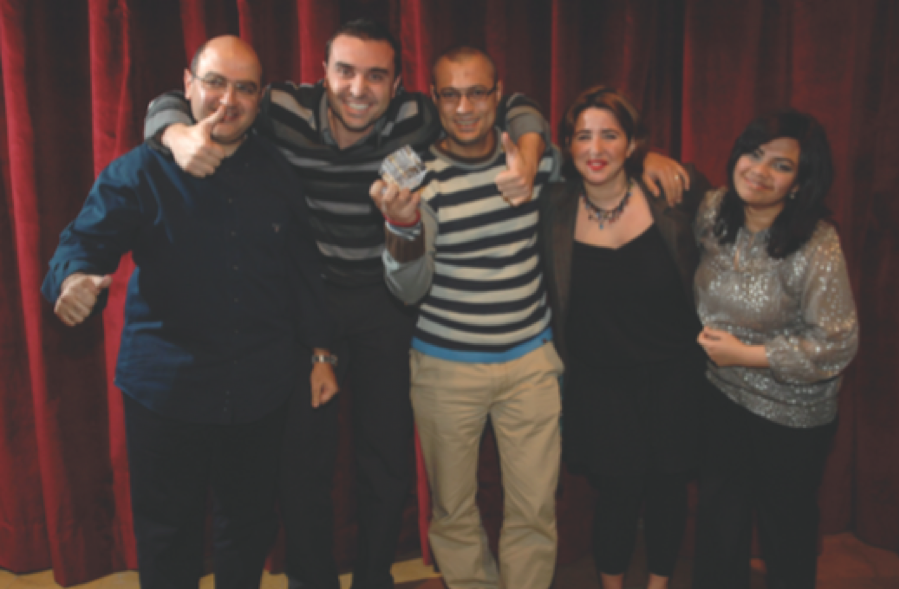
 “Celebrating Innovation and Young Talent” was the slogan of this year’s forth-annual MENA Cristal Award ceremony. A mix of advertising agencies, clients, producers, directors, media, survey companies and TV producers came together to celebrate and reward the region’s best advertising creations. Inspired by the Méribel Ad Festival in France, the event was held in Lebanon for the third consecutive year — the first having been held in Morocco. Event participates took advantage of the unique Mzaar Faraya Ski Resort venue from January 26 to January 29 by hitting the slopes and après ski scene, in addition to the festival. Many conferences, cocktails, lunches and dinner parties were also held in conjunction with the event.

Many key international figures and more than 400 professionals representing 20 countries attended the festivities. Cecilia Attias, the president of the Cecilia Attias Foundation for Women and former first lady of France, received an award of honor for her foundation. Osman Sultan, the CEO of du, received the Media Businessman of the Year award. 

The MENA Cristal Awards reward the region’s best creativity with its famous Cristal prize, within different media categories — television, press, magazine, Internet and others. The jury, headed by Milka Pogliani, chairperson and executive creative director EMEA of MC Cann Worldgroup in Italy, consists of creative managers, agency managers and advertisers who vote by secret ballot. In Mzaar Faraya, Executive had the chance to glean insights from several industry leaders regarding the festival, the advertising  industry and the current challenges that the industry is facing due to the global economic downturn.
February 20, 2009 0 comments
0 FacebookTwitterPinterestEmail
North Africa

Connection comes calling

by Executive Staff February 3, 2009
written by Executive Staff

Just four years on after decades of conflict, South Sudan’s economy is still nascent and officials from the region — desperately under-developed when compared to neighboring Kenya and Uganda — have struggled to attract foreign investment.

But mobile telecommunications have steamed ahead and the past year has seen hundreds of new towers erected across some of the swampiest parts of the south. Two companies, MTN and one of the world’s biggest operators, Kuwait-based Zain, have opened for business this year. Since Zain’s launch in April, the company has left all other operators behind in tower-construction, telecommunication ministry officials say.

Zain’s CEO, Khaled Mutahdi, said the company planned to spend up to $150 million in the region. MTN have also embarked on rolling out from main towns to smaller population areas. Although only a miniscule number of offices have working land lines, most of Juba’s civil servants, businessmen and politicians move about town with between two and four phones at all times. Not one of them has reception all of the time. After four-wheel drives, mobiles are easily the number one peacetime accessory. But despite the gadget-obsessed passion for mobile telephones, operators are racing to provide improved services to survive in an environment of increased competition. A new player will enter the market shortly in the form of Vivacell.

“The launch will be very soon,” said Joe Audi, the company’s marketing manager in Juba. Audi was unable to provide details of the total value of the investment. Vivacell is essentially a re-branded Network of the World (NOW), one of two South Sudanese companies that emerged out of the region’s 21-year insurgency. In 2007, senior officials in the south’s telecommunications ministry said NOW was at least partly owned by the Government of Southern Sudan (GoSS) and that they were trying to find a buyer to take over the license. More recently they have said the ministry had nothing to do with the sale. Part of the company is still owned by southerners, Audi said.

“Vivacell has operations in Armenia, but those are now partially owned by Russia’s MTS operator,” Audi added. Vivacell-MTS has 1.7 million Armenian customers according to the company’s website. New Ericsson equipment has since been installed with initial plans to cover four of the South’s larger towns of Juba, Yei, Bor and Torit. The company will begin by selling SIM cards, but will also eventually provide GPRS systems that will mean customers can access the Internet on the move. “We’ll start with prepaid services through a distributor,” Audi explained, adding that tens of towers would be installed by the end of this year and eventually Vivacell will have at least 100 employees running the GSM system.

Who’s ringing in?

NOW has been little more than a name since members of the south’s rebel movement established it during the war. During peace negotiations both Khartoum and the rebel Sudan People’s Liberation Army/Movement (SPLA/M) had to bring all existing telecommunication contracts to the table. Khartoum presented Areeba (now MTN), Canatel, Sudatel (now Sudani) and Mobitel (now Zain). The southern rebels got Gemtel and NOW recognized. All companies have until 2010 before either side can sign any new contracts.

Ambiguity in the peace accord over whether or not Gemtel and NOW would be allowed to work in south Sudan led to many months of disagreement between Khartoum’s telecommunication ministry and Juba. A 2007 memorandum between north and south Sudan re-established the right of the four northern companies to spread across the south, but did not return the favor to the two southern companies, which must stay south of the border. Northern companies were given access to start building or re-building their operations in the south. In return the southern government was allowed to build and run its own gateway. The gateway contract was won by Ericsson and will be completed early next year at the cost of $17 million, said Stephen Juma from the south’s Ministry of Telecommunications and Postal Services.

With the new gateway, the south will be able to monitor calls made in the south and make money directly from operators who use it. All operators interviewed said that they have agreed to use the separate southern gateway for southern calls. This will also drive down prices from government-owned Gemtel, which still uses a gateway in Uganda as opposed to Khartoum. Southern politicians did not want Sudan’s capital to be able to control calls. In order to place a call to any one of roughly 20,000 Gemtel users from another operator in Sudan, one must wait while a Hong Kong satellite beams the call back via Uganda, explained Gemtel manager Sam Mitwe. Uganda also charges South Sudan’s government $50,000 a month for the gateway usage. As a result, phone calls are enormously expensive and 2008 saw many subscribers switch over to MTN and Zain in order to save money.

“When we get the gateway, our dialing code will change to +249 and prices will go down drastically,” Mitwe said. Gemtel SIM cards are just $22. But unlike Zain, this year’s other newcomer MTN, does not offer a deal in which to purchase a telephone as well. MTN’s Kenyi Ali, head of sales in the south, said the company has distributed SIM card packs across Juba as well. The bright yellow boxes are noticeable in many small, tin shacks, which also sell beverages and daily necessities. Zain, on the other hand, registers all users in its Juba office. Both new customer care officers are busy for most of the day with new subscribers. Most lines in Juba are still not operating at 100 percent. Operators have blamed this on undisciplined use of the spectrum, with some operators barging into others’ sections and causing interference.

A tough call to make

Whatever the reason for the poor line quality in the South, people with enough cash try and increase their chances of getting through by keeping two or three mobiles on them at all times. Sudani, Zain and MTN offer a handset (Samsung for Sudani, Nokia for Zain and Huawei for MTN), as well as a SIM card, for less than $45. South Africa FIFA sponsor MTN, which started work in the south in April, has also introduced three tariff plans.

Ali said that MTN had already begun raising its profile in the south, sponsoring cultural and other events. Like Zain, Gemtel and Sudani, MTN towers cover most of the south’s big towns already and, like other operators, they are expecting to enter more rural areas this year. Up to 30 MTN towers are already up across the south, with six out of a planned eight in Juba itself. MTN has provided a cheaper service to the numerous southerners who have families and friends in neighboring East Africa, where millions of southern refugees fled during the war and where the company already has a good customer base.

In 2007 the company recorded over 44 million users in 21 countries, according to its website. MTN-to-MTN callers get a 50 percent discount on international calls to Uganda, Kenya, Tanzania and Rwanda. The largest proportion of Gemtel’s clients are in the south end of South Sudan. Many of those have relatives and work in next-door Uganda and Kenya. In the northern parts of the region, mobile phone users tend to have closer connections in Khartoum.

Mitwe said the company is also introducing new technology to try and keep its customers from joining the new companies. Heavy rains or even strong sunlight sometimes affects the satellite technology used to transmit calls across the region. Hence, a more reliable microwave link system, in which a series of towers transmits calls, is being built and several towns are already linked in this way. “We’re the first to do this,” Mitwe said.

February 3, 2009 0 comments
0 FacebookTwitterPinterestEmail
North Africa

New to the nuclear parade

by Executive Staff February 3, 2009
written by Executive Staff

Tunisia has joined the growing list of countries turning to nuclear energy to provide a dependable and secure source of power. Becoming a member of the select nuclear club follows signature of a 20-year cooperation agreement drawn up with France in mid-2008, during the visit of French President Nicholas Sarkozy to Tunisia. The agreement has also been given the go-ahead under the guarantee system operated by the International Atomic Energy Agency (IAEA).

Approval of the Franco-Tunisian deal means that Tunisia can develop nuclear energy for peaceful means. During a recent visit by a senior delegation of officials from the IAEA, a spokesman declared the agency’s willingness to help Tunisia build an electricity generating plant by 2020, as well as in assisting in training qualified personnel to manage it.

Production of electricity in Tunisia is increasingly dependent on natural gas as a primary source of fuel. The gas is pumped from the country’s own offshore installations, operated by BG and supplemented by royalties taken from the trans-continental pipeline that delivers Algerian gas from Hassi Rmel to Italy, which comes on shore at the island of Sicily. Although Tunisia is operating a successful energy management program, many feel that it is only a short-term solution and that over the long-term, an alternative source of energy that does not rely on ever-depleting national resources or foreign production is vital. Industry experts say the demand for electricity could almost double to 30 billion kilowatt hours by 2020. Nuclear energy would satisfy up to a quarter of additional demand.

The need for nuclear energy will also increase as Tunisia seeks to meet the growing demand for clean drinking water. A French study compared four nuclear power options with combined-cycle gas turbines and found that nuclear desalination costs were about half those of the gas plant for multiple effect distillation technology, and about one-third less for the reverse osmosis process. Small and medium-sized nuclear reactors are suitable for desalination, often with co-generation of electricity using low-pressure steam from the turbine and hot sea water fed from the final cooling system. The main opportunities for nuclear plants have been identified in the 80-100,000-cubic-meters-per-day and 200-500,000-cubic-meters-per-day ranges. In the meantime, 14 new standard desalination plants are to be built in southern Tunisia. Work has already started on three in the Tozeur area, which will have capacity of 6,000, 4,000 and 650 cubic meters per day, respectively. Total investment in the three projects will be about $13.3 million. The state water utility, Société Nationale d’Exploitation et de Distribution des Eaux (SONEDE), is preparing international tenders for the remaining 11 plants.

Energy for everything

For Tunisia, the production of nuclear energy would not only be a means to satisfy the ever-growing demand for electricity or to desalinate seawater for drinking purposes, but would also have applications in the fields of industry, agriculture and medicine. For France, signature of the agreement signifies yet another successful operation in the Maghreb, where it has already negotiated nuclear cooperation agreements with Algeria, Libya and Morocco. Morocco is expected to have nuclear power by 2016 and Algeria a couple of years later. A major producer and consumer of nuclear energy for its own national needs, France has also concluded agreements with Arab states in the Gulf region, many of which are looking to acquire nuclear technology for energy diversification, electricity needs and water desalination.

Under the joint Franco-Tunisian agreement, Tunisia’s state power and gas utility, Société Tunisienne de l’Electricité et du Gaz (STEG), will carry out technical and economic feasibility studies into the construction of a nuclear power plant, with a target date of  2020. STEG’s administrative affairs director, Mohamed Ben Ftima, said that although the program is only in is early stages, “STEG staff have already been sent to France to start basic training on nuclear programs.”

The cooperation program will also cover fundamental and applied research, safety and security regarding nuclear energy development and the valorization of uranium resources in Tunisia, the management of nuclear waste, legislation for a development framework and preparation of a public information program designed to alleviate scaremongering regarding the safety of nuclear energy.

February 3, 2009 0 comments
0 FacebookTwitterPinterestEmail
North Africa

Health of a nation

by Executive Staff February 3, 2009
written by Executive Staff

Algeria’s health sector is in the midst of significant reform, with the government seeking to improve service delivery and promote local pharmaceutical manufacturing in a bid to reduce dependence on imported products.

According to the World Health Organization (WHO), Algeria spends 3.5 percent of GDP on health services. With gross domestic product estimated at $130 billion for 2008, this would put health expenditure at $4.5 billion. Similarly, the WHO estimates that 9.5 percent of Algeria’s total government expenditure goes toward the overall health sector, notably higher than neighboring Morocco’s 5.5 percent or the 6.5 percent outlay from Tunisia.

Recent years have seen a gradual shift away from a policy of state provision of all health services, as a result of the spread of private sector medical facilities — which have grown from two clinics in 1990 to more than 250 today — and the end of the government monopoly on the pharmaceutical industry.

The gradual change in the composition of the health sector is partially a result of Algeria’s changing demographic trends. According to a report published in the WHO bulletin of last November, the government needs to develop a broader strategic vision for the provision of health care to take into account the massive transformations in Algerian society over the past 30 years.

Adding urgency to health service reform is the rapidly expanding population, predicted to reach 40 million by 2025, up from the current figure of 34 million. To meet growing demand, the government has moved to increase the number of hospital beds from 52,000 in 2007 to a projected 64,500 this year. While this would give a ratio of one bed for every 527 Algerians, it would still lag behind the population curve — in 1998, for example, the WHO recorded a much-higher figure of one bed per 476 citizens.

The government also plans to open seven new hospitals and a number of other health service centers this year as part of its latest $150 billion, five-year plan. The 2005-2009 program committed $2 billion to modernizing and expanding the health care system, with 65 general hospitals, 76 polyclinics, 168 health centers and 40 treatment rooms planned. A large number of these new facilities will be built in the southern and high plateau regions, since these areas have the least access to quality health care.

Despite the increase in capital investments, the Algerian health system is grappling with more challenges than simply limited supply. In November, and again in December, health workers went on strike to pressure the government into improving conditions, including pay rises of up to 300 percent. According to local media, unions representing medical personnel say their salaries have fallen far behind those of many workers in the oil industry and that low wage levels are putting a strain on health services providers.

Pushing pharmaceuticals

One segment of the health industry that Algeria is looking to promote is the pharmaceutical industry. The provision of prescription drugs and over-the-counter (OTC) health products is big business in Algeria. According to Rachid Zaounai, the general director of the public pharmaceuticals company Saidal, the market is expected to grow five times its current size by the end of 2010, and be worth an estimated $8 billion by 2015. Considering the increase in disposable incomes and the rising awareness of health issues, expenditure on OTC healthcare products is set to grow even further.

According to Slim Belkessam, an adviser to the minister of health, domestic production meets 30 percent of Algeria’s pharmaceutical requirements, with the remaining 70 percent provided for by imports, which cost around $2 billion a year.

“We want to reduce the import bill, promote local production, create jobs and ensure transfer of technology to some specific products,” Belkessam told the local press.

As testament to the government’s support of the local pharmaceutical sector, former Health Minister Amar Tou banned in December 2007 the import of foreign-made pharmaceutical products, a measure designed to both support the local drug manufacturing industry and to reduce expenditure on pharmaceuticals. While his decree was overturned in July 2008 — as local suppliers could not meet all of the medicine needs — the Health Ministry nonetheless announced in October a list of 359 medicines produced locally that could not be imported.

Under the government’s new policy, international firms wishing to export medical products to Algeria must invest in the domestic pharmaceutical industry by setting up production or research facilities within two years of obtaining an import license. The restrictive policies have proved challenging for foreign companies hoping to enter the local market, but Algeria’s bid for WTO membership will likely loosen the regulations for domestic competition.

Though the government is committed to improving health services, revenue decline due to lower global energy prices in 2009 is expected to cut the state surplus and make it more difficult to boost expenditure beyond present levels, especially as the state raised spending on other areas such as defense, infrastructure and housing.

February 3, 2009 0 comments
0 FacebookTwitterPinterestEmail
North Africa

Where outsourcing is in

by Executive Staff February 3, 2009
written by Executive Staff

Overseas outsourcing may have pricked a nerve among Western workers who fret about rising unemployment rates and the loss of jobs to foreign shores, but it has also helped drive economic growth into the double digits in countries like India and China. Emerging market economies like Morocco, identifying an opportunity to finally use “free trade” to their advantage, are making investment in outsourcing a pillar of economic development, hoping to pry a share of the sizable market away from the BRIC countries (Brazil, Russia, India and China).

Outsourcing to foreign countries allows companies to substantially reduce costs by paying less for qualified labor and in some cases receiving government subsidies. Pioneered by UK- and US-based businesses in the early 1990s, the practice of outsourcing is growing among French and Spanish-speaking markets, particularly in France, Spain, Belgium and Switzerland. As companies in Spanish and French-speaking countries keep increasing demand for outsourcing locations, Morocco is stepping up to the plate with investment in infrastructure and special zones to house outsourcing operations with a strong-willed bid to become the leading destination for Western European companies looking to outsource.

Morocco already has three natural advantages that make it a highly competitive outsourcing location for Western Europe: an inexpensive multilingual workforce, a modern liberalized telecoms sector, and a geographical and cultural proximity to Europe. The country also has dangerously high unemployment, prolific urban slums and a large group of unemployed graduates who regularly protest in front of the parliament in Rabat. A period of proven success hosting call centers showed the country could capably adapt to Western companies’ outsourcing needs, and Morocco seized on the opportunity to integrate outsourcing into its socio-economic development strategy.

The development of four outsourcing zones at Fes, Marrakech, Casablanca and Tetouan is generating a considerable buzz in the kingdom, raising hopes for economic growth and a viable way to absorb the growing numbers of jobless graduates. Although Morocco’s outsourcing sector is still at an early stage, a strong kickoff has gained it recognition as an up-and-comer on the international scene. In its 2008 year-end survey of the top 30 most suitable countries for outsourcing services, industry tracker Gartner dropped Northern Ireland, Sri Lanka, Turkey and Uruguay from the list and added Morocco, Egypt, Panama and Thailand.

The launch of the four zones, which will host business process outsourcing and information technology outsourcing (BPO and ITO), plays a key role in the implementation of the country’s “Emergence Program.” Engineered for the Moroccan government by the firm McKinsey, the Emergence Program outlines an overhaul of the country’s industrial sector over a 10-year horizon (2003-2013). As the country becomes a more attractive outsourcing destination, analysts predict rising levels of foreign investment and a boom in job creation. The strategy is expected to contribute $1.7 billion to the country’s GDP by 2013, and to create an estimated 91,000 new direct jobs and thousands more indirect jobs.

Positioned for success

Issam Belmaaza began working for Business Support Services (B2S) in 2005, providing technical support to clients of French Internet service providers Orange and SFR. After a five-week training session, he was hired at a $442 monthly salary. He has since been promoted, now earning $932 per month managing a team of recruiters. He works 8-hour shifts, five days a week, and is enrolled in a part-time Master’s program for management and human resources. He likes his job and his co-workers, and unlike some call center workers, who change from “Mohammed” to “Marc” during working hours, he does not lie about his name or strive to make his accent less pronounced.

His story is an uplifting look at what could be the future of the Moroccan workforce, should the execution of the Emergence Program go as planned. One of Morocco’s most serious problems is the growing number of jobless graduates. Reports indicate that Morocco will have to create as many as 400,000 jobs per year for the next 10 years to prevent mass unemployment. Mr. Belmaaza and others like him who find upward mobility in BPO or ITO will help the country’s middle class grow and narrow the gaping divide between rich and poor.

Furthermore, as outsourcing evolves from low-level manufacturing jobs to higher-level back office functions like accounting and IT development, workers will learn skills that carry over to local businesses. While Morocco’s outsourcing market has until recently been focused on call centers, new infrastructural investments will allow for expansion into banking, insurance, telecommunications and IT development. Knowledge process outsourcing (KPO) could also be in the future.

Special zones

The first outsourcing center to launch was Casanearshore, managed by the leading institutional investor CDG Group, which opened in 2007 as a park for BPO and ITO. The park, which represents an investment of $314 million, is spread out over 53 hectares. Upon completion of its three construction phases, it will consist of 40 buildings offering 250,000 square meters of office space. Currently, most of the companies with operations at the site are in the IT domain, although officials are implementing measures to attract more back-office functions. Tata consultancy services, Teuchos Groupe Safran and Ubisoft are among the businesses that have outsourced operations to the park, while BNP Paribas has set up two specialized IT companies on the premises: Mediha Informatique and BDSL.

High investor interest in Casanearshore has built anticipation for other outsourcing zones, in particular, the TangierMed outsourcing zone, run by the TangierMed Special Agency (TMSA). In Morocco, project management can be subject to lengthy delays and unforeseen constraints, but the TMSA’s efficient management of the TangierMed ports and free trade zones has won the agency widespread approval and confidence. On January 7, at a ceremony presided over by King Mohamed VI, the TMSA signed a convention to extend the TangierMed industrial platform to 5,000 hectares, including a 90-hectare site near Tetouan for outsourcing, scheduled to open in 2011. “We know that the outsourcing that will work in the North region will be the one that is destined to Spanish-speaking clients, so basically we will target companies in Spain in financial services and banking and so on,” said Youssef Bencheqroun, CEO of Activity and Real Estate Zones at the TMSA. The northern region of Morocco, including Tangiers at just 14 miles from Spain, is well positioned to tap into the neighboring Spanish market for outsourcing services.

One of the more useful legacies of the colonial period, when Spain controlled the northern territory of Morocco, was the spread of second and third languages throughout the country. Today, in addition to Arabic, most people in north Morocco speak fluent Spanish, while most of central and south Morocco speaks fluent French.  Outsourcing zones are coordinating location with linguistic proficiency. While the centrally located Casanearshore has made its mark on the French speaking markets, the opening of the TangierMed outsourcing zone in the north is expected to provide great opportunities to Spanish businesses, which have traveled as far as Latin America to outsource functions. Tangiershore will be the first site to offer Spanish companies a cost-effective Spanish-speaking workforce at a trifling geographic distance.

“We’ve had some contact on a one-to-one basis with some companies, and it looks like there will be a very strong interest,” said Bencheqroun. “I understand that the Spanish companies are already doing outsourcing with Latin America, but the advantage we would have is that, while outsourcing is fine, one day or another, people have to meet with each other and when that is in Latin America it’s a lot more difficult.”

Human resources & fiscal incentives

Infrastructural investments and the creation of special zones are essential in attracting outsourcing activity to Morocco. But the key to remaining competitive with other countries like Romania and Tunisia is training and building the potential of human resources. Prime Minister Abbas El Fassi, calling Morocco a “magnet” for companies interested in outsourcing, said that the sector was “at the heart of our interests, because it is bursting with development potential, due to the high demand which will come from European countries over the next 10 years,” local press reported. To prepare for this demand, a large-scale employee-training program is being implemented to ensure a ready supply of skilled workers. The state-funded initiative will train 22,000 graduates in 12 various fields.

The business-friendly Moroccan administration is helping to fuel investment by enticing companies with incentives, such as flexibility with the country’s work code and simplification of bureaucratic processes. Companies set up in the offshore zones will also benefit from exemption from corporate tax for the first five years and a limiting of the income tax for employees. As demand for outsourcing rises, competition among countries for offshore investment is stepping up, but Morocco looks well positioned to make good on its geographic advantages and human capital, complemented by extensive infrastructure and government support.

Outsourcing is bursting with potential, due to high demand expected from europe in the next 10 years

February 3, 2009 0 comments
0 FacebookTwitterPinterestEmail
GCC

Construction hits the wall

by Executive Staff February 3, 2009
written by Executive Staff

With the weight of the financial crisis still holding back real estate developers, some are finding it necessary to delay or even cancel projects.

Nakheel, one of the world’s largest privately owned real estate developers, announced in mid-January that it has stopped construction on the Nakheel Tower for 12 months. The tower will purportedly be one kilometer high, making it the tallest in the world. This has lead to the layoff of construction workers, in addition to the 500 employees already axed by Nakheel in Novemberw 2008.

In the first week of January, Dubai’s real estate company Meydan LLC canceled the Nad El Sheba racecourse construction deal with the Malaysian firm WCT Berhad — formerly known as WCT Engineering Berhad — and Arabtec. Meydan’s chairman told Arabian Business that the deal was canceled because the joint venture of the two companies was unable to “deliver certain zones” of the project on time and was confident that Nad El Sheba will not be delayed for the Dubai World Cup in 2010 since new contractors will be appointed.

The magazine added that WCT told OSK research the racecourse faced minor delays two months ago, mainly due to changes in the project designs required by Meydan. It was reported that WCT will request compensation of $84 million for the cancellation. WCT and Arabtec refused to comment further on the issue. The $1.3 billion development will include a 1.2 kilometer grandstand with a capacity of 60,000 people, a five star-plus hotel, restaurants, a museum and covered parking for 10,000 cars.

Two weeks after the Nad El Sheba racecourse was canceled, Arabtec was also forced to stop work for a year, at least on the $654 million Atrium project, after the Dubai-based Sunland group — the project’s developer — called for the delay without announcing why. The Atrium project is located in the new Madinat Al Arab area. It covers more than three million square feet, includes three basement levels and two 68 story residential towers blended together and was supposed to be completed in 2013.

As well, the Harman City Complex, which is part of the City Complex in Las Vegas, has been canceled. The complex was being developed by Las Vegas-based CityCenter holdings, a joint venture between MGM Mirage and the Dubai World subsidiary Infinity World. Robert Baldwin, president and CEO of CityCenter told Emirates Business 24/7 that, “by cancelling The Harmon condominium component, we will be able to avoid the need for substantial redesign resulting from contractor construction errors.” The cost saving anticipated by the company due to the cancelation amounts to $600 million.

Al Futtaim Group Real Estate, the company developing Dubai Festival City, has also delayed work on parts of the $2.99 billion project.  According to The National, at least three projects in Dubai Festival City had been stopped, including W Hotel, the Al Badia Business Center, an extension to the retail facilities that opened in 2007, as well as the Four Seasons Hotel. The company has taken this step in order to benefit from a further fall in construction costs due to the financial crisis, which would enable it to reduce its expenses. Other real estate companies in the region are also suffering.

In Qatar, the Ras Laffan Industrial (RLC) City, run by a Qatar Petroleum management team, is revising projects due to the drop in oil and construction material prices. RLC, located 80 kilometers northeast of Doha and covering 106 square kilometers, is one of the most important projects in Qatar. The city hosts an industrial port and several industrial facilities. It provides integrated services to businesses including modern infrastructure, security, fire and safety facilities, a medical center, an environment section and a support services area.

As more projects are frozen, either due to the lack of liquidity, the fall of construction material prices, or corporate disputes, these delays will further deteriorate investors’ confidence in the property market and set back its eagerly anticipated recovery.

February 3, 2009 0 comments
0 FacebookTwitterPinterestEmail
GCC

Abdulla Bin Sulayem – Q&A

by Executive Staff February 3, 2009
written by Executive Staff

Abdulla Bin Sulayem is the operations director of Palm Deira, which will be the largest man-made island in the world and a new city within Dubai for more than a million people. It is the final part of The Palm Trilogy consisting of Palm Jumeriah, Palm Jebel Ali and Palm Diera. Nakheel, the world’s largest privately held real estate developer, is driving the project. Nakheel now has 16 major projects under development in Dubai across a range of sectors. The company’s portfolio spreads across more than two billion square feet of land and is projected to be worth more than $30 billion.

E When did Nakheel start construction on Palm Deira and what stage has the project reached?

In 2003, the deal was signed between Nakheel and Van Oord, the company that is creating the island for us. Right now we have more than 36 percent of the island completed, which is equivalent to more than three times of what is available at the Palm Jumeirah in terms of land area. Currently, more than 50 percent of vibrocompaction is completed, which basically makes the land stable and ready for construction. That is the same method we used in Palm Jumeirah and that people use all over the world. Palm Deira will eventually hold a population of 1.3 million people. The difference between Palm Jumeirah and Palm Deira is that Palm Deira is going to be a city on its own. It will have a lot of facilities, offices, retail, swimming pools and even firefighters; everything that you find in a normal city will be available in the Palm Deira. One of the reasons for this is that we have tried to minimize the traffic going in and out of the Palm, so if you live there you can work and be entertained there as well.

E Has the construction at Palm Deira been affected by the ongoing financial crisis?

These difficulties come from corporate Nakheel. We work together with them to adjust our business plans. Obviously the financial crisis is affecting the whole world and changing plans. What is good about Nakheel is that we took a lot of sukuk funds from the market, so we have secured a good amount of cash to finance the project. Nakheel is thinking to complete the committed projects, where people already paid for villas and apartments. For other projects, we will have to readjust our master plan based on the market conditions.

E Are some parts of the Palm Deira projects going to be delayed because of the market conditions?

I would not say delayed, but we are re-examining the programs and making them more flexible. Some properties that were sold to investors, we are continuing to complete these and have the land ready for them. Other than that, we have one bridge that is already under construction and that is still ongoing. We have our sales office that was under construction, which is going to be completed in a month’s time.

E What about delivery times? Are they the same as planned?

Of course the delivery of the project will all depend on the market conditions. If we have a commitment to someone, we are still committed. The other parts that we were thinking of creating or planning to do, these will be slowing down until the right time comes.

E In November, you denied rumors that the project was on hold. Where did these rumors come from?

At that time some information was given to the public that we are stopping Palm Deira, which was incorrect. So in November we came out to the press showing them that we are still continuing. Of course with the financial crisis, we would not be continuing as fast as we were before, but the project is not canceled and that was our message. We still have a team of over 100 staff from Nakheel in Palm Deira working on the project. Mainly in Palm Deira there were many rumors before, maybe because of the prices of villas and there is a lot of history behind it. But what is good now is that we have more than 36 percent of the island completed and we showed that in November, so after that period we felt the market now understands we are still going ahead with the project. It could be because of the magnitude of the project, people weren’t sure that we would go through with it. Of course the crisis has had an effect on everyone and we are not moving as fast as we were moving, but that is the sensible thing to do since our direction is based on the market. For example, if we were planning to sell two bedroom apartments and demand is there for one-bedroom apartments, obviously we will divert to the demand. We have one private investor that joined the venture with Nakheel. We have not announced their name yet and maybe this month or next month it will be announced. This private investor will jointly construct 50-50 with Nakheel a development that is to be announced.

E Have you launched any part of the project yet?

No, not yet. The launch will depend on market conditions. So the launch will be 50-50 with the private investor. It will be launched in stages depending on market conditions.

E Congratulations for winning the developer of the year award. What do you think made your company the winner?

I would say that we have good management, which believes in empowering the business unit to come up with ideas. Nakheel is working in a very healthy environment and what we like to do here is show our experience in different areas, so we always come up with innovative ideas.

February 3, 2009 0 comments
0 FacebookTwitterPinterestEmail
GCC

Park and run

by Executive Staff February 3, 2009
written by Executive Staff

The grim reality of the global financial crisis is biting hard in Dubai, especially for the many living beyond their means. Of late, people have taken to measures such as dumping their cars at the airport and fleeing the country, with police having recently removed 22 cars from Dubai International Airport.

The National reported that last year 3,241 cars were reclaimed by banks, a 123 percent increase on 2007. Debt collectors report a boom in business as banks ensure loan defaulters do not get away with their “park and run” attempts. The reports of abandoned cars has created a lot of activity in the blogosphere with many living in Dubai blaming the phenomenon on the ease in which you can buy a car. As one blogger said, “It was so easy to buy cars in the UAE no guarantor required, no down payment, pay a minimum of up to 5 years, the car prices are all tax free and cheap.” Another blogger summed up the attitude in Dubai that has left so many in financial ruin. “To succeed in life I must lose all moral and ethical intuition, move to a foreign country, take out loans for assets, roll the dice, pop the champagne or book the return flight.”

However, for some the implications of the financial crisis go far beyond the mere ‘dump and run’. Sharjah Police reported the suicide of a Pakistani businessman — who had lost millions — by self-decapitation with an electric chainsaw. Police say they are expecting a rise in the suicide rate as the financial crisis progresses, thus it may be that abandon cars at the airport are among the more mundane symptoms of ‘crisis’.

February 3, 2009 0 comments
0 FacebookTwitterPinterestEmail
GCC

The capital of angels

by Executive Staff February 3, 2009
written by Executive Staff

The Middle East is seeing a rapid increase in the number of angels and their networks. Angels are individuals of high net worth looking to invest  in private companies and ventures at an early development stage.

The Arab Business Angel Network (ABAN), funded by Dubai International Capital, has been actively encouraging the creation of business angel networks across the region. Walid Hanna, the CEO of ABAN, stated that the concept of a business angel investment and a business angel network is based around the idea of “smart money.”

Unlike venture capital firms that invest other people’s money, angels invest their own money in the venture proposed, replacing the traditional methods of accruing seed capital: FFF (friends, fools and family). Business angel networks are created to gather angels together and to help them find propositions that they can put seed capital towards. The aim of these networks, Hanna states, is to, “create companies, diversify the economies of the region, boost cross border trade and most importantly create jobs.”

These four goals are paramount for virtually all MENA economies and thus business angels are unsurprisingly being created at a rapid pace. The popularity of business angels has also been helped by positive returns on investments that have even surpassed private equity firms’ results at a general level. In the US, a report by the Angel Capital Education Foundation stated that angel investments reported a return of 2.6 times the original investment in three and a half years on average, although 52 percent of angel investments returned less than the capital put in by investors.

The prospect of good returns for investors has meant that in 2009 already three memorandums of understanding (MoUs) have been agreed, two in Saudi Arabia and one in Lebanon, to establish business angel networks. Antoine Abou-Samra, managing director of Bader, who signed the MoU with ABAN to set up a network in Lebanon, said the creation of a business network with ABAN will be highly beneficial in terms of, “the exchange of knowledge, deal flows and business contacts.” Hanna said  Jordan and Egypt are following Saudi and Lebanon and signing MoU’s with ABAN to set up Angel networks. As networks grow across the region, hopes are that the angels live up to their name and bring the blessing of “smart money.”

February 3, 2009 0 comments
0 FacebookTwitterPinterestEmail
GCC

A cap of concern

by Executive Staff February 3, 2009
written by Executive Staff

Officials in GCC countries started to set rent caps in the last couple of years in order to curb the skyrocketing inflation hitting the real estate sector and their economies in general. In the UAE, Qatar and Bahrain, rent caps were set to deter greedy landlords who were increasing rents at excessive rates without restriction. In the UAE, the rent cap for 2008 was five percent for both Dubai and Abu Dhabi, and ten percent in Bahrain. In Qatar, the cabinet decided in March 2008 to freeze rents for two years on contracts signed after January 1, 2005. No clear statement said how much landlords can increase prices after the two year freeze expires, but contracts signed before January 2005 can increase between five and 20 percent.

Experts agree that the rent caps are not very effective, since most landlords have been ignoring the law and adopting a ‘take it or leave it’ strategy. Most tenants were forced to pay the increase for fear of not finding other accommodation. The total number of complaints received by the rent committee in Dubai was 8,000 in 2007, 9,000 in 2008, and 320 by mid-January of this year.

Dodging the cap

Amin Al Arrayed, general manager of First Bahrain, believes that one way to circumvent the law is to change the ownership of the property. “Let’s say the building was in the name of the son, he transfers it to his mother’s name. That is the new owner, so she can increase the rate [as much as she wants]. And then the next month she can transfer it back to her son,” explains Al Arrayed. “You can play a lot of games to go around the rules,” he added.

An index of rental values for residential units in the Emirate of Dubai in second half of 2008

Source: AME info

In 2009, the rent caps for Abu Dhabi and Bahrain remain unchanged and no modifications were introduced to the cabinet’s decree in Qatar. However, with the expiry of 2008’s five percent rent cap in Dubai, tenants found themselves in a state of confusion with no legal protection from extraordinary rent raises. Nevertheless, with many people leaving Dubai due to job losses caused by the financial crisis, some experts say that a rent cap is not necessary anymore since rents are likely to soften. With the demand reduced and new supply coming to the market, landlords are currently allowing more flexible payment terms and are expected to stop increasing — or even start to decrease — rents if the market conditions persist.

Marwan Bin Ghalita, chief executive of Dubai’s Real Estate Regulatory Authority (RERA), stated that a freeze in rent is needed to replace the five percent rent cap. Ghalita told Gulf News, “We don’t need a rent cap this year. We need to freeze everything. Two-thousand nine is a tough year and we shouldn’t interfere with rents too much.” Consequently, RERA has issued a decree freezing rents on residential and commercial properties in Dubai for tenants who renewed their contracts in 2008. Yet, if the rents were more than 25 percent below the recommended figures in Dubai’s newly issued rental index, then the freeze does not apply. The new index sets the highest and lowest average for residential and commercial properties in Dubai and serves only as a guideline for both tenants and landlords. The new decree stated that rents that are between 26 and 35 percent below the index can be raised by five percent. Those who are between 36 and 45 percent below can increase by 10 percent. Those between 46 and 55 percent can be raised by 15 percent. Beyond 56 percent, the increase allowed would be 20 percent.

Worries in waiting

Concerns are emerging from experts saying that some people will face hefty rent rises due to the new index. Nicholas Maclean, the managing director of CB Middle East Region Richard Ellis explained that some people might be paying much lower rents than the minimum set by the index and may be subject to a substantial and unaffordable increase in rents that would drive them out of their property.

Additionally, the rental index, which was set during mid-2008, is considered outdated and irrelevant due to changing market conditions. It also sets an average for areas where both old and new buildings exist, which can make the average rate below or above the building’s fair price. In the coming months, Dubai will have a clearer view about the effectiveness of the index since it is too soon to know if landlords will use it to their advantage in order to inflate prices or it will represent a fair guide to Dubai’s rental market.

February 3, 2009 0 comments
0 FacebookTwitterPinterestEmail
  • 1
  • …
  • 483
  • 484
  • 485
  • 486
  • 487
  • …
  • 688

Latest Cover

About us

Since its first edition emerged on the newsstands in 1999, Executive Magazine has been dedicated to providing its readers with the most up-to-date local and regional business news. Executive is a monthly business magazine that offers readers in-depth analyses on the Lebanese world of commerce, covering all the major sectors – from banking, finance, and insurance to technology, tourism, hospitality, media, and retail.

  • Donate
  • Our Purpose
  • Contact Us

Sign up for our newsletter

    • Facebook
    • Twitter
    • Instagram
    • Linkedin
    • Youtube
    Executive Magazine
    • ISSUES
      • Current Issue
      • Past issues
    • BUSINESS
    • ECONOMICS & POLICY
    • OPINION
    • SPECIAL REPORTS
    • EXECUTIVE TALKS
    • MOVEMENTS
      • Change the image
      • Cannes lions
      • Transparency & accountability
      • ECONOMIC ROADMAP
      • Say No to Corruption
      • The Lebanon media development initiative
      • LPSN Policy Asks
      • Advocating the preservation of deposits
    • JOIN US
      • Join our movement
      • Attend our events
      • Receive updates
      • Connect with us
    • DONATE