• Donate
  • Our Purpose
  • Contact Us
Executive Magazine
  • ISSUES
    • Current Issue
    • Past issues
  • BUSINESS
  • ECONOMICS & POLICY
  • OPINION
  • SPECIAL REPORTS
  • EXECUTIVE TALKS
  • MOVEMENTS
    • Change the image
    • Cannes lions
    • Transparency & accountability
    • ECONOMIC ROADMAP
    • Say No to Corruption
    • The Lebanon media development initiative
    • LPSN Policy Asks
    • Advocating the preservation of deposits
  • JOIN US
    • Join our movement
    • Attend our events
    • Receive updates
    • Connect with us
  • DONATE
GCC

Room after empty room

by Executive Staff February 3, 2009
written by Executive Staff

In the GCC, countries like the UAE, Qatar and Bahrain are feeling the global financial crisis in their real estate rental markets. This is due to many factors, including a decrease in demand resulting from the outflow of expatriates, as well as a fall in property prices and new supply coming online.   Currently most rent prices in the UAE and Bahrain are somewhat stabile, and a decline in rental rates was already felt in the office market in Dubai in the last quarter of 2008. Experts predict, however, if demand and property prices continue to drop, rents will soften in 2009. In Qatar, Asteco’s general manager David Oayda seems more optimistic. He predicts that rents will stabilize and not decrease, since Qatar’s real estate market is less affected and its demand will remain strong. 

Lower demand

Since the financial crisis began, some experts expected that rental demand would increase as people were shifting from being buyers to tenants due to lack of mortgage financing. This would certainly be a positive sign for the rental market. However, the downsizing of companies and less available cash on the part of tenants is having an effect on the rental market and leading to a slowdown in demand and prices. Nicholas Maclean, managing director of CB Richard Ellis Middle East Region, explained that, “in the residential market, there was some level of rental growth, but I think that the view for the market at the moment is that rents have declined for weeks in Dubai, partly because of people leaving due to redundancies in the real estate sector and also due to the lack of confidence.” The same applies to the office market since businesses are currently delaying expansion plans and even shrinking, which results in a lower demand for office space.

In Bahrain, the market is mainly based on domestic demand and is therefore less affected than the UAE. However, general manager of First Bahrain Amin Al Arrayed, explained that the expatriates in the kingdom are seeing smaller incomes. When that is combined with unemployment, demand for apartments might slow down. “A lot of jobs, especially in the banking and real estate sector are heavily commission based, so a lot of people’s incomes have been affected because they are not making as much commission as before,” explains Al Arrayed. He adds “If the economic situation keeps deteriorating, we could see more weakness in that market since there are less jobs and people will start to move elsewhere.”

Rents and prices

Another reason why rental rates are expected to come down is their tendency to track asset prices. However, the change in rents is slower and not as significant. So when property prices were increasing quickly in the last couple of years, rental rates were following suit. “Prices of apartments, offices and homes were all going up very quickly, so there was a lot of inflationary pressure on rental rates,” says Al Arrayed. He added that, “this crisis has resulted in the fall of asset prices and so the expectation is that we will see more softening in rental rates if [the crisis] continues for much longer.”

Iseeb Rehman, the managing director of Sherwoods Property Consultants, links the decrease or stabilization of rental rates to rental returns, which investors expect to range between eight and 10 percent. Therefore, if the value of the property has decreased, it is normal for the rental rates to slow down. Yet it is important to keep in mind that rentals “hold stronger” than property values and therefore do not decrease as fast.   

New supply

Additionally, the real estate rental market is expected to be negatively affected by new supply coming to the market, not only from developers, but also investors who are unable to sell their properties and therefore choose to rent it in order to secure income. The increasing availability, assuming that the demand will further decrease, will trigger downward pressure on rents in all sectors.

In Qatar, David Oayda, the general manager of Asteco Property Management, explains that some developers rethink their strategy when it comes time for the handover and they decide to rent instead of selling due to the current situation. However, Oayda does not seem worried about the increase in supply since he thinks Qatar — even if witnessing a slowdown in its real estate market — is better positioned to handle the current crisis. “We are looking forward to [the new supply]. There are going to be some handovers taking place within the next six months on the Pearl and throughout West Bay,” asserts Oayda. “We have already got registrations and expressions of interest for lease, commercial and residential.”

Facts and figures

So far, the crisis has hit rental rates in Dubai where office rents in free zones have dropped in comparison to 2008’s third quarter numbers. Rents in Jumeirah Lake Towers, Media City and Deira have already dropped by 16, 11, and 14 percent respectively, according to Asteco’s fourth quarter report. Asteco also stated that the rental rate growth for apartments and villas in 2008 was only four and eight percent respectively, with no changes over the last three months.

Abu Dhabi stands stronger since property has always been less available in the emirate, which has inflated real estate prices further in recent years. Experts agree that the capital’s rental market will be less affected by the crisis than Dubai since demand will continue to outstrip supply due to the city’s better economic situation and the lower availability of property. “The rental market in Abu Dhabi will remain stronger because it is the capital and a lot of diplomatic missions are there,” said Rehman. “That is naturally a good catalyst for rental. A lot of companies are based there and supply is very short,” 

Some villa rental rates even witnessed growth in Abu Dhabi in the last quarter of 2008, with the highest seen in Al Raha Gardens and Khalifa ‘A’ developments. The rental appreciation for three-bedroom villas in these projects was 14 and 16 percent respectively according to Asteco. This growth was driven by companies using villas as offices since rental rates are cheaper compared to office space in towers. While villas were still in high demand, apartments and offices did not follow suit. Rental rates for one-bedroom apartments increased only one percent, while two and three-bedroom apartments did not witness any change since people are currently looking to more affordable units for rent. Demand for large offices has decreased but no numbers were available.  

In Qatar and Bahrain, it seems that there is more of a stabilization in the rental market since a high portion of growth was mainly driven by domestic demand and both markets were less speculative, which made the impact of investors’ withdrawal less damaging than in the UAE.

In Qatar, Oayda explained that opposed to what press releases or distributed figures might say, prices of properties have not been reduced and consequently rents did not witness a decrease. However, a certain level of stabilization is observed in the market, since prices of residential property over the fourth quarter have increased less than 10 percent and office rents showed no variation during the same period. “Landlords were certainly asking very courageous prices,” said Oayda. “Now companies are reconsidering what they have been paying and they are certainly being more stringent in what price they are paying.”

However, the real estate markets in both countries are witnessing a slight dip in high-end property leasing. The demand for this sector was mostly investor-driven and with the withdrawal of these investors, prices of high-end properties are declining, consequently causing rents to drop. Additionally, people are trying to lower their expenditures due to lower incomes and financial pressure and thus choosing more affordable properties. Al Arrayed estimated that the decrease in rents for high-end properties could be estimated at 20 percent in Bahrain. No numbers were available yet for the Qatari market. Al Arrayed said that the rate of decrease is hard to estimate since rental rates that are advertised can be negotiated with the landlord and are not final. However, it should not be significant since middle-income housing was relying on domestic demand, which is still strong. 

Extended rent payments

Paying one upfront check to landlords for the whole year’s rent is becoming more and more unaffordable in the UAE, especially with tight lending from banks and the uncertainty of tenants about their future. Therefore, landlords are settling for quarterly or even monthly payments in order to attract tenants in the prevailing market conditions. “I have lived in the UAE for years and I have not seen that before,” said Maclean. “I think the reason for that is the landlords are competing with one another for the tenants,” he added.

Expectations

In the UAE, experts predict a drop in rental rates, though it is still too soon to tell how far the fall will be since it depends on many factors, like the future redundancies expected by companies, property prices and investors’ sentiment in respect to the sector. “The market is going to soften up and landlords are expecting lower rents,” predicted Rehman. “They are going to be coming to more affordable levels and it remains to be seen where the bottom is.”

Maclean expects rental rates to decline in 2009 and by the end of the year the property sector will stabilize. He explains that it is good for the UAE since “the market was too overheated” and lower rents will create more confidence in the market.

Al Arrayed expects rental rates to soften in Bahrain in 2009, especially for high-end properties, since middle-income demand was not as much affected. Additionally, if the fall in property prices continues and banks do not start lending like before, the declines in rents will be stronger.

Oayda believes that in the next three months, rents in Qatar will be stable and the new supply will certainly not have an adverse effect on prices of rents since the lack of confidence in the market has no basis in Qatar, and once the confidence starts to rise, the whole market will start picking up again.

February 3, 2009 0 comments
0 FacebookTwitterPinterestEmail
Levant

Stalled assembly

by Peter Grimsditch February 3, 2009
written by Peter Grimsditch

Carmakers around Turkey have been casting envious eyes in the direction of France, which is putting six billion euros ($7.7 billion) on the table to supports its auto industry, and the US, where Chrysler and General Motors are due more than $17 billion in state aid between them. One senior executive in Bursa recently said, “The Turkish government seems to be saying: ‘crisis? What crisis?’ We need a version of the support the French and Americans are giving and we need it now.”

Such state support has been under discussion for months, with a decision first promised in December. When it does arrive, it is likely in some respects to be better than the French deal, which involves the promise of soft loans and loan guarantees. The Ankara version will probably come as cash gifts to the whole manufacturing industry, Or as one analyst put it, outright bribery not to sack the workforce.

Finance Minister Kemal Unakitan, of course, was more diplomatic, preferring to label the handouts as ‘employment aid’. The number of people officially out of work has risen to double digits, standing at around 11 percent overall, although it is higher in urban areas, perhaps more than 12 percent. And that will affect the popularity of the ruling AKP as it prepares to contest the municipal elections in March. The party is polling less than half the 47 percent support that saw it romp home in the parliamentary elections of July 2006.

A tank too empty to fill

Also last month, Unakitan tantalizingly held out the prospect of extra and special help for the car industry, without explaining what form it might take. Automakers have been the engine of Turkey’s manufacturing industry, driving the export figures ever upwards as the AKP has brought years of prosperity since it came to power at the beginning of the decade. However, according to a report in the Zaman newspaper, the new aid may not be that special. The Turkish government’s measures will be designed to boost domestic demand, said the paper. If that is true, it could help in lessening the local “feel bad” factor and it could induce a few extra votes for the party in March but it is unlikely to have much effect on an industry that depends heavily on exports.

Zafer Ça layan, another minister, who wields the industry portfolio, said 80 percent of the car industry’s sales come from abroad, with the vast majority from the European Union. Last month, exports of motor vehicles slumped by more than two-thirds. According to the Automotive Manufacturers’ Association (OSD), the whole industry was working at just 44.7 percent capacity in December. That depressing figure was down by more than a third on the previous month. Income from car exports between January 1 and January 15 brought in $251 million this year. Last year’s figure for the same period was $819 million. No amount of incentives to the Turkish population to buy cars will make up for that kind of loss.

The practical and immediate effect on the ground has been for several car plants to close down for short periods. After all, there is no point in making ever more cars to add to the unsold stocks. Ford Otosan, Oyak Renault, Tofafl and Fiat manufacturers, announced 12-day cuts in production for January and some are said to be already planning similar moves for February. Anadolu Isuzu, a joint venture between the Japanese automakers Isuzu and the Anadolu Group, which makes commercial vehicles, suspended production in mid-January until February 16. Toyota Turkiye Otomotiv Sanayi sent its 3,500 workers home for two weeks in December on paid leave, as well as 1,500 people employed in its spare parts subsidiary Toyota Boshoku. The practice has spread to companies dependent on the auto industry, like steel cords maker Celikord, tire maker Brisa and parts producer Bosch Sanayi ve Ticaret.

For Ford Otosam, the 10-day break last month at its Kocaeli and Inonu factories was its fourth suspension of production since October. It has also laid off 350 of its 8,500 strong workforce. The grim news for Ford Otosan didn’t stop there. The company has 18 percent of its shares listed on the Istanbul Stock Exchange, with Koc Holding and the Ford Motor Company holding the rest equally. Fitch Ratings has announced it would no longer provide ratings or analytical coverage of the company and signed off by issuing a default rating with negative outlook. That may be understandable, although it is a little like someone removing the car jack while the owner is changing a flat tire.

Peter Grimsditch is Executive’s Turkey correspondent

February 3, 2009 0 comments
0 FacebookTwitterPinterestEmail
Levant

Bulldozing property prices

by Executive Staff February 3, 2009
written by Executive Staff

Property developers in Jordan have stated that residential apartment prices have dropped between five and 10 percent recently and may be down by 20-30 percent in 2009. Experts say the reason is the slowdown in demand due to market conditions and a decrease in mortgage lending, as well as the huge drop in prices of construction material, which is making properties under construction less expensive.

Up until September 2008, demand for residential apartments was healthy and increasing year-on-year. The Department of Land and Survey reported more than 18,000 apartments were purchased in Jordan between January and September 2008, compared to 14,498 the year before, with more than 13,500 sold in the capital, Amman.

Prices of property in Jordan have skyrocketed since the US-led war in Iraq began in 2003, forcing 750,000 Iraqi refugees to escape to neighboring Jordan. Additionally, higher oil prices also led to higher prices in the real estate sector in general.

Some experts fear a property recession, since many people bought their houses on mortgage, and defaults due to the current financial turmoil might lead to foreclosures. Currently, banks are being very selective in giving mortgages. Additionally, available mortgage financing, which was up to 100 percent of the property price, fell to 70-80 percent of the property price. Applications for mortgages fell greatly as a result.

Market confidence has decreased and investors, as well as end buyers, are adopting the ‘wait and see’ strategy. Even though some experts anticipate a huge fall in the housing sector, it seems that the government has not yet implemented a strategy to mitigate the expected downturn.

February 3, 2009 0 comments
0 FacebookTwitterPinterestEmail
Levant

Dahieh’s rise from rubble

by Executive Staff February 3, 2009
written by Executive Staff

As Gaza licks its wounds and starts to make up the balance of the latest Israeli assault, Lebanon’s Hizbullah has, since the end of the July 2006 War, worked on the reconstruction of Haret Hreik in Beirut’s southern suburbs. By the people, for the people and a quick return to what once was, seems to be the motto. While Hizbullah officials emphasize the reconstruction of the southern suburb has nothing to do with Solidere’s reconstruction of downtown Beirut, there are nevertheless some striking similarities.

“There is no ‘divine victory’ without reconstruction,” said Hassan Nasrallah in his speech on August 14, 2006, which marked the end of the July War with Israel. Although many Lebanese saw little divinity or victory, they did notice that Nasrallah kept his promise, as the reconstruction is in full swing, especially in Haret Hreik. With over 200 buildings under construction in an area of 0.8 square miles, the “capital of south Beirut” is arguably the largest construction site in Lebanon.

The toll of war

Home to Hizbullah’s former headquarters, the southern suburb was severely bombed in the 2006 war. According to the Lebanese army, 942 air strikes hit south Beirut. The Haret Hreik municipality reported that 265 residential, commercial and office buildings were partly or completely ruined, while a total of 3,119 housing and 1,610 commercial units were destroyed. Some 20,000 people lost their homes.

For the $400 million reconstruction of Haret Hreik, Hizbullah created a new organization, Waad al Sadiq (the faithful promise). The organization technically works under Jihad al Binaa, Hizbullah’s construction arm, yet in reality it works largely on its own. Situated opposite the church of Haret Hreik, Waad signed for the urban master plan and set the criteria for builders to abide by. At the start of 2009, 233 buildings in Haret Hreik were under construction, some 150 of which had their basic structure complete.

“Waad is the largest democratic collective reconstruction project ever undertaken anywhere in the world,” said Waad CEO Hassan Jeshi. “We did not impose Waad on the people. The people asked us,” he said. Waad gave Haret Hreik’s homeowners a choice: either to keep the state compensation of some $53,000 for war damages and rebuild their homes themselves or to hand over money (and responsibility) to Waad, which pledged to pay for all additional costs. Perhaps not surprisingly, most people chose the latter.

Jeshi declined to elaborate on Waad’s sources of funding. It is a public secret, however, that Hizbullah is partly financed by Iran. In addition, it receives donations from individuals in Lebanon and abroad. Jeshi emphasized that the reconstruction of Haret Hreik was not strictly a Hizbullah affair, as the master plan was drawn up with the help of an advisory board of eight leading Lebanese architects, while dozens of consultancy firms, from all segments of society, were involved in the process.

Still, the main themes for the reconstruction were set by Hizbullah, more precisely, by Hassan Nasrallah in his victory speech; a quick return of the internally displaced, to good quality buildings in a recognizable, yet more beautiful Haret Hreik. The return to “what was” is at times taken quite literally, as even buildings that suffer from a lack of natural light are to be rebuilt.

Improvements refer, among other things, to the alignment of buildings and the widening of streets and sidewalks. Most buildings will be painted in uniform (pastel) colors. Interesting novelties include the introduction of solar-powered street lighting and the use of double walls to save energy. Regarding individual preferences, inhabitants have a say in the design of their future home’s interior.

Some critics have claimed that the Waad Project only reinforces the image of Hizbullah operating as a state within the state. “We don’t aim to replace the government,” Jeshi countered. “One should know, however, that the government pays compensation, yet never re-built a single house. What’s more, civil society in Lebanon has always played an important role. Every community has its schools, hospitals and media. That is not a specific Hizbullah feature. That is Lebanon.”

Others ague that Waad is not solely interested in the comfort of Haret Hreik’s inhabitants, but as much in the well-being of Hizbullah’s armed wing. “Mao said that the resistance is like a fish in the sea of the people,” one Waad official said. “Israel knew very well that Haret Hreik was not a military area. It aimed to destroy the sea.”

“Even if you do not like Hizbullah, you have to admit that, in some ways, it has done the inhabitants of Haret Hreik a huge favor by allowing them to rebuild their homes, which otherwise would have been impossible in the current legal and institutional framework,” said architect and urbanist Mona Fawaz. “While on the other hand, the Lebanese state missed a huge opportunity to re-establish a positive presence in south Beirut. The one complaint you hear again and again when talking to the people of Haret Hreik is, ‘no one from the government came to see us.’”

Why not rebuild better than before?

“What I find a pity is that there has been so little debate about the future of Haret Hreik,” Fawaz added. Shortly after the 2006 war, Fawaz and a number of colleagues at the American University of Beirut established the Task Team Haret Hreik (TTHH) with the aim to improve living conditions in the densely populated suburb. In January 2007, it developed a proposal that was eventually published as a booklet with recommendations, including an emphasis on public space and greenery, and improving traffic circulation. This was preceded by three months of trying to initiate a call for an international design competition. 

Although Fawaz had never expected that Hizbullah would share the responsibility for reconstructing its “home” with outsiders, she hoped to at least initiate some sort of debate. Hizbullah at first welcomed the TTHH’s work, yet quickly dismissed the call for an international competition. “For several reasons,” Fawaz said. “Most importantly, it argued that a design competition would require too much time, as it aimed for the rapid return of the internally displaced. Furthermore, Hizbullah feared that outside intervention would seek to (partly) depopulate Haret Hreik.”

When talking about the future of Haret Hreik, Waad officials like to emphasize that the reconstruction of the southern suburb is nothing like Solidere’s facelift of downtown Beirut. Echoing traditional left-wing criticism of Solidere, they argue that the heart of Beirut has become a city that is unrecognizable and unaffordable for its former inhabitants. Yet despite the obvious differences in approach, there are some striking similarities as well.

In both cases a private entity supervises the reconstruction process, aided by a board of well-known architects to produce what Fawaz called “an air of credibility and legitimacy.” Meanwhile, according to Fawaz, both boards worked largely behind closed doors and allowed for little input from third parties. Also, both have redesigned the city in enclaves that seem disconnected from the rest of the city. Both Solidere and Waad have mastered the art of public relations and, finally, both often work with “legal exceptions.”

Solidere has been severely criticized for demolishing buildings of historical or cultural value in downtown Beirut under the pretext that they no longer met minimum safety regulations. In its aim to resurrect Haret Hreik as it once was, according to Fawaz, Waad is reconstructing buildings that were in violation of urban zoning laws (floor regulation ratios, maximum heights, etc.) and the building law (natural light, ventilation).

Large parts of South Beirut consist of “informal” and often poorly constructed settlements, especially in areas such as Uzai or Hayy el Sellom, mainly as a result of years of civil war and Israeli occupation in South Lebanon, which forced many inhabitants to flee to the Lebanese capital. At the same time, as Haret Hreik during the Civil War was the domain of Muslim militias, the once predominantly Christian population left, selling lands and possessions to property developers.

“When constructing, especially in the early 1990s, most developers found legal loopholes to avoid, for example, the minimum of 25 percent of public space that is required when large lots are subdivided in commercial units,” said Fawaz. “As a result, Haret Hreik and South Beirut have become the densely populated areas we know today. Yet, if I as an individual rebuild my home, public officials can prevent me on the basis of the building law and 1994 Regulation Law. Yet, if Hizbullah collectively rebuilds, no one will stop them.”

“What is more alarming, however, is that the pre-war urban fabric badly needed interventions to improve livability and, in that context, Waad does very little, since it has committed itself to replicate the pre-war fabric,” Fawaz added.

Building “terrorist infrastructure”

Finally, on a rather different note, the US administration regards Hizbullah as a terrorist organization and in early January it included Waad on a blacklist of organizations that support terrorism. Jihad al Binaa had already been listed. According to US authorities, Waad has rebuilt the Hizbullah “command center” and underground weapons storage facilities. Waad officials dismissed the notion that Hizbullah is a “terrorist” group, denying the allegations.

Fawaz called the allegations unreasonable. “After the destruction of the 2006 war, everyone was free to walk around Haret Hreik to see there was no military infrastructure (such as bunkers and tunnels), as had been alleged,” Fawaz said. “And today too, everyone can go to Haret Hreik to see what is being rebuilt.”

February 3, 2009 0 comments
0 FacebookTwitterPinterestEmail
Levant

The Internet’s neanderthal

by Executive Staff February 3, 2009
written by Executive Staff

In a world where information, technology and communication converge constantly, the rapidity and efficiency of a country’s telecommunication system are key to the development of its society. In Lebanon, where the telecom sector is decades old, a group of professionals is trying to promote the importance of broadband in businesses and society overall, with an awareness campaign scheduled for next month.   

“There is no real broadband in Lebanon, where communication speed and download capacity are extremely low. I really believe that the term broadband should no longer be used loosely to refer to speeds of less than one megabyte per second upload speed,” says Salam Yamout, chief program manager at Cisco and member of the Lebanese Broadband Stakeholders Group steering committee. 

A dirt road of an information highway

Broadband refers to telecommunication allowing information to be transmitted over a wide band of frequencies in a given amount of time.

Lebanon’s telephone infrastructure was built in 1993. Three years later Internet was introduced, using phones lines for data transportation. Unfortunately, today Lebanon is no longer on par with other countries in the region or the Western world.

“Connectivity does not only refer to Internet connections as it also has other uses. Individuals and the private sector have different needs for connectivity,” adds Yamout. “Individuals usually want to have their home connected over a single broadband connection to have access to many applications and services such as TV, video on demand, telephone directory services, Triple Play, the Internet and other services. For businesses, insuring connectivity between branches nationally and internationally is essential. An illustration we could all relate to is connecting branches in the banking sector.”

Jennifer Sarraf, IT manager at Malia Group, reckons that connectivity is vital to her company’s operation, which owns offices in three different areas of Lebanon as well as abroad. “In spite of disposing of four DSL lines, accounting for monthly bills of over $5,000, our company is unable to make proper use of its new software system which relies on high speed internet connection, due to connectivity problems,” she adds. Issuing invoices by connecting to the company’s central server is a process that requires as much as 15 minutes because of slow connectivity, explains the IT manager. The company has been forced to invest in three servers instead of one because slow connections render remote backup operations extremely difficult. “We faced similar problems when expanding in Jordan, as our international branches did not have the possibility to properly connect to our headquarters’ system,” Sarraf remarks. Backups are therefore done daily and manually on tape, which are then couriered to the company’s headquarters.

Broadband connectivity has been linked to lower costs and higher productivity, two things Lebanese businesses are in need of, while slow connections are synonymous with lost opportunities in our global world.

Yamout points out that while in number of users Lebanon ranks high among other countries in the region, it lags behind in terms of speed of connections and affordability. “The idea for creating a Lebanese Broadband Stakeholders Group stemmed from a conference held last year in January,” says Yamout. “ICT company owners had complained they were losing thousands of work hours due to slow connection. Their testimonial was backed by the dean of the American University of Beirut who had argued that greater connectivity could allow Lebanon to save lives with the use of remote medicine. And a broadcasting company reported loss of income and business opportunities because of the lack of availability of broadband services in Lebanon,” explains Yamout. Stakeholders, headed by the steering committee including professionals and business leaders representing Lebanese industries, decided to pen their grievances in a document that was called the ‘Broadband Manifesto’.

“lebanon is not advancing at the same speed as technology is globally”

The Broadband Manifesto

The manifesto was signed by more than 500 people including heads of all Lebanese chambers of commerce, professional associations such as the union of industrialists and association of Lebanese banks, major television stations, the bar association as well as the order of Lebanese doctors.

The document calls for true broadband, affordable and reliable for all, which allows for economic and social development as broadband reduces costs to business and improves productivity. Broadband is not to be perceived as a source of revenue and thus should not be overtaxed. Preserving privacy and security was another point mentioned in the manifesto. The broadband market should be a simple, fair and competitive market, something that can only be attained with the liberalization of the telecom market at all levels of networks — international, national and transmission — highlights the manifesto. Access to public infrastructure should be made possible for license providers. No restriction on content or application and service should be applied, while support and development of local content and development of online services ought to be supported by the government.

Today, an economy’s growth and development rests on its ability to process information using communications technology and the ability of consumers, businesses and governments to use ICT to their benefit. Therefore, policymakers should facilitate the creation of an environment where digital connections can thrive.

“We need to build the telecom infrastructure using new technologies that adapt to current uses. Experts believe the completion of a national network would require approximately one to three years,” asserts Yamout.

“Let the market build it…”says the E-readiness report by the Economist Intelligence Unit, adding that “It has long been true that competitive telecommunications and Internet service markets are more efficient than governments in building networks and finding affordable price points for consumers. Policymakers should allow market forces to determine the course of the digital economy.”

Yamout admits that the Lebanese telecom sector, which is still discovering itself, needs to be liberalized. “Lebanon is not advancing at the same speed that technology is globally. Price differences are also extremely high. For example, in Lebanon one can obtain a 256 kilobyte per second connection for $30, while in the West the same price can guarantee you a 350 megabyte per second” connection.

To create awareness, the Broadband Now Group is launching a campaign using mass media, combined with professional seminars and lobbying activities. “People have to be aware that Broadband is essential to a country like Lebanon because of its large Diaspora present around the world,” concludes Yamout.

February 3, 2009 0 comments
0 FacebookTwitterPinterestEmail
Levant

Economy under occupation

by Executive Staff February 3, 2009
written by Executive Staff

The perpetual strife afflicting the Palestinian Territories has taken its toll on the Palestinian population, whose aspirations for a viable state have withered away over the past 60 years of conflict with Israel. The consequences of the conflict are evident to any objective observer, including the diminishing area of any future Palestinian state due to settlement expansions, an increasing number of Palestinian civilians who have been killed or injured and the damage to Palestinian social fabric punctuated by the schism of political power and the recent Israeli offensive on Gaza. 

Perhaps the most nuanced aspect of Palestinian suffering is the state of the Palestinian economy. The systemic economic hindrances imposed upon the Palestinian economy by the Israeli government are considered by most experts to be the primary impediment to allowing the Palestinian economy to reach its full potential. The World Bank (WB) identifies three principal “paralytic effects” of Israeli policies on the Palestinian economy: access to economies of scale, access to natural resources and access to an investment horizon. Moreover, the bank also cites physical impediments such as road blocks, closures, earth mounds and the ongoing construction of the separation barrier deemed illegal under international law as a “paralysis confronting the Palestinian economy.”

Further exacerbating this paralysis is the political and economic division of the West Bank and the Gaza Strip. The lack of a contiguous Palestinian land mass and the Israeli economic blockade of the Gaza Strip have resulted in the divergence of the West Bank and Gaza in terms of the effects on total GDP, which stood at an estimated $4.14 billion in 2007, according to the Palestinian Central Bureau of Statistics (PCBS). The PCBS also noted that Palestine’s total GDP for 2008 is expected to comprise 70 percent of that in 1999 (prior to the second intifada). Per capita GDP fell nearly 30 percent from its height of $1,610 in 1999 to $1,099 in 2007 and is expected to decrease by 7.4 percent in 2008, according to figures by the PCBS and the World Bank. Furthermore, the effects on real GDP of the West Bank and Gaza cannot be accurately gauged due to Israel’s continuing economic blockade and its subsequent military offensive. The IMF  and WB estimates that results from the first quarter of 2008 are slightly negative and project modest growth of 0.8 percent in 2008 “due to a continued, yet marginal drop in economic activity in Gaza, given its already-low base, matched with a modest rise in economic activity in the West Bank.”

The inevitable emergence of Gaza’s alternative economy as a result of the Israeli blockade was estimated to provide nearly 90 percent of all products entering the strip each month, equivalent to about $40 million of contraband, said Palestinian economist Omar Shaban in an interview with Bloomberg. Facilitated by a series of tunnels between Egypt and Gaza, goods that traveled through the tunnels ranged from vegetables to Viagra and served as the main lifeline of the civilian population of Gaza. The associated costs of these improvised means of transporting goods is evident in shops and markets across the strip where an Apple iPod Nano, that lists on Amazon.com at around $150, would cost $500 in Gaza, according to Bloomberg. The Israeli offensive that started on December 27, further intensified the upward pressure on essential items such as food, which has seen a 20 percent and 23 percent rise in prices in the West Bank and Gaza respectively, according to the World Food Program (WFP). The price of one kilogram of tomatoes in Gaza during the Israeli bombardment is said to have risen from about 1.5 shekels ($0.40) before the Israeli onslaught to 7 shekels ($1.75), an increase of over 400 percent, according to Reuters. To date Palestine still does not have its own currency.

Gaza’s imports/exports before Israel’s blockade, during the blockade and after ceasefire deal with Hamas

Source: Paltrade

Increase in obstacles* in the West Bank, Dec 2006 – April 2008

– ‘Baseline’ figure is the number of obstacles erected in the West Bank as of August 2005, which was 376
* Obstacles are defined as checkpoints, partial checkpoints, earth mounds, road gates, road blocks, earth walls and trenches
Source: OCHA

Israel has hobbled the means of transporting palestinian products in a competitive manner

Trade with Israel

The inherent nature of the Palestinian economy, being small and resource poor without its own airport or seaport, predicates that the majority of its economy relies on its ability to trade ­­within its territories and with its neighbors. Trade flows constitute nearly 85 percent of GDP, the vast majority of which (85-90 percent) is with Israel, according to the World Bank. This dependence on the state of Israel can be seen as a direct result of Israel’s economic policies. After Israel invaded the West Bank, it engaged in a policy of “integration” and, in theory, sought to eliminate the barriers that stood between the two economies. This resulted in a rise in Palestinian income as workers took up jobs inside Israel. Palestinian dependence on the Israeli economy at the time of the Oslo Accords in 1993 was immense. Trade with Israel represented more than 90 percent of total trade volume and the trade deficit stood at 45 percent of GDP, according to the Royal Economic Society. After the second intifada in 2000, Israel announced that it intended to end all Palestinian employment in Israel, effectively pulling the rug out from under the Palestinian economy.

Since the Israeli siege on Gaza came into effect in June 2007, essentially stopping all intra-Palestinian trade, the conventional trade of Palestine has relied solely on the internal and external trade of the West Bank. The numerous restrictions and administrative blockades imposed upon the Palestinian residents of the West Bank by the state of Israel have crippled the means of transporting Palestinian products in a competitive manner, thus creating enormous amounts of uncertainty and hobbling shippers’ abilities to compete in regional and global markets. The result has been a perpetual decrease in the amount of Palestinian trade over many years, even before the blockade and the construction of the separation barrier. According to the World Bank, between 2000 and 2006 the amount of West Bank enterprises that made a significant amount of sales outside of their home cities decreased from 60 percent to below 40 percent.

Such increased levels of uncertainty continue to add to the anguish of Palestinian enterprises that are becoming subject to increasingly high fixed costs per kilometer within the West Bank and by default the rest of the world. A recent survey conducted by the World Bank commissioned Palestinian Trade Center (PalTrade) identifies several parameters that increase costs for transporters inside the West Bank. The survey identified as much as a 40 percent increase in distance covered to reach key areas such as Jerusalem and the Allenby Bridge (connecting the West Bank and Jordan) as a result of Israeli policies that do not allow Palestinian trucks to take a direct route. The survey also points out increases of up to 70 percent in labor costs due to delays caused by road closures without announcement, flying checkpoints, unexpected variations on restrictions on cargo and movement of vehicles and people, losses due to inability to deliver on time and the waste of resources waiting and trying to predict certain outcomes.

Intra-West Bank trade routes and effect of impediments

Source: World Bank
Labor costs per kilometer*
* Labor costs computed on the basis of the combination of various vehicle types
Source: World Bank

Ultimately, trade dependency on Israel has proven to be detrimental to the Palestinian economy. In order for trade to thrive, Palestinians must have access to global markets and alternative trading routes. As Executive went to press, the Rafah border crossing between Egypt and Gaza remained closed by Israel and Egypt, as it has been since the Hamas takeover of Gaza in June 2007. Although the crossing could potentially provide an enormous amount of respite for the ailing Palestinian economy, this has yet to materialize. Even when the crossing was “operational,” it proved not to be a viable alternative to accessing the global market as the crossing operated only 16 percent of its scheduled working hours between June 2006 and March 2007, totaling a daily loss of $500,000 worth of exports according to the United Nations Office for the Coordination of Humanitarian Affairs (UNOCHA).

A viable palestinian state would need a sustainable economy free to trade and operate its businesses

Trade to the east

Trading through Jordan is also uneconomical due to the fact that all goods moving to and from Jordan must first cross the Allenby Bridge controlled by Israel. This is “a cumbersome and inefficient process that adds to the cost of shipping and discourages West Bank shippers from using the Jordan routes,” says the World Bank. Goods traded through Jordan are subject to redundant searches, parcel volume restrictions and lack of adequate storage facilities for sensitive products like vegetables and medical supplies. The only silver lining is that due to the recent increases in Israeli restrictions, coupled with some improvements in Jordanian logistics, Queen Alia Airport has become slightly more competitive for handling large volumes than its Israeli counterpart Ben Gourion, which tacks on $1,150 for “security surcharges” per metric ton, according to the World Bank. Nevertheless, the World Bank states that Palestinian traders still prefer Ben Gourion because of “better service, easier access and more frequent flights.”

Positioned at the heart of the Middle East, on the Mediterranean, Palestine has tremendous inherent potential. The promise of a thriving and prosperous Palestinian economy is as logical as it is fleeting in the face of the ongoing Israeli persecution of the Palestinian people. Undoubtedly, a viable Palestinian state would need a sustainable economy free to trade and operate its business without the current hindrances imposed upon it by the ongoing Israeli occupation.

Unless realities on the ground change, the economy of Palestine looks set to remain a burden shouldered by Palestinians, rather than a operable underpinning for a future Palestinian state.

February 3, 2009 0 comments
0 FacebookTwitterPinterestEmail
Comment

Turkey’s return to the east

by Claude Salhani February 3, 2009
written by Claude Salhani

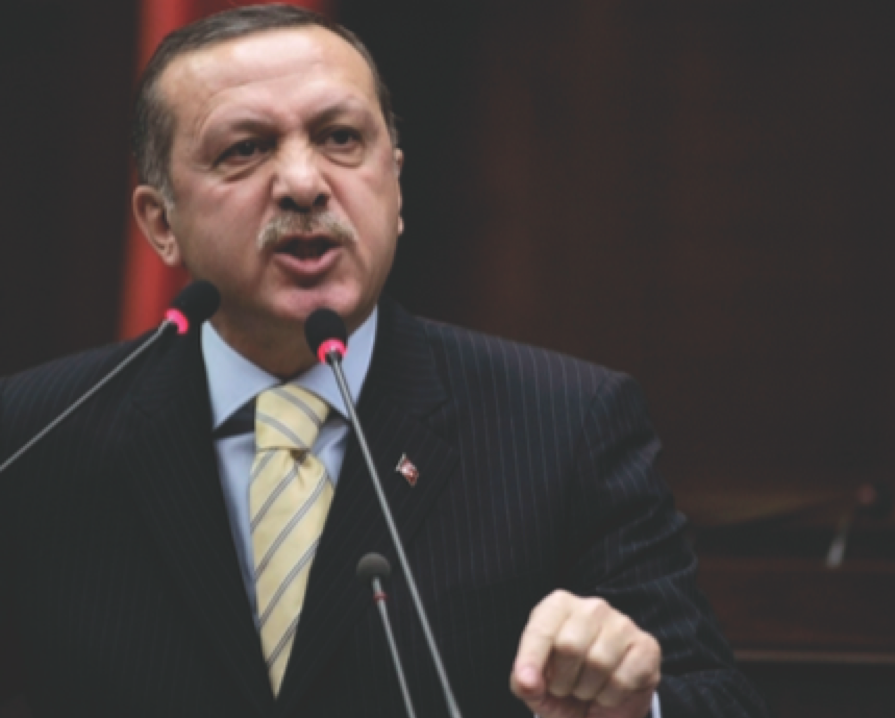
The deep involvement by Turkey’s prime minister in the recent conflict between Israel and Gaza marked Ankara’s return, after an absence of nearly a century, into the fold of Middle Eastern politics. This was something Mustapha Kemal Ataturk, the architect of the post-Ottoman Turkish Republic, wanted very much to avoid.

Indeed, much to the chagrin of many of his compatriots, Prime Minister Receb Tayyip Erdogan’s Islamist Justice and Development Party openly sympathized with Hamas in the recent war in Gaza, and that despite cordial relations between Turkey and Israel and Turkey’s neutral stance in the Arab-Israel conflict.

For many Turks, the prime minister’s change of direction in foreign policy is seen as a serious deviation from Kemalist tenet. Ataturk, the architect of the new republic, was a great visionary who wanted to take Turkey out of the Levant once and for all, and bring it into Europe, where he felt Turkey belonged.

“The larger problem that many either don’t see, or want to ignore, is the fact that Turkey’s identity is going through a speedy transformation,” says Tulin Daloglu, a Turkish journalist in Washington. Erdogan, some observers feel, is gradually eroding what Ataturk had put together and they are not comfortable with the notion.

“My first reaction is negative. Erdogan might have strong emotional attachment to Hamas,” says Daloglu.  “But Turkey should not be competing with other leading countries in the region. It should be [working] in full cooperation with them.”

Shortly after the collapse of the Ottoman Empire at the close of World War I, Ataturk shifted Turkey’s horizons from its traditional eastward leaning to align it with Europe and the West. That included strict separation of religion and politics along the lines of France’s ‘laïcité’. Ataturk and subsequent leaders of modern-day Turkey have labored hard to make this dream of Europeanizing Turkey a reality.

But Europe did not do enough to help speed up the process, as it is perhaps somewhat reluctant to admit a country of more than 70 million Muslims into the European Union. As can be expected, Europe’s failure to seize that opportunity to befriend an important and moderate Muslim country risks sending the Turks back in search of alliances in the Levant, and even beyond, into the former Soviet republics of central Asia. The European Union failed to grasp the importance of bringing in a large — albeit Muslim — nation into the EU, a step that would have solidified European-Arab relations.

Still, in spite of the nearly 100 years during which the Turks stayed away from the Middle East, the three centuries the Ottoman Empire spent incorporating much of the Arab world seems to have left some traces of affinity, at least insofar as the current prime minister is concerned.

But with the continued rebuttal by Brussels, Paris and Vienna of Turkey’s application to join the EU, the inevitable was bound to happen: Turkey’s rapprochement with Arab Islamists and its involvement in the Middle East conflict as a mediator. The latter role was certainly facilitated by the political void left when the United States under the presidency of George W. Bush showed little or no interest in trying to mediate the various problems related to the Middle East crisis. Washington’s refusal to negotiate with Damascus is a prime example of the disastrous policy followed by the Bush neoconservatives and one upon which Ankara jumped to take the relay.

That being said, it is not too late for the Europeans to save the day. In fact, Turkey’s flirtation with Hamas may come as a mixed blessing to the West. On the one hand, a rapprochement between Ankara and the Arab world — particularly with the Islamist organizations, such as Hamas — will prove useful in mediating a future settlement of the Middle East conflict. When the current war between Hamas and Israel finally runs its course, a Turkey acceptable to Palestinian Islamists will prove to be quite an asset. Turkish troops positioned in a newly created buffer zone between Hamas and Israel could be one of the few armies in the world acceptable to both sides. Turkey has the largest, toughest military in the Greater Middle East, more likely than not, on par with Israel’s. Some of their units have seen action in the mountains of Kurdistan, where Turkey has been fighting a guerrilla war against the PKK (the Turkish Workers Party) for several decades now.

The drawback is that Turkey’s reemerging friendship with the Arab world, and its continued exclusion from Europe, will further ‘Islamize’ Turkey. The end result could be that instead of Turkey acting as a buffer between Europe and the Arab/Muslim world, a role Turkey played during the Cold War as a NATO front-line for the Iron Curtain, Europe may wake-up one day to find Turkey suddenly on the other side of that border.

Claude Salhani is editor of the Middle East Times and a political editor in Washington, DC.

February 3, 2009 0 comments
0 FacebookTwitterPinterestEmail
Executive Insights

Ziad Ferzly

by Ziad Ferzly February 3, 2009
written by Ziad Ferzly

The Middle East region, especially the Gulf, has experienced a great boom over the last few years. With rising oil prices and ambitious projects, many thought this would continue ad infinitum. However, the global economy has gone into a recession and the Middle East is not immune. The financial market crashes around the world and region have been followed by economic downturns that are having a severe impact on companies everywhere. As people come to grips with this shock to the system, they must adapt to new realities. This recession is real and must be dealt with decisively. Managers need to admit that there is a problem. It is important to avoid getting sucked into collective self-deception, whereby company stakeholders put on blinders and convince themselves that they are immune to the decline and can ride out the storm without consequence. Companies need to be as proactive as possible because the longer they wait, the more difficult it will be to recover.

During the boom, most companies grew, even if they were not professionally managed. Many investors made money whether they evaluated investments properly or not. As the saying goes, a rising tide lifts all ships. Yet things have changed. The wave has crashed. The ensuing flush of the system will help ensure that the stronger, better prepared players are the true survivors. Prudent companies are the ones who take this time to properly restructure their operations. Companies should follow these restructuring guidelines:
• Stabilize the situation — A company that is experiencing significant difficulties should first stabilize the situation. In extreme cases, the goal is to survive long enough to go through the restructuring process in a proper and timely fashion. Generating cash and cutting expenses are of paramount importance. The company should identify major problems and attack them quickly. It should address the root of the problem, not the symptoms.
• Appoint a restructuring team — This is the team that should lead the company out of trouble. With a combination of key internal managers and select outside restructuring advisors, this core group will be responsible for executing the entire restructuring program that will be put in place.
• Gather data — It is important to base plans on real life data collected internally from the relevant groups. Data should be gathered on production, sales, pricing, costs, customers, etc. The company must have a full understanding of the situation. Data will ensure that decisions are grounded in reality, not conjecture.
• Change leadership — Often, there needs to be a change in the top management of the company. Some managers can stay, while others must go. Strong and effective leadership should be established. The company cannot afford to have weak or incompetent management, especially in difficult times.
• Assess capabilities — The restructuring team will assess the company’s capabilities, strengths, and weaknesses. The team will then generate ideas on the options available. There needs to be a match between the capabilities of the company and the options chosen.
• Recalibrate strategy — How does the company create value? What changes need to be implemented? Where is the company headed? The restructuring team should clarify objectives and adjust strategies in a deliberate manner to focus operations and the organization on common goals.
• Develop a realistic plan — After assessment and strategic recalibration, the team should devise a playbook or turnaround plan for the company to follow. The goals should be realistic and achievable given the current state of the company and market conditions.
• Renew organization — The new vision and strategy for the company may require a new organizational structure for better execution. People need to be empowered and, at the same time, held accountable for their actions and decisions. Their rewards should be properly aligned with the company’s long-term performance.
• Improve processes — There are core processes to the business that need to be improved. Other processes might be outsourced. Whether improvement happens in terms of time, cost, or quality, addressing the different facets of the operation will produce a better run organization. This requires a thorough analysis of various processes and matching new processes to the capabilities of the employees in the new organizational structure.
• Conduct financial restructuring — The restructuring plan will inherently have a major financial component in place. Whether this relates to creditors, investors, employees, or suppliers, the financial plan that is put in place needs to go hand in hand with the strategic plan that the team has put in place. Proper financial management is critical to the success of this effort.
• Manage stakeholders — There is a wide variety of stakeholders for companies: from shareholders and employees to suppliers and customers. As the company goes through its restructuring process, it needs to effectively communicate with various stakeholders to make sure that they are aware of what is happening and, when possible, participate in helping the process succeed.
• Measure and show progress — The way to gauge progress is by measuring the results of decisions and actions taken. Whether the parameters chosen are financial, operational, customer-oriented, or otherwise, measuring performance is essential to tracking the restructuring effort. Data should be gathered throughout the process. Showing progress will excite stakeholders and will give the restructuring team the validation it needs to continue with the current plan.
Conglomerates and investment firms should consider a restructuring — as described above — of the parent, holding, or management company first, and then of the portfolio, i.e. the individual companies or investments. The restructuring team needs to:
• Decide on an overall strategy — The team should ask itself: What businesses or industries do we want to be in? Why these industries? What makes us qualified to hold and potentially manage all these companies? What is the right mix of company holdings that serves our overall strategy and goals?
• Review current holdings — The following questions should be asked: Does the current portfolio of companies and investments make sense in light of the prevailing conditions? Do the companies fit within our overall strategy? Are we too heavily skewed in one direction and do we need to make adjustments to our portfolio? Do we want to keep all the companies as they are today or do we want to entertain the idea of corporate transactions such as mergers, acquisitions, or divestitures?
• Set a strategy for each company — For each of the companies in the portfolio that the restructuring team decides to keep, they should put together a targeted strategy depending on internal data gathering, industry statistics, and market conditions. The team should follow the restructuring guidelines highlighted above.
Studies have shown that companies that went through successful restructuring efforts had a few characteristics in common:
• They were low cost producers, and had very efficient operations.
• The management teams led by example. They did what they asked their employees to do.
• They focused on the internal operations of the company addressing issues such as quality, productivity, and differentiation.
• They had an internally consistent strategic plan.
• They had a change in top management, used outside restructuring advisors, or both.
There are many companies that should have gone through a restructuring program over the last few years, but did not realize the need given their apparent success in the market. Now is a good time to act for those companies, and also for others that are experiencing difficulties because of the economic downturn. Many will not make it through this year. Companies need to ensure that they are strong enough, focused enough, and prepared to weather the storm. Those that restructure now will be well positioned to capitalize on opportunities ahead of their competitors as the economy improves. It is time to restructure.

Ziad Ferzly is managing director at Cedarwood Advisors, which provides strategic, financial, and investment management services to companies, investment firms, institutions, and governments around the globe.


February 3, 2009 0 comments
0 FacebookTwitterPinterestEmail
Executive Insights

Rethinking private equity – part I

by Imad Ghandour February 3, 2009
written by Imad Ghandour

The sharp reversal of economic fortunes in the Gulf has sent all private equity (PE) houses back to the drawing board to redesign their investment strategy. Some are optimistic the Gulf will bounce back quickly, while conservative investors predict this recession will be deep and long and are waiting for the recession tornado to vanish so they can pick up from the carnage good companies at attractive valuations. The bulk of PE houses, however, are focusing on a selected number of defensive sectors to invest in, with the consensus being that education, healthcare, and fast moving consumer goods and related industries will survive the downturn.
Starting with education, this article is the first of a three-part series — which will also run in March and April issues of Executive — covering the dynamics of investing in each of these defensive sectors:

Back to school
Education is one of the largest global industries, yet one of the most fragmented. It is estimated that the global market size for education services is $2.5 trillion and it is ranked amongst the top three industries depending on how you count. Yet, it is one of the least represented sectors amongst listed companies. The largest education company by market cap is Apollo in the US, with a market cap of only around $7-10 billion. Just a handful of companies have revenues exceeding the billion-dollar mark.
Yet education takes a significant chunk of household and government expenditures. In Saudi Arabia, the education and vocational training budget comes second after defense, with more than a quarter of the budget allocated to it. In most societies, household spending on education is only exceeded by accommodation expenses. Furthermore, governments are offering subsidies to investors, and many are privatizing their educational system. This means an even larger pie for private sector operators.
The education sector is divided into several subsectors. The largest and the most fragmented is K-12, or primary and secondary education. Adult education and vocational training come second. Other notable sub-sectors are early childhood education (pre-school) and testing (e.g. GMAT, SAT, TOEFEL, etc).

Cash is king
From an investment point of view, education has very interesting characteristics. It has stable and predictable cash flows: students pay upfront for the service, and once a student enters a school or a university, he is likely to stay there until graduation. In the GCC, population growth and rising incomes imply continued growth in demand, and most likely shortage of supply.
Parents (clients) have limited price influence on tuition and thus tuitions increases are ahead of inflation and margins remain healthy and stable. In the GCC, for example, it is very common to have net margins of 25-35 percent.
The main challenges for institutions are the upfront investment in real estate and recruiting good teachers. Schools and universities, in particular, need a significant investment in purpose-built facilities, and investors have to balance the economics of being close to the urban demand centers and the escalating cost of land as you get closer to such centers. The other challenge is recruiting quality teachers in the wake of a shrinking global population of teachers but a growing population of students. Symptoms of teacher shortage are already evident, resulting in escalating costs.
Given the attractive investment characteristics of education and limited number of investment opportunities, listed educational institutions usually trade in the 20-30 times their earnings. This creates a significant arbitrage opportunity for investors who build new schools and eventually sell them at high valuations.
PE houses are not flocking to education for one main reason: opportunities are scarce. Yet the most creative PE players were able to enter the sector early, and will probably cash out handsomely, even in turbulent times!

Imad Ghandour is head of Statistics and Information Committee, Gulf Venture Capital Association and board member, Maarif Education and Training Holding Co, Saudi Arabia

February 3, 2009 0 comments
0 FacebookTwitterPinterestEmail
Executive Insights

Why Arabs lose the communication war

by Dima Itani & Ramsay G. Najjar February 3, 2009
written by Dima Itani & Ramsay G. Najjar

How do we decide who wins a war? Do we wait for the white flag to be raised to declare a winner? Do we count the number of casualties? Do we count the number of survivors? Truth be told, in modern wars, the real winner is the side that wins the “communication war.”

Regardless of the toll a war takes on its victims, what remains in the minds of people once the fighting stops are the headlines. Who can forget the headlines about the massacres of men, women, children and elderly in Nazi concentration camps during World War II? The Jewish people have engaged over the years in massive and structured communication efforts, using powerful messages and impactful channels to portray themselves as the victims of atrocious acts and to remind the world of the horrible ordeal they experienced.
In large part thanks to this communication strategy, Israel today is a forceful and successful “brand” whose image is that of a nation pursuing stability and safety for its discriminated and persecuted people and is thus immunized against the negative publicity stemming from its military attacks. Just like the Jews’ situation during World War II, today Palestinians are facing massacres of their men, women, children and elderly. Unlike Israel and the West, however, who have always treated communication as an imperative and a top priority, the Arab world has yet to recognize the primordial importance of communication, especially in an era of globalization and the eradication of all boundaries.
To see how our region has fared in communicating its message throughout the Gaza conflict, we need to look no further than the TV screens, radios and newspaper front pages throughout the region: the messages that we see, hear and read all use the language, values and sensational rhetoric that appeal solely to the Arab audience. This “preaching to the converted” does little to reach out and change perceptions on the other side of the world. In the case of Arabs, there has been little or no effort made to understand Western audiences and identify what triggers their emotions and stirs their passions, to communicate with them and make a difference in how they see things.
This must change in order to get the message across when targeting communication to other cultures. The Arab world’s communication should use the audience’s language and idioms effectively, touch upon their values and use a discourse that resonates with them. In other words, rather than showing the same tragic images over and over again, and continuously referring to the innocent blood spilt, it would be far more powerful to draw a simple parallel between the children of Gaza and the children of the West, highlighting that while children in the US and Europe were preparing cookies and milk for Santa and waiting for their gifts, children in Gaza were trembling in fear and waiting only to see if they will live to see the next day.
Communicating effectively across cultures requires identifying a painful event in the audience’s history — one that they can relate to on a deeper level — and comparing it to the situation and difficulties faced by their counterparts in the present. Highlighting the likeness to a tragedy that the audience knows and understands goes a long way in creating a sense of responsibility for the current situation and a need to put an end to it for the sake of future generations. What is sad is that in the case of Israel’s communication, they have capitalized on past tragedies in such an influential way that it has given them a retroactive license to slay and shed the blood of innocent people and still be viewed as the victims.
However, even the most creative communication strategy that builds upon all these powerful messages cannot have an impact without the right channels to send its messages through. Although it can be said that the Arab world’s communication is leveraging new media channels along the lines of Facebook, YouTube and blogs, as citizens from around the region continue to upload photos, comments and video of their perspective on the Gaza conflict, even these channels are Western inventions that are merely being copied in the Arab world rather than being pioneered in the region. If the Arab World wants to get in on the communication game, it must work to create and innovate new channels that can grab audiences’ attention rather than trying to go through overused channels only to be drowned out by the endless numbers of other YouTube clips, Facebook groups and blog entries. Until then, the Arab world will continue to be in the backseat when it comes to communication, aggravating this region’s fears that it will never be seen from a just or human perspective.
Even if our part of the world succeeds in consolidating its messages, tailoring these to Western audiences and sending them out through the most impactful and innovative channels, we will still face another major obstacle: layers upon layers of negative prejudice accumulated over years of poor communication. But these prejudices only highlight the imperative need for effective communication strategies and immediate action in order to start tearing these misconceptions down.
Many may argue that regardless of the message, Arabs will never have the leverage or resources to carry out communication efforts that can match the impact of those carried out by the enemy. A strong narrative and story, however, spoken in the audience’s language and using themes that appeal to their deepest emotions can have just as much power as extensive, well-orchestrated, and costly campaigns.
Of course, we cannot ignore the fact that deeply ingrained perceptions seem to persist no matter how civilized or open-minded cultures get, as the side long-envisioned as the victim will always be a victim and the side seen for years as the murderer will always be the murderer. The only way to break this vicious cycle is through compelling communication that opens the door for another perspective.

Dima Itani & Ramsay G. Najjar, S2C

February 3, 2009 0 comments
0 FacebookTwitterPinterestEmail
  • 1
  • …
  • 484
  • 485
  • 486
  • 487
  • 488
  • …
  • 688

Latest Cover

About us

Since its first edition emerged on the newsstands in 1999, Executive Magazine has been dedicated to providing its readers with the most up-to-date local and regional business news. Executive is a monthly business magazine that offers readers in-depth analyses on the Lebanese world of commerce, covering all the major sectors – from banking, finance, and insurance to technology, tourism, hospitality, media, and retail.

  • Donate
  • Our Purpose
  • Contact Us

Sign up for our newsletter

    • Facebook
    • Twitter
    • Instagram
    • Linkedin
    • Youtube
    Executive Magazine
    • ISSUES
      • Current Issue
      • Past issues
    • BUSINESS
    • ECONOMICS & POLICY
    • OPINION
    • SPECIAL REPORTS
    • EXECUTIVE TALKS
    • MOVEMENTS
      • Change the image
      • Cannes lions
      • Transparency & accountability
      • ECONOMIC ROADMAP
      • Say No to Corruption
      • The Lebanon media development initiative
      • LPSN Policy Asks
      • Advocating the preservation of deposits
    • JOIN US
      • Join our movement
      • Attend our events
      • Receive updates
      • Connect with us
    • DONATE