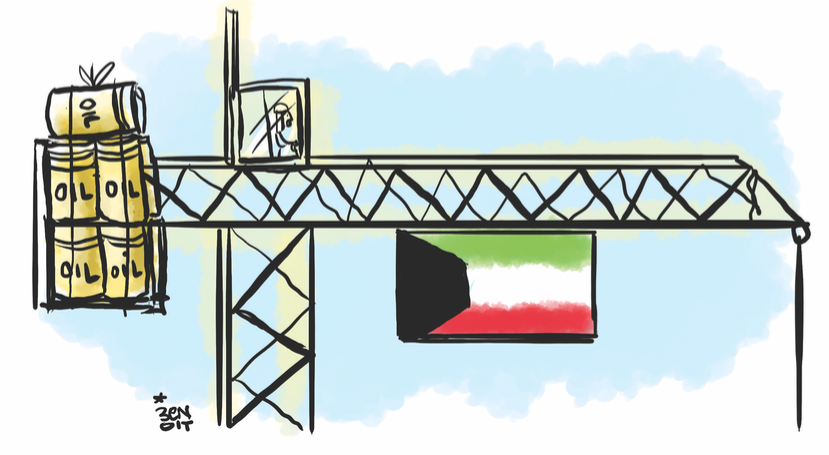
Higher living costs, greater use of public transport, congestion problems, the opening of the Dubai toll road, tightening of credit and a global financial meltdown — all these factors should be making car manufactures and their local car importers worried about future car sales in the Middle East, especially in the lucrative GCC market. For the most part they are not. Gulf News reported that for the first half of 2008 car sales surged 26% in the GCC and the UAE grew by 34%. While Saudi Arabia, the biggest automotive market in the region, is expected to achieve growth of 14.1% in 2008, selling 592,985 units, according to Business Monitor International (BMI). Mercedes had a record month in September for the Middle East and Levant with deliveries of 1,872 cars, up 24% over the same period in 2007, and for the first nine months of 2008 sales are up 21% on last year. Land Rover reported growth of 25% across the Middle East and North Africa and Jaguar had a 40% increase. General Motors announced a 13% increase to a total of 111,944 units sold. Audi reported growth of 34.6% in the GCC and Levant, record results for the month of September, and Porsche showed growth of 14%. The sentiment currently in the market is that strong oil prices have kept the market buoyant in the region and allowed the multitude of problems facing the region to be kept at bay. It would be misleading, however, to say that manufactures are not being cautious about expecting too much from the region and all are aware of how intertwined the global economic system is. Nevertheless, most manufacturers and dealers are bullish about the future ahead of them in the automotive sector in the Middle East and in lieu of this are investing on a large scale.
Car trends
The enthusiasm for cars in the region, and the GCC in particular, is as strong as ever. People read car magazines, are highly informed about the latest developments and want to buy the newest and the most highly desired cars on the market. For Mercedes this is exemplified by the fact that their regional operations are relatively small, selling 15,000 cars a year in the GCC and Levant, of the 900,000 cars Mercedes sells globally. However, sales of the premium S-Class are the fourth highest in the world and this car is continuing its growth in the market. Also, Mercedes has seen high sales in the GCC of the exclusive Maybach SLR, in which the region is number three in the world, after Europe and the US. Bentley also shows a similar pattern: although the Middle East only represents 6% of Bentley’s global sales for the newly released Bentley Brooklands, the Middle East contributes 12% to global sales. Chris Buxton, Bentley’s regional director for Middle East and Africa, explained that “this reflects the demand our customers have in this region for the ultimate in exclusivity and style.” Bentley is currently experiencing 15% annual growth in the Middle East and Buxton expects 2008 to be a record year for sales in the region.
Robin Colgan, managing director of Land Rover and Jaguar Middle East, described how in the GCC perceived quality is very important, which means not the quality of the mechanics but the importance of how beautiful and well designed the interior is, the touch and feel of the car. “You need to sell premium leather, alloys, and have amazing sounds systems. This is why the Jaguar XF with the Bower & Wilkins in car stereo was so successful; every car we sell here of the XF has to have the exclusive music system, which is not the same in Europe and America.” Thus, all the manufacturers are putting a lot of effort in developing the kind of options that the customer can put in their various models of cars. Ashok Khanna, CEO of Al-Tayer, explained that in the Middle East market exclusivity and personalization is key, “Our high-end brands such as Maserati, Ferrari and Spyker all provide customers with a very high degree of personalization in their cars which is highly valued by our customers who like their cars to carry their signature.” The desire for exclusivity in the market has meant that manufacturers in the luxury end of the market have launched limited edition models, made specially for the region. Rolls-Royce, for instance, launched the Phantom Mirage — named after the great pure white Champion Stallion in the US in 1934 — exclusively for the Middle East this year. The Phantom Mirage was launched primarily because the region has shown strong demand for the ‘Rolls-Royce Bespoke Program’.
While sales of exclusive luxury cars are extremely high, so also are SUV sales. For Porsche, the Cayenne makes up 68% of their sales, selling 4,114 units. Audi’s best-seller is the Q7 making up 35% of their sales, while Land Rover saw a 25% increase in car sales as they continue to dominate the luxury SUV market. For GM the best-selling models across the Middle East continue to be the full-sized SUVs, the Chevrolet Tahoe and Suburban, the GMC Yukon and Yukon XL and the Cadillac Escalade. Cheap fuel in the GCC and continued high liquidity has meant that the region is not following the global trend of moving to smaller, more fuel-efficient and environmentally friendly cars.
While all car manufacturers are keen to stress that they are making strenuous efforts at introducing more fuel efficient cars, with lower carbon emissions and lowering the effect on the environment impact of their production facilities, in the Middle East these issues are simply not a priority and this is articulated by the trend in the market for big gas guzzling automotives. For any effective change to occur it is the ruling families that will have to take the lead and implement legislation on emission controls. In Jordan moves have already been made to encourage ‘greener’ cars as complete tax exemption has been given to hybrid automotives. Nonetheless, while the trend in the major markets in the rest of the world to more fuel-efficient cars continues, as fuel prices remain a major concern, the newest models released by the big manufactures, so craved in the region, will necessarily be more environmentally friendly. The mid-sized SUV is expected to be the car of the future, as it has the safety and size of an SUV but the fuel consumption of a smaller car.
Lack of data
Regardless of the demands in the market in the Middle East, the next generation of automotives released will not be tailored to the region but re-packaged for it. In a country such as the UAE, and in particular in Dubai, this is particularly problematic because, “there are so many areas that you need to target. Everything is so mixed, you have any age buying an Audi; you have 18-year olds buying an A8 and a 55-year old. So it makes it very challenging putting the product together and advertising for it,” Jeff Mannering, the managing director for Audi Middle East, explained. This problem is exacerbated by the significant difficulties faced by car manufacturers, and their import partners, of getting accurate information on the kind of car culture in the region, beyond the general trends described above. In Europe car figures are freely available listing what car was bought where, the type of car and size of the engine.
In the MENA, however, from manufacturers to local dealers information is guarded heavily. Terry Johnsson, president and managing director of GM Middle East, explained that without accurate data, “we are less accurate in targeting growth segments and trends.” But Johnsson suggested that a way out of this situation could be governments in the region supporting manufacturers associations where traffic police data and registrations were made available. Manufacturers could even independently organize themselves, like in Australia, and invite a third party to publish the data. Frank Bernthaler, the director of sales and marketing for Mercedes-Benz, pointed out that “we have introduced the Middle East Automotive Council, which is an exchange of data on a very general level, but not all manufacturers are part of it.”
Creating an automotive climate in which data is 100% accurate, however, in such a rapidly growing region has not been a priority, as simply establishing oneself in the region has so far been good enough.
What financial crisis?
As the European and American automotive markets continue to show decline, manufacturers have little choice but to show more faith and target more aggressively the emerging markets of the Middle East. As Frank Bernthaler, the director of sales and marketing for Mercedes-Benz attested, “We are optimistic [about the region]; Abu Dhabi is at the start of development, Qatar is one of the strongest economies in the world, Kuwait has strong plans and Saudi Arabia’s city plans are promising and give us confidence in the region.” This does not mean manufacturers are complacent about the risks involved in the region and the growing cloud of the global financial crisis. Deesch Papke, managing director of Porsche Middle East, said that he is “concerned about the implications of the financial meltdown in Europe and the US on the region, and we are monitoring the developments very closely to see how it will affect our markets.” Dealers and manufactures are holding their collective breath that the buoyant automotive sector in the Middle East is not affected to a serious extent. Terry Johnsson, of GM, said that, “auto financing is well beyond the normal one or two day wait to one or two weeks, and if it is rejected you have to start all over again, which is frustrating. But we are watching what will happen and we are looking to seeing banks be more active again … Most dealers have the resources themselves to extend consumer financing or leasing.”
Regardless of the fallout from the financial crisis, according to the manufacturers and dealers the region will become an ever increasing central player in global car sales as more significant volumes of car sales occur and the potential to sell more cars expands. In 2003, for instance, there were 118,000 cars on UAE roads and last year this figure grew to 297,000. Business Monitor International estimates that this figure will reach 326,000 by 2011. Audi is one such manufacturer that has decided to target the Middle East in a much more focused and aggressive way. Unlike other car manufacturers such as Land Rover, which has had a presence in the UAE right from the start and whose brand is well established, Audi was not well known in the region. Jeff Mannering, the managing director for Audi Middle East, explained that “in 2004 Audi made the decision to identify the Middle East as a potential growth region and in 2005 we started a subsidiary here [in Dubai]. This office is the only regional sales company for Audi in the world. The regional office was started to promote and invest in the brand and get it where it needs to be.” Since the establishment of the regional office Audi has seen a rapid growth in sales and in 2008 sales so far are up 19% with total sales reaching 5,504 vehicles. The Middle East, and especially the GCC, is central to Audi’s strategy to reach the target of 1.5 million car sales by 2015. To achieve rising sales Audi and its dealer network have invested significant sums in building the requisite infrastructure. “For the set-up of the regional office we invested $10 million while the dealers have invested in the vicinity of $150 million,” Mannering said.
Investing in the future
The dealers in the UAE are very excited about the future in Dubai and the UAE at large and are preparing by investing hundreds of millions on infrastructure. Al-Habtoor Motors, sole importers for Mitsubishi, Aston Martin and Bentley, illustrate the extent to which dealerships in the UAE are expanding their operations. “In Dubai Industrial City we have a 280,000 square meter plot of land and on it we are going to build an after-sales facility that is 102,000 square meters where there will be a workshop for Aston Martin and Bentley with 250 working bays, a parts warehouse and distribution centre at 23,000 square meters and a workshop for Mitsubishi that has 742 work bays. We believe it will be the biggest franchise vehicle workshop in the world. The investment in this operation is something like $120 million,” said Charles Strothard, chief operating officer for Al-Habtoor Motors. In addition to this, the company has a new $10 million facility reaching completion in Ras al-Khaimah, in Abu Dhabi a new $15 million facility is being built and many other projects are in the pipeline. Meanwhile, Terry Johnsson announced that GM’s local partners in the region are investing as much as $520 million into 26 projects across the region. “In Saudi Arabia alone, GM is doubling our points of service in the next five years … everything is just increasing so rapidly that we are having to accelerate our expansion plans,” Johnsson said.
One of the main problems facing the automotive industry is making sure that the infrastructure keeps up with not only rapidly growing car sales but also the ever expanding cities of the GCC. Frank Bernthaler, of Mercedes-Benz, explained that “the main challenge in the markets like those in the GCC is to make the right decisions regarding where to invest in future installations. The figure for Dubai is that only 25% of the greater plan for the city has been built so the challenge is where do you invest? This is also a problem in Qatar and Kuwait. You have to think forward in terms of where there is going to be growth and where your future customers are going to be living. Obviously, the more you sell the more pressure there is on the after-sales.” The after-sales market is an integral part of the automotive industry, which is why so much investment is put into this sector of the industry. Of course, after sales also contributes a healthy income stream for both local dealers and manufacturers.
Ashok Khanna, CEO of Al-Tayer, said, that the automotive after market industry in the GCC is estimated to be worth in the region of $12.5 billion. Every manufacturer stressed that if one does not have a high quality after-sales service, especially in the Middle East, then one could have the best product in the world but would not sell cars. After-sales is especially important in the Middle East because of the severe climactic conditions and also the importance of word of mouth. Robin Colgan, of Land Rover and Jaguar, explained, “this region is driven by word of mouth unlike any other region and is a fundamental aspect of growing your business. So, obviously when influential groups respond to the service that you are providing it means a lot.” For manufacturers and their local import partners maintaining good after-sales service means ensuring that the required stock is readily available so waiting time is minimal, but most importantly that there are well-trained technicians and support staff.
Training, training, and more training
Training is the current mantra that is repeated again and again by everyone in the automotive industry. All of the major manufacturers have training facilities in the region and emphasize how this is an essential, but immensely time and resource-consuming aspect of their business. Frank Bernthaler, of Mercedes-Benz, explained how getting enough trained people is a challenge, “with India growing less people want to come to Dubai but we are working with the whole Mercedes-Benz network and we are training people in the Philippines and other places; we support the general distributors.” Despite the enormous emphasis that manufacturers put on training, Charles Strothard, at Al-Habtoor Motors, criticized the efforts of the manufacturers in their training programs. “A lot of the manufacturers and our competitors train for training’s sake; it is not effective. The training that we give our staff is not like those given out by the manufacturers or other regional trainers — it is something that we had [created] bespoke for our company,” Strothard asserted. At Habtoor Motors, Strothard claims, the training was specially tailored to ensure that the nuances and culture of the region, the multicultural make-up of the staff and customer base and Western best practices were all intertwined and worked on. Strothard elaborated that it was important, for instance, to know the go and stop buttons of the various cultures. “Within two months we saw a 70% growth in sales. The effectiveness of training is what is key. It costs a lot of money — in the last three months we spent $500,000 on training — but this is peanuts compared to the result.”
Conclusion
The focus on training by local dealers and manufacturers illustrates how important and competitive the players in the automotive market expect the region to become. Local dealers and manufacturers will need the extra training capacity if all the gigantic expansion plans are followed through in the region. In the GCC some of the biggest car infrastructure in the world is being built, with hundreds of millions spent. Growth on a massive scale is being prepared for. However, it is also the monumental master plans such as the King Abdullah Economic City, the greater Abu Dhabi and Dubai, the new cities of Qatar and Kuwait that will ultimately bring success or failure. Those in the automotive market are predicting that these plans will be a success and that there will not be a significant effect from the global financial crisis and high oil prices will continue. Manufacturers are seeing the GCC as an increasingly important market to compensate their sluggish sales in the US and Europe; this is especially the case for luxury automotives and the SUV market. However, if any significant effects from the current financial crisis do hit the region, then manufacturers and their local partners will have a lot of cars parked on the lot with nowhere to go.
