• Donate
  • Our Purpose
  • Contact Us
Executive Magazine
  • ISSUES
    • Current Issue
    • Past issues
  • BUSINESS
  • ECONOMICS & POLICY
  • OPINION
  • SPECIAL REPORTS
  • EXECUTIVE TALKS
  • MOVEMENTS
    • Change the image
    • Cannes lions
    • Transparency & accountability
    • ECONOMIC ROADMAP
    • Say No to Corruption
    • The Lebanon media development initiative
    • LPSN Policy Asks
    • Advocating the preservation of deposits
  • JOIN US
    • Join our movement
    • Attend our events
    • Receive updates
    • Connect with us
  • DONATE
Consumer Society

Cyprus – History distilled

by Executive Staff November 3, 2008
written by Executive Staff

Olvia Haggipavlu stopped to take in the huge concrete vats at Etko, the Cypriot winery her family founded in 1844. “These tanks used to fill ships that would carry bulk wine all over the world, to Sudan to Russia and to Sierra Leone.”

Etko is Cyprus’ oldest winery and, along with three other producers, until 20 years ago dominated the Cypriot wine sector. The “big four,” — Etko, Geo, Sodap and Loel – as they were, and are still, known produced tens of millions of liters of wine that were sold in bulk to the world, though mainly to the former Soviet Union.
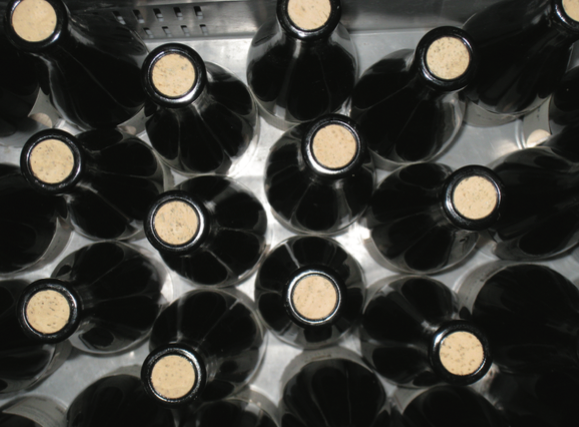
The vats are now empty and bulk wine is no longer the mainstay of the Cypriot winemakers. The collapse of the USSR, a decline in Cypriot grape growing culture, a severe drop in the annual rainfall — there was none in the 2008 season — and huge demand from thirsty tourists, mainly British and Russian holidaymakers, and the emergence of over 50 small producers making modern wines, have all contributed to a revolution in Cypriot wine in the last two decades. The result has been a dramatic increase in the quality, presentation and range of wines.
Meanwhile, Cypriot producers are recognizing that they must emphasize making wines using indigenous grapes, such as the red Maratheftiko and the white Xynisteri, if they want to succeed in what is a cutthroat international market. If all goes according to plan, Cyprus threatens to be the next boutique destination for wine lovers seeking something different from the run-of-the-mill Chardonnay and Syrah that, while hugely popular on a global scale, have created a sense of ennui among discerning tipplers. In fact, October saw Cypriot winemakers attempt to make inroads into the Lebanese market, one that has seen a noticeable rise in the popularity of wine. On October 10, Etko and the Fikardos Wineries held a seminar in Beirut for the Lebanese hospitality sector. More tastings are scheduled to be held around the country, but it remains to be seen how much of an impact, they will have on what is a market still in its infancy.
That does not mean that Cypriot wines will be alien to the regular drinker. All the recognizable ‘international’ varieties — Cabernet Sauvignon, Merlot, Syrah, Grenache, Mourvedre, Chardonnay, Muscat and Semillon and the like — are grown on the island. The trick is how to use them to their maximum commercial potential while still striving to create a Cypriot identity.

Three-pronged approach
At the moment Etko produces over 3 million bottles and carries nearly 30 wines. It may seen excessive for such a modest (by global standards) production level but it typifies the dilemma faced by the Cypriot producers “We are selling to three defined sectors,” explained Haggipavlu. “The local consumers are still in awe of the international grapes, so we have to make wines for them. Then we have the Russians and British who will drink anything if the price is right so we make wines that target this niche, and then we have our international customers who want wines made with indigenous grapes and who don’t want to hear about Chardonnay and Merlot from Cyprus.”
Wine is gaining popularity among young Cypriot drinkers too. “Wine is fashionable among the young, whereas before they preferred whisky, brandy or the local Zivinia,” said Yiannis Kyriakides, who, with his brother, owns the Vasilikon Winery in Pathos. Kyriakides is putting his money where his mouth is and investing millions in new premises that will house the winery, cellars, F&B area and company offices. Established in 1993 and now producing around 350,000 bottles per year, Vasilikon is among the bigger of the new generation producers, but unlike many who produce less than half of his output but have over a dozen labels, he only makes three wines: two reds and a white. “We know our market and we know what our customers want,” said Kyriakides as yet another car with the back seats down pulled up outside the winery. “Got any white left?” enquires the young Englishman eagerly.
In nearby Panayia, Andreas Kyriakides, owner of the Vouni Panayia winery, is also investing millions in a new state of the art winery, wine tourism and conference center. It is in essence a one-stop shop for the wine tourist. Founded 21 years ago, the winery and Kyriakides are considered pioneers in the new Cypriot industry. “We have come a long way since the mid-80s, when the emphasis was on bulk wines and there was little or no competition.”

A huge history
For the record, Cyprus has been making wines for about 6,000 years and lays claim to being among the oldest wine producers and exporters. Its most famous wine is Commandaria, a sweet white made from Mavro and Xinisteri grapes, which has been made in Cyprus since 800BC and which today can only be made in the 14 villages in the Trodos Mountain region. Even though it is essentially a liqueur, many producers see Commandaria as the wine that can take Cyprus into the modern international market. “It is the first wine of Christianity,” said one local winemaker proudly.
Today, Cyprus produces some 15 million bottles (although it is impossible to get an accurate figure) each year, 95% of which are sold on the local market that boasts consumption of 26 liters per capita per annum (compare this to 1 liter per capita per annum in Lebanon). So why the need to export? The island’s admission into the EU in 2004 saw a drop in tariffs and a quick browse of the shelves in any major Cypriot supermarket will reveal that foreign wine producers with greater volume can undercut homemade wines. If Cyprus wines are to be profitable they need to wow the foreign drinker.
The Keo winery is one of the big four that has had to adapt to this new order. The winery, the biggest Cypriot producer, used to be located in Limassol but this proved too far from the vineyards to make serious wines. The grapes that would arrive from the vineyards in the mountains in the screaming heat would have already started to ferment in the lorry.
“We moved here after we realized the days of bulk wines were over,” said George Metochis, Keo’s winemaker, speaking from its current winery set in the Trodos Mountains, where the company has invested around $5 million in making sure it is a competitive player in the new, more diverse wine sector. “We have to fight for our identity. We have to fight for the uniqueness of Commandaria and we have to make people pay for the privilege of drinking wine made from Cypriot grapes, especially the Maratheftiko.”

A grape with promise
Mara-what? The Maratheftiko stands on the cusp of international greatness, provided enough of it can be harvested and vinified. It is Cyprus’ prized red grape. It is difficult to grow and work with but with some love and care the results in the bottle are magnificent. Only 146 tons of Maratheftiko were harvested this year, less then the 184 tons picked in 2007 and the 208 tons picked in 2006. Nonetheless, Cypriot producers are convinced that this grape can take Cyprus to a wine world starved for a new grape with a new flavor and a new identity.
Others are placing their money on the more common but equally illustrious Lefkada, which is less of a headache to work with. “The Maratheftiko is a great grape but it is difficult to handle and is very temperamental. My money is on the Lefkada,” said Tim Whitrow, an Australian winemaker working at the Zambartas Winery.
And if that weren’t enough it is not the easiest of words to market. “Maratheftiko is not easy to pronounce if you are not a Greek speaker and this may be a problem for foreigners,” admitted Michael Constandinides, owner of the Ezouza Winery in the hills above Pathos.

Use what you have
“The OIV has always told to insist on being different to use what we have. In the 80s we didn’t know about the possibilities,” explained Akis Zambartas, whose Zambartas Winery, also in the Trodos Mountains is making wines that blend local and international varieties. Zambartas, who is the former boss of Keo, believes that wines with international and local grapes — such as his three reds that blend Maratheftiko with Syrah, Levkada with Syrah, Levkada with Cabernet Franc and a white that pairs Xinisteri with Semillon — offer the best formula for any export drive. “The consumer knows he is getting something different but he feels safe knowing that there is also a grape he knows.”
It is a view that is echoed by Costas Tsiakkas owner of the Tsiakkas Winery. “You can give personality to the wine but you must also listen to the market. We don’t have the resources [like the Australians] to make cheap Cabernet Sauvignon and we don’t have the experience [like the French] to make expensive Cabernet Sauvignon, so we’ve got to play to our strengths.”
Understanding the consumer tastes is also crucial. “Gone are the days when it was okay to make heavily oaked wines, big wines which need years to age,” said Nicos Nicolides, owner of Domaine Nicolides. “They want something to drink now.”

Challenges
If only getting the right blend was the only challenge. Rain and a declining rural economy also threaten to thwart any progress. “By and large, the vineyards are not owned by the wineries so the wine producer has to rely on the judgment of the local grape grower for the quality,” said Tsiakkas. “There is no sense of partnership and this affects quality. Furthermore, there is no youth left to carry on the tradition so we need to make planting vineyards a priority. There is no one left in the villages; we have a human resources problem.”
Christakis Lambouris of the Lambouri Winery gets around this problem by buying half of his grapes from members of his extended family who own vineyards. He acknowledged he is lucky and to acquire the other half he has had to take on land owned by grape growers who have basically given up. “They get subsidies from the government of between 160 and 180 euros per 1,000 square meters,” he explained. “In reality, they take the money and we take on the land.”
Then there is the water issue. “Add to this is the fact that we have no rain, so we have to ask ourselves where will the best place for these vineyards? At high altitude or low altitude? Should they face north? All this needs to be studied if we are to move forward,” explained Tsiakkas, who also sounded a note of optimism. “These changes might force our hand in the kind of direction we need to go in especially if we find out that native varieties are better suited to our soil and need less water.”
The challenges have not stopped enterprising producers like Lambouris from finding foreign customers. Not only are his wines served in Lufthansa’s business class but he even makes a kosher wine (wine made under strict rabbinical supervision during all stages of production) for the Israeli market. “They wanted at least one Cypriot wine as a tribute to their biblical tradition,” explains Lambouris.
So what of the future? Zambartas, like almost all the local producers, knows he is being squeezed by international competition and needs to play to his strengths. “I see a sector with lots of boutique wineries producing less than 100,000 each. This number is easy to control in a country like Cyprus where the structure of landowning is small. People are drinking less but they are drinking better quality. We have 60,000 British living on the island and they are very demanding.”
Back at the Etko Winery, Olvia Haggipavlu entered the vast warehouse where the huge wooden vats of Kamandaria are stored. “I am proud to be carrying on this tradition,” she said staring up at the huge casks. “It’s a shame to waste so much history.”


November 3, 2008 0 comments
0 FacebookTwitterPinterestEmail
Consumer Society

Food – Making the cheddar

by Executive Staff November 3, 2008
written by Executive Staff

The largest food company in the United States and the second largest worldwide, Kraft Foods, has become not only a common household name, but also synonymous with success in the world of fast moving consumer goods. Although the company is best known for its cheese products, Kraft maintains a diversified portfolio with hundreds of well- known brands covering every category from ketchup to chocolate. Patrick Satamian, vice president and area director of Kraft Foods Middle East and Africa, explained how the company has managed to establish and maintain its position as a global leader in the industry. “Kraft is a company that focuses very much on quality, on integrity, on the way our products are manufactured, the way we distribute our products, the freshness of our products; there’s a combination of factors which explain why we are in the leadership position in various categories,” he said.

The cornerstone feature of fast moving consumer goods, like those that Kraft manufactures, is that they are sold quickly at a relatively low cost. With a significant increase in commodities costs, this past year was a difficult one for both producers and consumers of goods. “At a certain point this year, most commodities — like wheat, flour, sugar, cocoa, you name it — reached their historical price-point peak,” Satamian described. As a result, consumer habits have had to adapt. People are more conscious of their spending and are often avoiding unnecessary purchases. Yet, indulgences like Toblerone chocolate, one of Kraft’s luxury chocolate brands, are still selling because the company has managed to keep not only attractive products, but also attractive prices.
According to Kraft’s second quarter results for the Middle East and Africa region, the company recorded double- digit organic net revenue growth at 13%, resulting in a combined organic net revenue growth of 17% for developing markets. Satamian cited successful brand and marketing investments, as well as favorable product mix and pricing that more than offset higher input costs as primary drivers for Kraft’s impressive performance.

Taste of success, hunger for more
Kraft’s success in the region has driven its plans to continue expanding here. April of this year saw the opening of Kraft’s sixth manufacturing facility in the region, located in Bahrain. The company derives some of its core strength from having its factories and organizations on the ground, Satamian explained. “It’s a big asset and advantage. We can produce products that really meet consumer needs, we can produce products which are fresher and we are faster when reacting to consumer trade dynamics,” he outlined. He elaborated on another benefit of operating locally, as opposed to shipping all products from abroad, which is that it creates opportunities for local talent. This, in turn, gives Kraft an invaluable competitive edge because it immediately brings in new and loyal customers, and makes the company much more effective in communicating with its customer base and satisfying their needs.
Aside from several factories on the ground, Satamian pointed to Kraft’s people as one of the chief reasons for the company’s long-standing success. “Getting the right people with the right skills is most important. With this you take the business to another level,” he stated. The multinational company strives for diversity amongst its employees because bringing together different tastes and points of view fosters more creativity, more flexibility, an open-minded attitude; it allows the company to extend its reach across various nations and cultures. When Kraft recently acquired the biscuit division of Danone, it accepted the existing French business culture of the company and simultaneously introduced certain elements of its own way of doing business. “It’s always a balancing act between diversity and integration. You need to accept diversity and welcome different ways of thinking, but at the same time you need to integrate,” said Satamian.
With so many iconic products like Tang, Oreo, and various cheeses, it is obvious why Kraft maintains leading positions is all the categories in which it operates. Aside from the taste and quality of its products, Kraft has the business experience and strategy, the right people behind the brand names and as Satamian put it, “Kraft products make you dream.”

November 3, 2008 0 comments
0 FacebookTwitterPinterestEmail
Banking & Finance

Private equity – Liquidity flows

by Executive Staff November 3, 2008
written by Executive Staff

This October, emerging market equities sank to an all time low. Dominated by few firms and largely composed of infrastructure-related companies, capital markets in the Middle East and elsewhere could not provide the liquidity needed to boost stocks. While similar effects will continue across regional bourses and affect the short-term valuation of firms, the region’s private equity industry will remain shielded because of the inherent nature of the asset class and the deal types most popular in the Middle East: buyouts and growth capital.
At the fundraising stage, private equity fund managers will continue to enjoy high liquidity for another quarter, until prospected declines in oil revenues are realized and futures contracts expire. Sovereign Wealth Funds (SWF) still have capital to deploy and will continue to partner with private equity firms for attractive buyouts in the region and abroad as company valuations sink and smart investors can invest in firms with untapped value. SWFs and private equity are best positioned to do this as they enjoy longer-term outlooks — typically five to seven years — until they exit investments. These investment horizons — coupled with the fact that most funds have recently completed fund raising and are now looking to deploy capital — make private equity a source of much needed liquidity in both the Middle East, as oil prices drop, and elsewhere, as financial intermediaries are squeezing credit flows to businesses.
Owing to the large size of most family-owned firms in the Middle East and North Africa (MENA), private equity houses have structured their funds to invest in buyout deals and offer companies growth capital. According to Amr Al Dabbagh, governor of the Saudi Arabian General Investment Authority (SAGIA), private equity investment opportunities in the region are on a scale “never seen before.”

Buy and build
Private equity buyout funds follow the traditional deal and exit structure of a private equity firm. A fund manager will scout out an attractive company, buy out the firm, build its business by adding assets or cutting costs, and exit investments to strategic investors or competitors, a secondary sale to another private equity investor, or via an initial public offering (IPO) on capital markets.
Several buyout funds are targeting MENA-wide deals and three of the most notable funds recently completed investments. Abraaj Capital’s Buyout Fund II (ABOF II) along with Waha Capital acquired a 49% stake in
GMMOS group, helping Waha Capital build a regional maritime business through its Al-Waha Maritime Group. Both maritime businesses plan to use the deal to further expansion agendas. Abraaj set itself up for a strategic deal after purchasing 100% of GMMOS Group in 2007. In this deal, Abraaj Capital partnered with the strategic buyer at the investment stage and will doubtlessly exit its remainder in the deal to Waha Capital after strengthening GMMOS Group’s corporate governance.
In another series of deals, Ithmar Capital has targeted construction and infrastructure-related buyouts. The private equity player made a recent investment in the UAE- based Dewan Architects and Engineers, a mid-market architecture, engineering, and consulting firm. Ithmar Capital’s buyout investment came amidst falling equity values and, consequently, a time when undervalued firms are attractive to long-term investors like private equity houses and SWFs.
Global Investment House (Global) has also fostered a burgeoning buyout business in the Middle East. It has recently closed its Global Buyout Fund with limited partner capital commitments, as well as additional financing by Dubai Islamic Bank and Millennium Capital, to the tune of $615 million. Additionally, Global closed another tranche of its buyout business for its $500 million Islamic Buyout Fund targeting sharia-compliant investments across the Middle East, North Africa, South Asia, and Turkey (MENASAT).
Global recently made a buyout deal through its standard buyout fund, by taking a stake in Al Sawani Food and Industry Supply Company, a food and beverage franchising operation based in Saudi Arabia with locations across twelve countries.
Abraaj Capital also made a recent buyout purchase in Nas Air with the aim of expanding the firm’s fleet of five aircraft to 18 by 2010 and eventually 167 by 2012. This buyout deal would make Nas Air the fastest growing private aviation fleet in the Middle East.
Not all MENA capital will be spent in the region. Much of it will be used for global buyouts in undervalued firms in the Asia, Europe, and the US. Credit-sapped firms in the US and elsewhere looking for long-term finance can find it in Middle East private equity shops. One deal in which this dynamic was apparent is Istithmar World Capital’s buyout of US-based Gulf Stream Asset Management, a financial services provider with $3.8 billion in assets.
GrowthGate recently achieved a final close for its $100 million buyout fund focusing on buy and build deals. With the plethora of spare capital committed lying dormant in these funds, they will be an important source of liquidity for the right firms looking to sell off their businesses.

Growth capital
While buyout funds are popular in the MENA region, growth capital continues to dominate the strategies of private equity shops. Growth capital proves the more popular of the two because it is a well-received investment style for entrepreneurs, and especially family firms. The reasons for this are clear. Instead of buying a firm, restructuring it, and exiting it via a secondary sale to another private equity shop, a strategic sale to a strategic buyer or competitor, or via an IPO, growth capital investments provide liquidity to firms with an established track record, possible areas for growth to different sectors or country, and a fairly sound corporate governance structure.
Entrepreneurs looking to private equity are essentially asking for investors to partner with them over several years to help grow the business and receive a substantial rate of return for helping develop the growth. Family firms are particularly worried about the potential for private equity to erode businesses, so growth capital remains an avenue through which families can find an investor but retain the business after a period of growth.
A recent investment has illustrated the process of growth capital private equity. Ithmar Capital purchased Panceltica, a Qatar-based, regional housing firm. Although the terms of the financing were not disclosed, the private equity shop provided capital for Panceltica’s growth and expansion strategy out of Ithmar Capital’s Fund II. Ithmar Capital’s Faisal Belhoul noted at a press conference that his fund is “uniquely placed to provide Panceltica with innovative investment and business development strategies to tap into the phenomenal growth potential of the region.” With most major cities sharing a high demand for the cranes to create buildings and the workers needed to operate them — from Doha to Dubai — Ithmar Capital’s investment and expertise enables Panceltica to grow its business across the region to build onsite steel structure for housing and other projects, which is eight times as fast to construct.

In search of growth opportunities
Additionally, private equity firms are looking to provide growth capital to firms which complement portfolios. In several instances, private equity managers are looking to create an integrated portfolio where the common tie to the private equity house can foster relationships between firms looking for business. Ithmar Capital, having recently acquired Panceltica and looking to help grow its business, might look in another high- growth economy in the region, perhaps in Saudi Arabia, Egypt, or the UAE, where another firms are looking to expand into equally high-growth economies. Ideally, Ithmar Capital can line up a firm that complements Panceltica and build some synergy between business and package its portfolio with perhaps a steel smelter, which could provide Panceltica with the downstream supply needed or with a property developer that could offer Panceltica an upstream market to supply temporary housing and storage solutions for large-scale developing businesses. Ithmar Capital’s holding of Gulf & World Construction might provide the sort of portfolio synergy necessary to build the relationships on a vertical level.
Buyout funds, growth capital funds and private equity in general offer large-scale companies a stable source of finance over the course of several years. For instance, a fund launched in 2005 did, on average, achieve a series of closes over 2005 and 2006 before achieving a possible end- of-year close in 2006. Once the fund achieves its first close it can start investing and will usually have deals in the pipeline. The holding period can also last several years for each investment and the fund itself will invest deliberately over a three to four year period, so a fund launched in 2005 with a first close in the same year can still invest in 2009, provided they have some capital left over. If a fund makes its last investment in 2009, then it has a few more years until closing, perhaps to 2012 or 2013, giving the fund a life of eight years. For funds with recent closes like Abraaj and GrowthGate, investments can continue over the next three to five years, enough of a gap to weather the currently credit-sapped business cycle.

November 3, 2008 0 comments
0 FacebookTwitterPinterestEmail
Consumer Society

Al Taameer – Najeeb al Saleh (Q&A)

by Executive Staff November 3, 2008
written by Executive Staff

Al Taameer, the Kuwaiti company boasting assets in excess of $150 million in 11 countries, is positioning itself in the lucrative hospitality and leisure markets. On a visit to Lebanon for the launch of its first Ramada hotel in Beirut, Al Taameer’s vice chairman Najeeb al-Saleh sat with Executive Magazine to discuss the company’s latest venture.

E Al Taameer has recently acquired the franchise for Ramada hotels in the Middle East. What motivated your decision to open your first hotel in Beirut?
The Ramada franchise deal, which was signed in June last year, encompasses six countries — Lebanon, Egypt, Morocco, Libya, Jordan and Iraq. We decided to pick Lebanon as our first destination because we had an excellent opportunity with this venue, which is located in downtown Beirut. Another reason is that Lebanon’s hotels can be positioned on both segments of tourism and business hospitality, contrary to other countries where either business or leisure hospitality activities are emphasized. Here at Ramada we tend to focus on both aspects. Another essential reason lies in the very nature of the Lebanese people who are generally multicultural and multilingual, which makes the Land of the Cedar a good place to headhunt and train qualified staff to supply our new Ramada chain. Not many countries offer a workforce at ease with so many languages!

E How many hotels do you plan to open and how much will your company invest in each venue?
We plan to open some 35 hotels all over the region in the next years. Earlier this year we also bought another Ramada hotel in the Moroccan city of Fez. We are also currently negotiating seven more hotels, including two in Libya and another two in Iraq. The Beirut venue comes with a price tag of $20 million; each investment will however vary depending on the size of the project and its location.

E What prompted the decision of Al Taameer to branch out from its real estate activity into the field of hospitality? What added value does the hospitality segment bring to your real estate activity?
Al Taameer is a publicly listed Kuwaiti company that is owned by Al-Masaleh real estate (also a publicly listed company), which focuses on the development of commercial and residential buildings. As a real estate development company, Al-Masaleh decided it would diversify into the hospitality industry using Al Taameer. Al-Masaleh is very clever when it comes to identifying locations, negotiating acquisitions and construction, while Al Taamer excels in the field of property management.

E Do you believe the economic crisis and the resulting credit crunch will affect your new hotel business?
The possibility of an adverse economic context motivated our decision to enter the hospitality business by acquiring a four-star hotel chain, which will be best able to weather the crisis. If worse comes to worst, people will not stop from vacationing or doing business and a four-star hotel is thus perfectly well positioned to tap into various market segments. This unfavorable environment might provide us with excellent opportunities: good locations at reasonable prices.

E What type of customers does the new Ramada chain target?
Ramada is a reputed brand; it belongs to a hotel chain that boasts some 6,500 hotels worldwide. The chain’s particular positioning on both tourism and business hospitality levels will allow its various venues to operate efficiently all year round. We offer an excellent service at the right price and our hotels are ideally located.

E What type of structure have you adopted in terms of management? Will your company run all the Ramada hotels in the Middle East?
We will not necessarily own the 35 hotels we intend to open, which will be run based on a management contract or rental agreement. We might also resort to branding existent three-to-four-stars hotel. Such agreements will certainly cut our investment costs. However, we intend to buy two or three hotels in each country.

E What type of growth do you expect Al Taameer to achieve in the next few years?
We had full occupancy during the summer and the Eid holidays, which bodes well for us. We have also witnessed encouraging results with our first Moroccan venue and expect about a 20% growth every year for the overall company.

E How long before each project breaks even?
We are targeting a five to seven year bracket, depending on the project.

E Where do you believe lie the main areas of growth in the MENA region?
Egypt and Morocco show potential when it comes to tourist destinations, while Libya and Iraq as well as Jordan are excellent markets in terms of four-star business hotels. I believe our territories are all very attractive and well diversified.

E Some of these territories, like Libya and Iraq, are considered to be risky business environments…
Recent history has proven that risk might lurk in the most unusual places as witnessed in the recent economic crisis. We believe that markets such as Iraq and Libya, although risky, offer excellent opportunities, in spite of a possibly trickier initial launch.

E Who are Ramada’s direct competitors in the Middle East?
The first one that comes to mind is Accor, the French chain, which also features Ibis and Novotel hotels. The segment Ramada is currently targeting remains, however, relatively untapped in the Middle East.

E With what type of support did local governments provide you?
We were able to obtain funding from local banks in Lebanon; a tourism fund providing subsidized loans has been also made available by the central bank. In Morocco and Egypt, governments have been also offering tax breaks for tourism projects.

November 3, 2008 0 comments
0 FacebookTwitterPinterestEmail
Banking & Finance

Egypt country report & outlook: Executive summary

by Executive Staff November 3, 2008
written by Executive Staff

Egypt is now in its second economic renaissance, which started in 2004. This follows a first renaissance that was shallow and short lived, lasting from 1992 to 1999, and based largely on external debt relief and macroeconomic stabilization policies. This time around, the reforming government is more bent on structural reforms that aim to unleash Egypt’s potential and to take advantage of its supporting regional environment. The reform has touched almost all aspects of Egypt’s economy, covering tax and tariff reforms, bank privatization and consolidation, the investment and business environment and the conduct of monetary policy.

The result has been an increase in investment confidence, both externally and internally. Between 2004 and 2007 investment increased from 18% to 23% and FDI doubled to more than $10 billion. Exports also increased, marked by a rise in gas and manufacturing exports that were in turn driven by efforts to exploit Egypt’s primary resources and its free trade and QIZ arrangements, besides its efforts at industrial modernization. Domestic demand was also aided by higher public and private consumption, the culmination of which is that GDP growth is hovering at around 7% if not more — and is expected to stay there in the foreseeable future. But the price of these developments has been a surge in inflation to rates abetted by higher commodity prices and exceeding 10% in early 2008. And although unemployment fell to less than 10%, there is a widespread feeling that the boom’s fruits could have been more equally shared, with poverty rates still at a stubborn 17%.
Perhaps the best performer has been the external sector. In addition to better exports and FDI performance, favorable tourism and Suez Canal receipts and labor remittances all contributed to healthy current account surpluses at 1% of GDP, and helped accumulate more than $30 billion in foreign reserves covering about seven months of imports in 2007. This naturally led to a better outlook for the exchange rate, whose managed level saw an appreciation of close to 10% between 2004 and 2007. And with both GDP growing and the BOP service account in decent surplus, external debt as a ratio of GDP and its service as a ratio of exports of goods and services improved to 29% and 6% respectively.

Positive stats
The financial sector also witnessed some major improvements aimed at developing both its market-based and bank-based institutions. Besides undertaking the privatization of Bank of Alexandria and initiating the privatization of Banque du Caire, the stock market has been rationalized and upgraded to international standards. The quantitative results of these improvements saw bank assets increase by a third to $168 billion and stock market capitalization to more than double as a ratio of GDP to 115% during 2004-2007. The conduct of monetary policy has also undergone a face lift with the introduction of an interbank market for foreign exchange and the preparation for an inflation targeting monetary framework. However, work still needs to be done on strengthening the transmission mechanism between policy rates and yields on financial instruments and bank rates, and on cleaning up the banking system whose NPL remain at 25%
Although the fiscal sector underwent major revenue side reforms — increasing both tax and non-tax yields by 80% to $22.6 billion between 2004 and 2007 — expenditure side reforms were lacking. This is because these reforms relate to the subsidy and transfer schemes to basic commodities and ailing public enterprises, which carry significant political and social implications. Their absence or delay thus aims at keeping a “human face” on the reform program and at not jeopardizing its public legitimacy. But the downside, of course, is that they have left the government with a deficit of 7% of GDP and a rising domestic public debt
The outlook for Egypt, an emerging market with a diversified economic base, looks good especially given the regional boom that does not look to be subsiding any time soon. Challenges remain, though. These relate to the ability to control inflation, to reduce budget deficits and to trickle down the gains from growth. That will not be easy, however, given the continuing increase in commodity prices, the importance of subsidies for maintaining social stability, and the fact that economic growth needs time to reduce poverty, let alone reduce income inequality. Add to these the potential for political instability arising from regional tension and presidential succession, and the challenges multiply.
The best answer to these challenges is not to suffer ‘reform fatigue’, but to continue with the economic reform agenda especially as it relates to financial policy, expenditure rationalization and industrial modernization. Growth and a better management of its process — if at a lower, more sustainable rate — will prove an antidote to these challenges.

See the full report at www.blom.com.lb

November 3, 2008 0 comments
0 FacebookTwitterPinterestEmail
Comment

Georgia on my mind

by Norbert Schiller October 27, 2008
written by Norbert Schiller

Shortly after the collapse of the Soviet Union I joined a small group of Cairo-based journalists on a tour of the former Soviet republics of Azerbaijan, Armenia and Georgia. When we arrived in the Georgian capital of Tbilisi, one of the first things we wanted to do was interview the newly elected President, Eduard Shevardnadze. Shevardnadze had held numerous political posts during Soviet times, the last being minister of foreign affairs under the leadership of Mikhail Gorbachev.

Our initial queries proved fruitless until someone at the Ministry of Information suggested we contact a particular young member of parliament who was supposedly very close to Shevardnadze. After agreeing to meet us, the young MP said that he would try his best and see what he could do to arrange an interview. With nothing else to do but wait for an answer from the president, we sat in the MP’s office while he gave us a little background into his own personal life. He said that he had received a graduate fellowship from the US State Department and during his time in America he got a masters of law degree from Columbia University in New York. He also mentioned that he was married to a Dutch woman whom he met while attending a course on human right in France in 1993.

As the small talk with the MP continued, one of my colleagues, a Dutch journalist, turned to me and asked if I would be interested in illustrating a story about the MP and his wife for a Dutch magazine. “The story of a young woman from Holland falling in love and marrying a Georgian MP would be interesting for our readers,” he said.

After we were assured an audience with Shevardnadze the following day, our group decided to leave and spend the rest of the day site seeing around Tbilisi. My Dutch colleague and I stayed behind with the young MP and he proceeded to show us around parliament and then took us over to his home to meet his wife and young son. She in turn took us out (since the focus of the story was on her) and showed us where she worked as a volunteer with the Red Cross. Later that evening we returned to their home and enjoyed drinks, Georgian and Dutch folk songs and a bite to eat. The whole time I photographed their every move, trying to get a good portrait of the family so Dutch readers could get a feel for how one of their compatriots was living her life away from her homeland in a newly independent country.

Back in Cairo I developed films and put together a nice series of photos that were eventually published in the Dutch monthly magazine along with my colleague’s story. After that, I didn’t give the Georgian-Dutch couple much thought until recently.

About six months ago, I was going through a drawer stuffed full of papers and I noticed an envelope full of large photographic prints. I emptied the contents and found numerous pictures I had made of the Georgian MP and his family along with a copy of the article that was published. At the time I must have indented to send the envelope to them, but never got around to it. All of a sudden I felt a bit guilty and began thinking whether I should go ahead and send it now, 13 years later. After a moment’s pause, I thought again, and decided against it because who knows whether they were still living in the same place or for that matter if they were still married. Not wanting to deal with it, I put everything back in the envelope and stuffed it back into the drawer.

A few weeks ago, at the height of the Russian-Georgian crisis, I turned on CNN at the top of the hour to watch the news headlines and saw footage showing the Georgian president on a visit to the town of Gori, just south of the breakaway region of South Ossetia. The president was seen close up answering questions to reporters both in Georgian and English when suddenly a Russian plane passed overhead and the president said, “Let’s leave, let’s move away.” Then there was a lot of commotion as the president, his bodyguards and the media accompanying him started running for cover and jumping into vehicles. After the video clip ended and the CNN anchor switched gears to another story elsewhere, I sat back, stared at the ceiling and tried to recall where I had seen the Georgian president’s face before. It was not like I had been following events in Georgia very closely so he was not a television acquaintance. There was something more personal about it.

I got up and went over to the drawer stuffed full of papers, pulled out the envelope once again and stared at the photographs of the young Georgian MP I took 13 years before and tried to make the connection. Then I went my computer, typed in his name on Google, and read his biography. It mentioned his masters from Colombia Law School and, more importantly, his marriage to wife Sandra E. Roelofs, a Dutch citizen.

Bingo! I was staring at none other than Georgian President Mikheil Saakashvili, the former MP who I once had the privilege of spending a day with. Maybe now I should think seriously about sending those photographs with the article so he can at least remember back to happier times when he was working in the shadows of Shevardnadze, rather than ducking for cover across television screens at the top of the hour.

Norbert schiller is a Dubai-based photo-journalist and writer

October 27, 2008 0 comments
0 FacebookTwitterPinterestEmail
Feature

Heating wars

by Peter Grimsditch October 16, 2008
written by Peter Grimsditch

Having lost the cold war in a spending battle that almost bankrupted Moscow, the Russians seem determined to come out on top in the heating war. This July, energy companies from Turkey, Bulgaria, Romania, Hungary and Austria agreed to build the Nabucco gas pipeline, designed to funnel non-Russian energy into Europe through Turkey. Moscow stands accused of bullying its former satellite Ukraine by turning the gas taps on and off at will, in the process also disrupting supplies to Europe fed by the Ukrainian pipeline.

The Russians counter-attacked on at least three fronts. The first was to gather support for a rival pipeline, called South Stream, which would equally avoid Ukraine by forging a link with Turkey under the Black Sea. Anxious to flex its geographic muscles, Turkey signed up for this rival venture too. For Ankara it was an opportunity for a double whammy. It showed the European Union that treating its application for membership with near contempt risked a counter attack where it hurts — on energy supplies. Simultaneously, it demonstrated to Russia, Turkey’s biggest trading partner, that it has buried its past as NATO’s poodle. For good measure, it also provided a chance for Turkey to try to negotiate a better deal on the nuclear power station tender that was “won” last year by a Russian-led consortium in a one-horse race.

If you can’t beat them, buy them

In a heads-you-win and tails-you-can’t-lose move, Moscow opened a second front by taking shares in companies on which Nabucco would rely. Russian company Surgutneftegas acquired a decisive stake in the Hungarian energy firm MOL at nearly twice market value, according to a report in Foreign Policy magazine. Although little is known about Surgutneftegas, one Budapest newspaper shed light on the obscurity under the headline: “Mr. Putin, Declare Yourself.”

The story is similar in Austria, where both Nabucco and South Stream would end. Gazprom already owns 30 percent of Austria’s Baumgarten storage facilities and an obscure Russian company, Centrex Europe Energy & Gas, is seeking to buy a further 20 percent in partnership with Gazprom. Controlling commercial stakes in the key European partners for Nabucco gives Moscow at least two options — starve the venture of funds and thus try to prevent it from being built, or sit back and take the profits from transit fees and sales if the pipeline is constructed.

Politicians have been trying to quell newspaper headlines about a gas war

The third line of attack came in a finely targeted bid to deny gas to Nabucco. Since Azerbaijan’s resources are key to the project, Russian President Dmitry Medvedev signed an agreement giving Moscow the option to buy up to 500 million cubic feet of gas at well over market rate. In the North African theater of the heating wars, Gazprom is committing itself to infiltration of the Algerian market, a major supplier of gas to Europe with new transit pipelines planned to Sicily via Tunisia.

Since the non-Nabucco Europeans are split on the rival projects through Turkey, Ankara can fairly claim that it is entitled to back both sides. The Italian energy giant ENI is involved in South Stream and Prime Minister Silvio Berlusconi was in Ankara when his Turkish and Russian counterparts signed a series of deals in August. The French are almost disinterested observers because their energy mix does not include a heavy dependency on Russian gas and the Germans, despite massive vulnerability to energy supply interruptions, appear reluctant to antagonize Russia by openly backing the other side.

However, Nabucco’s committed supporters have not been idle. The European Commission announced last month it had opened negotiations with Turkey about becoming a full member of the Energy Community Treaty to enable it to align its energy rules with those of the 27 EU countries. Europe was also courting Azerbaijan before the Medvedev deal was signed and, in some respects, offered a better deal. While the Russian agreement made no specific commitment to buy any gas at all, the EU made an all-out commitment to building energy and trade links.

As a display of its even-handed approach, Germany’s former Foreign Minister Joschka Fischer has joined Nabucco while former Chancellor Gerhard Schröder threw his lot in with Gazprom four years ago. Both were private, not state appointments.

Meanwhile, Turkey offers encouragement to both sides and, some maintain, stands to win no matter which of the pipelines gets built. Politicians from various countries have been trying to quell newspaper headlines about a gas war by disingenuously claiming the two schemes through Turkey are not rivals but complementary.

The whole affair risks becoming a soap opera.

Peter Grimsditch is Executive’s correspondent in Istanbul

October 16, 2008 0 comments
0 FacebookTwitterPinterestEmail
Financial Indicators

Global economic data

by Executive Staff October 7, 2008
written by Executive Staff

Inflation: GDP deflator

Average annual growth in percentage

Source: OECD

During the period 1993-2006, inflation in the OECD area fell to a record low of 1.2% in 1999. It then gradually increased to 2.5% in 2006. The average annual rate of inflation over the last three years was below 5% for all OECD countries, except Norway, Mexico and Turkey. The volatility in the Norwegian GDP deflator is mostly due to variations in the export prices of petroleum, and these grew very strongly over the last few years. The strong growth in the GDP deflator for Mexico and Turkey effectively reflects general domestic inflation occuring in their economies. These latter two countries have, however, drastically reduced their inflation rates over the period 1993-2006. At the other extreme, Finland, Germany, Korea, Japan, Sweden and Switzerland recorded average annual rates of inflation over the last three years of below 1%. Several countries (Canada, Czech Republic, Finland, Germany, Luxembourg, Norway and Switzerland) recorded deflation over the period 1993-2006 for one or more years, but Japan is the only country where this has been sustained over a number of years.

Household: Net saving rates

As a percentage of household disposable income

Source: OECD

Household saving rates are very variable between countries. This is partly due to institutional differences between countries such as the extent to which old-age pensions are funded by government rather than through personal saving and the extent to which governments provide insurance against sickness and unemployment. The age composition of the population is also relevant because the elderly tend to run down financial assets acquired during their working life, so that a country with a high share of retired persons will usually have a low saving rate. Over the period covered in the table, saving rates have been stable or rising in Austria, France, Italy, Norway and Portugal but have been falling in the other countries. Particularly sharp declines occurred in Australia, Canada, Japan, the United Kingdom and the United States. Negative saving — which means that consumption expenditures by households exceeded their income — was recorded in some countries, in particular in Australia, Denmark, Greece and New Zealand.

Law, order and defense expenditure

As a percentage of GDP

Source: OECD

Within the total, the shares of the two components — law and order and defense — vary considerably between countries with high shares for defense expenditures in the United States, Korea, Norway, Denmark, France and Sweden and high shares for law and order in Iceland, Luxembourg, Ireland, Spain and Belgium. On average, the share of expenditures on law and order has generally been growing faster than defense and now accounts for more than half of the total for the countries shown in the table. In 2005 — the latest year for which most countries can supply data — expenditure was highest in the United States and the United Kingdom, and lowest in Luxembourg, Iceland and Ireland. In the majority of countries the shares of expenditures on defense, law and order in GDP have been falling since 1995 with particularly large falls in Norway, Sweden, Ireland and France.

Prison population

Number per 100,000 inhabitants, 2004

Source: OECD

Over the last fifteen years, most OECD countries have experienced a continuous rise in their prison population rates. On average, across the 30 OECD countries, this rate has increased from a level of 100 persons per 100,000 unit of the total population in the early 1990s to around 130 persons in 2004. The prison population rate is highest in the United States, where more than 700 per 100,000 population were in prison in 2004: such level is three to four times higher than the second highest OECD country (Poland), and has increased rapidly. This increase extends to most other OECD countries. Since 1992, the prison population rate has more than doubled in the Netherlands, Mexico, Japan, the Czech Republic, Luxembourg, Spain and the United Kingdom, while it appears to have declined only in Canada, Iceland and Korea. There are large differences across countries in the make-up of the prison population. On average, one in four prisoners is a pre-trial detainee or a remand prisoner, but these two categories account for a much higher share of the prison population in Turkey, Mexico and Luxembourg. Women and youths (aged below 18) account, on average, for 5% and 2% of the prison population respectively. A much larger share of prisoners is accounted for by foreigners (close to 20% of all prisoners, on average), with this share exceeding 40% of the total in Luxembourg, Switzerland, as well as Australia, Austria, Belgium and Greece. In several countries, the rapid rise in the prison population has stretched beyond the receptive capacity of existing institutions; occupancy levels are above 100% in more than half of OECD countries, and above 125% in Greece, Hungary, Italy, Spain and Mexico.

October 7, 2008 0 comments
0 FacebookTwitterPinterestEmail
Financial Indicators

Regional equity markets

by Executive Staff October 7, 2008
written by Executive Staff

Beirut SE  (1 month)

Current Year High: 3,470.63  Current Year Low: 1,761.53

The weakness of global stock markets transpired on the Beirut Stock Exchange mostly as a drop in trading volume which dwindled to a 1.25 million shares trickle in the trading week that ended Sep 19. The Blom Stock Index closed the period at 1737.60 points, compared with 1,794.17 points at the end of August. Political worries are a constant factor in the Lebanese market and one perceives them almost as market fundamental. The real disruptor of trading fun was the global financial crisis although its impact on the valuations of Lebanese stocks was much smaller than elsewhere in the region. Lebanon’s central bank reaffirmed that the banking system is impacted only in minimal form by the problems of global financial institutions and Fitch Ratings reaffirmed its B minus ratings view on Lebanon as stable. Solidere, which initiated a 10% dividends payout at the end of August, saw one massive trade on Sep 8 which lifted the scrip briefly back above $31. During the review period, Solidere moved from $29.11 to $29.54 on Sep 22, making it one of the regions’s best performing real estate stocks in the period.

Amman SE  (1 month)

Current Year High: 5,043.72  Current Year Low: 3,088.85

The Amman Stock Exchange index gave up 11.65% from the start of September to its close at 3.861.37 points on Sep 18. Despite its losses, however, the ASE was among the privileged few bourses in the region and beyond which could report gains in the year to date period, in which the ASE is up 5%. Insurance, banking, and services sectors moved down in the period but managed to perform better than the general index; the industry index experienced a massive drop, going down more than 24%. The stocks of resource miners Jordan Phosphate Mines Co and Arab Potash Co came under heavy selling pressure, losing 30.64% and 23.02%, respectively. Observers attributed their weakening to withdrawal of foreign investors from the ASE in connection with international and regional market volatility. However, industrial stocks are still quoted significantly higher when compared with the start of 2008, mostly due to buying sprees of regional investors earlier in the year. Banking, insurance and services sectors by contrast have shown much less fluctuations over the longer period but fell back into negative territory in September when compared with Jan 1.

Abu Dhabi SM  (1 month)

Current Year High: 5,148.49  Current Year Low: 3,458.84

The Abu Dhabi Securities Exchange had no day that would invite satisfied smiles between the end of August and Sep 22 when it closed 9.04% down on the month at 4,014.47 points. During the entire period, the most positive performance by any sector on the ADX was a gain of not even 0.2% relative to the start of the month. The sector indices for consumer, banking, real estate, industry, and energy each lost more than 10% in the period under review. Construction and insurance showed stability in the upper realm of the market’s negative spectrum. Among four stocks which went more than 20% lower were two banks, one construction firm, and a hotel company. On the flipside, the bourse’s ratios were the most bargain-friendly of all GCC securities markets with a price to earnings ratio of only 10.45 times. The UAE central bank made an exceptional move of providing banks a $13.6 billion short-term lending facility to avert the threat of a lending crisis.

Dubai FM  (1 month)

Current Year High: 6,291.87  Current Year Low: 4,162.97

The Dubai Financial Market closed at 4,200.53 points on Sep 22. It carried less volatility than its neighbor up in Qatar but lost 11.8% from the start of the month. After a few positive days and a 9.9% upswing on Sep 21, the last session of the review period saw the index fall over 2.5%, a reiteration of the motives of quick profit taking and general nervousness. The materials and telecom sector sub-indices kept their heads above water during the period; year-to-date, the materials sector is the DFM’s only positive performer. Mortgage lender Tamweel, whose former chief executive has been under investigation for embezzlement and breach of trust, was the DFM’s biggest loser with a 33.05% erosion of its share price. It was followed by investment bank Shuaa Capital, whose shares went down 23.6%. The crash of Lehman Bros caused tangible jitters in Dubai where an office of the failed investment bank was based.

Kuwait SE  (1 month)

Current Year High: 15,654.80            Current Year Low: 12,039.00

The Kuwait Stock Exchange index closed at 13,140.40 points on Sep 22. But the day to watch was Sep 15, marking a red dawn over the entire GCC region. It was the markets, not some invasion by a communist superpower. But the picture certainly seemed worrisome enough on this day as the Kuwait Stock Exchange dipped into negative territory in its year-to-date performance. All GCC stock markets at that point were dripping red, both for the day and for the year. The KSE index recovered and returned into the green year-to-date with a gain of 4.63% by Sep 22. But the index still had to let go more than 9% over the review period. The parallel market sub-index traded sideways near the zero line, making it the outperformer of the period. Industry and investments were the sectors with the biggest losses. After the carnage of Sep 15, the Kuwait Investment Authority reportedly intervened with share buying which may have helped the KSE to return onto positive ground vis-à-vis the start of the year.

Saudi Arabia SE  (1 month)

Current Year High: 11,895.47            Current Year Low: 7,216.71

The Saudi Stock Exchange suffered the greatest downward pressure of all GCC markets and closed at 7,461.14 points on Sep 22, nearly 15% down when compared with the end of August and 33.2% down from the start of the year. Departing from its positive performance of the previous month, selling prevailed almost unabated in the market that had evidently not forgotten its bad experiences from two years ago. Market cap heavyweight Sabic gave up 15.75%. No single sector escaped the maelstrom, with insurance coming out at the very bottom. Three insurance companies experienced the most severe selling pressure, each dropping around 40% of its market valuation like stones in the sector that was known for speculative share buying for some time. Blame for the Tadawul pains was attributed to foreign influences and the global crises of financial market actors.  

Muscat SM  (1 month)

Current Year High: 12,109.10            Current Year Low: 6,861.32

The performance graph for the Muscat Securities Market from Sep 1 to 22, 2008 showed a lopsided V whose left arm was longer than the right. Losing 8.11% over the period by its Sep 22 close at 8723.63 points, the MSM general index traveled as low as 7868.70 points in trading during the Sep 16 session. The industrial and banking sub-indices were locked to the general index with the closeness of tango steps while the services sub-index was the period’s relative over-performer. Telecom stocks were among the better regarded values. The National Detergent Co boiled 54.7% higher after a 10-for-1 stock split on Aug 31. Financial heavyweight Bank Muscat was in the period’s bottom group of performers with a share price loss of 24.29%.

Bahrain SE  (1 month)

Current Year High: 2,902.68  Current Year Low: 2,490.91

The Bahrain Stock Exchange index closed at 2,569.74 points on Monday, Sep 22. This represents a slide of 5.79% in the September review period and a loss of 8.02% from the start of 2008 for the island kingdom’s bourse. After a 200-point free fall in the first half of September, the market looked up at the end of the period as it managed a 45-point climb over four sessions. The sub-index for hotel and tourism stocks, which entered September almost 24% improved from the start of the year, flat-lined until Sep 22 but this looked deliriously pretty against the backdrop of sagging by financial sub-indices on the BSE. Investment and banking stocks suffered from global markets disease and thus underperformed. Of listed companies, real estate investment firm Inovest and engineering contracting group Nass Corp were pushed down by 19.23% and 15.35%, respectively, followed by banks Salam and Ithmaar.  

Doha SM  (1 month)

Current Year High: 12,627.32            Current Year Low: 7,858.48

The Doha Securities Market displayed a fluctuation range of more than 2,900 points between the end of August and its close at 9,431.63 points on Sep 22, near its average index level for the period. Despite a rebound after the excess drop on Sep 15 and 16, the index scored a net loss of 9.7% in the time under review. The services sub-index was the DSM’s best performer, ending 5.8% down. Leasing company Alijarah, which had been on a downward trajectory since early June, closed the period at the head of the market with a 6% gain but only three stocks achieved a net gain by Sep 22. Real Estate companies UDC, QREIC, and Ezdan formed a trio of underperformers in a very rough phase of DSM history, closing 19.1%, 21.2%, and 29.3% lower.

Tunis SE  (1 month)

Current Year High: 3,418.13  Current Year Low: 2,445.51

The bourse of Tunis achieved the rare feat of trading sideways when comparing its close at 3,340.79 points on Sep 19 with its start into the month. Nonetheless, intra-month the TSE had its moments of relative volatility, moving below 3,300 and above 3,400 points. Poulina Group, the exchange’s new heavyweight, slipped by 8.97% in the review period; when compared with its Aug 2008 issue price of TND 5.95 ($4.84), the scrip ended its first month of trading about 20% up. Somocer, a tile manufacturer whose share price had almost doubled in August, fell back more than 25%, making it the period’s top loser. UIB, not one of the country’s top banks, was the period’s best performer, jumping up 18.02%.

Casablanca SE  (1 month)

Current Year High: 14,925.99            Current Year Low: 12,230.58

The Casablanca Stock Exchange index closed at 13,092.11 points on Sep 19, which represented a 7.04% negative return when compared with the beginning of the month. However, the market rallied more than 750 points in the last two days of the review period, pushing back up after the shock selling caused by the world market contagion. Gainers, the strongest of which was beverages company Oulmes with an increase of 19.85%, were outnumbered three to one by losers over the review period. Real estate group Alliances Développement, which had debuted on the exchange in mid July, weakened the most, giving up 29.63% in just over half a month in September. With a price to earnings ratio of 22.85x, the CSE was at the upper end of the regional spectrum at the end of the review period. 

Egypt CASE (1 month)

Current Year High: 11,935.67            Current Year Low: 7,071.16

The CASE 30 index closed at 7,071.16 points on Sep 18 with a loss of 16.31% since the start of September. After the local panic over capital gains taxation and cutting of subsidies, the correlation between the Egyptian exchange and global markets supplied further down pressure on the Cairo and Alexandria Stock Exchanges in September to the point that the market closed the Sep 18 session 32.97% lower from the start of the year, making it at least unlikely that investors will have much to worry about capital gains tax until the end of 2008. Losers outnumbered gainers seven times in the review period; major real estate, industrial, consumer goods, financial services, telecommunications, and construction companies were represented in the about 10% of stocks that each lost more than a quarter of their market cap in September. Market cap leader Orascom Construction Industries fared comparatively well with an 8.16% drop; the company also reported some successes in new contracts for a mega project in Abu Dhabi.   

October 7, 2008 0 comments
0 FacebookTwitterPinterestEmail
Uncategorized

Money Matters by BLOMINVEST Bank

by Executive Staff October 7, 2008
written by Executive Staff

Regional stock market indices

Regional currency rates

GCC countries adopt draft for single currency

The Gulf Cooperation Council (GCC) approved a draft agreement regarding the creation of a single currency for five of the six member countries. Saudi Arabia, Bahrain, Kuwait, Qatar and the United Arab Emirates plan on introducing this monetary union by 2010. However, many issues face the implementation of the currency by that time. According to Qatar’s central bank governor, it is extremely important for the unified currency to have strong foundations on both the monetary and the fiscal policies side and all other economic sectors. In addition to that, the GCC countries have not yet decided on a location for a central bank, noting that at least two countries are competing to host the bank. These issues are expected to be decided during the next GCC meeting to be held in Oman later in 2008, though it is the only country planning not to participate in the monetary unification.

Private Arab investments over $94 billion

Private investments in the Arab world have totaled $94.5 billion in the last 12 years. The UAE is among the five leading locations for private investment, as it also ranked second in terms of exporting foreign direct investment (FDI) outside the Middle East. Saudi Arabia, the world’s leading oil exporter, attained the highest amount of private capital at $40.5 billion, or 42% of total inter-Arab private investments of $94.5 billion. Lebanon was reported as the second recipient of investments at an amount of $12.1 billion followed by Egypt at $8.7 billion. Despite this year’s surge in Arab investments, inter-Arab rates remain much smaller than the overseas amount of Arab assets at $1 trillion. The discrepancy results from a lack of Arab confidence in terms of investing in their own countries. Kuwait led the list in terms of private FDI outflow at a sum of $15.1 billion. It is followed by the UAE at $10.9 billion, Saudi Arabia at $4.6 billion and Lebanon at $3.2 billion. Total Arab private FDI stands at $41.7 billion, a negligible proportion of the $8.3 trillion global amount.

Morocco suffers a doubling deficit

Morocco’s budget deficit is expected to double in 2008 as the government attempts to protect its citizens from the rising oil and food prices through the implementation of higher subsidies, as reported by Standard and Poor’s (S&P). The deficit, which was 2.7% of GDP last year at $2.14 billion, will hit 5.5% of GDP for this year approaching $4.2 billion. It will hence be 3.1% higher than the originally expected 2.4% rate. The reason for the increasing deficit is the lower than expected growth, first estimated at 7%, but will probably waver around 5.5%. This is leading to less tax collection. On the other hand, Morocco has avoided making cuts to its subsidies to shore up public finances. However, Rabat is expected to limit inflation to just 5% this year because of the continued commitment to its subsidy programme. The Moroccan government holds billions of dirhams in a social security fund that if included, will lower the budget deficit to 3.6% of GDP. This smaller amount  however is compared to a 0.7% surplus in 2007.

October 7, 2008 0 comments
0 FacebookTwitterPinterestEmail
  • 1
  • …
  • 502
  • 503
  • 504
  • 505
  • 506
  • …
  • 686

Latest Cover

About us

Since its first edition emerged on the newsstands in 1999, Executive Magazine has been dedicated to providing its readers with the most up-to-date local and regional business news. Executive is a monthly business magazine that offers readers in-depth analyses on the Lebanese world of commerce, covering all the major sectors – from banking, finance, and insurance to technology, tourism, hospitality, media, and retail.

  • Donate
  • Our Purpose
  • Contact Us

Sign up for our newsletter

[contact-form-7 id=”27812″ title=”FooterSubscription”]

  • Facebook
  • Twitter
  • Instagram
  • Linkedin
  • Youtube
Executive Magazine
  • ISSUES
    • Current Issue
    • Past issues
  • BUSINESS
  • ECONOMICS & POLICY
  • OPINION
  • SPECIAL REPORTS
  • EXECUTIVE TALKS
  • MOVEMENTS
    • Change the image
    • Cannes lions
    • Transparency & accountability
    • ECONOMIC ROADMAP
    • Say No to Corruption
    • The Lebanon media development initiative
    • LPSN Policy Asks
    • Advocating the preservation of deposits
  • JOIN US
    • Join our movement
    • Attend our events
    • Receive updates
    • Connect with us
  • DONATE