• Donate
  • Our Purpose
  • Contact Us
Executive Magazine
  • ISSUES
    • Current Issue
    • Past issues
  • BUSINESS
  • ECONOMICS & POLICY
  • OPINION
  • SPECIAL REPORTS
  • EXECUTIVE TALKS
  • MOVEMENTS
    • Change the image
    • Cannes lions
    • Transparency & accountability
    • ECONOMIC ROADMAP
    • Say No to Corruption
    • The Lebanon media development initiative
    • LPSN Policy Asks
    • Advocating the preservation of deposits
  • JOIN US
    • Join our movement
    • Attend our events
    • Receive updates
    • Connect with us
  • DONATE
Financial Indicators

Regional equity markets

by Executive Staff July 4, 2008
written by Executive Staff

Beirut SE: Shuaa  (1 month)

Current Year High: 3,423.90  Current Year Low: 1,761.53

The Beirut Stock Exchange was impacted by the latest act in the national political parody, titled approximately “how to form a cabinet.” Shares stayed resilient and Blom Bank’s BSI closed at 2031.83 points on June 26, a healthy improvement of 35.3% from the start of the year. Trading followed sideways trends for a number of stocks, Solidere closed the session above $36 per share, Blom and Audi GDRs closed at $103 and $99.30, respectively, and the common shares of banks Audi, BoB, and Byblos showed slight gains when compared with the end of May while BLC was unchanged and Blom listed shares appreciated by 13.8% between May 28 and June 26. 

Amman SE  (1 month)

Current Year High: 5,043.72  Current Year Low: 3,003.07

The Amman Stock Exchange moved up in early June as if Jordan were nowhere near Asia and immune to any contagion from Far Eastern or Western stock market tremors. The ASE market index crossed one of those famed psychological barriers by climbing beyond 5,000 points June 18 to a new year high of 5043.72 points the following day. Notably, this particular barrier is rather fresh for the Jordanian environment as it derives from the ASE’s new free float index which replaced the weighed index effective from June 8. In the last week of the review period, profit taking and selling moods ahead of the H1 results season erased 395 points from the index which closed at 4648.91 on June 26. Industry stocks led the market and climbed more than 29% between June 1 and 18. APC and JPMC were the focus of sellers after June 18, however, making the insurance sub-index the month’s best gainer, up 15.7%. For easier evaluation of the bourse’s movement in June, the index peak on June 18 was equal to 11,093.9 points in the weighed index.

Abu Dhabi SM  (1 month)

Current Year High: 5,148.49  Current Year Low: 3,327.86

The Abu Dhabi Securities Exchange fared better than the Dubai bourse in June but the largest UAE bourse couldn’t maintain mid-June price levels and the index dropped 1.6% in the course of the month. It closed at 4,957.21 points on June 26, receding below the 5,000 points line after trading above it between late May and June 22. The banking and consumer sub-indices outperformed the general index and ended the review period 3.1% and 1.8% up. Energy was the biggest loser, giving up almost 16% by market close on June 26. Dana Gas weakened to below $0.54 the share but the bigger energy loser was Taqa, which went through a dispute over trading rights for its convertible bonds and slid from $1.09 on June 10 to $0.78 on June 26. In structural terms, the UAE stock exchanges hope for increased listing by family-owned firms as the government announced that minimum flotation requirements for IPOs will be lowered to 25-30% from previously 55%.

Dubai FM  (1 month)

Current Year High: 6,291.87  Current Year Low: 3,968.09

The DFM index line had that downcast look in June that comes from dropping more than any other GCC market in this month. The first four sessions were alright but then things went south and the DFM general index closed at 5,432.43 points on June 26, down 4.3% from its reading at the end of May. With all sectors in the red, banking and insurance did better than other sub-indices whereas consumer staples severely underperformed and ended the period 22.2% down. The UAE, among whose main drawing points for business is the stable political and security environment had a fright minute from a warning by the British Foreign Office that terrorism is now a high danger for the British — and by implication all other — expatriates living in Dubai and other parts of the country. On the day after the terrorism alert was splashed across global media the DFM went down but only by a blip of three quarters of one index point, barely noticeable in the overall drag.

Kuwait SE  (1 month)

Current Year High: 15,654.80            Current Year Low: 12,039.00

The Kuwait Stock Exchange carried its uptrend to further highs, making it six months of consecutive index gains. With a 3.7% rise in the general index from the start of June until its close at 15,562.60 points on June 26, June was even more kind to Kuwaiti investors than each of the two previous months in terms of absolute point gains. The index scaled a new historic high at 15,654.80 on June 24 before dropping a bit ahead of the summer and the results season for the first half of 2008. The banking sector paced market gains early in the month but by the second half of June, industrial and real estate values were the star gainers, respectively adding 8.6% and 7.7% on the month. First Dubai Real Estate Development Co was late June’s top gainer on the KSE, climbing 29% on the week and 9.1% on the day to close June 26 at $4.53. The stock was already on the up when the board on June 25 adopted a proposal to increase the capital by about four-and-a-half times, to $378 million. The increase, if approved by shareholders, will include a 200% bonus shares issue.

Saudi Arabia SE  (1 month)

Current Year High: 11,895.47            Current Year Low: 6,900.50

The Tadawul Index traded sideways but managed a small gain in June and closed at 9581.34 points on June 26. The Saudi Stock Exchange is still down more than 14% since the start of the year but looks much better when one takes a glance to the east where stock market indices on the other side of Asia have been ravaged in the first half of 2008, losing up to 54% in the year to date. In the second half of June, the Saudi hotels, insurance, and banking sectors booked gains while the industrial and retail sub-indices trailed below the market trend. At the end of the review period, news from foiled terror plans for attacking oil facilities at Yanbu and in the Eastern Province caused some instinctive selling that added a downward nudge to the monthly picture. 

Muscat SM  (1 month)

Current Year High: 12,109.10            Current Year Low: 6,309.94

The Muscat Securities Market had a slight net loss of 0.6% when comparing its close of 11,484.23 points on June 26 to the start of the trading month. Intra-month, the MSM index touched a new record high of 12,109.1 points on June 11 before giving up those early June gains in the second part of the month. The MSM’s downward movement in those two weeks was on account of banking stocks while the services sector traded sideways and the industrial sector added further gains between June 11 and 26. Individual stocks showed volatility and by late June there were both limit-up and limit-down movements in the same session. Banking heavyweight Bank Muscat shed 15.2% of its share price from June 5 to 26.

Bahrain SE  (1 month)

Current Year High: 2,902.68  Current Year Low: 2,409.27

The index on the Bahrain Stock Exchange corrected downward by 61 points after recording a year high of 2,902.68 points on June 16. On the month, the index weakened by 1%. The insurance sector was the BSE’s best performing sub-index in June, showing intra-month gains of almost 4% and closing still in positive territory on June 25. Hotels and tourism was the only other sector to stay out of the red while banking slipped in the second half of the period and underperformed the general BSE index. Banking heavyweight Ahli United dropped 6.3%. In the longer-term view, the BSE is moderately up from the start of 2008 and in late June reported the lowest P/E ratio of all GCC bourses at 12.27x.

Doha SM: Qatar  (1 month)

Current Year High: 12,627.32            Current Year Low: 7,340.06

The Doha Securities Market starts June with positive sessions and the index climbs to a June 11 year high of 12,627.32 points. The DSM slides back below 12,000 points and closes at 11,875.09 points on June 26, marking a net loss of 0.1% in the review period. The banking sector led the market up and down through the month, letting the insurance sub-index come out on top as June’s best performer among DSM sub-indices. Industry and services under perform the general index in June. While opposing movements of DSM and KSE in June put the two exchanges on near identical footing in year-to-date share price gains of about 24%, the DSM is still the priciest in the GCC in terms of P/E ratios. In a development which participants hope will boost Doha’s future as regional financial hub, the NYSE Euronext exchanges make a deal with Qatari authorities for buying 25% in the DSM for $250 million; the contract’s completion is expected in the fourth quarter of 2008. 

Tunis SE  (1 month)

Current Year High: 3,059.63  Current Year Low: 2,436.94

The Tunindex conquered a new record high on June 26, closing at 3035.50 points. The closing price represents gains of 2.5% on the month and 17.05% from the start of 2008. During the second half of June, banks traded range bound with the general index while the financial services and consumer goods sub-indices outperformed the market; the industrial index trundled behind. In the year-to-date view, the two financial sub-indices — financial services and financial companies — rocked, with gains of 57.3% and 23.3%. Shares of Assad, a battery manufacturer, continued to gain in June and ended the review period at twice the price they traded at at the end of April. Assad and global manufacturer of industrial batteries, Enersys, announced a manufacturing joint venture.

Casablanca SE All Shares  (1 month)

Current Year High: 14,925.99            Current Year Low: 11,271.35

Perched on its hyper-valuation of 33.3 times price to earnings, the Casablanca Stock Exchange crept sideways and a bit downwards into the summer. The index closed at 14,188.96 on June 26, down by 328 points from the start of June. Market cap leaders Maroc Telecom and Attijariwafa Bank moved with the downward trend in June. While the Moroccan financial market’s relative isolationism as affecting local investors continues to distort the picture, the economy’s overall outlook of above 5% in 2008 and 5.5% in 2009 offers encouraging perspectives for the second half of this year.

Cairo SE: Hermes  (1 month)

Current Year High: 103,313.60          Current Year Low: 67,011.50

The Cairo and Alexandria Stock Exchanges in June didn’t make it out of the doldrums which the Egyptian had slipped into in May when the government announced an end to certain industrial subsidies and tax breaks. A 7,500 points fall in the EFG Hermes index in June to the close of 87,814.12 points on June 26 meant that the bourse dropped into the red on its year-to-date record and ended the review period 5.3% down when compared with the beginning of 2008. Market heavyweights Orascom Construction Holding and Orascom Telecom Holding shed 4.9% and 11.5%, respectively, between June 1 and June 26. At the end of the period, the market suffered another hit on the short-term confidence front when it was announced that the sale of Banque du Caire did not go through as planned because the government deemed the $2.025 billion valuation of BDC implied in the offer by top bidder National Bank of Greece as too low. 

July 4, 2008 0 comments
0 FacebookTwitterPinterestEmail
By Invitation

Economic diversification and the road to sustainable development

by Richard Shediac, Rabih AbouchakraChadi N.Moujaes & Mazen Ramsay July 3, 2008
written by Richard Shediac, Rabih AbouchakraChadi N.Moujaes & Mazen Ramsay

A strong, sustainable economy enhances a nation’s standard of living, creates wealth and jobs, encourages the development of new knowledge and technology and helps ensure a stable political climate. Economic diversity across a wide range of profitable sectors and sustainability are intrinsically linked, and are key to a sustainable economy. Economic diversification can also reduce a nation’s economic volatility and increase its real activity performance.

Can diversification drive sustainability?
Many Gulf Cooperation Council (GCC) countries are “transforming” their economies from being based on a single commodity to being robust, diversified ones. Hydrocarbon rich GCC countries, with economies heavily dependent on oil and gas, face sizeable challenges in diversifying. It is therefore opportune to highlight the need to create sustainable economies.

As such, closely examining GCC economies, G7 economies, and transformation economies (Hong Kong, Ireland, New Zealand, Norway, Singapore, and South Korea) enabled the evaluation of trends in and potential relationships between economic diversification and subsequent sustainability.

Evaluating economic diversification
Three key findings were established during the analysis of economic diversification.
1. Gross Domestic Product (GDP) should be distributed across sectors
Economic concentration and diversification was assessed by analyzing whether GDP was distributed across a wide variety of economic sectors — or across a few. This evaluation determines a “concentration ratio” and a “diversification quotient”. The concentration ratio measures a nation’s concentration in a given sector, while the diversification quotient is the inverse of the concentration ratio — providing an innovative metric that policymakers can use to gauge economic diversity. The lower the concentration ratio and the higher the diversification quotient, the more diversified is a nation’s economy. Results showed that GCC countries have the highest concentrations in terms of sector contribution to GDP and thus the lowest diversification quotients due to the historic dominance by the oil and gas sector.

Growth in non-oil sectors reflects spillover effects from increased oil receipts and subsequent record-high inflows of capital. These cannot be considered inherently sustainable because of dependency on the dominant sector’s fortunes in the marketplace. GCC countries’ non-oil sectors have not fully matured and still have pervasive structural gaps. This suggests revenues from oil and gas are not being reinvested effectively in GCC countries, but instead are being used to fund nations’ internal (i.e. local) economies, rather than external ones.
Therefore an economy with a strong foundation in export helps insulate against unexpected changes in the domestic economy, and insulates against volatility of oil and gas prices and the subsequent knock-on effects.

2. Concentration is not inevitable in hydrocarbon-rich economies
Many GCC economies, especially larger ones, have been susceptible to such changes in oil prices. In the KSA, GDP growth has been driven by the oil and gas sector, but has varied over the years due to oil price changes and shocks. Growth in non-oil sectors has also varied due to fluctuations in oil prices. This suggests “contagion effects” — the tendency of failure in one economic or financial arena to spill over into other arenas.

The UAE’s GDP growth has been driven mainly by the oil and gas sector. Nonetheless, the UAE has recently experienced relative improvement in non-oil sectors as a result of Dubai’s efforts toward economic diversification. Only 5% of Dubai’s GDP came from the oil and gas sector in 2005. In neighboring Abu Dhabi, the Emirate drew 59% of its 2005 GDP from oil and gas, and growth in non-oil sectors continues to lag.
Being hydrocarbon-rich does not predestine economic concentration. Sustained, robust policies focused on diversification can make large differences in an economy, and nations rich in any single commodity must be particularly attentive to the issue of diversification to avoid a natural tendency toward economic concentration. Beyond the need of building a solid economic base that would endure after natural resources expire, economic diversification is key to shielding domestic economies from underpinning and relatively uncontrollable risk factors related to global demand and supply shocks.

3. Labor distribution should support growth
Employment distribution generally reflects and shapes GDP distribution across sectors. In the GCC, employment is distributed unevenly, compared to G7 and transformation economies with employment balanced across a variety of profitable sectors. The oil and gas sector, producing 47% of GCC countries’ GDP, provides work for only 1% of the employed population, with the majority of the workforce employed in sectors relatively less economically productive and of secondary strategic importance. In reality, government services constitute around 20% of total GCC employment, while a majority of workers are laboring for the support of other economic sectors, rather than being the key drivers of growth themselves.

Evaluating economic sustainability
Measuring the relationship between economic diversification and sustainability highlighted a statistically significant relationship between the two. A collection of analyses measuring productivity and competitiveness and the relation of economic volatility to concentration, employment, and economic performance, resulted in a number of key findings:

Poor economic diversity is linked to low productivity and competitiveness
Productivity is directly related to competitiveness; the more people and/or capital it takes to do a job or create a product, the lower productivity is, which in turn raises the product’s price and lowers its potential for competition in the marketplace. GDP labor productivity in GCC countries in 2005 was $1.6 million per employee for the oil and gas sector but only $9,300 per employee for construction. GDP-to-credit capital productivity was $121 million per unit of credit for the oil and gas sector but only $1.2 million for construction.

Labor and capital productivity are key measures of sustainable economic development. As such, poor economic diversification — the over reliance on a single dominant economic sector — has an unfavorable effect on the productivity and competitiveness of other lagging sectors.
Underperformance is persistent across GCC economies and productive sectors. Even in the oil and gas sector, GCC output per employee remains low, suggesting inefficiencies or less-than-ideal production processes. The achieved gains in labor and capital productivities have mostly been visible in the oil and gas sectors and limited in others.

High economic concentration leads to volatile growth and fluctuating economic cycles
High economic concentration makes an economy vulnerable to events like price changes in the dominant commodity. Price shocks have resulted in fluctuating business cycles, as economies respond to rises and dips in the price of oil and the spillover of volatility from oil to non-oil sectors. This sensitivity is manifest in all sectors that contribute to the bulk of economic output and employment. A high level of volatility hinders sustainable economic growth, because periods of prosperity generally do not fully offset the negative structural effects of bad times. Economic shocks have a long-lasting negative effect.

Volatility in concentrated economies may spawn structural unemployment issues and engenders systemic risks
Elevated volatility in GCC countries is highest in economic sectors that employ most of those nations’ populations. High volatility causes frequent unemployment, resulting in high structural unemployment rates — i.e. unemployment because available laborers do not have the skills or knowledge for the available jobs. Workers with particular knowledge and skill sets cannot easily be moved to different sectors of the economy.

Volatility in non-oil sectors in the GCC region has relatively been on a downward trend over time. Nevertheless, this reduction could be more the result of there being fewer total shocks, rather than the result of effective diversification.

External trade helps reduce economic volatility
Pervasive volatility can be decreased with the development and diversification of high value-added exports of goods and services, especially for economies based on a single commodity. When non-oil exports are mapped against real activity volatility, an inverse relationship is revealed between external trade diversification and economic uncertainty — the higher and more diversified a country’s exports, the lower its volatility. High but concentrated economic growth will be outweighed by excessive volatility leading to low risk-adjusted performance if diversity is not effectively implemented. This phenomenon can be captured by a revisited version of the Sharpe ratio, which measures an economy’s risk-adjusted performance.

On average, transformation economies increase volatility by 1% with growth of 2.52%; in comparison, GCC economies increase volatility by 1% with growth of just 0.69%. For GCC economies, any increase in growth inherently increases economic risk rather than economic reward.

Diversification is a critical component of a sustainable economy
How can economies that have relied on the export of a single commodity reduce volatility and achieve sustainability? Is economic diversification a key part of accomplishing this?

The study compared GDP growth volatility against economic concentration and GDP reward-to-volatility ratio (i.e. the Sharpe ratio) against the diversification quotient. The results revealed a clear link between economic diversification and sustainable development.
Nations, like those in the GCC, with a high concentration ratio suffer from higher growth volatility than G7 or transformation nations. Nations with a high diversification quotient like Norway, South Korea, and Ireland enjoy a high Sharpe ratio — a high economic return per unit of volatility.
Regression estimators in the analysis are significant. About 30% of variation in GDP growth volatility and reward- to-volatility ratio is captured by single independent variables — economic concentration and diversification. The remaining 70% of the variation not explained by the regression can be explained by other factors — oil prices, inflation, exchange rates, investor and consumer confidence, general asset price shocks, and so forth. Many of these are difficult for policymakers to directly influence, while economic diversification is measurable, monitorable, and a critical component of a sustainable economy.

Effecting sustainable development: summary of key findings
and recommendations for policymakers
• GCC economies are the most concentrated and inadequately diversified. Hydrocarbon-rich nations are not necessarily doomed to poor economic diversification, as shown by the paragon economies of Norway and to a certain extent Canada.
• Employment distribution is balanced in G7 and transformation economies, but skewed toward low-value- added sectors in the GCC economies.
• High economic concentration exposes economies to external or exogenous events like changes in oil prices, which creates economic volatility.
• Overall volatility and subsequent spillover effects can be mitigated with the effective development and diversification of high-value-added exports.
• Volatility minimization and risk-adjusted real activity performance improvement can be achieved with increased economic diversification.
Policymakers must focus on economic diversification when creating development agendas, and must rigorously measure and monitor economic diversity in evaluating the success of their policies. Specifically, policymakers should pursue the following courses:
• Diversify economic bases in terms of output and input distributions. Stakeholders should incentivize injection of labor and capital into productive economic sectors, as well as the development of new knowledge and technology.
• Foster the growth of the external sector by exporting a wide range of high value-added goods and services internationally.
• Enhance productivity and competitive levels of the economic base, through resources and strategic investments, including enhancing human and financial capital, technology and knowledge to entrench innovation. Innovation allows economies to create high economic value from almost nothing as a starting point. This said, although preparing the ground and establishing the prerequisites and underpinnings of an innovation economy should be initiated at early transformation stages, the effective generation of economic output out of innovation sectors should come as a natural phase in an economy’s transformation path. A premature reliance on innovation sectors is likely to minimize chances of success and expose a not-yet-immunized economy to harmful and disruptive competition.
• Use the metrics of economic concentration and diversification, as well as economic sustainability and uncertainty, as targets when determining policy.
• Monitor and devise clear diversification strategies and mechanisms to mitigate economic volatility and spillover effects, uncertainty, and perturbed business cycle transitions.

These steps will help policymakers create long-term, sustainable growth in their economies to help ensure stability and a high standard of living for their nations.

RICHARD SHEDIAC is a partner at Booz Allen Hamilton who leads the firm’s public sector and health businesses throughout the Middle East

RABIH ABOUCHAKRA and CHADI N. MOUJAES are principals at Booz Allen Hamilton

MAZEN RAMSAY NAJJAR is an associate at Booz Allen Hamilton

July 3, 2008 0 comments
0 FacebookTwitterPinterestEmail
By Invitation

Wealth begets more wealth for luxury brands and stocks

by Fadi Eid July 3, 2008
written by Fadi Eid

Luxury goods are in vogue like never before. In fact, 2007 was a record year for many manufacturers of luxury items. The share prices of these companies have also benefited, with luxury stocks having easily outperformed the Morgan Stanley Global Equity Index over the last six years. Many structural indicators suggest that this trend is set to continue.

The luxury goods industry continues to benefit from the fact that the rich continue to get richer. As a result, more and more money is spent on luxury goods. This phenomenon manifests itself strongly in the US, where the top 20% of earners account for 60% of total US income. Where assets are concerned the picture is even more extreme, with the wealthiest 1% owning 40% of total US assets. In the first three months of 2008, sales of high- end luxury goods in the US continued to display double- digit growth for most companies. At least, where high-end consumer goods are concerned, the anticipated slowdown in consumption has not been felt.

Not only is the luxury goods industry growing fast, it is also a very profitable business. This is hardly surprising given that luxury products tend to beautiful, of very high quality, but also very expensive. Consumers are evidently willing to pay a disproportionately high amount for the products of renowned luxury brands, not least because they are perceived to confer prestige and social distinction. Strong brands can thus dictate their prices. In historical terms, the prices of luxury goods have even risen faster than inflation, something that is only possible in very few industry sectors. As a result of the price-setting power enjoyed by luxury brands, the luxury goods business can be very lucrative, but here too, there are winners and losers.

Branding Is Key
What makes for a successful luxury brand? What luxury goods manufacturers represent good investment bets? For every company in the luxury goods industry, branding is the be-all and end-all. But owning a brand is just the beginning. There are countless examples of brands that have either been sold too expensively — and therefore never really made money — or successful brands that were not properly looked after, and even diluted. A successfully managed brand will display at least the following four characteristics.

First, a luxury brand must brook no compromises when it comes to product quality. Luxury consumers are prepared to spend large sums of money on brands, but in return they expect top quality when it comes to material, production processes and service. For example, the Kelly or Birkin handbags from Hermès will set the purchaser back more than 5,000 Swiss francs ($4,800). Despite these hefty price tags, these products have waiting lists. In return, the purchaser is assured of exclusive leather, painstaking hand-stitching and the right to have the bag repaired, even after many years.

Second, the brand needs to be clearly positioned. Every brand sends out a message that differentiates its products from those of other brands. Competition in the motorbike industry is strong. There are many manufacturers of motorbikes competing for the favor of bikers. But those who buy a Harley-Davidson acquire not just a motorbike, but also the Harley-Davidson lifestyle: freedom, independence and America. In this respect, Harley-Davidson has virtually no competition.

Third, successful brands are famous for their continuity. Consumers have expectations of the brands they buy. The Four Seasons hotel chain is renowned for its good service. All staff is subjected to a harsh training process designed to ensure that guests are satisfied in return. The hotel’s internal guidelines are very strict and highly client-focused. This is the only way the hotel’s high prices can be justified. The hotel’s guests can have high expectations, and will not be disappointed.

Innovation as sales argument
Finally, perhaps the most important of all the features of a successful brand is its ability to innovate. Consumers of luxury goods are quite sophisticated, and need to be continually seduced by new and attractive products to buy. After all, how many women nowadays actually need another new handbag? How many affluent men do not already own a watch? The proportion of new products in overall sales volumes is often considerable, depending on the brand and the product. The Porsche Cayenne, for example, launched just a few years ago, today accounts for more than a third of all Porsche models sold.

Hence the appeal of investing in luxury stocks. What are the opportunities and risks? The fundamentals appear outstanding. In Asia and the emerging markets, the number of consumers wanting to buy Western luxury brands is rising every day. The luxury product business generates so much cash flow that most companies have healthy balance sheets with very little indebtedness. The operating margin is often over 15%. Though among other things, this will depend on how much is spent on brand maintenance and marketing.

Luxury goods firms are currently spending large sums of money. Tapping into new markets requires great marketing expenditure, and this can often account for up to 40% of sales revenues. The smaller the brand, the proportionally greater the marketing investment. This is where large companies, which enjoy economies of scale, can benefit most.

The same is true of the opening of luxury boutiques, for which only the most expensive and most coveted locations can be considered. These investments in the future of brands are both necessary and good business. However, unexpected events such as the outbreak of bird flu or other unforeseeable crises can lead to short-term collapses in sales in the luxury goods industry, with consequences for profit margins.

Another risk — albeit more for the much more volatile luxury stocks than the luxury goods industry itself — is a further strengthening of European currencies against the dollar and the Asian currencies. The fact is that most luxury goods companies continue to manufacture the majority of their products in Europe, yet export them around the world. Exchange rate fluctuations can be compensated for through price adjustments over the long term, however. In recent years, investors in luxury goods stocks have made handsome profits. Given the healthy fundamentals of the luxury goods industry, it is only fair to assume that this will continue to be the case in future.

Fady Eid is General Manager for Credit Suisse (Lebanon Finance) S.A.L

July 3, 2008 0 comments
0 FacebookTwitterPinterestEmail
By Invitation

What is so Islamic about Islamic Banking?

by Nada Abdelsater-Abusamra July 3, 2008
written by Nada Abdelsater-Abusamra

The Islamic banking industry has grown impressively during a short period of time. In the early 1960s, the Islamic finance sector witnessed a steady growth in different aspects such as size, complexity of the transactions, and internal processes. It has been estimated that the sector is witnessing a 15% to 20 % annual growth rate (10% of which is in the Gulf region). One of the reasons pertaining to this growth — but certainly not the only reason — is the huge amount of petro-dollars following the rapid increase in oil prices.

Islamic finance now exists in more than 75 countries with more than 300 Islamic financial institutions and Islamic windows operating globally. According to McKinsey & Co, it is estimated that this sector will attain $1 trillion in assets by 2010. Currently, this sector is estimated at more than $500 billion in assets. The success of Islamic banking prompted many multinational conventional banks to offer Islamic financial services. For instance, HSBC, Citibank, and Deutsche Bank are already providing such services worldwide. So what is so different about Islamic banking and what is so “Islamic” about it? Is conventional banking non-Islamic? And is Islamic banking non-conventional?

Answering these questions warrants an in-depth analysis of Islamic Finance which is clearly beyond the scope of this article. This article aims at introducing, from a legal perspective, basic concepts of Islamic finance.

Some have questioned the rationale of distinguishing between Islamic and conventional finance with a skeptical approach advocating that there were no real differences between the two systems. However, the Islamic banking industry is different from conventional banking in several aspects of its core legal features even though some Islamic banking operations may ultimately lead to the same results as conventional banking operations.

The fact that the same result may be reached in both systems does not mean that both systems are identical. An expressive example was used by Professor Mahmoud Amin El- Gamal from Rice University when comparing an “Islamic finance contract” to a “marriage contract”. Whether the “marriage contract” is held under Islamic or civil law, this will lead in both cases to two persons being married and forming a family. In certain respects, “a marriage is a marriage” and “a “financial contract is a financial contract.”

Does this mean that Islamic marriage is identical to civil marriage only because both lead to the same result? The answer is “of course not.” In Islamic marriage (and similarly in Islamic leases), the contract must comply with additional requirements warranted by the sharia. As with marriage, the outer form of an Islamic lease (for example) may seem to a casual observer to be identical to a regular lease. However, recognizing the differences requires alertness to the legal requirements of sharia.

Fundamental principles
We shall now turn to some fundamental principles of Islamic banking including the prohibition of riba, the requirement to structure transactions according to Islamic compliant vehicles and invest in halal activities, the concept of Profit and Loss Sharing schemes, and the prohibition of gharar (uncertainty).

In Islamic banking, no interest (riba) is paid or charged for any transaction or service. In other terms, one cannot make “money from money.” According to Islam, prohibition of riba ensures justice, welfare and non-exploitation of the other party’s weaknesses.

However, an increase in business activity derived from invested money is not riba. Taken as a “trade” activity, investment is not only permitted by sharia, but it is also encouraged. This is taken from the hadith whereby “a man’s labor and every legitimate sale” are the best forms of income generation. This shows the necessity to clearly define what constitutes a “prohibited” interest (i.e. riba). In addition, the prohibition of interest is not the only “Islamic finance rule”. In fact the Islamic financial system is supported by other key principles consecrated by sharia such as risk sharing, trade, property of rights and the “sanctity of contracts”.

Second, investments of an Islamic bank must be channeled to approved (halal) sectors, and such by using Islamic structures of finance such as mudaraba, musharaka, bai- muajjal, bai-salam, and ajar among others.

Third, Islamic banking deals with the Profit and Loss Sharing (PLS) scheme. In fact, the financer or investor usually shares in the profits or losses arising out of the enterprise’s business where the money is invested with other contributing parties. This concept is derived from sharia, where Islamic finance is based on the belief that the provider and the user of capital should share the risk of business.

Fourth, gharar (uncertainty, risk or speculation) is prohibited under sharia. Consequently, the contracting parties should have perfect knowledge of the counter values intended to be exchanged as a result of their transactions. For instance, maysar (gambling) is prohibited by sharia law since it involves speculation and uncertainty. At this level, a distinction should be made between gharar and “risk” as such. In fact, according to Islamic principles not only is risk permitted but risk must be inherent to any profit. In other terms, reward must be accompanied by risk. For example, this is why investment in stock is permissible (market risk) while investment in bonds is not (credit risk).

In addition to the above, several points are worth noting when addressing the particularities of Islamic banks such as the principle of non-guaranteed investments as well as the most common Islamic vehicles.

Value of investment not guaranteed
Islamic banks neither guarantee the capital value of investment nor the return on investment except in the case of mismanagement or negligence. These banks mainly pool funds provided by the “depositors” (account holders) and therefore provide them with professional investment management (whilst conventional banks guarantee the depositors’ fund and provide them with a fixed interest rate). From this perspective and due to the application of the PLS scheme, Islamic banks may viewed as being in a better position than conventional banks in absorbing external shocks. This is because they have the ability to reduce the capital value of investment deposits in the case of loss, thus transferring part of the loss to the investment accounts of the investors.

As for Islamic legal vehicles, these include murabaha or mark-up financing, accounting for 75% of Islamic financial activities, where the seller adds a cost plus to the initial price of the acquired product. Another well-known instrument is mudaraba or profit sharing where the rabb al- mal (capital owner) provides the total amount needed to finance a project while the entrepreneur offers his labor and expertise. Another instrument is musharaka or equity participation where the bank enters into an equity partnership agreement with one or more partners to jointly finance an investment project. Profits and losses are shared strictly in relation to the respective capital contributions. Other tools include ijara (lease), salam (deferred payment), and sukuk (Islamic bonds).

The use of the above described Islamic legal vehicles is not limited to Islamic banking, nor should Islamic banking be viewed as the only component of Islamic finance. Islamic finance is much broader and forms part of a comprehensive financial and legal system. As such this system also encompasses financial intermediation, financial markets, funds, insurance, and other financial and non-financial transactions.

However, the legal and technical framework of these systems needs further elaboration and development. The implications of corporate governance, risks, systemic risks as well as other considerations need to be addressed by regulators and appropriate best practice Islamic standards have started to be developed.

In addition, capital market players (as well as regulators) need to take cognizance of the importance of Islamic finance compliance notably in the context of an IPO. In this respect Islamic Investment criteria (also referred to as sharia “filters” or “screens”) have been developed by Islamic law scholars as well as international financial institutions. The most widespread sharia “filters” or “screens” are the ones adopted by the Dow Jones Islamic Market Indices, Standard & Poor’s Islamic Indices, the Bahrain-based Accounting and Auditing Organization for Islamic Banks and Organizations (AAOIFI), FTSE’s indices, the Malaysian Securities and Exchange Commission, Meezan Bank of Pakistan and many other private and public institutions in Saudi Arabia, Kuwait, the United Arab Emirates and other Arab and Muslim countries including also Iran.


Nada Abdelsater-Abusamra is a corporate and finance attorney admitted to the courts of Beirut and courts of New York. She is a lecturer of law at the American University of Beirut and speaker on Islamic Finance in international conferences. She advises regulators as well as private and public financial institutions on Islamic Finance. Bassem Dagher is a legal counsel and holds an MBA from the American University of Beirut.

July 3, 2008 0 comments
0 FacebookTwitterPinterestEmail
Comment

Chary of the summer shop

by Riad Al-Khouri July 3, 2008
written by Riad Al-Khouri

The region’s rich are certainly getting richer, to the delight of the purveyors of luxury goods. As the jewelers of Paris and the watchmakers of Geneva will testify, the influx of rich Arabs into Western Europe each year turns the summer season into boom time; and the wealthy don’t care too much about the exchange rate of the euro, sterling, or the Swiss franc.

London in particular has long been the Mecca, as it were, of Middle East shoppers. However, in the globalized 21st century, if you can’t go to Regent Street, it will come to you — the latest example of this being the launch in Amman of a branch of the up-market UK toy store, Hamleys. Choosing the Jordanian capital for a first- ever outlet outside Europe, Hamleys opened in Amman in mid- June to considerable fanfare. This would have been hard to imagine a decade ago, when the price of oil was closer to ten dollars a barrel, but with hordes of Gulf Arabs and prosperous Jordanian expats now descending on Amman every summer, the British toy retailer will be doing a brisk business over the next few months. Come winter, however, Amman goes back to being just another capital of a middle- income developing country. No matter: as summer comes around again in 2009, affluent Arab consumers will return, a pattern also replicated in Beirut and Damascus.

Some of this petro-largesse trickles down to the poor, and a considerable swathe of the local population ends up benefiting for one financial quarter, in what has become the Arab Levant’s annual summer boom. However, this should be a complement to business during the rest of the year, not a substitute for nine months of relative slump. Capital cities — and societies as a whole — cannot depend for their livelihood on such a pattern of business, which is potentially unstable in the absence of solid infrastructures and high standards. Faced with shoddy service or rickety infrastructure Gulf Arabs, and to a lesser extent Levantine expatriates, will eventually head elsewhere. There is no shortage of convenient leisure destinations; places from Malaysia to Morocco — and Turkey nearer by — have become magnets for tourists, many of them from GCC states. So the hoteliers and boutique owners of Lebanon, Syria, and Jordan, not to mention policymakers, had better get their acts together to keep their customers.

The other problem with these sub-regional summer booms is what economists call the demonstration effect. Put simply, when a Jordanian living on the equivalent of a few hundred dollars a month sees lots of richer people around him between June and September spending that amount in an hour, envy sets in. In an ideal world, the poorer Jordanian would work harder and make enough to buy the luxuries he sees around him. In fact, with an attitude left over from the bad old days of the late 20th century, he often begs, borrows, or steals to acquire these things before he has managed to be more productive, thus leading to lower savings and a pattern of buying that is wasteful.

Waste was not a big problem back in the 1970s, when newly prosperous Arab states like Jordan created a pseudo- welfare state, subsidizing such basic items as bread or sugar. From the 1990s, that changed, but a shift in the way people perceive work and productivity has not yet happened. For many in the region, the old oil boom brought with it poor attitudes to work, and conspicuous consumption; the new regional prosperity of the past half- decade threatens to do the same, except that the state is no longer there to cushion things through subsidies of basics like food or electricity. That is because Jordan and the rest of the non-oil Arab economy has had over the past decade or so to cope with changing the roles of the public and private sectors by reducing handouts.

Such a process is difficult, but the alternative is to go back to old patterns of waste and sloth. Mindsets that saw poorer Jordanians and others in the Levant sponging off the state may now be converting into similar attitudes towards the affluent. That in turn is promoted by the pressure to consume. I am not saying “Hamleys go home” since my young children would never stand for it; neither in a free market do I want to ban the sale in Beirut of Zegna ties. However, a closer look by regional policymakers at the rest of the economy would be good. Summer shopping and tourism are fine, but cannot alone spearhead sustainable growth. In fact, they could end up creating new problems.

Riad al Khouri is visiting scholar at the Carnegie Middle East Center, Beirut; and senior fellow of the William Davidson Institute, the University of Michigan

July 3, 2008 0 comments
0 FacebookTwitterPinterestEmail
Comment

Flying beyond reach

by Paul Cochrane July 3, 2008
written by Paul Cochrane

Fifty years ago, airplane travel was a luxury only the wealthy could afford. Indeed, my father recalls trips to the Belfast airport when he was a lad in the late 1950s, not to meet relatives or friends flying in, but to watch the planes come and go — it was an enjoyable family day out.

For a generation such as mine, on a plane at just six months old, we want to spend as little time as possible in an airport. Watching the planes is a mere diversion between security checks and whiling away the time at the boarding gate. But with oil prices that are going anywhere but down, the age of the cheap flight could be over and flying may again be a privilege confined to the well heeled.

This is a shame as over the last 30 years hundreds of millions of people have been able to fly more affordably, see the world, and contribute to one of the world’s economic staples: tourism.

Some 230 million people worldwide rely on tourism revenues, and although the benefits of tourism can be debated, particularly on the environmental and social level, peoples’ livelihoods and billions of dollars are nonetheless at stake. Furthermore, billions of people have not been able to step on a plane yet alone experience the cultural, natural and man-made wonders of this world.

With oil prices rising 42% in six months, airlines are in trouble. Fuel now represents 40% of airlines’ expenses, with the average airline spending $299 per passenger round trip on fuel alone, compared to $70 in 2000 and $151 last year.

Of further concern to the sector is that, according to analysts, a 3% rise in the price of oil over a day is enough to write off a year’s profits. Airlines are consequently bumping up prices (27 times in the US last year), charging for baggage, and cutting schedules and destinations.

Such price spikes and associated inflationary pressures have had an immediate impact on international tourism, which was pegged at 898 million international tourist arrivals in 2007 by the UNWTO World Tourism Barometer. The latest International Air Transport Association’s (IATA) figures show that global traffic growth in March 2008 was down to below 4%.

The IATA, which represents 93% of the global airline industry, found the biggest falls in passenger traffic were for airlines in the Asia-Pacific, the Middle East and Africa. Growth in the Asia-Pacific dropped to 4.3%, the Middle East’s growth slowed from last year’s 20.4% to 15.4%, while African traffic contracted 4.3%.

The downturn could not have come at a worse time for the industry, which has just managed to claw back into the black for the first time since 9/11, with profits of $5.6 billion in 2007.

This year’s figures prompted IATA director general Giovanni Bisignani to say at a conference in Istanbul that the industry had taken “a major turn for the worse,” predicting growth for 2007 at 3.9%, down from 7.4% last year, and estimating losses for the sector at $6.1 billion if oil remained at $135 a barrel.

“Astronomical oil prices are hitting hard and the buffer of an expanding economy has disappeared,” Bisignani explained.

The surging cost of oil is indeed worrisome, and especially, one presumes, for the investors putting up the capital for the billions of dollars in tourism developments and new airports; in the GCC alone, tourism and airport developments are worth an estimated $272 billion and $43 billion respectively.

Without affordable tickets, people will fly less and those that do may have fewer tourist dollars to spare. Such prospects should force governments to take a hard look in the mirror about the long-term viability of such tourist and air transport related projects, as well as basing economic strategies around what can be an unpredictable money earner.

If oil keeps rising, what we’re likely to see instead is a return to national and regional tourism as the medium- to long-haul flight dependent tourists disappear from view. The Middle East, bolstered by Gulf money, will be able to support a large local tourist industry, and arguably be able to subsidize national carriers with cheap fuel. Indeed, Virgin Galactic announced last month they plan to open a spaceport in the UAE for flights to space. Then again, at $200,000 a ticket to do some space tourism, that really is a luxury.

But just as the lucky few in the very near future will be gazing down at the earth while everyone else has to watch space shuttles taking off, so might that majority have to resort to watching planes at the airport, reminiscing about the golden age of cheap air travel. For now, it’s an opportune time to fly as much as possible before you need a bank loan for an airfare that used to cost less than a month’s rent.

PAUL COCHRANE is a freelance journalist based in Beirut.

July 3, 2008 0 comments
0 FacebookTwitterPinterestEmail
Comment

Red carpet arrival

by Claude Salhani July 3, 2008
written by Claude Salhani

Imagine traveling in the following manner: a sleek, dark and shining luxury limousine whisks you from your hotel to the airport. The speed limit is of no concern to your driver. In any case, there is hardly a traffic cop who would dare interfere after a quick glance at the license plates identifying the car as part of the royal or presidential motor pool. The thick, tinted windows prevent onlookers seeing who is being chauffeured. In fact, policemen along the way halt traffic to ease you safely through intersections.

Instead of stopping outside of the departure terminal the car drives around to an exclusive and private section of the airport. While you sip a cup of freshly served coffee, someone is taking care of your travel documents, luggage and ticketing. All you need to do is to present yourself at the airplane door, well after the final boarding call has been made, at which point your uniformed escort hands you your briefcase and boarding pass as he bids you farewell.

Or better yet, at other times the limousine drives onto the tarmac, stopping at the foot of a private jet, where once you board, a flight attendant serves you a glass of chilled champagne as the pilot switches on the engines and readies for takeoff.

There is luxury travel and then there is a class beyond. Luxury travel is open to anyone who can afford it — from first class, available to the “common variety” business executive. Or then again, mixing in with the fancy business suits in first class is the seasonal traveler who has saved up enough air miles to splurge on an occasional upgrade, allowing the traveler to see how the other half lives. (Air miles accumulated perhaps after five cross-Atlantic trips cramped in the back of the bus.)

One step above first is luxury travel, accessible to only the rich and famous of this world, for whom cost is no concern. Those who possess their own Lear Jets, sleek cars, and travel frequently between New York, London, Paris, Rome and other locations around the globe for business or pleasure, or both.

Those are the travelers who will reserve the royal suite to the tune of several thousands of dollars a night. Dinner in the best restaurants, where the common mortal may require about three months notice to get in, and will need three months of his salary in order to pay for the dinner.

Anybody with enough money can purchase a first class airline ticket, but that does not get one passed the ever-growing security lines at airports, the repeated body searches and as is the case in most U.S. airports, the added humility of having to take off shoes, belts and vests and being herded like cattle.

Nor does it get you past the inevitable, interminable immigration line upon arriving at once destination.

That class above is reserved to a very particular elite with clout far beyond that of the traditional jet setter. Money alone will not suffice: political influence or the proper connections are a prerequisite for this kind of travel.

Not being a millionaire, unless you count my savings in pre-euro Italian lire or Belgian francs, much of my travels to the 78 countries I was fortunate enough to visit were carried out either in economy class or, during the heydays of journalism when expense accounts were never an issue, in business class. But as a foreign correspondent covering the political movers and shakers of this world, I was often able to sidestep to the luxury class and mingle with the mode of travel reserved to the chosen few, even if quite often the chosen few are self-appointed.

Arriving as a guest of the country’s ruler, emir, leader, king or president is just as pleasant and exciting. You are met right at the aircraft door, escorted along a separate corridor away from the rest of the crowd into a VIP lounge while someone is taking care of getting your passport stamped and your suitcase magically appears at your side.

Years ago I had a wristwatch that included a stopwatch function. Upon landing in one of the Gulf emirates, I decided to see how long it would take from the moment I stepped out of the airplane door, was escorted past customs and immigration and ushered into a waiting limousine: just under three minutes. The mad dash to the fancy five-star hotel hardly took a few minutes more.

This is the kind of travel money cannot buy — or if it does, it requires oodles of it.

Claude Salhani is editor of the Middle East Times and a political analyst in Washington, DC.

July 3, 2008 0 comments
0 FacebookTwitterPinterestEmail
Comment

Gender (in)equalities

by Rana Hanna July 3, 2008
written by Rana Hanna

Women, I was recently told, have no excuse not to be as successful as men. Strictly speaking, true. Girls perform better academically on average than boys, they are better readers and are even, it seems, encroaching on the boys’ traditional advantage of being better at mathematics. So why is it that the most famous names in any domain in life — except women’s tennis and women’s football — tend to be men?

What happens when these girls and boys grow up? Why the discrepancy in achievement in adulthood? Is it that women really are inferior, are they lazy, do they suffer a lack of ambition or are they simply unable to turbo charge their careers because of social and familial constraints?

My argument has always been that as long as women bear the children they will always be left behind in the achievement game. To excel in any field, one needs not only talent. Excelling requires dedication and concentration that go beyond what effort one needs to give to the day job. It requires working asocial hours and being away from home if and when necessary. It is difficult to find women, in the most advanced societies even, who are able to detach themselves from their children for so long.

Believe me, any woman with children cherishes the time she is away from home, alone. Although one can hire drivers and nannies and cleaners and cooks and teachers to fulfill the daily grind, these people come at a price, not only financial but also emotional a.k.a. guilt.

Moreover, women tend to have children who are of a young age when they are in their thirties, which is also the time when they are at their most productive and creative and able to give the most to their chosen careers.

Still, to put my money where my mouth is, I decided to look up women who had made it in this man’s world and check out their family situation. My search started out well.

Amelia Earhart, the famous aviator, had no children. Neither did Camille Claudel, seen as one of the most influential sculptors of the 20th century. Madeline Albright, the first woman US secretary of state, was divorced.

So does the guilt that plagues the mother hen who is away from her chicks indicate that the success gap is biological?

In November 2005, the British Journal of Psychology published a study that claimed that men had physically bigger brains than women and also an IQ that is averagely higher than women’s by around 3-5%. No matter how many women have exceptionally high IQs, it claims, there will be men who will have even higher IQs, who are able to create more and, thus, win more Nobel prizes.

Good for them. We’ll have dinner warm and ready by the time they come back from Stockholm.
My search moved on to the Nobel Prize winners’ list. Of around 780 winners of the Nobel Prize, only 34 have been women. Around half of them had children. Had I lost the plot? Do women really have no excuse not to be as successful as men? Are women genetically wired to raise the kids? Or are men simply, as the controversial British study claims, more intelligent?

Apparently neither. A recent study by the Brookings Institution concludes that women may suffer from an ‘ambition gap’, at least when it comes to politics. It claims that although research shows that women perform just as well as men in office (or whilst running for it), few women actually do run for office. Professional women, according to the study, are not as eager or as ambitious as men to succeed in that field.

Women self-censor, or as put by Ruth Marcus of the Washington Post, “impose their own ‘glass ceiling’.” Women know that they can succeed as well as men but that success and excellence carry a heavy price that many are not willing to make themselves, or their families, pay. (Making the child-bearing female Nobel Prize winners truly exceptional women!)

Now back to that controversial study. The same study that claimed that men are physiologically more intelligent also claimed that when men and women are of equal intelligence, the women tend to achieve more, are more conscientious, methodical and able to sustain long periods of hard work.

Lack of ambition? Call it what you want, I call it common sense. And forget child rearing, can anyone even dare imagine what a man would be like on the first day of his period?

Rana Hanna is a mother of three who is proud of being an ‘under-achiever’.

July 3, 2008 0 comments
0 FacebookTwitterPinterestEmail
Comment

Nahr el-Bared: One Year On

by Peter Speetjens July 3, 2008
written by Peter Speetjens

Better late, than never. That could have been the motto for the June 23 donor conference in Vienna, in which a string of western nations pledged to pay $122 million for the reconstruction of the Palestinian refugee camp of Nahr el- Bared. A similar conference will be held in Riyadh next month, where Lebanon’s Arab brethren are expected to cough up another $225 million.

That leaves the cash-strapped Lebanese state still $103 million short of the $450 million needed to rebuild the camp, according to Palestinian relief organization UNRWA. Yet, it is a start, and it is about time for a start, as more than a year after fighting erupted, the majority of internally displaced still live in utter misery.

Situated 15 km north of Tripoli, Nahr el-Bared became a theater of war on May 20, 2007, when militants of Fatah el Islam, a Sunni fundamentalist group with suspected links to Al Qaeda, attacked a Lebanese army post killing 7 soldiers. In more than three months of fighting and intense shelling, some 222 militants were killed and 200 arrested, while a total of 169 Lebanese soldiers and 47 civilians died. An estimated 35,000 civilians were forced to flee their homes, as Lebanon’s second-largest Palestinian camp was left in ruins.

A recent survey by Lebanese NGO Naba’a sheds a light on the living conditions of the people displaced by the fighting. It appears that a total of some 6,200 families fled the conflict, some 5,000 of which took shelter in the nearby Palestinian refugee camp of Beddawi, which more than doubled in size. The remaining 1,200 fled to friends and family in other parts of the country.

Today, nearly 3,000 families still live in Beddawi, while nearly 2,000 have returned to Nahr el-Bared. Of the people living in Beddawi, only 10% were able to buy a new home, while 25% rented a room and 5% lived with family. A stunning 60% of families lived in garages. Interestingly, the report distinguished within the category “garages” a sub-category called “bad garages,” which are the ones that not only suffer from intense heat, but also from “leakages, humidity and insect infestations.”

On a social level, the survey not surprisingly concluded that cramped living conditions and economic despair had lead to an increase in marital problems, divorce, school violence, (medical) drug abuse, and a significant decrease in the average marital age. It is thought that parents marry off their children at an earlier age, as several funds offer financial aid to the newly-wed.

Most of the some 1,200 families that returned to Nahr el- Bared were able to return home, while several hundreds live in prefab houses built by a variety of NGOs. However, despite all good intentions, the quality of the temporary shelters differs greatly and it does not take a genius to figure out that life is not exactly perfect for a family sharing one room under a zinc roof roasting in Lebanon’s summer sun.

One should know that Nahr el-Bared is really two camps. Established in 1948, the 1.9 square kilometer “old camp” was completely destroyed and remains sealed off by Lebanon’s armed forces. It is built on government land that was leased to UNRWA for a period of 100 years. The larger “new camp” was built on land acquired over the years by the Palestinians. It was left 60% destroyed.

According to government officials, the old camp remains off limits for its former inhabitants, as the area needs to be cleared from mines and unexploded ammunition. However, Palestinians wonder why on earth this has taken so long, while they share an outspoken fear that the government aims to only partially rebuild Nahr el-Bared to reclaim the land on which the old camp was built.

Speaking at the Vienna donor conference, Lebanon’s Prime Minister Fouad Siniora stressed that the reconstruction could not and would not be partial. According to him, the reconstruction of Nahr el-Bared not only offers some light at the end of tunnel for the thousands of displaced, but also serve as a means to re- establish the Palestinians’ confidence in the Lebanese state.

The importance of his last remark cannot be underestimated. Ever since the Civil War, there has been a great deal of mistrust between the Lebanese state and the Palestinians residing on its soil, while poverty and a sense of maltreatment form a fertile breeding ground for extremists.

It is a true disgrace that financial pledges to rebuild Nahr el-Bared took such a long time to materialize. But, as said, better late, than never. Now, to avoid another battle of Nahr el-Bared, or Ain el Hilweh for that matter, let us hope that the donating countries live up to their promises, sooner rather than later. Yet, seeing the discrepancy in promised and delivered aid for recent disasters around the world, that remains very much to be seen.

Peter Speetjens is a Beirut-based journalist.

July 3, 2008 0 comments
0 FacebookTwitterPinterestEmail
Levant

Energy – A pipe dream nightmare

by Executive Staff July 3, 2008
written by Executive Staff

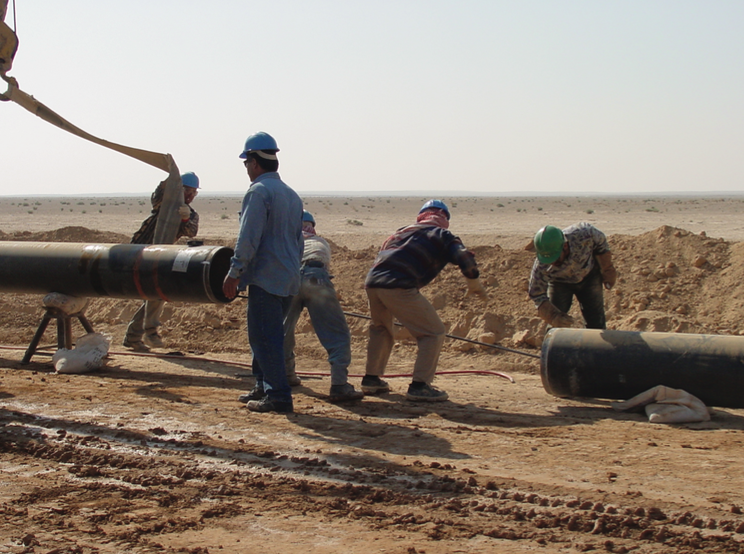
Across-border pipeline is among the most important geopolitical factors deciding the future nations involved. The Arab Gas Pipeline is no different. Starting in Egypt and passing through Jordan, Syria, Lebanon and Turkey, the pipeline will be crucial not only in providing these countries with energy, but in binding political agreements and even peace deals — if one country stops the pipeline, others will suffer, and thus each link of the network has to function for all to benefit. Unless, of course, the country is Lebanon.

The Arab Gas Pipeline, an operation that was to have begun several times already, was originally designed to pass through Lebanon, rather than dead-ending in the country.

The initial plan determined the pipeline would start in Egypt, go underwater to Lebanon, then overland to Syria and Turkey. That design would have practically permanently secured supply to tiny Lebanon — if gas transmission stopped here, it would also stop going to Syria and Turkey. But Lebanon, instead of being an intrinsic part of the pipeline, ended up becoming only a branch.

According to energy expert Chafic Abisaid, former director of studies in the Electricite du Lebanon (under the Ministry of Energy and Water), changes in the pipeline route came around 1996, when the Jordanians began lobbying Egypt to be part of the network. Indeed, it does make more economic sense that the pipeline go through Jordan, rather than through Lebanon. But with the new trajectory, almost a third of the energy supply to Lebanon will be under the whims of Syria, who will be able to close the tap without harming the other pipeline partners. Although just a possibility, its mere suggestion upsets government officials.

Empty pipelines
“We are part of this Arab Gas Pipeline, I insist on this,” said Sarkis Hlaiss, General Manager of Oil Installations in Lebanon. “Our contract will be signed between Lebanon and Egypt, not Lebanon and Syria: we will pay the Egyptians the money, we will receive their gas in the Syrian-Lebanese border.” But even without a direct agreement with Syria, Abisaid is more skeptical. “We had signed a 25-year contract with Syria but it has not been honored due to non-technical problems,” said Abisaid. There is already a pipeline connecting Homs, in Syria, to the power plant in Bedawwi, Lebanon, but as yet it has seen no gas. Completed in 2005, the pipeline was supposed to start pumping gas to Lebanon a few days after Rafik Hariri’s assassination.

“We were supposed to receive the gas on February 28th 2005, 14 days after the assassination of president Hariri, but we didn’t. I kept on contacting them and they said they didn’t have enough gas for their own power plants,” Hlaiss said. But now, as he explained, “the question is different. We are buying Egyptian gas.”

Indeed, the new agreement stipulates that Egypt sends a certain quantity to Syria with a surplus, so that Syria can in turn send its own gas to Lebanon, in an amount equivalent to the surplus it got from Egypt. “It’s an international affair,” according to Hlaiss. But even with an agreement that is regionally binding, some people remain unconvinced.

For Fadi Abboud, president of the Lebanese Industrialists Association, “anything to do with the Arab world is subject to the mood of the ruler, subject to politics.”

The electricity crisis in Lebanon has gone from dire to calamitous. In Beirut, for over a year most areas lack electricity for at least three hours per day. In the Metn area where many factories are, there have been power cuts lasting up to 20 hours a day.

And there is not much hope in the short term. When asked when the pipeline will start operating, an EDL official answered “only God knows.” Yet even with the pipeline, Lebanon’s electricity problem will not be solved.

Missing megawatts
What Lebanon lacks is not fuel, but power plants to convert the fuel into energy. The four main power plants in the country produce some 1,400 megawatts, way below the necessary 2,100 megawatts estimated as Lebanon’s total demand. Some say the deficit is even bigger than that, and it can reach 50% even when all the power stations are working at full capacity. What the pipeline would do is to allow the government to save money, to the tune of “hundreds of millions of dollars” every year, according to Hlaiss. Asked for a specific number, he echoed the usual lack of figures and says only EDL could answer that question.

EDL did not answer, but if the current price of oil is any indication, the government would save significantly by purchasing natural gas rather than oil. EDL’s losses are said to be $14 billion, and privatization seems to be the only solution to curb yet another government utility that does not escape the sectarian criterion for manning its ranks.

Privatization, then, is the dream solution for technicians, experts and the people who know how to manage a company. “I am 100% in favor of privatization,” said Fadi Abboud, “but we have tasted privatization in the past and it was the worst type of monopoly or duopoly.” Abisaid concurred. “There is a [privatization] law but it hasn’t been implemented. It is the law 462 of 2002.

The first thing that we should do, and in that law they did it right, is to have a regulatory body to control the energy sector. Five people should have been appointed but since 2002 they haven’t done it,” he said. That may help explain the surreal situation in Lebanon: on the one hand the country is plagued by power cuts, on the other it is possible to see streetlamps lit in broad daylight.

Some experts say because Lebanon is already dependent on oil and gas imports and is also a victim of government mismanagement, the country should not increase its predicament by depending on a single source — not only is it economically unsound, but it is also politically risky. “We cannot rely just on the Arab gas because they can bring us on our knees,” said Abboud.
 

Energy expert Abi said agrees, and supports energy diversification as a strategic necessity. “My first strategic choice is LNG, liquid natural gas [which comes from the sea, as liquid gas cannot be transported through pipes].” LNG is more environmentally friendly and requires less maintenance and repair. But Lebanon would have to build terminals. USAID estimates each terminal would cost some $220 million. Despite the price, this investment could be recuperated in less than two years: “When you have 30% saving from natural gas and the price of oil keeps on rising, you can recuperate it even in less time,” said Abisaid. The Homs pipeline is a last option for him. “Only one source coming from Homs means that any problem with the pipeline will result in complete interruption.”

Despite the incredulity even among EDL officials, Hlaiss believes the pipeline will start functioning in September. The project — ambitious both economically as well as politically — may eventually take Arab gas all the way to Europe through the planned Nabucco pipeline.

In fact, the Arab Gas Pipeline is just one part of the so-called Euro-Arab Mashreq Gas Market Project. At a meeting May 2008 in Brussels, the EU, Iraq, Turkey, Egypt, Jordan, Syria and Lebanon finally reached an agreement to connect those countries to the Arab Gas Pipeline and establish the Euro-Arab Mashreq Gas Co-operation Centre at the cost of $11 million, with a $9.4 million grant provided by the European Commission and $1.6 million contributed by the four Mashreq countries (Egypt, Jordan, Lebanon and Syria).

The involvement of Europe makes the project more likely to materialize, and it may revolutionize energy consumption and environmental protection in the region. Lebanon may yet be left out of the pool, but perhaps not. The first official visit of a minister in Fouad Saniora’s government to Damascus since November 2006 happened in February this year, and the official to pay the visit was Mohammed Safadi, Lebanon’s Minister of Energy and Water.

July 3, 2008 0 comments
0 FacebookTwitterPinterestEmail
  • 1
  • …
  • 522
  • 523
  • 524
  • 525
  • 526
  • …
  • 707

Latest Cover

About us

Since its first edition emerged on the newsstands in 1999, Executive Magazine has been dedicated to providing its readers with the most up-to-date local and regional business news. Executive is a monthly business magazine that offers readers in-depth analyses on the Lebanese world of commerce, covering all the major sectors – from banking, finance, and insurance to technology, tourism, hospitality, media, and retail.

  • Donate
  • Our Purpose
  • Contact Us

Sign up for our newsletter

    • Facebook
    • Twitter
    • Instagram
    • Linkedin
    • Youtube
    Executive Magazine
    • ISSUES
      • Current Issue
      • Past issues
    • BUSINESS
    • ECONOMICS & POLICY
    • OPINION
    • SPECIAL REPORTS
    • EXECUTIVE TALKS
    • MOVEMENTS
      • Change the image
      • Cannes lions
      • Transparency & accountability
      • ECONOMIC ROADMAP
      • Say No to Corruption
      • The Lebanon media development initiative
      • LPSN Policy Asks
      • Advocating the preservation of deposits
    • JOIN US
      • Join our movement
      • Attend our events
      • Receive updates
      • Connect with us
    • DONATE