• Donate
  • Our Purpose
  • Contact Us
Executive Magazine
  • ISSUES
    • Current Issue
    • Past issues
  • BUSINESS
  • ECONOMICS & POLICY
  • OPINION
  • SPECIAL REPORTS
  • EXECUTIVE TALKS
  • MOVEMENTS
    • Change the image
    • Cannes lions
    • Transparency & accountability
    • ECONOMIC ROADMAP
    • Say No to Corruption
    • The Lebanon media development initiative
    • LPSN Policy Asks
    • Advocating the preservation of deposits
  • JOIN US
    • Join our movement
    • Attend our events
    • Receive updates
    • Connect with us
  • DONATE
By Invitation

A Universe Apart

by John Defterios April 3, 2008
written by John Defterios
 
The Great Eastern Hotel near Liverpool Street train station was designed with the City of London financier in mind. Its minimalist interior, clean lines and discrete atmosphere create the right setting for business people to work on a deal or attend a mid-sized forum.

I escaped into the Great Eastern in late March for a few hours at a gathering of Egyptian ministers and business people to discuss the outlook for the region’s most populated country. The talk inside the meeting room was about robust growth of 7%, foreign direct investment hitting a record $11 billion dollars and re-positioning Egypt to capture more than its fair share of Gulf petrol dollars.

On the way over to the meeting, I read my morning paper with headlines reacting to the Federal Reserve’s orchestrated bailout of Bear Sterns and yet another drastic cut in U.S. interest rates to help cushion the blow of the slowdown. This was followed by rampant rumors in London of an imminent collapse of a leading retail bank. The rumors sparked an investigation.

Inside the foyer I took time for a few interviews to sound out my views that we are not living in one global economy right now. “It really does seem like two parallel universes,” said Marwan Elaraby of Citadel Capital the Egyptian investment bank.

“You drive around Dubai or the more frontier emerging economies of the region, you would never guess what is happening in the world economy. What is happening on Wall Street or the City of London seems like a universe away,” added Elaraby.

The dollar continues to tumble; oil continues to surge; prices everywhere for staples are skyrocketing. Despite the rosier economic outlook, protestors in Cairo demanded that President Hosni Mubarak do something about the cost of bread. History buffs know from Roman times that economic growth alone does not deliver votes, but affordable access to bread certainly does.

Finance is Confidence

Middle Eastern players are not ignoring the red-lights of concern flashing on Wall Street, quite to the contrary. They are hoping to minimize the impact. As co-founder of Beltone Financial, Aly El-Tahry noted: “Finance is confidence. As long as you don’t have a catalyst or something that diverts the present expectation from this negative mood, we’ll continue to have uncertainty.”

For Egypt that may translate into a drop of up to 1 percentage point of growth this year according to the country’s Investment Minister Mahmoud Mohieldin. While he acknowledged the challenge, the 42-year-old minister added some bigger picture thoughts on what this might eventually mean.

“I’m much more concerned about the policy formulations in the future because the kind of extreme pragmatism that we’re witnessing today could be justified in the short term by uncertainty, by requirements of having to make and to do some quick actions to fix problems,” said Mohieldin. The Worldcom fiasco led to Sarbanes-Oxley. This severe credit crunch he worries may lead a new White House occupant to move into action to limit trade or the flow of financial investments.

Let’s hope not. We, however, have heard very little from the three remaining presidential candidates on what they would do about the Doha trade round, sovereign wealth funds or the sinking dollar.

Meanwhile, back in the foyer of the Great Eastern, the talk remains on creating new opportunities. Egypt is in the midst of creating a new industrial investment hubs and expanding IT centers. For that to come off the ministers know that skills need to match the demands of companies such as Microsoft or Oracle who already have a presence there.

With this economic boom underway in the region, the players are looking to India and China for inspiration, not Wall Street or the City of London .


April 3, 2008 0 comments
0 FacebookTwitterPinterestEmail
Comment

Closing the doors on oil’s big boys

by Paul Cochrane April 3, 2008
written by Paul Cochrane

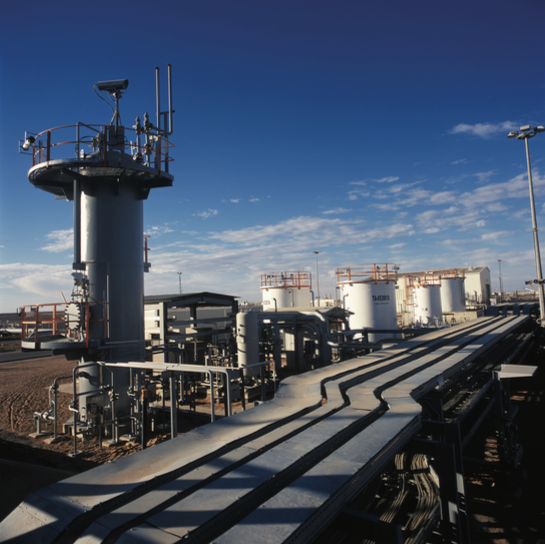
The halcyon days of cheap energy, pliable governments and a public that didn’t care about pollution or global warming are over for the international oil companies (IOCs). This we all know, or are slowly coming out of a somnambulant state to realize, but recent trends in the oil industry are presenting further concerns for IOCs at the very same time as they report bumper profits on the back of high oil prices.Energy giant ExxonMobil reported a $39.6 billion profit for last year, BP $17.39 billion and Shell $27.6 billion. Such profits were deemed ‘obscene’ in the British popular press, as indeed they might be perceived to be, but what was less noted amid the hullabaloo was that BP saw profits plunge 22% in 2006 — and is now laying off employees — and that Shell is to sink $26 billion of its profits into developing new projects. Likewise, ExxonMobil spent $21 billion in capital expenditure last year, but production increased by less than 1%.

So what is behind this change in fortunes? After all, the IOCs had enjoyed year-on-year record profits for the past five years, demand is still rising and oil looks like it will continue to hover around $100 a barrel.

The problem that IOCs are facing is production and access to energy reserves. The cost of production has surged from $5 a barrel in 2000 to $14 in 2006, largely due to the rising costs of extraction as well as construction of upstream and downstream facilities.

This was evident in the amount Kuwait’s National Petroleum Company (KNPC) had to shell out to build the 615,000 bpd Al-Zour refinery, the world’s largest purpose built facility of its kind.

The original budget was $6.3 billion, but with the cost of raw materials doubling and even tripling in the Gulf, no construction firm would touch the project and the refinery was on the verge of being shelved. But so important is the refinery to the Kuwaitis that the government eventually capitulated last September, earmarking a staggering $14.29 billion to get the job done.

“We are now touching un-chartered territorial waters, the value of contracts in the billions of dollars,” said Ahmed al-Jemaz, KNPC deputy managing director of the Shuaiba refinery.

Such spiraling costs are naturally of concern to IOCs — Shell admitted a 10% annual increase in inflationary costs — but of more pressing concern is the access to energy rich countries.

One by one, doors are being closed to the IOCs as countries re-nationalize resources. Last year, Russia put the screws on BP and Shell to hand over majority stakes in gas operations to the state-run Gazprom, Bolivia nationalized gas and oil fields, Ecuador used military force to take over Occidental Petroleum’s holdings, and Hugo Chavez gave IOCs a choice: handover majority stakes to Venezuela’s national oil company or face complete nationalization of operations in the Orinoco River basin.

In the case of Venezuela, BP and Norway’s Statoil Hydro opted to stay but for ConocoPhillips, which pulled out, the loss of its Orinoco holdings saw the American company’s second quarter earnings plummet by 94%.

The loss of these countries, coupled with growing competition from national oil companies (NOC) around the world — a cursory glance at the countries in which NOCs operate is more than ample to see they are not confined to exploiting their own national resources — is what Jeroen van der Veer, Shell’s chief executive, was quoted as saying is a dangerous trend.

IOCs can be thankful, then, that the MENA region is not part of this re-nationalization phenomenon, but Arab governments are savvy enough to know they don’t have to be taken for a ride.

IOCs are having to face the reality that to access the likes of recently de-nationalized Libya, with proven oil reserves of 41.5 billion barrels and only 30% of the country explored, deals are getting tough.

This was apparent at the last round of bidding in December, where 35 companies were pre-selected to bid for 41 gas blocks, but only 13 companies put in bids and only four blocks were awarded out of 12 licenses.

The lack of interest by IOCs was attributed to ‘uninteresting’ blocks offered by Libya’s NOC, but most notably it was Tripoli hand-

picking companies that would provide the highest share of production, with Gazprom offering 90.2% of any production in finds in western Libya and Shell offering 85% to search for gas.

Such tight restrictions were not there to access Palestine’s recently discovered gas, with only 25% going to the Palestinian Authority, and Iraq’s oil law looks like it will hand over the lion’s share to IOCs, but Libya is not alone in the region with its tough stance.

The only thing that the IOCs have on their side right now is the skills and technology that NOCs don’t — as of yet — have.

All in all, it looks as if 2008 will be another roller-coaster year for the IOCs while NOCs, albeit not necessarily laughing all the way, can at least show some bravado on their way to the (central) bank.
 

PAUL COCHRANE is a freelance journalist based in Beirut. His work has appeared in Britain’s Petroleum Review.


April 3, 2008 0 comments
0 FacebookTwitterPinterestEmail
Comment

Did they ever get it wrong…

by Claude Salhani April 3, 2008
written by Claude Salhani

US President George W. Bush and his Secretary of State Condoleezza Rice thought they could solve the Middle East’s core problem — the Palestinian-Israeli dispute — by organizing a peace conference in Annapolis late last year. Having succeeded in bringing together Israelis and Palestinians, as well as Syrians, Saudis and numerous other countries for a meeting that was big in aspect though short in context, the administration bathed in the euphoria of its temporary success. ‘Temporary’ here is the key word because since November of last year, and since Bush’s promise of peace before his mandate expires in January 2009, the Middle East once again finds itself caught in a deadly spiral of increasing violence.

Talk about misreading signals, misjudging reactions and misguided policies.
Since the Annapolis conference Gaza, with its 1.4 million inhabitants besieged by the Israeli military and under Hamas control, sits on the brink of all-out war. As Hamas continues firing Qassam rockets at Israeli population centers and Israel hits back, civilians are caught in the cross-fire on both sides; Jerusalem has been the target of one of the worst terrorist attacks in years when a lone gunman opened fire on yeshiva students, killing eight and wounding another 10; the Lebanese presidential crisis, now in its fourth month, has pitted Syria and its Lebanese allies against the country’s government who enjoys the support of the United States, France and Saudi Arabia. As a result the Saudis have recalled their ambassador to Damascus, while the United States has dispatched three naval gunboats — including the USS Cole — to the eastern Mediterranean in what can only be seen as a revival of gunboat diplomacy. Amidst all this one must not forget Iran, who is believed to be pursuing its nuclear ambitions

So much for peace within the year. Indeed, seen from Washington, the situation in the Middle East looks quite dim, and despite Bush’s misplaced optimism, try as one may, it is hard to see any light at the end of the proverbial tunnel, unless it’s those on Merkava tanks heading for Gaza or for southern Lebanon. Analysts and diplomats have voiced their pessimism regarding the short-term future of the region. As for the long term, no one is really daring enough to venture any thoughts. Suffice to say that events are affecting the region’s economy in a way that, if allowed to continue to deteriorate, may result in drastic — and dangerous — measures.

Many believe that President Bush waited far too long to become actively involved in the Arab-Israeli dispute, and now Washington’s efforts are too little and too late. Additionally, the Bush administration’s policy of refusing to recognize the importance of talking to four major players in the region — Syria, Iran, Hizbullah and Hamas — cannot possibly advance the peace process. Syria, much as Iran, holds great influence on the Lebanese Shiite organization, Hizbullah, and the Palestinian Hamas movement. Much as the White House hates to admit it, the road to peace in the Middle East unavoidably passes through Damascus.

Meanwhile, as one of former President Bill Clinton’s campaign slogans so adequately pointed out, “it’s the economy, stupid.” The dangers of a regional flair-up cannot be ignored as Israel begins to feel the economic crunch of its war with Gaza. Cities such as Sderot, well within Hamas’ range of Qassam rockets, have seen their economy take a turn for the worse. In fact, Israel’s policy regarding Hamas has met with about as much success as Washington’s and the siege of Gaza has backfired. The storming of Gazans across the border into Egypt demonstrated that the policy of trying to contain the Strip has failed to yield the desired results and is having a negative effect on Israel’s economy.

As a result of the continued bombardment, a number of businesses have been obliged to lay off personnel as residents of border localities limit their activities to the most basic and urgent needs. Hoping to incite the people of Gaza to move against Hamas by exerting pressure through the embargo maintained by Israel, ironically, this policy is coming back to bite Israel’s own economy. And herein lies what could be the tipping point. Israel’s Prime Minister Ehud Olmert, already suffering from lack of popularity, a position amplified by the fiasco of the Lebanon War and the ongoing undeclared war with Gaza, may feel obliged to address the situation through military action. As in the past, such short-

sighted policy will only serve to strengthen those opposed to the peace process; a process which can only advance under the guidance of the United States’ influence. But for that to succeed a change of policy is first required. This is unlikely to happen before there is a change in the White House’s Middle East policy, or a change in the White House.

Claude Salhani is editor of the Middle East Times.


April 3, 2008 0 comments
0 FacebookTwitterPinterestEmail
Comment

Are UAE consumers starting to feel the pinch?

by Alex Warren April 3, 2008
written by Alex Warren

In many ways, the UAE is a retailer’s wet dream. The population is growing quicker than almost any other in the world at around 4.5% per annum; consumers have higher disposable incomes than pretty much anywhere else in the Middle East, apart from Kuwait; and in per capita terms, consumer spending in the UAE is miles above other markets in the region.And people here have some solid reasons to be confident when it comes to spending their hard-earned cash: there is no income or corporate tax, there is no VAT, petrol costs a fraction of what it does in most developed countries, and many goods — especially things like electronics or cars — are dirt cheap.

But it’s not that surprising to see some recent signs suggesting that the UAE’s affluent consumers might just be beginning to lose a little of their confidence. A regular survey, which was last conducted in January 2008, asked interviewees to give a score out of 100 for a number of different categories based on how confident they felt for the coming six months.

Compared to the last survey, which was conducted in July 2007, the overall index fell markedly from 88.8 points down to 78.5. The biggest slide was in the ‘regular income’ category, while ‘quality of life’ and ‘employment’ also dropped off.

So what’s making people more worried than they were six months ago? First off, inflation doesn’t show any signs of falling. Officially, it stands at around 7%, but in reality it’s in double-digits: a recent study by Merrill Lynch argued that inflation was in danger of hitting 12% in 2008, which would be a 20-year high. That is still lower than Qatar, but is nevertheless growing at a much quicker rate than salaries

For your average UAE resident, it’s food and housing that have probably experienced the most alarming price jumps. Various local studies found that the cost of basic foods rose by around 27-30% in 2007, and could be rise again by as much as 40% in 2008. This has prompted the government to put artificial caps on the consumer cost of staples such as rice, and to consider stockpiling food supplies in advance to avoid other unwanted price rises later in the year.

Rents, meanwhile, continue to go up in double-digit figures every year. Caps on annual rent increases have been introduced across most of the seven emirates, but only apply to those residents who are renewing their leases, and not to new arrivals, who have to pay the full market value. Great news for investors and speculators, not so good for your average employee.

Moreover, the seemingly endless decline in the US dollar — to which the UAE dirham is still pegged — has made the cost of imports much higher. The UAE has relatively little domestic production capacity in most sectors, keeping it highly dependent on importing most types of goods. With the dirham losing value daily, imports are becoming more and more expensive — with the prices naturally being passed on to residents.

Murmurings about the introduction of tax are also starting to stir up concern. Plans are reportedly afoot to unleash value-added tax (VAT) sometime in the future, although this would seem to contradict other government efforts to keep consumer prices down, and in all probability will not happen for some time. There has also been talk of the (for now unlikely) possibility of income or corporate tax, while motorists are feeling nervous over the prospect of a rise in the price of petrol.

But perhaps more revealing is the decline in the quality of life. This is a more aspect of consumer happiness, but factors such as the crippling traffic in Dubai — which shows few signs of abating despite a series of new roads and bridges — hardly make for an enjoyable working life for many people. What’s more, a recent study found that air pollution in Dubai was amongst the worst in the world.

Although, in the grand scheme of things, consumer confidence is still comparatively healthy in the UAE, companies and the government must be careful to nurture residents’ confidence levels whilst balancing them with corporate profits. The UAE is already a highly transient place, with many people tending to stay a year or two before moving on elsewhere, while in terms of culture, history or entertainment, cities like Dubai or Abu Dhabi simply can’t compete yet with the likes of London, New York or Paris.

So to attract skilled, world-class talent that will allow the country to seriously compete on a world stage, it needs to make sure that expatriates keep getting a sweet financial deal compared to their home countries.
 

Alex Warren is a Dubai-based freelance consultant and writer.

April 3, 2008 0 comments
0 FacebookTwitterPinterestEmail
Comment

NATO looks to the region

by Riad Al-Khouri April 3, 2008
written by Riad Al-Khouri

The North Atlantic Treaty Organization (NATO) has expanded since the end of the Cold War, both in membership and geographic scope. The alliance and its individual countries have headed south and east: their presence in the Middle East and North Africa (MENA) has deepened, as regional states joined the Atlantic alliance’s multilateral security efforts following elevation by NATO in 2004 of its Mediterranean Dialog to a working partnership. Bilaterally, various MENA states link up with the United States as Major Non-NATO Allies (MNNAs) to work with Washington. Additionally, there are bilateral steps by some individual European countries keen on consolidating strategic positions in the region: examples of this include France’s Mediterranean Union idea, which emerged last year, and the agreement in January between Paris and the United Arab Emirates to set up a French military base in that Gulf state.Parallel to these security moves, the West has since the end of the Cold War been expanding into MENA with increasing economic force. Particularly since the mid-

1990s, the Europeans and America intensified commercial diplomacy with the region through agreements to liberalize trade. In this respect, Jordan has an advanced status vis-

à-vis the West, being the only MENA state simultaneously having US Free Trade and Qualifying Industrial Zone agreements, as well as an EU Partnership accord along with membership in the parallel Agadir process. Jordan’s strategic position has also helped the kingdom obtain MNNA status, as well as develop links with NATO. As part of the process of strengthening the latter, in December 2007 NATO launched the first Mediterranean Dialog Trust Fund, to assist Jordan with elimination of explosive remnants of war. Involving contributions from NATO states Norway, Spain, Italy, and Belgium, as well as non-members Switzerland and Finland, this first ever Trust Fund project with a Mediterranean Dialog partner marks the start of a new kind of use of the Alliance’s expertise to achieve both security and economic goals, the latter including improved land use.

Just as a security dimension is important in US and EU economic partnerships with MENA countries, this step by NATO in Jordan demonstrates that the reverse is also true, with a Western military alliance willing to work on non-

security issues in the region. As NATO’s role evolves further, and with the overall situation in MENA in a state of flux, this mixture of economic and strategic elements could become more common.

Another interesting aspect of the Mediterranean Dialog project in Jordan is that the finance comes from European states, mainly EU members, but still in the framework of an alliance the spans both sides of the Atlantic. With Europe providing the funding, can it also be in charge? Finance through a trust fund means that Europe literally entrusts NATO with managing its money, which means an American element is also part of the process. However, if, as it now looks, Europe is going to be paying for more such NATO activities, the purely “European” face of NATO could become more apparent, further emphasizing schisms that already exist in the alliance.

An alternative is for European countries to project force and look for co-operation in MENA on a bilateral basis, thus discarding the excess baggage that a link with the US sometimes brings. However, that in turn might exacerbate strains inside Europe – and within the EU in particular. For example, there is already muttering from Germany about France’s Mediterranean Union idea not sufficiently involving northern European Union countries.

Members of the Atlantic partnership will continue to be involved in competition in the region: what role could NATO play in this complex process? Apart from greater geographical scope, the alliance should also continue to broaden its horizons towards development and application of non-military means to achieve security.

In the MENA powder keg in particular, NATO should try to prevent conflicts by eliminating the reasons for them through applying primarily non-military means in a proactive flexible manner. This will inevitably mean integrating NATO activities with the capabilities of different international alliances or countries. That in turn underlines the importance of improved cooperation between NATO and the EU, which of course is already a key player in MENA — but also an economic rival to the US in the region.

This brings us right back to the recent strains in the Atlantic alliance, and Western powers’ competition in MENA. In that respect, regional states’ relations will continue to evolve multilaterally with NATO and with the EU on the one hand as well as bilaterally with the US on the other. This means that Jordan and other MENA countries need to continue maneuvering diplomatically to gain the most out of Western powers’ interest in the region.

Riad al Khouri is a visiting scholar at the Carnegie Middle East Center, and Senior Fellow of the William Davidson Institute, University of Michigan.

April 3, 2008 0 comments
0 FacebookTwitterPinterestEmail
Comment

USS Cole comes to Lebanon

by Nicholas Blanford April 3, 2008
written by Nicholas Blanford
 
“Once, I remember, we came upon a French ‘man-of-war,’ senselessly firing cannon shots into the African jungle,” narrates Marlow in Joseph Conrad’s “Heart of Darkness,” his novel about madness and power in 19th Century Africa. “In the empty immensity of earth, sky, and water, there she was, incomprehensible, firing into a continent. Pop, would go one of the six-inch guns; a small flame would dart and vanish, a little white smoke would disappear, a tiny projectile would give a feeble screech — and nothing happened. Nothing could happen. There was a touch of insanity in the proceeding, a sense of lugubrious drollery in the sight.”

Conrad’s description of the pointlessness of Western naval power against the impassivity of a continent came to mind with Washington’s announcement in February that it was sending warships to patrol the Levantine coast in a less than subtle message to its opponents in the region.

“This is an area that is important to us, the eastern Med,” said Admiral Mike Mullen, the chairman of the US Joint Chiefs of Staff. “It does signal that we’re engaged, we’re going to be in the vicinity, and that’s a very, very important part of the world”.

The first ship to steam to the Lebanese coastline was the USS Cole — which was badly damaged in an Al-Qaeda suicide attack in Yemen in 2000. The symbolism of deploying a ship closely associated with the “war on terror” was not lost on the Lebanese, and predictably sparked intense speculation as to what it all meant.

“Arrival of destroyer USS Cole: Is it a show of force or for the use of force?” asked a headline in Al-Hayat.

The USS Cole soon departed to be replaced by the USS Philippine Sea and the USS Ross, all part of the US Navy’s Nassau battle group, consisting of six ships including amphibious troop carriers.

Of course, US warships regularly ply the waters of the eastern Mediterranean, it falls within the purview of the US Navy’s Sixth Fleet. But the difference this time was the decision by Washington to pointedly announce the deployment beforehand.

The affair was clumsily handled by the US, however. Having apparently received no prior notice of the deployment, an embarrassed Prime Minister Fouad Siniora had to fend off opposition accusations that he was an American stooge forced to rely on US military muscle to prop up his weak government. It is hardly likely that Siniora would have requested the presence of US warships and he may well have registered his objection to a public declaration if he had been previously notified.

The Hizbullah-led opposition was handed a propaganda coup. It could point to US aggressiveness in sending warships to Lebanon, as well as the impotence of the gesture. Hizbullah and Syria, the presumed recipients of the US muscle-flexing message, would not be impressed by a couple of ships sailing a few dozen kilometers of the Levantine coast. After all, the USS Cole and the other guided missile destroyers that replaced it were hardly likely to fire their armaments of Tomahawk cruise missiles into Lebanon or Syria.

Indeed, it was a strangely old fashioned gesture for the US to make. It was redolent of a bygone era when Europe’s imperial powers responded to crises in their far flung colonies by sending a battleship — giving rise to the phrase “gunboat diplomacy”.

It may also have symbolized the frustration felt by the Bush administration at the continuing impasse in Lebanon and the inability of the US or its French and Arab partners to break the deadlock. Deploying warships to the eastern Mediterranean paradoxically demonstrated the limitations of US power in influencing developments in Lebanon and Syria. Syria long ago chose to ride out the storm of Bush administration displeasure and wait for a change in the White House. Naval maneuvers in the eastern Mediterranean will not persuade Damascus to change course.

Indeed, the history of US military muscle-flexing in Lebanon is not a happy one. The last time there was such a public display of US naval might this close to Lebanon was in 1983 during America’s ill-fated intervention in Beirut. The USS New Jersey, a World War II dinosaur armed with massive 16-inch guns, arrived off Lebanon two months after the US Marine barracks in Beirut was destroyed by a suicide bomber, killing 241 US servicemen. The USS New Jersey fired on Syrian troops and allied militia positions in what was the heaviest shore bombardment since the Korean War. Many Lebanese still recall the “flying Volkswagens”, the name given to the huge shells that struck the Chouf. The sporadic barrage, which lasted nearly two months, killed the top Syrian general in Lebanon. The shelling, in which civilians also were killed, helped cement anti-American sentiment.

In early February 1984, pro-Syrian militias took over West Beirut, spurring President Ronald Reagan to order a Marines evacuation. The Marines left by the end of the month, ending what then US Defense Secretary Caspar Weinberger called a “particularly miserable assignment.”

Nicholas Blanford is a Beirut-based journalist and author of “Killing Mr. Lebanon — The Assassination of Rafik Hariri and its Impact on the Middle East.”


April 3, 2008 0 comments
0 FacebookTwitterPinterestEmail
Comment

The silent Right

by Peter Speetjens April 3, 2008
written by Peter Speetjens

Politicians and media were quick to dismiss the recent elections in Iran as being undemocratic, and rightfully so, seeing the fact that the mullah-led regime carefully handpicked the candidates it thought suitable for the people to choose from. Not surprisingly, some 1,700 reformists were barred from taking part.

Seeing the overwhelming attention was given to the Iranian take on democracy, it is striking to see how little we heard about similar practices in other countries in the region. Take Egypt. With an eye on the upcoming municipal elections, the Mubarak regime thought it best to pre-select candidates. From a total of 10,000 political hopefuls mostly associated to the Muslim Brotherhood, only 60 were allowed to register, while some 700 were detained.

Ever since 1981, when the state of emergency was introduced, the Egyptian authorities routinely arrest political opponents, or prevent them from participating otherwise. Likewise, who has heard anything about the 2007 parliamentary elections in Jordan?

Nothing ever happens in Jordan, seems to be the credo among newsmakers, which remains a self-fulfilling prophecy, as long as journalists and editors fail to even scratch the kingdom’s seemingly tranquil surface. And yet, it’s common knowledge that it’s extremely difficult to found a political party in Jordan, while the electoral process is designed in such a way that the country’s tribal provinces keep the upper hand over the urban majority, which is predominantly of Palestinian descent.

According to global watchdog Human Rights Watch (HRW), the Jordanian elections were characterized by nothing less than “outright fraud”. HRW furthermore criticized restrictions on freedom of speech, public gatherings and the country’s NGO law. In response, the Jordanian government did not do itself any favors by stating that the reason for banning demonstrations was “to ensure the safety of participants.”

In its 2008 World Report, HRW went on to say that in 2007 “too many governments, including Jordan, Nigeria, Russia and Thailand, acted as if simply holding a vote is enough to prove a nation is democratic,” while “the US and Europe ignored evidence of manipulated elections, particularly when the results were favorable to their administration.”

The deafening silence regarding democracy and human rights in Iran, Syria and other ‘rogue states’ is all the more remarkable among the more conservative members of the international press corps, as they were the main cheerleaders of the US-led invasion of Iraq, proudly presenting it as the beginning of a democratic blossoming in the region. Skeptics of this rather rosy picture were swept aside by labeling them as “(extreme) leftists,” who have become “anti-

American”, ever since the free market model became the world’s dominant force. So, British author Nick Cohen argued in his book “What’s Left?” that the left had lost its soul. Once it mounted the barricades in defense of human rights and secularism, yet now it sides with countries such as Cuba and Venezuela, and Islamist groups like Hizbullah and Hamas. In their urge to be anti-American, anti-Western even, the left is ready to embrace anyone, so Cohen and many others argue.

Now, this is hardly the place to deal with such thorny issues once and for all, yet a few question marks must be raised. Firstly, it is hardly fair and frankly rather ridiculous to nullify criticism of American foreign policy by making a matter of anti-Americanism. True of not, the claim that the search for weapons of mass destruction was primarily an excuse to invade Iraq, has nothing to do with some kind of metaphysical hatred of all things American, which includes everything from freedom and democracy to Elvis Presley, Hollywood blockbusters and the Rocky Mountains.

Note that Israeli conservatives do exactly the same thing, when arguing that criticism of the Zionist state is nothing but a veiled form of anti-Semitism, i.e. a deep hatred of anything Jewish. Noam Chomsky argues that this type of reasoning stems directly from the lexicon of totalitarianism. Soviet dissidents were accused of hating their country, because of their criticism of state policies, as for the totalitarian mind “the State is identified with the country, its culture, and its people.”

Secondly, the fact that the left is, hesitantly, willing to engage with groups as Hamas, Hizbullah or the Muslim Brotherhood is not so much due to an abandoning of secular values, but born of a deep awareness that one cannot have it both ways.

One cannot force elections upon Gaza and then ignore the end result when some 80% of the population votes for a party not of your liking. One cannot criticize Syria and Iran for human rights violations without ever raising a finger regarding similar practices in countries that happen to be US allies. One cannot criticize people for somehow engaging Islamists, while Saudi Arabia is among the main US allies in the region. That has nothing to do freedom or democracy. That is just a matter of plain and simple hypocrisy.

Peter Speetjens is a Beirut-based journalist.


April 3, 2008 0 comments
0 FacebookTwitterPinterestEmail
Financial Indicators

Global economic data

by Executive Staff March 21, 2008
written by Executive Staff

GDP

Source: OECD

In terms of total GDP, the United States is, by far, the largest member country. Japan is the second largest economy followed, at some distance, by the four large EU members — Germany, United Kingdom, France and Italy. The next four largest are Spain, Mexico, Canada and Korea. These rankings have not changed significantly over the period shown.

Per capita GDP for the OECD as a whole was close to $30,000 per head in 2005. Five OECD countries had per capita GDP in excess of $36,000  — Luxembourg, Norway, United States, Ireland and Iceland. Half of the 30 OECD members had per capita GDP between $28,000 and $36,000, while 10 countries had per capita GDP below $28,000. Turkey, Mexico and Poland had the lowest per capita GDP. Note that both GDP and PPPs contain statistical errors, and differences between countries in per capita GDP of 5% or less are not significant.

Also note that in the tables, the OECD total excludes the Czech Republic, Hungary, Poland and the Slovak Republic.

Education

Source: OECD

In 2003, taking into account both public and private sources of funds, OECD countries as a whole spent 6.3% of their collective GDP on their educational institutions. The highest spending on educational institutions can be observed in Denmark, Iceland, Korea and the United States, with more than 7% of GDP. Seven out of 29 OECD countries for which data are available, however, spend less than 5% of GDP on educational institutions.

In all the countries, public and private expenditure on education increased by 5% or more between 1995 and 2003 in real terms. However, the increase in spending on education between 1995 and 2003 tended to fall behind the growth in national income in eight of the 21 OECD countries. Most notable differences are observed in Austria, Canada, Ireland, Norway and Spain where the proportion of GDP spent on education decreased by 0.4 or more in percentage points between 1995 and 2003.

It should be noted that growth in GDP masks the fact that there was a significant increase in real terms in spending on educational institutions in almost all of the OECD countries from 1995 to 2003. In addition, the size of the school age population shapes the demand for education and training, and national levels of teachers’ salaries also affect the share of expenditure on education.

Quality of life

On average, across the countries for which data are available, around 7.7% of teenagers were neither in school nor at work in 2004. Differences across countries are large: in Denmark, Germany, Iceland, Luxembourg, Netherlands, Norway and Poland less than 4% were in this situation while the shares exceeded 10% in Portugal, Spain, the United Kingdom, Mexico and Turkey.

For the OECD as a whole, there has been a decline in the percentages of teenagers who are neither employed nor education, but the decline has been most marked for females. The fact that young people, and particularly females, spend more time in education than they did a decade ago has contributed to this.

Several features of the labor markets and training systems affect the ease of transition from school to work. OECD reviews of youths’ transition from school to work have identified Nordic and English-speaking countries as those where this process is smoother than in countries in Continental and Southern Europe countries.

Access to household computer

Source: OECD

Penetration rates are highest in Iceland, Denmark, Japan, Sweden, Korea, the Netherlands, Luxembourg, Norway and the United Kingdom where 70% or more of households had access to a home computer by 2005. On the other hand, shares in Turkey, Mexico, the Czech Republic and Greece were below 40%. Between 2001 and 2005, the percentages of households with access to a home computer increased particularly sharply in Japan, the United Kingdom and Germany.

The picture with regard to internet access is similar. In Korea, Iceland, the Netherlands, Denmark, Switzerland and Sweden, more than 70% of households had Internet access by 2005. In Turkey, Mexico and the Czech Republic, on the other hand, only about one-fifth or less had internet access by 2005.

Data on internet access by household composition — with or without dependent children — are available for most OECD countries. In general, they show that households with children were more likely to have internet access at home in 2004.

March 21, 2008 0 comments
0 FacebookTwitterPinterestEmail
Banking & Finance

Money Matters by BLOMINVEST Bank

by Executive Staff March 21, 2008
written by Executive Staff

Regional stock market indices

Regional currency rates

Qatar Buys Back its Stakes at Credit Suisse

According to Qatar’s Prime Minister, the natural gas rich country is buying back its shares at Credit Suisse and is planning on spending $15 billion this year to purchase shares in European and US banking institutions. The purchase deal that is still going on has not yet reached the 3% threshold at which the Swiss Stock Exchange regulations stipulate the disclosure of the acquirer’s name. The Qatari Investment Council, an emerging GCC sovereign wealth fund, has also revealed plans to set up funds in Finland and Malaysia, similar to the one that was established in Indonesia last month, at $1 billion each.

Libya Plans on Creating Energy City at $3.8 Billion

The Gulf Finance House of Bahrain signed a $3.8 billion deal, this month, with Tripoli’s Economic & Social Development Fund to create an energy business district. The project that will be built on a 528-acre site in Sabrath (west of Tripoli) will be known as ‘Energy City Libya’. Energy City will provide a full range of facilities to local and international oil and gas companies within a mixed commercial, residential and hospitality services. In addition to reviving the country’s infrastructure, the Libyan government is hoping to attract foreign direct investment into the country, especially from Gulf nations.

IMF Forecasts 5.7% Growth of the Tunisian Economy

The International Monetary Fund (IMF) has projected a 5.7% growth for the Tunisian economy from 6.3% in 2007. The main driving force of this decline has been the low demand from Europe for Tunisian exports as a result of the increase in oil prices and commodities. However, the IMF has predicted a cushioning of the slow economic growth with the revival of foreign direct investment into Tunisia. The Tunisian government is aiming at supporting the economy by introducing banking reforms and liberalizing trade practices. The IMF is expecting budget deficit and inflation to hover around 3% of GDP and 4% respectively. However, the 3% budget deficit seems underestimated given the government’s subsidy for fuel and essential commodities.

March 21, 2008 0 comments
0 FacebookTwitterPinterestEmail
Cover story

More than chrome

by Executive Staff March 21, 2008
written by Executive Staff

All over the world, the iconic American motorcycle, Harley Davidson, is a passionate affair. Having, over the past two decades, changed its image from the machine for lawless bikers and heavy metal rock stars to a “statement of freedom and uniqueness” by well-respected individuals. Harley Davidson has matured and the company now also draws its clients from middle-aged professionals in the middle-to-upper management echelons. Steeped in history and tradition, in the Middle East, Harley Davidson has had several high-profile devotees, first and foremost the late King Hussein of Jordan, famous for his rides in the desert, his son now continuing the tradition.

No other motorcycle in the world gets the same devotion as a Harley Davidson. For enthusiasts, it is more than a muscle machine decked out in chrome. “Harley Davidson has a story — it’s the spirit, the people, and the way of living,” explained Marwan Tarraf, general manager of Bikers Inc., the Harley Davidson dealership in Lebanon.

Saudi Harley rider Abdelmenem Addas, owner of a Heritage Classic, banker, teacher and activity officer for HOG (Harley Owners Group) Saudi Arabia, described the culture of Harley Davidson by saying that firstly it represents the idea of “American freedom” — of traveling down an open road with the wind in your hair — and second, there is the idea of brotherhood and team spirit. Many of the region’s riders have either lived or studied in the US where they were first introduced to the Harley culture, or are expatriates living in the Gulf.

No lawlessness here

However, the region’s riders are far removed from lawlessness. Addas insisted, “We obey the strict traffic rules such as wearing helmets, signaling, and keeping space between bikes.”

Performance-wise, Harley cannot compare to other motorcycles on the market — but what it can offer is a unique experience. Its special V-engine, which gives the motorcycle its signature look and sound, also provides a feeling specific to the brand. “I bought one five years ago and loved the feeling,” said Karam Attallah, general manager of Lebanon’s Gefinor Finance and owner of a ‘04 Road King Classic.

Harley Davidson is also a marketing phenomenon with apparel and accessories designed for biking and casual wear. In addition, the logo can be found on items ranging from mobile phones to limited edition Ford Trucks. In recent years, the spirit of Harley Davidson has been used to sell everything. It’s based on the idea of community, Tarraf explained, “When you buy a Harley, something changes in your life. You then belong to a specific interest group that wants to share this with other people.”

Public perception of the motorcycle also plays into it. “It is how people perceive you that makes you want to own one,” said Ahdi al-Hunaif, rider and author of the Kuwait Chopper blog, “how everyone warms up to you on the streets, how kids wave to you at a traffic light, how old men ask you questions and give you the thumbs up.”

Money — as in, having it — also plays a role. “Harleys are not cheap,” explained Tarraf, “so buyers tend to be upper-middle class. There are people who own five bikes and never ride and then there are others who save for years and ride their bikes everyday.”

While the average Lebanese rider is around 35 years old, global statistics indicate that Harleys are mainly popular with the over-45 crowd, with incomes hitting $80,000 and above. However, with so many statistics, the reality is extremely varied. As Tarraf related, “We have a rider who used to sell fish in California and came back. He went to hajj, prays five times a day, his wife wears a veil and he has a Harley that he loves. He lives in the south, has to drive over two hours for a one-hour ride and rides back. Now he meets with a guy like Karam, and their lives are so totally different, but they share a passion for Harleys.”

On the low end, a new Harley costs around $15,000, and prices then can climb up to $60,000, although the average price is about $20,000. The two top selling models are Soft Tails — such as the Fat Boy, popular for city riding — and Road Kings — the larger touring class made for road trips and traveling.

“Usually, people who don’t know much about Harleys come and ask about the Fat Boy. But once they get to know Harleys better, they begin to want to buy a bike that suits their usage,” said Tarraf.

Another popular category is the Sportster family, which are smaller motorcycles that some who have touring motorcycles buy as a second bike. A recent addition is the V-Rod, a speed bike, created with a Porsche-designed engine for greater performance.

Customization

Customization and modification allow the rider to become the true owner of the motorcycle. Almost everyone customizes his bike. “You can buy a motorcycle and make it look like you,” said Tarraf. “That’s where Harley succeeded most; they give you a motorcycle that has the possibility of being a work of art.”

It is also a domain where a lot of revenue is generated. Customizations can double the price of the bike, if not more. Changing the handlebars, adding accessories, paint jobs — anything up to the engine can be changed. Added al-Hunaif, “It is about showing off your latest creations, making people see what type of a person you are, because in reality, each bike shows a piece of that person.”

Dealerships in the region

The dealership is an integral part of the Harley experience offering, alongside service and customization, a social forum to interact with others who share the same passion. They also provide the safety training needed to operate the bike.

Over the years, regional dealerships changed considerably. “I’ve been riding for 15 years. I remember I used to go to a Harley dealership in the States where you’d find this bearded guy with feathers all around, very rude — he wouldn’t even talk to you — and now you go to a Harley dealership and you see a younger generation managing and people that are so nice, who answer all of your questions and try to help you out. You don’t see the old guys anymore. Harley had to clean up their image; there is a new trend because they want to sell to non-traditional Harley riders and get a wider clientele.”

In Lebanon, Harley Davidson has a long history. According to Tarraf, the first Harleys were brought to Lebanon in the 1950s, imported from abroad. Ten years later, the Lebanese police began buying the motorcycle for its force. A formal dealership was set up in 1977 only to be closed after importation difficulties resulting from the civil war. In the 1990s, after the civil war, the police began selling their stock sparking an interest that led to the reopening of the dealership in 1995. However, it closed again in 2000 and in the ensuing years, few Harleys were imported. This, in turn, prompted Tarraf to obtain the dealership license, opening his doors to old-time riders and new clients in 2007.

Originally, he expected to sell only 20 motorcycles. Demand far outpaced expectations and by early 2008 he had sold around 70 bikes — not bad for a tiny country in the midst of turbulence.

The first dealership in the UAE was established in 1989, operating out of a hangar at the Abu Dhabi International Airport. It expanded to Dubai in 1992 and since then has been established in both emirates. Sales are just under 500 bikes per year. “There isn’t a model which we don’t sell,” said Marcel Bode, general manager of Harley Davidson of the UAE. For him, it is the influx of expatriates that is growing the market, something that can be observed when looking at other GCC markets as well.

Dealerships have appeared in other Gulf states since the late 1990s, and can also be found in Egypt and Morocco.

HOG chapters

Owning a Harley makes you a part of a global club. The Harley Owners Group (HOG) was established by the company in 1983 in response to a growing need to provide a forum for riders where they can interact with other riders and organize rallies to show off their bikes. The forum went international in 1991, established through local dealerships. Belonging to a HOG chapter means that one is part of a global network of riders and has access to other chapters’ rallies. “If you are a HOG and you meet another HOG from Idaho, there’s always something to talk about,” explained Tarraf.

In the region, HOG chapters are quite active. The first Middle East HOG Rally was held in Muscat in 1999 drawing over 200 bikes. The next one saw an increase to 300 and sparked a competition with Dubai. The Middle East HOG Rally continues as an annual tradition, to which rallies throughout the region have been added.

Saudi Arabia’s HOG chapter has nearly 1,200 total members, according to Addas, activity officer for the group. Nearly 70% of its members are expatriates from the US, France, Switzerland and Germany. Even with the strict social regulations, in places such as Jeddah wives and girlfriends are able to ride on the backs of bikes. The group is very active and has been used to promote tourism in the country. Last year, a ride from Jeddah and continuing up to the Durrat al-Aroos beach resort, 60 km north of the city, was supported by Mecca’s governor, Prince Khaled al-Faisal, Jeddah’s governor, Prince Mishaal ibn Majed, the General Presidency of Youth Welfare’s Saudi Motor Sport Committee and the Jeddah Chamber of Commerce and Industry, and given a police escort. And, exemplifying that the brand has come a long way from its early days as the bike of choice for motorcycle gangs and outlaws, Harleys could even be used to promote peace and understanding in the region. One day, so Addas hopes, he will be able to organize a ride from Mecca to Medina and then ending in Jerusalem, if he could secure the authority needed. “I think it would send a message to the world that we want peace.”

March 21, 2008 0 comments
0 FacebookTwitterPinterestEmail
  • 1
  • …
  • 539
  • 540
  • 541
  • 542
  • 543
  • …
  • 696

Latest Cover

About us

Since its first edition emerged on the newsstands in 1999, Executive Magazine has been dedicated to providing its readers with the most up-to-date local and regional business news. Executive is a monthly business magazine that offers readers in-depth analyses on the Lebanese world of commerce, covering all the major sectors – from banking, finance, and insurance to technology, tourism, hospitality, media, and retail.

  • Donate
  • Our Purpose
  • Contact Us

Sign up for our newsletter

    • Facebook
    • Twitter
    • Instagram
    • Linkedin
    • Youtube
    Executive Magazine
    • ISSUES
      • Current Issue
      • Past issues
    • BUSINESS
    • ECONOMICS & POLICY
    • OPINION
    • SPECIAL REPORTS
    • EXECUTIVE TALKS
    • MOVEMENTS
      • Change the image
      • Cannes lions
      • Transparency & accountability
      • ECONOMIC ROADMAP
      • Say No to Corruption
      • The Lebanon media development initiative
      • LPSN Policy Asks
      • Advocating the preservation of deposits
    • JOIN US
      • Join our movement
      • Attend our events
      • Receive updates
      • Connect with us
    • DONATE