• Donate
  • Our Purpose
  • Contact Us
Executive Magazine
  • ISSUES
    • Current Issue
    • Past issues
  • BUSINESS
  • ECONOMICS & POLICY
  • OPINION
  • SPECIAL REPORTS
  • EXECUTIVE TALKS
  • MOVEMENTS
    • Change the image
    • Cannes lions
    • Transparency & accountability
    • ECONOMIC ROADMAP
    • Say No to Corruption
    • The Lebanon media development initiative
    • LPSN Policy Asks
    • Advocating the preservation of deposits
  • JOIN US
    • Join our movement
    • Attend our events
    • Receive updates
    • Connect with us
  • DONATE
Levant

Opening up

by Executive Staff March 7, 2008
written by Executive Staff

With private finance still in its infancy in Syria, private equity has yet to get up and running, but the foundations are being laid for a sector that could be as hot as elsewhere in the region.

Spearheading the direction private equity could take in Syria are holding companies, which were introduced to the market over a decade ago by the likes of former Lebanese prime minister and businessman Rafik Hariri.

But it has only been in the past few years that holding companies have started coming into their own, spurred on by the economic reforms implemented since the death of Hafez al-Assad.

The de-regulation of the finance and banking sectors has been the most crucial change, creating a more competitive financial environment as well as prompting businesses to pull up their socks and adapt to the new climate.

“Holding Companies are a new concept entering the terminology here,” said Dr. Nabil Sukkar, managing director of the Syrian Consulting Bureau for Development and Investment. “Businessmen are thinking of setting up holdings, but don’t know the benefits and what it’s all about.”

New Company Law

Indeed, holding companies were not mentioned in Syrian law until 2000, in Law No. 7, which allowed for special tax treatment, and the recently enacted New Company Law has a section on holding companies.

Two Syrian holding companies are at the forefront of this fledgling sector. Souria Holding was established by 24 investors in early 2007, with a capital of $80 million, and is behind the entry of international supermarket chain Spinneys into Syria.

The biggest venture, Cham Holding, was established with a starting capital of $360 million by 70 Syrian investors, with business moguls Nabil Kuzbari the president and Rami Makhlouf the vice-president. (How last month’s decision by the US Treasury Department to freeze Makhlouf’s assets in US financial institutions, as well as prohibiting US citizens and firms from engaging in any business contacts will impact on Cham Holding remains to be seen.)

With the management largely consisting of repatriated Syrians who have had professional experience in the Gulf and the West, the company’s mantra is to “lead the private sector into the new era,” said Bahaa Issa, British-Syrian head of communications.

Part of this involves — as always — the creation of a brand identity to put Syria back on the international business map.

“Our vision is to be at the head of the train of the new economy, and we want to position ourselves as the opportune delivery system for the Syrian economy,” said Issa.

Cham Holding is focusing on six industries, including: BENA, for hospitality and property development; the Cham Capital Group, for finance and banking, capital finance and insurance; SANA for energy and power generation; health and education; and a new private airline Cham was recently granted a license to operate, Pearl Airlines.

According to Issa, Cham Holding plans to “create 50,000 jobs in the next five years, which would indirectly create 600,000 job opportunities.”

Since its launch in 2006, Cham has entered into a raft of strategic partnerships and joint-ventures. In December, it inked a $5 million partnership with British-US company Gulfsands Petroleum, which works in the US, Syria and Iraq. Cham has a 65% controlling stake, with the aim of acquiring high-value energy projects in Syria, and possibly Iraq.

In addition, Cham has entered into a joint-venture with three Kuwaiti firms to tender for large utilities and other infrastructure contracts in Syria, and is reportedly in discussions with Siemens to establish a ‘clean-coal’ power station. Encompassing projects valued at over $1 billion, Cham is also behind the Hejaz Railway station shopping mall, which has yet to get off the ground despite the foundations being dug more than two years ago, reportedly due to resistance from heritage groups.

More than greenbacks

Cham is bringing more than greenbacks to Syria, acting as consultants to the government and striving to introduce corporate governance and regulatory compliance through its own example.

“Compared to Dubai the challenges are tremendous,” said Mohanad Moussly, chief Risk and Compliance Officer. “Here the government is working with the mindset that the public sector is the best provider of services to the public, and to go into critical areas of industry. This mindset is changing, but public sector employees are hesitant about change.”

Holding companies as well as private foreign banks in Syria are hopeful that the upcoming Damascus Stock Market — which was slated to open in the first quarter but looks more likely to start later in the year or early 2009 — will spur on greater de-regulation and attract further capital to Syria. That will also include the entry of private equity firms.

Currently, there are few firms capitalizing on the opening of Syria’s economy. The UAE’s SHUAA Partners, a private equity arm of SHUAA Capital, has however invested $100 million in Syria, to enter the mobile telecom sector.

“We want to invest more in Syria. We have $100 million to deploy in equity and more than just equity when you factor in leverage. We want to go into three markets in Syria:  telecoms, financial services, and real estate/hospitality,” said Jamil Brair, SHUAA Partner’s senior vice president.

For the time being, Syria has further to go before there is a more profound entry of venture capitalists, private equity firms and the like, but holding companies are giving an idea of the direction a more capitalist Syria will resemble.

March 7, 2008 0 comments
0 FacebookTwitterPinterestEmail
Levant

Aviation taking off

by Executive Staff March 7, 2008
written by Executive Staff

Fitting in to what appears to be the private sector’s modus operandi when investing in Syria in the wake of economic reform, private airlines are only this year taking to the skies, three years after the law had been amended. In 2005, Damascus allowed private investment in air transport for the first time in 60 years, during which the national carrier, Syrian Arab Airlines (SAA), enjoyed a monopoly.

But it has only been in the past six months that the private sector has started to capitalize on the liberalization of the market, with Damascus granting licenses to three private Syrian airlines, of which Sham Wings is the first to get underway with a charter flight to Sharm el-Sheikh in early February of this year.

This seemingly cautious approach to investing in Syria reflects the banking sector’s trajectory into the market, only setting up shop years after private banks were formally allowed into this formerly socialist economy. But the recent flurry of activity in aviation is indicative of the changes the economic reforms in Syria have brought about, with the time lag between the liberalization of the sector on paper and actual developments on the ground creating the conditions for a more viable aviation industry.

Rising tourism numbers

“The main reason for us to set up was the rise in tourists and Iraqis in Syria,” said Salim al-Sawda, technical director of Sham Wings Airlines, which was established by Iraqi and Syrian private investors.

In the past three years, investment in the tourism sector has surged from $400 million in 2004 to $2 billion in 2006, while the number of tourists visiting Syria has spiked from 2.5 million in 2005 to 3.1 million in 2006, according to the Central Bureau of Statistics. And if Iraqis and Lebanese were to be included in the figures, the number of visitors would stand at 4.4 million in 2006, versus 3.4 million in 2005, a rise of 29%.

Indeed, with an estimated 1.4 million Iraqi refugees in Syria there is a ready market for air links between Damascus and Baghdad, which until February had been dominated by Iraqi Airways (IA). Now Sham Wings offers flights, directly competing with IA at $567 return (due to high insurance costs at the Iraqi end).

Sham Wings, the country’s first charter airline, has started with one aircraft, a 147-seater McDonnell Douglas MD-83 leased on an ACME basis from an Egyptian company, that way getting around the US ban on the Syrian aviation sector.

The airline plans to buy aircraft “one by one,” said Sawda, and is currently in discussions to by a European-made Folker-100 jet. “We have already increased our timetable, not only to Iraq, but also Sharm el-Sheikh and Alexandria, and we will open a new line to Istanbul, as well as to Ukraine and Belarus. Our destinations will be ones not covered by Syrian Airways.”

The airline, which plans to be profitable within the next two years, is to be joined this year by Syrian al-Nisr Airlines (The Eagle), established by Syrian private investors Al-Harith al-Assad and Mayyar Arnous, and by Pearl Airlines, which is backed by Syria’s Cham Holding. Both airlines have been granted international licenses but have made no statements on intended destinations.

Other licenses are also pending, for cargo, charter and non-charter airlines, said Flight Commander General Hazim al-Khadra, director general of the Syrian Civil Aviation Authority.

“The policy of Syria now is to open the market in the field of aviation. But there is no Open Skies Agreement, only to Bassil al-Assad Airport in Lattakia, as we cannot do it at Damascus International Airport (DIA) since we must have more than one national carrier that can compete with other airlines, let alone the capacity of the airport itself,” he said.

Airport expansion

With the number of tourists visiting Syria increasing by 20% in the past year, and foreign investment flooding in, the country’s airports are witnessing a turnaround, with a 10.5% increase in passengers to 3.485 million last year.

According to al-Khadra, “This is a result of the action plan drawn by our leader, Bashar al-Assad, towards the development and rehabilitation of modernizing Syria.”

As part of the country’s second five-year plan for the 2006-2010 period, some $3.75 billion is forecast for infrastructure developments in the transport sector. Much of this is earmarked for port and road development, but aviation is also getting a much needed boost.

In January, Malaysia’s Mahibbah Engineering won a $59 million construction contract at the DIA to rehabilitate and upgrade the passenger terminal building, roads, car parks and parking apron.

This is just the start of major projects to expand the ageing airport, said al-Khadra, with plans on the drawing board to increase DIA’s current capacity from 1.5 million to 3.5 million passengers a year. “With the next fifth action plan there will be another terminal, catering to 7-8 million passengers, maybe in the next five years.”

The number of international airports is also to be increased, from the current five — Damascus, Lattakia, Aleppo, Deir al-Zor and Qamishle — to eight, with Homs, Tadmur (Palmyra) and Al-Raqqa to get airports of their own.

Al-Khadra said bids and tenders to build and upgrade facilities would be open to international bidders, and there was potential for ground services at the airports to be privatized, pointing out that “This all depends on the development of the economic situation in Syria. Nowadays, Syria values investment from everywhere.”

The number of airlines operating out of Syria could also increase from the current 40 that fly out of Damascus, but that is all “related to the political situation in the region,” according to him. “For instance, European and American airlines are not allowed to operate out of Syria. This is a consequence of the US ban against Syria.”

The US ban on Syrian aviation is one of the biggest hurdles the sector faces, not only in terms of increasing flight destinations and enticing operators, but in particular for the national carrier. Under the 2003 Syrian Accountability and Lebanese Sovereignty Restoration Act (SALSA), Washington placed a ban on all US exports to Syria, a ban on US investment in the country, and a ban on Syrian flights to the US, among other regulations. Under such sanctions Syrian Airlines is unable to upgrade its ageing fleet of Boeing and Airbus aircraft, last added to over a decade ago when in 1996 the US granted a special waiver to the airline to purchase used Boeing aircraft from Kuwait and two Airbus A320s in 1998.

“It is a big problem because US aviation interferes with the aviation industry, the spare parts for commercial airlines in particular, which maintain the safety of passengers. And these passengers aren’t only Syrians, but also Europeans, Americans, Asians and so on,” said al-Khadra. “Even Airbus is included in this ban as they cannot sell Syria any Airbus aircraft or spare parts because the Americans are between 10-15% shareholders in these companies.”

The other option for SAA is to buy Russian aircraft, but he said they lacked the American-made Airborne Collision Avoidance System (ACAS), which is essential for air safety and a requirement for commercial aircraft by the International Civil Aviation Organization.

Diversifying Syria’s air sector may therefore be the only way to get around the crippling US bans, for unless SAA gets spare parts, the airline could be permanently grounded — if planes don’t actually fall from the sky — as private Syrian airlines take to the skies.

March 7, 2008 0 comments
0 FacebookTwitterPinterestEmail
Comment

Egypt’s foreigners

by Norbert Schiller March 7, 2008
written by Norbert Schiller

For foreigners and the Egyptian aristocracy, the 1952 July Revolution marked the beginning of the end of their rule. Gone were the Muhammad Ali dynasty and the influence of the British, Italians, Greeks, French, Levantines, and Turks. Now there was a disgruntled military in charge and it was led by a young and charismatic officer named Gamal Abdel Nasser. His first order of business was to change the nature and make-up of the government, most notably changing the country from a monarchy to a republic. As a way of minimizing foreign opposition, he assured those concerned that their interests would not be touched. After purging the government, he turned to land reforms breaking apart feudal farms and distributing the land among landless peasants. Then, after successfully nationalizing the Suez Canal in 1956, his government turned to the industrial, financial and commercial sectors, forcing the vast majority of foreigners, who had believed that their interests were safe, to leave the country, many penniless. With the old-guard out of the way and the foreign influence gone, Nasser finally turned to the Eastern block for military assistance and backing.

Even though Nasser’s socialist reforms have been in place for the better part of the past 50 years, present-day Egypt is more like it was under the King, though not as chaotic and elitist; a trickle-down effect has in fact created a thriving Egyptian middle class. But the economic power stills lies with the Egyptian elite, albeit a different circle, and once again foreigners are allowed to settle, own businesses, buy property, and build a future. In fact, this past year Egypt was named by the International Financial Corporation, the World Bank’s financial arm, as the world’s top reformer. It achieved this by cutting the minimum time required to start a business, lowering fees for registering property, and relaxing bureaucracy for construction permits. Last year, Egypt also emerged as the number one recipient of direct foreign investment in Africa beating South Africa.

On a recent trip to Egypt, I visited the Red Sea resort town of El Gouna, one of the most exclusive resorts in the country. While admiring the Abu Tig Marina with all its multi-million dollar yachts, I ran into an elderly gentleman who was asking for directions to a particular shop. There was nothing unusual about his request except that the man, who was obviously European, addressed me in Arabic. At first I thought that he was short sighted, because I, too, look very European, and to avoid embarrassing him I responded in Arabic. He responded with a big smile, thanked me, and walked off in the direction where I had pointed.

I didn’t think much of the encounter until a few days later when I was invited to dinner by a friend who wanted to introduce me to a few Europeans who have made El Gouna their home. The group was small and included the Italian women who owned the restaurant where we were eating, two Italian sisters, an Italian man who was the manager of the local casino, and my Lebanese friend who runs the winery in El Gouna. The conversation started out in Italian, but because neither my friend nor I could follow, the group began to split with some switching to English and the others French except for the elder of the two sisters who continued on in Italian. When she finally realized that I didn’t understand a word she said she switched to Arabic which came naturally to her. I asked her if she spoke English or French and she said, “not very well.” I then told her the story about the elderly European man who also spoke to me in Arabic. She asked about where I had seen him and if he was wearing locally made sandals. I said: “Yes, he was wearing shibshibs and I met him in the Marina.” She started laughing so hard that everyone turned around to see what was going on.

Her younger sister then jumped in and in English explained to everyone that the elderly gentleman was none other than their father who had been born and raised in Egypt to Italian parents. After finishing his studies he started his own successful textile business in Cairo. “Everything was going well for him until 1961 when Nasser began nationalizing all foreign owned businesses. My father thought that he was immune and continued on with his business as if nothing was happening until one day, in 1964, our family business was nationalized and we were forced to leave the country.” With nowhere else to go, and very little money, the family moved to Italy. The eldest daughter had also been born and raised in Egypt learning both Arabic and Italian at the Italian school. The younger sister was born after they had already left Egypt. “Italy was always my home but my sister and especially my father were really never able to assimilate back in our ancestral country and my father always wished to one day return to Egypt.”

A few years ago the elder sister visited the Red Sea and was so charmed by El Gouna that she bought a home there. The younger sister followed, also fell in love with the place, and bought a home there also. Suddenly the father, whose wife had passed away, became very lonely without his daughters and insisted that they bring him back to Egypt. Thus, when he was already well into his 90s, his daughters brought him back to Egypt and bought him a small apartment. “My father never felt at home in Italy, he always wanted to come back to Egypt even if it is just to die.”

With foreign investment at an all time high, maybe this nonagenarian may be able to pick up where he left off and start another business in the land of his birth.

Norbert Schiller is a Dubai-based photo-journalist and writer.

March 7, 2008 0 comments
0 FacebookTwitterPinterestEmail
Editorial

Fighting words

by Yasser Akkaoui March 7, 2008
written by Yasser Akkaoui

This month’s Private Equity report represents not only a first for Executive in terms of size, content and execution, but I believe it has propelled the way regional business is reported to a new level. In essence, Executive has set a new benchmark.

We want the regional businessman — the chairman, the CEO, the fund manager, and the business owner — to see Executive as his magazine — the name after all is not a coincidence. We want Executive to be a magazine that monitors his/her business environment; that engages him/her on a personal level; that offers an open forum for discussion and encourages transparency in an increasingly transparent world. We will not so much judge as moderate.

The nature of communication has changed and so must the way we communicate. The media might remain the same but the methods of disseminating new data and telling the new business story must embrace the new dynamism that stretches from New York to Beijing via the increasingly important Middle Eastern gateway.

In this new and exciting era, awareness is high and business is changing, especially in the Gulf, where change is effected at a phenomenal rate. Yet the region is small and intimate and one of the deliberate aims of this and future special reports is to reflect this intimacy. To bring together the key players and accurately report how they perceive doing business in their own words; the new front line dispatches if you like. We want to be the magazine of record for those who shape business.

In doing this we have had to set new standards for ourselves. We must be extra diligent if we want to connect with the business community on its level. We can not rest on our laurels nor can we allow ourselves to just “get by”, month after month, as long as annual projections are satisfied. A good business will not operate like that and a business magazine that wants to maintain a keen edge cannot either. To truly report business it must abide by the same standards, and work under the same pressure as the people it reports.

Fighting words?

You bet.

March 7, 2008 0 comments
0 FacebookTwitterPinterestEmail
By Invitation

Special Economic Zones, how to make them special

by Nadim Batri, Jonathan Fisk & Ali Habbtar March 3, 2008
written by Nadim Batri, Jonathan Fisk & Ali Habbtar

Over the past 30 years, there has been a proliferation of special economic zones under a myriad of names: “free zone”, “free trade area”, “export-processing zones”, and “special economic zones”, amongst others. A special economic zone, or “SEZ”, is defined as an area within the boundaries of a country where favorable regulatory, fiscal, and financial incentives are applied preferentially to the rest of the country. SEZs can vary in scale from small enclaves within or near a major city or port, to planned metropolitan centers like Economic Cities. Shenzhen and Jebel Ali are considered to be two of the most famous and successful SEZs. Shenzhen in China had a 15% year-on-year GDP growth in 2006, the highest mainland GDP/capita, and the economic added value of a midsize Chinese province. Jebel Ali is Dubai’s thriving equivalent. In 2004, it accounted for approximately 36% of Dubai’s export/re-export activity. Jebel Ali has attracted significant investments, increasing its number of tenants by 25% year-on-year since its establishment in 1985.

SEZs are traditionally established to boost economic development through the attraction of foreign investment, leveraging the competitive advantage of the country or region over its neighbors. However, the rapid growth of SEZs has translated into competition over capital and consequently to increased startup costs. These large initial expenditures, which have been magnified with the increasing scale of SEZs, are heightening investment risk.

In this article, we outline seven key enablers for the success of a Special Economic Zone.

First — In order to achieve a competitive edge, a Zone should focus on a limited number of sectors, which define its main objectives and vision. Establishing an industry focus enables synergies between different tenants and ensures a competitive edge over other Zones offering similar services. The target industries or sectors should have a natural fit with the comparative advantages of the country: natural resources, human capital, access to markets, etc.

Second — A development blueprint, also know as a Master Plan, is then needed to guide construction planning and urbanization of the Zone, identifying the various Zones and the key elements required to operationalize its industrial, business and tourist zones, and to populate its residential neighborhoods. Specific sections of the Master Plan would translate the high-level industry or sector focus into concrete industry targets by mapping the competitive landscape and evaluating industry or sector attractiveness and profitability. The specific sections would then form bankable business proposals to secure financing and attract potential tenants. The Master Plan would also be used as a marketing tool used to communicate the Zone’s capabilities and competitive advantages to potential investors and residents. It helps the responsible entities deliver a consistent message to potential investors and residents by communicating the Zone’s advantages clearly and concisely.

Third — As part of its competitive offering, the Zone requires world-class infrastructure and utilities. A number of questions must be addressed to determine these requirements:

• How will the Zone be accessible (proximity of sea/airport, highways, railways, etc.)?

• How will fuel and feedstock be distributed to tenants?

• How will electrical power and water capacity be provided?

• What type of telecommunication services will be provided?

While most of the Zones aspire to have the best-in-class infrastructure needed by the tenants, the challenge lies in the financing of these capital-intensive projects. For example, Jebel Ali Free Zone relied extensively on government support until the zone became self-sufficient. Recent Zones have increasingly relied on the private sector to finance these projects.

Fourth — Civil and Public Services must be provided to meet the needs of the Zone’s investors and residents, and fall into seven main service categories; Security, Civil and Judicial, Municipal, Commercial, Education, Healthcare, and Social and Religious services.

Fifth — Fiscal and financial incentives are used as an additional tool to attract investors to set up operations in the Zone. The incentives take on the form of low tax rates, low customs tariffs, investment incentives (mainly for R&D), and attractive loan programs.

Sixth — A proper Governance Model should be set up to define the distribution of roles and responsibilities between the multiple government and private stakeholders of the Zone. The model describes four interlinked levels of governance:

1. Policy Setter(s): Set the overall policies to shape the Zone’s direction over the medium and long term, and approve the regulations detailing such policies;

2. Regulator(s): Issue, monitor and enforce the Zone’s regulations and bylaws, set Zone tariffs, approve plans and partnerships, monitor competition and resolve conflicts between service providers and consumers;

3. Developer(s): Develop the Master Plan, infrastructure and superstructure to fulfill the Zone’s vision and attract potential anchor investors;

4. Operator(s): Operate and maintain the Zone’s infrastructure and superstructure and manage the provision of civil and public services.

Each of the Zone’s key services must have responsible entities at each of the four levels described above; these entities can belong to the Central Government, the Zone Authority or the private sector. The key to design an effective Governance Model is to achieve the “right” balance between the various entities. For example, the decision about which entities are best suited to administer the Zone’s Commercial Services should be based on whether Commercial Services are a competitive advantage for the Zone, and if the desired quality of service can be provided through the existing entities in the country.

Seventh — Finally, the successful implementation of the governance model depends on the relationships between the three entities mentioned above, and the parameters that define their cooperation. Zones usually outsource the provision of non-core services, in order to focus on administration, land lease and key port services.

The seven key enablers outlined above combine to define the Zone’s Value Proposition to all the concerned stakeholders, including Central Government and Zone Authority, Zone developers and service providers, and the Zone tenants and residents. The Value Proposition defines the Zone’s development plan and industrial focus, and its required capabilities/services and the means of their provision; it also describes how the Zone is governed and monitored throughout its development.
Nadim Batri and Jonathan Fisk are senior associates, Ali Habbtar is an associate at Booz Allen Hamilton.

March 3, 2008 0 comments
0 FacebookTwitterPinterestEmail
By Invitation

UK-Lebanese trade setting sights on a better future

by Dominic James March 3, 2008
written by Dominic James

July 2005. London. Applying for trade postings in British embassies in Damascus, Beirut and Amman, I am delighted to get my first choice — Beirut. Despite the instability sparked by the assassination of Rafik Hariri that year and a spate of subsequent attacks, Lebanon seems a good choice for a commercial posting. I have been visiting the country since 2003 and been impressed with Lebanese business professionalism. There is energy and dynamism in the air, and a feeling of excitement that Beirut could once again become a true business hub for the region. There is a good team at the embassy, and from my visits it is clearly also a great place to live — the nightlife, natural beauty, skiing, the food, the people. I can’t wait — I have five months to prepare for a January 2006 start.

February 2008. Beirut. July 2005 seems a long time ago. It hasn’t quite worked out as expected. I have learned new and unexpected skills — evacuating our nationals in July 2006, counselling businesspeople trapped by riots in January 2007, emergency business planning in response to cancelled events, and dealing with regular disruption to everyday life. Thankfully, my job is not to analyze Lebanese politics, but I share the frustrations of the local business community at the seemingly endless stalemate which holds them back. It affects me personally, too — I say reluctant goodbyes to Lebanese friends leaving for better paid jobs in more stable countries, and feel sorrow for those who have lost immeasurably more than just their business.

For UK companies it has also been a difficult time. Along with other western countries, Britain advises against all but essential travel to Lebanon. This affects insurance cover and is a major factor for potential visitors. Some international companies have left for more stable environments, and even mentioning the words ‘Lebanon’ or ‘Beirut’ to some people seems to awaken almost dormant fears from the bad old days. It is demoralizing for my team, so I can only imagine what it is like for those Lebanese who have worked so hard to build up their businesses only to see their hopes of success and prosperity dashed.

So what’s the point of being here at all? The surprising truth is that British exports continue to do extremely well in Lebanon and UK-Lebanon business links are growing. Although final figures are not yet available, it looks as though 2007 will be an all-time record for UK-Lebanon trade — with two-way commerce approaching $500 million (up well over 15% in 2005 — which was itself a record year). And in a complicated political and economic environment, companies making decisions about working in Lebanon need our advice more than ever. And there are still companies who have identified new opportunities and are seeking to enter the market.

Like Lebanese businesses, my section — known as UK Trade and Investment (UKTI) — has adapted to the ‘situation’. We try to ignore political and security events outside our control and concentrate on where we can make a difference. We focus less now on promoting the Lebanese market in the UK — where potential exporters have a wide choice of easier options. We have also reduced our focus on major set-piece events (trade missions, exhibitions, etc.) which we cannot say with any certainty will be able to go ahead.

Instead we have started to develop much better contacts with British companies already in the region, mainly in the Gulf. Once successfully established in the Middle East, these companies start to look at opportunities in other markets in the region. UK companies see Lebanese companies and franchises flourishing in the Gulf, and want to take a closer look at Lebanon — to see beyond the newspaper headlines. In my last trip to Dubai in late January, I had no fewer than 24 pre-arranged meetings with UK companies visiting the Arab Health exhibition who wanted to talk to me about the Lebanese healthcare market. Many of these are following up with specific requests for further information or planning to visit.

But it is not so easy for a UK company to come to Lebanon in the current circumstances. So we often find ourselves commissioned to undertake a piece of work on behalf of a British company — to find an agent or distributor, or to do a piece of research which they would normally do themselves. We have successfully linked several British companies with local partners without them needing to set foot in the country. And we are developing better links with other regional UK embassies to provide a more joined-up service to UK companies already in the region. Beyond this we are still taking key Lebanese businesspeople to the UK to meet UK suppliers. In 2007, this included delegations from the power sector, the environment (solid waste) sector, ICT, financial services and security sectors.

The bottom line is that the Lebanese consumer has, despite everything, continued to consume UK products and services — in greater quantities than ever before. This could be specialist building supplies to feed the booming real estate market, consultancy for the banking sector, security consultancy, or simply medical supplies or food and drink — nearly $20 million of Scotch whisky is exported to Lebanon each year! And the big infrastructure projects such as power stations, refineries, water and wastewater, etc., will all need to go ahead at some point, so we try to position UK companies to be ready for when these are launched.

The recent strategy devised by UKTI HQ in London has been to focus on high-growth emerging markets, moving away from the traditional European and North American areas. The big names are obvious — China, India, Brazil, etc., and in the Middle East the focus is on the UAE, Saudi Arabia and Qatar. But other smaller markets are not ignored — and the potential in markets like Lebanon is clear. Although conflict and other incidents have sometimes scuppered plans to hold normal business activities, in reality the show goes on regardless. For local businesses, despite the fact that the economic situation is extremely difficult and many have been forced to close, others have been extremely successful. We need to be here to advise British and other companies to position themselves to meet the shifting demands.

Economically, as the IMF recently pointed out, Lebanon is ‘atypical’. Such a high debt-GDP ration should, according to standard models, have produced a debt crisis years ago. But the unique factors (strength of the banking sector, the state’s record in never defaulting, and the loyalty of depositors and investors) give Lebanon an advantage. Unless something drastic breaks the equilibrium (which cannot of course be ruled out), Lebanon will continue to maintain relative stability, and investors will continue to maintain a medium to long-term view. We try to bring these factors across to UK companies who are looking at the potential of the country.

One of the fallouts from the July 2006 conflict was that it forced the postponement of a visit that month from the Lord Mayor of the City of London after months of preparation on both sides. The Lord Mayor is one of Britain’s most prominent commercial representatives, representing the financial services industry in the UK. As Lebanon’s financial sector continues to develop a key role in the region, this visit would have brought the highest profile British commercial delegation for many years to Beirut. I take comfort from that fact that London is taking a relaxed view, and that the visit has been postponed rather than cancelled. I have no doubt that it will go ahead when the timing is right. Both Beirut and London have good stories to tell as hubs for financial and insurance services, and it is right that contacts are developed at the highest levels for the commercial benefit of both countries.

We also see a good future in the development of the creative industries, where again both London and Beirut are key centres of advertising, design, media and fashion, and we are working with our colleagues in the British Council to develop a strategy to move this work forward. Already in the last few months one British graphic design company, “afishinsea”, has successfully established itself in Beirut with UKTI help, and we are looking to assist more such ventures. We are also focusing on construction, power (especially renewable energy technology), healthcare and ICT, the latter of which should offer great opportunities in future years assuming the privatization of Lebanon’s telecoms sector goes ahead.

We have good support. While our Ambassador, Frances Guy, is necessarily focused on the political arena, she is also extremely enthusiastic about commercial work. In recent months she has been 45 meters up a crane at the Beirut Container Terminal (a real success story — run by a Lebanese-British consortium), visited the offices of several major importers from the UK, and toured several factories. We also work closely with key individuals from the British Lebanon Business Group — an informal network of British and Lebanese businesspeople which includes some of Lebanon’s most influential commercial decision makers.

So, am I optimistic about the future? The answer has to be ‘yes, but…’! I was lucky enough to be here in the first-half of 2006 when Lebanon really seemed to be booming. New mega-projects were being announced on a weekly basis, and while there were problems, it was possible to imagine that Beirut could regain its pre-civil war status as a financial and trade hub for the region. Much has been lost, and whatever happens it will take time to regain that momentum. But the underlying skills, dynamism, and creativity are still here, and there is significant pent up energy from investors waiting for better times. It is not a market for the fainthearted, but the rewards could be substantial.

Dominic James is the head of Trade and Investment at the British Embassy in Lebanon.

March 3, 2008 0 comments
0 FacebookTwitterPinterestEmail
By Invitation

Trouble brewing beyond the oil fields

by John Defterios March 3, 2008
written by John Defterios

It does not take much to rattle the commodity markets these days. Despite a dramatic slowdown in the United States and within Western Europe, there is certainly enough demand and enough speculation to have a new record close for oil this week, above $100 a barrel.

The trigger for the final close above that benchmark was a refinery explosion. Fingers were also pointed at the falling dollar, potential unrest in Nigeria and Hugo Chavez’s unpredictable nature as the overseer of Venezuelan crude.

With the strong growth underway in the Middle East region for this year and the mammoth construction boom, prices for everything from iron ore to make steel, to Arabica coffee beans to make cappuccinos, are at record highs.

There is a whole basket of so called soft and hard commodities skyrocketing — and for good reason. Demand outside of the Group of Seven countries remains strong and minor “events” create reasons for speculators to drive prices higher.

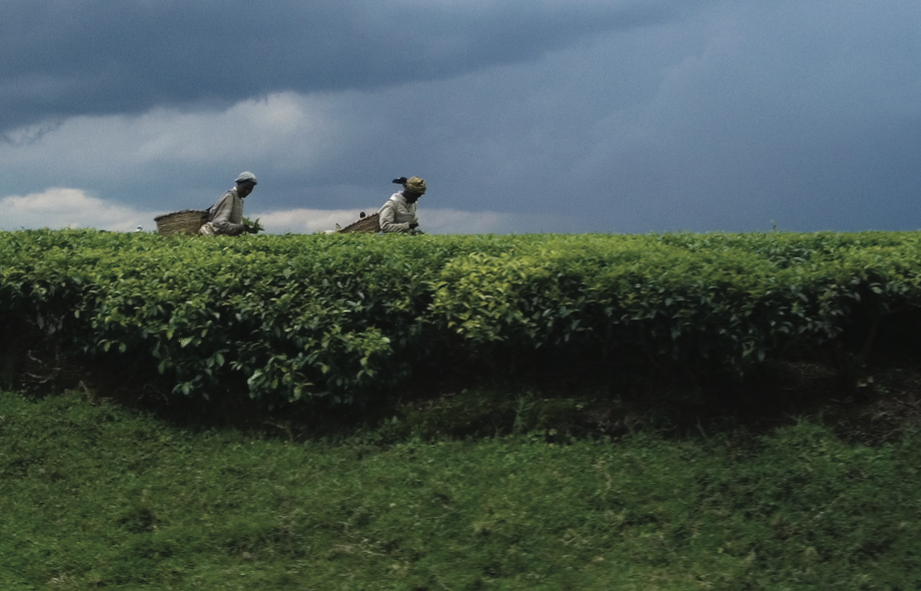
Take Kenya and the prolonged negotiations over the power sharing talks with President Mwai Kibaki and renewed fighting in Sri Lanka between the government and the Tamil Tigers in the north. Together those two countries represent 50% of tea exports. Tea demand is up 12% over the last year. Again don’t look to the traditional tea houses in London for the answer, but places, like India and China who cannot meet domestic demand.

Last week, prices for high quality Arabica coffee beans soared to a 10 year high, after prices climbed 36% in 2007. Cocoa prices hit a 24 year high after surging 45% last year. Upcoming elections and civil unrest in the Ivory Coast provide plenty of “grist for the mill” (or reasons to speculate) if you are a trader of cocoa beans.

I don’t know if you are a daily scanner of the commodity section of your preferred newspaper, but right now they make for interesting reading beyond the daily staples of our diet. Platinum, iron ore, gold are all in record territory. We are seeing that major steelmakers are settling on contracts for raw supplies that are up more than 70% over last year. No doubt, the construction companies of the Middle East will be paying higher prices for steel plates and wire, only adding to the inflationary pressure we are seeing for real estate in the region.

The sum of all the parts is this: The rise across the board of this basket of commodities is not esoteric, “does not affect me” kind of stuff, but the real deal. While a slowdown in the West may slightly correct the imbalance of supply and demand near term, it will not solve the problem created by prosperity and a more globalized world. One thing I am not reading between the lines is the potential for the extra supplies coming onto the market to curb these prices. This applies to both quality coffee and quality crude.

Which leads me back to the recent rise of oil. Doing some quick math on Saudi Arabia, at roughly 9 million barrels a day, the Kingdom brings in $6.3 billion a week in revenues from oil production; $325 billion a year. That is a great deal of money for a population of just 27 million. The government is in the midst of reallocating that money with a whole set of new economic cities, airports and universities. They don’t want to see a replay of the 1970’s boom and bust scenario. There is an effort underway to build a foundation for future growth, beyond the barrel if you will.

We’ll take a closer look at that effort next week while on the ground at the Jeddah Economic Forum.

John Defterios is the presenter of CNN’s Market Place Middle East

March 3, 2008 0 comments
0 FacebookTwitterPinterestEmail
By Invitation

Privatization: As public as it gets

by Ramsay G. Najjar March 3, 2008
written by Ramsay G. Najjar
If you walk down the streets of Beirut on any given day, chances are you will hear a passer-by cursing the sub-par quality of Lebanon’s mobile networks and services and the “exorbitant” prices levied on consumers by the two GSM providers. Yet when you ask many members of the public if they support privatizing the same network, they will adamantly disagree.

This dichotomy epitomizes the problem with obtaining the buy-in for privatization: its benefits are concrete, but they have to be clearly communicated to be understood by the public.

Lebanon is just one side of the privatization spectrum, where political quarrels and a skeptical public have slowed down the process to the detriment of citizens, who have been facing deteriorating mobile and electricity services among others.

On the other side of the spectrum, however, there are numerous case studies in countries where privatization has been a success, in large part due to the communication behind the initiative that drew citizens’ attention to “what’s in it for them” and helped gain their backing for this alternative way of running the economy.

Margaret Thatcher’s reforms in England during the 1980s and 1990s, for example, have become an international benchmark of successful privatization for their effectiveness in transforming the debilitated electricity, postal and railway systems in the country. The ‘secret’ behind this achievement was the British people’s endorsement of the project once they understood that it would lead to greater efficiency, higher quality, lower prices and more service offerings.

Thatcher’s success is even more striking when contrasted with the failure of Communist governments, during the same period, because of their attempt to force a system on their people by claiming that citizens must accept it for the ‘good of the state,’ at the expense of individual rights and benefits. This is where governments must understand that instead of drowning in a sea of rhetoric, they can build a bridge through communication that reaches across the gap between what’s good for the state and what’s good for the citizen.

Failure in securing public support for privatization will also persist as long as the misconception that privatization is equal to handing public property over to private corporations is perpetuated. Instead, communication needs to position privatization as a deeply-rooted partnership between the public and private sectors that is ultimately in the benefit of the citizen. In fact, “public-private partnership” is the new word for privatization — a genuine partnership where the public sector safeguards the sovereignty of public services and upholds the public interest and where the private sector brings in its dynamism, business sense and innovation to ensure viable, quality services and competitive prices.

Regionally, we only have to look as far as Saudi Arabia, Egypt and Jordan to witness citizens reaping the benefits of privatization, in the form of lower mobile prices and a more reliable phone network. As these countries and others expand privatization to touch other sectors, such as utilities and transport, it is important that they ride the wave of popular momentum by pointing to the jobs created and the overall efficiency of operations that answer to consumers instead of being artificially propped up by citizens’ tax dollars.

Weak or inappropriate communication, on the other hand, most often backfires and destroys campaigns of economic reform. Just take the example of Bangladesh. In the 1990s, the Bangladeshi government decided to resist popular discontent with its plans to privatize a coastal warehouse, by undertaking the project in secret. Sure enough, a potential investor came to visit the warehouse site only to be threatened to be killed by a guard, reflecting the public’s fear of privatization and leading to several years of delay in the process.

Cloak-and-dagger secrecy and messages that do not effectively target stakeholders, can make governments look like they have something to hide, as well as failing to shed light on how this partnership will touch their lives and bring a solution to their every day problems. This adds fuel to the fire of local hostility and misconceptions about private interests wanting to take advantage of state wealth and public goods, rather than highlighting how such a reform would contribute to improving their quality of life.

Yet, while secrecy leads to disaster, highlighting the transparency of the privatization process, in terms of each step of the bidding process and the clear-cut rules and regulations, is not the proper remedy. Authorities have spent too much time and effort on taking the public step-by-step through the nitty-gritty of privatization, when these explanations are far too technical and removed from the population’s deepest concerns and needs.

To avoid such pitfalls, a communication strategy must be carefully balanced between relaying the long-term vision behind economic reform and managing people’s expectations, which involves an explanation that for every job lost more will be created. That privatization actually bolsters and catalyzes economic growth and that competition in any sector means more variety and better prices for consumers. In fact, privatization not only creates jobs, it also fosters better working conditions and benefits for employees and promotes a higher level of productivity and innovation. What’s more, many privatized sectors lead to IPOs that consumers can literally be a part of and profit from as an investment.

Communicating these messages begins with highlighting the transparency of the process and reaching out to the different stakeholders, from regulatory bodies to members of the public. But the key to successful communication in this case is to focus on a two-way dialogue with the public, based on understanding their needs and expectations and tailoring the messages to each and everybody’s question: “What’s in it for me?”

After all, who is more convincing: a dietician who lists each and every food you’ll be deprived from on your diet or one that tells you that by following the diet, you can go back to wearing your favorite outfit or a sexy swimsuit on the beach? Of course, the crucial element in effective communication is not just being heard, but saying something that people will listen and respond to — in this case that they will benefit from privatization.

Ramsay G. Najjar, chairman of S2C

March 3, 2008 0 comments
0 FacebookTwitterPinterestEmail
Capitalist Culture

Politics of – Entertainment

by Michael Young March 3, 2008
written by Michael Young

Fairuz does not have much in common with the United Kingdom’s Olympic authorities. However, both found themselves in a similar conundrum recently, and it was not particularly pleasant.

In January, Fairuz traveled to Damascus for a concert, the city having been named the Arab cultural capital for 2008. Before leaving, politicians from Lebanon’s anti-Syrian March 14 coalition urged her not to go. In an open letter, one parliamentarian, Akram Shuhayyib, wrote: “People who sing for freedom, for Jerusalem, for the Arab conscience and dignity do not sing for the tyrants of Damascus … You are our ambassador to the stars, you have painted our Lebanon as a free, independent and sovereign nation, so don’t sing for those that don’t even recognize our nation.”

In February, the British Olympic Association (BOA) came under similar fire, when it admitted that athletes attending the summer Olympic Games in Beijing would have to sign a contract with a clause forbidding them to comment on China’s poor human rights record. Those refusing to sign would be banned from the games. To justify the move, the contract referred to Section 51 of the International Olympic Committee Charter, which “provides for no kind of demonstration, or political, religious or racial propaganda in the Olympic sites, venues or other areas.”

Consciously or not, Fairuz and the BOA hid behind a familiar defense: that there are certain domains that should remain isolated from politics. But more generally, they were trying to achieve an understandable if somewhat self-centered objective: to dodge ambient political bullets so as to emerge personally or institutionally better off.

In that sense, Fairuz and the BOA were right. When political matters infiltrate anything, they often polarize attitudes. And when that happens, a professional is forced to take sides. Yet the point of many professions, particularly artists or sports personalities, is to appeal to as many people as possible. Fairuz had no interest in alienating part of her audience by refusing to travel to Syria; and the BOA had no interest in damaging its Olympic prospects by allowing athletes to deflect public attention toward matters not essential to Britain’s sporting performance.

At the same time, however, such calculations are naïve, even counterproductive. In not wanting to alienate her Syrian audience, Fairuz alienated part of her Lebanese audience. As a noted Lebanese blogger wrote, with great bitterness: “Fairuz the singer died when her voice tragically aged. But her art was kept alive by the people who worshipped her as a symbol of their existence, and as a nostalgic reminder of home. Today, she betrayed them, and their memories. Syrian media hailed her ‘return to her people.’ Let them have her. Many of us will pretend that she died in the war, like many other people and things of value.”

Similarly, the BOA, in wanting to ignore politics, only compelled critics to look up comparable cases in the past. The Daily Mail, for example, ran a photo of the England football team saluting Nazi-style at the 1938 Olympic Games in Berlin, a showpiece for Adolph Hitler, over a caption reading “a memory which critics do not want to see recalled in China.” Was this disingenuous? Plainly, since China is hardly Nazi Germany. But that’s irrelevant. The real issue is that the BOA carelessly thought it could isolate itself from this kind of political one-upmanship.

Is there any solution to this dilemma? No. Culture, like professional sports, has always been fundamentally political, as are most kinds of public activity. National sporting rivalries, even if they do not overtly involve politics, reflect issues of solidarity or hostility and say a lot about how a country views itself. Culture that is entirely apolitical is terribly limited in scope, and many forms of expression, from poetry to painting to jazz, only found their true resonance when expanding into themes that were in some way political by challenging existing conventions.

But then a famous example of this involves Fairuz herself. In the 1980s, her son Ziad Rahbani staged a brilliant play titled Shi Fashil (Failure). It was about a theater troupe trying to stage a play similar to the theatrical musicals written by the Rahbani brothers (notably Ziad’s father Assi), which had turned Fairuz into a star. The biting comedy line came from the fact that the play being rehearsed in the play was supposed to be apolitical and reflect the basic unity of the Lebanese, even as the theater troupe was riven by political differences. Ziad’s message was that the apolitical, idealized musical worlds created by his father and highlighting his mother were mostly a sham; politics were everywhere in Lebanon.

Fairuz should have revisited Ziad’s play before agreeing to go to Damascus. She may have been justified in singing to her admirers there, but she couldn’t have seriously expected it wouldn’t provoke controversy.

Michael Young


March 3, 2008 0 comments
0 FacebookTwitterPinterestEmail
Comment

Going nuclear

by Peter Speetjens March 3, 2008
written by Peter Speetjens

As Chernobyl’s 1986 radioactive cloud has gradually vanished from the public eye, nuclear energy is firmly back on the political agenda. Industry advocates and politicians, the world over, present the nuclear option as a kind of magic mushroom, which at once will help decrease the ever rising fuel bills and reduce greenhouse emissions. If only it were that simple …

Despite its problematic nuclear past, Britain is among the frontrunners in the world’s drive for an atomic future. The Labor government has given the green light for the construction of an additional 15 nuclear power plants. “It would be for the private sector to initiate, fund, construct and operate new nuclear plants, and cover the costs of decommissioning and their full share of long term waste management costs,” stated Britain’s chancellor of the exchequer, Alistair Darling.

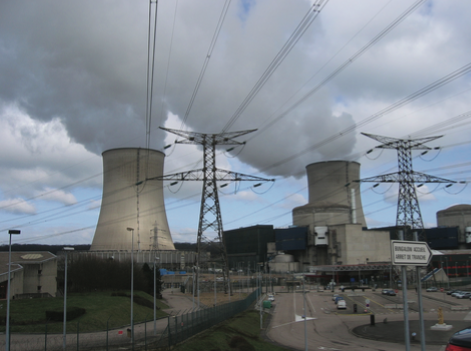
Britain is by no means alone in its nuclear desires. The US, the world’s biggest producer of nuclear energy, plans to build an additional 30 plants, while Europe’s nuclear giant, France, is constructing its 59th.

Most countries in the MENA region have also expressed a wish to go nuclear. In 2006, Tunisia signed a nuclear cooperation agreement with France and aims to complete a 600 MW nuclear facility to produce electricity and desalinize water by 2020. Libya and Morocco followed suit. Algeria has had atomic ambitions since 1982 and recently signed a nuclear energy agreement with the US. Egypt aims to construct four nuclear reactors by 2020. Saudi Arabia, Jordan, Yemen and the UAE also have nuclear ambitions, while Iran seems well underway to complete its first nuclear power plant.
 

Advocates claim nuclear energy is a clean and cost effective solution, yet that remains very much to be seen. Sure, operating a nuclear power generator produces no greenhouse gas emissions and thus helps counter global warming. Yet the environmental argument comes across as rather cynical, knowing that the highly toxic nuclear waste requires to be stored in abandoned salt mines for tens of thousands of years, while the 1986 Chernobyl disaster caused radioactivity levels to rise even in Sweden.

Britain should be all too well aware of the dangers, as the world’s biggest nuclear disaster after Chernobyl took place in 1957 at its Windscale facility, today better known as Sellafield. A fire in the nuclear reactor produced radioactive fumes and waste water. The authorities immediately declared the fallout posed no public health hazard, yet within days heightened levels of iodine were found in local milk, while elevated radiation levels were reported in France.

But that is something of the past, some may counter. Not so. In 2005, Sellafield workers discovered that a pipe had leaked 83,000 liters of radioactive waste into a concrete chamber. Fortunately, the latter was especially constructed for such an incident, yet it had taken a stunning nine months for the leak to be noticed. If this can happen in Britain, what — with all due respect — is to be expected in a country like Yemen?

In addition, it is not at all guaranteed that nuclear power generation is cost effective. True, once built, a nuclear facility is much cheaper to operate than a traditional power plant. But building a 1,000-MW nuclear power plant costs a whopping $2-2.5 billion, while a modern combined-cycle gas turbine costs about one-fifth of that sum.

More importantly, the costs of nuclear waste disposal and the decommissioning of plants, once production stops, are enormous and hard to predict. In 2005, Britain’s Nuclear Decommissioning Authority (NDA), which oversees the dismantling and clean-up of closed nuclear reactors and reprocessing facilities, estimated that the operation would take up to 100 years and cost $110 billion. Today, the bill has increased to $146 billion.

Nevertheless, Industry Minister Darling is confident that private nuclear power operators are willing and able to make such investments, and still produce cost-effective electricity. The Brown government’s unfaltering belief in the blessings of the free market is all the more remarkable, in the light of Britain’s privatization of the nuclear sector, which has hardly been a success story.

In 1996, eight of Britain’s most modern nuclear power plants were consolidated into one private company, British Energy (BE). Six years later, the government was forced to step in with a taxpayers’ cash injection of $7.9 billion to save BE from bankruptcy. For both health and financial reasons, the nuclear option rather resembles a game of Russian roulette.

Instead of following Britain’s example by pouring tens of billions of dollars into private nuclear power generators, the MENA region, which is blessed with ample sunshine and remaining hydrocarbon reserves, should rather follow in the footsteps of Germany, which has vowed to shut down all nuclear plants by 2020, while investing in energy saving measures and truly sustainable energy sources, such as wind and solar power. After all, let’s not forget that the earth’s uranium reserves are as finite as its oil.

Peter Speetjens is a Beirut-based journalist.


March 3, 2008 0 comments
0 FacebookTwitterPinterestEmail
  • 1
  • …
  • 542
  • 543
  • 544
  • 545
  • 546
  • …
  • 686

Latest Cover

About us

Since its first edition emerged on the newsstands in 1999, Executive Magazine has been dedicated to providing its readers with the most up-to-date local and regional business news. Executive is a monthly business magazine that offers readers in-depth analyses on the Lebanese world of commerce, covering all the major sectors – from banking, finance, and insurance to technology, tourism, hospitality, media, and retail.

  • Donate
  • Our Purpose
  • Contact Us

Sign up for our newsletter

    • Facebook
    • Twitter
    • Instagram
    • Linkedin
    • Youtube
    Executive Magazine
    • ISSUES
      • Current Issue
      • Past issues
    • BUSINESS
    • ECONOMICS & POLICY
    • OPINION
    • SPECIAL REPORTS
    • EXECUTIVE TALKS
    • MOVEMENTS
      • Change the image
      • Cannes lions
      • Transparency & accountability
      • ECONOMIC ROADMAP
      • Say No to Corruption
      • The Lebanon media development initiative
      • LPSN Policy Asks
      • Advocating the preservation of deposits
    • JOIN US
      • Join our movement
      • Attend our events
      • Receive updates
      • Connect with us
    • DONATE