• Donate
  • Our Purpose
  • Contact Us
Executive Magazine
  • ISSUES
    • Current Issue
    • Past issues
  • BUSINESS
  • ECONOMICS & POLICY
  • OPINION
  • SPECIAL REPORTS
  • EXECUTIVE TALKS
  • MOVEMENTS
    • Change the image
    • Cannes lions
    • Transparency & accountability
    • ECONOMIC ROADMAP
    • Say No to Corruption
    • The Lebanon media development initiative
    • LPSN Policy Asks
    • Advocating the preservation of deposits
  • JOIN US
    • Join our movement
    • Attend our events
    • Receive updates
    • Connect with us
  • DONATE
Comment

Trousers down, arms up!

by Paul Cochrane February 3, 2008
written by Paul Cochrane
Over the last few months work and pleasure have taken me from India via the Middle East to Europe and onto North America. That’s a lot of flying, and a lot of security checks.

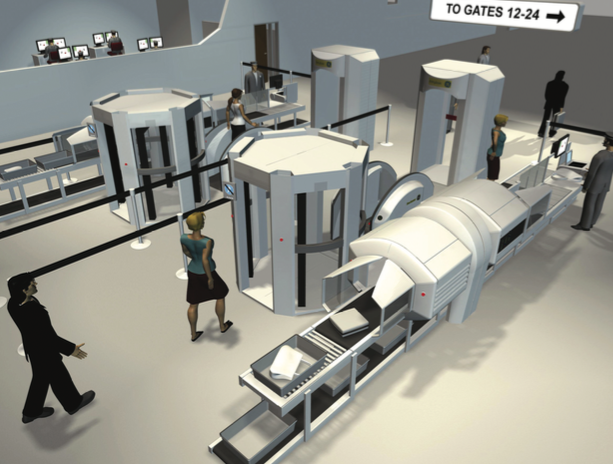
Out of all the airport security I encountered, it was Western airport security — unsurprisingly — that was the most invasive. It was also the most pointless, despite the rhetoric that it supposedly makes us “feel safer” and that it is necessary to thwart the terrorist threat by having to queue for hours, then shuffle through the metal detector in your socks while holding up your belt-less trousers — after, of course, quaffing whatever drink you accidentally had in your bag.

The biggest irony is that the Middle East (bar Jordan), that hotbed of terrorism and conflict, is one of the easiest regions on earth to pass through airport security. Equally puzzling is why, after nail clippers and a can of shaving cream are removed from my hand luggage in Europe and the States, I can waltz onto the plane with a glass bottle of duty free whiskey — nay hard to smash the bottle of booze and stab someone with, if one was so inclined.

Then there is the idiocy of some of the items given onboard — metal cutlery that could be turned into what the prison community calls a “shiv,” as well a set of headphones that could easily be used as a garrotting wire.

After all, what’s the point of taking away nail clippers? Threaten the stewardess with the forcible clipping away of her finely manicured nails? “Open the cockpit or her nails geddit!”

As a friend once remarked, the most dangerous thing a passenger has is their hands and legs — the limbs of a well-trained martial artist for instance. A ballpoint pen is equally dangerous, as the mob film Casino graphically illustrated when a man is repeatedly stabbed in the neck with a writing instrument.

A vivid imagination as well as Hollywood can give a wannabe killer a lot of ideas, but that is not the point. The point is that there are innumerable ways to kill someone and provoke terror, and there is not much even the tightest security can prevent — just ask a warden at a maximum-security prison about his experiences.

That said, security is of course necessary, but to what degree?

As the head of Lebanon’s Civil Aviation Authority, Hamdi Chaouk, told me, “Technology is so advanced they don’t need to do this, stripping and removing shoes. The EU has not been able to compromise on what people need and security. Who can tell me this security has done something?”

Well, unfortunately, no one can. A team at the Harvard School of Public Health recently found no evidence that X-raying carry-on luggage prevents hijackings or attacks. They also found no evidence that making passengers take off their shoes and confiscating small items prevented any incidents. In fact, of the 13 million seized items by the United State’s Transportation Security Administration last year, most of the prohibited items were nail clippers and cigarette lighters, not guns or explosives tucked inside someone’s socks.

So why all the inconvenience to get on a plane? (While not on a bus or a train?)

It strikes me that the billions of dollars now being spent on security is a great way of making money and creating jobs. Indeed, at New York’s JFK International Airport, seven people were needed to process one line, from the X-ray machine to the pat-down, to the swabbing of laptops. Furthermore, the cosmetics and water bottling sectors (as well as the nail-clipper industry) must be rubbing their hands with glee due to the increased sales that result from the need to replace everything removed from passengers.

But let’s not be flippant. Security is no laughing matter. It’s a $59 billion a year business that by 2015 is set to treble worldwide to $178 billion, according to industry tracker Homeland Security Research. And that prediction is all dependent on another grandiose 9/11 terrorist style attack not happening. If a major attack occurs in the United States, Europe or Japan the security market will increase twelve-fold by 2015 to $730 billion, with the USA accounting for 42% of that expenditure.

That’s good news for the security sector. But the saying “one man’s gain is another man’s loss” is also applicable here. Although some undoubtedly profit from the whole security rigmarole, a report has estimated that for every 624 million passengers that each spend two hours a year waiting in line, the annual loss to the economy is some $32 billion. Furthermore, additional security expenditure means costs are passed down to passengers. It’s no surprise then that people are opting to travel by car, train, boat and bus instead, which is not good news for the airline sector, already hit by rising fuel prices.

So for the benefit of everyone, it should seem a no-brainer that airport security should be taken much more seriously, not for the time consuming joke it currently is.

PAUL COCHRANE is a freelance journalist based in Beirut. For his next trip to Europe or the States he is mulling the option of going by sea.

February 3, 2008 0 comments
0 FacebookTwitterPinterestEmail
Comment

The strength of diversification

by Riad Al-Khouri February 3, 2008
written by Riad Al-Khouri

Arab stock markets make progress, but still have some way to go.

Stock exchanges, in the Arab World as elsewhere, mirror the economy of a state or region. However, bourses are more than just reflections of changes in the “real” sector, especially in emerging economies. Widening share ownership is usually associated with opening up of economic systems, as business power devolves away from states or oligarchies. Bourses are also places where people or companies raise fresh capital to set up new businesses, or to expand old ones, perhaps the most important of their functions.

In these and other respects, Arab bourses are laggards no more. Developing regional share markets over the past few decades have served to make doing business easier — and help people become richer. When the first oil boom began in the mid-1970s, most Arab countries did not have bourses; today, the majority of regional capitals can boast a stock exchange of increasing size and sophistication. In the context of overall economic liberalization in the Arab World, the establishment, development, and reform of bourses has interacted positively with other change, as more transparent and professionally run share exchanges have emerged hand in hand with liberalizing economies.

Jordan is an example of how things have gone well in this respect, with the Amman Stock Exchange (ASE) proving to be an important element of positive economic change in the country. Last year confirmed this trend, as the ASE general index jumped 36% during 2007, and market capitalization surged by 39% to $41.2 billion, representing 289% of Jordan’s gross domestic product. The latter percentage is one of the highest in the world, reflecting the importance of bourse activity in Jordan’s economy. Moreover, the trend in this indicator is sharply up, with bourse capitalization having been a mere $11 billion in 2003, closer to the equivalent of the Jordanian GDP at that time.

However, the ASE remains dominated by the stock of one business, the Arab Bank, which still makes up a big chunk of market capitalization and activity. Though robust and soundly managed, if that august institution reports any bad news, the whole ASE suffers. Not that this isn’t a feature of other Arab bourses: for example on the Beirut Stock Exchange (BSE), 74% of total trading activity of the last week of 2007 (and the lion’s share of that for the whole year) was in one company, Solidere, the real estate developer, typical of that firm’s dominance of the Lebanese bourse.

Be that is it may, though the Beirut exchange wobbled nervously in 2007 due to the country’s chronic political crisis, the BSE’s landmark BLOM Stock Index still managed a 26% annual rise during the year. Although not as strong as some other Arab bourses, the achievement was quite good, considering lagging Lebanese growth. The beginning of 2008 on the other hand saw shares zooming upward on news of an Arab reconciliation initiative to bring feuding Lebanese factions together, but the next months could still mostly be ones of economic instability — mirrored by an edgy bourse. Still, the Beirut bourse and most other regional exchanges outperformed many of their big brothers in the West, though not the price of oil or gold.

Although the BSE is an extreme case, a handful of key shares tend respectively to overshadow most other Arab bourses. On the Palestine Stock Exchange, for example, the Palestine Telecommunications Company and Palestine Development & Investment Ltd. (better known as PADICO) are dominant, with about 78% of all traded shares in the market in 2007.

Though under present circumstances it is difficult to see massive expansion and diversification on the Palestinian bourse or the BSE, nevertheless, other regional stock exchanges continue to diversify. For example, the 2007 climb in the ASE general share price index was due more to the 31% rise in industrial shares than the 14% gain in the financial sector, which the Arab Bank dominates. This trend has also been evident in most of the rest of the region.

Diversity in the nationality of shareholders is also becoming a more important feature of Arab markets. For example, net foreign investment on the ASE was almost 49% of overall market capitalization at end-2007, compared to the 2004 figure of 41%; non-Jordanian Arabs’ contribution was close to 36% while that of others accounted for about 13%. Sectorally, non-Jordanian ownership of industry stood at 52% while that of the financial institutions was 51% and other services 36%. Though a more smoothly running stock exchange helped, these high percentages would have been unimaginable under restrictive Jordanian investment laws a decade ago, a change toward liberalization paralleled in other Arab countries; and such a trend should get stronger in the years ahead.
RIAD AL KHOURI is Visiting Scholar, Carnegie Middle East Center, Beirut; and Senior Fellow, William Davidson Institute, the University of Michigan, Ann Arbor.

February 3, 2008 0 comments
0 FacebookTwitterPinterestEmail
Comment

It takes more than two to tango

by Claude Salhani February 3, 2008
written by Claude Salhani

US President George W. Bush returned from his Middle East trip confident that a settlement to the Palestinian-Israeli dispute will be found by the time he leaves office next January. The president’s optimism, however, is hardly shared by all.

While in Israel and the Palestinian territories the American president was able to see for himself just how complex the problem is, and that ultimately, it boils down to a question of land, or to be more precise, a question of lack of land. That is one of the fundamental obstacles to a lasting peace between Israelis and Palestinians. Not only is real estate in the Holy Land at a premium, but who can own a piece of it is further complicated by religion and nationality.

Of the three prime issues in contention — the final borders, the status of Jerusalem and the right of return of Palestinian refugees — it is this last point which will likely hold up the peace process. There are multiple facets to the issue of the right of return, not least in that it involves more than the two principal protagonists.

First, it touches upon the question of Israel’s identity as a Jewish state. Open the immigration doors to over a million Arab Palestinians, the overwhelming majority of which are Muslims, and the Jews in Israel will overnight find themselves turning into a minority, placing into question the whole raison d’être of the state of Israel. No Israeli government will ever allow that to happen, not least that of a weak prime minister hanging on by a thread, as is the case of Ehud Olmert.
Aside from the political implications which already represent insurmountable obstacles, there are also economic and social aspects to this issue. And while politics guides the ship of state, at the end of the day it is the economy that ultimately decides on the well-being of the nation.

With that in mind, assuming, just assuming, for a brief moment that Israel did allow Palestinians who fled in 1948 to return, where would they return to? The homes they once owned have long since disappeared. And from a purely economic perspective it would be disastrous for the Jewish state. Among the generation of refugees who fled Palestine — not their children and grandchildren born in exile — the youngest returnee would be 60 years old, assuming he or she were just a few months old when they first became refugees. Think of the financial burden injecting such a large number of retirees would have on the state. Or the manner in which the country’s health care system would be taxed by the arrival of tens of thousands of elderly people.

So if the refugees are not allowed to “return,” what is to become of them? According to UNWRA — the United Nations Relief and Works Agency for Palestinian refugees in the Near East — as of December 31, 2006, there were a total of nearly 4.5 million registered refugees spread across 58 camps in Jordan (1,858,362), Lebanon (408,438), Syria (442,363), the West Bank (722,302) and Gaza (1,016,964). If for no other reason, the question of the refugees alone demands the inclusion of other countries — namely Lebanon and Syria — in the final peace process.

Regardless of how you spin this issue, some of the refugee will have little choice but to remain in their host countries. On the other hand, the big debate will come over what to do with those 400,000-plus refugees in camps in Lebanon where, once the settlement of the Israeli dispute resolved and a new Palestinian state sees the day, technically, they cease being refugees, as they would become citizens of the new state.

Solving the issue of the right of return would require mass movement of refugees from their present locations. This is what Bush meant when he mentioned the word, “compensation.” In fact, a financial compensation package would be offered to the refugees not returning to Palestine, but who would opt to immigrate.

While in principle all 4.5 million refugees would be able to apply for — and obtain — citizenship of the future Palestinian state, not all would be authorized to reside in the new Palestinian state, or in Israel. There is a precedent for this: when in 1972 Uganda’s dictator Idi Amin expelled tens of thousands of Asian traders, many of them were in possession of “Type B” British passports.

These travel documents allowed them to travel anywhere in the world, including Great Britain, but did not give them the right of residence in the UK. The solution to the Palestinians right of return lies in finding a similar formula, which would give Palestinian refugees the following:

a) A passport, therefore giving them dignity and forever removing the status of refugee;

b) A financial compensation package that would allow them to restart their lives in a dignified manner in a country where they will be able to immigrate and integrate in that society, all while retaining their Palestinian identity and ties to the “old country.”

Bush’s optimism to see the creation of a Palestinian state within the year would necessitate the cooperation of all countries concerned. In this instance, it would certainly take more than two to tango. But when some of the parties concerned won’t even step onto the dance floor, it’s hard to share the president’s optimism.

Claude Salhani is editor of the Middle East Times and political analyst in Washington, DC.

February 3, 2008 0 comments
0 FacebookTwitterPinterestEmail
Financial Indicators

Regional equity markets

by Executive Staff February 2, 2008
written by Executive Staff

Beirut SE: Blom  (1 month)

Current Year High: 1,526.31  Current Year Low: 1,168.36

The Beirut Stock Exchange (BSE) weakened on local conditions in January, as Blom Bank’s BSI closed at 1,462.74 points on Jan. 25, representing a 3.1% drop week-on-week and a 2.6% retreat since the start of 2008. With futile political talks, another presidential election postponement, an assassination, orchestrated strikes and threats of more of the same, the panic moods and recession mongering elsewhere could not be much of a dampener for the hearty investors who were active on the BSE, although the index shed a few percentage points during the bad days. Overall, the picture for the BSE is as clear as the country’s political situation. Solidere implemented the withdrawal of its shares from the Kuwait Stock Exchange at the start of the year, where the cross-listed Solidere stock had been inactive for months. Effective Jan. 25, additional 4 million shares of Bank of Beirut started trading on the Lebanese bourse.

Amman SE  (1 month)

Current Year High: 8,289.34  Current Year Low: 5,560.56

The Amman Stock Exchange’s (ASE) four month long rally stopped in its tracks on a cold January weekend. The ASE Index, which ascended from 7,519.25 points on Dec. 30 to 8,239.34 points on Jan. 17, fell back and closed at 7,671.26 points on Jan 24. The strong participation of regional investors, inflation fears following the latest US prime interest rate cut, impact of the global market pessimism, but also profit taking were named as reasons for the ASE’s drop after mid-January. Arab Bank, Jordan Electric Power, and Jordan Petroleum Refinery were the most active stocks in the week ended Jan 24. Notable losers in the scare week included Jordan Telecom as well as the Jordanian affiliate of French bank Societe Generale which created its own epicenter of financial turmoil through a record fraud and write-down announcement.

Abu Dhabi SM  (1 month)

Current Year High: 4,930.39  Current Year Low: 2,839.16

The Abu Dhabi Securities Market (ADSM) floundered under the panic attack of mid-January after a 350 point rise in the first half of the month. The fall by nearly 400 points in the three bad days was followed by a 280-point rise in the next two days as the ADSM index closed at 4,581.54 points on Jan. 24. Whereas the real estate sub-index is still the ADSM’s bar for strongest performer and the insurance index the weakest under a 12-month view, the month of January staged a counter show with the real estate sector along with energy stocks underperforming the general index and the insurance index in positive territory on Jan. 24 when compared with the beginning of the month. Although real estate stock Aldar was one of the three worst decliners during the crisis and saw uneven share price developments in the aftermath of the panic, it bears recalling that, only days earlier, analysts unsurprisingly named the real estate sector as one with potential resilience and good growth prospects in 2008.

Dubai FM  (1 month)

Current Year High: 6,291.87  Current Year Low: 3,658.13

The Dubai Financial Market Index moved from 6,000.98 points on Dec. 30 through significant gains and sharp falls. The downturn on the DFM accelerated from a drop of 3% Jan. 20 to losses of 5.3% Jan. 21 and 6.2% on Jan. 22 before a bounce back that allowed the market to close at 5,602.34 points on Jan. 24. Given that cautious analysts had been wondering out loud if the DFM would see a bit of correction after the market ran hot in the fourth quarter of 2007 and that foreign institutional investors after mid-January reportedly shifted out of positions in GCC stocks for portfolio reasons, the notion of the DFM regressing from earlier highs should not have been shocking. But there was that suddenness and scope of fluctuations. Emaar Properties bounced around like a ball of quicksilver, down one day and up 11.1% the next. DFM Co, the bourse operator whose 2007 profit exceeded company and analyst forecasts, yo-yoed limit down and almost 15% up.

Kuwait SE  (1 month)

Current Year High: 13,436.20            Current Year Low: 9,584.50

As the Kuwait Stock Exchange Index closed at 13,260.50 points on Jan. 24, brokers on the KSE could snugly opine that the KSE suffered less than regional peers in the January scare. The dip of Jan. 20 was visible but mild and compared with Dec. 30 the month saw an index gain by over 750 points. Market cap leader Zain, which increased in early January after having traded sideways in December with a close of KWD 3.820 on Dec. 31, was affected by selling pressure after mid-January and closed at KWD 4 on Jan. 24. Kuwait Finance House, the KSE’s number two by market cap gave an impressive performance rising from KWD 2.880 on Dec. 30 to KWD 3.260 on Jan. 24; KFH reported that its net profit in 2007 reached $1 billion and was 70% improved on 2006. NBK had a more mixed month as the stock from Jan. 16 to 24 gave up more than half of gains it accomplished in the first half of January. The bank reported $ 1 billion in 2007 net profit, up 14% on 2006.

Saudi Arabia SE  (1 month)

Current Year High: 11,895.47            Current Year Low: 6,861.80

The Saudi Stock Exchange (SSE) started the year in high gear after profit taking and portfolio adjustments had taken the Tadawul index 750 points lower in the last days of 2007. From 10,842.24 points at the start of January, the SSE moved up over 1,000 points to a peak of 11,895.47 on Jan. 12. But the global recession scare hit the SSE with a vengeance. From Jan. 20–22, the index tumbled over 2,215 points, or almost 20%. This scary Sunday, mad Monday, and terrible Tuesday made the market feel the limitations of investor confidence in unprecedented ways before calming to close at 9,360.44 points on Jan. 23. SABIC shares saw their heaviest trading in over a year on Jan. 23, the day after the carnage, but despite limit-up intra-day quotations closed at SAR 161 unchanged to Jan 22 — 26% below the stock’s year high reached only 10 days earlier.

Muscat SM  (1 month)

Current Year High: 9,854.02  Current Year Low: 5,532.64

The Muscat Securities Market entered 2008 on a windy road that started at 8,936.81 points on Dec. 30 and terminated at 9,087.43 points on Jan. 24. The index reached a 12-month high of 9,854.02 points on Jan. 6. While the market showed no panic on Jan. 20 and 21, it did drop by 8.3% on Jan. 22. Brisk buying in the weakened price environment ensued on Jan. 23, with a significant boost turnover and index gains of 2.8%. While industrial stocks did better than other sectors in the first days of January, banking took the lead in mid-month and the services sector had a slight upper hand by close on Jan. 24. Oman Holdings International, which had traded on a flat line in the first part of January, jumped 7.9% on Jan. 21.

Bahrain SE  (1 month)

Current Year High: 2,821.79  Current Year Low: 2,106.70

Indices on the smallish Bahrain Stock Exchange (BSE) largely stayed their course in January, flattening out with the start of the second trading week in 2008. The main index moved up to close at 2,794.30 on Jan. 24 from 2,733.54 points on Dec. 30. The largest listed bank by market cap, Ahli United, moved from BHD 1.4 on Dec 30 to BHD 1.35 on Jan. 24. The stock of Ithmaar Bank jumped close to 10% in the fourth January week; the bank issued new shares and bonus shares as it concluded a merger transaction by share swap with Shamil Bank which delisted as part of the process but will continue to operate as Islamic brand. In their last board meeting of 2007, BSE management extended the daily main trading session from two to three hours per day, effective Jan. 13, saying that the move aims at increasing trading activity. 

Doha SM: Qatar  (1 month)

Current Year High: 10,718.78            Current Year Low: 5,944.03

In Doha, the bourse checked a two-year high of 10,718.39 points on Jan. 16 in a climb of over 1,000 points from Dec. 30 but the market came crashing to 9,151.93 by Jan. 22 before getting a notch up to its close at 9,500.37 points on Jan. 24. The down days engulfed major players including Industries Qatar and large banks. The banking and industry sector indices closed Jan. 24 with a marginal minus and small plus, respectively, when compared with the start of January, but the services sector fared less well and the insurance sub-index underperformed, reporting in more than 25% lower on Jan. 24 than at the start of the year. Barwa Real Estate, which in recent weeks has received a license for a London subsidiary and shortly thereafter also announced a 25% rights issue, became a 20% partner in a $4 billion real estate project in London. Qatar Islamic Bank, Qatar National Bank, and QInvest each also took 20% stakes.

Tunis SE  (1 month)

Current Year High: 2,712.33  Current Year Low: 2,436.94

The Tunindex opened 2008 at 2,614.07 points and closed the reviewed period at 2,678.18 points on January 25. During the month, the financial services and financial companies sub-indices performed on the upper side of the market’s spectrum while the industrial and consumer goods sectors converged on the market’s lower performing side. Some volatility set in already around January 14 and index losses in resonance to the regional market panic were concentrated on January 22 with a 30-point drop. 

Casablanca SE All Shares  (1 month)

Current Year High: 13,892.65            Current Year Low: 10,207.24

The Casablanca All Shares Index rallied by nearly 1,200 points in the first three trading weeks of 2008, advancing from 12,694.07 points at the end of December to 13,892.65 points on Jan. 17. It dropped 515 points by the following Tuesday and recovered 340 points in the next three sessions to close at 13,715.49 points on Jan. 25. With a gain of over 8% since the start of 2008, the Casablanca Stock Exchange was the strongest gainer among the 12 MENA stock markets under coverage here. The Moroccan bourse last year has benefited from limited availability of alternatives to local investors. It also expanded its reach by the number but not the combined value of 2007 initial public offerings; its 10 IPOs followed Saudi Arabia and Jordan in terms of numbers.

Cairo SE: Hermes  (1 month)

Current Year High: 97,993.63            Current Year Low: 57,013.49

After having climbed straight up for more than a month, the Cairo and Alexandria Stock Exchanges Hermes Index retreated from a Jan. 13 record high of 97,993.63 points; it dived over 12% by Jan. 22 and closed with some renewed gains at 88,873.74 points on Jan. 24. Share price losses during the scare period were distributed widely, with telecoms companies losing close to 10% week-on-week and some leading companies in real estate, construction, finance, and manufacturing also recording sizeable share price losses. Index gains in early January were attributed to retail investor buying of small and medium caps whereas post the January crisis institutional investors were said to be bargain hunting. The Egyptian bourse already in 2007 displayed greater sensitivity than other Arab stock exchanges to international market swings.

February 2, 2008 0 comments
0 FacebookTwitterPinterestEmail
Banking & Finance

Money Matters by BLOMINVEST Bank

by Executive Staff February 2, 2008
written by Executive Staff

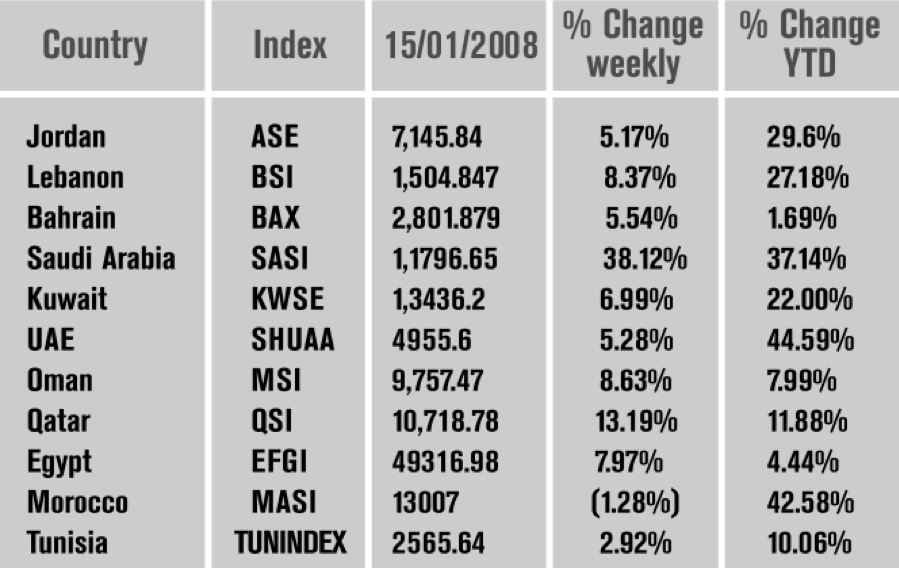
Regional stock market indices

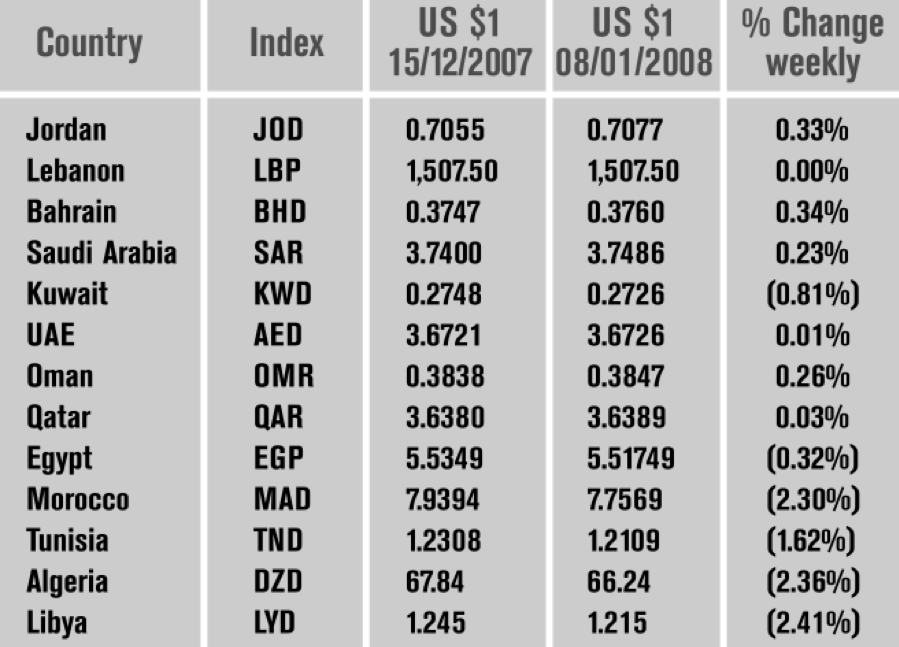
Regional currency rates

United Arab Emirates buys French nuclear reactors

The United Arab Emirates will be signing agreements with French companies Areva, Total and Suez to build two third-generation nuclear plants for civilian use. The deal comes during French president Nicolas Sarkozy’s visit to the region. UAE authorities who have been in talks with Areva confirmed their preference to sell their oil, which is trading at close to $100/barrel, rather than use it for electricity production. Areva has already signed power transmission agreements worth $1.15 billion with Qatar. The Gulf Cooperation Council is also in talks with the UN Atomic Energy about developing a joint nuclear energy program.

Saudi National Bank recommends diversification from the dollar

Saudi Arabia’s largest state bank, National Commercial Bank (NCB), urged the government to reduce the kingdom’s exposure to the dollar by diversifying government investments across asset types, countries and currencies to hedge against the weakening dollar and subsequent reduction of US interest rates. The NCB has called for the freeing of the Saudi Riyal’s steady exchange rate at 3.75 from the US dollar peg. Surplus revenues from oil exports are partly managed by the Saudi Arabia Monetary Agency (SAMA), which holds $285 billion in foreign assets. Saudi Arabia is under growing pressure to severe its dollar peg policy as part of its monetary union partners’ measures to reduce their exposure to the dollar as Kuwait did last year.

Egypt maintains positive balance of payments despite growth in imports

In its latest assessment for Egypt’s current accounts, the Middle East Monitor has revised downward its forecast of 2% of GDP in FY06/07 to 1.1% of GDP for FY07/08. This was due to a 24.3% increase in total imports coupled with rising oil prices and consumer appetite. However, continuous growth in total  exports (19.3%) and 44% in non-oil exports,  in addition to higher revenues from Suez Canal and tourism and workers’ remittances, seem to limit the decline in the country’s balance of payments. Egypt’s diversification of its export destination help cushion its export activity where 40% of goods go to Europe, 31% to the US, 12.4% to the Middle East and 13.5% to Asia. The same applies to Egypt’s FDI inflows where 42% come from the US, 36% from the EU and 30% from the Middle East. All of these factors help reduce instability in the Egyptian economy.

February 2, 2008 0 comments
0 FacebookTwitterPinterestEmail
Levant

Stepping up liberalization

by Executive Staff February 2, 2008
written by Executive Staff

In the face of a global economic slowdown and after undershooting growth and investment targets in 2007, Turkey’s government has reaffirmed its commitment to reform and privatization. The administration of Prime Minister Recep Tayyip Erdogan and his Justice and Development Party (AKP) had been accused of taking its eye off the economic reform ball amidst verbal warfare with the army, two elections and a referendum as well as military losses in a series of clashes with Kurds across the border with Iraq. However, the worsening global outlook and an impressive mandate appear to have reinvigorated the government’s appetite for change, with a raft of reforms including a reduction in social security payments by employers and a possible cutback in expenditure and a restructuring of agricultural subsidies. Economy minister Mehmet Simsek has also announced that a series of privatizations will commence this year. The scope of reforms is still unclear and investors burned by the credit crunch may look at the government assets up for sale with more caution than previously.

Growth in 2007 was below the government’s 5% target, at between 4-4.5%. Simsek has said that this performance is still “impressive” and attributed the lower than expected figure to unavoidable supply side issues such as higher fuel prices and drought, which caused agricultural production to fall by 6% in the first three quarters of 2007.

However, suspicions remain that a cooling in investors’ enthusiasm may also have played its part. Last year foreign direct investment (FDI) came in at $19 billion, well below the forecast $25 billion. Historically, Turkey has been — and still is — vulnerable to capital flight. While losses after the last notable shock, in May 2006, were fairly moderate and were made back quickly, fears remain that Turkey is still somewhat exposed and could suffer as a result of the global credit crunch and the looming possibility of a recession in the United States. Even at $19 billion, FDI is still equal to the amount Turkey brought in for the 23 years between 1980 and 2003.

Lowering the social security burden

On January 10, Erdogan announced the reform program for the coming year, some items in more detail than others. Most interest was generated by the decision that social security payments owed by employers will be cut by 5% to reduce the burden on business and encourage job creation. The bureaucratic burden is cited as a deterrent to expansion by some firms in Turkey. By reducing the payments — essentially a tax on employment — the government hopes to make it more attractive for firms to take on more workers. The cut may well help reduce unemployment but only if growth rates remain steady at best and preferably rise. It is also feasible that firms’ boosted growth and an increase in the number of those paying income taxes will offset the loss of government funds from the cut, so it may have a fiscally neutral or even positive effect. Certainly the government must be hoping so, since social security expenditures eat an increasingly large hole into the budget. In 2006, $19.2 billion was allocated to social security, double the amount allotted to investment.

Pertinently then, the reform package may reduce the payments to citizens. Currently, 90% of the Turkish population directly or indirectly (as, for example, dependents) receives social security money. If Erdogan can grasp this particular nettle, he can make significant progress in his confessed aims of reducing government indebtedness and liberalizing the economy.

It may be that he faces some opposition from the conservative wing of his party and trade unions, which can be skeptical about “liberal” measures that appear to reduce the income of the lowest-paid. They are also worried that the cut may be the first step in “unfairly” skewing the burden of payments onto workers rather than employers.

However, there is a case to be made that many of the social security disbursements go to those who do not need them, and that they would be better focused on the poor. And job creation will benefit the poorest – those currently unemployed. Additionally, Erdogan has an undeniable mandate for change.

The government is already committed to reducing one key outgoing; it is to scrap direct income subsidies to farmers, instead providing financial support on product prices. It also plans to link subsidies to production, rather than land holdings.

The scope of any reduction in social security is still uncertain, and there are doubts that the government will make the cuts it could; market analysts have been lukewarm on announcements made thus far. Details of many points on the reform agenda remain opaque, and a timetable of implementation has yet to be finalized.

Committed to liberalization

But a radical move to cut payments would reaffirm the AKP’s commitment to liberalizing the economy and reducing government debt, sending an effective message to investors and opposition alike.

Erdogan’s government is, however, likely to show some determination on those twin goals of liberalization and cutting debt through stepping up its privatization campaign this year.

Financial institution Halkbank, tobacco firm Tekel and another part of Turk Telekom are likely to be put up for sale this year, and the longer process of privatizing Turkey’s 20 regional electricity distribution firms will commence. The Halkbank sale could draw in around $9 billion, and Tekel and the government’s 15% stake in Turk Telekom are likely to prove attractive to investors as well. The electricity firms were due to be privatized by 2010; while a more likely target now is 2012, at least the momentum to sell them off has been restored. Oger Telecoms of Saudi Arabia, part of the Saudi Oger Group owned by the Hariri family, paid $6.55 billion in 2005 for a majority stake in Turk Telekom.

These new sales should provide an invaluable boost to FDI after a year in which expectations fell short; Simsek hopes to at least match last year’s figure.

However, the worsening global financial situation, which has seen major US banks announce astronomical write-downs and sharp falls in stock markets, particularly in the emerging economies of Asia, does not bode well for the privatizations’ yielding the revenues hoped for. Given Turkey’s history of capital flight, investors may be wary of a sharp slowdown in the economy and a decline in the value of the currency if the global bailout persists much longer. A January report by Aon Trade Credit Global, part of Aon Corp, a US insurance and consultancy firm, named Turkey as one of the countries most vulnerable to the effects of the credit crunch, due in part to its high budget and current account deficits.

Correction looming?

Even if the global economy pulls through, there is a widespread feeling that the lira — currently trading at around 1.18 to the dollar — is overvalued and is due a correction. This would of course be sharpened by a flight to safer assets.

In the event of a recession in Western markets and an investor withdrawal, Turkey is likely to suffer but may find that its growth momentum is sustained to an extent by the continuing investment rush fuelled by Gulf oil money. Companies and funds from these nations, many of them linked to their governments, are increasingly looking to diversify their portfolios and pump liquidity out of their overheating markets. They have been expanding across the Middle East and North Africa, and Turkey is no exception. The largest proportion of the investment thus far has been in real estate, and this is likely to be sustained this year. Meanwhile, the Turk Telekom and Halkbank sales may well attract Gulf firms which are buying up foreign companies with enthusiasm.

February 2, 2008 0 comments
0 FacebookTwitterPinterestEmail
Editorial

The new gatekeepers

by Yasser Akkaoui February 2, 2008
written by Yasser Akkaoui

Where there is prosperity conflict has a nasty habit of following. From the tumult of the Andalusian era in the 12th century to the present day, success has spawned evil as well as creating good.

In recent Middle East history, the supreme example has been Lebanon.  It had long been the gateway to the East but in the 20th century it also became the West’s portal to the Arab world and its oil.  With this prosperity, it developed into an extremely potent regional hub for education, health, tourism and real estate. However, it was a boom that also created consternation among Lebanon’s neighbors, who coveted and ultimately fought over its riches. Lebanon suffered for its success.

All that is gone. Not only because the Lebanese allowed their country to be subsumed by war, but also because Lebanon has failed to react to the shift in currents in the global economy. The direction of today’s goods and services has changed and the fight over Lebanon is no longer predicated on old trade routes.  China and India — the emerging industrial giants — are now feverishly seeking a gateway to the lucrative markets of the West, but today that gateway is the Gulf.

Dubai epitomizes this new breed of hub that encapsulates all the nations of the Gulf from Qatar to Muscat. They are the new gateway of the new industrial world. The current oil boom has only just started and if the initial private equity signals are anything to go by, the Gulf nations will experience a similar situation to that of Lebanon. In fact, it has already started. Just as the West established in the early 20th century the education cornerstones of Beirut, the great names in learning and culture are today also setting up shop, coming on the back of equally robust real estate and tourism developments. But unlike that period, today, as Gulf institutions voraciously acquire global banks and corporations, it is the East that is now calling the shots.

But with the dawn of a new era comes a word of caution: These new hubs must nurture this new economic and cultural development and not make the same mistakes Lebanon made. They have a responsibility to protect what is in effect a global gateway, work on security and seek to be on good terms with all nations. In such a volatile part of the world, these new and potentially exciting economic currents can easily be manipulated as catalysts for divergence.

Conflict must not be allowed to become the fatal by-product of success.

February 2, 2008 0 comments
0 FacebookTwitterPinterestEmail
Economics & Policy

Basel II

by Nicolas Photiades February 1, 2008
written by Nicolas Photiades

The banking world was rocked in early 2000 when the Basel II Capital Accord came out with its first draft. This accord emanated from the Bank for International Settlements (BIS), which is an international organization whose aim is to promote international monetary and financial cooperation, discussions and policy analysis, and acts as a bank for central banks worldwide.

Back in 1988, the BIS created the Basel Committee for capital adequacy for banks worldwide. This first Basel I accord stipulated that different risk weightings had to be applied to the different bank asset classes, and that these risk weightings determined the amount of capital needed by banks to cover the risk on their assets. However, Basel I only broadly covered three types of loans with an undiversified and incongruous risk weighting scale (0%, 20% and 100% for OECD – Organization for Economic Co-operation Development – governments, OECD banks, and everything else respectively). The capital adequacy ratio or the equity to risk weighted assets ratio had to reach a minimum of 8% for all banks worldwide.

The Basel II accord put an end to the over-simplistic Basel I and established new rules for banks. Under Basel II, risk weightings are highly diversified and depend uniquely on mostly credit risk. Basel II is asking all banks to base their risk weightings on credit ratings, whether these are provided by specialized rating agencies or an internal rating system developed by the banks themselves. The minimum regulatory capital adequacy ratio remains at 8%, but is arrived at using exponentially more sophisticated risk assessment methods.

Step in right direction

For many, the Basel II accord is seen as a significant step in the right direction, as it forces banks to improve radically their risk management practices. It also forces banks to realize the importance of “economic” capital, which is the capital needed given the underlying risk level on the asset side. This new accord also puts more responsibility on the national supervisor; in Lebanon’s case the banking Control Commission (BCC), as it faces the task of developing sufficient and suitable resources to meet the demands of the accord.

No matter how revolutionary this new accord is on bank capital, it is creating havoc among most of the world commercial banks. Indeed, most banks on the planet are not ready and are ill-equipped to meet the Basel II conditions, and realize that once Basel II regulations are implemented, their capital adequacy will look weak and insufficient. The difference between the Basel I and Basel II accords are so significant that all the work established by banks on the basis of Basel I from 1988 till today will appear obsolete. Risk management systems and risk models will have to be significantly updated at a very high financial cost, while entire business philosophies and strategies will have to be completely re-thought.

For large international banks, Basel II is not really a problem, as they have been developing a work ethic and a risk management system that is similar to what has been laid out by the Basel II accord. It is no surprise in any case to find that most members of the Basel Committee responsible for coming up with the Basel II accord are all former bankers employed by these large multinational institutions. By laying out the new principles, the Basel Committee is in a way forcing more level playing fields in international banking and indirectly creating a situation whereby the weaker banks, which are unable to adapt to the new system will have to either raise their game or disappear altogether, pushed out by competition.

The Basel II accord is due to be implemented in developed economies (mainly G8 countries) in January 2007, while all other countries will be given more time to adopt the new rules. In Lebanon, the BCC has set the date of implementation for sometime in 2008. Given the current state of the Lebanese banking system in terms of risk management and credit risk assessment capabilities, the date set by the BCC for the implementation of these tough rules and regulations might be considered tight. Most, but not all, Lebanese banks, have struggled to understand the concept of Basel II for the last few years, despite massive communications efforts by the central bank and the Association of Lebanese Banks. Most have not yet started to build a data warehouse (five years worth of qualitative and quantitative information), as required by Basel II, and wouldn’t have the capacity to analyze such data even if it existed.

Strategy

Before implementing the Basel II accord, Lebanese banks need to recognize that risk management must be embodied in the core strategy and culture of the bank, and that there should be a need to adopt an integrated approach to managing risk throughout the institution. They will have to come to terms with the idea that economic capital and shareholder value are the essential key drivers, and not just regulatory capital.

For the moment, the situation is such that there is a lack of comprehensive and reliable default and recovery data, back-testing results are non existent, and few banks are capable of using internal ratings models under the IRB method. Moreover, there are still several more factors that are inhibiting the development of robust risk management cultures and processes: Lebanese banks have a weaker connection between risk management and corporate strategy than their Western peers, there is a lower level of risk management review at board level, as well as a weaker link between management performance and risk management effectiveness. While a majority of markets are putting in significant efforts to develop internal risk management models, most banks in Lebanon still lack the appropriate historical data to develop and support their own internal models, the development of which is of vital importance to the banking sector as well as to the economy as a whole. These models will have to assess default rates, and more importantly recovery levels, as it is usually during a downturn, similar to what Lebanon is going through today that banks have to realize their assets. Although Gulf money is swamping Lebanon for the moment and the disposal of property collateral for bad loans can be done more easily, it remains that recovery levels will always fall below what the banks have always assumed. Basel II should therefore force local banks to develop a performing risk management model that would assess default and recovery rates more realistically.

Credit crunch

A badly developed risk model could considerably underestimate a bank’s need for capital when calculated in the economic cycle and could even lead banks to decide to stop lending as long as their risk models are inadequate. Indeed, if incorrect assumptions are built into credit models, credit crunches could result, as banks would be feeling uncomfortable lending to the private sector. In fact, it’s like a fighter plane going to battle without a modern radar. This plane would be blind and would rather choose to withdraw from a potentially losing battle. A credit crunch is similar in the sense that banks may choose to stop lending for fear of embarking on potentially significant levels of bad loans. Such scenario would be disastrous for the economy and would most probably see a substantial number of companies going bust for a lack of liquidity and funding. In other words, a lack of organization on an internal level for banks in order to tackle risk properly, could lead to an implosion of the economy. The danger for the country’s economy collapsing would not be the government’s inability to repay foreign debt, but the banks’ incapacity to assess risk.

Although such a scenario has a small probability of ever occurring, it should nevertheless be taken very seriously by both the banks and the national regulator/supervisor. The latter has already circulated detailed questionnaires on Basel II to all banks, in an effort to check the status of each bank as regards to their ability to implement these new demanding guidelines. The response from some banks, particularly the smaller ones has reflected a recurring ignorance of the matter as well as some degree of panic. When first issued, the Basel II regulations were widely considered to be a weapon of mass destruction to the smaller and emerging market banks worldwide. The accord placed emerging markets banks (including Lebanese banks) at a disadvantage as compared to multinational banks, especially those which are present in their domestic market. It also added further momentum to the consolidation pressure faced by smaller banks which lack the resources to develop sophisticated internal rating and other risk models. For most small banks the choice will be simple: either reinforce capital and become niche players, or sell, before it’s too late, to larger banks, which have the resources to implement Basel II regulations.

If the Basel II regulations are to be applied to the balance sheet of Lebanese banks today, then the capital adequacy ratio, as defined by the BIS, would drop well below the 12% minimum regulatory level set up by the central bank. At the moment, the average capitalization ratio for the Lebanese banking system stands at around 21%, which appears too high given the risk environment. However, if Basel II conditions are applied, given the approximate probabilities of default, the ratio would drop sharply to around 5% (in some cases, well below that level), reflecting a high level of risk on the asset side.

Capital increases

This future inadequacy in capitalization should make the banks more aware of the urgent need to increase capital, using various means, with a particular focus on IPOs (initial public offerings) and listings on the BSE. A listing would diversify the shareholder base, force the listing bank to maintain transparency and market discipline (in strict accordance to Basel II’s Pillar III), and would allow for quick subsequent capital increases whenever they are needed. A large number of banks seeking a listing on the BSE over the next two years would boost the local bourse significantly, as the number of stocks would increase and local and international investors would be offered a greater stock diversity. The secondary market would also be enhanced in terms of liquidity and any potential bubble would be prevented, or at least postponed to a later date, as the arrival of the new banking stocks would offer continuity in terms of investment opportunities.

However, banks should be aware that capital increases would have to take place starting today and on a gradual basis. If Basel II rules are implemented in 2008 and banks are not prepared on the capital side, a massive traffic jam of banks seeking a listing, all at the same time, may then occur. No market in the world can take a large number of simultaneous IPOs from companies in the same sector. Such a situation would be catastrophic for the BSE, the banks and the Lebanese economy. Let us hope these warnings are heeded.

February 1, 2008 0 comments
0 FacebookTwitterPinterestEmail
North Africa

Dynamic market

by Executive Staff January 27, 2008
written by Executive Staff

The inclusion of a capital gains tax hike in Morocco’s 2008 budget is designed to increase government revenues in order to subsidize the rising cost of commodities on global markets. The tax rise, from the 10% rate introduced last year, to 15%, has caused some disquiet. Leading many in the capital markets sector to claim it will stifle small investors, who have recently shown increased interest in the stock market. The sell-off in the immediate aftermath of the announcement suggests that these fears may have some foundation. However, in the medium term, the Casablanca Stock Exchange (CSE) looks set to remain dynamic. Many initial public offerings (IPOs) of recent years have been hugely oversubscribed, and 2007 was no exception.

There was not a great deal of parliamentary enthusiasm for the tax rise, with fewer than half of lawmakers turning out for the vote, and 96 voting in favor and 67 against. The idea of an increase was first floated in early November, when economy and finance minister Salaheddine Mezouar published the draft budget. Between the announcement and the beginning of December, the benchmark MADEX index, a star performer this year, dropped 9.6%. This drop is likely to have been led by institutional investors, who may well be followed by individuals.

While there has been a global retreat from capital markets due to developed economies slowing and the 2007 credit crunch, the tax increase and subsequent drop in MADEX should be seen in the context of past shocks. In 1998, the CSE underwent a severe correction after initial listings were discounted, leading to unrealistic gains. In spring this year, there was another sharp drop, with the MADEX losing 6.35% between May 8 and May 10.

Consequently, capital markets insiders are wary of any government move that reduces the confidence and enthusiasm of investors, many of whom have already been burned once, and are just returning to the CSE, which currently has capitalization of $77 million.

There have also been questions about whether the tax will have the desired effect of covering the commodity subsidies and plugging the hole in the budget left by a recent cut in corporate tax form 35% to 30%. The government has pledged $2.6 billion to subsidize cereals and oil products to counteract inflation, an increase of almost 50% on last year. Additionally, $1 billion has been allocated to subsidize wheat, sugar and cooking oil. These commitments take the proportion of government revenue allocated to subsidies to 8.4%.

The tax seems to be a populist move, taxing gains on assets that the majority of Moroccans do not own in order to subsidize the products that make up a large proportion of the purchases of the less affluent, and which have been particularly subject to inflation of late.

However, whatever the wisdom of and political motives behind the tax increase, current activity on the CSE has been so intense as to suggest another wave of over-enthusiasm, as occurred before 1998 and May this year. Arguably, the tax could play a part in reducing the number of fair-weather investors, benefiting the exchange in the long run.

The exchange’s growth since 1998 has been driven by IPOs, the majority of which have been very successful. This year alone, seven firms have launched offerings, after a record 10 in 2006, and two more are expected to make IPOs before the end of the year. Consumer credit agency Salafin and Stokvis, a construction equipment distributor, will take the total number of firms traded on the CSE to 72.

Such has been the popularity of IPOs huge oversubscriptions have occurred, with more than 100 times as many applications for October’s listing of Atlanta, an insurance company, as there were shares available. Consequently, the share sale was curtailed by a day. The stock has surged since, gaining almost 60% in two months.

Similarly, the 20% IPO of property developer Compagnie Générale Immobilière (CGI), in which government investment body Caisse de Dépôt et de Gestion has an 80% share, was 141 times oversubscribed. The rate of allocation was therefore reduced to 0.8% for the 55,000 new shareholders. Since the listing, the stock’s popularity has not waned and the price has doubled.

Trading volumes have also been boosted by the introduction of online brokerage services by a handful of Moroccan banks.

While the tax increase has caused a stir within capital markets, and will be used to prop up expensive subsidies, it may in fact have a stabilizing effect on the market. History shows that, when the CSE grows at breakneck pace, it tends to be followed by a painful correction. The capital gains tax hike may help ease the breaks and prevent this happening again.

January 27, 2008 0 comments
0 FacebookTwitterPinterestEmail
Lebanon

Unfinished business

by Executive Staff January 27, 2008
written by Executive Staff

After nearly a year and a half of rumors that a Gulf-based bank was planning a buyout of Banque Nationale du Paris Intercontinentale (BNPI), the president of the Federation of Bank Employee Unions, George Hajj, confirmed the future sale of BNPI’s assets to Bank of Sharjah to form the new Emirati-Lebanese Bank. Union-management talks regarding the affects of the acquisition on BNPI employees went on for over a year, before breaking down on November 30, when BNPI employees began a general two-week strike against all bank branches.

A package BNPI offered to employees on December 12 ended the strike on a conditional basis. Management and union leaders continued to hash out details as workers returned to their jobs on December 13. Indemnity packages will be reviewed on a case-by-case basis with ceilings set for the total amounts for each person. The December 12 offer by BNP Paribas, BNPI’s Paris-based controlling arm, included six months of initial indemnity, based on an individual’s last monthly paycheck, followed by an additional month of indemnity for each year of service in excess of five years. The deal might save the bank’s operations in the short term, but questions arise as to why BNPI is following Bank of America, Chase Manhattan Bank, Nova Scotia, and ABN Amro out of the country.

Back to work

Judging by the employees returning to work, the November 30 strike was a success as BNPI’s offer to displaced employees increased over the two weeks. Negotiations were set to continue during the holidays. While the unions released an official statement in the Beirut daily an-Nahar on December 14 promising that workers will return to BNPI for the time being, to ensure that customers can conduct their banking during the al-Adha and Christmas holidays, the new ownership’s restructuring is bound to cause casualties among the ranks of BNPI staff. It is likely that some employees will find jobs within the Emirati-Lebanese Bank, but BNP Paribas hinted that only half of the new institution’s employees will be selected from former BNPI workers.

BNPI resumed normal banking operations on December 15. Some workers returned to their posts on December 13 to prepare the information systems after two weeks of gathering dust. On December 14, Bechara Fatti, a member of the unions’ leadership, said that, “BNPI employees cancelled the strike for clients during the holidays of al-Adha and Christmas, but negotiations are still going on.” Fatti also noted the progress of the negotiations and explained “there is positive movement to us from our president and next week we are going to continue the negotiations.”

While BNP Paribas has yet to formally declare the planned sale to Bank of Sharjah, the bank did issue statements in Beirut dailies on behalf of BNPI, assuring customers that BNPI will remain in the country they have served for 63 years. The announcement did not apologize for the strike or leaving Lebanon, but offered condolences only to customers whose business with the bank was harmed during the ongoing strike. In what was an obvious attempt to restore customer confidence in the bank, BNPI made no mention of its deal with Bank of Sharjah, saying only that BNPI would “not refuse the involvement of a partner within the framework of its development.” Even though BNPI has not issued public announcements detailing the planned sale, workers fearing losses in job security consider the ink dry on the deal. According to the details of the buy-out, Bank of Sharjah will own 80% of capital in Emirati-Lebanese Bank, with the rest remaining with BNP Paribas.

When asked about the compensation offered to BNPI employees compared to those from other fleeing institutions in recent years, including Bank of America, Chase Manhattan Bank, Nova Scotia, and ABN Amro, Hajj replied that, “The amount offered [to us] by the head office in France is not equivalent to what was paid by other banks that left Lebanon. So that is why we asked them to either remain in Lebanon and continue operations or to pay indemnity equal to what other banks paid when leaving Lebanon. Their proposal is very cheap.” However, the unions were willing to listen to the initial framework of a deal that would pay, for example, a veteran of 10 years six months of initial indemnity plus five additional months for his service in excess of five years, for a total payout of 11 months indemnity.

The roots of BNPI’s exit

Hajj has repeatedly called for BNPI to remain in Lebanon, noting its breadth of locations and the possibility that other, more successful operations may act as a hedge against losses in the country, which has seen numerous shocks to stability, including the July War in 2006 with Israel, the opposition’s sit-in at Beirut’s Central District, and the ongoing presidential crisis. Although Lebanese banking is continually cited as one of the country’s best industries, all the aforementioned problems have led to lower credit ratings, making some banks look elsewhere to establish themselves.

In November, Standard & Poor’s (S&P) rating service gave Lebanon a “B-” credit rating, a downgrade from the standard “B” rating the country has enjoyed. Most analysts attribute the lower score to the country’s weak governance, challenges to development and reconstruction after the 2006 war, and continued instability. All of these factors have  hampered the capacity of Lebanon’s government to assure lenders that it is able to service its debt and cause worry for nail-biting creditors. The country’s uncertainty creates an unstable air for private banking operations. S&P last gave the country a “B-” during last summer’s war, but reinstated the firmer “B” after direct conflict ceased. For foreign banks, these credit ratings are more than just letters. A credit rating’s downgrade immediately affects the profitability of western banks as they must move money from operations into reserves to comply with international frameworks aimed at hedging against risk, including the Basel II Capital Accord.

Under Basel II, western banks operating in risky environments, as determined by credit ratings, must comply with the international banking standards upheld in the agreement, including increased capital allocation to reserves to hedge against risk-sensitive operations in the country. Credit ratings affect the capital requirements of all banks, within a group of 10 countries, including France, from which BNP Paribas directs its global operations. According to Basel II, banks must allocate capital along with the risk rating on bank assets, which are determined by credit ratings of various services, including Moody’s and S&P.

For BNPI, the minimum capital set aside to deal with risk is too high an opportunity cost when BNP Paribas could close the subsidiary operations and focus assets on another part of the globe, most likely in another country with a higher credit rating. In sum, BNPI is reassessing its operations in Lebanon and weighing the possible profitability in the face of such risks. Any decision taken will be one based indirectly on the domestic affairs of the country. By selling 80% of its operations in the unstable country, BNP Paribas is freeing capital and will use it to expand into other markets or consolidate market share in the 85 countries in which they have already gained a foothold.

Union leader Hajj agreed with the profitability thesis, but believed BNPI could save workers the stress of loosing their jobs, saying, “Yes, I believe they are gaining less, but they are still gaining money. They prefer to have less risk. That’s why they prefer to sell their shares and be in control of only 20% of capital. There is no other reason.”

Hajj believed that after two weeks of affecting banking operations, the strike continued to produce its intended results, especially the unflattering situation of not being able to offer all its services to customers. He acknowledged that, “It’s the 11th day and until now all the cashiers are closed and all the other activities in the bank are closed.” He believed the banks are taking a big responsibility because “the checks are sent only by clearing. They are not returning checks even if the account is closed or even if there are sufficient funds in the account to cover the checks. They are not operational at all. [And] it is not only compensation; all the other activities are closed [as well].” In addition to shaming BNPI’s operations, strikes were also planned at other locations in Lebanon’s capital, including the French Embassy and Banque du Liban, the country’s central bank.

A trip to BNPI’s main office in Beirut on December 11 certainly showed the marks of the strike on local customers, who have come to depend on the bank’s reputation for stability after operating for over six decades in the country. A handful of customers, both for personal and commercial banking, came and went through the lobby at Gibran Tueni Square. One disgruntled customer with established relationships in the bank, who wished to remain anonymous, believed the strikers should be considered “criminals”. He likened the strike to the closing of Intra Bank in 1967 and the stress it induced on his family and community.

The best BNPI can do?

Twelve days into the strike there was a glimmer of hope for worried employees who have waited for over a year as rumors persisted of an impending sale. Among a crowd of BNPI workers and union representatives, BNPI’s President Henri Tyan presented the latest offer from BNP Paribas in Paris. Unfortunately, Paris’ offer did not match the “protocol” of indemnity that most employees feel is their right. BNPI workers have pushed for a protocol similar to the deal ABN Amro sealed with its employees when the bank exited Lebanon. That bank offered employees 24 months of indemnity matching their last monthly paycheck. Longevity was also rewarded, with two months of extra indemnity granted for each year of work.

At BNPI, a deal seemed to slide away from the expectation of employees. On the morning of the strike’s 12th day, the discussion revolved around a plan to give employees six months of indemnity and an additional month for each year worked, but the deal Paris presented to the group gathering in Beirut immediately caused dissatisfaction. Tyan’s offer to the group later that evening was the initial six months of indemnity followed by additional indemnity of one month for each year after five years of service.

Both newcomers and veterans of the company showed their disappointment over the disparity between their package and those offered to ABN Amro employees. One employee evoked accolade from the crowd of his counterparts in clearly explaining the poor deal BNPI was offering employees.

In addition, the payout did not include standard end-of-year bonuses enjoyed by employees, who receive only 25% of their total package up front. The remaining 75% is paid a year later. Although President Tyan explained opportunities remained with the new bank, the workers still did not feel secure. One employee of 11 years expressed her dismay, calling the deal a fraction of the standard offered by other fleeing banks.

Nevertheless, on December 13, employees recharged BNPI’s main branch with a sense of vigor. Workers were working on computers, answering phones, and moving about the headquarters. An employee explained her package after 17 years of service, which includes six months initially plus another 12 months for her 17 years with BNPI, for a total of 18 months, if the deal goes through. She noted the union needs to work out the details with management, including ceilings on indemnities, but a more specific deal will be presented to employees after further union-management talks. The bank resumed business on December 15, after two weeks of closed operations, but prior to the resumption employees were already dusting off their cubicles in preparation for work. A lawyer with BNPI, Mireille Fayallah, explained that “employees can come and go as they usually do to use the information systems.”

Effect on locals and other banks

Other banks have left Lebanon in recent years. Most attribute the flight to domestic instability, especially the profitability issues of operating in a country with low credit ratings and higher capital requirements imposed by the Basel II accords, but the global banking climate itself has seen many mergers and acquisitions in attempts by banks to dominate market share. After BNPI’s exit, only four major western banks will remain in Lebanon, including HSBC, Société Générale, Citibank, and Standard Chartered. Sadly, one of Lebanon’s most consistent and strongest industries will appear weaker after Bank of Sharjah’s acquisition of BNPI. Looking forward, Hajj believes that “if the situation stays like this, I believe no western banks will remain here in Lebanon.”

January 27, 2008 0 comments
0 FacebookTwitterPinterestEmail
  • 1
  • …
  • 547
  • 548
  • 549
  • 550
  • 551
  • …
  • 688

Latest Cover

About us

Since its first edition emerged on the newsstands in 1999, Executive Magazine has been dedicated to providing its readers with the most up-to-date local and regional business news. Executive is a monthly business magazine that offers readers in-depth analyses on the Lebanese world of commerce, covering all the major sectors – from banking, finance, and insurance to technology, tourism, hospitality, media, and retail.

  • Donate
  • Our Purpose
  • Contact Us

Sign up for our newsletter

    • Facebook
    • Twitter
    • Instagram
    • Linkedin
    • Youtube
    Executive Magazine
    • ISSUES
      • Current Issue
      • Past issues
    • BUSINESS
    • ECONOMICS & POLICY
    • OPINION
    • SPECIAL REPORTS
    • EXECUTIVE TALKS
    • MOVEMENTS
      • Change the image
      • Cannes lions
      • Transparency & accountability
      • ECONOMIC ROADMAP
      • Say No to Corruption
      • The Lebanon media development initiative
      • LPSN Policy Asks
      • Advocating the preservation of deposits
    • JOIN US
      • Join our movement
      • Attend our events
      • Receive updates
      • Connect with us
    • DONATE