• Donate
  • Our Purpose
  • Contact Us
Executive Magazine
  • ISSUES
    • Current Issue
    • Past issues
  • BUSINESS
  • ECONOMICS & POLICY
  • OPINION
  • SPECIAL REPORTS
  • EXECUTIVE TALKS
  • MOVEMENTS
    • Change the image
    • Cannes lions
    • Transparency & accountability
    • ECONOMIC ROADMAP
    • Say No to Corruption
    • The Lebanon media development initiative
    • LPSN Policy Asks
    • Advocating the preservation of deposits
  • JOIN US
    • Join our movement
    • Attend our events
    • Receive updates
    • Connect with us
  • DONATE
GCC

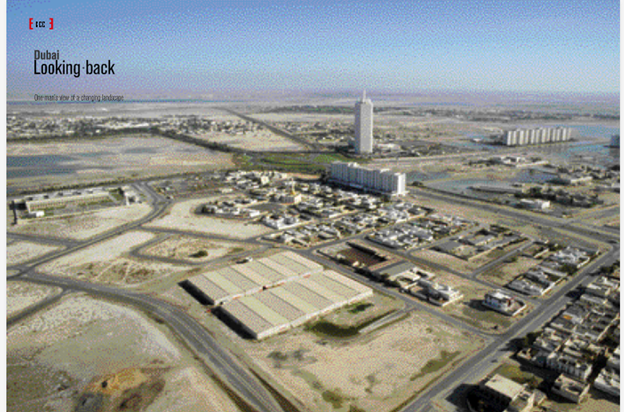
One man’s view of a changing landscape

by Executive Contributor November 20, 2007
written by Executive Contributor

Twenty years ago, I first landed in Dubai when I was sent on assignment by Agence France Presse to cover the “tanker war” which was raging out in the middle of the Gulf. In short, the Iranians were bent on punishing all of the Arab Gulf states for supporting their arch enemy Iraq. As a result, all ships that entered though the Straits of Hormuz were at risk of being attacked by Iranian speed boats using small arms fire and rocket propelled grenades The Iranian objective was to disrupt the flow of oil and other maritime activity in the region.

To counter this threat, the US navy, along with its coalition partners, amassed a naval flotilla of warships to protect Kuwaiti registered oil tankers as they transited the Gulf to pick up and deliver the worlds’ most precious cargo. Unfortunately for most of the ships, the only ones that were guaranteed protection were those Kuwaiti tankers whose flag had temporarily been swapped for an American flag. All other ships in the Gulf remained fair game. Everyday I boarded my helicopter with a CNN news crew and flew out over the waters to photograph burning cargo ships and oil tankers. My month-long stay lasted for almost two years.

That was then

That first night I flew into Dubai I remember looking out of the plane’s window and seeing this futuristic building on the edge of the water all lit up in the night sky. I was met at the airport by my colleague, who I was replacing. On our way out of the airport I asked about the building I had seen. He suddenly turned to me and said, “Guess what my friend, that’s the brand new Hyatt Regency hotel and apartment complex and, as of today, your new home!”

I must say I felt quite privileged to live in one of the newest and most expensive pieces of real estate in Dubai at the time. Before that I was living in a one bedroom apartment in the center of Cairo with my only view being the wall of the building next door. Now, suddenly I found myself in a very spacious two bedroom flat on the 22nd floor with a view to the sea on one side and the city of Dubai on the other. From my windows I could see no other building; I was too high up. Apart from the Hyatt, the only other noticeable building at that time was Dubai’s World Trade Center, just off Sheikh Zayed Road. It stuck out like a thumb in the desert.

On my daily helicopter flights out over the Gulf I would always look down and marvel at the wide open empty spaces. Since there was very little in the way of real estate development, the only distinguishing characteristic about Dubai was the creek winding its way from the sea into the desert with the souqs of Bur Dubai and Deira on either side. Other than that, the only other landmarks were the Hyatt and the World Trade Center. Even our helicopter pilots would use these two buildings as reference points when communicating with the Dubai tower.

They also served as landmarks for motorists driving around Dubai. Wherever you were in the emirate you could always see at least one of the two structures. Today, you would hardly know they are there.

so much has changed in 20 years that i feel i’m in a completely different country
This is now

I returned to Dubai with my family last year. The first thing I did after leaving the airport was search the skyline for these two reference points. I looked in vain. So much as changed in 20 years that sometimes I feel I’m in a completely different country.

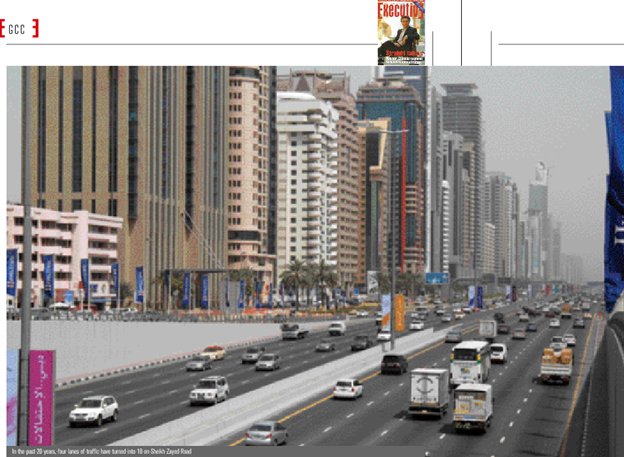
Twenty years ago Sheikh Zayed Road was four lanes (two lanes in either direction) connecting Dubai with the capital Abu Dhabi. Once you got on to the road and passed the World Trade Center you were in the middle of the desert until you reached the capital. A friend of mine used to work at Gulf News, one of the Emirates’ first newspapers, and one of the first businesses to relocate out on Sheikh Zayed Road. Across the road there was the Metropolitan Hotel that was particularly famous among Americans because it had a baseball diamond and hosted tournaments for American expatriate baseball teams in the Gulf. Occasionally, I would meet them in the hotel bar, the Red Lion, and I was amazed each time I went out there how far away the place was from anything else. Driving back into town late at night was always a bit risky because there were hardly any other cars on the road and the trucks felt they owned the tarmac.

Recently, I had an appointment at Gulf News. I had heard about the changes along Sheikh Zayed Road but it wasn’t until I drove back out there that the extent of Dubai’s real estate construction boom sunk in. To start with, when coming from Sharjah, you don’t notice crossing the Dubai creek bridge anymore because everything has become so big and wide and crowded that all your attention is focused on the road in front of you and the cars darting in and out all around you. On Sheikh Zayed Road, the four lanes have now expanded into ten, sometimes fourteen, lanes with fly-overs, bridges and underpasses along the entire stretch. On either side of the freeway there are new shopping malls, compounds and skyscrapers, including world’s tallest building and largest shopping complex, both still under construction. Gulf News is still in the same location except that they have moved into a bigger building next door and the Metropolitan with the baseball diamond has had a facelift. Both have been long overshadowed by everything else sprouting out of the desert landscape.

Dubai is expanding at such an alarming rate that before long the sight of open desert will become a rarity. In the past, one had to travel over long stretches of sand in order to reach civilization. In the future, we will have to do the reverse; drive through an endless concrete jungle before we can reach the sand.

November 20, 2007 0 comments
0 FacebookTwitterPinterestEmail
GCC

GCC Free economic zones

by Executive Contributor November 20, 2007
written by Executive Contributor

Once upon a time there was a concept arrived at called the Free Economic Zone (FEZ). In order to bring in foreign investors, along with their capital and know-how, a government would set up a special area with legislation and tax breaks that would encourage the growth of new industry. In the aftermath of the economic nationalization policies followed from the 1960s on in most of the MENA area, such zones were seen as politically expedient: too small to worry those concerned about national economic sovereignty, and effective enough to bring in some of the benefits that foreign direct investment (FDI) can offer. However, the raison d’etre of FEZs across the region is beginning to change, and with it could come a series of foreseen consequences that at present worry few. Once again, the UAE case seems the most pertinent.

FEZs can go by a number of names, such as Free Trade Zones (FTZs), Free Zones (FZs), Special Economic Zones (SEZs), Qualified Industrial Zones (QIZs) and Special Industrial Zones (SIZs). FEZs are not, however “tax-free areas” or areas where the rules of a nation are entirely absent. There are quite a few inexperienced investors who haven’t cottoned on to that fact yet. Such zones, or enclaves, are established with different conditions to the external environment in which they are placed to encourage economic activity. FEZs also do not mean that the state has in some way surrendered sovereignty. Their creation entails the formation of a special environment under which alternative rules apply that still are under the control of the ruling political authority. Bigger companies understand this fact. As one senior foreign executive told me, “If the business idea can only work inside of a free zone, forget it. It ain’t working.”

At present, the Middle East has some 63 functioning FEZs according to the World Bank, with Saudi Arabia being the exception. It, however, offers a range of inducements to investors that make its Industrial Zones (IZs), especially in the Royal Commission of Jubail and Yanbu, function in a similar manner. The largest number of FEZs in the Middle East is in the UAE, with the Jebel Ali Free Zone Area (JAFZA) now considered a worldwide benchmark for this form of operation. The most common forms of FEZs are those concerning logistics or industry, or a combination thereof, although a new form that deals with service industries, especially in the financial area, is becoming more and more the case, finance hubs being the flavor of the month nowadays. However, the use of FEZs in the UAE is beginning to exhibit differences from classical economist thinking.

At the vanguard

Technically, FEZs in the UAE are not allowed to export goods and services into the local economy unless such exports are done in conformance with federal law. While this is reasonably well-enforced in terms of goods, the use of services in the broader UAE economy has proven almost impossible to regulate, and the legal restrictions have rarely been enforced. Laws pertaining to foreign labor mean that while workers are employed by a specific company in the FEZ, the free zone authority itself is the official sponsor of the employee.

The UAE has been at the vanguard of the free zone landscape in the MENA region, yet some worry that the lines between the regular economy and the free zone are beginning to become blurred. The country managed to attract 60% of the $26 billion of FDI for the region in 2006, and more importantly has managed to concentrate it into industries such as IT, tourism and construction instead of the hydrocarbon sector.

The heightened readiness of the UAE to receive FDI and utilize it in different ways is very much a tale of how a Gulf state can break out of the restrictions that the economic enclaves oil and gas investment have tended to produce. Linking the concept of economic growth and employment with FDI is never as straightforward as it first appears. Generally, such attempts point out the improvements in technology, efficiency and productivity that come following the arrival of FDI. Another concept is that an economy receiving FDI benefits from the “contagion” effect, as the practices and technology from overseas become adopted by local businesses. Such a contagion effect is also called a “spillover”. This generally occurs in situations where the education and technological gap between the two parties is relatively low, facilitating ease of replication.

Another form of spillover can occur when local companies must better use their own resources and technology in a more efficient manner, or bring in such things to be able to maintain a competitive edge with the foreign entrant. In such a case, the local firm either has the ability or the resources to replicate or purchase externally the tools and methodology of a foreign entrant. This also requires a low gap between education standards, and sufficient capitalization to be able to bring in inputs necessary to remain competitive.

Equally, the foreign firm may require services and inputs not available on the market, thus inspiring local businesses to begin supplying them. In other words, the arrival of foreign firms means that it is looking for inputs from local firms in order to supply its operations. Electronics manufacturing is a good example of this process, as a central producer outsources for parts from smaller local firms.

Another kind of spillover effect

A different form of spillover can occur when the local employees hired by the foreign firm leave and join other local companies or start their own, and thus bring with them the techniques learned previously. In most of the above examples of spillover, we are seeing how the UAE has been successful at inspiring its creation. Of course, these are not the only ways that the entrance of foreign firms, and hence FDI, into a market can improve its growth and employment patterns, and economists will likely argue for many more years to come over the effects of the now highly sought FDI.

However, the UAE seems to have become overly enthusiastic in the use of FEZs. The answer for this is simple: lack of consensus. While all of the emirates are pursuing their own free zones, and thus can create the rules pertaining to them for their local environment, attempting to come to federal agreement on changing company law at present appears an impossibility. So, in the absence of agreement, each emirate has gone its separate ways. While they are drawing in foreign investors, the big question is “What happened to the rest of the economy?”

ither the rules of the regular economy begin to replicate those of the fezs, or the reverse will happen

While the creation of FEZs has brought in business, the disadvantage those in the mainstream economy may be operating under might begin to become more apparent in years to come. Either the rules of the regular economy begin to replicate those of the FEZs, or the reverse will happen. Either way, through their multiplication in the UAE context such a result seems to be a long-term consideration. The golden age of the FEZ may be but a temporary affair. And once again we are left with the question: If a business needs an FEZ to work, is it really such a good idea?

November 20, 2007 0 comments
0 FacebookTwitterPinterestEmail
GCC

Abu Dhabi Wishing to be a star

by Executive Contributor November 20, 2007
written by Executive Contributor

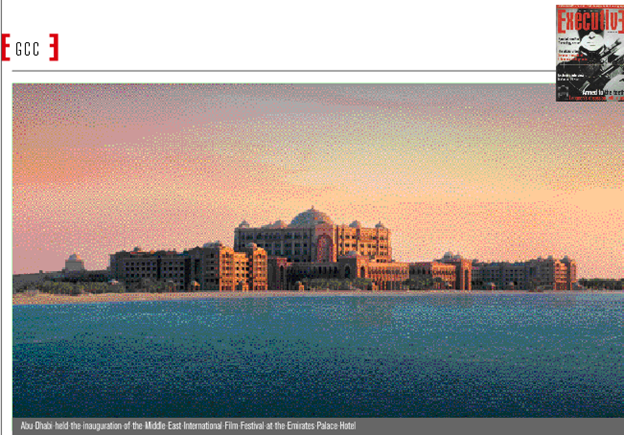
Last month, Abu Dhabi held the inaugural edition of the Middle East International Film Festival (MEIFF). It was an intentionally lower-key affair than its glitzy, red-carpet counterpart which takes place every year in Dubai, and was somehow dwarfed by the immensity of the venue. So long were the walking distances, so empty some of the corridors and so thick the carpet in the labyrinthine interior of the Emirates Palace hotel that you occasionally felt as if you were on the set of The Shining as opposed to the Abu Dhabi corniche.

Whilst there was no Jack Nicholson, the organizers certainly managed to ship in — no doubt with the help of substantial financial inducements — some big Hollywood names. Veteran Hollywood producer Harvey Weinstein was in attendance, and Paul Haggis, whose writing credits include Casino Royale and Crash, was recruited to give a master class on screenwriting.

In fact, although some interesting films were screened, including the first feature-length title by an Emirati filmmaker, the event was designed to be more about business than entertainment. One of its main purposes was to spearhead a high-profile drive to set up Abu Dhabi as a filmmaking and financing center for the region, with screenings running in parallel with a Film Financing Circle, which brought together local financiers, middlemen, directors and producers from around the world.

Abu Dhabi has also set up a Film Commission and a Film Fund, with a remit of investing local money into new productions, whilst a New York film school will open a branch of its academy in the city next year. And, a couple of months ago, the newly-formed Abu Dhabi Media Company — which is set to launch a new English-language daily paper early next year — signed a huge deal with Warner Bros to build a 6,000 acre theme park, studios and cinemas in the city.

Does it make good business sense?

So is this just another Gulf state spending its excess energy spoils in a high-profile and seemingly highbrow manner, or does it actually make business sense? Will profitable and critically acclaimed films actually be made here?

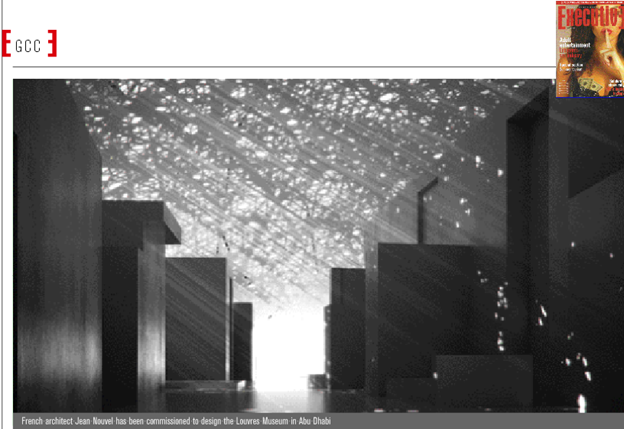
It’s worth noting that cinema is far from being the only art form being pushed in Abu Dhabi. The emirate is spending millions, if not billions of dollars in trying to turn itself into a “hub” — to use the parlance of many UAE development projects — for culture. For instance, it has signed costly and controversial deals with two of the world’s best-known museums, the Louvre and the Guggenheim, to establish offshoots on an island close to the city center, and last year also attracted the Sorbonne to set up a campus.

These kinds of efforts are easy to criticize, as many in France did, for example, when they heard that their beloved Paris museum had apparently sold its soul, and its name, to an oil-rich Gulf state, which they perceived as importing art into a cultural desert.

Many are just as cynical about the emirate’s attempts to get into films. Motivation is one of the main questions being asked. Does Abu Dhabi want to create a new breed of home-grown Emirati artists, writers and filmmakers, or does it want foreign films to be made in Abu Dhabi? Offering enticing grants and subsidies to filmmakers to shoot in the UAE’s capital will surely attract more films to be made here, but that doesn’t mean that these films will be any good, or will make money. Investing in films is not like investing in real estate.

More to the point, film-making has a far longer history, pedigree and locale in other parts of the Arab world, most notably Egypt, Tunisia, Morocco and Lebanon, than the near non-existent nature of the industry in the Gulf. Saudi Arabia, home to the region’s largest potential audience, doesn’t even have any cinemas, whilst many ask whether genuinely challenging or controversial films about the Gulf — of which there is certainly not a glut — can be made in Abu Dhabi.

Does Abu dhabi want to create a new breed

of home-grown emirati artists, writers and filmmakers?

What it takes to succeed

To succeed, the emirate will need to find a niche where it can offer a competitive advantage, perhaps in terms of easy access to finance and use of brand-new, world-class studios. It could also become the location of choice for foreign filmmakers needing to shoot on site in the region but without the security risk associated with other, more gritty parts of the Middle East. Some sequences in The Kingdom, for instance, were shot in Abu Dhabi because Dubai had apparently refused to give permission after being unhappy with the way it was portrayed in Syriana. Indeed, many might argue that the big push towards culture is simply another episode in the decades-long rivalry between Abu Dhabi and Dubai. The latter, short on oil reserves, has aggressively made a name for itself in trading, tourism and constructing lots of very tall buildings. Abu Dhabi, with more than enough spare cash to spend on new projects, is pouring money into sectors where it thinks it can have an edge on its neighbor and, more importantly, make itself known for more than just its wealth. Film and media is one way of doing that, as long it’s done for the right reasons

November 20, 2007 0 comments
0 FacebookTwitterPinterestEmail
Levant

Syria Insurance on the rise

by Executive Contributor November 20, 2007
written by Executive Contributor

Eighteen months after the first private insurance firm entered the Syrian market the sector continues to chalk up prodigious growth.  Syria’s insurance sector grew by 25% in the first half of this year with premiums totalling $85 million. Total industry premiums now weigh in at around $160 million. More than 40 applications have been received by the Syrian Insurance Supervisory Commission (SISC) and 15 licenses granted, including three Islamic insurance companies which are expected to launch early next year. “Business has been excellent,” United Insurance Company directing general manager Muhammad al-Sabi said. “We’ve recorded unexpected figures and it looks promising for the near future.”

The industry’s growth is all the more impressive, says Syrian Arab Insurance directing general manager Bassel Abboud, given that intense private sector competition has seen premiums fall by between 30-40%. “If prices were kept stable you would see an overall market increase of around 50%.”

The most under-insured in the region

In the short term, the healthy figures are likely to remain as Syria remains one of the most under-insured nations in the region. Syrians spend $7 per capita on insurance, compared with $30 for the rest of the world and $150 in Lebanon (the rate long boosted by the influx of premiums from Syria). Those in the industry are expecting Syria’s spending on insurance to rise to $10 by the end of 2009, even with the heavy price discounting.

“It is widely expected in the industry that the liberalization of the market will bring it in line with other Arab countries over the next five years, implying a potential market of $500 million,” a recent analysis by the Syria Report concluded. “The SIC’s share of $132.2 million combined with an estimated $70 million of repatriated income leaves approximately $300 million of implied market growth over the next five years.” The SISC is more bullish still, predicting the market will reach $800 million by the end of 2010.

Before Syria’s insurance sector was nationalized in 1961, there were 77 private companies operating in Syria: 26 British, 16 French and the remainder made up of 10 different nationalities. Following nationalization, a single state-run insurance provider was created, the Syrian Insurance Company (SIC), which monopolized the market for the next 45 years.

As part of Syria’s ongoing economic reform process in May 2005 the government passed Decree No. 43, which allows for the establishment of private insurance firms. Unlike the banking sector, there are no limitations on foreign ownership. Companies organizing public offerings in Syria for more than 50% of their capital, however, attract a tax rate of 15%, instead of 30% of other firms. An ownership cap of 40% was placed on any single legal entity, while individuals are not able to own more than 5% of the shares.

The majority of the new players are backed by stakeholders from Lebanon, Saudi Arabia and the Gulf who have combined with Syrian investors to benefit from the tax advantages accruing to companies which are majority Syrian-owned.

While the state-owned SIC continues to attract the largest market share, pulling in $52 million in the first half of this year, the array of newcomers are making serious inroads. From a monopolistic position, the SIC’s market share fell to 94% by the end of 2006. In the first six months of this year the rate dropped to 59.37% and it is estimated the former goliath presently holds little more than half of the market.

More worrying for the state-owned firm is its premiums portfolio which fell 19.4% year-on-year, from $68 million in the first half of 2006 to $55 million in the first half of this year, despite a growing insurance market. In a competitive market, the company is being strangled by heavy bureaucracy, rigid management and pricing practices, little marketing know-how, poorly trained staff and sub-par service. To counter the decline, Syrian authorities granted it greater managerial autonomy in August.

The introduction of private firms has also seen a range of essential products hit the market, including travel, health and sophisticated forms of financial insurance. Their provision has done away with a legal black hole that hung over the industry, brought about by the absence of essential insurance products and a legal environment that forbid any Syrian citizen or organization from contracting insurance in a foreign company. The most common example of this legal grey zone was the failure of the SIC to provide travel insurance, despite the fact that it is an essential visa requirement for numerous countries, including the EU. Although Syrian authorities previously turned a blind eye to individuals and companies taking out insurance abroad, Syrians were previously forced into a technical breech of the law to comply with modern visa requirements.

Insurance money coming back

The provision of these products is seeing a flood of money return to the county. An estimated 300,000 Syrians travel to the EU each year alone, implying an $11.8 million premium value. Likewise, analyses by the Syria Report and the Syrian European Business Center, estimates that between 4,000- 5,000 company health insurance policies were in place in Lebanon at the start of 2006 worth $30 million.

Across the industry, the Ministry of Finance has estimated that around 60% of income for 2006 was repatriated funds, indicating that the push to bring Syrian insurance money back to the country is working, along with the take up of new insurance products.

As in most developing countries, motor insurance continues to represent the bulk of insurance premiums. Third party and all risk motor insurance represents around 65% of the market, marine and transport 15%, engineering 15% with all other products accounting for the remaining 5%.

While motor insurance will remain the largest component of the market for years to come, new sectors such as engineering and health are promising more lucrative profits in the future. The imminent introduction of corporate governance laws, start of the stock market and issuance of government bonds will lead to the development of insurance investment portfolios, improving the sector’s ability to deliver products particularly in the health and life fields.

And it seems interest in these products is being piqued. A SISC survey of 2000 people found that 52% of respondents consider health insurance the most important, followed by life (33%) and motor (12%). “Medical insurance will take time to grow in Syria,” Abboud said. “But we have noticed a steady increase in enquiries about it. The fact that people are asking is a positive indication.”

Low income and a lack of awareness about insurance present the greatest obstacles to growth. The SISC survey found that close to 60% of Syrians said their financial situation prevented them from taking out insurance. Increased competition is seeing prices fall, however, and some firms are expressing tentative interest in developing low income products.

sisc polling shows that 20% of syrians regard commercial insurance as forbidden under islam

Religious beliefs also play a role, with some Muslims regarding insurance as contrary to Islamic law and akin to gambling given that there is no guarantee of financial return. An insurance company’s investment activities, which may involve the charging of interest, also lead to the view that insurance is haram. How widespread and firmly held these beliefs are remains debatable, but SISC polling shows that 20% of Syrians regard commercial insurance as forbidden under Islam.

Aiming to tap into this market, a number of Islamic compliant insurance companies are about to set up shop in Syria. Offering takaful insurance, these firms operate on the principle that policy holders should cooperate amongst themselves for the common good. Policy holders ‘donate’ their subscription to those that are in need or are asked to make ‘donations’ from the money they have contributed to the organization when another member is in need. The organization spreads the liabilities and aims to eliminate uncertainty by acquiring a large number of subscriptions.

The number firms entering the market is also causing some players concern. While the industry has recorded impressive growth since it was opened up, the market remains small and the flood of repatriated funds will eventually dry up. The heavy capital requirements to enter the market and price discounting are throwing out the industry’s usual capital to premium ratios.

“If you look at the capital requirements you have around $315 million which is a lot of money for a market which only produces $140-160 million in premiums,” Abboud said. “As an international industry average, solvent insurance companies run on a 3:1 or 2:1 premium to capital ratio. So you would expect to see at least $600 million in premiums with good, solvent markets. Some companies will not have much business and may have to operate as investment vehicles which is not the purpose of the market.”

November 20, 2007 0 comments
0 FacebookTwitterPinterestEmail
Special Report

Luxury Automotive Setting the trend

by katia November 16, 2007
written by katia

As trendsetters go, Dubai seems to be the leader of the Middle Eastern pack, showing off the biggest, the fastest, and the most desirable goods — all this season’s ‘must haves.’ In a country where everything gleams, it should be of no surprise that, on the roads too, there is a certain element of sparkle, literally.

Top of the line Porsches, Lamborghinis, Range Rovers, and Audis, to name but a few, can be seen shooting down the desert highways on any average day in the Emirate of Dubai, a locale that has been dubbed ‘Las Vegas of the Middle East.’

“Dubai is a trend-driven city with lots of people with large disposable incomes,” said Tom Bird, deputy editor of CAR Middle East magazine, one of the leading informative magazines on automobiles in the region. Talking of what is ‘hot’ at the moment in the form of luxury cars, Bird fingers the Audi R8 and the Rolls Royce Drophead Coupe.

“The Audi is the most anticipated car the world over, whereas the Rolls is just excess on wheels,” said Bird. “Both have waiting lists stretching far into 2009.”

According to DriveArabia.com editor-in-chief, Mashfique Chowdhury, the Range Rover Sport is the car to be seen in these days with 4x4s dominating the market driven by ‘desert culture.’ “The Range Rover Sport is hip — it is the car that has been chosen by the majority of the people to drive,” he said. He also named the BMW 3 series, the X5, and the newly-released Mercedes S-Class as popular choices amongst the local. “The attractive thing about the Sport that has caught a lot of people’s attention is its style and power — it is the first mid-size model, making it attractive to the younger generation … Furthermore, it is expensive but still within the price-range of most people.”

Robert Aaraj, showroom manager for Formula 1 Cars in Abu Dhabi, added that 4x4s are more attractive to the population due to the weather conditions, but that, too, is seasonal, with convertibles increasing in sales during the period between November and February. “Owning a 4×4 car now is a trend by itself because customers can use it as an MPV (multi-purpose vehicle) between the roads and desert,” he said. “Yet, the new generation focuses a lot on super cars. What we noticed lately is that in almost each household there will be a sports car for the weekend drive and a 4×4 for daily use.”

The luxury culture

Chowdhury emphasized the point made earlier by Bird regarding Dubai’s population to spend, spend, spend on their motors. “Dubai is very extravagant, and the purchase of a luxury car is simply an extension of that,” he said. “Even people who don’t have that much will at least tinker; they will upgrade their sound system, for example.”

The focus on high-end luxury cars has its own purpose, with owners wanting to own a specific model that will set them apart. “The Bentley GT, Rolls Royce, Ferrari 599GTB, Bugatti Veyron, Lamborghini LP640, Mercedes CL65 AMG and SLR McLaren and the Porsche Carrera GT” are what are in at the moment, said Aaraj. “Why? Because supply is limited with a one-year waiting list from the date of order.”

Traffic is one of the Dubai’s major headaches but many drivers use the extra time to parade their vehicles in front of other motor-connoisseurs. Bentleys line up next to Jaguars, comparing accessories, add-ons and customized body-parts, all an expression of wealth, a challenge for the next man to do better. Although tinted windows are seen as a must to protect against the year-round heat and sunlight, some go to the extreme and tint the windscreen as well. Big, shiny rims, super-charged engines, sport exhausts, and navigation equipment are just a few of the adjustments people make to personalize their cars.

“People spend their time on their cars buying high-end body kits imported in from Europe and America,” said Chowdhury. For a simple ‘low-end’ body kit, customers will hand over $2,700, while a set of alloys may cost around $5,500. For some, there are no limits. “People just keep spending in order to grab attention and stand out. I’ve seen Lamborghini-style doors on regular cars before.”

The lengths individuals will go to in order to ensure the uniqueness of their car is more than apparent on the roads in Dubai. “I know of one person who is spending $300,000 customizing his $100,000 Audi R8,” said Bird. “For many with money, style knows no bounds — I have seen a Bugatti Veyron with a diamond encrusted number-plate — sums it up really!”

Jad Bsaibes, a 25-year old car enthusiast and owner of a newly purchased Mitsubishi Evolution, has noticed a change in the market when it comes to the customers. “The purchasing power is moving down the age bracket,” he explained. “The younger generation is buying sports cars now … I have friends buying them, and I own two.” According to Bsaibes, Dubai’s demographic diversity makes it easier for car manufacturers to sell an entire range of models. “It’s the large disposable incomes — people want to purchase the finer things rather than your average run-of-the-mill models.”

the lengths individuals will go in order to ensure the uniqueness of their motor is more than apparent

Setting the trend for the region

“The UAE is a melting pot of many cultures, ethnic groups and nationalities,” explained Craig Hardie, marketing and communications manager of Chrysler, Jeep, and Dodge. “A lot of the people in the UAE are very passionate about their cars and are fairly knowledgeable on the new trends and technologies.” In 2006 total sales volumes for Chrysler, Jeep, and Dodge increased by 46% in the region, which Hardie attributed to the launch of the new models, and by September of this year there was a noted increase of 28%.

“Dubai sets the trend in the Middle East as it has a very saturated market,” explained Maram S., marketing assistant at the Porsche Center in Dubai. “There are so many expats and so many nationalities, that in terms of selling cars it is one of the leading markets in the whole world.”

Lamborghini marketing director, Rami Taher, explained that Lamborghini’s sales in the Emirates surpassed those of anywhere else in the region due to the availability of buyers in the market. “The diversity in Dubai makes the market more appealing,” Taher said. “The concentration of the population, the real estate boom, and also, importantly, the infrastructure, especially for Lamborghini, all play significant roles in the sales.” The price of an entry-level Lamborghini is $205,000, with prices rising until $410,000 for certain customized models. Most of their 2008 models of the Mercielago are already pre-sold. The recently developed Lamborghini Reventon — reported to have an interior much like a fighter plane’s cockpit — is so exclusive that only 20 have been produced worldwide, with one having been sold to a buyer in the UAE. The price? One million euros.

The more aristocratic Bentley Marquee has seen a 1,000% sales increase in the region over the last four years, but it has also reached its maximum production capacity and cannot provide more than the 500 cars allocated to the GCC. “This means we will not see a growth in the allocation of cars to this region, but rather we will see a growth in the waiting list,” said Ian Gorsuch, Bentley’s regional director.

He is not alone. Many of the luxury car dealerships have waiting lists up to 12 months as people line up to buy the biggest, fastest, and the most prestigious cars in the region. As Dubai continues to boom, so will the luxury car sector, with larger disposable incomes being spent to show off who really is king of the road.

November 16, 2007 0 comments
0 FacebookTwitterPinterestEmail
Special Report

Luxury Automotive Shifting down

by Executive Contributor November 16, 2007
written by Executive Contributor

The Lebanese luxury car market may include the lavish brands Aston Martin, Bentley, Lamborghini, and Maserati, but traditionally it was the German manufacturers Audi, BMW, Mercedes and Porsche that made the sales. However, all that might be changing.

When the latest and greatest vehicles are unveiled on the market, the Lebanese take notice. “The latest model is usually the bestseller,” said Najib Debs, brand manager at Mercedes-Benz. For the high-end and luxury market, German brands still reign supreme. BMW, Mercedes and Porsche hold their positions at the top of the list in their class and origin, and top-selling luxury models such as the Audi R8 find a market here – just in small numbers. But there are also some new trends in the land of the cedars.

“Luxury cars — in the $60-200,000 bracket — in Lebanon do not reflect the purchasing power but rather the way of life,” said Nabil Bazerji, managing director of G.A. Bazerji & Sons, agents for Maserati, Lancia and Suzuki.

Lebanese have traditionally been a very brand conscious market, going for the latest models and spending was never proportionate to income. “It’s a Mediterranean thing,” explains Bazerji. “This is the greatest change in the market today: Lebanese are now more cost conscious and the buzz words many dealers hear are concerns about ‘low consumption.’”

The Association of Car Importers in Lebanon recently conducted a survey on luxury vehicles and found that they have lost a chunk of their overall market share over the past couple years, down from 15.6% in 2005 to 12% so far this year, according to Samir Homsy, chairman of the association. In many European markets, luxury brands take a higher market share of around 25%. In the Gulf this is even larger. Homsy attributes Lebanon’s lower market share to the high taxes that can total close to 60% of the invoice price of the vehicle, which do not exist in the Gulf or other markets. In the region, the heavy vehicle tax is only comparable to countries like Syria, Jordan and Egypt.

Uncertainty in the market

However, the total number of registered cars held relatively steady compared to last year. Expectations for 2007 were mixed as the series of bombings in May and June, traditionally the month where the season of summer sales begins, kept figures low. Further constraining sales was the assassination of MP Antoine Ghanem in September and the uncertainty about the presidential elections.

“We usually witness a two week drop when there is an incident,” said Debs, “which resulted in an irregular sales season.” Another characteristic surfacing is a “wait and see” attitude. For Charles Tarazi, managing director of the Porsche Center, “what used to take 15 minutes, is now taking 20 phone calls.”

The major trend that has emerged in the last two years is that buyers have downshifted their tastes to smaller engines and choose the less expensive models. While brand names still carry a lot of weight, consumers become more discerning when it comes to price, consumption and maintenance packages offered.

Mercedes has felt this down-shift and is noticing that customers are now thinking smaller is better. “We used to sell 50/50 between six-cylinders and eight-cylinders on the S-class, but now people have shifted towards six-cylinders. On smaller cars it also used to also be 50/50 between six- and four-cylinders, and now most are opting for four cylinders,” Najib Debs related. In the SUV segment, only V-6 are requested. “V-8s are not selling,” he said, adding, “People want smaller engines to decrease the price and lower fuel consumption.”

Keeping their market share

While numbers remain down across the board, many find that their market share has been relatively unaffected. Porsche has been able to maintain its market share of 40% for sports cars and its SUV, the Cayenne, hovers around 17% in that class. Jaguar, however, has seen its sales cut in half down from a height of 200 cars in 2005, although it has maintained its market share, largely due, say agents Saad and Trad to the lengthy warranty it offers.

With T. Gargour & Fils’ takeover of Chrysler, Jeep and Dodge dealership last year, aggressive marketing has taken some of the market share of the European-dominated market, according to Cesar Aoun, Chrysler Car Group manager. The declining dollar and fuel-efficient models have helped combat the stereotype of American cars having large, gas-guzzling engines and low resale values (Gargour has guaranteed the trade-in value of its vehicles).

Another company taking on the traditional European luxury marques is the slightly more affordable but equally prestigious Volkswagen. Their trademark high-powered, small engines make them a great alternative for those wanting to shift to more economic models, yet stay with European cars. Lebanese representative dealer Kattaneh is opening a new showroom devoted solely to Volkswagen in a bid to focus the brand.

“People want smaller engines to decrease the price and lower fuel consumption”

Currently, the Lebanese automotive sales do not exceed 15,000 vehicles a year, of which 1,500-1,800 could be considered luxury cars, i.e. ranging from $60-200,000. According to Bazerji, for a country of its size, Lebanon should be selling around 30,000 cars and in the most optimal of circumstances even 70-80,000.

Besides high taxes, the market of imported used cars is also cutting into new car sales with around 30,000 imported used models being sold every year. More and more, used cars are being imported from the US due to the favorable exchange rate giving the buyer a chance to purchase an upper-level car in place of a new lower-level car for the same price. As Bazerji points out, “People who cannot afford the latest BMW 7-series as a new model for $150,000 can purchase it imported-used for $60-70,000.”

November 16, 2007 0 comments
0 FacebookTwitterPinterestEmail
Special Report

Luxury Automotive Directing the best

by Executive Contributor November 16, 2007
written by Executive Contributor

E What is your brand’s overall strategy for the Middle East?

Our strategy is to be the leading luxury passenger car and SUV brand in the Middle East and Levant.

E How does the Middle East market respond?

We are one of the oldest luxury brands in the region with ties to many of our authorized distributors for over 50 years. The Mercedes-Benz brand has always represented quality and innovation and will continue to do so which is why we continue to be the leading German luxury automotive brand in the Middle East and Levant.

E How has Mercedes-Benz responded to market demands?

Our customers are important and we always listen to them. For example, it was a customer who suggested that we should build a special version of our Mercedes SLR McLaren to celebrate the 50th anniversary of the Mille Miglia victory by Stirling Moss. We responded by introducing the limited edition ‘722’ version that had its world media premiere in Dubai at the beginning of this year.

E What percent of your brand’s overall sales go to the Middle East and how many units are sold?

The Middle East and Levant, excluding Iran, Iraq and Egypt, account for approximately 1% of the company’s turnover, of which approximately 90% is achieved in the countries of the GCC. Within the GCC, the UAE and Saudi Arabia account for over half of the total 2006 volumes and around 60% of GCC sales.

In 2006, the Mercedes Car Group (Mercedes-Benz passenger cars, Maybach and SLR McLaren), sold a record 15,675 vehicles, a12.8% increase over the previous year’s figure of 13,898.

E Are you growing in the Middle East?

Sales of Mercedes passenger cars continue to grow every year because we constantly introduce a range of innovative new products and also ensure we offer the best available sales and after sales service.

The Middle East is one of DaimlerChrysler’s largest markets particularly for Maybach and SLR. Basically, Mercedes-Benz sales in the Middle East and Levant form an inverted pyramid, unlike almost any other market region, whereby the S-Class forms the base with a share of Mercedes-Benz sales of more than 30% and the B-Class the tip. The total market for smaller vehicles is significant, particularly for fleet and rental, and especially in those markets with a high expatriate component, but generally the region remains disproportionately that of a “large car” market.

E In light of increased liquidity in the Gulf, has your brand responded specifically?

Middle East customers like to have special versions of their vehicles. At Mercedes-Benz our Designo range allows them to choose their own interior design. In addition, our performance vehicle arm, Mercedes-AMG, has opened its own Performance Studio that can meet the individual requirements of any customer.

E What are the difficulties faced by Mercedes-Benz in the Middle East market?

Vehicles have to be equipped to cope with the environmental conditions pertinent to the region generating heat, dust and humidity and, in some areas, rough roads. It is worth mentioning that only cars from authorized distributors meet the homologation requirements defined to deal with these conditions. In terms of customer comfort, customers are no different to those in other countries.

E On a local level, how are you competing against others?

We position ourselves as the premium luxury automotive brand. We maintain that position by annually outselling the competition.

E Has the Middle East/GCC market influenced design?

Car clinics for future designs include representatives from the region. The Middle East plays a significant role in hot weather testing for all our Mercedes-Benz models.

E What is your best-selling model?

For some years, the S-Class has been and continues to be the region’s favorite luxury sedan. As I said, the region remains a “large car market”. Last year, the new S-Class continued its tremendous success with 6,272 units sold compared to 3,937 in 2005.

For some years, the s-class has been and continues to be the

region’s favorite luxury sedan with 6,272 units sold

E Does Mercedes-Benz have a CSR commitment to alternative energy? Does this issue and ecological awareness play any role in your Middle East operations, or do you think that at this time it is a “lost cause” in the region?

We do not believe the Middle East and Levant is a lost cause. The governments of Dubai and Abu Dhabi are aware of the problems and are moving to make a difference with Dubai investigating the introduction of hybrid public transport and Abu Dhabi set to introduce cleaner diesel fuel.

DaimlerChrysler revealed its agenda for the future at the recent Frankfurt Motor Show with a display of 19 new models, among them seven hybrids and the trailblazing F700 research vehicle that uses the innovative DiesOtto engine which combines the best elements of both diesel and petrol engines.

November 16, 2007 0 comments
0 FacebookTwitterPinterestEmail
Special Report

Luxury Automotive  Desert Glamour

by Executive Contributor November 16, 2007
written by Executive Contributor

with the GCC achieving record income from ever-rising oil prices, assessed to have amounted to $300 billion in 2006, and the UAE’s per capita income standing at $35,000 the country’s automobile sector is riding the wave, and in terms of growth is now considered to be among the top emerging markets next to China and India. Within the GCC, the UAE automotive sector ranks only second in size behind Saudi Arabia.

As behooves a country flush with money and a culture of conspicuous consumption, luxury cars are taking up a significant share of the overall automotive sector. Of all the cars with a $100,000+ price tag sold worldwide, around 5% go to the Middle East, and the vast majority of those in the GCC. According to international analysts, until 2009 the luxury segment will even rise by over 10% in the region, whereas globally it will decline.

The demand for luxury cars is now so high that many brands have waiting lists of up to one year. Some customers can’t wait that long and pay dealers extra fees to get a car from Europe and ship it to the Gulf. Hotels, many of whom are catering to high-end customers, are now also ordering luxury cars for their fleets. All this is exciting news for luxury car brands.

Since December 2007 Bugatti, owned by Volkswagen, has sold 15 of its $1.2 million 1,001-horsepower Veyron coupes in the UAE alone. Rolls Royce’s sales in the Middle East rose by 36% in 2006, making up 15% of its worldwide sales of around 800 cars.

Porsche celebrates the 5th year in a row of double-digit growth in the Middle East and Africa. Only eight years after opening the Porsche Middle East & Africa office, it became the fifth-largest Porsche subsidiary worldwide, after North America, Germany, the UK and Italy. The German car maker, whose current sales in the Gulf are around 3,800 units, expects a 20% increase. Of its models, the Cayenne SUV alone accounts for 75% of its sales in the GCC. According to Deesch Papke, Managing Director of Porsche Middle East & Africa FZE, “The market demands an extremely rich product mix that is certainly a specialty in our region. We sell more 911 Turbo than Boxster or 911 Coupe. There is a strong demand for very high exclusive equipment.”

The American brand Cadillac can look at a presence in the Middle East that goes back all the way to the 1920s. For a long time it had been the vehicle of choice for royalty, senior government officials and businessmen, thus generating a loyalty on which the brand could build and expand today. From 2001 to 2006, regional sales have doubled and reached 2,449 cars, making up almost 10% of Cadillac’s global sales. Figures to date for 2007 are showing a 35% increase over 2006.

The venerate British car maker, Bentley, has seen a staggering 1,000% growth over the past four years, yet now reached its global production capacity — just under 10,000 per year — and thus will over the next five years actually see its regional sales decline from a peak of 500 cars in 2006. This is part of an overall strategy to maintain exclusivity, yet necessitates a “re-training” of luxury car dealers to stop sneering at the used car market and convince customers that a “pre-owned” Bentley, of which there are 3,000 in the Middle East, might actually be something desirable. A significant target group in the UAE are expats as they are more likely to buy used cars than nationals.

The new kid on the block

In comparison with other brands, Maserati has made its entrance into the UAE market fairly recently, having been present only since 1998. But the local market quickly became important enough for the Italian car maker so that in 2004 it decided to stop managing the brand in the Gulf via intermediaries and in 2006 created a regional office in Dubai to be able to directly take care of the customers’ needs and wishes. In relation to its increase in global production and sales (from 5,500 cars in 2006 and 6,500 in 2007, the target for 2009 is 12,000 cars, the maximum production capacity), the brand’s regional numbers have risen even faster. After selling around 150 cars each year during 2004-05, this year Maserati expects to sell 400 cars, a 40% increase, and plans to raise that number by another 80% in 2008, thus pushing its market share in the luxury car segment from 6.5% to 10%. According to Umberto Cini, the brand’s area manager for Middle East and South Africa, Maserati’s ultimate aim is to “become the credible alternative to the mainstream players in the luxury segment, producing passionate and innovative 2-door and 4-door vehicles, focused on delivering market leading customer service.”

The luxury car sector does not only attract local buyers of vehicles, but also buyers of brands and assembly lines. In March 2007, Aston Martin, best-known as “makers of James Bond’s cars,” was bought off Ford for $925 million by a consortium mainly funded by two Kuwaiti investment houses, The Investment Dar (TID) and Adeem Investment. Initially, this is nothing but a regular investment in a promising brand. Certainly there are no plans in the GCC to produce cars en locale, like others in the region do — Iran, for example, is the world’s 16th-largest car manufacturer — and the local car industry will remain the realm of post-sale maintenance and augmentation. But Gulf participation in luxury brands might influence future design, or at least help brands to better target the wishes and needs of Gulf customers.

Influence on design

Since luxury car owners tend to be the most discerning of buyers, the luxury car brands pay extra-special attention to their potential clients’ wishes. Thus, Mercedes puts an emphasis on making its vehicles resistant against the specific local environmental conditions, such as sand and humidity. General Motors, owner of Cadillac, sent its vice-president for Global Product Design twice to the region in 2007. Phil Horton of BMW avers that “our design department is very interested in following Middle East trends with a view of developing special models, colors and trims.”

All luxury cars have elaborate customization programs, some of which, like Bentley’s Mulliner, go back over a century to the early history of the brand. Maserati introduced specific model versions and offers more than 4 million combinations of options. Mercedes has its Designo range and its performance division, Mercedes-AMG, has opened its own Performance Studio. Most high-end luxury cars are essentially tailor-made.

Competition

Despite so much money chasing a limited supply of luxury cars, there are too many brands represented in the markets to just sit back and wait for customers to sign their checks. Thus salesmen are coming up with their own unique ways to differentiate themselves from “the rest of the pack.” In the luxury segment, all cars are expected to have been built to highest quality standards and fulfill the most rigid international standards in terms of safety, so brands need to go further. In neighboring Saudi Arabia, Bentley is sending buyers on a two-day tour of the home factory in Manchester, where they can see how the cars are built. Umberto Cini of Maserati drives his brand’s strategy to attract buyers through exclusivity, but the Italian car maker has also responded to market demands by producing its first automatic transmission vehicle, the Quattroporte Automatica that saw its debut in early 2007 and will be joined, at the Middle East International Motor Show in Dubai in November, by the brand-new GranTurismo.

The German carmakers can, of course, count on their reputation for flawless engineering and ultimate reliability and are often building their image on these “Teutonic” qualities. Thus BMW, which in 2007 is selling 15,000 units throughout the Middle East and has just passed the 100,000-car-mark since opening a dedicated regional office in 1994, points out its superior technology and counts on “an ever increasing appetite for the highest level of technology safety and innovation.” Mercedes invites regional representatives to its car clinics and conducts hot weather testing for its models in the Middle East.

Cadillac, whose marketing manager, Melanie Maddux, acknowledges that “generally, European products are perceived as higher quality than other offerings in the market,” nevertheless avers that her brand has been using the distinctly American attitude that “the competitiveness of the segment benefits consumers who are able to find [a] better and better product.” And Maddux thinks that Cadillac “stacks up extremely well.”

Going Green?

One aspect of global car culture that has yet to make real inroads into the UAE and Middle East market is that of “greener” cars. With petrol being cheap and incomes high, there is no economic reason for local drivers to concern themselves with fuel efficiency and hybrid engines. However, local governments are increasingly taking environmental concerns into consideration. Dubai’s ruler has mandated that all new government buildings in the emirate “go green” and the overall government strategy aims for sustainable development, environmental protection and greener infrastructure. The emirate is also investigating hybrid public transport systems and Abu Dhabi is introducing cleaner diesel fuel. In June 2007 Dubai’s TECOM Investments launched enpark, a green energy and environment park project, which not only includes businesses, residences, and retail space based on sustainable development and clean energy, but also mandates that its inner area may only be accessed by cars that run on natural fuel. With projects like this, TECOM hopes to attract hybrid or biofuel cars to the UAE, for which, according to enpark’s director Ali Bin Towaih, there is already a market.

Although luxury cars are more associated with large engines and high outputs of power, and with it emissions, some of the high-end brands are actually leaders in green technology and see raising customer awareness for environmentally-friendly cars as part of their corporate social responsibility.

there is no economic reason for local drivers to concern

themselves with fuel efficiency

Porsche proudly points out that the world’s first hybrid car was developed and produced in 1900 by the company’s ancestor, Ferdinand Porsche and that today all its engines are able to run on a certain share of ethanol, the best-selling Cayenne up to 25%. BMW is looking forward to introduce its own technologies, like Efficient Dynamics, to the regional customers, waiting for an increase in customer awareness. Cadillac will present its Chevrolet Tahoe hybrid at the 9th Middle East International Motor Show in Dubai that will have a focus on energy diversity.

With the rapid increase in luxury cars, the UAE is now also facing a new problem, which so far was only known from news stories about Eastern Europe or movies like “Gone in 60 Seconds”: luxury car theft. In September 2007 the Abu Dhabi Police arrested a gang that had specialized in stealing luxury cars, especially 4x4s. The thieves were tech-savvy — being able to overcome the burglar alarms and then decoding the operation switches — and worked for foreign “buyers”. It remains to be seen if this problem becomes more serious. One thing is for certain: it will not deter potential buyers from getting the latest Porsche, Benz, or Bentley. Only now the brands might make sure to add Low-Jack to the basic options.

November 16, 2007 0 comments
0 FacebookTwitterPinterestEmail
Special Report

Tobacco industry  Sparking up

by Executive Contributor November 13, 2007
written by Executive Contributor

As Europe and the United States slap higher taxes on tobacco products and ban smoking in public places, the Arab World keeps on sparking up, boasting some of the highest per capita tobacco consumption rates in the world.

Tobacco manufacturers and advertising companies are only too happy to keep this multi-billion dollar business from being stubbed out, with international players focusing increasingly on the developing world due to declines in smoking incidence in the West and the barrage of court settlements the industry has had to pay out in recent years, particularly in the US.

Indeed, of the 1.1 billion smokers in the world, 800 million live in developing countries, with the World Health Organization (WHO) predicting that by the mid-2020s 85% of all smokers will come from the world’s poorer countries.

And while smoking declines in the developed nations, there is not a corresponding drop off in the global production of cigarettes or the number of smokers. According to the Food and Agricultural Organization (FAO) of the UN, world tobacco production is projected to reach over 7.1 million tons of tobacco leaf by 2010, up from 5.9 million tons in 1999. The number of smokers is expected to grow from the current 1.1 billion to around 1.3 billion in 2010, according to the report. This is an increase of about 1.5% annually.

Such growth is reflected in the Middle East, where the majority of national tobacco markets record between 1-3% annual growth rates. According to the WHO, tobacco consumption in the Middle East grew by 24.3% between 1990 and 1997, whereas consumption in Africa over the same period grew some 3.6%.

“The industry is focusing on this region as it is an emerging one. If you ask someone at Proctor and Gamble, they will say the same,” said a former marketing manager for a leading international tobacco company, who wished to remain anonymous.

The main markets the industry is concentrating on are Egypt, the region’s most populated country, Algeria, Saudi Arabia and Iraq.

“Iraq is a huge emerging market. Companies are dumping cigarettes there left, right and center,” said the source. “It’s now on CEOs’ lists for top brand sales.”

International firms also have their eyes on the Middle East for its booming population, with some 50% of the region under 25 years old. Although international firms do not deliberately market to minors, it is nonetheless a positive indicator for the industry of future market growth.

Regulations on the horizon

Despite the region still puffing away, regulations on advertising and smoking are coming to the Middle East, via countries signing up to the WHO’s Framework Convention on Tobacco Control (FCTC), established in 1995. The FCTC provides guidelines for countries to “impose restrictions on tobacco advertising, sponsorship and promotion; establish new packaging and labeling of tobacco products; establish clean indoor air controls; and strengthen legislation to clamp down on tobacco smuggling.”

Western governments have been at the forefront of implementing FCTC guidelines, but as countries sign up, controls are likely to gradually be implemented globally.

Incidence of smoking and annual growth

“The tobacco industry has changed dramatically in the past decade,” said Nadine Antun, corporate affairs executive for Philip Morris International’s (PMI) Lebanon branch. “The legislation in the US and UK will cascade down to everywhere else, it will just take time and will be to varying degrees.”

Varying degrees of implementation seems to be the region’s current catch phrase. Despite all Arab countries (bar Iraq) being signatories to the FCTC, there is minimal standardization across the region — few countries have health warnings on packets, advertising is still allowed (with the exception of certain ‘black’ markets, such as Jordan and Syria) and there is negligible public awareness about the hazards of smoking.

Even in countries that have banned smoking in public places and sales to minors, such as in Jordan, there is minimal enforcement.

“Sellers could be fined, but who is going to fine them?” queried Samer Fakhouri, vice chairman and general manager of Jordan’s International Tobacco and Cigarettes Company (ITC). Cracking down on violators of the ban on advertising and promotion is equally problematic. “The laws are still far more strict than implementation. For instance, smoking is not allowed in public areas but is in fact widespread,” he added.

Such problems are not limited to the Levant. The Emirates are now having a second go at banning smoking in public, after an attempt in 2005 fizzled out. This time the government has imposed the ban gradually, starting off in shopping malls, then fining people after an initial 90-day grace period and eventually, prohibiting smoking in all work places, schools, and food courts.

even in countries that have

banned smoking in public places and sales to minors, such as in jordan, there is minimal

enforcement

Other countries still have a long way to go. In Syria, where the tobacco market is controlled by a state monopoly, the General Organization of Tobacco (GOT), tobacco advertising has been banned for the past five years, but only international brands, which make up a tenth of the market, are required to have health warnings on packets.

In Lebanon, no tobacco regulations are in place, although a draft law to implement FCTC guidelines was drawn up last year. But due to no parliamentary sessions being held because of the current political standoff, the law has yet to be passed. Once inked, the law would restrict sales to minors, ban advertising and implement restrictions on smoking in public places.

“We support any limits or bans, the only thing we believe is right to maintain is communication to consumers at point of sale. It is a product that causes harm and should have a health warning,” said Antun.

“But a law has to be implemented and controlled, or what’s the point? It’s up to the government to enforce, and we will comply,” she added.

Such regulatory changes are forcing cigarette companies to alter their marketing strategies. “The type of adverts will change, but advertising budgets haven’t been slashed,” said the former tobacco company employee. “Compared to six or seven years ago, the budgets have gone from, say, sports to direct marketing, which is the future of most advertising.”

As if to protect their backs years down the line from massive payouts to chronically ill ex-smokers, as has happened in the US, major players have placed self-imposed restrictions on advertising.

“Philip Morris is allowed to advertise on TV here, but we don’t,” said Antun. “We make sure that for magazines the readership is 75% adult, and adverts are restricted to inside the publication.”

Nonetheless, the majors might not get away scot-free in the future. Earlier this year Saudi Arabia’s Ministry of Health opened a lawsuit against the representatives of 14 tobacco-producing companies that operate in the kingdom. The ministry is demanding compensation of $2.6 billion for financial losses incurred treating smokers in the past, and wants a further $133 million a year from tobacco companies for medical treatment. The outcome of the case, which is still pending, could set a benchmark for the region.

A smoldering market

To what degree imposed or self-imposed restrictions impact on cigarette sales is hard to tell, say insiders. “If tomorrow we don’t have billboards outside, I don’t know how much it would affect sales. It might, but if it does, so be it,” said Antun.

Nevertheless, hikes in taxation are actively discouraged by tobacco companies as a means of curbing smoking. “By increasing taxes you are not undercutting smokers but losing revenues and affecting producers as smuggling will increase,” said Fakhouri. Equally, countries like Syria are unwilling to raise the cost of tobacco. “We have no intention to increase the price, otherwise we would pay in profits,” said Faisal Sammak, director of GOT.

Tobacco companies’ market share

Counterfeit and smuggled cigarettes are a major problem for the industry, not so much in Lebanon, but particularly in Jordan, Syria, Iran and the Emirates. Countries that neighbor Iraq are particularly affected due to rampant smuggling, while British American Tobacco (BAT) estimates that the illegal market grows some 40% a year in the Emirates.

The unnamed source said some companies are actively encouraging smuggling to boost sales, naming French-Spanish tobacco company Altadis as involved in the illicit trade, shipping excess quantities to Jordan and Iraq that are then sold on elsewhere.

“We have no intention to increase the price, otherwise we would pay in profits”

“Some companies will do anything to get their sales, but BAT, PMI and Japan Tobacco International (JTI) are at the forefront of doing business in a responsible manner,” he added.

Ultimately, smoking incidence is likely to decrease in the region as health awareness improves and regulations are implemented. But this still doesn’t mean the end for the tobacco industry. “If fewer people smoke in five years, you can still compete between companies and still expand. That’s where competition comes in,” said PMI’s Antun.

November 13, 2007 0 comments
0 FacebookTwitterPinterestEmail
Capitalist Culture

Liberty – and its interpretation

by Michael Young November 1, 2007
written by Michael Young

Over the past years, Capitalist Culture has been a regular feature of Executive, so what better occasion than this 100th anniversary issue to look back at the column, and more particularly at the themes it has tried to raise in looking at Lebanon and the Middle East.

A persistent aim of Capitalist Culture has been to address those issues somehow fitting into a broader context of free markets and free minds. The assumption has been that capitalism in its cultural manifestations encourages, or should encourage, openness, the free exchange of ideas, minimal state-imposed restrictions, an embrace of globalization, and, in some absolute way, the pursuit of human liberty. The column has always considered in an implicit way that the state is, at best, a necessary evil — an often clumsy barrier to naturally free flows in the human marketplace.

Has the column been successful in getting the message across up to now? Readers will have to answer that question. However, Capitalist Culture has benefited from the gargantuan transformations in Lebanon and the Middle East in the last five years — from the Bush administration’s decision to invade Iraq as of 2003, to the 2005 Independence Intifada in Lebanon, to the summer 2006 war between Hizbullah and Israel and its aftermath. Each of these events, and the countless ones in between have, in some fashion had an impact on the issue of liberty, state power, the forcible imposition of a democracy agenda, and much more.

The war in Iraq, following on from the 9/11 attacks of 2001, unleashed one particular global debate that has yet to subside: Was imposing democracy on other peoples the optimal way to bring about open societies in the Middle East — societies that would not send young men on missions of mass murder half way across the globe?

The answer was no way as clear-cut as the question, but suddenly the matter of liberty in the region became of paramount interest. The fiasco in Iraq did not simplify matters. From a war against terrorism, the conflict became a war for democracy, before metamorphosing, today, into a war to contain Iranian power. The centrality of freedom had not lasted very long, but in many ways it very much remains at the core of the Middle East’s woes, as does the suffocating hold of states over the region’s peoples.

Capitalist Culture also addressed, as best it could, Lebanon’s effort to break away from Syrian hegemony in 2005 and afterward. The uncertain results of that endeavor were best summarized in the piece on the late Samir Kassir, whose assassination in June 2005 was the first bloody sign that “independence” would come with a heavy price tag. And Lebanon’s peculiar confessional system has been a frequent theme of articles on Lebanon — the argument being that, for all its faults, the system, by making the religious communities and their leaders more powerful than the state, has in some way also protected pluralism. Why? Because no one side or person can impose its writ on the others, and the state is in no position to control everybody, therefore each community, even faction, is able to survive amid a general balance of forces in the country.

Where Lebanon has been less impressive, however, has been in allowing its divisions to deny the full flourishing of a capitalist culture. What openness can there really be when the society is all rifts and cracks? What kind of prosperity can ensue when political groups are willing to punish the society at large merely to score points against other political groups? Why is it that liberty in the country — such an essential aspect of the Lebanese template — is so often ignored when it advantages the other side?

The guiding libertarian principle of freedom being something one must pursue as long as it does not encroach on the freedoms of others is violated daily in Lebanon. If anything, freedom is often deployed at the expense of others, creating a society far more divided than it need be.

In the coming years in the Middle East, a great deal of trauma is likely to be felt, but the essential demands of capitalist culture will remain at the center of the region’s reality. The overbearing nature of state authority over its citizens, the lack of freedom, of intellectual liberty and artistry, of opportunity, the persistent mistrust of globalization — globalization that is increasingly leaving the Middle East far behind in its wake — are all issues that will handicap the region in ways far more fundamental than the usual and appalling problems one hears about: the Palestinian-Israeli conflict, Iran’s nuclear project, or the killings in Iraq.

The reason is simple: Everything boils down to the issue of liberty and its interpretation. One might applaud the expansion of markets when they affect economic relations; but if they don’t expand human freedom and facilitate human relations, some form of deep failure is bound to ensue.

November 1, 2007 0 comments
0 FacebookTwitterPinterestEmail
  • 1
  • …
  • 555
  • 556
  • 557
  • 558
  • 559
  • …
  • 696

Latest Cover

About us

Since its first edition emerged on the newsstands in 1999, Executive Magazine has been dedicated to providing its readers with the most up-to-date local and regional business news. Executive is a monthly business magazine that offers readers in-depth analyses on the Lebanese world of commerce, covering all the major sectors – from banking, finance, and insurance to technology, tourism, hospitality, media, and retail.

  • Donate
  • Our Purpose
  • Contact Us

Sign up for our newsletter

    • Facebook
    • Twitter
    • Instagram
    • Linkedin
    • Youtube
    Executive Magazine
    • ISSUES
      • Current Issue
      • Past issues
    • BUSINESS
    • ECONOMICS & POLICY
    • OPINION
    • SPECIAL REPORTS
    • EXECUTIVE TALKS
    • MOVEMENTS
      • Change the image
      • Cannes lions
      • Transparency & accountability
      • ECONOMIC ROADMAP
      • Say No to Corruption
      • The Lebanon media development initiative
      • LPSN Policy Asks
      • Advocating the preservation of deposits
    • JOIN US
      • Join our movement
      • Attend our events
      • Receive updates
      • Connect with us
    • DONATE