• Donate
  • Our Purpose
  • Contact Us
Executive Magazine
  • ISSUES
    • Current Issue
    • Past issues
  • BUSINESS
  • ECONOMICS & POLICY
  • OPINION
  • SPECIAL REPORTS
  • EXECUTIVE TALKS
  • MOVEMENTS
    • Change the image
    • Cannes lions
    • Transparency & accountability
    • ECONOMIC ROADMAP
    • Say No to Corruption
    • The Lebanon media development initiative
    • LPSN Policy Asks
    • Advocating the preservation of deposits
  • JOIN US
    • Join our movement
    • Attend our events
    • Receive updates
    • Connect with us
  • DONATE
Comment

Mall vision

by Alex Warren October 1, 2007
written by Alex Warren

A new day, a new dawn. From the wind swept sands, a new legend rises,” read the introductory text on one website I came across last week. It was intriguing. Would this dramatic passage go on to describe a particularly heroic chapter in world history? Was it the deadpan voiceover for the trailer of a Hollywood blockbuster?

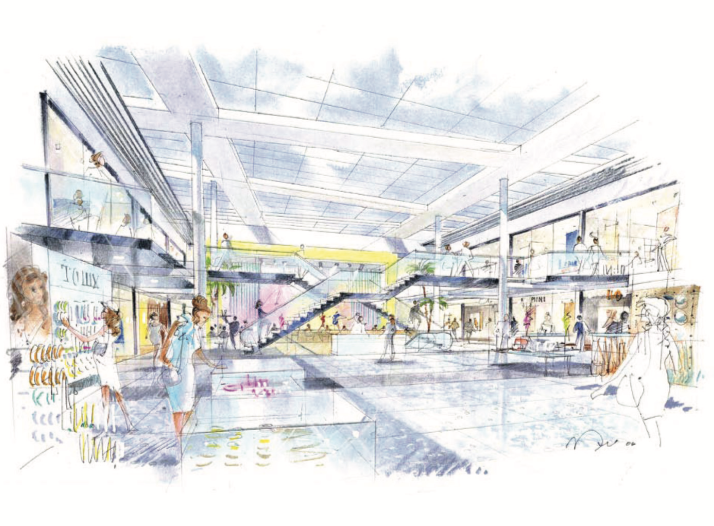
Wrong on both counts. It’s talking about a mall. Not just any mall, mind you, but “a mall of epic proportions that is named The Dubai Mall,” and an edifice which when completed will be the largest shopping center on earth. That is, if its rival — the Mall of Arabia — doesn’t get there first.

Now, shopping malls are already big in Dubai. They’re big metaphorically, in that they make piles of cash and attract millions of visitors every year, and they’re big literally. Acres of space in this ever-expanding city are devoted to helping people consume or purchase products in air-conditioned indoor areas, and plenty more acres are being prepared for this purpose as we speak.

It’s not surprising that this should be the case, nor that malls should be so popular and successful here. They’re a haven from the heat and the construction work, there’s no natural outdoor city center for shoppers to congregate in, and there are lots of consumers with hefty disposable incomes who have nothing better to do with their spare time than buy things.

But I’m afraid that doesn’t stop most of the city’s malls from somehow being extraordinarily depressing places. Please don’t get me wrong: I could think of far worse places to spend my time (prison, for instance), and once you’ve battled your way around the labyrinthine car parks, the initial sensation upon entering a mall is not unpleasant. The arctic wave of air-conditioning is a blessed relief after the outdoor heat, everything is clean and shiny, and there are lots of potentially enticing products.

Then, after about half an hour or so, something strange begins to happen. I start to tense up and become agitated. Other people bump in to me. They stand on both sides of an otherwise empty escalator that I would like to walk up. The incessant muzak being piped from every shop drills into my brain. Overdressed salespeople lurking near promotional stalls try to accost me about buying an off-plan property. The smell of nachos or fries, so appealing at first, now makes me feel sick.

Soon my nervousness turns to rage. Everyone is now my enemy and I must immediately leave. I keep my head down and stride as quickly as I can towards the exit, desperate to escape this fridge and re-enter real life, even if it is smelly and hot and dusty and doesn’t have a Dunkin’ Donuts.

Yet what amazes me is that people seem to spend hours in Dubai’s malls without incurring any of the brutal psychological side-effects that seem to afflict me. Even more amazing is that many of these people are visitors from the UK or Europe, where they can purchase exactly the same things as they can in Dubai, at almost exactly the same prices. But fly them halfway around the world on a $900 flight and they appear to temporarily lose their senses.

Lots of British tourists, for instance, are quite clearly dumfounded by the fact that Dubai has many of the same shops that you would find on the UK high-street. “Oh, great”, they say, “there’s a Marks and Spencer’s. We’ll just pop in and have a look around — I wonder if they have the same things as they do in England? And look — there’s a Boots too! Wow, this place is fantastic — let’s spend our holiday time buying the same items that we could buy at home!”

Maybe I’m being a bit cruel. I guess there’s a kind of “wow” factor to Dubai’s malls which draws in people, just in the same way that the Burj Dubai or the Burj al-Arab are tourist sights in themselves. Plus, of course, the retail developers have been clever in coupling the retail side of things with standalone attractions — like the ski slope at the Mall of the Emirates.

No one knows just how big the mall developers’ profits are, as they don’t open their books, but it’s safe to assume that they’re not losing money. And that purely commercial reason, as well as the various social ones, is why malls will always be central to life in Dubai as the city grows out into the desert and along the coast.

The trick now will be to dream up fresh unique selling points to attract all these new and hungry consumers. Dubai Mall, for instance, is set to feature an Olympic ice-skating rink and the world’s largest gold souk. Slightly more dubiously, the Mall of Arabia is partly basing its future allure on housing the world’s largest Starbucks. Call me a bore, but I can’t think of anything less likely to cure my allergic reaction to malls.

ALEX WARREN is a Dubai-based freelance consultant and writer

October 1, 2007 0 comments
0 FacebookTwitterPinterestEmail
Comment

Phishing for your money

by Paul Cochrane October 1, 2007
written by Paul Cochrane

When I was in London recently I tried withdrawing some cash from my British bank, but was denied access. On calling the bank I was asked if I had made several transactions — when “no, no, no and no” were my replies I was informed I’d been defrauded. Thousands of dollars had been taken from my account.

I’d get the money back, but would first have to sign a declaration form, get a new credit card and wait 10 days to be reimbursed. Whew.

Relating the story to friends it was surprising to find that all of them had either had a relative defrauded or experienced it themselves; in some cases more than once.

How it happens is by “phishing,” where hackers send in what are called Trojans — software downloaded without knowledge of the user — that take screen shots of your computer, allowing the capture of passwords and credit card details.

In Britain the problem has become so acute that the Association for Payment Clearing Services, a banking industry body, said there had been an 8,000% growth in online fraud between 2004 and 2006, estimated at losses of $90 million last year alone. Online business is big business in Britain, with 26.5 million people undertaking an estimated 372 million online transactions a year.

As technology becomes more widespread phishing could increasingly happen in the Middle East. Indeed I had been phished in Beirut, albeit by some crooks working through Italy, the destination for my looted cash. Whether Arab banks are facing this issue yet is not making any headlines, but de-frauding will no doubt come to the region as banks and goods outlets increasingly adopt the online service and hackers size up another global region to plunder.

The other financial shocker of my trip to the overcast British Isles was the extent private debt was affecting the lives of most inhabitants. The majority of people I encountered had debt, with my former student friends (American friends are another story) owing thousands of pounds, years after they had graduated from a university system partially funded by the state. Such debt is hindering that all-important purchase, a property — but that of course requires going even further into the red.

For young people starting out in life such debt looms over them like a Damocles sword, with the average 18 to 24-year-old owing $5,720 in unsecured borrowing, and some 108,000 in the same age bracket having credit card debts of more than $10,000.

The willingness of Brits to go into debt is only rivaled by the Americans, with the average Briton owing twice as much in unsecured borrowing — overdrafts, personal loans, credit card debt — than the typical European.

According to consultancy firm Grant Thornton, Britain owes a collective $2,690 billion in mortgage and unsecured debt. For the fist time that figure is higher than Britain’s expected gross domestic product (GDP), forecast at $2,660 billion for 2007.

This debt has trebled in the decade that Labour has been in 10 Downing Street, and is largely based on a runaway housing market, which accounts for $2.261 trillion of debt while personal loans and credit card debt stands at $428 billion.

But such disproportionate debt in relation to GDP poses a problem. Britain is essentially consuming more than it produces, in goods and services. Adam Smith, that doyen of capitalist thinking now commemorated on the back of the new £20 note, would have been horrified. Smith disapproved of speculative fever (which is now getting hedge funds and banks in deep water) and an economic emphasis on buying and selling (Britain’s “buy now, pay later” culture) rather than producing actual assets. The true healthiness of an economy that is based on such intangibles is highly questionable.

Arab financial institutions should watch, very closely, how Britain and America deal with the current financial crisis, particularly as this part of the world is striving to emulate the Anglo-American economic model.

Such out of control debt, and the ease with which banks dish out cash, even to the unemployed, has caused serious reverberations around the world as well as negatively impacting on the lives of millions of home-owning Americans and now, Brits.

The run on Britain’s fifth-biggest mortgage lender, Northern Rock, last month — with $2 billion withdrawn in a day over fears the company could go bust — shows how dicey the interlinked financial system is. Northern Rock was forced to turn to the Bank of England to bail it out as the firm’s ability to withdraw from financial institutions had been compromised by the $200 billion valueless US mortgage market, where risk has been sold on to such an extent internationally that any its anyone’s guess which bank will be hit next.

The Arab world would do well to hedge its bets on a more realistic debt market that is in line with GDP as well as trying to avoid the pitfalls that have beset online transactions.

PAUL COCHRANE is a Beirut-based freelance writer. 

October 1, 2007 0 comments
0 FacebookTwitterPinterestEmail
Comment

One down for the ‘Axis of Evil’

by Lee Smith October 1, 2007
written by Lee Smith

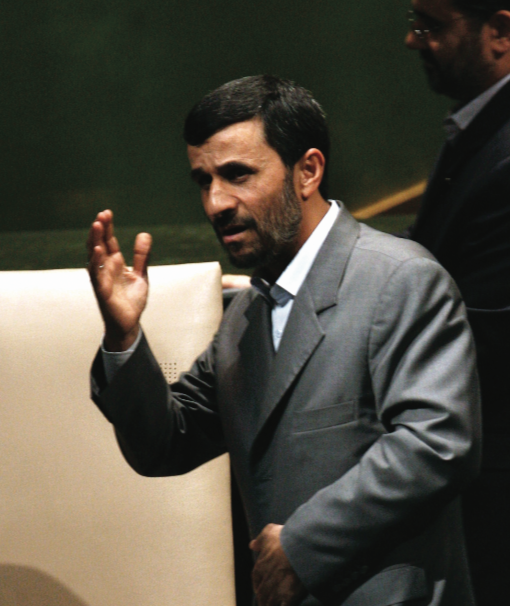
If you are keeping score at home, September was a bad month for the “Axis of Evil,” especially for its junior member in Damascus. In the middle of the month, Iranian president Mahmoud Ahmadinejad came to New York to address the UN General Assembly and was invited to Columbia University, one of the US’s most important institutions of higher learning.

Once led by Five-Star General Dwight D. Eisenhower after he had helped the Allies win WWII as supreme commander of the Allied Expeditionary Force and before he became the thirty-fourth president of the United States, Columbia of late has acquired something of a reputation as a hotbed of campus anti-Americanism. After all, this is the tenured perch from where Edward Said had famously explained how Western imperialism was responsible for everything that had gone wrong with the Middle East. Current Columbia University president, Lee Bollinger, turned the Orientalism doctrine on its head by calling the Islamic Republic of Iran to account for its policies, foreign and domestic.

If many observers thought it rude to treat a guest with so little hospitality, the Islamic Republic of Iran has extended few Oriental courtesies this last quarter century to foreign academics, foreign journalists and, of course, foreign embassy staff. However, Ahmadinejad had no reason to fear that Ivy league undergraduates were capable of the same revolutionary violence his former student colleagues had shown to the US diplomats and embassy staffers they took hostage for 444 days back in ‘79, but the Iranian leader was certainly flummoxed when the students booed and jeered after he claimed there was no homosexuality in Iran. No doubt this will come as news to aficionados of Persian and Abbasid poetry and prose.

But the big news was the hazily, albeit avidly, reported “Operation Orchard,” the Israeli raid on Syria September 6. It is quite possible that no one will know precisely what happened for decades, especially if it was, as many suspect, an attack on a nuclear facility housing North Korean wares. Nuclear issues are notoriously sensitive subjects for all involved. And yet if the events at Deir el-Zor remain a mystery, certain other things have become clear.

First of all, among members of the international community only North Korea made any noise about the raid. The Israeli incursion, said one North Korean foreign ministry official, was “little short of wantonly violating the sovereignty of Syria and seriously harassing the regional peace and security.” This protest, amidst the silence of the Arab states and all of Europe, has buttressed the claims of some analysts that the Syrians were indeed housing North Korean goods. In other words, Bush’s speech describing the “Axis of Evil” in terms that have been routinely derided by more “sober” observers of the international scene is much more than just the cartoonish imagination of a White House speechwriter.

For Tehran, the Deir el-Zor raid means that the Americans and Israelis have a very sound solution to the IRI’s nuclear program once it becomes clear that the diplomatic option is no longer workable. France’s new Foreign Minister Bernard Kouchner made waves when he said the world must prepare for the worst with Iran, which, in the estimation of the new Paris government, means war.

Washington clearly has no taste for war with Iran as it is still trying to make Iraq workable, and yet Deir el-Zor should give Tehran pause. Insofar as the ostensible Iranian response to an attack on their nuclear program is not massive troop movements but terror operations against US interests and allies, that no longer seems to be a daunting concern for the Americans.

Moreover, if most the foreign policy advisers for the 2008 Presidential hopefuls take it for granted that that Bush will pass the Iran file on to the next administration, this is a useful reminder that finally it will depend on the predisposition of the commander-in-chief. Bush does not lead according to poll numbers and it is not obvious why the man who staked his legacy on bringing democracy to the Middle East would leave intact a nuclear program that would change the balance of the region to the benefit of an ideological and millenarian Islamist regime.

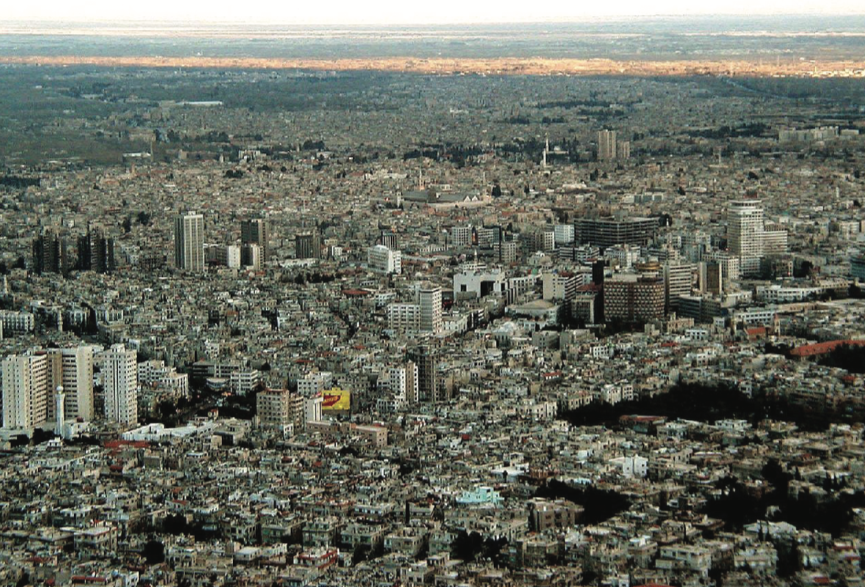
As for Damascus, while regime functionaries and flacks have been crowing about how badly the US needs Syria, it looks like it is going to be a very cold winter in the beating heart of Arabism. Since Syria shows little inclination in changing its own status quo, it perhaps does not understand that, once again, the earth has shifted under its clay feet.

LEE SMITH is a Hudson Institute visiting fellow and reporter on Middle East affairs.

October 1, 2007 0 comments
0 FacebookTwitterPinterestEmail
Comment

Who dares, wins

by Thomas Schellen October 1, 2007
written by Thomas Schellen

Branding has traits of parenting. Although it takes energy, vision, and a gutsy approach to business life — and as such is no small feat — the effort of conceiving of a new brand pales when compared with the unending task of nurturing it and seeing it through years and years of maturation.

On this note, one could not even begin to speculate about future pathways of Zain, the master brand launched on September 8 by multiple GSM operator, MTC.

The birthday bash of Zain gathered between 4,000 and 5,000 guests in four capitals: Manama, Kuwait City, Amman, and Khartoum. This was because Zain erupted into public being simultaneously in four countries, Bahrain, Kuwait, Jordan, and Sudan.

In the middle of the celebration’s vortex of culture, fun, food, and communication, the sense of wonderment at three things was never far away for those of us pausing to think of: the rapidity of this company’s rise; the scale of the brand birth achievement; and the enormity of the future of the community that this brand is setting out to create.

There are more than enough numbers in circulation that document how big MTC has grown in the less than five years since it adopted the mission of turning itself, a Kuwaiti operator of a single mobile network, into a telecommunications player of international, and eventually global, proportions.

But without citing any performance figures and targets that had to be modified because they had been exceeded well ahead of all plans, the fact that Zain was introduced in two continents by a multi-cultural team of quality people was enough to demonstrate the operator’s stature transcending national idiosyncrasies and any complexes of business inferiority.

The brand launch achievement was a thing to behold, a testimony to investments of a magnitude that MTC did not even want to talk about and to how much a total will to something new can create within 48 hours! When I arrived at Bahrain International Airport on the evening before the launch party, Zain was still a phantom. When I left two mornings later, executives of the company said confidently that the network’s identity had been moved to Zain by more than 90% — including web sites and most store signs, not to mention the brand’s massive first wave of advertising.

The mega-thing, however, will be the future. This only begins with the fact that Zain aspires to be perceived as a global company and that it wants to move another 15 plus existing networks in its portfolio to the new brand in a short time span — including some networks that have a strongly developed identity and others that have already undergone a name change. Shaping such a community in very diverse markets and demographics will, even in the definition interactive realm of telecommunications, engender challenges that one can expect but never solve from even the best a priori thinking.

To be sure, the proud progenitors of Zain have spared no effort to give the brand a head start in life. The gestation period of designing name, logo, values, and mission of Zain exceeded 18 months. The good ring of the name in many languages was examined and the brand has been imbued with a whole orchestra of positive connotations, from the heart, belonging, and radiance that MTC affixed to the word to the aural allusion of the zeitgeist-colored logo.

From perspective of regional business culture, the beauty of Zain for the beholder goes further still than MTC’s brand messages. This, because the dominant business culture in the region is only starting to discover the art of existing as a brand. Some countries and state-backed entities in the Gulf region have embarked on communicating their identities to wide audiences with branding tools. The emirates of Qatar and Dubai, as well as Emaar Properties, Emirates Airlines, Etihad Airways and Aldar Properties come to mind.

However, none of the companies among those is independent from their respective state roots, which stands as barrier against reaching corporate self-determination in all decisions. Plus, if one produces claims to be global deliverer of quality lifestyle or treat every passenger as honored guest, severe imperfections in corporate governance and customer service easily can turn into haunting deficiencies. Zain, like all brands, will also face this challenge that the brand will be the mirror of what the company does — and not of what it says.

Branding is a lifetime investment. Branding also involves listening, responding and letting go, as every successful brand turns into a community that has a very strong own mind. There is no telling for which characteristics Zain will be known some years from today, as a brand and as a community. In setting up its brand as core of a community and in daring to develop it from its first atom with regional and joint cultural essence, Zain is pioneering an Arab and an African brand. It brings affirmation of originality and creativity that thrives in people in the Middle East as much as in any creative center of the world. The responsibility of Zain’s corporate parents will be not to spoil the brand.

October 1, 2007 0 comments
0 FacebookTwitterPinterestEmail
By Invitation

At a Crossroads: The Middle East transport and logistics industry

by Fadi Majdalani & Ulrich Koegler September 21, 2007
written by Fadi Majdalani & Ulrich Koegler

The Middle East has historically been a trade route for merchants, prized for its connections to both Europe and Asia. This history has laid the groundwork for a vast transportation and logistics network that is slowly emerging in the region and could be a significant source of economic growth for many years to come. The Middle East’s geographic location and excellent accessibility by air, land, and sea put it in a prime position to serve as a trade hub.

The trade volume between Europe and Asia is likely to continue to grow, as Asia has become a key production and manufacturing region for the Western world. Traditionally, air freight carriers used to stopover in the Middle East to refuel, halfway along this trade lane, and will continue to do so to maximize freight loads. However, volume growth on the Europe-Asia trade lane has increased the need for shippers to use larger vessels and apply more advanced logistics concepts. With product cycles speeding up, demand becoming less predictable, and companies managing their stock more closely, sea freight increases the risk of carrying outdated items. As air freight remains too expensive for most goods, the option of a conversion from cost-effective sea to air freight while en route becomes more significant. The Middle East is a natural location for sea-to-air conversion.

Beyond its potential as a global hub along the Europe–Asia trade lane, the Middle East can establish regional transport and logistics hubs serving northern and central Africa, Pakistan, and the Caucasus. The region has equal proximity to all these markets and very good connectivity by road and short sea transport. These markets currently lack access to competing regional centers, such as Europe and South Africa, and cannot yet afford the required infrastructure investments. Furthermore, as companies optimize their supply chains, it makes sense for them to establish a single regional distribution center in the Middle East for all of these markets. Increasing production capacity also underscores the need for a strong regional logistics sector.

Public Policy Steps for a Strong Industry

As Middle Eastern governments embark on the development of the transport and logistics sector to drive economic growth, it should be clear that the opportunities are not equally available to all countries. Hence, governments should consider four key building blocks for developing a successful transport and logistics sector strategy.

1. Choose a strategic play for the sector with appropriate infrastructure. The correct choice of one of the three strategic plays described hereafter needs to be based on a thorough and honest assessment of the qualifying factors. The global multimodal transport and logistics hub strategic play is the most demanding option, requiring a preferred geographic location and huge investments to create infrastructure incorporating a world-class airport and port zone. It also demands an economic environment that attracts foreign direct investment; the availability of a large free zone around the port-airport infrastructure; highly competitive handling charges; and living standards that accomodate a large expatriate community. However, there are very few truly global hubs: We predict that there is an opportunity to establish two global hubs in the region, and one will likely be Dubai.

The regional logistics and distribution hub strategic play requires similar elements but is less demanding in terms of overall size and multi modality. However, services and processes must adhere to the same high standards; the infrastructure must simultaneously provide good connections to global hubs and exporting countries, as well as excellent links to neighboring regional markets, via a strong road and short sea infrastructure. A few traditional gateways to the Middle East such as the Nile Delta, the Red Sea ports, Kuwait’s coastal area, and the northern shores of the Gulf could develop into regional hubs.

Finally, countries that cannot meet the needs of a global or regional hub play should focus on the development of domestic transport and logistics services.

2. Adjust policies and regulations to promote sector development. These should promote foreign direct investment, provide a liberal economic environment, and allow for full foreign ownership of the respective local entities.

3. Optimize government services to meet the demand of the logistics sector. The key government services required by the logistics sector fall into three areas: business and equipment licensing, regulatory oversight and competitive regulation, and customs services. Optimization of government services in the first two areas should be part of a broader economic development program to promote and foster entrepreneurial activity. Transactional customs services should be automated as much as possible and seamlessly integrated into the logistics service providers’ order management systems.

4. Promote the development of national transport and logistics champions. In most countries in the region, the industry structure of transport carriers and logistics service providers is still highly fragmented and often not developed.

The development of a strong domestic transport and logistics sector is a strategic imperative for economic development in the Middle East. The countries that succeed at establishing sustainable networks can expect to see increased economic activity, improved industry competitiveness, and growth in job opportunities. Those that do not, however, may find themselves falling by the wayside.

September 21, 2007 0 comments
0 FacebookTwitterPinterestEmail
Comment

Musings from Arab America

by Norbert Schiller September 21, 2007
written by Norbert Schiller

During our holidays this summer we were fortunate to be able to stay with my wife’s extended Lebanese family on both the east and west coasts of the United States. It had been almost six years since we last visited, and I must say that staying in an Arab-American household lessened the shock of fitting into the American way of life; a kind of decompression chamber if you will. Behind closed doors nothing really changed; the family was as tight-knit as ever and if it wasn’t for the green lawn outside the window and the lack of blowing horns and shouting in the streets we could have all been sitting in Beirut.

Both Lebanese-American families we stayed with were forced to leave during war. The husband of my wife’s cousin, who is originally Palestinian, remembers when in 1948, at the age of eight, he was forced to flee his village in northern Palestine after the Arab armies advised the inhabitants to leave because “the Jews are coming to take your land.” He made his way to southern Lebanon by holding onto the tail of his uncle’s donkey. On the east coast, my wife’s brother and his wife fled Lebanon for the United States in the mid-1980s, during one of the darkest chapters of the civil war.

Obviously, for my wife and her family, the first few days were consumed by relaying and absorbing Lebanese and Diaspora news: the physical changes taking place in Lebanon (the pulling down of the grand old building around the corner that once belonged to so-and-so) and how much of the country has been restored a year after the war with Israel.

However, unlike previous visits, the solid opinions that my wife’s family once held true were now blurred and the issues watered down.

When we first traveled to the States in the early days of our marriage 15 years ago, Lebanon was always on the forefront of every conversation. One misplaced word or train of thought could trigger an all out major debate on Lebanese politics that would result in phone calls to friends and family across America and even a call to Lebanon if it meant proving a point. Now that has all changed.

It’s not hard to explain this waning interest. American press coverage of the Middle East is something you have to actively seek out. Even with the 500 plus stations available to most cable subscribers, if you don’t have your own satellite hook up, you are not privy to all the international news stations like CNN International, BBC World, Al Jazeera, and LBC International. The newspapers inundate readers with local news, followed by a bit of national news and then a blurb here and there from the rest of the world. If there is something from the Middle East, it will probably be about Iraq and even then there is a good chance it will have a local angle. 

In the past, I remember always seeing a second, more international, newspaper lying around — the New York Times or Los Angeles Times — but now, with time, I notice that my wife’s family are slowly becoming more interested in the news that affected them on a daily basis. Even when we were visiting, they tended to veer away from the Middle East if some local issues, like the rise in crime, a garbage collection strike, or the bridge collapse in Minneapolis there was more anguish — “Haraam, they were just going home from work” — than for any car bomb outrage in Iraq.

One family member told my wife that she felt that her generation had “missed all the boats.” They had missed Lebanon’s golden era, caught the war and then had to endure all the insecurities of living as immigrants in the United States. And then came 9/11 with all that feeling of not belonging and being seen as outsiders. Her only consolation is that her children will hopefully feel more grounded and not live forever in search of a homeland.

September 21, 2007 0 comments
0 FacebookTwitterPinterestEmail
Money Matters

by Executive Contributor September 20, 2007
written by Executive Contributor

Ithmaar Bank posts 130% in H1-07 net profits

Ithmaar Bank, a Bahrain based global investment institution, announced a 130% increase in its H1-07 net profits to $65.09 million up from $28.7 million for the same period last year. As a result of their expansion, Ithmaar experienced a tripling of operating profits from $23.7 million in the first half of 2006 to $71.1 million in the first half of 2007. Income from investment in financing amounted to $97.8 million, while $25.4 million was generated in fees and commissions and $23.1 million was generated from sale of investment securities. Total assets, including funds under management stood at $5.1 billion at the end of last June, compared to $4.4 billion at the end of last year. Ithmaar is growing at a rapid pace and is one of the most dynamic financial institutions in the region covering a wide range of Islamic financial services and investments. Ithamar’s wholly-owned Ithmaar Development Company (IDC) has made considerable progress in several major projects with the Kingdom of Bahrain and internationally.

Emaar ranked in top 10 of S&P Index

Standard and Poor’s (S&P’s) ranked Emaar Properties PJSC, the UAE-based real estate developer, in the Top 10 of IFCG Extended Frontier 150 Index for frontier equity markets. Attaining the highest weight of 5.59% in the index reflects Emaar’s strong regional presence and growing international recognition. The Extended Frontier 150 Index plans to accommodate the needs of increasingly sophisticated investors willing to expand in developed and emerging markets. This year, S&P Rating Services and Moody’s Investor Services assigned Emaar A- and A3 ratings respectively, with steady outlook reflecting the company’s strong financial profile.

IMF forecasts strong growth for Syria in 2007

In its latest report, the International Monetary Fund (IMF) highlighted the strong economic performance of the Syrian economy in 2006 and has forecasted a positive outlook in 2007. According to the report the economy’s supply responsiveness, the tighter credit policy and the fiscal discipline have contributed in tightening inflationary pressures caused by the large demand shocks from Iraqi investors. The report assessed that Syria needs to maintain a strong external stability over the medium run, which can be achieved through strong fiscal adjustments, accelerated structural reforms and exchange rate flexibility. The IMF regarded the Syrian private banking sector promising despite the possible drawbacks it might face in developing reforms. In addition to that, vital action is needed for the state banks to attract the accumulation of non-performing loans and enhance competition. Finally, Syria’s economy is in need of progress in developing market-based instruments for monetary control and should reduce the excessive risk taking as well as dollarization.

September 20, 2007 0 comments
0 FacebookTwitterPinterestEmail
North Africa

Tunisia  Emirati Dreaming in Tunis

by Executive Editors September 20, 2007
written by Executive Editors

Bilateral relations between the UAE and Tunisia are set to expand with leaders from both countries being keen on promoting joint-investment projects to enhance social and economic relations.

On his recent visit, HH Sheikh Mohammed bin Rashid al-Maktoum, vice president and prime minister of the UAE, expressed that the enhancement of bilateral relations is a starting point “towards wider avenues of mutual economic, technological and tourism cooperation.” He also added that such cooperation is a significant step in “embodying the deep fraternal relations and the common history of our two countries and peoples and building new bridges between the eastern and western Arab countries.”

The most recent joint-investment agreement between the two countries was part of a ceremony held during the visit of Sheikh Mohammed to Tunisia. Together with Tunisian President Zine El Abidine Ben Ali, the two leaders laid the foundation stone of a $14 billion real estate and investment development set to provide housing for half a million people. The mega real estate development project on the southern lake of the Tunisian capital is a joint venture between Sama Dubai, the international investment arm of Dubai Holding and the Tunisian government. The development will cover some 850 hectares and offer all the services of a satellite city, including retail and entertainment centers along with apartments, luxury hotels, a wide range of recreational and sports facilities, and up market housing.

Called the Century City and Mediterranean Gate, the development is intended to serve as a business hub, with office space for more than 2,500 international firms, with an emphasis on those in the financial sector. Businesses located there will benefit from state of the art communications infrastructure and impressive architecture. The centerpiece of the project will be two massive towers.

Additionally, the new city will play a major role in the country’s tourism industry, boasting 14 high class hotels and resorts, leisure and sporting facilities and a marina as part of the design.

Century City will be the single biggest investment project in Tunisia’s history, and will make Dubai the largest foreign investor in the country. The $14 billion price tag eclipses TECOM Investments and Dubai Investment Group’s acquisition of a 35% stake in Tunisie-Telecom in 2006 — valued at $2.25 billion.

According to Mohammad al-Gergawi, Dubai Holding’s chief executive officer, Sama Dubai expects to raise investment in Tunisia from $3 billion to $18 billion in the near future.

The potential for Century City to attract further foreign investment through companies relocating to the vast business district, drawn by the opportunities presented by a new city of up to half a million prospective customers, is undoubtedly welcomed by the Tunisian authorities.

State projections predict the work will add 0.6% to the country’s growth rate for a period of up to 15 years, and provide jobs for 130,000 people during the construction phase, pleasing statistics considering that unemployment is running at more than 14%, according to official figures.

Agreements signed between the state and Sama Dubai specify that most workers on the project will be Tunisians and the company will provide them with specialized training.

Al-Gergawi said actual work on the project will begin in the next few months. “The scheme is very important so it will be done in stages,” he commented. “It requires 10 years to be finished.” Al-Gergawi stated that Tunisia had been chosen as the site for the development by Sama Dubai because the country has potential to become a promising regional economic center, thanks to its position as a gateway to many other destinations. The growing services sector and the favorable investment regime were also strong attractions, he told a press conference in early August.

September 20, 2007 0 comments
0 FacebookTwitterPinterestEmail
North Africa

Morocco  Linking the continents

by Executive Editors September 20, 2007
written by Executive Editors

The construction of an undersea tunnel linking Morocco and Spain has been on both countries’ agenda for over 25 years now. Today, the idea is closer to materializing than it has ever been before.

After rounds of geological tests and feasibility studies run by specialist independent geotechnical consultants from the Swiss engineering company Giovanni Lombardi, the project looks to get a go ahead by the end of 2007. The cost of this project has been estimated to exceed $13 billion and initial studies by engineers forecast a project length of up to 25 years.

It is predicted that the tunnel could carry 9 million passengers and 8 million tons of freight annually. There is a potential for boosting the economies of both nations as well as mutually improving tourism and trade opportunities. Currently, Moroccan exports to EU countries account for 73.8% of total export revenues and generate $12.76 billion (or 22% of current GDP) annually. In return, Morocco receives 65.1% of its total imports from the EU, the bulk of which are transport equipment and machinery, which contribute to Morocco’s automotive industries. Additionally, agricultural exporters would be set to gain a strong advantage from this transport development, being able to send some of Morocco’s more delicate exports such as flowers and tomatoes by train instead of ship.

The growth in the number of European tourists to Morocco has given further impetus to ambitions to link Spain and Morocco across the Strait of Gibraltar.

Morocco’s tourist industry witnessed a successful first half of the year with EU figures showing over 2.26 million visitors from January to June 2007, representing a 7% increase in year-on-year terms. As such, the country is keen further to improve the accessibility of its tourist sites by moving ahead with the Gibraltar tunnel project.

European tourists

According to the Moroccan Ministry of Tourism, European arrivals to Morocco account for 83% of 2007’s arrivals to date, with French visitors leading the pack with 873,000 visitors in the first six months of 2007, an increase of 4% on last year. Visitors from Spain and Britain accounted for 479,000 and 175,000 visitors respectively, with British tourist arrivals recording a 43% increase as a growing number of no-frills airlines such as easyJet and Ryanair are making the country more accessible with flights to Marrakech, Casablanca and Fez. Germany, Belgium and Italy are also important markets, each accounting for approximately 100,000 visitors. The three most popular tourist destinations have recorded growth in the number of visitors in the last six months; Marrakech has seen a rise of 12%, Casablanca recorded a 9% rise and the coastal resort of Agadir saw a 3% more visitors than in the same period last year.

The construction of the proposed Gibraltar tunnel is a joint venture between government agencies Société Nationale d’Études du Détroit (SNED) in Morocco and Sociedad Española de Estudios para la Comunicación fija a Traves del Estrecho de Gibraltar (SECEG) in Spain. The tunnel would consist of a 39 km passenger, car and freight rail line running across the strait connecting the cities of Tarifa and Tangier. Its deepest point will be 300 meters.

The next step will be to consider a number of logistical challenges. Even though the distance across the Strait of Gibraltar is 14.5 km, the challenges posed to engineers by a Morocco-Spain tunnel are far greater than challenges facing engineers during the “Chunnel” construction between England and France, which lie 32 km apart at the Strait of Dover. The water is deeper; nearly 1000 meters at the shortest route across the strait, compared with just 61 meters in the English Channel. Another challenge is the texture of the earth. The first test diggings over 10 years ago revealed that the soft earth near Tarifa is not suitable for building a structure of this type. Recent tests have re-confirmed this and so Cape Malabatta has been selected as the entrance point to Morocco, after which the tunnel will continue to Tarifa. Additional concerns include securing the tunnel against human trafficking between Africa and Europe and whether the there will be a sustainable flow of goods and people in both directions given the economic disparities between the two continents.

Yet leaders of both countries are keen on proceeding. Spanish Prime Minister Jose Luis Rodriguez Zapatero has said that he is fully committed to the project. According to the minister the tunnel would “greatly speed growth, development and prosperity” on both sides of the Mediterranean. The goal behind the construction is to create “an integrated Euro-Mediterranean economic area” and possibly lead to developing the transport network further to include a link between Marrakech and Europe.

September 20, 2007 0 comments
0 FacebookTwitterPinterestEmail
North Africa

Algeria  Taking out Trabendo

by Executive Editors September 18, 2007
written by Executive Editors

The part-privatization of Algeria’s ports to major operator Dubai Ports World (DPW) has been hit by a series of rolling strikes by trade unions. The potential unrest stems from talks the government is holding with DPW over the company possibly taking a 50% stake in the container terminals at the ports of Algiers and of Djen Djen, in the eastern province of Jijel.

Algiers port has reached saturation point and will need considerable investment to extend it. However, the stumbling block at the moment is the plan to include the potentially highly lucrative Djen Djen port, and disagreement over the issue of bringing in a foreign owner. Some also point to the possible disquiet of those involved in the “trabendo” economy, or contraband imports, as looking to scotch the deal to preserve their lucrative, if illegal, niche.

Djen Djen’s port is something of an oddity, having been built to serve a steel plant that was never constructed. However, it has developed as a major point for container and dry cargo transport (notably grain) abroad. The purpose-built port also benefits from very good land transportation links, as well as deep water piers accessible to ships of up to 120,000 tons.

Local media have reported that DPW made a $70 million bid for the operation of the Djen Djen port, coupled with a $120-150 million investment program to upgrade it. In June, the transport ministry announced that negotiations were making good progress.

“Dubai Ports World took into account the principal requests of the Algerian side at the time of the first round of negotiations, which was held in Algiers on June 12,” the statement said. “We will be able to advance.” The deal seemed to be likely to be finalized by year’s end, officials have been reported as saying.

However, the umbrella union Coordination Nationale des Syndicats des Ports d’Algerie (CNSPA) has objected strongly to the plans to change the port’s ownership and their employer and threatened to block the deal.

One source of discontent is the government reneging on a pledge made by the minister for investment promotion, Abdelhamid Temmar, to tender the sale internationally rather than moving immediately to negotiate directly with DPW.

CNSPA has a membership of 14,000 across all of Algeria’s 10 most important ports, giving it a great deal of leverage in the situation, as has been show in the past. Strikes by CNSPA-affiliated unions in October 2005 against government privatization and labor restructuring plans left 100 ships abandoned by workers. The Port of Oran alone, where 15 ships were left stranded, hemorrhaged $130,000 a day during the industrial action. In May of this year, another anti-privatization strike shut down almost all Algeria’s ports, causing losses of up to $2.1 million in a single day.

Guermache Abbes Maamar, the secretary-general of the Algeirs port trade union, has said that opposition to the proposed deal with DPW was in the national interest and not only an issue of workers’ rights.

Maamar questioned the wisdom of “giving away” container activity, which generates 70% of the port’s receipts, in return for the proposed investments DPW has put on the table. The unions agree that Djen Djen is in need of an overhaul, but Maamar proposed that the government work with its port management authority Entreprise Portuaire d’Alger to develop the nation’s ports, rather than using foreign firms.

“We can do everything between Algerians: to buy gantries and all the equipment to improve the output. We cannot release sovereignty on the ports,” he added.

To break the current deadlock, it has been suggested that the unions should be involved in future privatization negotiations to ease the tension and distrust. However, it seems that the CNSPA is unlikely fully to embrace partial privatization to DPW. Meanwhile, private sector companies involved in trabendo activity at the ports are also against the deal. Many are believed to be involved in illegal practices which they fear the Emirati company might eliminate if the deal goes through.

September 18, 2007 0 comments
0 FacebookTwitterPinterestEmail
  • 1
  • …
  • 560
  • 561
  • 562
  • 563
  • 564
  • …
  • 685

Latest Cover

About us

Since its first edition emerged on the newsstands in 1999, Executive Magazine has been dedicated to providing its readers with the most up-to-date local and regional business news. Executive is a monthly business magazine that offers readers in-depth analyses on the Lebanese world of commerce, covering all the major sectors – from banking, finance, and insurance to technology, tourism, hospitality, media, and retail.

  • Donate
  • Our Purpose
  • Contact Us

Sign up for our newsletter

[contact-form-7 id=”27812″ title=”FooterSubscription”]

  • Facebook
  • Twitter
  • Instagram
  • Linkedin
  • Youtube
Executive Magazine
  • ISSUES
    • Current Issue
    • Past issues
  • BUSINESS
  • ECONOMICS & POLICY
  • OPINION
  • SPECIAL REPORTS
  • EXECUTIVE TALKS
  • MOVEMENTS
    • Change the image
    • Cannes lions
    • Transparency & accountability
    • ECONOMIC ROADMAP
    • Say No to Corruption
    • The Lebanon media development initiative
    • LPSN Policy Asks
    • Advocating the preservation of deposits
  • JOIN US
    • Join our movement
    • Attend our events
    • Receive updates
    • Connect with us
  • DONATE