• Donate
  • Our Purpose
  • Contact Us
Executive Magazine
  • ISSUES
    • Current Issue
    • Past issues
  • BUSINESS
  • ECONOMICS & POLICY
  • OPINION
  • SPECIAL REPORTS
  • EXECUTIVE TALKS
  • MOVEMENTS
    • Change the image
    • Cannes lions
    • Transparency & accountability
    • ECONOMIC ROADMAP
    • Say No to Corruption
    • The Lebanon media development initiative
    • LPSN Policy Asks
    • Advocating the preservation of deposits
  • JOIN US
    • Join our movement
    • Attend our events
    • Receive updates
    • Connect with us
  • DONATE
Special Report

Women in business Breaking glass

by Executive Contributor July 27, 2007
written by Executive Contributor

Over the past decades, Arab women have seen immense progress in terms of education and participation in politics, and have made tremendous forays into the business world. The average literacy rate for women in the MENA region rose from 16.6% in 1970 to 52.5% in 2000. Since 1980, girls’ tertiary (university) education has doubled so that now 14% of young women go to university (compared to 20% of young men). On the other hand, female participation in the MENA labor force stands at a measly 32%, the lowest among all developed countries, on top of which the vast majority of women are working in the public sector.

The World Bank estimates that the MENA private sector is still significantly prejudiced against women, resulting in the bizarre situation that the best-educated women have the biggest problems getting hired. There is still a perception that women take away men’s jobs. Statistics, however, actually show a negative correlation between unemployment and women’s participation in labor. The World Bank calculated that had the MENA region used its female labor potential, the average per capita income could have risen by 2.6% during the 1990s, instead of the actual 1.9%.

With this month seeing the publication of a World Bank report on women entrepreneurs in the MENA region, Executive interviewed six Arab women — all highly educated, ambitious, driven, and persistent and all successful in their careers, some having salaried jobs in companies and others entrepreneurs — on the issue of women in business.

When in summer 1997 Nada Safa, having just finished her college degree in Economics at the Université St. Joseph in Beirut, inquired about a job opportunity at a leading Lebanese finance house, she was told “This is a man’s world. You are young and you have no experience, so I don’t think there is a place for you here.”

Determined to realize her childhood dream, one month later Nada arranged a second interview with another manager. She outlined a simple financial deal: she would work for free for a while and then, if they wanted, they could decide to give her a contract. “I told him it was an investment because I would be working for free during the summer. No risk. Zero capital. They might have a return, or they might not, but they had nothing to lose. I worked for a month for free and then they told me ‘You’re in.’”

Today, at 31, Nada Safa is a regional manager at Banque Audi Saradar Private Bank, one of Lebanon’s two biggest banks. And while she stresses that her difficulties in being accepted among her peers have mainly to do with her age, she nevertheless agrees that her gender does play a role.

Regional Specificities

Sahar al-Sallab, Vice-Chair and Managing Director of the Commercial International Bank (CIB), Egypt’s third largest bank, says that when she entered the banking sector in the mid-1970s it was normal for Egyptian women to work, not just in banks but throughout the economy. Her employers — first Citi Bank and since 1982, Chase Manhattan Egypt (which later transformed into CIB) — gave her the professional opportunities to gain experience, prove herself, and rise in the ranks. CIB now has a female vice-chair, 70% of senior management positions are occupied by women, over 60% of the staff is female and a quarter of the current Board of Directors are   women — more than double the S&P 500 average. As Al-Sallab puts it, “In Egypt, woman have been in banking, in law, in other areas for a long time and their participation is much higher than in other places in the region or even in Europe.”

Contrast that with the situation in Saudi Arabia and the Gulf. The tale of Nahed Taher’s groundbreaking career in the Saudi finance system is well-known: Coming from a family of bankers and oil managers, and having written her Ph.D. thesis in the UK on the deficiencies of the Saudi banking system, she first became a financial consultant and then the first female chief economist at the National Commercial (Al-Ahli) Bank, which at the time covered a quarter of the Saudi banking sector, before, at age 42, she founded her own business — Gulf One Investment Bank, with a capital base of $1 billion — in 2006.

This is certainly a very impressive career, but at each step she had to convince her peers that she could do it. Some of her fears proved to be entirely unfounded, as Al-Ahli’s general manager and chairman supported her, and the predicted interference from the government and religious establishment never materialized, yet it was never clear if and when a backlash could occur and Nahed Taher was always aware of the fact that she was breaking new ground. She attributes the support she received to both the fact that Al-Ahli is headquartered in Saudi Arabia’s more cosmopolitan Western Region and that today, Saudi government officials are well-educated. As she says, “I’ve never received any single comment. I was the first woman to enter the Central Bank and the Ministry of Finance — but nobody commented.”

For 30-year-old Dalal al-Dousari the choice of a career in the financial sector was easy — in Kuwait it was either that or going into the oil industry. Ultimately she chose finance because, “It is the decision-making field. You take everything from the other fields and then make the decisions. At the end of the day you’ll be able to be the decision-maker.”

According to her, some companies are open-minded and actively seek to employ women. One of her former bosses told her that he wanted women in his company because he believes that women are more precise and more faithful to their companies than men. And certainly, in Kuwait there have been female pioneers — just like Nahed Taher in neighboring Saudi Arabia — such as Maha al-Ghunaim of Global Investment House (“She sets the standard,” says Al-Dousari) and Sheikha Al-Bahar at the National Bank of Kuwait. But there is still much to be done and women do face discrimination at the workplace. According to Al-Dousari, “Decision-makers prefer men in certain positions to women. They say that men are more flexible, can travel on short notice, can do late meetings, that women will get married and then get pregnant and committed to their family, and then their children get sick … So they keep that in mind when they decide about whom to put into certain positions. Women have to work to prove that they are flexible, that they can do a good job. They have to put in an effort that is at least double that of their male peers.”

But even in everyday business they are faced with peculiar challenges resulting purely from the fact that they are women. At one point Dalal al-Dousari, now Vice-President for Investment at Amwal International Investment, was managing a multi-million dollar portfolio for an Islamic institution. She did all the work, devised the project, developed the strategy, and prepared the brief, only to learn that the client refused to let her do the presentation because she is a woman, although even after the presentation she would be managing the portfolio.

“So imagine, I had to give my brain to a man, who doesn’t know anything about the project, and to tell him what to say, how to present, what sort of questions to expect and how to answer them — and he went to give the presentation. My bosses apologized and explained that the client had made the demands but I think they should’ve insisted on sending me or not done the project. But the outcome will be that everyone will think that the presentation was my male colleague’s work, because nobody knows that it was my work.” Another time she had to hand

 Financing for Arab businesswomen in 5 countries (World Bank)

 a project to a male colleague because it involved traveling to Saudi Arabia, which meant that, again, she had lost a great professional opportunity. And, as she says, this will certainly influence the senior managers’ decisions when it comes to promotions.

For Lina Hundaileh, a Jordanian entrepreneur who founded and manages Philadelphia Chocolate Manufacturing Company, since she runs her own business the obstacles she faces because of her gender may be different from those encountered by the Kuwaiti banker, but they still exist. On the one hand, she says that there are instances where business meetings are held in exclusively male spheres — like the Qat-chewing majaalis in Yemen that are strictly off-limits to women — or done over after-hour drinks at the bar, where a woman might feel uncomfortable. On the other hand, despite speeches and grand announcements by the political leadership to empower women, she says they are often nothing but kalaam faadi (empty rhetoric) and when it comes to such issues like electing women to offices the traditions persevere. When she wanted to be elected to the Chamber of Industry, Lina Hundaileh stood a good chance of wining the election because by then she had established a good reputation and a wide network. But she had not counted on the resistance of her male peers.

“Businessmen came to my house and wanted to convince me to withdraw. And I accepted to withdraw because they did it in the Arab way — they didn’t drink the coffee of my father and brother-in-law until I withdrew. And now they are blaming themselves because I could’ve added value.” Thus, even a woman’s long-term success in business does not automatically translate into true acceptance. She adds, “It’s easier to implement decisions in my company since I am the boss, but when I go outside my environment, outside my comfort-zone, I will again face obstacles. Where people don’t know me, I again need to prove myself.”

The two Lebanese women interviewed show that there are extremes even within one country. Where Nada Safa had to work for free to prove that she was good (and determined) enough, and then worked her way up — back office, analyst, front office, trader — to arrive at a level where she is respected and could choose in which institution to continue her career, Rula Abu Daher had the luck to be hired by MTC Touch, one of Lebanon’s two GSM operators, whose CEO believes that women, when given a chance, can do as well as men. After her university degree in Engineering (a major chosen because she had heard that there were few women and sought the challenge) she joined MTC Touch and, after a year of training, was promoted to CTO, the only female chief technical officer in a GSM company within the region. As she put it, it was a meeting of similar characters. “I already had a sense of independence and I happened to join a company that does not do any gender discrimination. Half of the management are women. MTC is an exception.”

About that ‘glass ceiling’

Despite the regional variations, based on different historical experiences and developments, all interviewees agree that there is a glass ceiling when it comes to women’s careers. In a country with a long tradition of women in business, the ceiling is very high, as Sahar al-Sallab confirms, “In Egypt, I don’t think there is a glass ceiling on the medium-level management, but there is one on the senior, the chairman level.” In Jordan, according to Lina Hundaileh, “in the high-ranking businesses, you don’t see women.” Dalal al-Dousari, pointing at old-boys-networks in the region, even says that “It’s not a glass ceiling — it’s a concrete ceiling.” Some companies, like Rula Abu Daher’s MTC Touch, are notable exceptions, since there are led by visionary CEOs who’s maxim is “The sky is NOT the limit.”

Of course, one should not forget that a ‘glass ceiling’ for female employees is not a particularly region-specific issue. Nahed Taher points towards the relative situation of women in the Middle East compared to other regions when she says, “Definitely there is a ‘glass ceiling.’ But relative to the global banking industry it is everywhere. In the UK there is no female CEO banker. In the future, the support will be there. But women will need more experience. Right now they don’t have it yet.”

Must women work harder to succeed?

The often-cited argument that women have to work harder than their male peers in order to be recognized as competent professionals is not echoed by all. Nahed Taher thinks that “it might have existed when I was younger, but now they know me.” Nada Safa did have to prove herself more than others, but she puts it down to her young age, not her gender. However, both Lina Hundaileh and Dalal al-Dousari think that women have to work twice as hard to prove that they are as flexible, as good at their jobs as their male colleagues.

The main challenge is the widespread perception that women’s family responsibilities are preventing them from giving their jobs full attention. Indeed, in the framework of a World Bank report Women Entrepreneurs in the Middle East and North Africa: Characteristics, Contributions and Challenges, to be released this month, businesswomen from across the region identified the work/family balance as the most challenging issue they face.

Sahar al-Sallab, too, had to balance her family with her work when she was sent for training to Europe: “My company didn’t treat me as a woman — they treated me as a person. But that meant that they didn’t accommodate the fact that I had children, so I had to exert more effort, and also incurred more expenses, in order to take them with me.” The World Bank report notes that other challenges for women entrepreneurs are learning financial management skills, finding and keeping good employees, access to capital and the high cost of public services. However, throughout the region female and male entrepreneurs face difficulties to access capital, as banks in the MENA region are generally not geared towards financing small- and medium-size enterprises (SMEs). The report adds that, “the situation may be

Types of financing used by businesswomen in 5 countries during 2006 (World Bank)

exacerbated for women-owned SMEs, due to lower availability of collaterable assets, gender bias among lending institutions, and a lower level of financial management education among women entrepreneurs.”

Character type ‘successful woman’

Within the particular environment of the MENA region, where women still need to struggle to establish themselves in the business world and to convince their peers as well as society that they are as good (or even better) than men, it seems to take a certain kind of woman to succeed: goal-oriented, driven to excel, impervious to obstacles and, yes, stubborn. Says Nada Safa, “I knew what I wanted to do since I was 13 years old, and I went for it. If I had doubted, I wouldn’t be here today. But even now, I always consider I haven’t achieved anything — I’m not satisfied.” Lina Hundaileh avers that, “There was nothing in my dictionary that would say that I could fail. I only saw success at the end of the road. Ambition and working hard helped me to convince my business partners. And even now I continuously learn to stay up-to-date.”

When Rula Abu Daher became CTO of MTC Touch, “many people thought that I would fail, would give up after a few months because I would not be able to deal with the responsibility and the non-acceptance. But I did not give up — I persisted. The fact that I wanted to prove myself as a female might’ve pushed me more than it would a male in my position. So there was this inner motive that pushed me to keep proving myself.” Of course, this mirrors the experience of women in the business world all over the globe, and is not restricted to or special to the MENA region.

Despite the individual strength necessary to succeed, family support remains crucial since, as Nahed Taher puts it, “if there had not been the strong support from my family, I may still have embarked upon my career but not reached the results.” Most of the other women also received support from their families and attribute their success to the fact that their parents encouraged them to follow their dreams, chose the college majors they wanted, and ultimately provided a comfort zone during their professional careers. But “going against all odds” can be a strong motivation, too. After Nada Safa’s father died when she was still a teenager, the family had to struggle and this instilled in her a strong motivation to “make it from zero all the way up. I had to prove yourself. I had to rely on myself. For me it was unacceptable to fail because I couldn’t afford to fail.”

Not surprisingly then, their recommendations to other young women who espouse careers in business and finance read like quotes from self-help books: “Nothing is impossible.” “Follow your dream.” “Believe in yourself.” “To really achieve anything you have to start by yourself.” But then, their male peers — in the region and anywhere else — give (and get) the same advice, with one exception. “You have to create a momentum at home whereby you get a career, whereby you gain financial independence,” is Sahar al-Sallab’s advice to Egyptian girls. Yet in that, too, there is no ‘cultural gap’ between East and West.

Becoming male?

One thing that all women interviewed resent is the idea that, in order to succeed in business, women have to give up their femininity. Rula Abu Daher insists that she is “keeping the feminine side in me – the way I dress, talk, do my hair. You want to do this proving you can do it by being a woman, not by becoming a man.” Nada Safa, like the others, insists that women are different from men and that there is no point trying to mask that. “I dress appropriately, but feminine.” Making male colleagues learn to understand that a successful woman doesn’t become a ‘buddy’ can even have implications outside the workspace, as Dalal al-Dousari observed. “One can be feminine and be professional at the same time. One still can be a lady while wearing a business suit. I still insist that my colleagues treat me as a woman and open the doors for me. I’ve trained my colleagues and it is getting better. And it even has an impact how they treat their wives at home!”

Foreign Perception

Often, Arab businesswomen not only have to deal with prejudices at home but also while traveling abroad. When Lina Hundaileh went to the United States, “they didn’t believe we have really successful businesswomen in the region. They looked at us as being Arab, Muslim … and I was frustrated.” Egyptian banker Sahar al-Sallab concurs, “In the West I always get perceived not just as a banker but also as an Arab, Muslim woman. They ask me how I got into this position, how my country let me go into this position.”

Apart from the cultural prejudices businesswomen also have to deal with global stereotypes towards women in general. Rula Abu Daher made the experience that, “Abroad, they don’t expect a woman to be a technical officer. 3% of world senior positions are occupied by females — so it’s a world-wide issue. Many times when I met people, they always thought I am in marketing or a sales-person, not a technical person.”

And then Arab businesswomen, especially those in high-ranking positions, are also treated as exotica to be showcased. When Dalal al-Dousari attended the May 2007 World Economic Forum in Jordan she received a slew of meeting requests, many more than her male, and senior, colleagues. TV stations asked to talk to her, CNBC even exclaiming “Finally we have a woman to interview!”

However, this situation quickly shifts, once business meetings start and it becomes clear that those ‘exotic women’ know what they are talking about. As Nahed Taher says, “At the beginning they treat me as a ‘Saudi woman’ … but when they see me and I discuss business then it changes. And Forbes ranked me based on my competence and not because I’m Arab.” Or as Nada Safa succinctly puts it: “In meetings, nobody looks at me as an Arab woman or a Muslim. When you start talking money, they forget the woman or the Arab in the business.”

Positive change over time

Over the past years there has been marked change, even if — according to the interviewed women — it is still too slow. “When a woman is well-placed and has her position in society and her career she can do very well — they are seen differently now than 10 years ago,” says Nada Safa. Nahed Taher agrees and points to a changing economic situation in KSA. “There are two major factors: Women are now more educated. There is an economic need. During the Oil Boom in the 1970s women didn’t feel the need, because they all had money. Now, as life becomes more expensive, women want to be part of supporting their family. The sector is definitely reacting to that. Now opportunities are better: they are looking for qualified people, regardless if they’re men or women. Women proved their professionalism, their productivity, their commitment — also in industrial sector, even into the managerial levels.”

Sahar al-Sallab says about Egypt that, “It needs an intelligent man, a confident man to make a woman rise up the scale and give her the chance even to be better than him on the scale. So if they’re intelligent enough, they will accept it. And they are now accepting it in Egypt. Most of the compliments I get are from men. They believe and want women to be leaders in their own domain.” When, a few months ago, Rula Abu Daher was named ICT Woman of the Year, she says it radiated outward and “made other companies also think about appointing women to manager positions. I hope my experience can serve for others to succeed.” And indeed, the businesswomen are keen on not remaining alone. Says Nahed Taher, “It is my goal to be a pathbreaker and have other women following. If it was only me, then I would not have achieved anything.”

Who drives change?

Asked about how the change should be effected, the interviewees say that women themselves are driving it. As Nada Safa put it, “women are no longer saying they should stay at home and have children, because they can do all those things and work and stay a woman. We can do many things at the same time, it’s natural — we were born like this.” Indeed, many interviewees argue that women are naturally predisposed to succeed in business. Thus, Nahed Taher argues that, “The majority of women have proven to be the best for entrepreneurship — worldwide. Two major factors are in the nature of woman: She is patient to raise a family, to wait for things to grow. Also, a woman by nature likes to educate. So they educate their colleagues. Men, by nature, don’t have this patience.” Sahar al-Sallab goes as far as to say that women have the natural skills to be better managers than men, since “Women are more stable, because they have more compassion and are more sensitive. They can manage better. They are less ego-centric. They are more accommodating, making their male colleagues and subordinates think that most ideas come from them, and not from the female colleague or boss. It is an advantage that women have, if they use it.”

Lina Hundaileh sees that professional organizations, like Jordan’s Young Entrepreneurs Organization that she heads, offer crucial help to women who want to set up their own businesses. “We mentor them, we incubate their businesses. This makes it easier for young businesswomen.” Nahed Taher notices that, now that she and other women have opened the doors, young women are more encouraged to follow in their wake. Sahar al-Sallab even thinks that precisely the lack of opportunities for women in the region, compared to those for women in the West, motivates Arab women not to be complacent and to fight harder for what they want.

However, it is by no means clear if the example of these women is followed on a large scale, or if role models like Nahed Taher and Sahar al-Sallab will not remain exceptions to the rule. In a talk given at an Oxford conference on “Women of the Arab World: Setting their Agenda” in February 2007, Sheikha Lubna al-Qasimi, UAE Minister of Economy, pointed out that, while in UAE women now hold 30% of management positions, 32% of employees in the finance and banking sector are women, and 15% of all professors are Emirati women, this empowerment did not occur because the women themselves had driven the change and claimed their rights. Instead, it had been the government that pushed the women. Lina Hundaileh also calls for the politicians to — finally — implement their lofty promises into realities on the ground, in order to change the awareness of society — both among men and women. Sahar al-Sallab, hinting at economic incentives as agents of change, points out that, “There is a new challenge in that there are now certifications for institutions based on their gender policy, which — if achieved — would upgrade the institution.” She is referring to the ISO 9000:2000 standard that, according to the official website (www.gendercertification.com) aims “to provide tools for creating an enterprise culture where Equality is considered a quality factor integrated in organizational management.”

There are already many executives who realize that women can work as well as men can, and the women interviewed all benefited from such superiors, and unprejudiced fathers and husbands. In the end, it will take a combination of visionary executives, pragmatic government policies and women’s self-motivation to effect significant, lasting change.

July 27, 2007 0 comments
0 FacebookTwitterPinterestEmail
Financial Indicators

by Executive Contributor July 17, 2007
written by Executive Contributor

In another month tormented by bombs and battles over Lebanon, the Beirut Stock Exchange sustained life on small flame. The BSI moved from 1,230.29 points on May 31 to 1,189.18 points on June 25. Companies on the BSE used the time for revising their equity structures. Cement manufacturer Holcim Liban, saying it had excess capital, reduced its equity by over 16.5% and reduced its share volume through a 12-for-1 reverse stock split. Owners of BLC Bank, Qatar Investment Authority, announced its decision to divest of the stock after it did not realize the business growth it had aimed for in buying the Lebanese bank 18 macro-economically difficult months ago. BLC Bank had net profit of $ 3 million in the first quarter of 2007. Solidere panned out its future as hopeful parent of an internationally active affiliate, Solidere International, to shareholders.

Beirut SE: Blom  (1 month)

Current Year High: 1,526.31         Current Year Low: 1,168.36

The Amman bourse entered June with an upward leap of some 213 points to a 5,878.26 reading, reversing a slide in late May. But the ASE index then proved analysts right who had said that the exchange’s gains in the first quarter of 2007 were too quick. The index slipped back and closed at 5,787.43 points on June 26. RCDI, an operator of an industrial park, was a notable gainer, moving up 37% during June. Real estate and financial sector companies accounted for much of the month’s news. Arab Bank mandated international banks to arrange for its first syndicated loan, a $500 million facility. First Jordan Investment Company, a real estate investment firm, said it will start subscription for an $85 million initial public offering in July; it had pushed back the IPO date twice in 2006.

Amman SE  (1 month)

Current Year High: 6,543.67         Current Year Low: 5,267.27

The Abu Dhabi Securities Market had a cooling-off phase in June after its springtime increases. The index moved from 3,577.52 points on May 31 largely sideways, with a dip at the end to close at 3,534.81 points on June 26. A considerable amount of Abu Dhabi attention was directed at the United Kingdom where the ADSM ventured for a road show promoting the bourse as investment destination to London-based fund managers and financial experts. Of ten ADSM-listed companies participating in the mid-June trip, the majority represented the energy, banking, and real estate sectors. The bourse said the road show entailed 200 meetings with company delegations. ADSM also received a delegation from NYSE and SEC. 

Abu Dhabi SM  (1 month)

Current Year High: 3,701.90         Current Year Low: 2,839.16

The Dubai Financial Market Index followed a parallel trajectory to the ADSM with a slightly more pronounced dip and reduced trading volumes at the end of the month, ahead of the half-year results season. The index moved from 4,476.08 points on May 31 to 4,383.93 points on June 26. According to DFM statements, foreign investors accounted for about a quarter of trades on the bourse in the second and third weeks of June. Market heavy-weight Emaar was lackluster trading at around AED 12 with downward pressure in the last week of the month. Gulf Navigation, a transport sector scrip, moved from AED 1.19 to AED 1.36 in a single day of high volume June 13 but shed most of gains by the end of the month. At Dubai’s DIFC, international financial firms Merrill Lynch and Mizuho opened new offices; Calyon announced that it will do the same in July.

Dubai FM  (1 month)

Current Year High: 4,985.39         Current Year Low: 3,658.13

The Kuwait Stock Exchange kept its optimistic mood and closed above 12,040 points on June 26, up by 550 points from its reading on May 30. The 12,000 range had been its historic high in early February 2006, from where the index then rather rapidly descended back. MTC continued its rise upon investor assumptions that the stock is a target for strategic buyers but analysts from Gulf Capital Group said at the end of June that they saw MTC as overvalued after rising 170% in the past 12 months. Speculation contributed to the KSE’s index boost across the 12,000 line at the end of June when people bought stock of Gulf Bank on media rumors that Citigroup wanted to acquire a majority share. Lebanon’s Solidere decided to withdraw its secondary listing from the KSE because its expectations for the cross-listing remained unfulfilled.

Kuwait SE  (1 month)

Current Year High: 12,065.12       Current Year Low: 9,164.30

With local investors defying the views of analysts that the correction phase for Gulf bourses is essentially be done and over with, the Tadawul index insisted on remaining the region’s worst performer for another month. Sliding from 7,492.66 points on May 30 to below 7,000 points in mid June, the TASI crawled back up to close at 7,111.55 points on June 26. Kayan Petrochemicals, which had its IPO in May, started trading in late June with first-day gains of 30% that stayed below the extreme jumps hoped for by some hit-and-run investors. However, insurance sector debutants SABB Takaful, Salama, and Arabian Shield started their trading life with five-fold share price increases over their under-priced IPOs. Following its first-day leap, SABB Takaful more than doubled in the following ten days. Prince Al-Waleed Bin Talal’s Kingdom Holding announced that it will offer 5% in an IPO later this year.

Saudi Arabia SE  (1 month)

Current Year High: 13,509.09       Current Year Low: 6,861.80

 Although the Muscat Securities Market dipped sharply for a day in the aftermath of the country suffering historic cyclone Gonu, the MSM ended June close to its in-month record high of 6,306.24 points on June 17. The index closed at 6,271.89 points on June 26, up 160 points from the end of May. Year-to-date, the MSM is the GCC’s third-best performer with a gain of 12.37%. Banks and cement companies saw positive action following the Gonu disruption which forced suspension of three trading sessions. Alliance Housing Bank, which had rejected an offer from BankMuscat in May, agreed to sell 35% of its equity to Bahrain’s Ahli United Bank for $132 million. 

Muscat SM  (1 month)

Current Year High: 6,306.24         Current Year Low: 4,657.16

 For its limited volumes, the Bahrain Stock Exchange was an upward escapee from most Gulf peers in June, with a 3.5% gain in the index to a close of 2390.98 points on June 26, compared with 2310.81 points on May 31. Gulf Finance House was among the BSE’s most actively traded stocks in June and closed almost 15% higher on June 26 than at the beginning of the month. GFH said it will list GDRs representing 14% of its equity on the London Stock Exchange before the end of June. Kuwait’s and Bahrain’s pension funds both denied rumors that they were seeking to sell their stakes in Ahli United Bank. The bank’s shares saw a comparatively high trading volume of 5.9 million shares on June 26. Dubai Financial agreed to buy 60% of Taib Bank. The BSE listed a $650 million sukuk of a privately held company, bringing the number of listed bonds and sukuk to 20.

Bahrain SE  (1 month)

Current Year High: 2,384.18         Current Year Low: 1,996.68

 In Doha, June was sideways trading month on levels about 400 points below the Doha Security Market’s 7750-points plateau in late May. Between its recording of 7,307.51 points on May 31 and its close at 7,244.63 points on June 26, the Doha index showed little fluctuation as if the summer had come earlier than elsewhere. Real estate firm Barwa saw heavy trading action on the back of its strong gains in April and May. The company announced the creation of a real estate bank as 100% subsidiary with a paid-up capital of almost $140 million. Shares of Mawashi, an agro-sector company, rose by 17% between June 1 and 26.

Doha SM: Qatar  (1 month)

Current Year High: 8,276.65         Current Year Low: 5,825.80

 The Tunisian bourse showed a V-shaped trajectory in June, dropping between the start of the month and June 11 before moving up until June 20 and receding slightly to the end of the month. The Tunindex closed at 2,519.13 points on June 26, less than 30 points down from May 30. The bourse is 8.07% higher compared with the start of 2007, trailing on its North African peers in Cairo and Casablanca. 

Tunis SE  (1 month)

Current Year High: 2,712.33         Current Year Low: 1,880.55

  The Moroccan exchange shed some 350 index points in the first half of June and showed little movement in the second half of the month. It closed at 11,526.28 points on June 25, almost 1,200 points below its year high from early May. The index is up 21.59% from the start of the year. The Casablanca stock market will see the addition of m2m group, a locally grown information technology firm, which was reported to have scheduled a $17 million initial public offering for 20% of its equity for late June. In a secondary listing action, the kingdom’s finance minister announced that the government will shortly bring another 4% of Maroc Telecom’s equity to the market. The stake will be worth around $565 million, according to newspaper reports. Maroc Telecom first went public with a 15% IPO in November 2004; at the time the offering represented little more than half of the stock’s current value of $16 per share. The secondary offering was delayed from 2006.

Casablanca SE All Shares  (1 month)

Current Year High: 12,723.23       Current Year Low: 6,839.94

 The Cairo & Alexandria Exchanges’ Hermes Index closed at 69,769.28 points on June 26, reflecting a gain of 13.83%, year to date. On the month, the index closed just under 500 points higher. In a peer-to-peer comparison to the Saudi bourse over the past 24 months, CASE performance looks strong. While the two largest Arab exchanges run along fairly parallel tracks between mid 2005 and mid 2006, a valuation scissors has opened wide since. Compared with their index values a year ago, the Hermes Index has climbed over 65% while the TASI slumped by 45%. In early June, Egypt was the stage of the Arab world’s largest private equity deal to date when UAE investment firm Abraaj Capital bought the Egyptian Fertilizers Company for $1.41 billion. Vehicle assembler and distributor Ghabbour Auto reported 7 times oversubscription on its private placement. Vodafone Egypt, with an infinitesimal amount of free-float shares as of recent, said it will de-list from CASE.  

Cairo SE: Hermes  (1 month)

Current Year High: 70,952.61       Current Year Low: 41,965.37

July 17, 2007 0 comments
0 FacebookTwitterPinterestEmail
Financial Indicators

Global economic data

by Executive Staff July 7, 2007
written by Executive Staff

Youth inacivity

Percentage of youths aged between 15 and 19 who are not in education nor in employment

 On average, across the countries for which data are available, around 7.7% of teenagers were neither in school nor at work in 2004. Differences across countries are large: in Denmark, Germany, Iceland, Luxembourg, Netherlands, Norway and Poland less than 4% were in this situation while the shares exceeded 10% in Portugal, Spain, the United Kingdom, Mexico and Turkey.

For the OECD as a whole, there has been a decline in the percentages of all teenagers who are neither in employment nor education, but the decline has been most marked for females. The fact that young people, and particularly females, spend more time in education than they did a decade ago has contributed to this.

Several features of the labor markets and training systems affect the ease of transition from school to work. OECD reviews of youths’ transition from school to work have identified Nordic and English-speaking countries as those where this process is smoother than in countries in Continental and Southern Europe countries. Beyond waste of human capital and risks of marginalization in the labor markets, delays in settling into jobs will lead many youths to live longer with their parents and defer the formation of independent families, further compounding fertility declines.

Middle East Tourist Number Forecasts

By Country, in Millions of tourists per year

Saudi Arabia, owing to ever-increasing numbers of hajj pilgrims, is set to overtake Turkey as the country with the highest visitor numbers in absolute terms. By 2010, Iran expects the number of tourists to double (from roughly 2 Million to over 4 Million per year) and both the UAE and Lebanon plan to almost triple their numbers, the first from currently 7 Million to 20 Million and the second from 1.5 Million to 4 Million tourists per year. Yemen has the most ambitious forecast, aiming for an over 400% growth in the numbers of visitors from currently under 500,000 to 2 Million by 2025.

Traditional destinations Turkey, Egypt and Jordan foresee significant increases as well, each estimating their numbers to rise by at least 50%, to 30 Million, 16 Million and 12 Million, respectively.

Gross domestic expenditure on R&D

Percentage of GDP, 2005 or latest available year

Since 2000, R&D expenditure relative to GDP (R&D intensity) has increased in Japan, and it has decreased slightly in the United States.

In 2003 and 2004, Sweden, Finland, and Japan were the only three OECD countries in which the R&D-to-GDP ratio exceeded 3%, well above the OECD average of 2.3%. Since the mid-1990s, R&D expenditure (in real terms) has been growing the fastest in Iceland and Turkey, both with average annual growth rates above 10%.

R&D expenditure for China has been growing even faster than GDP, resulting in a rapidly increasing R&D intensity, growing from 0.9% in 2000 to 1.3% in 2005.

Global chocolate consumption

Kilogram per person 2005

The biggest consumers are manufacturing countries Belgium, Switzerland, and the UK, whose citizens eat 10 kg or more of chocolate each year. Germany and, surprisingly, the four Scandinavian countries follow close behind, whereas such European countries like France (4.66 kg/person) and the Netherlands (2.94 kg/person) are below the EU average of 5.23 kilogram of chocolate per person in 2005.

Chocolate consumption thus is not directly related to GDP or average income levels, but more influenced by culinary tradition, visible in the fact that Japanese consume only 1/5 of the amount of chocolate that Belgians do.

Source: International

Confectionary Association

July 7, 2007 0 comments
0 FacebookTwitterPinterestEmail
Financial Indicators

Regional equity markets

by Executive Staff July 7, 2007
written by Executive Staff

Beirut SE: Blom  (1 month)

 Current Year High: 1,526.31      Current Year Low: 1,168.36

In another month tormented by bombs and battles over Lebanon, the Beirut Stock Exchange sustained life on small flame. The BSI moved from 1,230.29 points on May 31 to 1,189.18 points on June 25. Companies on the BSE used the time for revising their equity structures. Cement manufacturer Holcim Liban, saying it had excess capital, reduced its equity by over 16.5% and reduced its share volume through a 12-for-1 reverse stock split. Owners of BLC Bank, Qatar Investment Authority, announced its decision to divest of the stock after it did not realize the business growth it had aimed for in buying the Lebanese bank 18 macro-economically difficult months ago. BLC Bank had net profit of $ 3 million in the first quarter of 2007. Solidere panned out its future as hopeful parent of an internationally active affiliate, Solidere International, to shareholders.

Amman SE  (1 month)

Current Year High: 6,543.67       Current Year Low: 5,267.27

The Amman bourse entered June with an upward leap of some 213 points to a 5,878.26 reading, reversing a slide in late May. But the ASE index then proved analysts right who had said that the exchange’s gains in the first quarter of 2007 were too quick. The index slipped back and closed at 5,787.43 points on June 26. RCDI, an operator of an industrial park, was a notable gainer, moving up 37% during June. Real estate and financial sector companies accounted for much of the month’s news. Arab Bank mandated international banks to arrange for its first syndicated loan, a $500 million facility. First Jordan Investment Company, a real estate investment firm, said it will start subscription for an $85 million initial public offering in July; it had pushed back the IPO date twice in 2006.

Abu Dhabi SM  (1 month)

Current Year High: 3,701.90       Current Year Low: 2,839.16

The Abu Dhabi Securities Market had a cooling-off phase in June after its springtime increases. The index moved from 3,577.52 points on May 31 largely sideways, with a dip at the end to close at 3,534.81 points on June 26. A considerable amount of Abu Dhabi attention was directed at the United Kingdom where the ADSM ventured for a road show promoting the bourse as investment destination to London-based fund managers and financial experts. Of ten ADSM-listed companies participating in the mid-June trip, the majority represented the energy, banking, and real estate sectors. The bourse said the road show entailed 200 meetings with company delegations. ADSM also received a delegation from NYSE and SEC. 

Dubai FM  (1 month)

Current Year High: 4,985.39       Current Year Low: 3,658.13

The Dubai Financial Market Index followed a parallel trajectory to the ADSM with a slightly more pronounced dip and reduced trading volumes at the end of the month, ahead of the half-year results season. The index moved from 4,476.08 points on May 31 to 4,383.93 points on June 26. According to DFM statements, foreign investors accounted for about a quarter of trades on the bourse in the second and third weeks of June. Market heavy-weight Emaar was lackluster trading at around AED 12 with downward pressure in the last week of the month. Gulf Navigation, a transport sector scrip, moved from AED 1.19 to AED 1.36 in a single day of high volume June 13 but shed most of gains by the end of the month. At Dubai’s DIFC, international financial firms Merrill Lynch and Mizuho opened new offices; Calyon announced that it will do the same in July.

Kuwait SE  (1 month)

Current Year High: 12,065.12     Current Year Low: 9,164.30

The Kuwait Stock Exchange kept its optimistic mood and closed above 12,040 points on June 26, up by 550 points from its reading on May 30. The 12,000 range had been its historic high in early February 2006, from where the index then rather rapidly descended back. MTC continued its rise upon investor assumptions that the stock is a target for strategic buyers but analysts from Gulf Capital Group said at the end of June that they saw MTC as overvalued after rising 170% in the past 12 months. Speculation contributed to the KSE’s index boost across the 12,000 line at the end of June when people bought stock of Gulf Bank on media rumors that Citigroup wanted to acquire a majority share. Lebanon’s Solidere decided to withdraw its secondary listing from the KSE because its expectations for the cross-listing remained unfulfilled.

Saudi Arabia SE  (1 month)

Current Year High: 13,509.09     Current Year Low: 6,861.80

With local investors defying the views of analysts that the correction phase for Gulf bourses is essentially be done and over with, the Tadawul index insisted on remaining the region’s worst performer for another month. Sliding from 7,492.66 points on May 30 to below 7,000 points in mid June, the TASI crawled back up to close at 7,111.55 points on June 26. Kayan Petrochemicals, which had its IPO in May, started trading in late June with first-day gains of 30% that stayed below the extreme jumps hoped for by some hit-and-run investors. However, insurance sector debutants SABB Takaful, Salama, and Arabian Shield started their trading life with five-fold share price increases over their under-priced IPOs. Following its first-day leap, SABB Takaful more than doubled in the following ten days. Prince Al-Waleed Bin Talal’s Kingdom Holding announced that it will offer 5% in an IPO later this year.

Muscat SM  (1 month)

Current Year High: 6,306.24       Current Year Low: 4,657.16

 Although the Muscat Securities Market dipped sharply for a day in the aftermath of the country suffering historic cyclone Gonu, the MSM ended June close to its in-month record high of 6,306.24 points on June 17. The index closed at 6,271.89 points on June 26, up 160 points from the end of May. Year-to-date, the MSM is the GCC’s third-best performer with a gain of 12.37%. Banks and cement companies saw positive action following the Gonu disruption which forced suspension of three trading sessions. Alliance Housing Bank, which had rejected an offer from BankMuscat in May, agreed to sell 35% of its equity to Bahrain’s Ahli United Bank for $132 million. 

Bahrain SE  (1 month)

Current Year High: 2,384.18       Current Year Low: 1,996.68

 For its limited volumes, the Bahrain Stock Exchange was an upward escapee from most Gulf peers in June, with a 3.5% gain in the index to a close of 2390.98 points on June 26, compared with 2310.81 points on May 31. Gulf Finance House was among the BSE’s most actively traded stocks in June and closed almost 15% higher on June 26 than at the beginning of the month. GFH said it will list GDRs representing 14% of its equity on the London Stock Exchange before the end of June. Kuwait’s and Bahrain’s pension funds both denied rumors that they were seeking to sell their stakes in Ahli United Bank. The bank’s shares saw a comparatively high trading volume of 5.9 million shares on June 26. Dubai Financial agreed to buy 60% of Taib Bank. The BSE listed a $650 million sukuk of a privately held company, bringing the number of listed bonds and sukuk to 20.

Doha SM: Qatar  (1 month)

Current Year High: 8,276.65       Current Year Low: 5,825.80

In Doha, June was sideways trading month on levels about 400 points below the Doha Security Market’s 7750-points plateau in late May. Between its recording of 7,307.51 points on May 31 and its close at 7,244.63 points on June 26, the Doha index showed little fluctuation as if the summer had come earlier than elsewhere. Real estate firm Barwa saw heavy trading action on the back of its strong gains in April and May. The company announced the creation of a real estate bank as 100% subsidiary with a paid-up capital of almost $140 million. Shares of Mawashi, an agro-sector company, rose by 17% between June 1 and 26.

Tunis SE  (1 month)

Current Year High: 2,712.33       Current Year Low: 1,880.55

 The Tunisian bourse showed a V-shaped trajectory in June, dropping between the start of the month and June 11 before moving up until June 20 and receding slightly to the end of the month. The Tunindex closed at 2,519.13 points on June 26, less than 30 points down from May 30. The bourse is 8.07% higher compared with the start of 2007, trailing on its North African peers in Cairo and Casablanca. 

Casablanca SE All Shares  (1 month)

Current Year High: 12,723.23     Current Year Low: 6,839.94

  The Moroccan exchange shed some 350 index points in the first half of June and showed little movement in the second half of the month. It closed at 11,526.28 points on June 25, almost 1,200 points below its year high from early May. The index is up 21.59% from the start of the year. The Casablanca stock market will see the addition of m2m group, a locally grown information technology firm, which was reported to have scheduled a $17 million initial public offering for 20% of its equity for late June. In a secondary listing action, the kingdom’s finance minister announced that the government will shortly bring another 4% of Maroc Telecom’s equity to the market. The stake will be worth around $565 million, according to newspaper reports. Maroc Telecom first went public with a 15% IPO in November 2004; at the time the offering represented little more than half of the stock’s current value of $16 per share. The secondary offering was delayed from 2006.

Cairo SE: Hermes  (1 month)

Current Year High: 70,952.61     Current Year Low: 41,965.37

 The Cairo & Alexandria Exchanges’ Hermes Index closed at 69,769.28 points on June 26, reflecting a gain of 13.83%, year to date. On the month, the index closed just under 500 points higher. In a peer-to-peer comparison to the Saudi bourse over the past 24 months, CASE performance looks strong. While the two largest Arab exchanges run along fairly parallel tracks between mid 2005 and mid 2006, a valuation scissors has opened wide since. Compared with their index values a year ago, the Hermes Index has climbed over 65% while the TASI slumped by 45%. In early June, Egypt was the stage of the Arab world’s largest private equity deal to date when UAE investment firm Abraaj Capital bought the Egyptian Fertilizers Company for $1.41 billion. Vehicle assembler and distributor Ghabbour Auto reported 7 times oversubscription on its private placement. Vodafone Egypt, with an infinitesimal amount of free-float shares as of recent, said it will de-list from CASE.  

July 7, 2007 0 comments
0 FacebookTwitterPinterestEmail
Banking & Finance

Money Matters by BLOMINVEST Bank

by Executive Staff July 7, 2007
written by Executive Staff

Regional stock market indices

Regional currency rates

Arab Bank Undertakes $500m Syndicated Loan, Debut Transaction in its History

Jordan-based Arab Bank plc appointed Credit Agricole (CALYON), HSBC Bank Middle East Limited and JP Morgan as lead arrangers and book runners for a $500 million fully underwritten syndicated loan. This loan, first of its kind to be ever undertaken by the bank, aims at “diversifying funding resources and the efficient management of assets and liabilities” of the bank. Arab Bank, established in 1930, operates in 29 countries. The bank recorded profits of $625 million in 2006, and assets and shareholders’ equity were at $32.4 billion and $5.9 billion respectively for the same period.

Ahli United Bank to Acquire 35% of Oman’s Alliance Housing Bank

Bahrain’s Ahli United Bank (AUB) signed a Memorandum of Understanding (MoU) to acquire 35% of Oman’s Alliance Housing Bank (AHB). This acquisition comes in the form of AUB’s full subscription in AHB’s new planned increase in capital. AUB will thus acquire 113 million common shares of AHB for a total of OR50.9m ($134m). This step is in line with AUB’s strategy of establishing a strong Pan Gulf banking group. AUB, established in 2000, currently employs 1,917 people and has 17 branches in Bahrain as well as branches in Kuwait, Qatar, Iraq, Egypt and the United Kingdom. AUB reported profits of $207m in 2006, up 26% year-on-year.

BSA: Middle East/Africa Piracy Rate at 60% in 2006

US-based Business Software Alliance (BSA) released in coordination with technology research firm International Data Corporation (IDC) its 2006 software piracy report revealing a piracy rate of 60% in the Middle East/Africa Region in 2006, up from a rate of 57% a year before, and much higher that the worldwide average of 35%. Total losses from piracy in the region amounted to $1.997 billion also up from last year’s $1.615 billion. Algeria ranked first among Arab countries in terms of piracy rate recording one of 84% with losses amounting to $62 million. It was followed by Tunisia (79%, $55 million), Lebanon (73%, $34 million) and Morocco (66%, $53 million). Next came Kuwait (64%, $60 million), Egypt (63%, $88 million), Jordan (61%, $19 million). And finally Oman (62%, $25 million), Bahrain (60%, $23 million), Qatar (58%, $23 million), and Saudi Arabia (52%, $195 million). The UAE was the Arab country with the lowest piracy rate of 35% in 2006, in line with the worldwide rate. UAE’s losses from piracy amounted to $62 million.

July 7, 2007 0 comments
0 FacebookTwitterPinterestEmail
North Africa

Tunisia: Textile boom

by Executive Staff July 7, 2007
written by Executive Staff

Bringing in more than 40% of Tunisia’s export earnings and providing employment to well over 200,000 people, the textile and clothing sector in Tunisia is a key driving force of the country’s economy. The sector has also attracted a major part of the foreign direct investment (FDI) that has gravitated to Tunisia in the past decade, with leading international brand names such as Benetton, GAP, Levi Strauss and Playtex all establishing production facilities in the country.

Of the approximately 2,100 firms active in the clothing and textile industries, more than 75% produce exclusively for the export trade, with total overseas earnings of some $4 billion in 2006.

However, the sector is coming under some pressure despite Tunisia’s favorable trade agreements with the EU, by far its biggest market. China’s growing dominance in the international clothing trade since the lifting of quotas and barriers in 2005, especially those of the now defunct Multi-Fibre Agreement, has put the squeeze on traditional Mediterranean manufacturers such as Tunisia and Turkey. So too has the accession of a number of Eastern European countries to the EU, with FDI being drawn to them, attracted by low wages, existing plants and good transport links.

Textile industry focuses on Italy

While other export-oriented industries had a strong year in 2006, with Tunisia’s mechanical and electrical industries posting an increase of 25% in overseas sales, the textile and clothing sector flat-lined, failing to match the overall GDP growth of 5.4% last year.

Though there has been an early surge in exports in the first five months of 2007, with overseas sales up 19% over the same period last year, this has to be balanced by the 4.2% drop in exports recorded for the first half of 2006.

During the textiles and clothing industries showcase annual event, TEXMED, held this year in Tunis in June, sector leaders were told they should step up their efforts to penetrate the lucrative Italian and Spanish markets.

Jean-François Limantour, chairman of the European-Mediterranean textile-clothing managers’ guild, told a seminar on the sidelines of TEXMED that more needed to be done by Tunisian producers to raise their profile in the Italian market. “In particular, there should be greater contacts with organizers of Italian trade shows to increase Tunisia’s profile as a clothing and textiles source,” he said.

However, he offered some solace, saying that Romania’s clothing industry, Tunisia’s main rival in the Italian market, could suffer from an exodus of skilled workers following its accession to the EU at the beginning of 2007.

Limantour also warned that Turkey could pose a challenge to the Tunisian industry, given its potential for expansion.

According to Youssef Neji, chairman and managing director of Tunisia’s Export Promotion Centre (CEPEX), the textiles and apparel sector has to strengthen itself ahead of the end of the quota system for Chinese textile exports in 2008.

Under World Trade Organisation rules, the US and the EU can restrict Chinese exports under two separate types of safeguard mechanisms that can be used until 2008 and 2013 respectively.

“The sector has to meet the objectives of a strategy laid out three years ago to move from being a subcontractor to focusing on partnerships and finished products,” he said.

Finding a niche

Jorge Rodriguez Taboadela, Spanish market advisor for CEPEX, said a sales and promotion approach targeting individual markets was the best course for the Tunisian textiles and clothing sector to adopt.

“In particular, clothing exporters should look to develop specific collections for a target area or country, taking into account culture, tastes and current trends,” he said. “Competition in this market is played on the level of innovation and difference and not on the quality and price levels.”

Current developments in the sector show that despite investments in textile and clothing sector have eased off in the past two years, there is still room for development. At the end of 2006, Benetton announced it was to develop a 14,000 square meter finishing facility in the Monastir region at a cost of $29 million, as part of the company’s projected $332 million investment plans. While this represents a vote of confidence in the future of Tunisia’s textile sector, vigilance will be needed to keep this significant employment provider globally competitive.

July 7, 2007 0 comments
0 FacebookTwitterPinterestEmail
North Africa

Algeria: Gold from Gas

by Executive Staff July 7, 2007
written by Executive Staff

Algeria’s natural gas industry is growing strongly, and is on target to meet ambitious plans. Part of this growth can be attributed to the cultivation of the energy-hungry US as a market — it will play an increasingly important role as a purchaser of Algeria’s resources.

In recent years, Algeria has been increasingly targeting the US as a major customer for natural gas, having exported more than 60 billion cubic meters last year. It has ambitious plans to become one of the US’s major suppliers in the coming years.

In May, Mohamed Meziane, the president and chief executive officer of Sonatrach, Algeria’s state owned oil and gas company, announced the company was looking to triple gas exports to the US from 4 billion to 12 billion cubic meters by 2010.

Meziane said he was confident that Algeria could carve out a larger slice of the expanding US market, despite competition from other suppliers, especially those in the Middle East. Currently, Algerian exports account for only around 5% of US gas imports, something Meziane said he believed would change.
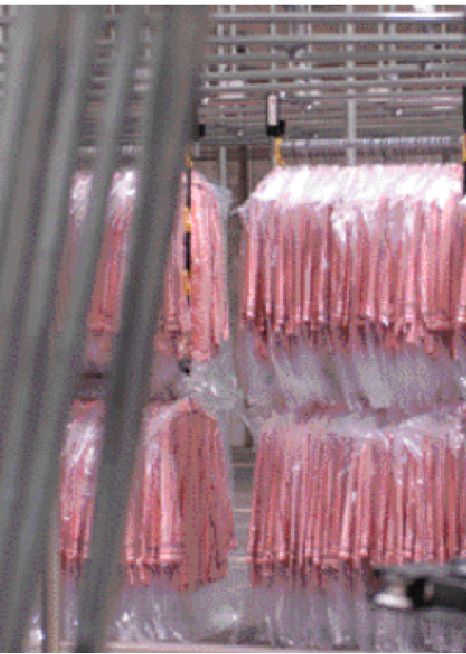
“We managed to break into European markets, including the British, so why not other markets? Our interest is no longer directed solely towards European nations,” he said to local media.

The US is increasing its reliance on natural gas, with one-quarter of the country’s energy now coming from gas. However, as the demand for gas rises, with daily consumption standing at around 1.7 billion cubic meters, the US is also seeing the depletion of many of its domestic resources, with fields in the Gulf of Mexico nearing the end of their commercial lives and daily production falling by 1.2 million cubic meters since 2001.

This is an opportunity in the market that Algeria hopes to take advantage of. Algeria aims at lifting its annual exports from the 62 billion cubic meters registered in 2006 to 85 billion cubic meters by the end of the decade, with more than a third of this increase intended for the US market.

Diversifying its market

“Algeria will not miss the opportunity to take share from the US market and Algeria will contribute to fill the US gas shortage,” said Chakib Khelil, the minister of energy and mines. However, separately the minister confirmed the cancellation of a proposed gas-to-liquids (GTL) plant on the basis of spiralling costs. Proposed gas exports seem to have been little affected by the cancellation.

The emphasis on the US market is part of Algeria’s plan to capitalize on its gas resources and to diversify its markets. Sonatrach recently announced that, in the future, half of its exports would be carried by pipelines, mainly to Europe, which buys around 70% of its gas needs from Algeria, while the other 50% would be shipped by tanker to more far-flung destinations such as the US and Asia.

The US, too, would be happy to lock Algeria into some long-term agreements and to meet its asking price as a means to ease calls for a gas cartel similar to OPEC. Washington, along with Europe, was none too pleased with the suggestions from some of the world’s major gas producers, including Russia, Venezuela and Algeria’s President Bouteflika that an organization for gas producing nations be set up, fearing price rises and market control.

During his May visit to the US, Khelil sought to allay these fears. Algeria did not seek “control of the world oil and gas market or to fix the prices,” he told a press conference after meeting with Samuel Bodman, the US energy secretary of state in May.

Khelil also soothed ruffled US feathers over the close ties between Sonatrach and Russian gas giant Gazprom, saying the relationship was no different from that enjoyed by the Algerian firm and other international companies in America and Europe

In June, Khelil told the international press that Algeria would be holding bidding rounds for new hydrocarbon exploration blocks to bring new capital and technology into the energy sector.

Algeria’s LNG sector has been a key supplier to Europe for some time. With increased exports to the US, the country is developing a growing energy-hungry customer which will become an ever more important source of revenue.

July 7, 2007 0 comments
0 FacebookTwitterPinterestEmail
North Africa

Tunisia: An old alliance

by Executive Staff July 7, 2007
written by Executive Staff

Nicolas Sarkozy’s coming to power in France initially raised worries that the country would weaken the strong relationship it had with countries in the MENA region under Jacques Chirac. However, this seems not to be the case, evidenced via the whirlwind tour of the region by the new foreign minister, Bernard Kouchner.

The new French president also found time to contact Tunisia’s president, Zine El Abidine Ben Ali, not once but twice while naming his new cabinet and taking over the reins of power.

There had been concerns in some Middle East countries that Sarkozy would prove less sympathetic to Arab nations than his predecessor. Much has been made of his Jewish ancestry — his maternal grandfather was Jewish — and his pro-US stance on a number of issues, which has earned him the nickname of American Sarko among some in the French political left.

However, Tunisia does not seem to share those concerns. Since it is not a frontline state close to Israel, it is able to distance itself somewhat from the day-to-day tensions of that part of the region, and has established sound ties with the United States.

Tunisia stands firm behind Sarkozy

While France ended its rule over Tunisia in 1956, the link between the two countries remains strong. France is Tunisia’s largest trading partner by far, the destination for more than 30% of its exports and the source of a quarter of its imports. Bilateral trade is worth some $6.5 billion annually and is growing. France also accounts for 38% of all foreign direct investment (FDI) in Tunisia.

During his election campaign, Sarkozy floated a proposal that would draw Tunisia, along with the other Mediterranean littoral states, into a loose knit union to boost economic development and security, as well as to restrict illegal immigration. In a speech given in early February, Sarkozy also called for the setting up of a Mediterranean Investment Bank, along the lines of the European Investment Bank, and floated the idea of the union having joint institutions with the EU some time down the track.

Though little comment was made at the time, Sarkozy again referred to the plan in his inauguration address, turning what had been a comment on the hustings into a slightly more solid commitment.

Unlike Turkey, which fears that Sarkozy’s plan for a Mediterranean union may prove another step in his overt opposition to Turkey’s accession to the EU, Tunisia is a strong advocate of the new French president’s proposal. Indeed, Tunisia, together with Libya, Algeria, Morocco and Mauritania, first floated such a concept in 2003, during a conference in Tunis attended by representatives of France, Italy, Spain, Portugal and Malta.

Though little came out of the so- called “5+5 plan,” it has been dusted off and expanded by Sarkozy, who is looking at Tunisia to help in providing a lead.

In a letter congratulating Sarkozy on his electoral victory, President Ben Ali commented on the particular importance the new French head of state gave to the Mediterranean.

“I would like to take this opportunity to reiterate my readiness to endeavor — with you — to make of it an area of peace, co-operation and co-development,” he said.

In response, Sarkozy reconfirmed his commitment to the Mediterranean scheme.

Partners to build Euro-Med union

“I express the wish that our co-operation might develop in all fields of mutual interest,” Sarkozy said. “In this regard, I would like, with the countries concerned, to build up a Mediterranean union, so as to take up together, and with success, the challenges facing us. In this ambitious and very necessary venture, I know that I can rely on your support and determination.”

The Mediterranean union and building on French-Tunisian ties were again highlighted when Sarkozy spoke on the phone with President Ben Ali in May.

According to the official Tunisian press agency, the two gave a commitment to establish a fruitful and effective partnership between both shores of the Mediterranean, so as to boost the Euro-Mediterranean partnership.

Unlike some Arab states that are wary of being members of a union that could include Israel and Turkey, Tunisia feels positive towards a potential union and its relations with the EU. It stands firmly behind Sarkozy’s plans to strengthen ties between the states on the two shores of the Mediterranean. As to whether Sarkozy’s plan will gain any traction in Brussels, that is another question.

July 7, 2007 0 comments
0 FacebookTwitterPinterestEmail
GCC

GCC: Sky segments

by Executive Staff July 7, 2007
written by Executive Staff

The Middle East and budget aviation were writ large last month when the world’s air industry met at the venerable Le Bourget airfield near Paris. The circle of Gulf-based full service carriers (FSCs) from Emirates and Qatar Airways to Etihad committed to important orders for new wide-bodied jets needed to carry out their various long-haul network expansions ­— and with their large-scale orders delivered equally important good news to brighten the mood among executives and employees of the large plane manufacturing duo, Boeing and Airbus.

Right next to the region’s big names and their prominent aspirations to rank higher among the world’s long-haul carriers, the Middle East’s emerging low-cost carriers (LCCs) added a splash to the aviation news circus with sizeable orders and buying plans in their market segment: single-aisle aircraft.

Jazeera Air, the new Kuwait-headquartered budget airline, on the first day of the Paris Air Show committed to buying 30 new A320 planes from Airbus, expanding its order volume to 40 aircraft. Sharjah-based Air Arabia, while not signing any contract in Le Bourget, said it wants to buy 34 new jets from Boeing or Airbus by the end of the third quarter of 2007, also in the single-aisle category.

Budget airlines poised for expansion

More than any marketing statement or regional aviation report from an investment bank, the new orders by the two operating Arab LCCs manifest how confident the discount carriers are in their rapid expansion. Estimates by aviation analysts put the (discounted) cost for 30 A320s at around $1.4 billion.

This means that Jazeera, which only in April could announce that its first full year of operations in 2006 resulted in black figures with a profit of $8.7 million, will spend in the range of $2 billion on its fleet purchases in the next few years. Air Arabia, which is slightly more seasoned with a three-year operational track record, also could spend more than $2 billion on new aircraft.

In unit numbers, the two carriers are looking to boost their fleets by multiples in the coming eight years, from Air Arabia’s current nine to 52 by 2015 and from Jazeera’s five to 45 planes that will serve the budget airline passenger demand within the Middle East and to neighboring regions, especially the Indian subcontinent.

The surge of Gulf-based LCCs marks a departure from a past in which the Middle East was a desert-like space for air travel. With poor options for intra-regional travel and fractious regional networks, it was ruled solely by opulently staffed flagship carriers whose service levels were usually directly inverse to their employee count.

The budget flight business model, while not at all new in the airline industry, has matured greatly in the past 15 years with the first success stories in the United States and Europe where LCCs could benefit from market segmentation and introduction of open-skies policies.

In the Middle East, the voracious growth of LCCs is linked to the boom economies in the Gulf region and the hunger for labor. As oil prices peak and GCC countries use this money to diversify their economies, more expatriate workers from Lebanon, Egypt, other regional countries, and Asia move to the Gulf for work. With the decent salaries expatriates make, they are able to return to their home countries, making this group a focal consumer base that FSCs and LCCs compete over.

“In the Middle East [LCCs] target workers in the GCC that want to go home,” Eric Chang, Senior Associate for The National Investor (TNI), a UAE investment company, told Executive in a phone interview.

The region’s discount flying market is still in its infancy. The LCCs’ share of the market is under-penetrated compared to Europe and America where 2006 market penetration was 23% and 27% respectively. In comparison, the Middle East’s LCC market share was 1.4% according to the Official Airline Guide (OAG).

By providing flights for half the cost due to their ‘no frills’ model, which cuts operational costs by 63%, LCCs are gaining ground. Unlike FSCs, in-flight meals are not offered, special VIP lounges are not available and all seats are economy class, providing more seats and thus tickets to be sold.

For travelers who last month could find a roundtrip flight this summer between Beirut and the UAE below $350, according to price quotations on Air Arabia’s web site, the concept would have been appealing.

Room for more

Passenger traffic for Jazeera in 2005 was 500,000 and increased by 20% to 600,000 in 2006. Air Arabia’s 2005 traffic reached 1,132,900 passengers, increasing to 1,600,000 in 2006 — a 41.2% surge.

Jazeera is building a second hub in Dubai to complement its existing Kuwaiti one, which will up the ante for Air Arabia as it is based in Sharjah.

Two new arrivals that latched onto the LCC market came out of Saudi Arabia this year, Nas Air and Sama Airlines. Both plan to focus on providing low-cost flights within Saudi Arabia and cautiously speak of building up their domestic aviation market before advancing into the market regionally.

As the Middle Eastern aviation industry will grow by 6.4% every year until 2015 according to the International Civil Aviation Organization (ICAO), there is room for more LCCs and FSCs to emerge. The OAG pegged the 2006 LCC market share at 0.8% — almost doubling this year to 1.4%.

The numbers will soon increase as Air Arabia and Jazeera expand their routes, while Nas Air and Sama Airlines are making their first steps in serving the Saudi domestic market since February and March of this year.

Rethinking the strategy

The strong LCC growth is making FSCs rethink their business strategies. “Conventional airlines feel the pressure from LCCs and are trying to narrow down their ticket costs,” said Kareem Murad, Senior Research Associate for Shuaa Capital, an UAE investment bank.

Emirates Airline is the first to show signs of trepidation over LCCs. Emirates’ vice chairman, Maurice Flanagan, in April hinted to the press that the airline may open an LCC unit in the coming years to complement their regular FSC service.

The scramble to grab a share in the Middle East’s LCC market marks a shift in the aviation industry’s consumer base. TNI, in a March report, largely attributes the industry’s growth to the swelling middle class fuelled by GCC petrodollars being invested to diversify the economy and create jobs.

Investors see potential in LCCs, too. In March, Air Arabia listed an IPO of 55% of its shares with equity of $713 million, which was quickly oversubscribed. Though less successful, Jazeera Airways launched its IPO in 2006, offering 70% of its shares with an equity offering of $24 million.

“The success of the IPO reflects the belief of the investors in LCCs and their business model,” said Murad.

Budget travel has an additional bonus in the fact that cost-consciousness is increasingly understood to be smart and vastly different from “cheap.” This has created a segmentation of air travel also in the business realm where LCC business-class-only carriers Silverjet (UK) and Maxjet Airways (US) have opened successful routes between Europe and the US East Coast. According to recent reports, both business-only LCCs are considering routes to Dubai. The companies will offer tickets for roughly half the cost of an FSC business class ticket and the same price as an FSC economy class ticket.

But the lack of Middle Eastern open-skies agreements hinders LCC growth, making inter-regional air travel more costly than in Europe and providing fewer flight choices. For LCCs to continue growing, they must pressure governments to liberalize their skies as FSC customers can swallow high prices, as opposed to LCC consumers.

In May 2006, 17 states from the Arab Civil Aviation Commission signed open-skies agreements, but “the full and proper implementation of liberalized policies has not yet been adopted by most countries,” says Murad. “However, several countries are holding the grants of permits for use of their skies and hubs until they begin restructuring their own national carriers.”

As the steep discounts for aircraft purchase orders at the Paris Air Show — estimates speak of 40% price reductions against list prices for large orders — demonstrate, LCCs encounter a supportive environment within the international aviation industry and the regional budget airlines appear to have chosen a good time to enter the market.

But they will have to succeed in the long term in a new phase of passenger air transportation that is leaving behind the old business paradigm of economizing by cramming as many human sardines as possible into a tube subdivided into 20 to 50 rows of pain and a few rows of pleasure.

Air carriers are looking at years of a tight cost environment of high oil prices to which most recently also ecological concerns over limitless travel growth have been added. In the end, customers will judge by comfort, price, and social — which is largely environmental — acceptability of the carrier when they get on a plane.

July 7, 2007 0 comments
0 FacebookTwitterPinterestEmail
GCC

Oman: Caught in a storm

by Executive Staff July 7, 2007
written by Executive Staff

Threatening its way towards Oman for nearly a week, tropical cyclone Gonu had luckily leveled to a category-1 storm when it finally hit the coast of Muscat on June 7. Gonu’s weakened state, however, was not enough to hold back the ravaged city’s inevitable economic costs of $3.9 billion, according to early government estimates.

Gonu, which means “bag made of palm leaves” in the Dhivehi language of the Maldives, shut Oman down for days after it battered the sultanate with torrential rains, wind gusts of 83 km/h (51 mph) and waves 10 to 12 meters high.

The Ministry of National Economy sent an army of surveyors to assess the resulting damage in the badly hit regions of Muscat and Sharqiyah. In addition to the 60 lives it claimed, Gonu caused the displacement of 20,000 people and the destruction of 70,000 homes.

The insurance industry will assume the massive rebuilding costs, as most insured Omani properties have storm and flood coverage, according to a June 13 report by BankMuscat on the cyclone’s economic impact. Large insurers will be exempt from making claim payments, as 90% of property risks are reinsured. This is expected to bring on more economic headaches as reinsurance rates rise and minor insurers are not “able to pass on the entire cost to the consumers, due to competition,” BankMuscat said.

The government will step in to control cement prices to facilitate reconstruction. Oman Cement, the sultanate’s largest provider, escaped damage to its facilities but lost gas supply, cutting output that will shave 2% off profits for 2007.

Not much damage, just costly

Oman’s infrastructure took several hits, including the demolished main water pipes in Muscat and 12 kilometers of the main Wadi Adai highway. The excessive flooding led the government to plan the construction of three dams and a large canal to contain future flood waters, at a cost of $62 million.

The Muscat Securities Market closed for three trading sessions, after technical problems closed the bourse the Sunday after the storm.

Fortunately for the heavily invested tourism sector, it escaped with minimal damage. The Grand Mosque was temporarily closed, along with certain shopping areas and some inaccessible beaches. Although flooding rendered many roads traveled by sightseers unusable, “post-cyclone tourism in Oman is healthy and going full-fledged,” Mohammed bin Hamdan al-Toobi, under-secretary of tourism, said at a June 18 press conference. “There wasn’t any major damage to hotels or resorts during the cyclone, except a few minor incidents that are being rectified and things are going back to normal in a quick pace.”

A report released in May by London-based think tank Global Futures and Foresights put Oman’s current investment in tourism at $464 million, an amount expected to rise to $904 million by 2017. The report said Oman’s goal is to raise tourism’s contribution to GDP from 0.3% in 2007 to 3% by 2020.

Seeb International Airport temporarily halted flights, but the main gateway has since bounced back, with most regional and international carriers resuming normal flight schedules.

But this fluke storm, as it is being widely referred to, begs the question, what’s in store for the Arab oil industry as global warming looms ever larger? Although there is no direct evidence linking Gonu to climate change, some wonder why such a storm made it to a region typically immune from climate fury; and what happens if this is just a sign of what’s ahead?

When Gonu hit, it caused the Sur liquid natural gas terminal southeast of Muscat and the Al-Fahl oil terminal to stop shipments for three days, costing $200 million in lost revenues, according to government estimates. If similar or more intense storms are to be expected in the area, offshore oil refineries could be irreparably damaged, oil exports would become intermittent and costly, not to mention the punitive damage of consuming nations responding to increasing price hikes. This might leave oil-producing nations to wonder whether it wouldn’t be wiser to throw their full support behind such measures as the Kyoto Protocol.

July 7, 2007 0 comments
0 FacebookTwitterPinterestEmail
  • 1
  • …
  • 571
  • 572
  • 573
  • 574
  • 575
  • …
  • 695

Latest Cover

About us

Since its first edition emerged on the newsstands in 1999, Executive Magazine has been dedicated to providing its readers with the most up-to-date local and regional business news. Executive is a monthly business magazine that offers readers in-depth analyses on the Lebanese world of commerce, covering all the major sectors – from banking, finance, and insurance to technology, tourism, hospitality, media, and retail.

  • Donate
  • Our Purpose
  • Contact Us

Sign up for our newsletter

    • Facebook
    • Twitter
    • Instagram
    • Linkedin
    • Youtube
    Executive Magazine
    • ISSUES
      • Current Issue
      • Past issues
    • BUSINESS
    • ECONOMICS & POLICY
    • OPINION
    • SPECIAL REPORTS
    • EXECUTIVE TALKS
    • MOVEMENTS
      • Change the image
      • Cannes lions
      • Transparency & accountability
      • ECONOMIC ROADMAP
      • Say No to Corruption
      • The Lebanon media development initiative
      • LPSN Policy Asks
      • Advocating the preservation of deposits
    • JOIN US
      • Join our movement
      • Attend our events
      • Receive updates
      • Connect with us
    • DONATE