• Donate
  • Our Purpose
  • Contact Us
Executive Magazine
  • ISSUES
    • Current Issue
    • Past issues
  • BUSINESS
  • ECONOMICS & POLICY
  • OPINION
  • SPECIAL REPORTS
  • EXECUTIVE TALKS
  • MOVEMENTS
    • Change the image
    • Cannes lions
    • Transparency & accountability
    • ECONOMIC ROADMAP
    • Say No to Corruption
    • The Lebanon media development initiative
    • LPSN Policy Asks
    • Advocating the preservation of deposits
  • JOIN US
    • Join our movement
    • Attend our events
    • Receive updates
    • Connect with us
  • DONATE
North Africa

Algeria: Gold from Gas

by Executive Staff July 7, 2007
written by Executive Staff

Algeria’s natural gas industry is growing strongly, and is on target to meet ambitious plans. Part of this growth can be attributed to the cultivation of the energy-hungry US as a market — it will play an increasingly important role as a purchaser of Algeria’s resources.

In recent years, Algeria has been increasingly targeting the US as a major customer for natural gas, having exported more than 60 billion cubic meters last year. It has ambitious plans to become one of the US’s major suppliers in the coming years.

In May, Mohamed Meziane, the president and chief executive officer of Sonatrach, Algeria’s state owned oil and gas company, announced the company was looking to triple gas exports to the US from 4 billion to 12 billion cubic meters by 2010.

Meziane said he was confident that Algeria could carve out a larger slice of the expanding US market, despite competition from other suppliers, especially those in the Middle East. Currently, Algerian exports account for only around 5% of US gas imports, something Meziane said he believed would change.

“We managed to break into European markets, including the British, so why not other markets? Our interest is no longer directed solely towards European nations,” he said to local media.

The US is increasing its reliance on natural gas, with one-quarter of the country’s energy now coming from gas. However, as the demand for gas rises, with daily consumption standing at around 1.7 billion cubic meters, the US is also seeing the depletion of many of its domestic resources, with fields in the Gulf of Mexico nearing the end of their commercial lives and daily production falling by 1.2 million cubic meters since 2001.

This is an opportunity in the market that Algeria hopes to take advantage of. Algeria aims at lifting its annual exports from the 62 billion cubic meters registered in 2006 to 85 billion cubic meters by the end of the decade, with more than a third of this increase intended for the US market.

Diversifying its market

“Algeria will not miss the opportunity to take share from the US market and Algeria will contribute to fill the US gas shortage,” said Chakib Khelil, the minister of energy and mines. However, separately the minister confirmed the cancellation of a proposed gas-to-liquids (GTL) plant on the basis of spiralling costs. Proposed gas exports seem to have been little affected by the cancellation.

The emphasis on the US market is part of Algeria’s plan to capitalize on its gas resources and to diversify its markets. Sonatrach recently announced that, in the future, half of its exports would be carried by pipelines, mainly to Europe, which buys around 70% of its gas needs from Algeria, while the other 50% would be shipped by tanker to more far-flung destinations such as the US and Asia.

The US, too, would be happy to lock Algeria into some long-term agreements and to meet its asking price as a means to ease calls for a gas cartel similar to OPEC. Washington, along with Europe, was none too pleased with the suggestions from some of the world’s major gas producers, including Russia, Venezuela and Algeria’s President Bouteflika that an organization for gas producing nations be set up, fearing price rises and market control.

During his May visit to the US, Khelil sought to allay these fears. Algeria did not seek “control of the world oil and gas market or to fix the prices,” he told a press conference after meeting with Samuel Bodman, the US energy secretary of state in May.

Khelil also soothed ruffled US feathers over the close ties between Sonatrach and Russian gas giant Gazprom, saying the relationship was no different from that enjoyed by the Algerian firm and other international companies in America and Europe

In June, Khelil told the international press that Algeria would be holding bidding rounds for new hydrocarbon exploration blocks to bring new capital and technology into the energy sector.

Algeria’s LNG sector has been a key supplier to Europe for some time. With increased exports to the US, the country is developing a growing energy-hungry customer which will become an ever more important source of revenue.

July 7, 2007 0 comments
0 FacebookTwitterPinterestEmail
North Africa

Tunisia: An old alliance

by Executive Staff July 7, 2007
written by Executive Staff

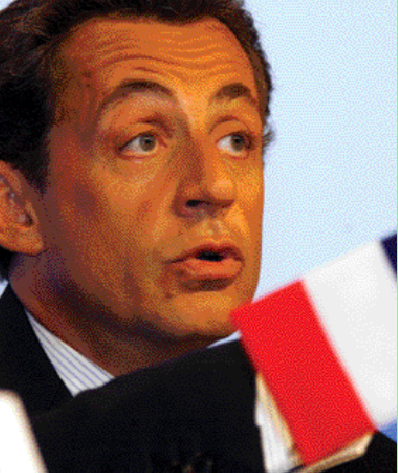
Nicolas Sarkozy’s coming to power in France initially raised worries that the country would weaken the strong relationship it had with countries in the MENA region under Jacques Chirac. However, this seems not to be the case, evidenced via the whirlwind tour of the region by the new foreign minister, Bernard Kouchner.

The new French president also found time to contact Tunisia’s president, Zine El Abidine Ben Ali, not once but twice while naming his new cabinet and taking over the reins of power.

There had been concerns in some Middle East countries that Sarkozy would prove less sympathetic to Arab nations than his predecessor. Much has been made of his Jewish ancestry — his maternal grandfather was Jewish — and his pro-US stance on a number of issues, which has earned him the nickname of American Sarko among some in the French political left.

However, Tunisia does not seem to share those concerns. Since it is not a frontline state close to Israel, it is able to distance itself somewhat from the day-to-day tensions of that part of the region, and has established sound ties with the United States.

Tunisia stands firm behind Sarkozy

While France ended its rule over Tunisia in 1956, the link between the two countries remains strong. France is Tunisia’s largest trading partner by far, the destination for more than 30% of its exports and the source of a quarter of its imports. Bilateral trade is worth some $6.5 billion annually and is growing. France also accounts for 38% of all foreign direct investment (FDI) in Tunisia.

During his election campaign, Sarkozy floated a proposal that would draw Tunisia, along with the other Mediterranean littoral states, into a loose knit union to boost economic development and security, as well as to restrict illegal immigration. In a speech given in early February, Sarkozy also called for the setting up of a Mediterranean Investment Bank, along the lines of the European Investment Bank, and floated the idea of the union having joint institutions with the EU some time down the track.

Though little comment was made at the time, Sarkozy again referred to the plan in his inauguration address, turning what had been a comment on the hustings into a slightly more solid commitment.

Unlike Turkey, which fears that Sarkozy’s plan for a Mediterranean union may prove another step in his overt opposition to Turkey’s accession to the EU, Tunisia is a strong advocate of the new French president’s proposal. Indeed, Tunisia, together with Libya, Algeria, Morocco and Mauritania, first floated such a concept in 2003, during a conference in Tunis attended by representatives of France, Italy, Spain, Portugal and Malta.

Though little came out of the so- called “5+5 plan,” it has been dusted off and expanded by Sarkozy, who is looking at Tunisia to help in providing a lead.

In a letter congratulating Sarkozy on his electoral victory, President Ben Ali commented on the particular importance the new French head of state gave to the Mediterranean.

“I would like to take this opportunity to reiterate my readiness to endeavor — with you — to make of it an area of peace, co-operation and co-development,” he said.

In response, Sarkozy reconfirmed his commitment to the Mediterranean scheme.

Partners to build Euro-Med union

“I express the wish that our co-operation might develop in all fields of mutual interest,” Sarkozy said. “In this regard, I would like, with the countries concerned, to build up a Mediterranean union, so as to take up together, and with success, the challenges facing us. In this ambitious and very necessary venture, I know that I can rely on your support and determination.”

The Mediterranean union and building on French-Tunisian ties were again highlighted when Sarkozy spoke on the phone with President Ben Ali in May.

According to the official Tunisian press agency, the two gave a commitment to establish a fruitful and effective partnership between both shores of the Mediterranean, so as to boost the Euro-Mediterranean partnership.

Unlike some Arab states that are wary of being members of a union that could include Israel and Turkey, Tunisia feels positive towards a potential union and its relations with the EU. It stands firmly behind Sarkozy’s plans to strengthen ties between the states on the two shores of the Mediterranean. As to whether Sarkozy’s plan will gain any traction in Brussels, that is another question.

July 7, 2007 0 comments
0 FacebookTwitterPinterestEmail
GCC

GCC: Sky segments

by Executive Staff July 7, 2007
written by Executive Staff

The Middle East and budget aviation were writ large last month when the world’s air industry met at the venerable Le Bourget airfield near Paris. The circle of Gulf-based full service carriers (FSCs) from Emirates and Qatar Airways to Etihad committed to important orders for new wide-bodied jets needed to carry out their various long-haul network expansions ­— and with their large-scale orders delivered equally important good news to brighten the mood among executives and employees of the large plane manufacturing duo, Boeing and Airbus.

Right next to the region’s big names and their prominent aspirations to rank higher among the world’s long-haul carriers, the Middle East’s emerging low-cost carriers (LCCs) added a splash to the aviation news circus with sizeable orders and buying plans in their market segment: single-aisle aircraft.

Jazeera Air, the new Kuwait-headquartered budget airline, on the first day of the Paris Air Show committed to buying 30 new A320 planes from Airbus, expanding its order volume to 40 aircraft. Sharjah-based Air Arabia, while not signing any contract in Le Bourget, said it wants to buy 34 new jets from Boeing or Airbus by the end of the third quarter of 2007, also in the single-aisle category.

Budget airlines poised for expansion

More than any marketing statement or regional aviation report from an investment bank, the new orders by the two operating Arab LCCs manifest how confident the discount carriers are in their rapid expansion. Estimates by aviation analysts put the (discounted) cost for 30 A320s at around $1.4 billion.

This means that Jazeera, which only in April could announce that its first full year of operations in 2006 resulted in black figures with a profit of $8.7 million, will spend in the range of $2 billion on its fleet purchases in the next few years. Air Arabia, which is slightly more seasoned with a three-year operational track record, also could spend more than $2 billion on new aircraft.

In unit numbers, the two carriers are looking to boost their fleets by multiples in the coming eight years, from Air Arabia’s current nine to 52 by 2015 and from Jazeera’s five to 45 planes that will serve the budget airline passenger demand within the Middle East and to neighboring regions, especially the Indian subcontinent.

The surge of Gulf-based LCCs marks a departure from a past in which the Middle East was a desert-like space for air travel. With poor options for intra-regional travel and fractious regional networks, it was ruled solely by opulently staffed flagship carriers whose service levels were usually directly inverse to their employee count.

The budget flight business model, while not at all new in the airline industry, has matured greatly in the past 15 years with the first success stories in the United States and Europe where LCCs could benefit from market segmentation and introduction of open-skies policies.

In the Middle East, the voracious growth of LCCs is linked to the boom economies in the Gulf region and the hunger for labor. As oil prices peak and GCC countries use this money to diversify their economies, more expatriate workers from Lebanon, Egypt, other regional countries, and Asia move to the Gulf for work. With the decent salaries expatriates make, they are able to return to their home countries, making this group a focal consumer base that FSCs and LCCs compete over.

“In the Middle East [LCCs] target workers in the GCC that want to go home,” Eric Chang, Senior Associate for The National Investor (TNI), a UAE investment company, told Executive in a phone interview.

The region’s discount flying market is still in its infancy. The LCCs’ share of the market is under-penetrated compared to Europe and America where 2006 market penetration was 23% and 27% respectively. In comparison, the Middle East’s LCC market share was 1.4% according to the Official Airline Guide (OAG).

By providing flights for half the cost due to their ‘no frills’ model, which cuts operational costs by 63%, LCCs are gaining ground. Unlike FSCs, in-flight meals are not offered, special VIP lounges are not available and all seats are economy class, providing more seats and thus tickets to be sold.

For travelers who last month could find a roundtrip flight this summer between Beirut and the UAE below $350, according to price quotations on Air Arabia’s web site, the concept would have been appealing.

Room for more

Passenger traffic for Jazeera in 2005 was 500,000 and increased by 20% to 600,000 in 2006. Air Arabia’s 2005 traffic reached 1,132,900 passengers, increasing to 1,600,000 in 2006 — a 41.2% surge.

Jazeera is building a second hub in Dubai to complement its existing Kuwaiti one, which will up the ante for Air Arabia as it is based in Sharjah.

Two new arrivals that latched onto the LCC market came out of Saudi Arabia this year, Nas Air and Sama Airlines. Both plan to focus on providing low-cost flights within Saudi Arabia and cautiously speak of building up their domestic aviation market before advancing into the market regionally.

As the Middle Eastern aviation industry will grow by 6.4% every year until 2015 according to the International Civil Aviation Organization (ICAO), there is room for more LCCs and FSCs to emerge. The OAG pegged the 2006 LCC market share at 0.8% — almost doubling this year to 1.4%.

The numbers will soon increase as Air Arabia and Jazeera expand their routes, while Nas Air and Sama Airlines are making their first steps in serving the Saudi domestic market since February and March of this year.

Rethinking the strategy

The strong LCC growth is making FSCs rethink their business strategies. “Conventional airlines feel the pressure from LCCs and are trying to narrow down their ticket costs,” said Kareem Murad, Senior Research Associate for Shuaa Capital, an UAE investment bank.

Emirates Airline is the first to show signs of trepidation over LCCs. Emirates’ vice chairman, Maurice Flanagan, in April hinted to the press that the airline may open an LCC unit in the coming years to complement their regular FSC service.

The scramble to grab a share in the Middle East’s LCC market marks a shift in the aviation industry’s consumer base. TNI, in a March report, largely attributes the industry’s growth to the swelling middle class fuelled by GCC petrodollars being invested to diversify the economy and create jobs.

Investors see potential in LCCs, too. In March, Air Arabia listed an IPO of 55% of its shares with equity of $713 million, which was quickly oversubscribed. Though less successful, Jazeera Airways launched its IPO in 2006, offering 70% of its shares with an equity offering of $24 million.

“The success of the IPO reflects the belief of the investors in LCCs and their business model,” said Murad.

Budget travel has an additional bonus in the fact that cost-consciousness is increasingly understood to be smart and vastly different from “cheap.” This has created a segmentation of air travel also in the business realm where LCC business-class-only carriers Silverjet (UK) and Maxjet Airways (US) have opened successful routes between Europe and the US East Coast. According to recent reports, both business-only LCCs are considering routes to Dubai. The companies will offer tickets for roughly half the cost of an FSC business class ticket and the same price as an FSC economy class ticket.

But the lack of Middle Eastern open-skies agreements hinders LCC growth, making inter-regional air travel more costly than in Europe and providing fewer flight choices. For LCCs to continue growing, they must pressure governments to liberalize their skies as FSC customers can swallow high prices, as opposed to LCC consumers.

In May 2006, 17 states from the Arab Civil Aviation Commission signed open-skies agreements, but “the full and proper implementation of liberalized policies has not yet been adopted by most countries,” says Murad. “However, several countries are holding the grants of permits for use of their skies and hubs until they begin restructuring their own national carriers.”

As the steep discounts for aircraft purchase orders at the Paris Air Show — estimates speak of 40% price reductions against list prices for large orders — demonstrate, LCCs encounter a supportive environment within the international aviation industry and the regional budget airlines appear to have chosen a good time to enter the market.

But they will have to succeed in the long term in a new phase of passenger air transportation that is leaving behind the old business paradigm of economizing by cramming as many human sardines as possible into a tube subdivided into 20 to 50 rows of pain and a few rows of pleasure.

Air carriers are looking at years of a tight cost environment of high oil prices to which most recently also ecological concerns over limitless travel growth have been added. In the end, customers will judge by comfort, price, and social — which is largely environmental — acceptability of the carrier when they get on a plane.

July 7, 2007 0 comments
0 FacebookTwitterPinterestEmail
GCC

Oman: Caught in a storm

by Executive Staff July 7, 2007
written by Executive Staff

Threatening its way towards Oman for nearly a week, tropical cyclone Gonu had luckily leveled to a category-1 storm when it finally hit the coast of Muscat on June 7. Gonu’s weakened state, however, was not enough to hold back the ravaged city’s inevitable economic costs of $3.9 billion, according to early government estimates.

Gonu, which means “bag made of palm leaves” in the Dhivehi language of the Maldives, shut Oman down for days after it battered the sultanate with torrential rains, wind gusts of 83 km/h (51 mph) and waves 10 to 12 meters high.

The Ministry of National Economy sent an army of surveyors to assess the resulting damage in the badly hit regions of Muscat and Sharqiyah. In addition to the 60 lives it claimed, Gonu caused the displacement of 20,000 people and the destruction of 70,000 homes.

The insurance industry will assume the massive rebuilding costs, as most insured Omani properties have storm and flood coverage, according to a June 13 report by BankMuscat on the cyclone’s economic impact. Large insurers will be exempt from making claim payments, as 90% of property risks are reinsured. This is expected to bring on more economic headaches as reinsurance rates rise and minor insurers are not “able to pass on the entire cost to the consumers, due to competition,” BankMuscat said.

The government will step in to control cement prices to facilitate reconstruction. Oman Cement, the sultanate’s largest provider, escaped damage to its facilities but lost gas supply, cutting output that will shave 2% off profits for 2007.

Not much damage, just costly

Oman’s infrastructure took several hits, including the demolished main water pipes in Muscat and 12 kilometers of the main Wadi Adai highway. The excessive flooding led the government to plan the construction of three dams and a large canal to contain future flood waters, at a cost of $62 million.

The Muscat Securities Market closed for three trading sessions, after technical problems closed the bourse the Sunday after the storm.

Fortunately for the heavily invested tourism sector, it escaped with minimal damage. The Grand Mosque was temporarily closed, along with certain shopping areas and some inaccessible beaches. Although flooding rendered many roads traveled by sightseers unusable, “post-cyclone tourism in Oman is healthy and going full-fledged,” Mohammed bin Hamdan al-Toobi, under-secretary of tourism, said at a June 18 press conference. “There wasn’t any major damage to hotels or resorts during the cyclone, except a few minor incidents that are being rectified and things are going back to normal in a quick pace.”

A report released in May by London-based think tank Global Futures and Foresights put Oman’s current investment in tourism at $464 million, an amount expected to rise to $904 million by 2017. The report said Oman’s goal is to raise tourism’s contribution to GDP from 0.3% in 2007 to 3% by 2020.

Seeb International Airport temporarily halted flights, but the main gateway has since bounced back, with most regional and international carriers resuming normal flight schedules.

But this fluke storm, as it is being widely referred to, begs the question, what’s in store for the Arab oil industry as global warming looms ever larger? Although there is no direct evidence linking Gonu to climate change, some wonder why such a storm made it to a region typically immune from climate fury; and what happens if this is just a sign of what’s ahead?

When Gonu hit, it caused the Sur liquid natural gas terminal southeast of Muscat and the Al-Fahl oil terminal to stop shipments for three days, costing $200 million in lost revenues, according to government estimates. If similar or more intense storms are to be expected in the area, offshore oil refineries could be irreparably damaged, oil exports would become intermittent and costly, not to mention the punitive damage of consuming nations responding to increasing price hikes. This might leave oil-producing nations to wonder whether it wouldn’t be wiser to throw their full support behind such measures as the Kyoto Protocol.

July 7, 2007 0 comments
0 FacebookTwitterPinterestEmail
GCC

UAE: Run on the malls

by Executive Staff July 7, 2007
written by Executive Staff

Shopaholics of the world are in for a super-sized fix as the city that is the home of 21st century superlatives adds not just one, nay two “shopping-est” to its list of epithets. Dubai, having construction already underway on the world’s largest shopping mall, has just made a move to one-up itself in matters retail. In early May, a state-owned development company announced it will start building the “world’s largest shopping area.” It is to be a stretch of retail with shops upon malls upon hotels in a continuous commercial carnival called Bawadi –— offering, in total, 3.7 million square meters of retail space.

The Bawadi development was, until the retail announcement, a 10-kilometer road lined with 51 hotel projects located within the huge Dubailand development that covers a total of 278 square kilometers (equal to about a quarter of the size of Greater London or over five times the surface of Manhattan).

Dubai’s ruler Sheikh Mohammed Bin Rashid Al Maktoum ordered the retail space added to the hotel development almost one year to the day after he initiated the launch of Bawadi LLC in May 2006 as the project company to own and operate hotels, convention centers and retail and entertainment locales.

Moreover, the princely initiative doubles to $54 billion the investment volume of the Bawadi development that will form one axis of Dubailand, which is being built as the emirate’s future entertainment heart — and nota bene, the world’s largest leisure zone-to-be.

Retail space will now be added within and between the hotels in the form of malls, boutiques, street-level shops all connected by subterranean hallways which will be, you guessed it, lined with retail outlets so shoppers can hop from spot to spot without having to go outside. The underground passages were decided on to encourage walking but beat the heat, which can get unbearable in Dubai, explained Bawadi CEO Arif Mubarak.

Malls getting bigger and bigger

The Bawadi company in charge of the project is, also in typical Dubai fashion, a subsidiary of another company, management and real estate development firm Tatweer — which in turn is a member in the corporate family of Dubai Holding, the emirate’s conglomerate of multi-billon dollar enterprises.

Shopping malls will be integrated into the Bawadi project on a massive scale and, like for the hotel projects, the concept bets on intense private sector participation. Less than a month after the retail plan was announced, Bawadi could announce that it inked a joint venture agreement to build the first of the malls with Al Ghurair Investments, a company belonging to the group which opened Dubai’s first shopping mall in 1983.

While he did not say how many square meters of gross leasable area (GLA) this mall will bring to the market once it is completed, Mubarak told Executive that the mall’s first phase alone will be an AED10 billion ($2.73 billion) undertaking expected to reach completion by 2012 with a GLA in the range of 370,000 square meters — this would allow the Phase One to claim the number four spot for largest malls worldwide, based on today’s figures.

By the middle of the next decade, however, the malls of Dubai will have opened in dimensions that will demote any shopping center below 500,000 square meters of retail area to second tier in terms of size.

Currently, two shopping centers on earth advertise themselves as having more than 500,000 square meters GLA, both in China. But the Mall of Arabia, currently dubbed the world’s largest shopping mall project, will have 10 million square feet (930,000 square meters) in GLA after completion of the project’s second phase. It is also located in Dubailand, although in a different part of the development.

Infrastructure and pilings for the Mall of Arabia are in place and the owners intend to start building the structure within a few months’ time. Myra Searle, vice president for retail with the I & M Galadari Group which owns the complex, told Executive the first phase of the mall will take 29 months to complete and have 4 million square feet (372,000 square meters) of GLA. Phase two will be ready five to seven years later and put Dubai at the top of the large-mall food chain.

The developers have projected Mall of Arabia’s total cost at AED32 billion ($8.7 billion). That is a high price for stealing the crown for queen of the world’s malls when compared with the current title holder, South China Mall in Dongguang, a city in the Pearl River Delta. That complex, which opened in 2005 with some 660,000 square meters of floor space, carried a construction price tag of comparatively paltry 2.5 billion Yuan ($327 million), 26 times cheaper than the Mall of Arabia. 

One characteristic of the South China Mall is that its more than ten buildings, each three to five floors and themed, are not enclosed under one roof, making it more comparable to the Bawadi development in structure than to other world-leading shopping malls where promoters stress the aspect of offering a single continuous retail area. Bawadi officials on their part avoid the trap of risky “largest mall” record claims through their verbiage of marketing their project as history’s “largest shopping area.”

It’s not the mall, it’s the attractions

Bawadi’s Mubarak predicts that soon more veteran mall developers will jump on the opportunity of adding an outlet in this meta-realm to their portfolio of locations. “You will notice in the coming two months in terms of the names that are going to sign with us, as far as joint ventures or partners, these people have done it before and they know [the mall] business and they have current businesses operating,” he said.

He better be right, because Bawadi’s heralded deluge of retail space — the equivalent of over 544 World Cup regulation football pitches — amounts to over two-and-a-half times Dubai’s total GLA at the end of 2006. If laid out lengthwise, those football pitches would stretch over 57 kilometers and take an Olympian record walker more than five and a healthy average person over 11 hours to walk end to end.

Top ten largest malls

Although size-superlatives help in selling a mall to the public, being the world’s largest mall or shopping area is clearly insufficient to guarantee economic success. That is why management and development firms have dug deep into the ideas box for rolling out attractions that will do better than seasonal sales signs in drawing crowds. A telltale example is Dubai’s current largest mall, Mall of the Emirates. It opened its doors less than two years ago in 2005 with 223,000 square meters of GLA and can already count down the days to when it will lose the top rank in local size.

The Mall of the Emirates’ selling points that set it, at least for a few more years, apart from any competitor, are its indoor skiing area with five slopes and a fountain and man-made lake displaying flame-throwers that spurt fire up to 3 meters, and water jets. The mall is ready for the competition, said general manager Fuad Sharaf. “When you have competition it makes you more creative,” he said. “It makes you come up with more ideas.”

While he declined to let Executive in on any of the new ideas the mall has planned, he said the mall’s non-retail attractions are visitor magnets, and people just come to watch the water-and-fire show every half hour with the flames starting at 7 p.m.

Developing non-shopping attractions and gimmicks like themes are what will set Dubai’s new malls apart as more pop up in the future, opined Himanshu Vashishtha, managing director of market research firm ACNielsen in the UAE. The firm conducted several polls for mall owners to study consumer behavior and opinions.

Mallgoers second in the world

“If shoppers have a choice between two fairly good malls that have everything to offer, then they will get into that next level of, ‘so what else can I get if I go to this mall,’” Vashishtha said.

This kind of value-added destination branding of course is also an important factor in ballooning the costs of a mall project. But neither Mall of Arabia nor another newbie, Dubai Mall, appear to shy away from the extra investments, fully aware that they will determine the projects’ appeal to the public and salability to retailers.

With this in mind, Mall of Arabia has slated construction of a dinosaur theme park along with Phase One. Searle explained that the only way to enter the park will be through the mall. Then one is not to forget Dubai Mall, a project by Emaar Properties which is under construction at the foot of Burj Dubai, the world’s tallest building.

On its web site Emaar describes Dubai Mall as, oh yes, the world’s largest mall. Representatives of Emaar Properties were not available for interviews when contacted but it is known that Dubai Mall will add 344,000 square meters of GLA to the emirate’s retail mix when it opens, as scheduled, in 2008. For special attractions, it is planning a three-story aquarium with tunnels so guests can walk underneath the various sea creatures.

Supplying the malls with a home base of clients is important and it is more than a stroke of luck that residents of the UAE are serious shoppers. A 2005 ACNielsen poll found 80% hit the mall once a week or more “for something to do.” This is the second highest rate in the world behind Hong Kong.

“The trend is more or less the same [today],” Vashishtha said. “If anything, the proportion of people who do shopping for entertainment, or ‘shopertainment’ as we term it in this part of the world, has only increased.”

“Six months of the year you have very hot weather and people definitely tend to seek indoor entertainment,” he said.

 “Couple that with the fact that 74% of shoppers enjoy shopping. This is true even when they are just visiting the hypermarket … And it becomes an outing.”

On average, Vashishtha said, those flocking to the mall indulge there for three to four hours each trip. In monetary terms, residents of the emirate spend on average $109 per trip, or just under $5,700 per year.

But for all that shopping space to flourish in future, this is not going to be enough. In a recent publication, the Dubai branch of real estate consulting firm Colliers International projected that per capita GLA in Dubai will amount to 2.35 square meters in 2010, requiring annual sales volumes of $8,400 per capita for retail sector profitability — a 140% increase of what is currently available.

So is all this mall building a viable plan?

“That’s the million-dollar question,” said Searle. “Put it this way: A developer will know that Dubai is over-malled when the retailers no longer lease … At the moment, we have seen no evidence of that taking place.”

Colliers, in the business of marketing real estate opportunities, assuringly said in its report that this forecasted required per capita spend “is not excessive in itself when compared to other markets” — citing average annual retail spends of $8,000 and $12,000 per capita in Europe and the US.

However, while Dubai’s per capita income is at par with highly developed countries, income distribution seems rather different from what is common in an EU country with similar per capita GDP. Although international handbooks hold no information on the number of people below the property line or the distribution of wealth and purchasing power for the top and bottom 10% of the population, the available evidence shows the UAE as stratified into social layers of nationals and expatriates which are subdivided into disparate income groups.

Asians who make up the body of the blue-collar workforce — and a significant share of the overall population — live and shop in subculture zones that are a half-world apart from the ritzy projects such as the new downtown and Dubailand. Given their commitment to send remittances home and the UAE’s high increase rates for rents and basic cost of living, it seems more than doubtful that the low to middle expatriate income groups will submit their hard-earned dirhams to the high spending habits required to make the new super-malls reach their sales targets.

Mega-malls with their oversized investments, high-priced special attractions, and arrays of 600 to 1,200 and more posh retail outlets per mall will create social challenges for the people of the UAE. The Dubai Chambers of Commerce have recently voiced first concerns that the emirate’s retail development is at risk of imbalances, by warning that the retail market is becoming “elitist.”

The from a retail perspective upside and un-scaled forward potential of the Emirates’ huge retail space investments lies in the regional and international visitor streams that the UAE want to tap into. By the projections in the Colliers International report, by 2010 non-residents would offload enough cash in local malls to reduce the required retail spend per resident by one-third, to about $5,500, some $200 below the current annual average amount.

“Build it and they will come”

Although the predicted increase in Dubai’s GLA to 2.35 square meters per capita in 2010 is more than doubling the GLA supply at the end of 2006, this is not the end of the planned expansions. The mother of all shopping miles in the Bawadi development will come onstream in the century’s second decade; so will the second phase of the Mall of Arabia and a number of other huge retail projects in Dubai. But the fact that these mega-investments will balloon the GLA of local retail even further is more than a play after the motto “build it and they will come” with the added twist “and make it the biggest ever.”

Tourism, by the course of state planning and investments which Dubai has chosen from constructing Burj Dubai to buying the QE2 as floating hotel, will have to supply the indispensable lifeblood of the emirate for decades.

 The Bawadi retail boulevard in Dubailand is the logical expression of the aim to fill the world’s largest hotel and 50 others (all to be built in Bawadi) with paying customers by offering them the largest and newest man-made leisure space on earth as an integrated entertainment-and-shopping destination right outside the hotel doors. The plan spans the century, with completion of Dubailand scheduled by 2025. Until then, Dubai is betting on building a whole new class of purchasing-based attractiveness, where shopping becomes the thrill.

It is said that 100 years ago, Dubai — with its two districts of Deira and Bur Dubai — totaled about 400 small shops and 4000 date palms.

July 7, 2007 0 comments
0 FacebookTwitterPinterestEmail
Levant

Syria: The financing of reform

by Executive Staff July 7, 2007
written by Executive Staff

A Damascene stock market has been in the cards for a number of years, gradually taking fruition over the past three years in anticipation of the slated launch in early 2008. With the launch of the bourse, Syria will finally join the regional stock market club that has rapidly expanded over the past decade. Only Syria, Libya and Yemen are absent from this now not-so-exclusive group, with even Khartoum and war-torn Baghdad trading shares.

Establishing a bourse is not without its obstacles, particularly in a country that is slowly opening up economically and with minimal financial market experience — Syria definitely doesn’t want to ride the roller coaster that the fledgling Gulf bourses went on in the past few years, particularly Saudi Arabia, which saw nine million investors stung last year when stock prices plunged.

But the decision to set up a Securities Exchange is considered vital to boosting investment domestically and bolstering Syria’s economic reforms, which were kicked off at the beginning of the millennium.

“There is a need for a regional stock exchange, but a country in transition needs alternative modes of finance and a mechanism for potential privatization,” says Bassil Hamwi, Deputy Chairman and General Manager of Bank Audi Syria and a member of the Executive Board of the Stock Exchange. “Having a local market first makes sense,” he adds.

This will not be Syria’s first foray into the world of stocks and shares. “We had a stock market in the 1960s, but it was closed due to nationalization. It wasn’t official, but was a market,” says Dr Mohammed Imady, Chairman of the Board of Commissioners at the Syrian Commission on Financial Markets and Securities (SCFMS).

The idea of a stock market resurfaced, says the former economy minister of 30 years, in 1987 when a law was issued to establish joint stock companies in the agricultural sector, and again in 1991 when an investment promotion law was issued.

“We prepared a number of drafts but the time was not ripe,” Imady recalls.

In 2005, Law 22 was issued stipulating the establishment of the SCFMS, followed shortly after by a Stock Exchange Act and a decree stipulating fines for violating the commission’s regulations.

The commission looked closely at international stock market regulations to come up with their own rules, borrowing heavily from the Amman stock exchange.

Consultant Dr. Nabil Sukkar, managing director of the Syrian Consulting Bureau for Development and Investment, believes the regulations are up to par, but is concerned about their implementation, particularly in regard to influential political and economic figures.

“The challenge now is to enforce regulations in an efficient, transparent and timely way. It needs political guts to show you have teeth and they have to be careful the sharks don’t do all the speculation and hurt the smaller groups,” says Sukkar.

Dr. Ayman Midani, a finance investment, capital markets and banking consultant, concurs.

“It could be one of the biggest problems facing the SSEC. It’s an empirical question though, and I don’t want to pass judgement ahead of time,” he says.

A fly in the ointment?

Time will tell how far the long arm of the law will truly extend in the case of potential malpractice. Protecting investors should be a primary goal of the SCFMS, in addition to providing enough information to inform investors of the potential risks of trading.

“They need to be tough to not allow speculative, fishy, or fraudulent companies to be listed to protect investors,” says Midani. “Investors are very gullible and can be fooled easily, such as by pyramid schemes.”

A formula to rectify this, suggests Midani, should be a requirement for companies that plan to list to publicly issue financial statements on a quarterly basis. Under the current rules, companies only have to submit statements to the commission.

Disclosure is of particular importance, agrees Sukkar, as many of the larger Syrian companies that might list are family-owned businesses, which have a tendency to underestimate assets declared in income statements to the Finance Ministry.

Hamwi says the commission will ask companies that want to list to have at least seven years of compliance.

To encourage companies to go public, the government is drafting a law to exempt capital gains tax and has reduced income tax on publicly owned companies to 14% under Law 51 in 2006. For companies with shareholders of less than 50%, income tax would remain at 22%.

Insider trading is equally an issue that the commission should keep its eye on.

“What I’m afraid of in this country is price manipulation by insiders. If there is any abnormal price behavior they should start asking questions and look at transactions,” says Midani.

Imady says the commission is prepared for this eventuality. “We are not allowing an increase of a financial paper of more than 2% a day, as a company’s productivity will not increase more than that,” he says. He adds that he faced stiff opposition to include this regulation in the stock exchange act, and that the bouse’s initial aim will be to boost investment for private Syrian companies.

“People think we want a market for speculation, but this is too early. We want a market for investment and cheaper financing than from the banks,” says Imady. As a result the stock market will not aim to attract foreign capital.

Foreign investment is not disallowed by the commission, which has, Hamwi says, adopted a “foreign investment neutral” policy. In line with the law on banks requiring 51% Syrian ownership, the same will apply to the stock exchange, and companies with foreign shareholders will have to be first approved by the prime minister’s office, which should ensure the bourse is not inundated with foreign investors.

Joint-Stock Companies List

An ill-fated marriage?

With the introduction of private banks in Syria in 2003, the banking sector is playing an increasingly pivotal role in the country’s economic reforms. But with high liquidity due to burgeoning assets and few outlets for the cash bar lending, at least until treasury bills are issued some time in the next year, banks are looking to the stock market as another way to diversify their portfolios.

However, observers are wary about the impact banks could have on the bourse, particularly as three of the executive board members are from banks.

“I am wary of the marriage of banks and the stock market,” says Midani. “Lets not pretend to be the great liberal of financial regulation and let banks meddle in the markets, at least in the early stages until investors and the administration get some experience to manage the market efficiently. I say put a high and thick wall between the banks and the stock market, for at least a five-year span.”

Sukkar also has reservations and calls for the Central Bank to introduce regulations on how much the banks can invest in the stock market.

But Hamwi says margin trading will initially be prohibited. “This is extreme in our view, but necessary for confidence. In the future we will definitely see margin trading,” he adds.

Currently some five brokerages have been licensed in addition to the Commercial Bank of Syria to handle IPOs. The commission recently granted preliminary brokerage licenses to Egypt’s Orion Holding, Jordan’s Elite Financial Services and Orouba Stock Brokers, with a further 21 applications pending, all with minimal capital requirements of SYP805 million to carry out all brokerage activities (see box).

Such high minimal capital requirements, based on Amman’s regulations, are considered excessive by some. “The minimum capital requirement for brokerage firms is too high. It is not for investment banks but managing IPOs — it is restrictive,” says Sukkar.

The commission disagrees, and Hamwi says that although brokers would not need such capital to operate, the high requirements are necessary due to the country’s high liquidity.

“It is a barrier of entry to reduce risks in the market,” posits Hamwi.

Location, location

A final bone of contention about the stock market is where it will be located and who is to pay for it. When launched, the stock market will be housed in the same building as the commission, located out in Mezze. Far from an ideal location, stuck out in a residential area and with a trading floor, which will be fully electronic, that currently resembles a disused theater, a purpose built bourse is vital.

However, although several options are on the table the commission is apparently leaning towards an offer from a wealthy Syrian individual living in the UAE to build a bourse out in Yarmouk. This possibility has faced derision by some, particularly as the individual in question is on the same board of directors as Imady at the Arab European University.

“I don’t want private individuals to build it and offer it as a gift,” says Midani. “This is totally unacceptable and I expressed my view on this to the board. The stock market is going to make a hell of a lot of money … it will be a cash printer, so it can borrow money.”

Furthermore, the exchange has the funding of the Finance Ministry, the European Investment Bank, the Islamic Bank and other institutions.

Striking the right balance on this issue will be of as great importance as ensuring the commissions rules are upheld. In the meantime, the commission is struggling to find enough qualified personnel to regulate the bourse and inform the public about the highs and lows of trading, which it is doing through a weekly spread in the daily Thawra newspaper.

July 7, 2007 0 comments
0 FacebookTwitterPinterestEmail
Levant

Jordan: Saraya Holding revamps Aqaba

by Executive Staff July 7, 2007
written by Executive Staff

Saraya Aqaba is the first of four major developments launched by Saraya Holdings. The high-end tourist and residential resort will cement Aqaba to the world tourism map and establish Saraya Holdings among the region’s leading property developers.

If Lawrence of Arabia were to return to Aqaba today, he would not believe his eyes. What was then a backwater within the enormous Ottoman Empire, is now a major port city with a growing population of 100,000 and, if government goals are met, Jordan’s second economic center after Amman is set to double in size by 2020.

The main catalysts for the city’s rapid growth in recent years have been the modernization of the port and the establishment of the Aqaba Special Economic Zone. Easy access to the sea, tax cuts and other business incentives, combined with Jordan’s entering the World Trade Organization and the signing of a Free Trade Agreement with the United States, has lured dozens of factories to the Hashemite Kingdom’s southernmost tip.

However, the city is yet to fully capitalize on its potential as a tourism destination. Although blessed with beaches, coral reefs, year-round sun, and situated in close proximity to such treasures as Petra and Wadi Rum, Aqaba remains largely a transit city. The main problem is a lack of infrastructure in terms of hotels, cafés and restaurants, as well as leisure activities. Apart from a dive in the sea or a less exciting glass-boat ride, there just is not much to do. But that is about to change.

Big plans in the works

In recent years, a number of tourism and residential projects worth billions of dollars have been given the green light, among them Tala Bay, Ayla Oasis and Saraya Aqaba. All three are mixed-use developments consisting mainly of mainly high-end residencies, retail and hotels. Arguably the most prestigious among them is Saraya Aqaba, the first of four major projects under development by Saraya Holdings (SH). The company’s main shareholder is Saad Hariri, son of the late Rafik Hariri, Lebanon’s former prime minister and by many regarded as the mastermind behind Solidere’s regeneration of Beirut.

According to Ali Kolaghassi, SH’s vice-chairman and CEO, “the company aims to create high-end real estate, hospitality and leisure opportunities throughout the Middle East and North Africa, focusing on destinations that have high growth potential. Through our projects we hope to help turn carefully selected locations into world-class tourism destinations.”

Regarding Saraya Aqaba, SH is the main, but not the only shareholder. Its partners include Jordan’s Social Security Corporation (SSC), Arab Bank and the Aqaba Development Corporation, while Saudi Oger, one of the Hariri business empire’s main pillars, is the project’s main contractor. Much like Solidere in Beirut, SH in Aqaba will function both as a leading developer and asset manager.

First announced during the 2005 World Economic Forum, Saraya Aqaba is a mixed-use development built on 617,000 square meters of land around a man-made lagoon, which is to add 1.5 kilometers of seafront to Aqaba’s 27 kilometers of shoreline. The project is worth an estimated $1 billion and will consist of more than 600 high-end villas, townhouses and apartments, as well as 6 luxury hotels, a retail area complete with restaurants, cafés and nightclubs, as well as leisure facilities, such as a water theme park, an amphitheater and a sports complex. The hotels will be managed and operated by the renowned Emirati Jumeirah and American Starwood chains.

A recent walk over the construction site, situated in between the InterContinental Hotel and the palm tree gardens of King Abdullah’s palace, revealed nothing yet of the future glory being erected. The infrastructure and foundations have been laid, and some of the villas are starting to take shape. Prices have not been determined yet, but according to a construction manager one should reckon with a price tag of $2 million to $4 million depending on type of villa and location.

The project is set to be completed by 2009. Next-door neighbor, the $1 billion Ayla Oasis, will follow a few years later, as it seems have encountered some problems in creating a 17-kilometer long manmade lagoon. There are in fact strong rumors that the Saudi-Jordanian project has been (partly) sold to an Emirati investor. Tala Bay, located some 15 kilometers to the south of Aqaba is nearly completed. The question is: who is going to buy?

Are there enough tourists?

“We mainly target Jordanians, as well as Gulf Arabs, looking for an escape from the city or second home in a destination resort that offers the highest standards of service,” said Kolaghassi. “But we will also target the European market with an eye on second-home buyers.”

Kolaghassi said not to fear the competition by similar projects targeting a similar clientele. “Jordan has great potential and is currently witnessing an era of prosperity,” he said. “It has a healthy investment environment, and enjoys stability and security. Its central location places it within easy access to a number of countries. The number of foreign visitors who chose to come to Jordan in 2006 was an estimated 6.5 million, which represented a 13% increase compared to 2005. If anything, we are currently facing a shortage of hotel rooms throughout Jordan, and especially in Aqaba, which right now has only 2,000 rooms.”

However, it should be noted that some 3.2 million of the 6.5 million foreigners that entered Jordan in 2006 were same-day transit visitors, the majority of whom Syrians who work in Saudi Arabia and Saudi nationals heading in the opposite direction for a holiday in Syria or Lebanon. What’s more, last year Jordan only registered some 300,000 package tour tourists. Nevertheless, taking into consideration the ongoing political turmoil elsewhere in the Levant, as well as Aqaba’s strategic location between sea and mountains, most experts predict the country to attract a growing number of tourists who might normally head to Damascus or Beirut.

Illustrative for SH’s sky-high confidence in the future of Jordan is the company’s announcement during the 2007 World Economic Forum that it is to construct a second prime tourism resort on the northern tip of the Dead Sea. Among other elements the project will consist of three worldclass hotels, a spa and health resort and several sport facilities, including an 18-hole golf course.

Like Aqaba, the Dead Sea has witnessed a lot of construction activities in recent years. Over the last five years, the KHCC and a handful of five-star hotels were built, while two more leading hotel branches are under construction. In addition to SH, Bayan Holding and Emaar have announced plans to construct major spa and health resorts, including an 18-hole golf course, on the shores of the Dead Sea.

“The Dead Sea is considered a religious tourist destination thanks to the many sites surrounding it, it is a health destination due to its mud, salts and water, and has recently become a MICE destination (Meetings, Incentives, Conferences and Exhibitions),” said Kolaghassi. “Thus, the World Economic Forum (WEF) has been held at the Dead Sea for the past several years, and at this year’s WEF it was impossible to find a room for many of the guests, who eventually had to stay in Amman and commute to the Dead Sea every day.”

Still, the Dead Sea is not an entirely risk-free destination. The main problem is that, due to overexploitation of water resources such as the Jordan River, the lowest point on earth is currently sinking by about one meter per year. So, while the mid-1960s the Dead Sea level remained stable at 392 meters below sea level, today it has decreased to -418 meters. In Israel, some hotels used to be right on the shore, but now their visitors have to walk up to 100 meters before being able to float on the salty sea.

Yet most investors seem not too worried as they have put their hopes on the Red-Dead Canal, which is to bring water from the Red Sea to the Dead Sea, whereby the fall of the water to the earth’s lowest point is to produce enough electricity to empower a desalination plant. Last April, the $5 billion project made a tiny step closer to reality when the World Bank issued a $15 million tender for a feasibility study.

“The Red-Dead Canal will reach the Dead Sea from the south, while our project is situated in the north, which is in fact the furthest possible away from the future canal,” said Kolaghassi. “Studies and designs regarding the project have not yet been completed, but the Red-Dead Canal aims to raise the water to pre-1962 levels, or some 396 meters below sea level. The buildings in our Master Plan are placed in such a way that the foundations are well above this level, and hence the Red-Dead Canal will have no impact on our project.”

Saraya Holdings also building in Oman, UAE

Remarkable for a company that has not even completed its first project is the fact that SH is developing two more mega-projects outside Jordan. On an island off the coast of the emirate of Ras al-Khaimah, SH is to create Saraya Islands on a total surface area of some 1.1 million square meters, consisting of a village and four “islands” that are separated by an artificial lagoon, yet interconnected by roads and bridges. The islands will contain luxury villas, apartments and hotels, will be pedestrian-friendly and are organized in such a way that most public spaces are located in the central village, while more exclusive and private areas are located on the islands. Each island will be a gated community for the exclusive use of residents and Saraya Islands clients.

On June 3, 2006 SH signed a Memorandum of Understanding (MoU) with the Omani Ministry of Tourism to launch a project with the Oman Tourism Development Company. The MoU requires the two parties to develop a worldclass tourism project that offers distinguished residential and entertainment facilities for visitors and Omani residents alike.

Ras al-Khaimah and Oman, and to a lesser extent Jordan, have long remained off the beaten track compared to such tourist destinations like Dubai, Egypt and Lebanon, but are currently rapidly developing their infrastructure in the hope to catch up. It is remarkable that such a relative newcomer on the block as Saraya Holdings has managed to sign for four such prestigious projects in a spell of less than two years.

No doubt, the Hariris’ political clout and connections must have played a major role, yet arguably even more important is the sound reputation, throughout the region, of Solidere’s regeneration of the Beirut city center. No wonder then, that not only Saad Hariri, but also his brother Baha and Solidere itself are currently venturing into project development outside Lebanon in an attempt to capitalize on precisely that reputation.

Although spread across the region, SH’s four developments are by no means separate entities. At the recent Paris Air Show, Saraya Private Aviation signed an agreement with Piaggio Aero for six P.180 Avanti II planes, introducing this type of aircraft for the first time in the Middle East.

“We recently launched Saraya Private Aviation, an aircraft charter operator designed to offer exclusive option of executive flights,” said Kolaghassi. “The idea is to provide our customers with the possibility to travel from one Saraya destination to another or anywhere between the Middle East and North Africa and the rest of the world.”

July 7, 2007 0 comments
0 FacebookTwitterPinterestEmail
Special Report

Moving through the Gate: Dealing in the DIFC

by Executive Staff July 7, 2007
written by Executive Staff

In the shadow of the twin pinnacles of the Emirates Towers, the most iconic of the dozens of skyscrapers which now align Sheikh Zayed Road in central Dubai, a brand-new financial district is gradually being assembled.

Overlooking this 110-acre site, which is still dotted with cranes and buses ferrying around legions of construction workers, stands a futuristic cube-like building whose intended role is to become the heart of the region’s financial arteries.

The “Gate” — more than a little reminiscent of the Défense arch which dominates one of Paris’s key business districts — is the showpiece of the first phase of the Dubai International Financial Center (DIFC), an expansive and ambitious government-led venture, which aims to put the Emirate firmly on the world’s financial map.

The DIFC wants to house many things under one roof: an independently-regulated regional base for financial services firms; a world-class securities market; an commodities trading platform; an international investment arm; and a free zone.

Some of these goals are closer to being achieved than others, and the jury is certainly still out as to whether Dubai can one day seriously compete with London or New York as one of the world’s major financial centers.

But such an ambition hardly sounds out of place in the city which regularly recites its desire to be a “hub” for most things, and the consensus is that enough big names have now signed up to the DIFC that Dubai may well emerge as one, if not the, financial powerhouse of the region.

Trying to take the lead

With economic diversification on the lips of decision-makers in the Gulf, and more and more wealth being invested back into the region instead of Europe or the US, there is much at stake for those countries competing to become a financial player.

“All of the region’s financial centers are doing very well right now, which is hardly a surprise when you look at the pace and scope of economic growth in the GCC,” says Simon Williams, chief economist at HSBC Bank Middle East in Dubai.

“Each center is pursuing its own particular model, with Dubai trying to position itself as a regional hub and, longer-term, as a player within the international financial system, too. To a large extent, it’s been a success.”

If one were to take one of the DIFC’s immediate primary functions, which is to establish the leading base for major financial services companies operating in the region, then it has certainly managed to attract an impressive clutch of A-list multinationals.

Since the first company inked its name in September 2004, the DIFC Authority has issued licenses to some 420 firms, with noteworthy new additions for 2007 including Halliburton, Goldman Sachs, Calyon, Schroders, Barclays and Merrill Lynch.

“When we looked to open an office in the GCC, we had three candidates: Bahrain, Doha and Dubai,” says Naoki Tamaki, Representative at the Japan Bank of International Cooperation, which opened its DIFC office in September 2005.

“Bahrain was attractive because it already had long experience in the financial sector, particularly in terms of banking regulations, whilst Doha has the Qatar Financial Center,” Tamaki told Executive.

“We chose Dubai because there was a large rise in the number of Japanese businesses established here, there was a good level of infrastructure, and because it was already a logistical hub for the region.”

Free for all

Like the many other free zones in the UAE, the DIFC can offer its members full corporate and income tax exemptions, as well as 100% foreign ownership and no restrictions on the repatriation of capital. Under present regulations, non-free zone companies locally established in the UAE market must be at least 51% owned by an Emirati partner.

This independent status means that the DIFC has attracted not only financial services providers and related firms, but also marketing companies, real estate developers and others for whom it makes sense to be based in Dubai’s emerging business district. Moreover, most of the other free zones in the Emirates tend to be either geographically isolated from the emerging city center, as is the case with Jebel Ali, or are too industry-specific, a label which applies to Dubai Internet City or Dubai Media City.

The DIFC is also independently regulated by the Dubai Financial Services Authority (DFSA), a body which drew up specific rules for the DIFC based on international practice laws. Unlike the other bourses in the UAE, for example, the DIFC does not come under the regulatory jurisdiction of the UAE Central Bank or the Emirates Securities and Commodities Authority.

Yet while the DIFC has issued hundreds of licenses, the physical infrastructure is far from being ready, with a number of licensees citing delays in finding commercial space and subsequent hold-ups in relocating their staff to Dubai from other offices.

Once the infrastructure is complete, though, the DIFC wants to evolve into a fully-functioning business district with its own hotels, serviced apartments and transport system. Construction is being phased, with the Gate and the surrounding buildings representing a first stage. By 2010 there should be four million square feet of office space, as well as hotels, serviced apartments, bars, restaurants and some 31,000 car parking spaces.

Setting up shop

The fees payable to the DIFC Authority for incorporating a new company in the centre, or opening a branch of an existing firm, are not particularly onerous, and average around $2,000, plus an annual commercial license of $3,000.

However, the rub comes when calculating the actual cost of doing business in Dubai itself, which is certainly higher than Bahrain or Saudi Arabia, even if Doha is rapidly catching up on Dubai as one of the most expensive places in the world to live and work.

The costs of renting an office in Dubai were the 10th highest on the planet in 2006, according to a report by property consultants Cushman and Wakefield.The DIFC Authority says that current annual rents are $82 per square foot, although in some cases it is thought the companies which signed up early on benefitted from preferential rates or locked-in, long-term contracts which mean they now pay far less than market costs.

Nor do staff come cheap. According to a 2007 Mercer Human Resource Consulting report, Dubai is the most expensive city to live in the Middle East, after Tel Aviv. It was ranked in 34th place worldwide, although had dropped down the rankings largely due to the slump in the US dollar, to which the UAE dirham is pegged.

Offering large enough packages to lure world-class talent to Dubai is therefore a strain on budgets, but spending the extra pennies could still be worthwhile in terms of competing in what is an increasingly busy marketplace.

“Financial services companies are relocating greater numbers of their staff here from more established locations, and even if the cost of living and operating in Dubai continues to rise, they are choosing to come here in order to compete effectively in the market,” says HSBC’s Williams.

“A lot of the services that would previously need to be handled outside of the region can now be done in Dubai itself — the days of suitcase bankers are largely over,” he says.

Moreover, as many international firms with offices in Dubai point out, there are also many important “soft” reasons why the Emirate offers a more attractive lifestyle than its regional competitors.

“We also took into account that Dubai is an easier place to live than other GCC cities,” says the JBIC’s Tamaki. “Although if Saudi was to relax some of its business and lifestyle restrictions, then I think many companies, particularly banks, would open in Riyadh.”

Eggs in many baskets

As well as trying to attract investors with the wider Dubai “package,” the DIFC strategy also wants to bolster its credibility through the various subsidiaries which fall under its umbrella, not least of which is the Dubai International Financial Exchange (DIFX).

The exchange, which began trading in September 2005 amid much PR fanfare, set out with the ambition of becoming a state-of-the-art securities trading platform, straddling the markets of the East and West and offering the same regulatory sophistication as London or New York. 

But it has so far failed to live up to expectations, and despite the growing number of Islamic bonds listed on the exchange, trading volumes have been disappointing,

Another division of the center, DIFC Investments, has been busier. Acting as the DIFC’s investment arm — and the sole shareholder of the DIFX — it listed a $1.25 billion sukuk bond on the exchange in June to fund its ongoing international acquisitions in the financial sector.

The latest of these was a 2.2% stake in Deutsche Bank in May, which made the DIFC the largest institutional shareholder in the German bank, whilst at the time of writing there was also speculation over the possibility of a bid for OMX, the Scandinavian bourse.

Lots of energy

One of the newest entities of the DIFC to come into operation, meanwhile, is the Dubai Mercantile Exchange (DME), an energy commodities exchange which wants to lead the way in trading crude oil futures contracts within the region.

The DME is a partnership between Tatweer, a member of the state-owned Dubai Holding Group, the Oman Investment Fund (OIF), and the New York Mercantile Exchange (NYMEX). It launched operations on June 1st with an initial listing of Oman-based oil contracts.

“I am very pleased with the contract volumes and open interest so far, having set records on the second, third and fourth day of trading,” Ahmad Sharaf, the DME’s Chairman, told Executive. “After only 12 trading days, we reported an exchange-wide open interest of 5,414 and upon the conclusion of 15 days of trading the DME surpassed 50,000 contracts traded.”

“As our contract continues to trade in larger volumes and open interest continues to grow, the market will become increasingly comfortable with the DME as a concept and its futures contracts as better risk management tools. The DME recognizes that some customers may wish to wait for certain milestones or volume thresholds, but I am very confident that the DME is well on its way of establishing a global benchmark for Middle East sour crude shortly.”

Sharaf says that the DME can also try to find a niche by benefiting from the time difference between Europe and Asia and providing a hub for energy futures, options and other products such as jet fuel.

The way forward

The DIFC is a long-term project, and one point cited by a number of firms is that it has taken longer than expected to develop. Many challenges still remain.

“There are still teething problems, largely because the DIFC is still relatively new and lacks a long period of experience,” says Tamaki of the JBIC. “Many improvements have been made in terms of the regulatory environment, for instance, but occasionally some regulations will still be altered by the authorities without sufficient warning or consultation.” 

Others say that the broader regional problems of transparency and poor corporate governance are limiting listings on the DIFX, with local companies unwilling to conform to the same strict rules and regulations which govern more developed stock exchanges around the world.

But as a financial district the DIFC is already ahead in regional terms, feeding off the wider population and service-sector growth in Dubai and enjoying a first-mover advantage above places like Qatar or Saudi Arabia. Above all, there is a perhaps an urgent sense that this is a race against the clock.

“It is essential that Dubai makes this work,” says

HSBC’s Williams. “Unlike Qatar, it cannot rely on massive natural resources to sustain future economic growth, so developing the financial services sector into a regional or even global player is particularly crucial.”

July 7, 2007 0 comments
0 FacebookTwitterPinterestEmail
Special Report

Women in business: Breaking glass

by Executive Staff July 7, 2007
written by Executive Staff

Over the past decades, Arab women have seen immense progress in terms of education and participation in politics, and have made tremendous forays into the business world. The average literacy rate for women in the MENA region rose from 16.6% in 1970 to 52.5% in 2000. Since 1980, girls’ tertiary (university) education has doubled so that now 14% of young women go to university (compared to 20% of young men). On the other hand, female participation in the MENA labor force stands at a measly 32%, the lowest among all developed countries, on top of which the vast majority of women are working in the public sector.

The World Bank estimates that the MENA private sector is still significantly prejudiced against women, resulting in the bizarre situation that the best-educated women have the biggest problems getting hired. There is still a perception that women take away men’s jobs. Statistics, however, actually show a negative correlation between unemployment and women’s participation in labor. The World Bank calculated that had the MENA region used its female labor potential, the average per capita income could have risen by 2.6% during the 1990s, instead of the actual 1.9%.

With this month seeing the publication of a World Bank report on women entrepreneurs in the MENA region, Executive interviewed six Arab women — all highly educated, ambitious, driven, and persistent and all successful in their careers, some having salaried jobs in companies and others entrepreneurs — on the issue of women in business.

When in summer 1997 Nada Safa, having just finished her college degree in Economics at the Université St. Joseph in Beirut, inquired about a job opportunity at a leading Lebanese finance house, she was told “This is a man’s world. You are young and you have no experience, so I don’t think there is a place for you here.”

Determined to realize her childhood dream, one month later Nada arranged a second interview with another manager. She outlined a simple financial deal: she would work for free for a while and then, if they wanted, they could decide to give her a contract. “I told him it was an investment because I would be working for free during the summer. No risk. Zero capital. They might have a return, or they might not, but they had nothing to lose. I worked for a month for free and then they told me ‘You’re in.’”

Today, at 31, Nada Safa is a regional manager at Banque Audi Saradar Private Bank, one of Lebanon’s two biggest banks. And while she stresses that her difficulties in being accepted among her peers have mainly to do with her age, she nevertheless agrees that her gender does play a role.

Regional Specificities

Sahar al-Sallab, Vice-Chair and Managing Director of the Commercial International Bank (CIB), Egypt’s third largest bank, says that when she entered the banking sector in the mid-1970s it was normal for Egyptian women to work, not just in banks but throughout the economy. Her employers — first Citi Bank and since 1982, Chase Manhattan Egypt (which later transformed into CIB) — gave her the professional opportunities to gain experience, prove herself, and rise in the ranks. CIB now has a female vice-chair, 70% of senior management positions are occupied by women, over 60% of the staff is female and a quarter of the current Board of Directors are women — more than double the S&P 500 average. As Al-Sallab puts it, “In Egypt, woman have been in banking, in law, in other areas for a long time and their participation is much higher than in other places in the region or even in Europe.”

Contrast that with the situation in Saudi Arabia and the Gulf. The tale of Nahed Taher’s groundbreaking career in the Saudi finance system is well-known: Coming from a family of bankers and oil managers, and having written her Ph.D. thesis in the UK on the deficiencies of the Saudi banking system, she first became a financial consultant and then the first female chief economist at the National Commercial (Al-Ahli) Bank, which at the time covered a quarter of the Saudi banking sector, before, at age 42, she founded her own business — Gulf One Investment Bank, with a capital base of $1 billion — in 2006.

This is certainly a very impressive career, but at each step she had to convince her peers that she could do it. Some of her fears proved to be entirely unfounded, as Al-Ahli’s general manager and chairman supported her, and the predicted interference from the government and religious establishment never materialized, yet it was never clear if and when a backlash could occur and Nahed Taher was always aware of the fact that she was breaking new ground. She attributes the support she received to both the fact that Al-Ahli is headquartered in Saudi Arabia’s more cosmopolitan Western Region and that today, Saudi government officials are well-educated. As she says, “I’ve never received any single comment. I was the first woman to enter the Central Bank and the Ministry of Finance — but nobody commented.”

For 30-year-old Dalal al-Dousari the choice of a career in the financial sector was easy — in Kuwait it was either that or going into the oil industry. Ultimately she chose finance because, “It is the decision-making field. You take everything from the other fields and then make the decisions. At the end of the day you’ll be able to be the decision-maker.”

According to her, some companies are open-minded and actively seek to employ women. One of her former bosses told her that he wanted women in his company because he believes that women are more precise and more faithful to their companies than men. And certainly, in Kuwait there have been female pioneers — just like Nahed Taher in neighboring Saudi Arabia — such as Maha al-Ghunaim of Global Investment House (“She sets the standard,” says Al-Dousari) and Sheikha Al-Bahar at the National Bank of Kuwait. But there is still much to be done and women do face discrimination at the workplace. According to Al-Dousari, “Decision-makers prefer men in certain positions to women. They say that men are more flexible, can travel on short notice, can do late meetings, that women will get married and then get pregnant and committed to their family, and then their children get sick … So they keep that in mind when they decide about whom to put into certain positions. Women have to work to prove that they are flexible, that they can do a good job. They have to put in an effort that is at least double that of their male peers.”

But even in everyday business they are faced with peculiar challenges resulting purely from the fact that they are women. At one point Dalal al-Dousari, now Vice-President for Investment at Amwal International Investment, was managing a multi-million dollar portfolio for an Islamic institution. She did all the work, devised the project, developed the strategy, and prepared the brief, only to learn that the client refused to let her do the presentation because she is a woman, although even after the presentation she would be managing the portfolio.

“So imagine, I had to give my brain to a man, who doesn’t know anything about the project, and to tell him what to say, how to present, what sort of questions to expect and how to answer them — and he went to give the presentation. My bosses apologized and explained that the client had made the demands but I think they should’ve insisted on sending me or not done the project. But the outcome will be that everyone will think that the presentation was my male colleague’s work, because nobody knows that it was my work.” Another time she had to hand

 Financing for Arab businesswomen in 5 countries (World Bank) a project to a male colleague because it involved traveling to Saudi Arabia, which meant that, again, she had lost a great professional opportunity. And, as she says, this will certainly influence the senior managers’ decisions when it comes to promotions.

For Lina Hundaileh, a Jordanian entrepreneur who founded and manages Philadelphia Chocolate Manufacturing Company, since she runs her own business the obstacles she faces because of her gender may be different from those encountered by the Kuwaiti banker, but they still exist. On the one hand, she says that there are instances where business meetings are held in exclusively male spheres — like the Qat-chewing majaalis in Yemen that are strictly off-limits to women — or done over after-hour drinks at the bar, where a woman might feel uncomfortable. On the other hand, despite speeches and grand announcements by the political leadership to empower women, she says they are often nothing but kalaam faadi (empty rhetoric) and when it comes to such issues like electing women to offices the traditions persevere. When she wanted to be elected to the Chamber of Industry, Lina Hundaileh stood a good chance of wining the election because by then she had established a good reputation and a wide network. But she had not counted on the resistance of her male peers.

“Businessmen came to my house and wanted to convince me to withdraw. And I accepted to withdraw because they did it in the Arab way — they didn’t drink the coffee of my father and brother-in-law until I withdrew. And now they are blaming themselves because I could’ve added value.” Thus, even a woman’s long-term success in business does not automatically translate into true acceptance. She adds, “It’s easier to implement decisions in my company since I am the boss, but when I go outside my environment, outside my comfort-zone, I will again face obstacles. Where people don’t know me, I again need to prove myself.”

The two Lebanese women interviewed show that there are extremes even within one country. Where Nada Safa had to work for free to prove that she was good (and determined) enough, and then worked her way up — back office, analyst, front office, trader — to arrive at a level where she is respected and could choose in which institution to continue her career, Rula Abu Daher had the luck to be hired by MTC Touch, one of Lebanon’s two GSM operators, whose CEO believes that women, when given a chance, can do as well as men. After her university degree in Engineering (a major chosen because she had heard that there were few women and sought the challenge) she joined MTC Touch and, after a year of training, was promoted to CTO, the only female chief technical officer in a GSM company within the region. As she put it, it was a meeting of similar characters. “I already had a sense of independence and I happened to join a company that does not do any gender discrimination. Half of the management are women. MTC is an exception.”

About that ‘glass ceiling’

Despite the regional variations, based on different historical experiences and developments, all interviewees agree that there is a glass ceiling when it comes to women’s careers. In a country with a long tradition of women in business, the ceiling is very high, as Sahar al-Sallab confirms, “In Egypt, I don’t think there is a glass ceiling on the medium-level management, but there is one on the senior, the chairman level.” In Jordan, according to Lina Hundaileh, “in the high-ranking businesses, you don’t see women.” Dalal al-Dousari, pointing at old-boys-networks in the region, even says that “It’s not a glass ceiling — it’s a concrete ceiling.” Some companies, like Rula Abu Daher’s MTC Touch, are notable exceptions, since there are led by visionary CEOs who’s maxim is “The sky is NOT the limit.”

Of course, one should not forget that a ‘glass ceiling’ for female employees is not a particularly region-specific issue. Nahed Taher points towards the relative situation of women in the Middle East compared to other regions when she says, “Definitely there is a ‘glass ceiling.’ But relative to the global banking industry it is everywhere. In the UK there is no female CEO banker. In the future, the support will be there. But women will need more experience. Right now they don’t have it yet.”

Must women work harder to succeed?

The often-cited argument that women have to work harder than their male peers in order to be recognized as competent professionals is not echoed by all. Nahed Taher thinks that “it might have existed when I was younger, but now they know me.” Nada Safa did have to prove herself more than others, but she puts it down to her young age, not her gender. However, both Lina Hundaileh and Dalal al-Dousari think that women have to work twice as hard to prove that they are as flexible, as good at their jobs as their male colleagues.

The main challenge is the widespread perception that women’s family responsibilities are preventing them from giving their jobs full attention. Indeed, in the framework of a World Bank report Women Entrepreneurs in the Middle East and North Africa: Characteristics, Contributions and Challenges, to be released this month, businesswomen from across the region identified the work/family balance as the most challenging issue they face.

Sahar al-Sallab, too, had to balance her family with her work when she was sent for training to Europe: “My company didn’t treat me as a woman — they treated me as a person. But that meant that they didn’t accommodate the fact that I had children, so I had to exert more effort, and also incurred more expenses, in order to take them with me.” The World Bank report notes that other challenges for women entrepreneurs are learning financial management skills, finding and keeping good employees, access to capital and the high cost of public services. However, throughout the region female and male entrepreneurs face difficulties to access capital, as banks in the MENA region are generally not geared towards financing small- and medium-size enterprises (SMEs). The report adds that, “the situation may be

Types of financing used by businesswomen in 5 countries during 2006 (World Bank) exacerbated for women-owned SMEs, due to lower availability of collaterable assets, gender bias among lending institutions, and a lower level of financial management education among women entrepreneurs.”

Character type ‘successful woman’

Within the particular environment of the MENA region, where women still need to struggle to establish themselves in the business world and to convince their peers as well as society that they are as good (or even better) than men, it seems to take a certain kind of woman to succeed: goal-oriented, driven to excel, impervious to obstacles and, yes, stubborn. Says Nada Safa, “I knew what I wanted to do since I was 13 years old, and I went for it. If I had doubted, I wouldn’t be here today. But even now, I always consider I haven’t achieved anything — I’m not satisfied.” Lina Hundaileh avers that, “There was nothing in my dictionary that would say that I could fail. I only saw success at the end of the road. Ambition and working hard helped me to convince my business partners. And even now I continuously learn to stay up-to-date.”

When Rula Abu Daher became CTO of MTC Touch, “many people thought that I would fail, would give up after a few months because I would not be able to deal with the responsibility and the non-acceptance. But I did not give up — I persisted. The fact that I wanted to prove myself as a female might’ve pushed me more than it would a male in my position. So there was this inner motive that pushed me to keep proving myself.” Of course, this mirrors the experience of women in the business world all over the globe, and is not restricted to or special to the MENA region.

Despite the individual strength necessary to succeed, family support remains crucial since, as Nahed Taher puts it, “if there had not been the strong support from my family, I may still have embarked upon my career but not reached the results.” Most of the other women also received support from their families and attribute their success to the fact that their parents encouraged them to follow their dreams, chose the college majors they wanted, and ultimately provided a comfort zone during their professional careers. But “going against all odds” can be a strong motivation, too. After Nada Safa’s father died when she was still a teenager, the family had to struggle and this instilled in her a strong motivation to “make it from zero all the way up. I had to prove yourself. I had to rely on myself. For me it was unacceptable to fail because I couldn’t afford to fail.”

Not surprisingly then, their recommendations to other young women who espouse careers in business and finance read like quotes from self-help books: “Nothing is impossible.” “Follow your dream.” “Believe in yourself.” “To really achieve anything you have to start by yourself.” But then, their male peers — in the region and anywhere else — give (and get) the same advice, with one exception. “You have to create a momentum at home whereby you get a career, whereby you gain financial independence,” is Sahar al-Sallab’s advice to Egyptian girls. Yet in that, too, there is no ‘cultural gap’ between East and West.

Becoming male?

One thing that all women interviewed resent is the idea that, in order to succeed in business, women have to give up their femininity. Rula Abu Daher insists that she is “keeping the feminine side in me – the way I dress, talk, do my hair. You want to do this proving you can do it by being a woman, not by becoming a man.” Nada Safa, like the others, insists that women are different from men and that there is no point trying to mask that. “I dress appropriately, but feminine.” Making male colleagues learn to understand that a successful woman doesn’t become a ‘buddy’ can even have implications outside the workspace, as Dalal al-Dousari observed. “One can be feminine and be professional at the same time. One still can be a lady while wearing a business suit. I still insist that my colleagues treat me as a woman and open the doors for me. I’ve trained my colleagues and it is getting better. And it even has an impact how they treat their wives at home!”

Foreign Perception

Often, Arab businesswomen not only have to deal with prejudices at home but also while traveling abroad. When Lina Hundaileh went to the United States, “they didn’t believe we have really successful businesswomen in the region. They looked at us as being Arab, Muslim … and I was frustrated.” Egyptian banker Sahar al-Sallab concurs, “In the West I always get perceived not just as a banker but also as an Arab, Muslim woman. They ask me how I got into this position, how my country let me go into this position.”

Apart from the cultural prejudices businesswomen also have to deal with global stereotypes towards women in general. Rula Abu Daher made the experience that, “Abroad, they don’t expect a woman to be a technical officer. 3% of world senior positions are occupied by females — so it’s a world-wide issue. Many times when I met people, they always thought I am in marketing or a sales-person, not a technical person.”

And then Arab businesswomen, especially those in high-ranking positions, are also treated as exotica to be showcased. When Dalal al-Dousari attended the May 2007 World Economic Forum in Jordan she received a slew of meeting requests, many more than her male, and senior, colleagues. TV stations asked to talk to her, CNBC even exclaiming “Finally we have a woman to interview!”

However, this situation quickly shifts, once business meetings start and it becomes clear that those ‘exotic women’ know what they are talking about. As Nahed Taher says, “At the beginning they treat me as a ‘Saudi woman’ … but when they see me and I discuss business then it changes. And Forbes ranked me based on my competence and not because I’m Arab.” Or as Nada Safa succinctly puts it: “In meetings, nobody looks at me as an Arab woman or a Muslim. When you start talking money, they forget the woman or the Arab in the business.”

Positive change over time

Over the past years there has been marked change, even if — according to the interviewed women — it is still too slow. “When a woman is well-placed and has her position in society and her career she can do very well — they are seen differently now than 10 years ago,” says Nada Safa. Nahed Taher agrees and points to a changing economic situation in KSA. “There are two major factors: Women are now more educated. There is an economic need. During the Oil Boom in the 1970s women didn’t feel the need, because they all had money. Now, as life becomes more expensive, women want to be part of supporting their family. The sector is definitely reacting to that. Now opportunities are better: they are looking for qualified people, regardless if they’re men or women. Women proved their professionalism, their productivity, their commitment — also in industrial sector, even into the managerial levels.”

Sahar al-Sallab says about Egypt that, “It needs an intelligent man, a confident man to make a woman rise up the scale and give her the chance even to be better than him on the scale. So if they’re intelligent enough, they will accept it. And they are now accepting it in Egypt. Most of the compliments I get are from men. They believe and want women to be leaders in their own domain.” When, a few months ago, Rula Abu Daher was named ICT Woman of the Year, she says it radiated outward and “made other companies also think about appointing women to manager positions. I hope my experience can serve for others to succeed.” And indeed, the businesswomen are keen on not remaining alone. Says Nahed Taher, “It is my goal to be a pathbreaker and have other women following. If it was only me, then I would not have achieved anything.”

Who drives change?

Asked about how the change should be effected, the interviewees say that women themselves are driving it. As Nada Safa put it, “women are no longer saying they should stay at home and have children, because they can do all those things and work and stay a woman. We can do many things at the same time, it’s natural — we were born like this.” Indeed, many interviewees argue that women are naturally predisposed to succeed in business. Thus, Nahed Taher argues that, “The majority of women have proven to be the best for entrepreneurship — worldwide. Two major factors are in the nature of woman: She is patient to raise a family, to wait for things to grow. Also, a woman by nature likes to educate. So they educate their colleagues. Men, by nature, don’t have this patience.” Sahar al-Sallab goes as far as to say that women have the natural skills to be better managers than men, since “Women are more stable, because they have more compassion and are more sensitive. They can manage better. They are less ego-centric. They are more accommodating, making their male colleagues and subordinates think that most ideas come from them, and not from the female colleague or boss. It is an advantage that women have, if they use it.”

Lina Hundaileh sees that professional organizations, like Jordan’s Young Entrepreneurs Organization that she heads, offer crucial help to women who want to set up their own businesses. “We mentor them, we incubate their businesses. This makes it easier for young businesswomen.” Nahed Taher notices that, now that she and other women have opened the doors, young women are more encouraged to follow in their wake. Sahar al-Sallab even thinks that precisely the lack of opportunities for women in the region, compared to those for women in the West, motivates Arab women not to be complacent and to fight harder for what they want.

However, it is by no means clear if the example of these women is followed on a large scale, or if role models like Nahed Taher and Sahar al-Sallab will not remain exceptions to the rule. In a talk given at an Oxford conference on “Women of the Arab World: Setting their Agenda” in February 2007, Sheikha Lubna al-Qasimi, UAE Minister of Economy, pointed out that, while in UAE women now hold 30% of management positions, 32% of employees in the finance and banking sector are women, and 15% of all professors are Emirati women, this empowerment did not occur because the women themselves had driven the change and claimed their rights. Instead, it had been the government that pushed the women. Lina Hundaileh also calls for the politicians to — finally — implement their lofty promises into realities on the ground, in order to change the awareness of society — both among men and women. Sahar al-Sallab, hinting at economic incentives as agents of change, points out that, “There is a new challenge in that there are now certifications for institutions based on their gender policy, which — if achieved — would upgrade the institution.” She is referring to the ISO 9000:2000 standard that, according to the official website (www.gendercertification.com) aims “to provide tools for creating an enterprise culture where Equality is considered a quality factor integrated in organizational management.”

There are already many executives who realize that women can work as well as men can, and the women interviewed all benefited from such superiors, and unprejudiced fathers and husbands. In the end, it will take a combination of visionary executives, pragmatic government policies and women’s self-motivation to effect significant, lasting change.

July 7, 2007 0 comments
0 FacebookTwitterPinterestEmail
Comment

What’s education without sex?

by Norbert Schiller July 7, 2007
written by Norbert Schiller

When cyclone Gonu hit Oman and parts of the Emirates, it only reconfirmed many scientists’ views that such a ferocious storm so close to the Arabian Peninsula was yet another tidbit of evidence that the earth’s surface is getting warmer due to high carbon emissions. But in many parts of the Arab world — as in Middle America for that matter — such phenomena are often explained away as merely another example of God’s wrath on mankind. Gonu “landed” as many students in the UAE were in the middle of their final exams, but Gonu as an act of God rather than the result of petrol guzzling and an over-reliance on CFCs is probably a theory Emirati students are used to.

For there are three main taboos in local education: religion, sex, and alcohol. What religious symbols students are exposed to in their textbooks are rigorously controlled and the mere mention of Darwin’s theory of evolution is forbidden in schools because it refutes Islamic — and Christian — beliefs on the origins of man. To say that man and apes are from the same gene pool is to cross a very thick red line.

The debate surrounding sex education has made inroads in recent years, “helped” by the unavoidable topic of the dangers of unprotected sex. An awareness campaigns directed at sexually transmitted diseases, most notably AIDS, has torn down old barriers, as has the anxiety surrounding the influx of foreigners — who have to submit to an AIDS test before getting a residence permit — and the fear that Western liberal values will corrupt this still very conservative society.

Where would Western literature be without alcohol — and sex for that matter? But as much as the schools in the UAE like to teach students the Western classics, they face a constant dilemma over content. How you read Shakespeare, Twain and Steinbeck, to name a few literary giants, without mentioning booze and sex? Meanwhile, history books with illustrations of naked indigenous people such as Native Americans or South Pacific, Islanders are still blacked out by a man at the ministry with a thick marker pen before being allowed into the classrooms, while documentaries previously aired on bastions of wise broadcasting such as the National Geographic Channel, Discovery, and the BBC, all are scrutinized for religious and sexual content before deemed fit for student viewing.

One taboo which has thrown off its shackles in recent years is the notion of Israel. Twenty years ago, the mere mention of the Jewish state in the newspapers, let alone a classroom, was strictly forbidden. Israel was always referred to as “Occupied Palestine.” Today, Israel is officially on the map.

But we know all this. It has been going on for decades. What am I getting at? Well, I suppose that all this censorship doesn’t jibe with the fact that the UAE has devoted a lot of energy to importing foreign (particularly Western) culture and educational resources into its society. Recently, the Louvre decided to lend — $1.3 billion can buy most names — its name to an impressive cultural and tourist development in Abu Dhabi. It is scheduled to open in 2012 and it remains to be seen what restrictions will be imposed on an institution that has always prided itself in freedom of expression. Will the Abu Dhabi Louvre be able to show nudity, and will religious art other than Islamic art be allowed in? Many in France feel that the Louvre sold out to the Arabs.

You see, the UAE suffers from a unique phenomenon. Instead of taking two steps forward and one backward, like most countries in the developing world, the Emirates manages to take two steps forward and then jump an additional three steps ahead, sometimes so quickly that they trip over themselves. Education is the perfect example. They have set up an impressive learning environment, with the best schools, universities and the most talented professors money can buy. They have even dedicated an entire mini-city — Knowledge Village — to learning and yet what will be the net result if the hidebound taboos are still in place?

To really educate the population it is important to allow more than one train of thought to be taught and discussed. From the outside, the UAE is a model in architectural achievements, investment opportunities and free trade but when it comes to education the sad fact is that it still has work to do. Maybe the UAE should slow down a little, take a step back and look beyond their impressive skyline to what is just as important.

July 7, 2007 0 comments
0 FacebookTwitterPinterestEmail
  • 1
  • …
  • 571
  • 572
  • 573
  • 574
  • 575
  • …
  • 685

Latest Cover

About us

Since its first edition emerged on the newsstands in 1999, Executive Magazine has been dedicated to providing its readers with the most up-to-date local and regional business news. Executive is a monthly business magazine that offers readers in-depth analyses on the Lebanese world of commerce, covering all the major sectors – from banking, finance, and insurance to technology, tourism, hospitality, media, and retail.

  • Donate
  • Our Purpose
  • Contact Us

Sign up for our newsletter

[contact-form-7 id=”27812″ title=”FooterSubscription”]

  • Facebook
  • Twitter
  • Instagram
  • Linkedin
  • Youtube
Executive Magazine
  • ISSUES
    • Current Issue
    • Past issues
  • BUSINESS
  • ECONOMICS & POLICY
  • OPINION
  • SPECIAL REPORTS
  • EXECUTIVE TALKS
  • MOVEMENTS
    • Change the image
    • Cannes lions
    • Transparency & accountability
    • ECONOMIC ROADMAP
    • Say No to Corruption
    • The Lebanon media development initiative
    • LPSN Policy Asks
    • Advocating the preservation of deposits
  • JOIN US
    • Join our movement
    • Attend our events
    • Receive updates
    • Connect with us
  • DONATE