• Donate
  • Our Purpose
  • Contact Us
Executive Magazine
  • ISSUES
    • Current Issue
    • Past issues
  • BUSINESS
  • ECONOMICS & POLICY
  • OPINION
  • SPECIAL REPORTS
  • EXECUTIVE TALKS
  • MOVEMENTS
    • Change the image
    • Cannes lions
    • Transparency & accountability
    • ECONOMIC ROADMAP
    • Say No to Corruption
    • The Lebanon media development initiative
    • LPSN Policy Asks
    • Advocating the preservation of deposits
  • JOIN US
    • Join our movement
    • Attend our events
    • Receive updates
    • Connect with us
  • DONATE
GCC

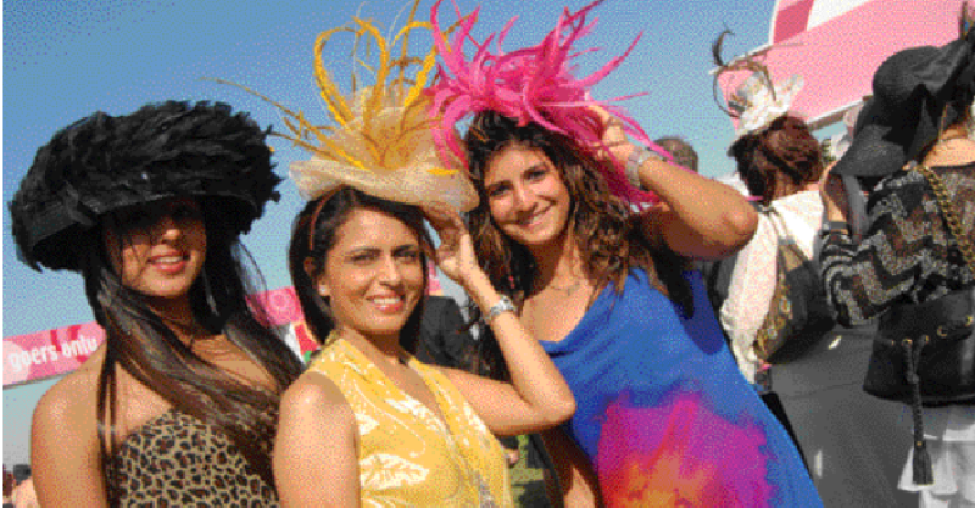
Letter from the Gulf: A (boring) day at the races

by Norbert Schiller May 24, 2007
written by Norbert Schiller

Racing season in the Persian Gulf has all but come to an end with the Formula One Grand Prix in Bahrain. Prior to Bahrain there was the annual Dubai World Cup, the richest horse race in the world; the Formula One power boat race in Sharjah; the Red Bull Air Race in Abu Dhabi; the Dubai off-road desert rally; a number of sailing regattas and oh yes, let us not forget the weekly camel races (though they have lost a lot of their pizzazz after child welfare groups forced the Emeratis to replace pre teen Indian and Pakistani boys with robotic jockeys).

The end of racing usually means the end of winter. From now on each day becomes hotter than the previous and the only thing to look forward to is an early exodus before the onslaught of summer.

This year I was fortunate to have covered two of the most prestigious races; the 12th running of the Dubai World Cup followed by Formula One in Bahrain. The last time I covered the Dubai World Cup was in 1996, the first year the race was held, when the American horse Cigar won then a record breaking $4 million. Today the prize has risen to $6 million with the total prize money for all seven races held on that day worth $21.25 million dollars.

There is a right way and a wrong way to host international events that are supposed to attract people from all over the world. Dubai with its vast financial resources never ceases to amaze, especially when it comes to its ability to momentarily morph from a desert kingdom to Kentucky or Ascot and over 12 years the World Cup has just gotten better and more exciting. Unfortunately, the same cannot be said for Bahrain’s Formula One.

Formula One racing is the richest and most powerful sport in the world. It ranks alongside football’s World Cup and the Olympics and according to Russell Hotten, author of “Formula One: the Business of Winning,” some grand prix races are watched by TV audiences of 800 million. And, unlike the World Cup or the Olympics which take place every four years, Grand Prixs are held 11 times a year. Formula One is more than just a race; it is an opportunity for the biggest players in the auto industry to test out hundreds of millions of dollars worth of research and development. I asked one long time Formula one journalist why the likes of Ferrari, McLarens and BMW Sauber are always atop the leader board. “$400 million dollars,” he replied. “Ferrari invests $400 million more than, let’s say, Etihad Aldar for the same car.”

Lacking in glamor

You would think that kind of money would come with a lot of glamour. But from what I saw in Bahrain, the glamour came only in the 90 minutes of racing. When you mention Monte Carlo, Indianapolis, Sao Paulo one not only conjures up visions of motor sports but more importantly the atmosphere that surrounds the sport.  Unfortunately that was all lacking in Bahrain. For the first two days of practice sessions and time trials there was hardly anyone to be seen in the stands. On race day there were more people but the race track was far from full capacity. When the final lap was finished, the stands emptied and everyone went home. The magic that attracts and the magic that makes people linger long after the checkered flag amid the whiff of burnt rubber and the stench of sweat and gasoline was not there.

Part of the problems was obvious. Tickets were expensive and even if you were willing to buy a ticket there was always the problem of getting to the track, a half hour drive from the capital. There was no public transportation, only taxis who were charging anywhere from 20 to 30 Dinars ($50 to $80 dollars) for a one-way trip. 

In a country that has always prided itself for its liberal stand on entertainment and alcohol, why did it suddenly clam up on race day and force the winners to celebrate with an alcohol-free rose-flavored carbonated beverage that came in what appeared to be a Champagne bottle? Why did the authorities revoke visas for single women who they deemed unfit and then prevented other single women from entering to the country. Celebrities? Hmmm. Ok, former tennis legend Boris Becker was present, as was a Porsche-sponsored Miss South Africa but where are all the western expatriates? It doesn’t take a genius to figure out why a bunch of fair skinned westerners didn’t show up at a race track in the middle of a desert just to sit in the sun and watch cars going round in circles without something refreshing in their hands!

Booze brings the people

Dubai, on the other hand knew what it had to do. Sheikh Mohammed Al Maktoum deemed the race venue an international zone and racing lovers partied all day. And guess what? An estimated 50,000 people attended the one-day event, many flying in on chartered planes from far-flung destinations.

But Dubai makes it a point of allowing in those less fortunate than the free-wheeling jet-setters. Since the first race back in 1996, the outer perimeter of the track below the grandstands is reserved for Sudanese, Egyptian, Somali and other laborers who set up small camps on blankets with their families. I compare them to the deck-class passengers on luxury liners of the early 20th century; everyone is going in the same direction it’s just a matter of in what comfort. Bahrain could learn a thing or two from the Emirates on how to run an event.

Next year, when Formula One comes back to Bahrain the authorities should put on some public transportation and offer discounted tickets. Most importantly, it should inject a bit of fun. For in 2009, Abu Dhabi will be added to the Formula One circuit. What that means for Bahrain is anyone’s guess given that their contract comes up for renewal shortly thereafter. What Bahrain does not want to happen is to be upstaged by Abu Dhabi, particularly when it was the Bahrainis who had the honor of bringing Formula One to this part of the world in the first place. Then again, isn’t competition what it’s all about?

Norbert Schiller is a photo editor and photographer at large with United Press International (UPI)

May 24, 2007 0 comments
0 FacebookTwitterPinterestEmail
GCC

A global network in the making: Nokia and Siemens teaming up for mobile web of data

by Executive Staff May 24, 2007
written by Executive Staff

In the ever expanding telecommunications industry, rife with new acquisitions, joint ventures and mergers, the recently formed Nokia Siemens Network has ventured into the fray to connect a projected 5 billion people by 2015.

The Nokia Siemens Network (NSN), a 50-50 joint venture (JV) between the two European  telecommunications’ powerhouses that was pending agreement since last June, has a top three global position in the industry, valued at $31.6 billion.

The network was only launched in April this year, delayed due to Nokia’s concerns over bribery investigations at Siemens that had led to the arrest of several former Siemens employees, including Thomas Ganswindt, former head of the German company’s telecommunications equipment division.

Based in Helsinki, Finland, NSN’s chairman for the Middle East and Africa, Dr. Walid Moneimne, said the motivation behind the JV was to consolidate the two companies’ research and development teams, and become the world’s No.1 communications enabler.

The merger of Siemens’ networks business group and Nokia’s carrier-related operations is also aimed at cutting costs to make the companies more effective in the global market. Expecting to slash annual costs by an estimated $2 billion by 2010, most of the savings will come from restructuring and a 10-15 percent reduction in the network’s 60,000-employee work force. Annual sales are projected at $20.2 billion.

Big future looming

“We see the telecommunications market by 2015 at five billion customers either connected by fixed line or broadband—about 70% of the world’s population. Bandwidth will grow a hundred fold, so that gives you an idea of the future—a 50% increase in requirement,” said Moneimne.

The Middle East and Africa (MEA) will be a major focus of NSN’s rollout worldwide, in addition to the rapidly emerging markets of India and China.

With only 300 million people connected out of the MEA’s combined population of 1.3 billion, that figure is expected to double to 600 million by 2010 as penetration rates increase and access to networks expand. “We are talking of a huge opportunity and demand to deploy these networks in the MEA region,” said Moneimne.

The network’s entry into the region is opportune, coming at a time when major regional operators such as MTN, MTC, Etisalat and Qtel are expanding and increasingly operating in new markets. The growth of regional operators, particularly Kuwait’s MTC through its acquisition of pan-African mobile operator CelTel in 2005, gaining access to 14 African markets and investing billions of dollars to bring infrastructure up to scratch, will also be a boon for NSN’s regional strategy.

Region presents challenges to growth

NSN recognizes that the growth of the telecommunications sector in many markets in the MEA, particularly Africa, are being hindered by insufficient infrastructure and low incomes.

“There is a level of income that determines what people can do. Our goal is to work with operators to bring the best technology at the lowest price. On the other side of the spectrum are countries where there is a 100% penetration and handset replacement is high, so we will implement 3G networks and a major technology refresh as content (music, video) becomes more important,” said Moneimne.

In more advanced markets in the region, NSN are carrying out pilot tests on WiMax technology in certain cities, although Moneimne declined to say which ones.

“Our objective is really to see what the market needs, to put fixed and mobile together, 2G, 3G and WiMax solutions. All present a big investment for our customers,” he said.

The internet is also a major driving force for the network.

“When we look at 5 billion connected, the internet is at the center of that as all content is on the internet. Internet companies have a vested interest in this market,” Moneimne said.

However, expanding the network in Africa and the Middle East is not without its challenges,

Moneimne conceded. “Human resources are limited and it is a problem to deploy networks, particularly for issues of a high technicality,” he said. Lebanon was resultantly chosen as a platform for the region due to the high number of qualified and skilled employees and graduates.

Getting around the issue of inadequate electricity supplies in parts of Africa and the Middle East, NSN have been pioneering solar panels for sites, said Moneimne. “There is a lot of variation in how to use technology. Networks are not huge users of electricity, but will cause electricity generation expansion in certain countries,” he added.

But despite certain drawbacks, the relatively virgin markets of the MEA do present major opportunities compared to other markets worldwide.

“Despite the MEA having some of the highest penetration rates, it also has the least penetrated regions in the world and growing the fastest. Most developed countries are now just seeing mobile subscribers exceed fixed line subscribers, but in the MEA it’s already 75 million mobile subscribers,” added Moneimne.

The network has five product business units—Radio Access, Broadband Access, Service Core and Applications, IP/Transport, and Operations Support Systems—for fixed, mobile and converged networks.

“NSN has the size and resources to compete, but we also recognize that true competitiveness goes well beyond scale,” said Moneimne. The network’s competitiveness will draw on both companies’ research and development teams. Last year a R&D team that is now part of the network demonstrated the world’s first Long Term Evolution (LTE) radio access solution, transmitting data at a rate of 10 gigabits per second via an optical access network four times faster than rates achieved in the past.

Moneimne also said that there will be “major developments” in mobile phone handsets within the next two to three years. “Nokia calls them multimedia computers, so 3G networks are a must, but not just for 3G itself but the follow up, High-Speed Downlink Packet Access (HSDPA). The difference is in bandwidth speed: 2G dial up is roughly 100 bits, then the 3G at 384 kb/second and HSDPA 14 megabits a second. So clearly what all this brings is a HSDPA phone and network that will provide better customer experience and more available services,” explained Moneimne.

Although annual sales are projected at over $20 billion, the network announced in April that it only expects “slight” growth this year due to a “narrowing of visibility” and signs of a slowdown in spending by communications service providers in certain regions. As of April, the financial results of the network have been consolidated into Nokia.

May 24, 2007 0 comments
0 FacebookTwitterPinterestEmail
GCC

Fake or Real? :Counterfeits major issue

by Executive Staff May 24, 2007
written by Executive Staff

Curbing the counterfeiting and smuggling of goods has become such a pressing concern for international businesses that last year 19 companies teamed together to create a Brand Owners’ Protection Group (BPG) in the Middle East to tackle the region’s part in the $500 billion global counterfeit trade.

According to the Dubai Economic Department between 2000 and 2004 the GCC authorities seized fake products worth $50 million, of which $35 million was confiscated in Saudi Arabia alone. In a raid on a warehouse in October last year, the Saudi authorities seized 90 tons of copycat Unilever products, worth $1 million.

Along with Saudi Arabia, the UAE has become a focus point for the BPG as the Emirates’ main port, in Dubai, is a major regional export hub.

“More than 7 million containers pass through Dubai with 20% annual growth according to Dubai Ports, so it is very important for brand owners to be protected,” said Omar Shteiwi, chairman of the BPG and regional intellectual property advisor for Nestlé Middle East in Dubai.

The BPG has been working closely with Dubai Customs, which has established an Intellectual Property Unit (IPU) and been on the offensive, seizing counterfeit goods estimated at $3.9 million between February and June last year. The IPU has the right to seize and destroy goods that are entering or in transit.

By comparison to Dubai’s IPU, set up in December 2005, seizing goods in other countries is not as easy said Shteiwi, despite trade, patent and customs laws in the GCC area.

To improve seizures at the point of entry, the BPG is providing educational workshops to inform customs what to look for in shipments. “Hopefully we will have a kind of engagement with the customs to train inspectors to differentiate between genuine and real products,” he said.

Robert Taylor-Hughes, CEO of Beiersdorf Middle East, said finding the source of the fake goods was the best chance of nipping the problem in the bud, but added that the judiciary system in the UAE lacked appropriate penalties.

“One seizure took place over a 10 month period where we found a ring that had been taking in goods from China. We allowed them to enter the Dubai Free Zone, leave and enter the warehouses of counterfeit traders to trace the distribution network. The downside was the judiciary system. Our legal and investigative costs were about 80,000 euro but when he appeared in court was fined $817. The threat of the deterrent is simply not large enough,” he added.

To try and improve legislation, the BPG has organized a one-day seminar with the UAE Ministry of Economy and Trademark Office to exchange information, come up with recommendations, and involve the enforcement agencies.

Although the UAE still has a way to go in handing out tougher sentences, some countries’ judiciaries are taking the issues more seriously, such as in Saudi Arabia and Iran.

Saudi Arabia carried out 100,831 inspections last year at stores selling foods and fast moving consumer goods (FMCGs) that resulted in the seize of 798 tons and 943,231 small pieces of food unfit for human consumption, according to the Saudi Ministry of Economy and Trade.

Iran has a massive problem with counterfeit goods entering the country, largely from China and Central Asia.

Taylor-Hughes said that last year, the Iranian authorities worked closely with Beiersdorf investigators to seize fake goods. “They not only work quickly but are very severe. Both violators were fined $50,000, the message got out, and (illicit activity) quietened down for a year,” he said.

Cosmetics and toiletries firms such as Beiersdorf have been particularly affected by the counterfeit trade, estimated as high as $210 million in the GCC last year—which could be as much as 10% of the overall Gulf market for cosmetics and toiletries.

In Egypt, the company had to pull its whole line of sun-creams following email complaints from customers that got badly sunburned in Sharm El Sheikh after using counterfeit lotions.

“We removed all goods from the market and are now holo-spotting in Egypt—you need a special eye glass to read the code, and counterfeiters can’t duplicate this new technology so far,” said Taylor-Hughes.

The holo-spot, which costs half a euro per spot, is solely being used in areas where the company has had problems, such as Egypt and in Russia, where Beiersdorf found counterfeit shampoos on sale.

A further issue brand owners face is the lack of statistics and data about the extent of the counterfeit trade in the region. To address this the BPG has commissioned international auditing firm KPMG to carry out an economic study on the counterfeit trade in the UAE that will focus on FMCGs, pharmaceuticals, cosmetics, and automotive spare parts.

“The added value of this study will be a roadmap for us and the government as to whether to adopt new intellectual property laws, improve existing laws, give more authority to customs, and enable brand owners to carry out investigations,” said Shteiwi.

The size of the Saudi market is a strong selling point and local banks will in any case make it a matter of their pride to be present and very visible in KAFD and later on in KAEC financial center. That will widen the Saudi financial scene and elevate its profile but it will not by itself fulfill the vision for the two huge projects. Then again, it must be true for new financial districts what is true for the whole world of finance: without risk, no profit.

May 24, 2007 0 comments
0 FacebookTwitterPinterestEmail
GCC

Time to invest in Arabia Felix?

by Executive Staff May 24, 2007
written by Executive Staff

Last month’s Investment Opportunities in Yemen conference was the first of its kind to be held in the country. It highlighted some of the striking challenges and opportunities in the Arab world’s poorest and most undeveloped state, which despite myriad difficulties now faces a period of transformation.

Long considered the backward underbelly of Arabia, one of the world’s poorest countries and certainly one with the highest number of weapons per capita, Yemen is stepping up efforts to entice investors into what is virtually a pristine economy.

A daunting host of political, social and economic problems currently lay siege to the country’s development, however, including a frighteningly high population growth, water shortages, weak government control, over-reliance on oil revenues and endemic corruption.

Nevertheless, Yemen’s investment authorities are doing all they can to attract a new influx of foreign capital—especially from the GCC—and reverse the economic misfortunes of recent times.

Getting it together

The Investment Opportunities in Yemen conference, which, after being postponed twice, eventually took place late last month in the capital, Sanaa, was largely designed as a private-sector follow-up to an international donors’ conference held for Yemen in London last November.

That event raised some $4.7 billion in pledges to support Yemen’s development, about half of which came from the GCC, to which Yemen wants—perhaps ambitiously—to accede within the next decade.

This time around, though, the focus of the conference was firmly on private investment. A packed house of some 650 delegates and 70 ministers from across the region gathered for a two-day series of speeches and debates on Yemen’s prospects, whilst a trade exhibition showed off some of the country’s key investment opportunities, mostly in the construction, manufacturing, real estate, tourism and energy sectors.

“Yemen is witnessing a significant transformation marked by a will and determination to create a prosperous future full of welfare and peace,” said President Ali Abdullah Saleh, the strongman who has managed to hold the country together through long decades of civil strife.

“We realize that today’s world is one of economic blocs, a world marked by heated competitiveness and rapid transformation in all economic aspects where there is no room for those who think traditionally,” he told the conference.

But although Yemen may lie in the same geographical zone as some of the world’s richest states, in most other respects it has more in common with Ethiopia than the Emirates—something which might not change too much in the near future.

Towards the edge

Crippling problems face Yemen as it looks to develop and diversify its economy. Amongst the most worrying of these is spiralling population growth, which at a rate of over 3% puts Yemen amongst the fastest-growing nations in the world, and will levy a even greater toll on some resources, especially water, which are already close to breaking point.

This population, whilst large in size, is small in purchasing power. About 45% of Yemenis live under the poverty line, according to the UN, and almost three-quarters reside in rural areas. Unemployment is unofficially over 40%, and a sizable chunk of the average male income (and waking hours) is dedicated to qat, a natural stimulant which is the country’s most lucrative cash crop and which occupies the majority of fertile land.

GDP growth, meanwhile, is barely keeping up with population growth, whilst inflation is equally onerous, reaching a peak of 18.4% in 2006 according to the World Bank.

As part of the aid deals and donor grants negotiated with external benefactors, a halting program of reforms has nevertheless been gathering pace over the past 18 months, although some measures may prove unpalatable to the local population.

“The government finds itself in a difficult position between keeping its promises to donors on one hand, and treading carefully with the local population on the other,” says Dr. Ali al Abdulrazzaq, Senior Economist with the World Bank in Sanaa.

 “They need to be very careful with measures that may have an effect on income levels, such as cutting fuel subsidies or raising taxes,” he told Executive.

And whilst the investment authorities have enacted specific reforms to attract capital, such as introducing a new investment law in 2003, modernizing real estate legislation and opening a “one-stop shop” for interested parties, Yemen is still an opaque place to do business.

Corruption is considered to be endemic and the entrenched tribal power in most parts of the country mean that it is often more valuable to have the backing of the local tribal power than that of the central government. 

Energy levels

Underlying all these issues is a fundamental over-reliance on oil, which constitutes 71% of government revenues and is already suffering from waning production as reserves dwindle.

Yemen presently pumps some 350,000 barrels of oil per day (bpd), and whilst the majority of the country’s exploration blocks have not yet been probed, analysts believe they are unlikely to wield any earth-shattering finds. Nevertheless, the Ministry of Oil and Minerals is about to launch a new bid round for interested parties, which include a number of big international names.

Yemen’s gas reserves have perhaps more to offer, with the country’s largest-ever single investment, the Yemen LNG project, currently under construction. A consortium made up of the Yemeni government, Total, Hunt Oil and two Korean companies is investing a total of $3.7 billion in the plant, which is set to come onstream in early 2009.

It will extract gas from an exploration block in the centre of the country, transport it by pipeline to a state-of-the-art plant on the Gulf of Aden and then convert it to LNG before shipping it on to clients.

“The plant will produce around 7 million tons of LNG per year, or about 180,000 barrels of oil equivalent [BOE]” said Joel Fourt, Chairman of the Yemen LNG Company. “In answer to the question: is it possible to build a world-class, world-scale project in Yemen, the answer is yes,” he told delegates at the conference.

The real question that many are asking, though, is how Yemen can diversify its economy away from this over-dependence on hydrocarbon revenues: LNG alone is not a long-term solution.

Milking the land of honey

One possible answer is tourism, a sector which the authorities seem particularly—and justifiably—eager to promote. Yemen’s rich cultural heritage, its old towns, unspoiled beaches, mountains and islands, theoretically put the country head and shoulders above regional tourist hotspots like the UAE in terms of natural attractions. 

Yet a consistently bad image, a lack of infrastructure and expertise, poor air connections and a meagre promotional budget mean that Yemen is light years behind its northern neighbors in terms of drawing in holidaymakers.

Speaking to Executive, Yemen’s Minister of Tourism, Nabil al-Faqeeh, says that the first priority is simply to build more infrastructure.

“In Yemen we have a lack of rooms, a lack of hotels, a lack of restaurants. We need to attract as many investors as possible for these kinds of projects,” he says.

“In 2006 we only had 382,000 tourists. We want to increase this by 20% in 2007 and we’re changing our strategy to try and attract more Arab tourists, especially from the GCC, where traditionally we have concentrated heavily on the European market.”

But finding the money for these projects is problematic. The state lacks the kind of disposable oil revenues which nearby countries like the UAE have been able to pour back into promoting tourism and real estate, whilst the local banking system in Yemen is too underdeveloped and illiquid to support start-up needs for new investors.

“Financing is the biggest problem for new tourist projects”, Alwan Saeed al-Shibani, Chairman of the Sanaa-based Universal Group, told the conference. “Our commercial banks don’t give out loans, and that needs to change. We have Gulf investors who want to start projects but they’re being held back by this.”

Yemen may also have to shrug off its image as a minor hotbed of kidnapping. Small groups of tourists travelling in rural Yemen, usually Europeans, are periodically spirited away by local tribes who treat their “prisoners” like guests whilst making modest demands on the government, such as building roads, hospitals or schools in their villages.

Island life

According to Al-Faqeeh, the government has no particular geographical priorities for tourist development, but one special area of opportunity is Yemen’s roughly 190 islands. Some have already caught the attention of regional powerhouses such as Orascom and the Mikati group, both of whom are reportedly finalizing agreements to develop islands in the Red Sea.

Yemen’s largest and best-known island is Soqotra, which lies in the Arabian Sea south-east of Aden and boasts a unique ecosystem which has evolved independently of the mainland. Potentially a tourist magnet, visitor numbers have been gradually on the up since an airport opened on the island several years ago, although the ministry are at pains to point out that no major developments will be allowed here: instead, they want to attract a classier breed of eco-tourists.

But although Soqotra looks as if it may thankfully be preserved from mass tourism, the mainland is already gearing up for some large-scale tourist and residential developments spearheaded by courageous investors.

The biggest and most ambitious of these is the Jenan Aden project, which will cover 14 km2 of pristine mountainside and beaches just outside of Aden. Phased over 10 years, the development is being led by a Saudi-Yemeni joint venture, Bin Farid and Baghlaf, and when complete will contain 4,000 residential units, four hotels, two marinas, a school and a university.

“There’s definitely an element of being pre-emptive in the market,” says Chris Orrell, Chief Operating Officer of the project. “But there’s also a belief that this is Yemen’s time. It is an exceptionally beautiful country with a great deal of potential.”

Most developers planning projects in the country say they are targeting a relatively small crust of high-income locals, but more importantly the Yemeni expatriate population, which is largest in Saudi Arabia, other Gulf states and also the UK.

Rise or fall?

No-one would argue that huge amounts need to be done in order to improve Yemen’s business climate, particularly, according to investors, in terms of the real estate registry and the commercial court system. But it seems that the government, at least, has realized the urgency of the need to diversify away from oil.

“I think many of the changes enacted over the past 18 months will really begin to bear fruit in 2008,” says the World Bank’s al-Abdulrazzaq. “The government is pushing for reforms, which is encouraging.”

Yemen is clearly only at the start of a long road to attract foreign capital, and it will need to create a positive track record that can earn the trust of investors, particularly those from outside of the GCC.

It is uncertain whether sufficient time remains to tackle critical issues like population growth and declining resources before it is too late, but there is enough excess cash available in the region, enough vested interest in keeping Yemen stable, and enough latent potential in the country itself to suggest that this could be the start of Yemen’s entry into the modern age.

Battling local tribesmen, Sanaa claims Iranian-backed militants wish to establish a Shia-run imamate

Yemenis are no strangers to unrest, having fought their way through a string of civil wars in the past half-century, but a longstanding dispute in the northern Sa’ada region of the country is now erupting into something approaching full-on warfare.

The conflict is the latest in a series of skirmishes between government forces and followers of the al-Houthi clan, who are based in the isolated mountains close to the Saudi border around the town of Sa’ada.

The sides have already crossed swords in two previous clashes, in 2004 and 2005, and the latest fracas has intensified rapidly since the start of 2007 to claim hundreds of lives on both sides.

Confusion surrounds the root cause of the fighting, which now appears to have spun completely out of control. The government claims that the Houthis, bankrolled by Iran and radicalized by the situation in Iraq, are attempting to establish a Shia-ruled Imamate in northern Yemen.

Others argue that the conflict has little to do with Sunni-Shia divides and is more related to the weakness of government power outside the main cities.

“It’s more a case of the government stepping on the toes of the local tribes and trying to extend its control in certain parts of the country,” said one western diplomat in Sanaa. “The system of power in Yemen means that these areas are largely autonomous, and they don’t like any outside interference—even from their own government.”

Beset by heavy losses and little progress, the army is pouring vast resources into Sa’ada. The local press reports that warplanes, tanks, artillery and thousands of soldiers are being dispatched northwards, although the region has been completely sealed off and it remains difficult to establish the reality on the ground.

“Even we can’t really understand what’s going on up there,” one civil servant in Sanaa told Executive. “Yemenis have never been religious extremists—both Sunnis and Shias in this country have traditionally been very moderate in their outlook.”

Whatever the case, the fighting has again shown up the fragility of a state in which allegiances are first and foremost tribal, not national, and in which the army is far from being the only significant military power.

May 24, 2007 0 comments
0 FacebookTwitterPinterestEmail
Comment

A Farewell to Cairo

by Ben Wedeman May 24, 2007
written by Ben Wedeman

Last June I left Egypt after eight years as CNN’s Cairo bureau chief and correspondent. I wrote this back then, but never finished it as I was buried under an avalanche of packing cases. But now I’m back in Cairo, if only for a few days, I’ve decided I really have to get this out.

Covering Egypt was the experience of a lifetime. I’ll admit: a lot of that time was spent on the road, in Iraq, Israel/Palestine and elsewhere in the Middle East, in Africa, in the Balkans, in Afghanistan and Pakistan. But my home was Egypt.

And over the eight years, I saw dramatic changes here. The first few years were relatively quiet, but things really started to take off in early 2005 when agitation for political reform in Egypt took off. The people of Egypt had rediscovered their ability to raise their voice, and, I suspect, they won’t be going silent any time soon.

Raucous street protesters demanding the resignation of long-serving president Hosni Mubarak became routine. The protesters passionately denounced the entire Mubarak family, the pervasive intelligence services, the police, and the ruling, sclerotic, National Democratic Party.

The regime has never been able to come up with a convincing or effective response to the barrage of criticism, and instead has chosen force and intimidation to silence its critics. At almost every opposition protest, demonstrators are massively outnumbered by riot police, cops and plain clothed agents, commonly described in Egyptian Arabic as baltagiya—thugs—often armed with nasty looking short black rubber truncheons. As a result, protests often turned violent.

For me, covering Cairo street politics became a contact sport. You are shoved around, you shove back. To meekly obey barked orders from the authorities is a sign of weakness. You bark back and, if you can, you throw your weight around.

I’ll miss the street fighting and the street smarts that set the people of Egypt apart. Over millennia, Egyptians have developed a wicked, subversive sense of humour that hones in on the powerful, pompous and pretentious, reducing them to mere mortals.

I’ll miss that wit, the jokes, and I’ll also miss the courage of those in Egypt who speak with razor-like acuteness that cuts through the often-clumsy government propaganda and group-think a succession of military-dominated regimes fostered over the last half century.

I already miss Tahsin Bashir, a retired Egyptian diplomat who passed away a few years ago. Tahsin, a small man with a high voice and keen, insightful mind, liked to quip that there were more mummies in Mubarak’s cabinet (at the time—the current group of ministers is relatively young) than in the Egyptian museum.

I’ll miss the likes of part-time novelist (and full-time dentist) Alaa al Aswani, whose best-selling book, “The Yaqoubian Building,” lifted the heavy lid of silence off sensitive aspects of Egyptian life—political corruption, fanaticism, terrorism, sexual exploitation and harassment, homosexuality, just to name a few. Through his eloquent, vivid, poignant prose, Aswani conveys the full weight of decades of disappointment and dashed dreams—but with an affection and love for Egypt that is infectious. (His novel has been made into a movie by the same name. See it.)

And I’ll miss George Ishaq, the feisty coordinator of the unruly Kifaya (Enough!) Movement. Kifaya’s noisy street protests resound with a delicious lack of respect for authority. George, a retired teacher with a shock of white hair and an impish grin, delighted in dishing out analyses of the country’s dire political and economic straits so well spiced with humour, irony and indignation that sometimes I didn’t know whether to laugh or cry for Egypt.

And then there are others for whom politics is a pointless sandstorm. Like Zahi Hawas, director of the Egyptian Supreme Council of Antiquities. The tireless Zahi is fanatically devoted to Egypt’s ancient heritage. Zahi is the only official in Egypt who always said yes to whatever I asked for. Once, at 6:30 a.m. on a weekend, I called him at home to get permission to climb the Pyramid of Khufu to shoot a story. “Of course,” was his immediate reply.

And then there are the ordinary Egyptians who never made it into any of my reports, like Ismail the munadi. A munadi is one of those quintessentially Egyptian professions without which Cairo would surely collapse into utter, irrevocable disorder. A munadi is the workingman’s valet parking. Ismail would take my car keys—and car—and let me go about my business. Hours later, even at 3 AM, I would come back to find Is mail, who would quickly locate keys and car, and with a broad smile, takes my five Egyptian pounds, showers me with thanks and wishes for a happy day, night or rest of your life.

This reflexive charm and courtesy act as a balm that gets you through what can be the most trying of days. Egyptians consider scowling, grumpiness, and short, curt answers to be bad manners. I couldn’t agree more.

In a country where poverty is pervasive, where the vast majority barely scrapes by, it always amazed me that so few people were bitter or resentful of those more fortunate.

My hair is a lot greyer than it was when I first came here nine years ago, but my sense of humour is, if anything, in better shape than it’s ever been. And for that I have the people of Egypt to thank.

­

May 24, 2007 0 comments
0 FacebookTwitterPinterestEmail
GCC

Regional trade for China awakens dragon

by Executive Staff May 24, 2007
written by Executive Staff

In what is being dubbed “the New Silk Road,” trade and political ties between China and the Arab Gulf are growing stronger as both regions take an increasingly prominent role on the financial world stage. Politics is playing its part, with Saudi Arabia’s newly appointed King Abdullah opting for Beijing over Washington for his first trip overseas last year, and Chinese President Hu Jintao repaying the visit with trips to Riyadh and Dubai.

Bilateral trade between the United Arab Emirates and China is soaring as Emirati companies look eastward for investment opportunities to diversify away from oil, while Beijing secures energy sources and new export markets to keep its burgeoning economy afloat.

Strictly business

“Arabs see China purely as business, at least for the moment,” said Glen Osmond, managing partner for Middle East Strategy Advisors, a leading strategy consultant and investment advisory firm in the GCC.

“The Chinese don’t have problems such as political baggage or externalities like protecting the region, and are not here for consumers—the GCC is not a major consumer of Chinese goods compared to the EU or US—but for raw materials,” he added.

China has been quietly taking advantage of its negligible political history in the Middle East and Africa over the last five years, investing billions of dollars in infrastructure projects, signing energy deals, and attracting Gulf money, estimated as high as $20 billion in the past year from the GCC countries alone.

Although Saudi Arabia, the Middle East’s largest economy, has attracted the lion’s share of Chinese investment to the region and been more active in entering the Chinese market, the UAE is slowly catching up.

Since 2001, trade has grown by 30% per annum and the UAE is now China’s top export market in Western Asia and North Africa, according to Global Sources, with exports reaching $14.2 billion in 2006, up from $8.7 billion in 2005. Trade is likely to double by 2010 if targets projected by the Chinese government prove correct. Based on past trade growth, surging 45.5% in 2004 alone, this figure doesn’t seem to be overly optimistic.

“The UAE is a trading centre for the Middle East, so I think this year, or next, trade will grow at high speed,” said Han Xi, Vice Commercial Consul at the Consulate General of China in Dubai.

Dubai’s rulers are certainly aware of the potential.  “We want to be number one, and not second. If we join forces together (China and the UAE), we will be number one,” the UAE’s Vice President and Prime Minister Sheikh Mohammed Bin Rashid Al Makhtoum said at a recent press conference.

But Dubai’s ruler is also aware that China is not the only game in town. Trade between the UAE and Malaysia soared 20.7% last year to $3.4 billion while UAE-India trade not far behind China at an estimated $11 billion in 2006. India has emerged as Dubai’s largest export destination ahead of Pakistan, Iran and Kuwait, Indian investment in the UAE has doubled in the past four years and trade is expected to surge to $20 billion by 2010.

Indeed, in a seeming about face on the growing UAE-China relationship, Sheikh Mohammed also called for raising India-UAE bilateral trade to the ‘number one’ spot in the region.

But Sheikh Mohammed’s statement is perhaps more about pragmatism, realizing the UAE’s need to have its fingers in many pies. As Osmond pointed out, “the more buyers the better. It’s a souk mentality, and they have a huge machine and it needs to be fed.”

India certainly has a more established connection with the UAE, bolstered by approximately 1.4 million expatriate Indians working in the Emirates versus an estimated 50,000 Chinese expatriates.

India however lacks the political and military position of China on the world stage (China is widely seen as a potential counterbalance to the US that Middle Eastern states are keen to develop), and is not a manufacturing powerhouse on par with China. Indeed, in terms of trade with Dubai the statistics speak for themselves: 36.6% of textile imports, 40.7% of furniture, toys and sports products, and 48% of all footwear, headgear, umbrellas and flowers came from China in 2005. And according to the Dubai’s Department of Ports and Customs, 17% of all of Dubai’s imports came from China in 2005, making China Dubai’s top supplier of imported goods.

“Dubai is the third largest re-export market in the world, after Hong Kong and Singapore—that is a very impressive statement,” said Bill Janeri, the Middle East general manager of Global Sources, a Hong Kong-based publisher and trade show organizer.

Enter the Dragon

There are now more than 1,000 Chinese companies operating in the UAE, according to Standard Chartered, and that figure is expected to grow as investment floods in.

“China’s first export markets have traditionally been the US or Europe, but everyone wants to sell to these established markets,” said Janeri. “So over the years Chinese companies have either sold to there or been creative and looked for new markets when demand is equally strong—markets where they can be the number 1, 2, 3 player in their segment. Dubai has shown that it is a good location where these companies can ‘plant their flag,’ win new customers, and build market share where demand is strong.”

Global Sources will hold its first trade fair in the region, the China Source Fair, in Dubai in June—with over 500 exhibitor booths, it will be the largest ever exhibition of Chinese products in the Emirate, according to the Dubai Trade Center.

Although only $200 million was invested by private Chinese companies in the UAE in 2005, that figure surged to $800 million last year and UAE financial institutions are scrambling to procure a slice of the growing trade between the UAE and China.

Standard Chartered have recently rolled out a UAE-China ‘trade corridor’ to cater to small and medium-sized enterprises (SME’s) in the UAE and China.

“We felt this need as China kept the heat turned up on its Gulf marketing blitz to overtake such industrial giants as the US and Japan to become the top exporter to the UAE since 2004,” said Sandeep Bose, Regional Head of SME Banking at Standard Chartered in Dubai. “This is expected to continue as the most populous nation on earth is stepping up its export offensive, aided by the fact that its products are more competitive than the products of most other industrial nations.”

But the investment deals and joint ventures the Chinese government is most interested in are Abu Dhabi’s gas, petrochemicals, and aluminum nuggets.

 “I wouldn’t be surprised if China makes strategic investments in the region to develop the relationship in all the energy rich countries… Britain has been in the UAE for how long? China wants a piece of that,” said Osmond. 

Non-energy imports from the UAE are steadily growing however, up from $2 billion in 2005 to $2.8 billion last year. Investment in China’s booming economy, the fourth largest in the world, is also increasing, spurred on by high liquidity in the UAE and Gulf markets.

“Because oil prices are high there is more interest by UAE businessmen in worthwhile markets, and China has the economic and social elements for attracting such business,” said Han.

Dubai’s mammoth construction companies Emaar and Dubai Holdings, both responsible for tens of billions of dollars in real estate projects throughout the MENA region, have also opened offices in Shanghai. DP World, the world’s fourth largest port operator, also has a corporate division in the North-Eastern Chinese city of Tsingtao.

“I think this is the beginning of Dubai real estate coming to China,” said Han.

But it is not just real estate that is attracting Arab businessmen.

“I went to a trade show in Yiwu recently and part of the town is all Middle Eastern restaurants and businesses,” recalled Janeri. “It doesn’t surprise me that other markets are looking to invest in China. There is gaping wide demand for certain products—in fact, everything you can imagine,” he added.

Interest in China is certainly growing, with the consulate in Dubai China’s busiest worldwide. 

“Everyday we receive more than 300 visa applications—you can see more people want to go to China,” said Han.

An increase in airline flights is also indicative of the growing links, with China Southern Airlines opening an additional route between Dubai and Guangzhou at the end of last month.

Lost in Translation

Dealing with Chinese companies is not always easy—a common complaint voiced by businessmen ever since China opened its doors to the outside world in the 1980s, citing cultural differences and transparency in business practice.

“You hear stories of Chinese signing deals with companies and then reneging on the deal, saying it didn’t comply with their legal definitions or simply disappearing,” said a source at a real estate firm.

“There have also been cases of the Emirati authorities closing down construction sites as in the heat the Chinese workers strip down to their underwear and only wear hardhats, which is against UAE law—they have to cover up,” he added.

Han acknowledged that the consulate had received complaints, largely about wording and English terminology, but said the language issue and business transparency were being addressed.

“Both languages are difficult to learn, so it’s not a deep relationship but a growing one between the Arabs and the Chinese,” said Han.

The relationship is in fact an ancient one that is being gradually rejuvenated.

According to historical texts, some 1,400 years ago there were an estimated 10,000 Arab and Persian traders in Guangzhou (Canton) plying the waters between China and the Middle East. Evidence of the ancient link is also present at Dubai’s Ibn Battuta Mall, where one section is devoted to the famous Tangerine’s travels in the 14th century to China—the exterior a partial replica of the Forbidden City and the interior painted red and offset with traditional Chinese woodwork.

The dark side of the relationship

But it is the Chinese Ministry of Commerce-supported Dragon Mart in Dubai that is the Emirates’ real China Town.

The China connection is not only bolstering official trade ties. As has been the case for most rapidly growing markets, organized crime is on the rise in Dubai. Russian and Indian money launderers are considered the main perpetrators in the financial line, taking advantage of Dubai’s construction boom and real estate speculation to launder money without paying out large commissions to “clean” the cash. But in terms of counterfeit goods, China is the bad guy.

One source likened China to a “massive Xerox machine,” ready to copy any product a buyer might want. China is indeed the No. 1 manufacturer of counterfeit goods, which are estimated at $500 billion worldwide.

Dubai has become the conduit for that illicit trade in the Middle East, with Dubai ports handling some seven million containers a year. Although most of the illicit trade transactions are between Chinese suppliers and Middle Eastern buyers, Dragon Mart, a mall and business center established three years ago, has become the hub for Chinese organized crime, according to a source in the real estate sector.

Earlier this year an undercover Dubai cop was sent to the Dragon Mart to investigate organized crime links at some of the center’s businesses. Told to call in on the hour, every hour, the cop suddenly disappeared. The Dubai police made a raid on the Dragon Mart and after kicking down a few doors, found the policeman dead in a freezer.

Such gruesome incidents are not the only illicit activity connected with China.

According to the real estate source, construction companies linked to the People’s Liberation Army—China’s largest business owner—were exporting convicts to work on sites in the UAE to cut overheads.

The issue has reportedly become so acute that the UAE government has recently banned Chinese construction workers. “It has become too much of a headache for both contractors and the government to regulate,” said the source.

China denies it is involved in such activity, however.

“It’s not true. China is now free, so if a construction company wants to go elsewhere, workers must have passports and visas,” said Han.

China is also reportedly trying to curb counterfeits. “China has a special department to regulate products, especially for exporting products as too many people want to do forgeries and sell low quality products to our friends—this is not good for business,” he added.

Even if this developing friendship will bring with it certain negativities, both economies are experiencing double-digit growth so bolstering such a relationship can only be prudent business for all concerned parties.

But as Han points out, the increasingly strong trade ties require political and economic stability in the Middle East for the relationship to warm any further.

“I think growth all depends on the regional situation, particularly over Iran. If Dubai keeps silent, like the present situation, China will pay more attention.”

May 24, 2007 0 comments
0 FacebookTwitterPinterestEmail
Financial Indicators

by Executive Contributor May 15, 2007
written by Executive Contributor

Tourism: hotel nights

Arrivals of non-resident tourists staying in hotels and similar establishments

Average annual growth in percentage,

1998-2005 or latest available period

Over the period as a whole, the United States recorded the largest number of arrivals in hotels and similar establishments followed by China, France, Italy and Spain. The 9/11 terrorist attacks resulted in sharp falls in arrivals in the United Kingdom, Mexico and the United States but did not noticeably affect arrivals in most other countries. Countries in central and eastern Europe have recorded strong increases in arrivals since 1990. The graph shows annual growth in arrivals of non-residents averaged over the period since 1998.

Arrivals declined in Brazil, the United Kingdom, Switzerland, Norway and Greece but grew at 6% per year or more in New Zealand, Iceland, Japan, India, Slovak Republic, Turkey and China.

Tourism 2020 Vision is the World Tourism Organization’s (UNWTO) long-term forecast and assessment of the development of tourism up to the first 20 years of the new millennium. It forecasts that international arrivals will reach over 1.56 billion by the year 2020. East Asia and the Pacific, South Asia, the Middle East and Africa are forecasted to record growth at rates of over 5% per year, compared with the world average of 4.1%. The more mature tourism regions, Europe and the Americas, are expected to show lower than average growth rates. Europe will maintain the highest share of world arrivals, although there will be a decline from 60% in 1995 to 46% in 2020.

Trade to GDP ratios

Difference between 2005 and 1992 ratios

in percentage points

In 2005, the unweighted average of the trade-to-GDP ratios for all OECD countries was 45% and 51% for the EU15. For the reasons noted above, there were large differences in these ratios across countries. The ratios exceeded 50% for small countries—Austria, Belgium, the Czech Republic, Hungary, Ireland, Luxembourg, the Neth-erlands and the Slovak Republic—but were under 15% for the two largest OECD countries—Japan and the United States. Between 1992 and 2005, trade-to-GDP ratios for the OECD as a whole increased by 13 percentage points, and the EU15 increased by 14 points. Substantial increases in trade-to-GDP ratios were recorded for Luxembourg, Hungary and Belgium.

Households with access to a home computer

Percentage of all households,

2005 or latest available year

n Penetration rates are highest in Iceland, Denmark, Japan, Sweden, Korea, the Netherlands, Luxembourg, Norway and the United Kingdom where 70 % or more of households had access to a home computer by 2005. On the other hand, shares in Turkey, Mexico, the Czech Republic and Greece were below 40%. Between 2001 and 2005, the percentages of households with access to a home computer increased particularly sharply in Japan, the United Kingdom and Germany. The picture with regard to Internet access is similar. In Korea, Iceland, the Netherlands, Denmark, Switzerland and Sweden, more than 70% of households had Internet access by 2005. In Turkey, Mexico and the Czech Republic, on the other hand, only about one-fifth or less had Internet access by 2005. Data on Internet access by household composition—with or without dependent children—are available for most OECD countries. In general, they show that households with children were more likely to have Internet access at home in 2004.

Ratio of the inactive

population aged 65 and over to the labor force

Percentage

n  The youngest populations (low shares of population aged 65 or over) are either in countries with high birth rates such as Mexico, Iceland and Turkey or in countries with high immigration, such as Australia, Canada and New Zealand. All these countries will, however, experience significant ageing over the next 50 years. The dependency ratio (right panel of the table) is projected to be close to 50% in Belgium, France, Greece, Hungary, Italy and Japan by 2020. This means that, for each elderly inactive person, there will be only two persons in the labor force. The lowest dependency ratios, under 25%, are projected for Iceland, Korea, Mexico and Turkey. All countries will experience a further sharp increase in the dependency ratio over the period 2020 to 2050.

May 15, 2007 0 comments
0 FacebookTwitterPinterestEmail
Financial Indicators

by Executive Contributor May 15, 2007
written by Executive Contributor

 The Beirut Stock Exchange passed through a valley but the BSI closed at 1,209.84 points on April 27, barely seven points lower than on April 2. While the trading floor did not differ from the rest of the country in spending another month waiting for that political thaw, listed companies made some news worth looking at. Solidere sent executives to Egypt for talks with Sixth of October Development & Investment Co. The two companies said in mid April they shortly will sign a contract for developing urban centers in two Sodic properties. Solidere stock nonetheless was under downward pressure in April and traded below $15.25 in the latter part of the month. Banks Audi and Blom announced cash dividends and Bemo announced the listing of 200,000 preferred shares.

Beirut SE: Blom  (1 month)

Current Year High: 1,598.29         Current Year Low: 1,168.36

The Amman Stock Exchange in April fell back from gains earlier in the year and played to the tune of subdued expectations. The ASE Index returned to the 6,000 points range and closed at 5,969.65 points on April 26. Jordan Telecom Group dropped by about 10% in late April after dividend distribution. According to a report by Al Hayat in early April, the stake of BankMed in Arab Bank has increased to 18%, making the Hariri family’s BankMed the largest shareholder in Arab Bank. In an attempt to stimulate liquidity, the Jordan Securities Commission allowed brokers to carry out margin buys on two additional companies in the primary and 11 firms in the secondary market.

Amman SE  (1 month)

Current Year High: 7,407.15         Current Year Low: 5,267.27

 The Abu Dhabi Securities Market entered April by ending a negative trend it had experienced in March with a year-low of 2,839.16 points on April 3 and started moving up again. It closed at 3,066.6 pts on April 26. Shares of Gulf Cement and Union Cement each soared in April with double-digit percentage gains whereas Fujairah Cement saw strong fluctuations. National Bank of Abu Dhabi also gained strongly for most of the month, before dropping somewhat after disclosing 4.7% lower first-quarter profits. Another notable advancer was Aldar Properties. Investor behavior on the ADSM in late April also included repositioning in preparation for the Deyaar IPO on the DFM.

Abu Dhabi SM  (1 month)

Current Year High: 3,833.94         Current Year Low: 2,839.16

The Dubai Financial Market moved mostly sideways in April, closing 98 points higher at 3,812.10 pts on April 26 when compared with 3,714.20 pts on April 1. The big announcement for the month was the $883 million initial public offering by Deyaar, the real estate arm of Dubai Islamic Bank. Investors repositioned themselves to participate in the May subscription for Deyaar. With high volumes in their second month of trading, the DFM’s own shares swung up by almost 50% between April 1 and 22 before losing over half their gains by April 26. A review of alleged past share price manipulations by Shuaa Capital in a Kuwaiti deal brought no evidence of wrongdoing, the Emirates Securities and Commodities Authority said after inquiries with the KSE.

Dubai FM  (1 month)

Current Year High: 5,488.24         Current Year Low: 3,658.13

The Kuwait Stock Exchange was the shining star among the GCC bourses with the most consistent positive performance for the month. The index headed into April after a bit of late-March profit taking at 10,108.7 points and moved up 600 points, or 5.9%, to a 10,710.4 points close on April 25. A number of stocks recorded noteworthy gains but as far as market movers, the month was again in the grip of MTC. The telco had a volume of 532 million traded shares on a single day—two thirds of the day’s total KSE volume—and rose twice by the allowed daily max toward the end of the month. Speculation in the stock rode on expectations that a major block purchase of MTC is in the making.

Kuwait SE  (1 month)

Current Year High: 10,710.40       Current Year Low: 9,164.30

The Saudi Stock Exchange was quite the opposite number to the New York Stock Exchange last month, but only in the mathematical way that where the Dow raced up, the SSE struck out. The rally of the previous month expired on March 25 at 8,620.1 points and, under inclusion of some spectacular one-day drops, the Tadawul Index moved south from there to 7,273.34 points on April 25. Analysts blamed disappointing first-quarter corporate results for the slide that put the SSE back on bearish ground. In a step to give the SSE more worldwide exposure, the World Bank’s International Finance Corporation said it plans to include the SSE in its Global Composite Index very soon.  

Saudi Arabia SE  (1 month)

Current Year High: 17,730.96       Current Year Low: 6,916.85

The Muscat Securities Market had the year’s best month so far in April, achieving an increase in its index from 5556.12 points on April 1 to an intermediate peak of 5,918.89 points on April 18 before slowing to 5,848.56 pts on April 26. Oman’s listed companies achieved a combined net profit of $964 million in 2006, up 19.5% from $807 million in 2005, the MSM announced in April. BankMuscat, the sultanate’s largest bank, reported a gain of 44% in its first-quarter net profits for 2007, to $50 million. The bank’s share price improved by 8% in the course of April, while Oman Air, which reversed losses in Q1 2006 to a profit in the first quarter of 2007, advanced by 15% in the same period.

Muscat SM  (1 month)

Current Year High: 5,956.46         Current Year Low: 4,657.16

The Bahrain Stock Exchange Index sled 50 points between April 1 and 19 before a slight rebound, closing at 2,116.34 points on April 26. The BSE’s index drop of 4.5% since Jan 1 positions the bourse in fifth place out of the seven GCC exchanges for performance, with less fluctuation than most of its cousins. Gulf Finance House moved up temporarily ahead of presenting a new strategic plan. Investment company Esterad weakened throughout April and the drop accelerated after the company announced 43% lower net profit for the first quarter. The Bahraini government, seeking to invigorate the country’s stock market and encourage wider share ownership, launched an initial public offering for 48% of state-owned real estate firm Seef Properties, starting April 26. The offer was sweetened for retail investors through a 12% price discount and 50% deferred payment.

Bahrain SE  (1 month)

Current Year High: 2,251.15         Current Year Low: 1,996.6

The Doha Securities Market is still the region’s most suppressed achiever for 2007 to date, standing 9.67% lower on April 26 compared with the index values on Jan 1. But different to the Saudi Stock Exchange and some of its other neighbors, the DSM moved up last month, by almost 7%, to close at 6,443.48 points on April 26. Nakilat, among the month’s volume leaders, made modest gains in the first half of April but weakened again slightly after announcing 20% higher first-quarter results. Real estate company Barwa made some gains at the end of the month on exceptional first-quarter profits and made news by buying a Paris convention center for $522 million.

Doha SM: Qatar  (1 month)

Current Year High: 9,142.45         Current Year Low: 5,825.80

The Tunisian bourse traded sideways, with the Tunindex fluctuating in the 2,600 points range. The index closed at 2,588.20 points on April 26, some 125 points below the historic high it reached on Feb. 9. The share price of chemicals manufacturer ICF added 16%. Somocer, Tunisia’s largest producer of ceramic tiles, was a loser on the Tunisian stock market in April with a 22% drop. Banque de Tunisie, the largest bank on the bourse, traded sideways.

Tunis SE  (1 month)

Current Year High: 2,712.33         Current Year Low: 1,880.55

One has to wonder if growth in Casablanca is unstoppable as long as local investors face restraints from placing their wealth in other markets. The Casa All Shares Index moved up 779 points in April to a close at a new year high of 12,276.81 pts on April 27. The market thus was up 29.59% since the start of 2007. Leading bank Attijariwafa Bank gained 20% in April. Shares in LGMC Industries, a canned fish producer, moved up 44% between April 12 and 27. A major new privatization measure bypassed the bourse when the Moroccan government sold its maritime transport firm Comanav on March 30 directly to privately-held French shipping group CMA CGM for $267 million. 

Casablanca SE All Shares  (1 month)

Current Year High: 12,273.26       Current Year Low: 6,563.27

With the North African bourses doing better than the GCC exchanges, the Cairo and Alexandria Exchanges showed decent development in April. The Hermes Index reached a new high for the year at 65,735.76 points on April 17 and closed with upward sentiment at 65,589.25 pts on April 26. Orascom group companies were among the attention getters for the month. Orascom Construction was the best performer among the Orascom siblings, climbing almost 15% in the course of April. Orascom Telecom Holding implemented a 5-for-1 stock split on April 12 and was labeled “strong buy” by analysts. Telecoms firm TE also got a recommendation upgrade to “outperform.” Shares of National Bank for Development crashed from steep heights after the Egyptian government declined to sell its stake to a UAE banking group.

Cairo SE: Hermes  (1 month)

Current Year High: 65,735.76       Current Year Low: 41,965.37

May 15, 2007 0 comments
0 FacebookTwitterPinterestEmail
Special Report

Destination: Dubai Emirate looks to expand tourism

by Executive Contributor May 15, 2007
written by Executive Contributor

Bigger, better, taller…under water—Dubai’s hotels are focused on luxury and developers are rushing to one-up any record on the books as the emirate looks to maintain a longstanding policy of economic diversification. Tourism has, and will continue to be, a focus in raising Dubai’s global profile, said Sheikh Mohammed bin Rashid Al-Maktoum, prime minister of the United Arab Emirates and ruler of Dubai, in February when he released the new 8-year Dubai Strategic Plan for economic and social development.

Tourism is one of six strategic areas under the plan which follows upon the previous ten-year plan that started the emirate’s miraculous dash to the frontline of world attention. The name “Dubai” is seemingly synonymous with growth and on peopl’s lips around the world—hardly an accident for a place that has a tourism department with representatives promoting it in 14 foreign countries.

Extravagant hotels, sun-soaked beaches, political stability and shopping are the primary factors drawing increasing numbers of tourists to Dubai, Kenneth Wilson, a professor of economics and director of the policy and research center at Dubai’s Zayed University, told Executive.

“Business and commerce have always been here,” Wilson said. “Visiting for leisure is more recent, and Dubai is leveraging on its natural advantages,” like beaches and beautiful weather.

“Shopping has been a big focus in the last 10 to 15 years pitched at Europeans and people in the Gulf,” Wilson said.

The emirate has long been a trading post, and its souks were supplemented by the first shopping mall in the early 1980s—a construction that soon became a trend. Businesses pay no taxes so all of the shopping is duty free. Malls have become a staple in the city with over 50 currently built and more on the horizon.

In 2006, Dubai saw 1.875 million visitors, a 25% year-on-year increase. in the same year, they spent AED2.57 billion, a year-on-year increase of 50%.

The Dubai Shopping Festival, which drew 3.3 million visitors in 2005 based on the most recent statistics from Dubai’s Department of Economic Development, is a month-long affair started in 1996 featuring giveaways and entertainment like live music. Dubai’s souks, side-street shops and malls lure guests with discounts during the festival.

Shopping, however, is not the only thing Dubai’s malls offer. Mall of the Emirates, owned by the Majid Al Fattaim Group, houses an indoor ski slope, offering Lebanon a regional rival when it comes to skiing in the morning and going for a swim in the afternoon. If that weren’t enough, Emaar Properties is building Dubai Mall, which it bills as “malls within a mall,” on over 500,000 m2 of land and the Ilyas and Mustafa Galadari Group is working on the equally expansive Mall of Arabia. These ventures will include five-star hotels, ice skating rinks, movie theatres and plenty of retail outlets.

Welcome to the hotel Dubai

The hotel industry is thriving on the increase in tourism. Hotel and restaurant revenues accounted, in 2005, for 4.5% of the emirate’s gross domestic product based on the most recent statistics from the UAE’s ministry of economy. In 2006 the hotel industry, which includes hotels and hotel apartments, hosted 6.4 million people, trumpeted the Department of Tourism and Commerce Marketing (DCTM) proudly.

The DCTM’s own success in advancing Dubai from the Arabian Peninsula’s leisure spot to an international destination shows in the fact that residents of the United Kingdom have flocked to Dubai’s hotels in numbers larger than any other nationality from 2002 to 2006, with 687,138 coming that year. The last time the Brits were beaten as the world’s most prolific Dubai travelers was in 2001, by Dubai’s second most common visitor group—Saudi Arabians.

In 2006, the room occupancy rate for hotels in Dubai stood at an average of 82%, said Daniel Hajjar, corporate vice president of sales and marketing for the Rotana Hotels chain, one of the UAE’s leading hotel operators. The good performance of the hospitality sector last year actually marks a dip from 2005’s average occupancy rate of 84.5%. 

This is the first drop in average room occupancy in a decade according to DTCM statistics, but back in 1997 hotels had to make do with occupancy rates of around 65%, full twenty percentage points lower than today, while the room capacities were much smaller than today. Thus, industry managers like Haj-jar are confident today that the hospitality industry will maintain its high performance rates even as the emirate’s number of hotel rooms is expected to more than double in the near term from the current 35,000 rooms.  

Growth from the Top

Dubai’s five-star hotels, like practically everything else there, have been increasing in number over the years. The five-star classification system was applied to all Dubai hotels at the beginning of 1999 and between 2000 and 2005, 14 new ones have opened.

“Dubai has been very, very successful in positioning itself as a high-end travel destination,” said Rohit Talwar, co-founder of think tank Global Futures and Foresights. Talwar and his business partner, David Smith, wrote a report about the future of tourism in the Middle East to be released in early May at the Arabian Travel Market, a major regional industry meet held in Dubai. The report will highlight the economic importance of luxury hotels. “They’re attracting high-end business people, high-end travelers,” Talwar said.

Wilson also sees a link between Dubai’s investment in luxury hotels and its direct foreign investment strategy. “If you’re bringing in wealthy people who can afford that type of holiday, they also have money to invest as well,” he said. “If you build it, they will come.” This works because Dubai is “a sea of calm” in a tumultuous region that is seen as rapidly growing, attracting investors who will see they will get a return on their investment.

Talwar agreed that Dubai has been immensely successful in its branding strategy. “Dubai has been a bit of a model for the region in going out and telling the Dubai story and more countries are looking to follow that model,” he said. Syria is looking to establish tourism offices abroad, and Turkey is targeting the wealthy US visitor by putting more money into marketing overseas, he added.

The Burj al-Arab, one of many Jumeirah Hotels ventures in the emirate, opened its doors in December 1999 claiming to be the tallest building used only as a hotel and sits on its own island of sand and rock dredged from the floor of the Gulf. The next record-breaker, projected to open at the end of this year, is the Crescent Hydropolis Resorts’ Hydropolis Hotel, the first underwater luxury hotel. (The world’s first underwater hotel is the 2-bedroom Jules’ Undersea Lodge off Key Largo, Florida.)

But the strategy for marketing a new hotel or any Dubai experience through a “first in the world” moniker may have to change. “Up until now these grand developments have had time to bask in the glory of being the Burj al-Arab,” for example, but there are so many things coming in the next few years that new developments will have a smaller window of exclusive attention, Talwar said.

 Even with all the hustle-bustle of constant construction and tourists wandering about, Dubai residents, Wilson said, do not seem to mind the intrusion. This could have something to do with the fact that 80% of the emirate’s population is comprised of expatriates. Either way, Wilson said there was, to some extent, segmentation in the market where smaller places only the locals know not responding to the rise in prices that comes with an influx of wealthy tourists.

Most of these guests “are risk adverse. They want to stick with what they’re coming there for,” he said. “They don’t want to go off the beaten track and find these other places. That’s not what they’re there for.”

Ambitious Goals

Dubai’s development goals have been fueled by a desire to free itself from depending on oil revenues. It’s made significant gains on the latter. The contribution of oil revenue to GDP plummeted to 10% in 2000 from 46% in 1975, working its way further down almost every year since. The neighboring emirate of Abu Dhabi has 90% of the UAE’s estimated 97.8 billion barrels of oil, leaving Dubai with little choice but to expand its economic horizon.

Since the 1970s the ruling Maktoum family, whose uninterrupted reign began in 1833, have set their sights on making Dubai a world player. Sheikh Rashid bin Saeed Al Maktoum dredged the Dubai creek (Khor) separating Dubai City from Deira to allow easier access for large trade ships, built two ports and established the first free zone where foreigners can completely own a business, repatriate all of their earnings and not pay import duties. There are currently nine free zones in Dubai with more in the works. Outside the free zones, opening any business require that a UAE national owns 51%.

Under the Dubai Strategic Plan (DSP), the ruling family wants tourism to contribute significantly to the further expansion of GDP, even as the plan’s review of the past five years shows that trade was the largest gainer in contributing to the wealth of Dubai while the share of tourism in GDP actually contracted by 0.8%. In its forecasts, the DSP does not specify what future share of tourism in national production it aims at. The plan expects the total real GDP growth to clip along at 11%, which may seem a lofty goal, but the emirate claims that the plan announced in 2000 for 2010 was realized by 2005, including annual real GDP growth of 13.4% per capita real GDP growth of 6.1%.

To achieve his goals, Sheikh Mohammed said the emirate should focus on the sectors with “strong competitive advantage…that are expected to experience future growth globally. The sectors of strength are tourism, transport, trade, construction and financial services, in addition to the creation of new sectors with sustainable competitive edge.” The ruler of Dubai acknowledged, however, that the tourism sector will face some challenges in the future especially with a focus on “public service excellence.” According to the DSP projections, Dubai needs to add close to 900,000 new workers to achieve its growth targets.

Talwar said through the course of completing the report he co-wrote, he ran into people saying the tourism sector would need 1.6 million new workers. In his view, tourist destinations will need to pay attention to having high staff-to-guest ratios to provide all the necessary services, the quality of environment they create and what new features they add to keep the place fresh. “You can only talk so long about being able to play tennis on the roof of the Burj al-Arab,” he said.

Wilson isn’t too worried about not freshening things up fast enough. Dubai’s rulers are smart. “They don’t sit and rest on their laurels,” he said. “They seek change. The people who run this place are very smart and shrewd.”

The smarts will certainly be needed. While the intra-GCC tourism is a fairly safe bet for continued development of Dubai business, image and fear factors weigh heavy in international tourism. A new surge in tensions surrounding Iran and a longer security crisis in the Persian Gulf could cause British and other European visitors to switch their attention from Dubai to competing destinations in a blink. In this sense, Dubai is very much part of the Middle East, where “tourism will remain a fragile commodity as long as our region remains on the headlines of CNN and BBC,” as Rotana’s Najjar pointed out in a recent presentation on challenges to regional tourism.

Additionally, tourists with a medium to strong spending profile increasingly emphasize issues such as environmental integrity, social justice, and cultural authenticity in their travels, which incidentally also are main points of emphasis in the tourism development policies of the UN World Tourism Organization.

To be the world’s largest shopping mall and safe indoor playground for all ages may well be enough to win a place in the expanding global leisure society where tourism and travel is one of the best faring industries. However, being a single destination, and one that is copied by others nearby, is not the crown of tourism development in an industry where a center of attraction is required to offer more and more niches and activities with lasting appeal in order to capture the hearts and minds of visitors over and over again.

Dubai is making efforts to build a cultural and social scene from scratch and broaden its attractiveness beyond the current buzz the emirate has succeeded in creating. The challenge is far from over. “At the moment that’s still a lot of hype around Dubai, global interest,” Wilson said. “Everyone’s saying it’s interesting, there’s a lot to see, it’s unbelievable, but when it matures, in the next phase of development, what it will look like? That’s a very difficult question to answer.”

May 15, 2007 0 comments
0 FacebookTwitterPinterestEmail
North Africa

Gas power: Algeria flexes its muscles

by Executive Contributor May 13, 2007
written by Executive Contributor

Algeria is flexing its considerable muscle in the gas industry, expanding its distribution network, pushing for price increases and also being among the countries actively promoting discussions on forming a cartel of natural gas producing states, similar to the Organization of the Petroleum Exporting Countries (OPEC).

Algeria is well placed to exercise its influence in the sector, having the eighth largest gas reserves in the world, in excess of 4.5 trillion m3, with more stocks being identified all the time. On March 26, Norwegian firm Statoil announced it had struck gas with its first exploration well at Hassi Mouina in the Sahara, a site it is developing in partnership with Algeria’s state-owned energy group, Sonatrach.

Algeria supplies the EU with 10% of its gas needs, with much of the gas being transferred directly via the Transmed network of pipelines beneath the Mediterranean. This figure is set to rise to meet between 15 and 20% of EU member states’ consumption in the coming years as the pipeline grid is expanded. This expansion includes the construction of a second line from Algeria to Italy, coming ashore on the island of Sardinia. This 2 billion euro pipeline is expected to bring another 8 billion m3 a year of Algerian gas to Italy by 2011. Another $790 million line is planned to pipe supplies to Spain and is due to open in 2009. A third pipeline is still in the planning stages.

Limits on selling

On March 26, Algerian Energy and Mines Minister Chakib Khelil announced that Sonatrach was seeking to hike the price of about one-third of the gas it exports to Spain by 20% this year, with a 6% rise as the initial step.

The price increase for Spain has been directly linked to Madrid limiting Sonatrach’s direct access to the Spanish market to just 1 billion m3.

“They allow us to sell only a drop in the ocean,” Khelil said on the Spanish industry ministry’s decision, adding that none of the other 43 companies selling gas in Spain had been subject to similar restrictions.

Algeria is also pushing to play a greater role in the sale and distribution of gas within Europe, rather than merely being a supplier of gas to local companies. Late last year, Sonatrach signed deals with five Italian companies for the sale of 6 billion m3 per year to be delivered through the new Algeria-Sardinia pipeline, with the 2 billion m3 remainder of the line’s 8 billion m3 annual capacity to be marketed in Italy by a subsidiary of the Algerian company.

Proposed cartel controversial

It is Algeria’s willingness to consider a proposal to establish an OPEC-style cartel of gas producing nations to set output quotas and frame international pricing policy. It has been suggested that such a group would include Russia, Iran, Qatar, Venezuela and Algeria, which collectively hold almost 70% of the world’s proven gas reserves.

Khelil had previously said he did not support the cartel proposal, saying that the gas market is far more rigid than that for oil and the sales contracts were long term in nature. However, in a more recent interview, Khelil said a committee to study the proposal could be agreed to at the Doha meeting set for early but blamed consumers for first raising the spectre of a gas producers’ consortium.

“It is not really an idea that came from producers,” he said. “It is the consumers really that deep in their sub-conscious want to have a monster. Then they have to accuse it of all ills.”

Europe is less than keen on the idea of a cartel, fearing the potential twin evils of higher prices and the possibility of cuts to supplies.

On March 21, Ferran Tarradellas Espuny, spokesman for EU Energy Commissioner Andris Piebalgs, said the best solution was for commodities such as gas to be traded in a free and open market.

“A cartel certainly isn’t going to help in this sense,” he said. “It will have a negative impact on the supply of gas in the world. If a cartel is created, then we will have to react.”

In the end, the gas producers meeting in Doha failed to find common ground on the establishment of a cartel, with the Qataris the main sticking point. Qatar’s Energy Minister Abdullah al-Attiyah said after the meeting, “We should work towards greater cooperation to stabilize the market, to give confidence to our consumers.”

However, Khelil was not shaken by this temporary setback in cartel formation, and was reported to have said, “In the long-term we are moving towards a gas OPEC.”

May 13, 2007 0 comments
0 FacebookTwitterPinterestEmail
  • 1
  • …
  • 582
  • 583
  • 584
  • 585
  • 586
  • …
  • 696

Latest Cover

About us

Since its first edition emerged on the newsstands in 1999, Executive Magazine has been dedicated to providing its readers with the most up-to-date local and regional business news. Executive is a monthly business magazine that offers readers in-depth analyses on the Lebanese world of commerce, covering all the major sectors – from banking, finance, and insurance to technology, tourism, hospitality, media, and retail.

  • Donate
  • Our Purpose
  • Contact Us

Sign up for our newsletter

    • Facebook
    • Twitter
    • Instagram
    • Linkedin
    • Youtube
    Executive Magazine
    • ISSUES
      • Current Issue
      • Past issues
    • BUSINESS
    • ECONOMICS & POLICY
    • OPINION
    • SPECIAL REPORTS
    • EXECUTIVE TALKS
    • MOVEMENTS
      • Change the image
      • Cannes lions
      • Transparency & accountability
      • ECONOMIC ROADMAP
      • Say No to Corruption
      • The Lebanon media development initiative
      • LPSN Policy Asks
      • Advocating the preservation of deposits
    • JOIN US
      • Join our movement
      • Attend our events
      • Receive updates
      • Connect with us
    • DONATE