• Donate
  • Our Purpose
  • Contact Us
Executive Magazine
  • ISSUES
    • Current Issue
    • Past issues
  • BUSINESS
  • ECONOMICS & POLICY
  • OPINION
  • SPECIAL REPORTS
  • EXECUTIVE TALKS
  • MOVEMENTS
    • Change the image
    • Cannes lions
    • Transparency & accountability
    • ECONOMIC ROADMAP
    • Say No to Corruption
    • The Lebanon media development initiative
    • LPSN Policy Asks
    • Advocating the preservation of deposits
  • JOIN US
    • Join our movement
    • Attend our events
    • Receive updates
    • Connect with us
  • DONATE
North Africa

Gas power: Algeria flexes its muscles

by Executive Staff May 24, 2007
written by Executive Staff

Algeria is flexing its considerable muscle in the gas industry, expanding its distribution network, pushing for price increases and also being among the countries actively promoting discussions on forming a cartel of natural gas producing states, similar to the Organization of the Petroleum Exporting Countries (OPEC).

Algeria is well placed to exercise its influence in the sector, having the eighth largest gas reserves in the world, in excess of 4.5 trillion m3, with more stocks being identified all the time. On March 26, Norwegian firm Statoil announced it had struck gas with its first exploration well at Hassi Mouina in the Sahara, a site it is developing in partnership with Algeria’s state-owned energy group, Sonatrach.

Algeria supplies the EU with 10% of its gas needs, with much of the gas being transferred directly via the Transmed network of pipelines beneath the Mediterranean. This figure is set to rise to meet between 15 and 20% of EU member states’ consumption in the coming years as the pipeline grid is expanded. This expansion includes the construction of a second line from Algeria to Italy, coming ashore on the island of Sardinia. This 2 billion euro pipeline is expected to bring another 8 billion m3 a year of Algerian gas to Italy by 2011. Another $790 million line is planned to pipe supplies to Spain and is due to open in 2009. A third pipeline is still in the planning stages.

Limits on selling

On March 26, Algerian Energy and Mines Minister Chakib Khelil announced that Sonatrach was seeking to hike the price of about one-third of the gas it exports to Spain by 20% this year, with a 6% rise as the initial step.

The price increase for Spain has been directly linked to Madrid limiting Sonatrach’s direct access to the Spanish market to just 1 billion m3.

“They allow us to sell only a drop in the ocean,” Khelil said on the Spanish industry ministry’s decision, adding that none of the other 43 companies selling gas in Spain had been subject to similar restrictions.

Algeria is also pushing to play a greater role in the sale and distribution of gas within Europe, rather than merely being a supplier of gas to local companies. Late last year, Sonatrach signed deals with five Italian companies for the sale of 6 billion m3 per year to be delivered through the new Algeria-Sardinia pipeline, with the 2 billion m3 remainder of the line’s 8 billion m3 annual capacity to be marketed in Italy by a subsidiary of the Algerian company.

Proposed cartel controversial

It is Algeria’s willingness to consider a proposal to establish an OPEC-style cartel of gas producing nations to set output quotas and frame international pricing policy. It has been suggested that such a group would include Russia, Iran, Qatar, Venezuela and Algeria, which collectively hold almost 70% of the world’s proven gas reserves.

Khelil had previously said he did not support the cartel proposal, saying that the gas market is far more rigid than that for oil and the sales contracts were long term in nature. However, in a more recent interview, Khelil said a committee to study the proposal could be agreed to at the Doha meeting set for early but blamed consumers for first raising the spectre of a gas producers’ consortium.

“It is not really an idea that came from producers,” he said. “It is the consumers really that deep in their sub-conscious want to have a monster. Then they have to accuse it of all ills.”

Europe is less than keen on the idea of a cartel, fearing the potential twin evils of higher prices and the possibility of cuts to supplies.

On March 21, Ferran Tarradellas Espuny, spokesman for EU Energy Commissioner Andris Piebalgs, said the best solution was for commodities such as gas to be traded in a free and open market.

“A cartel certainly isn’t going to help in this sense,” he said. “It will have a negative impact on the supply of gas in the world. If a cartel is created, then we will have to react.”

In the end, the gas producers meeting in Doha failed to find common ground on the establishment of a cartel, with the Qataris the main sticking point. Qatar’s Energy Minister Abdullah al-Attiyah said after the meeting, “We should work towards greater cooperation to stabilize the market, to give confidence to our consumers.”

However, Khelil was not shaken by this temporary setback in cartel formation, and was reported to have said, “In the long-term we are moving towards a gas OPEC.”

May 24, 2007 0 comments
0 FacebookTwitterPinterestEmail
North Africa

Morocco’s banks come on strongly

by Executive Staff May 24, 2007
written by Executive Staff

Morocco’s banks have begun their annual reporting season for 2006, and so far the news from the sector has been robust.

“Three banks now control 64% of the market, against 53% three years ago,” Abdellatif Jouahri, the governor of Bank al-Maghrib, the central bank, told OBG. “Thus, we are witnessing the emergence of large financial structures with an increased financial mobilization capacity and the means to support large projects on a national scale.”

Attijariwafa Bank kicked off the reporting season, publishing consolidated net banking results that rose by 19.9% year-on-year, to reach Dh6.76 billion. Although competition between the larger banks has increased, resulting in the limitation of commercial interest rate differentials, Attijariwafa managed to register a 6.3% rise in its interest margins, reaching Dh4.28 billion.

Meanwhile, margins on commissions progressed by 46.9%, while renting and lease-credit operations rose by 45.8%. The largest increase was undoubtedly in market operations, which grew by 87.1%. The largest bank in terms of deposits, Attijariwafa holds a market share in deposits of 27.53%, or Dh117.1 billion.

The second-largest bank in the kingdom, Groupe Banques Populaires (GBP), also announced healthy growth rates on March 29, with its consolidated net banking result up 5.6% to Dh6.1 billion and a 35.7% increase—the highest rise in the market—in its net profit, standing at Dh2.3 billion. Client deposits rose by 13.9% and margins on commissions by 19.3%.

Socially responsible can also be profitable

GBP holds the largest share of consumer loans, with 41.9% of the market.

“We have proved that a socially responsible and cooperative bank can also be a very profitable bank, meeting the needs of all types of clients,” said Noureddine Omary, the president of GBP.

Banque Marocaine du Commerce Exterieur (BMCE) recorded a 16.3% increase in its consolidated net banking result, reaching Dh3.61 billion. Its client credits progressed by 23.5% to reach Dh46 billion, with real estate credits rising 50%.

Real estate loans accounted for the main increase for a majority of banks, reflecting the strength and sustained growth in the real estate sector at large.

Crédit Immobilier et Hotelier (CIH), recorded a profit for the first time in 12 years in the first quarter of 2006, turning a Dh48 million deficit in 2005 into a Dh388 million profit for 2006. All indicators rose for CIH, bearing the fruits of restructuring efforts under its CEO Khalid Alioua. Its consolidated net banking result rose from Dh914 million to Dh1.15 billion.

Banks affiliated with international groups have not been able to conduct as many market operations as local banks, given that policies for operations involving local treasury bonds are fixed from their international headquarters. Nevertheless, their 2006 results proved just as robust.

Crédit du Maroc (CDM) registered an increase from Dh65 million to Dh84 million in 2006 in terms of results of market operations. Interest margins rose from Dh930 million to over Dh1 billion, while margins on commissions stayed relatively stable at Dh214 million.

Healthy rise for CDM

Consolidated net banking profits for CDM nonetheless registered a healthy rise to Dh1.3 billion in 2006, from Dh1.2 billion in 2005 and net profit stood at Dh317 million, a rise of some 25%.

Société Générale Marocaine de Banques (SGMB) recorded a rise in consolidated net banking result from Dh1.8 billion to Dh2.2 billion, while client deposits rose from Dh27 billion to Dh32 billion. In all, consolidated net profit rose by a strong 15.1% to reach Dh536 million.

“In terms of net banking profit and despite a significant tightening of intermediation margins, the SGMB group developed by 9.71% to reach Dh2.2 billion,” Jerome Guiraud, the CEO of SGMB, told OBG.

Meanwhile, the Banque Marocaine pour le Commerce et l’Industrie (BMCI) boosted its consolidated net banking result from Dh1.7 billion to Dh1.8 billion, while net profit rose from Dh492 million to Dh535 million in 2006. Interest margins rose from Dh1.4 billion to Dh 1.5 billion and margins on commissions rose from Dh188 million to Dh234 million. However, the results of market operations declined from Dh116 million to Dh104 million over the year.

Such strong performances by the banks reveal their resilience in the face of increasing competition. With full implementation of the Basel II regulations looming in June, and leading banks finalizing a reassessment of their risk management practices, such buoyant results should comfort both shareholders and bank directors alike.

May 24, 2007 0 comments
0 FacebookTwitterPinterestEmail
North Africa

Tunisia and Italy to form ring of power

by Executive Staff May 24, 2007
written by Executive Staff

Tunisia’s already close links with Italy will take on a more physical form should a scheme to connect the two countries by an undersea cable to carry electricity from Tunisia to Europe be implemented.

On March 9, Tunisian Energy Minister Afif Chelbi and Italian Economic Development Minister Pierluigi Bersani signed a declaration in Rome to establish a joint working group to complete the planning for the construction of a power station at el-Haouaria and the laying of a cable to link the electricity networks of the two countries. Among those included on the committee will be state officials and representatives of the electricity grid from both sides.

According to Bersani, the declaration was a further step ahead in developing a more integrated energy policy in the Mediterranean basin.

“The project for connecting Italy and Tunisia is an important step towards building the Euro-Mediterranean ring, to create a corridor within which to start the exchange of energy and power,” he said.

The cost of the new power station and the cable has been put at approximately $1.28 billion, with the undersea link accounting for up to $350 million—or 27.3% of the budget.

The joint venture would produce 1200 MW of electricity, of which 800 MW would be exported to Italy and the remainder used domestically. With a carrying capacity of 1000 MW, the cable would allow for some expansion of production and exports in the future.

Expansion of existing ties

Tunisia already has an energy link with Italy, a 155-km long undersea pipeline built in 1994 that runs from Cape Bon to Sicily, carrying Algerian natural gas to Italy and, via an extension, on to Slovenia. Tunisia and Algeria announced on February 28 that the present capacity of the line will be increased in 2008.

The plan for a Mediterranean electricity grid has been around for quite a while, but was given substance in a series of European Commission proposals set out in 2003. These formalized recommendations to increase the electricity interconnection capacities between Mediterranean member states of the bloc and Tunisia, Morocco, Algeria, Libya, Egypt, Turkey and other countries in the Near-East, would allow for electricity transmission from one end of the Mediterranean to the other.

The stepped up interest in the el-Haouaria power station and undersea cable comes at a time when the EU is increasingly looking to secure its energy supply and prepare to meet growing demand.

Increasingly dependent on imports

EU projections forecast that the bloc’s member states will become increasingly dependent on energy imports in the coming years, with demand for electricity rising 1.5% annually.

Guidelines put forward by the European Commission (EC) in July last year propose that $6.3 billion be spent on electricity projects. Among the 32 separate projects put forward by the Commission, the electricity connection between Tunisia and Italy stands out, primarily as it is the only one directly involving a non-EU member state.

However, a report by the EC presented to the Council of Europe and the European Parliament on Jan. 10 noted that financing difficulties for a number of priority projects, including the Tunisia-Italy link, were causing delays to the implementation of the overall strategy.

High cost a barrier

The high cost of the undersea cable has been cited by industry experts as being of concern to the Italians and is a matter bound to be raised during the forthcoming meetings of the joint committee.

The agreement to increase the pace of work on the el-Haouaria project reached March 9 had been given a timely boost by Italian Prime Minister Romano Prodi during a visit to Tunisia last October. During talks with President Zine El Abidine Ben Ali, Prodi said that it was one of the most important joint projects being developed by the two countries.

The proposal was given strong backing during Prodi’s time as president of the EC.

While the exact share of the costs of the project have yet to be established, even a straight 50% committed by Italy in the el-Haouaria power station and the cable would come close to doubling the $758 million of foreign direct investment made by Italian firms in Tunisia to date.

May 24, 2007 0 comments
0 FacebookTwitterPinterestEmail
North Africa

Egypt hopes to contain cement, steel prices

by Executive Staff May 24, 2007
written by Executive Staff

In an attempt to contain a surge in local cement and steel prices caused by a surging export market, the Ministry of Trade and Industry (MTI) issued a decree at the end of February imposing new duties on the products. One of the measures raised export duties on cement by $11.50 per ton and on steel by just over $28 per ton. At the start of April, the export duties on steel were raised almost $32 per ton.

As a result, the price per ton of cement fell from $67.37 to $60.28 on the local market and that of steel from $656 to $594.

In the days following the announcement, the price of both commodities dropped on the Cairo and Alexandria Stock Exchanges (CASE), but rebounded a week later.

The new export duties motivated the Egyptian Holding Company for Metallurgical Industries to extend by two weeks its period for accepting proposals on its 83.1% stake in the Arab Company for Special Steel. Concerned about the effect the tariffs might have on the company’s cash flow, bidders requested a reappraisal of the due diligence assessment.

At the end of March, Rachid Mohamed Rachid, the minister of trade and industry, summoned a roundtable meeting with local media and analysts to allay fears the measures could have possible negative effects on the construction materials industry. He said he believed the media had misunderstood the duties. The temporary and flexible measures were introduced to increase competition in the domestic market and avert an anticipated rise in prices.

Rachid explained that, while 10 years ago, Egypt imported 10 million tons of cement and 2 million tons of steel, it is now one of the world’s top cement exporters, exporting 2 million tons of cement in 2006. This has been partly due to the boom in construction, fuelled by the growth in construction in the tourism sector. Exports of both materials have risen rapidly over recent years to meet high international demand.

The cost of production is much lower in Egypt than elsewhere, due in part to the $1.24 billion in energy subsidies the industrial sector receives from the government. The MTI explained that the benefits of cheap production costs achieved through government-subsidized energy were being passed on to foreigners in the form of cheaper cement and steel prices. The rise in export duties was designed to redress this balance and negate the effects such subsidies play in the production process. However, why the government did not simply raise the price producers pay for energy instead of imposing tariffs was not explained.

Confidence in new tariffs

Rachid said he was confident the new tariffs would not affect investment in the industries, and stated that the government was issuing 25 cement licenses and 3 steel licenses to local and international companies. In the days following the roundtable, the ministry announced that two porous iron plants, each with an annual capacity of 1.6 million tons would be built in Suez and the Sadat industrial city. At the start of April, the National Cement Company, the largest public sector producer of cement, announced plans to invest $88.6 million to raise production levels.

Duties only temporary

Simon Kitchen, a senior economist at investment and financial services company, CI Capital, agreed that the tariffs would not jeopardize investment in the industries.

“The export tariffs will be temporary, and there are many other factors, such as proximity to major markets, cheap energy and relatively light environmental regulation, that make Egypt attractive for these industries,” he said.

He said steel prices were likely to remain high due to strong demand and the rising prices of key inputs. The recent rise in the cost of pellets, one of the raw materials for steel production, rose from $420 per ton in August 2006 to $520 per ton in February.

Kitchen also predicted, “Cement prices may come down at the end of this year or in 2008. New capacity will come online in Egypt and the Gulf, which should push prices down. However, local demand will remain strong as the construction boom continues.”

Rachid was at pains to explain that the measures were compatible with World Trade Organization (WTO) standards and compared the policy to India’s recent introduction of similar tariffs on iron exports and EU efforts to cap mobile phone tariffs. He said the measures would not cause cement and steel industries to stop exporting and reported that the government is anticipating at least $4.4 billion total investment in industrial projects in the fiscal year 2006-07, up from $2.8 billion last year.

May 24, 2007 0 comments
0 FacebookTwitterPinterestEmail
Levant

Syria’s olive oil production attracts Europe’s attention

by Executive Staff May 24, 2007
written by Executive Staff

Italy, the world’s second largest olive oil producer, has to go shopping for its green gold in Syria, because it cannot keep up with its own demand. The average Italian consumes around 47 cups a year, in comparison with countries like the UK, Germany and the US, where less than one is the norm.

In 2006, Syria produced 205,000 tons of olive oil, much of it of premium grade, which is most in demand on the international market. Syria’s domestic consumption of olive oil accounts for only about 50% of its total production, leaving at least 100,000 tons for export. It stands to reason then that Italy, which also imports the oil for redistribution and marketing to other countries, would be a returning customer with a vested interest in its supplier’s efficient operations.

Evidence of olive cultivation in Syria dates back 5,500 years, extending to all parts of the Mediterranean, where it has become an indispensable item of local cuisines and health food sectors. However, the industry is rife with difficulty.

Despite its status as the sixth largest olive oil producer in the world, Syria is facing backlogs that keep it from moving fast enough into new export markets like China, whose olive oil imports are rising dramatically. Naturally, Syria is keen to break into this emerging market, having already begun exports to other Asian nations. However, with many of its local growers cultivating only small plots of land with old-fashioned methods and much of the oil-processing facilities needing to be upgraded, the plan needs a bit of a boost.

Enter Italy, with its gracious $2.7 million assistance to develop Syria’s history-rich but bottlenecked olive oil production. The cooperation project will be based in Idlib, the nexus of Syria’s olive growing region and provide know-how in addition to funding. The industry will also receive assistance from the International Centre for Agricultural Research in the Dry Areas, supported by funding from the Spanish National Agricultural Research Institute.

But Syrian exporters are not content to rest on their laurels waiting for foreign investment, they have been making appearances at numerous international trade fairs, to promote their product and discuss sector development. These fairs include the 2007 Seoul Food Fair, the Montreal SIAL food fair, and on their own turf in Damascus, Olivex 2007.

Even before the Syrian government started its program of reforms to draw foreign investment, the olive sector had been taking matters into its own hands, forming partnerships with overseas producers and distributors like the East Mediterranean Olive Oil Company, a joint venture between Aceites del Sur of Spain and others.

Another difficulty has been developing tough-to-crack markets in regions like North America where olive oil consumption is nadir, exports expensive and political relations strained. To get around the issue, some Syrian wholesalers allow their clients to package and re-export products under their own labels, opening up markets such as the US that may otherwise be closed to direct sales of Syrian olive oil.

The United Nations Development Program for its part has taken an interest in the olive oil sector from an environmental perspective. The UNDP is addressing the issue in a three-year, Levant-wide program, in partnership with local environment ministries. The project is intended to provide “green” standards, build institutional monitoring and develop financial incentives.

May 24, 2007 0 comments
0 FacebookTwitterPinterestEmail
Levant

Telecom boost Numbers for Syria’s STE Skyrocket

by Executive Staff May 24, 2007
written by Executive Staff

The Syrian Telecommunications Establishment, a state-owned body holding a monopoly over Syria’s landline network announced a marked surge in revenues in 2006, owing to a 13.7% hike in subscriber numbers and 13.9% in network capacity over the previous year.

Mosbah Shalash, STE director of planning and regulatory affairs attributes the boom to a “controversial plan to slash subscription costs by 70% and international call fees by 60%,” which generated a surplus of SYP800 million ($15.7 million).

Crackdown on corruption

In what appears to be another new leaf being turned over in Syria’s reform efforts, a crack-down on corruption has witnessed the dismissal of STE’s director general, Haitham Shidiyaq, for setting up a joint venture with an NGO for commercial purposes.

The landline network, responsible for 59% of the 2006 profits, is the main source of income for STE, whose revenues rose by 28% from 2005, to SYP51.7 billion ($1.01 billion).

However, these newly found riches, earned chiefly from inter-city and international calls, are not enough to compensate for the high installation costs and low remote area charges, says Hussein Ibrahim, IT expert and advisor to the former Telecommunications Minister, Mohamed Bashir Al Munajjed, “Syria’s landline network has achieved progress, but it still needs a lot of work to meet demand,” he said. The telecom administrator’s geographical coverage is still holding steady at 73% while new methods of reaching the remaining subscribers are being studied.

Expanding into rural areas

By way of a solution, the STE obtained a loan of $136 million from the Faculty for Euro-Mediterranean Investment and Partnership to implement the “Third Rural Telecoms Project,” which aims to install 430,000 new lines in 4,300 villages. The two-year, $273 million project is expected to be launched in 2007. The installation operations will be based on copper, fiber and wireless systems.

Another option being introduced is a BOT measure for the landline network, similar to the one applied to the two GSM operators, Areeba and Syriatel, whereby the STE collects 40% of the two companies’ total income, in return for the infrastructure.

“The new direction is to form strategic partnerships between the state and the private sector, in which the state would own the infrastructure and would operate as an exclusive legislator and regulator, while the private sector would manage the services,” said Ibrahim, “STE’s monopoly over the landline network can no longer be viable in the age of globalization and openness.”

Full-fledged reform by 2010

These strategies come as part of a package deal that placed Syria on a long-term economic reform track, due to be fully instituted by 2010. The official launch of the first Syrian stock market, scheduled for early 2008 signals just such a shift, from a centralized to a social market economy. Syria is basing its model on increased competition and liberalization, leaving the government only a supervisory function. More tell-tale signs of the country’s slow but sure transformation have been witnessed in the past two years, with the entry of private banks and insurance firms into the market for the first time in 40 years. 

“While the STE will keep operating as a state entity, due to the soaring profits it generates for the state treasury,” said Shalash, “the consortiums it would form in partnership with the private sector would be able to float shares in the future Syrian stock exchange.”

May 24, 2007 0 comments
0 FacebookTwitterPinterestEmail
Levant

Turkey’s AKP prepares for presidential contest

by Executive Staff May 24, 2007
written by Executive Staff

The nomination of Turkey’s foreign minister, Abdullah Gul, as the government candidate for the presidential selection process came as little surprise to those who felt a “compromise” candidate was in order.

However, while many in the political establishment are hoping that his election will proceed smoothly, the past record of Gul and his close association with Prime Minister Recep Tayyip Erdogan have caused concern for some. The secular establishment in Turkey will not go down without a fight, although this may be exactly what Gul and the ruling Justice and Development Party (AKP) are hoping to avoid.

Political expediency

Erdogan’s decision to not stand for the presidency was based on a combination of political expediency as well as popular sentiment. Throughout the months of speculation, the only indication he had given as to who the potential candidate would be was when he declared in February that the next president would be a sitting member of parliament. In effect, Erdogan eliminated the potential for a compromise candidate coming from the judiciary, military or public service. These three institutions are still considered by the government to be unsympathetic to its goals and overly pro-secular, though not universally so. However, while it is easy to paint the political picture as one of a battle between pro-secularists and the conservative AKP over the future direction of Turkey, the picture is slightly more complex.

Almost controls the parliament

While the AKP almost controls the necessary two-thirds majority in parliament needed to elect Gul president in the first two scheduled rounds, set to occur as this article was written, there is no guarantee that the process will run smoothly. The support of the 20 members of the centre-right Motherland Party (ANAP) would be enough to hand Gul the prize, though if they did come to vote with the government they would likely extract a high price. As it stands, most of the members of that political grouping were originally elected to parliament as members of the AKP, including ANAP’s leader Erkan Mumcu. Their distance is not far politically.

The main opposition group in parliament, the centre-left Republican People’s Party (CHP), has threatened to boycott parliament and ask the Constitutional Court to invalidate the election process should a quorum of opposition parties not be present. The CHP’s leader, Deniz Baykal, sees the entire process of electing Gul as the completion of a secret Islamist plot to take over the state and change its secular nature. As he described it, “If Gul is elected and if he keeps his AKP identity, serious obstacles could come from the Constitutional Court before he becomes president.” For the secularist side, the election is far from a forgone conclusion.

Large protests

Opposition groups had also been vocal in their attacks on Erdogan, and held large protests around the country to demonstrate their strength. The largest rally, held in Ankara on April 14, brought together some 500,000 pro-secular activists, and was a strong message aimed at the Erdogan candidacy. In effect, Erdogan demonstrated that he had listened to their opinions, though would still make his own decision in who the next president would be.

Military’s role?

The pro-secular military and its supporters remain a force both Gul and Erdogan need to contend with. The ability of the military to influence affairs has waned under the EU accession process. However, the present coolness on the European front is giving rise to concerns that the military may once again seek to assert its constitutional right as guardians of the secular republic. The unveiling by Nokta weekly magazine of a supposed plot by now retired senior officers to stage a coup in 2004 is a case in point. Although the March 29 article created a political storm in Turkey, the aftermath would appear to reinforce the status quo ante. The magazine has now closed, and rather than charges being filed against the officers involved, the publishers of the magazine are now being charged with “inciting the community to make light of military recruitment.”

Packing public offices

Another worry for the secularists is that with the presidency in the hands of the AKP the party will now have the opportunity to stack public institutions with its supporters. The current president, Ahmet Necdet Sezer, has regularly vetoed governmental appointees to senior posts, though with Gul as president Erdogan will be able to nominate whoever he likes. This stacking of public institutions with political appointees has been common in Turkey’s past, as it is an easy way to reward party supporters. The AKP is unlikely to be able to resist the urge.

Another obstacle in the way of Gul being elected president is the veiled status of his wife. The headscarf issue is still a no go area for members of the secular establishment. For the first lady to be veiled may be more than secular supporters can stand. However, for the AKP side this would be a reward for all of the pro-headscarf supporters in its ranks. The AKP is looking to shore up support among its core members, and this could be one way to achieve this.

Powerless president

Although Turkey has at times flirted with creating a more executive presidential style system, especially during times of fractious coalition governments, the relative powerlessness of the president has been maintained. For Erdogan, becoming president and watching all of the coalition building he had done in the past fall apart would have made his status as president meaningless. Equally, Erdogan needed to take into account that despite his parliamentary majority, the AKP was only elected with some 34% of the vote in the previous national elections. In order to maintain the AKP’s dominance in the upcoming election he knew that he needed to be in the engine room of the electoral process rather than isolated in Cankaya Palace.

Payback time

The selection of Gul by Erdogan can also be seen as political pay back for Gul’s service in the past. Following the 2002 election in which Erdogan was unable to stand, Gul took over the premiership, guided through laws that revived Erdogan’s political career, and stood aside and became foreign minister once Erdogan had been elected to parliament. The presidential prize, in this sense, can also be seen as Erdogan’s gift to the ever loyal Gul. However, it could be that very loyalty that most upsets the secular establishment. If Gul does become president, it is this audience that will be watching his actions in office very closely.

Jason J. Nash is head of research at the Oxford Business Group

Jordan’s insurance industry hits a promising note in 2007: But real estate market still drives risk business

Most land developers purchase insurance outside Jordan for projects

As the real estate market continues to drive growth in the Jordanian economy, the insurance industry is reaping the rewards, with growth of approximately 12% in the first three months of 2007. However, with 75% of these revenues being largely generated by the auto and medical insurance sectors, there remain some areas to be addressed by the industry.

Industry growing strong

The data released by the Insurance Commission of Jordan shows an increase in the January gross insurance premiums by 12%, to JOD29.3 million ($41.3 million). Life insurance premiums accounted for JOD3 million ($4.2 million) and general insurance for JOD26 million ($36.6 million). While gross claims increased by 37%, rising to JOD13 million ($18.3 million).

One area of concern for Ra’ed Raimouny, general manager of the Arab German Insurance (AGI), is the real estate sector’s insurance outsourcing, “With all the considerable property development in Jordan, this should be a profitable area for insurers, yet we are not benefiting from it because many are purchasing insurance outside of Jordan.”

Newcomer, DARKOM, is launching a housing loan insurance company in the second quarter of 2007, to provide financing tools, filling a much-needed gap between lender and borrower. The strategy is to offer mortgage insurance that will guarantee the portion of the housing loan, approximately 25% that the bank is unable to cover. DARKOM, which falls under the umbrella of the United Arab Investors Company, believes its method will alleviate some of the pressures brought on by the housing boom.

Life insurance has plenty of headroom

Field experts see room for improvement in other sectors, such as life insurance, which in Jordan accounts for only 14% of the total market income, standing in contrast to the country’s immediate neighbors with 20%-30%, and an astounding 60% in developed economies. The numbers signal a need to explore these untapped sources of wealth in the insurance industry.

A burden and a blessing

Jordan’s insurance industry difficulties are both a burden and a blessing, for where there is demand, such as in life and real estate insurance, there is also opportunity for savvy entrepreneurs like DARKOM, to step up to the plate and offer a solution.

May 24, 2007 0 comments
0 FacebookTwitterPinterestEmail
Levant

Hard assets: Region relies on cement

by Executive Staff May 24, 2007
written by Executive Staff

Mega construction projects are popping up everywhere in the Middle East: towers, hotels, shopping malls, artificial islands and space age luxury dwellings are appearing, not only the GCC countries, but in the Levant and North Africa as well. This boom in real estate comes hand in hand with a cost explosion for construction materials from steel and cement to bathroom fixtures and ceramic tiles.

The huge cost increases, which have tripled or quadrupled expenditure projections for some major industrial construction projects in the region, are partly related to international price pressures stemming from demand in China and elsewhere. But they are also linked to local supply bottlenecks and insufficient production capacities that have led to a region-wide race for building new state-of-the-art construction material factories to service the demand.

“Shortage of material is why construction prices have increased dramatically for the last couple years,” Elie Kfoury, the managing director for DG Jones’ Dubai branch, told Executive. DG Jones is one of the biggest construction cost control and quantity surveyors in the region. “Projects are becoming bigger and bigger—the Middle East has had a big boom in the last two years. Factories weren’t expecting this.”

Last year, regional business information platform Zawya estimated that ongoing MENA real estate investments totaled $387 billion compared to the regions’ combined GDP of $804 billion—a 48% ratio. Supply is at maximum capacity in most Middle Eastern countries, with demand swelling due to population increases and growing foreign direct investments.

As rising energy costs and increasing construction demands strain construction material supply in the Middle East, more local factories are being set up to slash import costs and to stabilize the growing prices incurred from undersupply. Syria opened up its cement sector in 2005 to private investments and granted licenses to private operators, which are expected to begin operations by 2009.

Steel prices have doubled in the GCC since 2003 with transport costs rising as much as 200% in recent years, prompting Oman to step up investments in steel factories to bolster production over the years. The region’s largest steel making group, Egypt’s Al Ezz Steel, also recently said it is looking at building a $700 million steel mill in Algeria, in addition to significant capacity expansions in Egypt. 

But considering that many countries are building their own construction materials factories to service local demands and that exporting these bulky goods is costly and an integral reason why local factories are emerging, who will benefit from an oversupply once construction stops?

Challenge for the Levant

For the Levant, the challenge is to keep Gulf cement and other materials out of their market as GCC factories receive subsidized energy, feeding lower production costs.

“The imbalance between supply and demand should not last much longer as many new cement plants are emerging in Jordan and the GCC. Within 18 months, I think there’ll be an oversupply in the region independently if the construction boom stays strong or weaken,” Pierre Doumet, CEO of Cimenterie Nationale (CN) cement company in Lebanon, told Executive. “Then, I think, the regional cement prices will decrease because there will be an oversupply.”

Apart from capitalizing on the short term opportunity that undersupply currently presents, the long term gain for CN and other companies is securing future competitiveness.

“We are using the boom years we have now to renew our equipment and be ready for the bad years, that’s why we are [expanding] our site. We are building a state-of-art site and reducing operational costs—especially energy—to withstand the lean years,” Doumet says.

CN is the second-largest cement producer in Lebanon, but will soon be the first, Doumet says, with factory expansion and energy-efficient plans near completion.

Energy prices for production are the main concern of building materials manufacturers. Other than cutting down on this cost via alternative energy sources, quality is the only other advantage.

“If we want to be competitive across the Gulf and Middle East, it’s not easy anymore. Gulf prices are cheaper but the quality is not good,” said an official with a Lebanese ceramic company who wished to remain anonymous. “What we are trying to do is improve quality and design and convert to cheaper energy to keep Gulf products out of our market.”

To remain competitive, companies are becoming creative in the energy department. Jordan Cement Factories (JCF) is looking into shale oil production as a way to trim down operational costs. Shale oil is a sedimentary rock with enough organic minerals that when distilled, yield oil for energy uses. JCF hopes to start tapping into its shale reserves by the end of 2007, once it receives a permit from the Ministry of Environment.

Turning to diesel and heavy fuel

For Lebanese construction material factories, diesel and heavy fuel are replacing natural gas to slim down costs for the likes of the Lebanese Ceramic Industries Company (Lecico).

The rising costs of exporting local production are also burdening oil-poor Levant countries. Rising oil prices are stimulating increased freight fares for bulky cement exports and growing energy production costs.

Lebanon is one of few MENA countries with an oversupply of cement, but exporting to multiple destinations is not monetarily feasible. The county does export to neighboring Syria and Iraq. But Syrian cement demand is so strong there’s a thriving black market for Lebanese cement, which Lebanese producers say account for 40% of their product.

For other countries, liberalization is a necessary step to keep up with already open and booming markets. Syria liberalized its cement sector to cut down on rising cement import costs. Syria’s cement sector has reached its maximum capacity of 5 million tons per year (tpy) but demand is at 8 million tpy with 5% increases per annum. Hassan Al Osh, production director at state-owned General Organization for Cement and Building Materials said last month that Syria hopes to become a cement exporter by 2010-2011.

In contrast to the Levant, the plan for the GCC is not only to satisfy domestic demand but to export elsewhere.

Gulf advised to invest more than $5 billion

The Gulf Organization for Industrial Consulting released a report last March advising GCC countries to invest more than $5 billion in iron and steel industries in the next three years to meet growing regional demand—as they expect imports to increase 19.6% annually until 2010—and then begin exporting. The report stated that the GCC supply-demand gap for iron and steel will persist until 2008. The 2008 surplus will lead them to find external markets due to internal saturation, to become a global center for iron and steel production.

“Factories have been under pressure from his highness in Dubai and in Abu Dhabi to focus on factories as real estate is situated in a way where it cannot be sustained for a long period unless there is a continuation of work from exports, imports and factories. So the UAE is very heavy on the drawing plans for glass, steel and aluminum factories,” Kfoury said. “This is the second thought—the first was to build up a tourist country and now it is to turn the tourist country into an industrial country.”

These countries can sideline the energy worries of the Levant by subsidizing the energy costs associated with producing and exporting such bulky materials. Saudi Arabia accounts for just over half of all GCC cement, but the country faces local shortages as exporting regionally yields higher prices and transportation costs are minimal due to oil wealth. Saudi’s largest export market is now Japan, mainly for refined oil products but also for commodities like cement.

Undersupply slowing down work

For most of the Middle East, current local undersupply is currently stimulating construction lags.

The CEO of the construction materials company Madar Emirates, Sameh Hassan, said at a company event in April that the biggest challenge for construction companies is getting raw materials on time. Hassan said he expects construction prices to increase by 30% this year.

Also, with the competitive edge the euro has over the dollar, many steel and wood imports go to service the construction boom in Europe, increasing the costs of these materials regionally.

As the construction materials industry is both capital-intensive and highly cyclical, whether or not building or revamping factories to bolster production will pay off has yet to be seen. Certainly, construction material costs need to go down and one way to do so is through government subsidies. Lebanese contractors threatened to suspend projects in April, unless the government alleviated some of their costs. At the moment, the burden of these rising costs rests squarely on the shoulders of all Middle Eastern construction companies.

Levant to GCC: Keep out

As building material factories swell in scope, GCC factories’ dreams of exporting large quantities throughout Asia may be not be as fruitful as they hope. As oil prices continue to rise, and East Asian countries experience further construction booms, they may have to seek local construction material alternatives.

Yet with a close-enough proximity, the Levant may have to keep an eye out for GCC competition, unless they can tap into alternative energy sources such as shale like Jordan, or for all regional countries, the undeveloped solar energy sector. The latter is not a saving grace, but any slight reduction in energy costs can help the Levant battle GCC products out of their turf.

May 24, 2007 0 comments
0 FacebookTwitterPinterestEmail
Lebanon

Incubating success: For Lebanon’s small firms

by Executive Staff May 24, 2007
written by Executive Staff

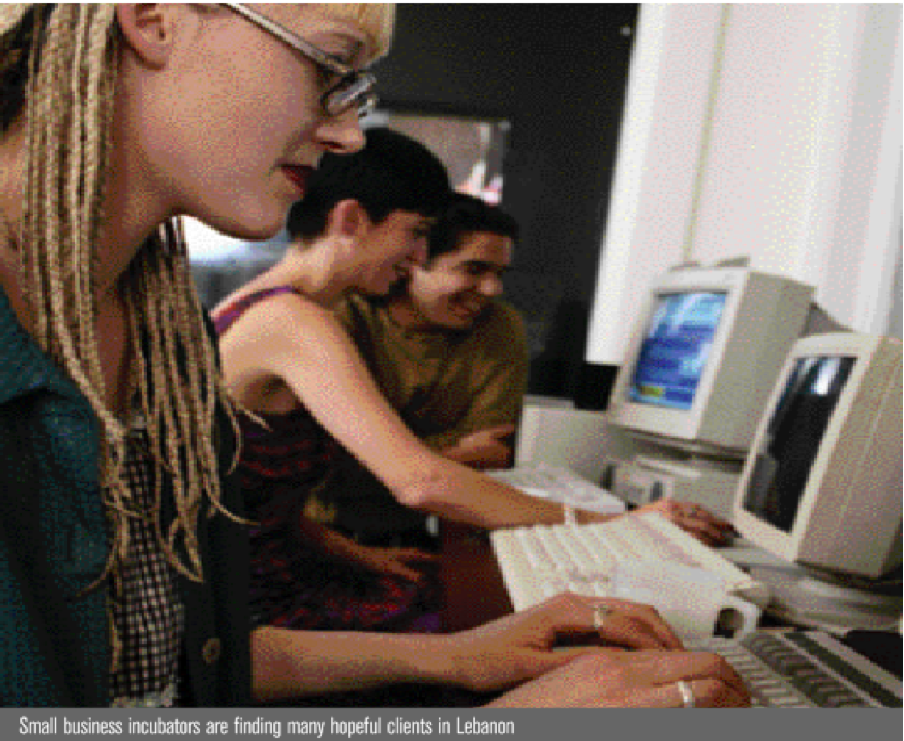
The aim of the EU Small and Medium Enterprise Support Program (SMESP) in Lebanon is to offer young entrepreneurs guidance and better access to financing. To do so, it donated 2.8 million euro to establish the country’s first business incubators and 4 million euro to a Kafalat-run lending scheme. However, as the SMESP reaches the end of its mandate in October, people wonder to what extent these initiatives are self-sustainable and, indeed, if they have a future.

  Situated on the 9th floor of the Ministry of Economy and Trade, the SMESP was founded and funded by the European Union in April 2005. With a total budget of 17.8 million euro, the program aimed to improve the Lebanese business environment for small and medium enterprises in three primary areas: policy, business development and financial access.

According to Senior Enterprise Development Advisor Declan Carroll, the program first of all aimed at identifying the main barriers to entrepreneurship in Lebanon. Two surveys were conducted. The first concerned the country’s legal and regulatory environment, which is, to put it mildly, overdeveloped. The second was a market survey among SMEs to identify their main concerns.

It concluded that, in addition to political and economic instability, access to financing and business support access and the high cost of resources, including electricity, were mentioned most often. “Nearly everyone complained about electricity being too expensive, especially seeing the fact that it is cut half of the time, forcing companies to rely on generators,” Carroll said. “As a result, it is hard to remain competitive.”

It speaks for itself that solving the domestic power situation fell outside the EU mandate, yet improving business support and access to finances did not. Regarding business development and support, SMESP donated 2.8 million euro to help establish the country’s first business incubators in Tripoli, Tanayel (Bekaa), Saida, and Beirut.

An incubator is an organization that aims to support the entrepreneurial process by offering start-up companies an affordable physical space, as well as help in drawing up a sound business plan or marketing strategy, management coaching and training programs. An incubator differs from a classic consultant in offering a more active participation.

“A consultant generally is hired for a very specific job, while the incubator is involved from the start and may offer advice in every aspect of the business operation,” said Carroll.

There are 4,000 incubators worldwide, about half which are based in the United States. According to Tania Mazraani, Director of Business Development and Communication at Berytech (see box), a European survey showed that “50% of newly established companies fail to make the 5-year-mark, but 85% of businesses make it through the first five years when guided by an incubator.”

The four Lebanese incubators were not randomly chosen, but proved to be the winners in a national tender issued by SMESP. According to Carroll, they were judged on their business plan whereby sustainability and contacts with the local business and academic environment played a crucial role.

So, the incubator of Tanayel has a structural partnership with both American University of Beirut and Saint Joseph University. As it is situated in the Bekaa Valley, it will mainly focus on agro-industrial activities. Its counterparts in Saida and Tripoli are both located in the Chamber of Commerce and are supported by the Rafik Hariri Foundation and Rene Mouawad Foundation respectively.

Still, one of the main concerns regarding Lebanon’s incubators is that they will not be economically sustainable once the SMESP is terminated in October 2007. One thing is certain: Lebanon’s Ministry of Economy and Trade is both unable and unwilling to financially continue the European initiative.

“There is always a chance that an incubator fails,” Carroll admitted. “The reality is that even in Europe and the United States some 70% of incubators receive some form of federal support, and even then, some fail. That’s why, from the start, we have stressed on sustainability. Personally, I expect the EU to continue some form of support in the future.”

Lebanon’s incubators are expected to generate most of their revenue from rent income and the fees they charge for their services. To get an idea about future revenue, let us have a closer look at the Tripoli incubator, which opened April 26. Part of the new Chamber of Commerce, it consists of 22 executive offices and eight freelance desks that are meant for IT professionals and graphic designers.

“First of all, we receive rent and invoice our services,” said Fawaz Hamidi, Executive Director of the Business Incubation Association Tripoli (BIAT). “Currently, as part of the pilot program we offer up to a 100% discount, but in the future prices will be 10% to 20% below market prices. Secondly, we will gain revenue from the training and courses we give and thirdly we aim to take equity shares in start-up companies.”

Still, well aware that this may not be sufficient for long term survival, Hamidi pointed at donations it received from the Chamber of Commerce and the Rene Mouawad Foundation, and strategic partnerships with, among other institutions, the municipality, Balamand University and IDAL.

The SMESP also aimed to help SMEs find easier access to funding. With Kafalat it established the “No Collateral Guarantee Scheme.” Both SMESP and Kafalat brought in 4 million euro to create a fund for innovative start-ups and existing SMEs worth 40 million euro. Due to the 2006 war with Israel, the program only started in September 2006.

“To get a business loan in Lebanon,” Carroll explained, “one generally has to bring in a personal or collateral guarantee, which is often a building. It speaks for itself that most young entrepreneurs do not have a building. Through the fund set up with Kafalat we hope to introduce sound risk analysis into Lebanese banking.”

Anyone with a new product or service can approach Kafalat and ask for a loan. If the latter thinks the project is feasible, an innovative start-up can receive up 90% and existing SMEs up to 85% of the loan, without providing collateral or personal guarantee. The loan can amount up to LL600 million ($400,000). Kafalat will charge a commission of 2.5% of the loan, while the Lebanese Central Bank has subsidized a 7% interest rate.

Although most people welcome the EU-initiative, some wonder if the 17.8 million euro could not have been spent in a better, more economical way. As one critic said: “Probably half of the money flew back to Europe in the pockets of experts and consultants.”

Carroll however, made no secret of the money trail. “5.5 million euro went to the European Lebanese Center for Industrial Modernization (ELCIM), 2.8 million euro to the incubators, 4 million euro to the Kafalat fund, while 700,000 euro could not be spent, due to the war with Israel,” he explained, which leaves 4.8 million euro for daily operations of the SMESP unit, consisting of 10 employees.

“Indeed, we flew-in foreign experts,” Carroll concluded. “But let me ask you: How do you build an entrepreneurial support system in a country that doesn’t have one? What choice do you have other than flying them in? Which doesn’t mean, we did not use local experts; on the contrary.”

Berytech Technology & Health aims to build business for Beirut and beyond

Following the success of Berytech Technology & Health’s first business development center in Mar Roukoz, the non-governmental organization in December 2006 opened a second “business incubator” facing the Saint Joseph University (USJ) in Beirut. The goal is to help start up young entrepreneurs and turn innovative ideas into successful business models.

Berytech Technology & Health (BTH) is a non-profit organization that aims to create a dynamic business environment, in which small and medium enterprises active in the field of technology and health can flourish. The idea to establish Lebanon’s first incubator was born at the USJ in 2000.

“We realized that for students, once graduated from university, the future in Lebanon was essentially twofold: get employed or leave the country,” said Berytech Chairman and CEO, Maroun Chammas. “We want to offer a third way, by helping young entrepreneurs turn their ideas into a working business model and create employment in Lebanon.” 

USJ offered $5 million for Berytech to open, while a core of bankers and private institutions coughed up another $1 million. Last year, it obtained a 700,000 euro grant from the EU-funded SME program. BTH also nurtures strategic partnerships with, among other institutions, the Georges Frem Foundation, Foundation Saradar and the Sophia Antipolis Science Park in France.

Berytech offers the physical infrastructure a young company needs to start working. “Normally, it takes up to 35% of one’s time to actually set up a business,” said Chammas. “Here you can start immediately. Even if you do not have a laptop, we can provide you with one.”

Young entrepreneurs pay a rent of some $13/m2 per month in Mar Roukoz, and some $350 per month per person in Beirut, which includes all facilities, including Internet, electricity and telephone, as well as access to conference halls and meeting rooms. “In the United States you pay at least 3 to 4 times more,” said Chammas. “We also have special grants program of $8,000 each. Each year seven grants are given to the most original ideas, in which case the entrepreneur essentially pays nothing for the first year.”

Since 2002, some 70 companies were established and have operated in Berytech Mar Roukouz, creating a total of 250 jobs. Some 45 companies are still based there, mostly software development, Internet marketing and multimedia firms. So far, six organizations set up shop in Berytech Beirut, including a branch of the British Council and BADR, an association for young entrepreneurs.

As all incubators, Berytech offers more than physical premises and facilities. It offers anyone business counseling, which may include a SWOT analysis of ideas and products, developing a plan of action, as well as marketing and accounting. Berytech also offers help in gaining access to funding and offers training and courses.

May 24, 2007 0 comments
0 FacebookTwitterPinterestEmail
Lebanon

Lebanon’s ports zones for free trade

by Executive Staff May 24, 2007
written by Executive Staff

Despite Lebanon’s shaky political and economic situation, millions of dollars have been invested in state-of-the-art warehouse facilities in Beirut in an attempt to re-establish the Lebanese capital as a regional trading and transport hub.

The focus has been the Beirut Free Trade Zone, established in 1995 and which offers business and financial incentives, including the possibility of 100% foreign ownership, customs exemptions for goods entering and leaving the free zone, long-term, low-cost land and building leases and low-cost utility rates for industries. By the end of May, the free zone’s Logistics Center will be officially opened which brings together a core of transport and warehousing companies.

Beirut port covers a total area of 1,200,000 m2, of which 11,200 m2 is reserved for the free trade zone. Currently, the port handles some 6 million tons of cargo a year, which represents some 55% of all import and some 60% of all export, while some 20% of in and outgoing trade is handled by the airport. In addition to Beirut port, Lebanon has free trade zones in Tripoli port and Selaata, although industry chiefs are calling for more free trade zones, especially at the airport and Masna’a at the Syrian border.”

The global logistics market is reckoned to be worth some $320 billion annually with an annual growth rate of 3% to 10%. The MENA region represents just 10% of the global market. Yet with an annual increase of 10%, it is arguably the fastest growing market in the world.

Net Logistics, part of Net Holding, which also owns the express delivery company Skynet, opened its $750,000 facility within the Logistics Center of the Beirut port free trade zone and offers all services related to freight forwarding and supply chain management. In 2005, it had an annual turnover in Lebanon of some $6 million, which it hopes to increase by 50% in the coming year.

“Seeing the political situation, many people asked if we were crazy or just stupid to invest such a large amount of money in Lebanon,” said Mourad Aoun, CEO of Net Logistics. “But we strongly believe that, despite the political situation, the private sector can operate, and be of value in giving Lebanon its rightful place within the global economy.”

According to him, the ultimate aim of the Logistics Free Zone and Net Logistics’ investment is to reestablish Beirut as a regional trade and distribution hub and as such to reclaim its historic position. “Lebanon has always been a natural crossing point for trade between east and west,” he said. “Before the Lebanese civil war some 90% of trade was destined for Iraq.”

As Dubai is currently the main trading hub within the Persian Gulf for goods coming from the Far East, Beirut is perfectly located as the gateway between Europe and the Levant, in which Iraq is the most important market. By truck, it only takes two days to reach Iraq.

Currently, most trade from Europe to Iraq goes via Aqaba, which not only takes longer to reach, but is also heavily congested. Haifa is also trying to claim a piece of the trading pie, yet many traders prefer not to go through Israel, because of (obvious) political implications.

“As Iraq has the largest population it is our most important market,” said Aoun, “yet we operate, and are based in, all over the Levant, whereby one should realize that trade is a two-way traffic affair. Ideally, trucks deliver imported goods to say Damascus and Amman, and pick up goods destined for export, via Beirut.”

Modern day transport companies offer more than just transport. So, a clothes company may deliver a container of goods destined for three countries in the region, in which case the total logistics provider takes care of unpacking and repacking before re-exporting the goods. A computer firm may send several containers with computer parts, often coming from different parts of the world, the logistics firm will take care of assembling.

“If the political situation changes in Lebanon, we are to see a lot of changes,” said Asma Abboud, who is head of Lebanon’s Land Transport Committee, part of the Forwarders Syndicate. “Don’t forget that transport is arguably the most transparent and most fully prepared file regarding Lebanon’s bid for WTO membership.”

Can Free Trade Zones make Beirut again a player in region?

Part of a battle between the Levant and Gulf for a greater share of the global shipping market

BEIRUT: Lebanon opened two free zones in Beirut and Tripoli in 2001 in an effort the recapture its role as a regional trading hub, joining an intensifying regional race between GCC and Levant countries to attract foreign corporations to set up shop in their respective tax-free havens.

Between Lebanon, Jordan, and Egypt there are at least 20 operational free zones and almost 30 in the UAE alone. With the proliferation of bilateral trade agreements between various Middle Eastern countries and the EU or the US, the number of free zones in the Arab world is sure to increase in the future.

Lebanon’s success luring global corporations has so far been muted, but the Beirut Port Authority hopes that will change with the launch of the logistics free zone in April.

Net Logistics, a Lebanese owned subsidiary of global shipping company Eagle, opened the first warehouse in the zone on April 11, and expects to channel 80 percent of its cargo through the Beirut Port. Global shipping firm CMA-CGM also announced plans last month to build permanent facilities accommodating 400 employees, as did Aramex.

All space in the logistics free zone is now occupied or booked by global firms, said head of the Beirut Port Authority, Hassan Qorteim.

“We looked at all other free zones in the world that had logistics areas, and tried to pin down why logistics companies did not come to Lebanon,” Qorteim said.  

The high cost of shipping from Lebanon was one of the biggest obstacles for the free-zone to flourish, so the Port Authority built container terminals to allow companies to store cargo at the port.

“The creation of container terminals decreased the costs of shipping through Lebanon, and increased the number of shipping destinations accessed to and from Beirut,” Qorteim said.

But there were also regulatory barriers to logistics firms operating from the Beirut Free Zone, namely a rule that goods could only be transported in and out of the free zone by their owner.

Qorteim said the rule has been “modified” in the logistics zone to allow companies to import and export other peoples’ property from Lebanon, and expects many of the zone’s occupants to use Beirut as the hub of Levant operations in the future.

Meanwhile Public Works and Transport Minister Mohammad Safadi announced plans in April to expand wharfs and free-zones at the Tripoli and Beirut ports in the “near future.” Though more companies are eyeing alternative free-zones given sky-rocketing inflation and the rising cost of doing business in Dubai, the government must do more to promote the country as regional trading hub if Lebanon is to shrug off the legacy of last summer’s sea blockade.

Qorteim said the government has yet to play any role in Lebanon’s free-zones.

May 24, 2007 0 comments
0 FacebookTwitterPinterestEmail
  • 1
  • …
  • 581
  • 582
  • 583
  • 584
  • 585
  • …
  • 696

Latest Cover

About us

Since its first edition emerged on the newsstands in 1999, Executive Magazine has been dedicated to providing its readers with the most up-to-date local and regional business news. Executive is a monthly business magazine that offers readers in-depth analyses on the Lebanese world of commerce, covering all the major sectors – from banking, finance, and insurance to technology, tourism, hospitality, media, and retail.

  • Donate
  • Our Purpose
  • Contact Us

Sign up for our newsletter

    • Facebook
    • Twitter
    • Instagram
    • Linkedin
    • Youtube
    Executive Magazine
    • ISSUES
      • Current Issue
      • Past issues
    • BUSINESS
    • ECONOMICS & POLICY
    • OPINION
    • SPECIAL REPORTS
    • EXECUTIVE TALKS
    • MOVEMENTS
      • Change the image
      • Cannes lions
      • Transparency & accountability
      • ECONOMIC ROADMAP
      • Say No to Corruption
      • The Lebanon media development initiative
      • LPSN Policy Asks
      • Advocating the preservation of deposits
    • JOIN US
      • Join our movement
      • Attend our events
      • Receive updates
      • Connect with us
    • DONATE