• Donate
  • Our Purpose
  • Contact Us
Executive Magazine
  • ISSUES
    • Current Issue
    • Past issues
  • BUSINESS
  • ECONOMICS & POLICY
  • OPINION
  • SPECIAL REPORTS
  • EXECUTIVE TALKS
  • MOVEMENTS
    • Change the image
    • Cannes lions
    • Transparency & accountability
    • ECONOMIC ROADMAP
    • Say No to Corruption
    • The Lebanon media development initiative
    • LPSN Policy Asks
    • Advocating the preservation of deposits
  • JOIN US
    • Join our movement
    • Attend our events
    • Receive updates
    • Connect with us
  • DONATE
Levant

Turkish export growth set to boom: Raft of FTAs to fuel growth

by Executive Staff March 12, 2007
written by Executive Staff

This year is expected to see considerable growth in Turkish exports. While the government has made bold growth projections on the outflow of Turkish goods, exporters remain concerned about a number of obstacles that hinder trade.

“We have set our year-end target at $100 billion,” said State Minister for Foreign Trade Kursad Tuzmen in a recent statement to the press. This is an impressive spike given that Turkey earned $86 billion in 2006, with 2009 expected to fetch as much as $125 billion, based on a report prepared by the Turkish Exporters’ Assembly. Germany, Britain and Italy take the lion’s share of Turkish products, which translate into $9.7 billion, $6.8 billion and $6.7 billion worth of goods respectively.

Diversification of exports constitutes one plank in the government initiative to achieving sustainable performance and increase Turkey’s share in world trade. Manufactured goods dominate exports, followed by agricultural goods and mining. According to official figures from the end of 2005, these three areas represented 84.8%, 13.2% and 2.1% of exports respectively. Textiles and ready-made-clothing currently stands at 22-23% of total exports, amounting to $5-6 billion. A shift in the composition of industrial exports towards more sophisticated, capital intensive and high-value-added sectors continues, with electrical machinery and transportation equipment on the rise. The white goods sector alone registered a 34% rise in exports in 2006. Chemicals, machinery and office equipment also continue to grow.

Turkey commits to trade ties

Turkey’s commitment to strengthen trade with regional and neighboring states, as well as with Africa, Asia and the US, will also play an indispensable role in ensuring significant export growth. Free Trade Agreements (FTAs) with Morocco, Tunisia, Egypt, Syria and Palestine have been notable in this regard. The much-heralded FTA with Egypt came into force in February, while that with Syria went online in January. The Turkish parliament is expected to ratify the trade agreement that was signed with Albania in December some time around May.

The Turks in the meantime continue negotiating free trade deals with Algeria, Mexico, Brazil, South Africa, Chile, Venezuela, Uruguay, Paraguay and Argentina. Closer to home, Turkey is also working on FTAs with Lebanon, Jordan, the UAE, Bahrain, Saudi Arabia, Oman, Qatar, Kuwait and the Faroe Islands. The Foreign Trade Undersecretariat (DTM) is scheduled to initiate FTAs with Georgia, Montenegro, Kosovo and Serbia in the first half of 2007.

Overvalued lira not helping matters

Still, Turkish exporters refer to a number of trade-related hurdles. An over-valued currency has hardly helped maximize Turkey’s export potential, as reflected in the country’s trade balance. The foreign trade deficit increased by 25.4% year-on-year between January and November 2005 and 2006, reaching $48.7 billion. Delays at Customs holding up trucks transporting perishable goods across to neighboring states are also bad for business. The inconsistent application of rules at Customs offices, combined with the short duration of the Schengen visas granted to Turkish truckers (currently 45 days) contribute to concern, as both cost time and money.

Meanwhile, the trade deficit remains a pressing issue for the government. Imports of capital and intermediate goods, high oil and raw material prices in 2006, along with substantial growth in private sector investments, have all weighed down on balances. Increasing exports is not only important for balancing the scales in trade, but is also part of the formula to raise national income per capita and reduce unemployment, which was placed at 9.3% between September and November 2006.

March 12, 2007 0 comments
0 FacebookTwitterPinterestEmail
Levant

Syria looks to increase Indian trade: Delhi the No. 3 foreign investor

by Executive Staff March 9, 2007
written by Executive Staff

Having enjoyed considerable and profitable success with both Iran and China, Syria is now turning its attention to another of the emerging giants of Asia—India.

Like China, India has been increasing its profile in the Middle East, seeking new markets for exports and ramping up investments so as to gain a stake in the energy sector and to open trade doors. India’s booming information technology (IT) industry is also looking to the region, where countries such as Syria are just entering the next stage of the technology and communications revolution.

In 2006, India was one of the largest non-Arab investors in Syria. Though well behind front-runner Iran, which accounted for half of the $800 million of investments from non-Arab nations, India came in a respectable third with $84 million, just behind neighbor and rival China, which contributed $100 million to the total.

India’s contribution to Syrian foreign investment looks even more healthy when it is considered that fourth-ranked Germany directed just $24 million, while total European investments added up to $155 million.

Small-scale investments to date

Most of the Indian investments in Syria to date have been relatively small scale, mainly in the energy sector. However, this is something Damascus is seeking to change.

In mid-January, Fouad Issa al-Jouni, the Syrian industry minister, was in the Indian city of Bangalore to tout his country’s investment potential. Taking part in the annual Partnership Summit staged by the Confederation of Indian Industry, he said his country had much to offer Indian investors.

Syria is a good option for investment with its unique geographical location, diversified economy, ongoing trade liberalization process and good infrastructure base, al-Jouni said.

Al-Jouni also said that his visit would allow him and members of the accompanying delegation of Syrian businessmen to get acquainted with the latest technological and economic developments in India, and to promote Syria’s major industrial advancement and available investment potential.

Another prominent figure to recently give a sales pitch for Syria was India’s ambassador to Damascus, G. Mukhopadhyaya. Addressing the Federation of Andhra Pradesh Chamber of Commerce and Industry in the Indian city of Hyderabad on January 9, the ambassador described Syria as an untapped market for investors.

Immense potential for India in Syria

Saying that there had been a major liberalization of the Syrian banking and finance sectors, Mukhopadhyaya said these offered good business opportunities.

There was also immense business potential for Indian businesspeople in the country’s pharmaceutical sector, railways, information technology, education, tourism, construction, agro-processing, textiles and textile machinery industries.

Another move to deepen cooperation came on December 18, 2006, when the Federation of Syrian Chambers of Commerce signed a memorandum of understanding with the Indian Merchants’ Chamber outlining plans for cooperation and promotion of bilateral business relations between the two groups.

March 9, 2007 0 comments
0 FacebookTwitterPinterestEmail
Lebanon

American-Lebanese Partnership – Launches new portal

by Executive Staff March 1, 2007
written by Executive Staff

This month, the US-Lebanon Partnership Fund will launch its new e-portal, which aims to promote trade between the Unites States and Lebanon through business matching, enhancing the e-commerce capabilities of local firms and disseminating sector-specific information. The partnership—which was initiated by the White House and a group of American business leaders last September—announced its five ‘work streams’ supporting economic growth in Lebanon at the Paris III donor conference in January.

Although its goals are ambitious, the exceptional caliber of the partners involved adds credibility to the project. The partnership was founded by Craig Barrett, chairman of the Intel Corporation; John Chambers, chairman and CEO of Cisco Systems; Yousif Ghafari, chairman of GHAFARI, Inc.; and Dr. Ray Irani, chairman, president and CEO of Occidental Petroleum; Microsoft CEO Steve Ballner recently joined the partnership as well. According to the partnership website, the project is founded on the idea that, “a stable and secure Lebanon has the potential to become an anchor of stability in the Middle East. And Lebanon’s fundamental characteristics—a skilled workforce, entrepreneurial spirit and commitment to democracy—give us hope that, with support from American citizens and businesses, Lebanon can become this anchor.”

Furthermore, as Intel’s Barrett adds, “Lebanon will only be rebuilt through actions improving the educational and economic infrastructure.”

The five work streams include crisis relief and response, information communication technology (ICT) infrastructure, workforce training, private sector revival and connected government.

The first work stream, crisis relief, joins global efforts in the wake of last summer’s war with Israel. It primarily addresses the needs for housing, schooling, and adequate nutrition, working hand in hand with various NGOs such as Habitat for Humanity, UNICEF, Mercy Corps and American Near East Refugee Aid.

The second work stream promotes innovation, investment and development of ICT infrastructure by assisting the Lebanese Telecommunications Regulatory Authority. “The partnership hopes to contribute in developing the 21st century telecom sector, as studies show that countries with proper IT structures benefit the most from an economic standpoint,” explained an American embassy official. An international gateway and internet exchange point are also scheduled to launch in the month of March. The endeavor, supported by the American Chamber of Commerce, provides a networking and communication platform for American and Lebanese businesses. In addition, it may include the donation of equipment, training and consulting services. “The goal of the portal is to establish commercial dialogue, highlight opportunities in Lebanon and facilitate business partnerships in a result-driven manner. Technical assistance through online resources and seminars will also be offered,” says Aram Zamgochian, project director at the partnership. Phillip Farah, a partner at Cisco, underscores the increased visibility in the US markets offered by the portal to Lebanese companies, which will drive the demand side of the equation.

Tapping Lebanon’s human resources

The third work stream, workforce training, taps directly into the country’s rich human resource pool. 500 Lebanese interns will be placed in Lebanon and the United States over the next three years, with Cisco alone committing to host 100. “The internship aims to significantly improve skills and marketability of candidates and will be either held locally over an 11 month time period, or for 6 months in the States. Candidates will be encouraged to return to Lebanon at the end of the training,” explains Georges Akiki, Cisco’s program manager for the partnership. The company has also pledged to double the number of its networking academies in Lebanon, increasing from 21 to 43.

Private sector revival—certainly the boldest work stream—seeks to create jobs and push Lebanon into the gleaming waters of the 21st century global economy. “The secret of American productivity resides in the ease of doing business, which contributes to our high employment rates. This model needs to be urgently reproduced in Lebanon, where unemployment rates amount to 30 or 40 % in some regions,” reports the embassy official. Through the portal, global companies can reach out to Lebanese businesses by initiating joint ventures, capital injection, co-branding, R&D partnerships and licensing agreements. Six key industries have been identified as priority areas, including technology, tourism—with a focus on eco- and heritage tourism—banking and finance and agribusiness; developing essentially niche markets within sectors such as health care and manufacturing is also on the agenda, with 120 projects already under discussion. “We feel that the business-matching approach is more suitable than any other and can generate a self-perpetuating momentum. We realized that companies are more easily mobilized when they work on specific projects. They can also choose to directly invest in local funds, namely the Bader equity fund or the recent BEI and Byblos fund. Our goal is to set up an ongoing process that can deliver significant value over the years,” says Farah.

According to Mohamad Chattah, an advisor to Lebanese Prime Minister Fuad Seniora, the last work stream—dubbed “connected government”—is still in its nascent stage. “The partnership will enable intra and extra online communications with the government, facilitate access to public e-services as well as the creation of a connected community,” adds Akiki.

Finally, the partnership will be teaming up with Overseas Private Investment Corporation and the Near East Consulting Group, as well as key Lebanese organizations such as Kafalat, IDAL and the AmCham. “Through the efforts of this partnership, we can make a meaningful contribution to help position the country for leadership in the future,” emphasizes Chambers. “The time to act is now.”

For further information, visit the partnership website: www.lebanonpartnership.org
 

March 1, 2007 0 comments
0 FacebookTwitterPinterestEmail
Comment

Foreigners in their own country

by Rana Hanna March 1, 2007
written by Rana Hanna

This February, the US Democratic Senator from Illinois Barack Obama announced that he was running for the American presidency in 2008. Other than being erudite and bright, the 45-year-old Mr. Obama has attracted the media’s attention because of his very un-WASPish background and the fact that he is genuinely African-American: as his “unpronounceable name” (his words) might suggest, Mr. Obama is half- Kenyan; It is his mother who is the American.

So here we have an African applying for the top job in the world. All very well you might say—it’s all in keeping with the wonderful opportunities afforded by the US to immigrants. However, Lebanese mothers whose children were sired by foreign fathers might not instantly applaud Mr. Obama’s ambitions; in fact they would probably be green with envy. Their children cannot even be Lebanese, let alone run for political office. Furthermore, their kids cannot apply for a passport or benefit from state services, such as free health care and education.

Against human rights and the Lebanese Constitution

This is a blatant breach of human rights and a breach of the Lebanese Constitution, according to which men and women are equal before the law. Unfortunately, this is the same law that declares a Lebanese citizen to be “a child born to a Lebanese man.”

There is no official explanation given as to why only Lebanese men can sire Lebanese citizens. Unofficial reasons include the fear of destabilizing the already delicate sectarian balance due to the many Palestinians who have been residing in Lebanon since 1948. But according to the Collective for Research and Training on Development-Action (CRTD-A), a Beirut-based NGO that contributes to the social development of local communities across the Arab world, less than 1% of registered marriages in Lebanon are to Palestinian men, a statistic that renders that argument null and void. As for the supposedly hair-trigger Lebanese sectarian system, well, that broke down decades ago and has been in constant shift ever since. In other words, there is no “delicate balance” to uphold.

The fact is that all the arguments given are merely excuses. The real issue is that women in this country are not really considered citizens. In fact, Lebanon does not even fully comply with the 1979 United Nations Convention on the Elimination of all Forms of Discrimination against Women.

That we are not alone in this quagmire offers little comfort. Most countries in the Arab world do not grant women the right to pass on their nationality to their spouse or children. However, there have been changes. Last February, Morocco granted women the right to pass their nationality on to their children. Algeria did the same last year and Egypt two years ago. For a country that brands itself as the Switzerland of the Middle East, we are far behind.

It is difficult to pinpoint the social and economic effects of such discrimination against women. Why should the children of foreign women married to Lebanese men, who probably do not even live in the country, be considered more Lebanese than children reared in Lebanon, who speak Arabic and attend Lebanese schools and are, in natural fact, Lebanese in all but name?

Many obstacles to children, society

And get this: While American sociologists and economists ponder the effects of the increasing number of women leaving the workforce, Lebanese women have to worry about their children not being able to enter it. Some progress, albeit very little, has been made (new administrative procedures allow women to give their children the right of abode in Lebanon, although this right also exists for former diplomats to Lebanon who wish to remain in the country). But these children will still have to apply, and pay for, a work permit, putting them at a major disadvantage to their Lebanese peers as employers often think twice about hiring foreigners.

Interestingly enough, if a child is born in Lebanon and declared illegitimate and no foreign link is established, then the Lebanese nationality is theirs. So mothers, don’t take it personally, it’s the father’s fault.

Isn’t it always?

RANA HANNA is the Lebanese mother of three Cypriot children

March 1, 2007 0 comments
0 FacebookTwitterPinterestEmail
Lebanon

One step closer

by Executive Staff March 1, 2007
written by Executive Staff

In the past two years, Lebanon’s economic progress has been noticeably erratic, to say the least: after posting promising import and export figures in 2005 ($10 billion and $2 billion, respectively), the heavy burden caused by the recent Israeli conflict and the ongoing political deadlock has been a deadweight on Lebanon’s upward trajectory. However, a promising sign emerged in February 2007, when—in spite of the political turmoil—the Ministry of Economy and Trade and USAID signed a Memorandum of Understanding (MOU), bringing Lebanon one step closer to World Trade Organization (WTO) accession.

The MOU is not the first agreement of its kind for Lebanon. Free trade agreements have been signed by the Lebanese government with the EU, the EFTA States (Switzerland, Lichtenstein, Norway, Iceland) and the GCC; Lebanon is also a member of the GAFTA—the Greater Arab Free Trade Area. However, the country has yet to join the WTO. “The WTO accession would be a certificate of excellence,” affirms Fadi Makki, former director-manager at the Ministry of Economy.

An arduous journey

The journey towards the WTO has been arduous for Lebanon. In 1999, the country first applied for WTO accession. In 2001, it presented a Memorandum of Foreign Trade Regime (MFTR)—a snapshot of the country’s trade, institutional and legal regimes. Four Working Party meetings have since taken place in Geneva, where member states examined and discussed Lebanon’s responses to questions about the MFTR. This essential phase of the negotiation process will determine the long-term structure of Lebanese tariffs and quotas.

With the new MOU, the process’s natural extension, USAID will offer technical assistance to the government, with the support of global consulting firm Booz Allen Hamilton. “The [original] memorandum has been in place since 2000 and extended regularly ever since,” explains Lama Oueizan, project manager at the UNDP. “The memorandum ensures development of the technical capacity of Lebanon’s institutional base for negotiating and implementing the WTO agreements through training and support.”

The MOU’s main objectives are the evaluation of Lebanon’s policies, laws and institutions, problem identification and the introduction of necessary reforms to conform foreign trade regulations to WTO requirements. “In this respect, laws will be abolished and new ones will be drafted. Some will be enacted to fulfill WTO technical requirements. Such reforms are related to animal quarantine, fruit and plant safety, anti-dumping, standards and norms. Other laws will depend on the negotiation process as each country sets its own requirements according to its own trade priorities,” adds Makki. USAID will also provide Lebanon with assistance in preparing documents necessary for the negotiation process. “We will build awareness within the public and private sectors about the accession process as well as its impact on Lebanon’s economy,” says Raouf Youssef, mission director at USAID.

“Accession to the WTO will establish trust for Lebanese commodities, it will increase exports and open markets for local companies which will have to meet new quality standards,” notes Youssef. Companies will also likely focus on niche markets, such as olive oil production. Makki believes accession will help reduce prices, increasing competition and improving the quality of services rendered, and thus have a positive impact on the overall business environment. “Membership will contribute to the system’s transparency and openness, and provide access to dispute settlement mechanisms,” adds Makki. Countries operating outside the WTO may see their exports obstructed for any number of reasons by others: with WTO membership, countries are protected and have the possibility to sue other members for unlawful trade practices. Private and public monopolies are also put to an end.

Paying the price

“Like in any transaction, there is a price to pay,” Makki underscores. Tariff reduction will negatively affect sensitive sectors such as fruits and vegetables, cement, ceramics, cables and clothing, and the government will want to protect some segments. Reforms necessary for WTO accession, such as a restructure of subsidies in agriculture, especially tobacco, will be strongly resented by populations in certain areas. In addition, discretionary measures on trade policies will be removed and traditionally closed service sectors will be liberalized. Nonetheless, Youssef insists that, “If one looks at the overall picture and the country’s best interest, accession to WTO will definitely be supported by the population.”

According to Makki, one possible solution for sensitive sectors could be found by negotiating transitional tariffs, which reduce gradually over time. Trade experts also agree that awareness campaigns are essential to the accession process, in order to win over defiant stakeholders such as businesses and labor unions. “They need to understand that trade liberalization will not only mean increased competition, but also facilitate access to foreign markets,” says Makki.

In light of the recent Paris III conference, which drafted major reforms for Lebanon’s economic and institutional framework, the MOU can be seen as a natural continuation of structural amendments. “Some measures are common to both the Paris III conference and WTO accession. As an example, certain reforms envisioned by Paris III facilitate business ventures by introducing one-stop shops. Joining the WTO completes this endeavor by offering protection to investors through IPR-intellectual property rights and court litigations, hence improving business practices,” explains Youssef.

Of course, the big question still remains: How far is Lebanon from joining the WTO? “Minister Haddad wants to achieve accession in 2007,” states Youssef. Ironically, the Ministry of Economy’s website still schedules accession for … 2006.

Most experts believe, however, that the past year’s ongoing political instability has rendered efforts towards accession largely fruitless. Furthermore, as new laws require parliamentary vote, the institutional and legal standstill in Lebanon means that for the time being, accession to WTO in the near future may be little more than wishful thinking.
 

March 1, 2007 0 comments
0 FacebookTwitterPinterestEmail
Comment

Creativity on tap in Lebanon

by Dany Richa March 1, 2007
written by Dany Richa

When it comes to discussing Lebanon’s role as the Middle East’s creative hub, it is not merely because of one or two reasons, but rather a series of factors that combine to create an environment conducive to providing a melting pot of ideas and proactive attitudes.

Lebanon is home to probably one of the oldest advertising cultures in the region, one that was creating competitive communication while other Middle East countries were still sloughing off colonialist “tuteledge.” This gave us a head start in honing our creative tools while at the same time being able to offer our talented graduates better job opportunities—Lebanon was the first country in the region to offer advertising at university level—and now we have dozens of universities, graduating hundreds of designers, art directors, copywriters, film producers and composers every year. No other country in the region can rival this. Simply put, we have the human capital and we know how to train it.

Our tradition for creativity also means that our professionals do not have to automatically look to the region—or the world—for work. Should they choose, they can work in Lebanon. This also makes it easier for those who use them. Highly qualifies and highly professional casting agencies, photographers and producers are based here and on tap.

Potential is there

Proof of Lebanon’s advertising potential is clear when one looks at the regional industry as a whole. Lebanon is home to many of the top CCOs and creative directors, who nonetheless provide an inspirational environment wherever they work in the region, nurturing and motivating others to cultivate a productive work ethic and fulfill their creative potential.

Lebanon’s quality of life makes it a natural environment for creatives to thrive. Its nightlife, mix of cultures, rich history, its innate ability to absorb positive cultural and social influences make it an ideal milieu in which to work.

Its liberal climate also offers creatives a wider and challenging range of areas in which to can test their talents. Areas such as tobacco, alcohol and politics are not automatically open to the advertising sector in other Arab countries, and the often risque and touchy nature of these sectors offers a fertile environment for the advertiser to plow his creative furrow and ultimately provide a deeper well of experience into which he can reach on future projects.

The Lebanese creative has the opportunity to work on local campaigns, unlike the region’s other creatives who, more often than not, have to work on Pan-Arab accounts. Working with local clients and, more importantly, targeting a local audience, gives the creative a chance to use specific local insights and cultural mores, which can lead to unique and groundbreaking results.

Think, for example, of a British creative who works on a UK campaign rather than a European one. The UK campaign will be able to tap into a more specific and richer cultural vein rather than a bland, safe, culturally unspecific and ultimately toothless campaign for the pan-

European consumer. That said, Lebanese creatives can also work on Pan-Arab advertising, which does give them access to bigger budgets and greater regional exposure for their talents. In fact, they get the best of both worlds.

Many are leaving

It is a shame therefore that many, especially in today’s climate of uncertainty and economic stagnation, are choosing to leave Lebanon in pursuit of work abroad. Undoubtedly, the Gulf offers more competitive packages and gives better exposure, attracting young creatives unburdened by family commitments, but it is also true that the Gulf, where the cost of living is increasing every year and where the daily rat race now rivals Europe and the US, is becoming increasingly expensive and stressful place to live. Ultimately, as they realize that, in the long run, Lebanon can offer just as much in terms of career and quality of life, more Lebanese expats will come home.

The Lebanese will continue to thrive in the creative world as their creative juices will continue to run, acquiring many talents, influences and skills along the way.

DANY RICHA is chief creative office (MENA)-Impact BBDO Group and president of IAA’s Lebanon Chapter

March 1, 2007 0 comments
0 FacebookTwitterPinterestEmail
Banking & Finance

Solidere’s new strategy Extends to Ajman

by Executive Staff March 1, 2007
written by Executive Staff

The first deal under Solidere’s new strategy of regional activities in managing urban development projects is with the emirate of Ajman in the United Arab Emirates. Estimated at $13.6 billion, the project is a lot larger than one might have expected for Solidere’s maiden international venture, especially in terms of the 50% share of investment volume that the Lebanese company will reportedly assume. It is also—at least for the time being—a lot more enigmatic than one would expect from a project that wants to ring in a new and larger corporate identity.

The outline of the Ajman development program sounds like it is tailor made for Solidere. The rulers of the 259 km2 emirate—with a population of 250,000, it is the smallest among the UAE’s seven—are in search of a spanking new identity, which they want to achieve by building a new downtown. Sound familiar?

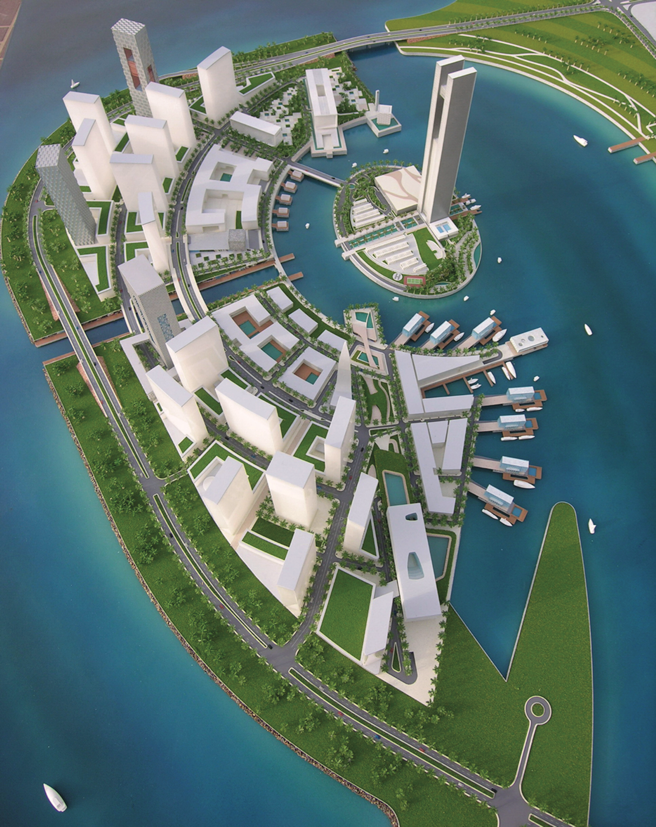
Called Al Zorah (but different spellings are in circulation), the new “unique” urban core on Ajman’s seafront will feature hospitals, hotels, homes, offices, retail, schools, a golf course and marina. The project is unprecedented in size for the emirate and should allow Ajman to attract investment, give it a higher economic profile and allow it to compete with heavyweights Abu Dhabi and Dubai.

Ajman’s development ambitions also include industry and infrastructure, including building a metropolitan rail link to Dubai. Abdel Fatah Farah, head of research and statistics at the Ajman Chamber of Commerce and Industry, told Executive that the emirate’s government focus on infrastructure will involve spending between $13.6 to $27 billion over the next five years.

“This will provide ample opportunities for investments, both foreign and local. We believe the growth in investment in 2007 will be close to 20%, and the lion’s share will go to the real estate sector,” Farah said.

According to the government of Ajman, the emirate has initiated $7 billion worth of real estate development projects since 2004. The Al Zorah project would swallow almost double of that amount in its projected development span of seven to 10 years. Another new project will be the Ajman Marina, with a price tag of $2 billion.

The role of Solidere in the creation of Ajman’s new identity would certainly involve planning and management of the urban development project. This is what the Lebanese company has built its reputation in and what shareholders approved in November as new activity outside of the narrow geographic confines of the Beirut Central District.

Receiving a four-fifth “yes” vote at the general assembly, the Solidere management got the green light to establish a new subsidiary for international activities. Solidere management announced that it would get involved in the Ajman project and assume a fee-based management role in a $1 billion real estate investment fund with Abu Dhabi Investment House.

Solidere would not channel domestic revenues or funds from existing operations into international ventures, the company’s chairman, Nasser Chammaa, said at the time.

Tight-lipped on funding sources

However, after the crown prince of Ajman, Sheikh Rashid Bin Humaid Al Nuaimi, announced that the Al Zorah project would be developed in 50-50 partnership with Solidere, the Lebanese company was tight lipped about the business model under which it will source billions in funding for the project.

Mounir Doueidy, Solidere’s general manager and chief financial officer, declined to give any information on the partnership agreement beyond what had been said by Ajman authorities. Citing confidentiality agreements as reason for his reticence, Doueidy confirmed only that “the investment in Ajman is part of Solidere’s plan to leverage its brand name and to export its expertise to the outside. The move has been agreed upon by the general assembly of course and this is one of our projects for expansion.”

The Ajman government has allocated $600 million to the Al Zorah infrastructure development in the next two years. A statement by Nuaimi said that the project would be financed through a mixture of private placement, pre-sales of properties, and government investments. The holding company for the venture will have a capital upward of $1.1 billion, according to the statement.

The emirati partners of Solidere in developing Al Zorah will be the Ajman Development and Investment Authority (ADIA) and Aqaar Real Estate, whose 100% sole shareholder is reported as the crown prince.

While Solidere has not announced new steps in its partnership with Abu Dhabi Investment House since the initial statement in November and while the specifics of the Ajman financial investments are still opaque, the company is still bullish about future regional projects.

March 1, 2007 0 comments
0 FacebookTwitterPinterestEmail
Comment

From death trap to gridlock

by Norbert Schiller March 1, 2007
written by Norbert Schiller

In the mid 1980s, the 10-kilometer stretch linking Sharjah with Dubai was billed as one of the most dangerous sections of tarmac in the world. Then—like now—there was new money aplenty with which young Emiratis bought fast cars and tested them on the brand new network of open roads fanning out into the desert. There were so many accidents on a daily basis that the authorities would simply leave the wrecks by the side of the road as a warning to other motorists. Then there were the sheik’s camels, who like the sacred cows of India, could go and do as they pleased even if it meant strolling down the center of the highway on a moonless night. Hitting one would cost you dearly, if indeed you survived being crushed.

That said, you didn’t really have to drive that far if you didn’t want to. If you worked in Dubai, you lived there. There was none of this mad morning commuting between the various Emirates that one encounters today, a phenomenon created by the economic success of the 1990s and the influx of more migrant workers, which in turn has seen an increase in demand for affordable housing.

Not an El Dorado for all

The idea of Dubai as a money-making El Dorado, where nest eggs and retirement funds could be fuelled, has stopped ringing true for many. Yes, there was a time in the ’70s and ’80s when salaries were high, rents were low and a good standard of life was well within in everyone’s grasps. With time, salaries began to dwindle and the money that was once saved is now used to keep up with the spiraling cost of living as Dubai morphs at a dizzy rate.

So much has changed over the past 20 years that I find myself getting increasingly lost. Small roads that I remember driving on that wound through Sharjah and Dubai have turned into eight lane thoroughfares comparable to those in Los Angeles, while the small town feel that originally attracted me to this corner of the globe is replaced with bumper to bumper traffic, pollution, over crowding and a high cost of living.

Ten years ago, as a way to cut down on living costs, many people, including my Lebanese friend Rabih, decided to leave Dubai and relocate to Sharjah. He was, if you will, a pioneer of sorts and at first the move made good economic sense in the commute-to-save-money rationale. The trouble was that the idea made such good sense, it caught on.

Only 10 kilometers away, the small emirate has worked overtime to accommodate this new labor surge. Land reclamation projects along the coastline made way for a new corniche with parks, mosques, shopping areas and of course more high-rise apartment buildings. But Sharjah, the once-affordable alternative, has seen rents double in less than ten years, despite plenty of new housing on offer. A decent family apartment now costs Dh80,000 ($22,000) per year.

And then there is the traffic. The commute into Dubai, which use to take 15 minutes, now can take two hours on a good day. The stretch of road linking the two emirates is so jammed with cars at all times of the day and night that it is impossible to predict when is the best time to drive. And to add insult to injury, the government of Dubai is going to introduce a road tax, similar to London’s congestion charge, for those driving into Dubai. It is expected that this will cost the commuter an extra Dh240 ($60) per month. Not only do you have to sit behind the wheel for hours at a time, now you have to pay for the privilege.

Traffic now a real problem

Funnily enough, according to a recent study, traffic fatalities are also on the rise; but how, one wonders, when commuters are forced to drive at a snail’s pace? Are they simply bored to death?

Recently, I had to meet up with a colleague at Dubai International Airport to catch a 12:30 flight. I live in Sharjah and, even factoring in the legendary traffic, I thought I had figured out how long I needed for the 10-kilometer drive: I gave myself three hours. One hour later, I was still in Sharjah while my colleague, on the other hand, traveling from Jumairah, on the other side of the Dubai, had already arrived, checked in and was calling me to ask questions about a duty-free camera purchase.

So, gone are the days of open roads and jaywalking camels. Which brings us to the obvious question, why are so many Lebanese—and other nationalities—still heading to the Emirates in search of work and a better life, when it is in fact one big bundle of financial and mental stress?

If you ask Lebanese working in Dubai where they would prefer to live and work, almost all will say they would prefer to return home. But with political and economic uncertainty gripping Lebanon, many are grateful just to be able to live in a place that is stable, knowing that tomorrow will be just like today.

And that apparently is worth any stress.
NORBERT SCHILLER is a photo editor and photographer at large with United Press International (UPI)

March 1, 2007 0 comments
0 FacebookTwitterPinterestEmail
Media Special

Creativity above budget: Cristal rewards ideas

by Executive Staff March 1, 2007
written by Executive Staff

In late January, the organizers of the MENA Cristal awards were thrown into an unenviable position: just days before the five-day-long awards were set to be open in the Lebanese mountain resort of Faraya Mzaar on January 29, Beirut’s ongoing crisis plunged even deeper, with a violent general strike on the 23rd followed by clashes at the Beirut Arab University two days later. Should they still hold the awards on schedule, despite the risk of continuing violence, or opt to cancel or postpone the event? The decision was not easy, but ultimately their commitment to the event—and Lebanon—won out.

Their gamble was rewarded: tensions cooled, and the MENA Cristal Awards were universally deemed a resounding success. Aside from the event’s primary function—announcing the winners of the Cristal across a wide range of categories—hundreds of delegates from the MENA region and Europe had the chance to trade ideas with other advertising luminaries at roundtables, debates, workshops and presentations, over sumptuous Lebanese cuisine, and even on the ski slopes.

Although only in its second year, the MENA Cristal is fast on its way to becoming the region’s premier advertising award. Since its first edition in Casablanca in 2005, MENA Cristal has expanded from a one-day event to a five-day festival, awarding 61 “Cristals,” nine “Grand Cristals,” and one “Honor Cristal” to entries from 16 countries across the MENA region. MENA Cristal is the daughter of Europe’s prestigious Meribel Festival de le Publicité, and retains close ties to its parent, awarding the same prize, the Cristal, and conducting its judging in Meribel, which is held each December in the French Alps. The decision to hold the second edition of the MENA Cristal Awards in Lebanon was in part drawn from a desire to recreate the atmosphere of the Meribel festival. “We needed to reproduce, as accurately as possible, the concept of … Meribel. We saw early on that it was an excellent idea to organize the Awards in a ski resort, and what’s more, in the Middle East,” explains MENA Cristal CEO and general director of the Meribel festival Christian Cappe in his welcome editorial. Speaking exclusively with Executive, Cappe emphasized his desire to make Lebanon a permanent home for the festival, provided the political and security situation remains stable. Indeed, especially in light of the success of this year’s event, the MENA Cristal team is eager to hold next year’s edition in Faraya as well. As MENA Festival President Dani Richa writes, “The setting of Faraya Mzaar allows everyone to leave competition behind in the city and come in from the cold to work together in the warmth of the fireplace over cognacs and hot chocolates.”

Filling a void

The MENA Cristal was created to fill a perceived void in the Middle Eastern advertising world—the lack of a credible competition to reward and promote regional creativity. Members of the local advertising community particularly stress two aspects of the Cristal as vital, both of which challenge convention in the MENA region. First of all, there is a broad consensus that the MENA Cristal jury does not conflate genuine creativity with having a big budget when evaluating entries.

In awarding the MENA Cristal, “concept comes first,” explained 2007 Jury member Karim Achy, regional creative director for Euro RSCG in Dubai. “The execution comes after. The idea is the queen here—you can’t win just by showing off and having a large budget.” In a region where flashiness is generally rewarded, the idea of putting creativity first comes as a long-overdue breath of fresh air, and should help to foster a stronger creative sector.

The second major coup for the Cristal is the perceived fairness of the selection process. With politics tending to infiltrate almost everything in the Middle East (a problem which has undermined the credibility of many of the MENA Cristal’s competitors), honest judging in any competition is a rare commodity indeed.

Jury members are selected from both creative agencies and clients in Europe and the MENA region; in the latter category, MENA Cristal strives to achieve fair geographical representation as well, with members from the Levant, Gulf, and North Africa. All voting is done by secret ballot—jury members themselves do not know the results until they are announced at the awards ceremony.

“There wasn’t much lobbying at all,” remarked Samer Younes, creative director at Saatchi & Saatchi Beirut. “The best ads won. There were a few categories where I preferred an ad that lost, but it wasn’t unfair—just a difference of opinion.”

Jury member Raef Labaki, the general manager of communications at Nestle Middle East, agreed that the results were fair, citing his own experience as a juror. According to Labaki, the deliberation sessions were productive, positive and open, generally yielding consensus despite the jury’s diverse composition.

Credible, nonpolitical awards

“Internally, I hope the Cristal will help raise standards. We need a credible award in MENA. Everything is political here—if the MENA Cristal can avoid that trap, and be adopted as a benchmark by the whole industry, it could bring the neutrality we really need in the creative sector,” said Labaki.

Among the nine Grand Prix winners, one in particular seemed to capture the essence of the Cristal for jurors and agencies who spoke with Executive: Saatchi & Saatchi Beirut’s “Animals” campaign for the Lebanese Ministry of Social Affairs, which took the Film Cristal Grand Prix. As Labaki explained, “It was a simple idea, but with a strong message that cut right through.”

“Animals” opens with a scene of a mother and baby koala; it then moves on to footage of different animals in affectionate scenes with their offspring, amplified by a simple, emotional musical score. Finally, the series ends with a young girl alone in a corner, clutching a teddy bear, her face badly bruised from being beaten. Then comes the final message: “Some kids wish their parents were animals.” In Arabic, the meaning is even starker, as calling someone an “animal” is a highly degrading insult.

The success of the “Animals” campaign, however, has not been limited to the MENA region: last year, the ad became the first Lebanese entry ever to be shortlisted at Cannes, and it took home the silver at Europe’s prestigious EPICA Awards. Younes, the man behind “Animals,” told Executive that this international acclaim—unparalleled by any other entries in the category—gave them an extra confidence boost going into the MENA Cristal. “We were hoping to win, but not expecting for sure. Still, we felt we were the most serious contender.”

Younes offered a similar explanation to Labaki for why his campaign has been so successfully received—the simplicity of the production, combined with its high emotionality. “Some people have told me they cried when they saw the commercial,” says Younes. “This ad was really a new idea—it wasn’t like anything done before, in MENA or internationally.”

Print campaigns also honored

Another ad frequently cited by jurors and agencies as among their favorites was Grey Worldwide Beirut and City Films’ campaign for the Doha Asian Games. To put it simply, in the words of Achy, the ads were a “big wow.”

Younes also specifically noted the high level of excellence seen among print campaigns coming from the Gulf. “They showed a high level of creativity—JWT’s ads for Amnesty International, Saatchi Dubai’s work for La Vache Qui Rit, of course the Viagra ads from JWT/RMG Connect in Jeddah. There were lots of really fantastic ads at the MENA Cristal, and this pushes the rest of us to do even better.”

Despite its overwhelmingly positive reception, the MENA Cristal still has some hurdles to overcome in the next few years. When asked what it meant to win a Cristal, Karim Kazan, creative director and group head at Impact BBDO Dubai (who won the Pluri Media Grand Cristal for “M&M’s: Mrs. Green Launch” campaign), told Executive, “Well, it’s a new award, but of course it’s always nice to win something local. Hopefully it will grow to be something bigger.” If MENA Cristal is serious about becoming an internationally-recognized credential—rather than a quaint, local prize—as a new player in the game, the awards will need to develop their brand and raise awareness within the creative community.

According to Labaki, another problem this year was that many first-round submissions were not up to quality standards. This resulted in a large number of unsuitable entries that had to be sifted out by jury members and others down the line. “The agencies should have done a better job screening,” he said, but conceded that the problem partially lay in the fact that MENA is a “big region, and the sector is much more developed in some countries than in others.” As less-experienced agencies and clients are brought in to participate in the MENA Cristal Awards, hopefully, through exposure to the best work in the region and industry leaders, they will gain new ideas and a greater understanding of the field, ultimately adopting higher standards themselves. The MENA Cristal is firmly committed to having participants from across the MENA region, regardless of the relative development of their sectors.

For Younes, the only major concern for next year is the need for a more international jury. He believes this would not only would help keep MENA Cristal neutral (and out of local politics), it will add credibility and exposure to the awards’ profile.

Achy also voiced the need for an even-stronger link between MENA Cristal and the international creative community, though he believes its existing European credentials and connection with Meribel have helped it to already “mean a lot” in the advertising world. “The awards have EU standards,” he reiterates. “Idea over budget.” As long as MENA Cristal can stay true to this principle, the future looks very bright indeed.

March 1, 2007 0 comments
0 FacebookTwitterPinterestEmail
Consumer Society

Off-roading with Porsche New SUV a dream

by Executive Staff March 1, 2007
written by Executive Staff

Chiclana de la Frontera, SPAIN: One of the perks of working in journalism is going on the occasional press trip. There is an essential quid pro quo to all these arrangements—the client wants to either reward or woo the media—but it is always wrapped in such an elegant package, one forgets that it is all part of a multi-million dollar marketing strategy. The bigger and sexier the product, the bigger the kick for the journalist—and they don’t get much bigger or sexier than Porsche, who last month, once again invited Executive, this time to Spain to test drive the second generation Cayenne, Porsche’s revolutionary SUV. It’s a car which I unabashedly call the family Porsche, a moniker that in no way takes any of the edge or luster off the reputation of this legendary marque. That just means you can let your wife drive it.

The Porsche Cayenne was launched in 2003. In Lebanon, it was unveiled amid much hullabaloo at the Beirut Hippodrome, where, fittingly for such a thoroughbred, the vehicle was put through its paces to demonstrate its off-road capabilities.

It didn’t disappoint. Here for the first time was a company, known for it famous sports coupes, venturing into SUV territory, the traditional preserve of the Americans, Japanese, and of course, the British. But ennui, in Lebanon at least, had set in: the Range Rover had become a cliché, the boxy American SUVs were just a too sauvage for madam and the Japanese models, while very efficient, just weren’t sexy enough.

Enter the aristocrats of Europe, who had identified a niche for an SUV with the all the trappings of the world’s most luxurious European brands—Mercedes, Audi, Volvo and Porsche. They all transformed the SUV into the epitome of urban cool, but only Porsche had the outstanding racing pedigree to give its creation added pizzazz.

Wildly popular in Lebanon

The numbers speak for themselves. Globally, Porsche has sold more than 150,000 units. A few years back, I walked out of a London pub in Belgravia to be faced with four identical black Cayennes parked on the same residential street. It wasn’t the beer. The car was, and still is, the must-have for those lucky enough to afford one. And no one gave a damn if the neighbors had one too. In Lebanon, the Cayenne accounts for over 50% of Porsche’s sales.

The new Cayenne was available globally on February 24. The entry level Sports Utility model is now powered by a 290 bhp six-cylinder engine that has increased in size from 3.2 to 3.6 liters and which now offers an increase in maximum output over the former V6 by no less than 40 bhp. Next up comes the Cayenne S, featuring a natural-aspiration V8 power unit, up by 0.3 liters to 4.8 liters and with a maximum output of 385 bhp, 45 bhp more than before. The über-Cayenne is the eight-cylinder turbocharged beast, pushing out 500 bhp, 50 bhp more than its predecessor. Finally, the new direct gasoline injection has made the Cayenne more fuel efficient—15% more according to Porsche—and faster. The Cayenne Turbo can do 0-100 in 5.1 seconds.

Back in Spain, the elements have served to disrupt the days proceeding. Excessive rain has meant that we can’t try out the car’s supposedly fabulous off-road potential. I don’t mind. The 4×4 facility is an option that I know is there, but most consumers buy cars to drive them and their families from point A to point B and 99% of the time this is done on tarmac, notorious Lebanese tarmac in my case. I must be one of the few international guests here who actually want to see how this beauty performs on the road in the rain.

There are no complaints. The new technological developments are very exciting and will please those who look for safety as well as performance. Porsche’s Stability Management ensures the car reacts even faster when applying the brakes. This prevents the Cayenne from developing potentially dangerous pendulum action (such as when towing), and optimizes the brake effect on loose ground. The new models also come with a rollover sensor, which, in an emergency, triggers both the belt latch tensioners and curtain airbags—there are six other regular airbags by the way—thus reducing the risk of injury for occupants in a rollover.

The Cayenne has certainly not rolled over on its shareholders. Porsche continued to show growth in 2006, a performance Porsche claims has been due to the “ongoing improvement of Porsche’s model mix.” However, the significant jump in the group’s pre-tax profits to 2.11 billion euro is mainly attributable to the sale of auto-roof manufacturers CTS Fahrzeug-Dachsysteme (80.7 million euro), profits earned through the company’s share in Volkswagen AG (203 million euro), and “three-digit million-euro range” proceeds from stock price hedging transactions linked to the acquisition of a share in Volkswagen. The company expects the next major thrust in growth in 2009, with the launch of the new four-door Sports Coupe.

Sales figures are up

Figures in the first four months of the current year of business (which began on August 1, 2006) show that Porsche’s trajectory as a manufacturer of sporty premium cars is continuing upward. Revenue in this period is up 0.7% to 2.05 billion euro; sales show an increase by 0.4% to 25,850 units sold—including 10,350 units of the Porsche 911, with growth in this model series amounting to 8.5%. In the same four months, the Boxster and Cayman are up 53.7%, having sold 7,750 units. Reflecting the end of its first generation lifecycle, the Cayenne was down by 29.2% to 7,740 units but these figures are bound to improve with the launch of the new range.

Staying with the boardroom, Porsche’s main Zuffenhausen plant in built a total of 36,504 units of the Porsche 911—more than ever before. The Leipzig Plant built 35,128 units of the Cayenne and 290 units of the Carrera GT, which reached the end of its production as planned in May 2006. Including 30,000-plus Boxsters assembled in Finland, production increased to a total of 102,602 units, up 12.8% over the previous year. Porsche sales in Germany are up 12.4% to 3,950 units and in the rest of the world by an even more significant 15.3% to 12,590 cars. However, sales in North America are down 17.6% to 9,310 units. Porsche hopes that what it calls “young but fast-growing markets” such as Russia (16 dealerships to date) and China (20 dealerships) will contribute to the overall sales volume.

But who cares about all this when one is behind the wheel or should I say the real business end of the business? One of the most enjoyable things about being hosted by professionals is, well, their professionalism. One evening I wanted to go for a drive alone, not as part of the media pack that marauds Spanish roads during the day (don’t get me wrong—these are fun and it’s great to be with fellow journalists from the four corners of the globe) and so I was handed the keys of the new Cayenne Turbo and headed down to Cadiz. The car simply reeks of luxury—the Napa leather seats are virtually sportscar-like—so there I was snug as the proverbial bug. The new Panorama roof system was open and the BOSE Surround Sound System delivered 350 flawless watts of classic Rolling Stones. Maybe it should have been the Gypsy Kings, but who cared?

Here among the sleepy streets, I was lost in the twin pleasures of driving sheer luxury amid the history of Europe. I remembered that Cadiz was also where, in a 16th century sea battle, Sir Francis Drake inflicted such a damaging raid on the Spanish fleet, he was said to have burned the King of Spain’s beard.

Today, the new generation of Cayennes can lay claim to an equally hot performance.

In Germany, the basic model costs 51,735 euros, the more powerful S version costs 66,610 euros and the premium Cayenne Turbo costs 108,617 euros (including sales tax).

March 1, 2007 0 comments
0 FacebookTwitterPinterestEmail
  • 1
  • …
  • 591
  • 592
  • 593
  • 594
  • 595
  • …
  • 682

Latest Cover

About us

Since its first edition emerged on the newsstands in 1999, Executive Magazine has been dedicated to providing its readers with the most up-to-date local and regional business news. Executive is a monthly business magazine that offers readers in-depth analyses on the Lebanese world of commerce, covering all the major sectors – from banking, finance, and insurance to technology, tourism, hospitality, media, and retail.

  • Donate
  • Our Purpose
  • Contact Us

Sign up for our newsletter

    • Facebook
    • Twitter
    • Instagram
    • Linkedin
    • Youtube
    Executive Magazine
    • ISSUES
      • Current Issue
      • Past issues
    • BUSINESS
    • ECONOMICS & POLICY
    • OPINION
    • SPECIAL REPORTS
    • EXECUTIVE TALKS
    • MOVEMENTS
      • Change the image
      • Cannes lions
      • Transparency & accountability
      • ECONOMIC ROADMAP
      • Say No to Corruption
      • The Lebanon media development initiative
      • LPSN Policy Asks
      • Advocating the preservation of deposits
    • JOIN US
      • Join our movement
      • Attend our events
      • Receive updates
      • Connect with us
    • DONATE