• Donate
  • Our Purpose
  • Contact Us
Executive Magazine
  • ISSUES
    • Current Issue
    • Past issues
  • BUSINESS
  • ECONOMICS & POLICY
  • OPINION
  • SPECIAL REPORTS
  • EXECUTIVE TALKS
  • MOVEMENTS
    • Change the image
    • Cannes lions
    • Transparency & accountability
    • ECONOMIC ROADMAP
    • Say No to Corruption
    • The Lebanon media development initiative
    • LPSN Policy Asks
    • Advocating the preservation of deposits
  • JOIN US
    • Join our movement
    • Attend our events
    • Receive updates
    • Connect with us
  • DONATE
Financial Indicators

Regional equity markets

by Executive Staff February 15, 2007
written by Executive Staff

Beirut SE: Blom  (1 month)

Current Year High: 1,934.21  Current Year Low: 1,177.03
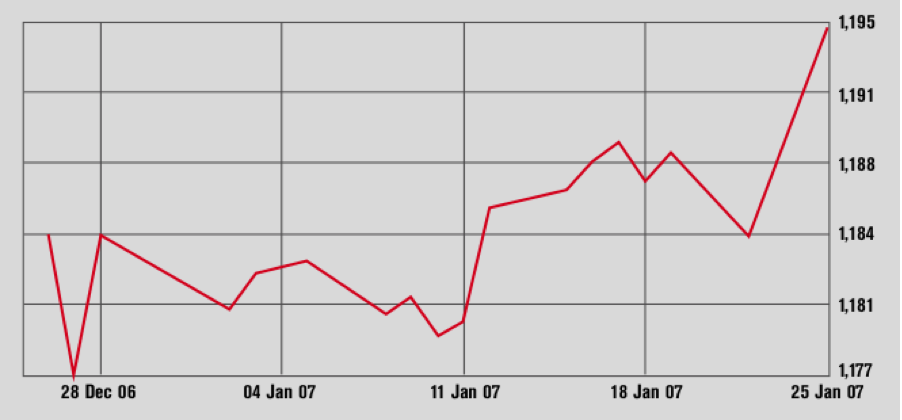
In beleaguered Beirut, the Blom Shares Index managed to rise to 1208.57 points on the last Friday of January, an improvement of some 30 points since the start of the year which nonetheless is an achievement, given the circumstances of continued demonstrations in the Lebanese capital and a one-day violent “general strike” which saw the BSE closed. After Lebanon was promised $7.6 billion in new international funds on Jan. 25 but simultaneously suffered bloody street fighting, Lebanese stocks moved two directions the next day—major banks went down while Solidere nudged up. Authorities in Ajman, UAE, announced that Solidere will be involved in a new urban development project there. Bank Audi said it expanded the number of its listed GDRs by a small percentage. Byblos Bank announced a new private equity fund in collaboration with the European Investment Bank. 

Amman SE  (1 month)

Current Year High: 8,730.58  Current Year Low: 5,267.27
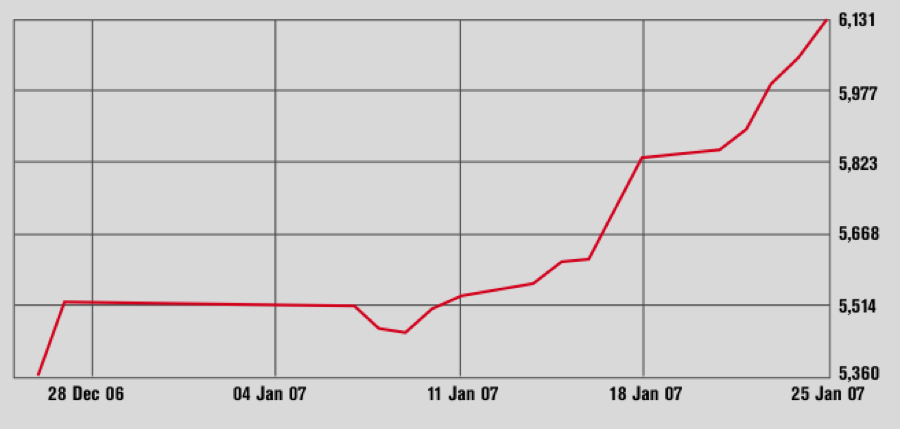
The Amman Stock Exchange outdid its regional peers from the start of the year and improved 11.1% to 6,130.61 points on Jan. 25. Brokers in Jordan jubilated about new buying interest by Gulf investors, attributing it to good banking results and low share prices. Banking was the driver of ASE growth. Market behemoth Arab Bank thrived in 2006 and announced 31.6% higher net profit for the year. The bank’s share rose by over 18% in January even before Arab Bank announced its profit and said it would consider 25% cash dividend for 2006. Two real estate development firms, Afaq and Methaq, had shareholders approve capital increases and Industrial Development Bank said it would invite strategic shareholding by Dubai Islamic Bank and Dubai Jordan Investment later this year. Jordan Telecom considered downsizing its capital significantly.

Abu Dhabi SM  (1 month)

Current Year High: 4,939.18  Current Year Low: 2,925.03
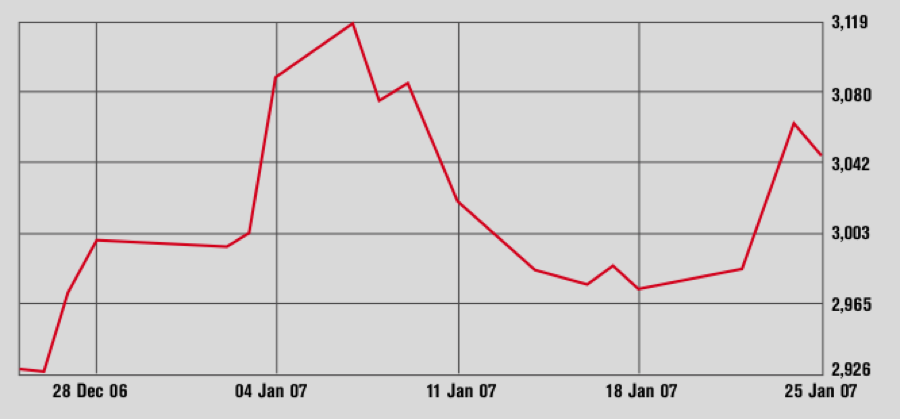
The Abu Dhabi Securities Market didn’t stray far from the 3,000 points line in January and concluded the year’s first four trading weeks 1.36% up at 3030.5 points on Jan. 28. Aldar Properties was among the most active stocks along with Arkan Building Materials which was the biggest new name on the bourse with an AED 1.75 billion IPO. Arkan’s share price jumped from AED 1.25 to AED 1.66 on the second day of trading and closed at AED 1.29 on Jan. 28. Two companies from Fujairah also went public on the ADSM. Construction supplies firm Fujairah Building Industries assumed trading on ADSM on Jan. 11 at AED 3.85 and slipped to AED 3.71 on Jan. 15.

Dubai FM  (1 month)

Current Year High: 7,608.99  Current Year Low: 3,997.29
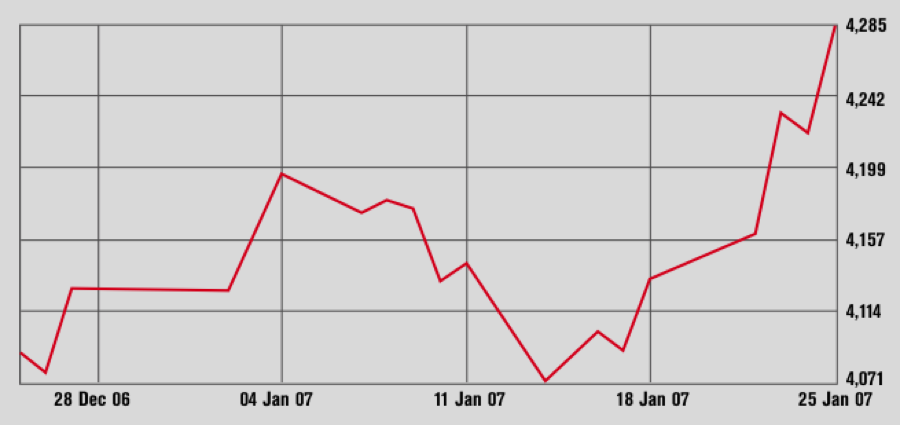
The Dubai Financial Market moved in positive territory during much of January and climbed some 240 points in the second half of the month to close at 4,314.46 points on Jan. 28. As with all markets of the region, earnings season loomed large over the DFM where analysts forecasted 2006 company profits to show 15 to 20% higher. According to analysts, some companies have multiplied profits in 2006 but such performance did not translate into universal share price gains for these firms in January. Dubai Investments improved by over 10% in the course of the month but didn’t shine in the dividend announcements. Emaar Properties achieved incremental improvements and got a small boost in volume late in the month on news that Deutsche Bank saw it as a “buy.”

Kuwait SE  (1 month)

Current Year High: 12,054.70            Current Year Low: 9,164.30
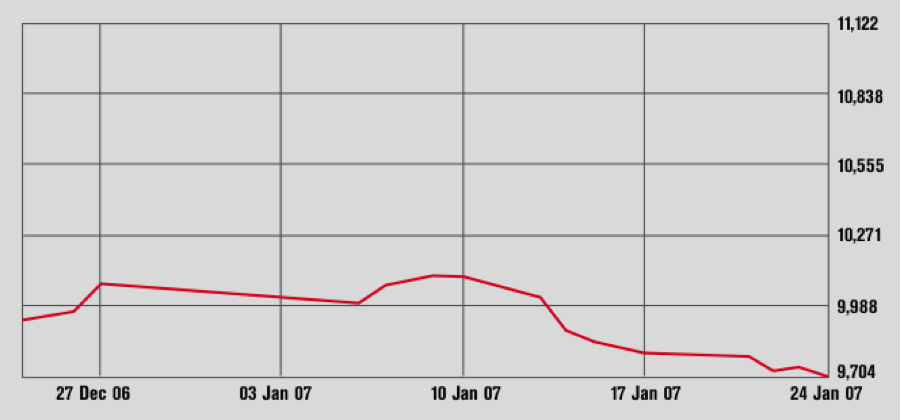
The Kuwait Stock Exchange started the year with a rise above 10,000 points in the first week after its long holiday break but slipped in the third and fourth weeks of January to close at 9,707.5 points on Jan. 27, down 3.58% since the start of 2007. The imbroglio over the government contracts of logistics firm Agility carried on with statements and counter-statements which sent the stock dipping in the middle of the month. Telecommunications firm MTC advanced in the first trading week of the year and again started to climb in the last week upon announcing plans to list on the London Stock Exchange a year from now. NBK saw a massive spike in volume after releasing record profit figures on January 23. Investment holding KIPCO gained 20% early in the month and was also among January’s more active stocks. Very high asking prices by international firms for building the large Al Zour refinery led the Kuwaiti government to ask the bidders to revise their offers. 

Saudi Arabia SE  (1 month)

Current Year High: 20,634.86            Current Year Low: 7,665.73
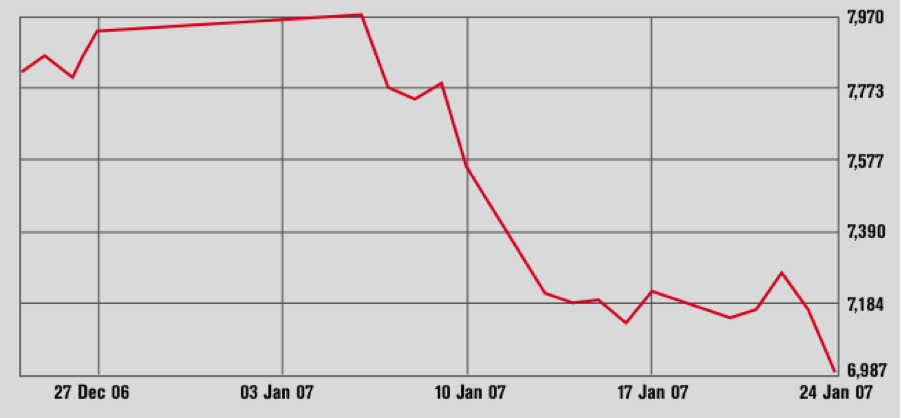
The new year has arrived and the Saudi market didn’t change direction. The Tadawul Index rolled to less than 7,000 points, closing at 6922.13 points on January 27—already down by 12.75% from the start of the year. Positive was newly listed Advanced Polypropylene Company which debuted on Jan. 20 and announced a few days later it obtained an SR 1.2 billion loan to build its production plant. The stock, which most people prefer calling APPC, leapt 60% in its first week of postpartum trading to SR 16 on Jan. 27. Market heavyweight Sabic, which had nosedived in the first half of January, climbed SR5.5 in the week after announcing annual results. Another potentially positive factor was a CMA decision to temporarily suspend two companies, the more prominent of which was Anaam, a company formerly specialized in livestock trading.

Muscat SM  (1 month)

Current Year High: 5,956.46  Current Year Low: 4,657.16
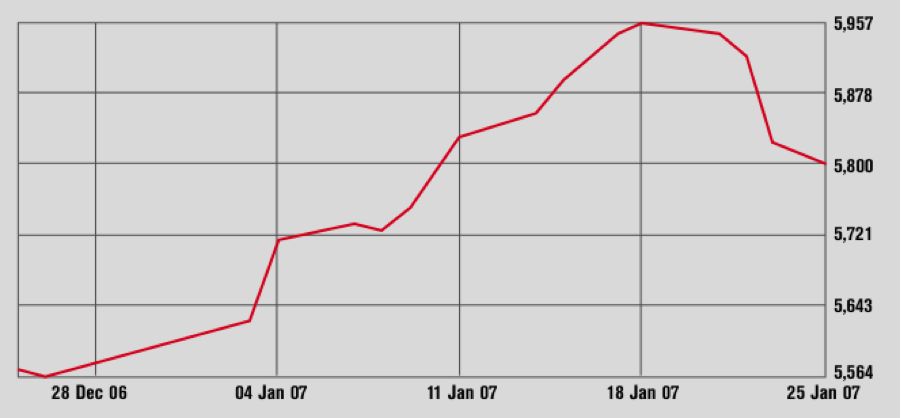
The Muscat Securities Market rode to a new historic index record of 5,829.1 points on Jan. 11 after which it let out some steam and closed at 5,769.6 points on Jan. 28. Oman was all banking news in January. The two largest banks by market cap., BankMuscat and National Bank of Oman (NBO), announced respective profit gains of 33% and 50% in their 2006 results. Shares of BankMuscat dropped a few baisas in the week after the bank published its results on Jan. 22. Shares of NBO, which had made some gains in the first half of January, did likewise. Bank Sohar, which offered 40 million shares in a month-long OR 20 million initial public offering that closed January 7, saw its IPO five times oversubscribed. It was the Sultanate’s first IPO in 18 months and Bank Sofar is expected to start trading this month.

Bahrain SE  (1 month)

Current Year High: 2,347.01  Current Year Low: 1,996.68
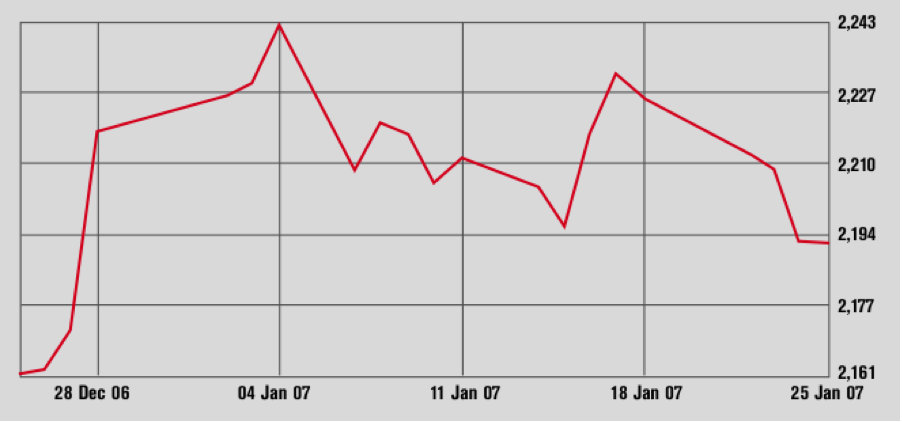
Stocks in Bahrain slipped in the last week of January and closed January 28 at 2,191.37, lower by 1.63% compared with the start of the year. Volumes remained unexciting on many trading days and serious fluctuations rarely occurred. On Jan. 28, for example, 28 stocks saw no action while nine losers stood vis-à-vis four gainers and four stocks that traded without price movements. Gulf Finance House was among the more vibrant movers, rising from $2.41 at the start of the month to $2.70 on Jan. 18 to recede to $2.49 on Jan. 28.  Shares of Batelco, National Bank of Bahrain, Ithmaar Bank, and Ahli United Bank also saw noteworthy activity. Sharia-compliant leasing specialist, First Leasing Bank, which is not traded on the BSE, completed an $89 million private share placement.

Doha SM: Qatar  (1 month)

Current Year High: 10,781.12            Current Year Low: 5,825.80
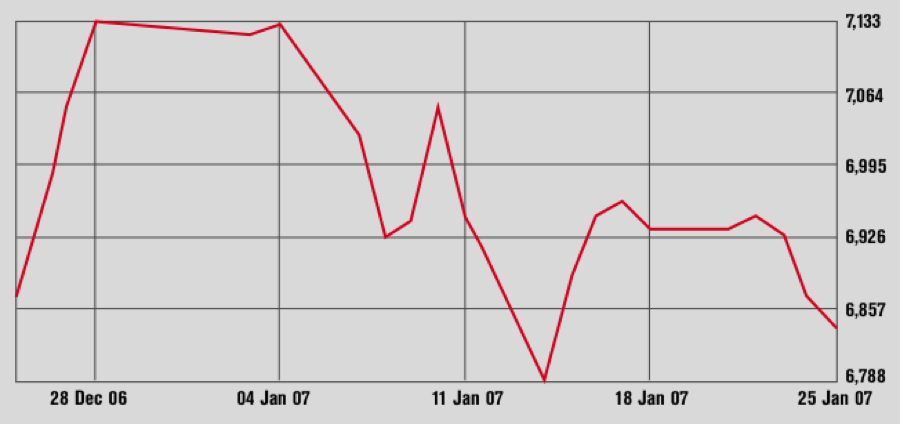
Index movements on the Doha Securities Market pointed southwards at the end of January as the DSM ended the Jan. 28 trading day at 6,781.08 points. This represented a drop of 4.93% from the start of the year but one wants to be mindful of the fact that December had been a month of rebounding in Qatar from index levels below 6,000 points. Earnings and dividend announcements had significant impact on share movements, with banking stocks at the center of attention. Barwa Real Estate also grabbed a lot of attention—it lost almost 20% in the first half of January, but rebounded with news of new projects and new financing deals. LNG tanker company Nakilat issued a cash call for the second half of its capital asking shareholders to pay up QR 5 per share between Feb. 1-15.

Tunis SE  (1 month)

Current Year High: 2,529.53  Current Year Low: 1,681.90
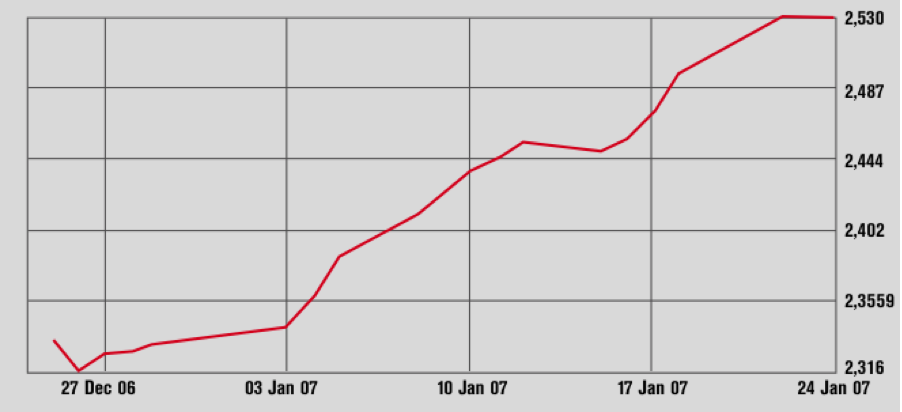
The Tunisian Stock Exchange rocked its way into 2007 and had a month of solid 8.06% improvement in its index. It closed at 2,518.81 points on Jan. 26. Shares of private equity and funds firm, Tuninvest, surged by 28% in January to 11.90 Dinars on Jan 22, from where they retreated slightly to TND 11.16 on Jan. 26. Leasing shares were among the most active shares in late January trading. Sector firm Tunisie Leasing, whose shares appreciated by 17% in the first half of January, lost close to half of its share price gains in the second half of the month. Similarly, Arab Tunisian Bank shot up 32% before profit taking brought the stock lower. Banque de Tunisie, the largest listed bank and the bourse’s leader in market capitalization, ended January 11% higher compared with the start of 2007. 

Casablanca SE All Shares  (1 month)

Current Year High: 9,109.55  Current Year Low: 5,337.53
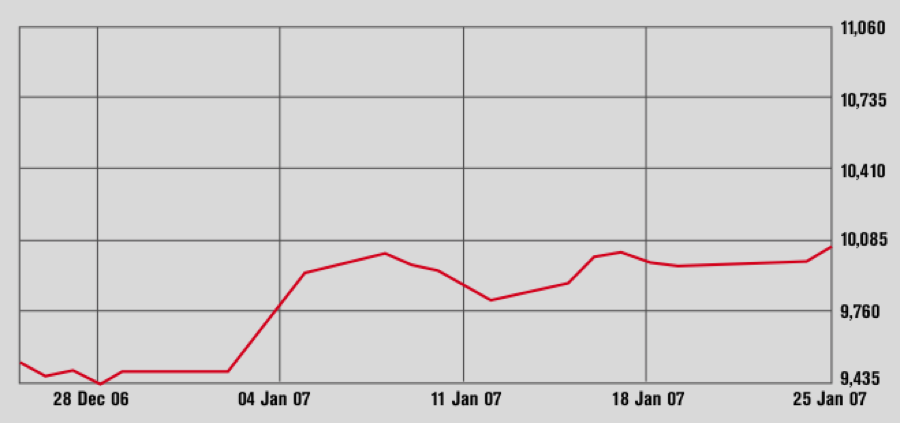
Humphrey Bogart should be thinking to take his Rick’s Café Americain public. The Casablanca Stock Exchange, after an index dip in the second half of December, moved up in January and closed at 10,217.59 points on Jan. 26, a new index high and an improvement of 7.79% year-to-date. Of major stocks, Attijariwafa Bank showed a notable share price performance and gained 9% from MAD 2,310 on Jan. 2 to MAD 2501 on Jan. 26. The Economist Intelligence Unit says that Morocco’s textile and manufacturing industries should have a growth year in 2007 because of demand in Europe and the country’s Free Trade Agreement with the United States.

Cairo SE: Hermes  (1 month)

Current Year High: 68,994.73            Current Year Low: 41,965.37
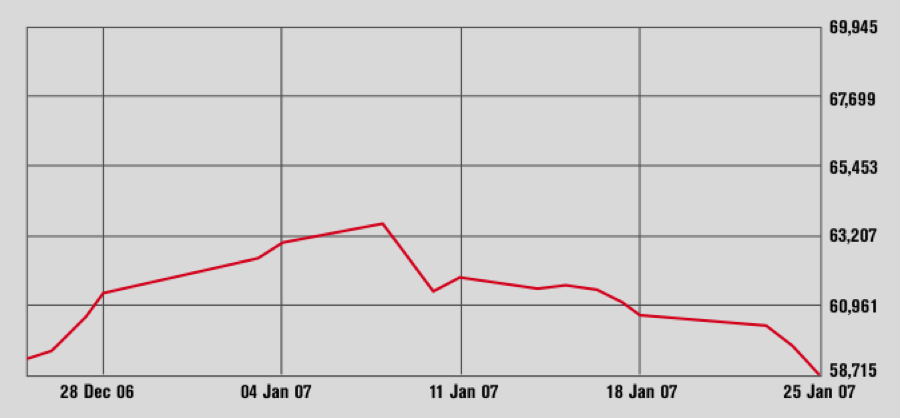
Egypt’s Cairo and Alexandria Stock Exchanges got off to a not-too-strong start in 2007. After gains in the first week, the Hermes Index reflected market losses in the rest of the month and closed at 57,236.56 points on Jan. 28, down 6.61% year-to-date. Orascom Telecom Holding had a rather bad month and dropped from LE 400 on Jan. 4 to LE 370 on Jan. 28. EFG Hermes had it even worse and slumped from LE 42.11 on Jan. 4 to LE 32.40 on Jan. 26—although the share got a “Strong Buy” recommendation with a target price of LE 52 from analysts at competitor Prime Securities. CASE contracted Scandinavian stock exchange operator OMX to create a new trading system for the Egyptian bourse.

February 15, 2007 0 comments
0 FacebookTwitterPinterestEmail
Corporate GovernanceSpecial Report

Region moves slowly on change

by Executive Staff February 15, 2007
written by Executive Staff

Corporate governance—or CG—is the new buzz word in the region as banks and financial institutions scramble to adopt anti-money laundering and counter terrorism financing laws, implement due diligence, and abide by the Basel II accords to effectively compete in our globalized world.

Since 2001, the US has been at the forefront of pushing this new corporate diligence ideology, and the region, particularly the oil-rich GCC, is wising up to the new mindset—not only to attract investment but also when investing in other markets. Foreign companies, particularly from the West, are looking for effective CG before investing. But the spanner in the works is that the implementation of CG in the Middle East is moving at a snail’s pace.

Out of 10 major banking and financial institutions contacted by Executive to discuss the implementation of CG, only one could talk with authority on the subject. And this is with four of the 10 in the top 20 of The Middle East magazine’s top 100 Arab companies.

This is somewhat surprising, as CG is about improving performance, transparency, management and communication. In a nutshell, CG is about the way in which board members oversee the running of a company by its managers, and how board members are accountable to shareholders and the company itself.

CG involves improving performance across the board—the “governance” in “CG”—and in company behavior toward shareholders, clients and employees. And rather than have management governed centrally, CG is about de-centralization and distributing the workload more effectively, freeing up, rather than overloading, upper management’s time, for instance—hence the need for corporate officers, PR spokespeople, compliance managers, and so on.

But the attitude of financial institutions contacted could not be further from even moderate aspirations of CG implementation.

One leading bank said that they had implemented CG in Lebanon, but for authorization would have to speak to their headquarters in Jordan, as that was where CG decisions were made.

Elsewhere, asking to speak to an administrator concerned with CG at a financial institution the response was: “I really don’t know what you are talking about.” Likewise, one of the top banks in the GCC said: “You need to liaise with the corporate … what do you call him?” After being shunted from one person to another and innumerable emails with promises to reply, there was nothing to report.

At a different bank, the caller was directed to the head of PR, but on getting through was informed by voice mail that the person was away for the week. No one had been deputized to take over.

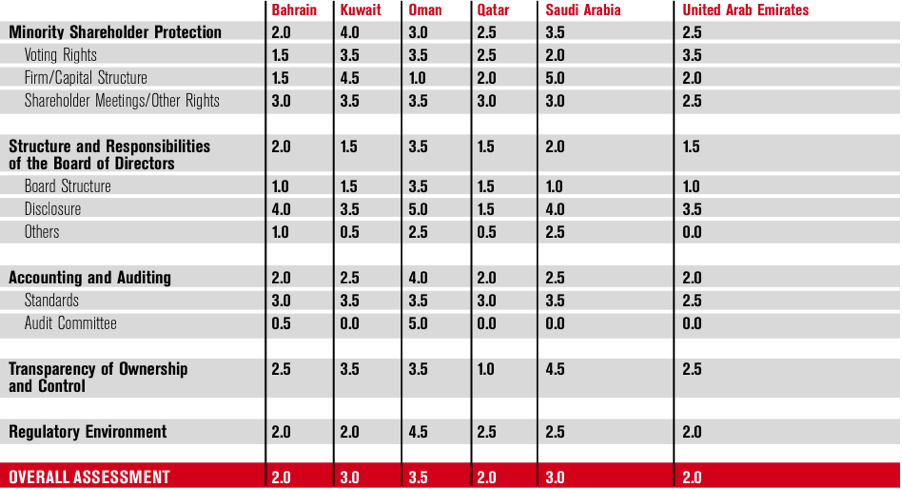
Comparison of corporate governance frameworks in the GCC with IIF guidelines

(On scale of 1-5 with 5 being fully compliant)

Source: Hawkamah

Few can define CG, much less institute it

Judging by this small sample, it would seem as if some of these institutions do not fully understand what effective CG means.

This is something that the Dubai-based Hawkamah Institute for Corporate Governance, set up to encourage CG in the region and headed by the former economy minister and vice-governor of Lebanon’s central bank, Nasser Saidi, is only too well aware of.

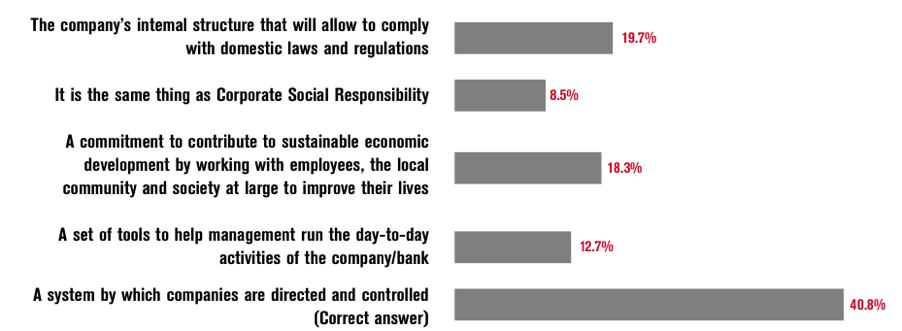
In a recent Institute of International Finance (IIF)-Hawkamah survey on the GCC, 59.2% of respondents were unable to define CG, while only 59.3% of respondent cited CG as important or very important. 

The survey, evaluating CG standards across 56 criteria in five broad categories—minority shareholders’ rights; responsibilities of board of directors; accounting and auditing standards; transparency and ownership; and regulatory environment—found that the average for compliance with international best practices was almost 50%. Considering the GCC is ahead of other Arab countries, the region’s adoption of CG is far lower than other emerging markets such as India with 75% and China with 65%.

Taking these results into account, it is perhaps not very surprising that so many banks and financial institutions were mute in their ability to discuss CG.

Stephen Vink, head of group risk management at Global Investment House in Kuwait, said it didn’t come as a surprise that so few companies responded.

“I went to an inaugural conference on CG in Dubai about one month ago. There was a huge turn out but because of specific methodology there is a fear CG will impact on business—profits, disclosure and transparency,” he said.

“I think there’s a fear, a misunderstanding, of what CG is about, so people are shy. To say companies have not implement CG is not correct, but to say they have 100% is not true either,” Vink added.

Indeed, the IIF-Hawkamah survey found that the top three barriers to CG cited by respondents were a lack of qualified specialists to help with implementation (53.6%), lack of information or know-how (37.7%), and low priority of CG in relation to other tasks (24.6%). It is the latter statistic that is perhaps of most concern to proponents of rolling out CG in the Middle East.

“The region is still at very early stages of corporate governance implementation. While there are a number of companies that are implementing good corporate governance practices, they are few and far between,” said Nikolai Nadal, director at Hawkamah.

Nadal said that banks, primarily because of Basel II requirements, are the most responsive in implementing CG. “Listed companies, primarily because of listing requirements on CG, are also responsive, but their responsiveness depends on the degree that capital market authorities and stock exchanges enforce the corporate governance frameworks,” he said.

“The corporate governance legal and regulatory environments, except for Oman where it is quite advanced, are starting to take shape with some countries looking at modernizing their company laws to include adoption of key CG principles,” he added.

In a comparative survey of CG frameworks in GCC countries that abide by IIF guidelines, rated from 1-5, (5 being fully compliant), Oman scored highest with a 3.5, Saudi Arabia and Kuwait got a 3, and Bahrain, Qatar and the UAE received a 2.

Who knows what CG means? (Nearly 60% don’t)

Source: Hawkamah

Oman on top when it comes to CG

Oman tops the league, said Nadal, as the Oman Capital Market Authority adopted a corporate governance framework as early as 2002.

Spurred on by the IIF-Hawkamah findings, the financial hubs of the UAE are scrambling to get up to par.

Khaled Deeb, Head of Internal Audit at the Abu Dhabi Chamber of Commerce, said some companies in the emirate had implemented CG and the government was fully behind such initiatives, kicking off a program this year to encourage companies to do the same.

“CG is very important. It is not new, but new in the market, in this country, and this region,” he asserted.

Regarding family businesses, of which there are 200 in Abu Dhabi, he said the chamber was working closely with Hawkamah to encourage family run enterprises to adopt a certain CG code. “But it is not easy to implement, you need to believe in CG first. You can get a consultant, but companies need to see the value of implementing CG,” Deeb said.

To encourage companies, Deeb said the chamber is thinking of implementing GC free of charge at a private company or family business as a pilot case to highlight the benefits to other companies in the emirate.

The Union of Arab Banks (UAB) on the other hand has been working for the past five years with the OECD, and now Hawkamah, to implement CG in the region.

 “CG is essential for economic reform and attracting investment, for without CG there can be no reform,” said Fouad Shaker, the UAB’s Secretary-General.

Shaker said he was pleased with the adoption of CG in the region, particularly in Jordan, the first country to implement CG regulations, in Lebanon, which has adopted a Manager Institute, and in Egypt, which has also established an institute.

“As for the central banks, most—if not all—have set rules to apply CG,” he added.

However, Vink believes that central banks could be doing a lot more to regulate CG, such as introducing spot inspections.

“A lot of reliance is placed on returnees ticking a certain box. If you look at the growth of CG in the West, inspections are part of the process. Very soon the next process here to kick in will be the fear factor: ‘I’m from the central bank, you are regulated by us and I’m here to inspect for two days.’ This is not happening here, but to be taken seriously the region is going to have to do this,” Vink said.

Other factors of good CG also need to be taken seriously. Compliance, risk management and internal audits are the backbone of CG, but in Kuwait, Vink said, there is no requirement to have a risk management department.  “But any investment company that doesn’t is probably committing suicide,” he stated.

Other regulations also need to be tightened and standardized as there are differing regulations for retail banking and investment houses, with CG regulations a lot less stringent for retail banks.

“You need to level the playing field, and more or less have the same requirements to apply because both are dealing with clients’ money and customers,” said Vink.

Local peculiarities are also hindering CG growth, with traditionally more trust between companies in the Arab world than elsewhere, few corporate failures, and minimal white-collar crime or fraud. “I don’t think we should wait until that happens,” Vink asserted.

Indeed, the IIF-Hawkamah survey found that due to high liquidity in the region, with easy access to capital, there was little incentive to change at the company level. Excessive liquidity is also creating high volatility in stock markets with too much money chasing too few stocks, which Hawkamah attributes to a lack of sophisticated investors and poor equity culture.

Despite such economic complacency, Vink said that all it would take is for a major scandal, such as the collapse of a large bank, to send a shockwave through the region that would have seriously negative repercussions, particularly on the outlook of Western investors.

With an international tendency to lump Arab countries together and refer to businesses as “Middle Eastern,” rather than country-specific as in Europe or the States, the relative interdependency  of Arab markets would suffer from a major scandal. And some 99% of corporate scandals, according to Vink, happen due to a breakdown of CG.

Vink said he based his benchmark for good CG on his native South Africa, which has adopted similarly strict rules as the UK. But he said institutions are perhaps overregulated in South Africa, such as the dual listing of the Johannesburg Stock Exchange and the London Stock Exchange. Equally, some countries have responded to corporate scandals such as Enron in the US and Parmalat in Italy in a reactive way, often implementing excessive CG regulation. The Sarbanes-Oxley Act of 2002 for instance, implemented in the US in the wake of the Enron scandal, has been criticized by financial institutions in recent years for hindering the decision making process—a view shared, incidentally, by former US Chairman of the Federal Reserve Alan Greenspan.

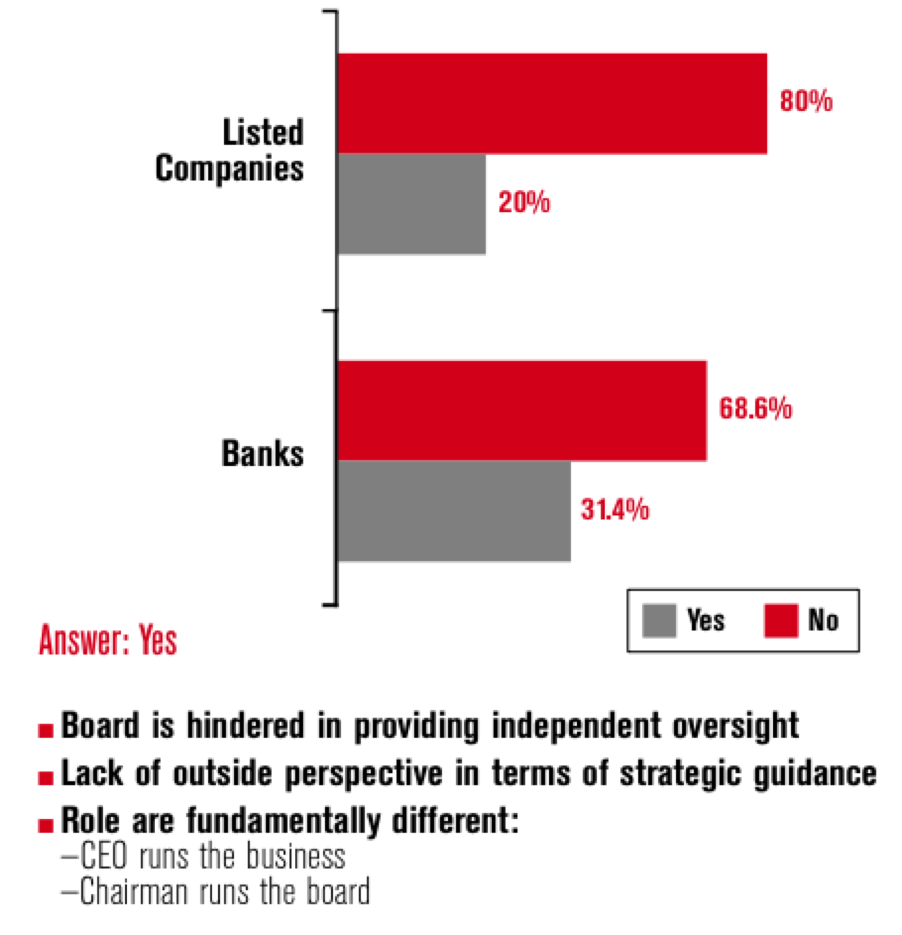
Is combining the positions of CEO and chairman against best practices?

Source: Hawkamah

As a result the region should learn from the experience of other countries in the implementation of CG and get the right regulatory balance.

The ultimate question however, as the IIF-Hawkamah survey highlighted, is why companies should implement CG.

Vink’s Global Invest is applying a risk management framework based on best practices. The reasons for that are two fold, he explained: “It’s prudent business to be proactive and have risk management for the organization. Secondly, as a result of methodologies, organizations will be a lot more efficient.”

As CG is a long-term view and essentially a bottom line cost, companies should not be looking for immediate short-term benefits. “There is a price to be paid for sustainability,” said Vink. “From a scientific and mathematical perspective, CG does make sense. Investors are prepared to pay a 30% premium to have CG, but there is no way CG will cost 30% to implement, so that’s the value.”

And the value of CG goes far beyond profit margins. Implemented effectively from the top-down, good CG will improve a company’s performance, attract more investment and help it get taken more seriously by international investors.

“Any big organization outside the Middle East will not put money in an organization without transparency,” asserted Vink. “Regional organizations need to be proactive; there needs to be a new mindset” to implement CG, he added.

February 15, 2007 0 comments
0 FacebookTwitterPinterestEmail
Corporate GovernanceSpecial Report

For region’s firms

by Executive Staff February 15, 2007
written by Executive Staff

It’s 8.15 a.m. and Dr Abou Bahlawan (he has an unfinished doctoral thesis from the University of Fun and Games, San Antonio, CA) makes his entry at Bank al Nile, Dajla wal Litani (BNDL). You see, Dr. Abou Bahlawan is the chairman and general manager and the majority shareholder of BNDL. His grandfather founded the bank 60 years earlier to provide full-time jobs for his descendants. The rest of the shareholders are former ministers, MPs, prime ministers and a former president, all of whom have been brought in at minimal cost.

These minority shareholders generally attend one board meeting every three years and take the opportunity to reminisce about the good old days. At some point, a director—whoever is in favor with the chairman at that time—is invited to brief, in less than five minutes, the effect of the external “situation” on the financial health of the bank.

Micro-managing run amok

But back to the daily grind. For the first three hours, Dr. Abou Bahlawan obsessively goes through the employee attendance sheets, checking on tellers, office boys, tea ladies and the like. He notices that one young lad has been arriving fifteen minutes late but staying on an extra hour.  Dr. Abou Bahlawan is furious and scolds the culprit vigorously for forty five minutes. This puts the chairman-CEO-CFO-etc. in a bad mood and he takes out his frustration on the team of external advisors and consultants he has hired to build up internal systems and procedures by firing them before the expiration of their contract. Naturally, Dr. Abou Bahlawan is not concerned about ensuing law suits.

For the rest of the day (and the week), Dr. Abou Bahlawan fulfills very important functions. These include long working sessions with his accountant (who should be the CFO but who’s had his wings clipped in order to not pose a threat to the Chairman-CEO) to massage the financial figures and present a “nice” image to the central bank and the public. He will also do his utter best to philosophically dismiss as a “bloody nuisance” and “irrelevant” any new and decisive banking laws (e.g. Basel II). He will place family members in strategic positions. He will wine and dine the judges and lawyers representing parties filing law suits against BNDL and will accept significant cash deposits from dubious people that he calls “friends” and “allies.” He rewards handsomely all managers and directors that have been “nice” to him throughout the year and will think nothing about going on a one-day “business” trip to Venice at the bank’s expense. In essence, he makes all the decisions necessary for the running of the bank, even down to the ordering of paper clips.

Sound familiar? Although a grotesque picture of absolute no-nos in management and board memberships, our pastiche nevertheless represents almost all the basic mistakes of lousy corporate governance.

Corporate governance becoming hot topic

The corporate governance (CG) dragon is stirring. Throughout the region CG has become the latest buzz word—Hawkamah, headed by former Lebanese Economy Minister Dr. Nasser Saidi, is the region’s first organization whose sole purpose is to promote CG—and is seen as the next step in the corporate evolution ladder if regional companies are to maximize efficiency and play (and behave) on a level (and transparent) playing field with Western companies.

Regional managers, shareholders and directors are all aware that good CG is the key for developing a successful business characterized by financial performance and where everybody is protected, respected and motivated. However, the majority of institutions are still not truly aware of the importance of CG and what it means. There is an endemic lack of ability and capacity to implement and enforce proper CG regulations, and there is little willingness from family or single individual owners of businesses (the vast majority of Lebanon’s private sector is family- or individual-owned and run) to go into the CG route. They regard it to be a threat to their dominance and fear the more staff and management become aware of their rights and of the need of better governance, the more uncomfortable family and single individual owners will feel, as their managerial weaknesses are gradually exposed.

The key elements of good CG principles include honesty, trust and integrity, openness, performance orientation, responsibility and accountability, mutual respect and commitment to the cause. The most commonly accepted principles of CG include respecting the rights of shareholders and helping these shareholders exercise those rights. Although this aspect of CG is a hotter issue in developed markets, it is worth the consideration of some of the larger Lebanese institutions, such as Solidere; the larger banks, which are all listed companies and have a diversified shareholder base; and some of the larger family companies, which have many family members as shareholders. The main right of shareholders is to have the management (when it is not comprised of family members or of some shareholders themselves) communicate information that is understandable and accessible and encourage shareholders to participate in general meetings.

Companies should realize that they have legal obligations towards all corporate participants—managers, employees, directors, shareholders, external consultants, and so on. In Lebanon and other countries in the Arab world, many people are employed on a contract with a fixed duration. It is not unusual to see employers terminating these contracts for no obvious reasons prior to their end date with no compensation. In this case, the firm is failing on its CG.

The board should have de facto a range of skills and capabilities to be able to deal with various business issues and have the ability to review and challenge management performance. It needs to be of sufficient size and have an appropriate level of commitment to fulfill its responsibilities and duties. This means that there must be a balance between non-executive and executive directors and that the CEO (or general manager, as he is often called) and the Chairman should not be the same person, particularly in banks. Furthermore, the board should have a clue as to how the business of the company should be run. Too often they involve family members who barely challenge their senior managers, either because the same senior managers are other family members, or because they have been politically appointed.

Organizations must develop a code of conduct for their directors, executives and employees. Rare are those companies that make their staff sign a document on a code of conduct at the time of recruitment. When these documents exist, they are generally not read and after a while are not respected. In other words, there is no proper CG that dictates staff, at senior and junior level, behave professionally and efficiently—a tall order for some private sector firms and virtually impossible for the dinosaur-like public sector, especially in countries like Lebanon.

Disclosure and transparency are desperately needed

Last but not least is the hot subject of disclosure and transparency. In principle, all organizations should clarify and make publicly known the roles and responsibilities of the board and the management to provide shareholders with a level of accountability. Independent procedures to verify and safeguard the integrity of the company’s financial reporting should also be implemented. The disclosure of material matters concerning the organization should be timely and balanced to ensure that all investors and the public (in some cases) have access to clear, factual information. In Lebanon, disclosure and transparency is virtually non-existent in the corporate sector, with the exception of the few listed companies on the Beirut Stock Exchange. The banking sector is the most transparent, although the level of accountability of the board and the management is relatively low. Some senior managers are employed for life, no matter how many mistakes they make, and have a tendency to cloud their activities to such an extent that it is very difficult to hire experienced newcomers. This behavior has contributed and still contributes to the departure of young professionals to greener pastures, and prevents the return of many experienced and highly skilled Lebanese.

Other issues of CG include the oversight of the preparation of a company’s financial statements, internal controls and the independence of the company’s auditors, a review of compensation arrangements for the CEO and other senior executives and the procedure through which individuals are nominated for board positions. Then there is the issue of what resources are available to directors in carrying out their duties (a problem transformed into art form in Lebanon), oversight and management of risk (non-existent except in some banks that are trying to adopt Basel II) and dividend policy (a case of the sky’s the limit if shareholders and senior management are the same persons and to hell with organic growth).

So what are the benefits? Good CG contributes to sustainable economic development by enhancing the performance of companies and increasing their access to outside capital. Improved governance structures and processes help ensure quality decision-making, encourage effective succession planning for senior management and enhance the long-term prosperity of any company and its sources of funding. Well-governed companies also receive higher market valuations, particularly in emerging markets such as Lebanon, where companies are assessed principally by the experience and quality of their management, board and core shareholders. Improving corporate governance should improve capital flows to companies in countries such as Lebanon from domestic and global capital, equity and debt, and from public securities markets and private capital sources. A company that is seeking to expand internationally or regionally cannot achieve sustainable, recurrent earnings, assets and capital growth without the trust of the markets, be they international, regional or local. Only good and consistent governance can help build such trust.

The key is to try to gradually change the behavior of corporate fat cats over time. For the moment, shareholders and senior directors are gauging each other to see who is going to go the CG route first. What most concerned people in Lebanon still do not understand is that good governance implies corporate performance. With proper CG, companies and banks can enter the globalization process with comfort and confidence, can become more competitive, can attract investors, and above all boost productivity, as staff become more motivated.

What, then, must be done?

Most urgent in the region is the need to separate the roles of chairman, general manager (or CEO) and the board of directors. This holds true in banks and corporations and is not going to be achieved in the near future, as long as ownership is not institutionalized. Another task is to set up supervision, reporting and management information systems, and with more stringent internal audit and compliance controls and functions. While this has been carried out, more or less, within the larger segment of the banking sector, it remains a weak spot for most other companies. A third objective is to increase awareness among shareholders and senior management that human capital is key for the long-term financial and qualitative performance of an organization. Training is an absolute necessity, and while little is being spent by companies on training and professional courses, the regulators must make an effort to push for these aspects to be reinforced.

It is also vital is for board members to meet on a regular basis and to participate in setting up business plans and strategies for their organization. Involving as many competent managers as possible is also more important, as many board members are usually members of the same family and make their decisions alone. There is little dilution of decision-making in the region; and despite efforts by some banks to tackle this issue, the problem is still far from being sorted.

While recruitment strategies have to be changed, and staff (at all levels) must be chosen according to ability and what they can bring to the board and the company, creativity and innovation are also aspects that can clearly benefit from good CG. Regional firms in Lebanon must create an atmosphere that is conducive to creativity and innovation, by setting up reward schemes and proper staff quality assessment systems. In the latter’s absence, motivation can hardly be developed and the willingness to perform will dwindle over time. The absence of a long-term vision in most family and single-individual owned companies—and the existing lack of decision-dilution and sharing—can kill off creativity among all staff. And people wonder why there is a youth and brain drain, even in times of relative economic and political stability!

February 15, 2007 0 comments
0 FacebookTwitterPinterestEmail
Feature

Healthcare checkup for region looks good

by Executive Staff February 8, 2007
written by Executive Staff

The healthcare scene in the Middle East is rapidly changing, with new technologies and growing populations driving the industry—worth over $3.5 trillion worldwide—and patients increasingly aware of their medical needs. Developments in Lebanon, Saudi Arabia and the United Arab Emirates accurately reflect these trends; although each country has incorporated different healthcare approaches into its overall strategy, there is a common denominator among the three approaches. Today, more than ever before, quality standards are demanded by the sector itself, and the patients it treats.

The global healthcare landscape shifted dramatically in the late ’90s and the early millennium, as regulating standards for the sector grew increasingly mainstream. Many countries began implementing accreditation programs to improve the safety and quality of healthcare services, which providers were obliged to adopt to stay competitive. “These quality standards are usually developed by a panel of experts in the field and used by accrediting organizations,” explains Khalil Rizk, accreditation administrator and risk manager at Beirut’s AUB Medical Center.

Outside accreditation

Non-governmental agencies survey and assess providers by these standards before accrediting them, and generally review each facility every few years to ensure continued compliance. Accreditation involves both self-assessment and external peer review, while focusing on organizational performance. The process is designed to improve healthcare systems and procedures, thereby improving patient outcomes, but it also serves as a way to help patients identify facilities they can trust. Today, there are numerous national and international accreditation agencies.

At the very beginning of the standards “revolution” in the 1990s, the focus was primarily on structural elements of healthcare, later expanding to include procedures and outcomes. Today, however, most standards programs emphasize patient care issues and quality of service, which have been positively affected by the introduction of performance reviews. “The trend is on assessing actual performance, rather than capacity to perform,” explains Dia Hassan, Dean of Academic Affairs, Health Management in Dubai Healthcare City. “Assessment is geared towards organizational efforts in managing patient care as well as supporting process improvements, which result in better patient outcomes,”

Standards exist for virtually every area of the healthcare sector, ranging from guidelines for hospital operation to surgery practices and ambulatory care. According to Rizk, standards can be grouped into two categories: organizational standards, and those specific to patient care.

In general, hospitals in the Middle East apply international standards, such as those set by the Joint Commission International and the International Organization for Standardization, though the standards applied in the latter case, ISO 9000:2000, are from a broader quality standards framework not specific to healthcare organizations. Some countries, such as Saudi Arabia and Egypt, have opted to develop their own national standards. In Lebanon, the health ministry has also produced local standards, but some private hospitals—such as the AUBMC—are in the process of seeking JCI accreditation.

In the Saudi sector, the Ministry of Health (MOH) oversees the quality of all healthcare services. The MOH has strict standards for licensing healthcare facilities and providers, which were enacted partly in response to public demand. “Prompted by emerging complaints against the healthcare delivery system, the Makkah Region Quality Program was initiated in 2001 and the Makkah Region Quality Program (MRQP) was officially established in January 2003,” says Ghada al-Barakti al-Sharif, a strategic affairs consultant to the UAE Ministry of Health and director general of Healthcare Focus, a consulting firm located in Saudi Arabia.  This initiative had a positive impact on services provided by participating institutions. Other hospitals are also seeking international accreditation.

The adoption of quality standards has directly affected the sector’s strategies and outlook, with healthcare providers seeing firsthand the value of quality management systems, and their impact on patient care, safety—and satisfaction. Healthcare institutions no longer skimp on resources to increase their profit margins, as accreditation and a reputation for quality have proven far more effective than any conventional marketing tool.

“The emergence of insurance and third-party payments made this approach even more profitable,” notes al-Barakti. “Insurance companies are now demanding streamlined processes, based on service intensity and severity of illness indicators. Any organization that does not meet quality standards will risk having many of its claims return unpaid.  Another important factor is that third party payers (e.g. ARAMCO) reward providers who can show proof of quality systems implementation with higher per-capita premiums.” Insurance systems generally require close monitoring of the quality of care delivered. Insurances plans and rapid changes in technology result in the rise of healthcare costs, underscoring the importance of healthcare systems becoming more proactive.

Another key change spurring the healthcare quality movement is that end recipients have become increasingly well-informed about their options and what service to expect. Unsatisfied healthcare consumers are more vocal today than ever before, and many are now taking advantage of their legal systems to demand compensation when service is unsatisfactory. “Quality systems can reduce costs in the long term, by reducing the margin of error and improving performance,” emphasizes Rizk.

Standardization of health care boosts region

Major research supports the correlation between a rise in quality and the application of quality standards in healthcare organizations. One survey, conducted by Hassan, echoes the findings of the bulk of studies. “I led a longitudinal quantitative research over a period of three years, to measure performance of a UAE hospital, before and after the application of international quality standards (JCI),” explains Hassan. “Four stakeholders’ assessments—patients and their families, accreditation bodies, government authorities, and employees—were taken into account. The results showed a significant improvement of 51% in the overall organizational performance, 18 months after the implementation of the Joint Commission International standards. Performance improvement was demonstrated in all stakeholders’ assessments, ranging from 15%, as perceived by patients and families, to 177% as perceived by government authorities.”

However, it is not just local patients who are drawn in by better quality healthcare. With international travel now possible on a budget and medical histories transferable at the click of a button, patients are increasingly looking beyond national borders for their healthcare needs. The Dubai Healthcare City—no stranger to the global “health tourism” trend—is seeking to attract internationally-renowned clinics and staff to bolster its profile as a destination. According to Hassan, “Health tourism is expected to significantly contribute to the economy of Dubai in the near future.”

Health tourism is on the rise in other Arab countries as well. In Lebanon, the sector is dominated by “tourists” seeking cosmetic procedures, while according to al-Barakti, Saudi tertiary care centers in particular attract patients from across the GCC. These tertiary healthcare facilities accommodate patient referrals through governmental agencies in other Arab states as well as the Far East and Africa. “The healthcare industry has not yet focused on the ‘healthcare tourism’ concept as such,” observes al-Barakti. However, that doesn’t mean the sector isn’t poised for substantial growth. “By stressing commitment to quality and patient safety, this will eventually lead to a greater demand for Saudi healthcare services. It might also pave the way for special initiatives and legislation promoting health tourism, such as visa procedure facilitation.”  

Ultimately, the standardization of healthcare services looks like a win-win situation for the region: greater profit margins for hospitals, better treatment for patients, and a growing reputation for countries like the UAE, Saudi Arabia, and Lebanon as centers of healthcare excellence

February 8, 2007 0 comments
0 FacebookTwitterPinterestEmail
Feature

Carthage

by Executive Staff February 8, 2007
written by Executive Staff

Helped by some $20 billion in foreign investments, Tunisia is working on a metamorphosis of both capital and country. The government in Tunis hopes that diversification will be the key to launching the land of former Carthage into the 21st century.

What Cleopatra and the Pyramids are to Egypt, Hannibal and Carthage are to Tunisia. Anything from hotels, restaurants and pharmacists to car rental companies and power plants are named after the general, his family, and the legendary city-state that some 2,500 years ago ruled the western Mediterranean. Carthage still exists, both as a up-market coastal suburb of capital Tunis and as a symbol of former glory. As Tunisia attempts to once again become a gateway between Europe, North Africa and the Arab world, it hopes to revive at least that aspect of ancient Carthage. It has been considerably helped in realizing its dream by some $20 billion worth of foreign investments signed in 2006.

Unlike neighboring Algeria and Libya, Tunisia has only limited hydrocarbon reserves: an estimated 300 million barrels of oil and some 3 trillion cubic feet of gas—the equivalent of about 10% and 5% of Algeria’s proven reserves. The lack of hydrocarbons is the main reason that the country, ever since its independence from France in 1956, has had to look for other sources of foreign currency.

Ever since the 1960s, the country has mainly focused on becoming a tourist destination, an effort in which it has had great success. With a population of some 10 million, the country welcomed some 6.5 million tourists in 2005, far more than any other country in the region. Though Tunisia still aims to increase the number of tourists to 10 million by 2010, economic diversification tops the government’s agenda. The latest round of investments, mainly coming from Italy and the Arab world, concerns almost every sector of the economy, from telecom and industry to real estate and, of course, tourism.  

One the most prominent contracts signed in July 2006 was the long-awaited privatization of 35% of the state-owned giant Tunisia Telecom (TT). First announced in 2004, the tender for international bids was not launched until early 2006. Bids came from a multitude of companies, including France Telecom, Vivendi Universal, South Africa’s Mobil Telephone Networks and Emirati firms Etisalat and Tecom. Many experts expected a French company to win, yet it was Tecom’s $1.9 billion offer that proved the highest bid.

Tecom is part of Dubai Holding. Presided by Dubai’s crown prince, Sheikh Mohammed bin Rashid al Maktoum, the company serves as a giant umbrella for dozens of companies involved in fields as diverse as construction, tourism, real estate, media, energy and industry. Dubai Holding made world headlines in recent years by becoming the third-biggest shareholder in DaimlerChrysler. In 2006, it acquired British wax museum chain Tussaud’s, while it is among the names rumored to buy Premiership football club Liverpool.  

Less prolific Tunisia Telecom (TT) was a big prize in its own right. With currently some 8000 employees, 3.8 million GSM and 1.3 million fixed line subscribers, it is one of Tunisia’s largest firms. TT enjoyed a state monopoly on telephony until 2002, when Tunisiana, owned by Egyptian Orascom and a Kuwaiti firm, obtained a license to operate. With sharp prices, an aggressive, vibrant marketing campaign and an emphasis on service, the company managed to carve out a 46% market share by the end of 2006. TT could only follow and the price war between the two companies caused the average price of mobile communication to fall some 80%. Consequently, the total numbers of GSM users increased over 10-fold, from some 500,000 in 2002 to some 6.5 million today.

By privatizing the state telecom giant, the government hopes to better cope with Tunisana’s stiff competition and to at least consolidate its current market share of about 54%. One of the main growth opportunities for TT over the next few years will be the large-scale introduction of ADSL. Tunisia’s 11th Development Plan, which runs from 2007 until 2011 aims to boost the country’s broadband capacity to 1 million lines. TT has announced that the first 120,000 lines will be put in place by April 2007. Thanks to the digital revolution, the number of internet users, currently some 1.3 million, will increase significantly.

The new Tunis

Dubai Holding not only ventured into Tunisian telecom. Dubai Holding Properties, the firm’s real estate and construction branch, signed a $10 billion contract to develop Lac du Sud, one of two lakes that separate the capital from the coast. Over the coming decade, the project foresees the construction of a state-of-the-art business tower, residential buildings, hotels and a marina. In fact, Lac du Sud is expected to become the first high-rise area of Tunis.

The development of Lac du Sud follows in the footsteps of the highly successful rehabilitation and development of its twin lake, Lac du Nord. By the mid 1980s, both lakes had becomes so polluted, due to both sewage and industrial waste waters, that the only vegetation that could live in the oxygen-starved waters were thick layers of algae. The tide would start to turn in 1987, when the Société de Promotion du Lac de Tunis (SPLT) was founded.

The task of this semi-private public body was to rehabilitate and develop Lac du Nord. The lake was deepened, cleaned and shrunk from 3,000 to 2,500 hectares, as 500 hectares were reclaimed. The canal that connects the lake to the sea was widened to improve water circulation—anyone visiting the lake today would hardly imagine it was a lifeless pool 15 years ago.

The rehabilitation and development of Lac du Nord not only concerned the water, but also the shore. On a total surface area of 1,300 hectares, so far some 450 hectares have been developed with parks, gardens, residential areas and what is today Tunis’ main business district: les Berges du Lac. While many people originally doubted the area would work, today it is home to many of Tunisia’s leading companies, multinationals and many an embassy, including the brand new American one, which measures some 8,000m2.

In late 2006, Aboukhater, an Emirati property developer, announced it was to construct Tunis Sports City on the shores of Lac du Nord. On a total area of 250 hectares, it will construct a national stadium with a total capacity of 20,000 spectators, nine sports academies, an Olympic swimming pool, tennis courts and a golf course, as well as hospitals, clinics and a 5-star-hotel. In addition, a major part of the project has been reserved for residential development. The total value of the project is $4.5 billion. Seeing the massive developments of both Lac du Nord and Lac du Sud, it is not difficult to imagine that by 2015, Tunis will have quite a different, and indeed spectacular, appearance.

Another major development is Emaar’s “El Qoussour” project. Situated on the coast of Hergla, this mixed tourist-residential resort will consists of 1,300 villas, 3,000 apartments, a golf course, a marina and several hotels. Total surface area measures 442 hectares, some 25% of which will be reserved for parks and gardens. The estimated value is around $4 billion. As far as tourism is concerned, Tunisia in the near future hopes to attract more Arab tourists who thus far have largely ignored the “Europe of Africa.” Some 2 million tourists come from Libya and Algeria, while the remainder mainly stems from Europe. In that sense, it is noteworthy that Emirate Airlines will soon start flying five times a week to Tunis.

But why invest in Tunisia? During a visit to Tunisia, Dubai Holding CEO Mohamed Gargawi Said summed up the following reasons: the country’s favorable business and investment climate, its political stability, its healthy economic growth rate, its human resources and its proximity to Europe. GDP growth rate in Tunisia averaged 4% to 6% in recent years, while the telecom sector grew by some 20% annually. Foreign investors may profit from tax incentives and exemptions, and the country is slated to introduce a free trade zone with the European Union in a matter of years.

Tunisia was the first Mediterranean country to sign a so called “Association Agreement” with the EU on 17 July 1995, which went into force on March 1, 1998. Under the agreement, the EU and Tunisia are committed to cooperate in the field of politics, economics, trade and culture. Most importantly however, the agreement foresees in the establishment of a free trade zone by 2010. It is this particular prospect that makes Tunisia an interesting destination for domestic and foreign companies that aim to export to Europe. It is in this context that the development of the industrial city of Enfidha should be seen.

Covering an area of 2 million m2, the Italian development of Enfidha is part of increasing cooperation efforts between Tunisia and Italy. It aims to construct a fully equipped state of the art office and production area and attract companies that hope to profit from the future EU trade agreement. No doubt, the complex will benefit enormously from the government’s announcement to build a new airport in the direct vicinity of Enfidha, while it is studying the possibility of building a deep sea harbor there. The tender for bids to construct Enfidha airport is expected to be launched in early 2007. The investment’s value amounts to an estimated $450 million.

It’s expected that both Tunisian and foreign companies active in the field of agriculture, technology and exporting will establish themselves in Enfidha, which would provide tens of thousands of necessary jobs by 2010. Currently, Tunisia has an unemployment rate of around 15%.

Enfidha is not the sole Italian investment in Tunisia. Italian Prime Minister Prodi in 2006 announced the construction of a gas-fuelled power plant at Cap Bon, which is to produce 1,200 MW of electricity, 800 MW of which will be exported to Italy, while 400 MW is meant for local consumption. Total value is estimated to amount up to $1 billion. Italy is already connected to Tunisia by means of a pipeline transporting gas via Algeria to Italy.

Still considerable gas reserves

Although Tunisia’s hydrocarbon reserves are dwarfed by those of its neighbors, Algeria and Libya, the country has been an oil producing country in its own right ever since the 1960s. In fact, Tunisia only became a net importer in 2001. While reserves are running out rapidly, Tunisia still has considerable gas reserves, especially offshore. Most reserves are owned and exploited by BG Group, formerly known as British Gas, in cooperation with state-owned ETAP. 

In 2007, BG Group is starting the development of the offshore Hasdrubal Field, which holds great potential. In fact, it has so much potential that has signed a deal with Canadian firm Petrofac to construct the $400 million onshore Hasdrubal gas processing and liquefied petroleum gas (LPG) production facility. The factory will be built on the Tunisian coast near the city of Sfax and is due to be operational by 2009.

So while Tunisia tries to make the most of its dwindling hydrocarbon reserves and consolidate its position as the main tourist hub on the North African coast, the government has made a head start with its diversification effort. The industrial city of Enfidha, in combination with the EU free trade agreement, could turn Tunisia into a major trading and production hub as well. Meanwhile, the privatization and liberalization of the telecom sector, including a major boost in broadband Internet will further promote Tunisia as an attractive investment destination.

February 8, 2007 0 comments
0 FacebookTwitterPinterestEmail
Banking & Finance

Money Matters by BLOMINVEST Bank

by Executive Staff February 8, 2007
written by Executive Staff

Regional stock market indices

Regional currency rates

Nakheel increases capital to $23 billion

Nakhleel, the UAE-real estate property developer, obtained the approval of the Ministry of Economy to raise its capital from Dh100m ($27.2 million) to Dh82.8 billion ($22.5 billion) in an aim to transform the company from government ownership to a private joint stock company with 827 million shares. Nakheel, the developer of The Palm, The World and Dubai Waterfront, listed the world’s largest Sukuk (Islamic-compliant bond) on the Dubai International Financial Exchange (DIFX) on Dec. 14, 2006. The $3.52 billion Sukuk, lead-managed and book-run by Barclays Capital and Dubai Islamic Bank, gives its holders the subscription rights to invest in future public share offerings by The Nakheel Group.

Batelco launches new service with Spain’s Telefonica Moviles

Batelco, Bahrain’s leading telecommunications company, announced the launching of a General Packet Radio Service (GPRS)/Multimedia Messaging Service (MMS) in agreement with Spain’s Telefonica Moviles Espana (TME). As such, any postpaid Batelco costumer with GPRS/MMS handsets and settings may use all mobile services while in Spain. This agreement brings the number of roaming agreements between Batelco and international operators to 309. Batelco reported net profits of BHD88.7 million ($235 million) in 2005 and its total assets amounted to BHD397 million ($1 billion) for the same period.

Global economic prospects 2007: MENA countries riding the oil boom

The World Bank issued its Global Economic Prospects Report 2007 entitled “Managing the Next Wave of Globalization.” The report states that the Middle East North Africa (MENA) region is “riding the oil boom” as high oil prices and strong demand are the driving forces behind the MENA economies growth. Growth in the whole region (non-oil exporting & oil exporting countries) is estimated at 4.9% in 2006, “the fastest pace in some four years.” Output of the non-oil exporting countries is expected to increase by around 5%. Lebanon’s expected GDP contraction of around 5.5% in 2006 as a result of the summer war is an exception to the strong services and agricultural growth in the non-oil exporting region. As for oil exporting economies, the rise in oil prices up to September 2006, led to large increases in these countries revenues. Growth in this region is expected at 4.9% in 2006 up from 4.7% in 2005. However, GDP growth is expected to slow down among oil exporters to 4.7% in 2007 and 4.5% in 2008 due to constraints in capacity and expected strong growth in imports.

February 8, 2007 0 comments
0 FacebookTwitterPinterestEmail
North Africa

Look to government for reform

by Executive Staff February 8, 2007
written by Executive Staff

The Tunisian pharmaceutical industry has expanded greatly since its liberalization more than a decade years ago. The sector is again expected to undergo major changes in 2007 as authorities are proceeding with reforms in the public healthcare system.

In the past, only a few pharmaceutical laboratories produced medicine. Today, there are 27, both public and private, and major international pharmaceutical firms such as Pfizer, Sanofi Aventis and Pierre Fabre, have set up production facilities in the country. Before the liberalization process, drugs produced locally accounted for only 7% of national consumption. Today, local production covers all kinds of medication and represents almost half of the country’s production needs in value, with TD240 million in revenue. Only more sophisticated drugs are being imported.

The market itself is relatively modest, valued at approximately $185 million per year. It is extremely fragmented, with 46 wholesalers selling to the Central Pharmacy, a public organization which functions as a buying group for the country’s network of hospitals and pharmacies.

Under the current system, healthcare coverage is ensured by two institutions, the Caisse Nationale de retraite et de Prévoyance Sociale for public servants and the Caisse Nationale de Sécurité Sociale for private sector employees. For additional coverage, patients also rely on private complementary regimes offered by mutual funds and insurance companies. According to authorities, the current system is overwhelmingly complex, costly and inefficient. Indeed, in recent years, expenses linked to public medical coverage have increased faster than the country’s GDP growth. Therefore, authorities have decided to create a new entity, the Caisse Nationale d’Assurance Maladie (CNAM), whose objective will be to simplify and rationalize the country’s public health coverage system.

By creating the CNAM, which should be operational on Jan. 1, 2007, the government aims at extending its citizens’ medical coverage, while controlling its own costs. Essentially, the cost of some drugs will be better covered under the new regime, and care will be extended to pathologies that are currently not covered. Treatments for diabetes, cancer and cardiovascular disorders will likely be among the first to be covered by the new system.

To reach both its cost-control and expanded-coverage objectives simultaneously, the government wishes to encourage the use of generic drugs. Today, over 45% of all drugs distributed through the hospital network are generic, while that figure falls to 10% for pharmacies. The government would like to see both figures increase. Price arbitration will be a major factor playing in favor of generic drugs. The referential price used to reimburse patients will be “the cost of the cheapest drug available at a given time,” said Naceur Gharbi, the president of the CNAM. In most cases, this medicine will be a generic drug. Meanwhile, customers willing to buy more expensive, branded medication, will have to absorb the extra expense.

However, industry insiders reckon that the market’s response to the reform is uncertain. According to studies, generic makers will benefit the most from the change. Some professionals think that competition on the generics market will increase as more producers will be tempted to enter the fray.

While local producers are likely to boost their presence on the generic drugs segment—which account for as much as 40% of drugs produced locally—international players are becoming aware of the potential of the Tunisian market. Indian firms have signed joint-ventures to produce anti-infectious, anti-cancerous and anti-inflammatory drugs in Tunisia.

The consequences for pharmaceutical firms are debatable. On the one hand, sales of certain medications will likely drop as they will be replaced by cheaper generic equivalents. On the other hand, certain treatments will now be refunded, paving the way for new markets and opportunities. Also, some treatments will see their level of reimbursement increase, making them more accessible.

February 8, 2007 0 comments
0 FacebookTwitterPinterestEmail
North Africa

Primed to expand

by Executive Staff February 8, 2007
written by Executive Staff

Last month, on the outskirts of Rabat, the department of investment (DI) held its annual investment conference ‘The Fundamentals of Investment’ with a particular focus on human resources.

During the conference, the DI announced a strategy for developing an efficient education system and labor market policies adequate for the needs of economic development within the framework of the UN Development Program’s Millennium Development Goals.

The flow of foreign direct investment (FDI) into Morocco has risen from $1.63 billion in 2005 to $2.24 billion in the first nine months of the year, excluding privatizations.

An Ernst & Young study on the country’s attractiveness, commissioned by the DI and presented during the conference, said that 46% of the 203 foreign companies surveyed found that the economic situation is more attractive than last year. A third of these companies have no presence in Morocco as of yet.

With inward investments flowing into the kingdom, the strain on the labor market, especially on qualified human resources, has emerged as an important challenge.

The country is facing a potential shortage of qualified engineers, with an increasing number of companies competing for a limited pool.

“One of Morocco’s comparative advantages, the availability of engineers at a good price, risks being eroded,” said Hassan Bernoussi, the DI’s director.

Engineers wanted

Employers in the tourism, textile and agricultural industries, as well as in new sectors such as electronics, automobiles and aeronautics will add to the demand for engineers. A cooperation agreement between the IT Industry Association and the government has identified a need for 30,000 IT engineers within the next 10 years.

For instance, the Casashore project, an outsourcing complex, is expected to create jobs for 1,500 engineers over the next three years.

“We are moving increasingly towards an information economy, where knowledge is becoming a determining factor for success,” said Rachid Belmokhtar, president of Al-Akhawayn University and head of the scientific committee of the conference. During the conference, the government revealed its intention to train 10,000 engineers a year until 2010, by creating engineering programs in the universities and by encouraging cooperation between universities and engineering schools. The prime minister’s office has nominated the Telecommunications Regulation Agency to organize the program.

Increasing graduates

The government intends to increase the number of graduating engineers to 9,000 a year by 2010. An additional 600 professionals will be trained as engineers and 400 engineers are expected to migrate to Morocco every year until the end of the decade. This summer, 24.4% of graduates remained unemployed, ready to be retrained.

The private sector is also poised to play a pivotal role in the training of professionals. Tata Consultancy Services (TCS), India’s largest exporter, recently concluded an agreement with the government of Morocco.

TCS will set up a 500-employee offshore delivery center catering to French and Spanish speaking parts of Europe, which will become operational in January 2007. The company will provide IT training services in the kingdom that will help create over 25,000 jobs in the offshore center by 2010.

Europe remains the main source of inward FDI, with an 89% share in 2005. However, growing investments by countries such as the US (predominantly in services and real estate) and Gulf states (in construction and real estate) are changing this trend.

Considering the growing interest by new investors, the DI decided to re-brand itself as ‘Invest in Morocco’ in order to focus exclusively on its role as an investment promotion agency.

February 8, 2007 0 comments
0 FacebookTwitterPinterestEmail
North Africa

Finally finished

by Executive Staff February 8, 2007
written by Executive Staff

Egypt and Turkey have put the finishing touches on a Free Trade Agreement (FTA) that is expected not only to open up new markets for Egyptian business but also boost the inflow of Turkish investments after it comes into force in February.

Trade between the two has been on the rise for the past few years, coming in at $1.1 billion for 2006, a 30% increase on the preceding year. With the FTA in place, both sides are tipping at least a three-fold improvement on the 2006 figures within three years.

The final inking of the agreement, which has been a number of years in the making, took place in Cairo on January 10. The agreement, based on a protocol signed in December 2005 by President Hosni Mubarak of Egypt and his Turkish counterpart Ahmet Sezer, allows for Egyptian exports of industrial products to Turkey to be exempt from customs duties. Duties on imports of Turkish industrial goods to Egypt will be phased out over a 12-year period.

There will also be a progressive liberalization of trade in other areas, such as agricultural goods, both raw and processed, fisheries products and service industries.

Yet another step in improved relations

According to Egyptian Trade and Industry Minister Rachid Mohamed Rachid, the FTA is just another step in improving relations and trade ties with Turkey.

There are advantages for both in the way it will allow them to utilize a place of origin, meaning they can both work through the agreements each country has made with other nations, with Europe and other partnerships to help increase the flow of goods, he said after the agreement was concluded.

The minister also saw a longer-term benefit for Egypt. Should Turkey become a full member of the EU, it would act as a bridge between the EU member states and the Mediterranean countries, he said with an eye to the possibly distant future.

Egypt and Turkey also see their FTA as a further step in the Barcelona Process, the plan to make the Mediterranean a free trade area by 2010, said Rachid.

Turkish Foreign Trade Minister Kursad Tuzman said there was much to attract Turkish business, especially the textile sector, to Egypt.

Egypt is a significant country for reaching a lot of markets, he said. Textiles and ready-to-wear clothing in particular are very important in Egypt. The country has high-quality raw materials in this field. Turkey, which conducts a lot of exports in the textile field, is facing difficulties competing against high quality and low priced products. Egypt has a highly skilled labor force.

Trade relations with Turkey were also given another boost when the government announced it had allocated a 2 million m2 plot in the October Sixth industrial city to serve as a free trade zone for Turkish firms. Some 100 Turkish companies, mainly in the textiles sector but also representatives of the automotive, chemicals and manufacturing industries are preparing to move in, an immediate by-product of the FTA.

Most of the industrial zone’s production will be exported, the majority going to Arab countries, with the $2 billion development expected to create more than 20,000 local jobs.

The move of Turkish firms offshore also represents a shift in that country’s economy, which has long touted itself as a destination for foreign capital based on low wages and materials costs.

Countering China?

The Turkish press in particular focused on the deal serving to counter increasing Chinese dominance in the global textiles trade and Beijing’s growing economic clout in the region. Turkey’s domestic textiles industry, long a driving force of the economy, has waned as China’s ready-to-wear clothing makers have waxed in the past few years.

However, for Egypt, China’s burgeoning economic presence on the world stage does not appear to cause the same foreboding as it does in Turkey, and Cairo has been actively working to boost cooperation and attract investments.

Indeed, those very Turkish industrialists setting up shop in Egypt to consolidate their position in the campaign to rein in China’s lead in the textiles wars might find they have some unwanted neighbors in October Sixth City.

During a trip to China last September, Rachid signed an agreement to establish a Chinese industrial zone to accommodate joint Chinese-Egyptian investment in textiles, footwear and pharmaceutical industries. The 500,000 m2 zone will also be located in the October Sixth City.

While Egypt is more likely to see an inflow of Turkish investment than Ankara is to see Egyptian FDI come the other way, both countries will gain from the FTA through an exchange of expertise, access to cheaper goods and, most importantly of all, the opening up of markets.

February 8, 2007 0 comments
0 FacebookTwitterPinterestEmail
GCC

KSA leads in cutting CO2

by Executive Staff February 8, 2007
written by Executive Staff

While public awareness of the dangers of global warming still has a long way to go in the Middle East, it is beginning to be taken increasingly seriously. Recent interest in the promotion of Clean Development Mechanism (CDM) policies is seeing the Gulf take a more development-oriented approach to the problems associated with global warming.

The risks associated with global warming to the broader Middle East are numerous. Some scientists have projected that the concomitant rise in sea levels could mean that by 2050 Egypt’s northern coast, including the ancient city of Alexandria (now the country’s second largest city), will be underwater.

The Gulf is already suffering from the warming of the oceans through a phenomenon known as coral reef bleaching, whereby a rise in sea temperature causes symbiotic algae that live on coral reefs to die, making the coral appear white. Equally, many of the luxury seaside developments now taking root across the Gulf could well fall pray to encroaching sea levels.

But perhaps most significant for the region in the medium-term is that the recent interest in global warming has become a new reason to encourage alternative fuels and a move away from fossil fuels, the Gulf countries’ chief export by far. It has also put pressure on the oil and gas industries in the region to go green and lower the emissions created during extraction. Due to their small populations compared to the amount of carbon dioxide they emit, Qatar, Kuwait, Bahrain and the UAE are among the top five emitters per capita in the world.

Kyoto the center of debate

For the past decade, the Kyoto Protocol has been at the center of the debate over what to do about global warming. Signed in 1997, Kyoto aimed at cutting developed countries’ emissions by 5.2% by 2008-2012. However, it has never really taken off, undermined by the demands of rapidly developing economies like China’s for the energy that drives their growth and by the reluctance of some developed countries, most notably the US (which has pulled out of Kyoto), to impose emissions restrictions on industry that might slow down its economy.

In practice, the Kyoto Protocol provides two main ways to control emissions. The most common thus far is emissions trading, a system whereby companies are given a pollution cap to which they must adhere. Unused pollution credits can be sold on free markets to companies that require them. The EU currently runs the largest operating emissions market, the EU Emission Trading Scheme. To apply this idea to Kyoto, the trading would have to be internationally standardized with one market catering to all countries rather than companies.

The main alternative to emissions trading is articulated in Article 12 of the Kyoto Protocol as the CDM. It calls for developed countries with a commitment to reduce greenhouse gas emissions to invest in emission reduction projects in developing countries instead of upgrading their own system. CDM advocates believe this will achieve the same targets in emission reduction at a lesser cost and have the added bonus of encouraging foreign direct investment (FDI) and technology transfers in the developing world. Some 434 CDM projects have so far been registered worldwide, with India and Brazil the top two advocates of the system.

Gulf countries are now trying to increase their involvement in finding solutions to tackle the challenge of climate change while maintaining economic growth. In September 2006, Saudi Arabia hosted the first International Conference on the Clean Development Mechanism, calling for more CDM projects in the region. Mohammad al-Sabban, a senior economic advisor to the Saudi minister of petroleum, described CDM projects as a win for the investor, a win for the country hosting the project, and a win for the environment.

There is a wide variety of CDM projects Gulf countries could benefit from, ranging from promoting the use of clean technology to the reduction of gas venting and flaring to carbon sinks. Some of these technological innovations could even help hydrocarbon exporters extend the longevity of their reserves by 10-15%.

CDM projects have already taken hold in other Arab countries—for example Egypt’s Zaafarana wind power plant on the Red Sea or Morocco’s Essaouira wind power plant on the Atlantic Ocean. At the Riyadh conference, participants suggested a variety of CDM applications of relevance to GCC countries, such as water desalinization plants powered by renewable energy to oil industry specific projects such as carbon trapping, where carbon dioxide is injected into oil fields rather than released into the atmosphere—which can have the effect of increasing the recoverable reserves of maturing oil fields. Countries in the Gulf have also become more aggressive in accounting for their CO2 emissions, with gas flaring now far less common than in the past, and an improvement in the shut-off valves for flare headers, to ensure minimum leakage into the atmosphere.

CDM helps bottom line

Participants at the Riyadh conference from the financial world noted that CDM projects, with their inherent public benefit, could be compatible with Islamic finance—a factor that could make it easier to raise funds regionally. But one major attraction of CDM, particularly for host Saudi Arabia, is to attract FDI as part of the kingdom’s effort to diversify its economy and encourage the transfer of technology.

Indeed, Saudi Arabia’s keenness to move ahead with CDM projects was striking. Al-Sabban, the conference’s chair, promised proactive implementation of CDM policies; public-private cooperation on projects; the rapid development of a legal and structural framework; the creation of workshops to educate local businesses and incentives to reward leading CDM projects.

Such enthusiasm could go hand-in-hand with many GCC countries’ recent focus on encouraging local research and development, especially considering the very specific needs of these countries. CDM technology is, in many ways, on the leading edge of technological innovation. These companies are beginning to realize that companies on the other side do research, says Dr. Jim Holste, the associate dean for academic affairs at Texas A&M University in Qatar, which specializes in petroleum industry research and teaching. If you simply sit back as a consumer of technology, you’re always behind.

One example of technological innovation Holste gives is the recovery of associate gas—gas dissolves in an oil field. Currently associate gas is flared (burnt) which is wasteful and not good for the environment, he said. Synfuels—a Dallas, Texas, based company—has been developing new methods to recover these gases and convert them to liquid fuel (GTL) with a much leaner installation than ordinary GTL facilities. There have been discussions between Synfuels and Kuwait and Qatar about implementing the new technology. It has the ability to be profitable on a much lower scale, Holste says.

CDM, then, could kill two birds with one stone: help GCC countries do their bit against global warming and encourage research that can give a longer lease of life to ageing oil fields.

February 8, 2007 0 comments
0 FacebookTwitterPinterestEmail
  • 1
  • …
  • 596
  • 597
  • 598
  • 599
  • 600
  • …
  • 696

Latest Cover

About us

Since its first edition emerged on the newsstands in 1999, Executive Magazine has been dedicated to providing its readers with the most up-to-date local and regional business news. Executive is a monthly business magazine that offers readers in-depth analyses on the Lebanese world of commerce, covering all the major sectors – from banking, finance, and insurance to technology, tourism, hospitality, media, and retail.

  • Donate
  • Our Purpose
  • Contact Us

Sign up for our newsletter

    • Facebook
    • Twitter
    • Instagram
    • Linkedin
    • Youtube
    Executive Magazine
    • ISSUES
      • Current Issue
      • Past issues
    • BUSINESS
    • ECONOMICS & POLICY
    • OPINION
    • SPECIAL REPORTS
    • EXECUTIVE TALKS
    • MOVEMENTS
      • Change the image
      • Cannes lions
      • Transparency & accountability
      • ECONOMIC ROADMAP
      • Say No to Corruption
      • The Lebanon media development initiative
      • LPSN Policy Asks
      • Advocating the preservation of deposits
    • JOIN US
      • Join our movement
      • Attend our events
      • Receive updates
      • Connect with us
    • DONATE