
At least five people, including a seven-month old baby, were killed in Lebanon last week — the tragic legacy of the monster storm that struck the country. It was the worst of its kind in ten years, ripping into communities and destroying homes.
Yet while the storm was unusually ferocious, flooding happens nearly every year in the country. Heavy rains cause chaos in low-lying areas and landslides in the mountains — damaging property and injuring people, sometimes fatally. In both 2012 and 2010, at least one person was killed as a result of extreme weather in Lebanon.
The storms that cause these tragedies cannot be averted but is Lebanon’s failing infrastructure partly to blame for the extent of the destruction? That is certainly the view of Nadim Farajalla, Associate Professor of Hydrology and Water Resources at the American University of Beirut.
Deathly shallows
Farajalla identifies three major factors contributing to flooding: people living in low-lying areas, barriers to the natural flow of rivers, and refuse clogging the drainage system.
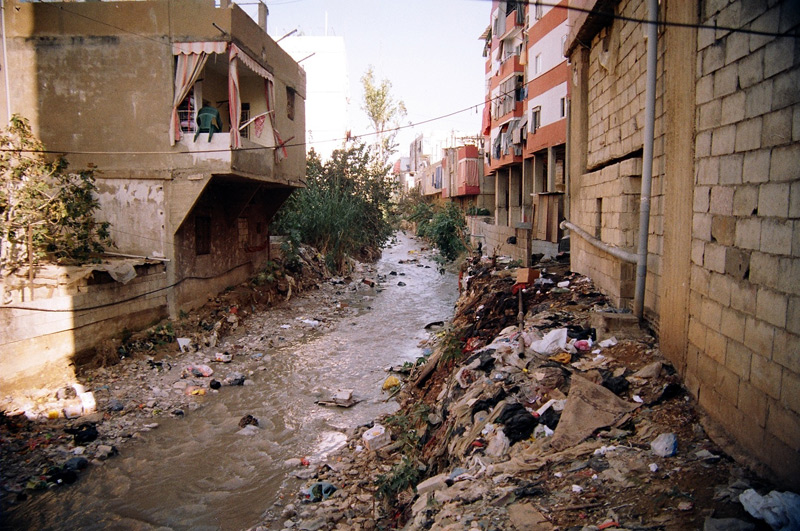
“The biggest problem during this storm was that people have been [living] in the river or along the river floodplain,” he said. In some areas, including Beirut’s southern suburb of Hay al-Solm, poorer residents in recent years have constructed homes on river banks, limiting the space for water to flow. Farajalla said that such constriction creates an effective dam, raising water levels further upstream. Furthermore once the water passes through the constriction, it flows more rapidly — and destructively — towards those downstream.
But encroaching buildings aren’t the only cause of flooding. A government official, who spoke to Executive on the condition of anonymity as he was not permitted to speak to the media, said some of the blame lies with poor bridge design. “Some bridges aren’t capable of handling such runoff and high waters,” he said. In poorer areas where government services are lacking, these bridges can be small and make-shift, built without review from officials or engineers, and lacking enough height to accommodate flood waters. Farajalla echoed this concern, saying “there are so many crossings on the rivers themselves that they have created constrictions that make backwaters” when the rivers rise.
In Beirut, this problem is only compounded by the city’s trash problem. “People dump their refuse in the river, which ends up in the [underground] drainage system,” Farajalla said, adding that it accumulates to form barriers at low bridges and clog the subsurface network of drainage pipes. Such was the case last week in Beirut’s eastern Karantina neighborhood, where drainage systems backed up so much that the main road became a river.
In the capital, this underground drainage system has been considerably upgraded since the end of the Lebanese civil war in 1990, but there are still significant issues. Maintenance of subsurface pipes involves both clearing barriers caused by trash and sediment, and inspecting and repairing cracks and natural wear of the tunnels themselves. “A network is only as good as its maintenance,” says Farajalla, adding that the work “has not been done on a regular basis.” The government official was more blunt: “no one is cleaning the drainage system before the winter rainy season,” he claimed, adding “this is the number one problem in Beirut.”
A more general complaint revolves around contractors and inspectors. Noting that contractors will sometimes cut corners, Farajalla says, “[inspecting authorities] often do not have the personnel available, either in numbers or in training… What we need is people to follow through and check the execution.”
Punishing the poorest
These problems tend to affect the most vulnerable – poor families, including many refugees – the hardest. This is a problem found in many nations where infrastructure is sub-standard: low-lying land in a floodplain is cheap and close to jobs, so during periods of light flooding, poorer people will move in, often forced to find alternative housing by a lack of government planning and oversight. However, light-flood periods do not last forever, and eventually nature takes its course — sometimes to disastrous effect.
According to a paper by Carlos Tucci of Brazil’s Federal University of Rio Grande do Sul, when this happens, governments have two options for long-term solutions: building expensive drainage networks or relocating people to higher ground. But, as Tucci points out, such solutions can be politically problematic.
In Lebanon’s case relocation would still require a large investment from the government. “These people have left their villages and come here to find a job, and it’s a horrible existence, so what do we do? Who pays for this?” asks Farajalla. “These people have paid enough by having their homes damaged.”
Building the ark together
Any solution to Lebanon’s flooding problems will have to be multifaceted, and include zoning for development, roadways and bridges, subsurface drainage, inspection regimes and maintenance. Any such remedy would have to involve several parties including individual municipalities, the Ministry of Energy and Water, the Ministry of Public Works, refuse collection companies and the general public.
Speaking about road drainage, Farajalla argued that that “there should be a ministerial team assigned to each municipality or grouping of municipalities along a highway to ensure that local roads do not generate runoff onto the highway, and then that the highway is well-maintained,” adding that “they have to generate some coordination mechanism” between the municipalities and the Ministry of Public Works. Underground, he says, “maintenance should be continuous.”
Of course, the government and waste collectors cannot shoulder all of the responsibility for keeping sewerage lines clean. “It takes one plastic bag to block a [drainage] grate,” notes Farajalla. “People have a responsibility not to throw things into the drainage network, not to litter the roads, and to help the municipality by reporting problem areas.”
Given the diverse array of parties responsible for quality stormwater management, it comes as little surprise that the government official who spoke to Executive was pessimistic about the possibility of fast implementation: “There are many plans in the government [to address this problem] but I don’t think it will be solved soon.” Given Lebanon’s weather, that may mean more pain ahead for the most vulnerable.
