
Lebanon may have its first incubator.
Netakeoff is a launching pad for
entrepreneurs who have innovative ideas
but lack the financial means and support
to realize their brainchild. The company is
dedicated to the development of Internet
and technology firms. It provides seed
capital, office facilities, business assistance,
technological know-how and other support services. “This will allow entrepreneurs
to give their full attention to
their ideas by letting us deal with the
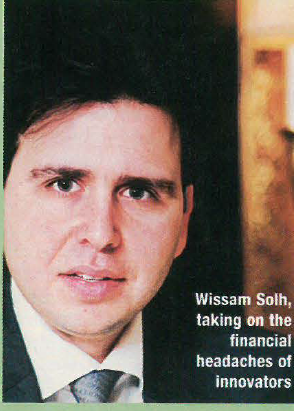
financial headaches,” says Wissam Solh,
the firm’s CEO. “We’ve already raised
around $5 million in capital and plan to
select four to eight ideas with high
growth prospects a year.”
The company will invest no more than 10% of the incubator’s
capital per project but no less than
1%. “We invest in companies that are in
the early developmental stage, with special
focus on the Internet, B2B, B2C, e-commerce,
WAP and telecommunications
technology, software, communications
and information services,” says Solh.
The company has assembled a large network of
world-class advisors and consultants in
order to provide the best advice possible
to the incubated companies. In return
Netakeoff expects to receive an equity
stake in each incubated company. Each
selected portfolio company is treated as a
separate legal entity and is directed by its
own management team.
The company’s exit strategy is to achieve liquidity. That
can be done by listing the start-up company
on an American or European
exchange (Nasdaq, Easdaq) within two or
three years, via a private placement or
through a merger or acquisition.
HOW DO I LOVE YOU? LET ME COUNT THE WAYS…
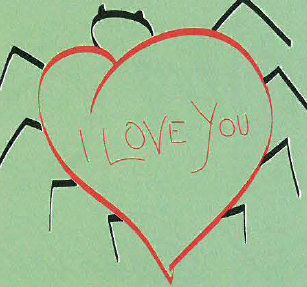
Who can resist opening an e-mail
message with a subject line that
reads, “I LOVE YOU”? Apparently, not
many. The love bug clogged millions of
computers around the world throughout
May, infecting at least 600,000 computers
and, according to some estimates, cost
companies up to $1 billion.
“The Melissa virus was nothing compared
to this,” says Mihran Boudromian,
head of Expervision’s software and sales
department, referring to a March 1999
attack that infected more than 300,000
computers. “This was ten times quicker.”
Many large companies have already
installed antivirus software to block
transmission of the virus and most home
computer users and small businesses
seem to be coping. “We’ve had some
calls for help, but it’s not what I would call
overwhelming,” said Boudromian.
In theory, at least, the epidemic has run
its course. The major antivirus software
makers, such as Norton and McAfee,
have already released updates of their
virus signature files to detect and remove
the loveworm. But if files have been overwritten,
there remains the expensive and
time-consuming job of restoring those
files from backups, if backups exist.
If your antivirus software has an automatic
update feature, you should use it as soon as possible to download the solution.
Meanwhile, if you haven’t been infected,
the best advice is to immediately delete
any message that contains the “I LOVE
YOU” subject line. (Note the lack of a
space between the I and the L.) In any case,
do not open the attachment, which is the
only way the virus can spread.
But the seriously bad news is that computer
experts predict this may be just the
beginning, as viruses grow more frequent
and malicious. All it takes is one person
who’s moderately familiar with software
technology to come up with an enticing
subject line and send it to the right group of
people. Then it will spread like wildfire fed
by the dupe of friendship or the fool of love.
… AND THE MILES TO GO BEFORE I TRAVEL
There’s nothing quite as satisfying as
being rewarded for spending your
hard-earned money. Liban Miles
(www.libanmiles.com), keen to cash in on
shopping foibles, launched a point-card
system in November 1999, and has so far
netted some 30,000 card-toting customers.
The mechanics are straightforward
enough: Customers with a Liban Miles
card – which costs $12 per year to own –
collect points while shopping for goods
and services in about 200 participating outlets,
ranging from supermarkets to
clothes shops to travel agencies.
Miles
are accumulated at the rate of $10 per
Liban-mile and are then redeemed for
prizes such as dinners, consumer electronics
and airline tickets.
“Our target for 2002 is to have a membership
roll of 100,000 customers and
3,000 participating stores,” says Roy
Saba, the company’s general manager.
The cheapest “freebie” for 30 miles is a
six-pack of Coca-Cola (an offer that, in
strict money terms, translates as $300 spent
for $6 in soda pop). The most expensive
item, earned at 15,000 miles, is a Sony
Projection TV, valued at roughly $3,000.
According to Saba, collecting towards airline
tickets is proving popular. For instance, a
round trip to Paris, in Liban units, represents
3,600 miles. That’s the equivalent of 3,000
crates of Beaujolais Nouveau or 600 items
of Parisian lingerie – and for some, that
may be enough to whet the appetite.
