
C isco Systems, a global leader in
networking for the Internet, has
announced that it will open an
office in Lebanon by August 2000. “We
need to be present to add value in terms of
services and consultancy for our partners
so as to have better customer service,”
says Mohammed Abdel Malak, Cisco
area manager for the Levant region.
US-based Cisco, which has 225 offices
in 75 countries, is opening a base in
Beirut to capitalize on the mushrooming
networking business. “In the past two
years networking has increased by
100%,” says Ziad Yacoub, assistant manager
at Computel.
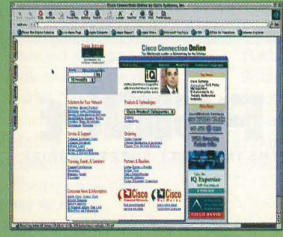
Cisco provides networking solutions to
large organizations, service providers,
and small and medium-sized businesses in
115 countries. During the first quarter of
this year it generated revenues of $4.92 billion.
The company has been working in
Lebanon through partners for five years.
Its local clients include LibanCell, which
has decided to consolidate its various networks
to a single platform based on Cisco
technology. And Byblos Bank will use
an integrated data and voice network
from Cisco to connect its 47 branches.
“Their excellently priced and welldesigned
products meet the needs of the
Lebanese market,” says Mike Mansour,
marketing manager at PSI Net and partner
of Cisco products. Others disagree. “Not
all Cisco products are excellently
designed, but they sell because Cisco has
an excellent marketing strategy to promote
its brand,” says Serge Bakhos, managing
director at Computel.
Je surfe, tu surfe, il surfe
With competition in the
Internet market as cut-throat
as ever, Internet service
providers (ISPs) are looking for ever
more novel ways to attract customers. In
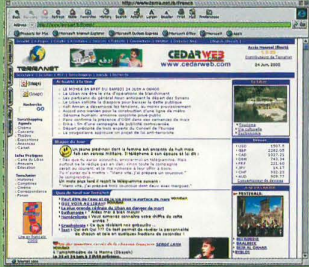
June, Terranet released a new service that
allows people to check the news, search
for sites and send personal announcements
all in, and herein lies the innovation,
French.
Ever since last year’s price war that
saw drops in connection charges from
$30 to an average of $10, ISPs have chosen
to play the quality card rather than to
engage in further tit-for-tat price cuts.
Capturing and, perhaps more importantly,
maintaining even their respective
slices of the 85,000-strong cyber-pie has
become an all-consuming pursuit and
most ISPs have already incorporated
free fax and voice services as value-added
trump cards. “Research shows
that, to 70% of Lebanese, French is the
second language,” says Fady
Ghazzaoui, general manager of
Terranet. “It makes sense to offer a service
that satisfies the needs of the
Francophone community.”
And, though it remains doubtful that
the ISP wars will ever translate into a
battle of tongues, the respectable 2,000
unique hits per day recorded so far on
www.terranetfr.net.lb (compared to
5,000 hits on their English site) do
show that Lebanese internauters can surf
and surfer with almost equal ease.
I just phoned to bug you
It had to happen sooner or later.
In the wake of e-epidemics,
Net-compliant mobile phones
have become the latest target.
“Timofonica” has the dubious
honor of being the first email virus
that can target mobile phones as
well as PCs, spreading primarily via
email using Microsoft’s Outlook. A
file attached to the message makes
the virus spread to everyone in the
infected user’s electronic address book.
The virus does not damage mobile
phones. It merely sends annoying messages
using the SMS (short message service) system
available on GSM phones. But it serves
as a warning for future bugs. According to
computer analyst Mihran Boudromian of
Expervision, “Two or three viruses down the
road we might see these things taking out
phones.” A future virus could access a victim’s
telephone address book, for example.
Things could get even worse with new
mobile phones, which are becoming like
small computers. They allow Web browsing,
online trading and other functions that
could be used by virus writers or hackers.
Fighting cyber-terrorism has largely
been focused on viruses targeted at home
computers or major computer networks.
This latest antack foreshadows the beginning
of attacks on other handheld devices
like PalmPilots. “What’s really significant
about this virus is that the hackers may start
to target handhelds and mobile phones,”
said Boudromian, adding that, in Lebanon,
Timofonica went almost unnoticed, as the
infection was limited to western Europe.
Present mobile phones have too little computing
power to make it feasible for them
to spread viruses directly.
The virus spread by using Visual Basic
Script, the same aspect of Microsoft’s
Windows operating system that was
exploited by the recent Love Bug computer
virus. After the widespread damage
caused by that rogue program, Microsoft
said that it would provide a “fix” for
Outlook. But until then, macro viruses
will be free to infect just about every
Net-linked appliance.
