
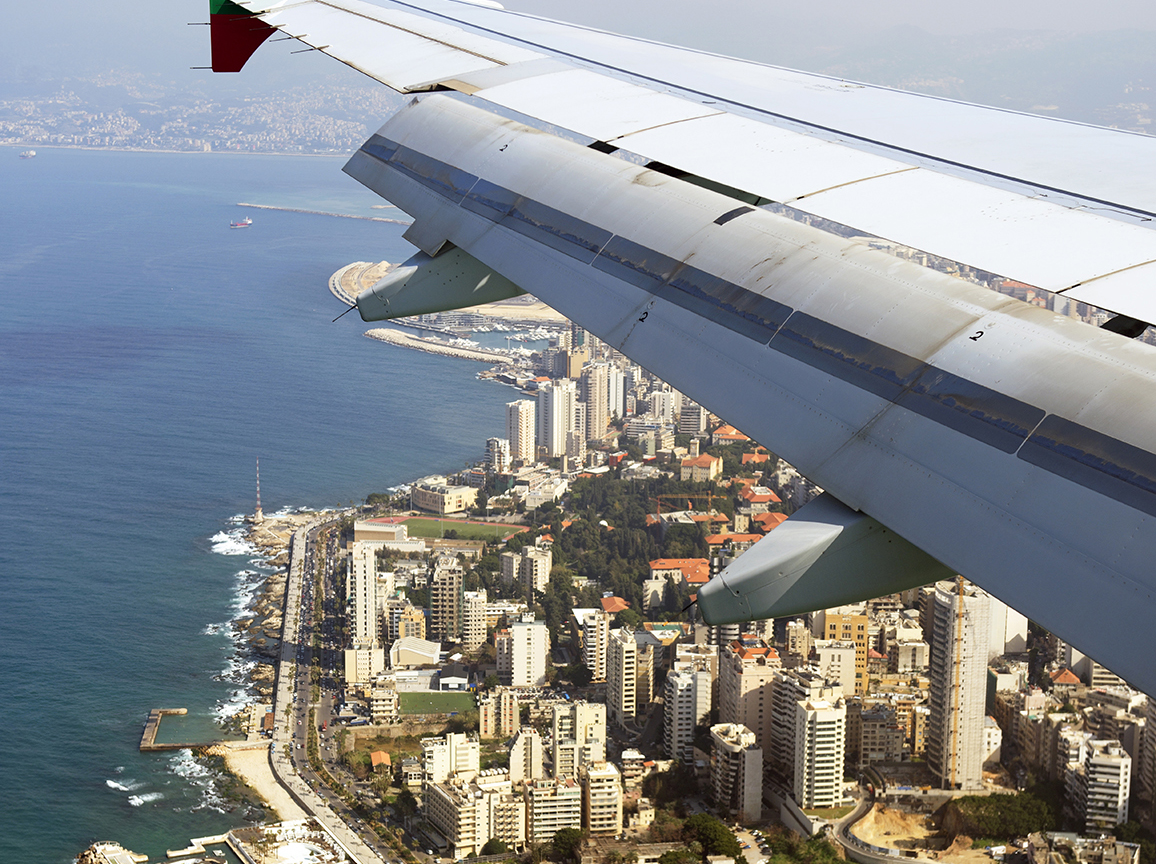
Viewed from a planetary distance, Lebanon is a wonderful destination. And viewed through the local economic lens, the country’s tourism is a sector that in 2026 has already slumped and jumped with astounding velocity.
Seasonal and annual volatility of Lebanon’s tourism industry is a recurrent experience of stakeholders in this sector but the 2026 experience is uncommon. The flaming up of a new war between Israel and Hezbollah at the beginning of March firstly came at the worst time for the tourism sector.
Secondly, while the war snuffed out hopes for a partial recovery of the national economy and a much-needed boost of positive GDP growth for the mid-term, its impact on visitor flows was immediate and hard.
Finally, it recasts a long simmering question back into the limelight: does Lebanon’s tourism sector have real prospects, plus a viable strategy, for mitigating security and perception risks and can Lebanese hospitality be turned into a motor for sustainable economic growth for the period to 2030 and beyond?
This is how the summer season unfolded for Maurice Sursock, hospitality entrepreneur who is active in the Lebanese Private Sector Network (LPSN) as part of a group of about ten hospitality actors, including operators and consultants.
His enterprise Food & Design Catering runs two upscale offerings, the Cafe des Lettres located in the French embassy compound in Beirut and the Yarze Country Club to the east of the capital. Speaking to Executive he confirms seeing shorter or delayed itineraries and smaller visitor cohorts early in the season.
“I have friends who are in the nightlife sector and they see a drop this year because many expatriates did not show up; it my own sector, which is much more in institutional catering, we also feel affected because many Lebanese did not return to spend the summer in Lebanon,” says Sursock, but goes on to comment, “what is good in Lebanon is that things can pick up very easily when you have a period of stability.”
For fellow tourism stakeholder and LPSN member Joumana Dammous Salame, the dynamism of Lebanese tourism is amazing. In this sense, even the, rather limited accommodation capacity of the Lebanese market, has its upside. She tells Executive that this capacity limit allows quite easily for stunning shifts of hoteliers’ economic fortune in tandem with any recovery of visitor demand.
She further points out that hospitality operators in the country have invested themselves into satisfying many new demand trends, such as rural, environmental, and adventure tourism, and have also engaged with and invested in high value-added offerings from developing guesthouses to niche experiences.
Dammous Salame is an event organizer and publisher whose scope of activities has expanded from local events and newsletter production in Lebanon to a regional scope with ambitions to see her family company’s HORECA – hotels, restaurants, and catering – show come to cities in every country of the region.
Citing examples how past focuses on beach and party tourism got redirected in past years to hiking and discovery of villages, and also adding a new accommodation channel with the variably themed guest houses, she describes the changes of the sector as “impressive”.
She tells Executive that she regards tourism as major driver of the economy and one where a new opportunity opens when another closes. “I find our industry vibrant, we are amazing“, she says.
More global and more granular
It serves to render the sector experience of 2026 to date in numbers. With the launch of the first missiles of the spring war, visitor arrivals evaporated by 80 percent, from 205,000 in January and February to 41,300 in March and April. Four months later, local media reports enthused that approximate daily arrivals leapt up by an astounding 500 plus percent within a matter of a few weeks, spurred on by a feeble ceasefire but mainly linked to reassured diaspora visitor appetite.
The global leisure travel industry today accounts for about one tenth in global GDP and is vital especially for island nations and smaller countries. Lebanon is a small country that is a peculiar tourism case because its culture of hospitality has been welcoming visitors earlier than others.
The year’s first shock of travel disruption reverberated across the world. This massive shock was triggered by the conflict over Iran, not by the latest Lebanon war.
Two further questions are worth asking: what are the implications of the 2026 global tourism disruptions for the small Lebanese market that today represents approximately 0.1 percent of the global leisure travel? And inversely, is Lebanon’s 2026 tourism under-performance, whose origins were external and entirely out of local control, a case to draw wider conclusions from – not jut locally but also internationally?
Global impact beyond the pale?
The Gulf conflict shock impacted international tourist travels late in the first quarter of 2026. According to UN Tourism, worldwide leisure travel activity still rose for that Q1 period – it reached 307 million and were about 1.95 percent up year-on-year (y-o-y).
By mid-year, however, the picture is both more complicated and more troubling at least for the Middle East region: extended conflict impacts in the Gulf and entire Mashreq region cannot be denied.
This means that the Gulf conflict’s impacts on the economic activity of leisure travel and tourism constituted a standalone economic calamity in its own right, albeit one correlated with the conflict’s impacts on energy trade and shipping of goods through the Strait of Hormuz.
Due to the disruption, global growth trends were by midyear predicted to range “1 to 2 percentage points below UN Tourism’s initial [growth] forecast of 3 to 4 percent for 2026”, according to UN Tourism, the independent UN-affiliate body that was previously known as World Tourism Organization [since 1975] and since 2009 as UNWTO.
At the same time, narratives of capacity rebuilding and ambitious destination management targets are sent by state-aligned and private operators from the Gulf region. These calming messages appear to be cast as countermeasure against half-year numbers. Moreover, at the end of this year, tourism destinations in the Gulf and the entire region might discover that they had nothing but political grandstanding and vacillating stick-and-carrot exchanges to protect them from severe (and potentially even still ongoing) disruptions that could not have been anticipated at the start of 2026.
This growth impediment appears less alarming than earlier tourism shocks of the 21st century, namely the Great Recession of 2007-8 and the even more severe Covid 19 pandemic and recession. But in the current iteration, the regionally focused conflict shock is surrounded by incessant geoeconomic tremors – trade wars, hegemonic delusions, populist and migration-related stresses of the international order.
By the later part of this summer, smaller and not yet fully analyzed shocks have further been accumulating with climate-related incidents as far afield as the California coast and the Himalayas.
Severe heatwaves across the Northern hemisphere occurred in tandem with, sometimes horrific, local events that impacted tourists. These recently included flash floods in the Grand Canyon, forest fires that displaced holidaymakers in central France as well as highly-frequented destinations on the northern rim of the Mediterranean, and an even more devastating glacier crash and flood that killed scores of locals, pilgrims, and other tourists at the Nepali-Chinese border.
Old and new challenges for a young industry
International tourism, with its stellar rise from 1975, is a more recent economic powerhouse than agriculture, manufacturing, financial services, and even automation / information technology, but has always been vulnerable to externalities. In the past five years, in the aftermath of the 2020 pandemic, debates over tourism risks proliferate.
Since 2021, impending challenges from “negative externalities” have increasingly been warned about: addressing them “requires the assessment and compensation of its real impacts”, a UN development expert and a Saudi destination administrator said in a 2024 co-written comment for the World Economic Forum, to give just one example. Their expert comment advised that public and private tourism-risk mitigation strategies should stretch from “sustainable tourism planning and community participation” to investments that should be funded via ”taxation of tourism-related revenues redirected towards the local community.”
A 2025 paper by the Organization of Economic Cooperation and Development contributed nuances on the importance of destination management and data analytics. The paper argued that destinations need “tailored, forward-looking and strategic tourism development plans,” an end to which Destination Management Organizations (DMOs) should be created.
Citing a litany of examples from OECD countries and partners, it made five recommendations, the concluding one being collection and sharing of more timely and granular data on visitor behaviors and “leveraging new technologies” such as AI and big data.
This same line of reasoning that led delegates to the Saudi Arabia-hosted 26th UN Tourism General Assembly of 2025 to not only conclude that “the global tourism sector is at a turning point” but also lift AI to the top of the sector’s current, multi-year agenda to 2030 and beyond.
The event of last November, which was attended by delegations from 160 countries – including a Lebanese delegation led by tourism minister Laura Khazen Lahoud – noted that AI has become a defining issue for the global leisure travel industry and permeates the industry in practically all its verticals and vectors.
The results of the UN Tourism GA’s focus on AI were several. In addition to the recommendations of the Riyadh Declaration, the “Digital Agenda and AI to Redesign Tourism” is the topic of the upcoming International Tourism Day in late September. Going forward into next year, AI is also a banner theme of the 2027 Year of Sustainable and Resilient Tourism, a decennial event that is purposed to boost the beneficial interrelation between tourism and economic inclusivity, environmental stewardship and social cohesion.
By mid-year, grounds for caution about global tourism growth to 2030 still appeared outshone by projections of rapid expansion — the World Travel and Tourism Council predicts the sector will grow 1.5 times faster than global GDP. Yet climate change, the fickleness of human behavior, and the role of people in making hospitality mutually enjoyable for hosts and visitors all demand strategies that go beyond profit and productivity.
A contrarian reading might ask whether the “turning point” highlighted in the 26th UN Tourism GA’s Riyadh Declaration in fact marks a convergence of climate, social, and economic risks — and whether those risks will deepen as tourism-reliant countries and global leisure operators take on a rapidly growing, arguably existential, dependency on AI agents and cyber tools.
However, there is no guarantee that the currently accumulating inflection points in behavior of leisure travelers and their hosts cannot see AI turn from a productivity enhancement into a straw on the tourist-carrying camel’s back.
Reassessing tourism value for the national economy
Inbound Lebanese tourism, according to data cited at the beginning of August from official Lebanese sources, was down by over 40 percent y-o-y for the first five month of the year and over 30 percent in the first half.
Arrivals over seven months were lower by 30.3 percent y-o-y. July 2026 arrivals were still 7.9 percent lower, at 436,600 passengers, when compared with the same month in 2025.
For the first seven months, total traffic at Rafik Hariri International Airport RHIA, still the only operational commercial airport in Lebanon, reached 2.75 million passengers, a 27.5 percent contraction from the previous year’s Jan – Jul period.
Over the past two decades, the percentage contribution of tourism to Lebanese GDP has been strongly fluctuating; in peak years it has been estimated to range as high as 20 plus percent, the country standing out as the most-tourism intensive of all Arab countries by this metric.
In other years, however, estimates described a much reduced GDP contribution that ranged in the single digits. For skeptics of the long-term viability of the Lebanese seasonal and expatriate driven tourism model of several decades, the first half in 2026 can thus be taken as universal warning signal that local tourism risks entail not only local problems such as seasonal congestion and always present external war risks.
Rather, local operators may have also to account for global problem factors from over-tourism to climate risk, and lastly must prepare for wholly unexpected shocks that could be related to automation in the international leisure travel industry – or a shock that is today not part of any risk scenario.
The abysmal 2026 scenario
Whatever the actual risk balance will be by the end of 2026, the latest full-year projection for the Lebanese economy is mindbogglingly worse – and specifically bad tourism – than what was estimated for the first half of the year.
The World Bank Lebanon Economic Monitor (LEM) publication from August 2026 is ominously titled “A conflict-torn economy”. Tourism is highlighted in this semi-annual LEM issue as prime factor in economic losses due to armed conflict. The full-year projection of foregone income from inbound tourism streams – travel receipts and local visitor spending – is modeled at $3 billion or more. This projection according to its authors makes even allowances for unspecified higher losses of revenue because of possible misclassification of some expatriate tourist spending as “resident” and because of the use of cash in the informal tourism economy.
This new economic picture contrasts sharply with the LEM for winter 2025. That issue, titled “A fragile rebound”, says that “remittances and tourism” would remain the primary engines of growth but warns in the same breath that these “critical growth drivers” are threatened by risks that include regional instability and delayed reforms.
What the World Bank does not assume in its mid-year projection is that a comprehensive ceasefire will see the light of implementation by the end of the year. This pessimism on the likelihood of continuing conflicts in South Lebanese locales explains the World Bank’s prediction of a 6.4 percent contraction of real GDP and dark auguring for the country’s real GDP growth “to be 10.4 percentage points lower than in a no-conflict counterfactual.” In practical terms, instead of a 4 percent growth that had been the World Bank’s growth prediction for 2026, the contraction of the year is expected to be worse than the one seen in 2024.
A side observation on the shallowness and lack of diversity of travel offerings to destination Beirut concerns the questions of projected airport capacity developments and international carrier representation in Lebanon on the one hand and the concentration of available flights and airline seats on the other.
On the second point, national carrier Middle East Airlines (MEA) handled over 45 percent of arriving and over 49 percent of departing passengers in the first seven months of 2026 — a drop of barely a percentage point against the same period in 2025. Such dominance is not unusual. In countries like the UAE, France, Germany, and Turkey, the main national carrier and its budget subsidiaries typically account for 50 to 80 percent of aircraft movements and passenger volumes at the primary airport.
What is alarming in Lebanon’s case is how quickly international airlines dropped Beirut when conflict began in 2024 and again in 2026, and how slowly the airport has been restored to global networks. The resulting gaps and bottlenecks in commercial service look more manageable for Emirates, Air France, Lufthansa, and Turkish than for MEA, and the outlook for mid- to long-term affordability and diversity of Beirut’s international links is not rosy.
The other aviation challenge – of capacity expansion and diversification– adds more complexity as well as uncertainty. Some stakeholders that Executive talked with in the local tourism sector have pointed to US American political promises for opening the skies to direct flights between Beirut and North America.
Several Lebanese tourism stakeholders noted, however, that the near to mid-term prospects for under-development Rene Moawad Airport in the north of the country are pointing more to niche operations and private aviation than to larger presence of budget airlines or known brand names. Expansion efforts at the main RHIA airport in Beirut have been a recurrent story and capacity developments there were over the years frequently lagging behind projected demand growth.
While talk of MEA launching a budget unit and developing a North Atlantic route to the US has energized stakeholders, neither initiative would automatically make Lebanon more competitive as a destination — and no US carrier currently serves competing Eastern Mediterranean airports like Tunis, Cairo, Amman, Baghdad, or Damascus.
[Not] all economies are equal, but some are more equal than others?
At time of this writing, the full severity of that unexpected conflict impact on the global and regional leisure travel sector is not widely being reflected upon, given that second-quarter impacts have not yet been collated for many markets and destinations.
For the Middle East region overall (13 countries on the UN Tourism map), tourist arrivals dropped 14 percent in the first quarter. The Arab region’s busiest airport, Dubai International (DXB), for example, was forced to declare a 31.3 percent contraction in passenger volume in the first half of 2026 versus the first six months of 2025.
Not all regional economies seem to be equal in approaching their tourism futures. Strong regional economy players such as Turkey and Saudi Arabia but also smaller Mediterranean countries such as Malta and Cyprus have boosted their respective strategies in the aftermath of the Covid 19 pandemic or outright created their tourism strategies in the recent past. Vigorously pursuing its goal of a double-digit percent contribution of tourism to GDP, Saudi Arabia may be the biggest surprise entrant to leisure travel from the Arab region, as the kingdom has elevated the sector to a strategic priority under its Vision 2030.
Thus in dealing with the recent Gulf conflict crisis for tourism, what Dubai and other Gulf locations apparently had, and Lebanon definitely did not, was a budget, a will, and a multi-channel strategy for global marketing communication. Gulf-based carriers have inundated their mailing lists to media outlets and journalists with messages of new network expansions and planned new destinations while at the same time undertaking marketing campaigns and reputation risk mitigation efforts.
Lebanon also saw a locally celebrated upswing of its sector activity this summer, but efforts of tourism risk management or promotion of destination Lebanon at best appear subdued in comparison to Arab peers. Spot checks of Lebanese ministry websites since the start of June reveal anywhere from none to sporadic news items and press releases. Some ministries displayed their announcements but tended to prefer noting items of a person-centered type (“the minister said, the minister met…”). Other ministries that have relevant services and information for foreign visitors showed no news at all.
The Ministry of Tourism, whose strongest claim to promotional fame seems to be its role as partner in launching a purpose-built Lebanon tourism app in 2025, has been showing the same promises (“news and circulars section is coming soon”) in June as well as in August, and its events page has consistently been showing a future timeline of August 2024).
Tourism stakeholders interviewed by Executive are well aware that inquiries by prospective visitors to the country will overwhelmingly be met with discouraging search results. As travelers increasingly turn to AI-powered search, many will first learn of security alerts and travel advisories the moment they type ‘Lebanon.’ However severe the overall Lebanese economic reality will appear at the end of the year, there is no denying the weighty restraint of lost tourism revenue.
Multi-year strategic perspective?
From a multi-year perspective, however, the 2026 numbers reconfirm the vulnerability and fragility of a hospitality sector that is both a key driver of annual GDP and a profound factor of uncertainty. Despite of the importance of tourism receipts for the national economy, the tourism ministry has typically been dependent on pro-bono advertising support for production and dissemination of marketing campaigns. Stakeholders recall donor-funded innovation and training sessions sponsored at different times by UN Tourism.
These concerns stem from a clear pattern in the past 15 years of data: extreme seasonal and monthly volatility has become a near-constant feature of Lebanon’s tourism sector. While recent news focuses on rebuilding hotels damaged by local unrest or the 2020 Beirut Port explosion, the latest available data—such as from the Investment and Development Authority of Lebanon (IDAL)—shows neither major new hotel projects nor progress on the sector’s structural deficits.
Lebanese hospitality expert, Alain Chehab, speaks from the dual perspective of an independent hospitality consultant and manager responsible for a catering department in a well-known family-owned hospitality and restaurant group.
To his mind, the challenges of the local sector link back to the culture of individualism and attempting to do business guided by one’s own wiles. Given a weak sense of belonging throughout the hospitality sector, he says he would “want to make the hospitality sector feel that we all are under one [umbrella and strategy] and all share the same objectives”. For Chehab this means public authorities and the minister of tourism should offer a strategic vision to local tourism entrepreneurs and “give them room for innovation under a unified strategy.”
The strategic level is where tourism development must be addressed, including the role and integration of AI into the sector. When the discussion turns to AI issues, the tourism stakeholders that Executive consulted with, voiced similar views on the utility of cyber tools. But they appeared much less convinced that AI will be a panacea for local tourism problems or even come near to such a functionality.
“I am very interested in the governance of family businesses in hospitality sector, and it is a very complex topic,” Chehab says, as he identifies several structural weaknesses that may not favor reform and innovation, including AI adoption.
Citing the managerial culture of many family-owned tourism ventures he observes how some were treating AI less as an indispensable visionary tool and more as a marketing argument.
He also agrees that family-run hospitality groups face a conflict of interest if the AI question turns to filling managerial roles that may have previously been micro-managed by the head of the family business. Dammous Salame highlights the value she unlocked in utilizing AI in her managerial role but adds that she has encountered tourism practitioners who seem to be less eager to benefit from freely offered AI training opportunities than she had expected.
Similar behavioral trends had been noted in global business surveys, where introduction of AI in company operations had to be very specific and clearly defined, company-wide and collaborative strategic use of cyber tools and data sharing was met with wariness and trust barriers.
Even the Riyadh declaration, which centrally highlighted tourism opportunities for AI enhancement and operations, warned that the tech advancements also risk deepening inequalities among states and destinations.
This does not prevent AI utilization in the tourism sector from being over-hyped. When the kingdom of Saudi Arabia in June announced the launch of an “AI Tourism Vision,” the all-inclusive message of a “national strategy designed to transform every stage of the tourism journey through artificial intelligence” reminds of the promises in commercial marketing that have become notorious for over-exaggerations and blind spots.
For Dammous Salame, artificial intelligence will be an inescapable element of change in the industry but she calls it crucial not to lose sight of the fact that tourism is a people business. In terms of private sector tourism development efforts, however, she acknowledges the need for concerted action. “AI probably can make the business more productive and more efficient,” she says. “Because it will affect anything that can be automated and AI generated or facilitated – it will reduce costs, and on the contrary multiply the effect of our human industry. We [as private sector network] will put more import on that,” she elaborates.
In principle, there is no question about the utility of AI in improving productivity and control of business processes, but there is a big question over the true cost efficiency of AI. In the specific Lebanese context of a tourism sector that comprises many family operators and small and very small enterprises, top-level questions loom over political priorities, policies, human resources and structural reforms in public administrations, extent and capacity of conventional and digital infrastructure, and funding for everything. Further questions hinge on cultural factors and a-synchronicity of AI adoption by individuals, small businesses and family organizations, public agencies and ministries.
In practice, this means that AI is not seen as a panacea at all. Sursock, the hospitality entrepreneur, says “I do not think that AI is going to make a big difference in the short term but I am sure that it is going to help the sector and can help in promoting Lebanon as a destination”.
“In my opinion, we are not really thinking in the long term,” he cautions; “we are trying to stay sustainable and profitable at the same time, because it is now for two or three years that we have continuous war. But we also need to do some R&D and develop our products, because we cannot stay where we are. We have to invest in ourselves.”
On basis of fluctuations in staffing needs for his organization in the wake of the two recent wars, Sursock reasons that “We will not really reduce the actual number of staff. But we will not be obliged to recruit more managers when we have more business. This is the formula,” he says.
Sector performance over the long term shows that 2025, which was a growth year compared to 2024, has seen visitor counts in the range of 1.6 to 1.7 million. This number of inbound tourists is similar to the visitor count of 2005, only with the difference that the mid-2000s were years of rational ambition for developing the sector under an envelope of regional calm, with medium-term aims to ramp up visitor flows to become year-round and diversified, not cease growing for at least a decade, and break into the double-digit millions of arrivals.
In contrast, the reality of Lebanese tourism has been a fluctuation and oscillation that effectively led to a halving of the country’s share in the global tourism market – from 0.2 percent to 0.1 – as the arrival numbers remained constrained and capacity building was repeatedly disrupted whereas the global number of annual leisure travels doubled from 800 million in 2005 to 1.6 billion in 2025.
Chehab, the consultant, cites personal experience in dealing with individual clients and organizations to emphasize that rational behavior change cannot be taken as a given. He expresses doubts that behaviors such as a Lebanese propensity to skirt rules and game the system would change if an AI-enabled tourism strategy requires moving towards more economic formality.
Moreover, he points to locally embedded cultures of subservience as well as large economic inequality as pillars of the socioeconomic reality. While such old behavior patterns would still be sticky, Chehab believes that educated, conscientious, and globally minded professionals would reject such a corruptible culture. The result would be the need to create the ruleof accountability, a culture enshrined in law and regulations. “This is perhaps the major issue. You can put regulations, and put traffic lights on the roads, and implement everything, but who will control [all that]?”, Chehab says.
Destination future
According to some impromptu social media pages of the Lebanese Ministry of Tourism, an exchange on tourism opportunities took place in Beirut with presence of UN Tourism Secretary-General Sheikha Al Nuwais and Tourism Minister Laura Lahoud. [Some reports said however that a Memorandum of Understanding (MoU) was signed for building the country’s capacities for destination management organizations (DMOs).]
Destination management is defined by UN Tourism as “coordinated management of all the elements that make up a tourism destination.”
LPSN members Dammous-Salame and Sursock concur that the hospitality sector need is for an overall tourism strategy that hinges upon public sector participation and investment. They further confirm the network’s interactions with the Ministry of Tourism, ongoing efforts, and projects for AI tools that will be made available to Lebanon visitors.
That means that there is no reason to see leisure travel to diminish as flagship economic activity. At the same time, the tourism pairings between societies of origin and destinations will continue to shift. But for Lebanon, despite its hospitality sector’s proven resilience and quick-bounce-back characteristics, the past few decades do not document either sustainable or economically viable growth of its market share in global tourism currently, and apparently for years to come.
