
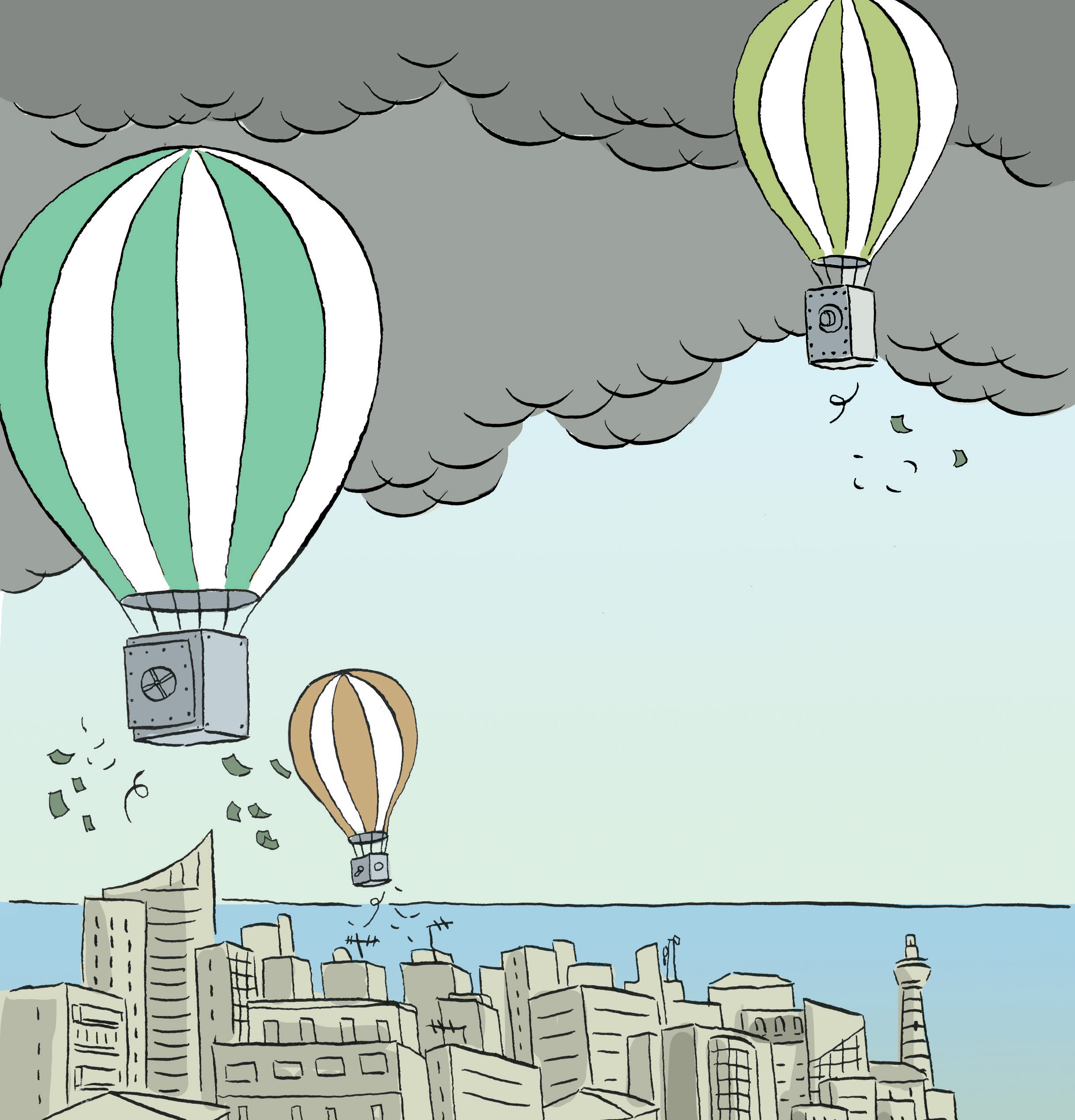
Lebanese bankers are sailing off to foreign shores to generate growth in profits as turbulence rattles their home country and cripples their neighbours next door.
The blood being spilled in Syria is rising daily with no end in sight. The repercussions on government-less Lebanon go beyond an economic suffocation as violent clashes have again taken hold of the northern city of Tripoli. Amid this, Lebanon’s indebted public sector is under pressure and along with it the banking sector — a heavyweight in the country’s economy indeed.
The $40 billion Lebanese economy grew by just 2 percent last year, according to the International Monetary Fund, and is expected to grow by a slightly higher rate of 2.5 percent for 2013, an estimate that seems likely to be reduced if the current situation does not improve. The number of tourists visiting the country in the first quarter was down 12.5 percent on last year and they are unlikely to flock to Lebanon this summer. The United Arab Emirates renewed its travel warning to Lebanon for its citizens last month.
Related article: Credit cards yet to catch on in Lebanon
Why E-Banking is struggling in Lebanon
Despite being almost four times the size of the economy, the banking sector is feeling the pinch. The sector’s size grew by just over 2 percent in the first quarter of the year to stand at $155 billion, 14 percent lower than the growth witnessed in the same period of 2012, a year also marked with significant regional instability. Deposits, on the other hand, were up more than 2 percent to stand at $128 billion, outgrowing last year’s rate by 24 percent with the majority of the growth coming from local residents. This leaves us wondering whether consumers are reducing their spending as they wait and see if darker days lie ahead.
Banks also seem to be cautious to flex their lending muscle, with a three percent growth in loans to consumers in the first quarter of the year, 23 percent lower than the growth witnessed in the same period of last year. Consumers’ debt to the banking sector amounts to $45 billion.
Still funding the government’s coffers
The highly indebted sovereign, $58 billion in debt as of January 2013, continues to knock on bank doors for help in refinancing the country’s debt. And banks are continuing to hand over the cash, most recently subscribing to the $1.1 billion Eurobond issued in April of this year. Banks carry just over 50 percent of the country’s debt as of March 2013, up 1 percent year-on-year, despite the continuous reluctance of senior management of the top banks to increase their sovereign exposure — a sentiment they have expressed to Executive on numerous occasions. With low interest rates on international markets, the lack of lucrative revenue growth opportunities internally and the desperate need for the government to recharge its finances, banks don’t seem to have that much of a choice.

This exposure has led rating agency Moody’s to change its outlook from stable to negative on the deposit ratings of the country’s three biggest banks — Bank Audi, Blom Bank and Byblos Bank — after similarly downgrading their outlook on government bonds. The agency is losing confidence in the government’s ability to fulfill its debt obligations. Are Moody’s concerns reasonable? Yes. The banks are still highly exposed to Lebanon, with domestic assets accounting for more than 80 percent of their total assests and with profits generated from Lebanon amounting to a significant 84 percent of their total profits, according to Bankdata financial services. If the economy’s growth rate stagnates — a highly likely scenario — and if the government is unable to finance its hefty debt at favorable interest rates — another highly likely scenario — then the banks’ exposure to the debt will become even more burdensome.
Foreign activities in trouble
A major part of the assets located outside of the country are in jeopardy too. The chief concern lies in neighboring Syria, a dominant trading partner where six Lebanese banks have established branches. While the banks’ portfolio in Syria stood at $3.7 billion as of the end of 2012, down from $5.4 billion a year earlier, the repercussions on the economy continue to be felt and along with it the backlash on the banking sector. Disorder in Egypt, where several banks have also established branches, continues, with the IMF cutting its 2013 growth forecast for the country to 2 percent.
Cyprus’ request for a bailout from the European Union came at a shocking price: tapping into depositors’ money. While the combined deposit base of the nine Lebanese banks operating in Cyprus account for less than 3 percent of the sector’s total deposits, according to the Association of Banks in Lebanon, these banks had an extra issue to worry about: the Cypriot government tapping into their deposit base.
Aiming to cater to the banking needs of the Lebanese diaspora, banks’ reach abroad is extending, with 16 percent of the alpha banks’ profits coming from offshore lands in 2012, up from 11 percent in 2011. In Iraq, several Lebanese banks have already set up shop and others such as Bank Audi are following this year. Bank Audi and BankMed are eyeing growth in Turkey. In Africa, Lebanese banks are looking at Nigeria, Congo and Sudan, where Byblos Bank has an established presence, and Libya where Byblos plans to expand this year. Further afield in Australia, Bank of Beirut is set up under the recently rebranded Bank of Sydney.
Lebanon’s history is full of instability and chaos, and the banking sector has persevered throughout. With the ongoing turmoil and instability shaking the country’s economy and its banking sector, banks are doing what they do best, wrestling to survive. This time they are betting on far reaching lands to reap higher profits. Whether their bets will bring fruits or not remains to be seen.
