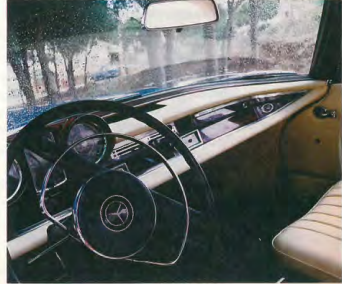
One look at her smooth, sensuous body and you cannot help wanting her for your own. Gentle curves suggest an inborn grace that would master the envy of all who lay eyes on her. So immense is her beauty that some would pay top dollar to get their hands on her. So, if she is yours, why not capitalize on your investment. Welcome to the world of collectible cars.
Even though the modern motor car is an outstanding technological achievement, comfortable, quiet, safe and extremely convenient, people still lust for the classics. Ever since cars were invented, people around the world have had a passion for owning the rarest and most attractive models, and Lebanon is no exception. The collectible car boom happened in the 80s and demand for these expensive toys has been falling ever since, now even more in the midst of a recession. So if you are looking to sell your vintage Mercedes-Benz at a premium, forget it. But if you are looking to buy, there are great deals to be found.
Investing in a classic is like buying stocks. You gamble that your investment will pay off. If no speculation were involved, everyone would do it. People think that just because a car is old, it will become valuable, says Andre Morcos, co-owner of Garage Mondial, one of the country’s most reputable restorers. Not true. You cannot make a Peugeot 504 into a gold mine. The same goes for a Renault 18 or a 1978 BMW 528. They were mass-produced and are simply not rare enough.
Cars that tend to appreciate in value are models manufactured in limited quantities or early examples of specific models. Keep an eye out for coupes and convertibles, preferably manufactured before 1970. With a little bit of hunting, Mercedes-Benz 220 SEs from the 1960s or 220As and 220Bs from the 1950s are good investments and can be found relatively easily. Other good bets are Mercedes-Benz 350 SLs and 450 SLs from the early 70s, as well as the older 230 SLs, the predecessor of the modern SLK. MGAs from the 60s and MGBs from the 70s, whether coupes or convertibles, are also good choices, as are T-Birds from the 50s and 60s or even Jaguar E-Types.
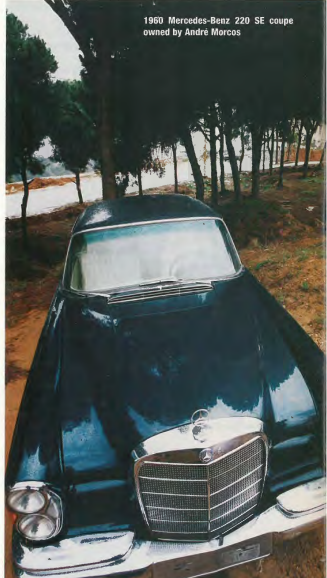
A Mercedes-Benz 220 will usually sell for about $4,000 to $5,000. MGs can cost as little as $2,000. A T-Bird may cost no more than $5,000. But buying a classic car is not the expensive part. Most will be in need of repair. Depending on the car and its condition, restoration can cost anywhere from $10,000 to $30,000, usually much more than the car’s actual value.
One thing to watch out for when choosing a car is corrosion. If the car has been neglected or has been exposed to too many winters, stay away. Corrosion is like a disease. Once it sets in, it is hopeless. Chassis damage also makes a classic an unsound investment. Aged cars are not a problem, and neither is minor body damage. But if the car needs replacement parts, make sure they are available.
There are several popular restoration shops in the country. Fersan Haddad defines a classic as a car that is both older than 25 years and has some historical or sentimental significance. He has done remarkable work on Triumphs, Mercedes-Benzes, rare American cars and Rolls Royces. Mondial has worked on everything from Porsches, Rolls Royces and Jaguars to MGs and Alfa Romeos. But do not forget restoration takes time, so do not plan on driving away with your showroom classic two weeks after you take it to the shop. Anything between six months to a year may be needed to get a car in shape. Car restoration shops are also good places to go if you are looking to buy.
Although restoring a classic will initially cost more than the car’s value, Morcos says old cars either maintain their prices or increase in value. Meanwhile, you get to drive around in a rare piece of art and will be the envy of all your friends and neighbors, and that is where the real payoff lies. After you spend large amounts of money getting that old T-Bird, Jaguar or Alfa Romeo in original showroom condition, you get to take it out in the sun, drop the top and cruise in a unique piece of history. And, hopefully, the price tag will only increase.