
Something’s brewing in Hamra, and
it’s going on at Starbucks, the
fastest-growing global coffee outlet
of its kind. With an investment of
$500,000, the US-based Starbucks Co.
opened its first outlet in Beirut at the end of
November. That’s just the first of the 10 outlets
that are slated to open in Lebanon over
the coming three years.
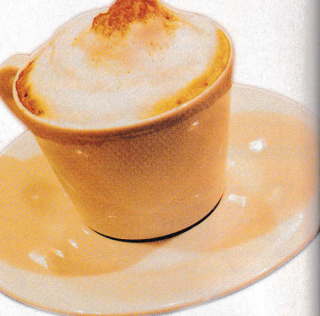
“We’re helping to change tastes,” says
Faysal Younes, one of the coffee shop’s
managers. Starbucks is indeed different
from other coffee shops in the capital,
notably in its range of flavors, but also in the
atmosphere the company hopes to create.
“We call it the third place,” Younes says.
“It’s not work, and it’s not home, but a
place where you can relax, get away from the
stresses of the day and enjoy a coffee.”
Most of the initial customers to the
Hamra outlet, which has a seating capacity
of 200, were already familiar with
Starbucks from abroad. But management
says that now more first-timers have
begun checking out the newest entry to
Beirut’s coffee market.
Lebanese are habitual coffee-drinkers,
but one coffee that is strictly off the menu is
the locally brewed variety. “We don’t
serve Turkish coffee, because it’s not part of
our international identity,” says the
manager matter-of-factly. Nor is there
any intention to serve coffee at a table,
despite the frequent complaints received
on customer comment cards. “We’re
self-serve all over the world and everyone
knows us as such.”
All Starbucks coffee is served in mugs,
with prices starting at around $2. That’s on
the expensive side compared to Turkish coffee,
but Starbucks claims to give its customers
more for their money in the form of ambiance that includes
plush velvet sofas. It
hopes to attract passing
shoppers, professionals
and students.
Dareen International,
which is
part of the
Kuwaiti Al
Shaya Group,
manages the
Lebanese franchise
of Starbucks. Its next
two Starbucks outlets will
be opened in Sassine square in
Achrafieh and inside ABC on the Dbayeh
highway early next year. Kuwait was the
first target on the American chain’s invasion
of the Middle East, which began last February.
There are plans for the coffee shop
chain to enter five more Arab markets,
including Saudi Arabia, United Arab Emirates,
Qatar and Bahrain.
That is all part of the American chain’s
global expansion that has seen 2,500 Starbucks
coffee shops pop up in 13 countries
around the globe since its first outlet
opened in Seattle in 1971. The company
now employs a worldwide staff of 35,000.
The coffee shop has replaced the diner
and soda fountain as the trendy place to
hang out in the United States. And the
American chain mentality was quick to capitalize
on that. Yet the coffee shop has been
synonymous with the European lifestyle for
years – ever since Gaggia
invented the first espresso maker
in the 1950s.
And there’s nothing particularly
new about European influences in Lebanon –
think Cafe de Paris and Mod’ca Cafe as well
as the continental-style cafe-trottoir such
as T-Square, French Cafe, and Mie Doree.
So how are Beirut’s other coffee outlets
reacting to the newcomer? “Competition is
healthy,” says Peter Samaha, owner of the
Ristretto, which is located in Hamra just
around the corner from Starbucks. The
Ristretto lays claim to being the first European-style
coffee shop in Beirut, opening in 1996.
“I couldn’t get a decent cup of coffee anywhere
except at home,” says Samaha, “so I realized
there was a niche.”
Despite its definite European style, the
Ristretto still serves Turkish coffee.
“It’s ridiculous to have a coffee shop in
Lebanon that doesn’t serve local coffee,”
he says. “Should we write away
our own culture just because of
some outside influence?”
On that point he appears to be
alone, however. In Achrafieh,
you’d be hard-pressed to find
original ‘ahweh’ on the menu at any of the European-style coffee
shops, where most say they don’t feel
threatened by the Americana of Starbucks.
“Our clientele is sophisticated. They love
all things French,” says Cynthia Bitar, manager
of Le Monot Cafe, which opened in
1997 and was the first outlet on Beirut’s most
famous gastronomic street. Bitar says that it
is largely thirtysomethings for whom Italian
- as opposed to Turkish – is the caffeine
buzz of choice.
At other coffee shops in Achrafieh, there’s
no shortage of clientele prepared to pay up to
three times the price for a coffee over
ahweh, and the proprietors seem oblivious to the arrival
of a brash newcomer on the other side of
town. Nor are they particularly concerned
about its imminent launch in Sassine.
So has established itself among the capital’s
upper social echelons with its unique
concept of international restaurant, sushi
conveyor, coffee shop, jewelry shop and
women’s clothes boutique all under one
roof. Fawzi Ghantous, the manager, is
unfazed by the Starbucks assault. For him,
it’s a different market altogether. “In
Europe all the designer shops have their
own bar these days,” he says. “That’s what
we’re doing here. We’re selling a lifestyle.”
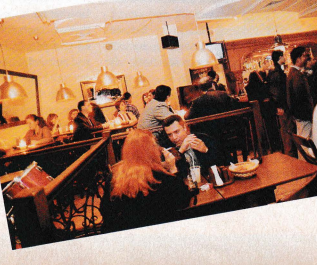
And that lifestyle is distinctly European, although he is convinced the reason so many
outlets eschew Turkish coffee these days is
that it’s too time-consuming to prepare. “To
make good Turkish coffee, you have to do it
by hand and that takes time. Or you use a
machine and it doesn’t taste as good.”
At T-Square, tea takes higher priority than
coffee. But coffee can be found there too, in
the form of frappuccino and mocha glace.
Here presentation takes precedence.
“Everything we do is presented well,” says
owner Sabine Cassia-Depolla.
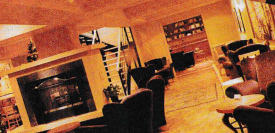
She attributes the success of T-Square in
the 18 months since it opened to the
Lebanese penchant for all things European
- but this time by way of the Atlantic.
“First the Americans copied
the Europeans,” she
asserts, “and now we’re
copying them.”
Coffee Trivia
Over 400 billion cups of coffee are consumed
every year, making it the world’s
most popular beverage after water.
• Together the Americans, French and
Germans account for 65% of the world’s
total coffee consumption.
• More than 20 million people are
employed by the coffee industry worldwide.
In Brazil, over 5 million people are
employed in the cultivation and harvesting
of over 3 billion coffee plants.
• As a commodity, coffee ranks second
only to petroleum in terms of dollars traded
worldwide.
• The top ten coffee-producing countries
for the 1997-98 crop year were Brazil,
Colombia, Indonesia, Vietnam, Mexico,
Ethiopia, India, Guatemala, Cote d’Ivoire
and Uganda.
• A coffee tree will normally produce five
pounds of beans a year, of which just 20
percent will meet the sorting standards of
specialty coffee.
• Sales of specialty coffee have reached
several billions of dollars in the United
States alone.
• One kilo of roasted coffee requires
4,000-5,000 coffee beans.
• There are about 25 major species of
coffee. Arabica represents 70% of the
world’s coffee production.
• Dark roasted coffees have less caffeine
than medium roasts.
• There are more than 200,000 coffee
bars in Italy.
• Coffee represents 75 percent of caffeine
consumed in the United States.
