• Donate
  • Our Purpose
  • Contact Us
Executive Magazine
  • ISSUES
    • Current Issue
    • Past issues
  • BUSINESS
  • ECONOMICS & POLICY
  • OPINION
  • SPECIAL REPORTS
  • EXECUTIVE TALKS
  • MOVEMENTS
    • Change the image
    • Cannes lions
    • Transparency & accountability
    • ECONOMIC ROADMAP
    • Say No to Corruption
    • The Lebanon media development initiative
    • LPSN Policy Asks
    • Advocating the preservation of deposits
  • JOIN US
    • Join our movement
    • Attend our events
    • Receive updates
    • Connect with us
  • DONATE
Economics & Policy

Troubled financial waters

by Jeremy Arbid December 23, 2015
written by Jeremy Arbid

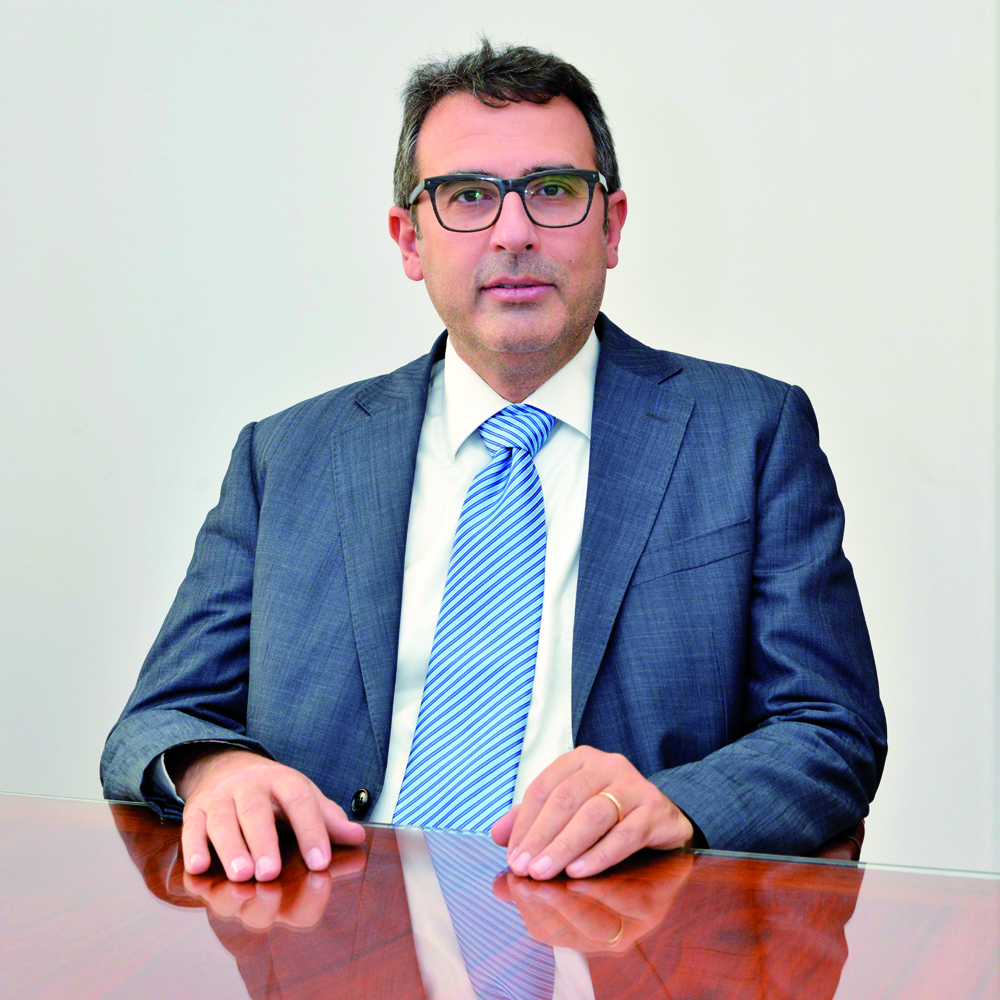
The complications posed by the refugee crisis and stagnant legislature found Lebanon’s public finances in troubled waters. There have, however, been some positive developments. The Ministry of Finance has again issued Eurobonds – the purchasing of which has demonstrated a local appetite to continue financing public expenditures; it moved closer to reconciling public accounts and Lebanon’s bid to join the European Bank for Reconstruction and Development may soon be approved. Executive sits down with the director general of the Ministry of Finance, Alain Bifani, to discuss the impact of these developments on state finances.

E  In April 2015, you met with the United States Under Secretary of State for Economic Growth, Energy and the Environment. Can you tell us about your talking points for the meeting and if there were any practical results from that meeting?

We were at the spring meetings of the [International Monetary Fund] (IMF) and the World Bank and Lebanon had already bid to join the [European Bank for Reconstruction and Development] EBRD. We had some countries that immediately provided support and others that needed to discuss the issue and reasons why we wanted to join and how Lebanon intends to use the financing of the institution. The purpose of the meeting on the American side was to talk precisely about the reasons Lebanon was bidding to join EBRD and whether they could be supportive of our bid or not.

E   What are the potential benefits of joining the EBRD?

There are many. Firstly, Lebanon is a country that needs money for development – we are always looking for new money to be injected into the system. The second reason is that when you have an institution [like EBRD] it’s always better to be inside, to be on the board, and to know what the topics of interest are and what is happening at the institution. The third reason is that when the Deauville Partnership [with Arab Countries in Transition – launched by the G8 in 2011 to support democratic reforms] started, Lebanon was left [out]. For a very long time, Lebanon was one of the few, if not the only, democracies in the region and it paid a very high price for that. Last but not least, EBRD is not an institution that only finances public projects; its expertise is related to the structure of the corporate, the ownership, access to financing [and] access to market.

E   The Ministry of Finance has been working on the closure of public accounts – an exact accounting of public spending – for years. Do you have an update?

Eight out of 10 financial accounts are completely finished which means we have been able to reconstitute accounts where possible from 1993 and from 1997 to the penny until 2011 because the stock was before 2011 and [now] the flow is being dealt with normally. For the first time ever Lebanon has accounts with absolutely no question marks against them from January 1, 1997, to date.

E   When you listen to the political rhetoric, everyone seems to be accusing the other of stealing public funds – but you’re saying this information is actually largely available now?

This information is becoming available but technically speaking before we finish the two remaining accounts – which are well advanced – it is not possible to reproduce all of the series from any given date. So what will happen now is we’ll finish the two remaining accounts and then we will produce the accounts. The reason I say 1993 to 1996 is that more than 50 percent of the documents [from that period] were lost or had disappeared.

Since January 1, 1997, we had hundreds of thousands of mistakes in each account – things that were not appropriately accounted for [or missing entirely]. The magnitude of that was extremely great. We no longer have any reconciliation accounts – we used to throw figures [out] because we had no clue what they were. This has all been [reconciled] to the penny. Then in 2014 we found the opening balance for January 1, 1993, while in 1995 people would have thought it impossible to find the opening balance [from] two years ago.

E   Were there any anomalies?

Enormous ones. The number of anomalies, the number of mistakes, of misreporting was huge. Now it is not my duty to say why this happened. My duty is to provide the country with what is needed and to build on that and continue to produce regularly. It is not the duty of the Ministry [of Finance] to make it accessible. First, this is a draft law by nature so it has to be finalized by the ministry, approved by cabinet and sent to Parliament. Normally this closure happens when it goes to Parliament because the Council of Ministers, as long as it is a draft law, is always going to say [it] does not want this to be presented and it must be changed. But of course it requires [action at the] political level to decide how to [disclose].

E   Ziad Hayek of the Higher Council for Privatization recently advised that Lebanon needed $6.2 billion for infrastructure investment. Are there any tools that the government can use to get past not having Public-Private Partnership (PPP) legislation but still investing in this much needed infrastructure?

PPP is one way of doing things and having a law that organizes and gives a framework to that kind of financing is always reassuring to investors. This does not mean that things cannot happen in the meantime – sometimes there is direct involvement by private corporates. It is not necessarily a PPP per se but this idea of mobilizing funds now even before legislation goes through is absolutely possible.

E   And are we seeing that type of mobilization of funds in the electricity sector?

The debate is biased by the fact that there is a lot of frustration. The country feels that nothing can be done – it’s been [that way] since the end of the [civil] war, a very long time, that we are not seeing significant improvement. The electricity issue is not about bringing resources in one way rather than another – the issue is that first we need to mobilize a big chunk of money that needs to be invested in production. Second, we have a major issue with distribution and the plan that was approved unanimously in 2010 takes into consideration those steps. Third, the issue of governance at the level of the company is important because it is very unfair to say that the public sector has failed in its duties here and at the same time has not provided the company with what it needs in terms of human resources, governance and capacity to act [accordingly].

E   Steering clear of the allegations of corruption in the electricity sector coming from the minister of finance – with the decline in oil prices, do you see that deficits for Electricité du Liban (EDL) will be sustained?

There is definitely an effort to be done on the pricing of utilities. The subsidies that we are providing are massive and we are losing money. The state decides on the expenditure – whether it is the operating expenditure or the buying of fuel or new investments – and the state decides on the pricing. This decision has to be changed; we are simply unable to continue to subsidize the sector in the same way. The fact that oil prices have dropped provides some breathing space. If we look at our non-existing budget we have salaries, transfers to EDL and debt servicing. This is by far the largest part of the budget – roughly more than 80 percent of the expenditure. We do not know when oil prices, or commodity prices in general, will go up again. So we have various sources of uncertainty that should be pushing us for immediate action whilst we have this breathing space.

E  In layman’s terms can you elaborate on why you consider loans to be a negative source of financing the refugee crisis?

It’s not a negative source of financing – it is a totally inappropriate way of financing. There is an issue that is short term and a lot of it is long term. A displaced person remains a refugee for an average of 17 years. So when you talk about an issue like that it cannot be only humanitarian. Of course the immediate relief is important – it is short term. [There]is also a security issue which is short and long term, and economic issues that are long term. So you have an answer that needs to be timely [and that is fitting to the] massive crisis. We are rendering a service to the world – this is called a global public service. Instead of being a reasonable cost in Lebanon, it will be much more costly outside [of Lebanon]. To put it bluntly we are presenting a bill [and] this is how much it costs. If you want us to be able to continue to do that, then you have to pay and contribute; otherwise we will reach a point where it is going to become impossible for us.

E   With the recent issuance of Eurobonds, can you elaborate how those are structured and what the impact is for state finances?

We had from the beginning a legal cap so we knew how much we wanted and we got the amount. We were able to keep very low yields given Lebanon’s rating and situation. Because of the legal situation now (early November 2015), we have a parliamentary session but at that time we didn’t know if we were going to have one. We have also started an exchange on the 2016 amounts. We [also] have issued three [bonds]: one for nine years at 6.25 percent, one for 13 years at 6.65 percent and one for 20 years – the first long maturity Eurobond for Lebanon ever, and that is very interesting knowing that it is always good to lock in as much money as you can in the long run.

E The purchasing of the Eurobonds has been driven more by local banks rather than foreign institutions – is that because of Lebanon’s credit rating?

This time we didn’t have a lot of external appetite for many reasons. Looking at the region as a whole is not very reassuring – it is not only Lebanon [but also] everywhere else – [and because of the] magnitude of the Syrian displacement issue in Lebanon. The perception [is] that nowadays Lebanon is offering interest rates that are below what it could have and therefore to go to the same level of risks investors could go somewhere that is providing [higher returns]. This is good for us because it means we succeeded in bringing in a lot of money at a very low cost. The final point is one of the most important points – we are in the midst of a situation where capital is flying toward big economies and fleeing the emerging world. We have issued [bonds] at a time when most of the big emerging economies were dying for capital to stay in the system – Latin America and Brazil in particular, but also Asia, Africa, the Gulf and here [in Lebanon].

E   Executive recently published an interview with Paul Donovan from UBS Investment Bank – he argued that there will be a global war for capital in the future. Do you agree, and how will Lebanon fare?

There are two threats that are now very significant to Lebanon; this is one of them. The reason is that we rely on a lot of our own resources. Those are large enough whether talking locally or worldwide to protect Lebanon from that kind of development in the world. Where it is going to hurt most is in countries where they have been relying on foreign financing for their immediate needs. This is not our case and never has been.

December 23, 2015 0 comments
0 FacebookTwitterPinterestEmail
LeadersOpinion

A rubbish decision

by Matt Nash December 23, 2015
written by Matt Nash

Lebanon has never gotten nation-wide waste management right. In 1971 the government hired a local consultant to help write a plan for treating and disposing of the country’s waste, according to the consultant’s website. While the company declined an interview request, the existence of hundreds of open dumps around the country attest to the fact that it was never implemented. Even if it had been put into practice, it would have been a casualty of the civil war. In the quarter of a century since the war ended, policy makers did very little to soundly manage the nation’s garbage.

In 1997, cabinet enacted an emergency plan for Beirut and its immediate suburbs. It awarded contracts for waste collection and disposal to companies founded by Maysarah Sukkar, a Lebanese who had been successfully operating waste incinerators in Saudi Arabia. His local company began operations which it is still conducting under the name Sukleen. A lesser known sister company, Sukomi, treats and disposes of the waste Sukleen collects. The companies’ service areas expanded to include the capital and five nearby districts (namely Keserwan, Metn, Baabda, Aley and Chouf). By Ministry of Environment estimates, the Sukleen/Sukomi service area accounts for around 50 percent of the nation’s garbage. The vast majority of this waste – over 80 percent according to Environment Minister Mohammad Machnouk – ended up in the Naameh landfill, some 20 kilometers southeast of Beirut. While the most common thing one reads about Naameh is that it was filled beyond design capacity, what few report is that new sanitary cells were added as more space was needed. Naameh was not an environmental disaster. It was a properly managed, modern sanitary landfill. The fact that it was receiving 125 trucks of garbage per day – including putrid, rotting organic materials – however, meant it stank. Executive stood on top of the sanitary landfill after it closed and noticed no foul odors. Residents living near it have long wanted it closed and became more forceful in their demands in January 2014. That year, they blocked access to the landfill and uncollected waste piled up on the streets of Sukleen’s service area as there was no place to put the garbage if the company collected it. The result of this street action was a government promise to close Naameh in one year’s time. Simultaneously, cabinet appointed a committee to find an alternative waste management plan for the country. Neither happened as planned.

Looking for solutions

Naameh’s closure was slated for January 2015. Cabinet extended that deadline to July, but dragged its feet on finding a solution. The plan was to tender waste management for the entire country while relying on the tender winners to decide how and where to treat and dispose of waste. As Executive noted in March, the initial tender deadline was far too close to the deadline for closing Naameh for a real solution to be in place in time. Further, finding a location for a new landfill or other waste treatment facility has always been problematic in Lebanon because no one wants to live near them. This problem is only compounded by the country’s sectarian diversity – sect A does not want to accept the waste of sect B. After extending the tender deadlines, Minister Machnouk announced winners on August 24, more than a month after Naameh closed. The following day, after an uproar over the supposedly high fees winners would have charged, the tenders were cancelled. In early September, cabinet approved a new plan that has not yet been implemented at time of writing.

While garbage piles were a common site in administrative Beirut in July, the city soon found a temporary solution and began depositing its waste in a parking lot in Karantina. Indeed, according to the Ministry of Environment’s website, Machnouk instructed all of the nearly 300 municipalities in Sukleen’s service area to inform the company where to dump. Those that could not find land were deprived of collection services and trash continued to pile up on roadsides. The ministry did not compile a comprehensive list of “temporary” dumping grounds, but activist photos and Executive’s observations reveal that municipalities were disposing wherever they could, with no thought of the environmental repercussions. On top of that, open burning of garbage became a national phenomenon. Again, numbers don’t exist, but the Ministry of Environment recognized trash burning as a problem outside of Sukleen’s service area before Naameh closed, and visual evidence, photos and inconsistent reports from Lebanon’s firefighters – the Civil Defense – suggest the problem only worsened after the landfill closed.

What none of the decision makers who closed Naameh with no alternative in place seem to understand is that the trash crisis has serious associated costs. It will be all but impossible to fully clean this mess. The long-term environmental and human health costs will be paid for years to come, even if measuring their exact amounts is impossible. What we do know from Tourism Minister Michel Pharaon is that the opportunity cost in the tourism and hospitality sectors is significant. 2015 could have been a much better year if not for the filth now spread throughout the country.

December 23, 2015 0 comments
0 FacebookTwitterPinterestEmail
LeadersOpinion

Resource wealth buried under paperwork

by Jeremy Arbid December 18, 2015
written by Jeremy Arbid

Another year of waiting has come to pass and yet there is still no movement for Lebanon’s oil and gas sector. Is it a regional conspiracy to prevent the Lebanese government from taking its own decision, or is it the fault of American diplomats, as Speaker of Parliament Nabih Berri claimed in November 2015? Almost a year after a ministerial committee was formed to reach consensus on two needed implementation decrees, the Council of Ministers has not yet placed the items on its agenda. Parliament, meanwhile, has to approve an adjustment to the tax regime to account for oil and gas and must debate a law to combat corruption in the sector.

A jovial ceremony announcing the launch of Lebanon’s first offshore licensing round back in 2013 promised that the country would soon become an oil and gas producer. In the two years since, the proverbial train has fallen off the tracks. Lebanon’s Council of Ministers, hampered in its ability to manage the country, has failed to pass two needed decrees to move the licensing round forward – one delineating the blocks and coordinates of offshore Lebanon and the other approving the tender protocol and model exploration and production agreement. Parliament, for its part, has declined to legislate for the better part of this period, except, of course, when it risked losing key international financing. Parliament must update Lebanon’s tax regime as oil and gas is – in other jurisdictions – taxed in a higher bracket than the 15 percent corporate rate Lebanon currently has on the books, but it has not opened debate on a draft law submitted earlier this year. Since officials have publicly announced that a new tax law has been drafted, oil companies interested in bidding in Lebanon no doubt know change is coming and could well hold off on investing until the tax rules are clear.

Transparency in Lebanon is always harped on but words are rarely put into practice. With oil and gas being a notoriously dirty industry around the globe, legislation in this sector is of the utmost importance. In early 2015, MP Joseph Maalouf, a member of Parliament’s energy committee, drafted a bill pointing out where corruption might be a risk along the full lifecycle of an oil and gas project. Maalouf had told Executive in August 2015 that Speaker Berri had fast-tracked the bill but Parliament has yet to open debate on the law. In September 2015 Executive asked Minister of Energy and Water Arthur Nazarian about the draft law but the minister seemed largely unaware of the details of the transparency bill.

On a positive note, because it does not require legislation, Lebanon has made progress in further calibrating its understanding of data previously collected through seismic surveying offshore. In 2015, two re-interpretations of the data were carried out to “better understand the sedimentations and the potential reservoir parameters,” the Lebanese Petroleum Administration told Executive in September, but did not elaborate on the results of those studies. As for onshore Lebanon, 6,000 square kilometers were surveyed, providing a baseline of data to indicate where potential oil and gas reservoirs might be located. More narrowly focused studies are needed to build on the acquired data but the ministry of energy has not yet indicated what its strategy for onshore is moving forward.

Lebanon has already begun selling the seismic data collected offshore – last publicly announced at $34 million in 2013, representing the first revenues of the country’s oil and gas sector. When Executive asked the minister for clarification on the government’s share of revenues from the sale of seismic surveying data – a topic on which this magazine has, for two years, continuously sought answers – Nazarian said it was “state secrecy” while simultaneously claiming transparency.

Misinformation, or, as a lesser evil misrepresentation of information, when covering oil and gas is also very concerning – the same wrong numbers keep circulating in the Lebanese media. Lebanon is not blessed with vast energy reserves – only exploratory drilling can confirm whether oil and gas resources are present. In November 2015 Anonymous Lebanon – the self-proclaimed local chapter of a global group of activists and hacktivists – published a video arguing that the government has been intentionally misleading the public, promising the nation would soon become oil rich with revenues to be used to reinvigorate the economy, pay down public debt and build fantastic new infrastructure. The video was later picked up by popular talk show ‘7ki Jelis’. In itself a misled accusation, the numbers Anonymous quotes are based on a misunderstanding of an unclear quote. When then Minister of Energy Gebran Bassil said in 2013 that “the current estimate, under a probability of 50 percent, for almost 45 percent of our waters has reached 95.9 trillion cubic feet of gas and 865 million barrels of oil,” Bassil was speaking of probabilities based on the interpretation of seismic data, not of certainties that only exploratory drilling can confirm. In the end, Lebanon will never know with certainty if it does have oil and gas until it passes the needed decrees to bring exploration companies to drill.

December 18, 2015 0 comments
0 FacebookTwitterPinterestEmail
LeadersOpinion

BDL plays government

by Matt Nash December 18, 2015
written by Matt Nash

Banque du Liban (BDL), Lebanon’s central bank, makes a curious claim on its website. Under “Monetary Overview” in the “About Us” section, the bank says that, beginning in 2013, it “resorted to unconventional monetary policy tools to stimulate internal demand and sustain the country’s growth and job creation potential.” Here the bank is referring to stimulus packages that have pumped millions of dollars into the economy over the past three years. What’s curious is the bank’s definition of its actions as “monetary policy” ‒ which the stimulus packages are decidedly not. In the absence of real governance and policy making in recent years (the only two laws Parliament passed in 2013 postponed parliamentary elections and extended lawmakers’ terms), the bank has stepped in to help spur economic growth. A stimulus package is economic policy, not monetary. Alain Bifani, director general of the Ministry of Finance who sits on the board of the central bank, admits that “in absolute terms, [one] is right” to say lawmakers should have directed the bank to offer a stimulus instead of BDL acting on its own. However, he claims that “as long as [the bank] is doing something that is good for the stability of the economy and the system, this is part of its mandate. It is not the usual tool, but it is something that is being welcomed by all players.” While the legal argument may be open to interpretation, no one is complaining about the stimulus money. Indeed, for the past few years, real estate developers have credited it with helping keep the sector afloat.

Available data suggest that the stimulus packages have contributed to consumer demand for housing loans, but the exact amount of that contribution is impossible to identify. Real estate is only one sector the stimulus targeted. On its website, the bank says its goal is supporting “housing, education, renewable energy projects, innovative projects, research & development ventures, entrepreneurship and other productive sectors of the economy.” Data to assess how other sectors have benefited from the stimulus is nonexistent. That said, BDL claims “the stimulus packages of 2013 and 2014 proved to be successful, contributing around 50 percent of real gross domestic product growth.” The bank did not respond to an interview request seeking validation of that claim. During a November presentation to launch the fall 2015 Lebanon Economic Monitor ‒ a World Bank publication ‒ Wissam Harake, an economist with the bank, noted the stimulus packages have had a positive economic impact, which he did not quantify. When Executive pressed him after the presentation on whether the World Bank shared BDL’s view on the packages’ growth contribution, he chose a diplomatic answer. “We haven’t made an exact estimation. We’ve heard what you heard from the central bank, but we certainly think the stimulus packages [are] one of the few drivers of economic growth.”

While it may have helped growth, in both 2013 and 2014 the stimulus money was not fully deployed. Executive reported in January 2014 that, of the $1.47 billion in stimulus money for 2013, some $468 million went untapped. Speaking of the stimulus money for 2015, BDL’s website says the total amount is “$1 billion, coupled with the funds revolved from 2014.” And the stimulus is not the only central bank initiative with deployment issues. In August 2013, the bank approved Circular 331, which guaranteed 75 percent of commercial bank investments into startup companies and venture capital funds. While the decision theoretically freed up $400 million for investment, only around $20 million had been tapped by November 2015. Again, however, the private sector is happy with 331 and hopes it will significantly expand Lebanon’s entrepreneurship ecosystem.

A nudge in the right direction

In addition to pumping cash into the economy, in October 2015 the central bank also threw a lifeline to leveraged companies struggling to repay their loans in the form of basic Circular 135. The Ministry of Finance’s Bifani explains that the circular “doesn’t impose anything. It is just putting the framework for arrangements that can happen between the lender and the borrower.” He adds, “if you have an account that is not performing properly, you have here a framework for banks and borrowers under which they can agree on giving more space for the borrower to be able to reorganize its activities.” While the circular does not target a specific sector, real estate developers welcomed the news.

In late 2015, BDL governor Riad Salameh announced the bank will launch a $1.5 billion stimulus package in 2016. How much longer the bank will be alone in pushing pro-growth economic policies, however, is anyone’s guess.

December 18, 2015 0 comments
0 FacebookTwitterPinterestEmail
Editorial

The will to prevail

by Yasser Akkaoui December 16, 2015
written by Yasser Akkaoui

In 2015, many of the reasons behind Lebanon’s built-in logjam came to the surface. The garbage crisis is the case in point that best illustrates how the whole system is rotten to the core. Beyond our government’s inability to preemptively devise solutions to imminent perils, we watched as priorities were often confused and demands articulated in an incoherent manner. Everyone wants a solution to the garbage problem but no one wants a sanitary landfill anywhere near them. Many believe in private enterprise but dislike the private sector. Our beautiful nation is tired of being unremittingly abused and turned into a vulgar yet frail land for politicians to continue taking advantage of. It’s of little surprise that citizens no longer wish to associate themselves with it.

Meanwhile, 60 kilometers away, the Syrian crisis keeps getting even more complicated as new players continue to join the ‘game’. Discovering water on Mars would be easier than finding Abou Bakr Al-Baghdadi. Western alliances use $1 million Tomahawk missiles paid for by the KSA to target $20,000 Toyota pickup trucks bought with Gulf money, and all the while oil tankers driven by ISIS militiamen pass through Mosul before being targeted by Russian fighter jets on their way to Turkey. We’ll spare you the rest.

Amid all this madness we are reminded again that our sovereignty is pegged to a geopolitical equation that has not yet reached equilibrium. En attendant un president, businesses still painfully survive with an outdated set of laws resonant of the 1960s. Our central bank preserves its independence to defend and keep up the pace, free to issue circulars compliant with new international regulations – an existing luxury that promising new industries, like oil and gas, do not possess.

It is out of this narrow margin of maneuver that Circular 331 was born. Regardless of all its deficiencies, it kick-started the entrepreneurship ecosystem, now flourishing with talent, innovation and creativity. Above all, it gave hope to entrepreneurs and investors alike to make and prosper.

Knowledge, coupled with freedom, always prevails in Lebanon. Both are safe from all the brutality surrounding our nation. What keeps us thirsty for more is the eternal renaissance of culture and private enterprise that is always ahead of our inherited political stagnation.

December 16, 2015 0 comments
0 FacebookTwitterPinterestEmail
CommentOpinion

Time to act

by Annalisa Fedelino December 16, 2015
written by Annalisa Fedelino

Lebanon has been severely affected by the Syrian crisis that erupted in early 2011. The signs are evident everywhere, starting from a massive refugee presence, which is now more than one quarter of the population and outstrips the ratio of refugees-to-population in any other country inside and outside the region. But while refugees are fleeing to many countries, the spillover from the regional conflict runs far more deeply in Lebanon, further weakening the economic foundations of the country. Growth has sharply decelerated, from an average of 8 percent during 2008-2010, to less than 2 percent since, well short of potential. Prospects for a rapid recovery are not promising, as traditional growth drivers – real estate, construction and tourism – have been negatively impacted by overall security conditions and political uncertainty.

All of this has taken a toll on, among others, an already vulnerable fiscal position. Lebanon has been running large budget deficits and high debt ratios for many years; over the last decade, the overall fiscal deficit has hovered between 7 to 10 percent of gross domestic product (GDP).

A welcome exception came in 2014, when the budget deficit fell to 6 percent of GDP, though only on account of one-off extraordinary factors – such as exceptionally large revenue transfers from the Ministry of Telecommunications – that will not be easily repeated in the future. Despite these large fiscal deficits, there was a remarkable decline in the public debt ratio from a peak of 185 percent of GDP in 2006 to some 131 percent of GDP by 2012, largely driven by high growth and low real interest rates. However, with these factors removed, the public debt ratio has started to slowly rise again, remaining above levels that would not be advisable for other emerging markets.

Given the regional crisis and its impact on macroeconomic and political conditions, Lebanon’s fiscal deterioration since 2011 should not be too surprising. In fact, it is difficult to maintain good fiscal performance when the economy is not doing well; lower growth directly transmits into lower revenue, while spending tends to be more inelastic, almost automatically resulting in a worse budget position. And fiscal pressures are even more understandable given the significant shocks. The massive refugee presence, and its additional costs in terms of public service provision and security, need to be borne by the budget. 

What can be done?

But while Lebanon’s tough predicaments can be understood, they should not become an excuse for political inaction. Parliament has passed a package of laws in a show of unity and determination – largely triggered by the urgency to approve pending financial laws and expiring project loans. That same unity and determination should be marshaled into taking selected steps to stem adverse fiscal dynamics – with positive effects on confidence and the economy at large. Here are some suggestions.

1) Strengthen revenue collections. Tax revenues have significantly declined in the last four years, by some 3 percent of GDP. In addition to subdued economic activity and weakening tax compliance, this also reflects the lowering of select taxes (most notably, the decision to exempt gas oil from VAT in 2012). Initial measures by the Ministry of Finance to strengthen collections are welcome, but they should be built upon. And they should be flanked by policy actions, such as reinstating taxation of all fuel products and increasing fuel excises, which remain low by international standards. The current oil price environment provides the right opportunity to do so.

2) Contain spending. Spending composition is very rigid (about 80 percent is accounted for by interest payments, salaries and transfers to Electricité du Liban, EDL) and room to contain spending is limited without reform. EDL subsidies, which have recently declined on account of lower oil prices, would be a good place to start, also to create room for more productive and much needed infrastructure projects (Lebanon’s capital spending is one of the lowest in the region, at only 1.5 percent of GDP).

3) Promote more transparency in funding the government, especially in foreign currency. Public debt management is closely coordinated between the Ministry of Finance and Banque du Liban (BDL), Lebanon’s central bank, and the recent publication of auction calendars for government paper is welcome progress. At the same time, however, the government has been increasingly relying on BDL for its funding needs in foreign currency, given the cap on its FX borrowing. More market-driven funding mechanisms would enhance the transparency of fiscal operations and their costs.

4) Pass a long-overdue credible budget. Recent attempts to normalize spending and payments of salaries are positive, especially to avoid undue (and unwarranted) payment disruptions. However, these practices should not be a substitute for passing a comprehensive budget. Reliance on an official budget would also promote transparency by eliminating the need to execute spending through treasury advances – a problematic method of conducting fiscal operations in the absence of clear legislative spending limits.

The above steps can help promote credibility of fiscal management and put the debt back on a sustainable path, thus anchoring confidence. Targeted fiscal adjustment efforts and reform are needed now, as protracted low growth and increasing global interest rates – much expected over the coming months – will only contribute to worsen Lebanon’s weak fiscal position. Recent legislative successes suggest that progress can still be made, despite the many political constraints, when the consequences of parliamentary inaction are understood and shared. In the same vein – and in the same order of priority – fiscal measures should be high on the legislative agenda and be swiftly approved and implemented. Lebanon’s current vulnerabilities are not only fiscal, but fiscal is a good place to start addressing them.

December 16, 2015 0 comments
0 FacebookTwitterPinterestEmail
CommentOpinionRefugee Crisis

Time to wake up

by Khairunissa Dhala December 16, 2015
written by Khairunissa Dhala

Following deadly attacks such as the ones that struck Paris in November 2015, western leaders and the media largely focus on increasing security measures and closing borders in order to keep ‘terrorists’ – which to some is synonymous with keeping refugees – at bay. This policy of closing borders is not new, however, and is often used to scapegoat refugees for the very crimes they themselves are fleeing from.

Since the huge influx of refugees to Europe over the summer, several high level European Union summits have been held in order to discuss how to respond to the ‘migration crisis’. Responses have centered largely on how to tighten borders, build more fences and find ways to stop refugees from leaving the first countries they fled to, known as the host countries. Many western European leaders responded to the huge flows of refugees trying to reach Europe’s shores by promising more money to the main host countries. Several high profile visits by European leaders have been made to Lebanon, Turkey and Jordan with the objective of negotiating increased humanitarian assistance to the region in exchange for tighter controls on irregular migration routes.

The international community’s inadequate humanitarian response to alleviate the suffering that Syria’s refugees have endured due to the brutal and protracted conflict in Syria and the precarious conditions which they have been living in for the last four years is shocking. Countries in the region, including Lebanon, have over time increased restrictions on Syria’s refugees entering the country. And for those already in Lebanon regularizing their stay or renewing their residency permits has become incredibly cumbersome. Western governments have chosen to remain silent on these issues. This is likely because of their own unwillingness to accept more Syrian refugees and their desire to ensure that the majority of refugees continue to be hosted by Syria’s neighbours.

Lebanon, which has the highest number of refugees per capita in the world, has struggled to cope with the over 1 million refugees, including Palestinian refugees, from Syria. Among the country’s concerns are fears of security incidents such as the attack in Beirut in November 2015, critically underfunded humanitarian appeals year after year, tensions between refugees and host communities and worsening socio-economic conditions.

However, the restrictions imposed by Lebanon have made the situation increasingly untenable for Syria’s refugees making it harder for them to seek asylum. In May 2014, the Lebanese government imposed new entry requirements for Palestinian refugees from Syria, including the need for a pre-approved valid visa from a Lebanese guarantor, effectively closing the border to them. Following this, in June 2014 the government announced that only Syrians from areas bordering Lebanon where fighting was taking place, would be allowed to enter. In January 2015, guidelines issued by the government came into effect, imposing new entry requirements on Syrians seeking safety in Lebanon. Categories for entry into the country include tourism, education, medical treatment and business. A category for ‘displaced’ was included but remains very narrowly defined and does not include those fleeing persecution. And finally in May this year, the UN Refugee Agency, UNHCR, was ordered to suspend all Syrian refugee registration and ordered to de-register those who had entered in 2015.

To their credit, until October 2015, the Lebanese authorities stood by their word not to forcibly return refugees to Syria. Any such returns would contravene the core principle of non-refoulement under international law, which prohibits the transfer of individuals to another country or jurisdiction where they would face a real risk of serious human rights violations or abuses. In October, this promise was almost broken when four Syrian refugees who had flown from Syria to Turkey were sent back to Lebanon, held by General Security and escorted to the Lebanon-Syria border. The intention of the General Security officers in charge was to deport them to Syria. Once the information reached the Minister of Interior, the deportation was halted.

Two Palestinian refugees from Syria were less fortunate. In November the brothers attempted to leave for Malaysia via Turkey. When they landed in Turkey, rather than letting them continue their onward journey, Turkish authorities put them on a plane back to Lebanon. In Lebanon they were detained by General Security officers before being escorted to the Lebanon-Syria Masnaa border crossing and forcibly returned to Syria. The brothers feared returning to Syria where they were due to serve their obligatory military service. Instead they remained in no-man’s land and appealed to the international community to protect them. A few days later, the Lebanese authorities allowed them to re-enter Lebanon for a limited period of time.

In addition to border closures, new criteria for renewing residency permits for Syrian refugees were introduced in January 2015. The highly complex and costly criteria for renewing residency permits has resulted in it being almost impossible for most refugees from Syria to regularise their status. The inability to legalize their stay has drastic consequences for refugees from Syria. Refugees with irregular legal status are exposed to a range of increased vulnerabilities, including the risk of harassment, arrest and detention by Lebanese authorities and exploitation. Freedom of movement is also curtailed due to the fear of crossing checkpoints without a valid residency permit. This in turn impedes refugees’ access to services including health care and education.

In order to renew residency permits, each Syrian over 15 years of age must pay an annual fee of $200. Additional costs such as transportation to relevant offices, public notary services and photocopying costs amount to an estimated additional US $230 – making the whole process cost almost twice the amount of the renewal fee. Furthermore, those registered with UNHCR must sign a ‘pledge not to work’. Those who are not registered with UNHCR must provide a ‘pledge of responsibility’ from a Lebanese national – this acts as a sponsorship for a work permit and requires the sponsor to take full responsibility for the Syrian person’s employment, housing, healthcare, food and other costs. All Syrian refugees must produce a ‘housing pledge’ which is confirmation from a Lebanese national that they lease a property to a refugee, or – for those living in informal settlements – a residency statement from the municipality. Anyone who entered the country through irregular borders is denied the chance to regularize their stay. Instead they must pay a fee of $633 and leave the country within five days. They can re-enter only if they meet the new entry requirements. If they are unable to pay the fine, they are permanently banned from re-entering Lebanon.

For most refugees, who rely on humanitarian assistance and, some on a low-income job in the informal labor market, the likelihood of affording to renew their residency permit is very low. UNHCR provides cash assistance to 29% of Syrian refugees who are considered the most vulnerable though the number of those considered vulnerable and in need of cash is around 50%.

For those who receive World Food Programme (WFP) food vouchers in the form of e-cards, over half cited them as their main source of livelihoods. Due to funding cuts, the WFP stopped providing food vouchers to one third of Syria’s refugees in Lebanon and Jordan over the summer and reduced the amount of assistance received by Syria’s refugees in Lebanon to $13.50 per person. In September they capped the number of people per family receiving a voucher at five people per household. An injection of funding in October 2015 has allowed WFP to increase the amount provided to $20 per person, per month. This source of humanitarian assistance has proved to be unreliable for most and even with the increase in the value of the food voucher, those receiving them are living on around $0.60 a day. Furthermore, in summer 2015, UNRWA – the UN Agency providing assistance for Palestinian refugees from Syria, cut assistance for shelter due to funding shortfalls. Faced with even more restrictions than Syrian refugees, including the need to renew residency permits every three months, the majority of Palestinians were wholly reliant on that funding as a source of livelihood.

Between January and September 2015, UNHCR have de-registered 149,000 Syrian refugees. Some were de-registered upon the request of the Lebanese authorities for having entered the country in 2015 while others were deregistered for other reasons. The other four most likely possibilities are: they gave up hope of a better life and returned to Syria; they chose to stay in Lebanon and are no longer motivated to be registered with UNHCR due to lack of assistance; they have found a Lebanese sponsor; they moved to a third country. UNHCR has reported an increase in onward movements of refugees from Lebanon in the second half of 2015 – though most of those leaving have come directly from Syria and transited in Lebanon. What is clear is that unless conditions improve and refugees are permitted to remain legally, staying in Lebanon for the longer term is not a viable option for refugees from Syria.

In order for refugees from Syria to be able to survive in Lebanon and to live in a dignified and sustainable way, the Lebanese government needs to ensure that no refugees who have fled Syria are forcibly returned by any manner whatsoever, including deportation or rejection at the border. It must ensure that refugees from Syria are able to renew their residency in Lebanon until there is a fundamental change in circumstances in Syria – meaning that it is safe to return. To this end, it should remove obstacles to residency renewal including removing the onerous criteria required and waiving the $200 fee.

The international community must significantly step up and substantially increase financial contributions to the UN and other humanitarian and human rights organizations responding to the crisis. It also needs to support the government of Lebanon in increasing the capacity of public services to meet the needs of refugees and the host communities that are impacted. Finally, it needs to share responsibility with Lebanon and its neighbours and increase the number of resettlement places provided to the most vulnerable refugees from Syria, including Palestinians who have fled Syria, over and above existing quotas. Refugees who are fleeing war and persecution must not be punished – they are fleeing the same violence and attacks that fatally struck Beirut and Paris in November 2015.


A different version of this article appeared in the December 2015 print issue of Executive.

December 16, 2015 0 comments
0 FacebookTwitterPinterestEmail
Art

Elitism, disruptiveness and a lack of strategy

by Thomas Schellen December 16, 2015
written by Thomas Schellen

Works of art are of an infinite solitude, and no means of approach is so useless as criticism. Only love can touch and hold them and be fair to them.” (R.M. Rilke, third letter to a young poet)

When art maecenas Nicolas Ibrahim Sursock in his last will donated his mansion to the city of Beirut before he died in 1952, he did not just sign over a deed. He formulated a hope for his home country and city: “I wish there would exist in Beirut, capital of the Republic of Lebanon, museums and exhibition rooms open to everyone, where masterpieces and antiques would be preserved and displayed.”

To achieve this, Sursock apparently wanted an authority figure to exert custody over his treasure and appointed the mayor of Beirut as guardian of the Sursock Museum. The donor’s gift came moreover wrapped in another wish, that Sursock’s “fellow citizens would appreciate art and develop an artistic instinct.” With so much weight of patrician input on the museum, it was probably no wonder that the museum’s exhibition approach for many years exuded a certain flair of elitism and even orientalism until far after the time when orientalism fell out of favor with the Europeans who had perpetrated it.

Thankfully, with their reopening in October 2015, that approach has been replaced by a leap into the 21st century in the management of Sursock Museum. “They are coming down from their pedestal and I think it is very salutary. The women running it have a very clear idea of how they want to make an impact on a museum-going culture,” comments Nora Boustany, board member of the Association for the Promotion and Exhibition of the Arts in Lebanon (APEAL), an organization whose aims overlap with the Sursock Museum’s apparent strategy of bringing art closer to the people, instead of making people into appreciators of art. 

The bottom-up strategic design approach for developing a broad-based museum-going culture in Lebanon looks like a winner even as – and actually because – the top-down approach has been, and still is, prevalent in museums of recent vintage. A walk through either the diverse collections of the Robert Mouawad Private Museum (RMPM) near the Grand Serail or through the monolithic one at the Mineral Museum (MIM) that inhabits space at the Université Saint Joseph’s Campus of Innovation and Sports exposes the visitor to breathtaking exhibits – rare and many-colored treasures of the earth in MIM and in the RMPM superb antiques, tapestries, jewelry, historic Chinese porcelain and centuries-old Syrian pottery from places associated today only with terror.

The exhibits in both museums are private collections, and it is undeniable that their elite owners make all the important decisions about the delivery of these cultural goods to the public. Elite influence – which some economists might be fashionably tempted to call elite capture although the term in the sense of its definition appears applicable neither to art nor banking – is even more striking in the newest Beirut art museum, the Aïshti Foundation.

Truth be told, this museum takes the city to a new sphere of communing with art. The exhibition space is as perfect as an art museum can hope to be. Perhaps it is because the property is juxtaposed with a brutal environment of traffic and oil storage but from stepping into the first of the four exhibition floors until leaving the last, one feels there as if the UK’s Tate Modern, France’s Centre Pompidou and Germany’s Bundeskunsthalle had organized a joint venture for installing a museum in the best sense of the word in a locale that had for decades been seemingly deprived of culture and void of artistic atmosphere. At the same time, the reality of elite control could be no more visible than in this perfect museum’s attachment to an edifice of luxury consumption where the central interior space evokes reminiscence of a ziggurat filled with shrine after shrine dedicated to brands that represent consumerist deities of glitz and glamour.

Balancing bottom-up

and top-down

Given that the facts on the ground testify to the constructive role played by elite contributions, the best bet for developing an economy of culture and arts appears to be finding a balance between bottom-up egalitarian and top-down elite components. This also applies to financing of museums where it is difficult to avoid appealing to the generosity and self-interests of wealthy benefactors when one wants to develop a contemporary art museum from scratch. The financial attractiveness of artworks as investments under the wealth management paradigm and the contested market for museum-worthy art have led to ballooning of prices and this, as Boustany admits, is “a huge disadvantage for building a collection”. According to her, APEAL is still sorting out its approaches to entice art and financial donors, including the well-known lure of granting patrons the rights to have galleries named after them.

Besides this being a reminder that for any non-profit operator in culture and the arts there is always a thin line between giving deserved recognition and bowing to a presumptuous claim of elite status, the question over viable funding approaches looms as a yet-to-be resolved challenge over the Lebanese museum scene. According to Beirut Mayor Bilal Hamad this even applies to the Sursock Museum, where long-term baseline funding of operations is secured by inflow of money from the municipality. At legally secured transfers of 5 percent of fees for all building permits issued by the municipality, the funding represents “good money”, Hamad says, but cautions directly that the museum’s board cannot depend on this to suffice in the future, given that the museum is bigger and much more active in staging events and offering programs. “We can no longer operate the museum in the same way as in the past, with only one activity per year or every six months. We expect to have more visitors and [have] hired new employees whose salaries have to be paid, so [the board and us] have to look at other ways of supporting the budget. We are still thinking about how to do this,” he says.    

Noting that the museum landscape of Beirut is scattered with institutions funded by the state, the city, two major universities and private owners, and that insiders testify to the existence of the usual inter-institutional jealousies and quarrels, the sourcing of funds in the growing museum landscape seems certain to be a challenge. Foreign institutional donors are very helpful (and are usually well satisfied with small plaques of appreciation on the wall of a sponsored museum) but their contributions are based on decisions in their home constituencies and limited in time and amount. As for state contributions, the vagaries of political budget making and the overall situation of state funding in Lebanon are a strong deterrent from even thinking about how more political attention and public sector financing could be steered toward productive investments into the economy of culture.

But art spaces are no exception to the rule that competitiveness requires unrelenting efforts, including continual financial investments. In order to generate returns in job creation, social capital enhancement and positive direct impacts on gross domestic product, museums need to be competitive and enterprising. This in turn implies that there is a dual challenge present for the cultural sector; not only do museums individually need to acquire financial and strategic management capabilities to run themselves more productively, but private and public stakeholders in Beirut’s economy of culture are also in need of joint communication and strategic planning for the whole museum sector. Such planning would be prudent, agrees Beirut Mayor Hamad. “Today there is nothing called Beirut Municipality strategic cultural plan or vision. I am doing my best to support a lot of cultural activities and I have attended so many cultural activities but to tell you the truth, we have not even attempted to put together a cultural strategy for Beirut. This is a nice idea,” he tells Executive.

According to APEAL’s Boustany, collaboration with the Beirut Municipality and ministries such as the Ministry of Transport are part of the organization’s mission statement. Avenues of cooperation could start to be developed with the establishment of a museum mile or simple projects such as a culture bus, she says.

Once a museum-going culture gains traction in all quarters and strata of Lebanese society, there will be more interesting challenges than management and coordination. Every stakeholder and institution involved in culture tends to have their own ideology on what art should and should not do. One does not need to search far to see that freedom and disruption of the status quo are preeminent in the minds of many artists, in Lebanon as everywhere. A growing role of contemporary art in the country’s intercommunal transactions would very likely result in artists challenging both people and institutions who are currently in culturally dominant positions. However, from Boustany’s vantage point this is nothing to worry about in fundamental terms. “I have found in my experience working with contemporary art that artists coming from all confessions first of all work together. Their creative protests are more universal than sectarian, so even if the context is sectarian, the outcry is universal. Themes such as injustice, intolerance [and] gender inequality have found expressions in angry and provocative ways but the underlying subtext of values is not divisive,” she explains.

The harshest frontier

Thus remains the need to mention a barrier that already tremendously affects museums and has to be addressed for implementing a museum-going culture in Beirut. Quite literally going to a museum is a pain and a challenge in all too many cases. The American University of Beirut off-campus art museum is hard to find and some people say the on-campus museums are not easy to reach for all visitors, due to campus access controls. Walking to the Armenian art exhibition at the Beirut Exhibition Center in May 2015 meant to dash between noisy construction vehicles on a dust-covered road. The RMPM is sheltered from its road by trees and a magnificent garden – but to get there one has to first approach the soldiers at a security barrier for the embassy district. Executive has been told of numerous experiences by tourists who missed out on seeing the collections there because they could not find their way around the tightly controlled area.

As a whole impression, access to culture in Beirut is forbidden for anyone with disabilities and far too often a physical challenge even for able-bodied people. This is perhaps nowhere more acute than at the newest museum in the Beirut conurbation. Looking with a foreign visitor’s mind across to Aïshti Foundation after arriving in the Jal El Dib suburb from Beirut, the final approach to the edifice is about as inviting as a trip to Alcatraz across San Francisco Bay – without the boat. This is to say that the Beirut – Jounieh Autostrade is as formidable a barrier as any eight lane restricted-access motorway. There is a very rickety and repulsive looking pedestrian overpass but even after traversing its steep stairs, the visitor has to trail for five to 10 minutes along unsecured pavement that serves as an every-day racecourse to local motorists. Not appetizing in a country that is feared for its poor traffic safety (see automotive section page xxx).

All that could, of course, have been no hindrance for storied international guests at this museum’s opening who were ferried around Beirut in a fleet of German premium cars. Nor would it be a problem for the local clientele who drive their Porsche, Bentley or other luxury wheels up to the door of Aïshti Foundation, drop the keys into the valets’ hands and just walk up 10 steps to the entrance. But for the simple, culture-loving visitor who embarks on an individual journey to enjoy Beirut’s growing number of high-quality museums from the National Museum to the Aïshti Foundation, the barriers along the way are severe.

Beirut Mayor Hamad says he has a partial solution in the works, whereby a soft mobility project, which he presumes will be implemented before the end of his term in mid-2016, will transform Damascus Road and other streets in the capital into bicycle and pedestrian friendly roads with less space for motor vehicles. When taken in conjunction with plans such as APEAL’s Modern and Contemporary Art Museum, that sounds good enough to start dreaming about a better Beirut. But if one starts on that path, why not dream much bigger? Map note: addendum to legend of museums map: MAS describes itself as a venue that “facilitates cultural exchange” by “hosting temporary exhibitions”. While this entailed a show of works from the private collection of proprietor Tony Salameh in November 2015, the three-year-old venue functions at other times as a commercial gallery.

December 16, 2015 0 comments
0 FacebookTwitterPinterestEmail
Automotive

Easy riding

by Paul Cochrane December 16, 2015
written by Paul Cochrane

Motorbike and scooter sales have been on a gradual upward trend for the past five years. In 2015 these sales were set to increase marginally, reaching 1,500 to 1,600 units, according to estimates by the Lebanese Association of Motorcycle Agents (LAMA). However, this data is not conclusive, as the dealers still do not disclose their statistics on the total figures or breakdown of model sales.

Dealers had hoped to be able to push sales up a gear in 2015, expecting that improved traffic safety regulations under the new Lebanese traffic law would attract more buyers. In the past, the greater practicality of two-wheelers to circumvent traffic congestion had often proven insufficient for luring drivers from car seats to saddles, because the roads needed to become much safer to attract more riders.

Another reason for dealer optimism was the new law’s stricter regulations on imports, and prohibitions against bringing used motorbikes into the country. But while dealers confirm that the ban on importation of bikes that are more than three years old has been applied since the new traffic law went into effect in mid-April, they say the traffic safety improvements did not materialize despite an initial flurry of enforcement by police and safety authorities. 

“I really pushed for the traffic law but it cannot be implemented if people are not educated about the rules,” says Marwan Tarraf, owner of Bikers Inc., the agent for Harley-Davidson.

Despite the benefits that the stricter import regulations bring dealers, there is concern about other stipulations in the traffic law. Dealers fear that the law does not allow for amendments, such as facilitating the importation of electric motorbikes, but are particularly worried about the implementation of restrictive regulations on motorbike riding.

 Within months of the new law’s enactment, the Ministry of Interior and municipalities decreed that bikers in Beirut needed a waiver from their employer and local municipality to ride after 7 p.m. “This rule forbidding riders to drive after 7 p.m. has impacted sales. It makes no sense, and should be removed immediately,” says Nagy Heneine, general manager for Commercial Affairs at Bassoul-Heneine, dealer for BMW motorbikes.

While the government is trying to regulate riders driving after dark, well-known safety threats to two-wheelers are not being mitigated. Risks of motorcycle riding are not specific to Lebanon, as demonstrated by statistics from Britain’s Department of Transport that say motorcyclists are around 38 times more likely to be killed in a traffic accident per kilometer ridden than car occupants. However, safer and better-policed roads along with better training of traffic participants would help a great deal, says Antoine Boukather, chief executive officer and manager of ANB Holding, dealer for Piaggio, Aprilia, Motoguzzi, Vespa, Gilera, Derby, KTM and Bajaj. “Losing so many kids on the roads is a real pity. Law enforcement will definitely help reduce such issues. It is the mentality and education of people that needs to be worked on, which takes time,” he says.

Mixed sales

While safer roads would be a boost, sales have also been impacted by lower consumer purchasing power and a circular from the Banque du Liban (BDL), Lebanon’s central bank, which requires buyers to pay down 25 percent when purchasing a home or motor vehicle. While dealers have largely gotten around the mandated down payment by offering in-house financing, the financing of motorcycle purchases is still rife with obstacles. Banks have been found to be less willing to offer motorcycle loans when compared with their financing offers for cars, and insurers are not offering motorbike insurance that is as comprehensive as other motoring insurance. No-fault coverage of accidents and full protection against theft are not available from most insurers, motorcycle owners say.

Another barrier, and one of the biggest stumbling blocks for buyers of cheaper models, is the motorcycle registration fee. At about $200 irrespective of the bike’s size, the registration fee is disproportionately high for the entry-level and budget segments of the market. “There are many things crippling bike sales, but particularly registration fees, which are 20 percent of the price for cheaper bikes. That’s a heavy extra cost for someone paying, say, $2,000 for a bike, plus an extra $1,000 for insurance, a helmet and other riding gear,” says Makram Rasamny, a manager at Rymco, dealer for Kawasaki and Peugeot.

These high costs led to a growing phenomenon of under-registration, particularly for cheaper scooters and bikes that cost less than $500. “The only solution [to increase legal sales of] lower priced bikes is to reduce registration fees. This will also help better control the market, as right now many bikes are not registered and we don’t know who is riding,” says ANB’s Boukather.

Positive effects of alleviating extra costs have been demonstrated through marketing strategies put forward by dealers, such as offering free registration and a helmet for scooters. For Rymco, this contributed to a 60 percent increase in sales of Peugeot scooters. Their motorbike sales on the other hand rose by some 10 to 15 percent.

 Bolstering the lower-end scooter and bike segment is considered key for the long-term development of the sector. New riders typically start out on a low powered bike, and then shift up to bigger engines over time. By offering attractive deals on lower-end bikes, despite the low margins, dealerships are banking on developing brand loyalty and visibility in the market.

ANB, which has 50 percent of the market, offers a range of bikes, and has expanded its lower-end offerings such as the Indian-made Bajaj, one of its bestsellers. “We’re investing in new brands from India, and scooters with 100cc and 110cc engines, with low prices, close to $1,000,” says Boukather.                     

Trends

While scooters and small engine bikes are selling well, Lebanese motorbike riders appear to be bucking the usual trend of starting with 250cc to 300cc bikes to learn on. “The weird thing is that small bikes are not selling much, with beginners going for 600-800cc bikes instead,” says Rasamny.

ANB Holding, which has seen sales rise by over 30 percent this year to 800 bikes, compared to 600 in 2014, has noticed more consumer behavioral change related to the country’s road conditions. “People are moving from superbikes (sports models with large engines above 800cc ridden in a reclining posture), which are not as practical in traffic, to naked bikes (a standard bike ridden in an upright position) with equivalent power. Another trend is to change from sports to adventure bikes as they’re more comfortable,” says Boukather.

For Harley-Davidson, bigger bikes are still the top seller, but sales are expected to be similar to 2014.

“We’ve seen some interest in new street models, the 750cc, probably because the price is more affordable. But the main interest that we’re noticing is bigger bikes for travel, mainly to Europe. The formalities for shipping bikes are expensive though, and if they were reduced would boost sales,” says Tarraf.

For Bassoul-Heneine, sales are restricted to high-end, more powerful BMW bikes, but the German make’s importer hopes that sales will spike, albeit from historically low numbers, with a new 300 cc model to be introduced to the market. “The market is growing quickly due to traffic congestion, with this year our best year, going from around 10 to 15 unit sales a year, to 19 in 2015,” says Heneine.

December 16, 2015 0 comments
0 FacebookTwitterPinterestEmail
Automotive

Fury road: the Lebanese chapter

by Paul Cochrane December 16, 2015
written by Paul Cochrane

By all forecasts and estimates, 2015 was slated to have been a disastrous year for the automotive sector. Not just because of regional instability and sluggish economic growth, but more so the mandated increase in down payments.

Dealerships had been offering up to 100 percent financing on new cars, which had helped to keep annual vehicles sales at over 30,000 units, particularly in the compact and cheaper segments. Concerned that private debt was a potential bubble that could burst, Banque du Liban (BDL), Lebanon’s central bank, issued a circular in October 2014, requiring a minimum 25 percent down payment on vehicle and real estate purchases.

Dealers were up in arms about the decision, saying it would cause car sales to slide amidst a difficult economic environment, with some – including the Automobile Importers Association (AIA) – forecasting a drop of up to 30 percent.

 But instead of a plunge in 2015, car sales were up by 2 percent, as of the end of October, with 32,811 cars sold compared to 32,084 in 2014. The sector did not return to the levels of more than a decade ago, when total year sales in 2004 were 19,100. Indeed, the sector has managed to keep sales around the benchmark set in 2008 of 35,400 units sold per year, which had been driven by easier bank financing.

Furthermore, not all sales are accounted for in the AIA’s monthly statistics. “Sales don’t really indicate the sector perfectly, as there are a lot of deals and sales without cars being registered. If you compare 2015 to 2014, revenue has grown due to record sales. Dealers have incentives: we have stock and need to sell, and so are giving larger discounts,” says Fayez Rasamny, general manager of Rymco, dealer of Nissan and Infiniti.

However, despite the lack of perfect sales statistics or the widely accepted 2 percent sales increase, this does not imply that the sector is in rude health and consumers were not fazed by the down payment. Competition has been tough since the so-called “Arab Spring” erupted in 2011, and has only gotten tougher. “The majority of us are surviving at the expense of profitability. This survival mode was supposed to last six months to a year, but has been over three years now, so it’s somehow become a new way of living,” says Marwan Naffi, general manager at Gabriel Abou Adal & Partners, distributor of Volvo.

Veteran car dealer and honorary president of the AIA, Samir Homsi, summed up the overall situation. “Everybody is shooting at everybody and all the dealers were under pressure from manufacturers to deliver. In order to deliver, marketing and advertising budgets increased over 2014, and prices were reduced tremendously, so margins are very low,” he says.

The saving grace for the sector unexpectedly came from outside – the depreciation of the euro and the Japanese yen. A more advantageous exchange rate bolstered European and Japanese car sales, partially offsetting the down payment increase, while making brands more competitive against Korea’s Kia and Hyundai, which had grabbed more than 40 percent market share for the past several years due to low pricing and growing brand equity.

“When the yen went down, there was immense pressure on Korean brands to reposition models in pricing, to reduce the gap, and by doing so, everyone else had to follow. At the end of the day, this cushioned the impact of the down payment. If the yen and euro had stayed high, then definitely the drop would easily have been 30 percent,” says Farid Homsi, general manager of IMPEX, distributor for Chevrolet, Cadillac and Isuzu.

Japanese and European brands rebound

The currency devaluation of rival brands and the down payment have hit the Korean brands, despite the Korean won retaining its export competitiveness. Comparing last year with 2015, Kia and Hyundai have lost 8 percent market share, going from 13,535 models sold at the end of October 2014, with 42 percent market share, to 11,310 units, or 34 percent of the market.

Kia has retained the top sales spot, but Hyundai was bumped from second position by Toyota, with sales up 50 percent (BUMC, the Toyota dealership, did not respond to interview requests).

 “It’s been a real comeback for the Japanese and Europeans, despite the Koreans having built up a reputation,” says Antoine Boukather, chief executive officer & manager of ANB Holding, dealer for Mazda, which had a 10 percent sales increase this year.

Suzuki had a particularly good year. “Suzuki is now back to third position in Japanese sales, right behind Nissan and Toyota, grossing 250 percent versus 2014. The yen helped a lot and secondly, Suzuki launched a lot of new models the past year and is supposed to launch six models within three years, to 2017,” says Nabil Bazerji, managing director of G.A Bazerji & Sons, distributor of Suzuki and Maserati.

Dealerships attribute the drop in Korean brand sales and the rebound of Japanese and European brands to the cyclical nature of the car market. American and European cars had long dominated sales in the country, but market share started to be chipped away at by the rise of competitive Japanese models in the 1980s and 1990s. In the late 2000s, it was Korean brands’ turn to muscle in on the market through low-priced models and increased brand equity. Then a few years ago, newcomer Chinese brands started selling well, riding on the back of the shift to smaller cars and easier bank financing. Indeed, in 2013, Chinese brands were forecast to start gaining market share at the expense of the Koreans, much as Korean brands had elbowed out the Japanese and European brands.

Local dealerships entered into import exclusivity deals with Chinese brands, anticipating growth in a market that was increasingly dominated by small car sales. However, as the Koreans are experiencing, albeit to a lesser degree than the Chinese, brand heritage and a track history is hard to challenge over the long-term. This year, sales of Chinese brands plunged by more than 50 percent, from 469 in 2014, to 224 units. “It is very easy to sell cars, but it’s difficult to sustain sales (in the long-term). We will see brands peak and go down, but they could rebound if they manage to sustain sales for another 10 years,” says Rasamny.

The extra competition affected the Korean brands’ drive to bolster sales of larger and more premium models. “For the past three to four years there’s been a shift to smaller cars. Last year we were trying to enhance sales of larger cars, but this year, the yen dropped and made Japanese brands more price competitive, so we’ve shifted the focus again to small cars. So far, we’re targeted to remain at around 15 percent market share. We’re still number three in retail and aiming for number two by year end, given years of successive growth. Hyundai doesn’t want to be number one as it lacks the capacity to do so, but to be what it calls ‘the most beloved car company’,” says Rachid Rasamny, general manager at Century Motor Company, distributor of Hyundai and newly launched luxury brand Genesis.

Down payment impact

The wider impact of the down payment on car sales has yet to be fully felt. In part this is due to what one dealer called “greater creativity by the banks”, which have been providing consumers with two loans, one a standard car loan, and the second a private loan at the same conditions as a car loan.

What is clear is that the down payment increase impacted lower end car sales, which had been dominated by sales in the A and B segments – compact and small cars. “The A segment is very crowded today, and $100 can break a deal, which is why there’s massive competition and price fluctuations,” says Farid Homsi.

Retaining sales in the lower end segment, and the sector overall, is the need for a car due to the dearth of reliable public transport (see box). “The fact that a vehicle is a necessity to commute gives importance to small car sales and why overall sales are doing OK. But it’s extremely tough to operate in this segment, as nearly all brands have small models,” adds Homsi.

Of greater concern for the sector is the pinch in sales in the medium segment, which had dominated the market prior to the rise of the Korean brands and provided dealerships with higher margins than smaller models. “The market is moving in two directions. The middle size segment is fading away, to the benefit of the smaller cars and bigger sports utility vehicles (SUVs),” says Cesar Aoun, general manager of Mercedes at T. Gargour & Fils, which also sells Smart, Jeep and Chrysler.

Such a move follows a global trend for SUVs instead of hatchbacks or sedans, with SUVs 23 percent of the market’s sales compared to 18 percent in 2014, says Pierre Heneine, financial manager at Bassoul-Heneine, dealer for BMW, Mini, Renault, Dacia and Rolls Royce.

“The C and D (mid-size) segment is somehow weak, leaving us with two categories today, cars going for $8,000-$20,000 and above $40,000-$200,000,” says Nagy Heneine, general manager at Bassoul-Heneine.

But due to the demand for a variety of car models, from the small A segment car all the way to the large vehicle G segment, competition is set to rise further, while impacting on dealership margins to provide services and after-sales for a wide range of models.

“This is a challenge for distributors in terms of stock inventory, marketing, training, tools and spare parts, as more investment is required, so there’s more and more pressure on margins and profitability. That’s why we have to be more creative in up-selling and cross-selling additional services and features,” says Aoun.

New models

High end, premium car sales account for 3 percent of the overall market, according to the AIA. Sales in the premium category are considered stable, although down by half a percentage on 2014. “If you look at Bentley and Lamborghini sales, they’ve not moved on last year,” says Michel Trad, general manager of Saad & Trad, dealer of Fiat, Jaguar, Bentley, Lamborghini and Abarth. As with the whole sector, it is new models that are keeping sales buoyant. “When there are new models in the market people go crazy, and we get more interest from consumers,” he adds.

New models and good exchange rates led to some major increases in sales for certain brands. Land Rover is enjoying particular popularity, with 477 sold in 2015, while Porsche sales were up on 2014, to 270 units. Going beyond expectations, IMPEX had its best ever yearly sales of the Chevrolet Escalade, and Volvo sold out its new XC90.

“For BMW we had our best ever year in 60 years, up 89.5 percent, to 874 models, and Mini sales up 66.4 percent” says Nagy Heneine. Key models pushed other brands, with sales at Dacia up 15 percent due to an automatic model of its popular Sandero model.

Outlook for 2016

Dealerships are forecasting a slow sales year ahead with even more competition. “We project a flat year ahead. Anything positive, like a solution tomorrow for the trash crisis, might help in the short term, for one or two months, to work on consumer confidence,” says Aoun.

Such a confidence boost could also come from the appointment of a president to fill the void since Michel Sleiman left office in May 2014. “What we urgently need is to have confidence back, and the strongest way for this to happen is by electing a president. The day this happens, it will automatically trigger confidence and more sales,” says Boukather.

However, some think a new president would provide more of a boost to higher end cars as the purchasing power of consumers in the lower segments remains weak. “For mass brands having a president or not doesn’t make much of a difference, but for luxury brands it has an effect; the whole mood is crucial for luxury sales,” says Abou Adal & Partners’ Gabriel Naffi. 

All in all, 2016 is expected to be another challenging year. “At this stage, it is definitely looking challenging, and we’re not sure what to expect. We’ll give our maximum wherever we can,” says IMPEX’s Farid Homsi.

December 16, 2015 0 comments
0 FacebookTwitterPinterestEmail
  • 1
  • …
  • 138
  • 139
  • 140
  • 141
  • 142
  • …
  • 686

Latest Cover

About us

Since its first edition emerged on the newsstands in 1999, Executive Magazine has been dedicated to providing its readers with the most up-to-date local and regional business news. Executive is a monthly business magazine that offers readers in-depth analyses on the Lebanese world of commerce, covering all the major sectors – from banking, finance, and insurance to technology, tourism, hospitality, media, and retail.

  • Donate
  • Our Purpose
  • Contact Us

Sign up for our newsletter

[contact-form-7 id=”27812″ title=”FooterSubscription”]

  • Facebook
  • Twitter
  • Instagram
  • Linkedin
  • Youtube
Executive Magazine
  • ISSUES
    • Current Issue
    • Past issues
  • BUSINESS
  • ECONOMICS & POLICY
  • OPINION
  • SPECIAL REPORTS
  • EXECUTIVE TALKS
  • MOVEMENTS
    • Change the image
    • Cannes lions
    • Transparency & accountability
    • ECONOMIC ROADMAP
    • Say No to Corruption
    • The Lebanon media development initiative
    • LPSN Policy Asks
    • Advocating the preservation of deposits
  • JOIN US
    • Join our movement
    • Attend our events
    • Receive updates
    • Connect with us
  • DONATE