• Donate
  • Our Purpose
  • Contact Us
Executive Magazine
  • ISSUES
    • Current Issue
    • Past issues
  • BUSINESS
  • ECONOMICS & POLICY
  • OPINION
  • SPECIAL REPORTS
  • EXECUTIVE TALKS
  • MOVEMENTS
    • Change the image
    • Cannes lions
    • Transparency & accountability
    • ECONOMIC ROADMAP
    • Say No to Corruption
    • The Lebanon media development initiative
    • LPSN Policy Asks
    • Advocating the preservation of deposits
  • JOIN US
    • Join our movement
    • Attend our events
    • Receive updates
    • Connect with us
  • DONATE
LeadersOpinion

From burning to breaking

by Executive Editors October 5, 2015
written by Executive Editors

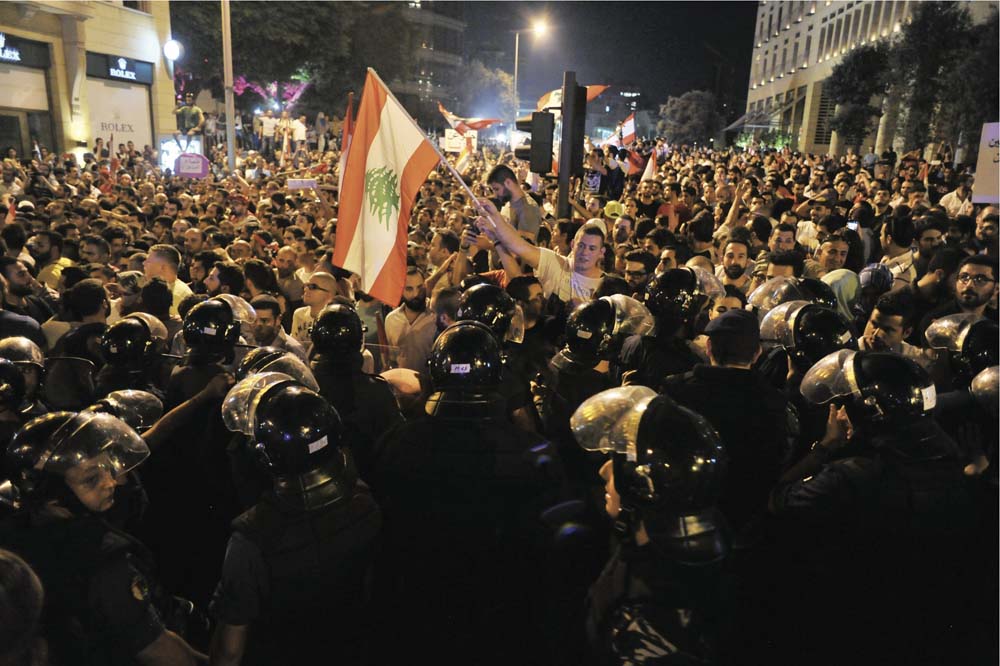
It was the waste crisis that ignited the protests around the Lebanese Parliament, across Downtown, on the doorsteps of numerous ministries and on highways and sites around the country. On different occasions, such as August 22 and September 20, protests flared into massive demonstrations. On many other days, protest activities were small manifestations of discontent on a street here or in a town square there. All the while, backdoor planning sessions and meetings have been taking place among protest stakeholders from several civil society groups that comprise a new “protest movement” that for many is an embodiment of hope for changing Lebanon for the better.

In speaking with five of the movement’s groups, Executive encountered an array of activists and took note of several facts. Participants are spirited and united when viewed from afar, but up close cracks and dissonances appear. Groups that drive the movement have yet to institute organizational structures and codes of conduct. Opinions which members of the protest movement convey to Executive are generally strong but some are somewhat underdeveloped when it comes to assessing issues such as the role of the private sector. As of today, the movement brims with good intentions that are seeded with the power of constructive rebelliousness and will for change – which is great. But the ambition to force fundamental change is, by universal human experience, highly combustible.

Can this movement build a sustainable system? This skeptical question obviously begs for an emphatic “no” as answer – but it is an irrelevant question. The true question in the view of Executive editors is, what has the movement already proven? The answer to that is simple and compelling. The movement has proven that the Lebanese will not tolerate the country’s dysfunctional system. Not any longer.

This is dangerous for those people whose welfare depends on the Lebanese status quo. Luckily for Lebanon, these people are but a few – the holders of secto-political ancien regime outposts and their cronies who form less than “one percent” of the population. All the others – the entrepreneurial private sector, the public servants, the retirees, the young and everyone whose economic contributions keep the country alive – have much to lose under a continued status quo. How much? That is innumerable. Think erosion of property rights and economic opportunities but also loss of fundamentals for a modern civilization such as a sound environment, electricity, water, and now health due to the risks of garbage-born epidemics.

Lebanon is in danger because of a system that has grown more dysfunctional with each year for at least a decade and that has been surviving because its beneficiaries could exploit unnatural social dichotomies and economic dependencies. For example, some regions in the south and north of the country have deliberately been denied their rights for development to maintain a poverty hierarchy.

What is needed is a complex development of responsibilities and institutions that must start with a simple premise. We the people must accept that the Lebanese social contract with the state is broken and has to be rewritten.

Why rewrite a social contract?

In the period after the civil war, the social contract was ruled by the Taif Accord that facilitated a return to national order. According to scholar Hassan Krayem, the agreement “tackled many essential points pertaining to the structure of the political system and to the sovereignty of the Lebanese state.” But, as Krayem wrote in 1997, the system established under the Taif Accord failed “to establish a clear and relatively stable formula to rule, govern, and exercise authority” and left the country in unfulfilled need to transcend sectarian identities and “establish a clear conception of the national identity”.

In the context of addressing the ongoing problem of Lebanon’s dysfunctional system of governance, we can identify two salient points from the National Pact and Taif Accord. The first is the observation that the National Pact was produced by a few for the many. As another scholar Farid Khazen wrote in 1991, “this informal agreement was neither restricted to Lebanese parties, nor was it a national one. Rather, it was an arrangement involving Lebanese politicians (mostly Maronite and Sunni), Arab leaders (mainly Syrians and Egyptians), and western powers (the French and the British in particular).” Taif, as Krayem states, “constituted a compromise among the Lebanese deputies, political groups and parties, militias and leaders”. Neither contract was “written by” the Lebanese people.

The second point is that both agreements were smart and fairly workable expressions of “Realpolitik”, and addressed immediate and practical concerns of coexistence. However, neither agreement qualified as a nation building tool. The system governed by the objective of balancing communal interests has served its purpose of maintaining stability, but it has aged to the point of not reflecting the needs of the people who it was designed to serve and protect. In recent years, it has increasingly served the needs of minute, self-styled elites. Twenty years after it was written, Krayem’s final statements seem more relevant than ever: the implementation of systemic reform and creation of a stable modern Lebanese state “needs perhaps the existence of a different vision, different political forces, a different notion of politics, and a new generation.”

The right generation

As evidenced by the protest movement of this summer, the new generation is finally in town and it aspires to its rights. When compared to Lebanon’s previous generations, namely those from the civil war and prior to 1975, the under 30s of today have the advantages of a broader education, fewer experiences of violent external disruptions, and benefit from the millennial tech troika of computing power, connectivity and social networks. What’s more, they are acting in an environment that is ripe for change.

Certainly, not everyone today feels the need to craft a new social contract for Lebanon. However, the vast majority has been waking up to the daily realities of their increasing powerlessness in terms of both political and electrical power, water shortages, inundation with waste and not enough money to get children to college, let alone through it.

These failures of the Lebanese state and of traditional power figures have caused desperation which in turn has destroyed a lot of vertical trust and horizontal social capital. Viewed positively, this is a fertilizer for change. Thus, based on the impulse provided by the protest movement and with buy-in from the important stakeholders – academic, economic, civil societal and even genuine reform-willing political and traditional change makers – the rewriting of our social contract becomes a real possibility. 

Although a contract evokes the image of pen and paper, this is seldom the case save for a few declarations made throughout history. The “writing” of a new social contract is a multi-tiered enterprise and done through mutual cooperation. From the perspective of Executive, this would involve mobilizing every available human resource and embarking immediately on an array of projects, of which we emphasize three for starters.

As a polity, Lebanon needs the rule of law and the guarantee of constitutional rights. At the present time, this requires rectifying the disastrous failure of the electoral and representation systems, beginning with the definition of a clear electoral law and implementation of the constitutional mandate to abolish political confessionalism.

As a body social and economic, the Lebanese cannot dispense of knowing who they are, how they live and what they are capable of producing. This requires a complete and detailed census of relevant demographic, social and economic data. Public and private establishments, and all citizens, must have access to comprehensive social and economic information to optimize their ability to plan and perform.

As a community, Lebanon needs to preserve the resources of its historic diversity and at the same time develop its inclusiveness. In regard to the multiple infrastructure emergencies that the country is facing, and especially the waste management crisis, this means that the protest movement and private sector should collaborate with vigor and intensity to produce workable solutions.

October 5, 2015 0 comments
0 FacebookTwitterPinterestEmail
Editorial

Real change is in our hands

by Yasser Akkaoui October 5, 2015
written by Yasser Akkaoui

The social contract between the state and the people is broken. It had been crumbling for a long time. We’re reminded of the state’s failures every month when we pay two electricity bills and every summer when we pay two water bills. For decades we’ve made concession after concession, the worst being acceptance of the Taif Accord. Beaten down by years of death and destruction, we were so fed up we actually pardoned our warlords and allowed them to become princes in a kingdom of corruption. The system these pardoned criminals oversee will take years to rid of its filth – much like the open garbage dumps our lawbreakers are directly responsible for.

In spite of the many barriers to our competitiveness, Lebanon still has a reputation of being resilient. A phoenix rising from the ashes. This is true only because of our entrepreneurial spirit and the determination of private enterprise. Our social safety net is woven of remittances from our successful sons and daughters abroad. It was not strategically designed by policy makers. For decades now the private sector has held this country together by providing people livelihoods and – all too often – access to basic services. With the region in turmoil and regardless of our central bank’s best efforts our economy is crashing. We’ve finally reached a breaking point. This country is becoming unlivable. We need change, and it must be centered on the rule of law.

As we note in a special report this month, the threat of potential oil and gas revenues being stolen or mismanaged is real and only ironclad legislation can protect them. Building this industry from scratch with the right laws in place will be an instructive exercise. We need to rebuild the entire Lebanese system to make sure citizens’ rights are protected. A properly functioning legal system must be this country’s backbone. Without the confidence that rights, property and investment are protected, there is no moving forward.

October 5, 2015 1 comment
0 FacebookTwitterPinterestEmail
BusinessCompanies & Strategies

Dolly’s: A Lebanese ketchup with American taste

by Jeremy Arbid September 18, 2015
written by Jeremy Arbid

There’s a joke from the classic cult film Pulp Fiction: “Three tomatoes are walking down the street – a papa tomato, a mama tomato, and a little baby tomato. Baby tomato starts lagging behind. Papa tomato gets angry, goes back to the baby tomato, and squishes him…and says, ketchup.”

It’s the champion of condiments, and Dolly’s ketchup evokes nostalgic memories among some Lebanese. Through casual conversations with Executive, they talked of blissful summers past eating hotdogs and homestyle french fries drenched in ketchup piled high atop a red checkered picnic table on a sunny, cloud-free day near the coast. These are wistful Americana summers to remember.

Ketchup does not easily mix with traditional Lebanese cuisine. It is a rare sight to find a bottle of that fine red sauce served with mezze, unless there are also french fries on the table. So it is not wrong to perceive ketchup as uniquely American (even though it isn’t) and boy do the Lebanese seem to love all products red, white and blue.

Dolly’s ketchup too, according to the company’s regional brand manager Saaddine Abou Merhi, is perceived as an American brand. “There is no perception of the brand as a Lebanese one – it’s an American brand with a Lebanese taste. Most of our new customers think Dolly’s is American more than it is Lebanese – because of the name.”

It wasn’t exactly the image the company’s founders were going for but the brand does have strong ties that foster this American perception. For one, Dolly’s ketchup is registered as a trademark in the United States. Moreover, to achieve the desired taste its main ingredient – fresh tomatoes – are an American product. “To get the exact taste we have to import from California and work with a specific farm to source the tomatoes.” Abou Merhi also says Californian tomatoes provide a consistency in quality that defines their ketchup’s texture. Other ingredients such as salt and vinegar are also imported, with water being the only ingredient sourced locally. The taste of Dolly’s ketchup, Abou Merhi suggests, is preferred because of the high level of sweetness, with the precise formula being a closely guarded secret known only to a precious few.

Widriss Holding – the group owning Dolly’s and other local brands, like Idriss Supermarket and Conserves Modernes Chtaura, a cannery – is 80 years old and Dolly’s is nearly 42. Dolly’s started as a ketchup company and has evolved into a condiment brand producing mayonnaise, mustard, pizza and spaghetti sauces, as well as canned corn and canned mushrooms.

Their flagship product remains ketchup, which Abou Merhi says leads the brand’s sales by volume. Mayonnaise leads in sales when measured by value. “Ketchup is the backbone of the company. Mayonnaise is more profitable for the business – it’s mainly oil with egg yolk – but when the prices of oil fluctuate there can be a shift. And there are only two brands in the market that [dominate] in mayonnaise, Dolly’s and Lessieur.” Profit margins tend to be more robust due to the company’s share of the mayonnaise market.

The ketchup market, he says, is more diverse and Dolly’s must compete with Libby’s and Xtra, both owned by Interbrand, Heinz, and producers like Yamama and Maxim’s that have a smaller share of the ketchup market. It is a saturated market, he says, and profit margins for ketchup are driven through bulk sales. To this end, Dolly’s can rely in part on its sister company, Idriss Supermarket, to sell ketchup. The company also has agreements with a number of restaurants to exclusively serve Dolly’s condiments, though Abou Merhi did not give specifics.

Dolly’s, as well as many of the brand’s competitors, passed through a difficult period during Lebanon’s civil war. The war split the country – barriers and checkpoints were erected and no-go zones physically inhibited Dolly’s distribution to areas like the Metn and Keserwan, Abou Merhi explains. De facto distribution monopolies were established, the extent of which can be seen to this day. “Brands established themselves as per the war zones. We have distribution in those areas now, but people prefer their brand because it became like second nature to grab it from the shelf. For us it’s the same – if you go to the south, it’s all Dolly’s, there’s no competition there.”

Syria’s civil war has drastically reduced Dolly’s operations inside Syria. “We had a partner producing Dolly’s brand products and selling them within Syria.” Abou Merhi admits that the Syrian factory now has very minimal production with output at only a fraction of what was produced before the war began. “The factory is there and the machinery is there. If there is a market they will produce more – [but because of the war] the market is now limited to 5 percent. The problem is they cannot sell to Aleppo, Homs, anywhere except for parts of Damascus.”

Syria’s upheaval has also rendered all land transit routes through the country to nearby foreign markets, like Jordan, unusable. “We used Syria as a transit route and what’s happening there has really affected us. We used to ship two trucks per month to Jordan costing some $800 from Beirut to Amman – taking maybe one day. By ship it takes around 12 days and costs maybe 15 percent more.” Abou Merhi also says containers sent by truck have more capacity – they’re 26 feet in length compared to sea containers that are only 20. “You can ship a truck for less cost with more goods, so the cost per product unit was less,” he explains. On top of that he says the market in Jordan has been negatively affected by the region’s instability. “They like ketchup in Jordan but what’s happening in Syria affects the whole region,” and is lowering demand in neighboring countries.

Exporting to Gulf countries, meanwhile, remains a challenge for Dolly’s. “We used to have a presence in Saudi Arabia and the UAE, but now cannot compete in those markets with local producers that receive support from their own governments,” Abou Merhi says, pointing out that production of ketchup in the kingdom is $2 less per box of 24 bottles than Dolly’s.

This disparity he says is derived primarily from the high cost of shipping from Lebanon. Sending a full container by truck from the Dolly’s factory, located in Choueifat, to the Beirut port can cost up to $300. For factories further away from the port, like Dolly’s sister company Conserves Modernes Chtaura, internal shipping can reach as high as $700 per container. Once at the port, Abou Merhi says, additional shipping expenses are incurred. Moving the container from the trucks onto the ships incurs an additional expense of $500. The resulting cost of exporting by sea ranks Lebanon amongst the most expensive in the world, according to Abou Merhi.

As a whole, Abou Merhi says that Dolly’s exports more ketchup both by volume and value than it sells in the Lebanese market, and he says sales in the West African market – Nigeria, Togo, and Mali, to name a few – are strong. With no end in sight for Syria’s civil war and an impotent Lebanese government, the brand will continue to look to the African market as a driver of potential new business.

September 18, 2015 0 comments
0 FacebookTwitterPinterestEmail
BusinessFinance

Private equity and the GCC

by Nicole Purin September 18, 2015
written by Nicole Purin

Private equity investment in the GCC appears to be experiencing a “rebirth”. This is a very positive development as it may be paving the way for less oil dependency and an innovative business environment. The private equity industry in the GCC has had a shorter life cycle than other markets and has faced alternating fortunes since its inception in the 1990s. According to data by the Emerging Markets Private Equity Association, funds had raised more than $6.2 billion in the Middle East and North Africa region, but the advent of the financial market crisis caused an earthquake of such magnitude that the prevalent view of some experts was that GCC private equity would never fully recover.

Arguably, that was the end of one cycle and the beginning of a new mature one. Evidencing this, private equity fundraising in MENA reached roughly $1.1 billion in 2014 according to the EMPEA Special Report on Private Equity in the Middle East and Africa, published in April 2015. The mood has clearly shifted. Opportunities are emerging and dynamism and growth are recurrent themes which may lay a brighter future for the region as a whole. As Shailesh Dash, CEO of Al Masah Capital Limited stated in the EMPEA report, it is now a “matter of timing the wave”.   

A transformed market

The next question posed is what has caused this change in perspective? The external factors remain difficult and the wars in Syria, Iraq and Yemen have not and cannot disappear overnight. However, the region as a whole has reached a new level of maturity somehow, aided by the constant turmoil that fortunately has been restricted to confined areas. Politically there is a drive towards regional integration. Significantly, the International Monetary Fund expects the region to be one of the world’s fastest growing in the years 2015 – 17, anticipating in the 2014 World Economic Outlook that its GDP will expand at an annual average of 4.1 percent. Investors that were looking skeptically at this part of the world have undergone a transformation in outlook as a result of multiple factors. The main theme revolves around a maturing market, strong fundamentals combined with in-depth “generational changes” all across the Middle East.

An important player in the market has confirmed to me that in the past it was very uncommon to agree to sell part of ownership for financing. It was seen as a taboo and associated with failure. The new generation does not regard the selling of ownership for expansion purposes as detrimental. This is seen as a positive change in mentality.

Currently, the focus of businesses is regional expansion and the building of scales, which as a result open up opportunities for private equity. Also, one of the effects of the financial crisis was the eradication of the smaller private equity businesses. Evolutionary theory worked its magic and those that survived are very well equipped to navigate in the current environment. Overall, there is greater expertise and maturity and the operational infrastructure has also been strengthened. There is also greater diversification and there are more established businesses that require expansion capital and management inputs.

The up factors

The International Monetary Fund has forecast in its 2014 World Economic Outlook that that Middle East and North Africa region will be the third fastest growing region in the next 5 years and data cited by EMPEA indicates that MENA as a bloc constitutes a $3.3 trillion economy. From a demographic angle, the region has a very young population with 162 million people between the ages of 5 and 24 with great consumption power.

In the past, sovereign wealth funds were looking outward for investments but now there are significant investments taking place inwards. Experts are saying that the exit environments for businesses have also been improving gradually as businesses become more structured aided by these inward investments. The drive for regional integration, high incomes and greater trading collaboration amongst Middle Eastern countries is opening opportunities for deals across the GCC markets. These are investors’ dreams and catalysts for yet more investment – none wants to lose a share of the pie at a time when the European debt crisis has shifted the balance of power from the old world to the emerging world.

Short term vulnerabilities

Smaller businesses and owners continue having issues in raising capital and there is a general perception that reaching the next level of corporate growth can be daunting. There are apparent vulnerabilities in the MENA region. The value of the dollar has increased, the price of oil has declined, and US interest rates are likely to increase in 2016 which could weaken the GCC’s economic prospects. Yet, the general view is that these factors are short-term variables that are only likely to frighten the less seasoned investor. It is important to take note of these aspects, but the long-term fundamentals appear solid – there are huge fiscal reserves in the Middle East in addition to strength of consumption. What about oil dependency one might ask? This dependency appears to be decreasing – there is a push for greater economic diversification supported by an increase in trading with Asia and Africa. There is also a strong push in sectors such as real estate, construction and manufacturing, professional services and technology.

Lawyers’ outlook on private equity in the GCC

The legislative outlook for private equity investment appears relatively stable. Investor protection mechanisms and contractual enforceability measures have been consolidated. Parties’ freedom of contract is generally recognized in GCC jurisdictions. The shariah law risks are more prominent in some jurisdictions than others, but strong mitigants can be put in place contractually. Dispute resolution solutions have also been strengthened and the DIFC arbitration centre is now recognized as a leader in its field.

Foreign ownerships restrictions have also been relaxed, although certain GCC countries can be seen as more conservative than others. Saudi Arabia for example has implemented restrictions and protectionism in industries like petroleum, media and transportation services. In the United Arab Emirates limitations to foreign ownership exist on the main UAE territory but the free zones are exempted, which makes the Emirates’ investment environment more flexible.

There is a drive for international standard alignment, transparency and governance. The UAE can possibly be seen as leading the way in this respect. Yet, in most GCC countries the enforcement of contractual rights is not always as predictable as one might wish, specifically in relation to shareholders agreements. This means that greater certainty is required although parties tend to mitigate this risk in most cases by ensuring the contract provides for arbitration provisions.

Future trends

Private equity in the GCC is shifting towards majority buyouts, the creation of value, and well defined exit strategies. The star industries appear to be food and beverages, healthcare technology and education. Some commentators are of the view that business valuations are still not realistically aligned and this needs to happen soon. Another significant development for the region is the renewed accessibility of Iran, which might open the door to even greater opportunities for investors. As Taimoor Labib, the regional head of MENA private equity and the head of global private equity portfolio management at Standard Chartered Bank, says, “The tremendous growth we are set for in private equity investment in MENA over the next few years should act as a source for good, creating values in companies, which will in return reduce unemployment and improve living standards”.

September 18, 2015 0 comments
0 FacebookTwitterPinterestEmail
Special ReportWine Tourism

Wine harvesting in Lebanon

by Greg Demarque September 17, 2015
written by Greg Demarque

Executive followed workers at Château Kefraya on August 22 busy harvesting grapes for the winery’s yearly white wine production. While Kefraya has so far been spared, bad weather has affected harvests at other wineries in Lebanon. One of the worst hit was Domaine de Baal, which experienced heavy hailstorms on September 15 that ruined more than 50 percent of its crop. Despite these unfortunate circumstances, however, wine production and tourism has been on a steady rise in Lebanon and wine producers and drinkers alike have cause to be optimistic.

Distribution of boxes to each harvester
Workers harvesting grapes
A worker records the amount of grapes harvested
Harvesters are paid according to weight of harvest collected
Workers carry boxes to the harvesters
Filled boxes are returned to a truck
The grapes are poured into the truck
When the truck is filled, it is taken to the vats
Before it emptied, the truck is weighed to know how many tons of grapes will be fermented
The grapes are poured into the presser
The grape juice pours from the presser
After pressing, the grape juice is ready to enter the vats for fermentation
Due to the sweltering heat, workers start harvesting at 5.30am
A worker proudly shows his day's collection
September 17, 2015 0 comments
0 FacebookTwitterPinterestEmail
BusinessFinance

The beginning of a new era for small businesses?

by Jessica Saade September 16, 2015
written by Jessica Saade

In today’s strong business environment, almost everyone is familiar with some business fundamentals such as accounting or marketing, or at the very least understands some basic information technology (IT) skills. Knowledge, Lebanon’s most important resource, has changed society’s needs as well as the structure and purpose of small and medium enterprises (SMEs). It has led to the demand for digital technology related jobs highly exceeding supply, hence introducing a tech-savvy entrepreneurship trend.

However, startups and SMEs, which make up the bulk of all free markets, are unable to operate at their full potential due to serious difficulties regarding financing. With hard assets being a rare commodity for technology-based companies, the huge amount of collateral required by banks for securing loans has been an important funding barrier. Market regulators are more aware than ever that a lack of SMEs’ growth would hurt an economy, let alone increase a country’s unemployment, and are taking steps toward encouraging a culture favoring SMEs’ development and success. In the Lebanese knowledge-based economy, a series of actions has been directed toward facilitating SME funding and growth.

Overcoming challenges

To overcome one of SMEs’ biggest challenges, the Central Bank is encouraging equity financing. One of its recent steps is the introduction of Circular 331, aiming at creating more synergies between corporate Lebanon and startups. “Market capitalization to GDP ratio for developed markets should be close to 100 percent while, for the developing economy, it should be close to 80 percent,” says D.K. Aggarwal, from SMC Investments and Advisors Ltd., tells the Economic Times. As per the World Bank Group’s (WBG) statistics, this ratio for Lebanon is below 30 percent. This situation is problematic since equity capital is key to a country’s socio-economic development. The reason for this weak statistic is the lack of large companies listed on the Beirut Stock Exchange (BSE) and the inability of SMEs to do so, due to the platform’s harsh and expensive listing requirements.

At the “Startup Lebanon” conference last May in New York, Central Bank Governor Riad Salameh suggested that creating an SME electronic exchange was the most efficient way to solve this issue. He also assured that the platform would be set up by the end of the year. Executive contacted the Capital Markets Authority (CMA) and the Central Bank to find out more about this new exchange, but was told it was too early for them to share any information regarding its rules and regulations. Although stakeholders were thrilled by the project’s announcement, they are still in complete ignorance concerning its development. With four months to go, as promised, many are trying to evaluate the exchange’s feasibility and success and have raised concerns over the SME exchange’s listing requirements, laws and regulations to its ownership structure.

At first glance, one would wonder why this project was proposed. It is true that, within a country, many exchanges can exist. However, why create a new exchange rather than alleviate the requirements of the existing junior exchange, which is incorporated in the Beirut Stock Exchange (BSE)? Why not focus on making the existing stock exchange a success? How will the listing requirements differ from the existing ones and what will change in order to attract startups and SMEs? With a lack of knowledge regarding minimum required paid up capital, company net worth, record of profitability and publication of financial results, no company can evaluate its listing ability, no venture capitalist can determine the readiness to list of companies from its portfolio, and no citizen can consider new investment opportunities.

A successful SME exchange would most likely boost competition and encourage job creation. For its concretization, it should be organized, efficient, well regulated, reliable and monitored by independent third party agencies. It is important that regulations serve to build trust and force companies to be properly governed, transparent, compliant and audited. “Too little regulation could make the exchange inefficient and too much of it could lead to bubbles and overheating, comparable to an equity crowdfund,” says Henri Asseily, managing partner at Leap Ventures. It is essential for a healthy economy that legislators and regulators avoid regulations that are too burdensome, and find the right balance between rules and freedom.

Incentivizing 

To a larger extent than that of the main exchange, regulations offer all parties incentives. With tax breaks as an option, how will companies be induced to forego their transparency for regulation? New generation owners of family businesses might be interested in listing mostly to solve family issues, but many businessmen and women are satisfied with their status-quo and aren’t interested in growing and competing. Concerning investors, what are the exceptional benefits of participating in the new capital market? It should be noted that attracting local stakeholders is as important as appealing to foreign ones. With remittances representing an important percentage of Lebanon’s GDP, it is interesting to calculate the required fraction that should be devoted to the exchange for its success. Have the regulators considered this source of investment? If so, what methods are in place to ensure foreign investors’ participation? Another way of raising money worth some reflection, as suggested by Walid Mansour, managing partner at Middle East Venture Partner (MEVP), is the creation of a plan similar to the 401(k) in the U.S.A, which is a retirement plan whereby the government invests the collected money into the capital market.

Listing requirements and incentives must exist in a way as to ensure a deep and liquid market. However, there seems to be a chicken and egg problem. While investors require a wide and diversified base of public companies to invest in, companies need a large investor base to go public. As stated by Fadi Osseiran, GM of BlomInvest, the SME exchange requires the close involvement of all stakeholders for it to be successful, which means that it is necessary for entrepreneurs, investors and financial institutions to work in harmony in order to reduce the current banking monopoly. However, it turns out that neither venture capital firms nor investment banks have any more clue on the subject than the average Lebanese person. Asseily states that he doesn’t have any tangible information to share with the press since, in six months, he has only been approached by Executive concerning this subject. Osseiran finds the creation of an SME exchange interesting although claims that a successful one isn’t going to happen today. He states that, despite the CMA’s apparent goodwill, he hasn’t been contacted either for his input on proposed rules and regulations. Hence, with a lack of contact with the CMA, stakeholders seem to be enthusiastic about the idea but somewhat negative about its realization. Does the CMA have a plan to meet with all stakeholders?

Ownership

Another point of curiosity is that of the exchange’s ownership. It is important to note that merely copying another country’s stock exchange is likely to result in failure. Therefore, many questions arise concerning its structure. Taking into consideration Lebanon’s economic and business structure is crucial. At the “Euromoney Conference” in Lebanon last June, Riad Salameh said that the SME exchange will either be incorporated under the BSE, which will be privatized, or will be created as a separate and privately owned company. This is turn throws out several key questions about the entire process which remain unanswered. Is the government ready to lead the trend of privatization starting with that of the BSE and other companies such as the Middle East Airlines (MEA)? If not, are there stakeholders interested in owning a part of the SME exchange? In any case, will the SME exchange act in a way as to foster companies until they can list on the main board? This is but the beginning in a long line of technical issues that needs to be addressed, which includes whether the SME exchange will be publicly traded, accessible to any individual and institution or only by those registered as brokers, the subscription process, and rudimentary elements like software and an online help desk. Arguably the greater issue is that of attractiveness, and how companies will be incentivized to join such an exchange in light of such an underperforming BSE. This could require greater plans to make the BSE attractive, a conceivably more daunting task.

The future

More important than targeting the right listing requirements, establishing regulations, or deciding on the SME exchange’s structure, is to extensively train and educate the people. A lack of understanding is the most important threat for the project’s success. Moreover, Mansour pointed out that we already have the exchange’s vehicle itself, implying that the platform alone is useless. For an exchange to be performant and successful, it needs a whole ecosystem which can’t be formed before 10 or 20 years. Will the region’s culture and political turmoil create business handicaps for such a system, crucial for businesses’ viability? While Executive’s team will be on the lookout for any information concerning the SME electronic exchange, it is a fundamental concern whether or not a discrepancy exists between the CMA’s words and the entity’s actions, thereby misleading stakeholders’ hope and expectations.

September 16, 2015 0 comments
0 FacebookTwitterPinterestEmail
BusinessFinance

Stock exchange for beginners

by Jessica Saade September 16, 2015
written by Jessica Saade

Entrepreneurs, small and medium enterprises (SMEs) and large companies can either raise funds through debt or equity, the latter consisting of the entrepreneur foregoing some ownership of the company and the investor assuming the risk of the business going bankrupt. Unlike a loan, the entrepreneur doesn’t repay the investor with interest. More secure and more heavily regulated, equity financing encourages a savings culture and a more diversified, and therefore less risky, portfolio. It includes funds from personal savings, friends and families, corporate partners, angel investors as well as from venture capitals. Moreover, entrepreneurs view their company as successful if it is able to obtain equity financing by listing on a stock exchange.

A centralized system

A stock exchange, often identified as an extension of equity crowdfunding, acts as a centralized system boosting communication between all stakeholders interested in equity financing. Through this platform, information on bids, prices and transactions becomes public knowledge. Unlike an over-the-counter market (OTC), the same prices are available to everyone. It is typical for an apprentice to wonder who sets the stock prices. The answer is the market. The reason behind stock prices’ fluctuation is just a simple matter of economics involving supply and demand. Thus, a certain share is sold at the maximum price any investor is willing to pay for and at the minimum price any shareholder is willing to sell for. Moreover, the value of a company, which is its market capitalization, is merely the stock price multiplied by its outstanding shares. This means that a company’s value shrinks as the demand for its shares decreases. Possible means for predicting a stock’s price consist of either using past and present stock values or looking at companies’ earnings. However, although many theories exist, it is a mystery how investors change attitude towards a certain stock.

Reducing risk

Stock exchanges are beneficial to all stakeholders in the economy. Despite some downsides faced by public companies such as market fluctuations, transparency needs, demands on the management team, costs incurred, responsibilities to shareholders, investor relations as well as market pressure on short-term accomplishments, it is the most effective strategy for those interested in raising large amounts of money, but also in gaining visibility and credibility, in improving their corporate profile, in enhancing corporate discipline, in encouraging employee motivation and in facilitating access to bank loans. Moreover, the risk involved in capital markets can be reduced by recognizing investments as long-term, thereby avoiding the risk of market volatility. In countries where stock exchanges exist, investors and venture capitalists, are more willing to invest in startups and SMEs. Since exiting businesses is their way of getting returns on investment and enhancing their professional profile, investors look for exit strategies from the moment they chose to invest. In theory, their exit options are either to sell back their shares to the entrepreneur, to sell the startup to a bigger company through an acquisition process, or to let the company grow enough in order to go public. A roadblock at one exit will hamper investors’ returns, thus preventing economic growth.

It is understandable how a stock exchange is vital for a free-market economy. However, for it to be successful, the “laissez-faire” approach should be avoided. Instead, it is essential that rules and regulations are in place. Moreover, capital markets are only beneficial to economic growth if their development does not come at the expense of the banking system. As such, the trick to a successful exchange is in the hands of the legislators and regulators.

September 16, 2015 0 comments
0 FacebookTwitterPinterestEmail
BusinessBusiness

Better to govern

by Thomas Schellen September 15, 2015
written by Thomas Schellen

It bears repeating that being decoupled from every other market is not a win-win. At best it makes you a functional zero, irrelevant to all but yourself. The truth of this was reinforced again at the end of last month. When global securities markets shook, from China to developed economies on top of a shrinking oil price, bourses in the Middle East and North Africa region’s main markets were engulfed.

Benchmark indices in Egypt, Qatar, the United Arab Emirates and Saudi Arabia started the last week of August with severe drops; Bloomberg’s regional index of 200 top equities in the Gulf Cooperation Council by market cap and liquidity, the GCC 200, had a ten-session slide to August 24 at the end of which was more than 30 percent down when compared with a 52-week high in September 2014. 

The Beirut Stock Exchange (BSE) was not part of the turmoil. The daily bourse comment by BLOM Bank reported a “negative performance” of the Blom Stock Index to the tune of 0.13 percent on August 24, followed the next day by a “lackluster” showing of the exchange as only $1.2 million worth of shares were traded. Note to trader self: a comatose market does not break out into any run, never mind whether bull or bear.       

The BSE’s long-standing irrelevancy is a noted impediment to investment and private sector economic development in the Lebanese market. Many proposals and initiatives have been launched in efforts to fire up capital markets as an economic engine; from drafting lists of companies that the government could privatize via IPOs, to new legislation and the ongoing enhancement of capital markets regulation and supervision.

A new hope

Now, a new initiative is tackling the issue from a different angle by trying to spur on listed companies toward improving their corporate governance. The shareholder-rights.com initiative by Beirut-based consultancy Capital Concept bases its reasoning on the notion that investors, with other factors being equal, will prefer to put their money in companies with well-structured and accountable boards, with a high degree of financial transparency, integrity and ethics, and with substantive shareholder rights.

The whip that shareholder-rights.com cracks in order to make listed companies trot faster in adopting top-notch corporate governance is called Governance Integrity Ratings (GIR), a 100-point checklist for best disclosure practices in five corporate governance categories. The grades assigned on the basis of this checklist are straightforward; they range from A – representing real excellence and almost impossible to achieve at the first try – to D for inadequate performance and F for failed.

“A growing body of evidence demonstrates today that corporate governance is essential to the protection of shareholder rights,” Capital Concept reasons in describing its approach, arguing further that “adherence to strict corporate governance principles in a country’s primary and secondary equity markets is a precondition for attracting investors and to achieve vibrancy of capital flows, which are crucial for any country that has a direct interest in improving its competitiveness.” Under this reasoning, Capital Concept has developed a methodology to monitor listed companies’ disclosure on an ongoing basis and says it will publish frequent ratings reports called Corporate Governance Assessments beginning with large corporations in the Middle East and North Africa plus the Lebanese market in a standalone report.

Bottom of the class

Executive obtained an advance copy of the first report, covering BSE-listed companies. According to these GIR rankings, half of the publicly traded Lebanese companies are to be sent home with a report card showing an F in corporate governance up to the summer of 2015. Add to that two companies that got Ds, including market cap leader Solidere, and a 70 percent majority of the ten listed companies in the sample – which covers all corporations traded on the BSE – got corporate governance grades that you wouldn’t want to show to your parents. 

These findings also pushed the average corporate governance rating for all BSE-listed companies way down, according to the report. “The overall level of governance practices in Lebanese listed companies is inadequate, expressed in an average rating score of 27 percent or a flat D,” it says, adding, “The average governance score improves to 39 percent when the view is narrowed to the banking sector, which represents the largest number of listed companies on the BSE. Three of the six listed banks earned ratings of C and above; however, two listed banks had to be rated with F and the overall average score for banks remains inadequate, albeit at the upper edge of the D rating.”

Only two banks were assessed in the report as exhibiting good corporate governance, represented by a B grade, and it is probably not a coincidence that these are the two that one could label ‘super-alpha’ under the categorization by which banks with deposits over $2 billion make up the sector’s alpha group. Head of the class was BLOM Bank with a B+, and the organization didn’t find the implementation of corporate governance an overly onerous task. “I cannot say that the procedural adjustments and enhancements that we made to our code and practice of corporate governance were ‘pains’ – if you will, they were more like good medicines that were needed to keep us fit and healthy,” BLOM chairman and general manager Saad Azhari tells Executive.

According to Azhari the bank set up its corporate governance code in 2007. “We constantly update and develop our code and procedures in line with BDL and international regulations, so as to enhance the health of the bank and the interests of our stakeholders. This stems from our belief that CG carries a lot of value-added to the Bank in that it improves the Bank’s reputation, lowers the cost of capital, enhances access to outside capital, and optimizes operational and financial efficiency, besides the fact that it implies better risk management,” he says.

More gain than pain

While publicly traded companies are the easiest to track and evaluate for corporate governance performance, benefits of corporate governance are in no way only the domain of listed companies. For Beirut-headquartered insurance and reinsurance organization Chedid Capital Holding (CCH), fortification of its corporate governance in conjunction with a recently completed private equity participation (see story page 72) was a no brainer. Applying best practices in structuring the company’s board, which meant appointing independent non-executive directors, had a number of benefits – for example, increasing the ability to make good decisions and avoid wrong ones. “Any company in any industry should have corporate governance and from our perspective at Chedid Re there is no best practice without corporate governance. When you are managing your company and creating your vision and making your plans, you need people around you that question you, that ask the right questions, people who have their own opinions, who give their opinions and who can disagree with you or agree with you,” says Farid Chedid, the chairman and chief executive of Chedid Re and CCH.   

From the perspective of Romen Mathieu, the managing partner of the EuroMena private equity fund that invested with CCH, the collaboration with Chedid was a positive example of the value that corporate governance infuses into a relationship. To achieve growth objectives under the private equity participations that EuroMena engages in as minority shareholder, according to Mathieu one needs good management and complete and honest reporting between the management and board of invested companies. Furthermore, one needs a real agreement from the partner in the invested company that minority shareholder rights are fully understood and accepted.

“In early participations we tried to invest and then implement corporate governance afterwards; sometimes it worked and sometimes it didn’t. Today we don’t invest in a company unless we are sure that corporate governance is already installed or, if not, we need to sign on a plan to install full-fledged corporate governance within three or at most six months, with very painful [consequences] if the company does not abide by this plan,” he says.  

Great expectations

Stakeholders in the push for better and greater economic investments in Lebanon and the Middle East have high expectations that Capital Concept’s continual evaluation of corporate governance within the BSE’s publicly traded companies will significantly accelerate the adoption of state-of-the-art corporate governance practices in the Lebanese corporate community. This, despite the blunt reality that the country is “extremely far from what today is common practice in the modern world,” according to Mohammed Alem, managing partner of Beirut-based law firm Alem & Associates.

He outlines a litany of legal inadequacies in relation to corporate governance and shareholder rights for Lebanese companies, as they are obligated to operate under the framework of an extremely dated Code of Commerce. “Rules for joint stock companies, which is where you look to corporate governance whether in privately held or publicly listed companies, have not changed for 30 or 40 years. This makes for a really old piece of legislation that is not adapted to modern requirements for operating companies in a space of transparency and other areas of good governance,” Alem says.

The impediments he cites range from restrictions on rights of new shareholders under article 117 in the Code of Commerce, to weak oversight over related party transactions under articles 157 and 158. Due to the latter weakness, interested parties such as family members of top executives even in large corporations and banks can realize astronomical compensations for services rendered, while any such related party deal “should be disclosed to the board and the board should disclose it to shareholders,” Alem explains.

Whereas an ethical corporate culture, transparency, good conduct and governance “is something that you build before thinking about listing your company… lack of corporate governance makes it difficult to inject equity into corporations,” Alem says, based on his firm’s expertise – 30 of its 60 lawyers specialize in corporate practice.

As he experienced it, the weakness of legal frameworks that rule over corporations is paired with a widespread social acceptance of family deals that characterize the business culture in ways that one does not encounter in developed economies. While this makes it seem clear that the instant outcome of any new ratings initiative may not be the development of an internationally compliant investment culture, and adoption of corporate governance standards throughout the Lebanese business community, Alem is nonetheless positive about the impact GIR ratings will have on listed companies – beginning with banks that need to demonstrate competitive advantages. “I think they [GIR ratings] will bring a tremendous plus because banks today are all fighting for the same clients in a market that is not really growing,” he says.

And the impact will extend further, he expects, because “Listed companies or banks or any corporations that are looking today for fresh capital need to demonstrate that they have a certain level of corporate governance, and any specific measurement of corporate governance will help push everybody to higher standards.” 

EuroMena’s Mathieu concurs. From a private equity perspective of implementing efficient deals, he says, “The corporate governance ratings initiative by GIR will save us time; and time is money.”

September 15, 2015 0 comments
0 FacebookTwitterPinterestEmail
Economics & Policy

Lebanon looks to Havana

by Dala Osseiran September 15, 2015
written by Dala Osseiran

Cuba, famous for cigars, salsa dancing and Che Guevara, is now open for business! In the past year, Cuba has slowly been opening up to external markets and Lebanon is one of the first countries to have set foot on this territory.

Cuba has undergone a number of changes in order to attract investments and business. First, they implemented the Law on Foreign Investment (LFI), also known as Law 118, which provides great incentives to attract new technology and foreign capital as well as increase domestic production. It also provides the main vehicles for foreign investment, be it a joint venture company, an international economic association contract or full foreign ownership. Its main objective is to establish the legal framework for foreign investments and the guarantees and legal security to attract and utilize foreign capital. It also provides greater tax incentives because of a special taxation regime: there are no more taxes on dividends. Companies in joint ventures are exempt from all taxes on profits for the first eight years, and thereafter only pay a 15 percent tax rate (previously 30 percent).

Opening the investment door

They are exempt from paying the wholesale and service taxes during the first year, from paying labor taxes, and from paying customs taxes for the importation of equipment, machinery and other assets during the investment process. However, foreign capital companies are obliged to pay taxes for the duration of their contract. There were also some key changes that helped to promote foreign investment, such as allowing 100 percent foreign ownership, recognizing the intellectual property rights and technological innovation of the foreign investor, and the guarantee to freely transfer profits abroad without paying taxes or other charges. Additionally, mixed companies, foreign owned companies and contractual international economic association are to receive preferential treatment concerning pricing, quality and terms when purchasing domestic goods and services. This law is oriented towards diversifying and expanding the Cuban market, as well as accessing state of the art technology, generating new jobs, harnessing new managerial methods and developing renewable sources of energy. It prioritizes 11 sectors: agriculture and forestry, construction, energy and mining, the food industry, healthcare, the light chemical and electrical industries, pharmaceuticals, the sugar industry, tourism, transport and wholesale trade.

Secondly, the Zona Especial de Desarollo (ZED) Mariel, the first special development zone created by the Decree Law no 313, is another method used to attract investments. It is not a free trade zone, but rather an area where production of goods and services are incorporated to promote innovation of new technology, industrial concentration, import substitutions, export generators, and sources of high quality jobs. It already ensures investors have basic infrastructure, access roads, a stable supply of drinking water and electricity, and a communication system interconnected with fibre optics. In this zone, there are some sectors that take priority, such as biotech and pharmaceutical, containers and packaging, renewable energy, agriculture, agro food industry, telecommunications and informatics, tourism and real estate, and investment and infrastructure. The objective of the ZED Mariel is to contribute to national development and generate exports, while promoting the replacement of imports, the transfer of cutting-edge technology and know-how, and skills referring to business management. It also aims to attract foreign investment, generate new sources of employment, favour environmental sustainability, develop infrastructure necessary for economic progress, stimulate the establishment of national or foreign enterprises and ensure its coordination with the rest of the economy.

The Portfolio of Opportunities for Foreign Investment states that there are 246 business opportunities presently in Cuba. They range across various sectors and domains, available in both the ZED Mariel and the rest of the country.

According to Rafif Berro, a representative from the Ministry of Economy and Trade, they have launched, along with the Lebanese Cuba Business Council (LCBC), a process to amend the trade agreements between Cuba and Lebanon. They are first reviewing existing agreements to see what can be improved, and will later change them so they become more specialized. This is not limited to the exchange of goods and services, but also encompasses joint ventures. They are grooming Cuba to become an entry point for this type of development. When asked about the future, Berro says he sees a partnership between Cuba and Lebanon. Some Lebanese products may be produced for Cuba specifically, such as programming and software development. Berro doesn’t believe it’s going to be a one sided direction, but rather a complementary one.

The Lebanese Ministry of Economy and Trade has also been seeking non-classical markets such as Cuba as a way to begin exchange with countries outside of the Arab world and Europe. They have launched negotiations for free trade agreements with Venezuela, Uruguay, Argentina, Brazil and Paraguay. Cuba’s favourable geographical location might be the entry point for these Latin American countries. In some ways, the opening of Cuba has happened at the optimal time for Lebanon since it will hopefully be the start of a long list of non classical markets.

Mohammad Choucair, the chairman of the Chamber of Commerce, Industry and Agriculture, said that the Chamber has given its full support to the LCBC in order to open the capacity for investing in Cuba. Lebanon is one of the first countries preparing itself for Cuba and the advantage it holds are threefold: (1) there is an existing diplomatic relationship, (2) the Lebanese know how to work in difficult countries (with years of instability and lack of resources) and (3) there are over 50,000 people of Lebanese origin already living in Cuba. A history exists between these two countries which will aid negotiations.

Early bird catches the Cuban worm

The president of the LCBC, Ali Kazma, is the person selling and promoting Cuba to potential investors. He has announced that the objective of LCBC at the moment is to prove its commitment to doing business in Cuba, which is why they have launched an impressive advertising campaign to promote the country through videos and other media. They want to show the Cuban government that the council is serious, and as part of this campaign, the first Cuban Lebanese Economic Forum will be held on September 29. Cuba is ready to open its doors but this has to be done slowly. The country is not equipped to handle all the demand, so it made a ten year plan. “We are just placing our foot in the door” he said.

Cuba has a lot to offer, its projects are worth $8 million and ZED Mariel has built the biggest port in Cuba. The LCBC doesn’t expect or want all the projects, but they do want a piece. Cuba Invest, a business created by Kazma but unrelated to the LCBC, has two projects lined up, including a boutique hotel which will hopefully be finalized by February 2016. “We believe it’s going to take 2 years to start generating a revenue on these projects. It’s a long process but it’s an investment.” said Kazma. Cuba Invest is not only working with Lebanese companies; it is recruiting international companies to work in Cuba through Cuba Invest. The first website, LCBCouncil.com, is already up and running.

Cuba still has a long way to go. There is uncertainty about the Cuban government’s commitment to foreign investment and state control of the economic activities which might hinder its prosperity. It’s a land that is in need of a lot of reforms. Lebanon can help it take the first step.

September 15, 2015 0 comments
0 FacebookTwitterPinterestEmail
Banking 2015BusinessFinance

Take that exit

by Thomas Schellen September 14, 2015
written by Thomas Schellen

When investors look for an exit they don’t want to be shown the door. They want to see the cash consideration that rewards them for their risk – and they want to look good in the process; good for having created employment, good for respecting the environment, good for having contributed to economic growth, and good in terms of delivering corporate citizenship.

This attitudinal evolution is welcome news for one particular branch of the investor community: private equity professionals. Where 1980s-style incarnations of the private equity (PE) investment model were popularly depicted as slash-and-sell raiders, the PE funds of today can instead flash constructive partnerships and growth narratives of invested companies as their merit badges.

This is worth pondering when the latest reports on private equity in the Middle East and North Africa show glorious numbers about recent performances in fundraising, investments, and divestments – colloquially dubbed ‘exits’ – of PE funds in the Gulf Cooperation Council, Egypt, and other countries of the region.

Across MENA, 2014 was the best year for the region’s private equity players in terms of fundraising and investing since 2008, according to the Ninth Annual Report by the Middle East and North Africa Private Equity Association (MENAPEA) that was released at the end of July. The report disclosed investments worth $1.5 billion, representing a year-on-year increase of 118 percent, alongside an increase in deal numbers from 66 to 72, and a rise in average deal size to $32 million, which MENAPEA notes as a “post 2008 high”.

When compared with the previous year, fundraising revenue in 2014 leapt from $744 million to $1.23 billion, and exits increased in number from 16 to 20. The United Arab Emirates and Saudi Arabia had the greatest level of investments when viewed by value, respectively attracting 59 percent and 21 percent of the total $1.5 billion invested in the region (see comment page 82).

Getting the right backers for lebanon

By this measure, Lebanon appeared only in the margins, attracting a reported 1 percent of investment value. Curiously, however, the ratio was partially inversed when viewed by volume instead of value. In the number of PE investment transactions, Lebanon accounted for 13 percent of all deals in the region, compared to the 21 percent for the UAE, and 10 percent to Saudi Arabia.

Similarly, Lebanon captured 27 percent of all reported venture capital (VC) investment transactions in MENA last year, making it the regional leader in VC investment deals and continuing a trend observed in 2011-13. The MENAPEA report attributed Lebanon’s attractiveness to the regional VC industry to the fact that “the country is characterized by small and medium sized companies [SMEs],” without attempting to answer the question of how Lebanon might be differentiated from any other Arab country by the number of SMEs in the economy. The report made additional reference, however, to the Lebanese central bank support for investments in startups and SMEs.

As the MENAPEA report doesn’t drill down into country-level numbers on VC investment values or PE fundraising results and exits, it consequently upholds the image that Lebanon is a serious regional laggard when it comes to investment performances in venture capital and private equity capitalism. This impression is extended to and confirmed for the entire MENA region by the 2015 Global Private Equity Report from US-based consultancy Bain. While Bain’s global report occasionally agreed with MENAPEA that for MENA 2014 was a PE bumper year, PE exits today between Cairo and Kuwait City are still dwarfed by the worldwide growth rate and performance, specifically in divestments. According to Bain, exits from global buyouts shattered all previous records in 2014. “At better than 1,250 sales, last year’s exit count surpassed its previous peak of 1,219 transactions in 2007. And total exit value, at $456 billion, also blew past its previous record of $354 billion in 2007 and was 67% higher than it was in 2013,” the Bain report specified.

[pullquote]In the number of PE investment transactions, Lebanon accounted for 13 percent of all deals in the region [/pullquote]

However, statistical peaks and success stories are two entirely different things. Given the current surge in investor frustration with Lebanon, a single shiny PE divestment narrative may be equal in worth to an entire boom statistic elsewhere. Therefore, Executive made it a mission to learn more about a recent divestment under which the EuroMena 1 fund exited from Beirut-rooted Chedid Capital Holding (CCH), a rapidly growing financial services conglomerate specialized in reinsurance and insurance broking.

The relationship between Chedid Capital Holding and EuroMena started more than seven years ago when the reinsurance brokers were told by their auditors about the fund, explains Farid Chedid, the chairman and chief executive of CCH. It was an opportune moment as the company was exploring whether it needed new capital for expansion. “At the time we were looking to institutionalize our shareholding and enhance our operations at the board level through corporate governance, and it was the start of expanding our operation outside of Lebanon,” Chedid tells Executive. “Once we had reached a strategic alignment over what both we and EuroMena wanted, we started evaluating the group as it stood at the time. Next, after we reached an agreement on the valuation of our group, the process of due diligence was launched and in 2008 we closed the deal that they would be shareholders in our company at 14.5 percent.”

According to Romen Mathieu, managing partner at the EuroMena fund, the fund’s involvement with CCH overshot the optimal period for accomplishing its targets by about two years, something which Mathieu attributes, in an interview with Executive, to the challenging regional and global economic conditions of the last eight years. However, he insists that the equity participation in CCH brought great results for all involved, beginning with the divested company and with its new strategic investor, the Saudi Arabian family conglomerate Al Rashed Group.

“It was a beautiful exit for Chedid; They have a great partner now, and it was also a beautiful exit for EuroMena in these hard times. We showed that we can exit our companies in any circumstances; and it is good for Al Rashed [investment subsidiary] Rimco because it is the goal of business families who invest with us [to find] potential long-term investments which EuroMena is going to bring to them,” Mathieu enthuses.

[pullquote] It was a beautiful exit for Chedid; They have a great partner now, and it was also a beautiful exit for EuroMena in these hard times. [/pullquote]

Chedid confirms that during its search for an investor when exit planning, EuroMena consulted with a Dubai-based investment banking unit of Lebanese banking group, BEMO, and also cooperated closely with CCH. “They had several offers from investors, from Lebanon, the Gulf, and also from outside the region. We reached an agreement that would optimize the valuation for EuroMena and find the best partner for us. Finally we agreed to have Al Rashed Group as an investor who would acquire the shares of EuroMena and be a shareholder with us. The whole five or six years were a very positive experience for us,” he says.

Securing the funds and expertise

Mathieu tells Executive that the fund’s announced return of “2.4 times the amount” equates to an internal rate of return of 18 to 19 percent achieved by EuroMena 1 on the investment in Chedid Capital, but he declines to disclose the divestment’s exact dollar value. He notes, however, with an expression of personal satisfaction that he has been asked to remain on the CCH board, switching from a position as shareholder representative to a function as non-executive director.

The enhancement of corporate governance structures at CCH was one important outcome of the collaboration with EuroMena and included work on board and management structures, expansion of corporate governance in all parts of the group, and the creation of non-executive director (NED) positions. From having a board of just four members, and not one NED in 2007, the group has advanced to seven board members, three of whom are NEDs. “The reason I asked Romen to stay on as an independent non-executive is because he has a lot of added value to contribute,” Chedid says.

He adds that Al Rashed Group brings strong business acumen into the partnership, as well as “a fantastic reputation and a very large network of relationships and companies,” while the insurance and reinsurance expertise in the partnership resides with CCH. The collaboration has already been tested in practice, since Al Rashed stepped in as the required Saudi partner in 2011, when CCH set up a new business unit in the kingdom. According to Chedid, CCH’s reinsurance broking activity in Saudi Arabia grew so fast that their Chedid Re Saudi unit has become the largest reinsurance broker in the country.

Joined with Al Rashed through compatible visions and high ambitions, Chedid says the near-term growth plans for CCH are the expansion of insurance and reinsurance broking activities under a paradigm of “always targeting 25 percent year on year”, in both turnover and profits. Referring to their recent registration as a Lloyd’s broker, he adds that the group is now establishing a presence in London, and working on its growth in African markets from a base in Mauritius. He emphasizes, however, that the group is “emotionally attached” to Lebanon and regards the bond with the Lebanese market as “very important regardless of turnover and market share in relation to our regional market share.” It would appear this is an enticing success story, on not one but two fronts; private equity and insurance.

September 14, 2015 0 comments
0 FacebookTwitterPinterestEmail
  • 1
  • …
  • 145
  • 146
  • 147
  • 148
  • 149
  • …
  • 696

Latest Cover

About us

Since its first edition emerged on the newsstands in 1999, Executive Magazine has been dedicated to providing its readers with the most up-to-date local and regional business news. Executive is a monthly business magazine that offers readers in-depth analyses on the Lebanese world of commerce, covering all the major sectors – from banking, finance, and insurance to technology, tourism, hospitality, media, and retail.

  • Donate
  • Our Purpose
  • Contact Us

Sign up for our newsletter

    • Facebook
    • Twitter
    • Instagram
    • Linkedin
    • Youtube
    Executive Magazine
    • ISSUES
      • Current Issue
      • Past issues
    • BUSINESS
    • ECONOMICS & POLICY
    • OPINION
    • SPECIAL REPORTS
    • EXECUTIVE TALKS
    • MOVEMENTS
      • Change the image
      • Cannes lions
      • Transparency & accountability
      • ECONOMIC ROADMAP
      • Say No to Corruption
      • The Lebanon media development initiative
      • LPSN Policy Asks
      • Advocating the preservation of deposits
    • JOIN US
      • Join our movement
      • Attend our events
      • Receive updates
      • Connect with us
    • DONATE