• Donate
  • Our Purpose
  • Contact Us
Executive Magazine
  • ISSUES
    • Current Issue
    • Past issues
  • BUSINESS
  • ECONOMICS & POLICY
  • OPINION
  • SPECIAL REPORTS
  • EXECUTIVE TALKS
  • MOVEMENTS
    • Change the image
    • Cannes lions
    • Transparency & accountability
    • ECONOMIC ROADMAP
    • Say No to Corruption
    • The Lebanon media development initiative
    • LPSN Policy Asks
    • Advocating the preservation of deposits
  • JOIN US
    • Join our movement
    • Attend our events
    • Receive updates
    • Connect with us
  • DONATE
Economics & Policy

In search of decent work

by Mary Kawar December 4, 2014
written by Mary Kawar

Major challenges in the Lebanese labor market not only include high unemployment rates, but poor working conditions as well. Regulation of, and investment in, the Lebanese labor market are seriously lacking. The outcome is an increasingly low skilled labor force with minimal social protection stuck in a ‘downward spiral’ towards increasingly dire working conditions. While the absence of decent work is not new to Lebanon, the addition of hundreds of thousands of largely low skilled Syrian workers is exacerbating an already fragile situation.

[pullquote]While the absence of decent work is not new to Lebanon, the addition of hundreds of thousands of largely low skilled Syrian workers is exacerbating an already fragile situation[/pullquote]

Over the past decade, there have been shifts in the distribution of employment and productivity. A decrease in the share of employment in agriculture has been matched by an increase of employment in services, transport and trade, along with a decrease of productivity in the services and industrial sector, preventing the creation of new and decent jobs. The low level of labor demand is a significant contributor to unemployment. There is no incentive for employers to invest in high productivity and technological innovations. There is all the incentive to invest in services and construction, where you have access to an unlimited number of low waged, mostly migrant workers, and — today — an unlimited number of Syrian workers. This is creating circumstances where you have job demand based on low skills. 

While Lebanon is a country that prides itself on having high levels of education and high quality higher educational institutions, limited opportunity for good jobs pushes many skilled young Lebanese to emigrate, which also contributes to the deskilling of the labor market.

The absence of labor market governance is also leading to worsening working conditions. As of 2007, when the most recent data available was compiled, 48 percent of the Lebanese workforce was informally employed — meaning workers lacked contracts, access to the National Social Security Fund (NSSF) or both. This figure must have substantially increased in the past seven years. If one only looks at the number of strikes among both the public and private sector workers, it is easy to realize the level of discontent among the Lebanese workforce. Recent strikes included electricity workers, contracted teachers and bank employees, among others. Most strikes relate to the working relationship (i.e temporary workers and irregular contracts), wages and access to social security. Here, however, it should be noted that workers in the informal economy are not represented by labor unions, and therefore have no means to give voice to their concerns and demands.

[pullquote]Overall unemployment in Lebanon stands at around 9 percent, but youth unemployment is around 24 percent[/pullquote]

Unequal opportunities

For a young woman or man in Lebanon, the problem begins far before she or he enters the labor market. The educational system is fraught with inequalities, giving urban youth from private schools far better opportunities. Overall unemployment in Lebanon stands at around 9 percent, but youth unemployment is around 24 percent. Young women and men from poorer rural backgrounds have a lower completion rate of primary education, less access to private schools, and lower rates of university enrollment than students from more advantageous socioeconomic backgrounds. Moreover, when it comes to whether you find a job after education, who you know will make a difference in finding a job or not. This nepotism — locally referred to as wasta — and the resulting inequality in access to opportunity is a factor which frustrates many Lebanese youth, either discouraging them from entering the labor market or encouraging them to migrate abroad.

Moreover, Lebanese companies are not investing in training. Out of 142 countries ranked in the World Economic Forum’s 2012 Global Competitiveness Index, Lebanese employers ranked 42nd in terms of satisfaction with the education system, but only 98th in terms of their investment in employee development. This confirms the assertion that the private sector is increasingly investing in low skills.

However, the private sector needs to have a stronger role in skills development in Lebanon, and to work with the government to find solutions to the common concerns of skills development. For example, vocational schools have a certain stigma in Lebanon as a choice of absolute last resort — a destination for high school dropouts. One way of addressing this would be linking vocational training more directly to actual existing jobs. This requires a partnership between employers and the government in the provision of training. One successful example in the region is Jordan, where the Greece based construction giant CCC established a governmental vocational school focused specifically on training welders whom they would subsequently hire.

[pullquote]

The ILO survey also revealed that Syrian refugees work for extremely long hours, and are mostly daily wage workers with limited skills and education

[/pullquote]The refugee crisis 

The Syrian refugee crisis has undoubtedly negatively affected the Lebanese labor market by strengthening this downward spiral of low working conditions mostly affecting low skilled Lebanese. In 2013, the International Labor Organization (ILO) conducted a survey revealing that Syrian refugees face harsh working conditions. While the sample size was limited, it was clear that they earn much less than the Lebanese legal minimum wage. Of the 404 working Syrian refugees interviewed, 78 percent earn less than LBP 600,000 ($400) per month, below the minimum wage of LBP 675,000 ($450). 

The ILO survey also revealed that Syrian refugees work for extremely long hours, and are mostly daily wage workers with limited skills and education. It is important to note that Syrian refugees are concentrated in geographic areas like the North or the Bekaa, which have always faced social exclusion and limited job opportunities, putting pressure on social cohesion between Syrian refugees and their Lebanese host communities. Therefore, the labor market impact of Syrian refugees is exacerbating pre existing labor market challenges and contributing to its deterioration as employers (both from large formal or small informal enterprises) race to take advantage of the increasing supply of cheap Syrian labor.

Looking ahead

It is undeniable that Lebanon’s labor market needs an expanded productive base to create better jobs, and this requires a comprehensive mix of policies including macroeconomic, industrial and social policies.

However, if we focus on labor market governance separately, there are three critical elements to be considered.

First is strengthening the role of labor, the Ministry of Labor and related labor market institutions, such as the NSSF and the National Employment Office. If these institutions are empowered with the qualified human resources, budgets and decisionmaking authority to push through the needed reforms, they will be able to: improve oversight of working conditions for better compliance with labor standards; provide services to job seekers, including skills development and links with available jobs; and secure sustainable, adequate and fair social protection to workers. In fact, ILO research in other parts of the world indicates that investing in working conditions, safety protection and training leads to increased employee satisfaction and consequently higher productivity and enterprise performance and growth. 

A second important area is the strengthening of statistics in order to analyze the labor market. Lebanon has a weak statistical base despite concerted efforts by the international community, including the ILO, to support it. For example, regular labor force surveys, which include migrant workers and refugees, are a fundamental step towards informing policymaking and monitoring progress and the impact of policies over time.

[pullquote]There can be no solutions or consensus without transparent participatory social dialogue[/pullquote]

A third area is social dialogue, which includes all types of negotiation and consultation among representatives of the government, employers and workers on issues of common concerns. The increasing labor strikes today relate to a breakdown in this relationship that is fraught with irregular employment patterns even among well known employers and limited trust between workers and employers. The government on the other hand is unable to play an effective role in the face of weak institutions, outdated laws and a political impasse, which has put a freeze on passing the necessary laws, regulations and policies through Parliament.

Indeed, this deadlock in dialogue reflects the wider national political climate. However, there is an opportunity to move beyond this and focus on the immediate needs of workers and enterprises alike. There can be no solutions or consensus without transparent participatory social dialogue, and some concessions by the relevant institutions, to pave the way for a commitment towards promoting decent work in Lebanon — and the time is now.

December 4, 2014 0 comments
0 FacebookTwitterPinterestEmail
Economics & Policy

The incremental approach

by Jeremy Arbid December 4, 2014
written by Jeremy Arbid

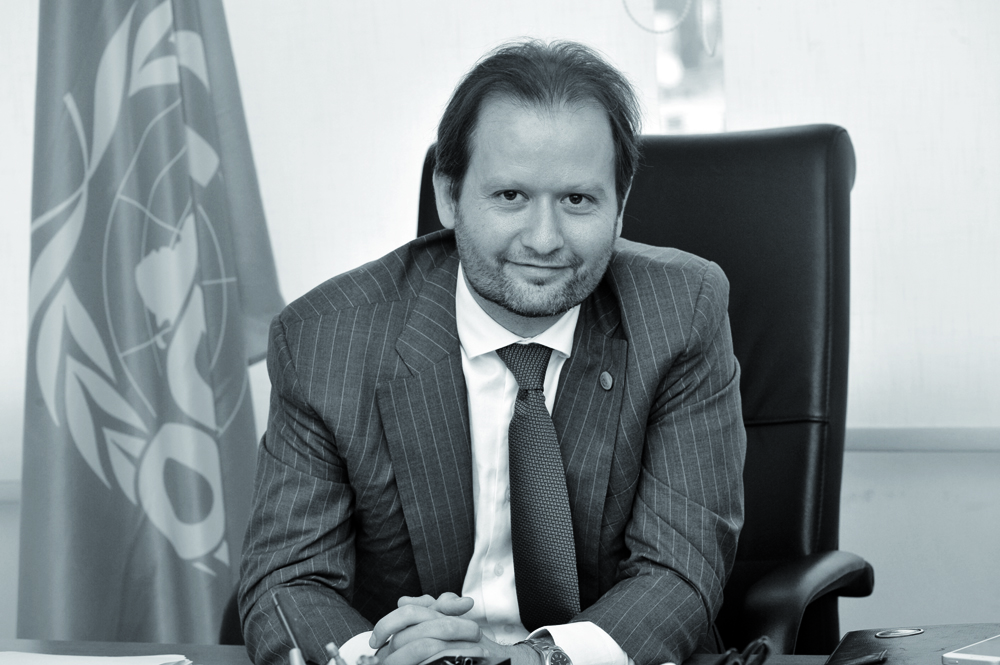
As Lebanon stares down increasing deficits, mounting debt, a history of fiscal inefficiency and recent complications posed by the Syrian war, the state’s finances are yet again in troubled waters. Executive sits down with the person charged with keeping the government’s fiscal ship afloat, Alain Bifani, director general of the Ministry of Finance since 2000.


[pullquote]If you abide by the rules and wait for the windows of opportunities then you can achieve plenty of things. [/pullquote]

You’ve been at the Ministry of Finance for nearly 15 years. When you approached the job the first day, five years, or 10 years in, did you have a mindset of “this is what I want to be doing this year in the medium and long term” in the context of the national budget?

When I joined the ministry, I had in mind to review the whole tax system, for instance. The part I was successful in was that we introduced VAT [value added tax], and we introduced it very quickly, despite tremendous political resistance. Now I’m more and more into the details that make a huge difference like, for instance, developing a macrofiscal framework for Lebanon — which we did — [in addition to things] such as being able to have a debt directorate that works well and finalizing a medium term debt strategy.

I’ve never had a draft budget the way I wanted it to be. This is one source of frustration that I still have. It has become a very big source of worry to me because we don’t have a budget. I have to be inventive all the time because we don’t have a budget that is formally voted upon. And this is really bad for the country, really bad for the ministry and for the whole system. We are not in a context where [fiscal] reforms are easy to do — where the system has a decisionmaking process that allows change to happen whenever it should happen. But it is just like any other system — a game that has rules. If you abide by the rules and wait for the windows of opportunities then you can achieve plenty of things.


Capital spending seems to be very low, and it also seems that the only focus is on satisfying expenditures rather than on sustainable investment. But you’ve stated quite recently that this situation is being restructured away from short term measures and that, for example, a massive investment is taking place in electricity, which accounts for some 40 percent of the deficit. Can you explain how this infrastructure investment is shifting?

It really started shifting when the electricity plan was approved in 2010. It was clear at that point that we would have a peak in capital expenditure in the energy sector. Normally we’ll have more supply and if you have more supply it means that people will rely more on Électricité du Liban and less on private generators. This will provide room for a tariff change — the main reason why we’re losing money. We’re losing money not because we want to, [but] because electricy is subsidized very heavily.

Altogether we will probably see the deficit decrease, plus hopefully, fixing some issues of governance within the institutions will also help improve the situation. I cannot estimate by how much now — it’s not the right time to give figures. But it’s a big amount; the bracket has been close to $2 billion as a whole.


[pullquote]One might argue that we have even more reserves than required, so this in itself is a very positive and good indication [/pullquote]

Jim Yong Kim, president of the World Bank, stressed on his visit to Lebanon earlier this year the importance of public–private partnerships (PPP) to reform institutions, particularly in the electricity sector. What are some indicators of whether Lebanon is following this advice?

The government of Lebanon already prepared a draft law for PPP a long time ago. It hasn’t been passed yet. To have a proper PPP operation you need to first know exactly what you want. Second, you need to make sure that you’re able to attract private funding at a lower cost than public funding, or at an equivalent cost, or at slightly higher cost. Here we’re talking about investment and there must be a return on investment. If, from the beginning, you say, “I don’t have the money to invest,” you let somebody else invest and get the return, [but] maybe you are losing more than what you are gaining. We have to have a very pragmatic approach looking at each and every project, seeing what we can achieve in terms of a partnership. But if you want to attract foreign or private investors, it is always good for them to have the guarantee of a legal framework.


The central bank’s foreign currency assets climbed to new levels, reaching $38.4 billion in September. Does this indicate structural weakness in the context of the state’s finances?

Well it is not obvious that it indicates financial weakness, but when someone needs to have high reserves it is probably because there is a need to maintain confidence. I wouldn’t say myself that it is an indicator of weakness; I think it is one of the main indicators of strength. One might argue that we have even more reserves than required, so this in itself is a very positive and good indication. It is a very good cushion and it helps to maintain confidence.


Is the trade deficit a vulnerability for state finances?

Of course, it is a historical vulnerability to Lebanon. We are a country that for a very, very long time [has had a] structural trade deficit that is very large. And that means we are a country that doesn’t produce enough and that we overspend compared to what we produce, which means that we tend to rely on what people produce abroad — which is not necessarily the best structure to have.


What role does the Ministry of Finance play in mitigating this vulnerability or the negative outcomes from the trade deficit?

In this, one can argue that we need to review our export policy, we need to have synergies created for exporters, we need to review taxes and customs, we need to revisit the way many administrations work, but that is a policy that has to apply to everybody.


At the end of June, the central bank held 30 percent of local currency government debt. Does that level of debt holding enable the central bank to leverage greater influence over state finances?

I’m sure the central bank would like to have much more leverage than what it has, but I don’t think this is at all its intent. I think the central bank has simply been doing this to prevent a deterioration of the situation, which has been the case for a very long time. Of course one can argue that the level is high, others would argue that it shouldn’t happen at all. But you have to be very pragmatic, and I think that both the Ministry of Finance and the central bank have been very pragmatic. It is simply the case that in the previous couple of years or more, it wasn’t easy at all to continue to offload the government paper from the balance sheet of the central bank. But this has happened in the past and we are hoping to find the opportunity again to decrease the exposure of the central bank to the state.


[pullquote]I think it would be unfair to say that the central bank has a bigger say because of a situation which it wouldn’t like to be in anyway[/pullquote]

Because it has a lot of exposure — and you do sit on the board of the central bank — does that practically allow the bank to leverage more influence? Do you see this as a reality?

Let’s take a few steps back and look at it from the beginning. We have a government in Lebanon that has started, from the [end of the Civil] War, to accumulate deficits and debt, which clearly shows that the government itself has not managed to have a proper fiscal policy. And if you are not able to have a proper fiscal policy, this necessarily means that the central bank is going to have a bigger say, or is going to wish to have a bigger say, because it is in charge of stability here. I think that the weakness of the policies of the government induced this intervention — I don’t like to call it intervention, but this exposure of the central bank. Even if it would theoretically give it a bigger say, [it] is definitely not something that any central bank would wish to have. I think it would be unfair to say that the central bank has a bigger say because of a situation which it wouldn’t like to be in anyway.


You’ve been here for nearly 15 years; you sit at the nexus — the connection point between all the various factions and powers. When it comes to a budget, because of your position, do you not have a lot of leverage to say, “It’s 2014, 2013 has passed and so has 2012, 2011, 2010 … let’s pass these draft budgets”?

Oh, but we keep doing that. Let me tell you, every single year, we have been in full respect of the law and we’ve always produced our draft before August 31. We hand it to whoever is minister, who would either send it to the council of ministers by the deadline or not. For instance, this budget [draft budget 2015] was sent to the council of ministers [before] the legal deadline. Now I’m not at all in the position to tell the government to convene for a budget meeting —


[pullquote]It is unfair to continue to bear with all of the complications of not having a budget. It is unfair to Lebanon[/pullquote]

You kind of are in the position —

Well I keep doing that, but the fact is it doesn’t bear fruit. The director general talks to his minister, the minister talks to the government [council of ministers]. Now if the minister of finance insists, the government might not answer. And if the minister of finance doesn’t insist, it’s one more reason why the government is not going to feel under pressure. My job is to do my homework on time, and the minister does his homework on time, and then the government is supposed to study the draft, amend it, and send it to Parliament on time and then Parliament has to pass it.

Of course we would have this never ending discussion of “yes, but initially in the 90s it wasn’t done properly and now we want to do it properly and so on.” Fine. We want to do it properly but whatever and however we see things, this country needs a budget and it needs it quickly. It is unfair to continue to bear with all of the complications of not having a budget. It is unfair to Lebanon.

December 4, 2014 0 comments
0 FacebookTwitterPinterestEmail
Editorial

The unsuspected juggernaut

by Yasser Akkaoui December 3, 2014
written by Yasser Akkaoui

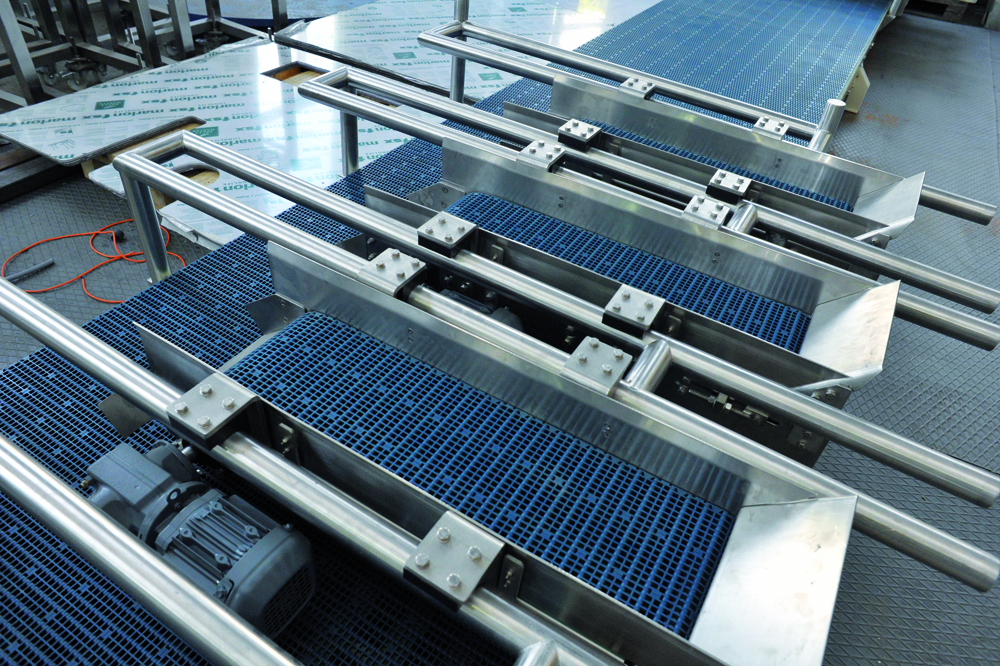
There’s a parallel space we Lebanese have learned to operate in — a place where the crooks in power have no influence. In that space, we’ve flourished in 2014. Our banks are strong, our entrepreneurs are maturing, our design space is expanding and our industrialists are investing in mechatronics, putting the country on a path toward creating a more productive economy. Our central bank governor stepped in to lead and push the economy forward, ensuring this year once again proved the cliché about Lebanese resilience — even as our politicians ignored their responsibilities and did nothing to promote growth.

Our private sector is what really drives this country, and we’re confident it will continue to do so in 2015 and beyond. Lebanon has its problems, for sure, and they need to be addressed. Our elected officials can’t agree on a president — hell, they can’t even agree on 24 hours of electricity — but there are determined minds like ours fighting to make this country a better place. We will ultimately win, and when we do, nothing will be able to stop us.

December 3, 2014 0 comments
0 FacebookTwitterPinterestEmail
Economics & Policy

Into the void

by Matt Nash December 3, 2014
written by Matt Nash

There is a certain fascination in Lebanon with world records, whether it’s enough hummus to choke an army or a 20 square meter plate of kibbeh that would cost $140,000 were it an apartment in Ain el-Mreisseh. By November 25, 2014, Lebanon had already broken its own post Civil War record of time spent without a president (the six month void between Emile Lahoud and Michel Suleiman between November 2007 and May 2008). If they’re gunning for another record, there’s still about two more years to kill until Moldova’s 917 days can be bested. This possibility should not be put past lawmakers who have awarded themselves a full second term in office with very little to show for their five years in power thus far. Doing nothing seems to be what the current parliament does best, but continuing down this track of inaction will only make a bad situation worse.

The list of problems policy makers need to address was long 10 years ago. It has only grown longer since. Lebanon may continue trying to close its borders to new Syrian refugees in 2015, but it won’t be able to kick all of those already here out, nor will it be able to provide them — and the communities where they are living — the services they need without serious action from policymakers. This, as the Lebanese love to say, is known. The solutions to Lebanon’s problems are not secrets, but at this point they are not easy fixes either. To take but two paradoxical examples: the country desperately needs massive spending on infrastructure development at the same time as it needs a serious commitment to fiscal discipline. Given that Lebanon’s shortfalls have been known and ignored for so long, it seems hard to believe they will be addressed in 2015, but as so many Lebanese also like to say, even a small development in the policy sphere can have wide ranging multiplier effects, so perhaps there’s hope yet.

December 3, 2014 0 comments
0 FacebookTwitterPinterestEmail
Economics & Policy

Race to the bottom

by Matt Nash December 3, 2014
written by Matt Nash

In the absence of governance, Banque du Liban (BDL) is doing all the heavy lifting to keep the economy afloat with tourists staying away, consumers hesitating to spend and the growing population of Syrian refugees putting further strain on a state that could not provide basic services even before they arrived. Assessing the impact of the bank’s work — in the form of stimulus packages unveiled in 2013 and 2014 — is tricky to say the least.

A section titled “overview of the recent monetary, banking and financial developments in Lebanon” on the central bank’s website claims 1.5 percent of the 2.5 percent of real GDP growth in 2013 resulted from the bank’s stimulus package that year — which saw the central bank extend $1.46 billion in loans to commercial banks at 1 percent interest along with a mandate to pass the lending on to “support housing, education, renewable energy projects, innovate projects, research and development ventures, entrepreneurship and other productive sectors of the economy.” The “overview” does not go into details on the breakdown of lending, nor which sectors helped boost growth and how. And, while the page does not seem to have been updated since February 2014, the central bank’s real gross domestic product (GDP) growth estimate for 2013 is far above the World Bank’s estimate of 0.9 percent growth. 

New indicators

Indeed, according to the World Bank, BDL’s growth estimates — based on the BDL-coincident indicator (BDL-CI) — are in need of improvement. The World Bank notes, in an evaluation report on Lebanon’s economy published in spring 2014, that BDL’s indicator “was developed in 1993, immediately following the end of the Civil War and is composed of eight variables. Notwithstanding the profound structural changes in Lebanon’s economy that took place since the end of the Civil War, the weights of the eight BDL-CI variables in the index have remained fixed since 1993.” The World Bank found that BDL’s indicator misestimated growth every year between 2006 and 2011. In 2006, the BDL-CI estimated a 1.4 percent contraction in growth while in reality GDP grew by 1.6 percent, according to the World Bank’s report.

In response, the World Bank devised two new measures — a coincident indicator to chart current growth and a leading indicator to predict future growth — with which to gauge economic activity in Lebanon. The World Bank argues its measures are far more accurate, and the coincident indicator was used to devise the 0.9 percent growth estimate for 2013. The leading indicator, meanwhile, was estimating growth of 1.8 percent for 2014 at the very beginning of the year. However, the bank trimmed its growth estimate for 2014 to 1.5 percent following five suicide bombings that hit Lebanon in January — only a portion of the terror attacks in 2014, most of which happened in the first six months of the year. The early 2014 report notes, however, that even the estimate of 1.5 percent growth included an “assumption that political uncertainty related to the presidential and parliamentary elections are rapidly resolved and that the security situation improves slightly.”

[pullquote]“The economy’s not growing … There have been no decisions at the executive level, so the central bank had to step in”[/pullquote]

Policy paralysis

While the security situation did improve somewhat following various security plans in different parts of the country — notwithstanding the August kidnapping of over 20 members of the police and Army by militants fighting in Syria — the political situation only deteriorated in 2014. Parliamentarians failed to elect a new president when Michel Sleiman’s term ended in late May, and they gave themselves another 31 months in office in November 2014, in part because there is no president but also because they did not pass a new election law. The legislature did pass a flurry of bills in April — which included criminalizing domestic violence, revising the “old rent” system and making civil defense volunteers full-time state employees — but again postponed passing a controversial wage increase for public sector workers and teachers, the full funding of which parliamentarians have still not agreed upon.

Lawmakers and the government have also ignored all of the administrative reforms international agencies like the World Bank and the International Monetary Fund have long been calling for. To cite just one example, Lebanon is still without a budget in 2014. The last budget passed by Parliament and the government covered the year 2005. It is this unwillingness to make important decisions — particularly important fiscal decisions — that likely prompted BDL to intervene with stimulus money in 2013 and 2014. 

“The economy’s not growing,” Nassib Ghobril, head of research at Byblos Bank, tells Executive. “There have been no decisions at the executive level, so the central bank had to step in,” he says, adding that this is an “implicit admission that the economy is struggling and in need of stimulus.” BDL Governor Riad Salameh in January 2013 announced $1.47 billion in loans to commercial banks at a 1 percent interest rate to boost growth. By the beginning of 2014, as Executive reported at the time, $468 million of it wasn’t spent and was rolled over into 2014 along with an additional $332 million, for a total of $800 million for 2014. At a Beirut conference in June, Salameh said that nearly all of the $800 million had been spent and announced the bank would inject another $400 million. In October, Salameh said that 2015 would see the bank give another $1 billion in low-interest loans. BDL itself has not offered a guess as to how the money is helping — aside from its likely overestimation of contribution to GDP growth in 2013. Ghobril said Byblos Bank anticipates a paltry 0.8 percent growth in 2014.

Silver lining

As has been the case since 2011, the large influx of Syrian refugees and security problems relating to the conflict in neighboring Syria held down growth in Lebanon in 2014. The World Bank, in a 2013 economic report, estimates that “cumulative losses in economic activity could reach an estimated [$]7.5 billion,” between 2012 and 2014. The report notes that poverty among the Lebanese was also on the rise during the same period with nearly 170,000 Lebanese “pushed into poverty [over and above the 1 million currently living below the poverty line].” As Executive went to press, there were over 1.1 million Syrians registered as refugees with UNHCR, the UN’s refugee agency, according to statistics dated November 18, 2014, on UNHCR’s website. That’s nearly a 40 percent increase from the more than 800,000 registered on January 2, 2014. While more people strain both the state’s ability to provide services and the host community’s patience, the crisis is channeling some money to infrastructure projects that will, theoretically, benefit Lebanon after the conflict in Syria ends. UNHCR funding for ‘community support programs’ that aim to benefit both Syrian refugees and Lebanese is anticipated to reach $25.5 million by end of 2014, a drastic increase from the $11,700 and $160,600 spent on such programs in 2011 and 2012, respectively. About 54 percent of the 2014 money is expected to go toward social cohesion projects designed to create “opportunities for Lebanese and Syrian families to relax, learn and play together,” according to a UNHCR pamphlet on the community spending. Some 24 percent of the money is designed to improve public services, up from 9 percent of the $13.5 million spent in 2013. Since 2012, UNHCR figures show that public service spending is expected to total nearly $7.4 million. While this is shy of the $1.1 billion the World Bank estimates the Lebanese government has had to spend to “meet some of the surge in demand for public services” the crisis prompted, it is nonetheless a welcome contribution. 

[pullquote]without real reforms … fiscal decisions and help from abroad, Lebanon’s economic outlook will get increasingly worse as the crisis in Syria continues[/pullquote]

Donor fatigue

In dealing with the fallout of the Syrian crisis, Lebanon is hoping for help from the international community. That help, however, is not materializing. A multi-donor trust fund administered by the World Bank has received only $30 million, according to the most recent information on the fund on the bank’s website from September 2014. UNHCR’s Lebanon-specific donor appeal is also 54 percent underfunded as of November 5, according to UNHCR’s website. It is becoming increasingly clear that without real reforms, important — albeit painful — fiscal decisions and help from abroad, Lebanon’s economic outlook will get increasingly worse as the crisis in Syria continues. 

December 3, 2014 0 comments
0 FacebookTwitterPinterestEmail
Comment

In search of gas

by Seiichi Otsuka December 2, 2014
written by Seiichi Otsuka

Since the suspension of nuclear facilities after the 2011 nuclear disaster in Fukushima, Japan has been seeking to diversify its energy sources. Among a variety of resources, the country has substantially increased its import of natural gas, particularly from the Middle East. After Fukushima, the import of liquefied natural gas (LNG) almost doubled in terms of value as a result of an increase in volume combined with a depreciation in the value of the yen. And as Lebanon is mounting its efforts to develop offshore and onshore natural gas and oil, the interests of the two countries are converging.

Shaking ground, quaking economy

The Great East Japan Earthquake and resulting massive tsunami on March 11, 2011 caused serious damage to the Fukushima nuclear power plant. The damaged nuclear reactors went out of control immediately. As a result of this accident, residents surrounding the plant were forced to evacuate and approximately 140,000 people still cannot return to their homes.

Taking into account the lessons learned from this disaster, the independent Nuclear Regulation Authority (NRA) was established, and new regulatory requirements — among the most stringent in the world — went into effect. The NRA examined Japan’s 48 existing nuclear power plants to ensure conformity with the new standards from technical and scientific viewpoints. Since then, all of the country’s nuclear facilities have been out of operation, though 17 are under screening by the NRA for possible restart.

The result of the shutdowns was dramatic: as of 2012, Japan’s energy self-sufficiency rate had declined to 6 percent. As alternatives to nuclear energy, imports of oil and natural gas have increased, resulting in an upsurge in Japan’s dependency on fossil fuels from 60 percent before the earthquake to 90 percent afterwards. In 2013, 83 percent of oil imports and 30 percent of LNG imports came from the Middle East.

In 2011, Japan’s trade balance turned to a deficit for the first time in 31 years, and expanded further in 2013. The increased imports of fossil fuels have thus caused problems not only in the field of energy, but also at the macroeconomic level.

Charting a future

Japan has controlled total energy consumption by exerting various energy saving efforts, such as promoting energy efficient lifestyles, introducing energy saving industrial devices and shifting major industry away from energy hungry sectors and towards the service sector since the 1973 oil crisis. As a result, final energy consumption in 2013 was only 1.3 times higher than in 1973. But energy conservation by itself is not enough.

Faced with the challenging conditions of energy supply, Japan adopted the Strategic Energy Plan in April 2014, outlining the immediate response to the energy crisis due to the sudden stoppage of nuclear power, and also mid to long term policy options toward diversification of energy sources. This strategic report highlights nuclear power as an important power source — but only if it’s safe.

When reevaluating the significance of nuclear power, it is very important to identify the characteristics of the respective supply chains of individual energy sources to realize the structure where stable supply, low cost and environmental acceptability can be achieved in proper balance. Particularly in terms of electricity supply, which plays a central role in the secondary energy structure, Japan must optimize each energy source based on its character.

First, Japan as a country should position geothermal power, ordinary hydropower, nuclear energy and coal as base load power sources, which can be operated stably and at low costs. In this context, there is no option without nuclear power. Second, natural gas should be placed as an immediate power source, which can respond quickly and flexibly to the situation of electricity demand. Third, we can consider oil and pumped storage hydropower as peaking power sources. They come at a higher cost, but can respond to extra electricity demand.

LNG now accounts for more than 40 percent of Japan’s energy generation and has high efficiency as a heat source, so its use is increasing. Furthermore, natural gas involves relatively low geopolitical risk compared to oil and emits the least greenhouse gas among fossil fuels. In the near future, fuel prices will be determined through competitive pricing due to the shale revolution. It is anticipated that a shift to natural gas will swiftly proceed in various sectors.

Lebanon, a possible future exporter of LNG, could be a close partner for Japan. Cooperation in energy may strengthen bilateral relations between the two countries, and if it does, we can expect the synergy to spill over into other important areas.

December 2, 2014 0 comments
0 FacebookTwitterPinterestEmail
Business

Catering food

by Nabila Rahhal December 1, 2014
written by Nabila Rahhal

Executive profiled a collection of beloved Beirut venues which have been in operation for more than 35 years and evoke strong feelings of nostalgia among the city’s residents. The aim was to discover more about their history and learn the secrets of their success, nostalgia aside.


Socrate got its name due to its proximity to the American University of Beirut — on Bliss Street — where the expected clientele were to be professors and students who would appreciate the name.

Socrate, established by the Zeidan family in 1964, began as a restaurant offering “international cuisine.” At that time, recalls Saad Zeidan, the general manager and son of one of the previous owners, international meant all types of cuisines including some Lebanese dishes.

The Zeidan family also had La Ronda, a well known restaurant in Downtown Beirut which was destroyed during the civil war and didn’t reopen afterwards.

According to Zeidan, Socrate had a very successful run attracting the high end clientele from Ras Beirut which was known at the time as a hub for the international community, with all the embassies located there and with AUB in its vicinity.

In the 1980s, because of the civil war, the Zeidan family left Beirut and Socrate, reopening with a strong focus on catering in the early 1990s. 

In 2009, Socrate opened a new restaurant on Sidani Street, parallel to their location on Bliss, and although 80 percent of their sales is still from catering, the restaurant proved to be very successful indeed.

In 2012, and with a steady growth in the company, Socrate moved its catering to Jnah with a 4,000 square meter kitchen and a team of around 180 employees, a big change from the small restaurant with 25 employees. In line with their developments, the Zeidans also shifted from an individuals-owned company to a shareholding one. Today, Socrate handles all catering services — starting with the food itself and moving on to cutlery, furniture and even the waiters — for all kinds of events ranging from corporate to private.

Zeidan believes they were able to last this long because “they have a good reputation and loyal clients and employees.” He illustrates his point by saying that some of their older chefs have taught their children the trade and brought them along to join the team. He also believes that their offering of traditional Lebanese dishes which are difficult to make at home also gives them an advantage over the newer caterers in town.

December 1, 2014 0 comments
0 FacebookTwitterPinterestEmail
Business

Munching on falafel

by Nabila Rahhal December 1, 2014
written by Nabila Rahhal

Executive profiled a collection of beloved Beirut venues which have been in operation for more than 35 years and evoke strong feelings of nostalgia among the city’s residents. The aim was to discover more about their history and learn the secrets of their success, nostalgia aside.


Opened in 1935, Falafel Sahyoun started selling falafel from a cart on the street corner next to their current shop on Bshara El Khoury Street. They moved to that venue once the building was built and the family bought an empty spot on the ground floor, two years later.

Falafel Sahyoun remained in operation throughout the civil war despite having to temporarily relocate to the Zarif neighborhood and then Corniche El Nahr when their venue’s location on the demarcation lines forced them to do so.

“We had to keep the place open to keep the name alive in people’s minds. Had we closed down during the war, people would have forgotten about us,” says Fouad Sahyoun, one of the current owners, recalling that the area around their current venue was reduced to a dirt road during the war and how, for a few years after it, hardly any customers would pass by their shop.

Fouad Sahyoun inherited the business from his father along with his brother but opened his own venue in 2006, also called Falafel Sahyoun — and with the same logo, layout and falafel recipe — right next to the original venue. “I chose to go my separate way for my peace of mind and also to keep my father’s name alive,” he says. Sahyoun says he learned about the business when he was a child helping his father out during weekends and jokes that many say his mother gave birth to him in the shop.

These days, he is at the shop from six in the morning until closing time, just like his father before him, stating this as the main reason behind their venue’s longevity. “If you want to maintain your name and stay sustainable, you have to work hard. [Hospitality] is a very demanding industry which you cannot turn your back to. Handling food items demands cleanliness,” says Sahyoun.

For this reason, Sahyoun rejects the idea of expanding into new outlets saying that his personal presence is vital to the success of his business and by expanding, he would lose that. “Today there is no work ethic or diligence among employees and I need to supervise everything from the way my employee talks to the customer to how clean he is,” says Sahyoun.

Regarding the competition from other venues, Sahyoun says he has a loyal and steady client base who “sometimes try falafel elsewhere but they return and tell me my falafel is better.” Sahyoun is not impressed with the more modern interpretations of falafel toppings and says he will continue with the traditional way he’s always prepared his.

December 1, 2014 0 comments
0 FacebookTwitterPinterestEmail
Comment

How a moustache can cure cancer

by Line Tabet, Zeina Loutfi & Ramsay G. Najjar November 28, 2014
written by Line Tabet, Zeina Loutfi & Ramsay G. Najjar

November is the month of the year when we see a profusion of men growing moustaches, proudly sharing their pictures and enthusiastically encouraging their friends to join the movement. This “Movember” craze is organized every year to raise awareness and funds for men’s health, essentially cancer-related diseases.

What started as a pretext among friends in a pub in Australia to bring back the 70s moustache, soon became an international campaign aimed at “changing the face of men’s health.” Yet the credit does not go to a multimillion-dollar campaign, but to the most traditional, cost-efficient, and simplest form of communication: word of mouth.

How many times have we acted upon a piece of information from friends or family, whether in trying a new restaurant, buying a new cell phone, choosing a movie to watch, or even deciding on a university to apply to? Truth is, we live in a global community where recommendations made from trusted sources and opinion leaders speak louder than million-dollar ad campaigns, often swaying and helping us make our minds.

Yet word of mouth is a double-edged sword, whereby it can make or break a brand, shape the perception customers may have of a company, and increase or reduce sales and profits, which begs the question: what makes word of mouth so efficient? Is the success of word of mouth due to social/psychological reasons or communication efforts? What is the role of social media? And how can companies and brands influence word of mouth so that it plays a positive role in reinforcing their brand, improving its reputation, and raising its equity?

“Yesterday’s talk with a friend is today’s conversation with millions”

Oral communication, beginning with storytelling, has passed down from one generation to another. This form of communication can be found everywhere from salon gossip to business meetings and is at the center of how humans receive information. However, beyond the societal dimension of word of mouth, companies and communicators have come to realize the importance of this medium in influencing the purchasing behavior of consumers and shaping opinions about a brand, with “word of mouth being 10 times more effective than traditional advertising,” as per Jonah Berger, a rising expert on word-of-mouth and viral marketing.

Consequently, word of mouth marketing is graining significant traction, whereby companies and brand alike are leveraging the traditional word of mouth to promote their products and services, increase their earnings and draw in customers.

One question that these marketers are constantly trying to answer is: what sparks word of mouth? There are many ways to trigger a conversation, and the most common way is via consumers who are willing to share their personal experience, especially given that “92% of consumers trust recommendations from friends and family above all forms of advertising”( Nielsen Report, “Global Trust in Advertising and Brand Messages”, 2012). Word of mouth can also be triggered by communication and marketing campaigns or celebrity endorsements and ambassadors programs, encouraging consumers to react to the brand messages they are exposed to, relay them, and ultimately launch the snowball effect sought-after.

Abercrombie & Fitch is often seen as a pioneer on that level, whereby the company understood the power of word of mouth and brand ambassadors by recruiting popular high school students to work in its stores, expecting them to wear its clothes and promote them, all while projecting the image of a young, cool and trendy brand. The formula was simple and successful.

Today, the fundamentals of how information is shared have not changed, what have evolved are the channels through which it is conveyed. In fact, the rise of social media has given voice to millions of people looking to express themselves, share their opinions and hold companies and people alike accountable.

Customers are more and more seeking reviews and advice on such matters as where to have lunch or which doctor to consult, something that has become more accessible with the profusion of dedicated websites and blogs, such as Expedia, Yelp, Tripadvisor and Goodreads. These online platforms provide the adequate environment to spread a message and leverage word of mouth referrals, effectively turning social media into the new word of mouth.

The essentials of effective word-of-mouth marketing

Word-of-mouth marketing may seem to some as the result of pure luck or providence, and an easy way to create buzz about a brand. However, for word of mouth to become an effective marketing tool, companies need to proactively and strategically manage it.

  • Having a Strategy in Place: Creating positive buzz requires having a strategy in place that would help determine the right audience, develop the right messages, as well as set the environment in which these will be conveyed, all while making sure that a crisis communication contingency plan is on hand in case of any noted discrepancies from the goals set.
  • Focusing on Content: Companies need to make sure that the right messages are being conveyed in a way that resonates with target audiences, all while being meaningful, relevant and aspirational. Most importantly, it is about expressing customers’ satisfaction, loyalty and trust of the brand.
  • Selecting the Right Influencers: Driving the brand conversation also requires selecting the right ambassadors, those who will talk about the brand, praise it without overdoing it, and encourage people to adopt it. This is why they need to have a certain credibility and project honesty without seeming to have an ulterior motive.
  • Being Active: Being talked about also requires companies to be active and dynamic, as it is not only about having fans and ambassadors, it is also about connecting with them, empowering them, and triggering conversations that would lead to positive buzz of the brand.
  • Remembering the Offline: Finally, companies need to remember that word of mouth is both an online and offline medium. In fact, while social media has increased the reach and potential of people to be heard, most advocacy and promotion still takes place offline, be it over lunch, during meetings and social gatherings, etc.

The proactiveness and reactiveness of word of mouth

When it comes to Lebanon, many of our decisions, trivial or not, are influenced by word of mouth.

In a country where people make socializing a priority, love to share their experiences, and constantly seek to remain up-to-date, all while looking to impress, word of mouth remains a strong tool for companies to leverage.

In fact, for local SMEs and startups, who may or may not have an allocated communication budget, word of mouth is music to their ears: relying on bloggers, Facebook, as well as friends and family has become one of the most effective and efficient ways to disseminate positive product and service reviews, build loyal customers, win a new clientele, and ultimately expand.

That said, most of this is done reactively, whereby companies and brands are not addressing word of mouth in a strategic way that would allow them to have control over it. What makes the difference between one pub or restaurant in Mar Mikhael and another? Why do some need reservations weeks ahead and others seem always empty? While some can argue that all such places offer quasi-similar products and services to an extent, it is safe to say that the way word of mouth was handled is each case has been the determining and most important success factor.

Movember proved to be a successful word of mouth marketing initiative, with a strong message, a humorous and funny twist on a health issue, spread through one-on-one conversation thanks to the right advocates. While Lebanon provides the perfect environment for word of mouth marketing, it remains that communicators and companies have yet to think strategically and emulate the success of Movember, which has the potential to rally audiences behind their brands. For now, let’s embrace Decembeard and grow or promote beards to fight bowel cancer!

November 28, 2014 0 comments
0 FacebookTwitterPinterestEmail
Business

Hurdling the competition

by Nabila Rahhal November 27, 2014
written by Nabila Rahhal

Executive profiled a collection of beloved Beirut venues which have been in operation for more than 35 years and evoke strong feelings of nostalgia among the city’s residents. The aim was to discover more about their history and learn the secrets of their success, nostalgia aside.


Sporting Beach Club was established in 1953 by George Abu-Nassar who had just graduated from university and was looking for a venture to have a good time with. “He was looking to have a fun time, not to establish a full time business,” says Waleed Abu-Nassar, George’s son and current partner and PR manager of Sporting Beach Club.

Back then, the plot of land Sporting is now on had only a small cafe and a small pool used by the cafe’s clients (the children’s pool in Sporting today). When Abu-Nassar found this land, he was inspired to develop a private beach club on it and convinced a partner to invest with him. “This idea of a beach club was avant garde back then as Beirut was still somehow a conservative city,” says Abu-Nassar.

What truly made Sporting Club take off, however, was the image of exclusivity that George Abu-Nassar created around it, making membership extremely sought after. Waleed Abu-Nassar recounts how the only way one could become a member in Sporting was to be recommended by a member, and, as the members list was not shared with the general public, identifying who to recommend became a challenging experience. 

People took to the idea seriously and the Sporting Beach Club grew from one generation to the next with members who were the partners’ friends and friends of friends. “Our slogan at Sporting Beach Club is catering to like-minded people for over 50 years,” says Abu-Nassar, explaining how this gave them the niche of a faithful clientele base, which ensured continuity over the years and created a familial home-like atmosphere at the club. 

Sporting also grew in dimension as George Abu-Nassar gradually added land to it until it reached its current area of 10,000 square meters.Today, Waleed has plans to develop Sporting Beach Club’s hospitality venues, such as the Feluka restaurant, which will offer a wide variety of fish platters and be a more dress-up venue than their current Beach Club cafe or the Sunset Lounge to be situated where Decks on the Beach parties take place in the summer. 

Abu-Nassar insists that the Beach Club itself, however, will keep the same layout, save for maintenance needs, as it is what gives Sporting its spirit and identity.

November 27, 2014 0 comments
0 FacebookTwitterPinterestEmail
  • 1
  • …
  • 173
  • 174
  • 175
  • 176
  • 177
  • …
  • 685

Latest Cover

About us

Since its first edition emerged on the newsstands in 1999, Executive Magazine has been dedicated to providing its readers with the most up-to-date local and regional business news. Executive is a monthly business magazine that offers readers in-depth analyses on the Lebanese world of commerce, covering all the major sectors – from banking, finance, and insurance to technology, tourism, hospitality, media, and retail.

  • Donate
  • Our Purpose
  • Contact Us

Sign up for our newsletter

[contact-form-7 id=”27812″ title=”FooterSubscription”]

  • Facebook
  • Twitter
  • Instagram
  • Linkedin
  • Youtube
Executive Magazine
  • ISSUES
    • Current Issue
    • Past issues
  • BUSINESS
  • ECONOMICS & POLICY
  • OPINION
  • SPECIAL REPORTS
  • EXECUTIVE TALKS
  • MOVEMENTS
    • Change the image
    • Cannes lions
    • Transparency & accountability
    • ECONOMIC ROADMAP
    • Say No to Corruption
    • The Lebanon media development initiative
    • LPSN Policy Asks
    • Advocating the preservation of deposits
  • JOIN US
    • Join our movement
    • Attend our events
    • Receive updates
    • Connect with us
  • DONATE