• Donate
  • Our Purpose
  • Contact Us
Executive Magazine
  • ISSUES
    • Current Issue
    • Past issues
  • BUSINESS
  • ECONOMICS & POLICY
  • OPINION
  • SPECIAL REPORTS
  • EXECUTIVE TALKS
  • MOVEMENTS
    • Change the image
    • Cannes lions
    • Transparency & accountability
    • ECONOMIC ROADMAP
    • Say No to Corruption
    • The Lebanon media development initiative
    • LPSN Policy Asks
    • Advocating the preservation of deposits
  • JOIN US
    • Join our movement
    • Attend our events
    • Receive updates
    • Connect with us
  • DONATE
LeadersOil & gas 2014: On hold

Non-evasive action

by Executive Editors October 1, 2014
written by Executive Editors

Lebanon’s authorities have some explaining to do. For reasons no one has ever explained, companies with no qualifications have been allowed to participate in Lebanon’s first offshore licensing round, provided they find a qualified partner. We don’t know who made the decision. Cabinet approved the decree allowing for it in February 2013. According to the law, the Minister of Energy and Water, based on a recommendation from the Lebanese Petroleum Administration (LPA), presented the decree for approval.

Executive has been unable to verify who inserted language to allow companies with no experience to piggyback their way into the sector, but we are certain it is a bad idea. If Lebanese companies want to bid, they simply need to acquire a qualified concern. If they’re too small for such an acquisition, then they’re too small to shoulder any of the heavy lifting — and liability — needed to drill in deep waters. The only reasonable explanation for this loophole is to allow connected politicians and businessmen to turn their influence into income.

It is perhaps unsurprising, then, that in deep water jurisdictions like Lebanon, such a practice is not common, according to Stephen Dow, a lecturer in energy law at the University of Dundee, who specializes in emerging markets. If Lebanon is allegedly following international best practice in establishing a local oil and gas sector, it is off to a bad start.

[pullquote]One company that the LPA presented as ‘Lebanese’, Apex Oil and Gas Limited, is actually registered in Hong Kong, through a process specifically designed to obscure ownership and executive leadership[/pullquote]

Our investigation into two companies that used this mechanism to enter the bidding round illustrates how the loophole opens the sector to unseemly and questionable behavior. One company that the LPA presented as ‘Lebanese’, Apex Oil and Gas Limited, is actually registered in Hong Kong, through a process specifically designed to obscure ownership and executive leadership, and appears to be connected to an international web of shell companies. The LPA did not offer the public any information about Apex in its publication describing the various prequalified companies, nor would it answer the simplest of questions about its jurisdiction of establishment.

The other Lebanese company Executive investigated, Petroleb, openly admits that what it brings to its partnership is connections. Connections should not and must not matter. It is an enormous red flag that a company believes knowing the right people somehow provides a commercial advantage in a bidding process that should result in the company offering the state the best terms being rewarded a contract. It is as though this company knows something we don’t, but something we fear, namely that this sector will be treated the same as every other sector, where connections and corruption are rampant.

But while mistakes have been made, it is not too late to mitigate the worst of their effects while setting the oil and gas sector on a firmer, more accountable footing. First, the LPA should be legally obligated to publish all future recommendations it makes to the Ministry of Energy and Water. Currently, most oil and gas decisions are made by either the cabinet or the energy minister after recommendation by the LPA. While specific, commercially sensitive items — say, the precise terms of bids — could be redacted, LPA decisions themselves should be public. Doing so would add a layer of accountability, requiring ministers to justify their decisions if they deviate from the LPA’s professional advice. Were such a rule in place at the beginning of the offshore licensing process, we would know who inserted the loophole Apex and Petroleb are exploiting into the legal framework. And looking forward, such a rule will be indespensible when it comes time to award multimillion dollar contracts.

Second, authorities should require companies to disclose a minimum amount of information to the public: at the very least, the Lebanese should know who wants to be trusted with extracting any wealth the nation has under its sea. At a minimum, shareholders should be identified, along with the stake they hold in the company; the board of directors or other responsible operating parties should similarly be made known. Finally, some level of financial disclosure would be imperative to combat corruption. The details of such disclosure rules would need to be devised with input from experienced regulators, government officials, economic and policy experts, as well as the affected businesses themselves.

Of course, the final piece of the puzzle would be to learn from our mistakes: in future licensing rounds, the government must close the piggybacking loophole. Fool me once, shame on you; fool me twice, shame on me.

October 1, 2014 1 comment
0 FacebookTwitterPinterestEmail
BusinessOil & gas 2014: On hold

Lebanon’s murky petroleum business

by Matt Nash & Jeremy Arbid October 1, 2014
written by Matt Nash & Jeremy Arbid

This Executive investigation into Lebanon’s oil and gas companies is part of a special report on the sector. Read more stories as they’re published here, or pick up October’s issue at newsstands in Lebanon.


“If you want to hurt me, I can hurt you back,” Antoine Dagher tells Executive, laughing as he tries to keep his name out of this article. A former communications manager for Petroleb, one of three Lebanese companies prequalified to bid in the first offshore licensing round, Dagher belatedly clarifies, “I’m not threatening you.” Petroleb still uses Dagher as a consultant, but in early September, so did the Lebanese Petroleum Administration (LPA). Executive had wondered whether or not this was a conflict of interest, which Dagher insisted it was not. 

[pullquote]Apex Gas Limited, is actually registered in Hong Kong, not Beirut, through a process tailored to keep shareholders and directors anonymous[/pullquote]

This is only one of the complications encountered in trying to pin down the details about the three ‘Lebanese’ companies — out of a total of 46 — prequalified to participate in Lebanon’s nascent oil and gas sector. A company identified by the LPA as a ‘Lebanese’ prequalifer, Apex Gas Limited, is actually registered in Hong Kong, not Beirut, through a process tailored to keep shareholders and directors anonymous. Taken together, these experiences offer a fresh perspective on the murky nature of the oil and gas industry, and how instead of starting off with a clean slate, it appears Lebanon’s new petroleum sector is already sliding into the shadows.

Experience needed, unless you have a partner

Both Petroleb and Apex have no previous experience in the industry. Only the third prequalified Lebanese business, CC Energy Development (CCED), is an established oil and gas company, having drilled and produced oil onshore in Oman since 2010. But the lack of experience did not stop Petroleb and Apex from making the cut. According to the 2013 decree governing the prequalification process, companies that don’t meet the eligibility requirements — including previous oil or gas production experience — can partner with companies that do meet the requirements to jointly prequalify as one legal entity. This is precisely what both Petroleb and Apex did. Petroleb paired with Bermuda based GeoPark, which is active in South America, and Apex teamed up with the UAE’s Crescent Petroleum, which got into the oil and gas game in the early 1970s. 

Both Apex and Petroleb tell Executive they plan to branch outside of Lebanon, but there is no evidence either has done so yet. Petroleb’s Chief Executive Officer Salah Khayat tells Executive, “Petroleb is active outside Lebanon and is considering various [exploration and production] assets, while building its technical team.” Chief Operations Officer Naji Abi Aad says an announcement of the company’s work outside Lebanon is forthcoming.

Friends in high places

[pullquote]Karim Kobeissi, Petroleb’s lawyer, was an advisor to the Ministry of Energy and Water in 2008 and helped write the 2010 offshore exploration and production law[/pullquote]

In addition to serving as Petroleb’s chief executive, Khayat owns 50 percent of the company, which was founded in September 2011, according to papers it filed with Lebanon’s commercial registry. Khayat is the nephew of Tahseen Khayat, owner of Al Jadeed television and founder of the Tahseen Khayat Group, a sprawling conglomerate with businesses in engineering and contracting, publishing, printing, hospitality and leisure, and sales and distribution in both Lebanon and abroad. Omar and Bashar Khayat evenly split the remaining 50 percent of Petroleb’s shares. Karim Kobeissi, the company’s lawyer, was an advisor to the Ministry of Energy and Water in 2008 and helped write the 2010 offshore exploration and production law.

According to the company, its deep connections offer excellent benefits to its bidding partner, GeoPark — an important point given Petroleb’s dearth of experience in oil and gas. COO Abi Aad says, “Everywhere in the world, if you have good connections and a strong position with the main decisionmakers you have [a] good chance, but you have to have the technical requirements. We have very strong connections in the country and good relationships, we know everybody in the country.” He concludes, “You can be sure GeoPark finds us useful.” 

Hong Kong connection

But while Petroleb is up front about its business model, information on Apex is much harder to come by. The company is not registered in Lebanon, nor does it have a website. A booklet produced by the LPA offering information about all  46 prequalified companies is dead silent on Apex, the sole omission.

[pullquote]Apex’s true owners, UniGaz CEO Mahmoud Sidani and Chamber of Commerce, Industry and Agriculture of Beirut and Mount Lebanon Chairman Mohammad Choucair, aren’t on the documents[/pullquote]

Apex was registered in Hong Kong in April 2012, company lawyer Tarek Nahas confirms. Nahas says he chose Hong Kong as a place of registration — as opposed to Lebanon — so as to be governed by English law in order “to have a clearer legal framework.” Asked why the company’s papers, which Executive purchased, do not list any Lebanese nationals, Nahas says the company’s true owners, UniGaz CEO Mahmoud Sidani and Chamber of Commerce, Industry and Agriculture of Beirut and Mount Lebanon Chairman Mohammad Choucair, aren’t on the documents. Both Sidani and Choucair confirmed they are partners in Apex, but only Sidani would grant a more in depth interview.

Apex is benefiting from a Hong Kong secrecy provision that allows owners to pay yearly fees to have nominal directors and shareholders listed on paper to “keep your true director identity completely confidential,” as a Hong Kong based incorporation services firm puts it. On paper, the director of Apex is Roger Leo A. Carino and the company’s sole shareholder is Abacus (Nominees) Limited. A conversation with Intercorp, another Hong Kong based company registration service provider, reveals that both Carino and Abacus are strawmen in place to keep Sidani and Choucair publicly distanced from the company. Carino is also listed as the director of Apex Oil and Gas Limited, another company registered in London. Reached by phone, Carino says he doesn’t have any paperwork in front of him and is preparing to travel, so he cannot answer Executive’s questions. He did not reply to an email Executive sent seeking clarification. The sole shareholder of Apex in London is Aries Global Investments, registered in Curaçao in the Dutch Caribbean. Nahas says he knows nothing about the Apex in London, despite the exact same names and directors.

Sidani could not explain why Apex chose to pay money to obscure its real owners from public view, referring Executive back to Nahas, who did not respond to a follow up interview request. 

[pullquote]When set up in 2012, Apex was worth a scant HKD 10,000 ($1,290), and nothing more recent has been publicly disclosed [/pullquote]

Unlike Petroleb’s Abi Aad, Sidani did not cite “connections” as the benefit his company brings to its partnership with Crescent Petroleum, but he did get defensive when first asked. “We are investors, and [as] Lebanese investors, it’s our right to put our money in Lebanese gas. [It’s] as simple as that.” Pressed on what Apex brings to the table, Sidani says, “They want us to share the risk, because this is like bingo, you might spend $400 million on four wells and not find any gas. So we are splitting the risk.” It’s unclear, however, just how much risk burden an apparently tiny company — when set up in 2012, it was worth a scant HKD 10,000 ($1,290), and nothing more recent has been publicly disclosed — can shoulder compared to a company like Crescent, which is worth at least $500 million.

But this is just one question in a sea of uncertainty that encompasses both Apex and Petroleb — and raises questions about the transparency of the entire sector. When asked the simplest of questions, to confirm that Apex is registered in Hong Kong, the LPA declined to answer.

October 1, 2014 10 comments
0 FacebookTwitterPinterestEmail
BusinessIndustry 2014

Nuts for nuts

by Peter Speetjens September 30, 2014
written by Peter Speetjens

This article is part of an Executive special report on Lebanese industry. Read more stories as they’re published here, or pick up October’s issue at newsstands in Lebanon.

Lebanon’s leading nuts producer Al Rifai last July moved into a brand new $25 million facility near Byblos. “We used to have three separate production facilities in and around Beirut,” says Al Rifai’s commercial director Jean Nader. “Now, we are all under one roof in Halat.”

The facility has a capacity of some 16,000 tons of nuts and kernels annually. Al Rifai ships in nuts from all over the world. Almonds, for example, are mainly imported from Spain and the United States. Pistachios mainly come from Iran, cashew nuts from Brazil and peanuts from China.

“Lebanon only produces high-quality pine seeds,” says Nader. “It also produces almonds and walnuts, but not premium quality and not enough to support an industrial operation like ours. Lebanese almonds and walnuts are for local, seasonal, consumption only.”

The industrial process consists of cleaning, screening, soaking, roasting and packing nuts and kernels. “The Halat facility is equipped with one of the latest, most sophisticated fiber-optic screening machines in the world,” says Nader. “We judge nuts on such features as toxins, size and shape in order to produce a high-grade uniform product.”

Founded in 1948, the family firm has a presence in 23 countries across the region and exports to 48 countries worldwide. According to Nader, Al Rifai represents approximately 40 percent of Lebanon’s roasted nuts market, which has an estimated value of $160 million annually. This does not include export, which amounts to about 30 percent of the firm’s annual turnover.

Al Rifai is no longer a strictly Lebanese firm. In January 2012, Qatar First Investment Bank bought a 15 percent stake in the company. In addition, Al Rifai has two factories in Kuwait and Dubai, which are jointly owned with a local firm and supply most of the MENA region. Finally, Al Rifai owns a 10,000 square meter facility in Sweden to supply the European market.

“We have hardly been hit by the Syrian crisis,” says Nader. “The Syrian market is not a major market for us, which until recently was provided for by our Gulf branch. It was only added to our Lebanese branch in 2011, just before the crisis erupted. Syria as a transit country only affected our exports to Jordan, a small market, which we now do by plane.”

September 30, 2014 1 comment
0 FacebookTwitterPinterestEmail
BusinessIndustry 2014

Figuring figures

by Peter Speetjens September 30, 2014
written by Peter Speetjens

This article is part of an Executive special report on Lebanese industry. Read more stories as they’re published here, or pick up October’s issue at newsstands in Lebanon.

What’s the Lebanese industrial sector worth? That’s the million dollar question,” says Cristiano Pasini, representative of the United Nations Industrial Development Organization (UNIDO) in Beirut. In collaboration with Lebanon’s Ministry of Industry, UNIDO aims to promote inclusive and sustainable development of the industrial sector to accelerate economic growth and reduce poverty, with an emphasis on capacity building and technology transfer.

“To get an idea about the general state of the sector, we tend to look at a combination of statistics,” he said. “First, we look at the sector’s contribution to the gross domestic product (GDP) and its annual growth rate. Secondly, we look at industrial exports, which in principle are a good indication of the sector’s general health, although you will have to take into account that some imports are re-exported.”

The problem with statistics in general is that they never you tell the whole story. Yet, in the case of Lebanese industry you wonder if they even tell you half. As has been documented elsewhere, there is a lack of reliable data, while figures that do exist are often outdated, poorly categorized or open to interpretation. It should not come as a surprise therefore that figures about what the sector is worth vary greatly depending on whom you talk to.

On the one hand, referring to multilateral organizations such as the International Monetary Fund and World Bank, the president of the Lebanese Industrialists Association (ALI), Fady Gemayel, estimates that the industrial sector annually contributes some 10 to 12 percent to Lebanon’s GDP, which in 2013 amounted to about $43 billion (See the Q&A with Fady Gemayel).

On the other hand, the Investment Development Authority of Lebanon (IDAL) reports on its website that the sector annually accounts for only 7.5 percent of GDP. IDAL and ALI do, more or less, agree on the number of people employed by the industrial sector, approximately 130,000 to 140,000, which makes industry the country’s second largest employer after the state.

“If we look at Lebanon’s most recent national accounts, then we see that the industrial sector’s contribution to GDP decreased from 12.5 percent in the late 90s to around 8 percent by 2009, which is more or less the average of the developing world,” says Pasini. “The global average, all countries included, amounts to about 15 percent.”

Exports as an indicator

Estimated at 40 percent of the sector’s overall worth, industrial export figures are often presented as a barometer of its general health. ALI estimates total industrial exports in 2013 amounted to $3.3 billion. Base metal and metal goods were industry’s leading export items ($527 million), followed by machinery and electrical equipment ($508 million) and prepared food stuffs ($425 million). Syria was Lebanon’s top export destination with $482.7 million, followed by Saudi Arabia ($331 million) and the UAE ($270 million).

However, the picture is not as clear cut as these numbers suggest. These figures include the re-export of fuel to Syria — mainly imported through the Port of Tripoli expressly for the purpose of being re-exported to Syria. As such, fuel cannot be considered a ‘Lebanese’ export item. What’s more, as there is no refining involved, it should not even be considered an ‘industrial’ export.

Adding to the problem, “up to 40 percent of Lebanon’s metal exports concerns scrap metal, even if it is not always registered as such,” says Roland Riachi, an economist at the Lebanese Center for Policy Studies. Although he cannot name a figure, Avo Demirdjian, a partner and sales manager at Demco Steel, confirms that a significant part of Lebanese steel exports actually concerns scrap.

There is a remarkable parallel between the lowly category of scrap metal and the high value category ‘pearls and precious stones’. In 2013, ALI ranked the latter as Lebanon’s seventh largest industrial export item with a value of $155 million, while Lebanese customs estimated it was the country’s leading export with a value of $769 million. However, “some 25 percent of what is exported as pearls and precious stones is actually scrap gold that is shipped to Switzerland,” says Riachi.

While one could argue that cutting and polishing precious stones, as well as creating jewelry, constitutes an industrial process, surely collecting and exporting scrap does not; just as transporting fuel several kilometers does not. All of this points to a simple conclusion: when you hear industrial production and export figures, ask a few more questions.

September 30, 2014 0 comments
0 FacebookTwitterPinterestEmail
BusinessIndustry 2014

The state of Lebanon’s industry

by Peter Speetjens September 29, 2014
written by Peter Speetjens

This article is part of an Executive special report on Lebanese industry. Read more stories as they’re published here, or pick up October’s issue at newsstands in Lebanon.


Fady Gemayel is president of the Association of Lebanese Industrialists (ALI). Executive spoke with him about the state of industry in Lebanon, its challenges and its future.


With a total of $482 million by the end of 2013, Syria, according to the ALI, ranked as Lebanon’s leading export destination. Has Lebanese industry taken over part of the Syrian market? And, on the other hand, has it profited from the presence of over a million Syrian refugees in the country?

First we thought the presence of Syrian refugees in Lebanon would be temporary, just as we thought the Syrian crisis would be. Now we know that both are here to stay for years to come. Before discussing any possible benefits, let me emphasize that the Syrian conflict and the presence of Syrian refugees in Lebanon are not only a burden for the economy, but also a major threat to Lebanon’s stability. And stability is essential for investor confidence.

Having said that, yes, some industrialists have profited from the presence of Syrian refugees, mainly producers of staple foods. Also, Lebanon has long suffered from Syrian dumping practices, especially in the food and paper sectors. That has stopped or decreased significantly, which has given Lebanese industry some breathing space. On the other hand, some Syrian companies have, often illegally, tried to open shop in Lebanon, especially in the food and packaging sectors, which are already highly competitive and suffering from oversupply.

Syria itself had of course a very strong industrial base, aided by the government through subsidies and import protection measures. At the moment, I don’t think any Lebanese firm has moved into Syria. The situation is simply too dangerous. Yet that may happen in the future with an eye on the reconstruction of the country.


Other than the Syrian crisis, what are some of the main obstacles the industrial sector faces within Lebanon?

We face many obstacles, mostly cost related. The extra costs we pay for administrative or port services, for example, could easily be reduced. We could do with better financing for small and medium enterprises, while in terms of labor we face a situation of oversupply in terms of doctors and lawyers, while we have difficulties finding people with a sound technical education. It is hard, for example, to find machine operators. But by far the most pressing issue remains the high cost of energy in Lebanon. The United Nations Industrial Development Organization has calculated that the cost of energy in over 4,000 Lebanese industrial establishments accounts for some 5.7 percent of the average cost price. That does not seem [like] too much. However, in energy intensive industries such as plastic, paper, glass and ceramics, it amounts to over 30 percent. These are key components within the industrial chain. Other industries depend on them.


To what extent do the most common statistics used for the Lebanese industrial sector offer a realistic picture?

Lebanese statistics in general are a rather fragile affair. It all depends on what components you take into account. For example, the reexport of fuel and the export of scrap metal are both considered industrial exports, which is of course not correct. Still, while industrial export figures may not tell the whole story, they offer an indication of a general trend. The situation in the region is by all means dramatic, yet the industry export figures are not. This is to a large extent due to the inventiveness of Lebanese industrialists. Syria was never a major export destination, yet has always been important in terms of transit. The conflict made export more dangerous and more expensive, as the cost of transport and insurance increased. Lebanese industrialists had to adapt.


Naturally, you know a great deal about paper and packaging, as you are the president of LibanPack [an association of companies from the packaging sectors]. How would you briefly characterize the sector?

The Lebanese paper industry is green, highly sophisticated and energy intensive. People forget that paper recycling started in Lebanon in 1929. Lebanon was a pioneer in that sense. The machines and technology used in the sector are state of the art and of no lower quality than what is currently used in Europe or the US. Our main problem is the cost of fuel and electricity. That’s why the Syndicate of the Owners of Paper and Packaging Industries has called upon the government to create a $30 million fund to put us on a level playing field with our regional competitors, which are often subsidized. The Gulf countries, for example, pay billions of dollars in subsidies on fuel, gas and electricity. But it is not just about the Gulf. Europe talks a lot about free markets and free trade, but the reality is often very different.

I recently read an article in the international trade magazine “Pulp and Paper” about a $200 million paper and packaging factory in former East Germany, which received $70 million in state subsidies. A relatively small government fund would give us a fair chance to compete both regionally and internationally. In addition, some 7,000 families directly depend on them for their livelihoods.

[Editor’s note: Gemayel is also president of the Syndicate of the Owners of Paper and Packaging Industries, an officially recognized syndicate that is distinct from the private LibanPack association.]


A few years ago the ALI promoted a plan for solid waste incineration, burning waste to generate energy for the industrial sector, thus killing two birds with one stone. What has come of that?

We agree that waste incineration could be a solution, yet only within a wider nationwide strategy to deal with the country’s waste issue. The initial proposal called for burning just about everything. But we have to take into account environmental regulations and we need to protect our recycling industry. A general waste strategy would recognize the importance of sorting, recycling and composting before burning the residue.


Many industrialists have complained about the recent raise in minimum wage. I understand that it is a cost increasing factor. On the other hand, would you not agree that it boosts average Lebanese spending power?

I’m happy you bring that up, for there have been too many misunderstandings on the issue. First of all, we agree that, as industrialists, we have a role to play in society. We want to make our contribution to wealth creation, raise the general standard of living and create a middle class consumer society. However, we cannot accept ad hoc measures. For example, raise the minimum wage, but also reform the public sector. Get rid of redundant people and reeducate them to be employed elsewhere. Raise the minimum wage, but also reduce the costs for low income property owners. The government needs to be more proactive. In 2009, Lebanon recorded an economic growth of some 9.5 percent, without any proper economic policy. With a few simple measures that could have easily been over 10 percent. For years, we have pushed for a wider economic stimulus program that entails injecting 3 percent of GDP growth back into the economy, but to no avail.


Banque du Liban [BDL, Lebanon’s central bank] did launch a stimulus package in 2013. Did industry profit?

Yes, it did and the industrial sector partly profited. Can you imagine what would have happened if it hadn’t? BDL had expected 4 percent growth thanks to the stimulus package, but in the end it was barely 1.5 percent.


It was long said to be difficult to obtain loans, especially for small and medium sized entrepreneurs. Has that improved? What else could improve?

It’s easier for SMEs to get a loan these days. Only for the really small firms is it still difficult. However, we would like banks to be more active in investment banking, instead of merely focusing on retail banking. The banks could help us enhance scale, which would in turn help us create partnerships and reach out in the region. With all the crises they’ve faced over the years, Lebanese entrepreneurs have proven to be highly flexible and creative in dealing with obstacles. For the big international firms interested in entering the region, and the reconstruction of Syria and Iraq, the Lebanese could be excellent partners.


What’s the way ahead for Lebanese industry?

Obviously, the Syrian and regional crisis is not a temporary affair as we first thought or hoped for, so we need to focus on expansion elsewhere. We have the capacity. And we have an immense diaspora we can build on. We also have the shipping lines. So, in coordination with the government, we can make a serious effort to unlock new markets. In fact, the government has started to instruct its diplomats to start focusing more on the economic aspect of international relations. Finally, let us not forget about the potential of offshore gas reserves. If indeed we have such reserves, then that could be a game changer for everyone in Lebanon, including industry. The high cost of energy we face could finally be resolved.

September 29, 2014 0 comments
0 FacebookTwitterPinterestEmail
BusinessIndustry 2014

Manufacturing survival

by Peter Speetjens September 29, 2014
written by Peter Speetjens

This is the overview of an Executive special report on industry. The rest of the report will be published here over the coming days.

By any measure, Lebanese industry is doing abysmally. In the first six months of 2014, industrial exports declined by 29.3 percent year on year, whereas the corresponding period in 2013 had witnessed a 5.5 percent increase, according to Lebanese Customs. Excluding fuel exports, which mainly consist of diesel destined for Syria, the drop in H1 2014 was a milder 18.3 percent according to Bank Audi, but this is small consolation since the same measure for the corresponding period in 2013 records an 8.9 percent decrease. In other words, momentum is heavily geared toward the negative.

Fingers are being pointed, most prominently at the country’s continuing electricity crisis and the war in Syria. The latter has had a clear effect, curtailing Lebanon’s sole land export route to the region. As a result, fewer goods go out and those that do are exported at a higher price, since the cost of transport and insurance for transport through Syria has risen dramatically. Alternative routes by ship are generally even more expensive. In addition, exporters face elevated fees for importing raw materials. According to the Association of Lebanese Industrialists (ALI), the cost of clearing trucks carrying raw materials to Lebanon by land used to be some $7 per ton, while clearing them in the Port of Beirut costs some $70 per ton.

[pullquote]“You know what they say: if Syria sneezes, Lebanon gets sick”[/pullquote]

On top of costlier trade, fewer tourists are coming in, dampening domestic demand for manufactured goods. The cocktail of less trade and less tourism has had disastrous consequences for Lebanon’s overall economic growth. While GDP recorded an average annual growth rate of 8.25 percent from 2007 to 2010, Banque du Liban (BDL), Lebanon’s central bank, estimated that GDP growth declined to 2.5 percent in 2013. If BDL in 2013 had not launched its $1.4 billion stimulus package, growth would arguably have been less than 1 percent.

“You know what they say: if Syria sneezes, Lebanon gets sick,” says Avo Demirdjian, a partner and sales manager at Demco Steel, Lebanon’s leading steel manufacturer. “If Syria gets better, Lebanon will boom.”

Steely demeanor

But while far more than a mere sneeze, Syria’s sickness is not the only disease attacking Lebanese industry. “Electricity is too unreliable and [it is] too expensive to produce steel in Lebanon,” says Demirdjian. “We could never be competitive. Demco Steel has a service center for the cutting, leveling and welding of steel. We also have a large steel pipe manufacturing plant, yet our core business consists of importing, stocking and distributing steel.”

A family firm founded in 1922, Demco has an annual production of some 400,000 tons of steel, which represents an estimated 40 percent of the Lebanese market. Other manufacturers include Moussawi Trade (20 percent), Tannous Group (10 percent) and Yared Steel (10 percent), while two dozen smaller firms divide the rest of the pie.

[media-credit id=1966 align=”alignright” width=”230″]Demco 3[/media-credit]

Demirdjian says that the term ‘steel manufacturing’ should not be taken too literally. Steel is imported from Turkey, Egypt, China, Ukraine and several other European countries, while some 150,000 tons annually is exported across the region, especially to Saudi Arabia. “Syria has never been an export market, as Lebanese steel just cannot compete with the much cheaper Syrian-made steel,” he says. “However, due to the conflict, we lost some export to Iraq, as our trucks could no longer cross Syria, while transporting by ship proved too costly.”

The conflict also affected Demco’s operations inside Syria. About five years ago, the company gained a foothold in the Syrian market by opening a subsidiary company, Med Steel, in the industrial city of Adra. “As exporting Lebanese steel to Syria is not an option, we thought it a good investment to open a branch in Syria,” says Demirdjian. “Unlike Lebanon, Syria has [implemented] a ban on exporting scrap metal, while the country offers cheap electricity and labor. Due to the conflict, however, we currently operate at only 25 percent of our capacity.”

However, the main problem for Lebanese steel in recent years has not so much been a decline in export, but a gradual decline in domestic demand especially from the saturated construction and real estate markets. An estimated 80 percent of Lebanese steel goes to construction.

“A few years ago, demand in Lebanon amounted to an estimated 900 to 1,000 tons annually,” says Demirdjian. “In 2013, it decreased to some 800 to 900 million tons annually, while for 2014 I predict some 700 to 800 million tons annually. The last few years have been survival years, which I fear is set to continue for some time to come. At Demco, we can digest a temporary loss, partly because we have diversified our business portfolio by moving into shipping and real estate. It will be much harder for the smaller players on the market.”

Agriculture or packaging?

According to the ALI, base metal and metal goods top Lebanon’s industrial exports at $527 million annually, but prepared foodstuffs aren’t far behind, with $425 million exported each year. A question, however, hangs over how much preparation actually goes into such products on Lebanese soil.

[media-credit id=1966 align=”alignleft” width=”230″]kassatly[/media-credit]

“Industrial production in Lebanon is often only a matter of packaging and labeling,” says Roland Riachi, an economist at the Lebanese Center for Policy Studies (LCPS). “For example, there are a lot of agro-food companies. One might think that these companies collect and use Lebanese fruits and vegetables. Yet, they often buy the bulk of their produce abroad, only to can and label them as ‘Lebanese’. Likewise, many pharmaceutical companies buy their pills abroad only to package them here. Even Lebanon’s biggest producer of generators merely imports the parts to assemble them here. In short, one could argue there is often very little ‘manufacturing’ involved in Lebanese industry.”

According to Lebanese Customs, in the first half of 2014 the country exported some 190,000 tons of prepared foodstuffs with a value of $305 million, while in the whole of 2013 a total of 308,000 tons worth $452 million were sent abroad. If the agro-food sector continues to export at its current pace, Lebanon is set to record a total export of $522 million by year’s end.

In 2013, the volume of agro-food exports had increased by some 36 percent. A Blominvest report stressed that, in terms of value, export grew at a pace less than half that rate. Arab countries excluding those in the Gulf Cooperation Council (GCC) topped the list of importers with 51 percent, followed by the GCC states with 21.3 percent.

Into Africa
Africa in 2013 ranked as the third largest market for Lebanese agro-food products. In July 2014, Lebanese poultry firm Tanmia announced it is set to expand operations in Nigeria and Ethiopia. Companies in both markets will be established in October, while construction of the firm’s poultry farms will start in early 2015.
The initial investments are worth some $25 million in each country, yet Tanmia chairman Moussa Freiji announced that future investments could amount to $1 billion. He furthermore praised the low price of fodder, the availability of water, suitable weather and large markets in both countries. Fodder represents some 65 percent of the average cost of eggs and chicken meat.
Founded in 1972, Tanmia is one of Lebanon’s biggest chicken producers. The company already has a presence in Syria, Saudi Arabia, Jordan, Egypt and Sudan. It is expected that in the future the Ethiopian and Nigerian outlets could also supply some of the Arab countries.

However, the volume of exports to non-GCC Arab countries in particular saw a sharp increase: to Syria by 50 percent and to Iraq by 146 percent. It is widely believed the Lebanese food industry has profited from the partial collapse of the Syrian agricultural system, which not only supplied Syria itself, but many other countries in the region.

Africa ranked third with a share of 12.2 percent of total agro-food exports, with Angola as the continent’s surprising top destination. The export of beverages and spirits to Africa showed a particularly sharp increase. Last year, Lebanon exported some 110,000 tons of beverages, spirits and vinegar to the continent.

According to a Blominvest report from late August 2014, 46 percent of Lebanon’s total agro-industrial output in 2013 was exported, primarily prepared vegetables, fruits and nuts (25.6 percent), beverages and spirits (22.1 percent) and other prepared edibles (15.7 percent). The average margin per ton for Lebanese agro-food exports decreased by 13.4 percent in 2013, due to price fluctuations on the international market and the higher cost of transportation. 

According to the 2013 Agro-food Fact Book issued by the Investment Development Authority of Lebanon (IDAL), approximately 18 percent of Lebanon’s industrial enterprises are active in the agro-industrial sector, which represents about 32.1 percent of the industrial sector’s total output. The sector is dominated by small family-owned enterprises employing an average of six workers.

According to IDAL, the sector employs 20,607 people or 24.9 percent of the industrial sector’s total workforce. However, if that is correct, the industrial sector employs less than 85,000, while IDAL elsewhere on its website claims the sector employs a total of 140,000 employees. Again, it seems figures and statistics are not Lebanon’s forte.

Drinks can solve your problems

One of Lebanon’s leading agro-food and drinks manufacturers is Kassatly Chtaura, founded by Akram Kassatly in 1974. He started by producing wines, yet the outbreak of the Civil War forced him into the production of jallab, flower extracts and syrups, before expanding into liqueurs. In 2000, the family firm went on to introduce the vodka-based drink Buzz, followed by the non-alcoholic, carbonated fruit beverage Freez. In 2005, the wine Chateau Ka was added to the company’s beverage portfolio.

“Today, Freez represents some 60 to 65 percent of our sales, and Buzz some 20 to 25 percent,” says export manager Reem Kassatly Ragy, who declined to provide hard figures on the company’s annual production and turnover figures. “Freez comes in 20 flavors and is huge in the Gulf. But even in European countries, such as France, Sweden, England and Holland, demand is growing.”

Kassatly Chaura’s export has also been affected by the outbreak of the Syrian conflict. “To Syria, Iraq and Saudi Arabia we used export by land,” she says. “Especially for most of 2012 it was impossible to cross Syria. We once had a driver who waited and slept in his truck for 10 days. We now ship most of our products [by sea], even though the situation in Syria has improved. In fact, Syria has ordered its first cases of Beirut Beer.”

On July 21, Kassatly Chtaura inaugurated a new $15 million brewery with an annual capacity of 2 million cases of Beirut Beer. “We invested because we believe there is a demand,” Kassatly Ragy says.

Kassatly’s biggest obstacle is not diminished exports to Syria or via Syria, but the high cost of energy in Lebanon. “Our operation is almost 100 percent generator driven to accommodate the huge energy requirements of our equipment,” she adds.

Looking for solutions

[media-credit id=1966 align=”alignright” width=”230″]Demco 2[/media-credit]

One thing everyone does agree upon is the fact that Lebanon hardly offers a welcoming climate for industrialists. “First of all, the Syrian crisis has made export by land a very costly and dangerous affair,” says Christiano Pasini, representative of the United Nations Industrial Development Organization in Beirut. “In addition, the presence of over 1 million Syrian refugees has led to a rise in unemployment. Political insecurity is also an issue. To attract investors to help develop the sector, stability is a must.”

Demco Steel’s Demirdjian says that because of the lack of affordable energy it is impossible to produce steel in Lebanon, while Kassatly’s operations in Lebanon are nearly 100 percent generator driven. And research has shown that in Lebanon’s paper and packaging industry the price of energy amounts to up to 30 percent of the cost base.

But “a relatively new way of looking at the state of Lebanese industry is its ability to innovate,” says Riachi’s LCPS colleague Lina Srour. “Between 2000 and 2008, some 40 new products were launched in Lebanon. In most countries, you will then find a correlation with a change in industrial public policy. However, in Lebanon there has not been such a thing. Having talked to some of the industrialists involved, I was always told a story of individual entrepreneurial skill in combination with having the right social contacts. I think, this may really be a defining feature of Lebanese industry.”

Pasini agrees. “There are a lot of obstacles facing Lebanese industrialists, and yet there is a lot of potential,” he says. “In the little time I’ve spent here, I’ve seen a lot of entrepreneurship and creativity.”

He furthermore points to Lebanon’s excellent human resources and education system and calls for international partnerships to be established in order to launch new products and reach new markets. He also envisions a role for the government to boost the sector.

“To improve things, the government will have to formulate a strategic plan,” he suggests. “The government can work on removing obstacles by simplifying procedures and help ing to lower the cost of production. It could also create industrial zones. However, to formulate a sound plan, the one thing you need is reliable statistics.”

Correction: The print version of this article, which appeared in October 2014’s issue, contained a box on the Beirut River Solar Snake project. In the box, we erroneously claimed that once all 10 phases of the project are completed, it will produce 10,000 megawatts — a ridiculously high figure. The actual number is 10 megawatts. Very sorry.

September 29, 2014 0 comments
0 FacebookTwitterPinterestEmail
Finance

Acket on economics

by Thomas Schellen September 26, 2014
written by Thomas Schellen

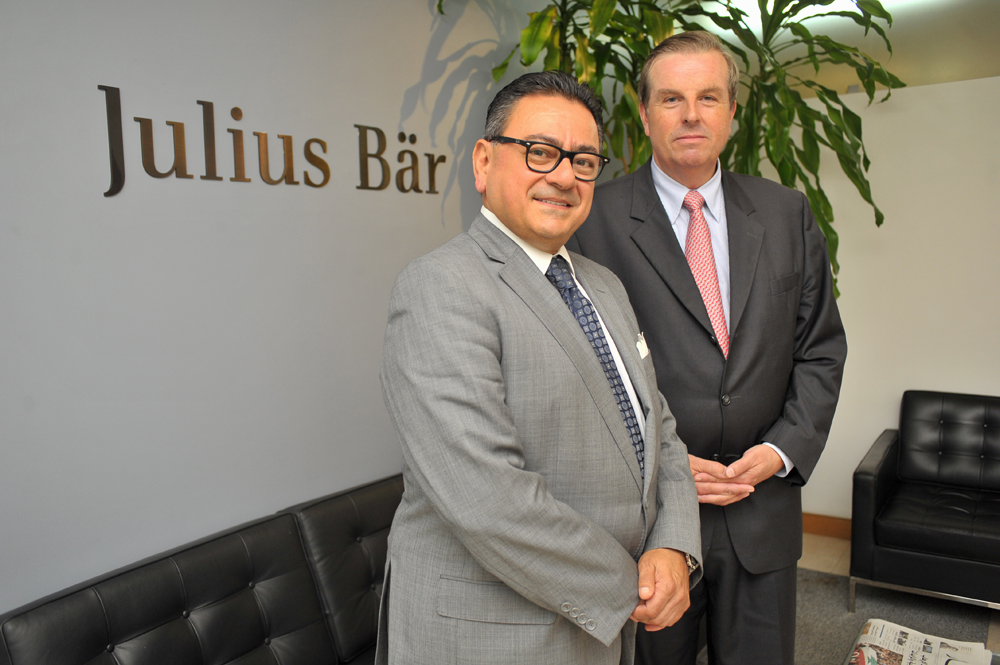
Janwillem Acket is “the longest serving guy in the Zürich banking place” in his role as chief economist of Julius Bär, a Swiss private bank that has expanded its profile in emerging markets, including Lebanon, with the acquisition of Merrill Lynch’s international wealth management operations in 2012. He sat with Executive for a wide ranging interview from the perspective of a longtime banking insider.

For more on Julius Bär and Janwillem Acket, read this.


In your assessment, what measures will help the Eurozone?

What we actually need in the Eurozone is more sensible fiscal spending, and in many places [this means to] cut public spending. This public spending should be somehow replaced with private spending but the problem is when will private spending step in? This is a question because you have to go on a second front, on taxation. You have to incentivize, through taxation, economic agents, in particular the entrepreneurs.


Why entrepreneurs specifically?

Entrepreneurs are the ones that are providing the growth in this world and are moving things to the positive, to the benefit of not only themselves and their own portfolios but also for a large majority of societies. That is why I believe in entrepreneurs. It is also an important point in our philosophy of investment [at Julius Bär] that at the moment we rather have a latent distrust in public entities because of the moral hazard issue.


Are you in favor of taxing cash?

No. The taxation of cash will happen when interest rates go up and that is not happening yet. Taxing cash thus would be an artificial or non-conventional measure.


The argument appears to be that banks and even corporations are holding too much cash today and need to be forced to push that into the economy.

TLTROs [the ECB’s targeted longer term refinancing operations] will be one such tool. But what is being decided now in the Eurozone has a lag of nine months [according to our research], and the problem is that when this starts to work out, the other big competitor, the central bank of the US, will start to change policies. In that period when the Eurozone will be better off and the Fed is considering interest rate hikes, we might have a very uneasy situation in the market and this could be a very volatile phase of transition. Nevertheless, we firmly believe that the recovery will be on.


Seeing how responses to economic challenges in the Eurozone are made more difficult by politicians’ vying for votes and the preservation of their own jobs, would you rather get rid of all politicians?

That would be nice but someone has to run the show. We need politicians and there are certain elements in the economy which you can’t privatize. As an economist, I just want to say that the political front has to do its homework and they are reluctant to do that as long as you have central banks which can alleviate stress with very cheap money.


But might a Chinese solution work to fix this issue of politics? Could you give all the power to someone who then empowers a positively capitalist class which doesn’t have to worry about intrusions in economic development by democratic elections?

You have indeed touched [on] a subject which is very peculiar. China is a dictatorship and if there is a slippage in the economy, something that deviates from the five year plan, very harsh action is taken and they don’t care if someone feels hurt. They don’t care if there is some opposition, they just do it. You can say that this is a sort of advantage in a crisis situation because you don’t have to ask too many people. [But although] China, because of its dictatorial structure, is at a relative advantage when things slip, it is not a role model that I would see. They may have less of the disadvantage felt by democracies but I’d rather be in a democracy with a disadvantage than in China as a citizen.


What do you think of the prospects for authoritarian governments as facilitators of national wealth?

I believe in democracy and there is a tight positive correlation between democracy and wealth. I think it is very clear that you need long term democratic structures if you want to increase wealth in this world. The big exception is Singapore, which is an authoritarian government that allows a lot of economic freedom. China will be studying the Singapore model but Singapore is tiny and China is so huge. People say that the Chinese are so anarchistic that democracy will fail. I think the Hong Kong model shows that democracies can be a success model in China, but you have to have a really very strict legal structure and property rights, which Hong Kong has. Democratic structures are an essential component if you want to develop a market driven economy to bring wealth into a country and I think Lebanon is a very good example. It is one of the few democracies in [the Middle East] and has created for itself a good legal system and democratic setup. That is an advantage which Lebanon has for example over Egypt, which somehow has always been a dictatorship.


From the group’s perspective, are you targeting the Middle East as an investible target market or more as a market for sourcing new money?

To be honest with you, I would think just the sheer limitation of investible vehicles at the moment in the Middle East will have as a consequence that the larger part of funds that are placed with us are just invested not in the Middle East but elsewhere. But we are global operators [and] we are not just focused on one thing. When we have a client who says, “I am Lebanese and I [would] like to place a part of my investment portfolio in this country,” do you think we would say, “No, go away with your money; we don’t want to see you?” I can’t give you a general answer on this but we are by no means dogmatic.


How about if you look at growth, prospect wise?

We will go where the growth is.


Taking the case of the largest Arab economy, Saudi Arabia, Julius Bär would easily be able to qualify as direct participants in the Saudi stock market as of sometime next year, according to the rules and draft regulations that the Saudi Capital Market Authority has published recently. Would a move into this market for investments be interesting?

That is something you must ask our board of directors. It is not up to me.


How about from a macroeconomic perspective?

From an economic perspective, our board has its philosophy and it sticks at the moment to what it is doing and it is up to them to decide what they want to do. To get back to my point, if we have a client base in a market somewhere and the client base has a stake in the local market, we are not the guys to say no. The problem is the research. We would have to invest money in that but we can’t if the sheer size of the venture is not satisfying our requirements for investing [our own] research into it. What we then do is go to the best local partners and obtain their research.


What can all your insights on the dynamics of policymaking and factors that help economies grow tell us in Lebanon?

I can talk as a Swiss now. Switzerland has four different languages and many cultural minorities and they are all integrated in Swiss society. For me this model has one amazing foundation: it is the capability to compromise out of mutual respect for the differences [among] the different communities. That is an important aspect of the success of Switzerland, which is a prosperous nation with an overvalued currency in the middle of a Eurozone that is in economic trouble. Decisionmaking takes a long time in Switzerland but the people all have the patience to go through the process and in the end a compromise is reached. There is always a minority that is not happy with the compromise but here comes the behavioral aspect: the [members of the minority] are capable [of accepting] the verdict of the majority and the minority that did not want to agree to the compromise nevertheless respects it. Everyone can have her or his culture, format, difference in religion and convictions but nevertheless, all share a joint aspect and the aspect is, we are Swiss. Switzerland has this really fantastic capability for compromise.


Do you think Lebanon has the same potential?

This has to develop. What you can do is start providing measures of confidence, such as setting up rules together and focusing on the common denominator which is living together here in Lebanon. The diversity that Lebanon has is its cultural richness. Let’s use this richness to synergize capabilities and talents and together create something called a new Lebanon. You have to positively infect the population through influential leaders. The fish stinks from the head and the head must not only stop stinking, but do more. The head has to show the world how to solve the issues that have to be solved. Put up an example, a positive one and infect everybody with a positive example. Lebanon has exercised democracy for a long time and so I think you have better chances than many nations in the Arab world. Go back to making Lebanon the Switzerland of the Middle East.

September 26, 2014 0 comments
0 FacebookTwitterPinterestEmail
Finance

Making sense of the macro

by Thomas Schellen September 26, 2014
written by Thomas Schellen

For an extended interview with Janwillem Acket, read this.


To say that playing the global economy makes for a tricky game may be the world’s biggest understatement in the best of times. These days, however, the vagaries on the monetary and financial fronts extend far beyond the normal chaos that supplies the chat fodder for economists and gives investors the urge to get some professional help in devising their portfolio strategies and allocations.

For example, analysts and investors have over the last three or four months increasingly been left with attempting to decipher the US Federal Reserve’s intentions out of foggy wordings such as its latest statement addressing its crucial interest rate outlook on September 17, whereby “it likely will be appropriate to maintain the current target range for the federal funds rate for a considerable time after the asset purchase program ends.”

Vis-à-vis the Fed’s statements reside the pronunciations of the European Central Bank, an example of which was ECB President Mario Draghi’s August 22 Jackson Hole speech on needed action for improving the European employment rate. Draghi’s position was interpreted widely as a signal of impending quantitative easing (QE) in the EU and thus appeared to imply European divergence from what the US is about to do in ending their QE and in kicking interest rates higher “at an appropriate time”, alias H1 2015.

KYSB: Know (a bit about) Your Swiss Bank

Julius Bär, a Zurich based private bank with CHF 274 billion ($292 billion) in assets under management at mid 2014, has the distinction of being a centenarian maverick. The financial institution is preparing to celebrate its 125th anniversary next year, but only in 2005 embarked on a journey to penetrate emerging markets, with a special focus on Asia which the bank describes as its second home market and a place where it aims to realize long term growth ambitions.

The top brass of Julius Bär sometimes quips that they face occasional misperceptions by people who are looking for a wetter venture and Executive’s photographer actually made his way initially to Julep’s bar in nearby Uruguay Street when seeking their downtown Beirut offices. But even before it strategized expansion into the Middle East as part of venturing into foreign growth markets, the bank was not a total unknown and specifically some individuals and family offices in the “highest tiers of investors” were familiar with the name, claims John Dagher, the chief executive of Julius Bär (Lebanon).

When he worked on the group’s Middle East development out of Dubai after joining Julius Bär in 2003, the bank was still “a mainly German speaking bank for central Europe,” he tells Executive. This has changed in the past few years, but Dagher concedes that “we are still developing the brand, building up the image and reputation.” While the Beirut office is formally a new establishment, the bank has a strong angle on the Lebanese and expatriate Lebanese wealth market as Julius Bär two years ago acquired the international wealth management business of Merrill Lynch.

The private bank’s office in downtown Beirut is where Merrill Lynch used to be based and the furnishings in some of the rooms are presently still the same as they were in the ML era — interestingly installed under Dagher’s supervision, who worked with ML in Beirut before his move to Julius Bär. The transfer of assets under management from the ML platform to the Julius Bär platform on the other hand has already been completed in Lebanon. The bank has 17 employees in Beirut and is recruiting. “We are part of the emerging markets expansion strategy of Julius Bär. Our bankers cover Lebanese clients in Africa, in Europe, in Lebanon and in the GCC,” Dagher assures.

Bring in the expert

The divergence between the Fed and European central banks can be explained by the divergent speeds of their economies’ respective developments since the 2008 recession. But to truly understand the reasons for this disparity, it serves to know how the mandates of the Fed and ECB differ, says Janwillem Acket, the chief economist of Julius Bär, a Swiss private bank (see Q&A).

“As you know, we very clearly have a different setting in the US from Europe. The US situation is advanced when compared to Europe, which is cyclically lagging,” Acket confirms. He views this US advantage as rooted in the response to the 2008 crisis under then Fed chairman Ben Bernanke, which was very swift and coerced the shocked US economy back on a growth path. By contrast, the ECB lacked a mandate other than ensuring price stability a la Deutsche Bundesbank, the German central bank which Acket describes as the blueprint for the ECB.

Due to the Fed’s dual mandate — a politically motivated mandate for full employment next to a mandate for price stability — and greater freedom to act, the Fed according to Acket could work the crisis with greater efficacy than the ECB, which moreover had to grapple with the fallout from what Draghi in Jackson Hole called “a second, euro area-specific shock emanating from the sovereign debt crisis”.

As the ECB made efforts to alleviate this second crisis, measures attempting to achieve macroeconomic stabilization were impeded. In Draghi’s words, “Sovereign pressures also interrupted the homogenous transmission of monetary policy across the euro area.”

Acket explains the ECB’s quagmire rather more directly. “The Eurozone is a fragmented entity when it comes to banks and legislation regarding national banking markets,” he says, and this exacerbated the lack of having a mandate beyond guarding price stability. This fragmentation made any idea of using QE as a tool for recovery from the crises “a very complex procedure,” which contributed to today’s conundrum, Acket says. “I would say the US is almost three years ahead of the ECB in tackling this post crisis pattern and trying to bring the economy back onto a stable, cyclical recovery.” 

Guiding investors 

According to Acket, there is a high potential for uneasiness in the markets and a volatile period of transition once it comes to a confluence of impacts generated by the ECB’s recent moves with the expected Fed tightening, which Julius Bär’s team of economic analysts anticipates, like pretty much everyone else, for some time in the first half of 2015.

From equity markets, Acket expects a correction due to the discounting of the Fed’s rate move, which will likely occur in advance of the actual event, as has historically happened before such measures are implemented. 

For other expectations, the economist sees growth in the US as strengthening and says that this will translate into an increase of American bond yields, which will spell difficult times for bond holders. High yielding corporate bonds will surge, he says, but investors must not forget that desire for higher yields requires accepting more risk.

“We thus see rather more chances for investors in the entrepreneurial camp than in the sovereign bond camp,” Acket says and encapsulates the guidance he offers Julius Bär clients in adding, “I think the best return on investment is from blue chips, from very good companies that are well run and are dividend champions in their field. They can now offer you dividend yields that are even superior to bond yields and, as they are widely diversified entities in many markets, they offer you some safety as an investor. Their default probabilities are rather very low and that is the game to which we are actually trying to guide our investors.”

Hints of passion

Visiting Beirut for encounters with investors and a closed door dinner presentation at the Phoenicia Hotel for the bank’s clientele, Acket’s comments on the interplays and incongruent timings of actions by central banks, economic agents and political stakeholders evoke a strong impression that he is approaching his job from an angle of passion. He says he benefits from a mandate, not found everywhere in the strata of bank employed economists, to freely comment on macroeconomic issues with strong support from his employer.

“I am not an economist from a system relevant bank, but the guys in the system relevant banks, many of whom I know personally, like to deal with us and sometimes like to [hear] our views because as they sometimes tell me, they are more censored whereas I am more the exotic example,” he says, comparing himself to a jester who in the European Middle Ages had the privilege of saying what needed to be said, even if it meant conveying inconvenient truths.

When approaching Rafic Hariri International Airport in early September 2014, his thoughts went back almost 50 years. “My first impression of coming to Lebanon now is one of admiration, because I have seen pictures of how the place was smashed up. I am saying this as a foreigner with a childhood memory of the old souk. I went through the old souk on the back of a Lambretta with my brother. He was nine years older than me and had a license for a scooter and so he took me on the back seat and we rolled through old Beirut and it was fascinating,” he says.

Acket emphasizes the non-dogmatic approach that the bank and he himself practice in dealing with the region. But as he remembers Beirut as his first hometown that he left in tears, his visit here is not that of an uninvolved talking head to a curious place on a travel itinerary. This adds gravitas to Acket’s belief that the Swiss model of pragmatism, coexistence and mutual respect is one that Lebanon could actually apply.

September 26, 2014 0 comments
0 FacebookTwitterPinterestEmail
Finance

Unique challenges

by Thomas Schellen September 25, 2014
written by Thomas Schellen

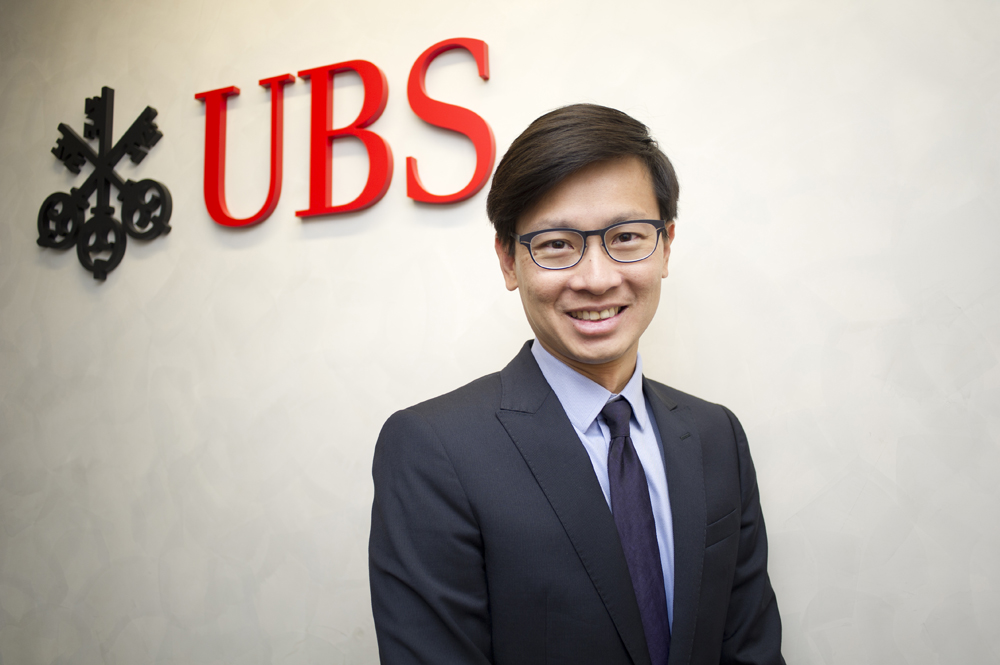
Executive sat down with Kelvin Tay, Swiss banking stalwart UBS’ managing director and chief investment officer for the Southern Asia and Pacific region, during his first visit to Lebanon. While he notes his enthusiasm concerning the growth of the Asian market, he expresses concerns regarding the MENA region’s attractiveness for investment.

For more on UBS and Kelvin Tay, read “A tougher game“.


From your perspective as a Swiss banker who is based in Singapore, how do Asia and the Middle East correlate?

They are both similar in that they are both export-oriented. The Middle East, however, has actually just one product: oil and gas. The problem is that oil prices over the next 10 to 15 years will no longer be at the level that we are used to. We [at UBS] think oil prices will be flat and there is further downside risk due to shrinking oil imports by the United States. The [other] problem of the Middle East is that political stability is going to be a huge key issue for, I would say, the next three to five years. This is tough to resolve because [the current Middle East conflict] is not a conflict between countries but a conflict along sectarian, religious and tribal lines. These [confrontations] take a long time to play out.


One of the countries that you have reviewed extensively as an Asian strategist is India. Do you see new investment prospects because of the new government headed by Narendra Modi? 

I think [India] is too expensive right now in terms of valuations. You need at least another two or three quarters before corporate earnings growth can actually kick in. There is a lot of sentiment generated from [Mr. Modi’s] appointment and rightly so because he is the first prime minister to win an outright majority in India. If he can’t get things done, no one in India can. Compared to the previous administration, he has a track record of being decisive and a bit more authoritarian than what Indian politicians would like but I think that is what India needs right now.


From your perspective as a private banker, is being authoritarian negative, positive or neutral? 

Neutral. I think it depends on the kind of leadership. Decisive, strong, stability — that’s what markets like. Markets don’t like uncertainty. You can have a democracy and [if] there are no decisions made, it is a disaster like what is happening in Europe. 


In several MENA economies we have seen reassertions of what many observers consider to be authoritarian leadership styles. As far as looking at regional markets from an investment perspective, are you comfortable with Egypt and Turkey?

On the MENA region as a whole, when talking from a global investor’s perspective, I think more people are negative now than they were 12 months ago. At the beginning of this [period] you had the crisis in Turkey sparking up and you had the whole crisis in Egypt; that was the first round of nervousness. The second round of nervousness is now with regard to ISIS. This nervousness is even greater because of the uncertainty of something that is completely unknown. Thus the whole MENA region is not likely to be on the radar screens of a lot of international investors right now. If I have money to invest in only a global emerging markets portfolio, I would probably be more oriented toward Asia ex Japan region than to MENA.


There have been views that the heavy weighting of these Asian markets in the MSCI Emerging Markets index creates a bit of imbalance for investors in terms of finding opportunities. The Gulf constituents of the EM Index, Qatar and the two exchanges in the UAE, have small single-digit allocations in the MSCI EM. Does that make these markets more interesting to you and do you pay attention to them?

I do look at them because they are part of emerging markets, but when you look at these countries you have to look also at their earnings growth potentials. It is not terribly exciting. [Compared with Gulf markets] Taiwan and Korea are very leveraged toward the US economy and if there is recovery in the US coming through, these are the two markets that traditionally do well.


Doesn’t the MENA region offer some good investment prospects because of factors such as demographics and high rates of household formation?

If you talk in terms of demographics, the Middle East cannot compare with Asia. Indonesia has 250 million [people], Myanmar 65 million and the Philippines is 100 million. [In these countries] your income levels are higher and growing, there are investments, people are more literate, unemployment levels are low and household formations are even faster [than in MENA] and there is political stability compared to Africa and to the Middle East. It is a lot more attractive from that perspective.


Global economy and finance have been engulfed for some years in a process that is described as ‘shifting geographies’ toward emerging countries, especially in Asia. What does that mean for your investment strategies?

Asia is undergoing a reform and restructuring process right now in the three biggest countries. China, India and Indonesia, these three countries collectively account for more than half the world’s population. Even if they achieve half of what they have set out to achieve, Asia will be a dramatically different place from what it is today just five years down the road. 


And in your perception the Middle East cannot measure up to that?

In the whole Middle East the society is very, very divided. How do you unite such a divided society? 


Then we cannot hope for an Asian recipe to solve all Middle Eastern problems?

[laughs] At the end of this all is a philosophical discussion about what kind of regime is the most suitable. You [have] got to separate the economic system from the political system. 


Like China?

Exactly. In China, the economic system is completely capitalist. In effect, there is no system in the world that is more capitalist than the Chinese economic system. The political system is completely authoritarian. But without this authoritarianism, the capitalist system and the economy would not have been able to thrive. It is such a big country, and it was developing, [so] you need an authoritarian system. 


So we can fairly assume that you do not subscribe to the theory that democracy is the precondition for wealth?

No, certainly not. People think it is but it is not, even in Europe. This is my personal view and I think the irony is that China needs a bit more of the European model, and the Europeans need more of the Chinese model. The Chinese have no social security, no safety network at all; so they are insecure and save a lot, which in turn drains the economy because nobody spends. Europeans don’t save, because they know ‘if I am out of a job I can depend on the state’. That is why I think both have lessons to learn from each other.

September 25, 2014 0 comments
0 FacebookTwitterPinterestEmail
Finance

A tougher game

by Thomas Schellen September 25, 2014
written by Thomas Schellen

It is no secret that the management of other people’s money — especially of very rich people’s money — can make you a living, yet it is fraught with hazards. Swiss banks are, and have long been, the epitome of wealth management in service to high net-worth customers. But as Executive noted in our latest special report on private banking, the art of Swiss banking has been caught in a process of transformation for a good number of years and the number of private banks with head offices in Geneva, Zurich and Basel has been shrinking since the global financial crisis and is set to contract further. 

But the challenges to private banking, both of the Swiss variety and in all other money hoards where assets under management are inordinately larger than in plain vanilla financial institutions, have much deeper roots than the Great Recession of 2008. These challenges have been growing over the past quarter century due in large part to the expansionary interventions of governments in developed economies.

From the G8’s creation of anti-money laundering pit bull FATF (Financial Action Task Force) to the European Union’s Savings Tax Directives (EUSTDs) and the United States’ famed FATCA invasion of client data bases at so-called FFIs (Foreign Financial Institutions — meaning every entity anywhere that offers financial products with cash redemption value), banking and wealth management in particular have come under pressure to the same degree to which governments of developed countries have awoken to the presence of untapped tax bonanzas in their potential reach.

In yet another dimension of its ongoing systemic change, the Swiss private banking model, which nota bene most Lebanese private banking concepts are aligned or entwined with, is exposed to global shifts in a) the concentrations of wealth from developed to new growth markets, led by China; and in b) the professed wealth cultures and self perceptions of high net worth (HNW) families and individuals.

Limited wealth management in Beirut

In the latter discussion, which is perhaps still faint in comparison with the vigor it deserves, questions on the value of personal hoards and the not physically tangible values of the “one percent” and other top wealth holders have gained in prominence as the world has witnessed the engagement of the Occupy movements and the more cerebral “global wealth tax” debates of 2014 that were spurred on by French economist Thomas Piketty.

As we have found in our special report, Beirut for the foreseeable future is likely to remain a very limited sub-center of wealth management. But this somewhat remote status makes keeping up with the leading trends and pressing questions of private banking, if anything, even more interesting for Lebanon’s private bankers and inquisitive business minds. Executive was fortunate to be able to investigate perspectives of two top Swiss financial institutions in September, in the follow-up to our report.

In one encounter, Kelvin Tay, Swiss banking stalwart UBS’ managing director and regional chief investment officer, Southern Asia and Pacific, provided us with his perspective on Asian potentials and the Middle East’s current lack in attractiveness for investment.

As Tay confirms, the twin guiding stars for today’s private banking industry are regulations and compliance, which makes being a banker in the wealth management systems of this new brave financial universe “a lot tougher” than it used to be.

“It is no longer as exciting or as attractive as it was before. Regulations are a lot stricter and there is a lot more scrutiny on what we do. Still, the wealth management industry is the only sector that is still growing and they are actually hiring,” Tay tells Executive in the rep office that UBS maintains in Beirut’s posh downtown district. 

Tay is a representative of a generation that has been immersed in the transition of private banking since the turn of the millennium — a twofold transition in terms of the rising regulatory regimes and also in terms of the rise of Asia as a wealth market. Having entered the banking sector 10 years ago during a stint at Deutsche Bank in his native Singapore, he decided to make wealth management his career and joined UBS in Asia because of the Swiss institution’s focus on this banking specialty.

It is his first visit to Lebanon and when compared with his home turf of South Asia, investments in the Middle East are clearly neither his expertise nor his mission. When asked if he has a favorite Middle Eastern stock or sector to invest in, Tay explains that his time does not permit him to look at individual stocks. As far as evaluating sectors for investment purposes, he adds, “yes, [we look at] sectors in Asia, Europe and the US but not in the Middle East because we think that Middle East markets are too small.”

His role as investment strategist entails serving clients in South Asia with advice and he also covers UBS clients in Europe, the Middle East and Australia if they want to discuss Asian investments. “I am responsible for the Asian strategy. If a client in Europe wants to talk about Asian strategy, it is my responsibility to go there and talk to them,” he gives as an example.

Negative investor perspective in the MENA

During his Beirut visit at the start of September, Tay met with investors and with officials at Banque du Liban for an exchange of views. “They like to hear from me what I think is going to happen with regard to oil prices and what our [UBS] expectations are for the [Middle East] conflict. Basically I was telling them that we don’t expect the conflict to get any worse, so we don’t expect oil prices to go up sharply.”

In the view of UBS there is a higher chance of the Russia–Ukraine conflict escalating than there is of the Middle East crises escalating. However, this is pretty much the limit of positive notions on the region for the strategist. Investor perspective on the Middle East and North Africa are in Tay’s view “more negative today than they were 12 months ago” and the entire MENA region is in his perception “not likely to be on the radar screens of a lot of international investors right now.”

According to Tay, the lack of growth in MENA markets explains why a bank like UBS has grown its workforce in Asia to nearly 7,400 employees out of its total headcount of 60,000, but according to its second-quarter report for 2014 has posted a mere 153 people in the Middle East and Africa region.

Citing the example of Indonesian growth in the past few years, the Singaporean expert says that the Middle East shares some of the same characteristics with Asian growth economies and could become a larger investment destination if regional unemployment rates were to drop and income levels to rise as was achieved by Indonesia. He is adamant, however, that this will require political stability as a key factor, which he sees as elusive in the Middle East.

As to his own performance goals in the UBS organization, Tay identifies them as “to outperform benchmarks as far as my investment strategies are concerned and make sure to speak to media on a regular basis so that UBS is seen as a thought leader in the media.”

September 25, 2014 0 comments
0 FacebookTwitterPinterestEmail
  • 1
  • …
  • 183
  • 184
  • 185
  • 186
  • 187
  • …
  • 707

Latest Cover

About us

Since its first edition emerged on the newsstands in 1999, Executive Magazine has been dedicated to providing its readers with the most up-to-date local and regional business news. Executive is a monthly business magazine that offers readers in-depth analyses on the Lebanese world of commerce, covering all the major sectors – from banking, finance, and insurance to technology, tourism, hospitality, media, and retail.

  • Donate
  • Our Purpose
  • Contact Us

Sign up for our newsletter

    • Facebook
    • Twitter
    • Instagram
    • Linkedin
    • Youtube
    Executive Magazine
    • ISSUES
      • Current Issue
      • Past issues
    • BUSINESS
    • ECONOMICS & POLICY
    • OPINION
    • SPECIAL REPORTS
    • EXECUTIVE TALKS
    • MOVEMENTS
      • Change the image
      • Cannes lions
      • Transparency & accountability
      • ECONOMIC ROADMAP
      • Say No to Corruption
      • The Lebanon media development initiative
      • LPSN Policy Asks
      • Advocating the preservation of deposits
    • JOIN US
      • Join our movement
      • Attend our events
      • Receive updates
      • Connect with us
    • DONATE