• Donate
  • Our Purpose
  • Contact Us
Executive Magazine
  • ISSUES
    • Current Issue
    • Past issues
  • BUSINESS
  • ECONOMICS & POLICY
  • OPINION
  • SPECIAL REPORTS
  • EXECUTIVE TALKS
  • MOVEMENTS
    • Change the image
    • Cannes lions
    • Transparency & accountability
    • ECONOMIC ROADMAP
    • Say No to Corruption
    • The Lebanon media development initiative
    • LPSN Policy Asks
    • Advocating the preservation of deposits
  • JOIN US
    • Join our movement
    • Attend our events
    • Receive updates
    • Connect with us
  • DONATE
CommentEconomics & Policy

Lebanese American University regains strategic momentum through a roadmap to the future

by Michel E Mawad February 22, 2023
written by Michel E Mawad

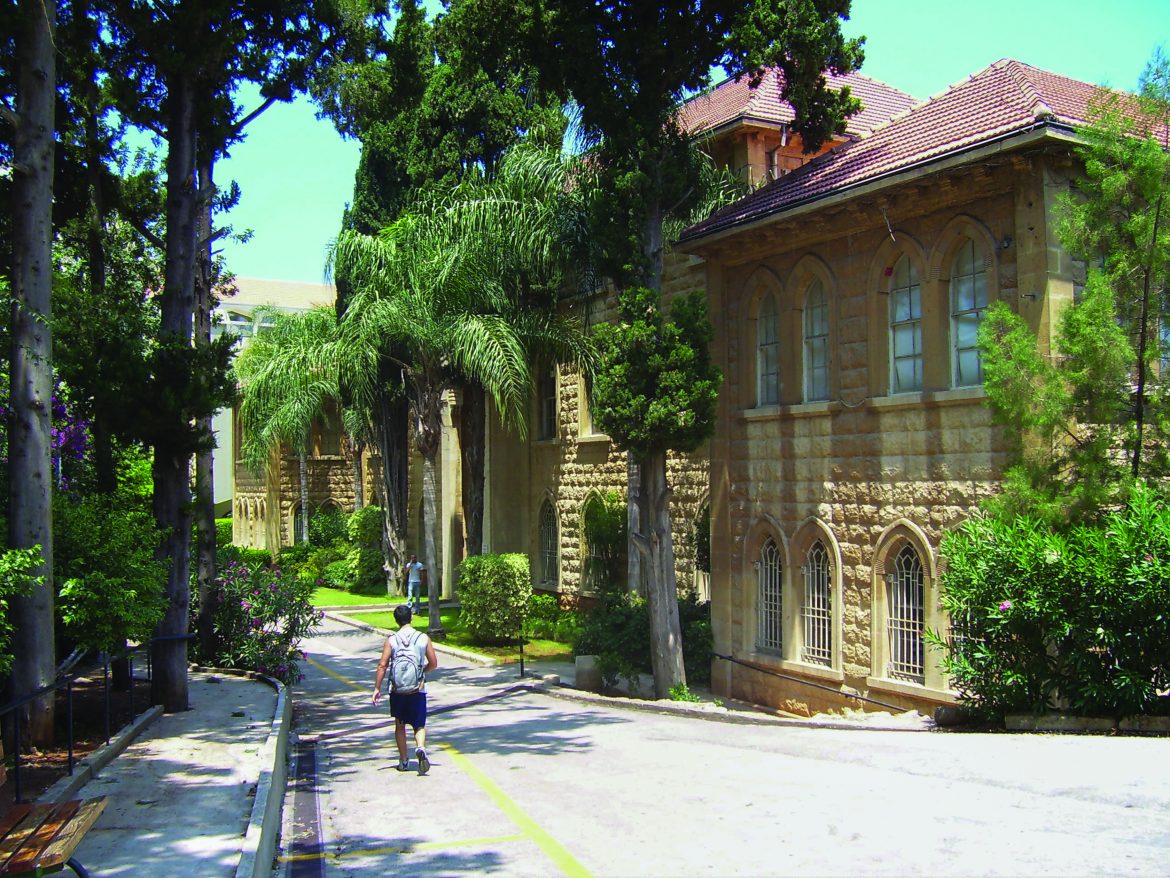
Lebanon’s human infrastructure is our biggest hope for a bright future. Polishing our strategy and re-aligning priorities is the first step forward for Lebanese American University.

Strategy focus for Academic Year 2022 – 2023

The Lebanese American University (LAU) went through the crisis that has been afflicting the country since October 2019 almost unscathed. Despite regrettable, though mild, attrition of faculty, physicians and staff, we retained most of our human capital and even increased our enrollment numbers. This was no small feat given the odds we faced. It came about as a result of specific decisions we made and concrete steps we took. Those included, inter-alia:

a) Allocating resources necessary for leading the country in online transformation and establishing our virtual delivery leadership.

b) Maintaining and indeed improving our ranking position as an upper top-tier university locally and regionally with visible global footprint. Our position at the forefront of the quality higher education camp is now more firmly established than ever. 

c) Opening a new medical center in Jounieh (St. John’s Hospital) and introducing major innovations to our flagship hospital, Lebanese American University Medical Center – Rizk Hospital at a cost of millions of US dollars.  

d) Taking the bold step of paying part of our staff and faculty salaries in US dollars to help mitigate the devastating effect of the crisis. 

e) Continuing to invest in our academic and professional infrastructure: learning resources, innovation center, industrial park, and greater emphasis on experiential learning. 

f) Increasing our student enrollment by upwards of 3 percent in the Fall 2022 semester to a total of around 8,300. Few major universities in Lebanon can say that.  

g) Accelerating steps to turn our New York Academic Center into a full-blown micro campus. Upon completion of formalities this will enable us to grant degrees in New York both in person and online. 

h) Getting to an advanced stage in our strategic drive to expand our academic footprint outside Lebanon. This will be a step aligned to our core mission as a regional institution. 

i) The above steps were made possible thanks to the support of the Board of Trustees that authorized usage of over $75 million from our endowment. This alleviated a major burden on the shoulders of our students and made it possible for LAU to support its students and patients on an unprecedented scale. It naturally played a major part in building our ability to overcome the crisis. 

Expectations for 2023

In brief, our expectations and institutional performance KPIs for 2023 are: 

a) Regaining financial sustainability after dollarizing our tuition fee base against the most liberal financial aid policy of any university in the country, averaging 65-70 percent of the tuition dollar and exceeding $104 million last year. This allowed us to steer away from multiple exchange rates and the untenable situation of getting paid in one currency while our expenses are in another. 

b) Pressing on with our plans to establish and operate our “Industrial Park” on the Byblos campus as a first-of-a-kind in Lebanon underscoring our strategic partnership with industry on a multi-sectoral basis. This will amount to a quantum leap in experiential learning and present a level of educational entrepreneurship the country has never seen before. 

c) Our plans for 2023 also include a more active talent retention policy through a greater percentage of salary paid in fresh dollars, and a number of innovative steps including completion of groundwork on a Policy Analysis Institute, a Bio-Equivalence Center, more headways in the region, and selected strategic appointments to bolster our talent pool. Steps planned for 2023 also include launching new graduate-level academic programs (hybrid and online), launching a pioneering Critical Thinking Pilot Project, and covering new grounds in our pursuit of sustainability. 

Priority requirements and needs for achieving growth

LAU has very clear strategic priorities enshrined in its current strategic plan, namely: 

a) Academic and professional excellence, measured against State-of-the-Art International standards. In growth terms, this will be reflected through new programs, mostly graduate, in A.I., Computer Science, and a global MBA. It will also be reflected through new applied research centers and the Industrial Park. All of those should be up and running by the end of 2023.

b) Financial sustainability to ensure continuity of a resource base commensurate with our mission as a world-class university. A case in point is our growth beyond Lebanon in the MENA region and New York LAU’s academic footprint which we hope will have been extended beyond Lebanon by the end of this year as well.

c) Path-breaking role in producing future-proof leaders who are ethically forthright, technically competent, and culturally sensitive. An example is our wide expansion of our experiential learning programs in every School we have and every program we offer.

Our recommendation for developing the economy is to invest in the educational sector at all stages as this is the proven key to sustainable, long-term economic development. The experiences of South Korea, Singapore and Taiwan are shining examples. This is a sector that has built Lebanon in the past and can do it again with the proper level of support. [inlinetweet prefix=”” tweeter=”” suffix=””]The educational sector is key to Lebanon’s competitive advantage in the region. [/inlinetweet]In partnership with the healthcare sector, it turned Lebanon into a regional hub in the 1950s, 60s, 70s and beyond. Lebanon’s human infrastructure is the key to its recovery and bright future. This is the strategy we recommend. 
February 22, 2023 0 comments
0 FacebookTwitterPinterestEmail
CommentEconomics & Policy

The Lebanese Private Sector Network: A strategy to grow, sustain, and protect

by Rima Freiji, Brigitte KhairMountainIman Tabbara & Riccardo Hosri February 22, 2023
written by Rima Freiji, Brigitte KhairMountainIman Tabbara & Riccardo Hosri

For the Lebanese Private Sector Network (LPSN), the year of 2023 is the year of action, a year where we will focus on vigorously pursuing a major employment creation initiative along with further developing our regular initiatives, financial access, and international outreach. 

After our organization’s establishment in late 2021; a peak time of economic collapse and a time when inaction in decision making had been manifesting itself as an enduring and destructive political pattern, 2022 for us was a year of formation and reaching the stage of credibility. We completed last year with the successful filing to register LPSN as a non-governmental organization at the Ministry of Interior and Municipalities. In the current year, however, we are acting upon our foundation of last year’s successes in developing our membership, networking, and building trust with our stakeholders, which include our employees and partners in the Lebanese economy.

From our inception during some of the darkest days of Lebanese history, LPSN has been aiming to bring together companies and leaders from across the industrial sectors and the services sectors, seeking to secure that the private sector has a worthy seat at every table where economic matters and business reform decisions are debated in think tanks, research entities, civil society circles, and policy making institutions. 

The topics we cover are at the heart of public interest. From education to the environment, to healthcare and finance, we strive to bring you fresh perspectives on the issues that matter.

Help us continue our work by sharing

It is our aim to influence economic stakeholder groups and acquire actionable insights from legacy organizations’ long-standing contributions to industry and economy. We do not aim to duplicate the work of existing syndicates and business organizations but aid and promote their efforts that we believe in. 

The work of LPSN is driven by two pillars. The first is the conviction that protection of the formal economy and the work of law-abiding companies is the only way for rebuilding an economy going forward. This means that we adhere to and advocate for strict border controls, fair taxation and customs, neutrality, and moving towards a decentralized state organization. 

Advocacy for growth

Above all, we ask for all people and all economic entities in this country to abide by the Lebanese Constitution.  Many of our LPSN members are involved in responsible roles at syndicates and with legacy business groupings – but it is this commitment to principles of political economy and the protection of the formal economy that sets us apart from business lobbies which do not delve into matters seen by them as politically divisive. 

The second pillar of LPSN is our action and practical advocacy for growth and sustainability. In this, we stand alongside many other organizations and companies. We work on everything that involves growth and employment creation. We hold it to be true that an employed citizen who earns a living wage is a citizen who has regained their dignity. We also believe that such a citizen, who is no longer beholden to a livelihood derived from membership in a politicized sectarian community or clientilistic allegiance to a political overlord, will make the right choices when it comes to the election of political leaders.

We want it to be clear, however, that LPSN is not an organization with political ambitions, nor do we seek to be policy makers, a think tank, or a research entity.  Our two pillars, as stated above, are the defense and protection of the formal economy on one hand and the pursuit of growth and sustainability on the other.

 To this end we have already gathered almost 70 members as of January 2023. Over this and the following years we aim, with emphasis on leadership quality over quantity, to grow into a core network of no more than 100 highly effective, highly influential members, seeking out private sector leaders who are committed to serving their homeland and to upholding the Lebanese constitution. 

We have designed four operational units that are aligned with our two pillars: the Economic Security unit is the conduit of protecting the formal economy; the units of Local Output and Capacity Building, Universal Access to Health [Care], and Sustainability and Digital Transformation comprise our efforts to foster growth and sustainability. All our endeavors at LPSN are guided by eight fundamental objectives, as written here in an abbreviated list:

1. Reaching a critical mass of influential members

2. Ensuring a seat at the table of think tanks and policy makers

3. Developing financial support mechanisms and alternative financing channels 

4. Pursuing short term survival while lobbying in the long term for an economy focused on productivity and employment

5. Increasing public awareness of the role of local businesses

6. Promoting the private sector as value creator and central contributor to a sustainable economy 

7. Communicating vital private sector demands through relevant and effective mobilizations, pressure tools and media coverage

8. Connecting with international entities and the Lebanese diaspora for awareness, knowledge sharing, support, and alignment

A year for collaboration

Advancements towards two of these objectives, namely developing better access to finance (objective 3) and achieving international outreach (objective 8), will be our key performance indicators in 2023. Besides a major labor creation initiative in collaboration with several universities – an ambitious project which we will reveal more of in the next few months and plan to launch towards the middle of 2023 with a two-year time horizon – we will throughout this year carry forward our weekly internal meetings and our series of educational, policy discussion, and advocacy workshops on the topics that are relevant to the economic development of Lebanon. 

We are planning to hold four training workshops and four other workshops, for a total of eight in-person events. We will continue to collaborate on regular podcasts with media organization Annahar and engage with other media and influencers. In terms of key documents, we are currently preparing a list of “policy asks” that will guide our interaction with public sector decision makers and our legal advocacy. To support all of these activities, we are planning on the organizational side to establish a permanent office with a full-time manager and two part-time staff members.

 It is truly unfortunate but we have to concede here that we have a greater degree of confidence in the development of LPSN than in the growth of the Lebanese economy in 2023.  The outlook for national productivity and the private sector economy is marred by the absence of constructive decision making. We deem it unrealistic to expect any positive and measurable economic outcomes in the year 2023, given the inaction of the decision makers in politics. Thus we see next to no chance for Lebanon to make great strides out of the current crisis as long as there is indecision and procrastination of needed reforms. A constructive political will has yet to be formed. Against this bleak outlook, we will lobby throughout this year to create a viable political will in our democratic institutions and we hope that our lobbying efforts result in a shift in the political landscape towards reforms and fulfillment of constitutional imperatives and be joined by other stakeholders in 2023. 

We also are seeing with great concern that the private sector is being demonized while its importance for the recovery is being either misunderstood or denied. With less regulation and weaker supervision, the system is inviting more and more people to become less ethical. Therefore it is also part of our fight to battle against any increase in unethical behavior by economic actors. As we are furthermore witnessing how more and more economic actors are drifting into informality (as apparent in the recent rise of the cash economy) and even see expansions of organized economic criminality, we are going to incessantly advocate for administrative reforms and for restructuring of the public sector, for reforms of banking and the central bank, and for implementation of judicial independence. 

Our top demand is for implementation of the Lebanese constitution, which states that ours is a liberal, democratic country. LPSN is fully aware that the reversal of the economic collapse may need temporary measures that are painful to economic actors and may even contradict some of the usual preferences for private sector liberal economic growth. However, we insist that taxation is designed to be fair and supportive of economic growth, not short-term state funding interests.  We have no chance of saving our economy and country if we do not save the private sector.

February 22, 2023 0 comments
0 FacebookTwitterPinterestEmail
CommentEconomics & Policy

A forecast and an outlook for brand Lebanon

by Joe Ayache February 22, 2023
written by Joe Ayache

A country’s brand is made of intricate and complicated components which work together to create this distinctive identity. Lebanon has unique attributes linked to its geopolitical location and its climate. But mostly to its people; their never-die attitude, their lust for life, and their love of both the mundane and the frivolous. Even visitors from abroad have come to bury their frustrations and ignite their joyful self.

Since the October 2019 demonstrations, the collapse of the economy, and the dramatic consequences of the Beirut port explosion, the mood has been deteriorating, and along with it, the outlook for a better tomorrow. The inaction and refusal of the Lebanese state to instigate commands and put the brakes on the slide into the abyss has pushed the private sector to respond and start acting.

So, where are we today? How is the country perceived? And what should be done to regain its former glory? The research group Arab Barometer conducted a study in June 2022 about the image of Lebanon. The results showed that 94 percent of the Lebanese surveyed think that the government, parliament, and all political actors need to change. What is most demoralizing, however, is the finding that a third of the population believes that nothing can be done.

If we are to accept such a harsh reality then we will be paralyzed, inert and totally complacent. A well-trusted and versed journalist once said to me that “the economy never dies, it just dims and picks up again,” and so does Lebanon.

Brand Lebanon has not been built on steroids, nor supplements nor boosters. It is organic in its growth, and centric in its assets. It is an age long maturing of qualities which are embedded in the heritage and the entrepreneurial DNA of its people. From antiquity till modern day, they constructed the brand piece by piece, idea by idea, creative mind by creative mind, until it became what it is now. The Lebanon we know is going through an atrocious and self-deprecating phase, but the core is still intact. And because the core is unbreakable, there is a belief that things can be turned around, and while that belief is shared by many, it is achieved by few.

That may sound rhetorical and poetic. But thanks to many good women and men in the private sector, this claim is verified, tangible and truthful to what is happening on the local market, as well as on the regional and international scene.

Firstly, the radiance and the glow of the Lebanese continues to shine across all sectors, disciplines, and markets. From the creative industry to construction to the digital field, passing through commerce and real estate, the Lebanese continue to shine and keep the flame alive wherever they are. They are today the bearers of the flame of brand Lebanon.

The ingenuity of the local enterprise to propose solutions to everyday problems is flabbergasting. From street lighting to traffic light revival, to novelty agricultural ideas, to local produce and production projects, to sustainable energy and pollution solutions, the private sector has stepped up and met the call to revive the brand. Tourism, along with the call for the diaspora to encourage and support their homeland has been met with a huge turnout during the holiday seasons.

Secondly, the intrinsic value of Lebanon’s assets will turn the tide. This is not a sprint race nor a single battle. This is a marathon that needs effort, this is a war that requires strategic nous and tactical acumen, where small battles need to be won to reach a final victory. Many Lebanese may be reaching desperation levels, but the responsible private sector will fight to create jobs, to keep businesses operating, to find solutions and improve the conditions of its employees on social, health and purchasing power levels.

I figured that brand Lebanon can have a formula:

[inlinetweet prefix=”” tweeter=”” suffix=””]Brand Lebanon = (natural endowment + human capital) – political cast[/inlinetweet]

The political cast is not eternal, inevitably it will change and we have to firm up our belief that this will happen. In the meantime, we need to keep doing what we do best as entrepreneurs, and keep believing in what we stand for. The image is dislocated but still wholesome and real. It is tainted of course, it is dented absolutely, but the DNA is not mutating, it is intact.

February 22, 2023 0 comments
0 FacebookTwitterPinterestEmail
CommentEconomics & Policy

Strategizing the digital industry for wider economic recovery

by Rudy Shoushany February 21, 2023
written by Rudy Shoushany

In the last three years, the Lebanese digital industry and private sector have been challenged beyond their capabilities from every side; with an economic meltdown, financial and monetary crises, and the disruptions of the COVID-19 pandemic.

Most importantly, Lebanon faced the collapse of its main economic pillar, the banking sector. This has impacted the private sector a great deal, which is having difficulties accessing funding, resources, and much-needed infrastructure since the reduction of government and banking support. Further obstacles have arisen with this; including dealing with legal compliance concerns locally, regionally and internationally. So far, the government has failed to provide a clear economic plan or implement any significant economic reforms. 

The topics we cover are at the heart of public interest. From education to the environment, to healthcare and finance, we strive to bring you fresh perspectives on the issues that matter.

Help us continue our work by sharing

Expectations for 2023

The economic and political challenges of 2021 and 2022, along with the lack of access to foreign currency, and electricity shortages have made it difficult for businesses to operate. Yet, with a higher dollarization rate in 2023, there is a need to focus on adapting to respond to the shifting economic environment. The private sector will open to new opportunities, pivot business models, and take advantage of new technologies and trends.

For instance, as a private company DxTalks will focus during 2023 on the following:

• Providing excellent customer service to both retain and attract new customers.

• Investigating new revenue streams to weather the economic downturn, such as expanding into new markets or launching new digital products or services.

• Staying ahead of the competition and prioritizing our digital innovation.

• Concentrating on expanding and improving online presence to reach a larger audience; this includes e-commerce, social media, and online marketing.

• Hunt for more grants and specially packaged aids to further support us in achieving our strategy.

When compared to 2021 and 2022, our expectation for 2023 performance is optimistic. This is because locally, dealing with US dollars is allowing some stability which is inviting new opportunities. The 2023 strategy for new channels and venturing into the region will drive sales higher by 30 to 40 percent, while focusing on optimizing operations, efficiencies and resource sustainability.

2023 priorities and needs for achieving growth 

One of the main priorities is access to a skilled and educated workforce. This includes a talented pool of developers, designers, marketers, and other professionals to build and promote digital products and services. Without a skilled workforce, it can be difficult for digital companies to innovate and stay competitive in the market.

In addition, to achieve growth companies need access to markets where they can sell their products and services. This can include local and international markets; and coupled with effective marketing to reach potential customers, business can grow. This can be achieved thanks to the existing talents and Lebanon’s geographical location within the Middle East. The Gulf region in particular is witnessing one of the world’s fastest-growing economies.

Strategies for the upcoming year

The Lebanese digital industry can strategize in the upcoming year, with several steps:

  • Analyzing the local and regional market and identifying opportunities for growth and expansion
  • Developing new products or services to cater the new opportunities
  • Developing and promoting niche areas of expertise, such as artificial intelligence, blockchain, or e-commerce, to help position Lebanese businesses as leaders in these fields and attract private investment and partnerships
  • Investing in technology and infrastructure to support the growth of the digital industry, such as building strong and dependable networks, developing software and applications, and providing industry professionals with training and education
  • Developing an ecosystem which encourages and supports entrepreneurs, digital startups, and small businesses, including with access to funding, mentorship, and networking opportunities
  • Developing a positive brand image and reputation for the Lebanese digital industry and businesses by emphasizing the quality of products and services, highlighting achievements and innovations, and emphasizing their role in the local and global economy
  • Creating an enabling environment for international collaboration to foster growth
  • Invest in a comprehensive energy strategy (solar, wind, and storage capabilities) that considers energy security and lower energy costs

While the digital industry is constantly evolving and does not need heavy investments, to develop the economy at large, the strategy must be flexible to adapt to new trends and technologies. In this manner, [inlinetweet prefix=”” tweeter=”” suffix=””]the role of the private sector is a key player in Lebanon’s economic recovery. [/inlinetweet]Many experts believe that the country will need to rely on the sector for job creation and to spur economic growth, while keeping one eye on the government to integrate a digital mindset into their action plan, reduce corruption and implement economic and legal reforms.

February 21, 2023 0 comments
0 FacebookTwitterPinterestEmail
CommentEconomics & Policy

2023: The year of reckoning

by Salim Zeenni February 21, 2023
written by Salim Zeenni

As Lebanon keeps pushing through one of the greatest economic and financial collapse’s in history, we can only appreciate the resilience of its private sector. Since the “official” start of the crisis, Lebanon has gone through a financial meltdown, a public sector default, the COVID-19 pandemic, the August 4 2020 Beirut blast, and the Russian-Ukraine war, all while hosting a refugee population that nearly amounts to a third of its nationals. 

To put things into perspective, for a country like France, it would be the partial destruction of Paris, the loss of all the social security programs including pensions, all the deposits, every single financial lifeline, while hosting 25 million refugees. One doesn’t need to be an oracle to imagine the result.

Nevertheless, we need to lay the foundation for a better future today.  We owe it to our country; we owe it to our children.

The private sector has always been the driving force behind the economy. It has performed despite the abnormal burden the state has placed on it. It has been able to beat all odds and operate in an environment that would be fatal to the most efficient multinationals. 

The resourcefulness and creativity of those companies has allowed them to find synergies and opportunities where no one else would have ventured. But even those heroes can’t indefinitely beat the odds or keep navigating abnormally treacherous economic seas. Without a sound socio-economic vision, the uncompromising rule of law and a solid leadership to deliver, even the brightest and the most resourceful will fail.

As we move into 2023, we have identified six main pillars for the development of the industrial sector and the economy at large. 

Lebanese depositors queue to withdraw money from an ATM machine outside Fransabank in the Lebanese port city of Saida (Sidon) on September 26, 2022 as banks partially re-opened following a week of closure due to security concerns. (Photo by MAHMOUD ZAYYAT / AFP)

1. The Energy Transition

The local utility provider, Électricité du Liban, will be incapable of providing reliable and affordable energy in the immediate future. A transition to renewable energy is no longer a luxury or an environmental endeavor, it is now vital to the feasibility of any industrial operation.

The main obstacle towards a rapid transition remains access to finance. We have already initiated negotiations with DFIs to figure out a scheme that would allow them to get involved.

We call on them and the countries that hold the most sway in their decision-making to act swiftly on that front, time is of the essence and the rewards are indisputable.

2. Fiscal Policy

As the government scrambles to address its fiscal deficit, we call on them to go beyond the knee-jerk reaction of expanding taxes. We are in a deep recession and in any other situation we would be calling for quantitative easing. 

If the past couple of months are any indication, it is going to be impossible to levy new taxes and even harder to enforce payment.

The government should be investing resources to widen the reach of their current taxes which are paid by barely a third of the population. Closing loopholes such as the VAT threshold and the lump sum accounting principles are instrumental to that effort.

It should also concentrate on the services it provides. Pricing those correctly allow for covering payroll costs while keeping the country fiscally attractive.

3. Monetary Policy

Forex markets should be regulated to protect consumers and corporates from speculation and manipulation. It should also reflect the current value of our local currency. 

It is extremely important to float the currency, allow for its free exchange in regulated environments (banks, licensed exchange offices…). It is also equally important for the central bank to intervene only to prevent wild swings, therefore making it too costly for any player to speculate.

The Central Bank and the government should take immediate steps to move away from the cash economy back towards a highly regulated financial transaction system.

4. Pensions and Medical coverage

The financial collapse has brought down with it all the social safety nets that were designed to protect the population. The social security program has all but disappeared with both medical and end-of-service branches technically bankrupt. 

We believe it is time to implement a PPP approach to the medical coverage issue, along the lines of the Dutch model. 

The government is currently designing a pension system with the International Labour Organization to replace the old end-of-service model. We are looking forward to improving the text of the proposed laws and starting a swift implementation. The old model can no longer be applied and any attempt to do so will result in massive bankruptcies across sectors.

5. Export Promotion

Addressing the balance of payment issue is the only way to bring back financial stability and put the country back towards sustainable growth. 

Lebanon has been reeling under a considerable trade deficit for the past 30 years. The only way to address this deficit without causing a significant contraction of the economy is to increase our exports multiple folds.

To achieve such a difficult goal, we need to bring down our costs of production (energy, transportation…) but we should also engage in a ferocious campaign to market our products by leveraging our economic attaches, enforcing our bilateral and multilateral agreements and helping our SMEs understand the requirements of foreign markets.

6. Workforce development

We can all attest to the quality of Lebanon’s higher education system Lebanon. Thankfully, it still ranks among the best in the world. Unfortunately, the same cannot be said of our Vocational and Technical Education (TVET) sector. It is still archaic by design, out of touch with the needs of the market and hardly attractive to the youth of this country.

Without a proper TVET system, our industrial sector cannot grow, nor can it produce efficiently. We have setup a vision for this sector centered around a hybridized model which basically embeds students and trainees in the workplace as they continue their studies. 

Since they would be paid, this model creates thousands of jobs while improving on the quality of the training and the knowledge of the market requirements. We would be creating a highly skilled, well paid and highly productive workforce. 

The industrial sector has been neglected for the past decades, and this has resulted in a much weaker economy; one that is highly sensitive to foreign factors. While we are not advocating for the replacement of any sector by any other, we have clearly seen why it is important to have a balanced economy.

What was laid out above are the most urgent pillars, but many others remain as well. We call on the government and parliament to engage continuously with the private sector and especially the industrial one, and to immediately start with the reforms required. 

This year might very well be the one that sets the stage for the next decade. We can either rise to the challenge and inevitably change course or watch as the country disintegrates.  Our children would never forgive us.

February 21, 2023 0 comments
0 FacebookTwitterPinterestEmail
CommentEconomics & Policy

Lebanon’s outlook: recovery or sliding into the abyss

by Mounir Rached February 21, 2023
written by Mounir Rached

Lebanon is facing a very challenging time, and our governments have taken no action at all and remained in a state of procrastination for the past three and a half years. This inaction and waiting for an agreement with the International Monetary Fund (IMF), clearly reveals that the government is not qualified to address the economic issues and the state of crisis Lebanon is confronting. International institutions have provided numerous reform ideas and approaches, but the crisis governments failed not only to respond to such external reforms but also failed to challenge any of the reform proposals, and has continued to be totally submissive to the proposals of international financial institutions and other potential donors, albeit without any action taken, and displayed inability to decipher what could be an optimal solution for Lebanon. Clearly, many of the so-called reform proposals by external institutions could have a deleterious impact on Lebanon.

A destructive approach

Government plans have focused on managing losses rather than focusing on a realistic recovery path. Simplicity prevailed in the governments’ solutions and the most prominent among them is the intent to cross-out deposits (nearly at a 90 percent rate) and most government foreign currency debt, which is a serious constitutional violation. This also includes the imprudent sequential reform strategy of restructuring banks as a prelude to any reform. Such an approach is very destructive to trust in the banking system and does not provide a viable solution, instead it aggravates the current crisis and exposes Lebanon to legal action by depositors and debt holders.

The government and the central bank have resorted to a multiple exchange rate system that nourished indirect subsidies, increased quasi-fiscal operations that created financial market distortions. Instead, the government should have pursued a floating exchange rate system and a rescheduling of impaired financial assets and liabilities that were brought about by the government and central bank default on their financial obligations.

It will generate the necessary liquidity that is desperately needed in the financial markets and private businesses, and restores trust and confidence in the banking system. It will revert back to the feasibility of using virtual money (foreign and domestic), promotes savings and investment, enhances competitiveness, and promotes the inflow of foreign investment into the Lebanese economy. To build a plan aiming at regaining external bilateral and multilateral financing only will result in increasing the burden of debt, and creates an additional pathway for corruption generated from increasing public spending by proven inept governments. Such targeted aid will not provide liquidity that is needed the most in the financial sector, and will not promote sustainable growth.

The absence of meaningful subsidies and monetary policies have further derailed the economy towards regressive outcomes that were revealed in large real income losses resulting from high business closures and a massive inflation exceeding one thousand percent, compared to the period preceding the crisis.

Continuation of the same

U.S. Coins and Paper Money

The current government plan failed to generate trust in the banking system. On the contrary, cash transactions became the norm, while hoarding foreign currency cash became the alternative to bank financial savings, thus resulting in a massive reduction in intermediation and a run-on the banks.

The outcome for 2023 is not expected to change, but rather to continue to face stalled economic activity and continued currency depreciation. The government is still insisting on adhering to the same failed approach in spite of massive opposition from all syndicates and most political party’s groups as well as depositors. Some sectors in the economy, particularly those that benefited from the currency depreciation in the parallel currency market, have regained competitiveness in the export markets and import substitution markets and realized real gains, but were not sufficient to compensate for the massive losses in other sectors.

To move forward, essential corrective measures need to be implemented immediately without waiting for an agreement on an IMF program. The IMF itself explicitly has shown a disregard for the rights of depositors and has raised doubt on its ability to reach a fruitful outcome based on its program. Rather, it has adopted an approach for further destruction of confidence in the banking system and the government as a whole. 

The following is a guideline for exiting from the perceived intended crisis:

  • Adopt a clean floating exchange rate without the misguided intervention by the central bank. Floating the currency has numerous advantages. It will allow the financial market to regain the real value of financial assets and liabilities and terminates the current distinction between fresh dollars and bank dollars.  
  • With floating, it is imperative to adopt tight fiscal policies as large fiscal deficits deplete reserves and threaten the free exchange rate stability. Floating will facilitate realizing the objective of reaching a balanced budget.
  • As well, it is essential to reschedule all private and public (including public debt) financial assets and liabilities. This will generate confidence and an orderly return to a normal state of financial instruments’ maturity.
  • Promoting private sector management of failed publicly owned enterprises is needed to transform them into profitable entities. Proper procedures, including an international bidding process, should be followed in contracting with competent private management companies.
  • Restructuring banks should be considered after exchange rate, fiscal and monetary reform are considered. Failed policies and government mismanagement should be tackled first. Restructuring banks by simply writing off deposits is a suicidal approach.

[inlinetweet prefix=”” tweeter=”” suffix=””]Without serious and proper reform, Lebanon will continue to move on a destructive path.[/inlinetweet] Reform should start now, waiting for the grace of the IMF and the World Bank for approval is a waste of time as negotiations with such institutions are lengthy and could also be based on a faulty premise. The Lebanese government should cease to procrastinate and should initiate sequential reform immediately. Otherwise, the economy will continue to regress, poverty will escalate, and mass exodus of human capital will remain a way out of this prevailing chaos.

February 21, 2023 0 comments
0 FacebookTwitterPinterestEmail
CommentEconomics & Policy

Self-sustaining in a circular economy and crumbling state: Wakilni’s strategic roadmap

by Yusr Sabra & Omar Sabra February 21, 2023
written by Yusr Sabra & Omar Sabra

The repercussions of the ongoing crisis in Lebanon have knocked on every door, be it businesses, homes or the public sector. Whilst companies cannot ignore the crisis, there are strategies to mitigate them in order to self-sustain, achieve growth and collectively contribute to the circular economy. Wakilni, a logistics and services partner for thousands of small to medium enterprises (SMEs) in Lebanon, is well positioned to understand the core needs of businesses and tailor its offerings to support companies to grow. 

The human element is at the forefront of today’s challenges, namely talent. This is often echoed in the private sector space where the brain drain phenomenon has left businesses struggling to identify, attract and retain top talent. Younger talent specifically is rushing to leave. This comes at the cost of lost investment; searching and onboarding new talent can cause delays from an operational standpoint. In addition, when operating in times of crisis, company cultures may be impacted due to external pressures, impacting the work environment, as well as customer satisfaction.
Clients too, are keen to set up abroad, downsizing local operations, and impacting servicing and logistics companies across Lebanon. Moreover, the cost of living has become unsustainable for many – both talent and the business owners, prompting more than 4,500 people to leave Lebanon on average per month between January 2019 and mid-October 2022, based on numbers issued by the General Security.

The topics we cover are at the heart of public interest. From education to the environment, to healthcare and finance, we strive to bring you fresh perspectives on the issues that matter.

Help us continue our work by sharing

From a commercial aspect, challenges are prevalent when it comes to pricing and costing services. Due to the currency devaluation, and without a clear exchange rate – from the official banking rate, to the black-market rate – businesses are losing. The banking sector has taken no strides to rectify this lingering issue or provide any sort of certainty or regulatory framework for businesses to abide by. To provide context, in 2022, Wakilni’s revenue per service produced amounts to approximately one-fifth, or 20 percent of the same service provided in 2019.

The regression of public sector services has also created further difficulties for doing business, due to power cuts, resource shortages and employees disgruntled by collapsed salaries. Private sector companies now have backlogs of crucial paperwork tied up in the government’s hands, with no clear deadline for completion.

How have we adapted and grown during the crisis?

The answer is one that is layered and complex. Firstly, the importance of civil society has grown in the absence of a government and as a result, a solution-oriented mindset has been adopted. The private sector is a major part of civil society, and we find that collaborative efforts have led to sustainable solutions. 

In this case, we see our role as twofold. The first being how to self-sustain the business, and the second being our role as part of the circular economy. In the latter area, we ask ourselves often what initiatives we can lead or be a part of that will have a positive impact on civil society in general, but would also contribute to the sustainability of our operations. 

Predating the crisis, Wakilni’s strategic pillars have always been solid. With the advent of the crisis, we had to adapt how we do things to stay afloat, but also continue to identify expansion opportunities – be it through geographic growth or vertical integration. 

[inlinetweet prefix=”” tweeter=”” suffix=””]At the core of our strategic priorities, are people and communities.[/inlinetweet] We set up a Human Resources department early on; focused on talent retention, leadership pipelines, an internal education and development arm, as well as carefully studied financial facilities. We created loan facilities, subsidized medical support, summer camps, barber and manicure services, and even set up a nursery within our premises. These strategic steps have yielded positive outcomes to date, and fostered a sense of community even more. 

On the business front, we are focused on scalability, including the institutionalization of all our processes. This has enabled us to expand our services and generate foreign revenue streams. This step has also created new opportunities for the team to broaden career horizons. Wakilni’s leadership is also geared towards vertical integration, through the increase of services, based on market demand.

On the other hand, our continuous technical innovation is powering what we do. We found that if we modernize our internal processes and offer clients access to innovative features and tools, we can operate at higher levels of efficiency to get the job done. We have integrated tech features to streamline operations, such as traceability, access to full visibility on order status, as well as an overview of KPIs that are integral to businesses.

With these key foundations in place, the sustainability of our business operations comes naturally. We have recently added sustainability as one of our core pillars, although it has been embedded in our ethos from the start.

A focus on society

We are part of a grander ecosystem and it is our responsibility to give back to society and positively impact various segments where we have expertise. One such area is our impact on SMEs. In 2023, our focus is to implement strategies that allow for both service and market expansion. When we set up in new markets, the SMEs which we service can also follow suit. One example is the dark store, which enables clients to test their products or services in new markets, before making an investment. Driving this is an approach to advancement from a technological standpoint, as well as a commitment to the community. Our regional and international strategic partnerships enable clients to ship at minimal costs, store and process their orders, while maintaining full visibility on their businesses. This ultimately allows for revenues to be generated from new markets, with low exposure to risk.

Alongside enabling market expansion for others, we have also explored how to augment opportunities for our drivers – who make up the majority of our workforce – to have access to greater benefits and achieve more job security. We plan to set up mutual funds, to support our drivers to sustain their professions, and also benefit from insurance and preventive maintenance.

But despite our achievements, we still lack the fundamental basics.

We need the basics to operate

We need the proper infrastructure in place that allows for business continuity, with minimal disruption. We also demand return for the taxes that we are paying. We need guaranteed security and safety, which allows for some level of certainty to validate our mission to remain rooted in Lebanon.

Moreover, when looking at expense sheets, the ledger is no longer balanced. We, as well as other businesses in Lebanon, are incurring double and triple the expenses, which is not sustainable. With the dawn of every day, a new crisis emerges. We hear this from our team, and the companies which we serve, that if only we were given the space to focus on the business and the bottom line – we would be light years ahead. 

We admire the companies that have remained committed to operate and grow from Lebanon. We are one such company. But without the proper systems in place to allow for growth, for how long is it sustainable? Our experience has taught us that what every business, individual and organization needs is a state that sets viable strategies, one that is agile in its decision-making processes to support SMEs, which are the key drivers of the Lebanese economy. Such decisions that impact businesses include the identification of sectors, services and products that should be supported through subsidization, with clarity at the expense of whom this will happen – whether through taxes or other means. We also call for a state that is held accountable – just as our businesses are, through proper governance systems.

On a national level, we call for the government to prioritize the relationships between societies on an internal level, and concurrently regulate, maintain, and foster relationships with other markets internationally. Ideally, we aspire to operate within a state that builds a sustainable economy that serves society, as opposed to the current sectarian regime that has continually proved its willingness to sacrifice society as a whole, to maintain the status quo that benefits a fraction of the population. 

February 21, 2023 0 comments
0 FacebookTwitterPinterestEmail
CommentEconomics & Policy

Deep reforms to ensure the future of Lebanon’s education sector

by Maxence Duault February 21, 2023
written by Maxence Duault

With its flying faculty model, ESA Business School (ESA) is an exceptional case in the Lebanese higher education sector. In contrast to many other institutions, resorting to direct fundraising was rarely the approach adopted by the school during the current crisis. The approach was to find the right balance of activities by increasing the school’s capacity in shaping business executives in Lebanon as well as in the whole region.

Today, ESA is doing better but is still on the road to recovery. The effort deployed by its teams is matched only by that of its partners, which made it possible to weather the storm. A return to normal is looming for the end of 2024, but the school cannot recover from yet another jolt in the unprecedented crisis that the country is experiencing.

In 2023, ESA will continue to deploy a hefty plan for converting its activities that focuses on five pillars:

  • The dollarization of all its activities by the end of 2023.
  • The transition in the economic models of SmartESA incubator, ESA research center and the Institute for Finance and Governance.
  • The tracking of development in the region.
  • The increased mobilization of ESA networks around initial fundraisings.
  • The speeding up of financial savings and cost cutting in significant proportions where possible.

However, this plan would be neither meaningful nor effective without a clear positioning and deeply rooted convictions.[inlinetweet prefix=”” tweeter=”” suffix=””] ESA will never compromise on the quality of its programs and training, nor on its values which guide it and lead it to remain at the service of all and to create partnerships with local and international players for this purpose.[/inlinetweet]

ESA is much more than a business school. It is a sustainable and real ecosystem powered by team spirit, the quality of a service and values of integrity which can foreshadow the future of a dynamic and proactive Lebanon.

Although the roadmap is drafted for the country to achieve this goal, the climb there is steep. Lebanon and its main players should hedge against the danger hovering over the education sector and against improvements or glimmers of hope that would suggest that an in-depth reform would not be necessary. In this context, companies undoubtedly play a key role.

While the education system in Lebanon has made it possible to cushion the blow of the crisis in view of the number of talents trained who showed resourcefulness and resilience, nevertheless it finds itself today at a critical moment and the quality of education is facing a real threat.

Schools and universities will not necessarily disappear from the Lebanese landscape. Like companies that do not go bankrupt for lack of a law on the subject, educational establishments will survive. But let’s not be fooled. If the walls of schools and universities hold up, then safeguarding the high-level teaching body and the quality education that once made Lebanon famous, remains in serious danger. The real risk is the gradual replacement of teachers by untrained professionals from outside the academic sector. Therefore, it could only result in a drastic drop in the education level of schoolchildren and students, let alone the creation of heavy consequences on the future of the country. If there is one priority for Lebanon, it is to safeguard quality education. Let’s all remember Nelson Mandela’s famous saying: “Education is the most powerful weapon you can use to change the world.”

The business world is faced with countless paradoxes. If the crisis has seen the emergence of a “new rich” driven by more or less formal economic models, the economic health of the country and its living forces remain worrying. Despite everything, as the President of the French-Lebanese Chamber of Commerce, and while being in direct contact with business leaders, I know that confidence is essential for businesses to weather the crisis and reinvent themselves.

This is for several reasons:

  • The ease that the Lebanese have in exporting and creating original business models, as the crisis has reinforced their ability to adapt and stressed the impossibility of remaining inactive regarding the situation.
  • The emergence of new production capacities, whether industrial or agri-food, for example. This is a shy but nevertheless remarkable recovery.
  • The ability of Lebanese talents to export certain requested services, resources and skills that were made less expensive by the crisis.
  • The last point, which is often overlooked is the fact that the majority of Lebanese businesses are family businesses offering the advantage in the context of having personal roots in the country, an ability to accept the crisis and plan an economic rebound on the long run.
  • The combination of family roots and the know-how in exporting gives tools to the private sphere to withstand the crisis.

However, this glimmer of hope could quickly fade without real progress on the subject of regulation. In the continued absence of a state, Lebanon is confronted with the inability of planning coupled with logistical, fiscal, legal and ethical difficulties. Adding to the absence of a course of action to take, is the acceptance of certain practices, like the cash economy or the black market, and the absence of a coordinated and global economic policy generating a significant bonus for the informal economy. The risk of a total paralysis of the country is real, and the poorly coordinated measures taken without a global framework risk generating a widespread collapse of the formal economy and a subsequent inability to connect to the world market.

The country cannot ignore the need for in-depth reforms, and this must be integrated and understood by all. Lebanon absolutely needs leadership. The role of ESA and its General Director is not to determine who should be the leader and how the country should be led, but to fight tirelessly, at its own level, to contribute to breaking out of this slumber in an effective and sustainable manner.

February 21, 2023 0 comments
0 FacebookTwitterPinterestEmail
CommentEconomics & Policy

Rebuilding trust before rebuilding Lebanon

by 100 percent February 21, 2023
written by 100 percent

Lebanon was considered for a long time “the window of the Middle East,” and that was built on the principle of individual, economic and cultural freedom, as well as freedom of expression, press, thought, belief, and enterprise. Today, Lebanon is going through one of the most devastating political crises of its century of existence, causing the collapse of our economic system: financial, social, cultural, sanitary, judicial and security.

Lebanon has a long history of political turmoil, and ongoing conflicts with neighboring countries which have led to a lack of stability and security in the country. Corruption is widespread; many government officials and politicians are accused of embezzlement and mismanagement of public funds. A complex system of religious and ethnic divisions has led to tension and conflict between different groups in the country. In addition, there has been a shortage of basic services such as electricity, water and sanitation, and healthcare which has led to a decline in living standards for many citizens. Lebanon is also facing environmental problems, including pollution, deforestation, and the over-extraction of natural resources.

The Lebanese government’s financial default in March 2021 significantly impacted Lebanon’s reputation and perception both domestically and abroad. The issue is in the lack of liquidity; they are not losses but obligations. This default decision, for the first time in the history of Lebanon, contributed to a further downgrading of Lebanon’s risk rating to a “default” level, cutting off much potential for both the government and the private sector to access international markets. The default has damaged Lebanon’s reputation as a stable and reliable country for investment and business. It is also considered a significant setback for the country’s economy – which has been struggling for years – and has raised concerns about the country’s ability to repay its debt. It has also highlighted the lack of political consensus and the inability of the government to implement effective policies. In addition, the default has also affected Lebanon’s relationship with international organizations, countries and lenders, which may be less willing to provide financial assistance in the future, given the state’s inability to repay its debt.

Business struggles

At present, Lebanon’s biggest problem is the lack of confidence among the public towards the government’s ability to effectively manage public resources and funds, as a result of longstanding failures to provide basic services like electricity and clean water, its failure to address the economic crisis or to hold officials accountable, and the failure to protect citizens from crime and violence.

Once the trust is rebuilt, then we can start rebuilding the country!

The country’s economic crisis has led to a downturn in the private sector; businesses are facing declining revenues, rising costs, and a lack of access to credit. This has led to a high rate of bankruptcies, closures and job losses in the private sector. The shortage of foreign currency is making it difficult for businesses to import raw materials, pay for labor, and service their debt, which has led to production cuts, supply chain disruptions, and reduced competitiveness. The economic crisis has also caused a fall in consumer demand as people have less disposable income to spend on goods and services which has decreased sales and revenues. Lebanon is struggling to attract foreign investment, as investors are cautious about putting their money into a country with a weak economy and high levels of political and economic instability. In addition, the crisis has led to a lack of access to credit for businesses, as banks are facing liquidity issues and are less willing to lend money, making it difficult for companies to invest and expand.

[inlinetweet prefix=”” tweeter=”” suffix=””]The government and banks need to service their liabilities rather than writing them off by creating adequate liquidity in the financial sector. [/inlinetweet]Therefore, the prominent solutions that 100% Liban believe can resolve the crisis and aim to work on in 2023, are the following:

1. Protect all deposits: assure that deposits are fully protected and that any losses incurred by liquidated banks will be compensated through proper channels including corporatization of state assets.

2. The full liberalization of the exchange rate for all transactions (banks, the government, the private sector, and exchange houses), putting an end to the “dollar” myth and instantly unifying the value of the dollar. This process eliminates the threat of writing off citizen deposits and restores trust in the national currency and banks. Liberalizing the exchange rate has a beneficial impact rather than a negative one that results in inflation or its fall. Full liberalization of the exchange rate also creates liquidity.

3. Rescheduling all banking sector deposits and liabilities in order to provide the required liquidity to restore the economy, as well as rescheduling the sovereign debts and the cost of their service, taking into account a grace period of no more than two years.

4. Balancing the budget is a key ingredient to bring stability to the exchange rate, as its well documented that fiscal deficits contribute to balance of payments deficits and could become a factor in a spiraling depreciation of the currency.

5. Corporatization of state enterprises; a practical solution envisaged could follow by first improving the governance of the public sector through privatization of its management on a case-by-case basis starting with key enterprises: the mobile phone, the power sector, Middle East Airlines, the port services, the airport, and Casino Du Liban, as well as leasing oil and gas blocks. 

The private sector’s role

The private sector, with its experts, can play an important role in rebuilding the Lebanese economy by:

1. Creating jobs: The private sector can create jobs by investing in new businesses and expanding existing ones, which can help to reduce unemployment and stimulate economic growth.

2. Attracting foreign investment: The private sector can attract foreign investment by showcasing the country’s strengths and opportunities, and by working to improve the investment climate. This can help to bring new capital into the country and create new business opportunities.

3. Improving infrastructure: The private sector can invest in infrastructure projects, such as building new roads, ports, or power plants, which can help to improve the country’s overall business environment and attract new investment.

4. Supporting Small and Medium Enterprises (SMEs): The private sector can support SMEs by providing them with financing, training, and other forms of support, which can help to improve their competitiveness and contribute to the growth of the economy.

5. Improving governance: The private sector can improve governance by promoting transparency, accountability, and good governance practices in the private sector, which can create a more favorable environment for business and encourage investment.

In order to support the private sector, 100% Liban will work to strengthen it by enacting laws to protect it and working directly with the government. By joining our parliamentary committee and our various sector committees, we hope to influence Lebanese politics to revive the economy and restore trust. 

February 21, 2023 0 comments
0 FacebookTwitterPinterestEmail
AnalysisEconomics & Policy

Reform needs versus policy steps on record

by Rouba Bou Khzam February 21, 2023
written by Rouba Bou Khzam

The past year has seen the nation’s top political actors in the Cabinet and Parliament regularly present themselves as being busy in the people’s interest. A budget law was debated and adopted in Parliament. The amending of the banking secrecy law was pronounced. And, importantly and strongly noted by the world, the International Monetary Fund (IMF) and the Lebanese government in early April announced a so-called staff-level agreement – a step towards a formal agreement for a $3 billion facility with immense signaling power – conditioned on a set of prior actions and reforms. 

Five pillars of action mentioned in the agreement were (a) restructuring of the financial sector, (b) fiscal reforms and debt restructuring, (c) reforming of state-owned enterprises, (d) strengthening of governance and anti-corruption frameworks, and (e) implementation of a credible monetary and foreign exchange system. 

Laws that were specifically mentioned in the staff-level agreement as being needed in connection to an IMF deal were three: approval of an “emergency bank resolution legislation,” a reformed bank secrecy law, and the adoption of the 2022 budget. A set of supplementary government-initiated measures mentioned alongside these three legislative acts by Parliament were the completion of the Central Bank’s audit, unification of the exchange rate by the Central Bank, individual evaluations of the largest 14 banks, and cabinet approvals of a medium-term debt restructuring and fiscal strategy, as well as a bank restructuring strategy. 

As already mentioned, the 2022 budget was passed. After modifications to the Ministry of Finance’s proposed budget law, Parliament approved on September 26, the 2022 budget with expenditures at 41 trillion Lebanese pounds, and a budgeted deficit of 11 trillion Lebanese pounds. 

But upon a close look, this achievement does not impress. No one, neither the critics nor the hypothetical supporters of the budget law could deny that it was horribly late, having been adopted in September, nine months past the constitutional target date. In this sense, the only argument that could be constructed as somehow positive with regard to timing might be that this 2022 budget in its discussion and adoption was a lesser case of irresponsible procrastination than many previous ones. 

Neither could anyone pretend that the budget law’s expenditure of 41 trillion Lebanese pounds as opposed to revenues of 30 trillion pounds made for a healthy, or even tolerable, deficit on grounds of a temporary emergency. Most commentating on the numbers instead saw this 2022 budget as a construct that was so rotten in its financial foundations that its assumptions were bound to crumble before the ink had dried.  

Illustrating the many questions of this emergency budget was not just hastiness and non-transparency of its provisions but that the high deficit, according to an opinion by BlomInvest Bank, would have a hugely negative impact on inflation and the exchange rate if it “was to be financed primarily by BDL through the printing of money with no sterilization operations done [in] parallel.”

The Banking Secrecy Law in historic and global contexts


Lebanon’s President Michel Aoun (C) during a meeting with the International Monetary Fund delegation at the presidential palace in Baabda on March 30, 2022. (Dalati)

While approved in 2022 in satisfaction of the promises of the staff -level agreement and standing as a fulfilled legislative action alongside the budget, the best thing that can to date be said about the banking secrecy law is that it has been needed for many years. As such, in the market and the banking sector, a new banking secrecy law has long been understood as something that is no obstacle to financial development but rather the opposite, and can unleash growth in context of the globally financialized economies. All else that can be said at the start of the year after this law’s finally found legislative acceptance is that it is potentially beneficial in reducing corruption but it has yet to prove itself. 

The law amending the provisions of banking secrecy went into force in October, denoted with its issuance in the Official Gazette. However, the history of banking secrecy in Lebanon goes back to the early days of independent statehood and the creation of the Central Bank. Lebanon Law No. 1/1956 on Bank Secrecy was adopted in 1956. 

In essence, banking secrecy is an agreement between banks and the clients by which the client’s activities and details remain confidential and private. By enshrining it in law, the state guaranteed this privacy, enabling bank clients to hide their assets from all prying eyes. Article 2 of Lebanon Law No. 1/1956 prohibited banks in Lebanon from disclosing information about their clients such as their name or their funds to anyone whether it is a private individual or a public authority.  

In the second half of the past century, [inlinetweet prefix=”” tweeter=”” suffix=””]the disadvantages of absolute banking secrecy increasingly outweighed legitimate interests of asset holders[/inlinetweet], as banking secrecy was a facilitation tool of tax evasion, illicit profits, money laundering, and terrorism finance. Banking secrecy was reviewed and sharply restrained in many jurisdictions. The banking secrecy accorded to account holders in Lebanon, however, was only modified in small ways around the turn of the millennium, in order to avoid full blacklisting of the country’s financial system by the Financial Action Task Force (FATF). It meant the law was not seriously challenged in Lebanon throughout the 2010s. 

List of proposals for legal measures in Pillar 1 of Executive’s Economic Roadmap

Fiscal policy

Measure 1.1.1  Improve deliberation and adoption of state budgets.
Measure 1.1.6 Launch work on a new, progressive tax policy and remove tax loopholes for offshore companies.
Measure 1.2.1 Unify and stabilize the exchange rate and incentivize initiatives that would increase foreign direct investment.
Measure 1.2.10 Mandate for all companies benefiting from public funds to be listed on the BSE with a 51 percent float. 
Measure 1.2.11 Legislate and incentivize companies to facilitate trading of corporate debt contracts to allow for foreign currency investments to encourage exports.

Build capacities

Measure 2.1.2 Legislate and implement a census for Lebanon.
Measure 2.4.1 Further modernize existing laws pertaining to competition, anti-dumping, intellectual property, antitrust, small and medium-sized enterprises, quality-enhancing, bankruptcy and insolvency, code of commerce, and the building code. 
Measure 2.4.2  Create legislation that would allow for small debts recovery.
Measure 2.4.4 Introduce e-government solutions and improve omni-channel access to governmental procedures, such as customs, to reduce red tape on import and export trade procedures.
Measure 2.4.6 Create a trade and finance program and restructure all trade debts. 
Measure 2.4.7 To bolster the private sector, make sure that capital control laws still allow businesses of all sizes to maintain and grow their operations, allowing for international transactions when necessary, to keep Lebanon’s industries, services, and products relevant.
Measure 2.5.1 Complete and implement PPP legislation and empower independent oversight bodies that can contribute to the efficient delivery of services of PPPs, including the judiciary, regulatory bodies, and civil society.

State institutions

Measure 3.1.1 Develop new legislation to consolidate previous draft laws for decentralization at the municipality level. 
Measure 3.1.2  Improve legislation for determining responsibilities and decentralization structures for levels beyond the municipality.
Measure 3.1.8 Ensure the implementation of whistleblower protection legislation and adequate mechanisms for reporting infractions.

Judicial reform

Measure 4.1.1 Examine all current legislation on judicial independence and transparency as a concrete measure toward building a strong judiciary.
Measure 4.2.3 Adopt laws to ensure the complete financial and administrative independence of the judiciary.

Regulatory frameworks 

Measure 5.1.6 Develop new legislation to consolidate previous draft laws for the insurance sector to promote proper competition and better protect policy-holders.
Measure 5.1.8 Fully implement Law 28 (2017) on access to information and coordinate a national plan for combating corruption. Implement the national corruption commission legislated in 2020. Design and empower regulatory frameworks that facilitate the definition and recapture of illicit gains by politically exposed persons and public servants on all levels. 
Measure 5.1.9 Enhance competitiveness in the economy by passing legislation and measures to improve the doing business environment, as per Policy Priority 2.4: Enhance the Business and Investment Climate.

A weak budget

Jinan Tfaily, a lawyer who specializes in public law, says that the liquidity crisis of 2019 was accompanied by local and international reports talking about the transfer of millions of dollars from Lebanon abroad, and all its owners benefited from the absolute banking secrecy law. Regarding the positive repercussions of lifting bank secrecy, Tfaily emphasizes that this issue constitutes a basic and pivotal starting point for the issue of inquiry and investigation in the context of operations to fight corruption and recover illegally acquired funds. 

Access to bank accounts of suspected persons to conduct an approach, comparison, and confirmation of evidence on illegal enrichment (especially in the event that they own funds that their regular resources do not enable them to own) will according to Tfaily ensure that the issue of combating corruption does not remain just a populist slogan empty of content and without effectiveness or practical implementation. 

Whereas adoption of a modified banking secrecy law works towards aligning Lebanon with international financial standards and is a step towards an IMF agreement, experience from changes in banking secrecy in European jurisdictions suggest that the process of recovering illicit gains and closing loopholes against outflows of corrupt holdings is at best arduous. Even in the best of circumstances, much time would be required to see this law’s efficacy in Lebanon. Numerous local observers furthermore consider it unfathomable that this law could in itself transform the opaque Lebanese financial system of the past, especially given the fact that the 2022 budget law, while adopted, has been put on the feet of the weakest clay. 

Looking at this weakness of the budget from the perspective of its ability to support a fiscal reform path that is congruent with the conventional financial wisdom habitually promulgated by the IMF, and knowing that the IMF demands are still very far from being met – given how the Law for Regulating and Restricting Financial Transfers (the Capital Controls law) and the Banking Restructuring Law have not been approved by time of this writing – it could neither shock any Lebanese observers in terms of content nor should it awe anyone in terms of candor that the IMF has expressed its strong irritation with the Lebanese process. 

The evaluation of the progress made by Lebanese lawmakers in six months between the announcement of the staff-level agreement and the end of September of last year actually was a dressing down clad in diplomatic phraseology. “Progress has been made, but progress has been slow. Only few measures have been so far implemented and there is still progress on others,” Jihad Azour, director of the Middle East and Central Asia Department at the IMF, told a regional press briefing in October. Of course, since the IMF should never be mistaken for an institution that is isolated from geopolitics, this pill came with a sugar coating. “We encourage the authorities to accelerate and pursue those needed measures,” Azour added, in a manner not so different from the many reiterated, always well-intended, and persistently fruitless appeals of foreign governments and institutions for political action regarding an election, cabinet appointments, or overdue reforms. 

Moreover, since the IMF comments last October, nothing new has been said or seen on behalf of Lebanon that could change this damning assessment in the least, although similar outcries over the slowness of the Lebanese process and diplomatic admonishments for this or that political and policy action did surface in the last quarter of 2022 and at the beginning of this year. 

This means that in terms of the deal with the IMF and the urgency thereof, Lebanon is in a rolling checkpoint scenario, where it has to be asked at every hour if the legal action of 2022 was just slow, or devastatingly counterproductive. But the ultimate crack in the facade of the Lebanese state as a democratic enterprise, and deep fault-line threatening the people’s best interest requires answering the question if there were any redeeming factors that would make the Lebanese political powers that are into a reliable or calculable partner.

This question answers itself in the negative if the scope of consideration of legal omissions and lacking legislative actions is widened beyond the years of the Lebanese crisis that triggered the request for IMF assistance in 2020. 

Build and reform

It is worth recalling that the demands for budgetary discipline and fiscal fairness are key propositions of the Executive Economic Roadmap (RM) and have been so since its first edition in 2018. As a matter of fact, the very first policy measure – 1.1.1 – proposed in the first of the magazine’s RM iterations has been the demand to “improve deliberation and adoption of state budgets.” The proposition (proposed measure 1.1.12) to “Complete good-faith negotiations with the IMF to unlock technical assistance and financial support, around a credible economic recovery plan, and carry out all structural reforms that relate to the improvement of the fiscal performance of Lebanon under existing commitments,” has been an addition in response to the economic collapse. 

The Build & Reform pillar of the Economic Roadmap actually emphasizes throughout its four agenda priorities the need for administrative reform, capacity building, effective, transparent, and consistent regulations, and judiciary independence. These are needs for change that pre-existed the economic crisis by many years. Only examining the Build & Reform pillar, proposed measures in the sectors of fiscal policy, capacity building, strengthening of institutions, judicial reform, and developing regulatory frameworks, actually include almost 20 recommendations involving legislative acts. 

In conclusion, there can be no doubt that legislative actions just before and during the crisis years have been insufficient to ward off the economic crisis or deal with it in a quick and responsible manner. However, there is also no question that the track record of the Lebanese Parliament before the economic crisis was insufficient for answering the real needs of the productive sectors and steering the economy towards sustainable prosperity. These facts, which stand irrespective from the need to carefully examine any idea promoted by the IMF to Lebanon, should be reviewed carefully by anyone seeking a way out of the economic misery.  

Context of laws that were adopted in 2022

At a time when much of the debate has been focusing on the preconditions and legal measures linked to an IMF deal, it is worth noting that Lebanese Parliament has taken some legislative decisions that are not required as preconditions for an IMF deal. Some of these met emergency needs without adding to the longer-term prospects of tax fairness and development but were of peripheral relevance for negotiations with international funders, such as the laws on borrowing to finance grain and medicine importation and disbursal. Other laws carry positive implications, foremost among them the procurement law. Examples for this legislative action are the following:

Law No. 304 dated 28/10/2022

This law provides for a mechanism for opening credits and disbursement of the loan agreement provided by the World Bank at a value of $150 million to implement the emergency response project to secure wheat supplies.

With dual background in the local economic crisis and global food price inflation, the law met an emergency need. Since Lebanon relies on importing a majority of its goods, such as wheat, and the imports need to be paid in dollars, as the economic crisis has worsened, the cost of paying for these imports has drastically increased.

Law No. 287 of 12/4/2022 to support the locally produced pharmaceutical industry 

Similar to Law 304, the Law 287 was adopted in an attempt to mitigate an acute crisis that has manifested itself in the inability of private households and public health insurance providers, and the Ministry of Public Health (MoPH) as de-facto insurer of last resort, to cover the cost of healthcare, including medicines. 

After the approval of this law proposal in Parliament, a plan by the MoPH is to further increase substitution of imported medical drugs with locally produced ones. Under the plan, whenever pharmaceutical producers in Lebanon complete the process of registering a local drug as an alternative to the imported one and put it on the market, remaining subsidies for the imported substance are automatically lifted. 

The Conventional Mediation Law

The oft-lamented slowness of the Lebanese legal system in resolving commercial disputes has been exacerbated in recent years in the form of growing backlogs of court cases at times when judges and courts were not able to function normally or even paralyzed by strikes. Mediation, as an alternative method for resolving disputes, was the subject of the Conventional Mediation Law 286 which was adopted in Parliament on March 29, 2022.  

Mediation in this sense of resolving disputes between parties to a business contract is “a flexible process conducted confidentially in which a neutral person, the Mediator, actively assists the parties in working towards a negotiated agreement of a dispute or difference, with the parties in ultimate control of the decision to settle and the terms of resolution,” explains Diana Bou Ghannam, an associate at law firm El Muhtar and Associates. 

The Conventional Mediation Law of 2022, which followed after and complemented the issuance of a Judicial Mediation Law in October 2018, opened alternative dispute resolution options to litigants in various fields and use mediation in resolving their disputes away from lengthy and very costly court proceedings. The law arrived just in time to help reduce some of the pressures that have come to bear on court systems, Bou Ghannam tells Executive. 

Public Procurement Law

A law deserving of greater and lasting attention is the public procurement law. Public Procurement Law 244/2021, which Parliament had passed in June 2021 without much further debate, was published on July 19 of that year in The Official Gazette. Campaigners for this law had been pushing for it from two sides, efficiency and transparency, with arguments that a better procurement mechanism will have benefits in combating corruption and at the same time open possibilities for better serving citizens while unleashing cost advantages. The law’s guiding principles are being described as: integration, transparency, competitiveness, efficiency, accountability, integrity, professionalism, sustainability, and local development. The law went into effect on July 29, 2022.  

Legal expert Jinan Tfaily comments that the new procurement law expands the oversight of the Public Procurement Authority to include all procurement operations carried out by the state, its institutions, councils, funds, departments, independent administrative bodies, municipalities, and their federations, and courts that enjoy particular budgets, security and military wires and their units, and purchases of public utilities operating from private companies for the benefit of the state, up to the purchases carried out by the Banque du Liban ( with the exception of printing and issuing currency). She notes that several amendments of Law 244 were approved within the 2022 Budget Law, such as amendments pertaining to contracts with hospitals, medical centers, and laboratories, to vetting of municipal servants and contractors, and to appointments of receiving committees. These and other clarifications are expected to assist (especially smaller) municipalities in adhering to Law 244 to the best effect. 

February 21, 2023 0 comments
0 FacebookTwitterPinterestEmail
  • 1
  • …
  • 16
  • 17
  • 18
  • 19
  • 20
  • …
  • 689

Latest Cover

About us

Since its first edition emerged on the newsstands in 1999, Executive Magazine has been dedicated to providing its readers with the most up-to-date local and regional business news. Executive is a monthly business magazine that offers readers in-depth analyses on the Lebanese world of commerce, covering all the major sectors – from banking, finance, and insurance to technology, tourism, hospitality, media, and retail.

  • Donate
  • Our Purpose
  • Contact Us

Sign up for our newsletter

    • Facebook
    • Twitter
    • Instagram
    • Linkedin
    • Youtube
    Executive Magazine
    • ISSUES
      • Current Issue
      • Past issues
    • BUSINESS
    • ECONOMICS & POLICY
    • OPINION
    • SPECIAL REPORTS
    • EXECUTIVE TALKS
    • MOVEMENTS
      • Change the image
      • Cannes lions
      • Transparency & accountability
      • ECONOMIC ROADMAP
      • Say No to Corruption
      • The Lebanon media development initiative
      • LPSN Policy Asks
      • Advocating the preservation of deposits
    • JOIN US
      • Join our movement
      • Attend our events
      • Receive updates
      • Connect with us
    • DONATE